Live Love Laugh Learn … Create the possibilities

Category: growth mindset

  • Once Upon a Rodeo Time

    Once Upon a Rodeo Time

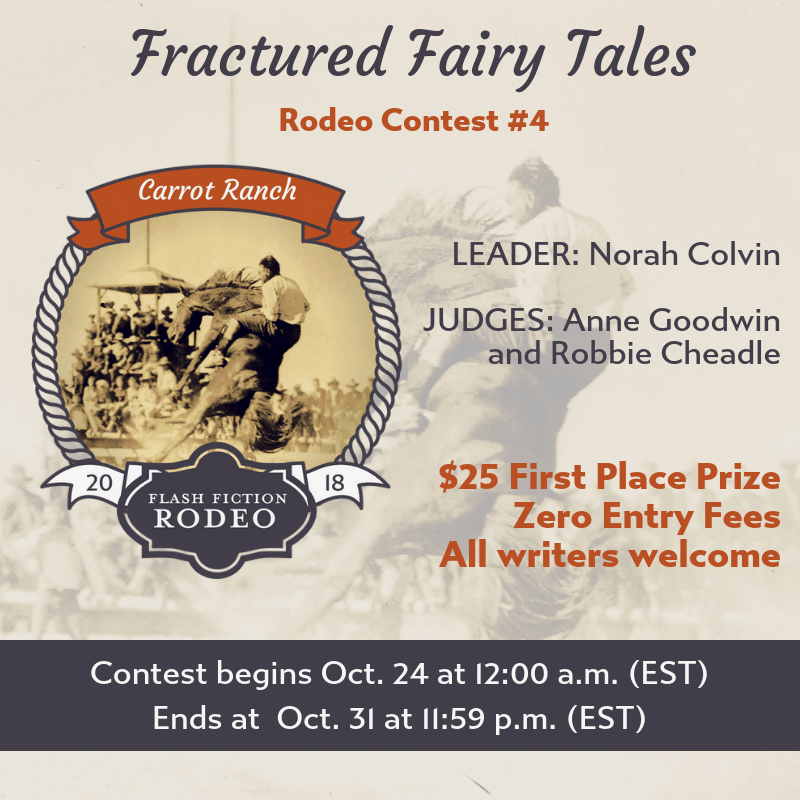
    As promised, here’s some information to start your thinking in preparation for the fractured fairy tale flash fiction contest in the Carrot Ranch Rodeo next month. (Try saying that five times real fast!)

    Please note: The correct date is Oct 24, not Oct 17 as shown below.

  • A sprinkle of this, a pinch of that, and poof! It’s reading — magic!

    A sprinkle of this, a pinch of that, and poof! It’s reading — magic!

    ArtbyJonz ©Norah Colvin 2015

    My children were early readers. Both began reading real books well before their fourth birthdays. Of course, the timing, whether early or late, matters little now that they are adults. What matters is that they are readers who read competently and confidently for a range of purposes including for information and pleasure. They are readers by choice as well as purpose.

    The ability to read is something that most of us take for granted. Many have no recollection of learning to read, only of being able to do so all of a sudden, as if we just could, by magic.

    But, as with any spell, there are certain essential ingredients that make the magic happen and others that inhibit the process. Creating readers of choice and not just purpose is the real magic. Creating non-readers is the effect of a spell in reverse, of a bad mix of ingredients, that sadly occurs all too often.

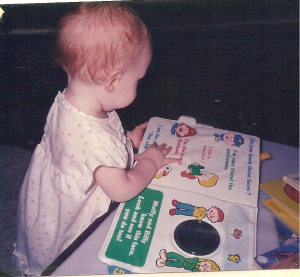
    Bec reading to herself at 12 months
    Bec reading to herself at 12 months

    My children were readers of choice long before they could read anything for themselves. I wouldn’t say I set out to “teach” them to read. In fact, I didn’t at all. I set out to encourage in them a love of books and writing. Their learning to read was a by-product of sharing the love of words, language and reading.

    The magic ingredients for developing readers:

    • Talk
    • Play
    • Read
    • Write
    • Love
    • Fun

    I loved having time with my children. Being with them, watching them grow and develop was special, the best and most magical of days. They taught me as much or more about love, life and learning as they learned from me.

    Talk

    From their earliest days I talked to them, explained things to them — what was happening, what we were doing, and how things worked. I pointed things out and told them what it was called, what it was doing, what it was used for, or how it worked. When we were out and about, I’d point out signs and explain how I knew to stop or where to go. I avoided “baby” talk and always used appropriate everyday language.

    Play

    We played and had fun together, using our imaginations to create our own games. Sometimes we played simple board games and completed jigsaw puzzles. Whatever we played, talk always accompanied it.

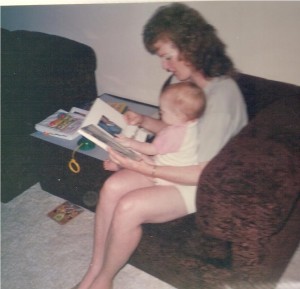
    Nor and Bec reading the family book
    Reading to Bec at about 12 months old.

    Read

    I read to them, every day, not just one but many books. As I read, we discussed details in the illustrations and made predictions about the stories, sharing our thoughts. If a word was presented in a large or colourful font, I’d point to it as I read it. We’d laugh at the funny stories and cry at the sad and discuss all the story events. When they could read, they’d read to me, and we took turns reading together until they were early teens.

    Write

    When they first started to talk, I made books with pictures and words from their growing vocabulary. I labelled items in their rooms; for example, bed, shelf, window, door.

    I made books about things we did with photographs and text. A book about our family made for my daughter’s first birthday was one of the favourites when cousins came to visit too.

    The environment

    I provided my children with an environment rich in language, books and opportunities for thinking. I’d read and write with them and to them, and they’d see me reading and writing for myself as well.

    When son Rob was little, I didn’t yet know what I now know about the development of language, reading, and thinking. He taught me much that was later confirmed by my studies.

    Rob reading to his toys at age two
    Rob, aged two, reading to some of his toys.

    When he was only two, Rob would line up his toys on the couch, sit in the middle, and “read” to them. He would almost recite the stories from beginning to end. He already knew that the words in a book remain the same each time they are read — an important concept for beginning readers to grasp. When he was only three, he’d jump into bed beside me in the early morning after Hub had gone to work, prise my eyes open, and read to me! Magic!

    Daughter Bec was born twelve years after Rob. Meanwhile, I had returned to college and studied the development of reading and language. I was amazed to find that we had unwittingly created the essential mix of ingredients for his learning to occur

    Naturally, armed with experience as well as understanding, I did things pretty much the same for Bec — talking, reading, writing, playing, having fun and enjoying time together.

    Bec sharing one of her favourite books.
    Bec sharing one of her favourite books.

    When she was five, Bec was invited to participate in a study of children who learned to read before starting school. Of the children (maybe half a dozen) involved in the study, Bec was the only one the researcher considered to be really reading. She was reading fluently, with comprehension and at a higher level than the other children.

    Some of the children were able to recognise isolated words, but not read them in continuous text. Others had been taught letters and sounds using flashcards and stopped to ‘sound’ out every word. They hadn’t become real readers.

    Bec was not subjected to reading “lessons” as the other children had been. She was immersed in an environment that encouraged a love of learning, language and literacy.  The other parents had a need for their children to read as if their value as parents depended on it.

    While I had an expectation that Bec would read, I was confident that she would come to it in her own time. My credibility as a parent was not tied to her ability. Having said that, both children (adults) are now very successful in their chosen fields, so I must have done something right. Or perhaps we were just lucky that we chanced upon the magic mix of ingredients.

    I do wish that all parents would include a sprinkle of language and a pinch of reading mixed with love and fun into their children’s lives every day. It would contribute greatly toward eradicating illiteracy.

    Carrot Ranch flash fiction prompt by Charli Mills: magic

    What got me thinking about reading, and magic in particular, is the challenge by Charli Mills at the Carrot Ranch to In 99 words (no more, no less) write a story that includes magic. It can be a supernatural force, a moment or idea, or use it as a verb. Go where the prompt leads.

    The ability to be transported into other realms is pure magic. The ability to share this magic with others is bliss.

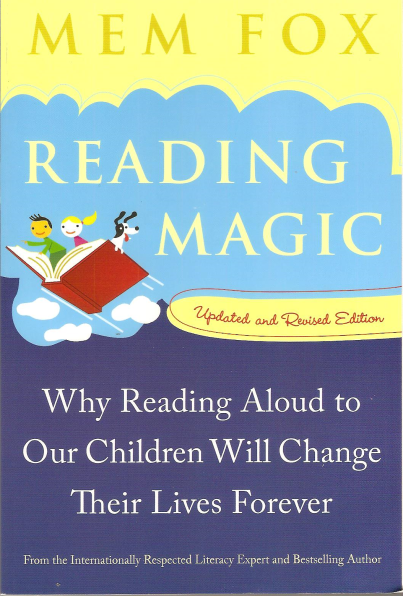
    Mem Fox has more to say about that in her lovely book for parents Reading Magica book I always include when selecting gifts for first-time parents.

    Reading Magic by Mem Fox

    Here is my response to Charli’s prompt. I hope you enjoy it.

    A Sprinkle of This and a Pinch of That

    “Whatcha doin?”

    “Makin’ a spell.”

    “What sorta spell?”

    “A magic spell.”

    “Can I help?”

    “Sure.”

    “Whadda I do?”

    “Put stuff in the pot.”

    “What sorta stuff?”

    “Gotta read the recipe.”

    “What’s it say?”

    “Ya gotta read it.”

    “I can’t.”

    “Oh. Okay. I’ll help. Look, it says …”

    Mum stopped at the door to the kitchen. “Wha— What are you doing?”

    “Nothin’,” mumbled the older.

    “Makin’ magic spells,” grinned the younger, covered in flour from head to toe.

    “What sort of magic spell?” asked Mum, wishing for her own magic spell.

    “Take us to outa space.”

    “Can I come too?”

    Thank you blog post

    Thank you for reading. I appreciate your feedback. Please share your thoughts.


  • readilearn: Teaching children with ASD — ideas for the classroom- with guest author Kathy Hoopmann

    readilearn: Teaching children with ASD — ideas for the classroom- with guest author Kathy Hoopmann

    Do you have children with Asperger Syndrome in your classroom and wonder how best to cater to their needs? Do you have friends with Asperger Syndrome, or maybe have it yourself? This week’s guest Kathy Hoopmann has a wealth of suggestions to help you understand, appreciate and enjoy the complex syndrome that is known as ASD.

    Combining her knowledge of Asperger Syndrome with her teaching background, Kathy has written over twenty books for children and adults.  She is best known for her photo-illustrated books that deal with Asperger Syndrome, ADHD and anxiety.  The simplicity, charm and insight of these books has made them must-haves for children and adults around the world.

    Kathy has won and been shortlisted for many literary awards including the Children’s Book Council of Australia Award, and she has four times been awarded a silver Nautilus Award (US).  Her books have been translated into thirteen languages and sell widely in Australia, the UK, the US and the Middle East.

    The books help children and adults with ASD recognise that they are not alone and provide support to carers, teachers and other professionals working with people with ASD.  In any home, school or classroom library Kathy’s books would help everyone learn to understand and support each other.

    Welcome to readilearn, Kathy. Over to you.

    The boy crawled under a table, his cap pulled low.  All eyes were on me to watch what I would do.  I was the relief teacher, or ‘light relief’ and the class was eager for a good show.  But I had been a relief teacher for too long to take the bait.  Besides, I recognised the behavior.  The boy displayed many characteristics of Autism Spectrum Disorder and frankly under the table was the very best place he could be, for his sake and mine. 

    ‘Miss?’ a child ventured, ‘Billy’s under the table and he’s wearing a hat indoors.’

    Continue reading: readilearn: Teaching children with ASD — ideas for the classroom- with guest author Kathy Hoopmann – Readilearn

    and be sure to check out the generous discount offered to readers during the month of July.

  • Warrior Woman

    Warrior Woman

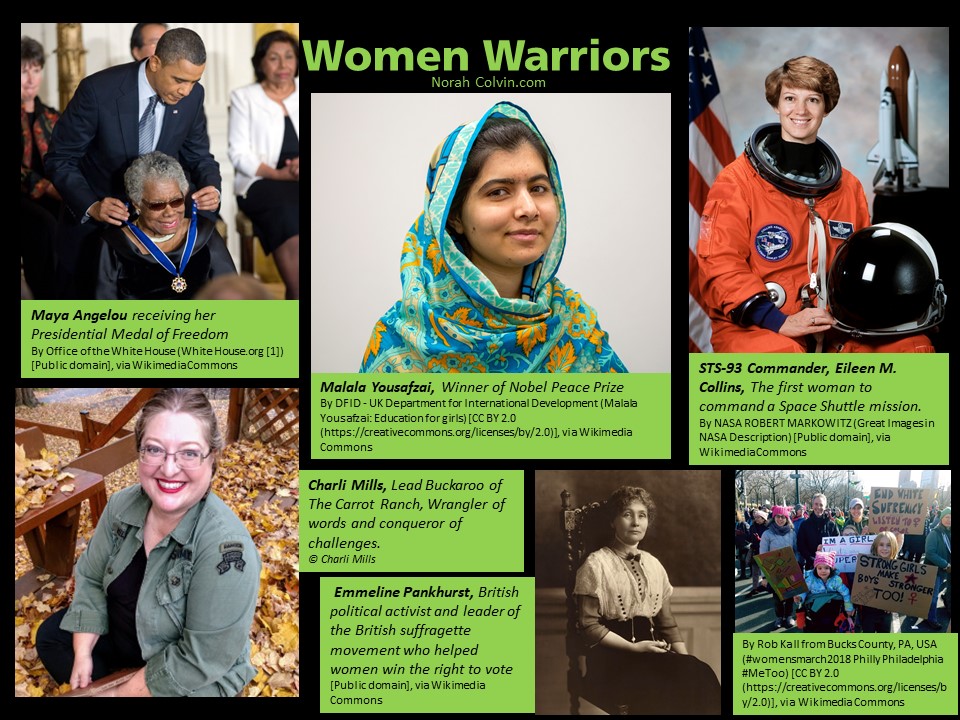
    This week at the Carrot Ranch Charli Mills has challenged writers to In 99 words (no more, no less) write a story about warrior women. It can be myth or everyday mothers and wives. Go where the prompt leads.

    Warrior Women flash fiction challenge from the Carrot Ranch

    A warrior is defined as a brave and experienced fighter, a soldier perhaps. While most of us will never be called upon to face the enemy on a battlefield, many will struggle to overcome obstacles of different kinds in their personal lives.

    From a young age, children must be encouraged to find their inner strength, to overcome challenges large and small, to be resilient when faced with setbacks, to be confident to try again and to persist even when the going gets tough.

    This is as true for boys as it is for girls, but sometimes it feels easier to encourage boys to be adventurous and girls to be sweet and demure. That this is changing is a good thing.

    In response to Charli’s prompt, I looked for a warrior a little closer to home. I hope you like it.

    Gertrude the Invincible

    With flaming hair streaming and eyes blazing, Gertrude stood at the apex surveying the land, her land.  With one hand on a hip and the other raised high, she hurled her words into the wind.

    I did it. I am the conqueror. You,” she pointed expansively with her spear, “are now my subjects. You do my bidding.”

    The minions bowed before her.

    “I am in-vinc-i-ble!”

    “Gertie! Pick up your toys and come inside now. It’s dinner-time,” called Dad from the door.

    Gertie complied. Even warriors need to eat. There’d be more conquests and enemies for Gertrude to vanquish tomorrow.

    Note: Gertrude is a German name meaning spear and strength. As long as she is encouraged, I think this Gertrude will have little difficulty living up to her name (minus the spear).

    Thank you blog post

    Thank you for reading. I appreciate your feedback. Please share your thoughts.

  • #WATWB Malala returns to Pakistan for the first time in five years

    #WATWB Malala returns to Pakistan for the first time in five years

    On the last Friday of each month, We Are the World Blogfest invites bloggers to join together in promoting positive news. If you would like to join in, please check out the rules and links below.

    “There are many an oasis of love and light out there, stories that show compassion and the resilience of the human spirit. Sharing these stories increases our awareness of hope in our increasingly dark world.”

    This month I am pleased to share the next chapter of Malala Yousafzai’s inspiring story.

    Malala fled Pakistan in 2012 after being shot in the face by Taliban militants for promoting education for girls. In 2014 she was awarded the Nobel Peace Prize. At the end of last month, five years after the attack, she returned to visit her home in Pakistan.

    Click to read the report published by the BBC.

    I read about it first on the Facebook page of A Mighty Girl,

    and watched it here:

    I admire Malala for her strength and the determination of her voice in campaigning for education for all. I particularly applaud these two quotes by Malala:

    “One child, one teacher, one book, one pen can change the world.”

    “When the whole world is silent, even one voice becomes powerful.”

    Here are the guidelines for #WATWB:

    1. Keep your post to Below 500 words, as much as possible.

    2. Link to a human news story on your blog, one that shows love, humanity, and brotherhood. Paste in an excerpt and tell us why it touched you. The Link is important, because it actually makes us look through news to find the positive ones to post.

    3. No story is too big or small, as long as it Goes Beyond religion and politics, into the core of humanity.

    4. Place the WE ARE THE WORLD badge or banner on your Post and your Sidebar. Some of you have already done so, this is just a gentle reminder for the others.

    1. Help us spread the word on social media. Feel free to tweet, share using the #WATWB hashtag to help us trend!

    Tweets, Facebook shares, Pins, Instagram, G+ shares using the #WATWB hashtag through the month most welcome. We’ll try and follow and share all those who post on the #WATWB hashtag, and we encourage you to do the same.

    The co-hosts for this month are:  :  Shilpa Garg, Dan Antion, Simon Falk, Michelle Wallace , Mary Giese.

    Please pop over to their blogs to read their stories, comment and share.

    Click here to join in and enter the link to your post. The bigger the #WATWB group each month, the greater the joy!

    Thank you for reading. I appreciate your comments. Please share your thoughts.


  • How to worm a cat, Flash Fiction and other ways to tackle Perfectionism.

    How to worm a cat, Flash Fiction and other ways to tackle Perfectionism.

    This week, in the Rough Writers Tour Around the World celebrating the inaugural Carrot Ranch Anthology, we are back in England with the wonderful memoirist Lisa Reiter.
    Lisa explains what value worming a cat and writing flash fiction have in attaining perfection. If you need help with perfectionism, Lisa is sure to help.

    Lisa Reiter's avatarLisa Reiter – Sharing the Story

    book-cover-with-5-stars2Welcome to my stop on the Rough Writers Tour Around the World as we launch the first flash fiction anthology from the Carrot Ranch on-line literary community. If you’re new here, you might be wondering why a memoir writer is peddling flash fiction? And we’ll get onto that,

    View original post 1,870 more words

  • Of dreams and nightmares

    Of dreams and nightmares

    This week at the Carrot Ranch, Charli Mills challenged writers to In 99 words (no more, no less) write a story using the theme “follow your dreams.” Bonus points for throwing a badge into the tale. Go where the prompt leads.

    The prompt led me back to Marnie, a character about whom I have written a number of flash stories, as I try to figure out who she is and what her world is like. We know that she was both neglected and abused at home and bullied at school. One special teacher Miss R has been her confidante and champion over the years, instilling in Marnie an inkling of self-worth and giving her the will to survive. This story takes us to her graduation day.

    Of dreams and nightmares

    Marnie snuck into the back row. The ceremony was underway. “Follow your dream” and “What is your dream?” were displayed on the large screen above the stage. As each graduating student took the microphone to share their dreams for the future, images of past achievements were projected onto the screen. Marnie should have been there too: but what could she share? Who would listen or even care? Only Miss R. Marnie craned her neck for a farewell glimpse, then left as quietly as she had entered. Once she had escaped her nightmare, perhaps then she could begin to dream.

    You can read more of Marnie’s story here.

    Thank you blog post

    Thank you for reading. I appreciate your feedback. Please share your thoughts.

  • Jump on board the Congress of Rough Writers Round the World Tour

    Jump on board the Congress of Rough Writers Round the World Tour

    Do you remember the moment you fell in love–the moment the passion ignited, and you knew life would never be the same again?

    I remember the moment my love affair with flash fiction began. Like many love affairs, it took me by surprise, lifting me up with its power to seduce, challenge and excite in a whirlpool of emotions.

    That moment occurred exactly four years and one week ago when, on 12 March 2014, I published my response to the first flash fiction prompt posted by Charli Mills at the Carrot Ranch. Charli challenged writers to In 99 words (no more, no less) write the aftermath of an avalanche of any kind from any perspective.

    Flash fiction was new to me. I’d written short stories, children stories, poetry, songs, and educational books and resources, but never flash fiction. However, I do love a challenge and had been anticipating having a go at flash fiction after Charli’s announcement a few months prior.

    This is my response, my first ever attempt at flash fiction:

    Avalanche

    The trickle began; imperceptible, unheeded and ignored.

    Needing more attention, the volume swelled and quickened pace.

    Still no attention was forthcoming so the surge became more urgent and incessant in its plea.

    “Slow down! Stop me!”

    To no avail.

    The avalanche engulfed her.

    Heat flashed through her body, from feet straight to her head.

    Heart pounding loudly, “Let me out of here!” it pled.

    With reverberations magnified in each and every cell,

    the heady swirl became too much –

    she trembling choked. “I’m dying?”

    But no:

    B-r-e-a-t-h-e   s-l-o-w.

    B-r-e-a-t-h-e   d-e-e-p.

    R-e-l-a-x.

    S-o-o-t-h-e.

    B-r-e-a-t-h-e . . .

    The panic abates.

    I was just one of five to respond to that first prompt. Four of those writers, including me of course, are still regular visitors to the Carrot Ranch, are members of the Congress of Rough Writers, and are contributors to the Congress of Rough Writers Flash Fiction Anthology Vol 1. That’s pretty awesome, I think.

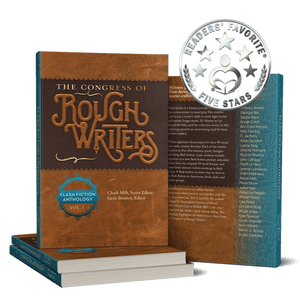
    Carrot Ranch Anthology with 5 star review

    Watch the trailer here:

    Over the years, the number of Congress members has grown to thirty-two and the number of participants in the Flash Fiction challenges swells to more than fifty some weeks.
    from little things big things grow

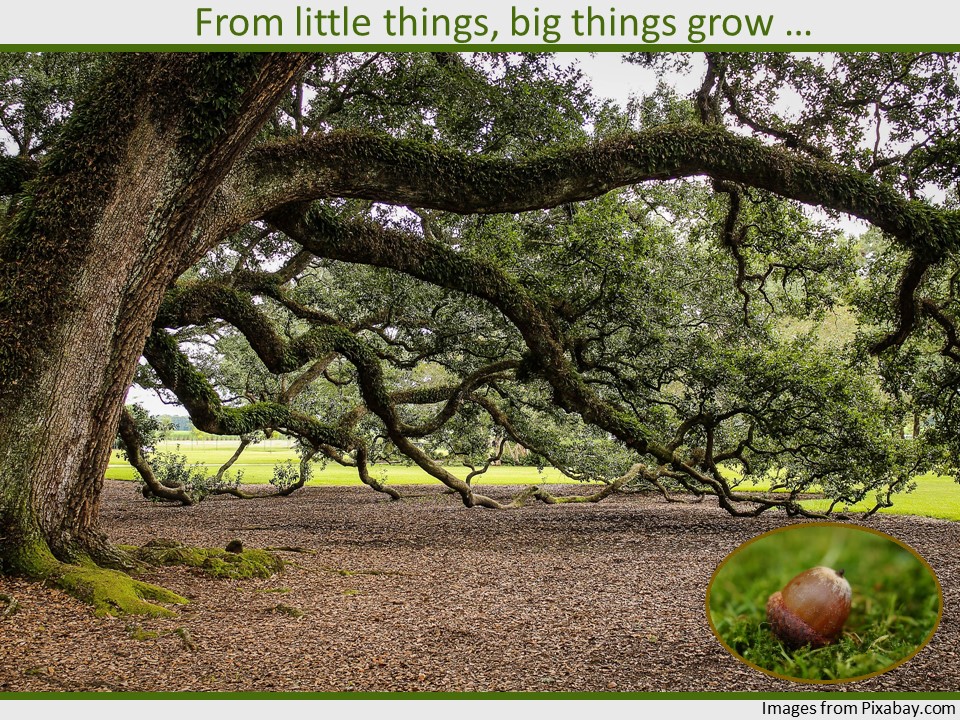
    What an amazing achievement: from small things, big things grow. Charli’s vision has not wavered from the outset. She held to her path through all manner of life’s storms. Battered but not beaten, she persisted when lesser mortals would have caved. She continues to welcome, encourage and support all writers with her vision to make literary arts accessible to all. With the publication of this anthology, a digital compilation of entries in the inaugural Flash Fiction Rodeo now in production, and Anthology Vol 2 in the pipeline, she shows what is possible through vision, determination and growth mindset.

    During the four years I have been participating in Charli’s challenges, I have learned a lot, not only about writing, but about life. The warmth and encouragement of the community of writers that have gathered around Charli is uplifting. The synergy and combined effect of all our stories, written and shared in a safe environment, raises us up together to walk on each other’s shoulders.

    In 2015, I wrote this about what I had learned from writing flash fiction. The learning continues with my own “yet’ mindset.

    Carrot Ranch anthology a brilliant idea

    About the Anthology

    Thirty writers began with 99 words and forged literary feats. Vol. 1 explores the literary art of flash fiction, beginning with the earliest compilations at Carrot Ranch and later pieces based on a new flash fiction prompt. This is not your typical anthology. It continues with longer stories extended from the original 99-word format and essays on how flash fiction supports memoir writing. Based on the experiences at Carrot Ranch, the concluding section of Vol. 1 offers tips to other groups interested in using the flash fiction format to build a literary community.

    Charli Mills, Series Editor, Publisher & Lead Buckaroo
    Sarah Brentyn, Editor & Contributor

    The Congress of the Rough Writers (contributors):

    Anthony Amore, Rhode Island, USA; Georgia Bell, Toronto, Ontario, Canada; Sacha Black, England, UK; Sarah Brentyn, USA; Norah Colvin, Brisbane, Qld, AU; Pete Fanning, Virginia, USA; C. Jai Ferry, Midwest, USA; Rebecca Glaessner, Melbourne, Vic, AU; Anne Goodwin, England, UK; Luccia Gray, Spain; Urszula Humienik, Poland; Ruchira Khanna, California, USA; Larry LaForge, Clemson, South Carolina, USA; Geoff Le Pard, Dulwich South London, UK; Jeanne Belisle Lombardo, Phoenix, Arizona, USA; Sherri Matthews, Somerset, UK; Allison Mills, Houghton, Michigan, USA; Charli Mills, Hancock, Michigan, USA; Paula Moyer, Lauderdale, Minnesota, USA; JulesPaige, Pennsylvania, USA; Amber Prince, North Texas, USA; Lisa Reiter, UK; Ann Edall-Robson, Airdrie, Alberta, Canada; Christina Rose, Oregon, USA; Roger Shipp, Virginia, USA; Kate Spencer, British Columbia, Canada; Sarah Unsicker, St. Louis, Missouri, USA; Irene Waters, Noosaville, Qld, AU; Sarrah J. Woods, Charleston, West Virginia, USA; Susan Zutautas, Orillia, Ontario, Canada.

    From the back cover:

    Witness great feats of literary art from daring writers around the world: stories crafted in 99 words.

    Flash fiction is a literary prompt, form, and tool that unites writers in wordplay. This creative craft hones a writer’s skills to write tight stories and explore longer works. It’s literary art in thoughtful bites, and the collective stories in this anthology provide an entertaining read for busy modern readers.

    Writers approach the prompts for their 99-word flash with creative diversity. Each of the twelve chapters in Part One features quick, thought-provoking flash fiction. Later sections include responses to a new flash fiction prompt, extended stories from the original 99-word format, and essays from memoir writers working in flash fiction. A final section includes tips on how to use flash fiction in classrooms, book clubs, and writers groups.

    CarrotRanch.com is an online literary community where writers can practice craft the way musicians jam. Vol. 1 includes the earliest writings by these global literary artists at Carrot Ranch. Just as Buffalo Bill Cody once showcased the world’s most daring riding, this anthology highlights the best literary feats from The Congress of Rough Writers.

    The Congress of Rough Writers Anthology Vol 1

    In case you haven’t got yours yet, here’s where to purchase

    The Congress of the Rough Writers Flash Fiction Anthology Vol. 1 is available through distribution in 17 countries worldwide. Buy direct from our Print on Demand distributor at Book Baby.

    Preferred Seller:

    The-Congress-of-Rough-Writers

    Also available from:

    Amazon Global Digital
    Amazon Global Print

    Be sure to check out other stops on the Congress of Rough Writers Tour Around the World.

    We have already visited

    Sherri Matthews UK

    Luccia Gray in Spain

    Sacha Black in the UK

    Ann Edall-Robson in Canada

    Anne Goodwin in the UK

    Geoff Le Pard in the UK

    Next week we will visit Irene Waters, another Australian. (You’ve travelled so far, we want you to make the most of your journey!)

    The tour continues through April and into May. Be sure to not miss a stop along the way.
     

    Thank you blog post

    Thank you for reading. I appreciate your feedback. Please share your thoughts.

  • How important is perfection?

    Are you a perfectionist? If so, in what areas?

    I think it would be difficult to be a perfectionist in everything, indeed, in anything.

    I have never considered myself to be a perfectionist, though others have occasionally labelled my attitude to work that way. I do have certain standards that I like to meet, and I always strive to attain them, to do the best I can. I concede that my expectations of spelling, grammar and punctuation correction may tend towards perfection, but if I can, why would I not? Of course, the occasional imperfection will slip through. It is difficult to catch all when we are editing and proofing our own work. However, if I spot any, I will quickly change them, embarrassed that I let them escape.

    There are many areas in which I am far from a perfectionist – especially housework. I’ll do what needs to be done, but only if I must; and my idea of need may differ vastly from yours. I am often reminded of my mother’s words when I’d completed a household chore; for example, sweep the steps, when I was a child. She’d comment that I’d given it a “lick and a promise”. These days, housework rarely gets more than a promise, a promise I’m not good at keeping.

    As a teacher of young children, it was not perfection I was looking for in their work, but for the best they could do. I expected their work to reflect their development. If they were capable of the calculation, spelling or of using the correct punctuation, I expected them to use it. Opportunities to revise answers and responses were given and improvement was encouraged.

    I’ve hedged around this topic a few times in posts; such as, Is contentment compatible with a growth mindset? The end, Phrasing praise and What is failure.

    But how do we decide when good enough is good enough and that we have put in as much effort as the task requires? I know there are many who agree with me about housework, but what about other things; maybe like, hanging a picture, following a recipe, parking a car, making a payment, checking copyright, or painting a room?

    I recently watched a TED Talk by Jon Bowers entitled We should aim for perfection and stop fearing failure. Bowers provides some different perspectives on the topic of perfectionism, challenging an adjustment to thinking.

    He begins by discussing typos. We’ve all made them, haven’t we? The seemingly innocuous typo can give us a good laugh at times. But it can also do a lot of damage.

    Bowers tells us that “one little typo on Amazon’s supercode produced a massive internet slowdown that cost the company over 160 million dollars in the span of just four hours”, and “an employee at the New England Compound, which is a pharmaceutical manufacturer, didn’t clean a lab properly and now 76 people have died and 700 more have contracted meningitis.”

    Bowers says,

    “When did we come to live in a world where these types of typos, common errors, this do-your-best attitude or just good enough was acceptable? At some point, we’ve stopped valuing perfection, and now, these are the type of results that we get. You see, I think that we should all seek perfection, all the time, and I think we need to get to it quick.”

    traffic

    He talks about the need for perfection when behind the wheel of a vehicle. How many lives are lost daily through inattention, through lack of perfection?

    credit card

    He talks about the need for credit card manufacturers to demand perfection. How would it be if even 1% of our credit cards didn’t work properly?

    book

    He says that “if the Webster’s Dictionary was only 99.9 percent accurate, it would have 470 misspelled words in it.  If our doctors were only 99.9 percent correct, then every year, 4,453,000 prescriptions would be written incorrectly, and probably even scarier, 11 newborns would be given to the wrong parents every day in the United States.”

    He goes on to make many other statements that I’m sure will get you thinking too. At less than 11 minutes in length, the time commitment is far less than the potential learning gain.

    When I watched this video, I was contemplating my response to this week’s flash fiction prompt set by Charli Mills at the Carrot Ranch. Charli shared a “possibly spam” email received as an entry into the Carrot Ranch Rodeo Contest #2: Little and Laugh. You can read the email in Charli’s post, which also includes the challenge to In 99 words (no more, no less) write a fictional story about The Real Nanjo Castille. (The spammer).

    I thought the email to be a little too clever to be real spam, too many clever word choices, phonetic spellings, and our favourite: bitchcoin, that could be purchased for ten dollars, $20 or £20. And the poor writer has an identity crisis, not sure whether to spell his or her name Nanjo or Najno.

    I wondered about how the performance of this child in school might be viewed and what profession might be suggested as a goal.

    This is my response. I hope you enjoy it.

    A job for Nanjo?

    The parents waited.

    Start positive, she reminded herself.

    “Nanjo has a wonderful imagination.”

    They smiled.

    “Very creative too, especially with spelling and punctuation.”

    They exhaled.

    “Has trouble understanding money though, and his knowledge of number facts is non-existent – “ she hesitated, then continued quietly. “I can’t think of any employer who’d have him.”

    “Pardon?”

    “I mean, employment, suited to his – ah – special skills.”

    She cracked.

    “I’m sorry. Your son is unemployable. His spelling and grammar is atrocious. He can’t even spell his own name, for god’s sake! I don’t think he could even get a job as a spammer!”

    Make sure to check the results of Contest #2 at the Carrot Ranch. I’m not the winner. Nor is it Nanjo. Could it be you?

    Thank you for reading. I appreciate your feedback. Please share your thoughts.
  • Introducing co-authors Brenda Miles and Susan Sweet – Readilearn

    Brenda Miles and Susan Sweet

    This month I have great pleasure in introducing you to two fine authors, Brenda S. Miles and Susan D. Sweet, who co-wrote the wonderful picture book Cinderstella: A Tale of Planets Not Princes.

    With both World Space Week and International Day of the Girl Child just a few weeks away, I couldn’t think of a better book and authors to spotlight this month. This year’s theme for World Space Week is “Exploring new worlds and space”, and the theme for International Day of the Girl Child is “Girls’ Progress = Goals’ Progress: What Counts for Girls.”

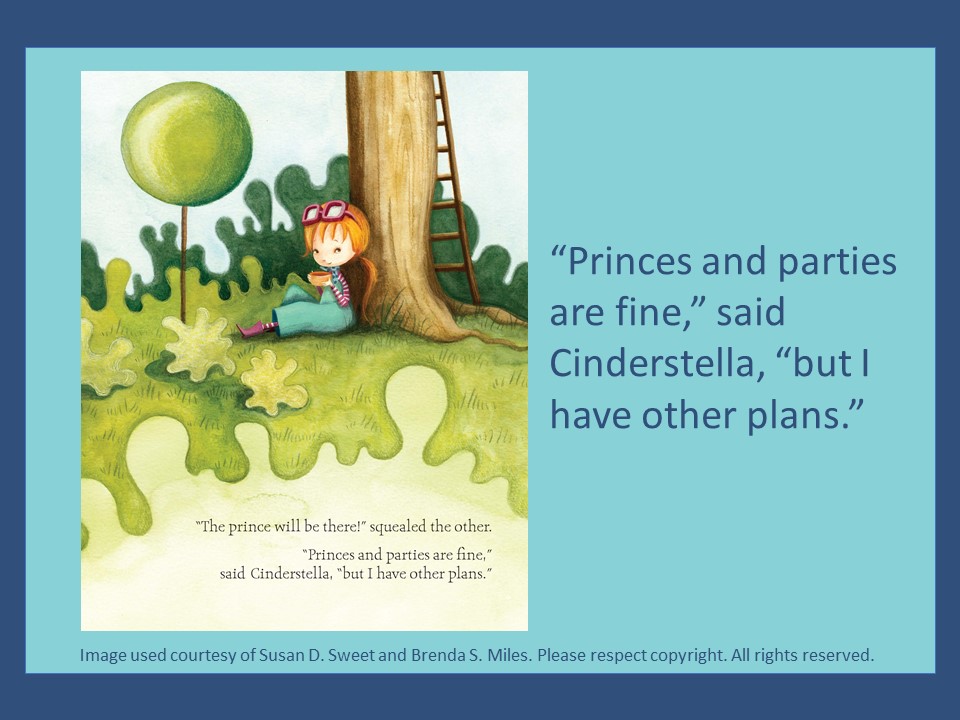
    princes and parties

    Cinderstella sees no prince in her happily ever after. She’d rather be an astronaut exploring space. Challenging the role of girls as portrayed in traditional fairy tales, Cinderstella determines to take control of her own destiny and be what she wants to be in a universe of unlimited possibilities. The story encourages girls, and boys, to take an interest in science, technology, engineering and mathematics (STEM) and break the limits imposed by gender stereotypes and biases.

    Continue reading: Introducing co-authors Brenda Miles and Susan Sweet – Readilearn