Live Love Laugh Learn … Create the possibilities

Category: Family

  • Learning fun for the holidays, without a slide in sight!


    Alanspeak, A slide for children to play on https://openclipart.org/detail/191139/childrens-slide
    Alanspeak, A slide for children to play on https://openclipart.org/detail/191139/childrens-slide

    A week or two ago my good friend Sarah Brentyn who blogs at Lemon Shark (Navigating the uncharted waters of parenting and life) raised the issue of students having required reading over the summer holidays. Sarah recalled that when she was at school she had lists of books to read, and book reports to complete as proof of having done so. She expressed concern that no holiday reading is currently required of her school-age sons.

    nlyl, reading man with glasses https://openclipart.org/detail/3133/reading-man-with-glasses
    nlyl, reading man with glasses https://openclipart.org/detail/3133/reading-man-with-glasses

    The basis for Sarah’s concern is what is known as “the summer slide”, the loss of skills, especially reading, if not practised over the long summer holidays.  Studies show what teachers observe: that students start a new school year with skills at lower levels than just a few months earlier. Revision and review of the previous year’s work must be factored in before new work can be commenced.

    Sarah wasn’t so much concerned for her sons who are avid readers and will read regardless of whether it is required or not. Knowing Sarah, her sons will also benefit from an environment enriched with a variety of other learning experiences. All children could benefit from the types of support and encouragement Sarah provides for her sons.

    Sarah’s concern was for children who don’t choose reading as a holiday activity. She believes children should continue to learn over the holidays, and does not understand why learning can’t be fun. I agree with Sarah. However I am a bit ambivalent about the requirement that particular books be read, and probably am not in favour of asking that book reports be submitted.

    CoD_fsfe_Books_icon

    There was never any set reading to be done over the holidays when I went to school, or when my children went to school, and I am not aware of any such requirement of children attending school currently in Australia. The fact that it is not a requirement doesn’t make it either right or wrong. It is simply a new concept to me.

    I would be reluctant to set homework for completion over the holiday period, especially the summer holidays for a number of reasons, including:

    • students will be moving to a new class and teacher, some even to a new school, after the holidays and that teacher may not view the set work in the same way
    • students have spent the school year reading, writing and performing other activities required of them, activities that may have little relevance or interest to them
    • students may spend the holiday period in alternate activities and then rush or “fudge” required tasks, seeing them simply as work that must completed, rather than something they want to do
    • I think children need time to follow their own pursuits and interests without having to fill in a worksheet to say what they have done
    • I think children and their families need some time together without the stress of completing set tasks
    • I think it is important for children to have time to wonder, imagine and create, to be comfortable in their own company, devising their own plans and schedules and activities, some of which may be just down time (the ability to relax in an ever-hurried world is very desirable).

    gardening

    But, like Sarah, I wouldn’t always be leaving children to their own devices, allowing them to wander the bush and beach from daylight till dusk as I did during the school holidays (when I wasn’t reading a book, playing games with siblings or friends or doing household chores). I would be mindful of their activities, ready to make suggestions, provide experiences or encourage other interests; but the direction would always be theirs and never forced or “required”.

    However I am equally as keen to avoid the occurrence of that “summer slide”. As my contribution towards its prevention while also promoting the notions that learning is fun and that opportunities for it abound, I link to three of my previous posts:

    20 suggestions for maintaining reading momentum during the school holidays

    Let the children write! 20 suggestions to get children writing during the school holidays

    Counting on the holidays!

    While I reproduce the suggestions from each post here, each set of suggestions is also available as a free downloadable PDF in my TEACHERS PAY TEACHERS store. For your convenience, I have provided a link to each in the headings below:

    https://openclipart.org/image/800px/svg_to_png/174860/bookworm_penguin.png
    https://openclipart.org/image/800px/svg_to_png/174860/bookworm_penguin.png

    Reading

    1.  Read to and with your child every day – continue the practice established throughout the year with special sharing times during the day or at bed-time — or both!
    2. Demonstrate that you value reading by making time for your own reading, or setting aside a special quiet time when everyone in the family reads.
    3. Visit the library and borrow to read, read, read!
    4. Read poetry books, song books, picture books, joke and riddle books, crossword books, information books, chapter books (these can be read to younger children, or with older children – taking turns to read a page or a chapter each) — what are your favourites?
    5. Trade books no longer read for others at a second-hand book store.
    6.  When dining out, have your children read the menu and choose their own meal.
    7. Include your child in holiday cooking and have them read the recipe – ingredients and method. Perhaps they could read the recipe book to select the meal for the day.
    8. Suggest your child read the TV guide to find when favourite programs are showing and establish a timetable for viewing, rather than haphazard watching with random flicking through channels.
    9. Provide your child with bookstore catalogues and encourage them to read book descriptions to guide their next selection.
    10. Bestow upon your child the title of ‘Family weather watcher’ and have them consult weather forecasts in the newspaper or online to select the most suitable days for planned outings and activities. 
    11. Include your child in making decisions about holiday activities. Give them the guide, or read the guide together and jointly choose the activities.
    12. Make the library, museums and art galleries high on the list of must-dos. Many of these offer a wonderful assortment of free holiday entertainment for children, and reading is an essential part of getting the most from each visit! 
    13. Engage your child in some craft activities which require them to follow written instructions. The ability to understand and follow procedures is empowering and requires the ability to read written, as well as visual, instructions.
    14. Encourage your child to ask questions about every day events and phenomena. Help them to research in books at home, in the library or on the internet. 
    15. Provide eBooks as well as books in print. Good ones bring a new dimension to the reading experience.
    16. When going out for the day, or journeying further away on a holiday, support your child in locating destinations on a map and in selecting an appropriate route. Engage your child in giving directions while en route. 
    17. Include your child when reading bus or train timetables.
    18. When doing the family grocery shop, give your child their own list of items to look for. 
    19. Listen to recorded books on long car journeys, or have books for listening to or reading along with in bed.
    20. Make the most of every reading opportunity that occurs throughout the day!


    https://openclipart.org http://goo.gl/ZvsCFc
    https://openclipart.org
    http://goo.gl/ZvsCFc

    Writing

    1. Use adhesive notepaper to write messages to your child and encourage your child to write a message back.
    2. Encourage children to write letters or emails, cards or postcards to grandparents, aunties, uncles and friends. These can be to inform them of the holiday or the year’s activities, or to thank them for a visit or gift.
    3. Demonstrate that you value writing by making time for your own writing, e.g. keeping a diary, writing letters and cards to family or friends, writing a shopping list.
    4. Display a message board prominently in the home and list important events, reminders and messages. Encourage your child to add their own messages to the board.
    5. Provide a calendar or diary and ask your child to note family birthdays, holidays and events for future reference.
    6. Encourage your child to keep a diary in which important events and feelings are noted.
    7. Play word games e.g. Scrabble and other crossword games; Boggle or ‘hangman’. (If you don’t like the connotation of ‘hangman’, give each player ten counters to start with. Each time an incorrect guess is made, they give away a counter. If all counters are used then they miss that word.)
    8. Write poems and songs together.
    9. Encourage children to write and perform ‘plays’ for the family.
    10. Take photos of events during the day and use them to make a photo book. This can be done instantly on a computer with photos taken using a phone or tablet and emailed with accompanying text.
    11. Insert photos from a phone, digital camera or tablet into a slideshow program such as PowerPoint, then add text to create a digital story or record. With one click these can be saved as an automatic show or MP 4 video.
    12. Involve children in planning the weekly meals by selecting recipes for a menu they write, and for which they create a shopping list of required ingredients.
    13. Write rebus messages to your children and ask them to write a rebus message back, e.g.                 I think you are great
    14. Invite your child to create lists e.g. activities they would like to do over the holidays, movies they would like to see or friends they would like to invite to a sleep over.
    15. Encourage your children to write the step-by-step instructions for making a craft item they have just designed, or to write down the rules for a game so that everybody is sure how to play.
    16. Suggest that your child write down questions they would like answered, and then write the information discovered during research (by interviewing or asking people, reading books or internet search).
    17. Suggest to children that they make a storybook for a younger sibling or friend.
    18. When going out for the day, or journeying further away on a holiday, children could be asked to write directions for the journey as discovered by consulting paper or online maps.
    19. Help children to set up and maintain a blog to create a record of activities and events to be shared with family and friends. The posts could be regular e.g. daily or weekly, or follow particular activities.
    20. Make the most of every writing opportunity that occurs throughout the day!

    Moini, sleuth penguin https://openclipart.org/detail/221475/sleuth-penguin
    Moini, sleuth penguin https://openclipart.org/detail/221475/sleuth-penguin

    Maths

    Number and place value

    1. Count items e.g. birds in the sky, shells collected from the beach, people for lunch, steps in a staircase, windows on a house, seats in a bus . . .
    2. Count out the cutlery required for each person at dinner
    3. Include your child in shopping activities by helping them to:
    • Recognise the coins and notes
    • Count the value of coins and notes
    • Predict whether they have enough money to purchase an item, and whether there will be change
    • Tender the money in payment for an item

    4. When your child is sharing e.g. the biscuits, balloons or slices of fruit, ask them to:

    • Predict if there will be enough for everyone to have one, or more than one each
    • Share out the items, allocating the same number to each
    • Determine if there are any left over and what to do with them

    5. Use terms like half and quarter correctly, e.g. when cutting apples, oranges, sandwiches, pizza, to indicate pieces of equal size

    6. Play games that involve counting, e.g. counting the number of skips, balls in hoops, pins knocked down or dice games like snakes and ladders that require adding as well as number recognition and counting

    7. Make up number stories e.g. “We had five apples in the bowl. I ate one, and you ate one, how many are left?”

    8. Read books with number concepts e.g. Pat Hutchins The Doorbell Rang, Eric Carle Rooster’s off to see the world  or Kim Michelle Toft One Less Fish

    Patterns and algebra

    1. Use items to make patterns e.g. sort and create a pattern from shells collected at the beach, building blocks or toy cars
    2. Look for patterns in the environment e.g. fences, tiles, walls and window, zebra crossings
    3. Decorate cards and drawings with a patterned frame
    4. Make gift wrapping paper by decorating with potato prints or stamp patterns

    Measurement and geometry

    1. Include your child in cooking activities and allow or support them to:
    • measure the ingredients
    • set the temperature on the oven
    • work out the cooking finish time
    1.  A child’s understanding of volume and capacity can be developed when they:
    • pour glasses of water from the jug and discuss terms such as enough, full, empty, half or part full, more, less
    • pour from one container into another of a different shape to compare which holds more and which holds less
    1.  Scales can be used to compare the mass of different items or quantities e.g. compare an apple and an orange, measure the mass of butter required for a recipe
    2.  Measuring length can be included by:
    • measuring and comparing height
    • cutting a length of string to tie a package
    • measuring who is closest to the jack in a backyard game of lawn bowls
    1.  Use the calendar to
    • Learn the names and sequence of days in the week or months in the year
    • count the passing days or the number of days until an event
    1.  Identify shapes in the home and environment e.g.
    • 2D shapes: tiles on floor and walls, shapes of windows, sections of footpath
    • 3D shapes: cereal boxes (rectangular prism), balls (sphere), bottles or cans (cylinder), dice (cube)
    1.  Play games that involve shapes e.g. jigsaw puzzles, tangrams
    2.  Talk about directions e.g. left, right, forwards, backwards and follow directions on a grid
    3.  Play games that involve directions and movement in space e.g. battleship,Hokey Pokey,Simon Says, snakes and ladders, ludo
    4.  Read and discuss books that include measurement concepts e.g. Pamela Allen:Who Sank the Boat?(volume); Eric Carle: The Very Hungry Caterpillar (days of the week) and The Bad Tempered Ladybird (time); Penny Matthews and Andrew McLean A Year on our Farm (months and seasons); and for looking at places on a map Mem Fox Sail Away The ballad of Skip and Nell or Annette Langen & Constanza Droop Letters from Felix

    Probability and statistics

    1. When discussing the weather or desired activities include the language of probability e.g. possible, certain, likely, unlikely, impossible
    2. Encourage children to collect data about family or friends by asking yes/no questions e.g. do you like swimming, or making a graph of the family’s favourite colour or meal.
    3. Play games with spinners and dice and talk about the likelihood of spinning or throwing a particular number.


    I hope these activities demonstrate how easy it is to maintain learning while having fun over the holidays. I’m sure you will have many more favourites of your own.

    Thank you

    I appreciate your feedback. Please share your thoughts about any aspect of this post.

  • Are you game?

    This week at the Carrot Ranch Charli Mills is talking about childhood games and has challenged writers to In 99 words (no more, no less) write a story that involves a children’s game or rhyme. I think she chose this topic just for me. Thank you, Charli.

    I love games and am a strong believer in the use of games to enhance learning. I have memories of playing games that span my lifetime, from early childhood until the present, and have visions of playing games far into the future.

    Johnny Automatic, cartoon of a girl and boy playing with a ball https://openclipart.org/detail/721/playing-ball
    Johnny Automatic, cartoon of a girl and boy playing with a ball https://openclipart.org/detail/721/playing-ball

    One of my earliest memories of an organised game was of “Drop the hanky” played at a birthday party. I was about five years old at the time. I think that perhaps, until this event, I had only ever played imaginative games with my brothers and sisters. I was obviously not familiar with the rules or the ethos of the game. I’ll let my flash (non-) fiction explain.

    Plum pudding

    We sat in the circle chanting,

    “I wrote a letter to my love and on the way I dropped it.”

    “It” skipped around the outside, waving a handkerchief.

    “One of you has picked it up and put it in your pocket.

    Not you. Not you. Not y-o-u!”

    Suddenly “It” was running and children were scrabbling behind them.

    “Run,” they called.

    Then “It” was beside me.

    “Plum pudding!” they all screamed hysterically.

    The adult pointed to the centre of the circle. “We’ll have you for dessert,” he grinned.

    I cried, wondering what it would be like to be eaten alive!

    © Norah Colvin 2015
    © Norah Colvin 2015

    Obviously I was traumatised for the memory to be so vivid and almost nightmare-like since the memory ends abruptly with the fear. Obviously I wasn’t eaten for dessert, I survived the trauma and, to complete the fictional narrative, I guess you could say “I lived happily ever after.”

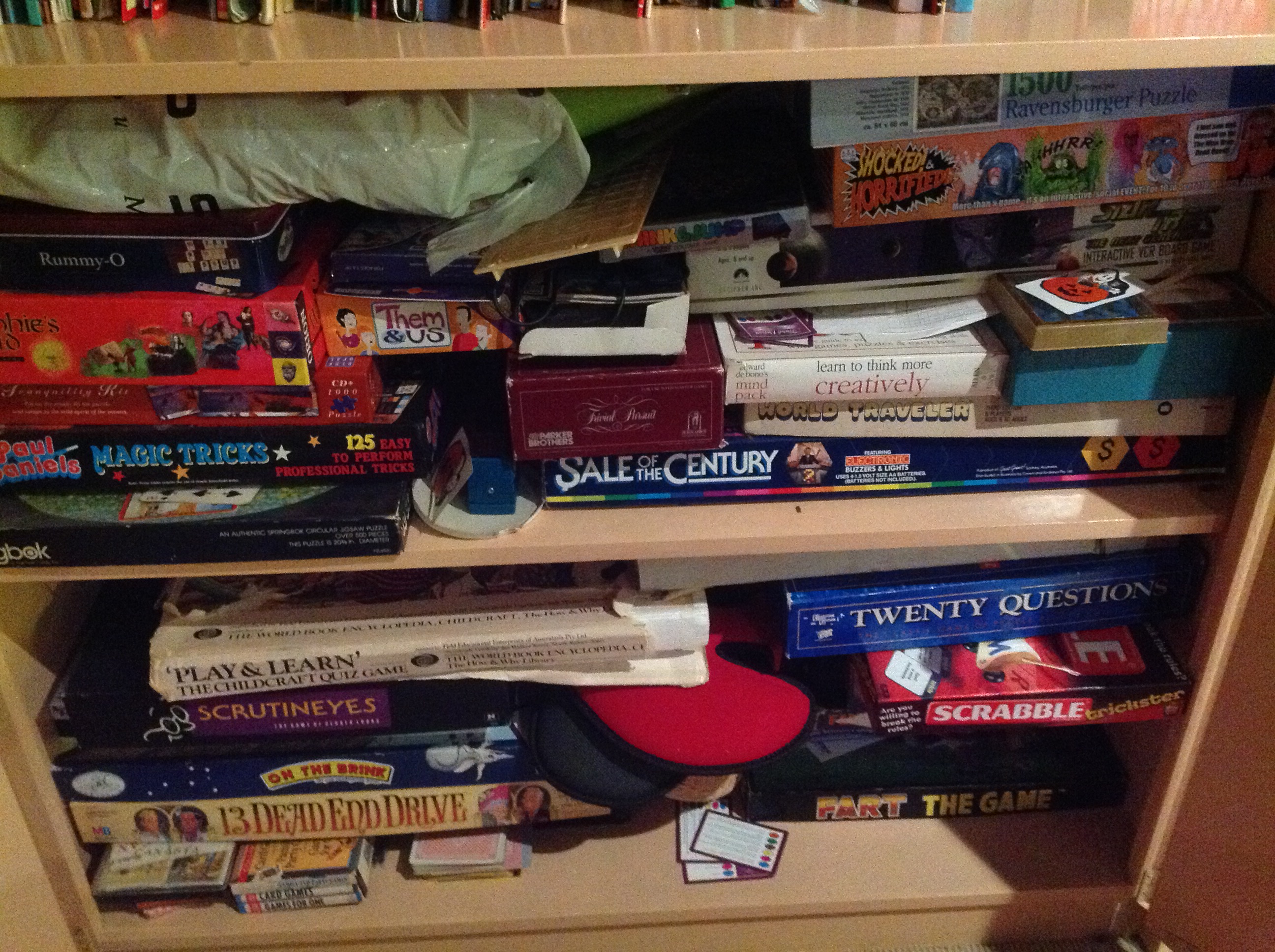
    But games don’t need to be traumatic. Games are better when they are fun; and I have many more memories of having fun with games than I do of being traumatised by them. Some of my “best” memories are of the laughs shared playing games like “Balderdash” and “Billionaire” when we (hub, son, daughter and partners) set aside traditional holidays for playing games together as a family. My house may have shelves laden with books, but they also have cupboards bursting with games.

    © Norah Colvin
    © Norah Colvin

    We didn’t always play purchased games. Sometimes we made up our own. It takes some skill in problem solving to think up a new game that will be fun to play with just the right amounts of challenge and competition, and an equal chance of “winning”, if there is a winner. Games without a winner, played for the fun of playing, are just as enjoyable.

    I have always included games in my class program. As well as being fun, if carefully chosen they can also progress learning. Games can be played at the beginning and conclusion of sessions; at transition times to reenergise, refocus and refresh; and as part of the teaching/learning program with whole class, small group or individual participation for targeting practice of particular concepts.

    One obvious benefit of playing games is the development of social skills such as:

    • Sharing
    • Taking turns
    • Cooperation
    • Dealing with competition
    • Accepting a loss
    • Accepting a win graciously

    In their book “A New Culture of Learning: Cultivating the Imagination for a World of Constant Change”, Douglas Thomas and John Seely Brown talk about ““arc of life” learning, which comprises the activities in our daily lives that keep us learning, growing and exploring.” They say, “Play, questioning, and — perhaps most important — imagination lie at the very heart of arc-of-life learning.”

    Throughout the book they talk about the importance of collaboration in engaging online in multi-player games and say that When understood properly . . . games may in fact be one of the best models for learning and knowing in the twenty-first century . . . Because if a game is good, you never play the same way twice.

    monopoly

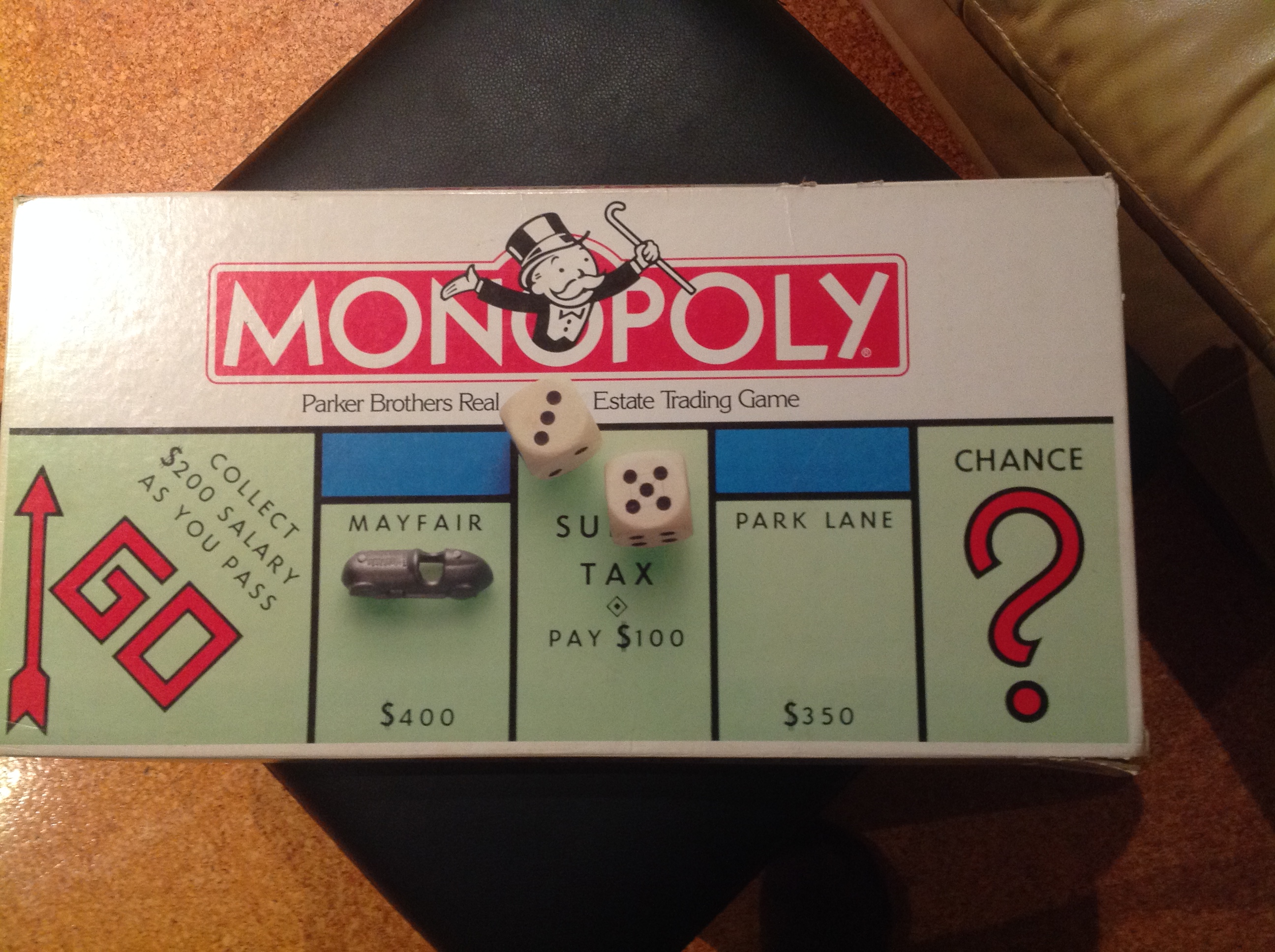
    Robert Kiyosaki in his book “Why “A” Students Work for “C” Students and Why “B” Students Work for the Government” talks about the importance of learning through games and explains how he learned, and was inspired to learn more, about finance from playing “Monopoly”. He says that Games are better teachers than teachers.” While I prefer to not agree with that statement in its entirety (I don’t even like playing Monopoly), I could understand his reasons for making it.

    Rarely a day would go by that at least one game wasn’t played in my classroom. We would play games in literacy groups that required children to read and think critically. We would play games in maths groups to practice skills in fun ways or to solve problems cooperatively. We would play games in science to try out ideas or research information. Some of the games involved physical as well as mental activity. Some were played with the entire class, and some on their own.

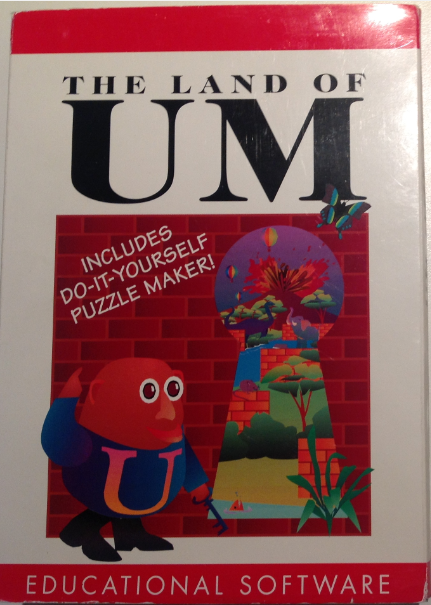
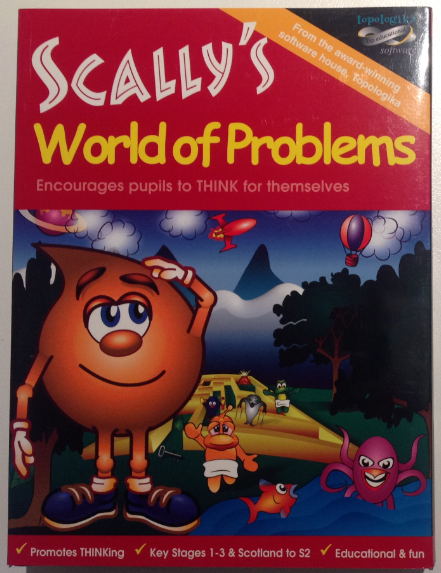
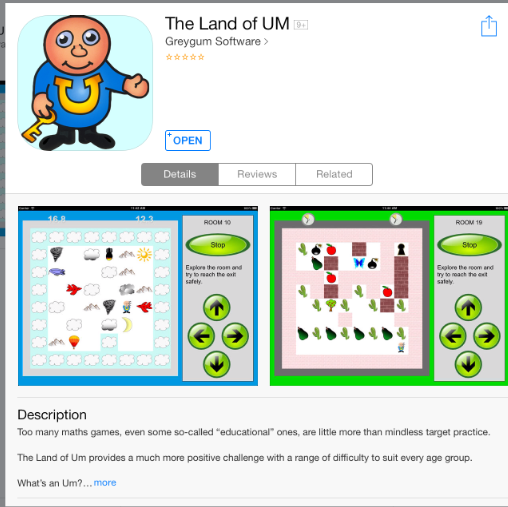
    One game we used in maths groups as well as an activity in the last few minutes of the day was a problem solving game that I was involved with from its inception, The Land of Um or, as it is known in the UK, Scally’s World of Problems. (Also available as an app.)

    http://www.greygum.com.au/nebula/index.php/the-land-of-um

    Scally


    When I was asked for an idea for a program, I suggested something that required children to explore to find out “what happens if” and “how things work”, much as they learn from their exploration of the “real world”. I also suggested that what they learn be consistent and apply at the next level. From that small seed and through the collaboration and synergy of a small group of creative people the “Land of Um” was born.

    Because, in my recollections anyway, it was “my” idea, I am very proud of “Um” and enthusiastic about its potential to encourage children to develop the thinking skills involved in solving problems.

    Um app

    In my class the children worked enthusiastically and collaboratively in small groups on an interactive whiteboard, taking turns to control the “Um” while working together to find the solution to each puzzle. As the level of difficulty increased the children needed to plan ahead, to visualise steps and predict what would happen and the effects of different actions. At each new level and in each new world, while the basics remained consistent, there was always something different to learn and explore. The children never tired of the using the program and were always eager to be the one to suggest the solution to the next problem. It was/is a joy to know that I had a part to play in the design of this program that has so many benefits to learners, not least of which is the fun of working together to solve problems.

    How significant are games in your life? What special memories do you have?

    If you are interested, there are many more stories about games to read on Charli’s blog.

    Thank you

    Thank you for reading. I appreciate your feedback. Please share your thoughts on any aspect of this post or flash fiction.


  • Five Photos Five Stories — Day five

    Back to Day one (books) and introduction to the challenge

    Back to Day two (writing)

    Back to Day three (Break out)

    Back to Day four (My retirement jetski)

    Happy birthday to me!

    I had a wonderful day today. It was both my birthday and my final day of work for Education Queensland, my on-again off-again employer for more than half of the forty+ years since I began my teaching career.

    My work colleagues spoiled me with kind words and wishes and generous gifts. We celebrated with lunch yesterday and morning tea today and shared stories, laughs and wishes for each other for the future. They made me a beautiful photo book filled with their thoughts and wishes. I think it is my new favourite book and will remain so for a very long time.

    It was quite overwhelming to have such a demonstration of appreciation for my contribution to the team, especially when my intention was just to flutter out quietly as if carried on butterfly wings. They are a wonderful group of people and I was very fortunate to have the opportunity of working with them. They definitely belong to S.M.A.G. and I showed my appreciation for them by having some magnets made up to tell them so.

    For morning tea I took along a marble mudcake in remembrance of the marble cakes my mother used to make for my birthdays. I intended to post a photo of the cake but got carried away chatting and totally forgot until it was almost all gone.

    However I have something more special to share.

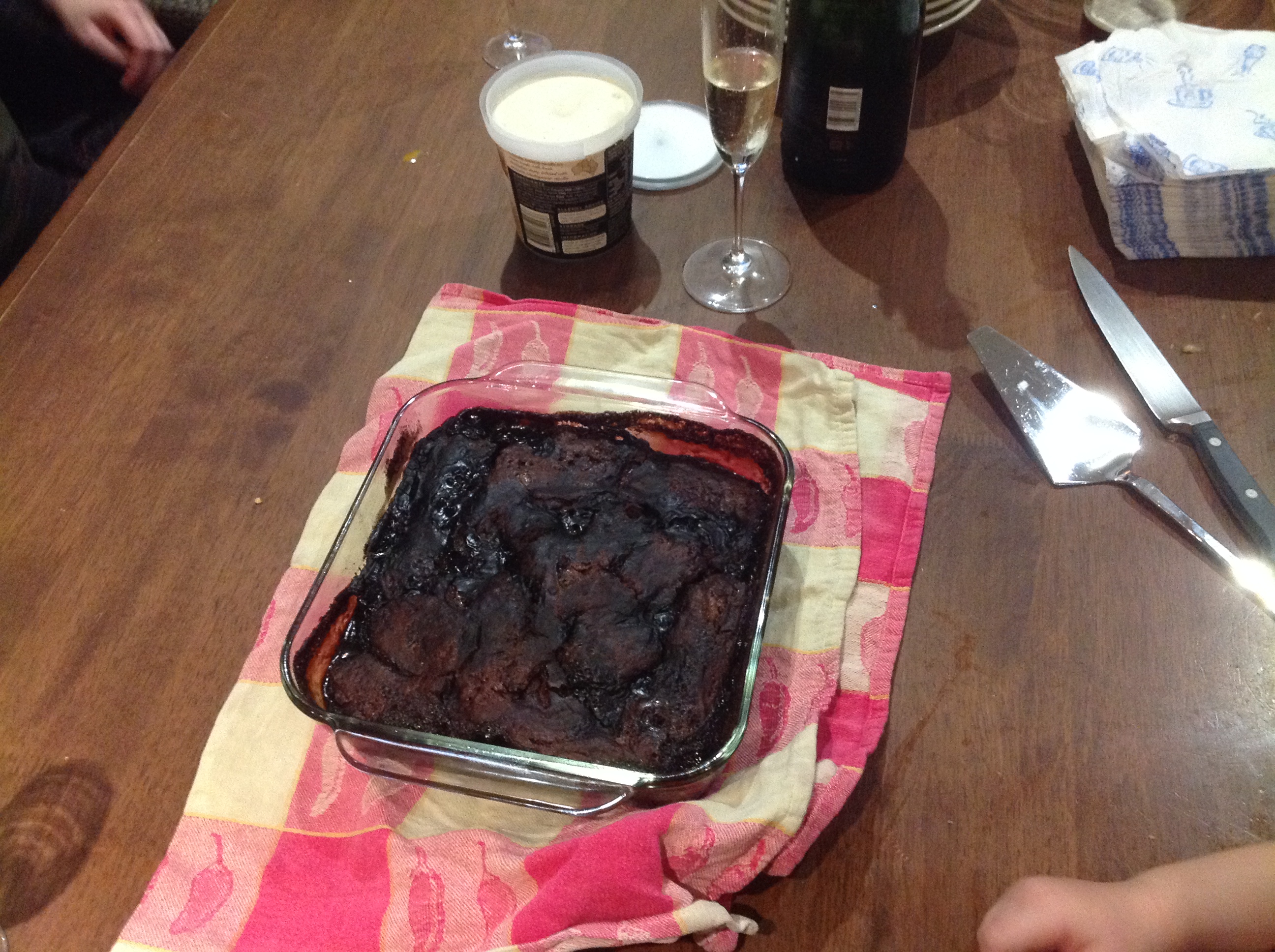
    I had dinner with my family at the home of my son and his partner and children. Bec and Glenn were there, and Bob, and my sister Ruth. We had Thai take away, one of my favourites. But what was very special was that Rob and the children made a chocolate self-saucing pudding for dessert. It is Rob’s speciality. I’m sorry there’s not enough to share, but I assure you it was delicious!

    Rob's self-saucing pudding 18 June 2015
    Rob’s self-saucing pudding 18 June 2015

    Of course my family spoiled me too with wonderful gifts and birthday wishes.

    This is my last post in a series of five in response to a challenge by Geoff Le Pard. Thank you, Geoff. I enjoyed the challenge though I wrote more than I thought I would.

    My week has been extremely busy with things to organise for my last week in this job as well as respond to this challenge so I have not kept up with reading posts and responding to comments on mine. Hopefully I’ll be able to remedy that real soon. Thank you for your patience.

    I invite my sister Ruth Irwin to participate in this challenge. Ruth is just getting started with blogging, inspired by the flash fiction challenges by Charli Mills at the Carrot Ranch, and may find photos easier than text at this stage with just a phone for posting.

    The rules of the Five Photos, Five Stories Challenge are:

    1) Post a photo each day for five consecutive days.
    2) Attach a story to the photo. It can be fiction, non-fiction, poetry, or a short paragraph. It’s entirely up to the individual.
    3) Nominate another blogger to carry on the challenge. Your nominee is free to accept or decline the invitation. This is fun, not a command performance!

    Thank you


    Thank you for reading. I appreciate your feedback. Please share your thoughts.


  • A garden party

    www.openclipart.org
    http://www.openclipart.org

    The purposes of education are many; but perhaps one important purpose of “free” public schooling is to ensure that everyone is provided with the opportunity of being educated. While this goal is achieved to a certain extent, inequalities of opportunity still exist, many of which are related to socioeconomic status (SES).

    letter from Camus

    While there is no doubt that a teacher can have a powerful effect upon the lives of students and any teacher would love to receive a letter such as that written by Albert Camus, socioeconomic status is often considered to be the most reliable predictor of success in school and, therefore, in life. There are many reasons for this, few of which have anything to do with intelligence.

    www.openclipart.com
    http://www.openclipart.com

    According to Macquarie University the majority of students in tertiary education are of mid to high socioeconomic status. The parents of these students may have professional backgrounds and may have attended tertiary institutions themselves.  Most have an appreciation of the benefits of higher education and are able to continue supporting their students, to some extent, while they study.

    While students of lower SES are attending tertiary institutions in greater numbers they are disadvantaged in doing so by a number of factors, primarily financial in origin. Although Australia is supposedly free of class distinctions, attitudes towards those from lower SES areas are often demeaning and unsympathetic. Students from these areas may battle to develop the self-esteem that seems to be a birthright for others from more privileged backgrounds. The negativism with which they are viewed, and some come to view themselves, can become a self-fulfilling prophecy.

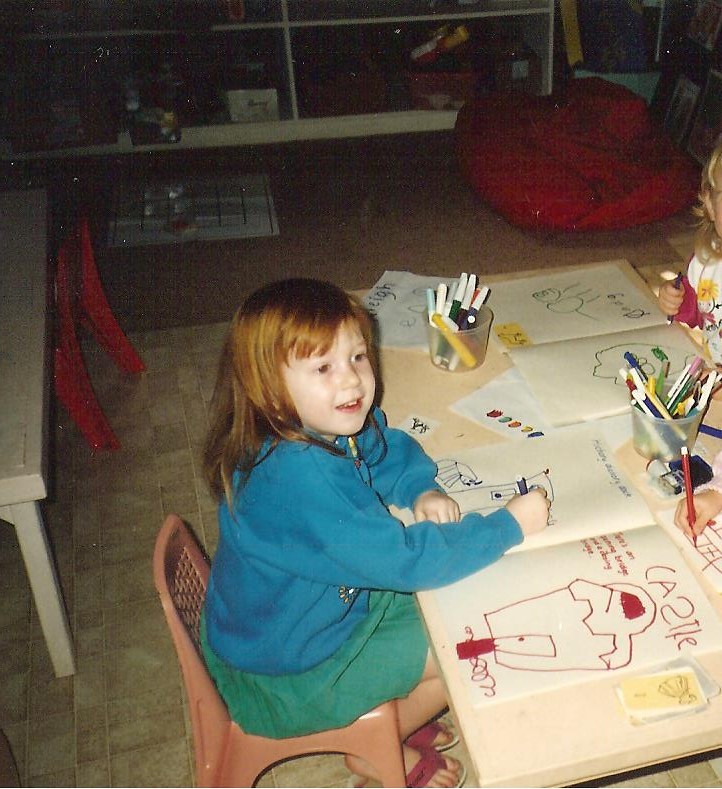
    Ready for school - year 2
    Ready for school – year 2

    I was a fortunate one for, while I grew up in a family with low SES background, my parents saw the value in education and sacrificed much for their children to have the opportunities it provided. The high costs of tertiary education that are now incurred could not have been afforded, but I achieved well enough in school to obtain a scholarship to teachers’ college and a three-year bond (guaranteed employment) when that was finished.

    Nowadays there is no such thing as guaranteed employment and few scholarships. Many families cannot afford to have post-secondary/adult students continue to live at home and not contribute to expenses while they undertake further study. This means that students have the additional burden of working while they are studying. Many opt out of study altogether to seek long term employment, often in low paying jobs with little opportunity for advancement. And so the cycle continues. The lack of permanent employment even for graduates makes deferring earnings less desirable again.

    caravan

    Of course the disadvantage doesn’t just begin when approaching final years of school. The impacts can be observed from the earliest age. (My suggestion for an early learning caravan addresses this in part.) Although education is provided “free” to students, there are many other associated costs that families may struggle to meet, such as books, equipment, and extra-curricular activities such as excursions and incursions.

    In most Australian schools, the wearing of uniforms helps to minimize differences that may otherwise be obvious by choices of clothing and footwear. It also helps to reduce costs. Sometimes additional activities can be a drain on family expenses, and while many schools will fund expenses for those in need, not all families are willing to ask for that help.

    DCF 1.0

    Studies have shown that many children arrive at school without having eaten breakfast. While this phenomenon can occur in any family, it is more prevalent in low SES areas. Some schools are now providing a healthy breakfast for students when they arrive at school. I think this great as hungry children tend to have difficulty concentrating and learning, are often lethargic and may suffer from mood swings and negative attitudes. I know how irritated I become when I am hungry. My family “joke” about not getting in the way of me and my food! How much worse for children who come to school with empty bellies.

    Of course these issues are compounded for children who live in dysfunctional families. As much as we may try to be inclusive and equitable in the way we treat them, these students are often the ones who notice their differences and inadequacies and become most self-critical. It can be a very difficult task to change the attitudes and habits of generations.

    This week at the Carrot Ranch Charli Mills talked about attending a garden party. The hosts and guests at this party had obviously enjoyed some of the finer things that life reserves for a few.

    lake-pend-oreile-cruise-may-21-31

    Charli shared a photo of a rather idyllic spot on an island and challenged writers to In 99 words (no more, no less) write a story, using the above photo as a prompt.

    Well the photo is beautiful, but I couldn’t get away, I was stuck at the garden party. I thought it was a wonderful analogy for the rewards that can be had from an education; rewards that may be obvious and perhaps available to many, but rewards that may be out of reach to others because of circumstances over which they have no real control. I thought of Marnie who suffers the double disadvantage of a dysfunctional family in a low SES area; but who knows there is something better out there and wants it for herself.

    Thanks to Charli for her prompt, here is another episode from Marnie’s life. I hope you enjoy it.

    The garden party

    Marnie’s face pressed into the bars of the tall white gate with amazement: white-covered tables laden with food; chairs with white bows; white streamers and balloons; and a band!

    But the ladies had her spellbound with elegant dresses and high, high heels; flowers in their hair and bright painted lips.

    A man in uniform opened the gate to guests arriving in limousines. Marnie followed.

    “Not you, Miss,” said the uniformed man.

    Marnie held out her invitation, “Jasmine . . .”

    But he’d closed the gate and turned away.

    Marnie looked down at her stained dress. What was she thinking?

    Thank you

    Thank you for reading. I appreciate your feedback. Please share your thoughts about any aspect of this post or flash fiction.

  • Understanding family relationships

    At the Carrot Ranch this week Charli Mills is talking about cold cases and challenges writers to, In 99 words (no more, no less) write about an old mystery in the current time. Is it a discovery? Is it solved? Does it no longer matter, or does it impact innocent generations in between?

    My thoughts immediately turned to a mystery that occurred in my family over one hundred years ago when the two-year old brother of my grandfather disappeared and was never seen again.

    http://www.clker.com/clipart-10083.html
    http://www.clker.com/clipart-10083.html

    Most families do have a skeleton or two in the closet. Not all families like it to be known. Many Australian families who can trace the arrival of ancestors back to before the end of convict transportation in 1868 can find a convict in their ancestry. I have two; one on each side of the family. Generally the reasons for transportation were rather minor so I am not too concerned about sharing that information. In fact, many Australians are delighted to find a convict in the past as it adds a little interest and colour to their family tree.

    Children generally love to hear stories of their own lives and families. I have written about that before here. However young children probably have no need for or interest in delving as far back into family history as the three stories I have mentioned above. An interest in ancestors further back than living relatives (grandparents and great-grandparents) usually develops later, if at all.

    A great place to start thinking about history in early childhood classrooms is sharing stories about the families of children in the class. Most classes in Australia are comprised of children from variety of backgrounds so sharing those stories helps to develop an appreciation for each other as well as knowledge of the world. I developed a unit called Getting to know you for use in early childhood classroom which aims to develop discussion about family histories.

    But children can start learning about family relationships even earlier than that by discussions of who’s who in the family and explanations of the words and relationships; for example father/daughter; brother/sister; aunt/niece; grandmother/granddaughter. Here is a picture of some pages of a book I made for Bec when she was just a little tot, just to give you the idea.

    family book

    Photo books of family members are much easier to make these days with digital photos and programs such as PowerPoint, as well as glossy books you can make and order online.

    I am very proud of my two grandchildren, as any grandparent would be, and am pleased to say that they have a good understanding of who is in their family and their relationships to each other. It is a frequent topic of discussion. However I was very tickled when my three year old granddaughter proceeded to tell me, with some excitement, that her Daddy and her Aunty Bec were brother and sister in real life; in REAL life, she emphasized.

    Regular readers of my blog may be familiar with a character I have been developing in response to Charli’s flash fiction challenges: Marnie. Her story is not real life but, sadly, aspects of it could be, for others. There was a period of about twenty years when, after escaping her dysfunctional family, Marnie was untraceable, living without any connection to her family and past, a mystery. It took authorities five years after both parents had passed to track her down with the ‘news’. This episode takes up there.

    Found

    The officers looked friendly enough but still she tried to hide the tremble in her soul and tremor in her voice behind the blankness of her stare.

    She’d opened the door just a crack, as far as the chain would allow.

    “Marnie Dobson?” they asked. She shook her head. She’d not . . . ; not since . . . ; no longer. She shook again.

    They asked her to step outside. With no other option she reluctantly unlocked and emerged into the glare of daylight.

    “Marnie Dobson,” one said, “We are here to inform you . . .”

    Thank you

    Thank you for reading. I appreciate your feedback. Please share your thoughts about any aspect of this post or flash fiction.


  • The power of words

    writing

    The ability to learn language always amazes me. Given a supportive environment most young children will learn the language of the home effortlessly; forming their own hypotheses about its use and very quickly understanding the complexities of language structures and nuances of meaning.

    I am also impressed by the fluency and comprehension of many for whom English is not their first language. I briefly touched on some of the difficulties experienced even by users of English as a first language in a previous post about spelling.  Sometimes I wonder that communication is possible at all, especially when considering local idioms and sayings that make little sense out of context, but largely go unnoticed. What must a new speaker of English  think when encountering “Bite the bullet, break the ice, butter someone up, or even bring a plate”.

    How difficult it must be too, when words, like vice for example, have multiple meanings.

    This week at the Carrot Ranch Charli Mills has been talking about vice. Her article is about the not-so-pleasant type of vices. As usual, I like to be the contrarian and consider alternative viewpoints. That might be considered one of my vices. Sometimes I laugh when a thought takes me to a context far away from a speaker’s intended message. Other times I fail to see the intended humour, reading beneath the surface intent to hidden messages.

    To illustrate this I will use two recent examples:

    bicycle

    The cyclist and the flight attendant

    He: a cyclist, just entering the last third of his life (about 60, give or take 5 years)

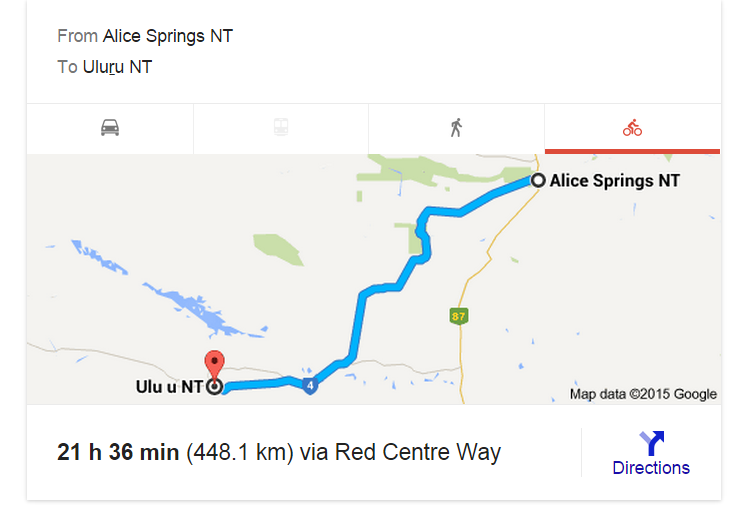
    As his bike was being loaded onto the plane he explained that he had ridden from Alice Springs to Uluru, the long way. (I’m not sure of the distance of the long way, but the direct way would be more than long enough for me!)

    Alice Springs to Uluru

    She: a flight attendant still in the first third of her life (about 25, give or take 5 years)

    “That’s so awesome! I hope I continue to exercise all my life.”

    I didn’t hear his response; I was laughing too hard: the innocence and blindness of youth. How well I remember thinking anyone over about thirty was at death’s door. What amuses me now is the number of people my age who think we are much younger than those of the previous generation at the same age. I think the blindness and selective sight continues throughout life.

    Of course I interpreted her words to mean: “You’re so old. I can’t believe you could do that. I hope I can still exercise when I am as old as you!”

    OLYMPUS DIGITAL CAMERA

    The joy of fatherhood?

    Waiting for the same flight was a father and his daughter, approximately two and a half years of age. The daughter was doing what any child of that age would do: looking around, exploring a short distance away from dad before returning to his side. From what I could see she was doing no harm and was perfectly safe. It was a small airport, she could not wander far.

    Each time she moved away he barked a short command at her. Although his words were not familiar to me, I had no difficulty interpreting them. As with most children, sometimes she heeded them, sometimes she didn’t. Sometimes he repeated the command, or retrieved the child. Sometimes he didn’t.

    Then I saw his t-shirt and read the word emblazoned on the front. I am a reader. Sometimes I wish I were not. The words read, “Guns don’t kill people, Dads of daughters do”.

    I have never “got” the need for messages on apparel, and definitely not a message as negative as this. I assume it was meant to be amusing, but I could see no humour in it. Maybe he didn’t understand the message underlying the words (he was speaking in a language other than English). Maybe I read too much into it. Apparently though, according to this Google search, there is a sizable market for shirts and products extolling these sentiments, some even with the inclusion of the word “pretty”.

    My interpretation of the subliminal message is one of acceptance of a number of vices, and my belief is that until we can obliterate the insidiousness of messages such as these from the common psyche, our society won’t much improve. To me the message commends: disrespect for others, sexism, murder, violence, antagonistic relationships between parent and child/father and daughter, an absence of nurturing, an acceptance that children are difficult and a burden . . .

    Perhaps I should stop there. I think this father and daughter team would be prime candidates for the early learning caravan project I wrote about recently. I would love to help this father see, not only the power in his words, but the treasure his daughter is and the importance of their relationship.

    As I’ve explained, I sometimes see humour in words where it’s not intended, and fail to see it where it is. I’ve attempted to include humour in my flash response to Charli’s challenge to In 99 words (no more, no less) write a story that includes a vice, by using three different meanings of the word. I’ll be interested to know if my “humour” matches yours, but won’t be surprised if it doesn’t!

    This one is definitely not about Marnie!


    Vice-captain

    She almost danced along the verandah. What would it be: medal, certificate, special recommendation?

    The door was open but she knocked anyway.

    “Come in.” The command was cold. A finger jabbed towards a spot centre-floor.

    Confused, her eyes sought the kindness of the steel blue pair, but found a vice-like stare.

    She obeyed.

    “In one week you have led the team on a rampage:

    Smashing windows

    Uprooting vegetables

    Leaving taps running

    Graffiting  the lunch area . . .

    We thought you were responsible. What do you have to say for yourself?”

    “But sir,” she stammered, “You made me vice-captain!”


    Thank you

    Thank you for reading. I appreciate your feedback. Please share your thoughts about any aspect of this post or flash fiction.

  • All aboard the early learning caravan!

    school cropped

    This week at the Carrot Ranch Charli Mills described a century old schoolhouse which adjoins her property. She is hoping that someone will buy it and make it a meeting place for the community, recognising the role it had to play in the education of generations past as well as its contribution to the history of the area. Her thoughts about the schoolhouse led her to thinking of community engagement and neighbourly relationships which, in turn, inspired her flash fiction challenge for this week, to In 99 words (no more, no less) write a story about nurturing a neighborly relationship.

    I would have loved the little schoolhouse at Elmira Pond as the base for the alternative school I hoped to establish at the end of last century. The schoolhouse has a nice community feel to it, unlike many of the large brick, concrete jungle-type schools into which one can almost dissolve in a sea of sameness. Charli’s schoolhouse/community centre would also be a great meeting place for parents with their young children; a friendly early learning centre for both.

    8-12-2013 7-38-33 PM


    Based on my beliefs that:

    • parents are a child’s first and most important teachers;
    • the most important years of a child’s development are the years before school;
    • children who enter school with rich vocabularies, an interest in the world around them, and a love of books are primed to succeed;
    • children without those experiences are disadvantaged in their learning right from the start and face an enormous challenge in catching up;
    • waiting until children enter school is too late;
    • the best way to minimise or eliminate the disadvantage is by educating parents through programs that model effective parenting behaviours and support them in their interactions with their children;
    • parenting programs offering those types of support would be most effective if begun before birth of the children and continued at least until the child enters school, maybe beyond;
    • most parents want to do the best for their children, many just don’t know how to go about it.

    There are any number of birthing classes, but not many that aim to support parents in nurturing their child’s development. In my opinion, investing time and money into developing programs such as these would have enormous benefit, not only to individual children and their parents, but to society as a whole.

    I am not talking about programs that place children of increasingly (or should that be decreasingly) younger years into structured and formal “teaching and learning” situations. I am not talking about one-off talks or series of lectures to parents.

    Many of the parents of children who begin school with the types of disadvantage I have mentioned are themselves products of similar disadvantage. In a previous post I discussed the roles of “nature” and “nurture” in a child’s development. In these cases especially, it can be difficult to tease out the differences. Many of these parents would not have positive feelings towards schools or any other public institution and may feel threatened, or reluctant for other reasons, to attend sessions in public halls or government offices.

    What I am talking about is a program that:

    • goes to the parents and children in their neighbourhoods, meeting in a local park or community greenspace, on regular weekly occasions;
    • invites parents to talk with, read to and play with their children using provided books, games and toys;
    • models positive parenting behaviour, explaining to parents the benefits to their children of engaging with them in activities and discussions;
    • provides suggestions for inexpensive and easy activities to do at home;
    • encourages borrowing from a book and toy library.
    Guiding parents in play sessions for parents and children.
    Guiding parents in play sessions for parents and children.

    I envision the program being delivered by an early children trained educator who is sympathetic to the situations and demands of people from diverse backgrounds, who is warm and supportive with good interpersonal skills with both adults and children, who drives a mobile early learning centre fully-equipped with books, toys, games, paper, pens and craft materials, including items for borrowing and distribution for activities to be done at home.

    I see the centre as a brightly painted caravan with doors that open wide to display a colourful and engaging assortment of resources to delight the interests and eyes of young children and their parents.  As the caravan travels into each neighbourhood it would play music to signal its arrival (think of the old icecream vans!) inviting parents and children to come, investigate, and join in.

    caravan

    Thinking about the excitement that such a program may stimulate in a neighbourhood, and the sense of community and belonging it may encourage, led me to write about it for my response to Charli’s prompt.

    I hope you enjoy it.

    www.openclipart.com
    http://www.openclipart.com

    The caravan

    Children waited anxiously at windows and front garden fences.

    Mothers and fathers hurried to complete the last of their chores.

    Others, already at the park, were unable to wait.

    Ears strained, listening for music signalling, “It’s time!

    Suddenly “Girls and boys come out to play!” announced the arrival of the brightly painted caravan.

    “Come on!” urged children, tugging at skirts, trousers and hairy legs.

    “Come on!” chimed parents, downing cloths and brooms. Clasping small hands they whisked them out.

    Everyone watched as the doors of the caravan opened; ready for fun: stories, games and much to explore!

    Thank you

    Thank you for reading. I appreciate your feedback. Please share your thoughts about any aspect of this post or flash fiction.

  • How to teach compassion – and why

    During the past few weeks I have been exploring the idea of compassion, along with many others in the blogosphere, in response to the #1000Speak for Compassion project.

    In a TED Talk I shared in a previous post Joan Halifax questioned why, if compassion was so important, didn’t we teach it to children.

    Man-resigning

    That question provided me with a challenge. Indeed I wondered if the question was really fair. The question implied that children were not being taught compassion. And while that assumption may be true for many, it is just as true that many children are being taught to be compassionate – in their homes, in their schools, and in other groups to which they belong. By recognizing the many who do, I in no way wish to indicate that enough is being done. Indeed, much more needs to be done, but let’s not make a sweeping statement that attempts to colour everyone with the same inadequacy in teaching compassion.

    I decided to investigate just what ideas were available for teaching children compassion. I had to look no further than one of my blogging friends for evidence that children are being taught compassion through their daily activities. In a number of posts on her own blog Lemon Shark, and in a number of comments on mine, Sarah Brentyn has described practices that she uses to teach her children to be compassionate by involving them in compassionate acts.

    Some practices that Sarah recommends for developing compassion include things from as simple as using common courtesies and good manners to volunteering and making personal donations to homeless shelters.

    I defy you to read her post 1000 Voices for Compassion without being moved by her generosity and compassion. It tells a beautiful story of compassion in action, a lesson for not only her children, but for all of us.

    In her following post entitled Defining Compassion vs. Compassion in Action Sarah described asking her children what the word “compassion” meant. They weren’t sure how to answer her. But when she asked them to describe something compassionate they had no difficulty coming up with examples – from their own lives. Why? Because from the moment they were born Sarah’s children have been living in a compassionate world. They have been treated compassionately and they have not only had compassionate actions modelled for them, they have been involved in those compassionate actions. I congratulate you Sarah, for inspiring us to be compassionate, and for being a role model for us to emulate.

    Sarah Brentyn = walk the walk

    Looking beyond Sarah’s examples for further suggestions, I came across a number of other articles. Each seemed to reiterate what Sarah had already shared.

    In an article for the Huffington Post Signe Whitson, author and child and adolescent therapist, says that “experts agree that fostering compassion in young people is among the best ways to prevent verbal, physical, and emotional aggression” and shares 8 Ways to Teach Compassion to Kids:

    1. Walk the walk

    “Show young people that anytime is the right time to engage in acts of service and compassion for others.”

    1. Put the Child on the Receiving End of Compassion

    “tending to a child when he is feeling down or under the weather is the best way to teach him how to show compassion to others.”

    1. Talk the Talk

    “talk explicitly about acts of compassion . . . communicate its importance as a prized family value”

    1. Volunteer Your Time

    “When children become actively involved I acts of showing compassion to others, they learn about his value in a very deep and enduring way”

    1. Care for a Pet

    “Children who care for pets learn important values such as responsibility, unconditional love, empathy, and compassion for all living things”

    baby bird

    1. Read All About It

    “Children’s books are great for providing a window into the experiences of others.”

    Whoever you are

    1. Compassion It TM

    Wear a Compassion It band as a daily and “personal reminder to act compassionately towards someone else”

    1. Make a Wish

    The “Make-a-Wish Foundation provides hope, strength, and joy to children with life-threatening medical conditions . . . can have a truly impactful experience of being able to provide tangible help and joy to a peer”

    https://openclipart.org/detail/30019/star-by-nefigcas
    https://openclipart.org/detail/30019/star-by-nefigcas

    Other than the references to the specific organizations, Compassion it and Make a Wish Foundation, the suggestions are things that have been discussed before in various posts about compassion, including Sarah’s.

    Like Sarah, Whitson believes that it is the accumulation of little everyday actions that make a difference. She states that, as a bullying prevention trainer, she considers “big” solutions — such as policies, procedures, and trainings are trumped each and every day by the seemingly little, yet extraordinarily powerful, acts of compassion and kindness that adults show to the young people in their lives.”

    In her article about How to Instill Compassion in Children Marilyn Price-Mitchell agreed about the importance of teaching compassion, saying that  “children who participate in programs that teach kindness, respect, empathy, and compassion and who have families that reinforce those strengths at home develop the muscles they need to become civically-engaged adolescents and adults.”

    Price-Mitchell suggested that parents could help teach their children compassion by providing opportunities to practice compassion, by helping children understand and cope with anger, and by teaching  children to self-regulate.

    https://openclipart.org/image/800px/svg_to_png/192642/Children_holding_hands.png
    https://openclipart.org/image/800px/svg_to_png/192642/Children_holding_hands.png

    Jane Meredith Adams, in her article Raising a Compassionate Child says that “children have an inborn capacity for compassion … they naturally identify with stuffed animals, other kids, pets, and underdogs. The tricky part is that their empathy must compete with other developmental forces, including limited impulse control – which makes them pull the cat’s tail – and their belief that their needs absolutely must come first – which makes it hard for them to let their cousin push the col fire truck.”

    Adams says that teaching compassion is “part of day-to-day life: how you answer your child’s questions, how you solve conflict at the park, how you nudge his or her growing capacity to understand and think about other people.” Adams suggests to Promote sweetness” every day by showing children how to be gentle to others, by speaking to them softly, by rejecting rudeness, and by saying sorry when you have made a mistake. I think Sarah would agree with all of those.

    Similar ideas are proposed by  Kim McConnell, and Leticia of techsavvymama who sums it all up nicely with these suggestions:

    • Model the kinds of behaviour we expect
    • Exercise patience
    • Listen to our kids
    • Teach resiliency by providing strategies, and
    • Use quality educational content to reinforce the concept (e.g. books, DVDs and downloadable material)

    I’m sure that many of these suggestions are familiar to you through your own personal experiences, either when growing up or as an adult. I think what my exploration of this topic shows me is that, while it may be useful to teach about compassion in schools, children really only learn to be compassionate if they are treated compassionately and have compassion modeled for them, if it is an integral part of their everyday lives.

    What do you think?

    Thank you

    Thank you for reading. I appreciate your feedback. Please share your thoughts about any aspect of this post.
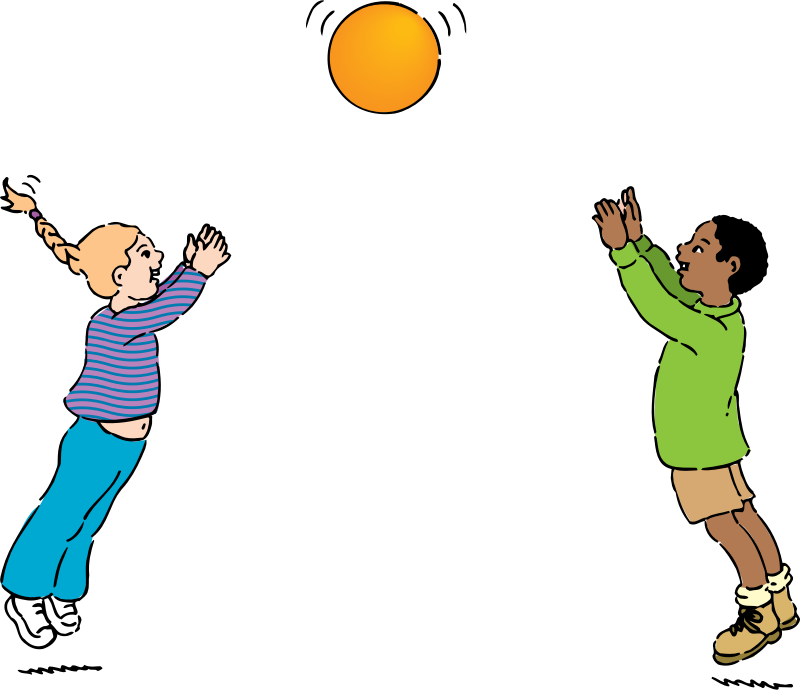


  • All in the family

    https://openclipart.org/image/800px/svg_to_png/20496/CoD-fsfe-calendar.png
    https://openclipart.org/image/800px/svg_to_png/20496/CoD-fsfe-calendar.png

    The nature/nurture debate wages constantly. Are we who we were born to be, or are we shaped by our environment to be who we are?

    To my untrained mind (I have no qualifications in psychology) it appears that who we become results from a mixture of each in combination with a dose of self-determination. Sometimes it can be difficult to separate the nature from the nurture. Are we that way because of genetics or because of the family environment in which we grew up?

    tweedles

    It is true that no two individuals, even siblings, experience identical environments. Even in the closest of families the differences can be as pronounced as the similarities; in interests, capabilities, personalities and attitudes as well as physical characteristics. Both similarities and differences can be used to argue equally well for nature or nurture.

    A paper published by NATSEM (National Centre for Social and Economic Modelling) in 2013 described a close link between education standards, employment and poverty, leading to social exclusion and disadvantage in Australia. It explained that lower education levels resulted in higher levels of unemployment, and therefore poverty, and that children living in poverty were at risk of not completing high school and of having poor nutrition. And so the cycle would continue.

    That is not to say that children living in poverty are doomed to continue doing so throughout their lives (we all know successful people who through their self-determination have pulled themselves up and out of the situation) but it may be much more difficult for them to achieve the levels of success that seem to come so easily to others in kinder circumstances.

    According to the Institute for Social Science Research at the University of QueenslandResearch shows that when schools, families and community groups work together to support learning, children tend to do better in school, stay in school longer, and like school more.” Commencing this year, the “Parental Engagement in Schools” project aims to discover what type of involvement best supports student learning and outcomes. Encouraging parents to be involved is another issue.

    While my general observations as a teacher, and those of many colleagues, support the notion of a connection between economic status and educational advantage, a paper recently released by the University of Bristol states that “Poorer parents are just as involved in their children’s activities as better-off parents”, and that “The findings support the view that associations made between low levels of education, poverty and poor parenting are ideologically driven rather than based on empirical evidence.

    Perhaps over-generalisations in this area are just as problematic as those that expect all family members to be alike. I think that, regardless of background, it is important for teachers to support all students to make positive choices for their future. This can be done through demonstration and modelling rather than criticism and blame.

    8-12-2013 7-38-33 PM

    I also recommend a certain set of strategies that all parents, regardless of their economic status, can employ to give their children a great start is life, including:

    • Love them
    • Talk with them
    • Read to them
    • Encourage their questions and curiosity
    • Help them seek answers and solve problems
    • Encourage their independence
    • Foster confidence, a willingness to have a go and to try multiple times and ways
    • Be accepting of differences and don’t prejudge their future based on the experiences and futures of others.


    https://openclipart.org/image/800px/svg_to_png/18499/Chrisdesign-Glossy-Smiley-Set-3.png
    https://openclipart.org/image/800px/svg_to_png/18499/Chrisdesign-Glossy-Smiley-Set-3.png

    The old saying goes that “You can choose your friends, but you can’t choose your family”. Although I have read suggestions that we may be genetically close/distantly related to those we choose as friends, I can’t testify to the authenticity of the “science” that makes those claims. However, I think many families have at least one member they would probably prefer to disclaim relationship with! Not my family of course!

    https://openclipart.org/image/800px/svg_to_png/30271/face-kiss.png https://openclipart.org/image/800px/svg_to_png/202307/Pink-Funny-Cartoon-Face.png
    https://openclipart.org/image/800px/svg_to_png/30271/face-kiss.png
    https://openclipart.org/image/800px/svg_to_png/202307/Pink-Funny-Cartoon-Face.png

    Which brings me to the flash fiction challenge set by Charli Mills at the Carrot Ranch this week. She wrote about an Aunt Bronco Billy and challenged other writers to: In 99 words (no more, no less) write a story that includes a nutty aunt.

    I hope I’m not that “nutty aunt” that everyone in the family shies away from, but I am aware of some who are. (Again, not in my family!)

    Here is my response to Charli’s challenge. I hope you enjoy it.


    “Aw, Muuuum!”

    “Don’t ‘Aw Mum’ me. She’s your dad’s only sister . . .”

    “But Mum …” I could already smell her stale cigarette breath and feel the stickiness of her too-red lipstick that wouldn’t rub off.

    “It won’t hurt you. She’s not staying long.”

    “Why can’t Jason?”

    “Because Jason’s going to work,” she said.

    “Yeah, Squirt,” grinned Jason, throwing his backpack over his shoulder.

    “Smoochie Coochie,” he mocked, squeezing my cheeks into a pucker while making loud lip-smacking sounds. His laughter followed him down the street.

    Suddenly she was there with her sharp green pistachio grin.

    “Smoochie Coochie!”

    Smoochie Coochie


    Thank you


    I appreciate your feedback. Please share your thoughts about any aspect of this post or flash fiction.

  • Talking the way out

    https://openclipart.org/image/800px/svg_to_png/100009/Coffee-by-netalloy
    https://openclipart.org/image/800px/svg_to_png/100009/Coffee-by-netalloy

    Recently I met up with some teacher friends and, as always happens with teachers, the discussion turned to school, teaching and children. There was talk about the crowdedness and inappropriateness of many aspects of the curriculum, of resources that were ambiguous and poorly written, of time spent practising and preparing for tests, of (other) teachers who were ill-equipped to teach and not interested in professional learning.

    It made me sad. It has always made me sad. Sad and frustrated with the inappropriateness of so much that happens in schools and the effect it has on diminishing our most precious resource: the ability to think, learn, innovate and create.

    The fact that I am unable to do anything about this situation at times overwhelms me and I just want to curl up in a ball in the corner and cry. That I have spent almost my entire adult life swimming against the tide trying, through a variety of means, to make a positive difference through education with an effect as insignificant as a grain of salt in the ocean, makes my efforts seem futile and worthless. A waste of time and energy. I should just give up.

    But, foolishly maybe, I haven’t and don’t. Here I am writing a blog about education. One more way to try; with a website on the way as well. What effect will they have? Probably very little, but at least I am doing something that is important to me; something that gives my life meaning; even if it has no real value beyond that.

    I have been out of the classroom now for three years. I escaped before the introduction of new programs which I would have found philosophically and pedagogically impossible to implement. It had always been a balancing act, doing what my employer expected of me and what I believed to be best for the children and their learning. (Of course there is no saying that what I thought was better. The value of my thinking may well have been just in my head!)

    Five times before I had left the classroom, only twice for reasons unrelated to dissatisfaction (the birth of children). But I could never shake off my belief that education delivery could be improved. I read widely, seeking alternative ways of making a positive difference but, although I had vowed at each departure to never return, something always drew me back.

    Man-resigning
    https://openclipart.org/detail/211086/man-resigning.-by-doodleguy-211086

    Rather than allowing the situation to overwhelm me by accepting that there was nothing I could do; rather than throwing my hands in the air, walking away and admitting that it’s all too hard, I didn’t let go. Perhaps it was foolhardy. Maybe I should. Maybe one day I will. But not yet.

    Instead I choose to focus on the good things I see happening; the parents, teachers, nannies and child care workers who strive to make a positive difference. We know we can’t change the whole world. We can’t rid it of all the injustices, inequalities, violence and other wrongdoings against humanity and the Earth. But we can make a difference in our own little corner; and my own little corner has always been my focus. If I can make a difference with something as simple as a smile or sharing a positive thought then I will do it. If I can do more than that then I will, but I will focus on what I can rather than what I can’t.

    So for my little bit of positivity today, I am sharing some of what I think are great things that are happening, making a positive contribution to education and children’s lives; some things that make my heart sing and confirm my belief that if we want to, we can make a difference.

    marshmallow 5

    I have previously shared some thoughts that stimulated great discussion about the famous Marshmallow Test conducted by Professor Walter Mischel.

    On All Our Words I recently read a report of an address made by Mischel to the team at All Our Kin.

    In that address, Mischel is quoted as saying,

    “When a child grows up in a high-poverty, extremely unpredictable environment – in which anything can happen, in which danger is constantly present, in which chaos is always possible – it affects him at a biological level. Those experiences turn into chronic stress, or toxic stress, and they actually change his brain. They limit the potential of the cool system to make long-term plans and be patient and work for a distant goal.”

    The author of the article, Christina Nelson writes

    “Fighting against the biology of disadvantage requires a sustained effort that begins at birth, or even earlier, which is why creating high quality early care and education is so important for vulnerable children.”

    Mischel’s address further supports that view and congratulates the team at All our Kin for their work, saying

    “By providing a sense of trust, a sense that the rewards are attainable, that promises will be kept, that life doesn’t have to be chaotic and unpredictable, you folks are providing exactly the basis for the development of the cool system, and for the regulation of the hot system. The kids who have that when they are two years old are the same kids who are successful at the marshmallow test at five.”

    The praise from Mischel would not have been given lightly. I’m impressed with what I have read about All Our Kin, including this from their mission statement:

    “. . . children, regardless of where they live, their racial or ethnic background, or how much money their parents earn, will begin their lives with all the advantages, tools, and experiences that we, as a society, are capable of giving them.”

    family1

    The Talking is Teaching program, which was launched by Hillary Clinton as part of the Too Small to Fail initiative, in Oakland aims to reduce educational (and life) disadvantages by teaching parents the importance of talking to their children from birth.

    Thanks to my friend Anne Goodwin and daughter Bec I was also alerted to an article in the New Yorker The Talking Cure which described a program in Providence that also encourages low-income parents to talk more with their children.

    The author of the article, Margaret Talbot says that “The way you converse with your child is one of the most intimate aspects of parenting, shaped both by your personality and by cultural habits so deep that they can feel automatic. Changing how low-income parents interact with their children is a delicate matter”. The aim of the program is to support parents in non-threatening ways to support their children.

    I have previously mentioned a recent publication by Michael Rosen entitled Good Ideas: How to Be Your Child’s (and Your Own) Best Teacher. This book provides wonderful support for parents of children of any age. In very readable, accessible language, Rosen’s book is packed full of simple, inexpensive, fun and powerful ways for parents to support their children’s learning, effectively but unobtrusively, in their everyday lives. I think this book should be supplied to all parents on the birth of their children.

    Closer to home here in Australia are Community Hubs  and other programs such as Learning for Life run by the Smith Family and Acting Early, Changing Lives by the Benevolent Society.

    These are but a few of the good things that are happening. I have focussed on community programs rather than individuals (except for Michael Rosen’s book) in this post. I know there are many more great programs, and individual teachers doing amazing work. I’d love to hear about some that you admire.

    Thank you

    Thank you for reading. I value your feedback. Please share your thoughts about any aspect of this post.