Live Love Laugh Learn … Create the possibilities

Category: Education

  • Who wouldn’t be excited with high test scores?

    Regular readers of my blog are aware of my attitude to didactic top-down, content and assessment driven methods of schooling students to become machines regurgitating meaningless facts on command. A bit of push and shove it in and belch it out.  For those of you who weren’t aware – now you are!

    I probably should apologise for my indecorous description as I’m usually a little more temperate in the way I express my views, but I won’t as that is how I am feeling about it at the moment. The authorities who have the power to make the changes necessary are so caught up in their own murky visions that they fail to see either effects or solutions. Every time I read another report of test scores or hear of another child damaged by a faulty system my frustration grows.  It becomes one of those hysteria blossoming days.

    bag

    A few moments ago I read a post titled “Vietnam Wallops US on PISA. Vietnamese educators belittle value of PISA” on Diane Ravitch’s blog. Ravitch is an education historian.

    As the title suggests, Vietnamese fifteen year old students did better than their US, UK and most other EU counterparts in the 2012 PISA tests, ranking 12th out of 76. What I found interesting about the article was not the results but the attitude of Vietnam’s Deputy Minister of Education and Training. His view that the tests don’t reflect students’ overall competence, reminded me of a letter, shared in my previous post, written by teachers to students sitting the national tests last week in Australia. (PISA are international tests).

    In the article referred to by Ravitch, Dr Giap Van Duong was reported as making reference to UNESCO’s four pillars of learning: Learning to know, Learning to do, Learning to be and Learning to live together. His opined that PISA addresses only the first pillar, and in only a limited way. He said that while Vietnamese students did well on the tests, “many … students fail to land a job after graduation. (and that when) they study overseas, many have difficulties in meeting the requirements of advanced education systems like team-work, problem solving and creativity”. Perhaps they are not “out of basement ready” as described by Yong Zhao.

    Duong said that the reason Vietnamese students do well on the tests is because the “The whole system operates to serve only one purpose: exams.”

    Duong’s admission that Vietnamese students lack the ability to work in teams, to problem solve and to think creatively reiterates the fears of many teachers who are  ruled by expectations of high test results and provided little opportunity to inspire learning, which surely remains the real (if neglected) purpose of education. Counterbalancing one’s philosophy with an employer’s expectations sometimes seems like being caught between a rock and a hard place.

    This week at the Carrot Ranch Charli Mills is talking about rocks and hard places. But Charli knows that good can often spring from those seemingly hard places through making connections. She has challenged writers to In 99 words (no more, no less) write a story that shows a hard place and a connection.

    It is connections that are most important in my two main roles in life: parent and teacher. Neither is easy and neither will result in much good without making connections. I often worry about things I have said and the affect they may have had on others. To be truthful, occasionally it even keeps me awake at night. While I would rather think of my words and actions creating a positive ripple, there is no guarantee that, even when delivered with my best intentions, they won’t do harm.

    Trevor Pilgrim shared a quote which puts it this way:
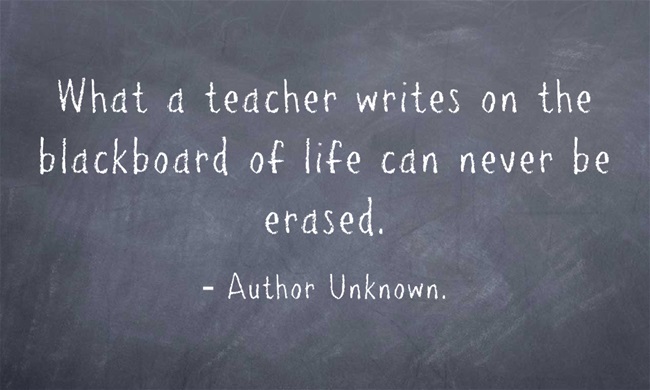
    What-a-teacher-writes-on

    In his article Pilgrim says,

    “teachers have (the power) to develop their students and shape their future lives.  The power to turn them on or off academically, stimulate or dampen their minds and heighten or destroy their engagement and intellectual curiosity.”

    Scary stuff!

    At about the same time I read an article that said that the influence of teachers is not as great as one might think; that socio-economic status, amongst other things, is more important. While I am happy with the thought of having a positive effect, I definitely do not wish to ruin anyone’s life so am happy to know that my influence is not be the most important to the lives of my students.

    https://openclipart.org/image/800px/svg_to_png/59389/happy_sun_gm.png
    https://openclipart.org/image/800px/svg_to_png/59389/happy_sun_gm.png

    For this challenge of Charli’s I am back thinking about Marnie’s art teacher and the hard place she found herself in when she saw the brown muddy mess that Marnie seemed to have made of her paints. That she must respond is a given; but how? Whatever she says will probably have a lasting impact so she must ensure that her response is appropriate. While her initial instinct is to express disappointment, she maintains her professional composure and delays commenting until she has thought it through.

    Here is my response:

    Brown.

    She glanced at the child, usually so eager to please, and knew this was no ordinary day.

    Downcast and avoiding eye contact, the child trembled. Her instinct was to reach out with comfort to soothe the hurt; but stopped. Any touch could end her career. What to say? Brown earth/brown rocks? would ignore and trivialise the pain. Any talk now would be insensitive with other ears listening. Any word could unravel the relationship built up over time. Nothing would harm more than doing nothing. Her steps moved her body away but her heart and mind stayed; feeling, thinking.

     Thank you

    Thank you for reading. I appreciate your feedback. Please share your thoughts about any aspect of this post or flash fiction

  • How important is it, if it can’t be tested?

    A+

    This week, all across Australia, students in years 3, 5, 7 and 9 took part in the National Assessment Program NAPLAN.

    In previous posts I have questioned the purpose of this type of assessment, the importance placed upon the results, and the undue stress caused to students, teachers and families. You can read some of my thoughts here, here and here for starters.

    Of course I am not the only one questioning, and Australia is not the only country in which nation-wide testing is set, and questioned. The tests are no more popular in the US with many students opting out. Diane Ravitch does much to raise awareness of the issues on her blog. Concerns are also raised in the UK, and no doubt elsewhere.

    However sometimes something good can arise where it is least expected. Out of the melee of the testing environment this week came a wonderful letter written to students by teachers who know that there is more to each one than the score on a test. A parent of one of the students posted the letter on Facebook and it went viral. The story was picked up by a variety of media outlets.

    I congratulate the teachers for writing and distributing the letter. I couldn’t have said it better myself.

    Check it out on Facebook here, or read some of the media reports:

    ABC Brisbane

    Daily Mail UK

    The Independent UK

    A similar letter went viral in the UK last year, and according the ABC article, the letter was based on one written to students in the US a number of years ago. I don’t think the message can be repeated often enough.

    Maybe it is one thing to tell the students, but how do we get the policy makers first to listen and then to act?

    Perhaps they should have a listen to the discussion by Tim and Debbie, one of my favourite pieces from the 80’s.

    Actually, in relation to the letter, I was looking for one of my favourite quotes by Tim but sadly couldn’t find it. He says, “My thoughts exactly. I would have said it if I’d thought of it!”

    Thank you

    Thank you for reading.

    I appreciate your feedback. Please share your thoughts.

  • My time, your time, springtime!

    This week at the Carrot Ranch Charli Mills has challenged writers to In 99 words (no more, no less) write a story that is a snapshot of spring.


    At the moment approximately 90% of the world’s population are experiencing the season of spring. The rest of us, the 10% who live in the Southern Hemisphere are entering the cooler months. How those seasons are experienced varies from place to place. I have never experienced an autumn that would fit the description of ‘fall’; nor have I experienced a winter with snow. Those concepts are foreign to me. That is not to say that some living in the southern states of Australia haven’t experienced them. It all depends where one lives.

    The Australian Government describes Australia as having two main seasonal patterns in six different climatic zones. The Indigenous Peoples of Australia describe the changes as holistic changes in nature and life. In Australia, attitudes to and understanding of the seasons are as diverse as the experiences. While the weather doesn’t always know it, spring is marked on the Australian calendar from September to November. It doesn’t matter to which part of the country you travel, there is always something to see and do in spring.

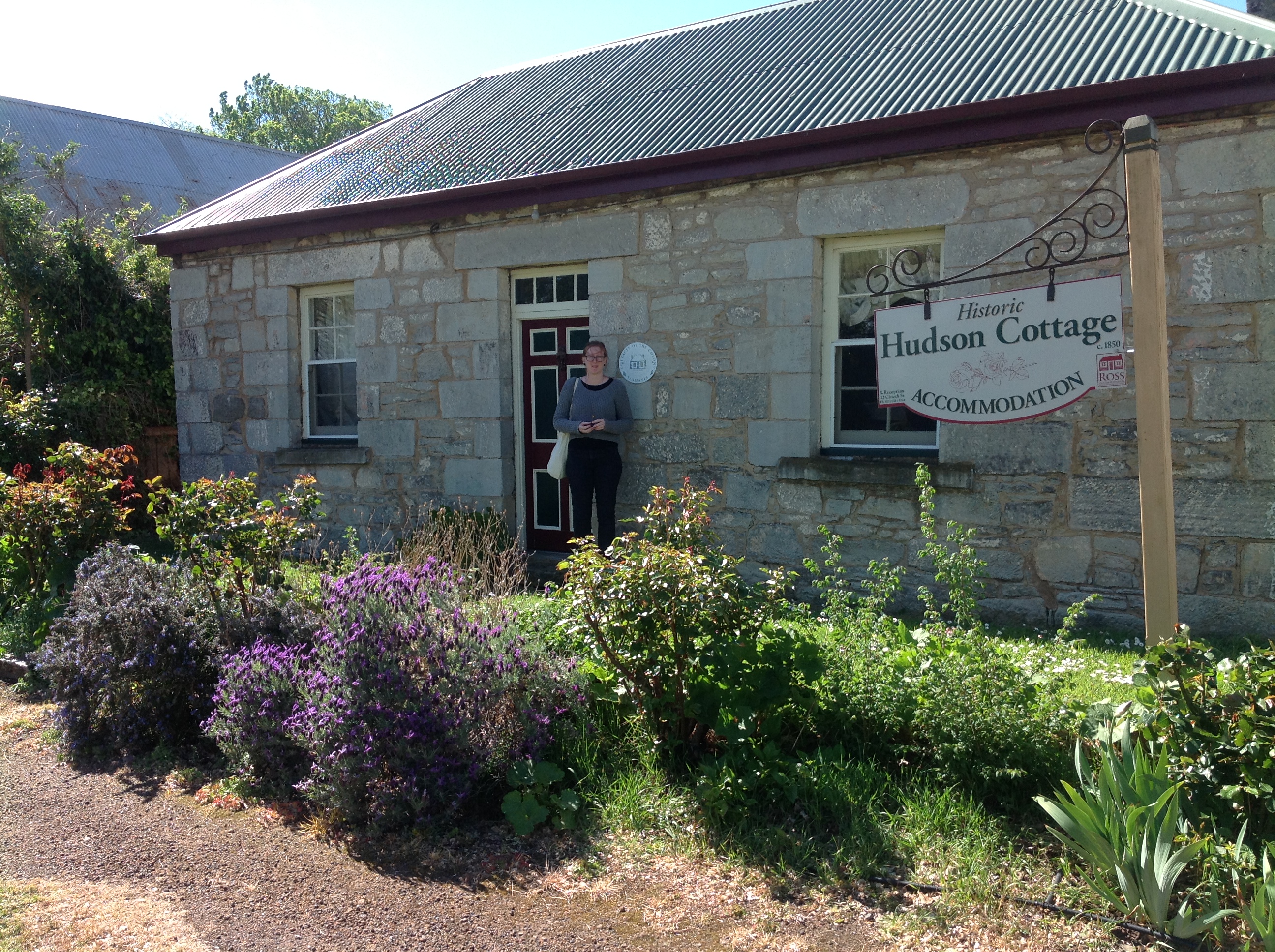
    Springtime in Tasmania 2014
    Springtime in Tasmania 2014

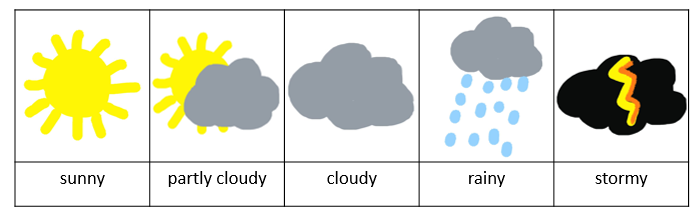
    Part of the daily routine in an early childhood classroom is observing and discussing the daily and seasonal changes in the weather. Each day the children observe the weather and discuss how it may influence their clothing and activities and the impact that changes may have to their local environment and other things including animals.

    Many classrooms have a calendar prominently displayed on which the children’s observations can be recorded and compared. Children are often invited to draw symbols and write words such as those shown here.

    weather symbols

    Discussions about how warm or how cool it is may also occur, though in some parts there is never really what could be called ‘cold’, just ‘cooler’.

    temperature chart


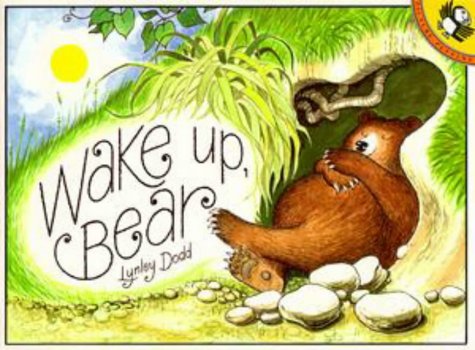
    Reading stories was always an integral part of my classroom practice and I needed little excuse to read another. When the seasons changed I was always looking for suitable books to read and the first I thought of at springtime was Wake Up Bear by Lynley Dodd, a New Zealander.

    Wake up bear

    While we don’t have bears in Australia, just these cute koalas often incorrectly called bears;

    or hibernating animals, except for this cute little mountain pygmy-possum;

    Wake Up Bear is a delightful story to herald spring. In the story, bear has slept all through winter, but when spring arrives he is not quite ready to wake up. The animals each try to wake him up and finally they succeed.

    While it was not Dodd’s intention with the story, it made me think about children learning in their own time, “waking up” when they are ready. Sometimes they need to be shown something just once. Sometimes they need a great deal of exposure and support to “get” it. Sometimes it’s better to leave them alone until the time is right. There have been previous discussions about this here my blog, including In their own time and Not Yet.

    I thought Charli’s spring challenge was perhaps another opportunity for talking about individual differences and the need to respect a learner’s journey. I’ve gone back to my early childhood roots. I hope you enjoy it.


    Springtime in Tasmania 2014
    Springtime in Tasmania 2014

     Spring

    Bees buzz

    Wildflowers bloom

    Cockatoos squawk

    “Gone is the gloom!”


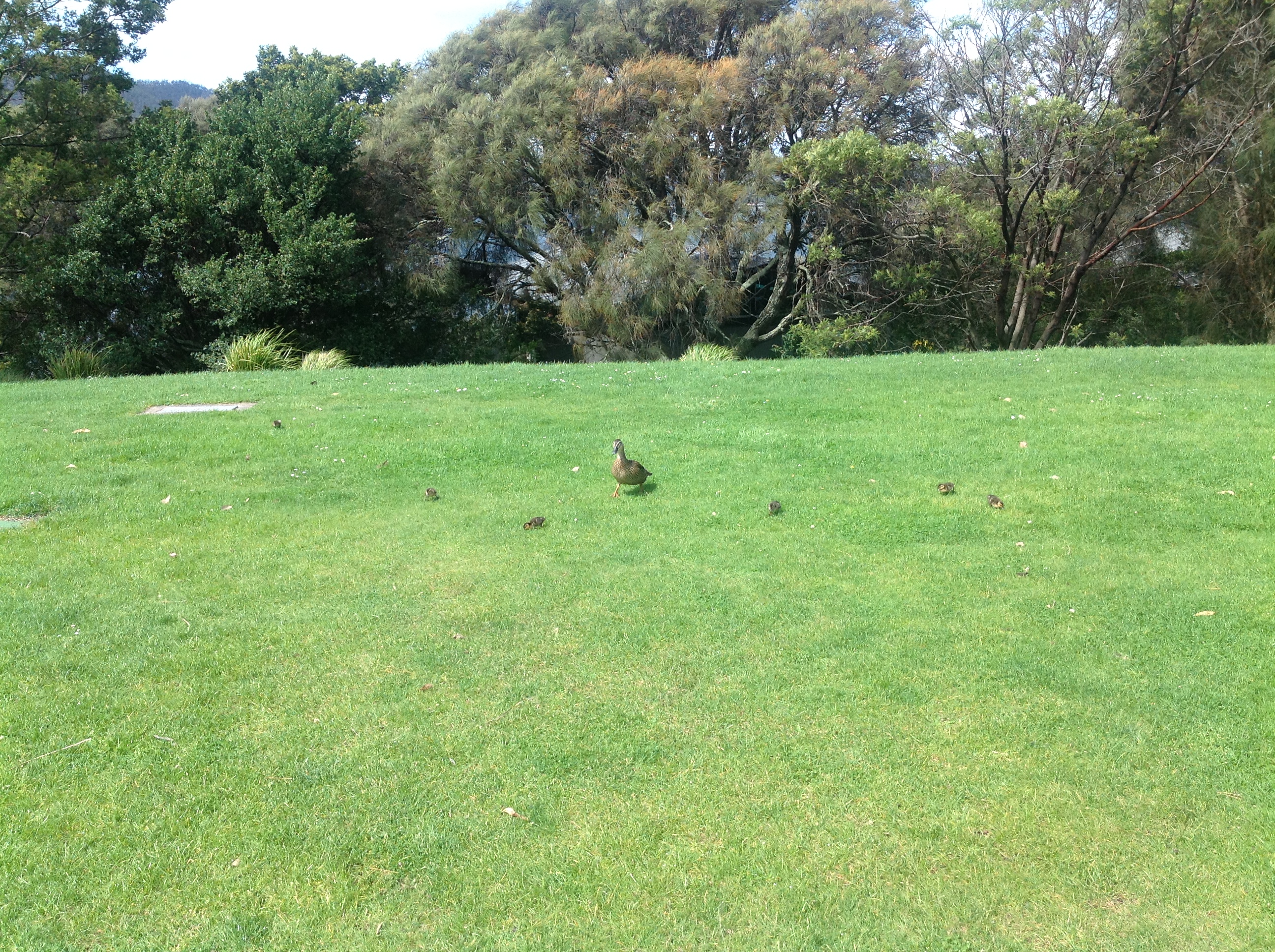
    Mother duck waits

    For her babies to hatch.

    Here they come now

    The first of the batch


    So cute and cuddly

    All covered in fluff

    Eager and ready

    To show off their stuff


    “Patience!“ quacks mother

    “There’s no need to rush.”

    “One more is coming.

    Stand back. Please don’t crush.”


    With one final crack

    Last one’s out of his shell

    “I’m proud of you babies.

    You’ve all done so well.”


    Mother duck smiles

    As they waddle in line

    She knows that each duckling’s

    Own time will be fine.

    Thank you

    Thank you for reading.

    Springtime in Tasmania 2014

    Springtime in Tasmania 2014

    Happy spring to most of you! For the others: enjoy the cooler respite from the relentless heat!


    I appreciate your feedback. Please share your thought about any aspect of this post or flash fiction.

  • Are you ready or what?

    When thinking about schooling and education there is always a lot of discussion about readiness and the things that must be done to have a child ready for school, ready for the next class, ready go to college or university . . .

    While I agree that a learner must be ready to take the next step, to broaden understanding of a concept or to grasp the complexity of deeper issues; just what that readiness requires is often up for conjecture.

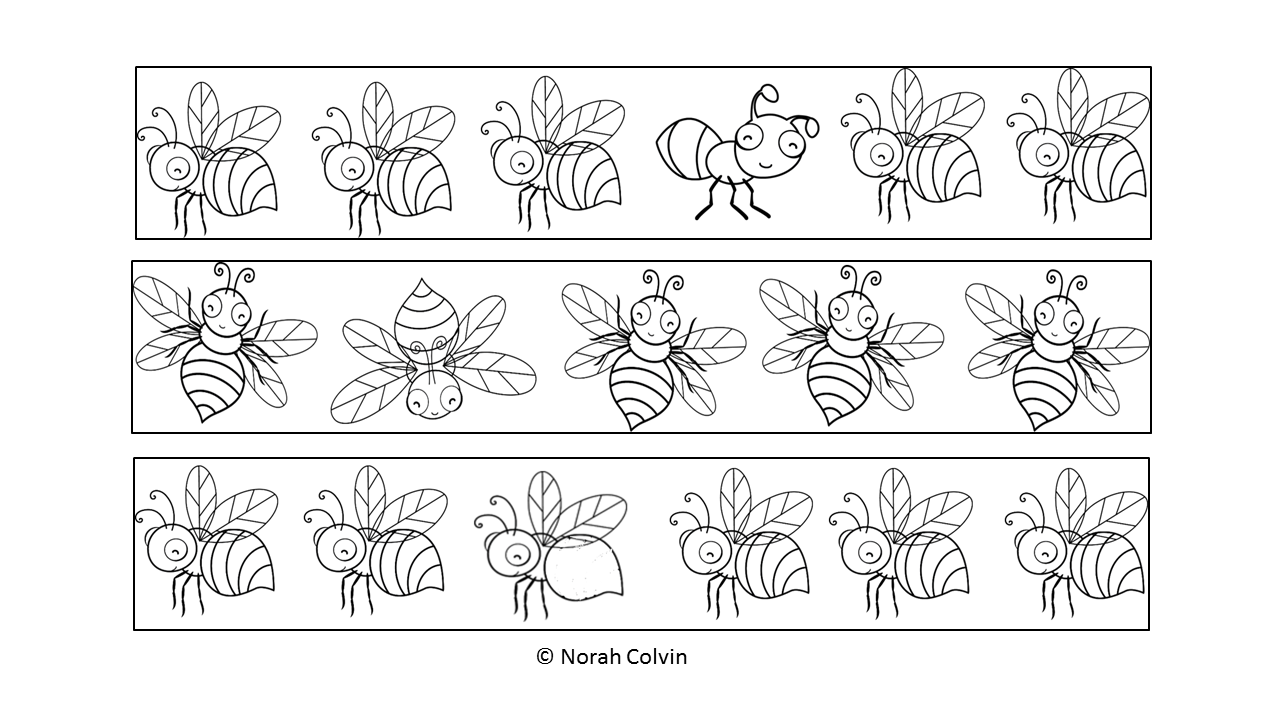
    Back in the early days of my teaching experience workbooks of ‘reading readiness’ exercises were frequently used with students in their first year of school. These activities generally required children to identify the one that was different in a group of objects. The exercises, such as those shown below, progressed through various levels of difficulty with the aim of preparing children for reading.
    reading readiness exercises

    Fortunately our understanding of how reading is learned has progressed since then and it is now recognised that exercises such as those did little to prepare children for learning to read. We now know that the best preparation for reading is to be immersed in language through conversations, with adults especially; to be read to frequently; and to develop a love of books and interest in print by sharing with others. The role of parents in preparing children for reading cannot be underestimated.

    This week I watched a video of a presentation by Yong Zhao about a type of readiness he referred to as “Out of basement readiness”. I admit I hadn’t heard the term before but the concept is definitely familiar.

    I do recommend you listen to Zhao’s talk. It is interesting, thought-provoking and humorous. I think I enjoyed listening to this talk as much as to Ken Robinson’s on How schools kill creativity which I have mentioned in previous posts here and here, amongst others. However at 55 minutes some of you may not be willing to commit the time. For me, it is 55 minutes of my life I’m very happy to not get back!

    I will not attempt to share all the content of the talk; there is too much of value, but here are just a few snippets that resonated with me:

    Zhao explains out of basement readiness this way:

    out-of-basement readiness - Yong Zhao


    Zhao says that students are being mis-educated, that they are being educated for something that doesn’t exist, and suggests that we should remove several phrases from the language we use to talk about education, especially

    • Under-performance
    • Evidence based
    • Data driven


    His description of the traditional education paradigm will be familiar to any frequent readers of my blog. He says that it is “about forcing people to do what some other people prescribe them to do” and that we reduce it to just a few subjects that can be tested.


    He talks about the “homogenisation” of schooling, and explained that homogenisation was the best way of getting rid of creative people and innovative thinkers.


    He mentioned kindergarten readiness tests, and suggests that the only test should be whether the kindergarten was ready for the children and parents.


    He recognises the uniqueness of every student, with different backgrounds, motivations and talents; and stresses the importance of effort. He says, “You cannot be born to be great. If you do not put effort into it you can never be good at it.” He explains it this way:

     “If you put ten thousand hours into something you are good at, something you are interested in you get great talent. But if I force you to spend time on something you have no interest in, you hate and something you are not good at, you at best become mediocre.”

    He says that countries that produce high test scores, score low on confidence and interest.

    He says,

    “Everyone is born to be creative, that’s a human being, that’s our gift: to be able to adapt, to learn and relearn and do new things. But school has typically tried to suppress it (with) . . . short term learning. . . Direct instruction may give the short-term gain but cause long term damages Studies show that if you teach children how to play with the toy, they lose creativity, lose curiosity and if you allow children to explore more they may not test very well but they maintain creativity and curiosity.”

    American schools _ Yong Zhao

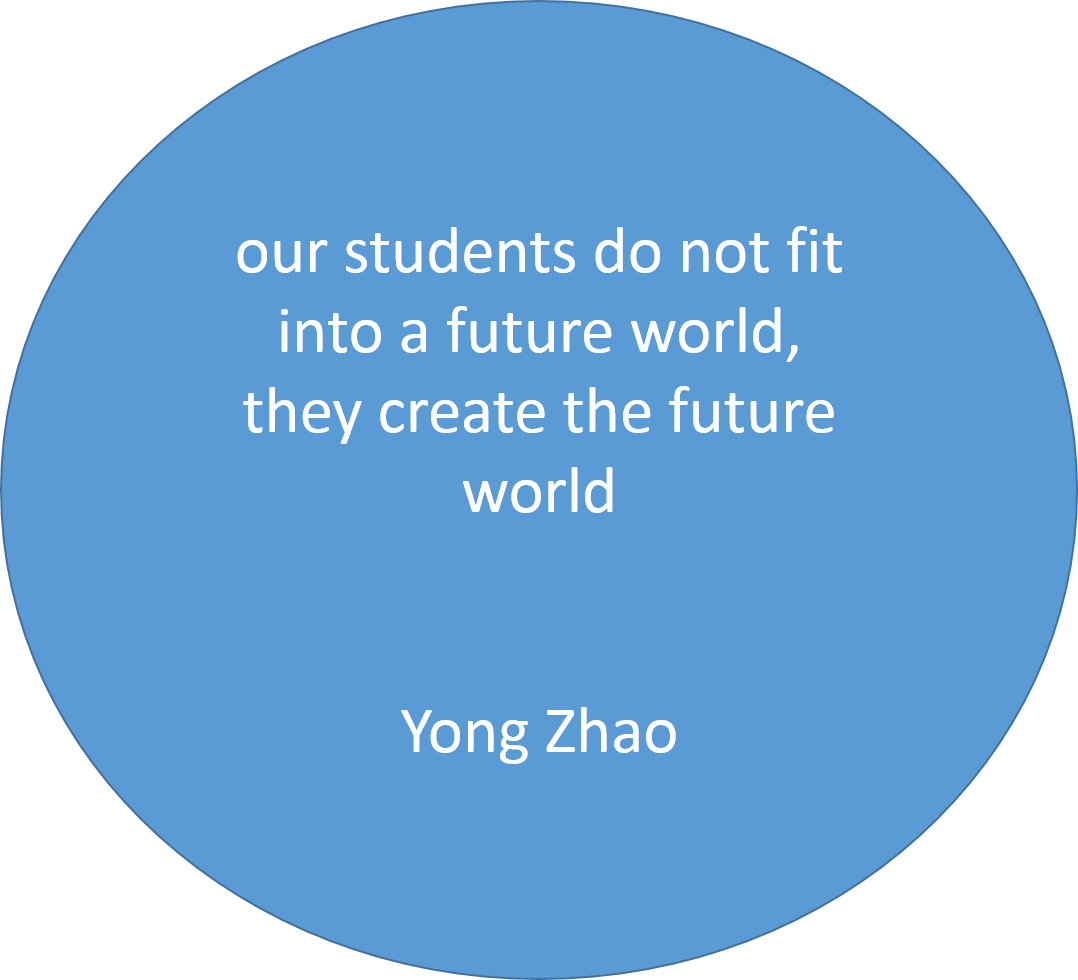
    Zhao says that “our students do not fit into a future world, they create the future world. This is why we need a different type of education.” He says that “education is to create opportunities for every individual student, they are not an average, they are not a probability, they need to be improved as individual human beings.”

    our students do not fit - Yong Zhao

    I couldn’t agree more. What do you think?


    I was led to Zhao’s talk via Diane Ravitch’s blog which is about the education system and situation in the US. Much of what she writes has applications further afield and I recommend it to anyone wishing to stay informed of current issues in education.

    Thank you

    Thank you for reading. I appreciate your feedback. Please share your thoughts on any aspect of this post.


  • Colour my world a rainbow!

    This week at the Carrot Ranch, through her thought- and idea/l-provoking post, Charli Mills invites writers to respond to her challenge to In 99 words (no more, no less) write a story that tackles racism.

    Charli describes racism as a social earthquake that divides our common ground. She says that Our first step is to recognise our one race: human (with a) colourful kaleidoscope of culture.”

    Charli suggests that writers Think about common ground, about the things that rip us apart as humans. How we can recover our identities in a way that honors the identities of all individuals? What breaks the barrier of other-ness? Imagine a better tomorrow that doesn’t need expression in riots or taking sides on social media. As writers, think about genres, characters, tension and twists. We can rebuild.

    https://openclipart.org/image/800px/svg_to_png/192642/Children_holding_hands.png
    https://openclipart.org/image/800px/svg_to_png/192642/Children_holding_hands.png

    In my comment on Charli’s post I admitted that I am not qualified to write on this issue. I am fortunate to have never experienced the negativity of racism, the cloak that can at the same time judge one to be invisible and without value or singled out in the spotlight of blame. The responses of those who have, from the moment of their birth, needed to prove the value of their existence are often judged without understanding or sympathy by those who have experienced no such discrimination and whose attitudes are so ingrained as to go unnoticed.

    Consider this exchange between work correspondents who decided to meet up at a conference. “How will we know each other?” she asked. He responded, “I’m black.” In recounting this episode to friends, she said, “I’ve never thought of myself as white.” Perhaps until all feel their skin colour is not an issue, any more than eye or hair colour, it will remain so.

    I am not participating in the flash challenge this week, feeling unable to write something that would give sufficient recognition to the gravity of the divide that is racism. However I do not want my silence to be seen as lack of concern, or negation of the importance of the issue. Instead I will use my post to amplify the voices of others.

    Dr Enyimba Maduka from the Department of Philosophy, University of Calabar in a paper entitled “Racism and Philosophy: An examination of Human and Kantian Racial Thoughts” considers the history of racism and the effects it has had on the mindsets of African peoples and cultures as well as Western philosophies. Maduk specifically targets and explores writings by Hume and Kant.

    He says that racism can be understood “as a functional rationalization and symbol for oppression; (that it is) an attitude always directed at the vanquished not the powerful; it is the colonized who are the victims of racism and not the colonizers.”

    He also says that “when human persons refuse to recognize the authentic humanity of their neighbours and fellow human beings, they cease or fail to be human persons themselves”. Strong words, definitely requiring reflection.

    Listen to Clint Smith explain everyday limitations imposed by, and reminders of, skin colour; and ponder their humanity:

    Or read the letter to his future son, expressing his hopes and dreams and fears. His message reiterates Charli’s call to rebuild.

    He says,

    “do not for one moment think you cannot change what exists. This world is a social construction; it can be reconstructed. This world was built; it can be rebuilt. Use everything that you accrue to reimagine the world.”

    Or listen to James A. White Sr. describe the difficulties he had in renting a house, and consider how patient and resilient you may be in similar circumstances. Some of these situations I find difficult to imagine. White Sr. aims to share his experiences of racism in order to stress the message that all races, genders and backgrounds must come together to challenge the status quo.

    Or perhaps Nina Jablonksi, an anthropologist, who says that skin colour is an illusion.

    While many people deny it, or deny it affects them or their communities, racism is also an issue in Australia.

    According to the All Together Now Erasing Racism project, acknowledgement of racism is essential to start preventing it in our communities.

    We must all make an effort to ensure that racism stops with me.

    I think education and understanding is a good place to start.

    Thank you

    Thank you for reading. I appreciate your feedback. Please share your thoughts.

  • A garden where children flourish

    The introduction to this TED talk The best kindergarten you’ve ever seen by Takaharu Tezuka states:

    At this school in Tokyo, five-year-olds cause traffic jams and windows are for Santa to climb into. Meet: the world’s cutest kindergarten, designed by architect Takaharu Tezuka. In this charming talk, he walks us through a design process that really lets kids be kids.

    Some things that appeal to me about this kindergarten include:

    • the lack of boundaries between inside and outside, and between classrooms
    • the freedom of a child to choose to be in, or to leave, a space
    • the space and freedom for children to run
    • the sounds of happy children
    • the opportunity for children to help each other
    • and the attempt to use architecture to change the lives of children without controlling every waking moment

    There are a few things that concern me, that make me feel uncomfortable, but maybe that’s just my urge to control being challenged.

    What do you think?

    Thank you

    Thank you for reading. I appreciate your feedback. Please share your thoughts about any aspect of this post.

  • The power of words

    writing

    The ability to learn language always amazes me. Given a supportive environment most young children will learn the language of the home effortlessly; forming their own hypotheses about its use and very quickly understanding the complexities of language structures and nuances of meaning.

    I am also impressed by the fluency and comprehension of many for whom English is not their first language. I briefly touched on some of the difficulties experienced even by users of English as a first language in a previous post about spelling.  Sometimes I wonder that communication is possible at all, especially when considering local idioms and sayings that make little sense out of context, but largely go unnoticed. What must a new speaker of English  think when encountering “Bite the bullet, break the ice, butter someone up, or even bring a plate”.

    How difficult it must be too, when words, like vice for example, have multiple meanings.

    This week at the Carrot Ranch Charli Mills has been talking about vice. Her article is about the not-so-pleasant type of vices. As usual, I like to be the contrarian and consider alternative viewpoints. That might be considered one of my vices. Sometimes I laugh when a thought takes me to a context far away from a speaker’s intended message. Other times I fail to see the intended humour, reading beneath the surface intent to hidden messages.

    To illustrate this I will use two recent examples:

    bicycle

    The cyclist and the flight attendant

    He: a cyclist, just entering the last third of his life (about 60, give or take 5 years)

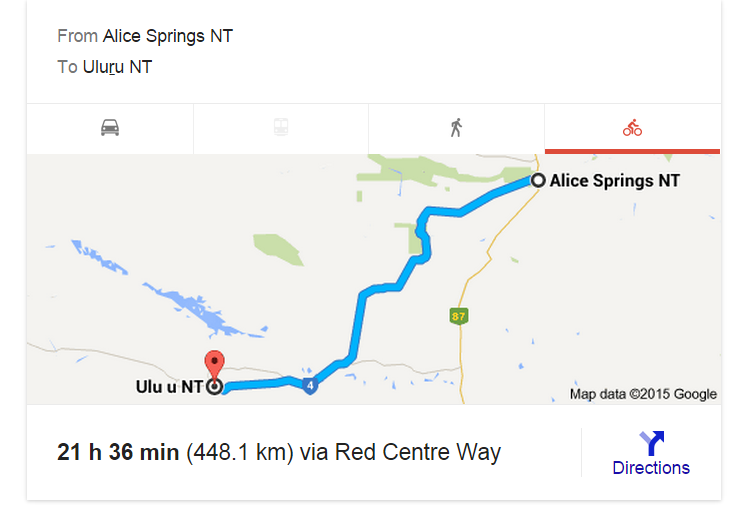
    As his bike was being loaded onto the plane he explained that he had ridden from Alice Springs to Uluru, the long way. (I’m not sure of the distance of the long way, but the direct way would be more than long enough for me!)

    Alice Springs to Uluru

    She: a flight attendant still in the first third of her life (about 25, give or take 5 years)

    “That’s so awesome! I hope I continue to exercise all my life.”

    I didn’t hear his response; I was laughing too hard: the innocence and blindness of youth. How well I remember thinking anyone over about thirty was at death’s door. What amuses me now is the number of people my age who think we are much younger than those of the previous generation at the same age. I think the blindness and selective sight continues throughout life.

    Of course I interpreted her words to mean: “You’re so old. I can’t believe you could do that. I hope I can still exercise when I am as old as you!”

    OLYMPUS DIGITAL CAMERA

    The joy of fatherhood?

    Waiting for the same flight was a father and his daughter, approximately two and a half years of age. The daughter was doing what any child of that age would do: looking around, exploring a short distance away from dad before returning to his side. From what I could see she was doing no harm and was perfectly safe. It was a small airport, she could not wander far.

    Each time she moved away he barked a short command at her. Although his words were not familiar to me, I had no difficulty interpreting them. As with most children, sometimes she heeded them, sometimes she didn’t. Sometimes he repeated the command, or retrieved the child. Sometimes he didn’t.

    Then I saw his t-shirt and read the word emblazoned on the front. I am a reader. Sometimes I wish I were not. The words read, “Guns don’t kill people, Dads of daughters do”.

    I have never “got” the need for messages on apparel, and definitely not a message as negative as this. I assume it was meant to be amusing, but I could see no humour in it. Maybe he didn’t understand the message underlying the words (he was speaking in a language other than English). Maybe I read too much into it. Apparently though, according to this Google search, there is a sizable market for shirts and products extolling these sentiments, some even with the inclusion of the word “pretty”.

    My interpretation of the subliminal message is one of acceptance of a number of vices, and my belief is that until we can obliterate the insidiousness of messages such as these from the common psyche, our society won’t much improve. To me the message commends: disrespect for others, sexism, murder, violence, antagonistic relationships between parent and child/father and daughter, an absence of nurturing, an acceptance that children are difficult and a burden . . .

    Perhaps I should stop there. I think this father and daughter team would be prime candidates for the early learning caravan project I wrote about recently. I would love to help this father see, not only the power in his words, but the treasure his daughter is and the importance of their relationship.

    As I’ve explained, I sometimes see humour in words where it’s not intended, and fail to see it where it is. I’ve attempted to include humour in my flash response to Charli’s challenge to In 99 words (no more, no less) write a story that includes a vice, by using three different meanings of the word. I’ll be interested to know if my “humour” matches yours, but won’t be surprised if it doesn’t!

    This one is definitely not about Marnie!


    Vice-captain

    She almost danced along the verandah. What would it be: medal, certificate, special recommendation?

    The door was open but she knocked anyway.

    “Come in.” The command was cold. A finger jabbed towards a spot centre-floor.

    Confused, her eyes sought the kindness of the steel blue pair, but found a vice-like stare.

    She obeyed.

    “In one week you have led the team on a rampage:

    Smashing windows

    Uprooting vegetables

    Leaving taps running

    Graffiting  the lunch area . . .

    We thought you were responsible. What do you have to say for yourself?”

    “But sir,” she stammered, “You made me vice-captain!”


    Thank you

    Thank you for reading. I appreciate your feedback. Please share your thoughts about any aspect of this post or flash fiction.

  • The story behind brown paint

    muddy brown

    Over the past few months in response to flash fiction challenges set by Charli Mills at the Carrot Ranch, I have been writing snippets from the life a character, Marnie, whose story is beginning to emerge as I respond to the prompts.

    A couple of recent prompts had me writing about a particular situation which involved mixing paints in an art class.  While all flash fiction stories relevant to Marnie’s story can be found on her own page, the two specific to this post can be read here and here (scroll to the bottom of each post for the flash fiction).

    I was appreciative of the comments on both posts, with those specific to Marnie’s story encouraging me to reflect and think more deeply about the art class situation in relation to both Marnie and the teacher. While I am still mulling over the appropriate response the teacher may make, I thought I would write a longer piece to explore one possibility from Marnie’s point of view. This episode also relates to other flash fiction pieces, but hopefully the longer episode will be strong enough to stand on its own.

    Art class

    Marnie looked at the paints. The bright colours reminded her of a rainbow, and her unicorn. Her gaze dropped. She needed her unicorn now, but it was up in the office, drying out on Mrs Tomkin’s desk.

    “It will be here waiting for you at home time,” Mrs Tomkin had said, smiling. “Okay?”

    Marnie nodded, reluctantly, knowing there was no other choice. At least there was only the afternoon session left, and that was art with lovely Miss R.

    Miss R. always wore beautiful dresses with colourful patterns. She had long wavy red hair, the colour of Marnie’s and her nails were always painted brightly, sometimes decorated with stars, sometimes with hearts, and sometimes with other patterns. She smelled of paint, and chalk and crayon and other scents Marnie found delightful. She noticed everything about Miss R.; because Miss R. noticed her. Miss R. always had a kind word to say:

    “I like the way you used this shade of blue for the sky. I can see a storm is brewing.”

    “Tell me about this picture. What’s it all about?”

    “I can see you worked hard to get that looking just right.”

    Marnie liked it best when she said, as she often did, “I like your choice of colour, Marnie. Your pictures are always bright. They make me happy when I look at them.”

    But not today.

    Miss R. stopped and looked at Marnie’s work. Her paper was covered in paint the colour of brown mud.  Marnie felt Miss R.’s eyes on her work, then on her. She didn’t look up. She didn’t want Miss R. to see the tears that were threatening to fall, that would fall whatever was said. Her lip quivered.

    Miss R. moved on.

    “I am not crying. I am not, not, not . . .” but it took all her strength when her insides felt as muddy as the paint on her paper. She felt like mud. Maybe she should look like mud too. She smeared her paint-covered hands on her shirt, and wiped the strand of hair away from her eyes. She wanted to tell Miss R. She wanted to tell her about Bruce and what he had done. But she dare not. Bruce had threatened her and she knew he meant it.

    Bruce had tripped her at lunch time and she’d fallen into the puddle. The mud had covered her from head to toe. She’d tried to hold her unicorn high; tried to keep it out of the mud. But it had fallen as she hit the ground. It was all muddy too. Everyone had laughed. Everyone except Jasmine, that is. Jasmine had taken her to Mrs. Tomkin, who had helped her clean herself up and gave her some clean clothes to wear. Mrs Tomkin had said she’d call her Mum, so that was another problem looming. At least things would be okay in art with Miss R.

    But not today.

    Bruce had pulled faces at her and made threatening arm movements as they lined up. He made fun of the oversized shirt Mrs Tomkins had found for her. Everyone was sniggering at it; at her.

    Marnie looked straight ahead, trying to ignore the stares. “I am not crying!”

    Then Miss R. was there and she suddenly felt protected, like everything was going to be alright; for a little while at least.

    But not today. Today was a bad day, a very bad day. It had been bad in the beginning, and it was going to be bad at the end too. Nothing she could do.

    Miss R. handed out the papers and paints. Everyone had their own brush but a small pot of water was shared by four.

    Marnie couldn’t wait to get started. She knew what she was going to paint: a rainbow and a unicorn! Maybe a tree and some green grass, with some flowers. She couldn’t have her own unicorn but she could paint it. Miss R. would like her bright happy colours, and her pleasure would make her feel better, for a little while at least.

    But not today.

    While Marnie was contemplating which colours to mix for her unicorn’s mane, Brucie reached over and snatched Marnie’s brush. With one flourish he had dragged the brush through the middle of each of her colours leaving a dirty brown trail. Marnie had opened her mouth to speak, but Bruce silenced her with a threatening motion of a finger across his neck, as it to slit it open. He stashed her brush on the shelf out of reach, and turned back to his paper, innocent-like. Marnie’s eyes searched for Miss R.’s hoping she had seen and would come to her rescue. But Miss R. was talking to Jasmine and some others at the front, and didn’t see.

    Marnie looked at her palette. “I am not crying,” she thought as she tried to still her quivering lip and stop the tears that would give Brucie so much pleasure.

    She looked at him and poked her tongue. He held up a fist.

    Marnie rubbed first one hand, and then the other into the coolness of the paint, blending all the colours. It felt soothing somehow, the way her hands slid easily through the paints. She watched each colour disappear into the muddy brown she was creating, wishing she too could slide away and disappear where no one would notice her anymore; where no one would taunt or bully or harm. If they couldn’t see her, if she was invisible, maybe she’d be safe.

    She looked at her palms – covered in brown, just like the mud that had covered them earlier. She smeared the paint on her paper, covering it from edge to edge so nothing of it remained. She wiped what was left on her shirt. What did it matter? She couldn’t be in more trouble than she already was. They were already going to kill her. Sometimes she wished they would. Sometimes she wished she’d never been born. Sometimes . . .

    Miss R. stood beside her desk. Marnie could hear her breathing; could still smell her marvellous scents above that of the muddy brown paint that was now her camouflage. She longed for Miss R. to paint her life away, to ask her about her work and what it meant. But she willed her not; and it must have worked because she walked away. How could she tell her? Her life was as muddy as the paint and she could see no way out.

    Thank you


    Thank you for reading. I appreciate your feedback. I’d love to know what you think of this as a possibility of Marnie’s thinking.


  • All aboard the early learning caravan!

    school cropped

    This week at the Carrot Ranch Charli Mills described a century old schoolhouse which adjoins her property. She is hoping that someone will buy it and make it a meeting place for the community, recognising the role it had to play in the education of generations past as well as its contribution to the history of the area. Her thoughts about the schoolhouse led her to thinking of community engagement and neighbourly relationships which, in turn, inspired her flash fiction challenge for this week, to In 99 words (no more, no less) write a story about nurturing a neighborly relationship.

    I would have loved the little schoolhouse at Elmira Pond as the base for the alternative school I hoped to establish at the end of last century. The schoolhouse has a nice community feel to it, unlike many of the large brick, concrete jungle-type schools into which one can almost dissolve in a sea of sameness. Charli’s schoolhouse/community centre would also be a great meeting place for parents with their young children; a friendly early learning centre for both.

    8-12-2013 7-38-33 PM


    Based on my beliefs that:

    • parents are a child’s first and most important teachers;
    • the most important years of a child’s development are the years before school;
    • children who enter school with rich vocabularies, an interest in the world around them, and a love of books are primed to succeed;
    • children without those experiences are disadvantaged in their learning right from the start and face an enormous challenge in catching up;
    • waiting until children enter school is too late;
    • the best way to minimise or eliminate the disadvantage is by educating parents through programs that model effective parenting behaviours and support them in their interactions with their children;
    • parenting programs offering those types of support would be most effective if begun before birth of the children and continued at least until the child enters school, maybe beyond;
    • most parents want to do the best for their children, many just don’t know how to go about it.

    There are any number of birthing classes, but not many that aim to support parents in nurturing their child’s development. In my opinion, investing time and money into developing programs such as these would have enormous benefit, not only to individual children and their parents, but to society as a whole.

    I am not talking about programs that place children of increasingly (or should that be decreasingly) younger years into structured and formal “teaching and learning” situations. I am not talking about one-off talks or series of lectures to parents.

    Many of the parents of children who begin school with the types of disadvantage I have mentioned are themselves products of similar disadvantage. In a previous post I discussed the roles of “nature” and “nurture” in a child’s development. In these cases especially, it can be difficult to tease out the differences. Many of these parents would not have positive feelings towards schools or any other public institution and may feel threatened, or reluctant for other reasons, to attend sessions in public halls or government offices.

    What I am talking about is a program that:

    • goes to the parents and children in their neighbourhoods, meeting in a local park or community greenspace, on regular weekly occasions;
    • invites parents to talk with, read to and play with their children using provided books, games and toys;
    • models positive parenting behaviour, explaining to parents the benefits to their children of engaging with them in activities and discussions;
    • provides suggestions for inexpensive and easy activities to do at home;
    • encourages borrowing from a book and toy library.
    Guiding parents in play sessions for parents and children.
    Guiding parents in play sessions for parents and children.

    I envision the program being delivered by an early children trained educator who is sympathetic to the situations and demands of people from diverse backgrounds, who is warm and supportive with good interpersonal skills with both adults and children, who drives a mobile early learning centre fully-equipped with books, toys, games, paper, pens and craft materials, including items for borrowing and distribution for activities to be done at home.

    I see the centre as a brightly painted caravan with doors that open wide to display a colourful and engaging assortment of resources to delight the interests and eyes of young children and their parents.  As the caravan travels into each neighbourhood it would play music to signal its arrival (think of the old icecream vans!) inviting parents and children to come, investigate, and join in.

    caravan

    Thinking about the excitement that such a program may stimulate in a neighbourhood, and the sense of community and belonging it may encourage, led me to write about it for my response to Charli’s prompt.

    I hope you enjoy it.

    www.openclipart.com
    http://www.openclipart.com

    The caravan

    Children waited anxiously at windows and front garden fences.

    Mothers and fathers hurried to complete the last of their chores.

    Others, already at the park, were unable to wait.

    Ears strained, listening for music signalling, “It’s time!

    Suddenly “Girls and boys come out to play!” announced the arrival of the brightly painted caravan.

    “Come on!” urged children, tugging at skirts, trousers and hairy legs.

    “Come on!” chimed parents, downing cloths and brooms. Clasping small hands they whisked them out.

    Everyone watched as the doors of the caravan opened; ready for fun: stories, games and much to explore!

    Thank you

    Thank you for reading. I appreciate your feedback. Please share your thoughts about any aspect of this post or flash fiction.

  • What measure success?


    A+

    I have often expressed concern about what I consider to be an over-emphasis on standardised and national testing and the pressure it puts on students to achieve. I explained some reasons for my misgivings here and here and here, for example.

    https://openclipart.org/image/800px/svg_to_png/59389/happy_sun_gm.png
    https://openclipart.org/image/800px/svg_to_png/59389/happy_sun_gm.png

    As a parent and a teacher the most important thing I want for my children is for them to be happy. After that I wish for them to be healthy and successful. But what is success? In a recent post I referred to a seventy-five year study conducted by George Vaillant who came to the conclusion that success means leading a happy life and that “warmth of relationships throughout life have the greatest positive impact on ‘life satisfaction‘”.

    bee 5

    Last week I wrote about spelling tests and spelling bees and the effect that doing well, or not, might have upon a learner’s self-esteem as well as attitude to self as a learner, attitude to school, and to learning in general. While writing it I was not aware of an article written by Kate Taylor and published in the New York Times on April 6 2015: At Success Academy Charter Schools, High Scores and Polarizing Tactics.

    http://www.flickr.com/photos/24256351@N04/3662558333">Kids at Kubota Garden, 2003
    http://www.flickr.com/photos/24256351@N04/3662558333″>Kids at Kubota Garden, 2003

    I discovered the article via a series of stepping stones from Lloyd Lofthouse to  Diane Ravitch to The New York Times.

    Taylor opens the article by describing how the struggles of students to learn are made public, for all to see; posted on charts in hallways and reproduced in class newsletters. To see one’s name at the bottom of the list in a red zone, clearly showing that year level expectations have not been reached seems to be rather harsh, and humiliating for the child. Perhaps even more so if the teacher considered the student was just not trying. The teacher, it is reported, had difficulty watching the child take the tests for fear she would be upset by his mistakes. Months later the child scored 90% and was warmly congratulated.

    Taylor goes on to say that the school, which has mostly poor black and Hispanic students, outscores many students from more affluent areas with results much higher than average on the state wide tests. I know that everybody loves a winner and that we all want our students to succeed, but at what cost? The article describes the school as being very rigid with a competitive atmosphere that requires strict adherence to rules.

    Last week in my post A sprinkling of semicolons I shared an article by Ron Berger who talks about regular students whose “teachers have helped them develop the skills and mindsets necessary to produce work of exceptional quality, and have built classroom and school cultures in which exceptional work is the norm.” He says that most of the work comes from students in low-income urban schools.

    www.openclipart.org
    http://www.openclipart.org

    I suddenly became fearful. Were the students and schools described by Berger similar to those of the Success Academy schools as described in Taylor’s article?

    In both cases the students were from poor areas and they achieved remarkable success with most attending college. Austin, as described by Berger, made six drafts of his butterfly drawing before it was considered to be “scientific” enough. I wondered how much, if any, duress he had been under.

    The article described Berger as the Chief Program Office of Expeditionary Learning Schools. I followed the link to discover a little more about Expeditionary Schools, checked with Wikipedia and other sites that came up in a Google search, including Open World Learning which says that expeditionary learning (EL) “fosters curiosity about the world by creating learning situations that provide something important to think about, time to experiment, and time to make sense of what is observed.” It also says that EL schools “promote rigorous and engaging curriculum; active, inquiry-based pedagogy; and a school culture that demands and teaches compassion and good citizenship.  EL schools are based on the Outward Bound model, which starts with the belief that we learn best through experience.

    https://openclipart.org/image/800px/svg_to_png/59389/happy_sun_gm.png
    https://openclipart.org/image/800px/svg_to_png/59389/happy_sun_gm.png

    This all sounds wonderful and praise-worthy, and I was feeling a little happier about what I had shared. However, if there’s one thing I have realised after a lifetime involvement in education is that the written statements of any educational institution sound wonderful and praise-worthy. It’s the way the principles are applied in practice that makes the difference.

    I didn’t like what I had read about Success Academy Charter Schools in the New York Times, so I thought I’d better check out their website to discover what philosophy and principles guide them. First thing I spotted was a letter from a parent responding to the article in the New York Times! The parent, Polina Bulman, painted a very different picture of the school from that offered in the Times.

    Bulman describes the decision-making process she went through in choosing the Success Academy for her five year old daughter. She shares what had concerned her and explains how those concerns had been answered. She describes her daughter’s happiness at school and the progress she is making in all areas of her learning. She has nothing but praise for the school, and concludes her letter, which she shared on Facebook, with these words:

    “I was so touched by the warm and welcoming atmosphere. I had a chance to hang out in the hallways, listening to what teachers say to students as they pass by, and watching what teachers and staff members say to one another. I saw so much collaboration and kindness, so much teamwork. The best thing is that as a parent I feel like a part of this team and am proud of it!”

    These words are in quite strong contrast to those of the New York Times.

    The “Approach to Learning” statement of the Success Academy explains that students are engaged in only 80 minutes of direct instruction each day and that the rest of the time they are engaged in small group instruction and hands on learning.


    So what does all this mean?

    For one thing, just as you can’t judge a book by its cover, you can’t judge a school by its policy statement.

    For another, you can’t believe everything you read, even when the source seems trustworthy, you must question the author’s credentials, viewpoint and purpose in writing, “What barrow are they pushing?” (I’m upfront about my biases!)

    And mostly, question, question question.

    The Very Hungry Caterpillar

    These are important lessons for readers of any material and of all ages. I have talked about the importance of developing critical literacy in a series of posts about using “The Very Hungry Caterpillar” in the classroom. No, definitely not in science lessons, but in lessons to discuss those very points discussed above:

    Don’t believe everything you read

    Check an author’s credentials and purpose in writing

     And question everything.

    While I applaud the end result of Austin’s butterfly drawing, I question what the process may have been. We are not privy to that, though the supportive voices of students in the video do give us an inkling. I hope for the sake of all students that it was one of encouragement and support rather than pressure. Additionally I hope that the report in the New York Times got it all wrong. But if that is so, what is Taylor’s agenda and why would she attack these particular schools so fiercely?

    Note: I wrote this article a couple of days ago and upon re-reading it now I have a couple of further thoughts re my advice to check an author’s credentials and purpose in writing. I have not followed my advice. I failed to check out the author of the NY Times article. However I think it is fair to say that Lloyd Lofthouse and Diane Ravitch are both anti the emphasis on standardised testing; and the Success Academy is probably reliant on the tests to measure its “success”.

    There is no black and white truth. There are only shades of grey.

    Thank you

    Thank you for reading. I appreciate your feedback. Please share your thoughts about any aspect of this post.