Live Love Laugh Learn … Create the possibilities

Category: Education

  • readilearn: Meet the author-illustrator team for Turtle Love – Renee Hills and Anna Jacobson

    readilearn: Meet the author-illustrator team for Turtle Love – Renee Hills and Anna Jacobson

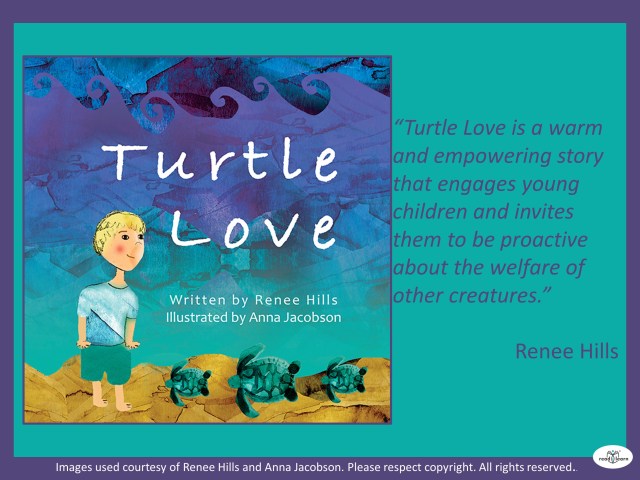
    Do you love turtles? I find these magnificent creatures of the sea fascinating. Although I already owned a collection of picture books about turtles, I couldn’t resist supporting local author Renee Hills publish her first picture book Turtle Love, illustrated by Anna Jacobson, through Pozible at the end of last year. I was delighted when I received my very own copy of this beautiful picture book with its warm and empowering story that engages young children and invites them to be proactive about the welfare of other creatures.”
    Synopsis

    Turtle Love is about Jacob Gordon Lachlan Brown who lives on perhaps the most interesting and beautiful beach in the world. The flatback turtles agree. They come every summer to lay their eggs. But life is becoming more difficult for the turtles because the big ships that load coal are stirring up sediment and this affects the seagrass that the turtles eat.  And this beautiful beach is where they MUST come to nest. Why don’t the flatback turtles go somewhere else? What can Jacob do to help them?

    The text explores themes including the impact of man-made coastal developments on the habitat of other species; how to advocate for threatened creatures and the right of all living beings to have a safe place to nest and live. As a bonus, the book contains a story within a story, a mythical explanation for the beautiful coloured rock landform on the beach where the turtles nest.

    About the author

    Renee Hills has been writing ever since she won a prize for an essay about the future when she was a country North Queensland kid. After graduating and working briefly as a teacher, Renee honed her writing skills as a print journalist, editor, and self- publisher.

    Continue reading: readilearn: Meet the author-illustrator team for Turtle Love – Renee Hills and Anna Jacobson

  • readilearn: Teaching phonics and letter-sound relationships in early childhood classrooms – Readilearn

    readilearn: Teaching phonics and letter-sound relationships in early childhood classrooms – Readilearn

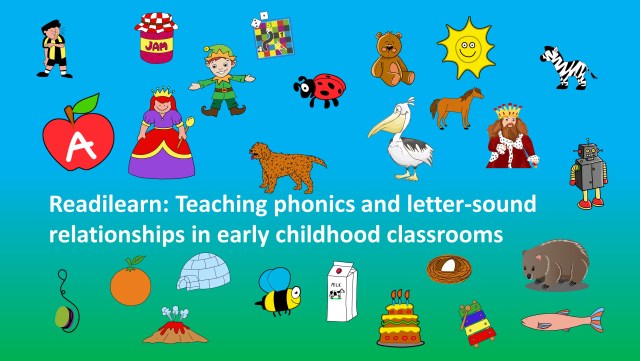
    Teaching phonics and letter-sound relationships is an important part of literacy education in early childhood classrooms. To be fluent readers and writers we need to understand the relationship that exists between the letters and sounds of our language. This knowledge is what enables us to extract meaning from texts we read and ensure that others can interpret the intended meaning in words we write.

    The process of expressing thoughts in writing can be laboured for young children as they stretch out words to identify individual sounds and the letters we use to represent them. From the initial stages of making arbitrary marks upon the page, children develop into proficient writers through recognisable stages of approximation. Readable writing is dependent upon the effective use of letters to represent sound.

    Reading is not so dependent as there are other cues and strategies that readers can employ to interpret a writer’s message. Young children garner information about texts they read from supporting illustrations, prior knowledge of the subject matter and text type (for example, narrative or non-fiction) and understanding of how language works. This information supports their reading which is guided by words they recognise by sight as well as their knowledge of letter-sound relationships.

    When teaching children to read, it is important to ensure children learn to use effective strategies that access all available cues. Over-dependence on any one cuing system leads to a break-down in the process. While the teaching of phonics has an important place in early childhood classrooms, I have resisted making resources for teaching phonics in isolation for two main reasons.

    Two reasons against making resources to teach phonics in isolation
    #1

    I believe reading is best learned and taught by reading. Knowledge of letters and sounds can be learned while reading meaningful and enjoyable texts. Teaching and learning can occur in literacy lessons, lessons in any subject, or whenever an opportunity to interact with print exists, which is frequent in our print-rich environment.

    I have previously written about some strategies I consider beneficial for teaching reading and will no doubt write more in the future. You can read some of those posts here:

    What’s in a name? Teaching phonics, syllabification, and more!

    Engage Learners with pizza-themed cross-curricular teaching and learning resources

    Continue reading: readilearn: Teaching phonics and letter-sound relationships in early childhood classrooms

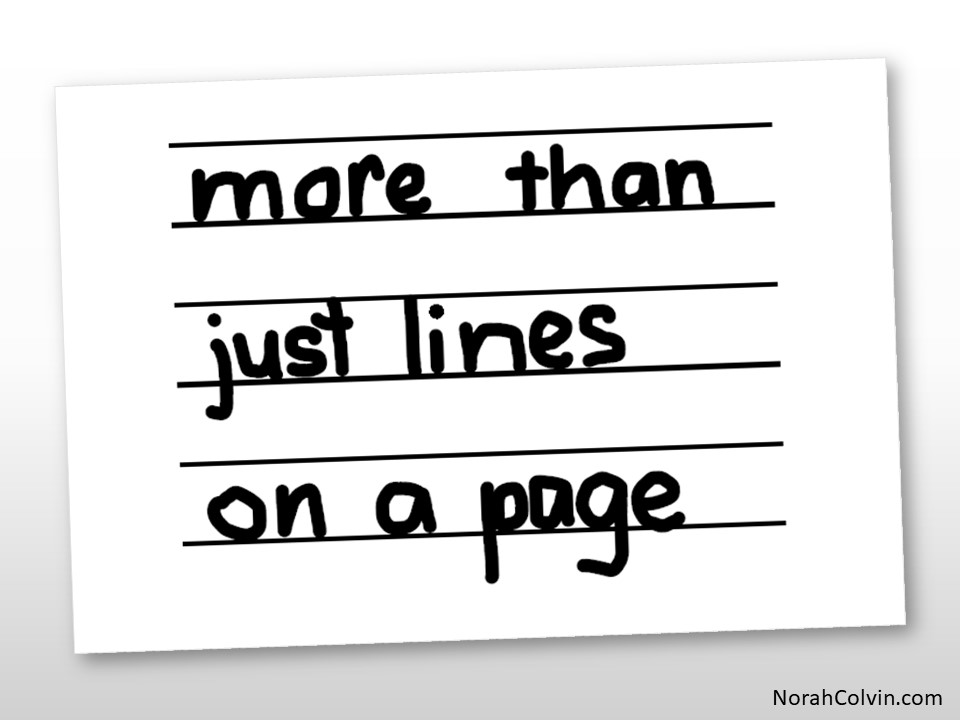
  • More than just lines on a page

    More than just lines on a page

    This week at the Carrot Ranch, Charli Mills has challenged writers to In 99 words (no more, no less) use a line in your story. You can think of the variation of the word meaning, or you can think of visual references. Go where the prompt leads.

    As an educator of young children, with a special interest in literacy development, I shouldn’t have needed to think for long. Although, there being so many possible ways of interpreting the prompt, I did. I finally decided on the lines that we as writers and artists make on the page, the meaning we assign to them, and the meaning others extract from them.

    Children begin their journey into literacy by assigning meaning to marks they make upon the page and by realising that marks made by others also carry meaning. As their ability to both express and decipher develops, they come to realise that a text or image is more than the sum of the individual lines of which it consists. Communication deepens by interpreting and understanding the meaning conveyed below and between the marks.

    The ability to both imply and infer meaning extends to the interpretation of facial expressions, body language and changes in the environment. We can accept what we see at face value or make a judgement about what may be implied or intended. While the messages are often considered obvious, misinterpretation is possible.

    In response to Charli’s prompt, I’ve played with interpreting other lines. I hope you like it.

    Reading between the lines - signs in the sand www.NorahColvin.com

    Reading between the lines

    Four lines of footprints stretched along the shore. A line, mostly unbroken, edged one side; the other, a sequence of dots. The smaller prints danced lightly. The larger dragged heavily with one foot sideways. Criss-crosses of triple-pronged seagulls’ prints failed to obscure, unlike the smudge of ocean’s wet kisses. Tiny crabs scuttled their own story tracks through weeds, shells and stones coughed up by the sea. Beyond a collapsed castle, the footprints continued. In the distance—rocks. So far?  He accelerated. Didn’t they know the tide had turned?  Caught in the moment, they’d missed the signs. Lucky he didn’t.

    Thank you blog post

    Thank you for reading. I appreciate your feedback. Please share your thoughts.

  • readilearn: How to make STEM learning a part of every day

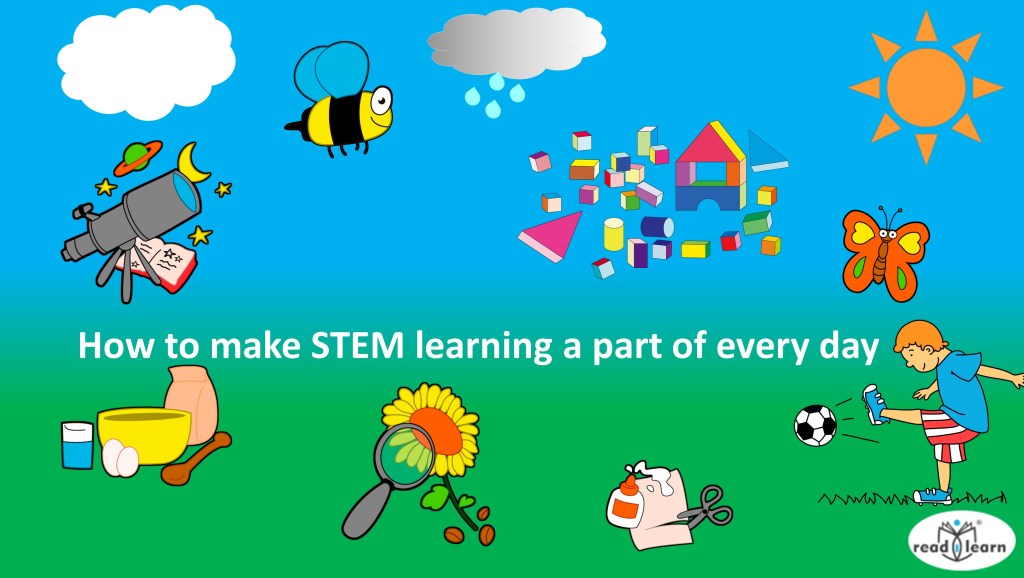
    readilearn: How to make STEM learning a part of every day

    Making STEM learning a part of every day is easy if one is mindful of the opportunities that arise. In a previous guest post, Narinda Sandry explained STEMtastic: making it easy — in every classroom, for every child and teacher.

    Last month I shared with you an excellent article from The Conversation by Kym Simoncini of the University of Canberra about Five things parents can do every day to help develop STEM skills from a young age.

    There is a thirst for information about STEM in the wider community, and articles such as these generate a lot of interest. In response, I have compiled some suggestions to help parents Incorporate STEM learning into everyday activities – suggestions for parents. The handout, located in Classroom ManagementFor parents, is available for teachers to distribute free to parents

    Incorporate STEM learning into everyday activities

    Continue reading: readilearn: How to make STEM learning a part of every day

  • #WATWB Malala returns to Pakistan for the first time in five years

    #WATWB Malala returns to Pakistan for the first time in five years

    On the last Friday of each month, We Are the World Blogfest invites bloggers to join together in promoting positive news. If you would like to join in, please check out the rules and links below.

    “There are many an oasis of love and light out there, stories that show compassion and the resilience of the human spirit. Sharing these stories increases our awareness of hope in our increasingly dark world.”

    This month I am pleased to share the next chapter of Malala Yousafzai’s inspiring story.

    Malala fled Pakistan in 2012 after being shot in the face by Taliban militants for promoting education for girls. In 2014 she was awarded the Nobel Peace Prize. At the end of last month, five years after the attack, she returned to visit her home in Pakistan.

    Click to read the report published by the BBC.

    I read about it first on the Facebook page of A Mighty Girl,

    and watched it here:

    I admire Malala for her strength and the determination of her voice in campaigning for education for all. I particularly applaud these two quotes by Malala:

    “One child, one teacher, one book, one pen can change the world.”

    “When the whole world is silent, even one voice becomes powerful.”

    Here are the guidelines for #WATWB:

    1. Keep your post to Below 500 words, as much as possible.

    2. Link to a human news story on your blog, one that shows love, humanity, and brotherhood. Paste in an excerpt and tell us why it touched you. The Link is important, because it actually makes us look through news to find the positive ones to post.

    3. No story is too big or small, as long as it Goes Beyond religion and politics, into the core of humanity.

    4. Place the WE ARE THE WORLD badge or banner on your Post and your Sidebar. Some of you have already done so, this is just a gentle reminder for the others.

    1. Help us spread the word on social media. Feel free to tweet, share using the #WATWB hashtag to help us trend!

    Tweets, Facebook shares, Pins, Instagram, G+ shares using the #WATWB hashtag through the month most welcome. We’ll try and follow and share all those who post on the #WATWB hashtag, and we encourage you to do the same.

    The co-hosts for this month are:  :  Shilpa Garg, Dan Antion, Simon Falk, Michelle Wallace , Mary Giese.

    Please pop over to their blogs to read their stories, comment and share.

    Click here to join in and enter the link to your post. The bigger the #WATWB group each month, the greater the joy!

    Thank you for reading. I appreciate your comments. Please share your thoughts.


  • Introducing Andrew King author of the Engibear series – Readilearn

    Introducing Andrew King author of the Engibear series – Readilearn

    Today, I have great pleasure in introducing you to Dr Andrew King from Brisbane Australia. Andrew is an engineer, teacher, and writer of the popular Engibears series of picture books, designed to introduce children to engineering through friendly characters and story. Each book focusses on a particular aspect of engineering and, through examples and accompanying activities, is designed to encourage children to try engineering — to “Dream, Design and Develop”.

    Dream, Design and Develop

    Engibears have been part of Andrew’s family for many years. They were created while Andrew played and shared stories with his children.

    Andrew thinks he is very lucky to be working with Benjamin Johnston, a Sydney-based architect and illustrator. Ben’s fantastic illustrations have brought Engibears and Munnagong, the city in which they live, to life.

    Andrew is passionate about the role that Science, Technology, Engineering and Maths (the STEM subjects) will play in our sustainable future and equally passionate about the importance of STEM education. He regularly talks to students about engineering, and facilitates student-centred engineering activities and programs.

    His kids think he enjoys building shelves in his spare time. However, Andrew really enjoys spending time with his family, playing bass guitar, walking his dogs and trying to play golf.

    The Engibear series includes three books; Engibear’s Dream, Engibear’s Bridge and Engilina’s Trains. In the most recent, Engilina’s Trains, Engilina, Engibear and Bearbot are back to build transport for the future – a new maglev train that will run from Munnagong to Billaburra as fast as a plane. During the project, they discover an old steam engine which leads them on an interesting journey and creates an unexpected link to the past. It’s an interesting story of trains, teamwork, technology and time.

    Now let’s meet Andrew. Welcome to readilearn, Andrew. We are looking forward to getting to know a little more about you and your books.

    Thanks for inviting me.

    Andrew, when did you know you wanted to be a writer?

    Continue reading: readilearn: Introducing Andrew King author of the Engibear series – Readilearn

  • readilearn: What parents can do to prepare their children for school

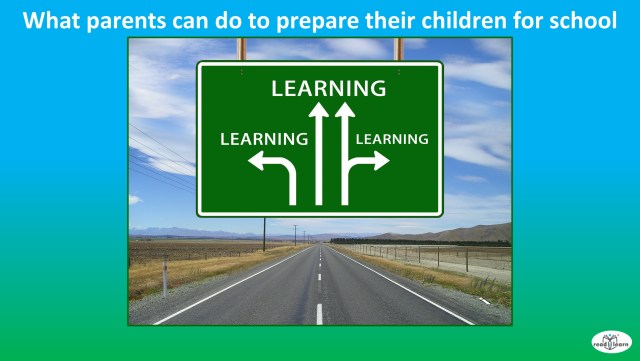
    readilearn: What parents can do to prepare their children for school

    Parents often approach teachers wanting to know what they should teach their children or how to prepare their children for school—should they teach them the letter names or sounds or how far should they teach them to count?

    However, for most teachers, these are not of highest priority.

    What teachers value most is an ability to:

    • engage in conversation about experiences and ideas
    • get along with others and make friends
    • identify and organise personal belongings

    and to have:

    • an interest in books
    • a curiosity about the world, and
    • a willingness to have a go and try new things.

    The best way parents can prepare their children for school is by spending time with them, talking with them, playing games with them, reading stories to them and encouraging their curiosity by providing them with opportunities to question, learn and explore.

    It is important for parents to see themselves as their children’s first and most important teachers. When their children start school, it is not time for them to relinquish their responsibility. Instead, it is important for them to work in partnership with teachers to ensure the best chance of success for their children.

    Last week I shared an article, originally published in The Conversation, in which Kym Simoncini provided parents with suggestions for developing young children’s interest in STEM (science, technology, engineering and mathematics.)

    This week, I share a letter to parents of children beginning school, congratulating them on their contribution and requesting their ongoing support.

    Dear Parents,

    Congratulations on teaching your child to speak!

    Continue reading: What parents can do to prepare their children for school? – Readilearn

  • Five things parents can do every day to help develop STEM skills from a young age – Readilearn

    Five things parents can do every day to help develop STEM skills from a young age – Readilearn

    The development of STEM (Science, Technology, Engineering and Mathematics) skills can be encouraged in children, even before they start school, by parents who are attuned to opportunities for learning.

    I’ve previously introduced you to Rebecca Johnson, Narinda Sandry, Brenda Miles and Susan Sweet with their books and suggestions for including STEM in early childhood classroom learning, and soon I will be interviewing Andrew King about his beautiful Engibear series of picture books that focus on the engineering component in STEM. These supplement my own posts about incorporating STEM in the classroom here and here.

    In this post, I share with you Five things parents can do every day to help develop stem skills from a young age by Kym Simoncini Assistant Professor in Early Childhood and Primary Education, University of Canberra. This article was first published in The Conversation. Throughout Kym’s article, you will notice links to other articles. Be sure to follow the links for even more great ideas and resources.

    Now over to Kym Simoncini, University of Canberra

    Five things parents can do every day to help develop STEM

    skills from a young age

    Educators and researchers agree early literacy experiences are important for children’s cognitive and language development. For the past 30 years there has been a strong movement to foster children’s literacy skills. This has resulted in an abundance of information on how parents can do this by reading books, singing songs and nursery rhymes, playing word games and noticing print.

    This is a good thing and should continue, given the importance of early literacy skills in learning to read, and how this leads to later success in school and life.

    Continue reading: Five things parents can do every day to help develop STEM skills from a young age – Readilearn

  • Counting on fingers

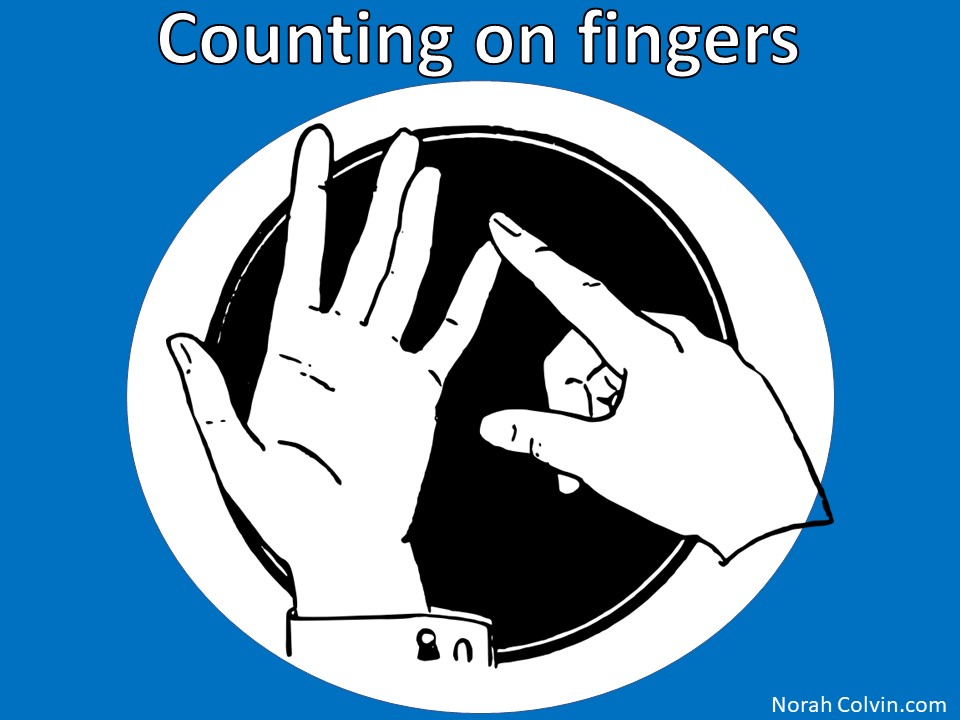
    Counting on fingers

    This week at the Carrot Ranch, Charli Mills challenged writers to In 99 words (no more, no less) write a story about fingers that fly. Think about the different ways we use our fingers and what happens when we add speed. Go where the prompt leads.

    I thought about the use young children make of their fingers when counting. It may increase their speed and ease of calculation in the beginning, but continued use tends to slow them down.

    I also thought about magicians, and how the speed of their fingers amazes us with tricks and sleight of hand.

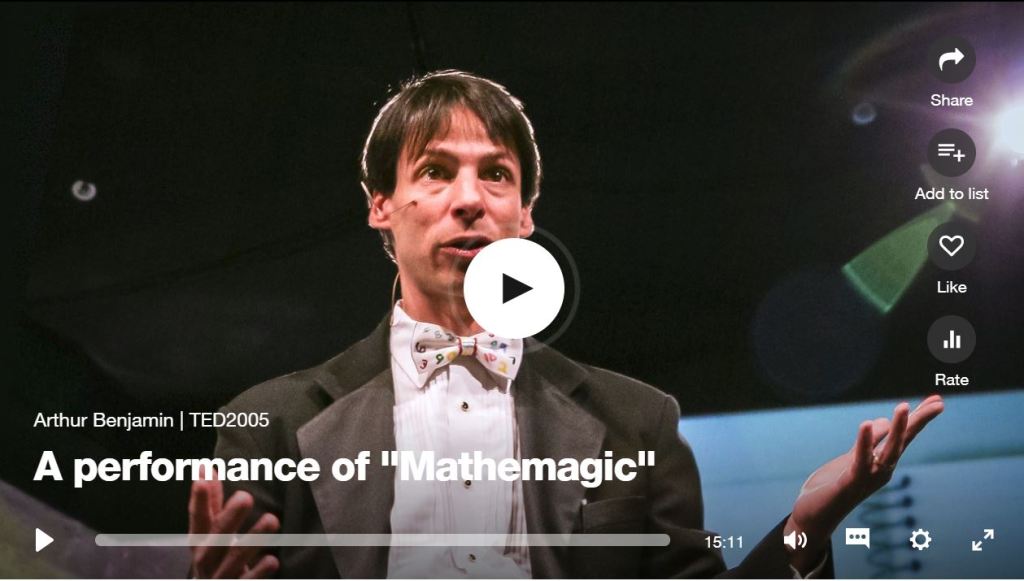
    Combining both thoughts brought me to the mathemagician Arthur Benjamin who never ceases to astound with his calculations.

    A performance of mathematic by Arthur Benjamin TED talk

    Are you a math whiz, solving complicated problems and making calculations with large numbers effortlessly, or do you still need to count on your fingers at times?

    I don’t think I was ever what would be considered a maths whiz, but I did have my confidence in maths taught out of me. Sadly, I think this happens to far too many.

    Many children who have been provided experiences with number and engaged in discussions about number from a young age develop strong understandings and are able to calculate with little effort, arriving at answers almost intuitively. While it can be good to help them develop metacognition by asking them to explain how they knew, or how they worked it out, sometimes they don’t know how—they just know.

    While some children need to be taught methods of working out answers, requiring maths intuitive thinkers to use the same working can cause them to second-guess themselves and to lose confidence by breaking what they know down into steps that only cause confusion.

    I was interested to hear Arthur Benjamin’s plan for improving maths education when he is made “Czar of Mathematics”.

    Arthur Benjamin Czar of Mathematics

    His suggestions relate more to high school than primary, but probability and statistics still have their place in the early years, as I’ve shown with many readilearn resources.

    For my response to Charli’s prompt, I’ve considered what may occur if a child’s intuition with maths is neither appreciated nor encouraged.

    Counting on fingers
    Everyone said she had a way with numbers. Even when still in nappies she was counting effortlessly to large numbers in multiples of twos, fives and tens as well as ones. The parents didn’t dare think they’d bred a genius, an outlier. They wished for an ordinary child who fitted in, unnoticed, like them.  They strove to inhibit her talent and discourage her enthusiasm. She tried to hide her ability by delaying responses with finger actions resembling calculation aids. But they slowed her none and flew too fast, earning her the nickname “Flying fingers” and ridicule instead of appreciation. 

    Thank you blog post

    Thank you for reading. I appreciate your feedback. Please share your thoughts.

  • #WATWB Imagination Library: Dolly Parton donates her 100 millionth book!

    #WATWB Imagination Library: Dolly Parton donates her 100 millionth book!

    On the last Friday of each month, We Are the World Blogfest invites bloggers to join together in promoting positive news. If you would like to join in, please check out the rules and links below.

    A statement of mission from the We are the World Blogfest website:

    “There are many an oasis of love and light out there, stories that show compassion and the resilience of the human spirit. Sharing these stories increases our awareness of hope in our increasingly dark world.”

    The co-hosts for this month are Belinda WitzenhausenSylvia McGrath, Sylvia Stein,  Shilpa Garg, Eric Lahti . Please pop over to their blogs to read their stories, comment and share.

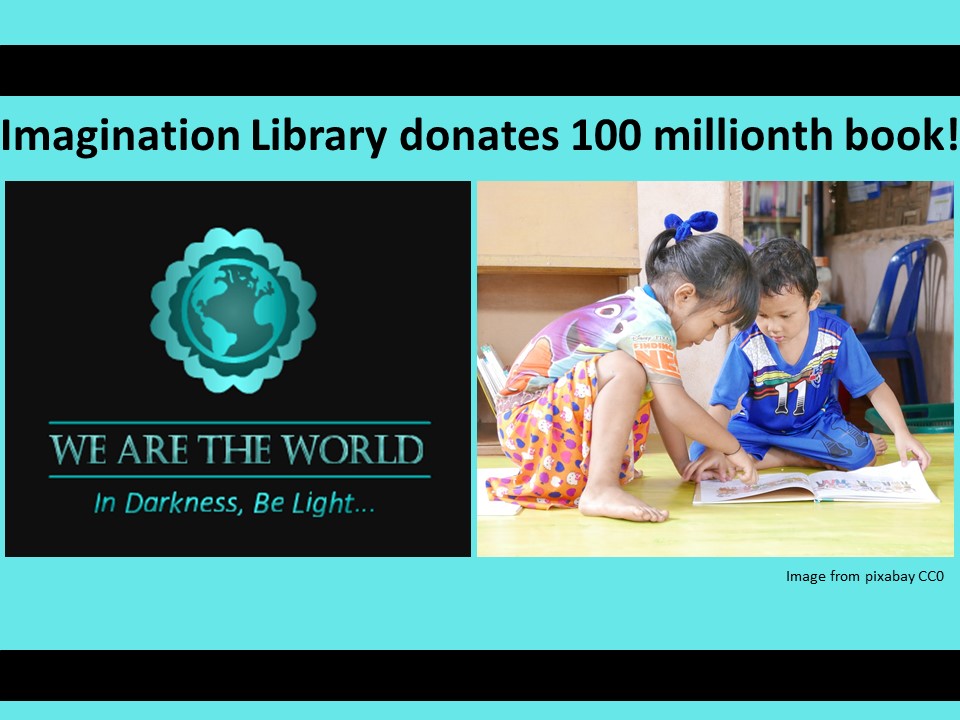
    This month I am sharing a story of Dolly Parton and the 100 millionth book she has given away through her non-profit Imagination Library.

    According to the article by Helena Andrews-Dyer in the Washington Post Dolly Parton Likes to Give Away Books. She just donated her 100 millionth.

    The article states that

    “Parton is the founder of Imagination Library, a nonprofit that started out donating books in Sevier County, Tenn., and grew into a million-book-a-month operation. Families who sign up receive a book per month from birth to kindergarten. The singer donated her organization’s 100 millionth book to the nation’s library on Tuesday.”

    Knowing the enormous potential that books and reading have for changing lives by improving the chances of success, not just in school, but in life, I couldn’t go past sharing this inspiring article, especially when International Children’s Book Day is celebrated in a few days on 2 April.

    Click to read the whole article in the Washington Post.

    Here are the guidelines for #WATWB:

    1. Keep your post to Below 500 words, as much as possible.

    2. Link to a human news story on your blog, one that shows love, humanity, and brotherhood. Paste in an excerpt and tell us why it touched you. The Link is important, because it actually makes us look through news to find the positive ones to post.

    3. No story is too big or small, as long as it Goes Beyond religion and politics, into the core of humanity.

    4. Place the WE ARE THE WORLD badge or banner on your Post and your Sidebar. Some of you have already done so, this is just a gentle reminder for the others.

    1. Help us spread the word on social media. Feel free to tweet, share using the #WATWB hashtag to help us trend!

    Tweets, Facebook shares, Pins, Instagram, G+ shares using the #WATWB hashtag through the month most welcome. We’ll try and follow and share all those who post on the #WATWB hashtag, and we encourage you to do the same.

    Click here to join in and enter the link to your post. The bigger the #WATWB group each month, the greater the joy!

    Thank you blog post

    Thank you for reading. I appreciate your comments. Please share your thoughts.