Live Love Laugh Learn … Create the possibilities

Category: Early childhood education

  • Passionate about literacy education

    Education is my passion.

    I have spent almost my entire life thinking about how to educate, and the rest of it being educated.

    That is to say, just like everyone else, I began to learn about the world from the moment I was born, if not before; probably before.

    From age ten I knew that I wanted to be a teacher and worked hard through school to achieve that goal.

    When I completed school I was fortunate to receive a teacher’s scholarship which meant that my three years of training was provided by the state education system and, in return, I was required to teach within the system for three years. Without the scholarship that path would have been unattainable.

    I remember sitting in my classroom on, what I will say was, my first day of teaching. I gathered a group of children around me, each of us with a reader in our hands, ready for a reading lesson. Suddenly I realised I didn’t have a clue what to do.

    Realisation 1: Teaching reading isn’t as simple as putting book in the hands of children and telling them to read.

    This was a third grade class, so I’m hoping that most of them were already able to read and we figured it out together. Round robin reading seemed to be the method of the moment.

    During that first, and the following year, I put a lot of energy into sorting books into levels and children into groups to read the books at the different levels.  I’m not sure what the children learned but I know I was earning my pay. I was ‘teaching’.

    Realisation 2: Children learn to read at different rates.

    At the beginning of my third year of teaching I was listening to children read individually, in order to group them according to reading ability, when one of the children, considered a good reader by his previous teacher, informed me proudly that he could read the book without looking; and proceeded to do so. He had memorised it! He didn’t recognise any of the words and could not read any other book.

    Realisation 3: Reading is more than reciting the words on the page.

    Major realisation: There was something wrong with the way reading was being taught, and I still didn’t feel confident about teaching it.

    Fortunately most children learn to read despite how it is taught, and although I sometimes think I’d like to apologise to all those students I “taught” when I didn’t have much of a clue, I’d like to say “I hope they’re not reading this”, but I really hope they can!

    Not long after this I had a break from teaching for a few years. During that time I read a lot of books about education, especially alternative views of schooling. I continued to feel strongly about reading instruction and even wrote a series of readers (unpublished) based on instruction in phonics. (Such was my ignorance!)

    I worked with groups of upper primary remedial readers who made great progress ostensibly using a phonics program. However they also received lots of individual attention, encouragement and opportunities for reading real books.

    At the same time I watched my three year old son become a reader without any formal instruction. I read to him, talked with him, wrote stories for him and transcribed his stories which we read together. We played games with language making up rhymes, playing “I spy”, singing songs and talking about print in our environment. Before I knew it he was jumping into bed in the mornings, prising my eyes open and begging to read to me!

    I struggled to make sense of what I was observing.

    Then the serendipitous moment arrived: I saw an advertisement for a graduate diploma in reading and language. It sounded tailored to my needs exactly. And it was.

    We packed up the family and moved across the country to enable me to undertake the study.

    It was one of the best things I have ever done. Suddenly everything made sense. The course about developing literacy skills also supported my developing beliefs and understandings about learning in general. I was at last in a place I felt comfortable. This was where I belonged. The course reignited my passion and provided the knowledge and skills that would underpin everything I have since done in education. Time has moved on but the essential understandings are timeless.

    The coordinator of the course, the person who deserves my sincerest gratitude, is just as passionate about literacy education today as he was then, influencing new generations of teachers and students. His name is Brian Cambourne, Principal Fellow on the Faculty of Education at the University of Wollongong. He is affiliated with the International Reading Association and the Australian Literacy Educators Association.

    Recently a friend sent me a link to an article about reading on The Conversation. It is titled “The seven messages of highly effective reading teachers” and begins with a caption under a photo:

    Teaching kids to read isn’t just about learning the alphabet or “sounding out”, it’s about making sense of what’s on the page.

    I read the article and quickly responded to my friend saying that I agreed wholeheartedly and that I was, in fact, writing a book about those very same ideas, right at that moment!

    Then I checked the author. Imagine my surprise when I discovered it was Brian Cambourne! I am delighted to be able to share his wisdom with you.

    In the article Brian explains the seven messages that highly effective reading teachers share with their students:

    1. A reader’s major focus should always be meaning

    2. Effective readers draw on all sources of information in the text

    3. Effective readers are always predicting

    4. Effective readers self-correct

    5. Effective readers have a range of strategies

    6. Effective readers know how they read

    7. Effective readers love reading


    Please read Brian’s full article on The Conversation.


    I welcome any feedback.

  • Going on a treasure hunt!

    we're going on a bear hunt

    A few weeks ago I had the great pleasure of taking my two gorgeous grandchildren to a performance of Michael Rosen’s “We’re Going on a Bear Hunt”. To say we enjoyed it would be an understatement. We had a rollicking good time.

    The performance involved a lot of audience participation including spraying the entire audience with water from the “deep cold river”; an event which left everyone slightly wet, screaming with anticipation and laughter, and genuinely having a wonderful time interacting with this fabulous text.

    We were already familiar with the text, of course, and had read it, recited it, acted it out and played a board game which has been made to accompany the text. None of this really prepared us for the delightful stage performance; but these pale in comparison with a telling by the master storyteller himself, Michael Rosen.

    Michael Rosen’s website is a veritable treasure chest with much to explore and delight.  From his home page you can visit his blog which he describes a as a place where he’ll

    “post up some thoughts and ideas – especially on literature in education, children’s literature in general, poetry, reading, writing, teaching and thoughts on current affairs.”

    You can also check out a full list of his publications. He’s very prolific!

    After attending the performance of “We’re Going on a Bear Hunt” I shared with my grandchildren the video of Michael Rosen performing the story, which is also available from his home page. They loved it and we watched it “Again!”

    Then I showed them the video of Rosen performing his fabulous poem Chocolate Cake. We watched it four times! Artie, who is four (and a half) was joining in with the telling the second time, and by the fourth time was copying many of Michael’s actions as well as facial and vocal expressions. Artie laughed along with the story and excitedly called other members of the family to watch it with him.

    The next time Artie came to visit he was performing his own version, “Lollipop”, with similar actions and both facial and vocal expressions. His younger sister also had to have her turn telling the story. It was delightful and convinced me, though I needed no convincing, of the power of a great performer to turn children onto the fun of language, of playing with words, of performing, and of composing writing of their own. Creativity ignited!

    If you haven’t yet watched Michael perform Chocolate Cake, I urge you to do so. You are in for a treat. I’m certain you will not be able to watch it without a smile on your face.

    Michael is so passionate about making poetry come alive for children, he has made many videos on his website freely available to teachers for use in their classrooms.

    In his article “Teachers write to me saying, ‘What about poetry?’”, Michael begins by saying,

    The-best-thing-you-can

    He then goes on to present many fun ways of engaging children with poetry, none of which involve word study or comprehension exercises. He makes suggestions for performing, writing and talking about poems; and says that

    “The best and most important thing you can do with any poem that a child writes is either get it performed or ‘published.”

    and offers suggestions of how to do just that.

    Another thing he says in that article, which was the inspiration for the title of this post, is

    Treasure-what-each-child

    I couldn’t agree more.

    This is just a brief sample of the riches to be found on the Michael Rosen website. There are so many videos of Michael’s performances available that I have not yet watched them all. Please let me know your favourites and I will make sure I watch those too.

    Thanks Michael Rosen. We can learn so much from you while we are having fun!

  • The magic effect – why children need books

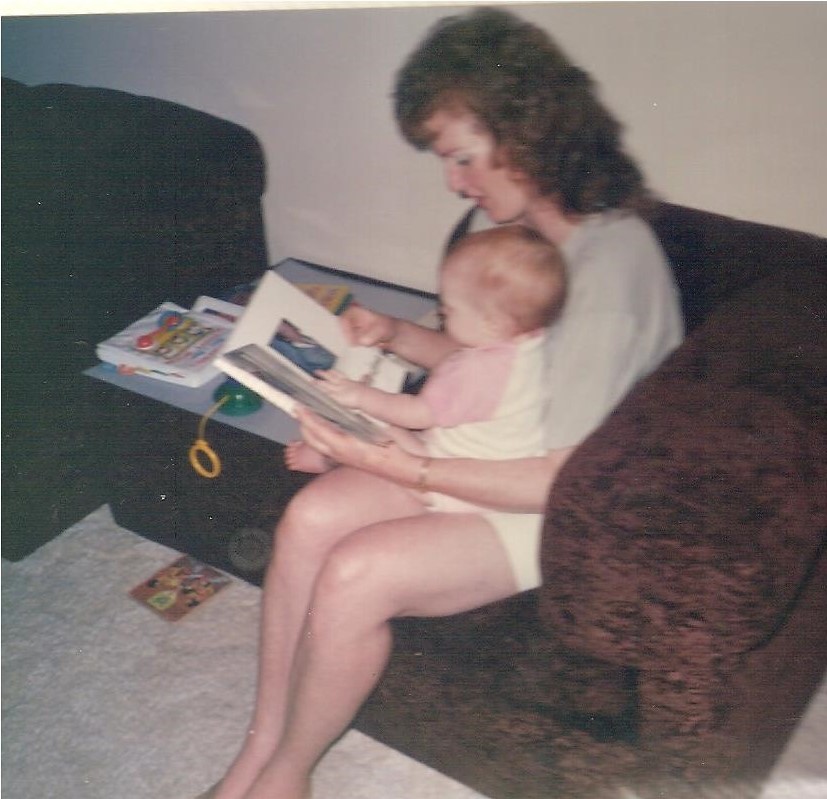
    Nor and Bec reading


    Children can be read to from the moment they are born, if not earlier. Preferably earlier!

    One of my favourite picture book authors and passionate advocate for reading to children is Mem Fox. I own, and have given as gifts, many of her wonderful books. I have attended her seminars and been mesmerised by her reading from her selection of stories. “Read more!” the adults beg. There are no children at these literacy seminars. This time it is a treat for only us: parents and teachers, literacy educators all.

    Currently Prince William, Kate and baby Prince George are visiting Australia. I was delighted to hear that they were given a gift of books by Australian authors, including some by Mem Fox. Over the years I have given many of Mem’s books as gifts; and kept just as many for myself!

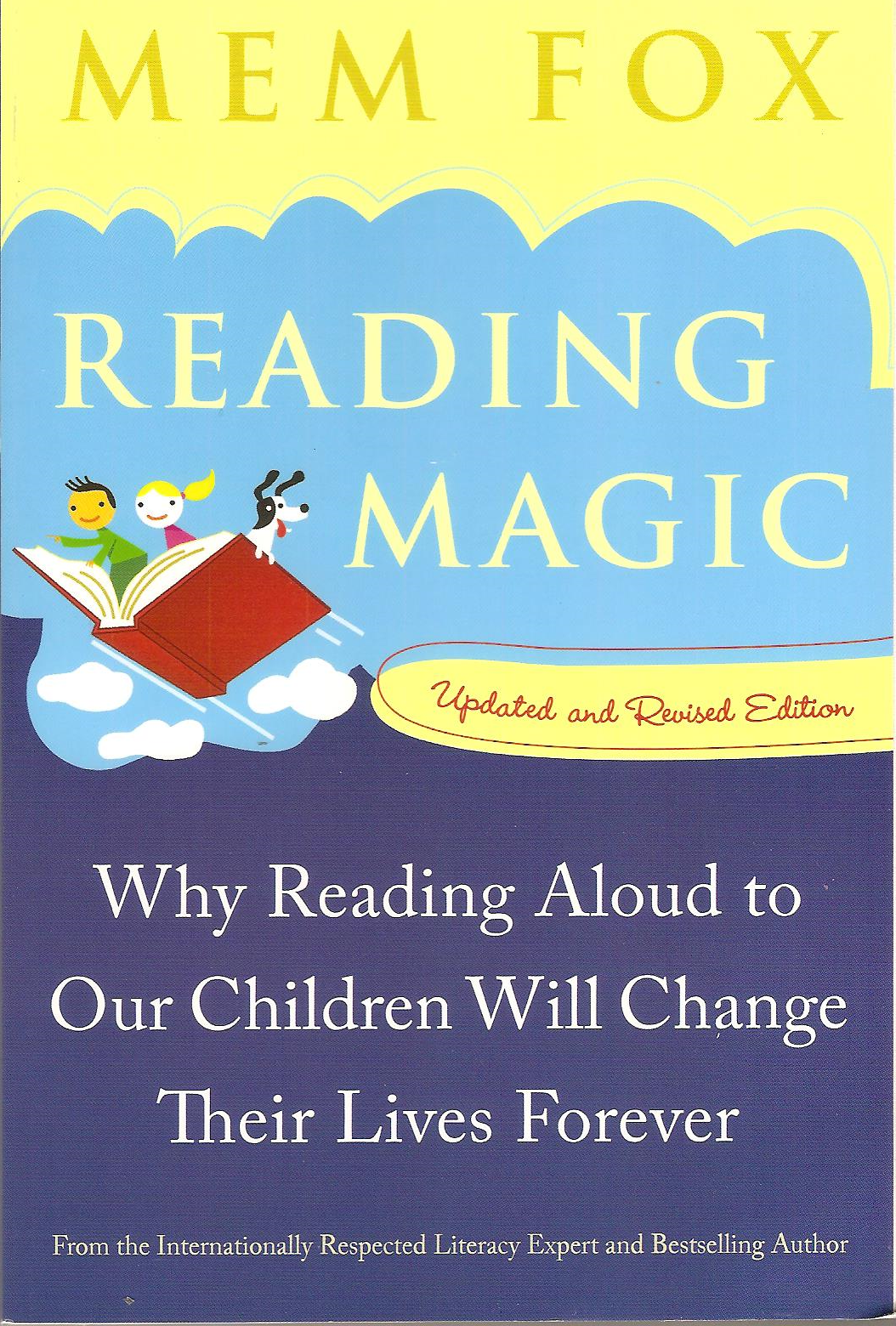
     Reading magic

    One that I have given to many new or expectant parents, as I consider it a “must read”, is Mem’s book “Reading Magic – Why Reading Aloud to Our Children Will Change Their Lives Forever”.

    I would love to quote the entire book for you, but it is better you read it for yourself. I will provide you with this quote from the foreword as a taster for the richness to be found inside.

    “It stands to reason that if we’re able to raise happier, brighter children by reading aloud to them, the well-being of the entire country will ramp up a notch. Children who realize in their first few weeks and months of life that listening to stories is the purest heaven; who understand that books are filled with delights, facts, fun, and food for thought; who fall in love with their parents, and their parents with them, while stores are being shared; and who are read aloud to for ten minutes a day in their first five years, usually learn to read quickly, happily and easily. And a whole lot of goodness follows for the entire community.”

    Mem's website


    Mem’s website, too, is a treasure trove just waiting to be explored by writers, teachers, parents, children and children-at-heart.

    You can listen to Mem read from her selection of books on the Current Read Aloud page. She reads three different books each month. Currently the books are Possum Magic, Harriet, You’ll Drive Me Wild! and Goodnight, Sleep Tight. Be quick to listen to these, though, as they will change at the end of the month. But never mind, there’ll be another three to enjoy next month!

    Mem even gives a read-aloud lesson! Now there’s no excuse! As she says,

    “. . . let’s get on and change the world, one page at a time.”

    Yes, Mem, let’s!


    What are your favourite read-aloud books? What did you enjoy as a child? What do you enjoy now?

  • Empowerment – the importance of having a voice

    In a previous series of posts I wrote about science inaccuracies in a picture book and questioned with whom lay the responsibility for providing young children with correct information.

    While this post builds upon those posts, it also takes a divergent path: the need for children to have a voice; to be empowered to ask questions, to state their needs and report wrongdoings.

    On a highly respected educational website Scholastic, with the by-line “Read Every Day. Lead a Better Life.”, in an article about Eric Carle author of The Very Hungry Caterpillar, children are told that

    “Eric already knows that a caterpillar emerges from a chrysalis, not a cocoon! So don’t bother writing to tell him.”

    This seemingly innocuous statement may be easily overlooked but packs a powerful message.

    What does it tell children?

    The author has been told many times, already knows and isn’t going to do anything about it.

    The author is tired of being told he is wrong and doesn’t want to hear it any more.

    The author is “right” and not to be questioned. (The book, with its misinformation, is highly acclaimed by millions around the world. However if, in answering a question on a test, children were to write that a butterfly comes out of a cocoon, they would be marked wrong. Explain that to them.)

    For me the most insidious part of this message is

    He already knows, “so don’t bother writing to tell him”!!!!!!!!

    You can’t change it.

    You know it’s wrong, but you can’t change it, so don’t bother trying.

    Although many societies are now moving to eradicate it, child abuse is still far too common worldwide. Not only must the attitudes of societies change, but children must be empowered, they must be encouraged to speak up and they must be listened to: their voices must be heard.

    In a recent child abuse case that occurred at a Queensland primary school, the student protection officer reportedly said that she couldn’t understand why the children who had been sexually abused did not come forward.

    couldn't believe 1

    The accused had continued in his role as child protection contact for a year after the first complaint was made. The student protection officer found it hard to believe that her colleague was a paedophile;

    couldn't believe 2

    and still she says she doesn’t understand why the children didn’t come forward!

    Click here to read the complete article.

    It seems to me the children did come forward if the first (indicates there were more) complaint was made more than a year before anything was done about it.

    The children tried to say, but were not believed. The predator was believed and protected while the plight of the innocent victims was ignored. The report states that parents who complained about the abuse of their children were ostracised by the school community and made out to be the “bad guys”.

    Is it any wonder that, if not listened to and not believed, and if more is done to protect the offenders than the abused, the children become increasingly reluctant to tell?

    After the first children had come forward and not been listened to or believed, may not they have said to others, “There’s no point in saying. They already know. They won’t do anything about it?”

    Or what about the parents who were ostracised and made out to be the bad ones?

    Doesn’t it make the message very clear – you are powerless. Your voice won’t be heard. Your opinion doesn’t matter.

    Carry this message over into countless other situations and you have a population who is afraid to speak up, fearing the disdain of reproach, the embarrassment of being unvalued and the helplessness of one’s message being unheard.

    How many times have you felt you must remain silent for fear of ridicule, rejection, or worse?

    How many opportunities for creating a positive change have been missed because the task seemed insurmountable or the personal repercussions too unpleasant?

    When have you stepped up and made that change happen because you were not afraid to speak up or speak out when faced with an issue you felt strongly about?

    What changes can we make to empower children (and adults) everywhere?

    By the way, in that article on the Scholastic website, it is reported that Eric Carle believes that “the most important part of developing a book . . .is working with editors to revise it.”

    Would it make any difference to the magic of The Very Hungry Caterpillar if, after all these years, Eric Carle rewrote a corrected version with a butterfly emerging triumphantly from a chrysalis?

    What would that act tell all the countless children who have written to tell Eric about his mistake, and the many others who wanted to but were told there was no point?

    The Very Hungry Caterpillar

    Please share your thoughts.

    Related posts:

    Searching for meaning in a picture book — Part A

    Searching for purpose in a picture book – Part B

    Searching for truth in a picture book – Part C

    Finding power in a picture book – the main event

  • Finding power in a picture book – the main event

    Finding power in a picture book – the main event

    Teaching critical literacy through picture books

    This is the fourth is a series of posts about the role of picture books, especially The Very Hungry Caterpillar by Eric Carle.

    The purpose of this post is to discuss the importance of critical literacy and the necessity to teach children to

    • think critically
    • not accept everything that is presented in text (oral, visual or print)
    • evaluate the source of the information and the intent of the author
    • match incoming information with prior knowledge,  and
    • question, question, question.

    In these previous posts

    Searching for meaning in a picture book – Part A

    Searching for purpose in a picture book – Part B

    Searching for truth in a picture book – Part C

    I suggested ways of including The Very Hungry Caterpillar in an early childhood classroom and discussed the responsibility that authors have in differentiating between fact and fiction in story books.

    In Searching for truth in a picture book – Part C I pointed out the inaccuracies in The Very Hungry Caterpillar and the pervasiveness of the misconceptions, if not totally attributable to the book, then at least in part. This is verified by Jacqui who, in 2011, wrote on the Monarch Butterfly New Zealand Trust website

    “When speaking to teachers I often find raised eyebrows when I explain that butterflies’ larvae do not make cocoons. The teachers refer to Eric Carle’s book, The Very Hungry Caterpillar, where he refers to a ‘cocoon’.”

    Note that Jacqui refers specifically to this book, rather than to sources in general.

    As shown by Jacqui, though, it can be difficult, even for teachers without specialist entomological knowledge, to sort out fact from the fiction.

    These are two pieces of misinformation contained in the story:

    Misinformation 1:

    Caterpillars eat a lot of different food

    Fact

    Most caterpillars are fussy about their diet, some eating only one specific plant, others eating a variety of plant foods.

    Misinformation 2:

    Butterflies come out of a cocoon.

    Fact

    Butterflies emerge from a chrysalis.

    Moths come out of a cocoon.

    Watch these two videos:

    This one by Strang Entertainment shows the caterpillar becoming a chrysalis.

    This one shows a silkworm caterpillar spinning a cocoon (about 2 mins in).

    They are two very different processes.

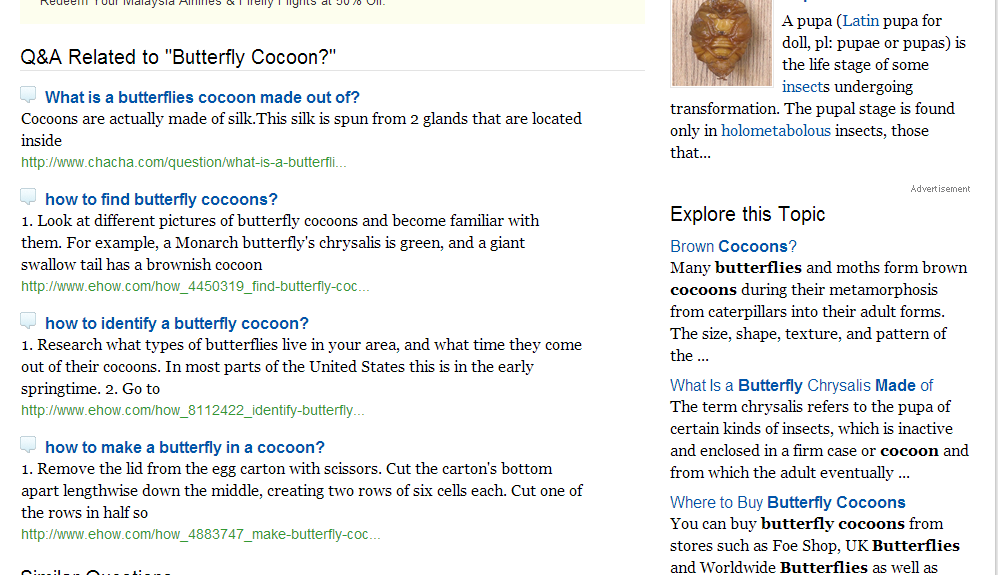
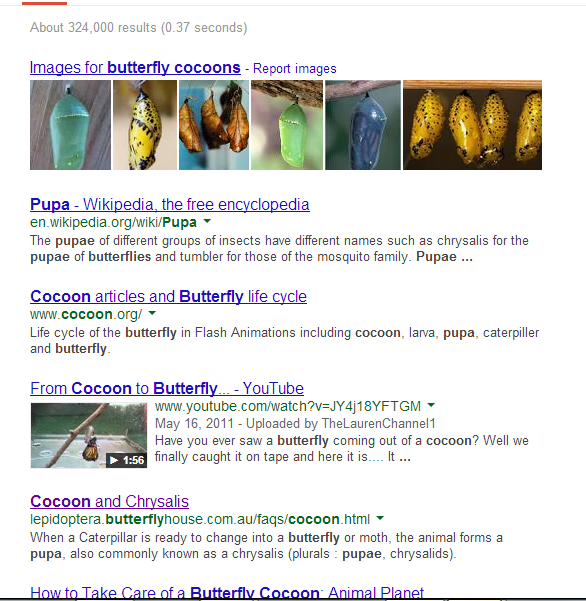
    However a quick glance at these Google search results shows just how pervasive the misconceptions are:

    Cocoon to butterfly

    butterfly cocoons

    Even seemingly authoritative educational websites misinform. Look at the way these two websites promote themselves, and consider the misinformation they are peddling.

    The website Math & Reading Help

    Maths and Reading Help

    states that The Very Hungry Caterpillar is “factually accurate . . . teaches your child to understand this biological process … a butterfly. . .(is) a caterpillar that has emerged from its cocoon”

    Primary upd8 which promotes itself as “UKs most exciting science resource”

    primary upd8

    also suggests using The Very Hungry Caterpillar for teaching about the life cycle of a butterfly.

    primary upd8 knowledge

    If self-professed “authorities” can’t get it right, how are we laypeople meant to make sense of it. Suggestions like these reinforce the need for the skills of critical analysis to be developed.

    Unlike those above, I contend that this book has no place in the science curriculum. Its greatest value is as a tool for teaching critical literacy.

    When children have learned about the life stages of a butterfly and then listen to The Very Hungry Caterpillar, they are very quick to pounce on the inaccuracies and immediately want to write to the author and tell him of his mistake.

    When told that he already knows and that he isn’t going to change it, as confirmed in an interview reported on the Scholastic website, they are incredulous.

    “Why would he do that?” they ask.

    Why indeed.

    When told that he doesn’t care that it isn’t right, they are indignant.

    But herein lies its value:

    I am able to affirm their learning: they know more than Eric Carle; and, more importantly, I am able to reinforce with them that just because something is in print, doesn’t make it true.

    In addition, it is important for them to realise that misinformation does not occur only in picture books, nor only in this picture book. It is just as common in news media, as shown by this article from Brisbane’s Courier-Mail on December 7 2013

    Butterfly emergingtext for photographs

    Nor is misinformation restricted to caterpillars and butterflies.

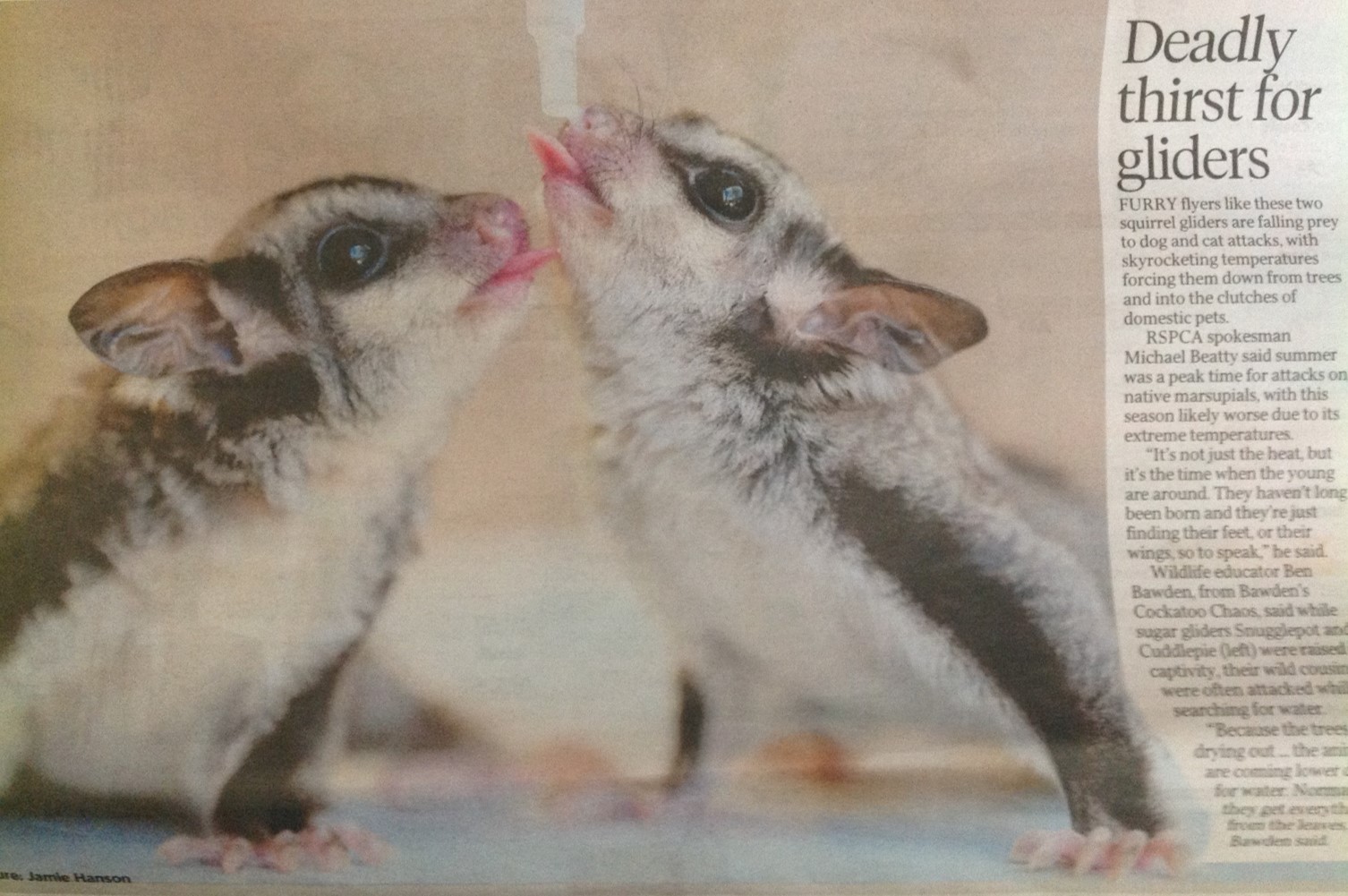
    This article, again from the Courier-Mail, on January 26 2014 also contains inaccuracies:

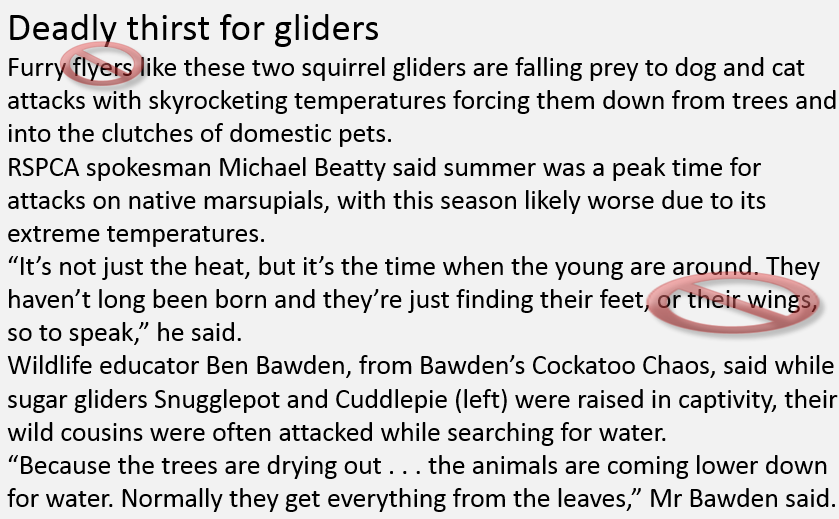
    Deadly thirst for glidersFurry flyers text

    Squirrel gliders don’t fly, and they don’t have wings.

    Suggestions for teachers and parents:

    • point out inaccuracies and inconsistencies
    • encourage children to think about what they are reading and hearing and to evaluate it against what they know
    • support children to verify the source of the information and to check it against other more authoritative/reliable sources
    • help them to recognise that every author has a purpose and to identify that purpose
    • invite children to ask questions about what they are reading and to interrogate the content
    • encourage them to question, question, question.

    As demonstrated by the Google results shown above, there is a good deal of misinformation available, often cleverly disguised as fact. Being able to navigate one’s way through it is a very important skill.

    Eric Carle says “If we can accept giants tied down by dwarfs, genies in bottles, and knights who attack windmills, why can’t a caterpillar (sic) come out of a cocoon?”

    What do you think?

    Do picture book authors have a responsibility for informing their audience? Is a butterfly coming out of a cocoon in the same realm as giants tied down by dwarfs? Would we accept a child hatching out of an egg? What parts of a story should be based in reality and which parts can be imagined?

    “Why can’t a butterfly come out of a cocoon?” asks Eric.

    Well, Eric, they just don’t.

    Please share your thoughts.

  • Paying it forward – a Liebster Award!

    Paying it forward – a Liebster Award!

    Last week I was intrigued, surprised and delighted to find that I had been nominated for a Liebster Award.

    I was intrigued because I had never heard of a Liebster Award; had no idea of what it was for or why I should have been nominated for it;

    I was surprised because I’d had no inkling that such an honour was about to befall me;

    and I was delighted to receive the nomination from fellow blogger, Harriet the Bloom whose blog is “A place for educators to reflect, recharge, and revive.” Thank you, Harriet, I am indeed honoured.

    In reality, before feeling delighted and honoured, I felt a little confused. Confusion, if acted upon, leads to learning. So I headed over to Google and Harriet’s blog to see what I could find out.

    It appears that the purpose of the Liebster Award is to:

    • provide encouragement for new bloggers with a following of fewer than 200
    • promote communication between bloggers,
    • recommend blogs to others.

    Nominating others for the award is like paying a compliment forward.

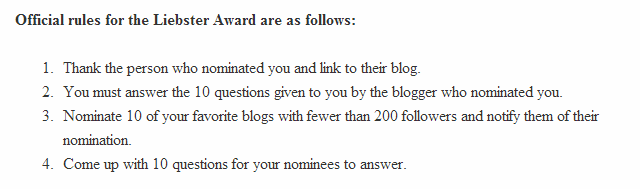
    According to Harriet, the

    Liebster rules

    Answers to the 10 questions posed by Harriet:

    1. Congratulations! You just won the Liebster Award! What are you going to do next?

    The immediate answer is contained in this post. The longer term answer is: keep on blogging!

    2. Describe yourself in three words.

    Happy. Thoughtful. Loyal.

    3. Describe your thoughts on your very first job.

    In my early teens I swept out a carpenter’s workshop on a Sunday morning. It was hard, dirty, tiring work. The head of the heavy wooden broom was about 60 cm long and difficult to manoeuvre. It would take about 2 hours to sweep up all the sawdust and I would go home and sleep for about the same length of time to recover. For hours I would be blowing black dust out of my nose, but the crisp $1 note I received in payment was sufficient encouragement for me to return and do it all again the following week.

    4.If you could go anywhere in the world, where would you go and why?

    I would love to visit Monet’s garden. I would love to sit on a seat near the bridge overlooking the waterlilies and ponder the big questions of life. I would like to share my contemplations with the artist, his contemporaries and philosophers from all eras. I love the works of Impressionist painters, especially Monet’s Waterlilies and Van Gogh’s Starry Night. The mood evoked by these beautiful paintings is especially conducive to philosophical musings.

    5. I like food. What is your favorite recipe?

    Whenever we have a family get-together it is expected that I will make a pavlova. It is enjoyed by all generations, and although I make a double (using 8 egg yolks) there is rarely any left over.

    However, for birthdays and Christmas with my immediate family (husband and children) I usually make a strawberry torte. It is a special treat that I have been making on these occasions for almost 40 years. While the in-laws find it a little rich for their taste buds, the grandchildren are taking to it in true Colvin fashion.

    OLYMPUS DIGITAL CAMERA

    strawberry torte

    6. Give a short summary of the book you are currently reading.

    As usual I have a few books “on the go” at the moment, but the one of which I have read most at this stage is “Why ‘a’ Students Work for ‘c’ Students and Why ‘b’ Students Work for the Government: Rich Dad’s Guide to Financial Education for Parents” by Robert Kiyosaki. Of course it appealed to me because of its relevance to education and because I had read others of his books years ago: “If You Want to be Rich & Happy: Don’t Go to School” and “Rich Dad Poor Dad”. In this book Kiyosaki contends that schools don’t educate students for financial success and urges parents to teach children about finances at home. He suggests that playing “Monopoly” is a great way to start. He is greatly concerned about the “entitlement mentality” which he considers to be so pervasive in our society. Some of his ideas are challenging and confronting; others make perfect sense. I recommend the book to anyone wanting to achieve financial independence. I would love the opportunity of discussing his ideas with others.

    7. What inspired you to start blogging?

    Blogging wasn’t a goal, or even an idea, initially. My intention is to create my own website to market teaching resources that I produce. I have a lot of learning to do before I am ready, and part of that learning involves attending seminars. Some of these seminars recommended having an online presence and building a “brand”. Blogging was suggested as one avenue for achieving this. I decided to give it a go, and have found it rewarding in itself – an unexpected pleasure, delightful detour and amazing adventure.

    8. How did you come up with the name for your blog?

    My blog is simply my name; that wasn’t difficult.

    9. What do you do when you experience writer’s block?

    Eat. Procrastinate. Go on with something else. Push through it. Write around it.

    10. Which post are you most proud of and why? Provide a link.

    This is tricky. I don’t think I’ve written it yet! However I very much enjoyed the comments and discussion that ensued from my series of posts about “The Examined Life” by Stephen Grosz.  The series includes:

    A book worth reading: Stephen Grosz “The Examined Life”

    Seeking praise – Stephen Grosz revisited

    and a guest post by Anne Goodwin in response:

    Examining praise: Stephen Grosz – the third instalment!

    The discussion stretched my thinking and learning and I am grateful to all participants in the conversation. Learning is what life is all about!

    Nominate 10 bloggers for the Award:

    As the rules appear to be blurred rather than definite e.g. Harriet’s rules differ slightly from those on Wording Well , which differ again from those on Sea Play Photography, I decided to nominate 13 bloggers.

    Belinda Pollard of Small Blue Dog Publishing (Australia)

    I’m starting with Belinda Pollard of Small Blue Dog Publishing because it was Belinda’s recommendation that prompted me to enter the world of blogging and tweeting. At a seminar hosted by Queensland Writers Centre last year Belinda urged all writers to have an online presence. She said that Twitter was like the water cooler for writers. I’m beginning to see that she was right. Belinda’s posts about all aspects of writing and self-publishing, including blogging, have been a great source of information for me and I appreciate what I have learned from her.

    Belinda, I know you have thousands of followers on Twitter but Word Press tells me that you have fewer than 200 followers on your blog so I hope you are happy to accept this award.

    NANNY SHECANDO (Australia)

    Next I’d like to introduce you to Hope who blogs at NANNY SHECANDO. Hope blogs about her experiences as a nanny, cooking and craft. She says, “We’re staying young, Peter Pan style, by embracing the creativity and sunshine in life.”

    Anne Goodwin (UK)

    Anne Goodwin’s website is rich with things to read: short stories, interviews with authors, book reviews, blog posts and more. Anne is one of the writers I met at ‘the water cooler’ and we have had many interesting and thought provoking conversations since then. I love the way Anne has called her website Annethology and her blog Annecdotal. She tweets @Annecdotist. Very clever!

    Caroline Lodge (UK)

    Caroline Lodge blogs at book word . . . about books, words and writing. She joined with Anne and me and we stood around the water cooler sharing ideas and exchanging thoughts. I’m certain you will find much of interest on her blog including suggestions for blogging, great books to read and writing tips.

    PS Cottier (Australia)

    For a little bit of poetry I recommend PS Cottier who posts a poem every Tuesday, and occasionally writes prose.

    Teachling (Australia)

    Teachling is a blog dedicated to improving education with ideas about teaching, learning and parenting. Teachling believes that “Improving a child’s life-chances is everyone’s responsibility” Along with me and millions of others, Teachling is a big fan of Ken Robinson.

    I have always enjoyed reading philosophy and engaging in philosophical discussions. I support the teaching of philosophy as an active thinking subject in schools and am excited about the benefits of a thinking population to the future of our world. I have two great blogs to recommend in this category:

    Peter Worley’s philosophy foundation (UK)

    Michelle Sowey at The Philosophy Club (Australia)

    Note: Last year I reblogged one of Michelle’s posts:

    Can you kill a goat by staring at it? A critical look at minimally invasive education

    There’s No Food ( Australia)

    A bit closer to home (actually much closer to home, it’s my daughter’s blog) I’d like to recommend There’s No Food. Bec blogs about “wholefoods, vegetarianism, slow living and their existential friends.” She has interesting thoughts about the impact of our food choices on the environment and practical suggestions for changes we can make to our everyday routines.

    Obscure Pieces (Australia)

    Glenn at Obscure Pieces expresses himself through black and white photography. His special interest is urban and landscape photography. He frequently offers support and comments on my posts and has generously allowed my use of some of his photographs. Thanks Glenn.

    Cultivating Questioners (USA)

    On her Cultivating Questioners blog, Nicole posts about her experiences as a teacher, especially encouraging her young students to use higher-order thinking skills . I love to see a young teacher so passionate about education.

    Nillu Nasser Stelter (UK)

    Nillu Nasser Stelter is a fiction and freelance writer and her blog features short stories, flash fiction and tips for writing. I love the ways she uses words effectively in her writing to create a picture or emotion.

    Carrot Ranch Communications (USA)

    Charli Mills at Carrot Ranch Communications also blogs about writing. As of Wednesday 5 March she launched a flash fiction challenge. Each week writers have the opportunity to accept the challenge to write a 99 word “story”. This is something I haven’t done before so I’m hoping to join in the fun. What about you? I’m sure it’s not as easy as it sounds!

    Now my nominees, it is your turn.

    These are the things I would like to know about you:

    Note: Although I have listed 13 questions, you need answer only 10. You may substitute one of your own if you wish.

    1. What do you value most in life?
    2. What activities do you enjoy and why?
    3. What is something you wish you had more time for?
    4. What is one change you would like to make in the world?
    5. What is something you would like to change about yourself?
    6. What surprises you most about your life – something good in your life that you hadn’t expected, dreamed of or thought possible?
    7. What ‘big” question do you often ponder?
    8. What sorts of things amuse you?
    9. What do you like to collect?
    10. If you could talk with anyone and ask them to explain their ideas and/or actions, who would it be, and why?
    11. What is something you can’t do without?
    12. What is something important you learned about life, and how did you learn it?
    13. What is your earliest memory?

    I look forward to reading your responses and continuing our discussions at my place or yours!

    Happy blogging!

    Footnote:
    How to find out the number of followers on a blog:
    For Word Press blogs:
    View the blogs in the Reader
    Click on the blog name at the top of the blog
    Lo and behold, you will be provided with the number of followers. Easy for Word Press.
    For other blogs
    I wasn’t sure how to find out for others not using Word Press so I sent them a message on Twitter asking their numbers. Simple.
  • Reading aloud – sharing stories

    Reading aloud – sharing stories

    I have always loved reading aloud to an audience, be it my own children, a class of children or, more recently, my grandchildren. I love the opportunity to escape into other characters and other worlds. I love to see the expressions on the children’s faces – anticipation, amusement, trepidation, relief, joy.  I love the sounds and rhythms of the language. I love the intricacies of story, poem and information.

    Reading stories aloud to children provides a great opportunity to establish a connection between author, reader and listener, a platform for sharing ideas, thoughts and dreams, an avenue for discussing ethical questions and implications of choices. These discussions may arise spontaneously and be child-initiated, or they may be pre-determined and teacher-lead as in philosophical discussions and bibliotherapy.

    Some parents find reading to their children a chore, something tedious that must be squeezed in around the day’s busyness. I am lucky. I never did.

    Some teachers find it difficult to make time for books in a content-driven classroom; but for me it was always priority.

    boy with books
    http://www.openclipart.org

    Some parents are delighted when their children start reading for it means the daily read-aloud ritual can cease. I never was. Well, I was delighted that they could read, but we kept on reading together.

    I read aloud with my children until they were almost teenagers. The books changed, but the joy of reading and sharing never did. During the teenage, and older, years we continued to discuss and share ideas about books we read and recommendations for reading. We still do: some for ourselves and some for the children, my grandchildren.

    Many of you reading this post take your ability to read and write for granted, as do I. But around the world many children do not have the opportunity to learn literacy skills. According to LitWorld more than 793 million people worldwide remain illiterate. About two-thirds of those are women.

    Like the people at Lit World, I believe that “the right to read and write belongs to all people”.

    I was delighted when I read about World Read Aloud Day on Gail Terp’s blog. I have been following Gail’s blog for a little while now. She titles her blog: “The Best Blog for Kids Who Hate to Read”. She says that one of her top goals is to connect children with books they love and her posts provide recommendations of great books to read to and with children, as well as to be read by children.

    In her post Read Alouds: Supporting Literacy One Book at a Time, Gail suggests 7 reasons for reading (picture books and other books) aloud:

        1. They are fun.
        2. They are motivating.
        3. They are easier to follow.
        4. They often introduce new vocabulary and expressions.
        5. They introduce a variety of writing styles, authors, and illustrators.
        6. They provide an excuse to stay close.
        7. They provide windows to complex subjects and ideas.

    Why not join in reading aloud on World Read Aloud Day this Wednesday, March 5.

    LitWorld, sponsors of the day, urge you to

    “imagine a world where everyone can read . . .”

    “World Read Aloud Day is about taking action to show the world that the right to read and write belongs to all people. World Read Aloud Day motivates children, teens, and adults worldwide to celebrate the power of words, especially those words that are shared from one person to another, and creates a community of readers advocating for every child’s right to a safe education and access to books and technology.

    By raising our voices together on this day we show the world’s children that we support their future: that they have the right to read, to write, and to share their words to change the world.”

    owl_books
    http://www.openclipart.org

    How will you celebrate and share World Read Aloud Day?

  • Happy birthday Dr Seuss!

    Happy birthday Dr Seuss!

    Theodor Seuss Geisel: March 2, 1904 – September 24, 1991

    Picture1

    Today, March 2nd is the birthday of Theodor Seuss Geisel, better known as Dr Seuss, author of over 40 children’s books.

    While several of the Dr Seuss books were published before I was born, and many others published during my childhood, I have no recollection of meeting them prior to my years as teacher and parent. Fortunately those two roles provided me ample opportunity to catch up on the delights that I had previously missed.

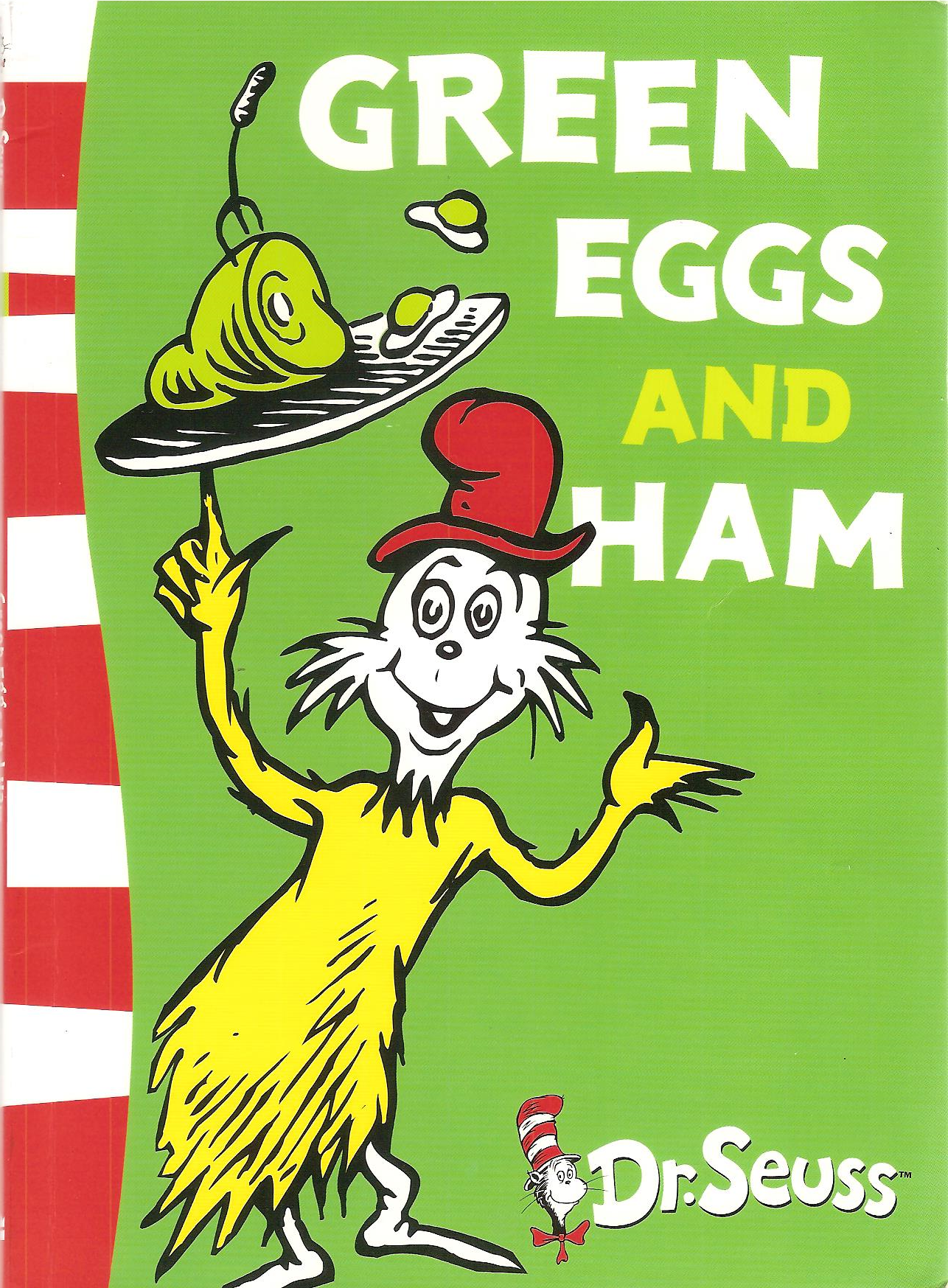
    Green Eggs and Ham

    I even apologised to Dr. Seuss in a previous post for leaning heavily on his book Green Eggs and Ham when writing about my relationship with exercise.  Click on Ode to Exercise to read my poem.

    You could celebrate his birthday by checking out the fun stuff and information on his author site seussville.com

    or pop over to Gail Terp’s Best Blog for Kids Who Hate to Read for lots of other suggestions:

    Celebrate Dr. Seuss’s Birthday with Books

    Dr. Seuss The Perfect Source for Literacy!

    Fun Dr Seuss games for the whole family

    How have the books of Dr. Seuss influenced your life?

    I invite you to share your thoughts.

  • Examining praise: Stephen Grosz – the third instalment!

    Guest post by Anne Goodwin (Annethology)

    Earlier this year, after reading 7 Reasons Why Lovers of Fiction Should Read The Examined Life by Stephen Grosz on Anne Goodwin’s writing blog, I decided the book sounded too good to resist and promptly listened to it as an audiobook on my commute to and from work.

    I was delighted with Anne’s recommendation, and like her, found the book compelling reading and thought provoking. So much so that I wrote a post about it: A book worth reading: Stephen Grosz “The Examined Life”.

    However the chapter that captured my attention and challenged my thinking more than any other was the one about praise. I also blogged about this: Seeking praise: Stephen Grosz revisited.

    My post about praise got Anne Goodwin thinking further about this issue and she was able to delve into it more deeply with her background in psychology. She has very generously written this guest post to share her thoughts.

    Thanks Anne – over to you:

    Although I was enchanted by The Examined Life from the first page, I glossed over the chapter on praise. Reading primarily for the parallels between these therapeutic case studies and reading and writing fiction, I didn’t stop to analyse my reaction, to acknowledge I was challenged by the suggestion that praise could be detrimental. Perhaps I dismissed this chapter as a reaction to the rarefied atmosphere of that cosy part of North London that is the hub of British psychoanalysis. In my neck of the woods, as reflected in my flash fiction piece, Peace-and-Quiet Pancake, I’m more concerned about a shortage of praise and encouragement than an excess.

    I was initially disappointed when Norah mentioned on Twitter that, with over thirty chapters to choose from, she’d decided to blog about the chapter on praise. Yet her wonderful post showed me what I’d missed in my initial (defensive) reading and inspired me to go back to the book and ponder the depths of wisdom within those four and a half pages for myself.

    “Stephen Grosz calls into question where our ideas of good practice originate.”

    In suggesting we rethink what’s best for our children, Stephen Grosz calls into question where our ideas of good practice originate. We tend to respond to the mistakes of our forebears by striving to do the opposite, so those of us who suffered from a dearth of praise ourselves might be inclined to lavish praise on the next generation. Yet we can become so fixated on turning our backs on the approaches we know from experience to be unhelpful, we’re blinded to the potential pitfalls of the alternative path. Cutting back on praise feels treacherous, like siding with the harsh disciplinarians of days gone by. Stephen Grosz points us towards a third way.

    “Behavioural strategies are invaluable for introducing the necessary structures and routines in which children can prosper and learn.”

    Behavioural psychology shows that targeted rewards, either tangible, or intangible like praise, increase the frequency of desired behaviours. Rewards are actually most effective when they’re doled out intermittently, which might be one argument (although not the author’s) for soft-pedalling on the praise. Behavioural strategies are invaluable for introducing the necessary structures and routines in which children can prosper and learn. However, they can also result in the over-controlled and compliant child, one who is well versed in pleasing adults but struggles to think for him or herself.

    “Stephen Grosz suggests that parents and educators can become as addicted to praise as these children.”

    Stephen Grosz suggests that parents and educators can become as addicted to praise as these children. The mother who continually tells her child she is good might be vicariously praising herself. Underlying this might be a lack of confidence in her own parenting skills and a difficulty accepting her child as a separate person, with potentially different values and preferences. This is unlikely to enhance the child’s confidence and self-esteem.

    “He also cautions us to be wary of praising children for what they are rather than for what they do.”

    He also cautions us to be wary of praising children for what they are rather than for what they do. He cites a study in which, consistent with attribution theory, children praised for their effort rather than their intelligence, developed a more positive approach to problem solving. We can always put in more effort, but if we believe success is down to stable and unchangeable factors we might be less resilient in the face of the failure we will all, however talented, meet at some point in our lives.

    “a third position where the adult is benignly attentive to the child and curious about what he/she is doing.”

    What the author recommends is not a return to a pedagogy of threat and punishment, but a third position where the adult is benignly attentive to the child and curious about what he/she is doing. The child who believes that an adult is genuinely interested in their ideas, thoughts and feelings, is likely to develop a strong sense of agency and self-worth. While this might seem a radical approach, it’s not dissimilar to the behaviour of a tuned-in mother who watches over and mirrors her baby’s moves. It’s also the stance taken by the psychoanalytically orientated psychotherapist.

    This is familiar ground for me, but I didn’t recognise it on an initial reading. Having already decided I loved the book from hearing snippets on the radio, I was reading it for what I could praise. I hope it wasn’t empty praise, but I was unwilling to engage with parts that were hard to swallow. On the second reading, my stance flipped to critical, almost punitive, focusing more on what was missing from the chapter than what was actually there. Now this process of putting my thoughts into words has brought me towards the position of curiosity and attentiveness I wish I’d had first time round. Whilst other readers might be less defensive, it does make me wonder, if it’s a struggle to reach this position in relation to a text, how difficult might it be to apply this learning in the real world and on a larger scale?

    “While parents, politicians and educationalists might all claim to value individual expression and personal growth, this has to be weighed against an equally strong pressure for the achievement of standardised performance goals.”

    On a sociopolitical level, we might resist this understanding because of conflicting views as to what education is for. While parents, politicians and educationalists might all claim to value individual expression and personal growth, this has to be weighed against an equally strong pressure for the achievement of standardised performance goals.

    On the individual level, as Stephen Grosz says in his final paragraph, being present with others is hard work. Therapists have their own therapy in addition to training and supervision; parents striving to do a similar job with only their experience of their own parenting to draw on could struggle to find the position of attentiveness beyond both praise and chastisement.

    “Children who have never been praised, even for attributes outside their control, might have no concept of their own ability to impact on their environment.”

    Furthermore, for the child entering school knowing only neglect and criticism, a teacher’s benign curiosity could be experienced as threatening, just as the neutrality of therapist can provoke anxiety in his or her client. Children who have never been praised, even for attributes outside their control, might have no concept of their own ability to impact on their environment. Does the busy classroom teacher have the resources to be truly present with them in the way they require?

    Thanks, Norah, for challenging me to revisit this chapter and for the invitation to rework my comment into a guest post. For those who’ve had the patience to stay present this far, I look forward to your reactions.

    Thank you Anne for the insight and challenge you have offered with much for us to think about.

    I reiterate Anne’s invitation for you, the reader, to share your thoughts on this topic, and suggest you head on over to Anne Goodwin’s writing blog (Annethology) for a great assortment of interesting fare.

  • Searching for truth in a picture book – Part C

    Cocoon or chrysalis – what’s in a name?

    In my previous post Searching for purpose in a picture book – Part B  I conducted this poll:

    If you didn’t participate in the poll, but would like to, have a go now.

    What did you answer?

    If you are familiar with this book

    The Very Hungry Caterpillar

    you may have chosen both statements as correct along with one third of respondents in the poll.

    In his book Eric Carle writes that

    “He (the caterpillar) built a small house, called a cocoon, around himself. He stayed inside for more than two weeks. Then he nibbled a hole in the cocoon, pushed his way out and . . . he was a beautiful butterfly!”

    If you either read or wrote one of the hundreds of thousands of articles about “The Very Hungry Caterpillar”, or about butterflies and caterpillars in general, published on the internet, you probably also identified those two statements as correct.

    butterfly cocoons Cocoon to butterfly

    But if you did, just like Eric Carle, you’d be wrong!

    A caterpillar that undergoes metamorphosis to become a butterfly does not spin a cocoon and does not nibble its way out. The fully grown caterpillar moults into a chrysalis and, when ready, it splits the chrysalis to emerge as a butterfly.

    Monarch butterfly

    For a series of beautiful photos showing the last moult of a caterpillar as it becomes a chrysalis, and another series showing a butterfly emerging from its chrysalis, click here.

    Or watch this video by Strang Entertainment showing the caterpillar becoming a chrysalis

    or this one by Neil Bromhall showing a butterfly emerging

    A moth’s caterpillar does spin a cocoon and does nibble its way out (think of a silkworm cocoon and moth).

    silkworms24a

    This video shows silkworm caterpillars nibbling hungrily away at the mulberry leaves. Then when a caterpillar is fully grown (about 2 mins in) it spins it cocoon.

    Compare the process with that of a monarch caterpillar forming a chrysalis. It is a very different thing.

    It is impossible to rely on the information provided by many of the websites to guide one’s use of “The Very Hungry Caterpillar” when working with children.

    For example, on the website Math & Reading Help, these suggestions are made:

    “Many Teaching Moments

    Though it’s a very brief picture book with sparse and simple language, The Very Hungry Caterpillar conveys an impressive array of wisdom and lessons for children. Most prominent among these is the life cycle of a caterpillar. The caterpillar in the story begins his life as an egg, then progresses through the larva stage. The time in his cocoon is his chrysalis stage, followed by his adult appearance as a butterfly.

    This is a factually accurate portrayal of how lepidopterans (sic), an order of insects including butterflies and moths, grow and change. It teaches your child to understand this biological process. When you encounter a caterpillar, you can refer to The Very Hungry Caterpillar and ask your child about what it’s doing, since it’s likely to be looking for food. Likewise, you can reference the book when you see a butterfly, noting how it’s a caterpillar that has emerged from its cocoon after its transformation.”

    You have already picked out the inaccuracies in that statement, haven’t you?

    Another website, Primary upd8 also suggests using the book for teaching children about the butterfly’s life cycle, and look how it promotes itself!

    Uks most exciting science resource

    This misinformation is so common and insidious that Jacqui, writing on the Monarch Butterfly New Zealand Trust website, said

    “When speaking to teachers I often find raised eyebrows when I explain that butterflies’ larvae do not make cocoons. The teachers refer to Eric Carle’s book, The Very Hungry Caterpillar, where he refers to a ‘cocoon’.

    Why does this misinformation persist, and why did Eric Carle use misleading statements in his book?

    Does it matter if children (and adults) think that butterflies hatch out of cocoons?

    Eric Carle didn’t seem to think it did.

    Unfortunately I was unable to locate for confirmation an article I’d read years ago. This article, if I recall correctly, reported a response of Carle’s to children enquiring why he had used “cocoon” rather than “chrysalis”. His response was one of disdain. What did it matter?

    If you search Eric Carle’s current website for cocoon, this is the response you will receive:

    Why a cocoon

    While Carle concedes that most butterflies come from a chrysalis, he triumphantly states that one rare genus pupates in a cocoon! I confirmed this with the Encyclopaedia Britannica .

    Does that one rare instance let Carle off the hook?

    I think not.

    In her article on the Monarch Butterfly New Zealand Trust website in response to Carle’s statement, Jacqui says

    “Actually, the Parnassians pupate inside cocoon-like webs usually constructed among leaves or in rubbish piles.” (my underlining)

    So not quite true and not quite off the hook Eric Carle.

    In addition, although I couldn’t find the article I was searching for, I found this from Scholastic which shows that Eric was aware of the error and declined to change it.

    “By the way, Eric already knows that a caterpillar emerges from a chrysalis, not a cocoon! So don’t bother writing to tell him. Eric explains how the famous “mistake” crept into the book:

    “My editor contacted a scientist, who said that it was permissible to use the word cocoon. Poetry over science. It simply would not have worked to say, ‘Come out of your chrysalis!’ If we can accept giants tied down by dwarfs, genies in bottles, and knights who attack windmills, why can’t a caterpillar come out of a cocoon?”

    There are many points for discussion in that statement:

    • His editor contacted a scientist – What sort of scientist? I would say one with questionable credentials or entomological knowledge.
    • Permissible to use the word “cocoon” – Why? For what purpose?
    • Poetry over science!!!!!!! Chrysalis is a beautiful word, specific to the butterfly. What could be more poetic than that? Poetic and scientific! What a great combination!
    • Why wouldn’t it have worked to say “Come out of your chrysalis”?
    • A caterpillar doesn’t come out of a cocoon. A caterpillar spins a cocoon; then a moth comes out of it; not a butterfly! (Except for the rare Parnassian butterfly.)

    Is this issue, as Carle suggests, the same as giants and dwarfs, genies in bottles and knights who attack windmills?

    What do you think?

    Do picture book authors have a responsibility in imparting factual information to children?

    Is it okay to choose “poetry over science”?

    In his talk Reading and obligation (reviewed in an earlier post) Neil Gaiman said that

    “We writers – and especially writers for children, but all writers – have an obligation to our readers: it’s the obligation to write true things, especially important when we are creating tales of people who do not exist in places that never were – to understand that truth is not in what happens but what it tells us about who we are. Fiction is the lie that tells the truth”

    Not quite the same thing I know, but an obligation nonetheless?

    Though not there now, when I first looked at the Reading Rockets interview with Eric Carle this quote was prominently displayed beside it:

     “The more that you read, the more things you will know. The more you learn, the more places you’ll go.”

    — Dr. Seuss

    A bit ironic, don’t you think?

    How much of the responsibility should remain with the reader to verify the correctness/accuracy of what is read? How does one go about that?

    I have always been a believer in the “question everything” approach. “Don’t believe everything you read,” I say. But sometimes knowing what to accept and what to question can be a difficult thing.

    I’d love to know what you think. Please leave a comment in the comment box.

    Here are links to some of the articles I referred to in this post:

    Monarch Butterfly Website

    Reading Rockets

    Eric Carle

    Encyclopaedia Britannica

    Scholastic

    Ask.com

    Google.com

    Neil Gaiman lecture in full: Reading and obligation

    This post is the third in a series

    Searching for meaning in a picture book – Part A

    Searching for purpose in a picture book – Part B