Live Love Laugh Learn … Create the possibilities

Category: Early childhood education

  • Reflections on living a contented life, teaching and school

    In a previous post I introduced you to Pauline King, The Contented Crafter. In comments on my blog, Pauline revealed that she was a teacher so passionate about education that she had attempted to establish an alternative school. I was excited to discover that we have these things in common and I immediately invited her to share some additional thoughts about children, learning, schools and education.

    I am honoured that she has agreed, and delighted to welcome her here. In this post Pauline shares a little of her life journey, and her reflections on teaching and school. In a future post she will share her some of her wisdom about children and parenting.

    Pauline, please tell us a little about yourself. What things are most important to you? What do you hope to achieve through blogging?
    art of contentment

    I was a Steiner School Teacher for some twenty years, here in NZ and in the UK briefly.  It was a demanding vocation that taught me more than I ever imparted to the students in my care.  I left teaching in 2003, spent a year or so recovering my health and eventually took up life coaching – a kind of a natural segue as I had spent a lot of my time in the school system mentoring young parents and teachers. I retired in 2014 and stepped full time into the art of contentment.  It’s what I think I spent my life looking for and in these later years what I taught to the women who came to me for life guidance. 

    joy of blogging

    In my personal life I have always been a creator – hand work, interior design and decorating, gardening and various crafting and artistic outlets that changed over the years.  I took up blogging almost three years ago simply to keep track of my creative work as I was notorious for making stuff, giving it away and not being able to remember what I made or the processes around it.  I soon started using my blog as an on-line diary, documenting the things that amused or dismayed me along with whatever I was playing around with at the time.  I don’t think I really expected anyone to read my blog and was quite surprised when I got comments and returned visitors and followers.  In a surprisingly short time I discovered a new world that was peopled by like-minded souls and fun people and I kept blogging for the joy found in the community that built up around my little blog.

    I live alone in a tiny house with a Maine Coon called Olando and a Shi-Tzu X named Siddhartha [Siddy for short].

    positivity

    I live simply and contentedly, paying close attention to my own personal development and take responsibility for the events in my life.  I am not religious but view life and the planet from a spiritual outlook.  I study quantum physics, enjoy nature and believe in spreading positivity wherever I can.

    I don’t write about education in my blog – even though it is an area I am passionate [and opinionated] about – I simply don’t want it to impinge into the simple creative life I lead nowadays.

    Pauline, you were a teacher? What was it that attracted you to teaching in the first place?

    teacher

    I always wanted to be a teacher, from a very young age.  School was a safe place for me in a family that was damaged and dysfunctional, so I guess that may have been the genesis.  However, I was not allowed to stay in school and was put to work in a factory at the age of 14 [my mother lied about my age].  When I gained my freedom I set about continuing my education and have kept on learning formally and informally ever since.  I was 33, a wife and mother, before I finally achieved the goal I had as a child.

    What things did you love about teaching?

    art of teaching

    I loved being in the classroom – working with the students and the Steiner curriculum [which is a wise and clever thing].  Later when I side-stepped into too much administration and other non-teaching roles I simply dried up and eventually became ill.  That made me really conscious that it was the art of teaching that I really loved.

    You said that you spent many years attempting to establish an alternative school for your eldest daughter. Why was this important to you? What was lacking in schools available to you? How would your school differ?

    bloom and blossom

    My feeble attempts to start a school were short lived, I did not go as far as you did as there was little support or enthusiasm for my initiative.  Within two years I had discovered Steiner Education and serendipitously fallen head first into that with my two daughters.  Both began to bloom and blossom in ways they never had in the state system they were so briefly in and I soon transferred my interest and passion to that form of education.  I began an informal study under the auspices of a venerable old retired teacher and soon went on to study full time.  I think I was incredibly fortunate for throughout this time I was mentored and supported by several practising teachers, and one wonderful head lecturer who went out of his way to keep pouring his wisdom into my listening ears.

    How wonderful to have the support and encouragement of a community so passionate about children and education. Do you have anything else to add?

    it takes a village

    Only that, from this vantage point I find I have become a person who would like schools scrapped and to see education in the true meaning of the word be given back to parents and the community.   My new mantra is ‘It takes a village to raise a child – and educate one too.’

    I totally agree with your new mantra, Pauline! Thank you for your openness in responding to my questions. I could hear the passion in your words as you answered them. I appreciate the time you took out of your contented creative schedule to share your thoughts with us. I think there are many of us who could do with some contentment mentoring. I look forward to welcoming you back next week to share in your wisdom about children and parenting. I’d also love to know more about the Steiner curriculum. Another conversation …

    Addendum: Since this post was published, in an attempt to add clarity to her statement referring to the scrapping of schools, Pauline has expressed some of her reasons for wishing to see changes to schools and the way children are educated. She has done so in a response to an observation made and query posed by Anne Goodwin which you can read here, and a little more clarification here. I apologise, Pauline, if the inclusion of that statement misrepresented your position and caused you concern. It made perfect sense to me! The differences I see between education and schooling feature regularly in my posts.

    Connect with Pauline on Twitter or on her blog The Contented Crafter where you can also check out her delightful Gift Shop

    Thank you

    Thank you for reading. I appreciate your feedback. Please share your thoughts.

  • Once upon a time … the power of story


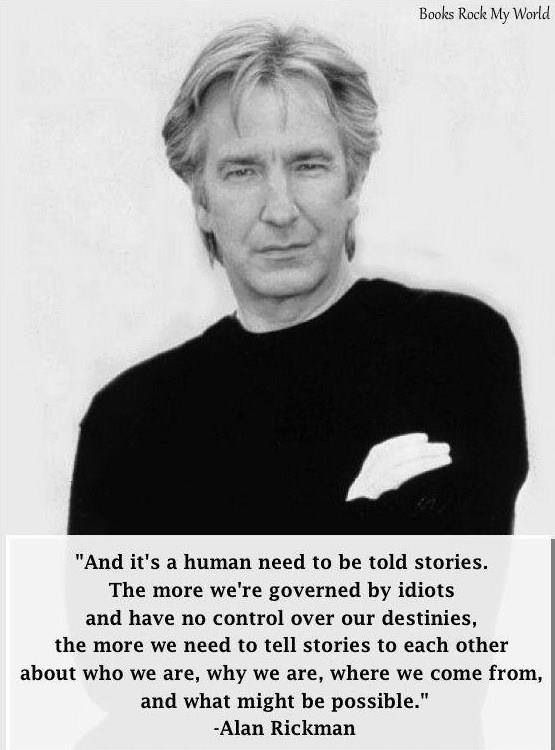
    Alan Rickman

    In stories we find our hopes, our dreams, our inspirations, and our fears.  In stories our imaginations take flight as we contemplate ideas never before encountered.  Stories help us figure out the world and our place in it. We come to understand the stories of others and develop compassion and empathy. We find ways of confronting our fears in safety. We escape the ordinariness of the everyday with dreams as much of the impossible as the possible.

    The love of reading is gift

    Stories can be shared orally, in print, or through a variety of media. All are valid and valuable sources, but sharing the stories presented in books is especially important to the development of young children, and anything that can put books into the hearts and hands of children is to be encouraged. The ability to read is empowering and the love of books is one of the greatest gifts a parent can give a child. Not only can reading change the life of an individual, it can improve the lives of many through education.

    This week I read a post by Paul Thomas  on his blog the becoming radical. In this post, entitled “Please—a little less love, and a little more common decency. Paul said,

    “If we cannot change the world (and I suspect we can’t), we can provide all children the sorts of environments all children deserve in their school day—environments of kindness, compassion, safety, and challenges.”

    I think Paul meant that we can’t change the whole world, that would be a rather daunting task, but the provisions mentioned are vital and change the lives of individuals in important ways, just as reading does. I like to think of changing the world with one thought, one word, one action at a time, or as Mem Fox says, also quoted in my post The magic effect – why children need books,

    “. . . let’s get on and change the world, one page at a time.”

    malala

    Another post I read this week was by Michelle Eastman Calling all Book Lovers and Authors to make a Difference to a Child in Need on her blog Michelle Eastman’s Books. In that post Michelle explains that, last year, she initiated a project “MARCHing books to Kids”. The purpose of this project is to raise awareness of and provide books for children of incarcerated parents. Michelle goes on to say,

    “I believe that every child’s Bill of Rights should be indelibly inked with the right to have picture books read to him/her and to own their very own books. “

    I agree with her of course and consider her project to be very worthwhile. It reminds me of another very worthwhile program mentioned by Caroline Lodge, who blogs at Book Word, about providing books to prisoners. Both of these projects have the ability to change lives, to empower people and by so doing, change the world, not only their world.

    https://openclipart.org/detail/226141/princess-and-prince-illustration
    https://openclipart.org/detail/226141/princess-and-prince-illustration

    As well as changing lives, stories influence our attitudes. If they encourage feelings of kindness and compassion, as Paul Thomas says, that may be a good thing.  But what of the stereotypes that seem so pervasive? How many stories have you read about princesses in dire circumstances waiting to be rescued by handsome princes or knights in shining armour who must slay a dragon in doing so? What effect do these stories have upon the developing self-image of a young girl or boy? It is important to teach children to think critically about the stories they read, and about the portrayal of characters and their attitudes, especially stereotypes.

    © Norah Colvin
    © Norah Colvin

    But that is in reading stories. What of writing stories? Writing stories, whether factual accounts or imagined events, is also empowering. In writing stories children, and adults, can express and explore their hopes, dreams, inspirations, and fears.  In writing stories their imaginations take flight as they contemplate ideas never before encountered.  Writing stories helps us figure out the world and our place in it.

    In her post Storytelling as Personal Metaphor Anne Goodwin who blogs at Annecdotal raised the question of how much of the self is revealed in fiction.

    Paula Reed Nancarrow, whose blog tagline is Essays, Stories, Ephemera, talked about working towards an understanding of contentment: what it is and how it is experienced; in her post Enough Already: Exploring the Art of Contentment,

    Contentment is something that I too wonder about, and am especially perplexed by the need to push myself into new territory and new learning when others are content to sit back and watch the clouds pass by. Why are there so many things I feel I must do? Pretty soon I’ll be gone and it won’t matter a hoot. I have sometimes thought that if I were to write a fictionalised account of my life I would begin with the words She was an unremarkable woman”.

    I have connected these thoughts: about the power of story to change lives, the revelation of self in fiction and the quest for contentment; to write my response to the one who initiated my thinking about stories this week, Charli Mills at Carrot Ranch Communications with her flash fiction challenge to in 99 words (no more, no less) begin a story with, “Once upon a time …”  I’d love to know what you think.

    Contentment

    Once upon a time there was an ordinary girl who lived an ordinary life with her ordinary family. She did all the ordinary things that others did and dreamed of nothing else. Each day followed one after the other with little difference. There was no magic. There were no fairies, and there were no dragons to slay. She just did what she had to do and took little notice of others doing the same. Strangely enough she was content for, from somewhere deep within, she knew that this ordinary life was but preparation for the extraordinariness of the next.

    Monarch butterfly

    Thank you

    Thank you for reading. I appreciate your feedback. Please share your thoughts.
  • Which school? I found one!

    school cropped

    Most parents want to provide what is best for their children. However, they don’t always know what that best is, where it is available or how to get it. This is just as true of schooling as it is of anything else. Fortunately, most children are adequately schooled locally, be it at a state or privately run facility.

    I attended a Catholic school and have taught in both the Catholic and State systems. I see little real difference between what is offered in local private and local public schools as far as philosophy, pedagogy and quality of teaching goes. The differences, as I see them, are more due to the inequities in funding for facilities and resources, the restriction to accessibility by the imposition of fees, and the ability of privately run organisations to decline students as opposed to the state’s willingness to cater for all.

    While I think most schools do an excellent job of schooling, there are aspects I don’t like.

    © Norah Colvin
    © Norah Colvin

    Fortunately, most children survive school and graduate adequately prepared for life in the adult world. But the scarring carried by many, whether visible or hidden, emotional or intellectual, is a cost that should not be accepted.

    In this TED talk Sir Ken Robinson asks “Do Schools Kill Creativity? He explains why he thinks they do and the manner in which they do it. He ends the talk saying,

    “our task is to educate their whole being, so they can face this future. … we may not see this future, but they will. And our job is to help them make something of it. “

    By the time Bec was born I had already decided that I wanted more than schooling for her. I had read voraciously about learning and education. I had observed the magic of learning as my son wondered, questioned, explored and reignited my own curiosity, during his before school years. I saw those same traits inhibited by uninspiring teachers. I have written about this before here and in an article published in a teachers’ magazine when Bec was of school starting age. At that time, it was necessary to make decisions about her ongoing education.

    To school or not to school

    www.openclipart.org
    http://www.openclipart.org

    I had already explored local (and not-so local) alternatives. I attended information sessions, read their publications (no Google back then), and visited schools to observe their practices and speak with teachers, children and parents. Disappointingly I found none that met all of my criteria.

    Some “schools” provided little stimulus or input to extend or challenge children’s thinking. Some were very structured and without flexibility in their approach. Some that claimed to be alternative appeared to be not so with uniforms and strict rules and timetables. Some that claimed to be mainstream were more child-focused with an organic curriculum matched to children’s interests, but lacked other things I sought.

    When the pluses and minuses of each were considered, there wasn’t one with a compelling scoresheet. There was nothing for it but to found my own, a possibility I had been contemplating for some time and a “dream” shared by many teachers. The Centre of Learning Opportunities was born. These are some of the original documents drawn up by the team back then.

    Vision

    Symbol

    outside

    COLO brochure inside

    While working to establish this alternative to school, I began an MPhil research project “Educational Diversity: Why school? What school?” which, as well as exploring educational alternatives, was to record the first year of an (my) alternative school. As part of the project I conducted a survey of local alternative schools with the aim of recording the diversity of approaches available in order to demonstrate that there is more than one way to obtain a quality education.

    Although the degree went down the same dead end path as the school, I was able to (self) publish and distribute the results of my research to participating schools in a document titled “Diversity in Schooling: Discovering educational alternatives in South-East Queensland.” (Surprise, surprise, I have just discovered it in a Google search. How weird is that!)

    Diversity

    I was reminded of my research and this document by a recent discussion with Pauline King, The Contented Crafter in response to my post Life — A “choose your own” adventure. When I alluded to the wisdom of young children and “our” efforts to obliterate it, Pauline agreed and suggested that she could do a post-long comment on the topic.  I jumped at the chance and immediately invited her to do so. Pauline again agreed but suggested I refine a set of questions as she could fill a book with her ideas. I”m working on it.

    Responding to The Industrious Child Pauline wrote,

    “Teachers need to be SO flexible in their ability to see their world, their work, their class as a whole and their individual students – it is never a one step process and different expectations and challenges can be laid down for different abilities. Almost every child will shine somewhere within the curriculum and many struggle somewhere else. After all, we all have our different talents and abilities. Schools are structured to meet the needs of a certain academic ability and those who fall above or below that parameter are, in my opinion, so often mis-educated.”

    It is obvious that Pauline, Ken Robinson, and I, along with many others, are part of the same revolution.

    In another comment on my post I found it first Pauline shared that she had spent many years trying to establish a school of her own but had found “an already working alternative system and never regretted it.”

    I think I have questions enough for Pauline to fill a book’s worth of posts and look forward to sharing some of these in the future. If you have questions of your own, please pop them into a comment and we’ll see what we can do.

    Thank you

    Thank you for reading. I appreciate your feedback. Please share your thoughts.

  • I found it first!

    Launching soon - readilearn2

    In my previous post Not lost but found I discussed the notion of adopting the title “Founder” when describing my relationship to readilearn my soon-to-launch website of early childhood teaching resources. The title both bemused and amused me at first but I have now accepted its appropriateness. In fact, I realise that readilearn is not the first thing I have founded.

    © Norah Colvin
    © Norah Colvin

    Create-a-Way was perhaps the first that I founded. It was a home-based business offering educational sessions for children of before school-age and their parents. The impetuses for founding Create-a-Way included:

    • The decision, made before Bec was born, that I would parent and educate her (The alternative to keep teaching the children of others while entrusting her education to another didn’t make sense to me.)
    • A dissatisfaction with playgroups that were simply bitch and coffee mornings for mums and squabble sessions for children left to their own devices
    • A realisation that parents didn’t stimulate or foster their children’s intellectual growth because they didn’t know how, not because they didn’t care

    I saw a niche that would honour:

    • My passion for education and need to be doing something in that area
    • My firm belief in the importance of early years learning
    • My appreciation of children’s innate curiosity and need to learn coupled with the joy of sharing their sense of wonder and creativity
    • My certainty in the power of reading and education to improve the lives of individuals and society
    • A conviction that there are better ways of educating than simply accepting the status quo.

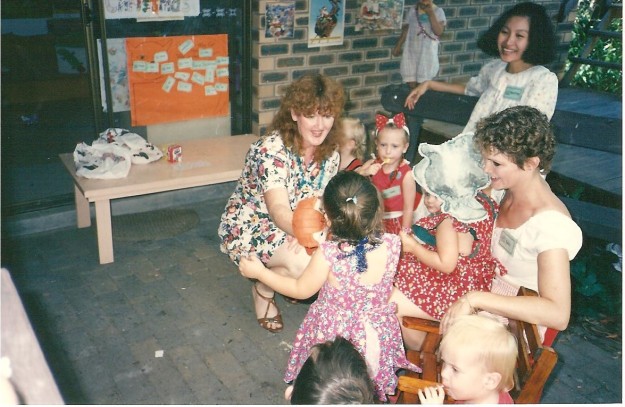
    And best of all, I could do it with Bec! (Although she is not in this photo.)

    Guiding parents in play sessions for parents and children.
    Guiding parents in play sessions for parents and children.

    I express this passion and these basic beliefs repeatedly. They are what make me. They are my driving force; the threads that weave their way through everything I do, holding them and me together. They were the basis for my attempt at founding an alternative school; they guided my classroom pedagogy and now the preparation of resources for readilearn.

    © Norah Colvin
    © Norah Colvin
    © Norah Colvin
    © Norah Colvin

    It’s funny looking back now at the documents I wrote, it seems almost a lifetime ago (well almost all of Bec’s lifetime and more than half of mine), on an Apple IIE computer. I’m still proud of what I offered and truly believe in the value of sessions such as these. However, I can see that, while there has been little change to my passion and beliefs over the years, if I were to do the same thing now I may update some statements to more closely match my current understanding of a growth mindset.

    The thought of doing the same again now is not far from my imaginings. The format of Create-A-Way sessions forms the model of another project I would love to found The Early Learning Caravan. Maybe Steven’s suggestion of crowdfunding would be appropriate for getting it started, but that’s not a project for the immediate future.

    © Norah Colvin
    © Norah Colvin

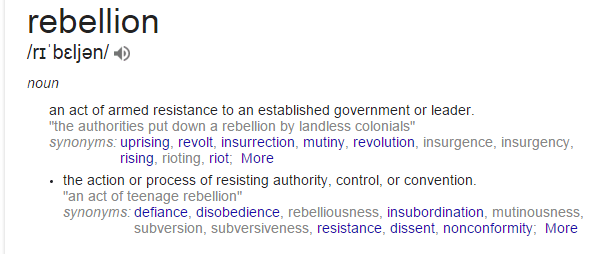
    I wonder if my inability to simply accept what is could be considered rebellion? What is a rebellion? I’m thinking of these terms as this week at the Carrot Ranch Charli Mills has challenged writers to In 99 words (no more, no less) write a rebellion.

    rebellion definition

    The rebellions of which Charli writes are of a larger scale, more in keeping with the first definition.

    In this TED Talk Ken Robinson urges us to Bring on the Learning Revolution making “the case for a radical shift from standardized schools to personalized learning — creating conditions where kids’ natural talents can flourish. I’m proud to be a rebel fighting in the same revolution as Sir Ken.

    In addition to these larger scale rebellions and revolutions there are many that take place on an individual and daily basis in our families and classrooms, and on our streets. Some of the battles, such as  teenage rebellion are fought for justice, independence and identity, a natural and necessary part of growing up. But the need to establish one’s individuality, one’s separateness as a person begins years before that, as anyone who has ever had anything to do with a two-year old can testify.

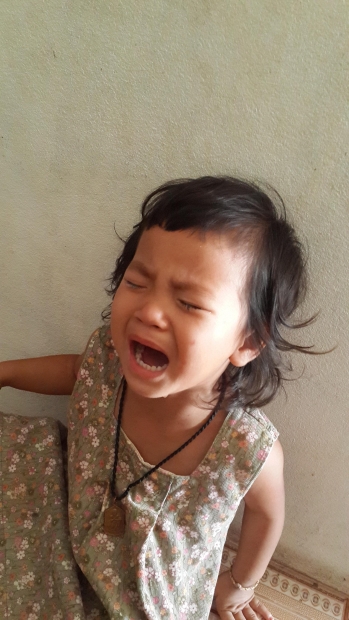
    Sometimes the same battles are played out over and over and parents wonder why the children just don’t accept that they need to clean their teeth, wash their hands, put on their shoes or whatever, rather than battle over it each and every time. It is this early childhood rebellion that has inspired my flash fiction response to Charli’s challenge this week. I hope you enjoy it.

    crying

    You’re not the boss of me!

    Eyes blazed defiance, daring a struggle which could end only in tears and frustration, or a standoff with no real winner. She was ready to flee the moment there was a hint of movement. Our eyes met. I contemplated my options. Did we have to do this now?

    Again the challenge: “You’re not the boss of me!

    I pretended to read.

    Another volley, quieter: “You’re not the boss of me.

    No response.

    Soon she was snuggling beside, pointing to pictures.

    I read aloud.

    We laughed at the antics.

    As I closed the book I said, “Ready? Let’s do this.”

    Thank you

    Thank you for reading. I appreciate your feedback. Please share your thoughts.

  • Not lost but found

    12

    I am struggling with a writing task at the moment. Part of the reason is that is has been at the back, rather than the forefront, of my mind as I worked on other tasks, and part of the reason is that it involves self-promotion in a marketing kind of way. It confuses me a little, because haven’t I been self-promoting all the time I have been writing a blog? Surely putting my ideas out there is at least presentation, if not promotion, of said ideas.

    With the goal of sharing original early childhood teaching resources and stories for children on a website of my own, I began writing a blog and engaging in social media about two and a half years ago. This was in responses to advice received from attending writing seminars and reading books about website development. Preparation of resources for my website took a back seat for a while as I engaged with other writers in the blogosphere.

    Now it is time to turn the focus back onto the website, the launch of which is fast approaching. With an extra effort over the past couple of weeks, I now have sufficient resources to begin. Additional resources will be uploaded at relatively frequent, if irregular, intervals, not unlike adding to my blog.

    80

    I have no issue with ideas for additional resources or blog posts. My stumbling block is the content for my bio and promotional information about the website. It should be easy, I know, but I am struggling to find the answers to these questions:

    • What do people want or need to know about me?
    • How can I promote my resources in an honest way that entices people to sign up to a paid subscription?
    • What is a fair price for subscription?
    • How can I persuade potential subscribers that they will get value for money?
    • How can I ensure that subscribers do not feel let down by the available resources or ripped off by misleading promotion?

    These questions arise even before I begin to tackle the really difficult one:

    • How do I connect with my target audience: early childhood teachers?

    I know I am not alone with these concerns.

    Recently Sarah Brentyn, who blogs at Lemon Shark, questioned the validity of her profile, enflaming my anxiety by stating that “It’s seen by far too many people who judge you by those 10 – 20 words.” The thought to change my blog’s About page, with far more than 10-20 words, hasn’t yet moved beyond that guilt-ridden thought. And while I know it is not suitable as is for my website, perhaps editing or rewriting it is a place to start.

    90

    Throughout the year Anne Goodwin, who blogs at Annecdotal, shared the process of stepping out from under the covers of introversion to promote her debut novel Sugar and Snails.  In her post One huge leap for Anne, one teeny tiny step for womankind, she questioned how to balance celebrating her achievement with the suspicion that many would be unimpressed. In another post on Book pricing: a cautionary tale Anne questioned pricing and value and shared the hope that people wouldn’t feel ripped off. I am fairly confident that Anne’s concern on each of these issues turned out to be unwarranted. Will mine be the same?

    Charli Mills of Carrot Ranch Communications also frequently writes about marketing and the importance of finding one’s niche. In September she declared her position saying,

    “My intention … (is) to write and publish novels. My intention is to be a successful author. Success to me is publishing books I want to write for readers who want to read them. My secondary goal is to market well enough to eat more than hand-picked dandelions from my yard. Many will say it’s a fool’s dream.”

    Charli has expressed it well. Substitute “early childhood teaching resources and stories for children” for novels and it could be me. I hope that neither Charli nor I are dreaming the impossible. Charli at least has a long list of credentials.

    I have spent some time looking at other websites which may be considered competitors and looking at bios on others. If there’s one thing I have discovered it is this:

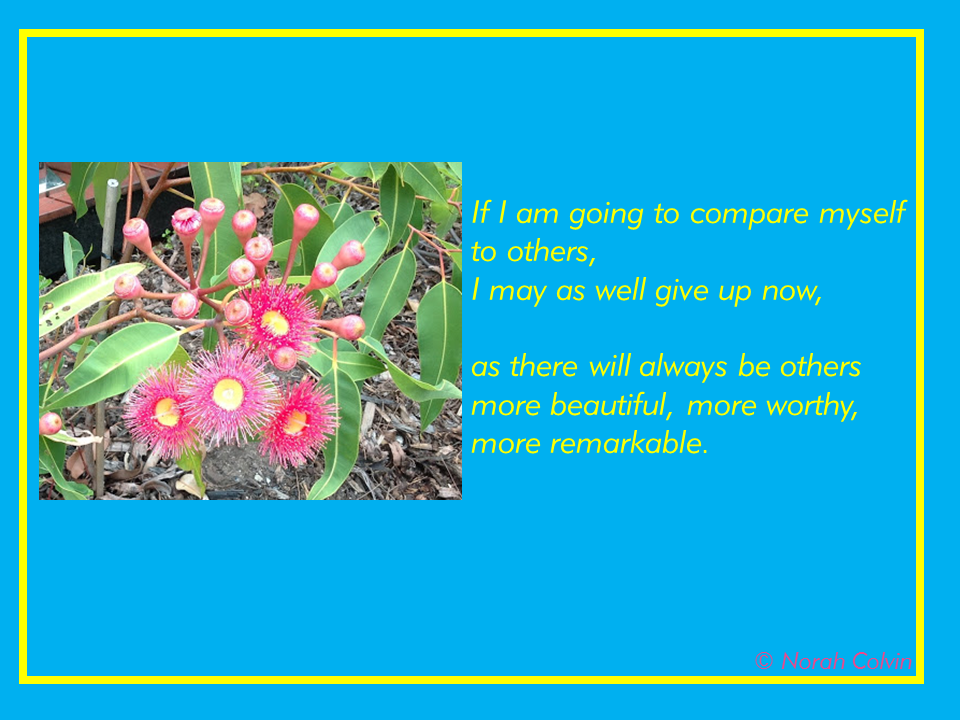
    compare - give up

    There is a multitude of websites offering early childhood teaching resources. Some websites offer all resources free. Teachers love freebies. There are also many websites with resources available to subscribers. Why would anyone want mine?

    However, I’m not going to give up now.

    compare - none

    I hope there are many early childhood teachers who will see sufficient value in my website to pay the annual subscription. As far as I explored, I have not found anyone offering interactive resources similar to mine. It is possible that they exist and I just haven’t found them. However, I am hoping that teachers see value enough in these alone, and consider the other resources a bonus. Time will tell. If it returns nothing but the pleasure of achievement, then I will consider it my jetski. If it does more than that I will be well pleased.

    So, if I am not going to give up, maybe I just need to get on with the task of writing my bio and promotion paragraph. The other day I read a bio that described the website owner as its founder. Hmm. I thought. Maybe that’s a title I could use.

    founder of readilearn

    I was amused at the thought that I would found something that hadn’t been lost. It just hadn’t been before. I thought about other things, briefly mentioned in other posts, that I had founded:

    Create-A-Way, educational sessions for children of before-school-age and their parents.

    Centre of Learning Opportunities, envisioning an alternative way of educating.

    Perhaps I can now add another to my list. I just need to get the bio written.

    What advice do you have for me? What should I include? What should I leave out? What is the most important thing of which I need to be mindful?

    Thank you

    Thank you for reading. I appreciate your feedback. Please share your thoughts.


  • The industrious child

    http://www.morguefile.com/archive/display/902642
    http://www.morguefile.com/archive/display/902642

    The advice to go to school, work hard, get a good job seems to be often repeated, as if it is advice given to all young people as they are growing up. Funnily enough, I don’t remember receiving it when I was in school, though I may have been given it. With or without it, I think I was fairly industrious, for the final year anyway, studying six hours long into the evening each day after school. I devoted one hour to each of my six subjects. I needed to work hard to get the job of my dreams: all I wanted to be was a teacher.

    SnipsandClips, Teacher and Child https://openclipart.org/detail/205589/teacher-and-child
    SnipsandClips, Teacher and Child https://openclipart.org/detail/205589/teacher-and-child

    I think I have probably always worked fairly hard, even when I wasn’t ‘working’. Maybe I should rephrase that, and say that I consistently put in a good effort, as long as low marks for exercise and housework are not put into the aggregate.  Effort doesn’t always produce the hoped-for results, and sometimes the results can be achieved without any apparent effort. I have not yet found that in relation to exercise or housework, though. I’ll let you know when I do.

    This week at the Carrot Ranch Charli Mills is talking about being industrious. She says that

    “Making a living as a writer is not exactly the career path any school counselor would promote, but any industrious writer can make it work.”

    Tony Wagner - iterations

    I hope she’s right. In the current iteration, of which there have been a few, of my teaching career, I am combining my passion for education with my love of writing.

    Charli says that

    “You have to find a niche … an outlet and fair payment.”

    I’m working on those and I’m hoping that this time my effort will produce the desired result.

    My niche: early childhood educational resources with a point of difference being interactivity in some

    My outlet: a website readilearn, soon to be launched

    Fair payment: while some resources will be available free of charge, others, including the interactive resources will be available only to subscribers

    The relationship between effort and result is relevant when thinking about growth mindset and praise, both of which have previously been discussed on this blog, here and here for example.

    fixed - growth mindset

    Growth mindset is a way of thinking about learning proposed by Carol Dweck; of viewing learning as occurring on a continuum of possibilities that may not yet be, but have the potential to be, achieved. It differs from thinking about the ability to learn as being fixed or limited in various unalterable ways.

    Much of the discussion about praise, see here, here, and here, referred to how the effect of praising for effort, “I can see you worked hard on this” differed from that of praising achievement ‘Great job!”. Personally, I’m hoping for a bit of both once my website launches. I’d like some praise for the product, but also recognition of the effort. I just have to hope others find it worthy. I definitely don’t want to receive any hollow praise, which I think is a major criticism of the comment “Good job!”.

    ryanlerch_thinkingboy_outline

    Needless to say my interest was piqued by a statement in the opening paragraph of the post Mindset, abundance by Mary Dooms on Curiouser and Curiouser this week:

    “a colleague … and I continue to commiserate on the implementation of Carol Dweck’s growth mindset research.”

    Dooms goes on to say that “nurturing a growth mindset is a daunting task” and explains that their fear “that growth mindset has been reduced to the grit mentality of telling the students to work harder” is shared by Dweck.

    I followed the link provided to an article published in September 2015 in which Carol Dweck revisits the ‘Growth Mindset’. In this article Dweck says that one of the biggest misconceptions about a growth mindset is equating it with effort. She says there is more to achievement than just effort and reminds us that effort has a goal: learning, improvement or achievement. Effort is not made simply for effort’s sake and there is no point if it is not achieving something. She cautioned that we need to be aware of when effort is not productive and to provide students with a range of strategies to use when they get stuck.

    She says

    “Too often nowadays, praise is given to students who are putting forth effort, but not learning, in order to make them feel good in the moment: “Great effort! You tried your best!” It’s good that the students tried, but it’s not good that they’re not learning.”

    She explains that

    “The growth-mindset approach helps children feel good in the short and long terms, by helping them thrive on challenges and setbacks on their way to learning. When they’re stuck, teachers can appreciate their work so far, but add: ‘Let’s talk about what you’ve tried, and what you can try next.’”

    She goes on to say that having a growth mindset is not a destination, it is a journey. We all have some thoughts and responses that are more akin to a growth mindset and some akin to a fixed mindset. It is important to recognise both and continue to grow in growth mindset thinking. I know I still have a lot of learning and growing to do, but with Dweck’s acknowledgment of the same, I know I am in good company.

    Dooms also links to an article by Peter DeWitt published in Education Week Why a ‘Growth Mindset’ Won’t Work. DeWitt states that according to John Hattie, whose work I have previously mentioned here, a growth mindset has little effect on classroom results. Now that’s putting the cat among the pigeons.

    www.morguefile.com
    http://www.morguefile.com

    However, DeWitt explains that the reason for the low effect is that most adults have fixed mindsets which they transfer to students. He says that, for the growth mindset to be more effective, we need to do things differently.

    First of all, he says, ditch the fixed mentality. Don’t see the problem as being with the student, see it in how or what is being taught. Adjust the teaching. (I’ve also mentioned this before here.)

    • Test less for grades and more to inform teaching
    • Provide feedback that supports student learning
    • Avoid grouping students by ability
    • Ask questions that require deep thinking
    • Stop talking!

    In fact, what he is saying is that we need to practice the growth mindset, not just preach it.

    Teachers with a growth mindset appreciate the incremental

    Which brings me back to being industrious, putting in the effort, and responding to Charli’s flash fiction challenge to “In 99 words (no more, no less) write an industrious story.

    I’m thinking of putting in the effort as being industrious. I’m thinking of our impression of it and responses to it in others, particularly of the need to recognise where difficulties lie for students and how to praise to assist learning.

    “Could do better”

    The words blared from the page.

    “Needs to try harder.”

    Down through the years the judgement repeated.

    “More effort required.”

    No one tried to understand his unique way of seeing, his particular point of view.

    “Doesn’t apply himself.”

    He struggled to repeat their pointless words and perform their meaningless tasks.

    “Needs to concentrate in class.”

    Inside his head the images danced in brilliant choreography.

    “He’ll never amount to anything.”

    Outside their white noise words crackled a cacophony of dissonance.

    Finally, school days done, they clamoured for the inspired works of the overnight success.

    “Brilliant!” “Talented” “Exceptional!”

    Thank you

    Thank you for reading. I appreciate your feedback. Please share your thoughts.


  • Life — A “choose your own” adventure?

    This morning Hub mentioned a book he had read about and asked if I had heard of the author Wayne Dyer. “Of course,” I replied and proceeded to explain that I had read many of Dyer’s books, had gone to a seminar to hear him speak and had been swept off my feet by accompanying speaker Deepak Chopra. I mentioned that a favourite book of his was marked now by a gap on my shelves, a phenomena recently mentioned by both Caroline Lodge, who blogs at book word and talked about missing books, and Anne Goodwin, who blogs at annethology and talked about the dilemma of lending books.

    Wayne Dyer
    I think there may be more than one missing from my self!
    Deepak Chopra
    I think. looking at these titles, its time for some re-reading!

    This favourite book, read and lent many times, What Do You Really Want for Your Children? was very influential in shaping the way I parented and taught. It is one of a few books that I read and re-read with a highlighter and sticky notes. There was much in it for me to get my head around. While I am unable to now refer to it for its wisdom, one of the things that I remember most was a hypothetical letter from a child thanking parents for the way they had parented. I considered it a letter any parent would love to receive, personalised of course.

    As often happens, Hub got the long (love) story as it tumbled out in a torrent of reminiscences and of joys in discovering inspiring minds. When I paused long enough to take a breath, I remembered to ask about the book to which he referred. He said it was about the recollections of past lives as told by young children, of children choosing their parents and of being in heaven.  Later research informs me that the book is Memories of Heaven, subtitledChildren’s astounding recollections of the time before they came to Earth.

    I had previously, many years ago, heard the suggestion that children choose their parents. I like to think (though don’t believe) that my children chose me, and often thank them for doing so. They have taught me a lot about life. I am a strong believer in the wisdom of young children: if we are attentive and take the time to observe and listen, we can learn much from them. Sometimes it seems they enter the world with wisdom but “we” do our best to obliterate it as quickly as we can.

    www.openclipart.com
    http://www.openclipart.com

    As it is wont to do, my thinking followed a circuitous path with if, buts, maybes and questions. Children choosing parents may be a nice idea; but what of the children living in poverty, with famine, and in war-torn areas? Why would anyone choose those conditions?

    That question led me through my basic understanding of the Buddhist philosophy in relation to karma and rebirth. I have read a few books on the subject but don’t profess to have any real knowledge. I don’t like to think that these situations may be endured as the result of bad karma from a previous life, and am not even sure if they would be viewed that way in Buddhist thinking. Perhaps these situations could be an improvement on the previous, a step to the next? Maybe that’s not so unpleasant a thought.

    Dalai LamaTibetan book of living and dying

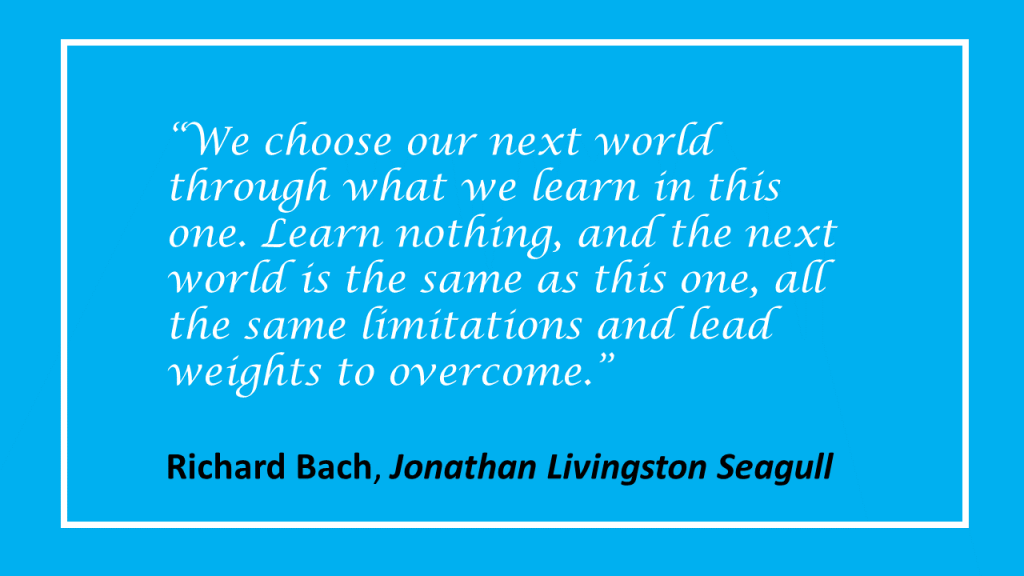
    I like the idea of improvement, of always learning, of striving for perfection and enlightenment. It is probably one of the reasons that the “yet” thinking of a growth mindset fits nicely into my philosophy. It explains why one of my favourite books (I almost wrote “of all time” – what would that say about me and my past lives?) is Jonathan Livingston Seagull by Richard Bach, who dedicated the book “To the real Jonathan Seagull, who lives within us all”.

    Jonathan Livingston Seagull

    Slide2

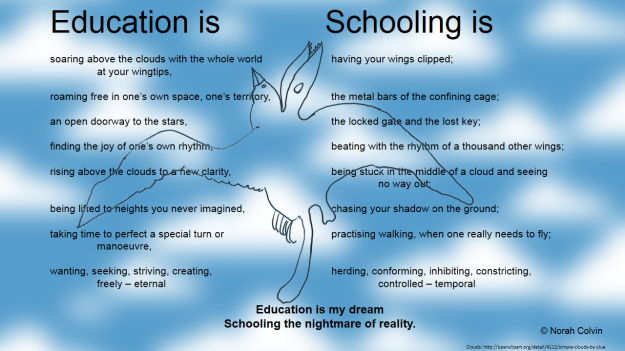
    I had always thought that being a bird would be pretty amazing with the freedom to fly above the world and look down upon its beauty. Maybe this is one reason Jonathan’s story appealed to me. Perhaps it explains the analogy of flight in my poem about education. Maybe it’s why I love to sit at an airplane’s window and marvel at the scenes below.

    education-is-2

    And so my thoughts meandered, drifting through clouds and pockets of time, until they were suddenly interrupted by the voice of the child next door singing, “Let it go”.

    I think those three words “Let it go” may be the only ones that anyone sings along with, but the message of the song is powerful: to let go of insecurities and realise the potential within; don’t care “what they’re going to say” and acknowledge that “It’s time to see what I can do”.

    Slide1

    The message is not unlike that of Jonathan Seagull: to stretch beyond the limits imposed by others and their labels and to attain self-realisation. It is a journey undertaken by most thinking people, as demonstrated by the identity crisis that has befallen Sarah Brentyn who blogs at Lemon Shark. What is that if not a call for release from chains that may bind to enable the freedom for flight?

    The end of a year is generally a time for reflecting on what has been achieved and what is yet to be. Perhaps it is also a time for letting go in preparation for what lies ahead.

    Slide3

    I hope that, as you reflect, you are happy with what you have achieved, with where you are, and with the path that lies ahead. I wish you a safe, fun and fruitful journey along the “road to find out”.

    I have enjoyed your company this year and appreciate your feedback. The conversations are what keep me going, growing and learning. Thank you. I look forward to the journey continuing.

    Thank you

    Thank you for reading. I appreciate your feedback. Please share your thoughts.


  • The magic of Christmas, “Bah humbug”!

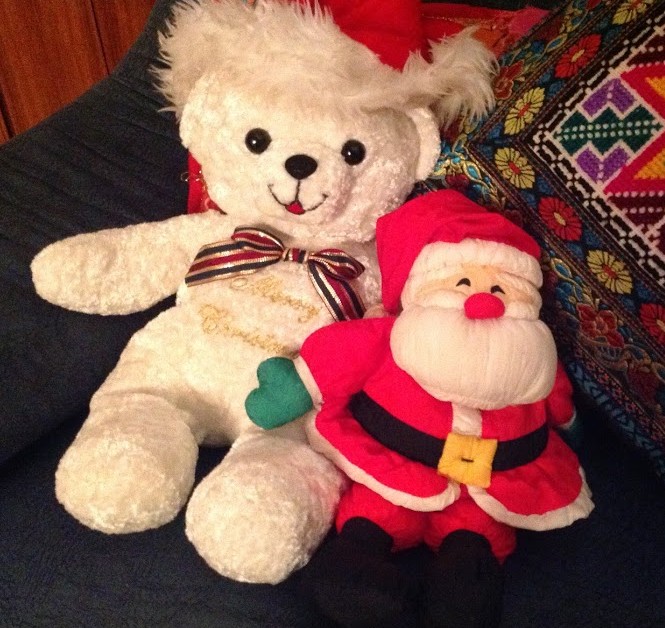
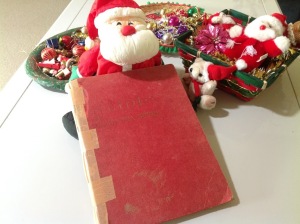
    Santa and bear

    At this time of year in many places around the world there are children excited about the magic of Christmas. I don’t know the numbers to compare but there are a good few, mainly adults I suspect, who say “Bah humbug!” While I was once a firm believer in the magic and did my best to keep it alive, I now tread warily, unsure of how best to approach this topic. As a parent I didn’t get it right so can offer no wisdom of my own.

    After many years of seeming to go along with the story, long after I thought it should have been abandoned, Daughter finally questioned why, if the stories weren’t true, would parents lie to their children.  She preceded her question with the request to not say if it was true or not, she just wanted to know why parents would lie.

    I let her down on both counts. I told her the truth of the story and couldn’t explain why parents would lie. I’m not sure that I’ve been forgiven for either failing, and I have never stopped thinking about what may have been a better way of handling the situation if I was ever offered the opportunity for a do-over.

    Interestingly I don’t recall having any similar concerns about my parents lying or disillusionment on finding out the truth. Daughter’s older brother voiced no concerns either, but I cannot be certain whether or not he had any. Until now when, with children of his own, the issue again is raised.

    At first Son’s intention was to not engage in Santa stories; but with one child at school and the other in kindy the situation becomes more complex. The children are more exposed to the stories through friends and organized events and there is the concern about “spoiling” things for other families. Caught between the pressures of a shared popular culture and the questions of intelligent, critical thinking children, the parents must make a decision. I sympathize and wish them better success than I experienced. I have suggested to Son that he consult his sister. She knows better than I about this one and can maybe help him avoid making the mistakes with his children that I made with her.

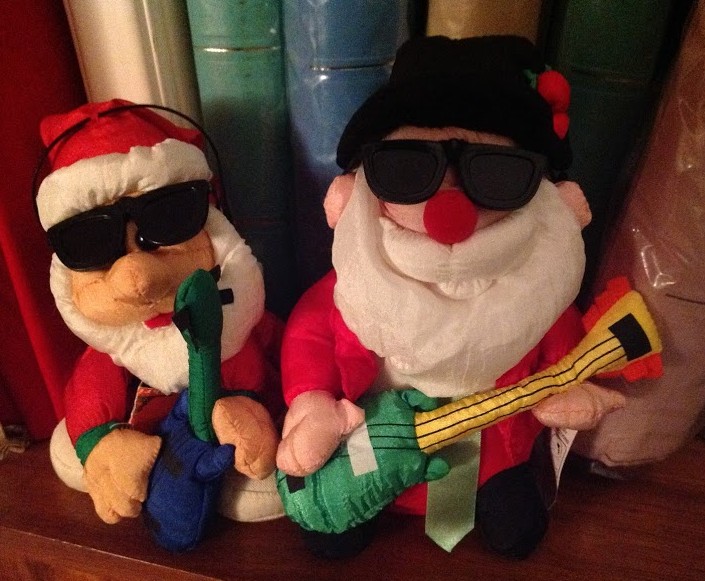
    musical Santas

    There is a lot of well-intentioned advice on the internet, but the value of some is debatable. Many explain the Santa story as being about love, kindness and generosity, and the magic as the assistance given by many helpers, including parents, throughout the world. Many explanations are likely based on the famous response, Yes Virginia, There is a Santa Claus, to an 8-year old’s letter, the authenticity of which has been questioned.

    Some of the explanations and stories encountered recently include:

    Feeling the magic by Autism Mom

    The Sweetest Way to Tell Your Kids the Truth About Santa by Sharon Silver

    Santa’s Powerful Message For Boy With Autism “It’s OK to be you” by Dominique Mosbergen

    A Sweet Story About the True Meaning of Christmas shared by Noelle Granger

    As much as I love the sentiments of these stories, they don’t really help me with my truth or lie dilemma. So I returned to a post by philosopher Michelle Sowey  HO HO HO! (Q.E.D.) in which she questioned the ethics of the Santa lie. I shared this post previously in April 2014.  Michelle agrees that the attempt at compromise in many of the explanations, It’s Santa, Jim, but not as we know him, is unsatisfactory because:

    • the historical figure St Nicholas is omitted
    • Christmas for most children is more about receiving than giving
    • of a conviction that children should be encouraged to believe in things that are real (visible or invisible, tangible or intangible) and to disbelieve in things that aren’t (all of which are invisible), and
    • it is better to develop critical thinking than to believe in intangible things.

    She says,

    “Parents can be powerful advocates for their children’s intellectual autonomy. They can help their kids to draw their own well-reasoned conclusions; to value coherence and logical consistency (among other things) in the construction of their worldviews; and to cleave to their beliefs with a level of confidence proportional to the amount and quality of evidence available.

    With a little analysis and reflection – perfectly accessible to an eight-year-old – it’s clear that believing in things without good evidence often means believing in things that aren’t true.”

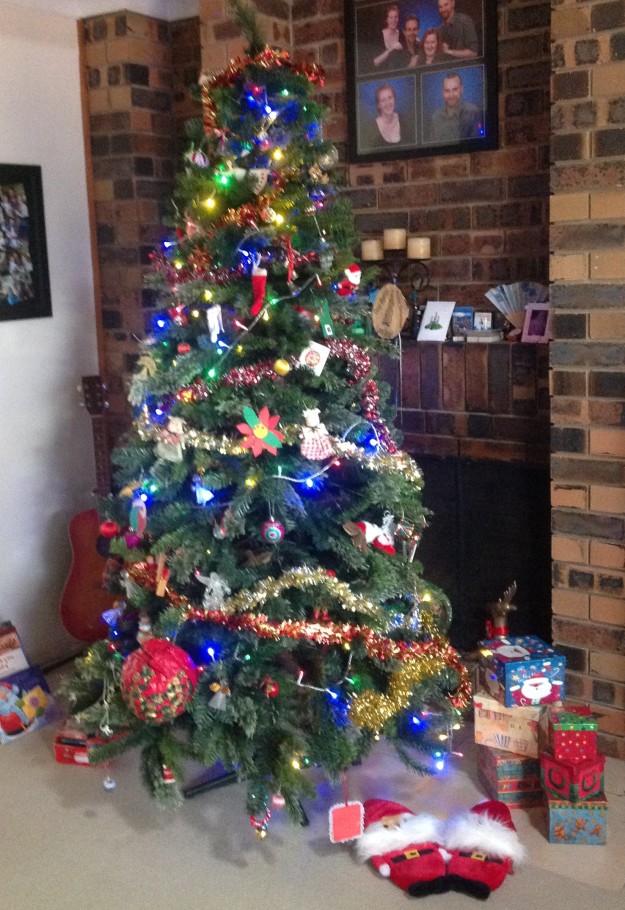
    Santas

    Okay. We agree on that, but how would a parent extricate themselves from the myth once they have become entangled?

    When I re-read her post I noticed Michelle has, just this month, added a postscript linking to an article by ethicist David Kyle Johnson who asks the question DO PARENTS WHO TELL THEIR KIDS ABOUT SANTA END UP ON THE NAUGHTY LIST?

    David says that parents who lie to their children by supporting the myth are not necessarily bad parents (thank you!) but they would be better parents if they didn’t.

    He adds to Michelle’s list with these:

    • Children should thank their parents, who have purchased and sacrificed, not Santa; “gifts are the giver’s way of showing the recipient that he or she has worth and is loved. Children need assurance their parents see them as worthwhile and valuable – not Santa Claus.”
    • Santa shouldn’t be used as a threat e.g. stop doing that (bad behaviour) or Santa won’t come
    • It stifles imagination because you can’t pretend if you believe: “By tricking children into actually believing Santa exists we rob them of the opportunity to imagine he does.”
    • And the big one: the loss of trust “Finding out their parents have lied to them about Santa Claus can cause children to think their parents are lying to them about a great many other things.” He says it is probably a bigger risk than most parents realize.

    You can read more of David’s thoughts about the myth in this excerpt from his book The Myths that Stole Christmas.

    David says that the tradition of Santa and gift giving is relatively recent and “sold” to consumers primarily for financial reasons. He urges parents to stop tricking their children into believing the myth. My experience supports that, and I wonder how I would go about it if I had the opportunity again.

    This week at the Carrot Ranch Charli Mills challenges writers to In 99 words (no more, no less) write a story about “spreading the light.” While she suggests it could be used it to honor or memorialize a loved one, I thought I would attempt to shed light on the Santa myth and its potential for harm. Hopefully it’s not too far off the mark as I always loved, and protected, this myth; but perhaps a decision to protect the intelligence and critical thinking of my loved ones, and children in general, is even more important.

    https://pixabay.com/
    https://pixabay.com/

    How true?

    “What shall we read tonight?” asked Dad.

    Jimmy searched the shelf for something he hadn’t heard before. There weren’t many. Suddenly he found one, slid it off the shelf and nestled into Dad’s lap.

    “Twas the night before Christmas …” began Dad.

    “Who…, what…, where…, why…, how…,?” began Jim, marveling at flying reindeer and pondering possible destinations.

    As Dad closed the book Jimmy was ready with his usual question, “Is it true?”

    “What think you?”

    “As true as a fire-breathing dragon, a flower-petal fairy, and a talking animal,” laughed Jim; then added, “But you know, parrots really can talk!”

    Christmas 2014


    For whichever December festival you celebrate, and in whichever way you celebrate it, I wish you peace, joy and love enough to light up your world.

    Thank you

    Thank you for reading. I appreciate your feedback. Please share your thoughts.


  • Guess what you’re getting for Christmas!

    The love of reading is gift

    I went Christmas shopping yesterday, and guess what I bought!

    © Norah Colvin The titles of these books are hidden to maintain the “surprise” for the recipients.
    © Norah Colvin
    The titles of these books are hidden to maintain the “surprise” for the recipients.

    Books! It wasn’t difficult to guess was it? I have written in previous posts about both giving and receiving books as gifts.  I’ll let you in on a little secret though. I did buy a few others things as well. That’s probably a good thing, otherwise the memory game My grandmother went shopping and she bought … would not do anything to develop memory and would be rather boring:

    “My grandmother went shopping and she bought … a book … and a book … and a book … and a book …:

    one

    I have already received one beautiful book for Christmas this year: One: How many people does it take to make a difference?, and the recommendation of many others, some of which I have purchased for myself or as gifts. Books received as gifts often take a very special place in a collection.

    HeidiHeidi inside

    One of my strongest memories is of waking before sunrise one Christmas morning, checking to see if Santa had been, and discovering a book at the end of my bed. While there was not enough light at first to see the illustrations or read the words, I delighted in the smoothness of the cover and the smell of the pages. Slowly as the sun rose the title revealed itself: Heidi by Johanna Spyri, and I started to read. I loved that story and read it many times. After more than fifty years I still have the book in my possession, rather tattered and worn, not unlike its owner, but still loved.

    In a recent post I shared some Australian Christmas picture books.   In a comment on that post Sherri Matthews, who blogs at A View from My Summerhouse,  reminded me of the Janet and Allan Ahlberg book, The Jolly Christmas Postman.   Although it was given to Bec for Christmas exactly thirty years after I received Heidi, I still have it in my possession. Shh! Don’t tell Bec. Of course the reason it was not included in my list of Christmas books is that the authors were British. (Allan is now aged 77. Janet passed away in 1994.)

    cover

    The Jolly Christmas Postman was published in 1991 and followed the success of the original Jolly Postman story. It is a delightful interactive book in which the postman delivers Christmas mail to storybook characters, including:

    • A Christmas card for Baby Bear from Goldilocks and her sister
    • A game about being safe in the woods for Red Riding Hood from Mr Wolf, who declares he is a “changed wolf”
    • A Humpty Dumpty jigsaw puzzle for Humpty Dumpty from all the king’s men
    • A Christmas annual and book in a book for the Gingerbread Man from Pat O’Cake Bakers
    • A Wolf Spotter’s Guide for Mr Wolf from Red Riding Hood , and
    • A special concertina “peep-show” for the postman from Santa and Mrs Santa.

    activities

    After the postman delivers the children’s letters to Santa, has a cup of tea and receives his gift, he hitches a ride back home on Santa’s sleigh. What a delightful conclusion to the story.

    There is much to explore in this little book for both young and old; far too much for just one sitting. With books to read, games to play and puzzles to do it could entertain for hours. A full appreciation of the cleverness and humour in the story requires an understanding of fairy stories such as Goldilocks and the Three Bears, Red Riding Hood, The Gingerbread Man, The Three Little Pigs; and nursery rhymes such as Humpty Dumpty, Doctor Foster, and Pat-a-cake, amongst others. Reading the book is a literary adventure.

    I wonder how soon before it will also be an adventure in history. It was published in 1991 before email became popular and social media was invented. The number of items sent by “snail mail” is decreasing. It may not be long before children also need a history lesson to understand what is mean by “a postman”.

    Books make special memories. What special memories will you create for someone with a book this year? What books have made a special memory for you?

    Thank you

    Thank you for reading. I appreciate your feedback. Please share your thoughts.


  • The intrigue of nature 

    By nature, young children are explorers and discovers. Their purpose is to investigate the world around them and figure out what’s in it, how it works, and how they can get it to work for themselves. It takes little effort on the part of parents and early childhood teachers to nurture this innate curiosity and stimulate an interest in the natural world.

    Sharing in the excitement of children’s discoveries is a marvellous experience and something I loved about having my own young children and working in early childhood classrooms, I now have the additional privilege of sharing in the wonder with my grandchildren. I feel very proud watching my two children, their dad and aunt, as together they explore the flora and fauna in our backyard. I know I have done something right.

    These are just a few of the wonders we found this year:

    The ladybird life cycle on our beautiful wattle tree.

    © Bec Colvin
    © Bec Colvin

    A bee on the same wattle tree.

    © Norah Colvin
    © Norah Colvin

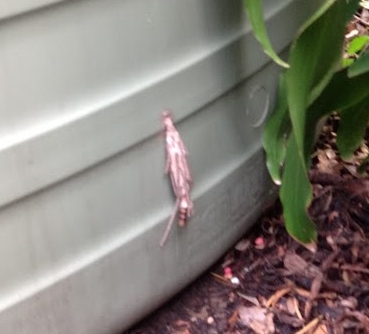
    A case moth attached to the rainwater tank.

    © Norah Colvin
    © Norah Colvin

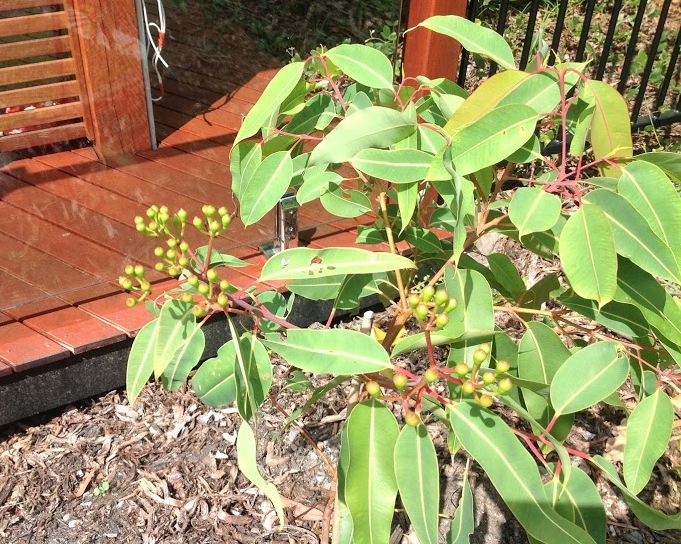
    Nuts already forming on my little gum tree.

    © Norah Colvin
    © Norah Colvin

    Flowers on the native ginger.

    © Norah Colvin
    © Norah Colvin

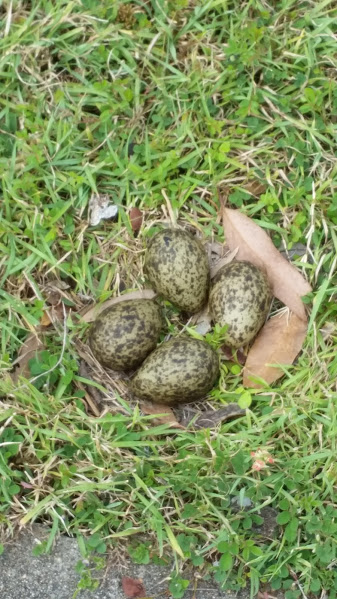
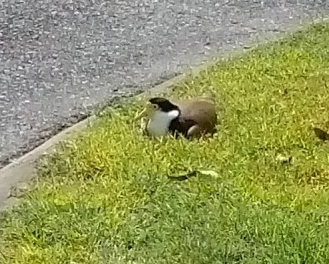
    Plover eggs in a nest.

    © Norah Colvin
    © Norah Colvin

    The plover sitting on the eggs.

    © Norah Colvin
    © Norah Colvin

    Fruit on the sandpaper fig.

    © Norah Colvin
    © Norah Colvin

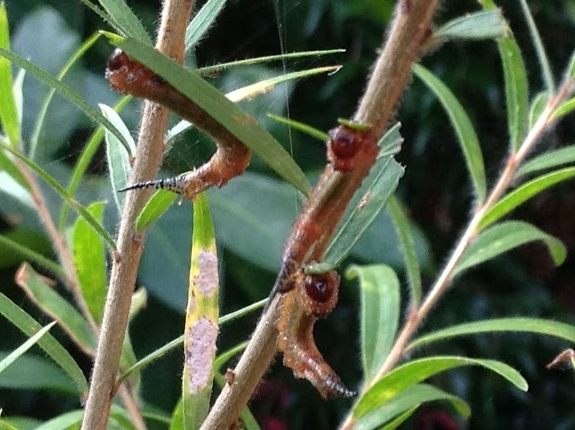
    Bottlebrush sawfly larvae.

    © Norah Colvin
    © Norah Colvin

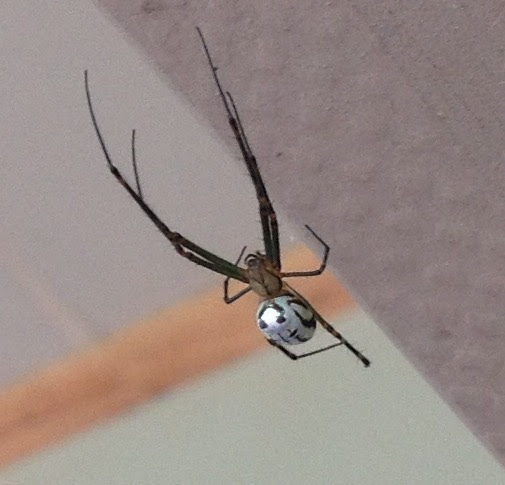
    A silver orb spider.

    © Norah Colvin
    © Norah Colvin

    Flowers on my wattle tree.

    © Norah Colvin
    © Norah Colvin

    This week at the Carrot Ranch Charli Mills was talking about having a “looky-loo”, I’d probably call it a “sticky-beak”, at the effects of a river in flood, and described the way that neighbours help each other out, even if they’ve never met before. But Charli dives deep into the analogy of a flooded river, feeling washed out and overwhelmed by the rising tide of fear fuelled by a lack of understanding and appreciation of difference. She pleads for all of us to find our common ground, to realise that, while we are complex and contradictory, we share the same needs and wants. She says that if we don’t understand we should, “Ask, don’t judge. Learn, don’t isolate.”

    Charli got me thinking about these issues, as she always does. I wondered, if we value, appreciate and marvel at diversity in the natural world, why don’t we appreciate it in other humans? After all, we are merely part of the natural world. That we have done more than any other species in manipulating it doesn’t alter that fact. Why can’t we all just agree to live and let live? Why do some think otherwise?

    These thoughts reminded me of something I had heard in a fascinating TED talk by Ed Yong, called Zombie roaches and other parasite tales. Ed Yong is a science journalist on a mission to “ignite excitement for science in everyone”. He blogs at Not Exactly Rocket Science for National Geographic.

    This particular TED talk is fascinating, funny, disgusting and very informative, with a little of something for everyone. He throws in terms like “mind control”, “eaten alive”, and “bursts out of body”. Science fiction has nothing on science fact.

    www.morguefile.com
    http://www.morguefile.com

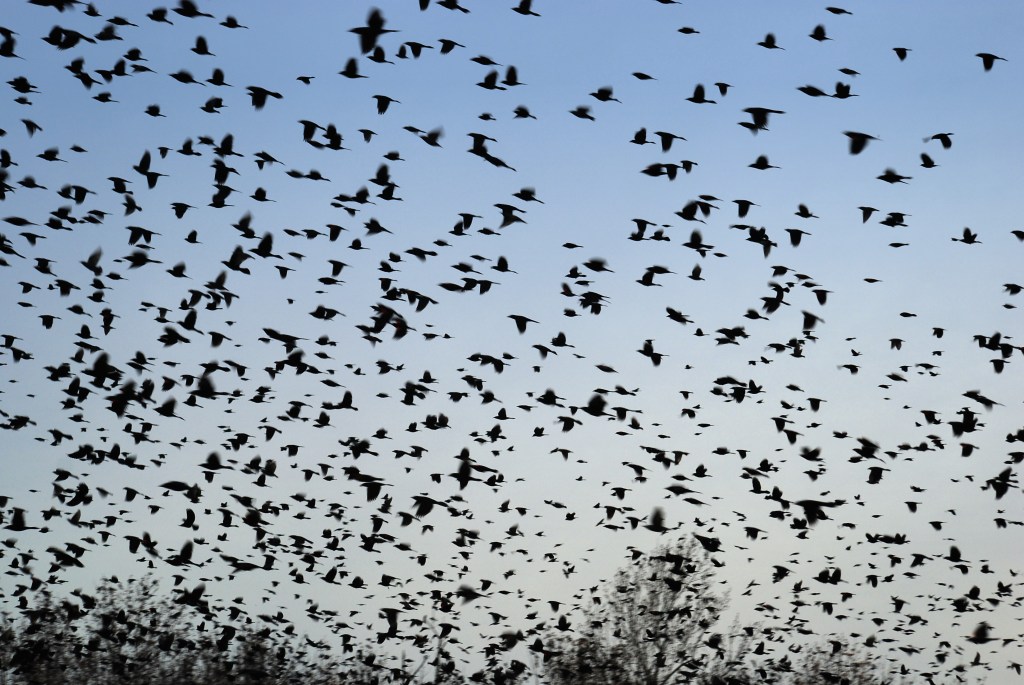
    He begins the talk by questioning whether animals choose their behaviour such as gathering in large flocks or herds for safety. He then talks about the popular children’s science “pet” brine shrimp, or sea monkey, and the ways in which a parasitic tapeworm influences the shrimp’s behaviour to enable its own reproductive cycle. He says, “The tapeworm hijacks their brains and their bodies, turning them into vehicles for getting itself into a flamingo.”

    But that is just the first of his stories of animals behaving in ways as a result of the mind-control of parasites. He describes others and says that “Manipulation is not an oddity. It is a critical and common part of the world around us, and scientists have now found hundreds of examples of such manipulators, and more excitingly, they’re starting to understand exactly how these creatures control their hosts.

    He describes a wasp that attacks a cockroach and “un-checks the escape-from-danger box in the roach’s operating system”. I wondered if this same box could be un-checked in humans. Not surprisingly, Ed went on to discuss humans but said that our methods of mind control were fairly primitive compared to the techniques of parasites. He said that this is what makes the study of parasites so compelling. We value our free will and fear having our minds controlled by others, but this situation occurs all the time in nature.

    Yong then asks what he considers an obvious and disquieting question:

    “Are there dark, sinister parasites that are influencing our behaviour without us knowing about it …?

    He talks about a parasite that manipulates cats, a parasite that many people have in their brains. While there is no conclusive evidence of parasitic manipulation of human behaviour, Yong suggests that “it would be completely implausible for humans to be the only species that weren’t similarly affected.” I urge you to have a looky-loo at the now not-so-secret behaviour of these parasites. I’m certain you will be as entertained as you are informed and challenged.

    So from a looky-loo in my backyard to a looky-loo at the world of parasites we come to my response to Charli’s flash fiction challenge to In 99 words (no more, no less) write about a looky-loo.

    www.morguefile.com
    http://www.morguefile.com

    Copy-cat Sticky-beak

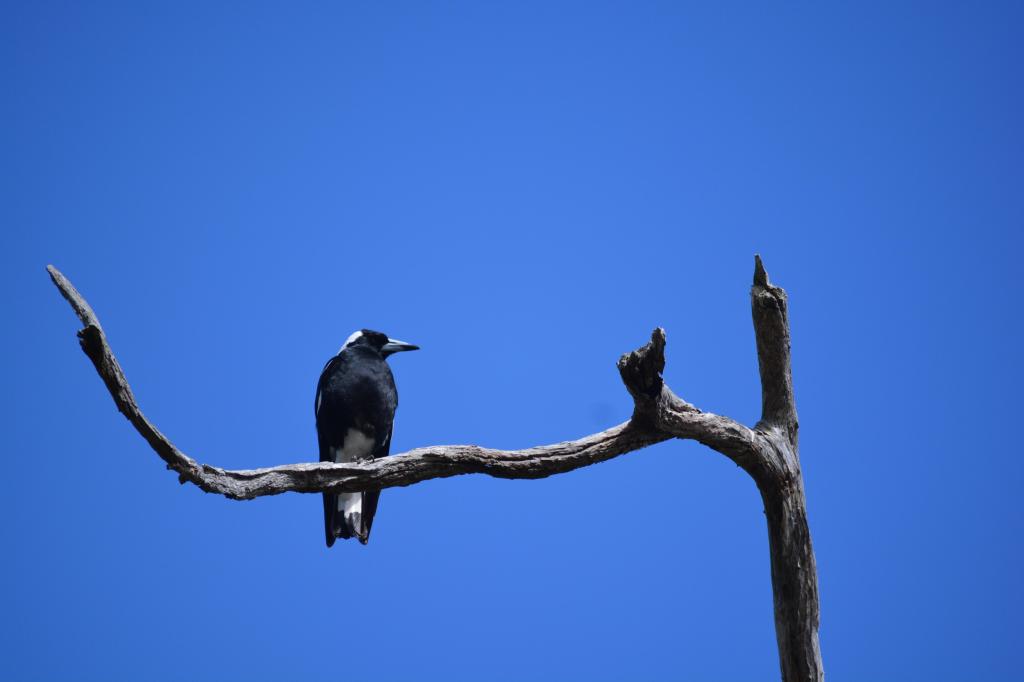
    High in the branches Maggie practised her repertoire.  She watched people scurrying: erecting tents and marking long white lines.  She absorbed the rhythm of new songs: thump-thump, clink-clink.

    She breakfasted on scarab beetles and was ready when the children arrived. But they didn’t notice her playful mimicry. Instead they flooded the field with colourful shirts and excited chatter.

    Maggie watched silently. Soon she heard an unfamiliar song: “Go team, go team, go!” She flew to the top of the biggest tent and joined in. The children listened, then cheered. Maggie felt she’d almost burst. Instead she sang, and sang.

    Perhaps we could learn from the magpie, one who looks, listens and learns and shows appreciation for others in the most sincere form of flattery: singing their song.

    I love awakening to the beautiful songs of the magpie every morning. I chose to share this particular video, as yesterday we were also visited by a beautiful king parrot such as the one featured in this video. Awesome.

    Thank you

    Thank you for reading. I appreciate your feedback. Please share your thoughts about any aspect of this post or flash fiction.