This week I am very excited to be interviewing the wonderful illustrator Helene Magisson, my first guest for the Illustrator Spotlight series.
Before we begin the interview, let me provide you with a little information about Helene.
Helene began her artistic career as a painting restorer in Paris, where she also trained in the art of medieval illumination*.
Helene has lived in countries all over the world, including Africa, France, and India. Her travels both inspire and enrich her work. She now calls Australia home, and it was when she settled in Australia, that Helene began a new career illustrating children’s books.
Helene has illustrated four books for New Frontier Publishing including The Velveteen Rabbit by Margery Williams Bianco, and The Night before Christmas by Clement C. Moore. She is now working on her seventh book for Wombat Books.
This week at the Carrot Ranch, Charli Mills asks “Who gives a crap?” and about what. She declares some things that are important to her, things she gives a crap about, including, but not limited to:
the environment
nature
truth
principles
equality
diversity
jobs for all
literature and it’s role in society, and
conflict resolution.
She says that
“Conflict resolution is finding a peaceful solution to a disagreement. It’s drawing back my hand from the urge to smack. It’s letting go of a need to punish. It’s hearing both sides of the concerns and working toward a way to save our environment and jobs. It means acknowledging the rights or privileges of all. It means agreeing to disagree with compassion for the other. It means uplifting the lowest in our midst instead of only seeking to better our own. It also means checking our words and behavior.”
I give a crap about education. I care about the education of our children. It is through education that we can make a difference in the world; but we can only do that if we educate our children to be thinking, caring, responsible, contributing participants in society and inhabitants of the planet.
We need to teach children about their relationship with the environment, and the impact of their individual, and our collective, actions.
We need to give children time to experience nature and the outdoors; to marvel at its beauty, to appreciate its diversity, and to wonder …
We need to model for children a principled life, in which truth, equality, and diversity are valued, and in which the collective good is more important than an individual’s need for fame or fortune.
We acknowledge that making mistakes is integral to an individual’s learning and tell children it is okay to make, and learn from, mistakes. We encourage them to think for themselves and to be innovative, to see alternative solutions to problems.
If we were to teach them to just accept things as they are because that’s the way they’ve always been (and I query that statement!) how can we expect them to come up with solutions to issues that confront us?
Some of the conflicts mentioned by Charli; for example, providing jobs and preserving the environment, have resulted from our learning, our development, our education.
Maybe we should consider that making mistakes is also integral to our collective learning and development; and be prepared to accept them as such, learn from them, and devise alternative solutions.
For example: We learned about fossil fuels. We saw how they would enhance our lifestyle, and we implemented that learning, creating many new jobs as a consequence.
Now we see that some of those advancements are not as beneficial overall as was initially thought. We made a mistake. It is time for reassessment, for learning, and for thinking of new strategies. We need to leave behind what does not work, and embrace the next step in our development.
Charli asks, “When did we start thinking that only our crap matters and stop giving a crap about others?”
For a while the focus moved away from the importance of community to the importance of the individual and individual rights. Maybe now it’s time to put the focus on community and the role of the individual in it. Let’s not ask what the community/humanity/the world can do for me, but what I can do for the community/humanity/the world.
“It’s mine!” they spat at each other. With faces red and contorted, they pulled in opposite directions.
The object finally stretched to its limit and ripped apart, catapulting the opponents backwards to land on their derrieres.
“Now look what you’ve done!” they accused each other, and scrambled to retrieve what was salvageable.
They contemplated the useless fragments. There were no winners, only losers. Their eyes, previously filled with hate, now brimmed with sorrow.
“What have we done?”
Moving together, each comforted the other, feeling as much for the other’s loss as for their own.
“Let’s start anew,” they said.
I’d love to know what situation you think my story might be about. I’d also love to know what it is that you give a crap about.
Oh, and thanks to Bec’s reminder, I will mention the Who gives a crap toilet paper (that is far from crappy and great for the environment) that Charli mentioned in her post, and I previously mentioned in Around the Campfire.
Thank you for reading. I appreciate your feedback. Please share your thoughts.
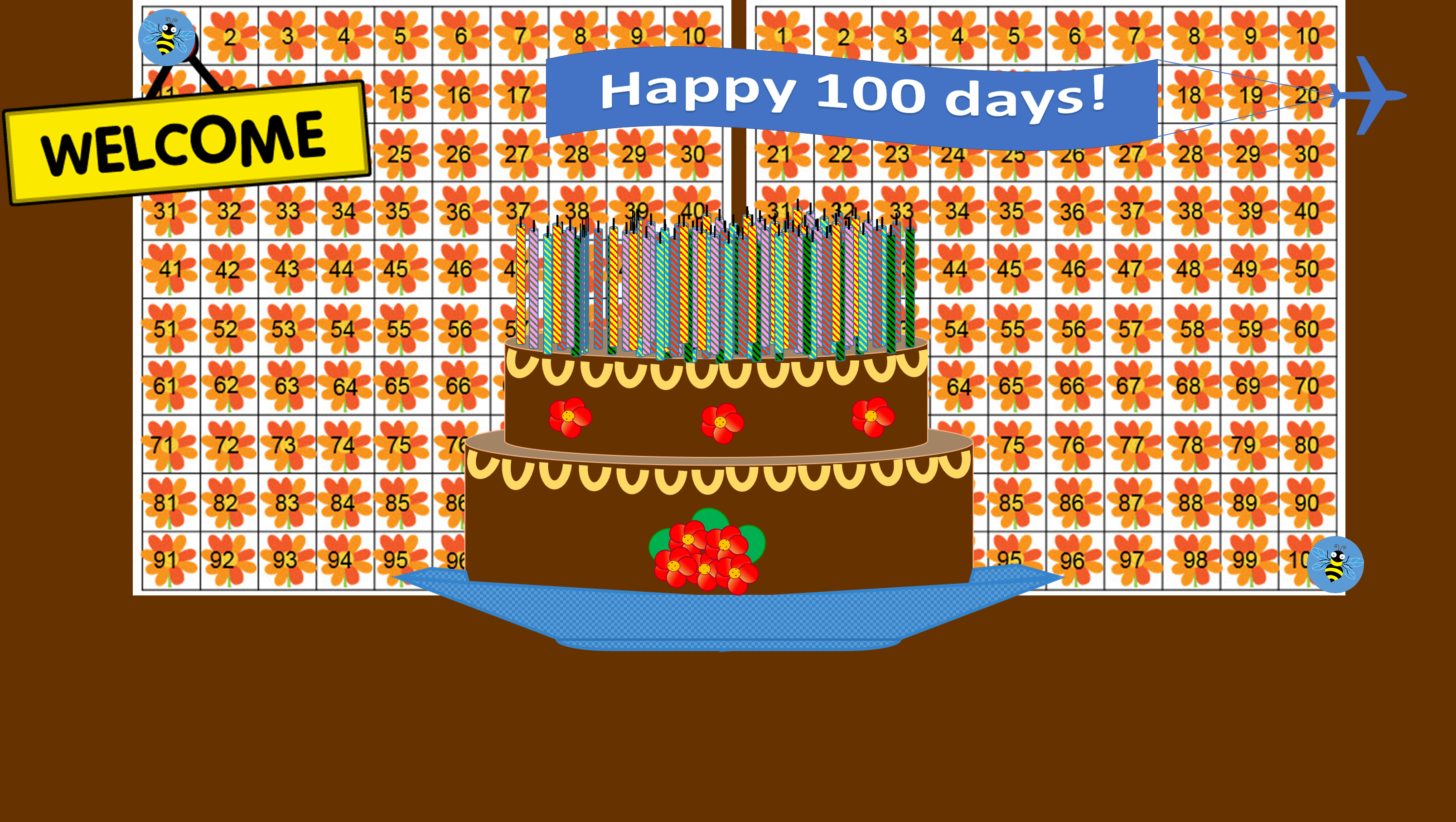
With the commencement of the Australian school year still two weeks away, it might seem a bit early to be thinking about the 100th day. Let me assure you it’s not. It’s great to be ready to start counting from day one. However, if you miss the start, you can always go back and count the days on a calendar. For those of you in the US and UK, the one hundredth day will be coming up soon in February.
In Australia there are 200 school days in a year. So, once you have counted up to 100 days, you are half way through and can then count down the number of days remaining. The US and UK have fewer school days: 180 in the US and 190 in the UK; so they are more than half-way through by the time they reach their 100th days.
Whatever their year level, children are always excited to count the days to this milestone, and it provides wonderful opportunities for learning about number.
Several readilearn resources support you and your students as you count up to and celebrate one hundred days, including:
The interactive digital resource Busy Bees 100 chart is great for all your usual number board activities, and can be used to keep a count of how many days you’ve been at school. Simply display the resource at the beginning of each day and move the bee to the next number.
Just this week, I have uploaded a short video explaining how to use the resource. I am also including it here. I’d love to know what you think.
Hail – “Balls of ice the size of frozen peas” rattling on her RV
(Here’s a video of some pea-sized hail dancing in my garden recently.)
Political divisions and discussions, with each side clamouring to be heard but only sounding “like discordant hail on a fiberglass roof”
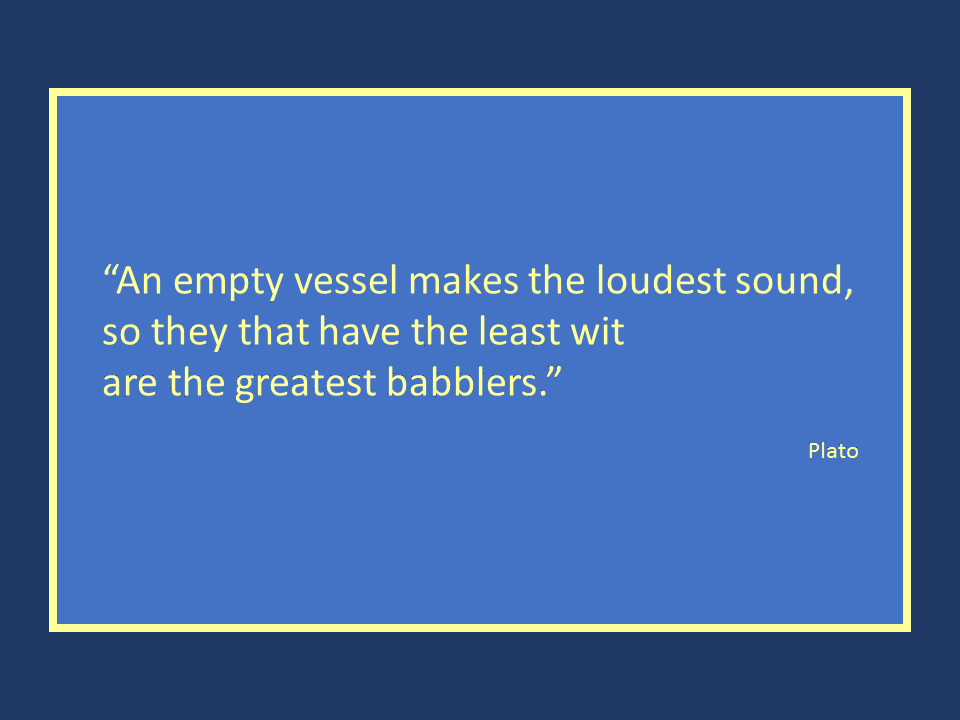
(Remember that saying about “Empty vessels make the most noise?”)
The saber-rattling incident in Chilean history “when a group of young military officers protested against the political class and the postponement of social measures by rattling their sabers within their scabbards.”
In her prompt, Charli suggests that the rattling sound could be “an intimidating sound of protest, a disorienting loud sound, a musical expression or a gentle baby’s toy.”
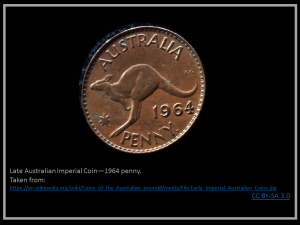
I thought of the rattle of coins – reasonably familiar in my childhood, less so now.
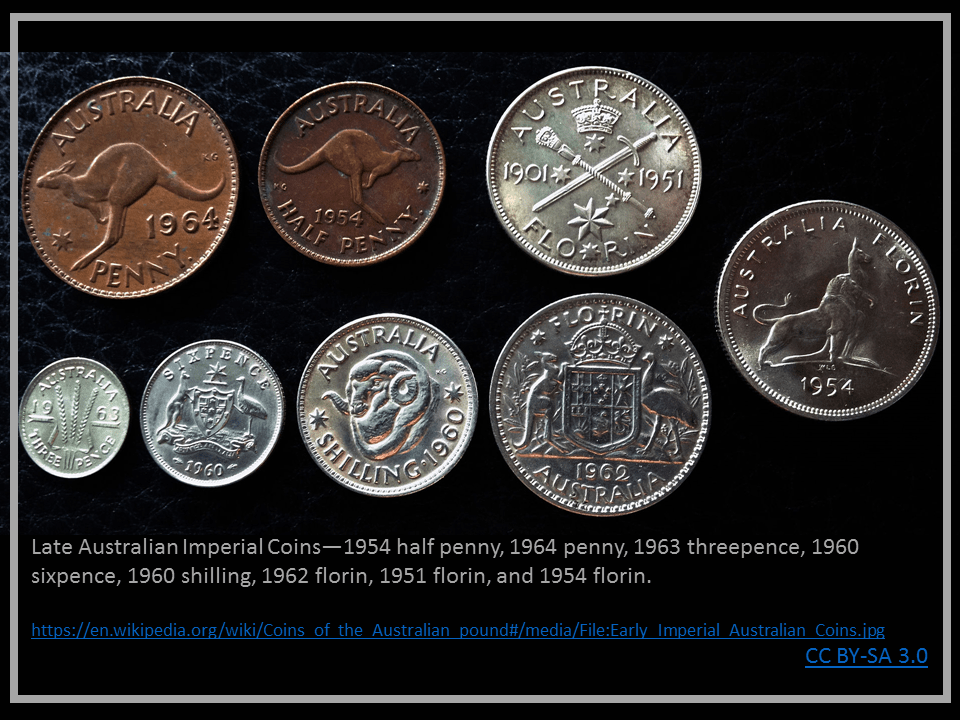
When I was a child, most transactions involved the use of cash – notes and coins. Back then, before the introduction of decimal currency just over fifty years ago, we had pounds, shillings and pence.
Decimal currency certainly made calculations easier but, though I remember my mother occasionally writing a cheque, transactions were still made mainly with cash.
I am from a large family and the finances didn’t stretch to pocket money. However, I do remember the occasional threepence to spend at the shop beside the school. I think they may have been gifts from the “tooth fairy”. How we agonised over which sweets to buy – maybe a rosy apple, four aniseed balls and some musk sticks.
Occasionally we might find a coin in the sand at the playground or beach, or be gifted one or two from an aunt, uncle or grandparent. Sometimes, when sent to the shop for bread or milk, we’d ask if we could keep the change. Sometimes the answer was “Yes”!
Although the anticipation of a purchase was heightened by the sound of a couple of coins jingling in a pocket or purse, we were also keen on saving them toward future desires.
The money box most of us had back then was a tin replica of the Commonwealth Bank’s head office in Sydney. The clink of coins being added to the box was music to our ears, as was their rattle as we shook it to determine how full it might be and how much we may have saved.
The trouble with these money boxes was twofold:
It was impossible to do anything with them quietly, and
It was practically impossible to extricate any coins once they were in. The tins could only be opened with a tin opener! Sometimes, with the right tool, the opening could be widened and one or two coins could be removed, but the shaking and rattling required was a real give-away.
How different it is for children today. Not only are many transactions made using credit or debit cards, many purchases are made online. No cash, no “money” is seen to exchange hands.
Nonetheless, it is still important for children to understand monetary values and to be able to calculate the cost of items. I think it is good for children to have pocket money for which they can make decisions regarding spending or saving. The ability to save up for something, to delay gratification, is an important part of maturation. I wonder how many of today’s children are sent to the store on their own and, if so, whether they can keep the change.
The use of technology means that even cashiers (is that term also becoming outdated, like hanging up the phone?) are no longer required to calculate. The register does that for them. Yes, they do have to count out the change, but that involves little calculation.
With the changing values, too, Australia no longer has one or two cent coins. Five cents is the lowest denomination, and I doubt that a child could buy anything with just one, not even an aniseed ball or a musk stick. I wonder how long before it too disappears.
While online shopping, and paying with cards and phones is becoming commonplace, it is still important for children to handle, recognise, and become familiar with money. They need to be able to compare the value of coins and notes, and perform calculations with them. It is important for children to realise that a greater number of coins doesn’t necessarily mean more money.
The images on the coins and notes also provide an opportunity for learning about our Australian animals and significant people and events in our history. Perhaps in the lifetimes of today’s children, coins and notes will go the way of our Imperial currency and become simply items in a museum and history lessons.
For my response to Charli’s prompt, I have gone back to the days of coins rattling in pockets and money boxes, when thinking of the wonderful things that a few coins could buy was pure delight.
Can I keep the change?
With the string bag slung over his shoulder and the purse clutched tight, he was on his first big boy errand. And, he could keep the change. He rattled the purse. What possibilities awaited. Should he hurry to get the money, or dawdle and contemplate? Regardless, he got there soon enough.
He handed the purse to Mrs Kramer, who extracted the list and gathered the items. As she counted the coins into the till, he announced, “I can keep the change.” She peered over her glasses, then held out one large brown coin. He trembled: what could he choose?
A penny for your thoughts!
Thank you for reading. I appreciate your feedback. Please share your thoughts.
The beginning of the year is a great time for getting to know each other. Children will feel comfortable and friendly towards each other in a welcoming classroom environment that values and respects individuals; and in which appreciation for our diversity, as well as our commonality, is nurtured.
When children feel safe to be who they are, they are more accepting of others.
While it is important to establish a welcoming environment at the beginning of the school year, it is equally important to maintain the supportive environment throughout the year. It is not something we do to pretty the room and then forget about it. It is a part of who we are, and comes from a firm belief in the value of each individual, of community, of humanity, and of our world.
This week at the Carrot Ranch, Charli Mills is talking about getting cozy. While we swelter in the heat of our Australian summer, getting cosy is the last thing we are thinking of. Keeping cool is our current priority. (Note: cozy in North America, is cosy in Australia!)
When I think of cosy, I think of huddling in front of a fireplace, shawl over my knees, cat at my feet, and a glass of wine, perhaps Prosecco, in my hand. This is not something I have ever experienced. It is an image portrayed on Christmas cards, book covers, and in movies.
It’s a bit of a stretch for me to contemplate cosy at the moment, and I wondered how young Australians with little experience of “cosy” might respond to the word.
I asked 7-year-old grandson what he thought of when he heard the word “cosy”. He said,
“Nice and warm in bed.”
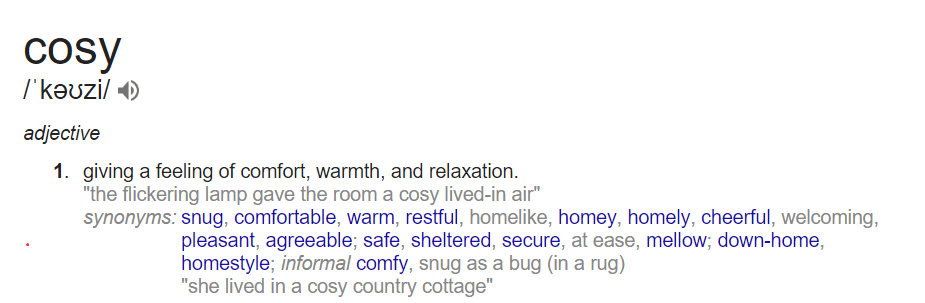
His Dad thought there could be no better definition. In fact this is the definition provided by Google:
I asked grandson if he thought we would want to be cosy in summer and he said, “Well maybe not warm, but snuggly.” I think he did pretty well in defining the word.
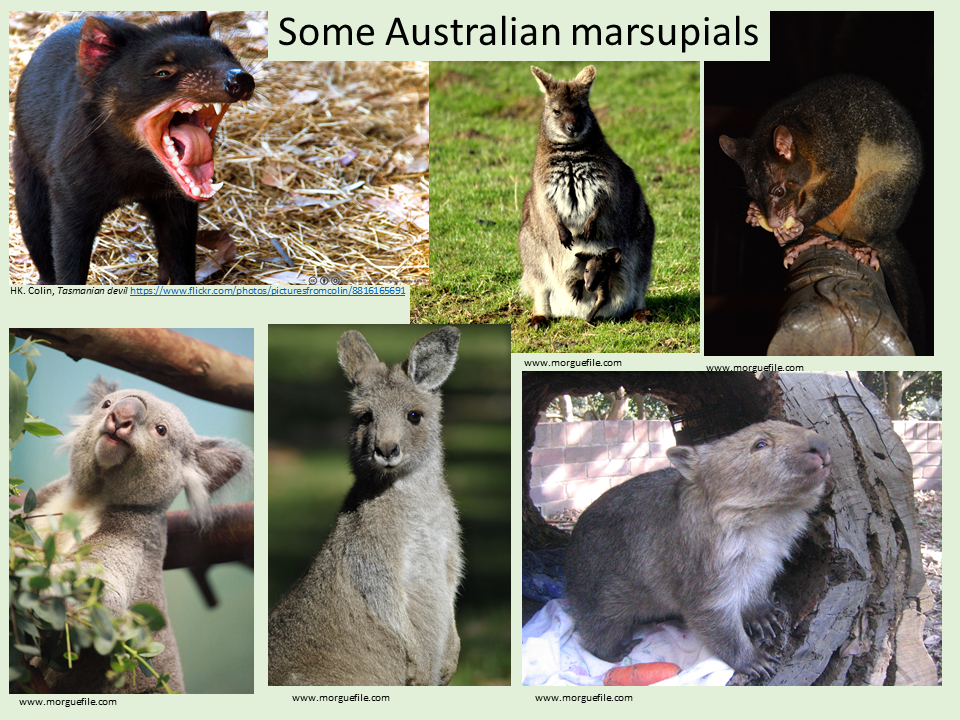
No doubt you have heard the expression, “snug as a bug in a rug”. Like cosy, the expression refers to being in a pretty comfortable position. I figured that being in a pouch would be about as cosy as a creature could get and, since Australia is home to many marsupials, it seemed a perfect fit for the post.
Marsupials are mammals that give birth to live young before they are fully developed. The young, usually referred to as joeys, continue to develop in the mother’s pouch for a number of months, suckling on their mother’s milk.
As explained in Feeling a little prickly, Australia is home to almost 70% of the world’s marsupials. Other marsupials are found in the Americas, mostly South America. Kangaroos, wallabies, koalas, possums, wombats, Tasmanian devils, numbats, bilbies, and quolls are among the species of marsupials found in Australia.
Brushtail possums are common in Australia and frequently share our homes as well as our neighbourhoods.
At the moment, a mother and baby have taken up residence in Hub’s carport/workshop. We’re not particularly happy when they share our homes, but I love to hear and see them in the garden. Although I must admit that hearing a male brushtail possum for the first time can be a disturbing experience. I wrote about this in Sounds like …
While possums are not popular in New Zealand and efforts are being made to eradicate them, and other introduced pests, from the island nation; I think they are rather cute. When I was young I climbed everywhere and got into everything and, as a result, was nicknamed “Possum”. (What happened to that inquisitive child?)
Warm and cosy in mother’s pouch, for months he did no more than suckle and sleep. Lulled by her gentle heartbeat and rhythmic breathing, he barely noticed as she scurried about at night; foraging for food, leaping from branch to branch, avoiding neighbourhood cats, sometimes scouring dogs’ bowls for leftovers, or accepting humans’ sweet titbits. For him, nothing else existed. Until … one night, a strange feeling stirred inside. He poked his whiskery nose outside. Sniff, sniff. The most delicious scent beckoned him out. Mother offered him something red. Zing! His senses ignited. Milk was forgotten, nightly foraging began.
Thank you for reading. I appreciate your feedback. Please share your thoughts.
Wishing all my readers a very happy New Year with best wishes for peace and joy in 2017.
Thank you for your ongoing support. I’m looking forward to further conversations in 2017.
Click to read the original: Happy New Year! – Readilearn and view the video of inspirational teacher Chen Miller. Once a special needs student herself, Chen is now making a difference to the lives of children she teaches.
I am one of ten children, though none of us are children any more. The youngest has turned 50, and the oldest is nearing 70 (but don’t tell her that).
My mother sometimes had difficulty retrieving the correct name and often went through a list before hitting on the child she wanted. I know what it’s like. Sometimes it is difficult enough when there are only two or three to choose from! Maybe you’ve experienced it too. There’s probably a name for this phenomenon, but if there is, I’m not aware of it.
One day, when wanting to give me a direction, she rattled off a few names, but not mine. Finally, exasperated, she said, “Well, you know who you are.” It has become a family joke. It’s mostly true that I do know who I am. However, sometimes I’m not so sure! I must say that Mum had a wonderful memory until the day she passed just a few weeks before her 91st birthday.
This week at the Carrot Ranch, Charli Mills is talking about the importance of being able to name things and experiences. She says, “Names are such a human attribute,” and asks, “What is in a name?”
The ability to name things is important and a young child’s vocabulary often begins with the names of people and objects in the environment; for example, Mum, Dad, dog, car, cookie, juice.
I read once that children don’t really become aware of an object until they are able to apply a name to it. This doesn’t mean they must be able to say the name, just recognise it by name. Unfortunately I don’t remember the source and was unable to verify it with a Google search; but there is no denying that a well-developed vocabulary is a definite advantage to learning.
Children also quickly learn to recognise their own names. Choosing names for children can be a difficult process for parents, with much to consider; for example:
The name’s meaning
Whether anyone else in the family has the name
How it is spelled
What the initials will be
How the first and last names sound together
Teachers always have the extra burden of being influenced by the names of children they have taught.
Although this blog simply bears my name, choosing a name for my website was a more involved process. Years ago, I ran a home business called Create-a-Way. I chose the name as I thought it expressed the purpose of my business perfectly: children were encouraged to be creative, and it created a way for me to work with children in the way I wanted. I hoped to reuse the name for my website. Unfortunately, the domain names were not available, and I had to think even more creatively.
I eventually settled on the name readilearn as I love reading, and I love learning, and the ‘i’ in the centre puts the focus on the individual learner. I wanted the name of my website to show the importance of reading and learning to an individual’s growth and empowerment. However, when I say the name, I pronounce it “ready learn”. This refers to an individual’s innate readiness to learn, as well as to the resources which are ready for teachers to use in their support of learners.
One of the most important things for a teacher is to get to know the children. I used to pride myself on knowing the children’s names before morning tea on the first day. Of course, I had many strategies in place to help me with that. I have written about some of these strategies before, and there are readilearn resources to support teachers with that as well. In fact, writing this post has stimulated ideas for new resources to create, including resources that help children get to know each other. (Thanks, Charli!)
I have always found it fun to notice when people’s names are a good match for their profession; for example, Matt Dry the weather forecaster.
The community hall was abuzz. Everyone was outtalking the other, except Ms Penn who quietly recorded everything.
“I’m pretty cut up about it,” complained Mr Carver.
“He fired me,” moaned Mr Burns.
“Said I was just loafing around,” grumbled Mr Leaven.
“Could’ve floored me,” griped Mr Lay.
“He was fishing for something,” remarked Ms Salmon.
“Said he’d top me,” sprouted Ms Bean.
“Another nail in his coffin,” whined Mr Chips.
Ms Chalk took the stand. “It’s not just black or white. He knows why you all avoid him like, well … Give him a chance. He’s not his name.”
Did you recognise them all: the journalist, the butcher, the fireman, the baker, the tiler, the fishmonger, the greengrocer, the carpenter, the teacher; and, of course, the one they’re all talking about: the new doctor.
Thank you for reading. I appreciate your feedback. Please share your thoughts.
This week I have the great pleasure of inviting South Australian author Jane Jolly to the readilearn blog. Jane is author of a number of books, including the recently published Radio Rescue!
The book about which I am talking with Jane in this interview is Tea and Sugar Christmas. Like many of Jane’s publications, this one is based on a true story. It tells of a Christmas experience that is likely very different from your own.
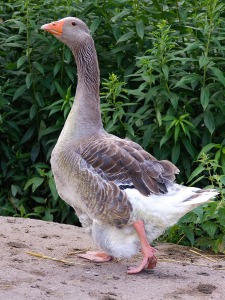
Gander, the verb, means to look. Since a gander, a male goose, has a long neck which is, without doubt, suitable for sticking out and into things, the meaning to take a look is probably apt. However, I must say that, until reading Charli’s flash pieces, I was unfamiliar with its use as a verb, and still feel a bit uncomfortable in using it so, but I’ll give it a go – later.
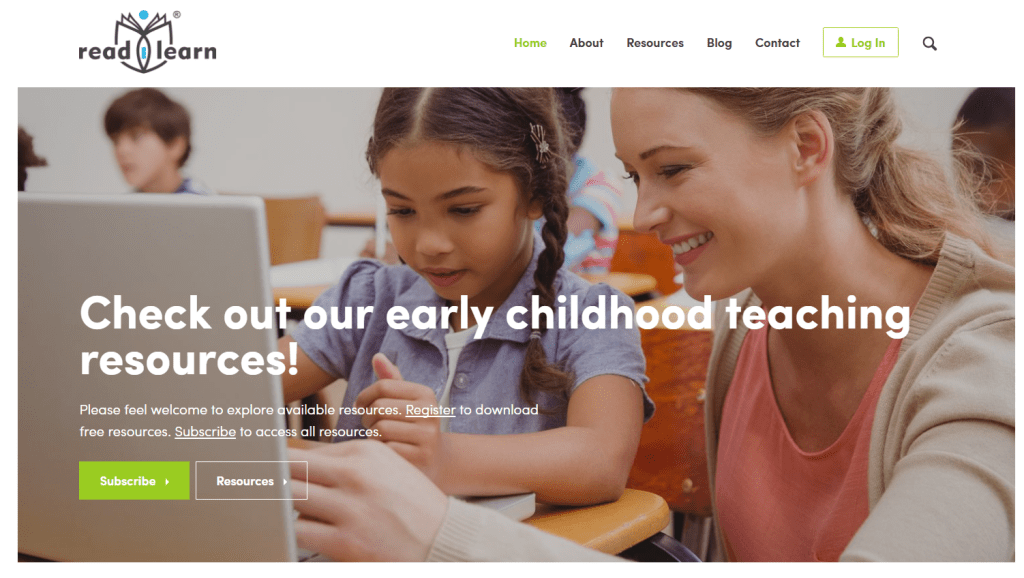
First: What I would love is for people to take a gander at readilearn, a website I have been working on for more years that I care to tally right now.
It is a year since I took the leap and engaged a company to develop the site. It was nine months (not the one month promised) before the site was launched, just over three months ago. To use the nine months analogy of pregnancy; it wasn’t an easy gestation or birth, and we’re still experiencing teething problems and growing pains, including “how to grow?” pains.
Audience wanted
Marketing, as in attracting, building, and maintaining an audience, is difficult, as any writer knows. It is not just a matter of writing the stuff and hoping an audience finds it. It takes time, effort, and know-how. I’m a bit short on all three, but I’m going to stick my neck out, and ask if you’d be willing to help me a little with the know-how in finding my target audience.
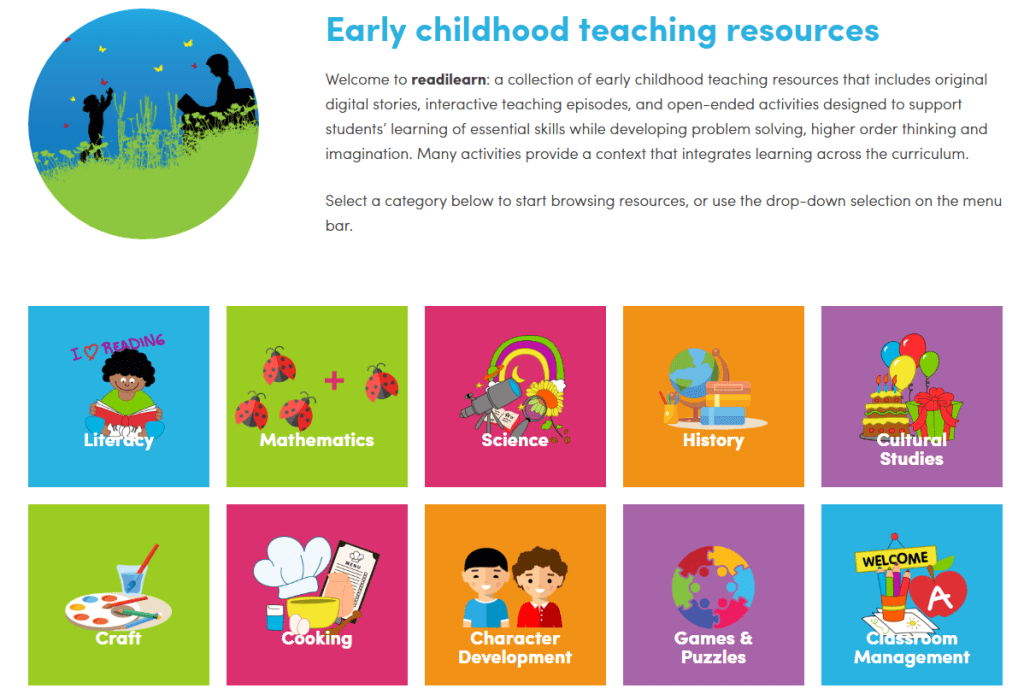
readilearn is a collection early childhood teaching resources. The target audience is teachers of children between 5 and 7 years of age, be they teaching in a school environment, or homeschooling their children. The resources are also suitable or use with children learning English as a second or other language, and with children with special needs.
There are resources for most areas of the curriculum, with suggestions for integrating learning across curriculum areas in a meaningful context.
The materials are Australian (I’m Australian) but are suitable for use internationally.
There are:
Digital and interactive resources to access and use online
Word and PDF documents to download and print
Including:
Original stories
estories (digital stories)
Teaching ideas and suggestions
Lessons plans
Readilessons (lessons ready to use)
Games
Printouts for parents
Features
New resources are added almost every week
Many resources are free to registered users
An annual subscription of less than 50c per week (or less than the cost of 5 cups of coffee a year!) is easily affordable; and that’s Australian dollars – even less for UK and US subscribers! It’s even discounted until the end of 2016!
So what’s different?
I think that what differentiates readilearn is the integrated resources focusing on purposeful learning in context. The open-ended nature of many of interactive resources allows teachers to adjust the discussion to suit the needs of their students. readilearn is not just bunch of worksheets for repetitive practice of skills in isolation, or endless pretty charts to hang in the room. It is designed to support effective teaching and learning in meaningful contexts.
More than just resources
Each Friday I publish a blog post filled with teaching ideas and information, including how to get the most from readilearn resources.
I also email users each Friday to inform them of new resources uploaded during the week – no more wondering if there’s anything new or where to find it.
The newsletter, published on the last day of each month, includes a summary of blog posts, a list of new resources, and a preview of events in the coming month.
I would very much appreciate it if you could spread the word to any of my target audience in your circles: teachers of children from 5 – 7 years. I’d also love some suggestions for ways of connecting with my audience. Although my audience may differ from yours, what you have learned may also be useful for me.
Maybe you’d like to gift an early childhood teacher their first year’s subscription. It’s easy. Just email hello@readilearn.com.au to find out how.
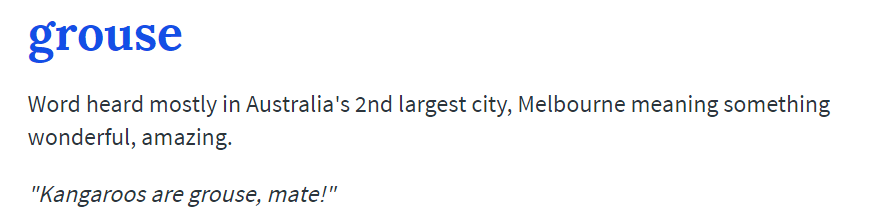
Now back to Charli’s challenge to include gander as a verb in a 99-word story. It got me thinking about all the bird words in common use, even when not referring to birds. I decided to incorporate as many as I could into a story while still maintaining a certain amount of sense. I have used over twenty. Can you (bird)spot them all? I hope you think it’s grouse! (Well, maybe just a little bit not too bad. 🙂 )
Bird (non)sense
Finch’d had an eagle eye on the play all day.
Robin’d been hawking chicken pies. Now sold out, he wandered over to gander with Finch.
Robin craned his neck, just as “He’s out for a duck!” was announced.
“He’s out for a duck,” he parroted. “That’s something to crow about.” One team was swanning around, exuberant as monarchs. The other was as despondent as miners on strike.
Martin was larking around. “Yeah,” he sniped. “The silly goose was distracted by the kite and missed altogether.”
“More like a turkey, I’d say,” Robin reterned swiftly.
“You’re a hoot!” chirped Finch.
Thank you for reading. I appreciate your feedback. Please share your thoughts.


















 Norah Colvin