Live Love Laugh Learn … Create the possibilities

Category: Early childhood education

  • Fair trade – what’s it to you?

    What do you think of when you hear the word “trading”?

    International trade? Stock market trading? Trading one item for another? Perhaps a Trade Fair, or selling items at a market stall? Trading as your *business name*? Maybe you are committed to purchasing “Fair Trade” in support of the  World Fair Trade Organisation’s aim of making international trade more equitable?

    As an early childhood teacher, I think of trading games that we use in maths lessons to help children understand place value. In our decimal system, we use ten digits in various combinations to represent numbers. Placement of each digit is vital; for example, 290 is very different from 902.

    Without a firm understanding of place value, it is difficult to work with numbers efficiently. I believe that many difficulties with number stem from insufficient understanding of place value. Children need to experience numbers in a variety of contexts to fully understand the decimal system.

    For younger children just beginning to learn about two-digit numbers, we may connect interlocking blocks or bundle popsticks to form groups of ten.
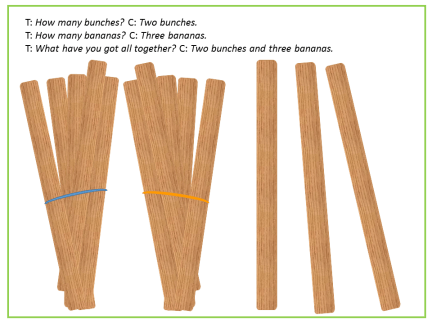
     

    When children have a firm understanding of the grouping process, and the way the numbers are represented with two digits, they move to a similar process with numbers over one hundred. It is at this time that we introduce trading.

    Instead of using interlocking cubes or other items that can be linked or bundled, ten individual cubes are traded for one ten, and ten tens are traded for a one hundred flat, and so on.

    I feel so strongly about the importance of children learning place value, that I have made a variety of resources for teaching it. The resources, available from readilearn; include:

    Beginning place value – the train game
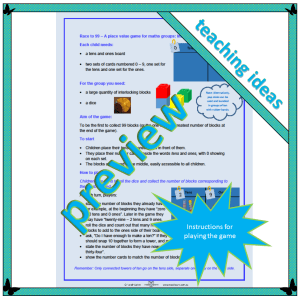
    Race to 99 – A place value game for maths groups

    The interactive resources
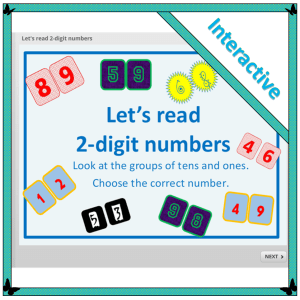
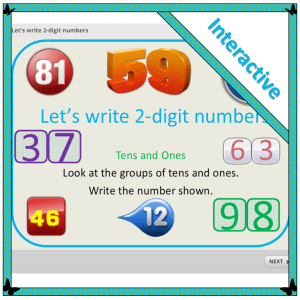
    Let’s read 2-digit numbers

    and Let’s write 2-digit numbers

    Playing games has always been a favourite activity for me, and always popular for family gatherings. We’d quite often we’d spend holidays, like Christmas and Easter, when the children were growing up, playing board games or card games. One of our favourite games, especially if there were larger numbers of people (up to ten) was a trading game called “Billionaire”. It is a raucous game. Everyone is engaged all the time. Play involves trading cards (commodities) with each other, and this involves much shouting (over the top of each other) and laughter. If you have never played it, but enjoy games, and have a group of four or more to play, I highly recommend it. (Sorry, I couldn’t find it to add a photo. It’s hidden away in the games cupboard somewhere.)

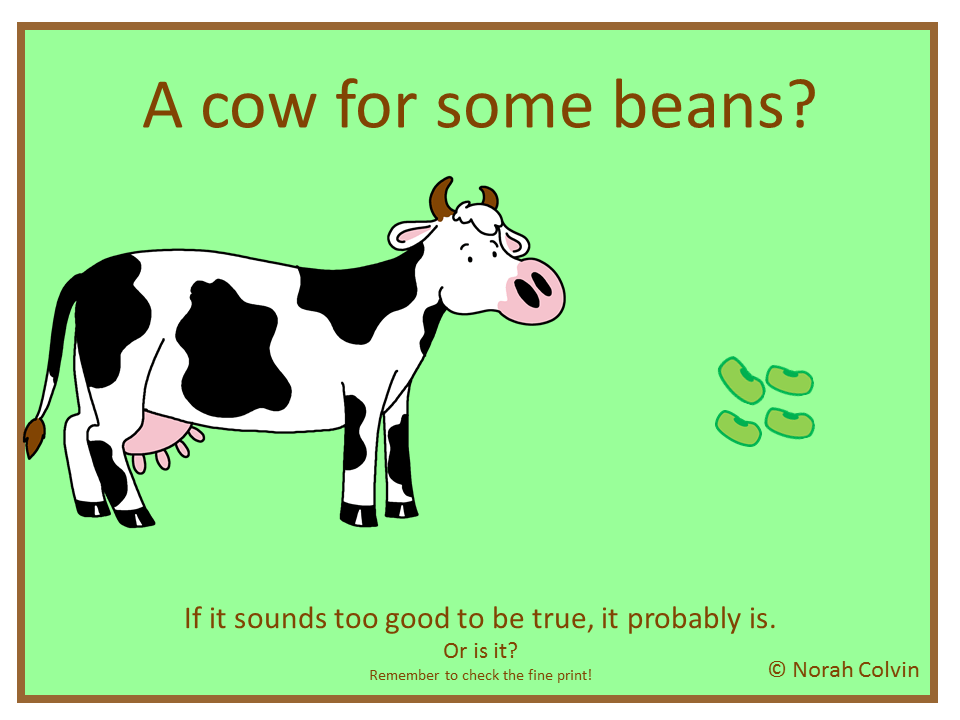
    I couldn’t write about trading without mentioning Jack and the Beanstalk. Mother sends Jack off to the market to sell the cow. Along the way, he meets a man with a handful of “magic” beans which he offers to trade for the cow. Not having heard the saying, if it sounds too good to be true, it probably is, Jack agrees. Of course, Mother is none too pleased and throws the seeds out the window. But, as the story shows, Jack was right to trade and rewarded for his ignorance of the oft-touted adage. (The story also raises other issues regarding trespass, theft, and causing fatal injuries. But we won’t go there this time.)
    This week at the Carrot Ranch Charli Mills has challenged writers to In 99 words (no more, no less) write a story about trading. It can be the profession of old or of modern day traders on Wall Street. It can be trading places or lunches at school. What is traded? Is it a fair deal or a dupe? Trade away and go where the prompt leads you.

    For my response I’ve ended up in the playground yet again. It involves a little trading of cards, but more a trading of power. I hope it works.

    Trade fair

    Cards, were coveted like gold. To belong, one was enough; more better. Each lunchtime the boys showed off new acquisitions, compared intelligence and strength points, and traded duplicates. Fair and friendly battles pitted minds, the winner claiming card supremacy. Then bully Boris won, and none dared challenge. Until Justin, tired of Boris’s tactics, dared.  The group gasped. It seemed Justin would be crushed. But clever cardless Frank slipped in and showed the winning move.  Boris growled, “Inadmissible” and threatened repercussions. Defiant, Justin handed Frank a card, bestowing membership. Empowered, each boy followed, declaring Frank the Master, and trading opened.

    Thank you for reading. I appreciate your feedback. Please share your thoughts.


  • Thinking mathematically – Readilearn

    Mathematical thinking involves more than just being able to count and recite number facts. The ability to solve mathematical problems requires us to think flexibly and creatively with numbers. We need to see that there are multiple ways of interpreting a situation and reaching a solution. It is never too early to get children thinking.

    An easy way to get started is to give children a variety of objects to count. Rather than always counting groups of similar objects; for example, counters, bottle caps, or teddy bears, it is important for children to realise that collections for counting

    Continue reading: Thinking mathematically – Readilearn

  • Stone fruit salad

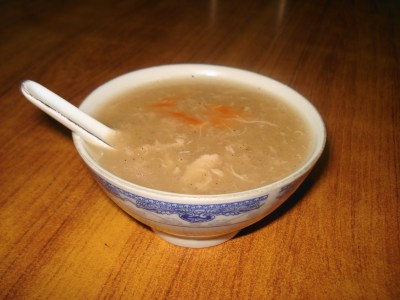
    Soup, especially chicken soup is one of those foods considered good for the soul, mind, and body, and often suggested to speed recovery after an illness. There may be more to the belief than simple folklore. It’s healing properties are what inspired the popular series of Chicken Soup for the Soul books. As Jack Canfield and Mark Victor Hansen saidthey wanted it to soothe and provide comfort, just like their grandmothers’ cooking.

    I was reminded of this when Charli Mills at the Carrot Ranch dished up her flash fiction prompt this week, challenging writers to In 99 words (no more, no less) write a story about comfort food.

    How could I go past soup? But what soup? Chicken soup? Pumpkin soup? Tomato soup? No, stone soup.

    I’m sure you are familiar with at least one of the versions of the story Stone Soup. Basically, some hungry travellers come to a village. They cannot afford to buy food and, although they ask, the townspeople refuse to share with them. Undaunted, the travellers heat up a pot of hot water with a stone in it. They explain to the curious villagers that their “soup” would taste better with the addition of certain ingredients. Intrigued, the villagers happily provide the ingredients. When the soup is ready, the stone is removed and the travellers share the delicious and nutritious soup with the villagers.

    With its messages about sharing, working together, and improving things by combined participation, it is a great story to read to and discuss with young children. It could be used to introduce a class cooking activity, such as making soup or stew, to which each child contributes an ingredient.

    Although English can be confusing with its multi-meaning words and phrases that have little apparent connection to the individual words used, I think children would understand the story and realise that the stone was not eaten but removed from the soup once it had served its purpose.

    Wouldn’t they?

    I wondered how it might be interpreted if children were asked to contribute a piece of fruit to a class fruit salad.

    Fruit salad

    Billy barely paused to say, “Hi, Mum,” as he tossed her a piece of paper and kept going.

    The back door slammed, startling Baby. ‘In one door and out the other,” Mum said, as Dad appeared. “What’s he up to?”

    Dad watched from the window as Billy took pebbles from the garden, inspected them carefully, then arranged them in neat piles.

    “Strange,” said Dad. “I don’t know. He seems to be looking for something. Said they’re making fruit salad at school tomorrow.”

    Mum read the note he’d tossed at her, then smiled.

    “He’s to take stone fruit,” she said.


    I guess if Billy contributes a stone, and the other children contribute fruit, they’ll have a delicious, nutritious, and refreshing snack to comfort them on a warm summer’s day. What do you think?

    Thank you for reading. I appreciate your feedback. Please share your thoughts.


  • Celebrating Mums – Readilearn

    Six early years activities for celebrating Mother’s Day. Develop literacy skills while making a personalised and special gift for Mums.

    Mother’s Day is celebrated on the second Sunday in May in many countries, including Australia, the United States, and Canada. With the celebration little more than a week away, I thought I’d share some suggestions that are low on cost but packed with learning opportunities to incorporate into your class literacy and art programs.

    Encouraging children to create and give a gift from the heart demonstrates that not all gifts need come from a shop. It allows children from even the poorest families to give their Mums a special Mother’s Day gift. It helps develop their creativity and teaches them skills that they can apply in future gift-giving situations. It shows how thoughtfulness and imagination can combine to make a unique gift that will be treasured.

    A gift of love lasts longer than many store-bought gifts.

    1. Read picture books featuring mothers

    A few of my favourites are:

    Continue reading: Celebrating Mums – Readilearn

  • An oily problem

    It would be difficult to imagine our daily lives without access to oil and oil products. Transportation is one of the most obvious uses of oil, but did you know that many items we use every day are made from oil or its by-products?

    Some of these products include:

    • Plastics such as food containers, toys, computers and printers, white goods, CD cases
    • Synthetics used in items such as clothing, curtains, furniture upholstery, carpets
    • Cosmetics such lipsticks, moisturisers, deodorants and antiperspirants
    • Nylons used in stockings, ropes, tents, parachutes
    • Polystyrene used in cups, coolers, packaging
    • Toothpaste, chewing gum, dentures, contact lenses

    The list, unlike oil, is almost inexhaustible.

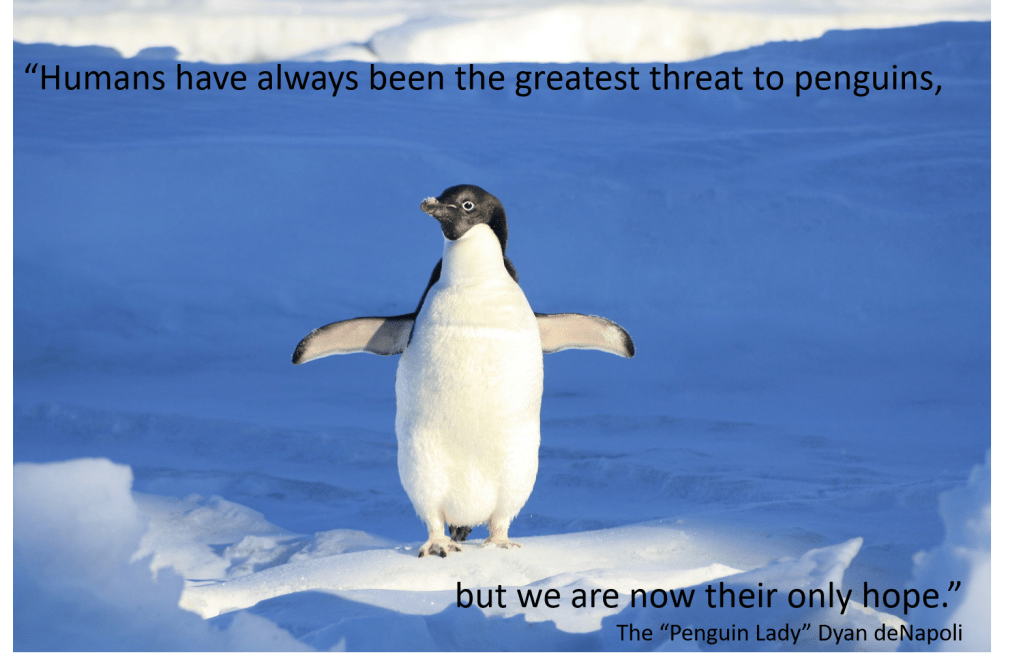
    But there is a downside to oil too. Oil spills in the ocean are an enormous issue for marine life. In this Ted talk The Great Penguin Rescue, “the penguin lady” Dyan deNapoli talks about an oil spill that occurred when a ship sank off the coast of South Africa in the year 2000, oiling nearly 20,000 (almost half) of the total population of African penguins, and the efforts made to rescue them.

    deNapoli explains that a degreaser used to remove the oil from the pelicans was invented by a 17-year-old boy. How cool is that. She says that more than 1,000 volunteers turned up each day to help with the rescue, and continues

    “After half a million hours of grueling volunteer labor, more than 90 percent of those oiled penguins were successfully returned to the wild. And we know from follow-up studies that they have lived just as long as never-oiled penguins, and bred nearly as successfully.”

    It is an inspiring story, not only for the penguin rescue, but for the learning deNapoli credits to the rescue. She says,

    “Personally, I learned that I am capable of handling so much more than I ever dreamed possible. And I learned that one person can make a huge difference. Just look at that 17-year-old. And when we come together and work as one, we can achieve extraordinary things. And truly, to be a part of something so much larger than yourself is the most rewarding experience you can possibly have.”

    deNapoli finishes her talk with the words,

    “Humans have always been the greatest threat to penguins, but we are now their only hope.”

    I hope you find time to listen to the entire talk. It is what inspired my flash fiction story in response to the prompt set by Charli Mills this week at the Carrot Ranch. Charli challenged writers to In 99 words (no more, no less) write a story that includes oil. It can be an oil refinery, the raw product or used as a commodity. How does oil fit into a plot or a genre? Go where the prompt leads.

    Child citizen to scientist

    Familiar sounds heralded his arrival: feet scraped stairs, bag thudded deck, screen door crashed.

    Shouts of “Mum! Mum!” preceded him as he charged down the hallway, arms flailing, holding something aloft.

    His words exploded in a jumble.  She deciphered few. Baby stopped suckling, curious.

    “Slow down,” she said, patting the sofa with her free hand.

    He thrust the brochure at her.

    “I wanna adopt a penguin. Please, Mum. Can I?”

    “Penguins can’t live here. It’s too hot,” Mum teased.

    “Mu-um!” The words tumbled again. “Scientist… school… oil… penguins dying… ‘dangered… We have to save them from going extinct! Please!”

    The title Child citizen to scientist refers to the now welcome involvement of citizens in the collection of scientific data, as described, for example, in this article on Fast Company about the collection of pollution data around the BP oil spill in the Gulf of Mexico in 2010.

    About 18 months ago, I published a post about a project led by science teacher Cesar Harada who encouraged his students to innovate and problem solve through science. He explained his project in this Ted Talk.

    I particularly appreciated Harada’s conclusion about children and their involvement:

    Who knows, if my young penguin adopter is encouraged, he may grow up to be scientist too.

    For a picture book that introduces children to the concept of caring for our oceans, One Less Fish by Kim Michelle Toft and Allan Sheather is a great starting point. With its beautiful silk paintings, the book helps to educate children about the oceans, the way we pollute them, and what we need to do to protect them and their inhabitants.

    If you are interested, there are a number of organisations through which you can adopt a penguin. These are just a few. I’ll leave it to you to investigate your best option. Just remember: you can’t take it home. 😊

    Seabirds. Adopt a penguin

    The Penguin Foundation

    The World Wildlife Fund

    Wildlife Adoption and Gift Centre

    Thank you for reading. I appreciate your feedback. Please share your thoughts.

  • Show and tell: a writing and reading experience – Readilearn

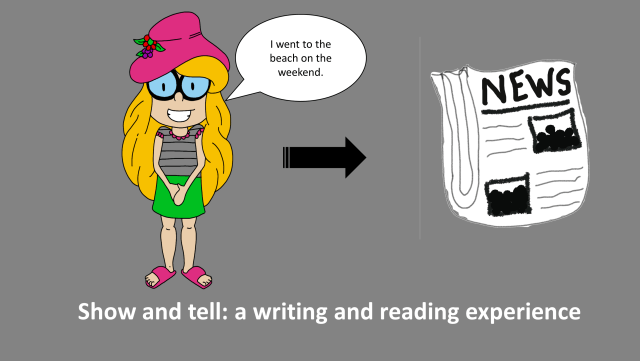
    A “Show and tell” sharing session is a tradition familiar to many early childhood classrooms across the world.  Children take turns to tell their classmates about an item they have brought in to show, or to relate a recent event in their lives. While the practice introduces children to public speaking, helps to develop confidence and oral communication skills, and encourages them to listen attentively, I consider the learning achieved compared to the time spent to be of dubious value.

    Children tend to fidget, rather than listen and, with their minds elsewhere, are generally more interested in talking about themselves than in learning about others. This is a trait not exclusive to children though, and can be noticed in people of all ages.

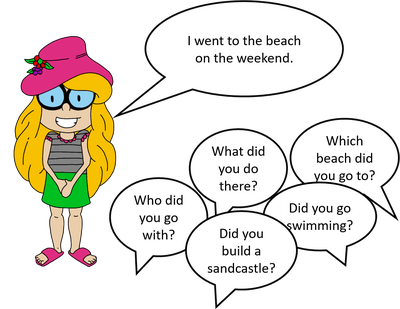
    Although encouraged to ask questions at the conclusion of each talk, children’s questions are often standard, repetitive, and lacking in thought. They may be unrelated to anything the speaker said, or may request information already supplied.  The asking is seen more as an opportunity of talking and of being seen to ask (that is; doing the right thing), than to know more or to participate in genuine discourse.

    Believing in the session’s greater potential, I innovated on the basic routine to make it a focussed literacy teaching episode. By incorporating features of approaches such as language experience, modelled writing, and shared book, the session became an avenue for teaching and learning in both reading and writing.

    From the first days of school, we wrote our Class News; creating meaningful texts which valued and connected with children’s lives. The jointly constructed texts became our first reading material; richer in interest, content, language, and vocabulary than any first reader. (Though these have their place and were also used.)

    Writing and reading Class News: The process

    Continue reading: Show and tell: a writing and reading experience – Readilearn

  • Navel contemplation

    In a recent post But Why? I wrote about the importance of curiosity, imagination, and creativity. I included all three in a flash fiction story that included an imaginary friend.

    This week at the Carrot Ranch, Charli Mills has challenged writers to In 99 words (no more, no less) write a navel story. It can include a belly-button, feature an omphalos (geological or cultural), or extend to navel-gazing (used in meditation or to describe excessive self-contemplation). Go where this oddity leads you.

    I thought I’d try for all three again.

    Navel contemplation

    Billy watched Mother bathe Baby.

    “What’s that?”

    “The last bit of his umbilical cord. Soon it will fall off, and he’ll have a belly button, just like you.”

    Billy lifted his shirt to inspect.

    “What’s billy cor?”

    “Umbilical cord – it’s where Baby was joined to me before he was born. Everyone has one.”

    “Everyone?”

    “Everyone with a mother.”

    “So, Silas don’t have belly button.”

    “Silas would have a belly button. Everyone has.”

    “But Silas don’t have a mum.”

    “Oh. But he would have had a mum. When he was born.”

    “Nope. Not born. I made him up.”

    What do you think? Did or do friends, born of imagination, have mothers if we choose to not give them one? Does the answer to this question impact the existence of belly buttons in imaginary friends?

    At the conclusion of the previous story, I suggested that “Perhaps there are some things for which we may never know the answers; for example, Can imaginary friends die?”

    I thank you for your responses, especially one questioning whether I have ever killed an imaginary character in a story. Something for me to ponder. I don’t think I have. Would I do that?

    In her post, Charli also writes about dying, or what happens afterwards anyway, especially with cremation and “wildcat scattering”. I often, occasionally, sometimes, contemplate what may happen to my body when I’m finished with it, or it’s finished with me, whichever comes first. Or is it the same thing?

    I would like an environmentally friendly disposal of my remains and hope that, by the time action needs to be taken, there are many such options available. At the moment, there seem to be few, so I was interested to listen to this TED talk. I thought you might enjoy it too.

    Thank you for reading. I appreciate your feedback. Please share your thoughts.

  • Meet author-illustrator Chrissy Byers – Readilearn

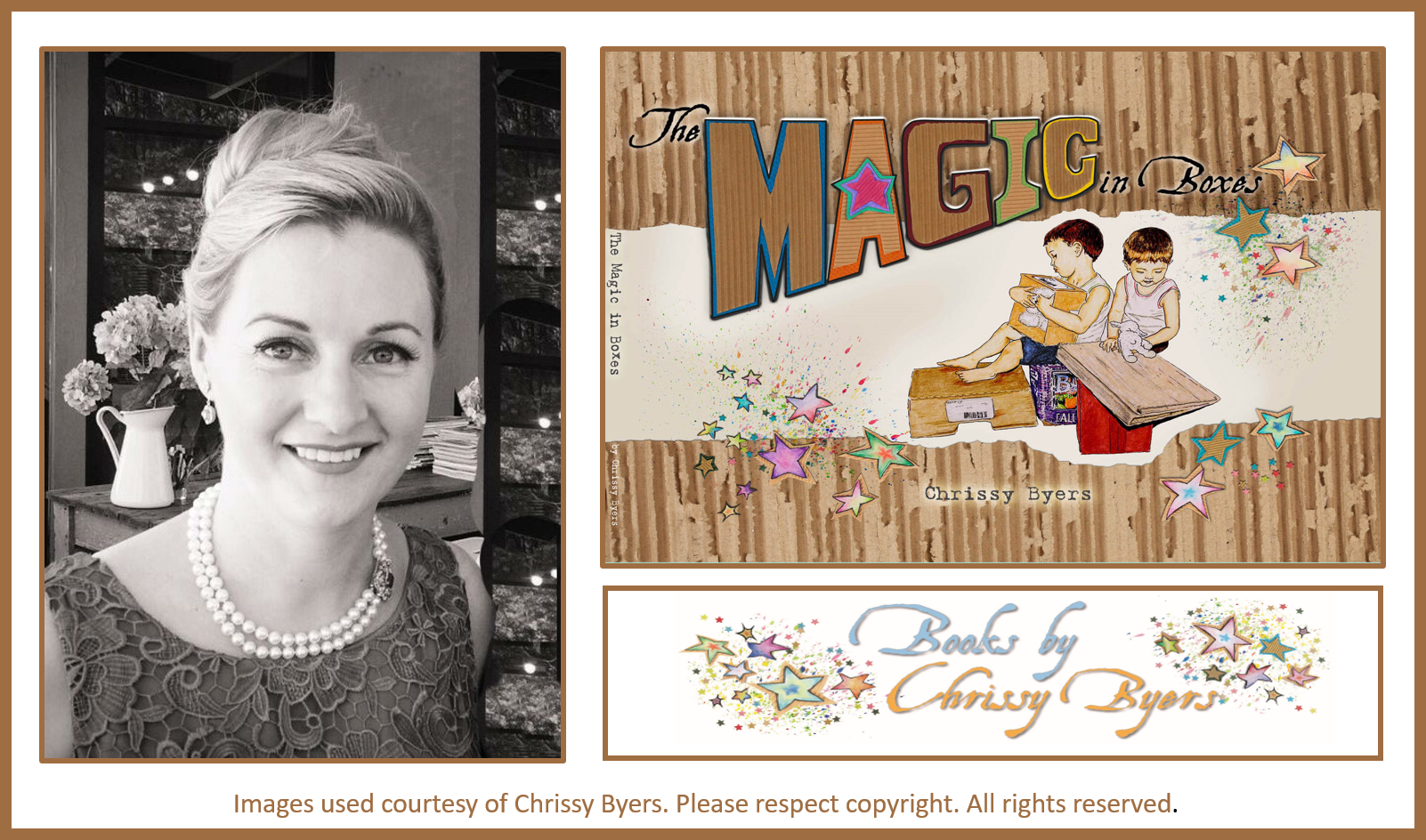
    This month it is my pleasure to introduce you to Chrissy Byers – author, illustrator, and early childhood educator. It was only after many years in the classroom and becoming a parent herself that Chrissy was able to fulfil her lifelong dream of being an author and illustrator. With the success of her first book The Magic in Boxes, and another on its way, Chrissy shows us that dreams can come true.

    Chrissy, what was your motivation for writing this book?

    As an experienced early years class teacher, I had noticed that, with the rise in technology there was a decline in the amount of time children spent engaging in imaginative play.  I was compelled to write and illustrate a children’s book which would remind parents, and inspire children, to see the magic in everyday household junk.

    Unlike a traditional children’s book, I felt that the recount genre would suit my intentions better than a narrative.  I saw this as being an additional bonus for primary teachers, as there are very few examples of recount picture books.

    The repetitive text elements encourage pre-reading children to join in a shared reading experience.  It also provides opportunity to incorporate hand gestures when reading, which helps focus young minds and occupy little hands during carpet time.  The rhyming couplets assist in reading prediction and keep the beat of a fast-moving text.

    Do you think of yourself more as a writer or an illustrator?

    Continue reading: Meet author-illustrator Chrissy Byers – Readilearn

  • Easter holiday wishes – Readilearn


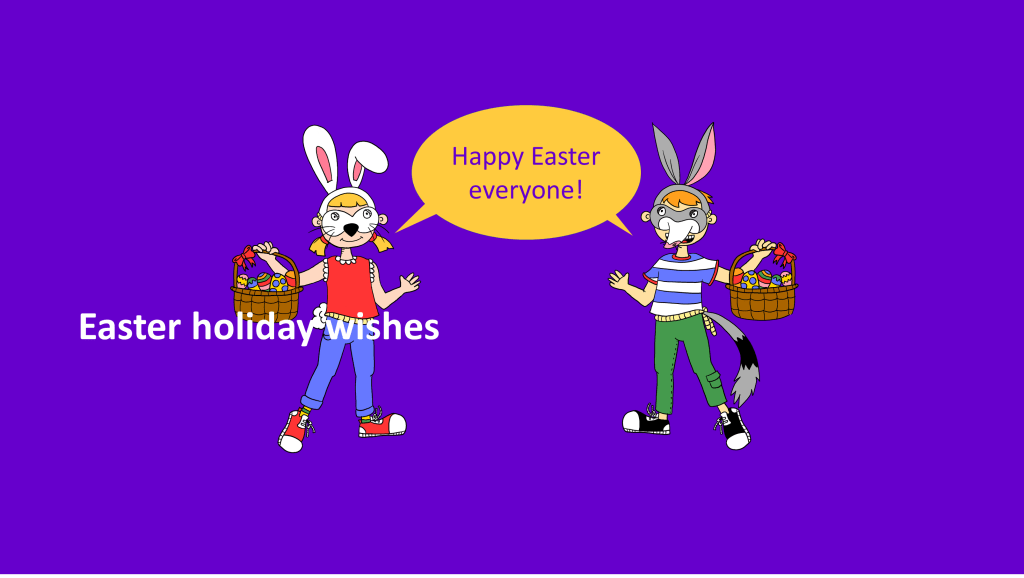
    This week I have uploaded two new resources which are just as suitable for Easter holiday fun at home as they are for learning in the classroom.

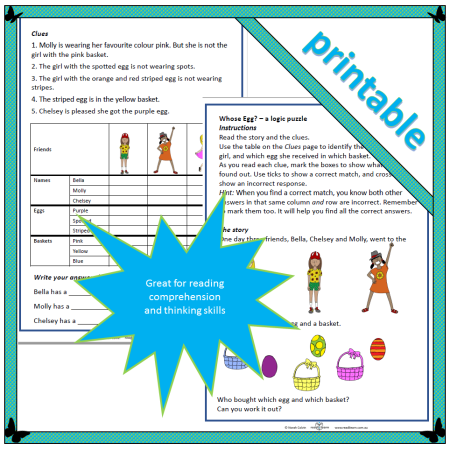
    Whose egg? A logic puzzle can be used with the whole class to introduce children to the steps involved in completing logic puzzles; or as an independent or buddy activity if children already know how to complete logic puzzles on their own.

    Three friends, three eggs, and three baskets. But which friend has which egg and which basket?

    Children read the story scenario and the clues, then use the information to deduce which friend bought which egg in which basket.

    Great for reading comprehension and creative thinking; and for collaboration in a paired activity!

    Continue reading: Easter holiday wishes – Readilearn

  • But why?

    Just like scientists, children are curious, constantly asking questions, wanting to know why or how. Parents and teachers don’t always know the answers. In fact, there may not even be an answer – yet. The need to know is strong and “just because” won’t do. Coupled with creativity, thinking up new ideas and possibilities, curiosity has taken us beyond the imagination of myths and legends to knowing and understanding.

    This week at the Carrot Ranch, Charli Mills has challenged writers to “In 99 words (no more, no less) write about a creation myth. You can write your own, use one in a story or create tension (or comparability) between science and culture on the topic of creation.” As usual, she tells us to “Go where the prompt leads.”

    Every culture has its own creation stories, told from the beginning of time when humans first walked the earth. Through stories, people attempted to explain their own existence and that of everything observable.

    With only the skies for night-time entertainment, people found stories in the stars. As Duane W. Hamacher says in Kindred skies: ancient Greeks and Aboriginal Australians saw constellations in common in the Conversation, What we don’t yet know is why different cultures have such similar views about constellations. Does it relate to particular ways we humans perceive the world around us? Is it due to our similar origins? Or is it something else? The quest for answers continues.

    As with stories told of the stars, there are some threads common to many creation myths, including stories of the first man and woman, stories explaining the existence of the animals and why they behave the way they do. I have read quite a few stories of floods, which I guess is understandable as these events occur worldwide.

    What I love about the creation myths is that they testify to the innate curiosity and creativity of humans; the need to know and the sense of wonder combined with imagination and storytelling.

    It is important to keep this sense of wonder and curiosity alive in children, and adults, also. Just a few days ago, as reported by Ray Norris in the Conversation, Exoplanet discovery by an amateur astronomer shows the power of citizen science. He says this discovery will help us understand the formation of our own Earth. It’s also a step towards establishing whether we are alone in the universe, or whether there are other planets populated by other civilisations.”

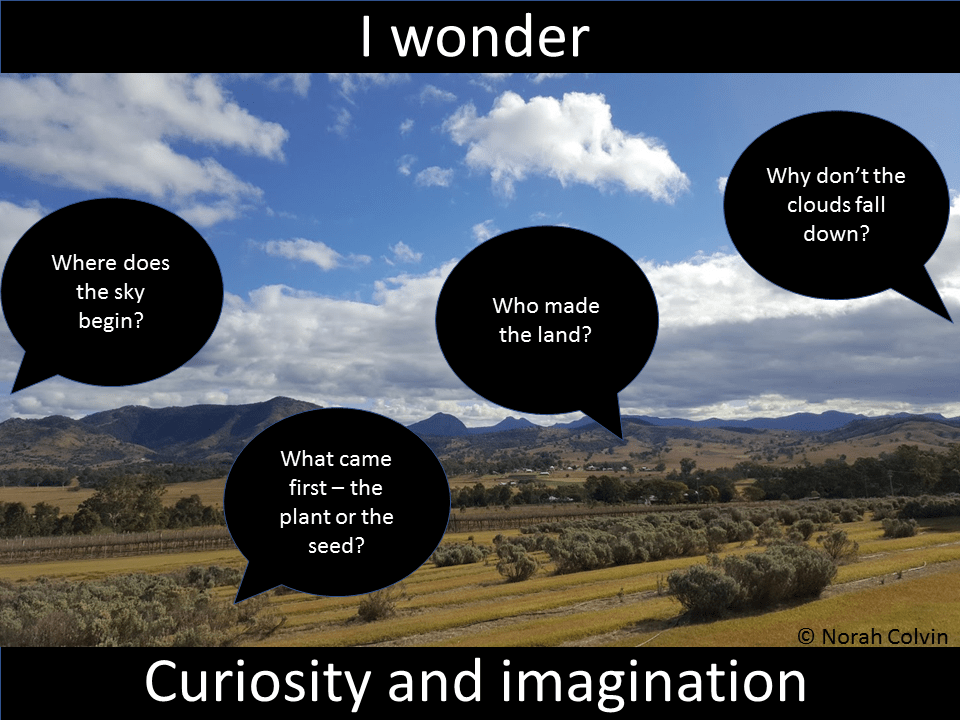
    I think of questions asked by my granddaughter; for example, “Who came first, the mother or the baby?”, “If there’s gravity, why don’t the clouds fall down?”  or “Where does the sky begin?”

    It is interesting now in this age of technology, almost everything we want to know is just a tap of a few keys or buttons away.

    The other day I visited a nature reserve with my two grandchildren. (We went especially to see three baby bilbies which had recently emerged from their mother’s pouch, but saw other things too.)

    We were looking at some black swans, which are native to Western Australia. GD informed me that white swans are not native to Australia. When I admitted that I’d never thought about that, she said, “Look it up. Look it up now. You’ve got your phone in your hand. Just look it up.” She was insistent and I did as told. She was right, of course.

    How different this experience is from that of the first humans. Young children expect to be given answers based upon science or collective knowledge, not stories. But we still do not have answers to everything.  As Duane W. Hamacher says, “The quest for answers continues.”

    In response to Charli’s challenge, I have not written a creation story. However, I have included the same ingredients that contributed to their creation: wondering, questioning, and imagination.

    Unanswered questions

    “What are you doing?”

    “Pulling out weeds.”

    “Why?”

    “So the carrots have more room.”

    “Why?”

    “So they can grow big and juicy.”

    “Why?”

    “So they are good to eat for our dinner.”

    “Why?”

    “To keep us healthy?”

    “I want to be healthy.”

    “It’s good to be healthy.”

    “I don’t want to die.”

    “You won’t die. Not for a long time.”

    “How do you know?”

    Silence. How does anyone know?

    “Silas died.”

    “Who?”

    “Silas.”

    “Who is Silas?”

    “Was. Silas was my friend.”

    “I don’t remember Silas.”

    “He was my imaginary friend.”

    “Oh. How did he die?”

    “I killed him.”

    “Why?”


    Perhaps there are some things for which we may never know the answers; for example, Can imaginary friends die?

    Thank you for reading. I appreciate your feedback. Please share your thoughts.