It’s not always easy being a casual teacher, taking over another teacher’s class for the day. You might be in a different class at a different school, working with a different age group and a different set of expectations, and probably playground duty, every day of the week.
But it does have its advantages too. You can arrive just before school begins and leave when it finishes. You don’t have to do assessment, write reports or be involved in parent meetings.
But it is important to be prepared.
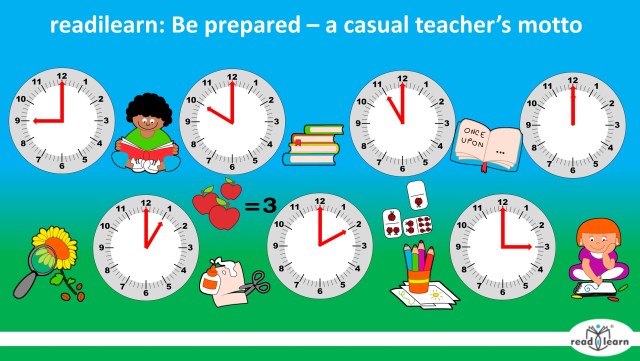
Familiarise yourself with the class timetable and program
Many teachers leave a program for relief teachers to follow and, if one is available, it is important to follow it to maintain continuity for the children and to avoid interrupting the teaching and learning schedule. However, there may be days when a program is not available, and a casual teacher needs to be prepared for these.
Whether a day’s program is available or not, it is important to remember that it’s not your class. There will be established class expectations, procedures and timetables. The day will work best if these can be followed as closely as possible, particularly if teacher aides, support personnel and specialist teachers are involved.
My children were early readers. Both began reading real books well before their fourth birthdays. Of course, the timing, whether early or late, matters little now that they are adults. What matters is that they are readers who read competently and confidently for a range of purposes including for information and pleasure. They are readers by choice as well as purpose.
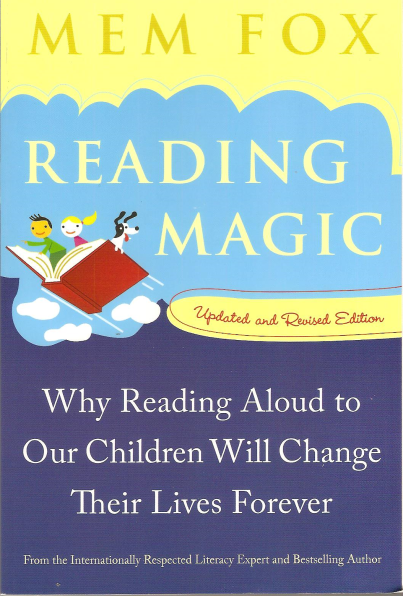
The ability to read is something that most of us take for granted. Many have no recollection of learning to read, only of being able to do so all of a sudden, as if we just could, by magic.
But, as with any spell, there are certain essential ingredients that make the magic happen and others that inhibit the process. Creating readers of choice and not just purpose is the real magic. Creating non-readers is the effect of a spell in reverse, of a bad mix of ingredients, that sadly occurs all too often.
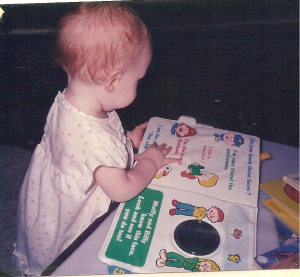
Bec reading to herself at 12 months
My children were readers of choice long before they could read anything for themselves. I wouldn’t say I set out to “teach” them to read. In fact, I didn’t at all. I set out to encourage in them a love of books and writing. Their learning to read was a by-product of sharing the love of words, language and reading.
The magic ingredients for developing readers:
Talk
Play
Read
Write
Love
Fun
I loved having time with my children. Being with them, watching them grow and develop was special, the best and most magical of days. They taught me as much or more about love, life and learning as they learned from me.
Talk
From their earliest days I talked to them, explained things to them — what was happening, what we were doing, and how things worked. I pointed things out and told them what it was called, what it was doing, what it was used for, or how it worked. When we were out and about, I’d point out signs and explain how I knew to stop or where to go. I avoided “baby” talk and always used appropriate everyday language.
Play
We played and had fun together, using our imaginations to create our own games. Sometimes we played simple board games and completed jigsaw puzzles. Whatever we played, talk always accompanied it.
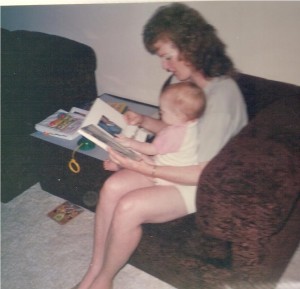
Reading to Bec at about 12 months old.
Read
I read to them, every day, not just one but many books. As I read, we discussed details in the illustrations and made predictions about the stories, sharing our thoughts. If a word was presented in a large or colourful font, I’d point to it as I read it. We’d laugh at the funny stories and cry at the sad and discuss all the story events. When they could read, they’d read to me, and we took turns reading together until they were early teens.
Write
When they first started to talk, I made books with pictures and words from their growing vocabulary. I labelled items in their rooms; for example, bed, shelf, window, door.
I made books about things we did with photographs and text. A book about our family made for my daughter’s first birthday was one of the favourites when cousins came to visit too.
The environment
I provided my children with an environment rich in language, books and opportunities for thinking. I’d read and write with them and to them, and they’d see me reading and writing for myself as well.
When son Rob was little, I didn’t yet know what I now know about the development of language, reading, and thinking. He taught me much that was later confirmed by my studies.
Rob, aged two, reading to some of his toys.
When he was only two, Rob would line up his toys on the couch, sit in the middle, and “read” to them. He would almost recite the stories from beginning to end. He already knew that the words in a book remain the same each time they are read — an important concept for beginning readers to grasp. When he was only three, he’d jump into bed beside me in the early morning after Hub had gone to work, prise my eyes open, and read to me! Magic!
Daughter Bec was born twelve years after Rob. Meanwhile, I had returned to college and studied the development of reading and language. I was amazed to find that we had unwittingly created the essential mix of ingredients for his learning to occur
Naturally, armed with experience as well as understanding, I did things pretty much the same for Bec — talking, reading, writing, playing, having fun and enjoying time together.
Bec sharing one of her favourite books.
When she was five, Bec was invited to participate in a study of children who learned to read before starting school. Of the children (maybe half a dozen) involved in the study, Bec was the only one the researcher considered to be really reading. She was reading fluently, with comprehension and at a higher level than the other children.
Some of the children were able to recognise isolated words, but not read them in continuous text. Others had been taught letters and sounds using flashcards and stopped to ‘sound’ out every word. They hadn’t become real readers.
Bec was not subjected to reading “lessons” as the other children had been. She was immersed in an environment that encouraged a love of learning, language and literacy. The other parents had a need for their children to read as if their value as parents depended on it.
While I had an expectation that Bec would read, I was confident that she would come to it in her own time. My credibility as a parent was not tied to her ability. Having said that, both children (adults) are now very successful in their chosen fields, so I must have done something right. Or perhaps we were just lucky that we chanced upon the magic mix of ingredients.
I do wish that all parents would include a sprinkle of language and a pinch of reading mixed with love and fun into their children’s lives every day. It would contribute greatly toward eradicating illiteracy.
How do you celebrate birthdays in your early childhood classroom? Suggestions from readilearn help you make a birthday a special event in your classroom.
I’m excited! Today, 24 August 2018, marks readilearn’s second birthday. How quickly those years have passed and how the collection has grown in that time.
When I started out with the goal of reducing teachers’ workloads by preparing lessons ready for them to teach, I made a commitment to upload new resources regularly, write a weekly blog post focusing on topics of interest to early childhood teachers, including suggestions for teaching, and publish a newsletter on the last day of each month.
I am proud to say that I have fulfilled that commitment. With more than two hundred resources added to the collection since the launch, that’s an addition of an average of two new resources each week. More than forty resources in the collection are interactive lessons for teachers to teach on the interactive whiteboard, exceeding the ten percent minimum I set as a target.
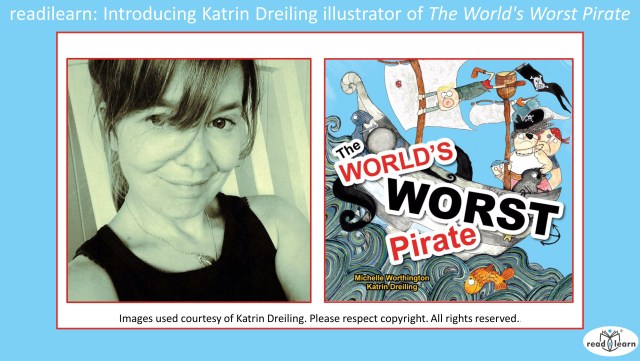
This week I have enormous pleasure in introducing you to Katrin Dreiling illustrator of The World’s Worst Pirate, written by Michelle Worthington.
The World’s Worst Pirate is a captivating book about being true to yourself and unleashing your inner strengths.
Story Synopsis
One might wonder why Will, the world’s worst pirate, would want to be a pirate anyway. The truth is, he didn’t. There wasn’t much at all he liked about being at sea. He was happiest in the galley cooking cupcakes. The ship’s captain, his mother, on the other hand, couldn’t understand why he didn’t love being a pirate as much as she did. When the ship is attacked by a terrifying sea monster, no one could have predicted the outcome. Katrin Dreiling’s illustrations are a perfect fit or Michelle Worthington’s story. They add humour, delight, and a sub-plot of their own.
The Illustrator
The World’s Worst Pirate, published by Little Pink Dog Books in 2017, is Katrin’s first picture book. In 2018 the book received the CBCA Notable Book award, a wonderful achievement, especially for a first book. Prior to becoming an illustrator in Australia, Katrin studied languages in Germany to become a teacher. She loves to come up with quirky creations that inspire children to get creative themselves. Katrin’s second book, also written by Michelle and published by Little Pink Dog Books, will launch in September this year. Katrin also enjoys writing for children and regularly teaches art classes in Newfarm, Brisbane.
The Interview
Welcome to readilearn, Katrin.
Thank you for inviting me.
Katrin, The World’s Worst Pirate was listed as a Notable Picture Book in the CBCA 2018 Book of the Year awards. Congratulations. Since it is your very first published picture book, that must have been very special. How did it make you feel?
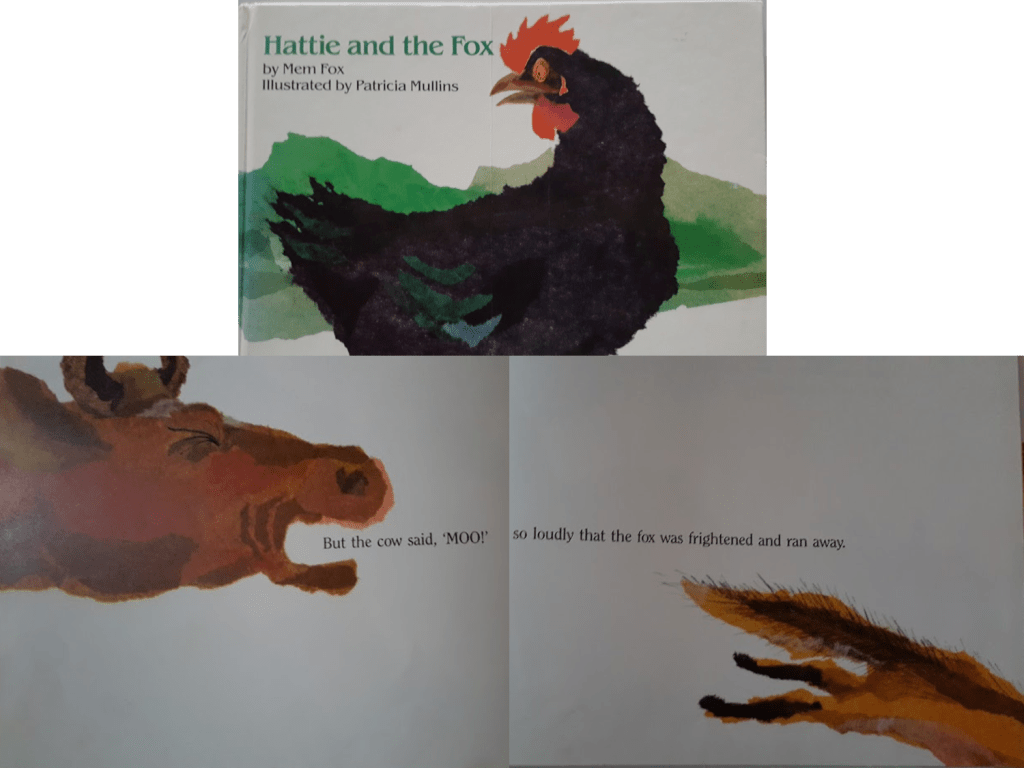
One of the multitude of my favourite picture books is Hattie and the Fox, written by Mem Fox and illustrated by Patricia Mullins.
I am allowed a multitude of favourites, aren’t I?
Like children, it’s too hard to choose just one. I don’t mean just biological children, I mean the children I teach. They all become ‘my’ children the moment they enter my classroom and remain that way forevermore. How could I choose a favourite?
Hattie and the Fox is a fun story for reading aloud. The children love to join in, especially with the dialogue, and even enjoy acting it out. The cumulative and repetitive features of the story, along with the rhythmic text, support beginning readers who beg to read the story again and again.
While my daughter never liked it when I ‘put on voices’ to read, the children in my class did. Somehow they didn’t think it was me putting on voices. They became involved in the story and thought it was the characters speaking. I used to smile to myself when they’d say things like, “That cow, she’s so funny.” And mimic my reading. Although I am no Mem Fox (you can listen to her read the story here), they enjoyed it anyway.
In the story, Hattie the hen announces that she can see a nose in the bushes. The other animals show little interest. Even when Hattie announces that she can see two eyes, two legs, a body, four legs and a tail, they are not concerned. Only when she realises and announces that it’s a fox peering from the bushes, do the others respond.
We don’t have “the woods” in Australia. We have “the bush”. There could be any number of things peering at us from the bushes such as possums, koalas, kangaroos, drop bears, bunyips, or a great variety of birds. Most are fairly harmless. It was deer peering from the woods in Charli’s story.
While deer are not native to Australia, some were imported for hunting and farming purposes. Many of those escaped to freedom. Some roam the suburbs destroying vegetation and creating hazards for unsuspecting motorists. We’ve occasionally come across a group of them in the middle of the road when we come home late at night. At Christmas time the road signs warning of deer are decorated with tinsel and red pompom noses to add to the festive mood.
Last week, in response to Charli’s ‘yellow tent’ prompt, I attempted a romantic story which was rather well received. I decided to continue the story. You may remember that a reluctant camper, unable to find any further excuses, finally agreed to join her boyfriend. When she arrived, the campsite was deserted except for one yellow tent lit by solar fairy lights spelling the words, “Marry me,” and her fears melted. But should she have dropped her guard?
Surprise!
She parked her car beside his and grabbed her bag. As she locked the car, she looked around. Where was he? He said he’d be watching for her. Cicadas buzzed louder than her footsteps crunched the gravel. A bird startled as it squawked and flapped overhead. Where was he? He must know she’d arrived. Even with the fairy lights, it was darker than she liked. Peering from the bushes, he willed her to be brave, to open the tent, to find what he’d made for her. Finally, tentatively, she pushed aside the flap. Her screams silenced the night chorus.
Is that what he expected? What do you think was in the tent? Why was he peering from the bushes? What happens now?
Thank you for reading. I appreciate your feedback. Please share your thoughts.
“I’ve got an interactive whiteboard in my room but I don’t know how to use it.”
“What readilearn resources can I use with my kindergarten children?’
“Schools have said they want our children to come to school able to listen and follow instructions. What resources can we use?”
These are some of the statements and questions that teachers of children in their kindergarten year, the year before they start formal schooling, have put to me.
The main focus of my preparation of readilearn teaching resources is on the first three years of school. I hadn’t considered their application with children aged four to five. However, teachers have assured me that some of the readilearn interactive whiteboard lessons are very suitable for children in kindergarten as one part of a rich play-based learning-focused environment.
Using readilearn lessons on the interactive whiteboard in kindergarten
provides variety,
introduces children to the use of technology and some of the skills involved such as drag and drop, and click to select items,
provides opportunities for children to take turns, work cooperatively, listen actively to the teacher and other children,
encourages vocabulary development – the lessons are intended to be teacher-led and involve discussion with the children.
readilearn lessons support kindergarten teachers with
lessons ready to teach – login in the morning, keep one tab open – stay logged in for the day,
opportunities for children to make the connection between print and spoken language,
providing children who are ready to read opportunities of doing so.
readilearn interactive resources and lessons suitable for use in kindergarten:
I am not a camper. I had no experience of camping as a child and only two as an adult. The first, I finally succumbed to pressure from friends who assured me I’d love it. How could I not? They did. I didn’t.
The second I only vaguely recall though I am assured it did really happen. I think I’ve obliterated it from my memory. Sadly for my children, they also missed out on the camping experience though they did attend school camps (not in tents) and occasionally go camping now that they make their own choices.
My best experience of camping was at school with my year ones. One of the families was keen on camping and the father was a wonderful volunteer in the classroom. His shift work as a firefighter meant that he was often available to help us out. When we were reading books about camping, we had a ‘camping day’. This wonderful dad came in and set up a tent in the playground, made a little campfire, and cooked us all a camp lunch. We spent the day in the playground getting the full camping experience. It was great fun, especially for the children who didn’t get those experiences with their families, and a good way to build background knowledge and vocabulary. I enjoyed it because I got to go home to my nice comfy bed to sleep in. 😊
Of course, children love to play camping too, building tents over furniture in bedrooms and living rooms and with whatever they can find in the back yard. It is a wonderful activity for imagination. The construction itself can take a bit of working out and involves spatial thinking, collaboration, persistence, resilience and the ability to try new methods. I believe setting up a real tent may require some of those skills as well.
For my response to Charli’s prompt, I couldn’t resist writing about children and their imaginative play, but I also thought I’d try my hand at a romantic piece, which is almost as rare for me as camping, so I have done two. I’d love to know which you prefer.
With Intent I
They dragged the upended chairs into position, stacked boxes in the middle and positioned the quoits hob on top.
“Now a cover,” said one.
“I know,” said the other. They raced inside.
“What are you doing?” asked Mum.
“Nothin’,” said one.
“Just playin’,” said the other.
“Don’t make a mess,” said Mum.
“We won’t.”
The yellow sheet refused to hide as they returned outdoors. Mum smiled.
After some realignment of chairs and adjustments to boxes and sheet, they stood back to admire their work.
“Lunchtime,” said Mum.
“Can we eat in the tent?”
“Only if I can join you.”
With Intent II
“I have to work.” She feigned disappointment.
“That’s okay. Come after work.”
“But I’m working late. It’ll be dark.”
“It’s well-lit all the way.”
“But I don’t know the way.”
“That’s okay.” He punched the address into her navigation device. “Just follow the directions.”
“How will I find you when I get there?”
“I’ll be watching for you.”
Conjuring no more excuses, she wasn’t yet ready to explain her attraction to him didn’t include camping.
Later, when entering the campgrounds, deserted but for one yellow tent lit by solar fairy lights spelling the words, “Marry me,” her fears melted.
Thank you for reading. I appreciate your feedback. Please share your thoughts.
How do you feel about worksheets? Love them? Hate them? Use them sparingly?
I would say I’ve never been greatly in favour of worksheets. I’m not saying I never used them, but I used them sparingly. If I could do something as well or better without using a worksheet I would. There were a few reasons for this:
I valued children’s own work and didn’t feel the need to “pretty” up their books with the work of others.
I always looked for ways to progress children’s learning as opposed to keeping them busy.
I liked to reduce our paper usage.
Available on the internet and in bookstores are oodles of collections of worksheets; worksheets for anything you can imagine. You can spend hours trawling through websites looking for a sheet to support learning or practice a specific concept. Some of that time could be better spent considering other opportunities you could provide children for learning or practice, or even doing something pleasant for yourself for a change. Now there’s a thought.
When you think you may want a worksheet, or come across a worksheet that you may want to use, stop and evaluate its potential benefit:
Sometimes we expect that all we have to do for children to make friends is to put them in close proximity to other children. We may see it happen at the park, in a playground, in a shopping centre, at school. Children are attracted to other children, but it is not always easy for them to make friends. We should no more expect them to get along than we would expect adults thrown together at a party, conference or other social situation to become friends immediately.
While some children are gregarious and will talk to anyone, others may be more introverted and less inclined to make the first move. But whether extrovert or introvert, children need to learn how to interact with others in ways that encourage friendships to be made. The development of social-emotional skills, including empathy or understanding how others feel, is an important part of becoming a friend.
Make friendship skills lessons an ongoing part of your program
Lessons in how to be a friend need to be an ongoing part of any class program. While many teachers allocate some time for getting to know each other at the beginning of the school year, it is important to maintain the focus throughout the year. As children mature and interact with others, they will encounter a greater variety of situations with which they need to deal.
It is not always necessary to timetable or set up specific lessons. Sometimes the spontaneous discussions before and after break times can help highlight needs and alert you to who is having trouble in the playground. These focused incident-specific discussions can help resolve issues and prevent them from escalating.
As new children enter the class, they also need to be introduced and made to feel welcome and included. It is important for the introductions to go both ways. New children have many others to get to know; the existing class members have only one, and it may be difficult for a new child to settle into established groups. It is necessary to establish procedures that will help a child settle while more permanent friendships are being formed. For example, friendship buddies could be allocated to show the child around and help them become familiar with school routines and behaviour expectations.
Establish a supportive classroom environment
One of the best ways of ensuring that children feel friendly towards each other is by establishing a supportive classroom environment in which children have a sense of belonging, feel respected and valued.
Previous posts about establishing a supportive classroom environment include Establishing a supportive classroom environment from day one. A search of resources using the words ‘supportive classroom’ will bring up a list of other related posts and resources.
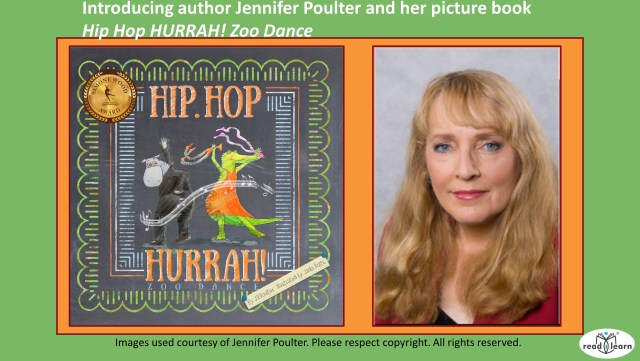
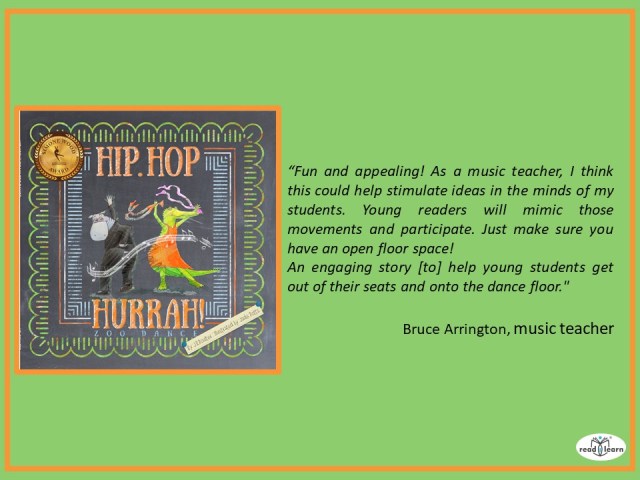
Meet Australian author J.R. Poulter as she discusses her beautiful picture book Hip Hop Hurrah Zoo Dance which is great for reading and getting kids moving.
This week I am delighted to introduce you to prolific Australian author Jennifer Poulter. Jennifer writes fiction and poetry for children, education and the literary market. She has had over 50 traditional books and thirteen digital picture books published. She writes under the names J.R. Poulter and J.R. McRae and has received numerous awards for both fiction and poetry writing.
Throughout her career, Jennifer has been employed in numerous roles including Senior Education Officer with the Queensland Studies Authority and Senior Librarian with the State Library of Queensland. She even once worked in a circus. In addition to writing, Jennifer is also an editor and artist. Now, under the banner of Word Wings, Jennifer collaborates with other creatives from over 20 countries.
Today I am talking with Jennifer about her picture book Hip Hop HURRAH! Zoo Dance.
What initially attracted me to this book is its ability to get children moving. What a great way to incorporate fun with movement and reading into any day.
The book also fits perfectly with a dance curriculum that encourages children to become aware of their bodies and how they move in space, to explore and improvise dance movements. Children can be encouraged to move like the zoo animals in the book or improvise movements for other animals and objects that move.
But Hip Hop HURRAH! Zoo Dance can also find its place in the literacy curriculum. Written in rhythmic verse, it encourages children to join in with the reading. It has a treasure of words to delight and extend vocabularies and add sparkle to writing; words like ‘limber, fandangle, prance and shimmies’. Children will laugh at the hippos with the backside wobbles and be intrigued by the combination of illustrations by Jade Potts and the variety of media used by designer Takara Beech in creating the double page spreads.
If you throw in some counting of animals and legs, needs and features of living things, and places they live, you can cover almost the entire curriculum with this one little book. But enough from me, let’s find out what Jennifer has to say.






















 Norah Colvin