Live Love Laugh Learn … Create the possibilities

Category: Early childhood education

  • Announcing: It’s Time for Change – readilearn

    Announcing: It’s Time for Change – readilearn

    Over the coming weeks, we are making improvements to the readilearn site.

    During the changeover period, until mid-to-late March, we will not be adding new resources to the collection or publishing blog posts.

    Access as usual

    If you are already a readilearn subscriber or have registered to access the free teaching resources, you will still be able to log in and access resources during and after the changeover, as usual.

    Changes

    1. Individual prices

    Once the changes take effect, readilearn resources will be available as individually priced items.

    Note: If you are already a readilearn subscriber, your access to all readilearn resources will be uninterrupted while ever your subscription is current. The individual pricing will not affect your ability to access resources.

    1. Cost of subscription

    Continue reading: Announcing: It’s Time for Change – readilearn

  • Interview with author Wenda Shurety – Readilearn

    Interview with author Wenda Shurety – Readilearn

    This week, it is my pleasure to introduce you to author Wenda Shurety as she discusses her new picture book Eva’s Imagination. I especially enjoy Wenda’s book for its focus on imagination, something I consider very important to encourage in young children. Without imagination, we are unable to see beyond what is and have little chance of progress being made.

    About Wenda

    Wenda grew up in the beautiful county of Norfolk in England and now resides in Brisbane with her supportive husband, cheeky daughter and two rescue dogs. Wenda loves to write children’s stories with heart; whether it involves diversity, science or the magical world of the imagination.

    About Eva’s Imagination

    Eva doesn’t know what an imagination is. With the help of her dog Chops, Eva goes on a hunt to find it. Eva’s Imagination is a delightful story about the power of the imagination that aims to inspire young children to find adventure in their surroundings rather than from screens.

    Now let’s meet Wenda.

    The interview

    Continue reading: Interview with author Wenda Shurety – Readilearn

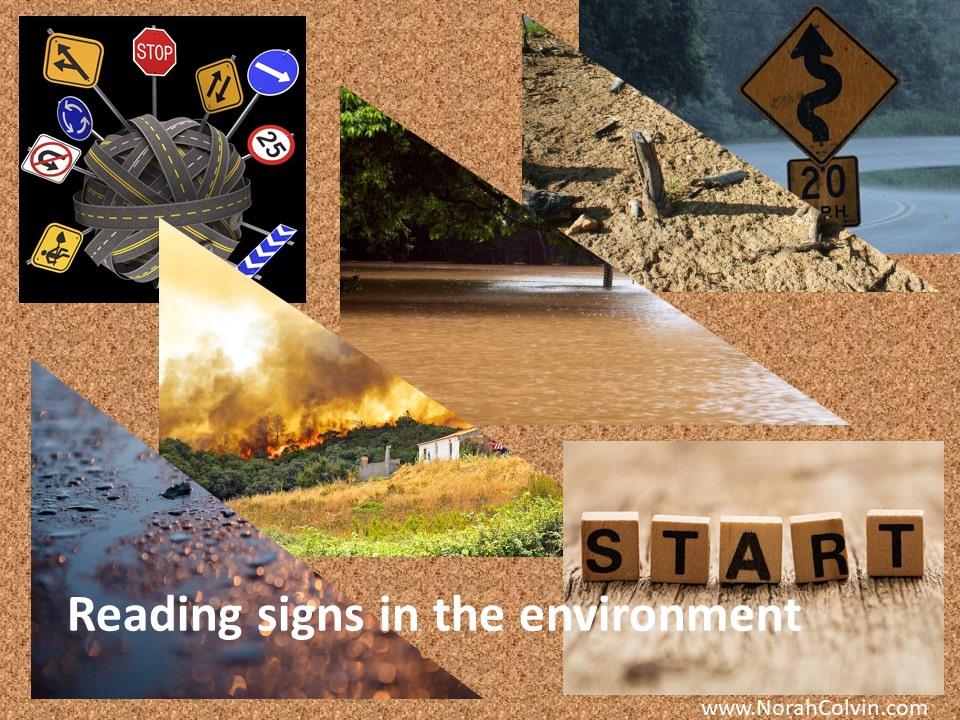
  • Reading signs in the environment

    Reading signs in the environment

    Our environment is rich in print. From their earliest days observing the environment, children are surrounded by print that may include words, symbols and images, each portraying meaning in different ways. We see:

    • names of stores
    • signs directing pedestrians and vehicles
    • instructions for entering and leaving buildings
    • labels on items
    • prices on goods
    • timetables
    • banners advertising local events
    • information about landmarks and points of interest

    and so the list goes on.

    Reading and understanding the plethora of signs is important to independent living and successful negotiation of our print-rich and print-dependent world. Although we often take our ability to do so for granted, one only has to visit a foreign place to realise how much we rely on print to navigate our way.

    Helping children to read and understand signs is important, requires no planning and can occur effortlessly whenever parents are out and about with their children. All that is required of the parents is to point them out and explain their meaning.

    Very young children can learn to recognise the entry and exit and signs on doors, particularly if colour is used as a clue, and the signs on restroom doors.

    reading signs in the environment

    Stop signs are easily recognisable as are other road signs such as those indicating speed humps, pedestrian and animal crossings, speed limits and left and right turns. Children quickly come to understand what is happening when the traffic lights change colour, but their learning is always enhanced by parental explanations. On journeys when children might become restless, it can be fun to keep their minds occupied by spotting particular signs.

    It doesn’t take children long to recognise the logo of their favourite fast food or ice cream store. Names of other stores frequented by the family can also be pointed out for them to learn to recognise. It can also be useful to explain to children how items are being selected, how you know what the items are and where you locate the price. They can be shown how to use symbols and colours on packaging to identify items they like and may come to recognise (if not read) the names of some of their favourite products.

    A fun activity for the first days of school is to provide children with an assortment of environmental print to identify. Often children begin school hoping to learn to read on the first day, little realising how much they can already ‘read’. Reading environmental print boosts their self-esteem and self-confidence by showing what they can do and makes a connection between school and what is familiar to them.

    I used to like making an ‘I can read’ book on the first day with my children. I would supply children with a collection of advertisements cut from magazines and product labels that I thought children would readily recognise. I would also print signs, symbols and company logos from the computer.

    I would provide children with six to ten pages, each labelled with the words ‘I can read’. Children would then select items they could ‘read’ (recognise) from the collection and paste each onto a page. When they were done, children would proudly read their books to their friends and to me, and take them home to read to their families.
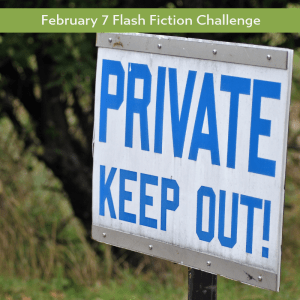
    Carrot Ranch Flash Fiction challenge signs by Charli Mills

    I am thinking about signs in the environment as this week Charli Mills at the Carrot Ranch challenged writers to In 99 words (no more, no less) write a story that includes a sign. It can be a posted sign, a universal sign, a wonder. Go where the prompt leads.

    I could have written a flash about children reading signs in the environment, as I’ve described. Or, still in keeping with my educational theme, I could have written about the signs that teachers look for everyday showing that progress has been made or that misconceptions and misunderstanding exist.

    However, the environment worldwide is shouting to us loud and clear, with signs that can no longer be denied, that our climate is changing.

    Since the beginning of this year, Australia has suffered unprecedented and catastrophic weather events. Across the country, the land has been ravaged by heatwaves that have seen record maximums in temperatures and bushfires have raged across large tracts of land. While much of the country is suffering from prolonged drought, other areas have been devastated by extraordinary rainfalls and flooding. In fact, some of the farming community, who had been crippled by drought, rejoiced when the rains began, only to lament when the rains didn’t end and the rain and floods caused massive stock losses.

    It is of these farmers that I have chosen to write. Some of my family live and raise stock, some sheep and some cattle, in the devastated areas and have suffered enormous losses. The heartbreak is unimaginable. If you would like to help the farmers, you can find out how to do so in this article.

    You can read more about the plight of the farmers in these articles:

    Flood Affected Farmers Witness Entire Cattle Herds Wiped Out By Catastrophic Deluge

    Queensland Farmers Confronted by Stock Losses

    Torrential Rain in Queensland is Manna from Heaven for Some Farmers but Catastrophic for others

    How to Help Farmers in Flood-Ravaged Queensland

    I hope my flash goes a little way to recognising the plight of our stoic farmers.

    Ominous Signs

    Every day, the farmers scanned the skies for a sign, any sign, that a reprieve from the relentless drought was on its way. The dusty red soil yielded not a single blade of feed for the suffering stock. Bales of hay, donated by city folk, helped but soon it too would be gone. When the rains finally came, the farmers rejoiced. For four days it rained; beautiful, drenching, life-giving rains, soaked up by the thirsty soil. But it wouldn’t stop. It transformed their world into an enormous, red, muddy sea. Hopes drowned alongside precious stock leaving heartbreak and devastation.

    Thank you blog post

    Thank you for reading. I appreciate your feedback. Please share your thoughts.

  • Teaching place value to young children – readilearn

    Teaching place value to young children – readilearn

    Teaching place value is a vital part of mathematics programs in lower primary classrooms. This post outlines lessons and activities to teach place value.

    Teaching place value is a vital part of mathematics programs in lower primary classrooms. It is essential that children develop a firm understanding of place value right from the start to avoid later confusion and maths anxiety.

    Sadly, many children and adults confess to having an aversion to mathematics. My belief is that the aversion is often learned from ineffective teaching methods. For this reason, there is a strong focus on number in readilearn resources with lessons and activities that provide opportunities to develop understanding in fun and meaningful ways.

    It starts with understanding number

    Before we begin to teach place value, we must ensure that children have a strong sense of number. Understanding number is more than simply being able to rote count or recognise numerals. While even very young children may learn to memorise and recite the sequence of numbers from one to ten, they don’t always understand what the words mean.

    Rushing children through to abstract processes before they have developed a strong foundation creates confusion. It sets them up for frustration, fear, failure, and a dislike of maths.

    This can be avoided by encouraging an “I can do it. I get this. Maths is fun” attitude.

    To develop an understanding of number, children require many and varied experiences using concrete materials in many different situations.

    One-to-one correspondence

    Continue reading: Teaching place value to young children – readilearn

  • First week of February celebrations – Readilearn

    First week of February celebrations – Readilearn

    In the first week of February, celebrations include World Read Aloud Day, Children’s Mental Health Week and Chinese New Year.

    Readilearn has lessons ready to assist you with each of these celebrations.

    World Read Aloud Day

    First up is World Read Aloud Day on 1 February—today! The day aims to encourage people everywhere to “read aloud together and share stories to advocate for literacy as a human right that belongs to all people“.

    Perhaps no one knows better than teachers of young children the importance of reading aloud. Children who come to school having been read to at home have the advantage of more extensive vocabularies and proficiency with language, greater general knowledge and interest in the world around them, and an interest in books and learning. These advantages contribute to success in school and life.

    Making time for reading aloud in a busy class program is a priority for teachers of children in their first three years of school. Opportunities occur in every subject area, and it is not difficult to find ways of working a few extra stories into the program. Why not use World Read Aloud Day as an excuse to read a few more books than usual (as if an excuse is needed).

    If you are unsure where to start selecting, visit the library and ask the librarian for suggestions, or take the class with you and ask them to each choose a book they’d like to hear.

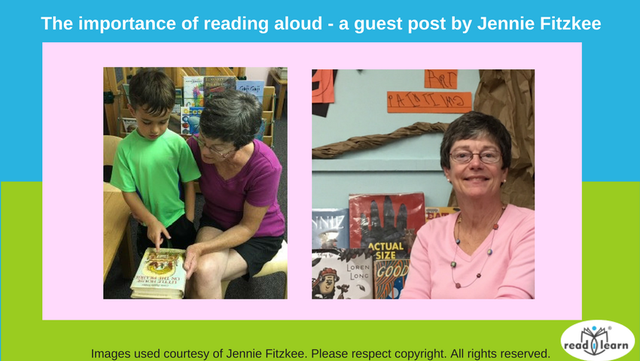
    The guest post by teacher Jennie Fitzkee on the importance of reading aloud is also full of suggestions.

    Five of my favourite picture books (of which there are hundreds so impossible to list) are:

    Continue reading: First week of February celebrations – Readilearn

  • What can you do with a puzzle? – Readilearn

    What can you do with a puzzle? – Readilearn

    Puzzles are a fun way to encourage thinking and problem solving as well as mathematical and language skills. The celebration of National Puzzle Day on 29 January is a great excuse to introduce some puzzles into the classroom. The day may be American in origin, but there’s no reason the rest of us can’t join in the fun too.

    I have always enjoyed puzzles; both the fun of figuring something out or solving a problem and the satisfaction in having done so.  My favourite types of puzzles include (in no particular order):

    • Jigsaw
    • Sudoku
    • Crosswords
    • Logic puzzles
    • Block puzzles
    • Word puzzles
    • Lateral thinking puzzles

    Puzzles aren’t just those that come in a box, a book or online. Life presents us with puzzles and problems with regular frequency. Most days we will be faced with something that will stretch our thinking in divergent, convergent or lateral ways. It is good to provide children with opportunities to think too. Brief interludes of puzzle solving throughout the day can add fun, energise and refocus.

    A variety of puzzles and resources to develop children’s thinking are available in the readilearn collection. Some are interactive lessons ready to teach on the interactive whiteboard. Others are printable for offline use. All provide opportunities for learning in context with the greatest benefit coming from the discussions with the teacher and other students.

    Check out this previous post for other thoughts about Logical thinking and problem solving.

    Learning with readilearn puzzles

    Sorting puzzles

    Continue reading: What can you do with a puzzle? – Readilearn

  • From my bookshelf — 22 Multicultural picture books – Readilearn

    From my bookshelf — 22 Multicultural picture books – Readilearn

    In last week’s post, Multicultural Children’s Book Day: Book Review, I suggested that the day “provides us with an opportunity to examine the collections of books in our classrooms and libraries to determine if they reflect the lives our children.”

    I decided that perhaps I should examine my own personal picture book collection too. While I am happy with the collection, there are gaps and I’m sure more could be added. However, I know that a visit to my local or school library will provide me with access to many more.

    readilearn’s multicultural teaching resources

    As well as investigating my book collection, I had a look at readilearn teaching resources to see how they stacked up.

    The establishment of a supportive classroom, one that is welcoming to all, is a recurrent theme on readilearn; as are activities for getting to know one another and establishing friendship skills.

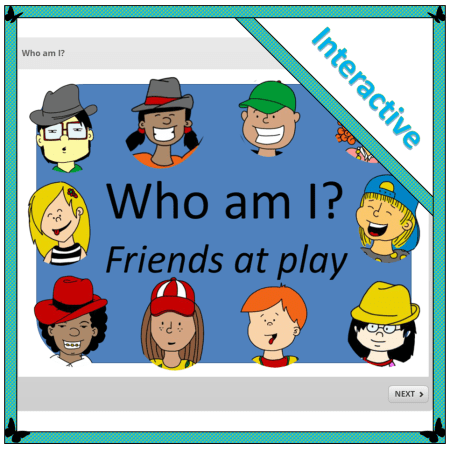
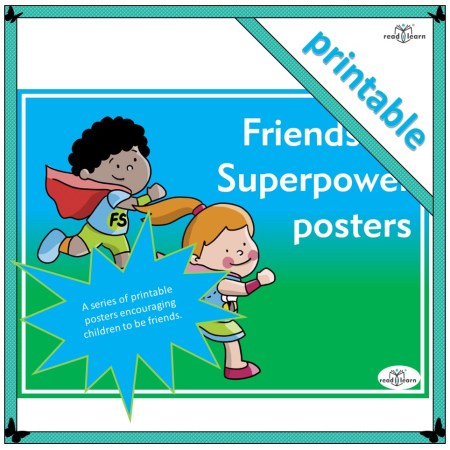
    I am proud to say that, when children are included in illustrations, children from diverse backgrounds, even if not in traditional costume, are portrayed. This is intentional. You can see evidence of this on the Home page and in the Literacy and History banners as well as in teaching resources such as Friendship superpower posters and Who am I? Friends at play.

    Resources that encourage children to get to know each other rank highly in the readilearn collection. The reason for this is my belief that with knowledge comes understanding, respect and friendship.

    Continue reading: From my bookshelf — 22 Multicultural picture books – Readilearn


  • Don’t give up – Yet!

    Don’t give up – Yet!

    Discussions of the importance of having a ‘yet’ attitude or a growth mindset abound, including on this blog. I am very much in favour of the ‘yet’ thinking, as proposed by Carol Dweck.

    Basically, it means that we don’t consider our ability to learn as finite. We believe our potential to be constantly expanding. We may not know or be able to do something ‘yet’, but we can work at it and with each attempt come closer to achieving it.

    The resolve to maintain a growth mindset can be challenged at times when the going gets tough and there is no obvious solution. It can be difficult knowing when enough is enough and it’s time to move on; or if success is hiding just around the corner or on a slight detour.

    I often debate with myself about how to interpret the truth in the messages the universe seems to be sending, weighing up giving up against exerting just a little more persistence and patience. Consequently, I shouldn’t have been surprised by the unplanned theme in my response to the flash fiction prompt at the Carrot Ranch this week.

    charli mill's flash fiction challenge - colonnades

    Charli Mills challenged writers to In 99 words (no more, no less) write a story that includes colonnades. It can be natural, architectural, or a metaphor. Take a stroll and go where the prompt leads.

    What could colonnades possibly have to do with a growth mindset you might think, as would I. But when I sat at the keyboard, without a clue of what to write, this is what developed. I hope you like it.

    Never Give Up

    The solid grey wall stretched without end, both left and right —impenetrable, no way around, no way through. Perhaps a way over? Even from that distance, it appeared unscaleable.

    He removed his backpack and rested his head upon it as he lay, gazing upward. He sighed heavily. He’d trekked so far believing this was the way. How could he have been so wrong?

    He closed his eyes and drifted into a deep sleep. Refreshed, upon awakening, he decided to continue rather than retreat.

    As he drew closer, the wall separated into columns spaced perfectly to allow an easy passage.

    Do you see what I saw emerge? A story about not giving up? Of the importance of adjusting focus when it seems a dead end is reached, when there’s nowhere else to go and nothing else to try? Or is the theme significant to only me as I try to find a way through the colonnades in my path?

    As I was writing this story, I was reminded of one I wrote for children using the nursery rhyme Humpty Dumpty as a stimulus. In a similar way to Charli’s prompts, I was prompting children to think about possible reasons for Humpty Dumpty to be sitting on a wall and causes for him to fall.

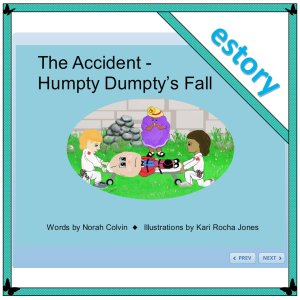
    The accident - an innovation on the nursery rhyme Humpty Dumpty

    Of course, I couldn’t do the prompting without writing a story of my own: The Accident – Humpty Dumpty’s Fall.

    In the story, ‘Humpty looked at the wall. He couldn’t see through it. He couldn’t see over it. And there was no way around it.’ He thought it was ‘no use’. Fortunately, his friend Pomble wasn’t one to give up quite so easily and found a way for them to see over the wall. It was what occurred when Humpty was looking over the wall that caused him to fall. I won’t tell you what happened but, unlike the nursery rhyme, my story has a happy ending.

    Thank you blog post

    Thank you for reading. I appreciate your feedback. Please share your thoughts.
  • Establishing a writing classroom – Readilearn

    Establishing a writing classroom – Readilearn

    Establishing a writing classroom, one in which children want to write, develop confidence in writing and develop the skills to write with accuracy and clarity, begins from the first day of school.

    Characteristics of a writing classroom

    Nine characteristics of a writing classroom are:

    • purposeful writing occurs throughout the day in all areas of the curriculum,
    • the process of writing is modelled,
    • children’s writing is scaffolded,
    • children write in response to set tasks,
    • children write about topics and in genres of their own choice,
    • the message is paramount,
    • writing conventions; such as spelling, punctuation and grammar, are learned by writing,
    • children’s writing is celebrated, and
    • children enjoy writing.

    If children are provided only with writing tasks and topics set by the teacher, they may view writing simply as a task to perform, something to please the teacher, rather than as a vehicle for self-expression or for sharing imaginative and creative thoughts and stories or information.

    Opportunities for writing occur throughout the day and should include:

    Continue reading: Establishing a writing classroom – Readilearn

  • Starting out right – classroom organisation – Readilearn

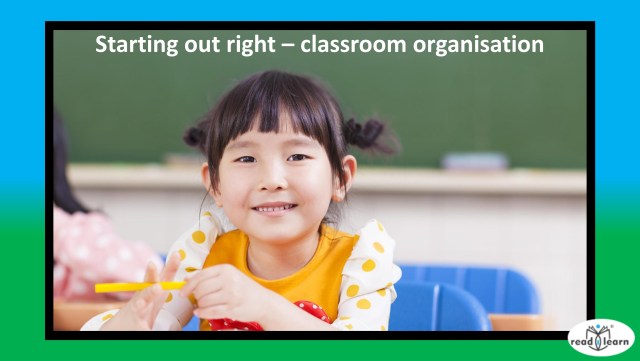
    Starting out right – classroom organisation – Readilearn

    The importance of starting out right with classroom organisation

    Starting the year out right requires preparation and the establishment of classroom organisation routines that will assist the first and subsequent days run smoothly.

    An organised classroom contributes to a supportive classroom environment which, from day one, builds a strong foundation of positive relationships and attitudes to school and learning.

    Beginning the year as you wish it to continue with a welcoming organised classroom helps children and families feel valued and comfortable in a warm and predictable environment.

    Teaching resources support classroom organisation and management

    Many existing readilearn resources assist teachers of the first three years of school organise their classrooms to be welcoming and supportive.

    A new interactive resource extends the collection.


    an interactive attendance chart to show who is at school today


    Continue reading: Starting out right – classroom organisation – Readilearn