Live Love Laugh Learn … Create the possibilities

Category: Early childhood education

  • Classroom activities for celebrating Mother’s Day – readilearn

    Classroom activities for celebrating Mother’s Day – readilearn

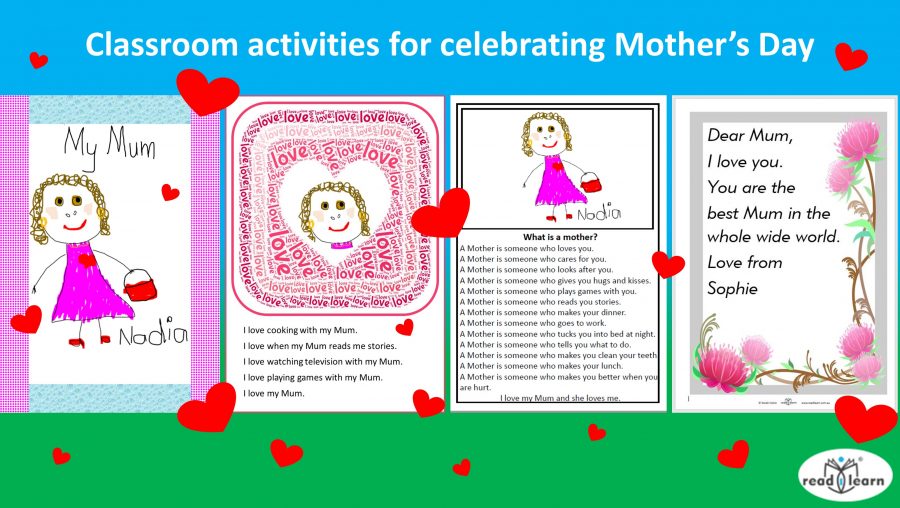
    With Mother’s Day just a little over a week away on Sunday 12 May, teachers are looking for classroom activities that are easy to implement but foster learning while making something special for the children’s mums to treasure. readilearn Mother’s Day suggestions help you do just that.

    Benefits of written gifts

    Writing letters, cards and books for mothers is one of the best ways of fulfilling all these requirements.

    Written gifts:

    • are easily slotted into the class writing program
    • provide opportunities for teaching and learning writing skills
    • encourage creativity
    • are gifts from the heart
    • are unique and personalised for each mother or carer
    • become treasures that never wear out and are easy to keep
    • require little to no additional purchases or expenditure on the part of the teacher

    Start with discussion

    The best preparation for writing is discussion.

    Discussion provides children with an opportunity to:

    • share ideas
    • be inspired by others’ ideas
    • decide what they wish to write and how they might express it
    • consider alternative recipients for their writing

    Read books for inspiration

    Many beautiful picture books celebrate mothers.

    Reading aloud to children helps to:

    • Foster a love of books and language
    • Develop language and vocabulary
    • Stimulate ideas
    • Inspire creativity

    A few of my favourite picture books about mothers are:

    Continue reading: Classroom activities for celebrating Mother’s Day – readilearn

  • School Days, Reminiscences of Pauline King

    School Days, Reminiscences of Pauline King

    Welcome to the School Days, Reminiscences series in which my champion bloggers and authors share reminiscences of their school days. It’s my small way of thanking them for their support and of letting you know about their services and publications.

    This week, I am pleased to introduce Pauline King, The Contented Crafter. Pauline and I have been online friends for a long time. I can’t quite remember where we met, but I think it may have been through Geoff Le Pard.

    Pauline and I clicked straight away as we have a lot in common and share many similar views about education. At one time, each of us even contemplated starting our own school.

    I wish I’d known Pauline and had the opportunity of working alongside and learning from her while I was still working in the classroom. Although Pauline says that she has left that part (teaching) of her life behind, it doesn’t stop her sharing the value of her experience and words of wisdom when prompted. We shared so many in-depth conversations in response to posts, that I decided to give more space to her views in posts of their own. Follow these links to share in Pauline’s wisdom.

    Which school? I found one!

    Reflections on living a contented life, teaching and school

    On children and parents —more from the Contented Crafter
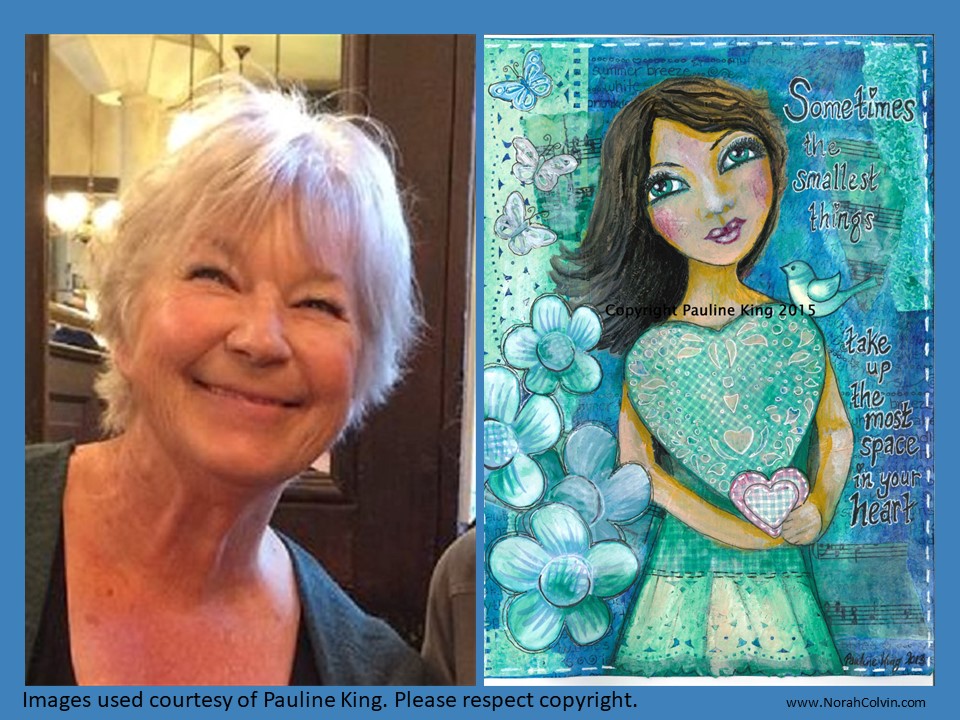
    Pauline King the Contented Crafter

    Before we begin the interview, I’ll let Pauline tell you a little about herself.

    I’ve had many incarnations as wife, mother, student, teacher, teacher trainer and mentor, curriculum writer and advisor, community hub developer, new worker trainer, and [whew!] life coach.  In between I painted, crafted, hand worked, gardened and generally tried to create beauty around me where ever I went.  Oh, I forgot to mention ‘world traveller’!

    These days I’m [mostly] a very contented crafter and pursuer of serenity.  And of course, I live with Orlando, a now elderly Maine Coon cat of great distinction and forbearance and a most delightfully joyful pup who goes by the name of Sid-Arthur [yes, a play on Siddhartha for those of you who picked it up].  They feature prominently throughout this blog.

    I’m retired now and happily spend my days doing whatever it pleases me to do.  Sometimes, in between my crafting projects, I still coach now and again, gratis, as a thank you for this blessed life I’ve been given.

    Welcome, Pauline. Now let’s talk school.

     First, could you tell us where you attended school?

    Porirua, then a village, now a city.  In the Wellington area.  NZ

    Did you attend a government, private or independent school?

    State school

    What is the highest level of education you achieved?

    Originally nothing. I was pulled from school by my mother before I turned 15.  I later gained School Cert and UE via correspondence as a young adult and at the age of 33, I trained as a Waldorf teacher.

    What work or profession did you choose after school and was there anything in school that influenced this choice? 

    It seems I always wanted to be a teacher, but the circumstances of my life dictated otherwise.  In my 30s I was finally enabled to follow that dream through the initial support of friends  buoying up my low confidence and a series of fortuitous events that allowed me to enter the Waldorf training despite not having a state teacher training  which was then a requirement of any Waldorf trainee teacher.  (It was here I heard for the first time that I was seen as a graduate of the University of Life — a designation that delighted me.)  I believe that meeting kindness and being encouraged in my early school years ignited the wish to be a teacher.

    What is your earliest memory of school?

    The first day of school, I was 5 years old and terrified.  My mother pushed me into the room and shut the door on me and I was crying as the teacher came to get me.  But the thing that caught my eye was the book display.  You know those shelves that hold books with the full cover showing. There were so many books and they all looked so beautiful and enticing.  I stopped crying and the teacher let me stay there looking at the books.  I still remember the first book I looked at, ‘Orlando the Marmalade Cat’.  I don’t remember anything else, but it was clearly a very important moment in my life.  That teacher went on to become a champion of mine and I never forgot her many kindnesses and through her my love of reading flowered.

    What memories do you have of learning to read and write?

    I don’t remember learning to read. It came very easily.  Writing too.  At age 10 my essays were entered into inter-school competitions by the headmaster.  Later he asked me to not write fantasy, but to write about ‘what you know, your life’.  That was the end of my writing career.  🙂

    What do you remember about math classes?

    I have no recall of maths classes.

    What was your favourite subject?

    I loved all the humanities classes – reading, writing, history, geography, social studies.  I loved music too, until I was pulled from a combined class practising choral singing and told to stand at the front of the room and listen as I was singing off key.  That was the end of my musical career too.  I never sang in front of anyone except for my babies for many years.

    What did you like best about school?

    Pauline King the Contented Crafter tells what she liked best about school

    For me in those first years, school was a safe place to be and I was fortunate to have in the early years women who took an interest in my welfare and some who even tried to help intervene in my home life. Their kindness made a huge impression on me and was probably partially responsible for the longing I felt to become a teacher.  They also had made me feel so safe that when the harsher teachers entered my world and humiliation and failure became the norm, I still liked school.  It was better than home, I guess.  I know I was, from a very young age, gathering information and evidence about what made a good teacher and what made a bad teacher.  It would all eventually come in handy when I parented and later became an actual teacher.

    How do you think schools have changed since your school days?

    My initial experience of state education is my own and the first two years of my children’s education.  (In the final six years of my working life I came up against the failures of the state system when I developed programmes for youth at risk in job training.)

    When I had children, I looked for something else outside the state system for them but had the resistance of my husband to work through.  Later after my daughters both had bad experiences with teachers he agreed, and we transferred them to the local Steiner School.  There I watched my children bloom and blossom and there I too found my place. It’s a wonderful thing when you find your tribe and I had finally found mine.

    What do you think schools (in general) do well?

    I think in general schools provide an adequate education for students who have an academic leaning.  But, as you know Norah, I believe that true education is sadly lacking.  It seems to me the role of education is to awaken the mind, to develop the skill of learning, to prepare people for a life of learning and enough of an interest in the world to want to learn about it.

    The reality is we spend all our lives learning, yet so many think they go to school to learn the skills needed to get a job.  I don’t know how many times I’ve heard a young person (or even a parent) complain that reading a certain book will be of no use to them after school and science or maths adds nothing to the skill-set they need for getting a job.

    It seems nobody talks to them about the joy of learning, of widening horizons, of deepening understanding or even of exercising their thinking capacities and developing their brains.  I’ve met many 15- and 16-years olds who can’t write their own addresses down.  They have no self-esteem, are angry and confused and turned off from society.  They don’t have the skills to hold down any kind of job because they also haven’t learnt about taking personal responsibility at school or at home.

    How do you think schools could be improved?
    Pauline King the Contented Crafter tells how schools could be improved

    I’d love to see a return to a balanced education that includes academia and the arts and life skills.  I’d love to see each classroom be a living community where all kinds of kids learn to get along, learn to appreciate each other and learn that not everyone is good at everything.  But that everyone, even the least able, has a skill and a personality that offers much.  Where tolerance is taught and practised, and respect is modelled and expected.  A place where different cultures and different beliefs are seen as interesting and intriguing and when it’s all boiled down, people are people and we all feel the same way over the things that matter.

    I’d like to see geography and social studies and all kinds of real arts and crafts come back to life in the classroom, I’d like to see kids singing and dancing and playing together in between learning the Three R’s.  I’d like to see the slow expansion of a planned curriculum that ensures a deepening understanding of the natural sciences — again attached to the developmental stages and understanding of the students.  Never bring hard facts too soon to young people — they kill childhood!

    I’d like everyone to understand that we live in a world that is changing so quickly that it is highly likely the jobs their kids will do haven’t yet been invented.  The only way to ensure their children will succeed as adults is that they will have a healthily developed sense of themselves, their interests and their abilities and be able to think, to assess, to understand the needs of the world and to have the entrepreneurial spirit to meet them.  It’s less about passing exams and more about an ability to learn; less about gaining the skills for a job, more about gaining an ability to learn new skills.

    Thank you for inviting me to join with your esteemed guests Norah, it is very kind of you.

    thank you for your participation

    Thank you for sharing your reminiscences of school and thoughts about education in general, Pauline. As always, it’s a pleasure to discuss education with you and, while it was great to hear of your early experiences and the influence of kind teachers, I am in total agreement with you about how schools could be improved. If only we could get those who make the decisions to listen to and enact your wisdom.


    Find out more about Pauline King

    on her website: The Contented Crafter

    Connect with her on social media

    Facebook: https://www.facebook.com/paulinekingnz

    Twitter: https://twitter.com/contentedP

    Browse her gift shop to purchase your own special piece of Pauline’s art or craft.

    If you missed previous reminiscences, check them out here:

    Charli Mills

    Sally Cronin

    Anne Goodwin

    Geoff Le Pard

    Hugh Roberts

    Debby Gies

    Look for future interviews in this series to be posted on Sunday evenings AEST.

    Coming soon:

    Jules Paige

    D. Avery

    Christy Birmingham

    Miriam Hurdle

    Susan Scott

    with more to follow.

    Thank you blog post

    Thank you for reading. I appreciate your comments. Please share your thoughts.


  • Interview with Jacqui Halpin author of Where’s Lucky? – readilearn

    Interview with Jacqui Halpin author of Where’s Lucky? – readilearn

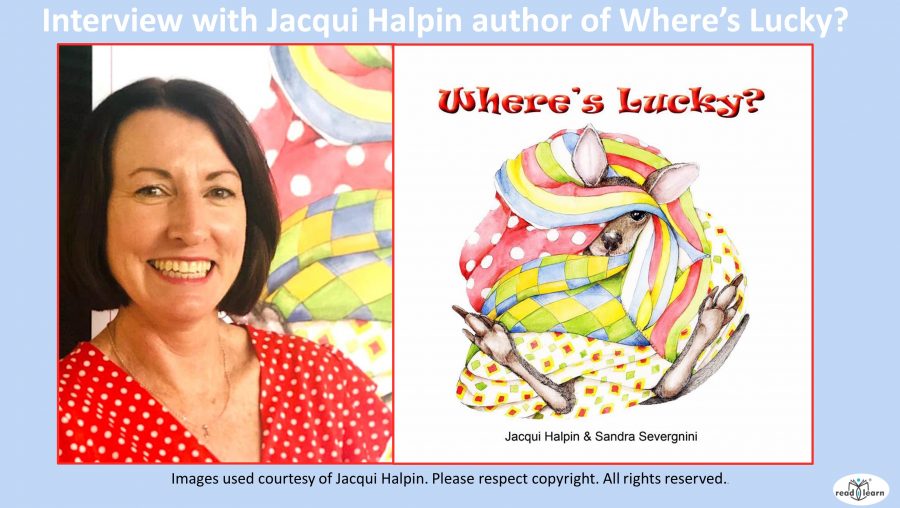
    This week it is my great pleasure to welcome author Jacqui Halpin back to the blog. In this interview, Jacqui talks with us about her recently published picture book Where’s Lucky, the story of an orphaned joey and his road to recovery and release.

    We previously met Jacqui in 2018 when she discussed her first picture book Parmesan, the Reluctant Racehorse. As we talked with Jacqui in that interview about her writing process, today we focus our discussion on her new book Where’s Lucky?

    About Jacqui

    Jacqui Halpin’s passion for children’s literature started when reading bedtime stories to her children. They outgrew their childhood books, but Jacqui never did. Jacqui writes picture books, junior fiction and middle-grade fiction. Her short stories appear in anthologies by Stringybark Publishing, Creative Kids Tales, and The School Magazine.

    Her first picture book, Parmesan, the Reluctant Racehorse, illustrated by John Phillips, was published by Little Pink Dog Books in October 2017.

    Where’s Lucky?, illustrated by Sandra Severgnini and published in April 2019, is her second picture book with Little Pink Dog Books.

    While writing and editing, Jacqui loves to sip tea from fine china and eat copious amounts of chocolate. She also has a love of bookshops and should never be allowed to enter the children’s book section with a credit card in her possession.

    About Lucky

    Lucky, the orphaned swamp wallaby, has a knack for getting into mischief at the wildlife rescue shelter where he lives.

    Continue reading: Interview with Jacqui Halpin author of Where’s Lucky? – readilearn

  • Remembering: Anzac Day in the classroom – readilearn

    Remembering: Anzac Day in the classroom – readilearn

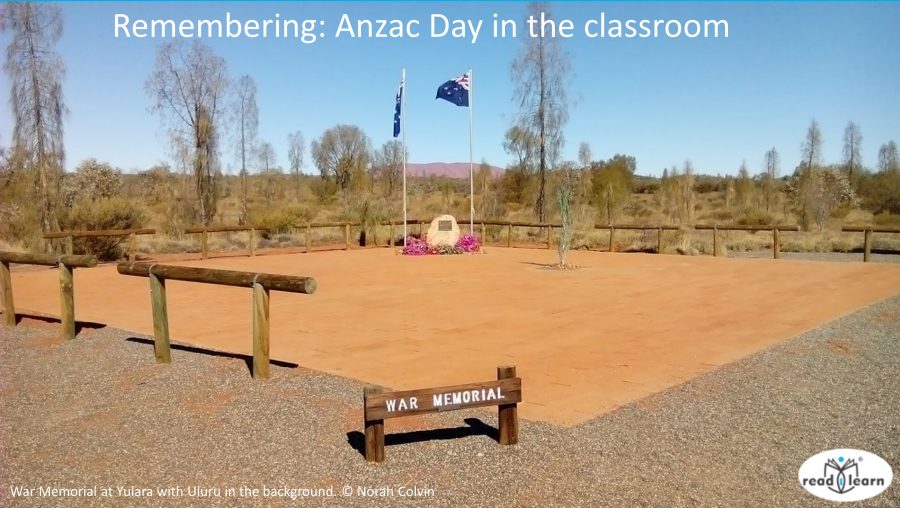
    Tomorrow, 25 April is Anzac Day, a day of national significance and a public holiday in both Australia and New Zealand. The day is the anniversary of the first major military campaign fought by Australian and New Zealand forces in World War I, but now commemorates all who have served in any military campaign or operation since. The acronym stands for Australian and New Zealand Army Corps. Ceremonies are held around the country and well-attended by past and present servicemen and women, their families and friends, and the general public.

    While most children and teachers in both Australia and New Zealand are still on school holidays, they will undoubtedly discuss, and conduct ceremonies in recognition of ANZAC Day when school returns.

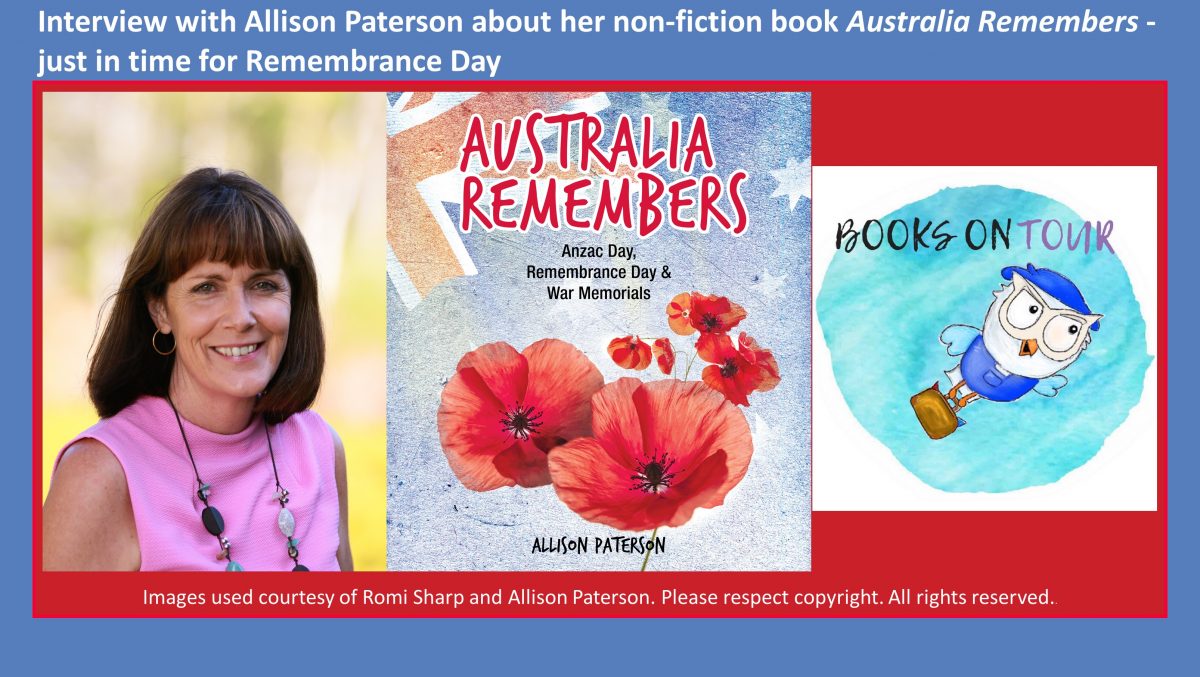
    To assist your discussions, I remind you of Allison Paterson’s wonderful book Australia Remembers: Anzac Day, Remembrance Day and War Memorials, about which I interviewed Allison in November last year as part of the Books on Tour promotion.

    About the book

    The book explains, in a way that is detailed but accessible for a young audience, the origins and significance of both Anzac Day and Remembrance Day. Explanations of the traditions and symbols ensure that children understand why it is important to observe these historical events and why we should never forget those who fought for our country and those who keep us safe today.

    Here are some reminders of Allison’s book:

    Continue reading: Remembering: Anzac Day in the classroom – readilearn

  • A rainbow of opportunities

    A rainbow of opportunities

    The classrooms of today are filled with children from a diversity of backgrounds and with a multiplicity of perspectives. The futures of those children are filled with opportunities that were unimaginable when I was a child and possibly even now. The world’s landscape — physical, political and social — is changing rapidly. Maybe we are not too far away from finding the pot of gold at the end of the rainbow. Could our ‘wealth’ be bound up in acceptance of our diversity?

    Charli Mill's flash fiction challenge - Gender fluidity

    When Charli Mills of the Carrot Ranch challenged writers this week to In 99 words (no more, no less) write a story about gender. It can be fixed or fluid. Explore the topic on your own terms and open your mind to possibilities and understanding. Go where the prompt leads! I thought I’d have a little play.

    Rainbow futures

    The children went around the circle telling what they’d be when they grew up: police officer, paramedic, teacher, doctor, prosecutor, influencer …

    Laughter erupted when Rudii responded, “Mother.”

    “You can’t be a mother,” taunted one.

    “Can too.”

    “But you don’t have, you know, boobies,” said another, glancing at the teacher.

    “Dad said I can be anything I want,” retorted Rudii.

    “But—”

    The teacher shushed them and the circle continued, punctuated only by an occasional half-giggle or nudge.

    A rainbow of opportunity awaits, Teacher smiled inwardly, contemplating the question he and his partner were processing: who would be Mom?

    Thank you blog post

    Thank you for reading. I appreciate your feedback. Please share your thoughts.

  • Wishing you a Happy Easter Holiday – readilearn

    Wishing you a Happy Easter Holiday – readilearn

    Wishing you a Happy Easter Holiday!

    It’s Easter time again and I wish you and your loved ones a very happy holiday, however you celebrate it.

    I’ve been brought down by the flu and haven’t uploaded as many new resources for you as I’d hoped. However, there are many Easter-themed resources already available on readilearn and, now that you can purchase them individually, access is even easier.

    Previous posts provide many suggestions to keep the learning in fun Easter lessons and activities, including:

    Learning literacy and mathematics with Easter classroom activities

    Easter holiday wishes (2017)

    Delivery – just in time for Easter

    Favourite Easter-themed lessons

    interactive mathematics lessons for the first three years of school

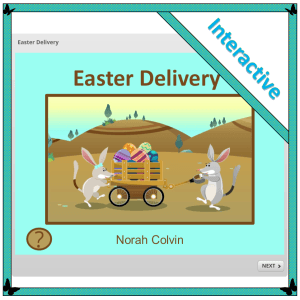
    One of my favourite lessons is Easter Delivery: a fun story I wrote and produced as an interactive lesson to support the development of mathematical understanding of number combinations to ten.

    This video tells you about it.

    Continue reading: Wishing you a Happy Easter Holiday – readilearn

  • Smorgasbord Posts from Your Archives – #Family – Reflections on Learning by Norah Colvin

    Smorgasbord Posts from Your Archives – #Family – Reflections on Learning by Norah Colvin

    I’m over at Sally Cronin’s wonderful blog again this week, sharing another post from my family archives. However, this time the post author is my wonderful daughter who shares her thoughts on being home educated. We’d all love it if you popped over to read and share your thoughts.

  • Why Kindergartners Must Learn Technology – readilearn

    Why Kindergartners Must Learn Technology – readilearn

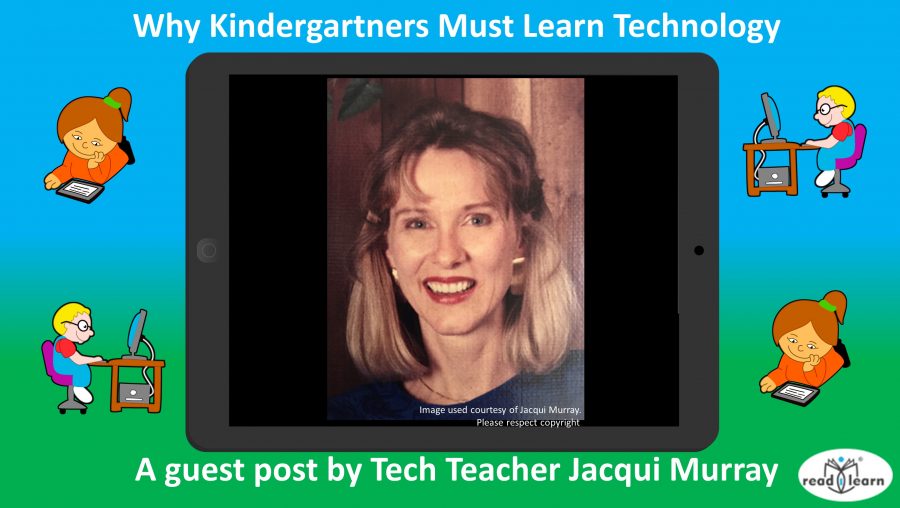
    Today I am delighted to introduce you to Jacqui Murray, the Tech Teacher, who is able to answer all your questions about using technology in schools.

    Jacqui’s blog Ask a Tech Teacher is very informative. It is packed with helpful advice for both teachers and parents on children’s use of technology and the suitability of tools and software for use in different situations and with different age groups, especially in the classroom. If I need to know anything about technology, Jacqui’s blog is an excellent resource.

    As Jacqui is often asked questions about teaching Kindergartners to Tech, a topic that is dear to her, this is the topic of discussion in this post. Please feel free to ask Jacqui any additional questions you may have in the comment section at the end!

    Note: Jacqui is based in the US and the kindergarteners she refers to are 5-to-6-year-olds.

     Welcome to readilearn, Jacqui. Over to you.

    When I started teaching technology almost twenty years ago, I taught K-8, three classes in each grade every week. I was buried under lesson plans, grades, and parent meetings. I remember suggesting to my principal that he ease my schedule by eliminating tech for kindergartners. They wouldn’t miss anything if I started them in first or second grade.

    And back then, that was true.

    Even a decade ago, technology was an extra class in student schedules where now, it is a life skill. Today, my teacher colleagues tell me kids arrive at school already comfortable in the use of iPads and smartphones, doing movements like swipe, squeeze, and flick better than most adults. Many teachers, even administrators, use that as the reason why technology training isn’t needed for them, arguing, “They’re digital natives.”

    Continue reading: Why Kindergartners Must Learn Technology – Readilearn

  • Keep the teacher fires burning

    Keep the teacher fires burning

    Teacher burnout is a huge problem. Fading are the days of veteran teachers staying in the job and sharing the wisdom of their experience with the younger generation of teachers. Many articles tell of teachers leaving the profession after five or fewer years.

    Teachers start out with fire in their hearts, with an ambition to change lives and improve outcomes for all the children in their care. Many leave after just a few years when that fire has not only burnt out but has burnt them out too.

    For others, who contemplate no alternative, the fire smoulders for years until they become cynical with a system that is ever-changing but rarely improving, and expectations that increase exponentially with little recognition of their efforts or the value they add to lives or society.

    I recently listened to a book on the topic written by a passionate educator whose fire was extinguished by overwhelming expectations and an inability to reconcile unrealistic demands with a desire to teach children.

    In a job interview, when asked what she taught, it was her response ‘I teach children’ that landed her the position. As the years passed, her employer’s focus turned from teaching children to teaching content and collecting data. As for many, her challenge was to continue educating the whole child while fulfilling the requirements of her employer. It’s a challenge that defeats many.

    Teacher: One woman’s struggle to keep the heart in teaching by Gabrielle J. Stroud is a personal record of one’s teacher’s journey and how she faced the challenge. But it is more than that. It is the story of a journey travelled by many teachers. The names and places may change, but the story stays the same.

    It is a book I wish I’d written. I laughed with Gabbie and cried with Gabbie. I’d walked in her shoes and she in mine. While our times and schools were different, our responses to the changing education landscape were very similar. She wrote from my heart as much as from hers.

    If something doesn’t happen soon to support teachers, there’ll be no heart left in education and it will be a wasteland of useless data, lost potential and unhappy futures. Of course, I’ve written about that before, describing differences between education and schooling in a poem I called Education is.

    If you are interested in reading more about teacher burnout and considering how teachers may be better supported, here are some articles to get you started:

    The Causes of Teacher Burnout: What Everyone Needs to Know on The Chalk Blog. (US)

    Burned out: why are so many teachers quitting or off sick with stress? In The Guardian. (UK)

    Stressed-out teacher? Try these self-care tips on ABC Life. (Australia)

    The hardest, most underestimated part of a teacher’s job on News.com.au. (Australia)

    Heartbreak becomes burnout for teachers when work is turbulent on The Conversation. (Australia)

    The Truth About Teacher Burnout: It’s Work Induced Depression on The American Psychology Association’s Psych Learning Curve. (US)

    Teacher Workload in the Spotlight from my own Queensland College of Teachers. (Australia)

    These are but a few of the many describing conditions that contribute to teacher burnout. However, for a truly entertaining but heartbreaking read that provides an accurate understanding of what happens to the heart of many a passionate teacher, you can’t go past Teacher: One woman’s struggle to keep the heart in teaching by Gabrielle J. Stroud. Gabbie summed it all up sadly by saying that she didn’t leave teaching, teaching left her.

    Carrot Ranch flash fiction challenge - fire

    It’s about the teacher fire that I’ve decided to respond to the flash fiction prompt set by Charli Mills this week at the Carrot Ranch. Charli challenged writers to In 99 words (no more, no less) write a story about fire. It can be a flame that burns or a light that inspires. Follow the flames and go where the prompt leads!

    99 no more no less fire words

    The heart of a teacher

    “It’s storytime, children.”

    They gathered at her feet, bright-eyed, transfixed.

    Jane read, instructed and encouraged. They never tired.

    Later, all snuggled up in bed, Mum asked, “What will you be when you grow up?”

    “A teacher.”


    “Storytime, children.”

    They gathered at her feet, bright-eyed, hearts open, minds buzzing.

    Miss Jane read. They hung on every word, contemplating obstacles and possible resolutions, following the heroes’ journey into the cave and out.


    “Ple-ease!”

    “No time for stories. It’s test time.”

    They slumped at desks, eyes glazed, minds dulled, hearts heavy.

    The cave was cold and dark. Were they ever coming out?

    Thank you blog post

    Thank you for reading. I appreciate your feedback. Please share your thoughts.

     

  • Teachers! Save time and money with readilearn K–2 teaching resources – Readilearn

    Teachers! Save time and money with readilearn K–2 teaching resources – Readilearn

    Teachers! Save time and money with readilearn K–2 teaching resources

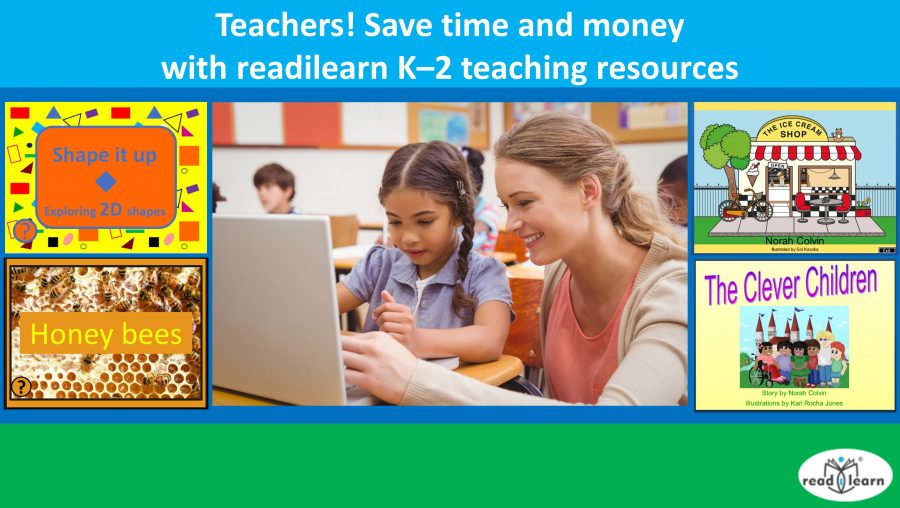
    readilearn teaching resources for the first three years of school save teachers time and money with lessons ready to teach. More than just worksheets to keep kids busy, readilearn lessons and activities are designed to progress children’s learning.

    Now available to purchase individually

    Over the past few weeks, we have been working to make it easier for you to access readilearn teaching resources.  All readilearn resources are now priced for individual purchase, many with a $0.00 price tag. While a subscription is still the best value for money, being able to purchase resources individually means you can purchase what you want when you want to use it.

    Resources across the curriculum

    Resources are available across curriculum areas and include lessons in character development such as confidence and friendship skills. Many integrate learning from different subjects. Child-focused, engaging and connecting with experiences familiar to children, the resources develop language and thinking skills alongside learning in other subject areas.

    Easy to use

    Browse through the resources. When you see a lesson that’s just right for you and your class, add it to the cart and continue shopping or proceed to the checkout. Complete your details and, as a registered user, a record of your purchases will always be available on your accounts page.


    Continue reading: Teachers! Save time and money with readilearn K–2 teaching resources – Readilearn