For the past few years I have been preparing early childhood teaching resources for a website that I hoped would be up and running by now. Unfortunately, there have been some delays with the developer. In the meantime, I thought I’d share a resource with an Easter theme to give you a free taste test. This will be of interest mainly to early childhood teachers or parents of young children. Everyone else is excused.
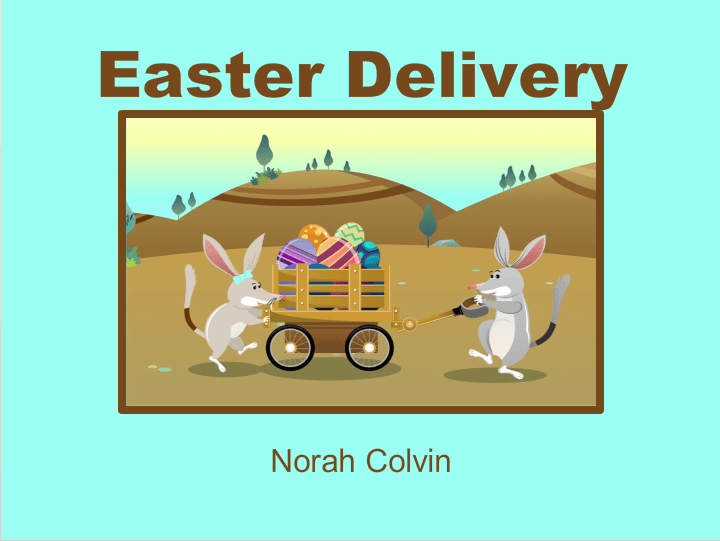
The resource, called “Easter Delivery”, is a story about twin bilbies, Benny and Belinda, who get to deliver eggs to the families of some friends for the first time. It incorporates addition conceptsand is suitable for use with the whole class on the interactive white board.
The story involves the children in helping Benny and Belinda work out how many eggs they need to deliver to each family and the combination of packs they could choose. The maths concepts are probably most suitable to year one students but teachers may use their discretion about how much maths to include.
Included is an information sheet about the resource and three printable follow-up activities:
Benny and Belinda’s Easter Activity – children record the number of people in their own family and draw and calculate the number of eggs Benny and Belinda would deliver
A Happy Easter Card from the Bilbies– a card with a picture to colour and blank inside for children’s own messages
The Bilbies’ Easter Colouring Page
The resource is available clicking on the image until Thursday 24 March 2016. Hopefully it will be available on my website for Easter 2017!
Yes. It is a bit of shameless promotion but it is also a gift for you to use if you would like to in the lead-up to Easter. The resource is not downloadable, but I am happy for the link to be shared with your early childhood teaching friends and colleagues. While it is not a requirement of use, I’d really appreciate some feedback. Please use the poll or share your thoughts in the comment box below.
Thank you for reading. I do appreciate your feedback. Please share your thoughts.
About this time last year, I shared my excitement when Jackie French was recognised for her “long and distinguished career as a beloved children’s author” as Senior Australian of the Year. At the time she was halfway through her two-year role as Australian’s Children’s Laureate with the task of promoting “the importance and transformational power of reading, creativity and story in the lives of young Australians”.
Now the roles of Children’s Laureate and Senior Australian of the Year have been passed to others. Jackie has obviously been asked what she is now going to do with all her “free” time. In her newsletter she says, “if one more person says ‘now you can relax’ if (sic) will bite them like a wombat, the snappish kind” because it means that work is finished, which it isn’t. I feel exactly the same way when people ask me about my retirement, though I fear Jackie and I work at a very different pace and the occupation of my time may seem like retirement in comparison to hers.
While an author may not have received the top recognition as Australian of the Year 2016, three advocates of children’s literature each became a Member of the Order of Australia:
Jackie French for ‘significant service to literature as an author of children’s books, and as an advocate for improved youth literacy’.
Ann James for ‘significant service to children’s literature as an author and illustrator and through advocacy roles with literacy and professional bodies’.
Ann Haddon for ‘significant services to children’s literature, as a fundraiser and supporter of Indigenous literacy, and to professional organisations’.
It is wonderful to see the recognition given to authors, and to the importance of reading.
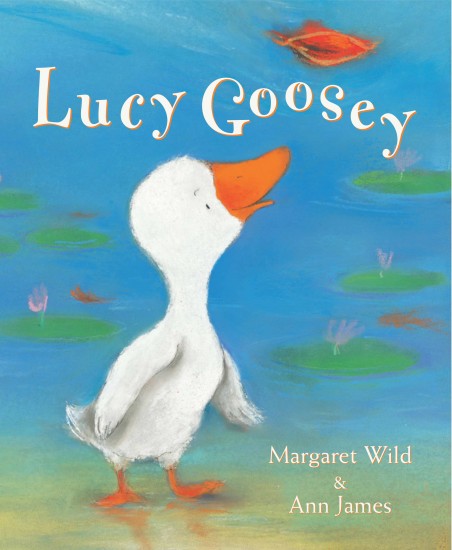
One of my favourite books, illustrated by Ann James is Lucy Goosey. It is a beautiful story, written by Margaret Wild, about the love between mother and child. I can’t read it all the way through without crying. But in a good way. It is very touching.
Ann talks about illustrating the story here:
I’m also pleased to say that I have an original Ann James, done for Bec at a literary festival many years ago, hanging on my wall.
“You never know what seeds you plant will grow; if they will keep growing; who will take them and tend them. But there is one thing I have learned in my 62 years: keep planting seeds.
Never think: I am 62 and still have not achieved world peace, universal tolerance and justice, or even an Australia where every single child is given the chance to learn to read.
Change is never fast enough for any person of goodwill.
A rain drop is just a rain drop. But together we are a flood. Together we have changed the world.”
She concludes her speech with these words:
“Let us give our children role models who do not, will not despair, no matter how long it takes to change the world. And let us never surrender, no matter how tired we are, or how long it takes. Because with these weapons we shape the future of our planet.”
I like her words of hope. She is a meliorist. But even more than that, she is an active meliorist. She puts her words into action. She may no longer carry the title of Children’s Laureate or Australian of the Year, but her advocacy doesn’t stop.
Thank you for reading. I appreciate your feedback. Please share your thoughts.
This morning Hub mentioned a book he had read about and asked if I had heard of the author Wayne Dyer. “Of course,” I replied and proceeded to explain that I had read many of Dyer’s books, had gone to a seminar to hear him speak and had been swept off my feet by accompanying speaker Deepak Chopra. I mentioned that a favourite book of his was marked now by a gap on my shelves, a phenomena recently mentioned by both Caroline Lodge, who blogs at book word and talked about missing books, and Anne Goodwin, who blogs at annethology and talked about the dilemma of lending books.
I think there may be more than one missing from my self!I think. looking at these titles, its time for some re-reading!
This favourite book, read and lent many times, What Do You Really Want for Your Children? was very influential in shaping the way I parented and taught. It is one of a few books that I read and re-read with a highlighter and sticky notes. There was much in it for me to get my head around. While I am unable to now refer to it for its wisdom, one of the things that I remember most was a hypothetical letter from a child thanking parents for the way they had parented. I considered it a letter any parent would love to receive, personalised of course.
As often happens, Hub got the long (love) story as it tumbled out in a torrent of reminiscences and of joys in discovering inspiring minds. When I paused long enough to take a breath, I remembered to ask about the book to which he referred. He said it was about the recollections of past lives as told by young children, of children choosing their parents and of being in heaven. Later research informs me that the book is Memories of Heaven, subtitled “Children’s astounding recollections of the time before they came to Earth”.
I had previously, many years ago, heard the suggestion that children choose their parents. I like to think (though don’t believe) that my children chose me, and often thank them for doing so. They have taught me a lot about life. I am a strong believer in the wisdom of young children: if we are attentive and take the time to observe and listen, we can learn much from them. Sometimes it seems they enter the world with wisdom but “we” do our best to obliterate it as quickly as we can.
As it is wont to do, my thinking followed a circuitous path with if, buts, maybes and questions. Children choosing parents may be a nice idea; but what of the children living in poverty, with famine, and in war-torn areas? Why would anyone choose those conditions?
That question led me through my basic understanding of the Buddhist philosophy in relation to karma and rebirth. I have read a few books on the subject but don’t profess to have any real knowledge. I don’t like to think that these situations may be endured as the result of bad karma from a previous life, and am not even sure if they would be viewed that way in Buddhist thinking. Perhaps these situations could be an improvement on the previous, a step to the next? Maybe that’s not so unpleasant a thought.
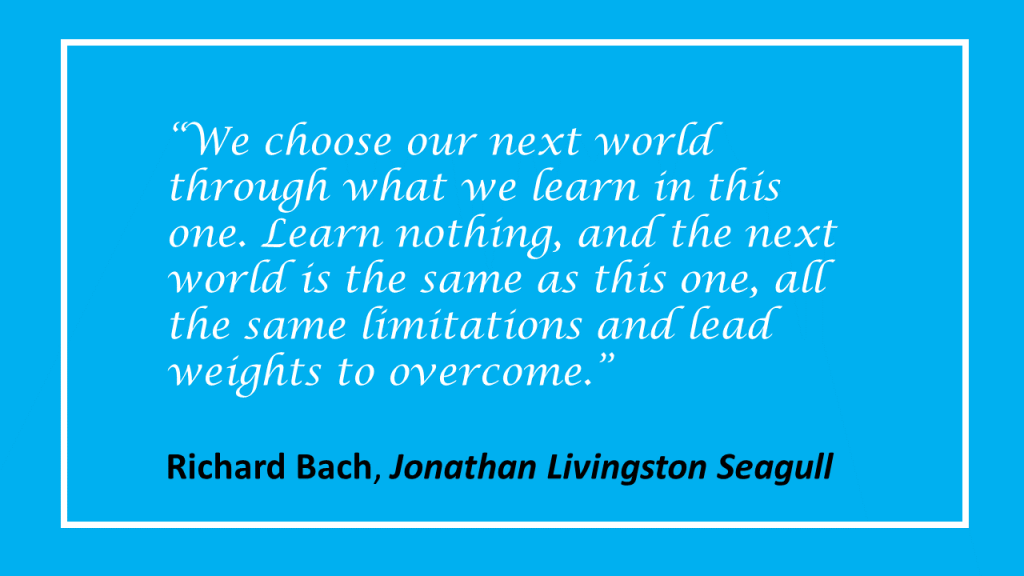
I like the idea of improvement, of always learning, of striving for perfection and enlightenment. It is probably one of the reasons that the “yet” thinking of a growth mindset fits nicely into my philosophy. It explains why one of my favourite books (I almost wrote “of all time” – what would that say about me and my past lives?) is Jonathan Livingston Seagull by Richard Bach, who dedicated the book “To the real Jonathan Seagull, who lives within us all”.
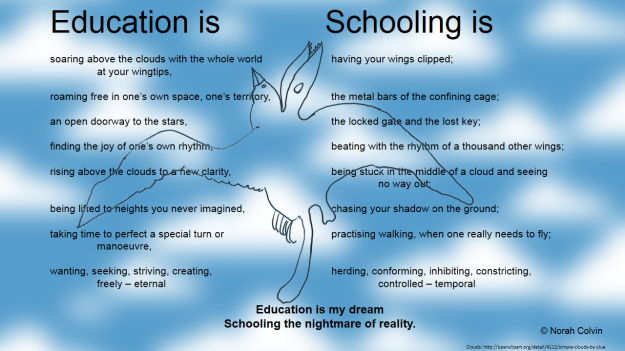
I had always thought that being a bird would be pretty amazing with the freedom to fly above the world and look down upon its beauty. Maybe this is one reason Jonathan’s story appealed to me. Perhaps it explains the analogy of flight in my poem about education. Maybe it’s why I love to sit at an airplane’s window and marvel at the scenes below.
And so my thoughts meandered, drifting through clouds and pockets of time, until they were suddenly interrupted by the voice of the child next door singing, “Let it go”.
I think those three words “Let it go” may be the only ones that anyone sings along with, but the message of the song is powerful: to let go of insecurities and realise the potential within; don’t care “what they’re going to say” and acknowledge that “It’s time to see what I can do”.
The message is not unlike that of Jonathan Seagull: to stretch beyond the limits imposed by others and their labels and to attain self-realisation. It is a journey undertaken by most thinking people, as demonstrated by the identity crisis that has befallen Sarah Brentyn who blogs at Lemon Shark. What is that if not a call for release from chains that may bind to enable the freedom for flight?
The end of a year is generally a time for reflecting on what has been achieved and what is yet to be. Perhaps it is also a time for letting go in preparation for what lies ahead.
I hope that, as you reflect, you are happy with what you have achieved, with where you are, and with the path that lies ahead. I wish you a safe, fun and fruitful journey along the “road to find out”.
I have enjoyed your company this year and appreciate your feedback. The conversations are what keep me going, growing and learning. Thank you. I look forward to the journey continuing.
Thank you for reading. I appreciate your feedback. Please share your thoughts.
At this time of year in many places around the world there are children excited about the magic of Christmas. I don’t know the numbers to compare but there are a good few, mainly adults I suspect, who say “Bah humbug!” While I was once a firm believer in the magic and did my best to keep it alive, I now tread warily, unsure of how best to approach this topic. As a parent I didn’t get it right so can offer no wisdom of my own.
After many years of seeming to go along with the story, long after I thought it should have been abandoned, Daughter finally questioned why, if the stories weren’t true, would parents lie to their children. She preceded her question with the request to not say if it was true or not, she just wanted to know why parents would lie.
I let her down on both counts. I told her the truth of the story and couldn’t explain why parents would lie. I’m not sure that I’ve been forgiven for either failing, and I have never stopped thinking about what may have been a better way of handling the situation if I was ever offered the opportunity for a do-over.
Interestingly I don’t recall having any similar concerns about my parents lying or disillusionment on finding out the truth. Daughter’s older brother voiced no concerns either, but I cannot be certain whether or not he had any. Until now when, with children of his own, the issue again is raised.
At first Son’s intention was to not engage in Santa stories; but with one child at school and the other in kindy the situation becomes more complex. The children are more exposed to the stories through friends and organized events and there is the concern about “spoiling” things for other families. Caught between the pressures of a shared popular culture and the questions of intelligent, critical thinking children, the parents must make a decision. I sympathize and wish them better success than I experienced. I have suggested to Son that he consult his sister. She knows better than I about this one and can maybe help him avoid making the mistakes with his children that I made with her.
There is a lot of well-intentioned advice on the internet, but the value of some is debatable. Many explain the Santa story as being about love, kindness and generosity, and the magic as the assistance given by many helpers, including parents, throughout the world. Many explanations are likely based on the famous response, Yes Virginia, There is a Santa Claus, to an 8-year old’s letter, the authenticity of which has been questioned.
Some of the explanations and stories encountered recently include:
As much as I love the sentiments of these stories, they don’t really help me with my truth or lie dilemma. So I returned to a post by philosopher Michelle SoweyHO HO HO! (Q.E.D.) in which she questioned the ethics of the Santa lie. I shared this post previously in April 2014. Michelle agrees that the attempt at compromise in many of the explanations, “It’s Santa, Jim, but not as we know him”, is unsatisfactory because:
the historical figure St Nicholas is omitted
Christmas for most children is more about receiving than giving
of a conviction that children should be encouraged to believe in things that are real (visible or invisible, tangible or intangible) and to disbelieve in things that aren’t (all of which are invisible), and
it is better to develop critical thinking than to believe in intangible things.
She says,
“Parents can be powerful advocates for their children’s intellectual autonomy. They can help their kids to draw their own well-reasoned conclusions; to value coherence and logical consistency (among other things) in the construction of their worldviews; and to cleave to their beliefs with a level of confidence proportional to the amount and quality of evidence available.
With a little analysis and reflection – perfectly accessible to an eight-year-old – it’s clear that believing in things without good evidence often means believing in things that aren’t true.”
Okay. We agree on that, but how would a parent extricate themselves from the myth once they have become entangled?
David says that parents who lie to their children by supporting the myth are not necessarily bad parents (thank you!) but they would be better parents if they didn’t.
He adds to Michelle’s list with these:
Children should thank their parents, who have purchased and sacrificed, not Santa; “gifts are the giver’s way of showing the recipient that he or she has worth and is loved. Children need assurance their parents see them as worthwhile and valuable – not Santa Claus.”
Santa shouldn’t be used as a threat e.g. stop doing that (bad behaviour) or Santa won’t come
It stifles imagination because you can’t pretend if you believe: “By tricking children into actually believing Santa exists we rob them of the opportunity to imagine he does.”
And the big one: the loss of trust“Finding out their parents have lied to them about Santa Claus can cause children to think their parents are lying to them about a great many other things.” He says it is probably a bigger risk than most parents realize.
David says that the tradition of Santa and gift giving is relatively recent and “sold” to consumers primarily for financial reasons. He urges parents to stop tricking their children into believing the myth. My experience supports that, and I wonder how I would go about it if I had the opportunity again.
This week at the Carrot RanchCharli Mills challenges writers to In 99 words (no more, no less) write a story about “spreading the light.” While she suggests it could be used it to honor or memorialize a loved one, I thought I would attempt to shed light on the Santa myth and its potential for harm. Hopefully it’s not too far off the mark as I always loved, and protected, this myth; but perhaps a decision to protect the intelligence and critical thinking of my loved ones, and children in general, is even more important.
Jimmy searched the shelf for something he hadn’t heard before. There weren’t many. Suddenly he found one, slid it off the shelf and nestled into Dad’s lap.
“Twas the night before Christmas …” began Dad.
“Who…, what…, where…, why…, how…,?” began Jim, marveling at flying reindeer and pondering possible destinations.
As Dad closed the book Jimmy was ready with his usual question, “Is it true?”
“What think you?”
“As true as a fire-breathing dragon, a flower-petal fairy, and a talking animal,” laughed Jim; then added, “But you know, parrots really can talk!”
For whichever December festival you celebrate, and in whichever way you celebrate it, I wish you peace, joy and love enough to light up your world.
Thank you for reading. I appreciate your feedback. Please share your thoughts.
With Christmas just around the corner it is appropriate to continue my series in Celebration of Australian Picture Books with some Australian Christmas picture books. This post is the seventh in a series celebrating picture books by Australian authors. If you missed earlier posts, please follow these links to the introduction, Mem Fox, Kim Michelle Toft, Narelle Oliver, Jeannie Baker and Jackie French.
Christmas in Australia is unlike that in most other parts of the world that celebrate the holiday. In Australia, Christmas falls in summer and people generally head for the beach or somewhere with air conditioning to cool down. While many still follow the traditions of the Northern Hemisphere with baked dinner and plum puddings, many opt for seafood and salad, and outdoor barbecues and picnics. Whatever the weather Christmas is a great time for catching up with family and friends (or not, depending on your family!)
I shared some thoughts about Christmas in Australia last year when I posted I’m (not) dreaming of a white Christmas. This year the post is specific to picture books.
Some Australian Christmas picture books
Because our climate is so different and we have such a small population down here, most of what is available for us to read, sing or view deals with situations very different from our warm sunny days. I’m pleased to say, though, that there is an increasing number of songs and books with an Australian flavour available. However, many are merely innovations on the traditional such, as “The Australian Twelve Days of Christmas”, “Aussie Jingle Bells” or “An Aussie Night before Christmas”.
One innovation I particularly like is “The Twelve Underwater Days of Christmas” by Kim Michelle Toft. I celebrated Kim’s work previously in this series. Kim is an Australian who uses her talents as author and illustrator to educate children about things for which she is passionate: ocean life and coastal habitats. The stunning illustrations in this book, as in others, are hand-painted on silk; providing a richness of information through visual as well as textual features. In addition to the information about the animals, Kim includes a stunning six-page foldout poster, and information about the original carol.
Jackie French, another whose work I have previously shared in this series, also has a Christmas picture book in the Wombat series, Christmas Wombat. It is just as delightful as the other wombat stories and tells of Wombat’s Christmas Day with sleep, adventure, sleep, and treats.
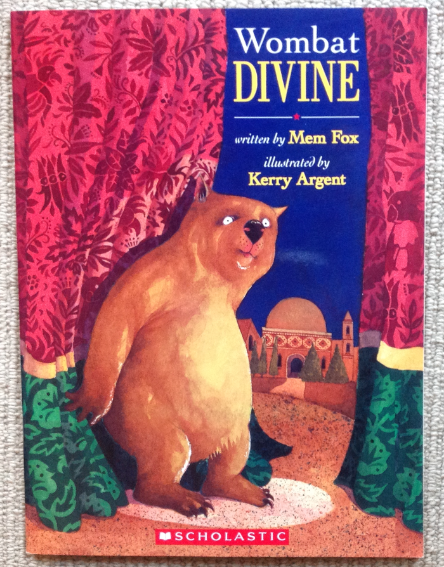
Using the traditional Nativity play as the setting, Mem Fox, another whose work I shared in this series created an original and fresh story in “Wombat Divine”. It is a delightful tale of Wombat who loved everything Christmas. When finally he was old enough to be in the Nativity Play he rushed along to the auditions. Unfortunately, it was difficult to find a role that was just right for Wombat. Can you guess which one he got? You’ll have to read the book to find out! Children all over the world will identify with Wombat and his predicament, and enjoy the heart-warming tale.
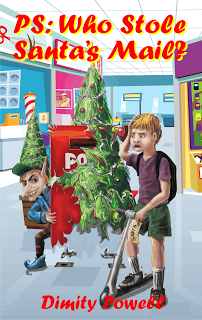
For slightly older children there is the first chapter book PS: Who Stole Santa’s Mail by Dimity Powell, who is very active in the local SCBWI group. She blogs at Dim’s Write Stuff. This is a fun story filled with mystery, magic and humour and a great first step into chapter books. I thoroughly enjoyed reading it.
We do have a few original Christmas songs to listen to as well. One that I enjoyed listening to on the radio as a child, and delight in now hearing my grandchildren sing, is “Six White Boomers”. It is a lovely tale of a joey kangaroo who is lost and alone in a zoo. Santa rescues Joey and reunites him with his mother on Christmas Day. Of course to get there, Joey is treated to a ride on Santa’s sleigh pulled by six huge white kangaroos.
Peter Combe has written two albums of original, but with a traditional rather than specifically Australian flavour, Christmas songs for children, including this one:
Children around Australia are finishing their last few days of the school year within the next week. They will then have five to six weeks of holidays before starting back for a new school year. I have shared previously about the importance of keeping children’s love of learning alive and described easy ways of incorporating learning into everyday family activities. If you know of any families in need of suggestions, please give them a copy of:
One of the greatest contributors to a child’s happiness at school, indeed for happiness in life, is friendship. Talking with children about their day at school will more than likely contain some reference to their friends; who they played with, who they didn’t, who was absent, who was mean. If they felt sad during the day it was possibly because someone wouldn’t play, wouldn’t let them play, or was mean.
Getting along with others seems to come naturally to some children, especially to those who see positive social skills modelled by parents and family friends, who are given lots of opportunities to mix with others of all ages, and who are encouraged to express themselves and their feelings. Other children don’t find it so easy, sometimes due to lack of positive role models, but often for other reasons.
Most children require some explicit teaching from time to time, for example to share, take turns and to use friendly words. Many schools incorporate the development of friendship skills into their programs. Some schools, such as one that employed me to write and teach a friendship skills program in years one to three, develop their own programs. Other schools use published materials such as the excellent You Can Do It!program which teaches the social and emotional skills of getting along, organisation, persistence, confidence and resilience.
In the early childhood classrooms of my previous school, we used the songs, puppets and stories included in the You Can Do It! Program. We also involved children in role play and discussion, providing them with opportunities to learn the language and practice the skills in supportive and non-threatening situations. Having a common language with which to discuss feelings, concerns and acceptable responses meant issues were more easily dealt with. More importantly children learned strategies for developing positive relationships and friendships with others. They came to understand their own responses as well as those of others.
I have talked about friendship in many previous posts, including here, here and here. My online friend Anne Goodwin, who blogs at Annecdotal, even wrote about it in a guest post here, and I described friendship trees that I used with my class here.
In this post I want to acknowledge a new friend and a long-time friend. (I can’t say ‘old’. She’s younger than I!)
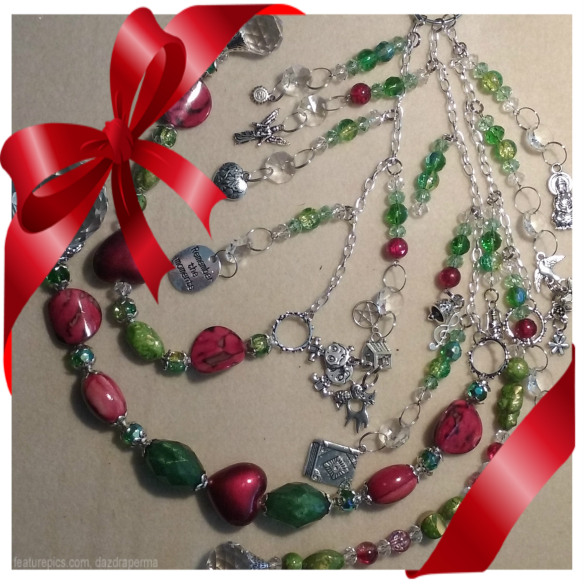
My new friend is Pauline, The Contented Crafter. At the beginning of last week Pauline announced a very generous giveaway for Christmas which I shared with you here. Pauline invited readers to nominate someone as a deserving recipient of her beautiful Christmas light catcher. She posted the nominees and their stories here and invited readers to vote for the two they would most like to receive the light catcher.
I nominated Robin, a friend of over thirty years. That must be deserving of an award in itself! In case you missed her story on Pauline’s blog, I include it here so that you can understand why I value her friendship so highly.
I have a wonderful friend for whom this beautiful light catcher would be a perfect gift. Each of its strands holds a special significance, as if Pauline had her in mind.
She gifted her friendship to me more than thirty years ago and, thanks to a miracle and the protection of angels, it is a gift that continues.
Over twenty years ago, on my birthday, she was involved in a serious car accident. My birthday became her life day, a constant reminder that life and each passing year is a precious gift.
Her many injuries, requiring numerous surgeries over the years, did not injure her bright, cheerful nature and positive outlook on life. Although she lives with constant pain you wouldn’t know unless you asked, and then only if she chose to tell you.
She has an enormous generous and loving heart, and her home is warm and welcoming. Family, especially her two grown daughters and her dear Mum who passed this year, is important to her. She loves to bake and craft individual gifts for her family and friends. She is always busily thinking of others.
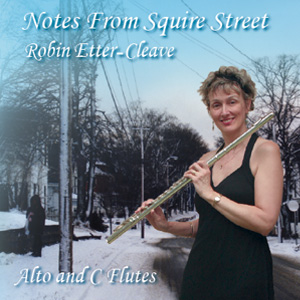
She is a gifted musician and amazing music teacher. She plays the flute and sings like a Robin. She incorporates music and fun into classes for children and lessons for adults learning English. All come to her classes eager to learn and leave singing with joy and acceptance.
At Christmas the family gather round to decorate the tree and “remember the moments” marked by ornaments made by smaller hands, collected on travels, or signifying achievements and occasions like graduations and engagements.
I know my friend would treasure this beautiful light catcher as another reminder of life’s precious gifts and moments that make it magic. Thank you Pauline for the opportunity to express openly how much I value her friendship.
You can find out more about Robin on her website and even purchase her wonderful CD “Notes from Squire Street”.
I am very excited to say that Robin is included in Pauline’s list of winners. In fact Pauline’s generosity is being extended to many of the nominees, and even to one for commenting on the post. Very soon Pauline’s light catchers will be dispersing rainbow light of friendship and joy around the world. I think that is a beautiful and generous gesture.
Thank you for reading. I appreciate your feedback. Please share your thoughts.
It is almost the end of another school year in Australia. I can’t believe that it is now four years since I left the classroom, both sadly and probably, to never return. I often hear advice given to never say “never”, but although a large part of my heart remains in the classroom, I’m fairly certain that I’ll not physically return; not full-time anyway.
It is also the end of the first year of formal education for Gorgeous 1 (first-born grandchild). I’m pleased to say that he has had a wonderful year and very much enjoyed attending school. His parents are happy too and relate many positive things about the teacher and the ways in which she has nurtured the children. That makes grandma happy too.
However a few queries have been raised in recent discussions. One of these is with regard to class allocations for next year. The parents commented that Gorgeous 1 won’t know what class he is in, including teacher, classmates or classroom, until he turns up for school on the first day. They wondered if this was common practice and about its purpose.
Sadly, I think it is a fairly common practice for which a variety of reasons may be given. However I’m not convinced that any of the stated reasons are justified or have any real validity.
I very much liked the way my most recent school dealt with class allocations. I thought it worked well for everyone: children, parents and teachers.
Towards the middle of Octoberchildren were asked to identify three friends they would like to be in the same class with the following year, and any they wouldn’t. I never emphasised the “not like” part but made sure that children knew it was there if they wished to use it. Few did.
At the same time parents were invited to submit in writing things they wished included for consideration when class allocations were made. Requests were to be specific to their child’s needs; for example friendship issues or the type of teacher thought best suited to the temperament, learning style or needs of the child. Identifying a teacher by name would invalidate the request.
The process of allocating children to classes was time consuming with many things to be considered; including, for example, the distribution of children of high, mid and low achievement levels; boys and girls; children from non-English speaking backgrounds; children with disabilities or requiring support with learning or behaviour.
Current class teachers collaborated to draw up lists which were checked by an administrator to ensure even spreads and that parent requests (not revealed to the teachers) were complied with. It was no small feat. We would go into the meetings armed with lists of children’s friendship groups on sticky notes, scissors, coloured pencils, erasers, and more sticky notes. It was always amazing to see the classes come together.
The best part of this process occurred in the second-last week of term when teachers and children met their new classes for the following year. Another feat of organisation. Class teachers told children which class they would be in and distributed to each their portfolio of work to be given to the new teacher.
All year levels met in their respective assembly areas, divided into their new classes, met their new teachers and went off to their new classrooms for about 45 minutes. The new teacher would explain class expectations and topics the children would learn about. Sometimes the teacher would read a story or engage the students in discussions about what they had learned in the current year and what they were hoping to learn in the following year. Oftentimes children returned with a small gift from their new teacher; for example a book mark, pencil or eraser. They always returned excited.
In addition to stories and discussions, I would always ask my new students to draw a picture of themselves, write their name and anything else they would like to tell me about themselves or their picture. I would also take their photograph and attach it to their drawing. In addition to the portfolio of information coming from the previous teacher, this would provide me with valuable information that I could use when preparing for the new year.
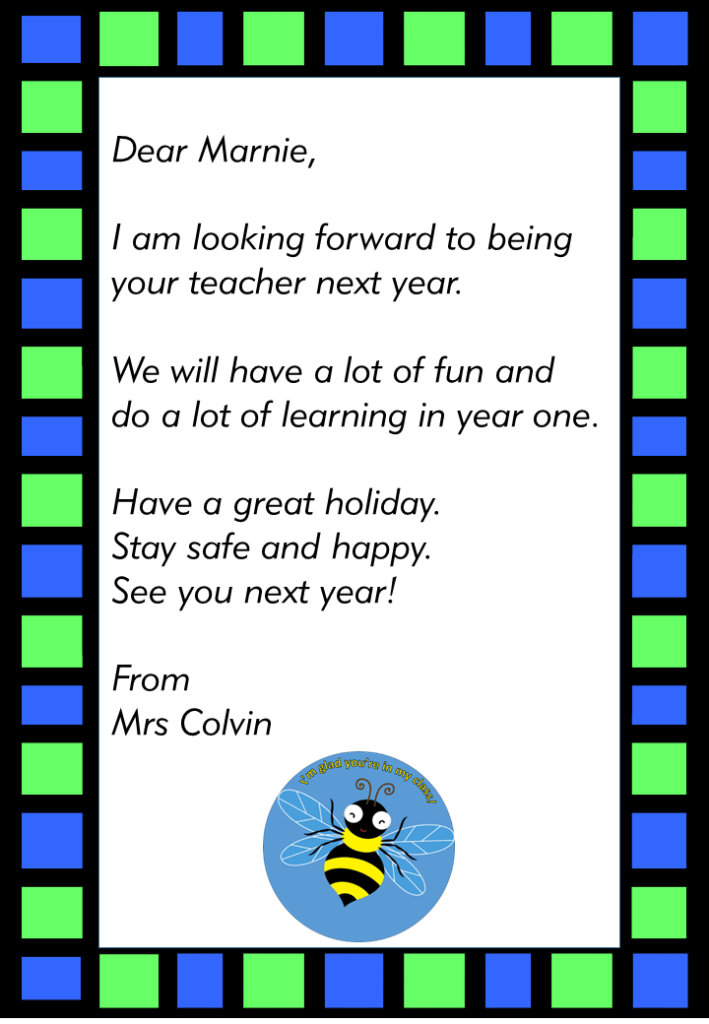
In addition I would have a letter and a small gift ready for my new students. The letter helps to create a positive connection, makes them feel special and helps to ease the transition back to school after the holidays. It also ensures they remember what class they are in and who their teacher is. It lets their parents know as well.
I think this is a wonderful process and one that should be adopted in all schools. It has many benefits; including:
helping teachers get to know important information about students before the year begins and aiding preparation.
reducing the anxieties of children and parents over the holidays, wondering about which class they would be in and which teacher, even whether they would be in the same class as their friends.
Once children knew their new classes I arranged their seating and named their groups to match. This provided opportunities for children to bond with future class mates as well as identify their class for the following year. There would be no unnecessary confusion or anxiety on the first day of school.
I’d love to know what you think of this process or of other processes with which you are familiar.
With the holidays just around the corner I provide links back to previous posts which provide suggestions for maintaining children’s learning in informal and fun situations.
Today I share with you a book by a passionate educator and life-long learner, Tony Ryan. I have shared material by Tony before. Here I wrote about his book The Ripple Effect, here I wrote about his Thinkers Keys, and about his seminar on Future-Proofing Kidshere. In this post I nominated him as an educator I find inspiring.
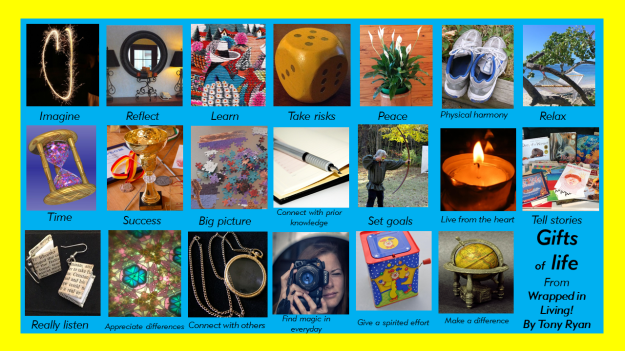
The book, Wrapped in Living! 20 Gifts for Creating Passion in Your Life! is now in its twentieth year but has lost no relevance with the passing years. Its gifts are perennial and I find myself dipping back into it for reminders from time to time. With one of the busiest gift-giving times just around the corner you may consider the book as a gift for yourself or for someone else, or perhaps taking one or some of the ideas to make a gift of wishes.
Wrapped in Living is described as
“A highly innovative approach to effective living and learning. Twenty special metaphorical gifts for re-discovering passion in life. Each of the gifts represents a vital principle for creating enthusiasm in life-long learning experiences. Full of entertaining stories and quotes.”
The gifts include such things as A Set of Sparklers to “unleash your imagination”; A Tapestry to “Become a life-long learner”; A Potplant to “create a peaceful environment”; A Hammock to “learn to relax”; and An Hourglass to “take your time”. There are gifts for setting goals, for telling stories, for listening, for finding the magic in the everyday, and for knowing that you can make a difference, and more.
Tony describes each metaphorical gift, explains why it is important, and suggests how it might inspire you, how you might implement the gift in your daily life. He includes stories and quotes that add meaning and inspiration. For example I opened the book to a page at random and found a story by Anthony De Mello about a man sitting in a marketplace strumming one note on his guitar. A crowd gathered. Soon he was asked why he didn’t vary his playing like other musicians do. His response: “Those fools. They’re searching for the right note. I’ve already found it.”
Tony’s message from this:
“You do not always have to search elsewhere for the information that you require. It already may be within you.”
Tony’s third gift, a tapestry, “offers a perspective from start to finish, and reminds you that you must Become A Life-Long Learner.”
He says,
“Many famous tapestries display a long–term historical perspective on different cultures. They allow you to view events from beginning to end. You also should look at yourself in the same way. Think of life as a learning journey from start to finish. You are born to learn, and you should continue to learn until the day you die.”
Tony’s tenth gift is a jigsaw to “encourage you to Look For The Big Picture”.
He says,
“When you play with a jigsaw, you often use two strategies to finish the puzzle. The first is to assemble the parts. The second is to view the cover of the jigsaw packet. Your life needs both of these approaches, namely, to place the parts together, and also to look for the big picture.”
The final gift in Tony’s book is a very important one today when the problems around the world can seem insurmountable and overwhelming. It reminds us to look at what we can change rather than what we can’t; to find and focus on the positives, rather than seek out the negatives and allow them to destroy us; to focus on those things we have the power to influence.
It is a globe to “help you to Know That You Can Make A Difference”.
Tony says,
“When you look at your globe, you can see more easily that this beautiful planet is a single entity, rather than an infinite collection of people and problems. Suddenly the world does not appear quite so overwhelming. This can help you to believe that you actually can make a difference with your daily actions. In fact, because everything on this ONE planet is connected in mysterious and special ways, your actions can ripple out and benefit others around the world every day.”
He includes a story that takes place on a beach dotted with thousands of starfish which had been left stranded by the receding tide. A man was picking up the starfish one at a time and throwing them back into the sea. A passer-by questioned what he was doing and remarked that there were so many starfish he couldn’t possibly make a difference. As the man picked up one starfish and threw it into the water he replied,
“Made a difference to that one!”
As an individual we sometimes feel that we can’t make much difference to the world. But looking at it another way, we realise we can make a world of difference to another. How will you make a difference today? Tony has many suggestions in this book and other publications including The Ripple Effect.
Which of these gifts have you received? Which would you like to receive? Which would you gift to another?
Thank you for reading. I appreciate your feedback. Please share your thoughts.
In this post I reintroduce you to Jackie French, prolific and well-known Australian author and advocate for literacy and the environment. She is currently the Australian Children’s Laureate with the task of promoting “the importance and transformational power of reading, creativity and story in the lives of young Australians”. In January she received an Australian of the Year Award for her contribution to literacy. Jackie’s words from her acceptance speech “If you want intelligent children, give them a book” resonated with me.
You can listen to Jackie’s acceptance speech in its entirety here:
These are some of my favourite quotes from the speech:
Jackie has written over 140 books and won more than 60 awards. I am not going to share all of Jackie’s books here; just a few of her picture books that I own. This complete(ish) list of her books indicates the range of genres in which Jackie writes. Although in Standing on the Shoulders of Giants by Mark RifidiJackie describes it differently. She says,
“People assume I write in different genres. From my point of view I don’t. Whether it’s history, ecology, or the fiction I’m writing about now, it’s all grounded in the way of life here and the landscape here.”
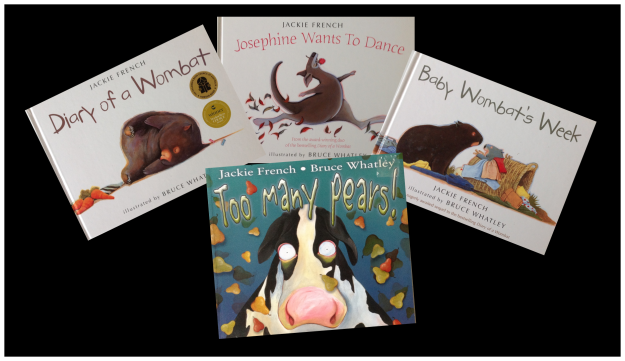
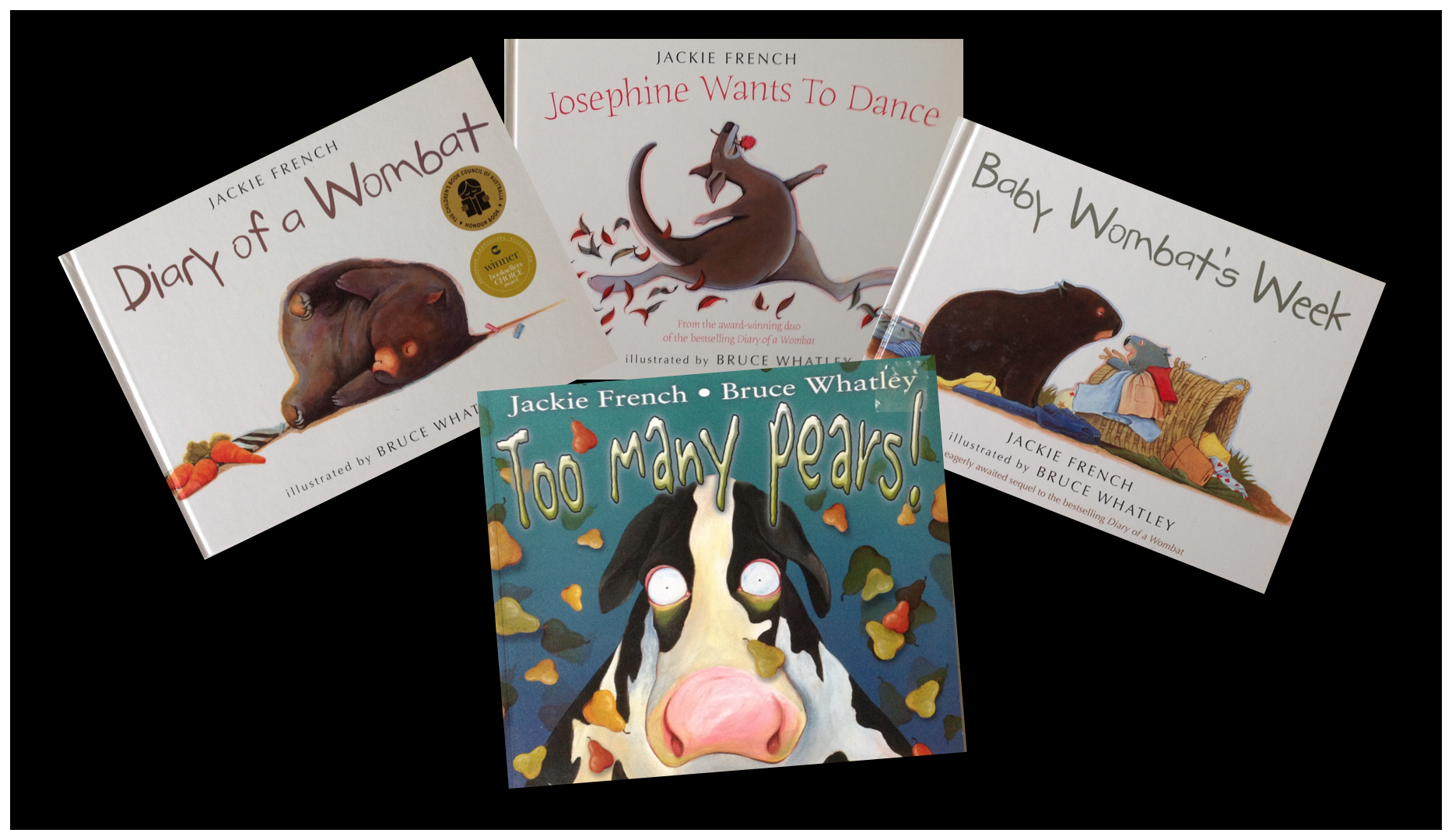
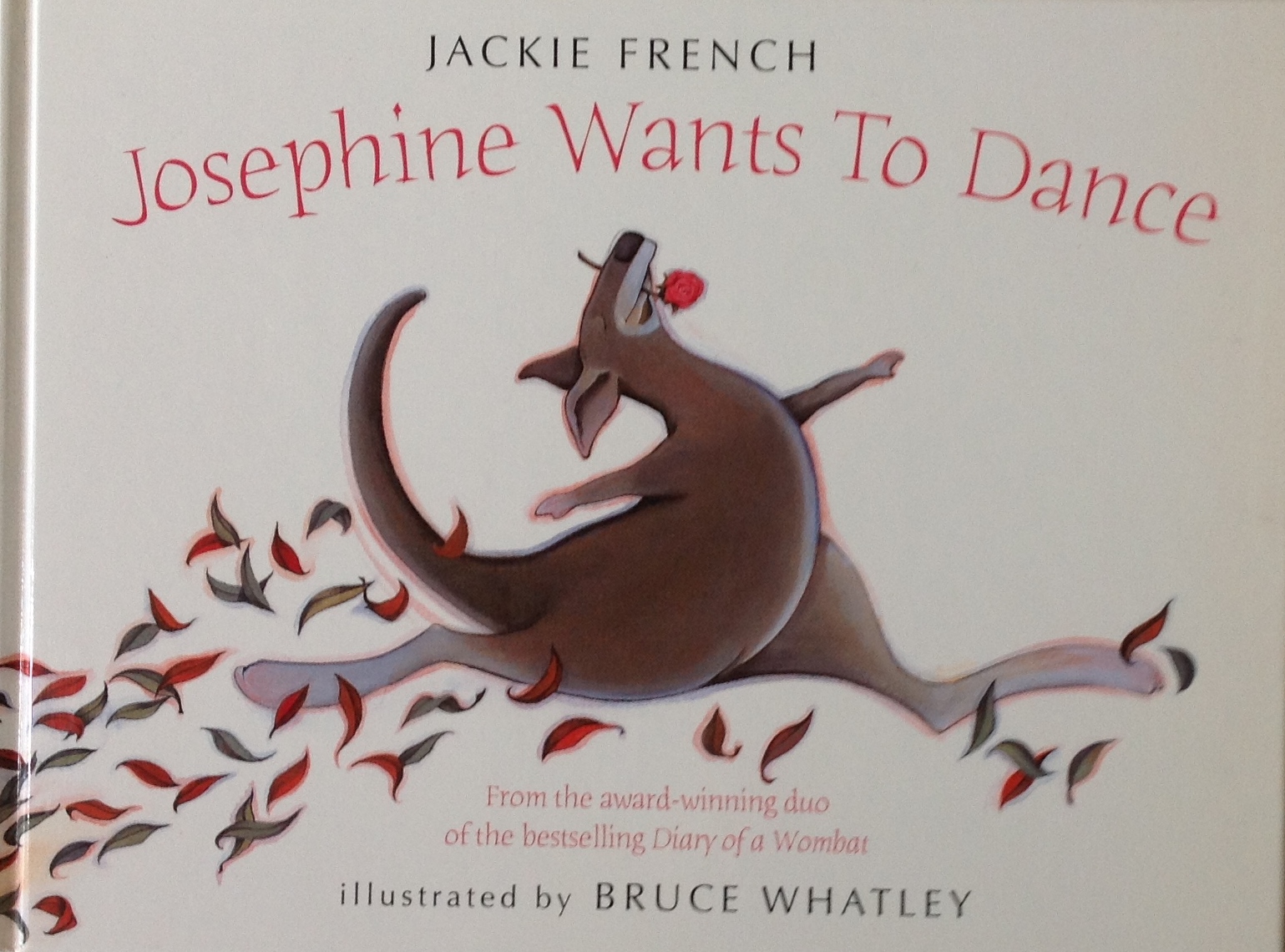
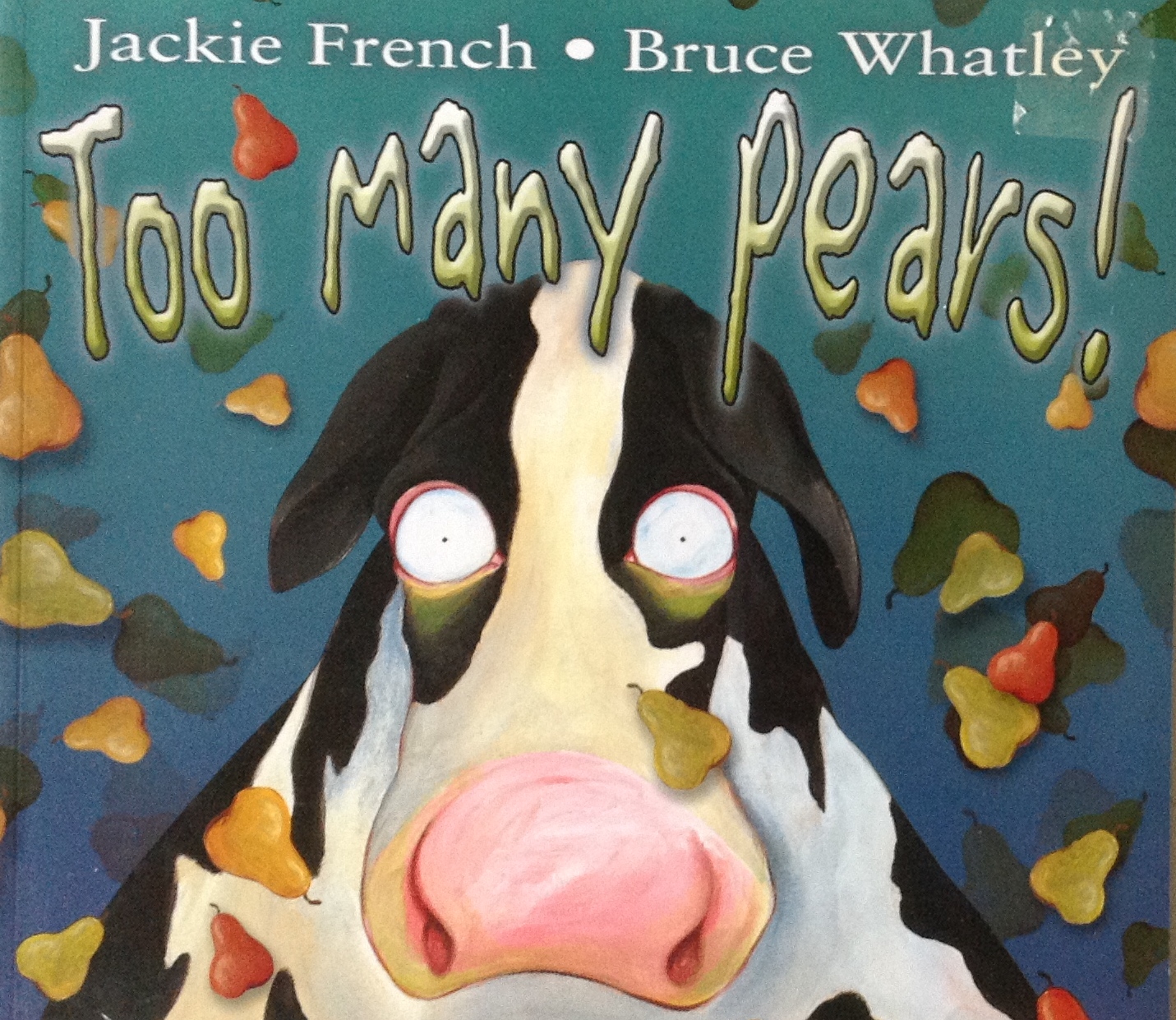
These are the four of Jackie’s picture books that I currently own. I have read others and given others away as gifts. While these four are illustrated by Bruce Whatley, Bruce is not the only illustrator of her work.
“Diary of a Wombat isn’t fiction … (it) is pretty much a week in the life of Mothball, who is one of the wombats that got fed last night”
The seeming simplicity of the text coupled with Bruce Whatley’s gorgeous illustrations make this book a joy to read, over and over.
In the book Mothball sleeps, eats, scratches, eats, sleeps, and easily trains humans to be “quite good pets”.
You can listen to Jackie read it here.
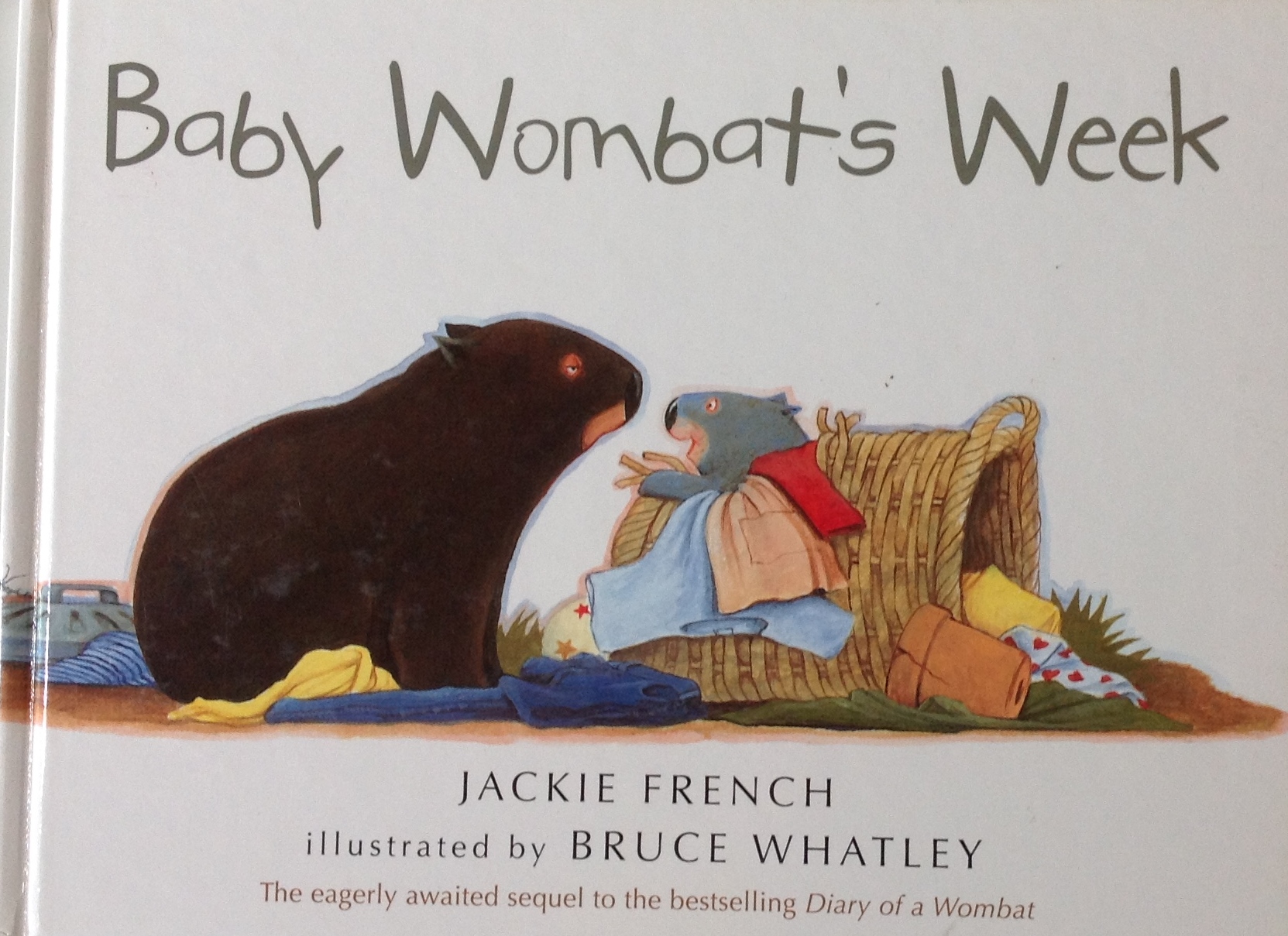
A sequel to the Diary, Baby Wombat’s Week is pretty much a week in the life of Mothball’s baby. It is just as delightful and humorous as the original story with new adventures and escapades; but still lots of sleeping and eating.
Josephine Wants to Dance is a delightful story of a kangaroo who loved to dance but dreamed of dancing another way. One day the ballet came to town and Josephine decided that was how she wanted to dance. Though others discouraged her, Josephine was determined to give it a try. It is a lovely story of believing in yourself and following your dreams.
Too Many Pears is another delightful and humorous story with illustrations that add interest and humour. (It reminds me a little of the battle Charli Mills had with gophers in her vegetable patch.)
Pamela, a cow, loves pears. She loves them straight from the tree, in pies, with ice cream … any way she can get them. Amy and her family have to figure out a way of stopping Pamela from eating all their pears. They do. But then Pamela spies the apples!
I am happy to recommend each of these books. They will not disappoint. Jackie’s text coupled with Bruce’s perfectly matched illustrations continue to delight during repeated readings.
Jackie’s website too is a treasure trove of interesting stuff. On her Kids’ Facts and Info for School Projects page she shares her writing process and a lot of other information that would be of interest to writers as well as to kids. She also has a page of Writing Tips and Advice and a page about How to Get Kids Reading, topics close to my heart.
In addition to illustrating Jackie’s books, Bruce Whatley writes and illustrates books of his own as well as those of other authors. In a recent post I talked about drawing on the right side of your brain. In this video Bruce challenges everyone to have a go at drawing with their left hand. Is that engaging the right side of your brain?
I am very grateful to Sarah Brentyn, who blogs at Lemon Shark, for alerting me to Standing on the Shoulders of Giants by Mark Rifidijust in time for this post. Thank you Sarah and Mark. I’m certain I will be having more to say about Mark’s book in future posts. It is a great resource celebrating the work of 20 Australian picture book authors and illustrators.
In the final paragraph of her biography chapter in Mark’s book, Jackie says,
“The one thing you show readers by writing about history is not to be afraid of change. Tomorrow always is going to be different from yesterday. It always has been. But human beings are extraordinarily good survivors, superb adapters. We are very good at creating a sort of world that we want. Books are perhaps the most effective tool to help us find it.”
I like her thinking!
Thank you for reading. I appreciate your feedback. Please share your thoughts about any aspect of this post.
Curiosity, questioning and science are recurring themes on my blog. How could a post entitled “Curiosity, dead chooks, science and the S.T.E.M. push” not appeal to me? While I don’t think I’ve written about dead chooks, yet, when I was six I was the best chicken catcher in the family and I definitely saw a few chooks running around with their heads chopped off!
In this post Sheryl Gwythertalks about the awakening of her scientific questioning at age four when seeing a similar a spectacle. The transcript of a talk delivered to other authors “Children are born scientists … It’s called curiosity” (my words exactly!) is included in the post. Sheryl urges authors to include science in their writing for children and suggests three rules for doing so: Never be didactic Entertain Create characters that children can connect with
While she doesn’t say it in so many words, I think the message of keeping the science accurate is implied. (I have questioned the inaccuracy in The Very Hungry Caterpillar in previous posts.)
Sheryl’s closing paragraphs motivate and inspire writers. She says, “We have the opportunity, the passion and hopefully, the commitment to reach out to young Australian children through stories about the wonder of science, and the responsibility for their future custody of this planet. Great stories, cleverly laced with scientific understanding not didactic waffle. Great stories to make them feel and think, and question. Great stories – for the sake of their future on this planet.”