Live Love Laugh Learn … Create the possibilities

Category: Blogging

  • Just imagine . . . the power of imagination

    Have you ever wished you could:

    • be in two places at once?
    • clone yourself to ensure you get everything done?
    • slow time down so that you could achieve all you wanted?
    • make time stand still so you could stay in the present moment forever?
    • pop back in time to undo that embarrassing moment, or peek forward to see the result of a decision that is pending?
    • choose both options and follow each through consecutively, as in parallel universes?

    I have.
    https://openclipart.org/image/800px/svg_to_png/194578/07-Juli-goin-on-a-summer-holiday.png
    https://openclipart.org/image/800px/svg_to_png/194578/07-Juli-goin-on-a-summer-holiday.png

    Multiple invitations or engagements often occur on the same date. Deciding between desired activities is not always easy. Cloning would make choosing unnecessary. Additionally, sending a clone to an unpleasant but unavoidable engagement could also be desirable.
    penguins

    Sometimes the number of must-do tasks can be overwhelming. The ability to engage the assistance of clones, especially to complete less desirable tasks would be great.

    Time travel, wormholes and parallel universes are the stuff of science fiction; and while I am not a fan of the science fiction genre, I wouldn’t mind having access to some of its features. However, whether any, or which, of those features ever move from science fiction to science fact remains to be seen.

    The power of imagination to drive creativity and innovation cannot be overstated. Much of what we now accept as commonplace was once a part of science fiction. Imagination, the stuff of science fiction and scientific exploration and investigation, has brought them to reality.

    You are probably familiar with following quote, initially attributed to George Bernard Shaw but also made famous by Robert F. Kennedy:

     “Some men see things as they are and say why. I dream things that never were and say why not.”

    These words highlight the importance of questioning to stimulate imagination, and when paired with creative thinking, innovation can occur.

    Einstein said that,

     “Imagination is more important than knowledge. For knowledge is limited to all we now know and understand, while imagination embraces the entire world, and all there ever will be to know and understand.”

    He also said that,

     “Education is what remains after one has forgotten everything he learned in school.”

    Although I cannot be certain, from those quotes, what Einstein’s attitude to the current trends in schooling would be (he did attend school and was very advanced in maths and sciences but did not perform so well in the humanities) I think he would not favour a content-driven curriculum which excluded opportunities for imagination and creativity.

    On the other hand, Thomas Edison, the world’s most prolific inventor, was mostly educated at home by his mother who was able to encourage his experimentation and love of learning. He said,

     “To invent, you need a good imagination and a pile of junk.”

    If these significant thinkers of the 20th century, each of whom followed different educational pathways, recognise the importance of imagination, why would anyone argue against it?

    Charli Mills at Carrot Ranch Communications certainly doesn’t. As a fiction writer she embraces imagination. It is the tool of her trade, creating stories where before there were none. This week her challenge is to In 99 words (no more, no less) craft a multiverse situation, setting or character(s)

    Now the term ‘multiverse’ takes me back to the science fiction genre: wormholes, parallel universes and time travel, for example. I’m not sure how well I’ll do with this unfamiliar genre, but I will call upon my imagination and give it a try. See what you think – does my piece fit the criteria?


    Clone Magic

    Clone magic

    All night Leone had huddled in line, sleepless with excitement, waiting for the release.

    Now she had them! Clone pills!

    ‘Take one with water. Cloning occurs in 30 minutes and lasts 24 hours.’

    Leone swallowed one tablet, then another, and another; ignoring the small print: ‘Do not take multiple tablets. Effects are unpredictable.’ 

    When three clones appeared she instructed:

    “1. Clean the house. 2. Exercise. 3. Weed the garden.”

    She flopped on the couch. “Now to read.”

    But — their hands grabbed for her book, pulling her hair and clawing her eyes.

    “Me read! Me read! Me read!”


    Thanks for reading. I appreciate your feedback. Please share your thoughts about any aspect of this article or my multiverse flash.


  • Benefits of inclusion

    Recently I listened to a compelling TEDx talk by Dan Habib. You can listen to it here:

    Dan opens his talk by asking the audience some questions about their school days:

    Did kids with and without disabilities study together and learn together?

    Did they have a best friend who had a disability?

    Did they have a boyfriend or girlfriend that had a significant disability?

    Very few of the approximate one hundred in the audience answered in the affirmative.

    Then Habib asked the audience to consider and answer the following question:

    Did you feel some fear or nervousness when you were a kid about talking to a kid with a disability?

    The majority of the audience affirmed they did.

    Had I been in the audience, my responses would have been similar.

    When I was a kid, there were no children with disabilities in my classes. Children with disabilities were hidden away as an embarrassment and were segregated into what where called ‘opportunity schools’.

    Thinking back, my impression is that people with disabilities were not visible in the community and their needs were not catered for. They were not expected to have any participation in society. Often they were targets of taunts and laughter, but mostly ignored and avoided.

    https://openclipart.org/image/800px/svg_to_png/183559/oldmaninwheelchair.png
    https://openclipart.org/image/800px/svg_to_png/183559/oldmaninwheelchair.png

    However, when I was a kid discrimination wasn’t restricted to people with disabilities. It was a time in which racial discrimination and segregation was more prevalent; before the emergence of women’s rights and children’s rights.

    Sometimes when we see how far humanity still has to go towards equality, tolerance and compassion it is hard to see how far we have come. But looking back on the changes that have occurred in just my life time, the progress is obvious, if still insufficient.

    Even into my college years I had little contact with people with disabilities and my teacher training made no mention (that I can remember) of catering for students with disabilities, who were still segregated into what became called ‘special’ schools. I don’t recall catering for individual differences being high on the agenda back then.

    I worked as a remedial teacher for a few years, supporting students who were achieving below the expected level, of reading mainly. These children were generally of average intelligence but experiencing a learning difficulty. Children falling below average on an intelligence test would still be shunted away to special schools.

    I cannot recall the inclusion of any students with intellectual or physical disabilities at any school at which I taught prior to the 1990s when integration and mainstreaming was introduced. Dan Habib says in his talk that, as he was growing up, ‘disability was just a blip on the radar screen’ as well. Maybe this experience was similar to yours?

    When Dan came to accept that his son Samuel had a disability and that he would have that disability for life, he realized that they had to create a vision for Samuel, and let ‘Samuel create a vision for himself“.

    https://openclipart.org/image/800px/svg_to_png/195899/EPA-clubhousekids.png
    https://openclipart.org/image/800px/svg_to_png/195899/EPA-clubhousekids.png

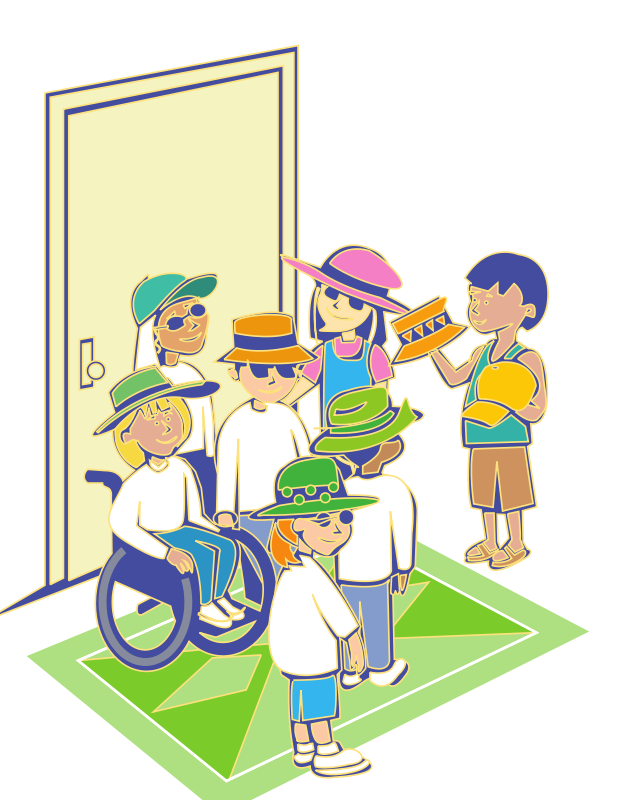
    Part of this was the need for a sense of belonging: to the neighbourhood, the community and the local school. It was this that got Dan thinking about inclusion. Dan goes on to describe the ways in which Samuel was included in the school and the community, and the benefits, for both Samuel and others.

    He urges everyone to advocate for inclusive education as the benefits include better communication skills, higher academic achievements, wider social networks and fewer behaviour problems. He decries the fact that, despite the benefits, most kids with disabilities still spend their day segregated.

    He explains that the benefits are just as valuable for typical kids who achieve higher academically while learning to be patient, caring, compassionate, and loving. In my more recent years of teaching, I got to see these benefits of inclusion first hand. Not only did the children learn, so did I.

    I didn’t just chance upon this TEDx talk. It was included in a great guest post by Gary Dietz on The Cool Cat Teacher’s blog. The post introduced a book, written by Gary, about dads of kids with disabilities and proposed 5 practical lessons for elementary classroom inclusion. The book Dads with Disabilities is described as inspiring and ‘a must read for any teacher working with special needs kids’.

    https://openclipart.org/image/800px/svg_to_png/651/ryanlerch_kids_with_hats.png
    https://openclipart.org/image/800px/svg_to_png/651/ryanlerch_kids_with_hats.png

    The five suggestions (which I think are based on respect and are applicable for all students) are:

    1. ‘Meet the student “where the student lives” (where they need to be, at their level of development)
    2. Presume competence
    3. Be creative in your use of ‘adaptive’ technology (e.g. use of video and Skype or Facetime)
    4. Listen to parents and help them listen to the child
    5. Give “overlooked” children the same chance to shine as the superstars


    Vicki Davis is the Cool Cat Teacher. Her blog is consistently among the top 50 education blogs worldwide. Her byline is “A real teacher helping teachers be really excellent”. I agree that she is and recommend her blog to you.

    Update from Gary Dietz (12/08/2014):

    “The book ‘Dads of Disability’ is now a FREE loan if you subscribe to Amazon Prime or Kindle Unlimited. And if not, it is on sales as an ebook for $4.99. Look it up on Amazon. (Of course the paperback is still available!)”


    How do you view inclusion? What is your experience?

    I appreciate your feedback. Please share your thoughts about any aspect of this post.


  • Reading is all it’s cracked up to be: 10 tips for an early childhood classroom!

    This post almost didn’t get published. It almost fell through a crack into the never-never. But just in time the safety net sprang into action and saved it from obscurity.

    That may matter more to me than it does to you, but as an educator I hear too often about children who ‘fall through the cracks’, who fail to thrive in the school system, who miss out on the inspiration and timely support that would empower them on their journey to life-long learning.

    Like those children, this post was an also-ran. It didn’t quite get it, didn’t quite reach the expectations. But then I read something that confirmed for me the importance of sharing my message.

    You see, the love of reading is contagious. It can be caught from anyone, anytime.

    However, it can just as easily be extinguished; and the danger of that happening seems to be lurking in school systems packed too tight with lists of must do, must learn and must achieve expectations.

    I consider it imperative that teachers prioritize time for children to develop a love of literature and reading that will expand their horizons and create a worthwhile companion on the journey of their lifetime.

    https://openclipart.org/image/800px/svg_to_png/174860/bookworm_penguin.png
    https://openclipart.org/image/800px/svg_to_png/174860/bookworm_penguin.png
    Here are 10 easy tips for keeping the love of books alive in an early childhood classroom:
    1. Read aloud to children every day, ensuring that a variety of books and genres are being read and shared.
    2. Have a great supply and variety of children’s books available: picture books, fiction and non-fiction, collections of poetry, beginning chapter books, funny books, sad books, books about animals, space, people . . .
    3. Display books with covers facing out and give them pride of place. Make a display of ‘favourite reads’.
    4. “Sell” books to children (you won’t have time to read them all) by showing the cover and some illustrations; by telling what they are about, what happens, and what the children will enjoy about them.
    5. Make a reading corner with carpet, pillows and bean bags that invites children to get comfy while they read.
    6. Provide time for children to choose and read independently.
      • This can occur during quiet times set aside on a daily basis in which everyone, including the teacher, reads for 10 – 15 minutes. e.g. D.E.A.R. (drop everything and read) or U.S.S.R. (uninterrupted silent sustained reading).
      • It can also be integrated into reading group or literacy centre activities.
    7. Share the enthusiasm for books by providing time for children to excite each other about the books they are reading in a sharing circle.
    8. Display books written by the children and allow access to them for independent choice. Include them in the sharing and ‘selling’ sessions also.
    9. Make a time to visit the school library for reading and borrowing.
    10. Invite other adults to the class to read to the children e.g. teacher-librarian, administrators, support personnel, parents and grandparents.

    Let me know in the comment box a favourite tip of yours.

    This week I have read some fabulous posts by teachers who are making sure there is time for joy and independent choice in their literacy classrooms. I will share these with you below.

    The article that convinced me to share my thoughts was one that was not so joyful.

    Written by Alexander Nazaryan, a first-year teacher, the article appeared in the Opinion Pages of the New York Times on July 6, 2014. He talked about not being able to meet the needs of his students and explained that it was not the fault of the students though, the fault was that they were mostly of poor and immigrant families.

    He felt that asking these students to write about their own experiences did not have ‘the pedagogical value of a deep dive into sentence structure or a plain old vocab quiz.’

    I was immediately struck by the similarity of a statement made to me by my son’s teacher thirty years ago. At the time I was leading an in-service workshop about teaching writing. I would have been talking about ways of engaging students in the writing process by giving them opportunities to write at length about things of interest to them; by encouraging the writing of a first draft to get the ideas down; by providing opportunities for redrafting, rewriting and editing; and opportunities for feedback by sharing their writing with peers; and by making the most of teachable moments through individual conferences with each student.

    This teacher exclaimed that there was no way the children would be able to write anything of length as not one knew what a paragraph was, or indeed what a sentence was. The students were ten years of age and in their fifth year of school. I believe the statement to be more an indictment of the teacher’s inability to appreciate what the children could do, rather than an accurate estimation of their abilities. I knew for a fact that at least one student was more than capable of writing at length with a variety of sentence structures and correct paragraphing. I was certain he wasn’t the only one.

    I am inclined to agree with Nazaryan that ‘Expecting children to independently discover the rules of written language is like expecting them to independently discover the rules of differential calculus.’

    However trying to teach the skills of literacy through a barrage of meaningless drill and practice exercises in a joyless classroom is doomed to failure, and the children, sadly, will fall through the cracks.

    What the children need, in my opinion and unlike that of Nazaryan, is a balanced approach. The skills of literacy need to be taught in a meaningful context.

    That article and others, like this one from HuffPostParents about a year one girl who had to sit on the floor for weeks while her classmates sat at desks make me want to cry.

    However it is not all bad, and there are some wonderful things happening.

    Below are links to posts by or about teachers who are being far more inspirational to their students and other teachers on a daily basis.

    very inspiring blogger

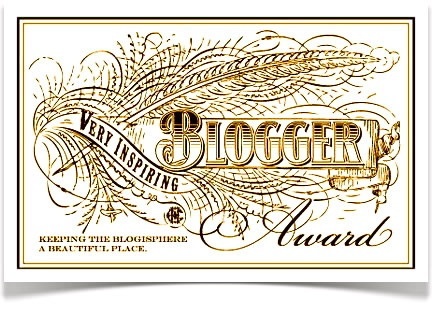
    Tracking back to my post of July 9 The Very Inspiring Blogger Award (nominated by Geoff le Pard) I hereby nominate them for A Very Inspiring Blogger Award:

    Vicki Vinton, blogging at To Make a Prairie

    Matt Renwick at Reading By Example

    This article by Brett Vogelsinger and posted on the Nerdy Book Club

    Steven Peterson at Inside the Dog

    Julianne at To Read To Write To Be

    Carrie Gelson at There’s a Book for That

    Used Books in Class

    Three Teachers Talk


    This brings me back to the reason that got me thinking about cracks, and children falling through the cracks in the first place. This week’s flash fiction prompt set by Charli Mills at Carrot Ranch Communications was to In 99 words (no more, no less) write a story that involves a crack. 

    Here’s my response:

    The Crack

    She willed the earth to open up and swallow her whole. But it didn’t. She just stood there trembling, attempting to hold back the deluge that threatened to engulf her.

    She strained to remember, knocking her head with her fist. Quick. Try. Try. What’s the rule: i? e?  

    She stammered an answer.  Wrong again!  Too many rules! Stupid rules! Broken – just like her.

    She fled, eyes stinging, mouth twitching; and as she passed, with one hand grasped the confiscated unicorn sitting askew the teacher’s desk.

    Away they flew, the assault of mocking laughter fading far below.


    Thanks for reading. I appreciate your feedback. Please share your thoughts about any aspect of this post, including my flash piece.


  • Celebrating 100!

    Celebrating 100!

    Welcome to my 100th post!

    I’m excited!

    When I started this blog just under a year ago (I published my first post on August 15 2013) I set myself the goal of writing two posts a week. I am pleased that I have maintained that output, with only an occasional variance.

    Thank_you_pinned_noteI thank you all, my readers, whether you have been with me from the beginning, joined in along the way, or pop in occasionally to see what I am up to. I really appreciate your support and encouragement. If it wasn’t for your interest I may not have achieved my goal.

    One of the most rewarding things about blogging is belonging to a very special online community of readers and bloggers from whom I have learned a lot, and from whose encouragement I have developed the confidence to share my ideas.

    Celebrating 100 anything is a milestone.

    In Australia if you live to celebrate your 100th birthday you can receive a letter from the Prime Minister, the Governor-General and the Queen.

    In my year one classroom we would celebrate 100 days of school. In the ‘old’ days, when pre-school was part-time and not compulsory, before prep became the first year of formal schooling, year one was the first year of ‘real’ school, and the celebration really was of the first 100 days of school. After the advent of prep it simply became a celebration of the first 100 days of year one.

    Many valuable learning opportunities accompany the celebration.

    Preparation for the celebration would begin on the first day of school. We would count off each day on the number board, counting up the days we had been at school and how many more days there would be until we reached 100.

    Closer to the day we would explore what 100 items ‘looked like’ and count 100 children lined up for class, a tower built of 100 blocks, or 100 paperclips arranged around the edge of a piece of paper. We would count and collage 100 different items, and play games that involved counting to 100.

    celebratory cake

    One of the things that I enjoyed most was discussing with the children what they thought they would be like at 100 years of age. We would read A. A. Milne’s poem Now I am Six and talk about them being six or seven – what they looked like, things they could do, and their favourite things and activities. They would draw a self-portrait and write a description of themselves to accompany it.

    Then we would read books about growing older and discuss what it might be like to be 100 years old. They would do a self-portrait to show what they thought they would look like and write about what they would be able to do and activities they would enjoy.

    https://openclipart.org/image/800px/svg_to_png/154735/faltige_frau.png
    https://openclipart.org/image/800px/svg_to_png/154735/faltige_frau.png
    https://openclipart.org/image/800px/svg_to_png/103549/old_man01.png
    https://openclipart.org/image/800px/svg_to_png/103549/old_man01.png


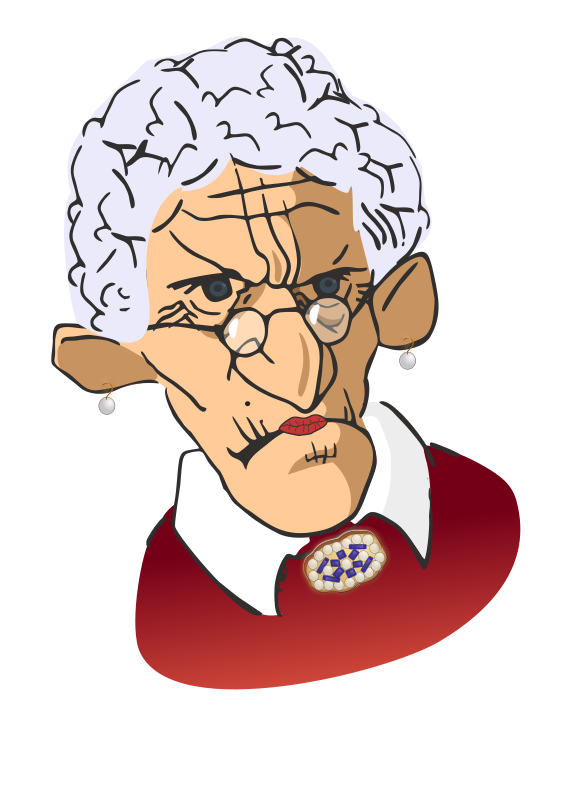
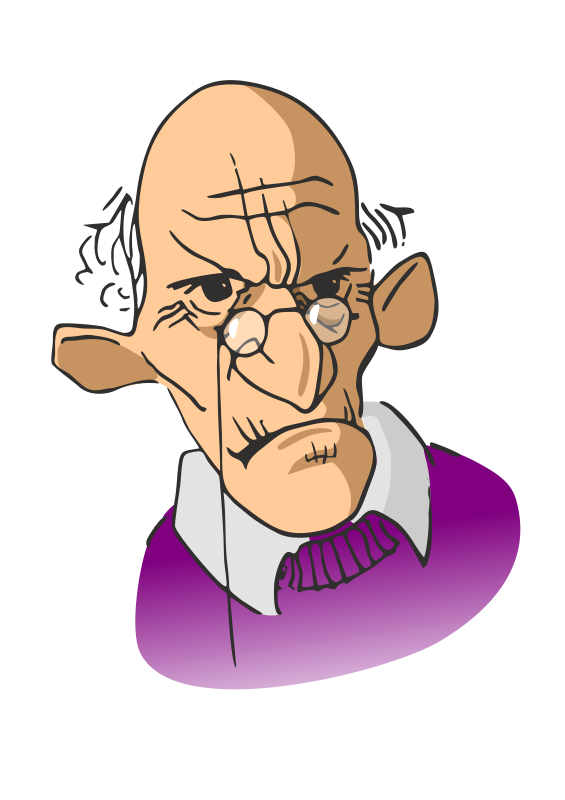
    I wish I had some of their portraits and descriptions to share with you. They wrote about having grey hair, wrinkly skin and wearing glasses. They wrote about using walking sticks, living in nursing homes and having a lot of grandchildren. Overwhelmingly, they were happy.

    The last group of year one children I taught were born this century. They turned seven in year one in 2011. They will not celebrate their 100th birthdays until 2105! Chances are, with improvements to health and the increasing length of life expectancy, many of these children will get to celebrate that milestone.

    While the children had no difficulty imagining themselves as 100 years of age, I can’t imagine what life will be like for them in the next century; or even fifty years ahead. One hundred posts ago, I couldn’t even be sure if I would still be here writing this blog; but I am, and I thank you very much for reading and participating.

    To mark my 100th post, I have placed a new item in my Teachers Pay Teachers store with suggestions for celebrating 100 days of school. This also coincides with a storewide sale on Teachers Pay Teachers; so, for any teachers out there, it may be worth taking a look.

    sale_160_200

    Thank you for reading. I appreciate your feedback. Please share your thoughts about any aspect of this post or my blog in general.


  • Water wise

    https://openclipart.org/image/800px/svg_to_png/9353/egonpin_Paisaje_3.png
    https://openclipart.org/image/800px/svg_to_png/9353/egonpin_Paisaje_3.png

    My first thought when reading this week’s flash fiction prompt set by Charli Mills at the Carrot Ranch: in 99 words (no more, no less) write a story about water, was of the street on which I had hoped to open an alternative to school twenty years ago. I thought I could write about the property which, located on the corner of Water and Love Streets, seemed ideal. I thought I could write about the vision of our group “The Centre of Learning Opportunities” with its focus on the children’s program “Kids First” and how our centre would cater for children and families. I thought I could write about how we would implement our motto “Create the possibilities” which I have also adopted for my blog. But just like the centre itself, it didn’t eventuate.

    https://openclipart.org/image/800px/svg_to_png/169893/1336367663.png
    https://openclipart.org/image/800px/svg_to_png/169893/1336367663.png

    Instead I thought a little deeper, considering how water is the substance of life, how fortunate we are in developed countries to be able to turn on a tap and access clean water whenever we want. According to the UN almost 8 million people do not have access to clean water and more than 2 million do not have adequate sanitation. Millions of people die each year from diseases related to water. The projections of water availability and access are quite alarming.

    I thought about the use and misuse that is made of water in our rivers and streams and of a local issue that was reported quite recently.

    I decided to write a poem about the journey of a river, from its beginnings high up in the mountains down to the sea; how it starts out crystal clear but picks up toxins as it wends it was down. You can probably guess that my next thought was of education; of how children begin full of wonderment and creativity but, as they are subjected to years of schooling, collect toxic thoughts and attitudes.

    That may seem a bit harsh I know, and I have written a poem before comparing what I consider Education is to what I think schooling is.

    education-is-2

    However I thought I’d try to write a poem as an allegory of the schooling process; likening the way we are polluting our waterways to the way we are polluting and muddying the minds of our children. I’m not very happy with my first (fifth!) attempt, but I have met the word requirement and Charli’s ‘deadline’ is fast approaching.

    Let me know what you think.


    Water

    It started way up

    In the highest of hills     

    So crystal-clear pure

    With a life to fulfill


    It babbled through forests

    And danced in the streams

    Marveling  at wonders

    Before never seen


    It passed through the valleys

    Irrigated the farms

    Taking the runoff

    And doing no harm


    Down past the villages

    Watered them too

    Acquiring their discards

    Now murky like stew


    Passing by factories

    Spewing out waste

    Picked up their burden

    And left without haste


    Weaving its brown trail

    Way down to the sea

    From its mouth vomited out

    A poisonous mix

    Deceiving all living things

    Expecting a gift

    However I don’t want to leave you on a negative note. I’d rather acknowledge that there are many wonderful things happening in schools around the world. There must be, or we couldn’t be making the advancements we do.

    https://openclipart.org/image/800px/svg_to_png/59389/happy_sun_gm.png
    https://openclipart.org/image/800px/svg_to_png/59389/happy_sun_gm.png


    I have shared many great things with you before like some of these great articles on edutopia.org. Just last week I shared information about a prize for innovation in inclusive curricula being awarded for a program, Big Questions teaching philosophy to children. Listen to any TED talk to be amazed at advancements and innovations.

    I value your feedback. Please share your thoughts about any aspect of the article or my flash ‘poetic’ fiction piece.


  • The Very Inspiring Blogger Award – Acceptance

    The Very Inspiring Blogger Award – Acceptance

    birthday-cake-25388As a birthday gift to me (though he didn’t know it was my birthday) Geoff Le Pard, who blogs about the Universe and whatever occurs to him at TanGental, nominated me for the Very Inspiring Blogger Award.

    Needless to say I was both surprised and delighted. I could say that I aspire to inspire, but I think even that would be a great exaggeration.


    In his post Geoff provides three reasons for selecting me:

    • I see life through a prism
    • I have a firmly fixed moral compass, and
    • He wishes I’d taught him at school!!!!!

    The first two I am not sure about, but I am definitely honoured by the third. Thank you Geoff. I will endeavour to attain this high bar you have set.

    The rules for accepting this award are:

    1. Thank and link to the amazing person(s) who nominated you.

    2. List the rules and display the award.
    3. Share seven facts about yourself.
    4. Nominate 15 other amazing blogs and comment on their posts to let them know they have been nominated.
    5. Optional: Proudly display the award logo on your blog and follow the blogger who nominated you.


    Thank you, Geoff. I am honoured.

    These are seven things about me:

    1. I am passionate about education and the power that education has for transforming lives. I believe that everyone has a right to an education. I have spent all of my adult life involved in education in some way; and most of my childhood was spent in school!

    2. I am the third of ten children. What that tells you about me I’m not sure, but I believe we are more than the product of our birth order and environment; that each of us has the power to make choices about how we want to live our lives. I’m not saying environment and genetics don’t play a large role in who we are, but I am saying they do not determine everything.

    3. I have two adult children of whom I am extremely proud and who I love very much. They are what is important in my life. They each have a wonderful partner who I also love, and my son has two beautiful children who I adore. My family gives me an enormous amount of pleasure. I am very fortunate to have all of them living close to me.

    4. I enjoy playing games, especially word games like Scrabble, Upwords and Balderdash. I especially enjoy playing them with my family. We often spent days playing games together when the children were growing, and had grown, up. We’re having a bit of a rest now that the grandchildren are small and doing the entertaining. I’m sure we’ll have three generations playing together again soon. We collaboratively do the ‘Big Quiz’ (40 trivia questions) in the local paper when we get together on Sundays, hoping that someone in the family may know the answer. None of us fair too well on the sporting questions!

    5. I have a silly sense of humour. I enjoy word plays and puns and alternate meanings for words and sayings. In my head I finish words and statements with ridiculous things before the person speaking has even time to finish them. I laugh uncontrollably at something I think is funny, like this silly senior’s password email that arrived in my inbox this week:

    windows

    6. I think life is short and should be fun. We don’t know how much time we have so we should enjoy what we’ve got. This doesn’t mean we have to be out partying and playing all the time. It means we need to focus on enjoying what we are doing in the present moment, no matter how unpleasant it may be. It also means making choices and accepting responsibility for the choices we make.

    7. I love learning. Learning gives so much joy. There is too much to learn in one life time, and it is scary now that the road ahead is considerably shorter than the one already travelled. I hope that in my days of teaching I have inspired in children a love of and joy in learning that they will carry with them throughout their life travels.

    Nominating 15 other amazing bloggers is the hard part. Not because there are not 15 amazing and inspiring bloggers, but because I have nominated many before for a Butterfly Award, a Versatile Blogger Award and a Liebster Award. Not only that Geoff has nominated many of these same bloggers for this award, and Charli Mills has nominated them also.

    We have a wonderful community of very supportive and encouraging bloggers. We each write our own blogs about our own interests, explaining our ideas and points of view. We read and comment on each other posts sharing points of convergence and divergence, and often adding further insights.

    Rather than re-nominate bloggers I have nominated before (and be assured that you are all very deserving of this award and if you wish to add the Inspiring Blogger’s badge to your blog I am happy for you to do so) – over the next few weeks I am going to do a little more exploring to seek out other inspiring bloggers to add to our growing community.

    A big thank you, to each and every one of you, for encouraging and supporting me on my blogging journey. Having your company is what makes it all worthwhile!

    I appreciate your feedback. Please share your thoughts on any aspect of this article.


    Previous nominees:

    Liebster Award

    Belinda Pollard of Small Blue Dog Publishing (Australia)

    NANNY SHECANDO (Australia)

    Anne Goodwin (UK)

    Caroline Lodge (UK)

    PS Cottier (Australia)

    Teachling (Australia)

    Peter Worley’s philosophy foundation (UK)

    Michelle Sowey at The Philosophy Club(Australia).

    There’s No Food ( Australia)

    Obscure Pieces (Australia)

    Cultivating Questioners (USA)

    Nillu Nasser Stelter (UK)

    Charli Mills Carrot Ranch Communications (USA)


    Versatile Bloggers

    Ailish Sinclair

    Teagan Kearney

    Karen Wyld

    Vicki Addesso

    Susan Buchanan

    Paula Reed Nancarrow

    Lisa Reiter

    Lori Schafer

    Karen Oberlaender

    Diane Mott

    Greg Mischio

    Anne Goodwin

    Caroline Lodge

    Charli Mills

    NannySheCanDo


    Butterfly Award

    Ruth Mancini

    The Nerdy Book Club

    Two Writing Teachers

    Raising a literate human


  • Whose story is it anyway?

    Nor and Bec reading

    Children love stories.

    They love being read stories and beg for them to be read, over and over again.

    Equally as much, if not more, they love being told stories, especially stories of their own lives. They beg for them to be told over and over, listening attentively and with wonder as their own stories (her story and his story) are being revealed. They commit these tales to memory so that eventually it is difficult to distinguish the genuine experiential memory from the telling. Even as adults they seem to not tire of hearing tales of the cute things they did when they were little, or of shared experiences.

    They also love being told stories of their parents’ lives. These are the stories that help define them and their existence: how they came to be. The stories tell of times gone by, and of how things used to be. They marvel that their parents were once children and try to imagine how that might have been.

    My daughter would often ask for stories about herself, her brother, myself or other family members. One day when she was about six, she asked again, ‘Tell me a story about when you were a little girl.’ Before I could respond she jumped in with, ‘What were the dinosaurs like?’ She was teasing, of course, and her comedic timing was perfect. A story was created, one that has been shared many times.

    History is a story, though at school I never saw it as such. Had it been a story of lives, as its name implies, I may have been interested. But history at school was a list of wars and dates, and kings and queens to be memorised and regurgitated for a test at the end of the term. There was no story, no human emotion, no semblance to any narrative that may have lured me in.

    I hope that today’s students of history are not required to commit sterile lists of facts to memory without the stories that would give them meaning and significance, some human element to help the information stick.

    History, as a subject, had always been relegated to high school. It was not a discrete part of the primary school curriculum, though aspects were explored in other subject areas such as ‘Social Studies’ when I was at school, or more recently ‘Studies of Society and Environment’. With the introduction of the new Australian Curriculum, History is now a stand-alone subject.

    As an early childhood teacher I was a bit terrified that young children would be required to memorise lists of seemingly random facts and dates. I’m pleased to say that, for the early years anyway, this is not so. Children in the early years start by exploring their own history and the history of their family, considering similarities and differences between their lives, the lives of their parents, and of their friends.

    I applaud this as an excellent starting point. I believe, when working with children, connections must always be made with their lives and what they know. What better starting point than investigating the traditions of their own family and culture.

    In Australia, as I am sure it is in many other places, a great diversity of cultures is represented in each classroom. Encouraging children to share similarities and differences of traditions with their classmates helps to develop understanding of each other’s traditions and beliefs, which in turn fosters respect and empathy. For this purpose, I developed some materials to make it easy for children to share their traditions. These are available in my Teachers Pay Teachers store.

    Whoever you areMem Fox has written a beautiful picture book Whoever you are that I love to share with children when discussing their cultures and traditions. It explains in a simple and beautiful way that although children around the world may live in different houses, wear different clothes, eat different foods, for example ‘inside, their hearts are just like yours.’ Mem Fox explains the story on her website.

    I also like to sing I am Freedom’s Child by Bill Martin Jr.; and in Australia we have a great song that tells about our different beginnings, I am, you are, we are Australian by Bruce Woodley.

    Heal the World by Michael Jackson is another great one for appreciating diversity and fostering inclusivity.

    What got me thinking about history in particular for this post is the flash fiction prompt posted by Charli Mills at Carrot Ranch Communications. Charli’s challenge is to In 99 words (no more, no less) write a story that considers history, near or far.


    This is my contribution:

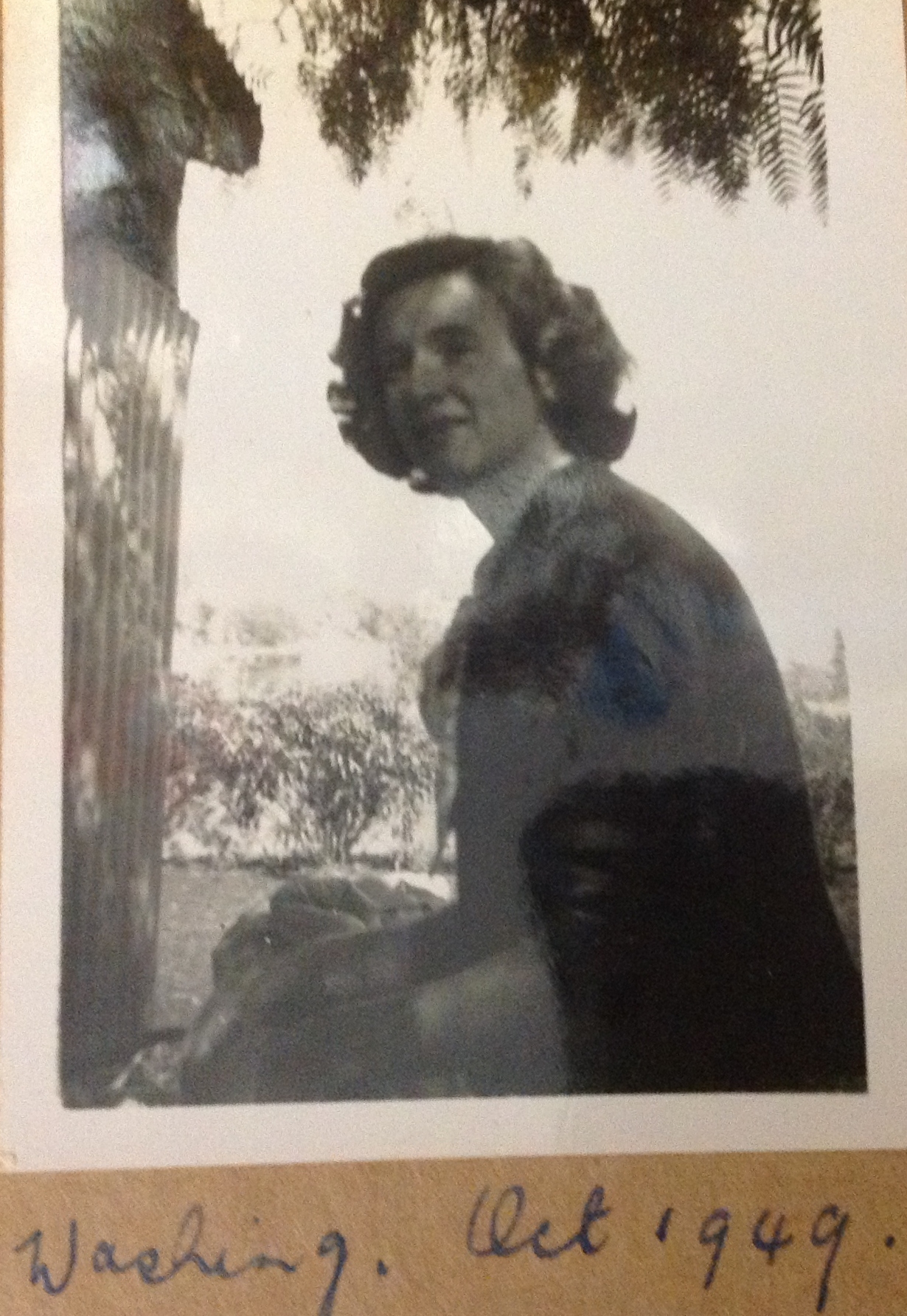
    washing 1949

    Washing day

    Her freckled, calloused hands were red and chaffed as they gripped the wooden stick and stirred Monday’s sheets in the large copper pot heating over burning blocks of wood.

    The children played in the dirt nearby, scratching like chickens, hopeful of an interesting find.

    The dirt embedded under her torn and splitting fingernails began to ease away in the warm sudsy water as she heaved the sodden sheets and plopped them onto the wooden mangles.

    The children fought to turn the handle, smearing dirty handprints on the sheets.

    She sighed, and hung them over the line. One chore done.


    I welcome your feedback. Please share your thoughts about any aspect of the article or my flash fiction piece.


  • 3 Inspiring educators

    3 Inspiring educators

    Like every other teacher, I want to make a difference in the world.

    The thought that I could make a positive difference to the life of another is both empowering and inspiring.

    To do so, I seek out others making a positive difference and pay it forward, hoping that the ripple effect will carry it far and wide.

    flag on twitter

    Three inspiring educators who have positively influenced me are:

    Brian Cambourne

    Brian is an amazing literacy educator from whom I had the extreme good fortune of learning many years ago. I have written about him before here and here.

    Brian’s work focused on the conditions necessary for literacy development. His influence has spread beyond the classroom with the application of the conditions to learning in the workforce demonstrated.

    Tony Ryan

    Tony is an amazing educator who does his best to be the change he wants to see in the world. He talks about future-proofing and using innovative thinking to solve problems of both local and global importance.

    Anyone who believes ‘that education is the most important profession on the planet’ and does everything in his power to support teachers to be outstanding, as does Tony; must be pretty good in my books.

    One of Tony’s books The Ripple Effect is particularly apt for mention in this post. Tony says,

    “you must believe in your personal power to create ripples that spread out and change the world. In fact, if it is not you who is going to do it, then who else do you think is likely to make the effort? Remember that every change on this planet begins with a human being somewhere, somehow. It may as well be you.”

    This year Tony has started a new project called The Earth Movers Foundation which ‘helps young teenagers to create solutions to local and global issues. And they get to choose their own project. No adults will be telling them what project to do. They decide for themselves.’ Sounds pretty good to me.

    Ken Robinson

    Ken is another amazing educator. I fell in love with his ideas when I listened to his TED talk Do schools kill creativity? which I have also shared before here.

    The statement on his website declares that

    “Imagination is the source of all human achievement”.

    I could not argue with that.

    Ken introduces this short video The writing spirit which presents quotes from artists, thinkers, writers, innovators and snippets of interviews with writers. Just incidentally, and exciting for me, Richard Bach is included. Richard is the author of Jonathan Livingston Seagull, one of my favourite books for its inspirational message.

    It is more than likely that these educators have no idea how they have influenced my life (and others as a result).

    How wonderful might it be to know of the positive influence you have had on someone, and to have the opportunity of letting others know that they have positively impacted your life?

    This is the purpose of The Butterfly Light Award which was bestowed upon me my Lisa Reiter, a lovely lady who is herself inspirational for her courage and her positive attitude which she shares with others through her blog Sharing the story. Thank you, Lisa. I am honoured and accept with pleasure.

    As with any award, it comes with conditions:

    1. You should write an acceptance post, making sure you link back to the blogger who awarded you and thank them. You MAY NOT lump this award in with a batch of other awards.

    Thank you Lisa Reiter!

    1. You must individually name and re-award to a minimum of 1 and a maximum of 9999999 bloggers. You must let them know either personally with a comment on their blog OR a pingback.

    As I have been writing about educators, I am going to stick with that theme. A quick visit to these blogs will explain why I have selected them.

    Ruth Mancini

    The Nerdy Book Club

    Two Writing Teachers

    Raising a literate human

    3.  You should link back to Belinda’s blog either to http://idiotwriting.wordpress.com/about/ or http://idiotwriting.wordpress.com/2014/03/13/i-love-charismatic-geeks/

    Done!

    1. You must write a short paragraph entitled either “How I’m Spreading Light” OR “How I’m A Positive Influence” (what Lisa calls ‘the squirmy bit’).

    Done! See beginning of article.

    5. Display Belinda’s lovely “Butterfly Light Award” badge on your blog.

    Thank you, Belinda. It’s a pleasure! We can never have too many butterflies!

    butterfly-light-award

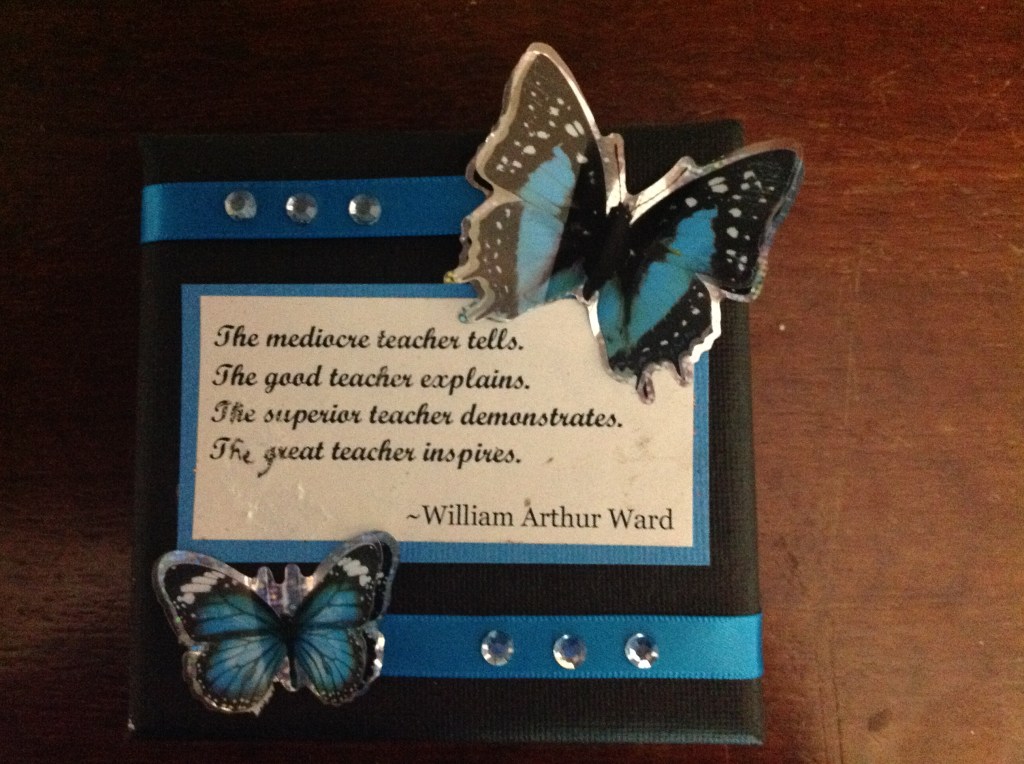
    Note: The beautiful framed quote, pictured at the top of this post, was made for me by a wonderful lady, the mother of two of my students. They all share my love of butterflies! I thank them for sharing their appreciation of my positive influence.

    I welcome your feedback. Please share your thoughts about any aspect of the article.

  • I’m too busy to be tired!

    www.openclipart.org http://goo.gl/zkTCJO
    http://www.openclipart.org http://goo.gl/zkTCJO

    This week’s flash fiction prompt posted by Charli Mills posed a challenge for me.

    How do I respond to her prompt to:

    In 99 words (no more, no less) write a story about exhaustion.

    and maintain my focus on education?

    Do I ignore the prompt and post about education?

    Do I respond to the flash fiction prompt in isolation?

    Neither of these alternatives appealed as I have been enjoying the camaraderie and support of the flash fiction tribe as well as the opportunity to experiment in a genre that, while not an immediate writing priority, I may move towards in the future. On the other hand, as my intent with this blog is to share ideas and thoughts primarily about education, I don’t want to become distracted from my focus.

    As do many, the idea for this prompt attached itself to me when I wasn’t thinking about it. Ideas tend to pop into my head when I first awaken in the morning, when I am showering, or during any other moment when my thoughts are free to flit and fly without the constraints of achieving a particular outcome.

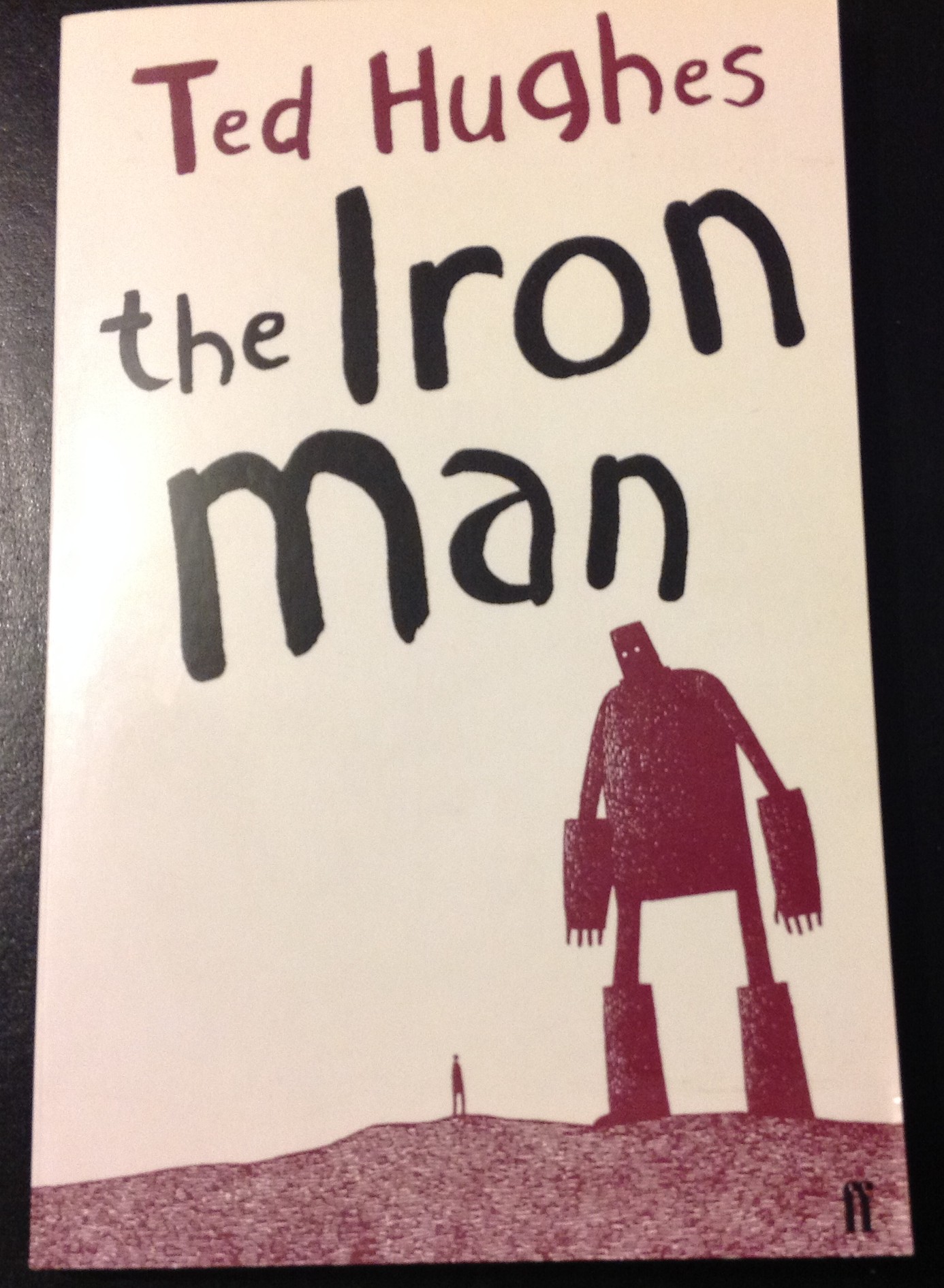
    This one descended when I was out for a drive appreciating the beauty of the pure white clouds, like puffballs, on the bright blue sky of a glorious winter day. It plopped down, ‘Barrrump!’ just as the space-bat-angel-dragon from The Iron Man by Ted Hughes had plopped down on Australia.

    book 2As mentioned in a previous post, The Iron Man is one of my favourite books. It is a great story told in beautiful language. On the back of my copy a quote from the Observer declares that it isReckoned one of the greatest modern fairy tales.’ The rhythm and poetry of the language begs for it to be read aloud. Because it has just five short chapters, ‘a story in five nights’, it is perfect as a first chapter book to share with younger children, and can be read to a class in a week, a chapter a day.

    The chapter I wish to share with you in this post is #4 ‘The Space-Being and the Iron Man’.

    The previous chapter has seen The Iron Man happily ensconced in a huge scrap-metal yard. It could have finished there with a happily ever after ending. But no. It was only chapter 3. There were two more chapters to come! What excitement was in store?

    The chapter begins

    One day there came strange news. Everybody was talking about it. Round eyes, busy mouths, frightened voices – everybody was talking about it.

    One of the stars of the night had begun to change.’

    We are immediately reeled back into the story – What is going to happen? What will the Iron Man do? – and propelled along by the giant star that grew ‘not just bigger. But bigger and Bigger and BIGger as it came

    rushing towards the world.

    Faster than a bullet.

    Faster than any rocket.

    Faster even than a meteorite.’

    Thankfully it stopped before it hit Earth. But wait – it’s not over yet, for ‘a dreadful silhouette, (came) flying out of the centre of that giant star, straight towards the earth.

    After several days it (‘a terrific dragon) landed, with its body ‘covering the whole of Australia’ and it ‘wanted to be fed. And what it wanted to eat was – living things.

    The people of the world decided they would not feed this space-bat-angel-dragon … they would fight it.” But all the forces of the world were no match for the dragon.

    As you may have guessed, this is where the heroic Iron Man devises his plan ‘to go out, as the champion of the earth, against this monster from space’. The dragon was very surprised to be challenged to a test of strength.

    The Iron Man, you may remember, is taller than a house, but the space-bat-angel-dragon is bigger than Australia.  The dragon thought that, when the Iron Man had finished, he’d ‘just lick him up.’ He didn’t figure on the ingenuity of the Iron Man. The Iron Man’s challenge was for the dragon to ‘go and lie on the sun till (he was) red-hot. (The Iron Man was small enough to be made red-hot on Earth.)

    After the second journey to the sun the dragon again ‘landed on Australia. This time the bump was so heavy, it knocked down certain sky-scrapers, sent tidal waves sweeping into harbours, and threw herds of cows on their backs. All over the world, anybody who happened to be riding a bicycle at that moment instantly fell off. The space-bat-angel-dragon landed so ponderously because he was exhausted.

    Have you ever felt that exhausted you just wanted to flop down and never move again? An article in my local newspaper1 recently declared that We belong to the Spent Generation – the most overcommitted, overscheduled, overconnected, and therefore overtired, in modern times.The journalist Frances Whiting listed a number of professions including ‘doctors, scientists, social commentators (who) the statistics tell us (are) working longer, sleeping less, not resting enough and taking on too much.’

    Teachers weren’t on this list, but they could have been at the top. Anyone who lives with, or has a friend who is, a teacher knows the long hours they work. Because it is a caring profession it is impossible to leave work at the gate and pick it up the following day. Content-driven curricula and unrealistic expectations imposed upon both teachers and learners place extra stress upon all stakeholders. Long before a school terms end teachers are tired, stressed and in need of time to recuperate and recharge in preparation for the next one.

    At the moment most teachers in Australia are conducting assessments, evaluating their own work and student learning, preparing report cards and conducting teacher-parent interviews. This is in addition to their ongoing tasks of preparing and teaching lessons and is mostly expected to be completed in out-of-scheduled work hours.

    When I was teaching I worked between 50 and 70 hours most weeks. I used to say that even with our ‘enviable’ holidays we were still owed time. In my current out-of-the-classroom role as writer of curriculum materials, I now feel the difference as I don’t have to think about it away from my desk.

    I still get tired, but not the same heavy exhaustion that comes from giving all; physically, mentally and emotionally, to a class of 25 active learners while trying to stay afloat amidst ever increasing expectations.

    So my flash this week recognises the teachers who, buried under a pile of paperwork and lost in a maze of data collecting spreadsheets, still struggle to be everything to everyone, endeavouring to make every child feel special and valued, while often feeling that their own work fails to achieve any real recognition. Enjoy the break, teachers. You deserve it!


    A Unicorn at School

    ‘Miss. Marnie has a toy in her bag.’

    ‘Uh-uh,’ I responded.

    ‘You’re not allowed to have toys at school,’ he insisted.

    ‘Uh-uh.’

    Trust him! Always dobbing.

    ‘Miss,’ he persisted, tugging my sleeve.

    ‘What is it?’ I sighed, dragging myself out of the confusion of marks and percentages that now seemed more important to telling a child’s story than their own words and actions.

    I looked at the little fellow pleading for my attention. They were all so needy; so demanding; but time . . .

    ‘It’s a unicorn, Miss.’

    ‘Unicorn! Let’s see!’ I was back. A child in need!

    flag on twitter

    I welcome your feedback. Please share your thoughts about any aspect of the article or my flash fiction piece.


    1 QWeekend 14-15 June, 2014

  • Of rainbows and unicorns – Part 1 – Fantastic creatures and magical realms

    I am not a reader of adult fantasy novels. I have never read Lord of the Rings, The Hobbit or Watership Down. I just couldn’t buy into it. I’m sorry I have to admit it – it is true.

    However, I don’t mind a bit of fantasy in children’s books and, in fact, really enjoy it. I didn’t mind the rats’ use of language in Robert C. O’Brien’s The Rats of Nimh while I couldn’t handle the talking rabbits in Watership Down by Richard Adams. I cannot explain why my response is different but I’m sure it has something to do with the ability to suspend disbelief. I am obviously more able to do that when encountering fantasy in children’s stories than in adult fiction.

    As both parent and teacher (and now grandparent) I love sharing stories with children. In addition to all the good things I know it is doing for them, it is doing lots of good things for me as well. Reading children’s stories written by masterful authors is one of life’s greatest pleasures and I love having excuses for doing so.

    This week the flash challenge issued by Charli Mills at the Carrot Ranch was to

    In 99 words (no more, no less) write a story that includes a fantastical element or creature. 

    I am taking the opportunity of sharing with you some of my favourite fantastic creatures and magical realms from children’s stories. Each of these stories is wonderful to read aloud and share with children.

    Charli mentioned rainbows, unicorns and the phoenix.

    I thought of The Iron Man by Ted Hughes (a story in five nights, suitable for children from age 5 – 104)

    book 2

    “Taller than a house, the Iron Man stood at the top of the cliff, on the very brink, in the darkness.

    The wind sang through his iron fingers. His great iron head, shaped like a dustbin but as big as a bedroom, slowly turned to the right, slowly turned to the left. His iron ears turned, this way, that way. He was hearing the sea. His eyes, like headlamps, glowed white, then red, then infra-red, searching the sea. Never before had the Iron Man seen the sea.

    He swayed in the strong wind that pressed against his back. He swayed forward, on the brink of the high cliff.

    And his right foot, his enormous iron right foot, lifted – up, out, into space, and the Iron Man stepped forward, off the cliff, into nothingness.”


    and The BFG by Roald Dahl. (a longer tale for school age, and older, children)

    book 4

    “It wasn’t a human. It couldn’t be. It was four times as tall as the tallest human. It was so tall its head was higher than the upstairs windows of the houses. Sophie opened her mouth to scream, but no sound came out. Her throat, like her whole body, was frozen with fright.

    This was the witching hour all right.

    The tall black figure was coming her way. It was keeping very close to the houses across the street, hiding in the shadowy places where there was no moonlight.

    On and on it came, nearer and nearer. But it was moving in spurts. It would stop, then it would move on, then it would stop again.

    But what on earth was it doing?”


    I thought of Joan Aiken’s wonderful collections of fairy tales like A Necklace of Raindrops (for children in early years of schooling)

    book 3

    “And when she had nine raindrops Laura found that she could make the rain stop, by clapping her hands. So there were many, many sunny days by the sea. But Laura did not always clap her hands when it rained, for she loved to see the silver drops come sliding out of the sky.

    Now it was time for Laura to go to school. You can guess how the other children loved her! They would call, “Laura, Laura, make it stop raining, please, so that we can go out to play.”

    And Laura always made the rain stop for them.

    But there was a girl called Meg who said to herself, “It isn’t fair. Why should Laura have that lovely necklace and be able to stop the rain? Why shouldn’t I have it?”

    and The Kingdom Under the Sea (for children approx. 8 -12), each beautifully illustrated by Jan Pienkowski adding another element of wonder to the tales.


    book


    Charli suggested that we “think of how (we) can use the fantastical to enrich realities” and I thought of the mouse who invented The Gruffalo in Julia Donaldson’s story and showed how imagination could be used to solve problems that arise. (The Gruffalo is suitable for children in pre-school and early years of schooling)


    While the above excerpts are short, like flash fiction, each demonstrates the skill of the author in choice of words and sentence structure. In his book On Writing Stephen King refers to these as forming the top level of the tool box. But these excerpts show a depth greater than that also.  They create a connection, forming a relationship with and a need in the reader to know what happens.

    It is the ability of the author that sweeps us away, as if on a magic carpet, to other places and other lives. It is the ability of the reader to suspend disbelief that allows the journey to occur.

    I thought about how we, as either child or adult, use fantasy to escape realities that we may not wish, or not feel strong enough, to face. This brought me back to Charli’s unicorn.

    And now I offer my own bit of flash, which is not suitable for reading to children of any age.


    www.openclipart.org http://goo.gl/Ep1vK6
    http://www.openclipart.org http://goo.gl/Ep1vK6

    Unicorn knights

    She sat on the bed and looked around. Funny how some things don’t change.

    They had left it untouched for all those years since her escape, waiting for her return. But she never did. Never could. Until now.

    “You should,” she was told. “Make peace.” “Let it go.”

    It didn’t look so scary now. They were both gone. She was grown.

    Sunlight glinted on the unicorn. It had faded but waited still, on the night-table, for their nocturnal escapades away from cruel reality.

    She fingered it for a moment, remembering. Then dumped it in the wastebasket.

    “Sell!” she said.


    I welcome your comments on any aspect of this post; the books I have suggested for sharing and my own piece of flash.

    Don’t forget to pop over to the Carrot Ranch where you can read responses to Charli’s prompt by many other writers.