Live Love Laugh Learn … Create the possibilities

Category: Blogging

  • How do you connect?

     Many of you may recognise this song from Sesame Street: One of these things is not like the other.

    Finding the one that doesn’t belong sounds like a simple activity, but which one did you choose? And why? Did you choose the rubber boot? I didn’t. I chose the shoe with laces. Does that make me wrong?

    The items had some obvious similarities: they were designed for wearing on the feet, and they were similar colours. Differences in size and style were also obvious.  Just what made the rubber boot “not belong” any more than any of the others, I’m not sure. Does that mean I am not as smart as a pre-schooler?

    Rather than simply providing children with an answer as happens in this video, I would prefer children were provided opportunities to explore and discuss similarities and differences and would invite children to explain why a particular shoe might be selected.  I think there are valid reasons for each to not belong, and there are also many reasons for them to be grouped together.

    The ability to make connections between new and established information, including by identifying similarities and distinguishing differences, is an important contribution to learning. Adults can aid in the learning process by making explicit the ways in which objects are similar and by discussing ways in which they are dissimilar.

    Young children very quickly learn to notice obvious similarities between e.g. different breeds of dogs, a variety of drinking glasses and cups, or construction items. However adults can assist and challenge children to think creatively and in new and innovative ways by encouraging them to make connections between seemingly disparate objects.

    Many innovations have been developed as a result of creative thinkers making links that didn’t previously exist between apparently dissimilar objects or situations. George de Mestral’s invention of Velcro, involving the application of an observed phenomena to a very different situation, is perhaps one such example.

    Playing games is a good way of encouraging children to think creatively. It is not necessary to purchase pre-packaged games. Many games can be played with items from around the house or in the toy box, or using picture cards from early childhood games like ‘snap’, printed clipart, or cut from magazines. Here are just a few suggestions around which you can construct your own ways of taking turns, playing and having fun:

    https://openclipart.org/image/800px/svg_to_png/178912/tweedles.png
    https://openclipart.org/image/800px/svg_to_png/178912/tweedles.png

     What’s the same?

    Display two pictures e.g. a duck and dog, a bus and a boat. How many ways are they the same?

     How are they different?

    Display two pictures and explain how the items are different. The differences could be obvious e.g. a duck and a dog, or more subtle e.g. two different breeds of dogs, or a male and female bird.

    Which one does not belong?

    Display three or four pictures. Discuss similarities and differences, and then decide which one doesn’t belong, providing reasons.

    Sorting

    Provide children with a larger number of items e.g. construction blocks in different sizes, styles and colours or pictures of a variety of objects or animals. In the beginning it is easiest to sort by one feature e.g. is yellow/is not yellow. Encourage children to look for similarities between particular items e.g. colour or shape and ask them to group all items with that characteristic. They will then have two groups, one with the feature and one without.

    Once children can confidently sort in this way they may be able to sort by two characteristics e.g. size and colour. They may even begin to make decision about how to deal with items that fit into two groups.

    What else?

    Show children a common everyday object and discuss its use. Encourage them to think of alternate uses for the same object e.g. a pencil could be used as a flagstick, a mast on a toy boat or to identify where seeds were planted in a garden.

    Link the story

    Display pictures of any two items e.g. a beach ball and a pencil. Ask children to create a story that involves both items. I immediately think of a family making plans for a holiday at the beach. The child wants a ball to play with at the beach and uses a pencil to add “beach ball” to the list of items to take. Your thoughts are probably very different. I’m sure someone will have the beach ball impaled on the pencil!

    Making up stories like this can be just as much fun for adults as it is for children. Charli Mills at the Carrot Ranch has challenged us to make it so this week with her flash fiction prompt to:  In 99 words (no more, no less) write a story using two objects, people or ideas that don’t go together. Charli allowed us to choose the two items. I decided to explore a little more of my tormented Marnie and her unicorn. I’d be pleased to know what you think.

    Unicorns and coffee

    People crammed in, around and in front of the small sidewalk cafe, reminding her of the fairy-tale pageant that had bypassed her radar. She couldn’t move now. Her coffee fix, too hot to sip, had just been served. So, as always, she retreated within.

    Cocooned in thoughts flittering across years and experiences, she barely noticed the cacophony of the crowd or passing parade.

    The sudden shout of “Unicorn!” penetrated, startling her.

    She was six again, cowering with her unicorn, avoiding mocking stares.

    But this time pitying and unbelieving stares watched the spreading stain of scalding coffee.

    Thank you

    Thank you for reading. I appreciate your feedback. Please share your thoughts about any aspect of this post or flash fiction.

  • Talking interviews

    BITE SIZE MEMOIR

    Lisa Reiter is writing her memoir and sharing her stories on her blog. She also invites others to join in and share their memories through her Bite Size Memoir prompt. Her prompt of the moment is “Interviews”.

    In my role of teacher over the years, I have conducted many parent-teacher interviews, each with varying degrees of pleasure and stress. And that’s just for me! I have also sat on the other side of the desk attending interviews to find out about the progress of my own two children.

    I mostly worked with children in their first year of school.

    When conducting interviews with parents, particularly at the beginning of the year but at any time, I always invited them to talk first; to tell me their impression of how their child was going, to raise any concerns they had and to ask any questions they wanted answered.

    There are a variety of purposes for beginning an interview in this way:

    • It gives the parents a voice and acknowledges their importance in the child’s life and education.
    • It ensures that any concerns parents have are raised and discussed first, and not left until the end or even missed out in the short time allocated to each interview scheduled on a parent-teacher night.
    • It provides an insight into the child’s life and how the attitudes of the parents may affect, or be reflected in, the child’s attitude to school and learning.

    Often times I have found that parents share my concerns, and discussing them is easier when raised by the parent. One of the most difficult things is raising and discussing an issue of which the parent is unaware.

    Over the years I have found that what parents most want to know is:

    Is my child happy?

    Is my child well-behaved?

    Does my child have friends?

    How does my child’s progress compare to that of others?

    Prior to the interviews I would make a checklist of things I wished to discuss with each parent, including responses to the queries listed above and any other issues I wished to raise or anecdotes I wished to share, ensuring the positives always outweighed the concerns. I would gather samples of the child’s work to show and have at hand suggestions for ways the parents could continue to help with their children’s learning at home, which generally meant reading to them, talking with them, playing games together and possibly involving them in daily activities such as setting the table, writing shopping lists etc.

    But I digress. My purpose in writing this post wasn’t really to talk about parent-teacher interviews, it was to list 10 memories about interviews in response to Lisa’s prompt. Like the parent-teacher interviews, many of them have a link to education.

    www.openclipart.com http://goo.gl/EY7z5L
    http://www.openclipart.com http://goo.gl/EY7z5L

    I remember interviews

    15073-Briana-web

    School days

    • I remember brushing up on my conversational French for an interview as part of my final exam. I remember the interviewer laughing at something “funny” I said. I’m not really sure if he was laughing at what I meant to say, or at what I did say!

    Employment

    • I remember not having an interview for my first teaching position. I was awarded a three-year teaching scholarship which, in return for my training and a small living allowance, “bonded” me to the Education Department for three years.
    • I remember agonising for hours over written responses to selection criteria but being unsuccessful in the interviews; and going without preparation to other interviews and scoring the job!

      bad taste party
      Would you employ this woman? Bad taste fundraising function at school.

    Police

    • I remember being interviewed by a policeman after hitting a pedestrian on my way to work one morning. I was horrified to see the teenage girl bounce off the bonnet of my car. Fortunately she wasn’t hurt as I had only just pulled away from traffic lights, but we were both rather shaken up. She was only a few metres from a pedestrian crossing (also with lights) and the policeman said if anyone was to be charged it would be her. I wish she hadn’t been so impatient. I still worry about the unpredictability of pedestrians on the side of the road.
    • I remember being interviewed by police after our car was stolen. I was so upset I couldn’t remember the registration number. After it was stolen a second time, we got rid of it!

      stolen car
      Our beautiful car – stripped!
    • I remember being interviewed by the police after our house was burgled and giving them a list of items that had been stolen. The most surprising one was a big screen TV. Big in 1999 is not the same as big in 2014. It went as far out the back as it did across and weighed a ton. How they got it out of the house and down the steep driveway without being seen I’ll never know; or even why they did, as newer technology  was on its way and it wouldn’t have been worth much to resell.

    The media (Note: You are neither expected nor required to watch any of the videos included in this section. They are simply for my amusement and learning.)

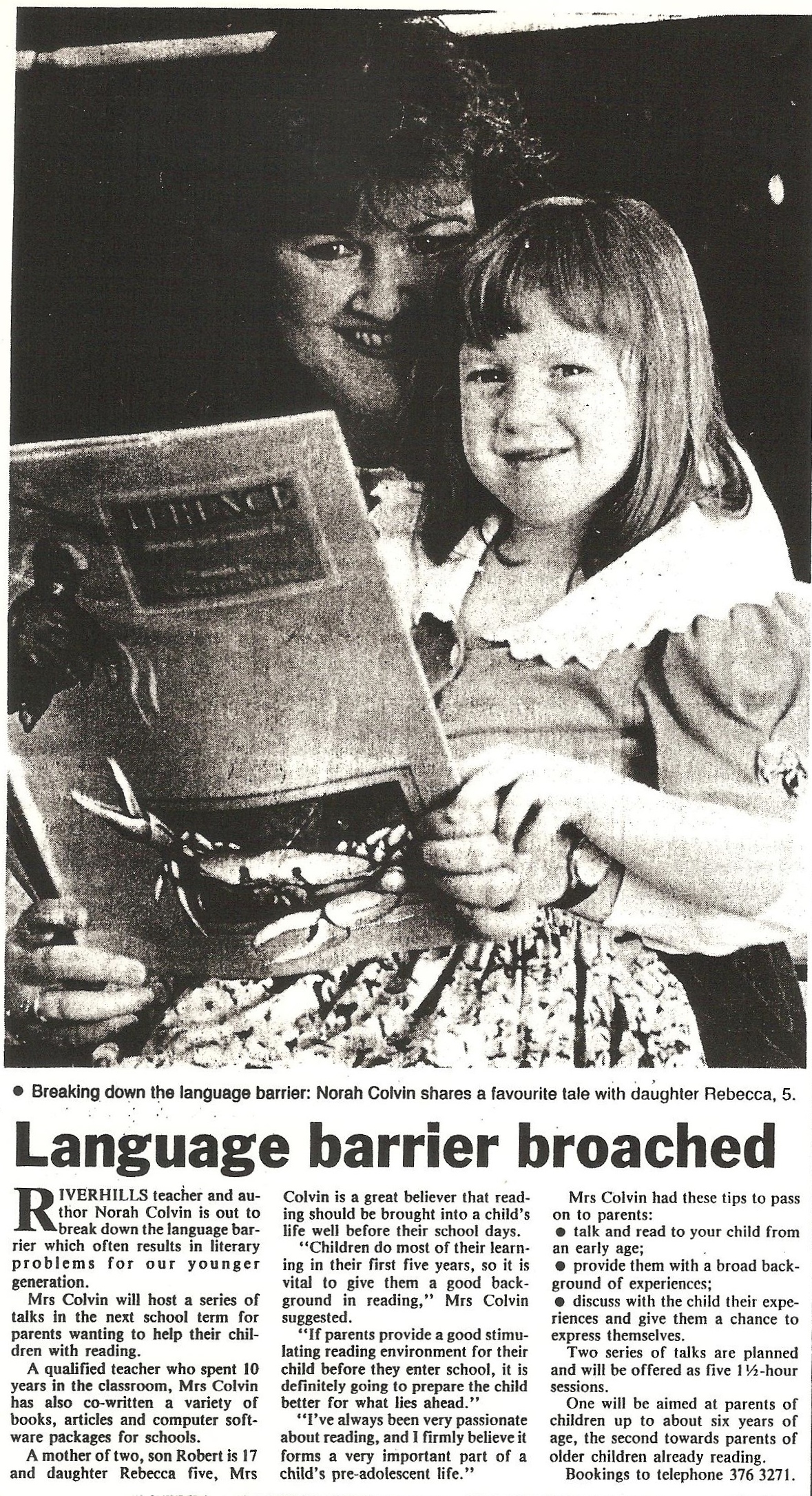
    • I remember being interviewed by the local paper when offering sessions to assist parents help their children read.

    Satelitte 17.06.92 (2)

    • I remember being interviewed on Radio on the morning of the Family Day Picnic for the year of the family in 1994.
    • I remember being interviewed on a local community television station. I was invited to talk about the alternative school I was setting up. (I haven’t found the footage yet, but below is a response given to a question about self-esteem at a publicity meeting. Apologies for the amateur quality.)
    • I remember being interviewed at school about keeping butterflies in the classroom, twice: each time for different programs and different television studios.


    Just as an aside, at about the same time that I was being interviewed about butterflies for the program “Totally Wild”, Bec was also being interviewed at school for the same program. She is proud to say that the times she appeared on that program numbered three to my one! Not long afterwards she appeared on the news a couple of in anti-war rallies!

    Bec on "Totally Wild"
    Bec and friend Elise talking about heating on “Totally Wild”

    Of course, not all interviews occur face-to-face. Interviews can take place online too. During the 15 months that I have been blogging I have passed on a number of awards asking people to answer questions. This post is a compilation of the answers given to my interview questions by my first nominees.

    Thanks, Lisa, for this opportunity to take a walk down memory lane.

    Thank you

    Thank you readers. I appreciate your feedback. Please share your thoughts about any aspect of this post.

  • Which is your favourite thinking room?


    Do you have a quiet place at home where you like to think?

    do not disturb door

    Some people I know like to think in the toilet. (I’m not one of them. I prefer to not be in there long enough for that!) They see it as a quiet place where they can sit and think, undisturbed, for as long as they like. If they are “in the can”, “in the dunny”, “at the loo” or “out the back”, or whatever other euphemism you can come up with, their position is unassailable and their sanctuary respected. Mostly, anyway. Parents of young children may vehemently disagree with that!

    A couple of weeks* ago Anne Goodwin reminded us of World Toilet Day and how lucky we are to have access to toilets and sanitation. Most of us take what used to be the smallest room in (or out) of the house for granted, not giving its use a second thought as we flush away our waste.

    But not everyone is so lucky. It seems that more of the world’s population have access to a mobile phone, and or to the internet, than to a toilet. Visit Anne’s blog for many links that explain why a day for toilets is important.

    WaterAidAustralia explains that

    “The day was created to raise global awareness of the struggle faced by the 2.5 billion people living without access to sanitation. It is also used to explore some of the healthy, emotional and psychological consequences people endure as a result of not having a proper, clean toilet.”

    An article written by Nicole Arce and published in the Tech Times cites the U.S. Centers for Disease Control and Prevention for the information that 2,200 children around the world die every day due to diarrhoea. Proper sanitation would prevent most of those deaths.

    Arce writes that the Indian Prime Minister Narendra Modi has set 2019 as its target for “total sanitation”. However, as also suggested in Anne Goodwin’s flash fiction piece “Culture Shock”, the problem can be attributed to cultural as well as monetary issues.

    Charli Mills at the Carrot Ranch followed Anne Goodwin down the toilet path and extended the discussion to include the effect that poor sanitation has on education, particularly of young girls. The link is not as tenuous as it may first appear as explained here and here.

    Charli decided to use her flash fiction challenge to “spread awareness that toilets matter.” She invited readers to “Help spread the call for human dignity and basic sanitary health” by linking to UNICEF when responding to her prompt: In 99 words write a story that includes the toilet.

    I have decided to do just that, as have many others. Check out Charli’s post at the Carrot Ranch to read all responses.

    Toilet sanctuary

    “Miss. Marnie’s locked herself in the toilet and won’t come out.”

    “What now?” I thought, scanning the troubled face pleading for assistance as much as to be absolved of blame.

    “Okay,” I reassured Jasmine. “Let’s go see what’s up.”

    As we hurried to the toilet block Jasmine reiterated her innocence, she hadn’t done anything, she didn’t know what was wrong (it wasn’t her fault).

    “I know,” I smiled. The toilet cubicles had frequently been Marnie’s sanctuary. But not for weeks.  Jasmine’s kind-hearted friendship had seen to that.

    “She’s got her unicorn again,” Jasmine whispered.

    “Oh,” I said.


    *I apologise that this post may appear out of sync with World Toilet Day which was now ten days ago. Unfortunately I have been without internet access for 12 days and unable to publish although I had the post written. Fortunately I still had access to a flushing toilet, and if I had to choose between that and the internet, I’d go for the toilet every time! Though World Toilet Day has passed for this year, the message remains important every day!

    Thank you

    I appreciate your feedback. Please share your thoughts about any aspect of this post or flash fiction.



  • What do you bomb at?

    According to my online sources, including internetslang.com, bomb can mean “something really bad” or “something really good”.

    The urbandictionary.com states that before 1997 it meant “something really bad; a failure”; and that since 1997 it has referred to something excellent, and if preceded by the word ‘the’ it means the best!

    My use of the word “bomb” fits neatly into the pre-1997 definition. Perhaps it’s not surprising since I lived most of my life so far pre-1997! Hopefully, should I live long enough, half of my life will be lived after 1997 as well, but I’ve a while to wait to see if that happens!

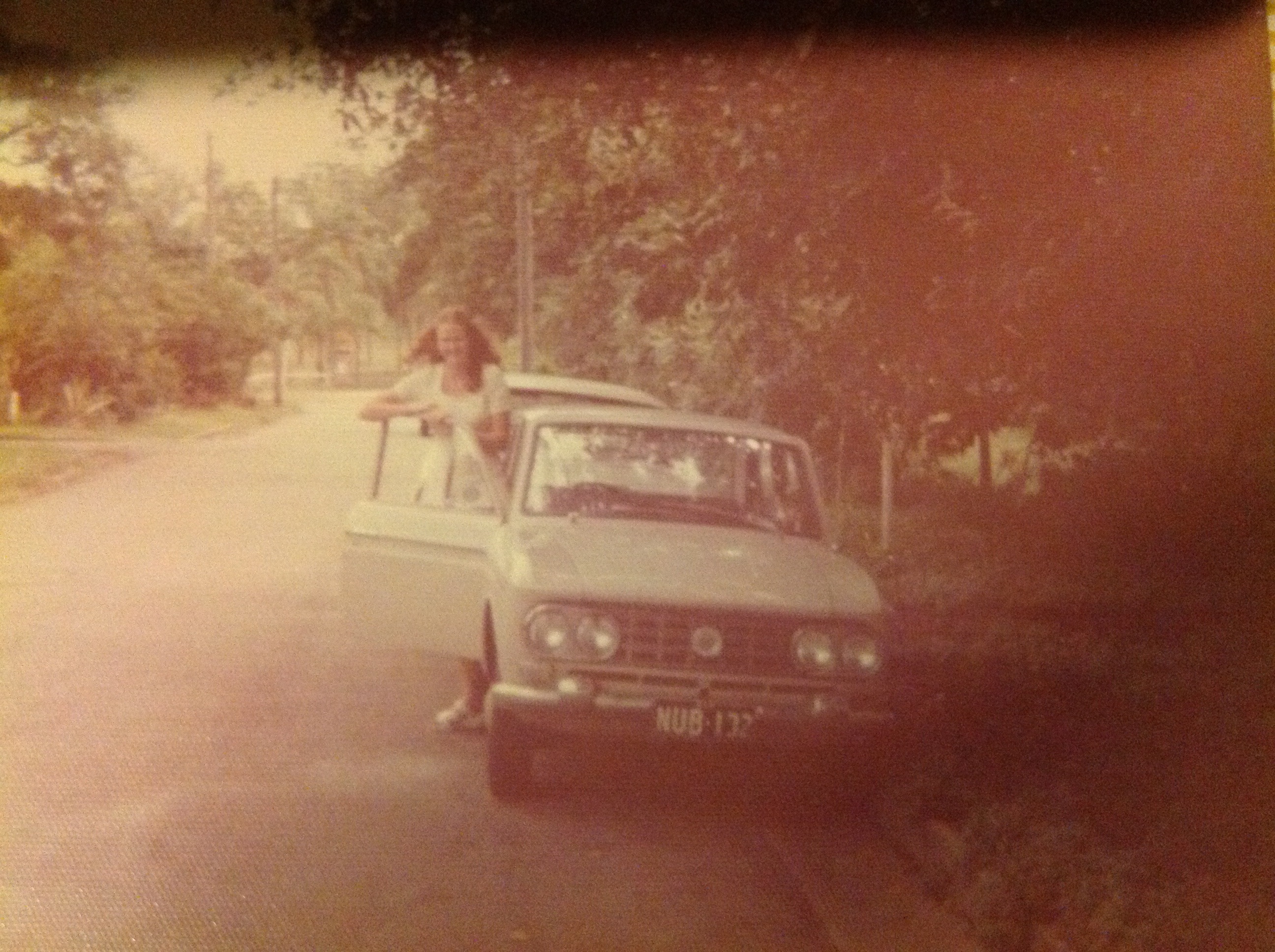
    In my day the word “bomb” was often used to describe an old beat-up car. I bought my first car when it was ten years old. It may have been described by many as a bomb (it burned oil and smoked terribly amongst other things) but I loved it, adorned it with flower stickers and even named it “Ziggy”.

    car Ziggy

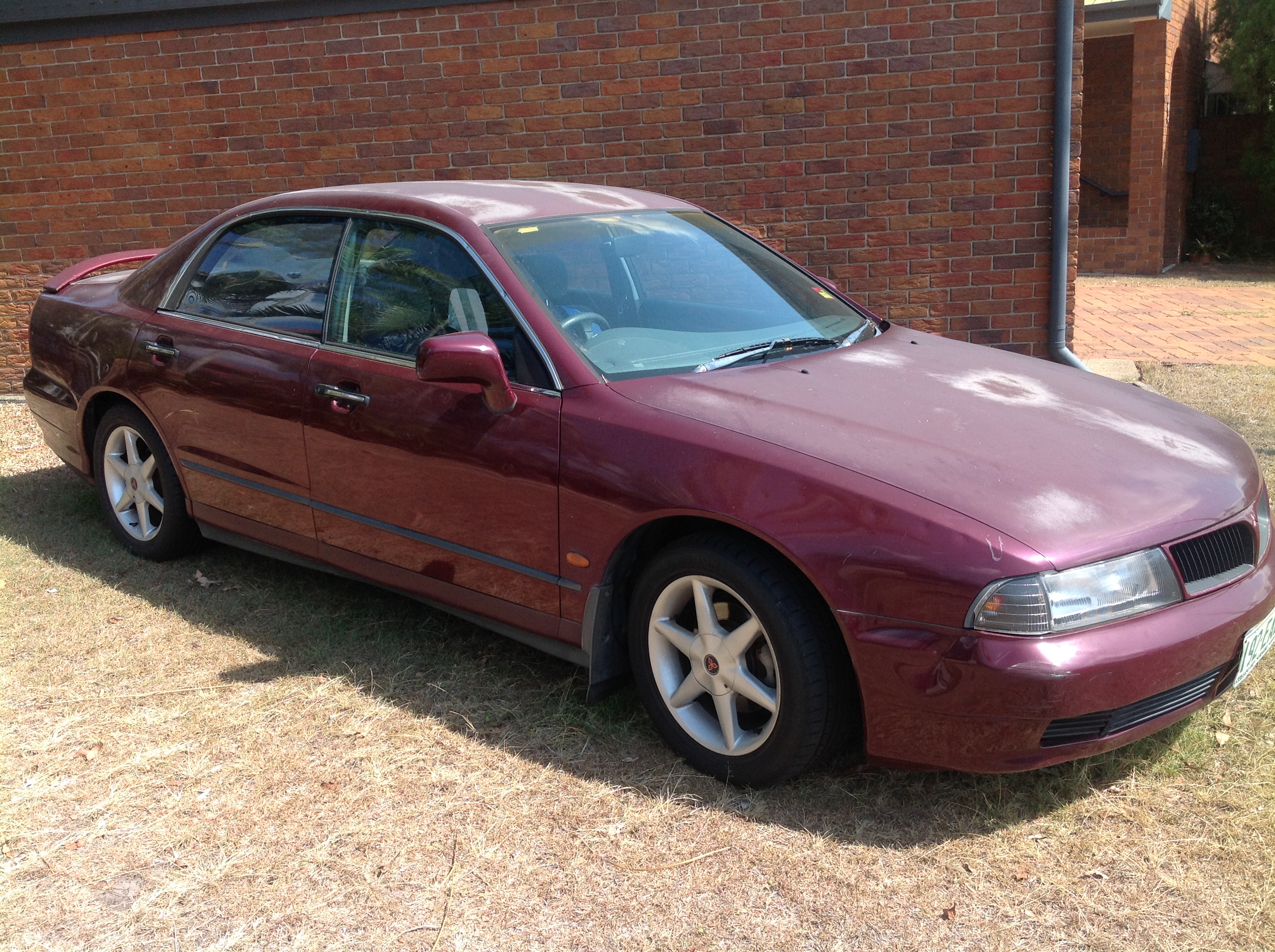
    Nowadays cars seem to last a lot longer before they earn the title of bomb. Dare I say our 1997 car has only in recent years earned that title, and really only after it became unsightly due to hail damage and deterioration of the paintwork. It has been replaced by a car we might call “the bomb” but it still sits in the front yard and gets an occasional outing, too precious for someone (other than me!) to part with.

    magna

    The most common use of the word as a verb was to refer to failure, particularly with regard to exams. After what felt to be a particularly dismal attempt at an exam, various students would bemoan its difficulty saying, “I bombed”. I have talked about failure in previous posts including my “failure” at singing here, and the failure of some aspects of schooling here. The word ‘bomb’ doesn’t appear in either of those posts.

    It was Charli Mills of the Carrot Ranch who got me thinking about bombing with her Nov 12: Flash Fiction Challenge to In 99 words (no more, no less) write a photo bomb (serious scene interrupted by something absurd or unexpected).

    Now Charlie was talking about photo bombs which she described as an “earnest photograph interrupted by the unexpected”, but I thought I would tackle video bombs. I knew I had made quite a few of those!

    In an effort to learn more about making videos, which has been on my to-do list for ages, I also decided to make a compilation of video bombs to accompany my 99 words, while endeavouring to meet both Charli’s criteria and mine:

    Charli:

    99 words

    bombing

    Me:

    99 words that make sense (always a priority)

    find videos to match the 99 words

    make a compilation video

    record the video and words

    My attempt is quite experimental and rather rudimentary at best but I learned a lot in the process. Since my blog is about learning, I decided to share it with you as a checkpoint on my learning journey. I know it’s definitely not “the bomb”, but I hope I haven’t totally bombed.


    In the words of C.S. Lewis,

    “Failures are finger posts on the road to achievement.”


    Video bombing

    Are you a video bomber?

    Ever tried making a video but

    the subject won’t cooperate,

    or turns its back to you,

    or perhaps it even disappears Poof! It’s out of view.

    You shoot upside down or to the side,

    the focus you can’t get right.

    You shoot with the camera supposedly off,

    then close-up your fingers when on.

    You record to capture a photo,

    or snap when it’s action you want.

    If your answer is ‘Yes” to just one of these

    come join the vid-bombers club.

    We’ll commiserate

    And then celebrate

    When your video capture’s “the bomb”!

    Thank you

    I appreciate your feedback. Please share your thoughts about any aspect of this post, flash fiction or video.

  • Online friends – real or imaginary?

    https://openclipart.org/image/800px/svg_to_png/192458/friends-icon.png
    https://openclipart.org/image/800px/svg_to_png/192458/friends-icon.png

    In a previous post Will you be my friend? I asked the question

    “Should one maintain separation from one’s online friends, or take the risk of meeting in person should the opportunity arise?”

    The reason for my asking the question, although I didn’t state it openly at the time, was that I was planning a quick visit to the UK to visit family and wondered if there may have been some of my online ‘friends’ who would like to meet up while I was there.

    applications-internet

    In the short time that I had been blogging I had become part of a friendly little circle of writers who frequently visited and commented on my blog, and whose blogs I visited and commented on. Sometimes we would have quite in-depth discussions about a range of topics, and these discussions would often spill over onto Twitter. Few days would go by when we weren’t communicating with each other in some way and we were developing a certain amount of comfort with each other and our discussions.

    Since some members of this group lived in the UK, I wondered if it might be fun to meet up with them in person but was concerned about what might happen to our online relationship if I didn’t live up to their expectations or we didn’t get along in face-to-face conversation.

    I decided to ask the question via my blog to see what responses I would receive, and indeed to see if any of those I was thinking about contacting would respond and give me an inkling about their thoughts on the matter.

    The responses I received were encouraging.

    https://openclipart.org/image/800px/svg_to_png/148843/1310261210.png
    https://openclipart.org/image/800px/svg_to_png/148843/1310261210.png

    Joanne, who blogs at Writeaway, said that she had met one of her online friends in person. It obviously went well because she said that she wouldn’t be averse to meeting others though she considered geography to be a restriction. I had thought about that too, for although it’s a long way from Australia to the UK, travel distances within the UK could still be great and, while I was going to be based in London, I didn’t know where my friends lived.
    Bec, who blogs at There’s no food said she believed there was a lot of value in online friendships. I knew she would because she and her partner of almost ten years met online! I wasn’t looking for a partner though. I already had one of those!

    Gina Stoneheart, who blogs at Walking in the Write Direction, one Story at a Time, shared her story of meeting a friend on Twitter through following the same favourite children’s book author. They live close enough to meet up in person. She also met her partner online.

    However she did have some words of caution. She said,
    “Make sure you have spoken with them on the phone and have had quite a few emails exchanged. Also, see lots of pictures of them! You never know… there are some crazy people out there!”

    ndetavi-lc

    Although, like Joanne citing geography as a restriction, Gina’s strong recommendation was to ‘go for it’.

    Terry Tyler, blogging at Terry Tyler, said that she had met a few online friends in real life and had even “ended up marrying one!”  Although Terry said that meeting online friends wasn’t something she would go out of her way to do, when she does meet them she really enjoys it.

    Kimmie, who blogs at Stuckinscared, said that she had met some online friends and, although she had felt close to them online, she was still nervous about meeting them face-to-face but is glad that she did; and would meet others if  “courage and circumstances” allowed it.

    Hope of Nanny SheCanDo has met quite a few of her online friends and is glad she did; and Donna Marie from Writer Side UP! said that she has many online friends she would love to meet up with if she had the chance.

    https://openclipart.org/image/800px/svg_to_png/192642/Children_holding_hands.png
    https://openclipart.org/image/800px/svg_to_png/192642/Children_holding_hands.png

    The only one (from the little group that I was thinking about contacting) to respond to my question was Geoff Le Pard who blogs at TanGental. He was enthusiastic because, he said, he loves meeting people and talking. He suggested there would be risks such as people not being as articulate in person and jeopardizing the relationship that had already formed. But he also said there would be the benefit of not being constrained by the ‘blog and comment structure’ so the conversation could be more organic, flowing from one topic to another.

    The eight responses to my question were overwhelmingly encouraging so I decided to go for it.

    I was delighted to receive an enthusiastic response to my rather tentative request from all four friends that I contacted: Anne Goodwin, Lisa Reiter, Geoff Le Pard, and Caroline Lodge. Unfortunately I wasn’t able to arrange a suitable time or place with Caroline, but Anne, Lisa, Geoff and I exchanged a flurry of Tweets and emails and were able to arrange a time and place that suited us all.

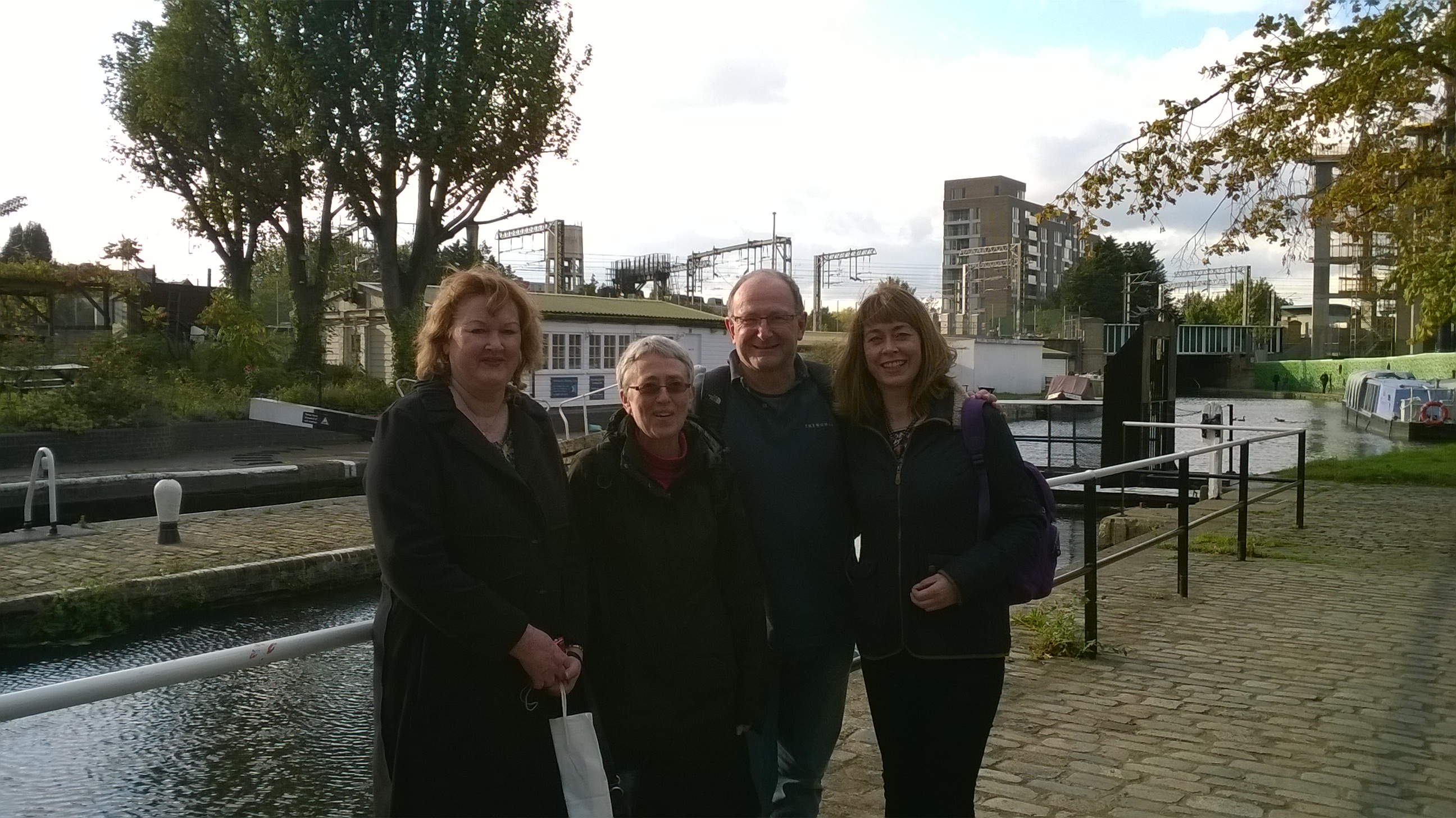
    Norah, Anne, Geoff, Lisa beside the lock
    Norah, Anne, Geoff, Lisa beside the lock

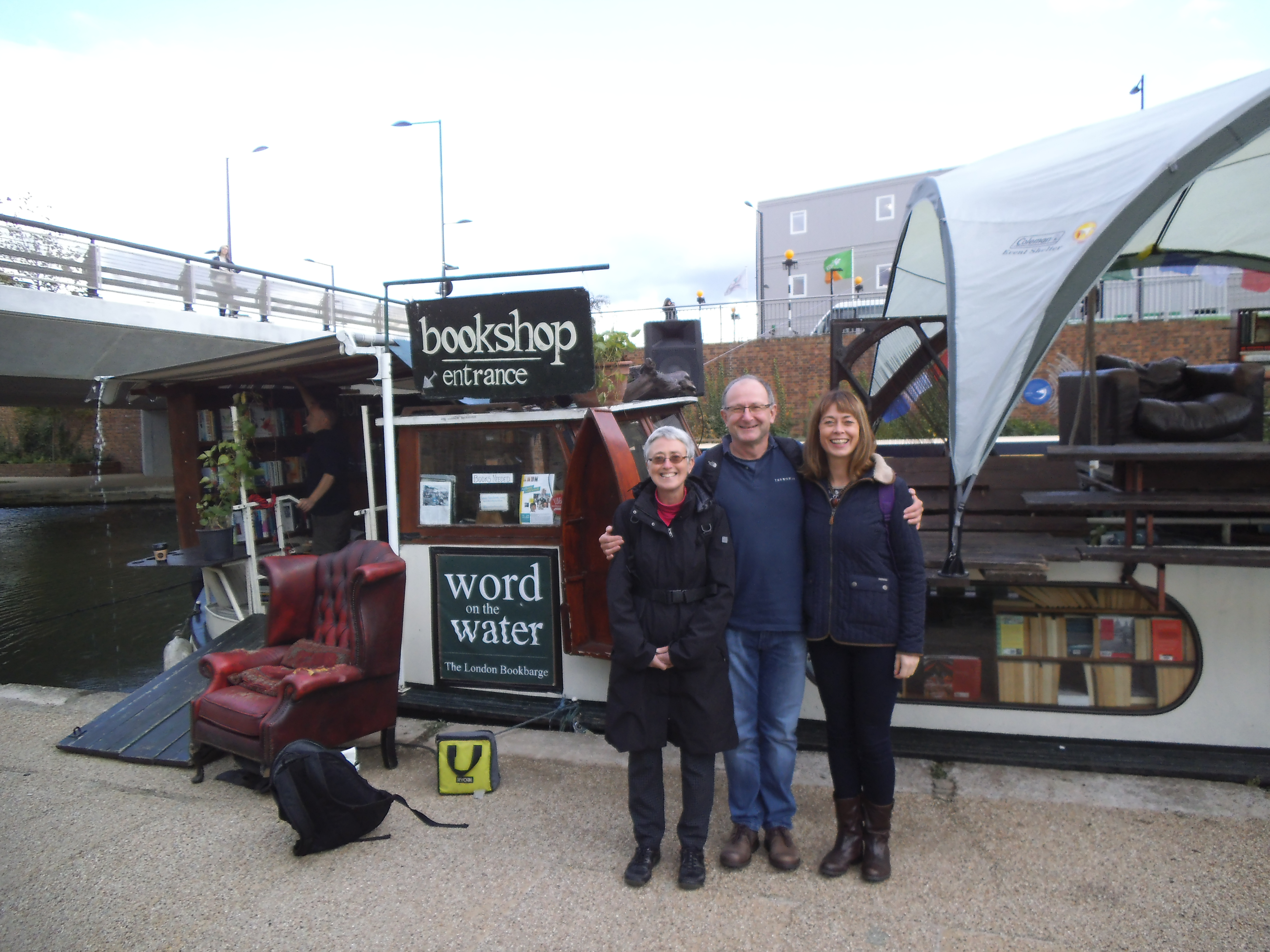
    We had a wonderful afternoon and evening together, meeting at the British Library for lunch and doing a little sightseeing afterwards. I even “took” them somewhere that none of them had been before (and probably won’t again!) I got to see a canal lock in action for the first time! (We don’t have those in Australia.)

    https://openclipart.org/image/800px/svg_to_png/2759/johnny_automatic_angry_guy_with_axe.png
    https://openclipart.org/image/800px/svg_to_png/2759/johnny_automatic_angry_guy_with_axe.png

    It was great: more like catching up with old friends than a meeting of strangers. There was not an axe murderer among us, and no one made an excuse for a hurried retreat until after a tube ride to Covent Garden and dinner, when it was time to catch the late trains back home.

    For me, meeting up with this group of online friends, was a memorable experience which I am very pleased I took a risk in initiating. I think the reason it worked is that we already knew each other quite well through our lengthy online discussions, and we were all keen to meet. The friendship moved out of the imagination and into reality.

    Anne, Geoff and Lisa and a floating bookshop
    Anne, Geoff and Lisa and a floating bookshop

    These positive feelings gave me the confidence to arrange a meeting with another online friend when I travelled to Tasmania shortly after arriving home from the UK. I met up with Sue Wyatt who hosts a Student Blogging Challenge. Although Sue and I hadn’t had a great number of in-depth conversations, we had exchanged a few Tweets and comments and had a lovely morning together discussing two of our shared interests: education and blogging!

    So, combining the recommendations in the responses to my questions with the results of my action research, I would agree strongly with Geoff who finished his comment with the words:

    “Depends on your attitude to taking risks. Personally I’d welcome the chance of the upside.

    It was definitely an upside for me, and I’m pleased I took the chance.

    Thank you


    I welcome your feedback. Please share your thoughts. It’s not too late to tell us about meeting your online friends!

  • Can you make a difference?

    Can you make a difference?

    My previous post How much of a meliorist are you? attracted many comments and much lively discussion, including comparisons of seemingly pessimistic or optimistic views of the future and the validity of each.

    This discussion surprised me as my intention in writing the post was not to delve into the damage that we humans have wreaked upon the world, but simply to express my belief that we humans, should we desire to do so, have the power to improve the world. We may not be able to change everything we would like to see changed, but we can make a start within our own circle of influence.

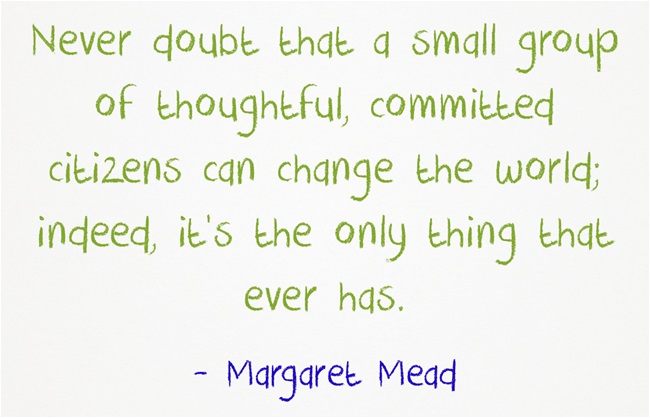
    Few-will-have-the - Robert F. Kennedy

    Or, in the words of Michael Jackson, one can “Look in the mirror and make a change!”

    My chosen avenue for making a difference is education; through maintaining my own interest in learning, through attempts to keep alive a love of learning and a curiosity about our world and others, and through improving learning opportunities for others throughout their lives beginning at birth (or earlier!).

    The contribution each of us makes is unique and reflects our own values and life choices. I am grateful to others who help me grow in my understanding of what motivates and drives us, what excites our imaginations and stimulates our curiosity, and what propels us towards choices for improving our individual and combined futures.

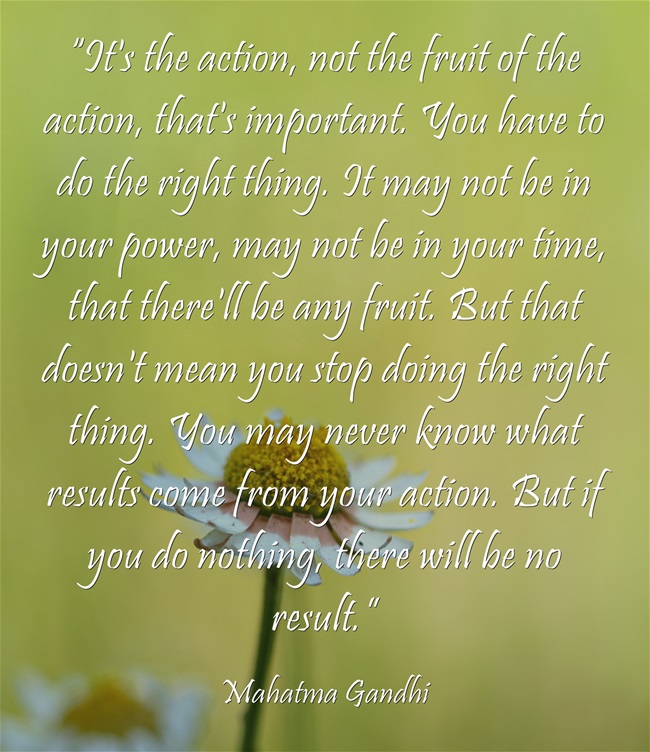
    Its-the-action-not-the - Mahatma Gandhi

    Among those who encourage my learning and stretch my thinking are you, my wonderful readers, who selflessly contribute thoughts and ideas to extend my understanding. To you all, my teachers, I express my great gratitude.

    Thank you

    While I may often fall short of the mark and need to make frequent reminders to myself, these are just a few ways I try to make my little spot in the world a better place:

    Smiling

    Being friendly towards those I engage with throughout the day

    Being polite

    Being kind, sometimes randomly and anonymously without requiring thanks

    Listening attentively, to understand and without interrupting or interjecting

    Accepting graciously and without whingeing and whining

    Finding humour in situations which enable me to laugh, especially at myself

    Changing behaviours to reduce my impact on the environment

    Seeking ways to ease the burdens of others

    Accepting and encouraging others to be themselves

    Recognising and accepting my ‘mistakes’ and shortcomings, and those of others

    What about you? What do you do to make your little spot in the world a better place? Please share your ideas so we can all learn from your example.

    At times in my life I have been told that I take life too seriously. At other times I have been told that I don’t take it seriously enough. I think life should be about enjoyment and fun, so I’m going to turn the seriousness of this post on its head and leave you with another quote, this time by A.H. Weiler:

    “Nothing is impossible for the man who doesn’t have to do it himself.”

    I welcome your feedback. Please share your thoughts and ideas about any aspect of this post, whether you agree with me or not!

  • Fifteen blogs for inspiration!

    very inspiring blogger

    Recently Julie Stock nominated me for a Very Inspiring Blogger Award. Thank you Julie, I am totally delighted to accept. Julie blogs at ‘My Writing Life’ Julie writes about her journey towards being a published author and offering help to others who are in the same position.
    It is only a short while ago that I posted an acceptance for the same award from Geoff Le Pard. In that post I promised I would do some exploring to seek out other inspiring bloggers to add to our growing community. Since then I have also created a page listing awards for which I have been nominated and those whom I have nominated. I’m sure a quick look at that page will suggest many worthwhile bloggers to follow.

    Here are the rules of the award:

    • Thank and link to the person who nominated you.
    • List the rules and display the award.
    • Share seven facts about yourself.
    • Nominate 15 other amazing blogs and comment on their posts to let them know they have been nominated.
    • Optional: follow the blogger who nominated you, if you don’t already do so.

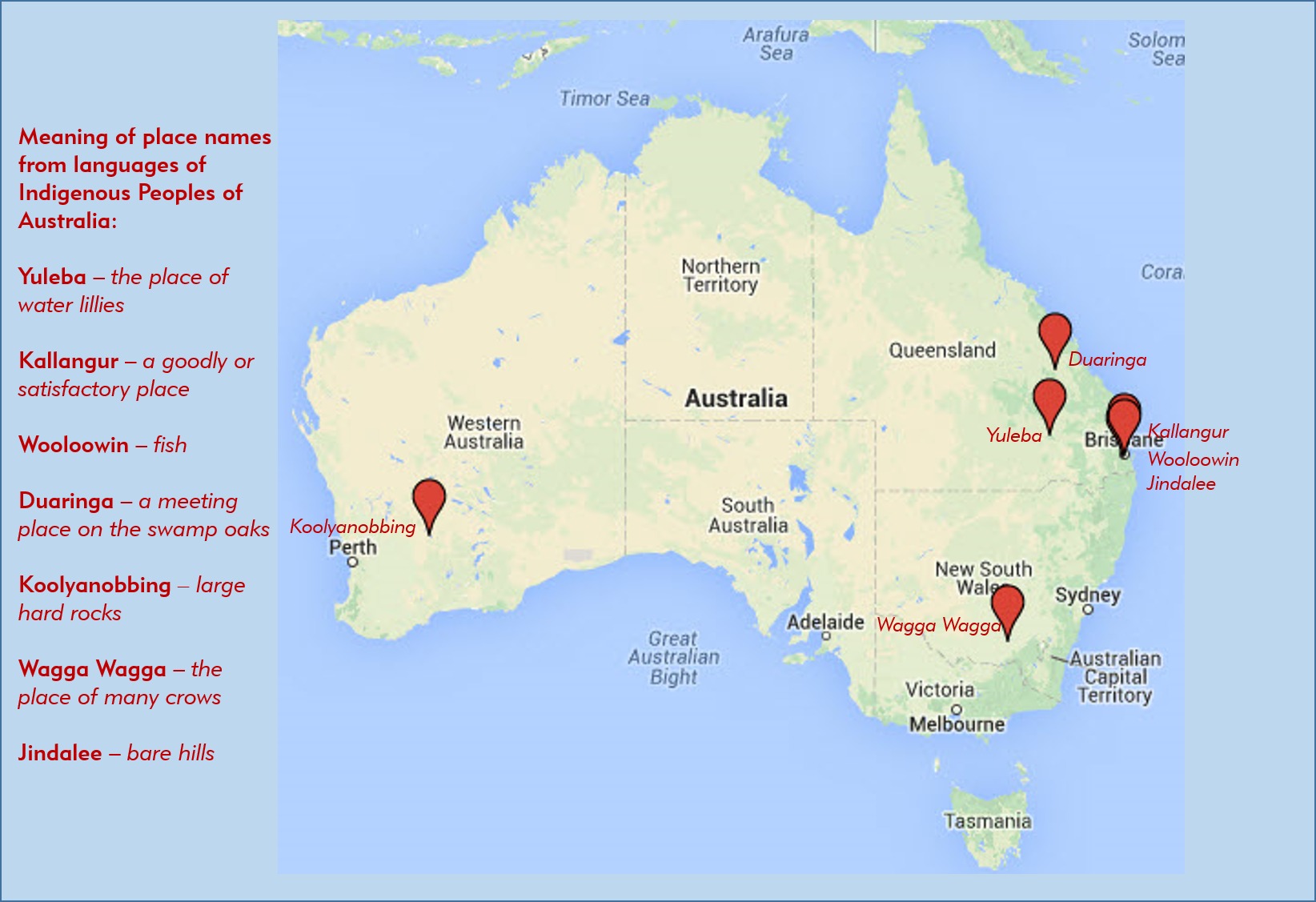
    Map with Indigenous Australian place names

    The seven facts I am sharing with you in this post are seven locations in which I have lived that are named using a word from the languages of Aboriginal peoples of Australia. Although I have lived in more than 20 homes for varying lengths of time, only seven locations have Aboriginal names.

    1. Yuleba: “the place of water lilies”, about 420km west of Brisbane: birth until about 10 months.
    2. Kallangur: “a goodly or satisfactory place”, about 20km north of Brisbane: 10 months until 61/2 years. I started school at Kallangur walking the approximately 2 miles (3.3km) to and from school with my older brother and sister.
    3. Wooloowin: “fish”, a suburb of Brisbane: 1970 – 72 (teacher training).
    4. Duaringa: “a meeting place on the swamp oaks”, about 116km west of Rockhampton: second year of teaching.
    5. Koolyanobbing: “large hard rocks”, approximately halfway between Perth and Kalgoorlie (i.e. in ‘the middle of nowhere’): about 18 months during 1977/78.
    6. Wagga Wagga: “the place of many crows”, approximately 450km south-west of Sydney: 1979 (university).
    7. Jindalee: “bare hills”, a suburb of Brisbane: 1997-2004 (though have lived in adjoining suburbs since 1981).

    In this post I am nominating fifteen blogs that I have not before nominated for an award. If I have nominated you previously, you are still on my list of wonderful blogs to follow (see page).

    It is up to each nominee whether they wish to participate by accepting the award and/or paying the compliment forward. The purpose of my nomination is simply to share with others how valuable I consider the blog to be.


    Julieanne To Read To Write To Be

    teacher versus mum

    Irene Waters Reflections and Nightmares

    Linda Petersen Raising 5 Kids with Disabilities and Staying Sane Blog

    Geoff Le Pard TanGental

    Carrie Gelson There’s a Book for That

    Matt Renwick Reading by Example

    Michael Michalko Imagineer7’s Weblog

    A.J. Juliani Teach Different

    Three Teachers Talk

    Sarah Brentyn Are you kidding me?!

    Shelley Wilson Live Every Day with Intention

    Ross Morrison McGill @TeacherToolkit

    Jean Cogdell jean’s writing

    Tara Smith A Teaching Life

    I hope you find time to visit some of those blogs. There is much to inspire!

    Thank you

    Thank you for reading. I value your feedback. Please share your thoughts on any aspect of this post.

  • The best of days

    school cropped

    It is often said that school days are the best days of our lives.

    Considering that I have had far more days at school than not (as student and teacher) then I should probably agree, else I’d be saying that most of my days haven’t been the best.

    For many adults it is not the in-class time that is most memorable or of which they have the most pleasant memories, it is the playtimes and the before and after walking to and from school times.

    For some children, the in-class time drags while they daydream of long summer holidays and activities with family and friends. Other children thrive with the structured learning, soaking up everything offered to them.

    19178-School-Building-Graphic

    In her post, School: A Suitable Place for Fiction? Anne Goodwin wrote that she is ‘always pleasantly surprised when children these days claim to enjoy school’. On the other hand, in a comment left on previous post here, Lori Schafer said that all her life she had ‘failed to understand why most children don’t like school. Why don’t they enjoy learning, and why don’t they enjoying studying, and why don’t they enjoy writing papers? Because, of course, there are a small percentage of us who do genuinely appreciate the discipline of schooling.’ She was one of them.

    In his post, School’s Out – and Education’s In, Geoff Le Pard said that ‘People confuse school with education, as if they were synonymous’. (I have written a poem to express differences I see between education and schooling. You can read it here.) He goes on to say that ‘education is a constant, not a time limited schooling experience’ and disagrees with the cliché that school days are the best. He says that ‘all those days and bits of days when learning occurs make up the best days of your life’. I agree with Geoff that learning new things, particularly things one has an intrinsic motivation to learn, gives great joy.

    Irene Waters said in her post about school that she loved her primary school days. As the end of her high school years approached, unable to see the point in continuing, Irene wanted to leave and start her nursing career. Her parents convinced her to stay and finish year twelve. While she didn’t at the time, she now appreciates the value in having done so and is grateful that her ‘parents laid down the law’.

    Talking about education and schooling is nothing new for me, that’s what my blog is about after all. However for a lot of people, once finished, school is a thing of the past and not much thought is given to it later. The reason why so many others are talking about it this week is the flash fiction prompt set by Charli Mills at the Carrot Ranch. Each week Charli challenges writers to pen a 99 word story about a particular topic. This week her topic is school.

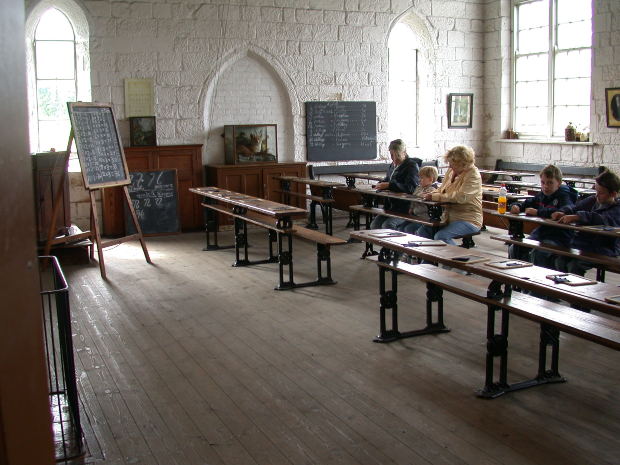
    old school room

    In her post, Charli describes an abandoned one-room schoolhouse that is close to her home. She explains that these schoolhouses ‘were often among the first structures built by pioneers’ and comments on the importance that was placed on education in those pioneering days. Indeed education has been important throughout the history of humankind. It is what sets us apart from other creatures.

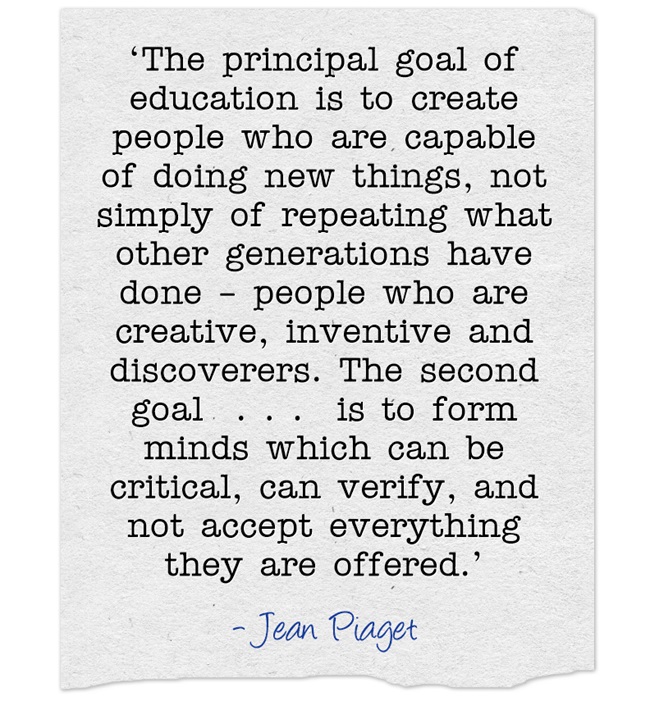
    In the words of Jean Piaget,

    The-principal-goal-of education - Piaget

    I have touched on these aspects of education in previous posts and will definitely do so again in future posts.

    In a tweet Anne Goodwin hinted that she thought I may find this post difficult to write as I have so many options to choose from. Charli Mills thought I might mention how we wrote on slates when I was at school (my children would probably have suggested I write about using dinosaur bones to scratch crude messages in the sand!)

    Instead, I thought about the strategies schools use to create uniformity, and of the many pathways that one may take through life after finishing school.  I hope the analogy makes sense to you.

     teacherbell

    Chocolate balls

    The final school bell tolled and the students erupted from the building like a burst box of chocolate balls, scattering in every direction and at varying speeds. Some stuck together along pathways safe and sure. Others crashed and bumped over roads less traveled seeking excitement, new discoveries and secrets to explore. Others stopped abruptly, their journeys foiled by stubborn obstacles. Still others, rolling upwards, failed to maintain the momentum to carry them over and beyond with those more adventurous others.  

    Who would know?

    Inside the box, they were identical, centers hidden. Outside, their uniqueness was on show.

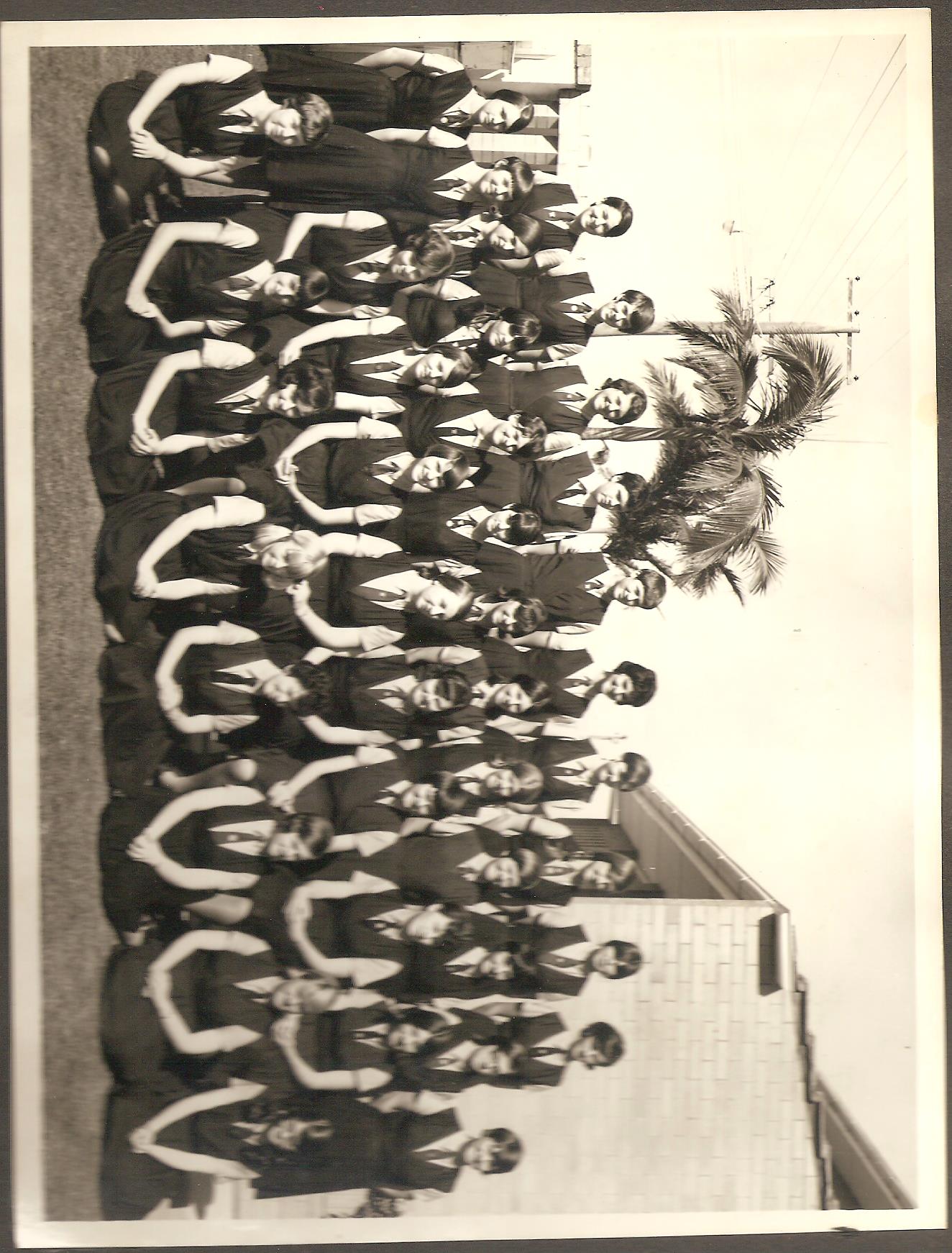
    My year 10 class - only 20 went on to year 12.
    My year 10 class – only 20 went on to year 12.

    I value your feedback. Please share your thoughts about any aspect of this post.

  • Will you be my friend?

    Having friends, people you connect with, is an essential part of life.

    Children, whether at the park, the shops, kindy, school or anywhere else are always looking for someone to engage with or play.

    Often when children come home from their first day at school or other activity, a parent will ask (if the information isn’t volunteered) “Did you meet a new friend today?”

    https://openclipart.org/image/800px/svg_to_png/192642/Children_holding_hands.png
    https://openclipart.org/image/800px/svg_to_png/192642/Children_holding_hands.png

    Children of before school age are often happy to play alongside whomever happens to be around; everyone is their ‘friend’. As they get older interactions with others of similar interests become more important and they begin to form stronger friendships with individual or small groups of children.

    If children have an unhappy day at school it is often because they have had no one to play with. Maybe their best friend was absent or chose to play with someone else; or they may have had a disagreement with a friend or group of friends.

    A few years ago I was engaged to construct and implement a friendships skills program with early childhood classes. Through discussion, stories, song, role play and cooperative games, the program taught children strategies for initiating and maintaining friendships.

    applications-internet

    The need for friendship is just as important on the internet playground of social media as it is in the school playground. People seek out others with similar interests and form online communities collecting followers, favourites, friends and likes. Just as in the playground, there are certain strategies which should be followed online to maintain those friendships.

    The home page of each platform is a good place to start for ‘rules’ of engagement. In addition, many bloggers offer recommendations for friendly behaviour. Some that I have found useful include:

    I’m sure you are aware of, or will find, many others offering similar advice.

    The one thing they all agree on is being friendly and polite, engaging in conversation and not making it all ‘me, me, me’. Just as one-sided in-person relationships have a limited life span, so too do one-sided friendships on social media.

    In the ‘real’ world, people belong to different groups and organisations which are quite distinct in their goals and purposes. It is not always desirable to have these ‘worlds collide’ in a way that would provide information about oneself not previously revealed to a particular group; for example one may not wish to mix neighbourhood friends with work colleagues.

    The same situation may also exist online with people publishing, or participating in groups that publish, very different material. The use of a pseudonym is sometimes suggested as a way of masking one’s identity or to keep separate two distinct styles of authorship.

    While neighbourhood friendships are important to both children and adults and may be easier to maintain, the planning that is required to engage with like-minded friends who live further away is usually worth the effort.

    https://openclipart.org/image/800px/svg_to_png/148843/1310261210.png
    https://openclipart.org/image/800px/svg_to_png/148843/1310261210.png

    The same is true online. Because I blog, and am already signed in, at WordPress, it is very easy for me to engage with (by following, commenting, liking and sharing) others who also blog at WordPress. Notifications of others’ posts are received in my everyday email inbox as well as my WordPress reader. Additionally, when I link to them in my posts, pingbacks are automatic.

    Engaging with those using hosts other than WordPress requires effort, some more than others. It can often be difficult to leave a comment because doing so requires signing in using a platform to which I don’t already belong. Frustratingly, sometimes lengthy and well-thought out comments disappear if a mistake is made signing in or copying a captcha.  Oftentimes a like or share button can be impossible to find, and following can also be difficult as I miss notifications sent to an infrequently used email address. There are particular blog hosts that are so problematic that I now ignore them, regardless of how interesting I think the posts might be.

    sad
    https://openclipart.org/image/800px/svg_to_png/178504/sad.png

    While following WordPress bloggers may be easier, I don’t follow all or only WordPress bloggers. Those I follow must meet my criteria for interest and engagement. The extra effort required to follow non-WordPress bloggers is worth it when we have interests in common and engage in conversations which expand my horizons and thinking. (I am thinking particularly of Anne Goodwin and Caroline Lodge, both non-WordPress users.)

    I have talked about maintaining real-world friendships, the need to belong to different groups, and the desire to achieve separation between some of those groups. I have also discussed a similar situation with regards to online friendships.

    Warnings about the dangers of forming online ‘friendships’ with unscrupulous people are publicised almost daily with their accompanying stories of tragic events. I agree that these are very real and very present dangers and one must practise extreme caution when forming any friendships, online as well as off. Of less interest to the media, but probably of greater magnitude, are the number of real friendships forged as a result of online communication.

    So what do you think about mixing real-world with online friendships?

    If the adage, ‘strangers are only friends that haven’t met’ is true, should one maintain separation from one’s online friends, or take the risk of meeting in person should the opportunity arise?

    What is your experience? Which of your online friends would you like to meet in person?

    I value your feedback. Please share your thoughts about any aspect of this post.

    Here are two more of my favourite songs about friendship (just to help your thinking):


  • Motivation – why we do the things we do

    Over at the Carrot Ranch this week Charli Mills is talking about motivation, specifically the motivation of fictional characters to do the things they do. She explains that ‘motivation can be external–a desire to please, to be found attractive, to be accepted’ or ‘internal–a drive to succeed, a passion to experience adventure, a fear of failure’.

    Motivation is not a new concept to this blog and I have explored it in a number of previous posts.

    stars

    In What did you do that for? Rewards and motivation I discussed the use of extrinsic rewards (such as stickers, awards and cash incentives) for school students; and questioned the authenticity of intrinsic motivation, which ‘is usually related to something of one’s own choice through interest, challenge or purpose’, in an institution at which attendance is compulsory.  I suggested some strategies that teachers may employ to stimulate an intrinsic love of learning.

    why am I doing thiswhat's the point

    Continuing the consideration of the effect of compulsory schooling on a learner’s motivation, the post Why do I have to? explored the use of philosophy as a tool for making the goals of education explicit. All three philosophers: Peter Worley, Michael Hand and Stephen Boulter agreed that if students knew why they were expected to learn certain things, they would be more motivated to do so.

    the examined life

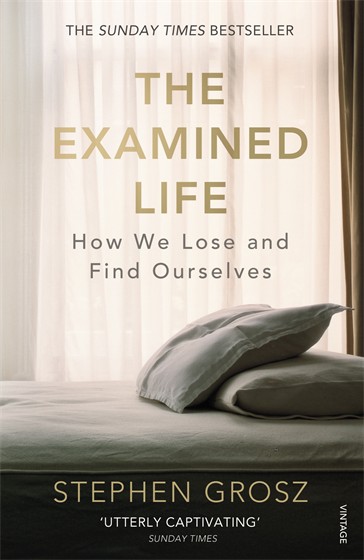
    A discussion of the impact of praise upon a learners’ motivation and achievement was stimulated by reading The Examined Life by Stephen Grosz, a book recommended by Anne Goodwin.  The Post Seeking praise – Stephen Grosz revisited explored Grosz’s suggestion that praise could cause a loss of competence, especially if children were being praised for being clever. Responses to the post, including a guest post by Anne Goodwin, added greater depth to the discussion.
    Other ideas about motivation abound.

    https://openclipart.org/image/800px/svg_to_png/59389/happy_sun_gm.png
    https://openclipart.org/image/800px/svg_to_png/59389/happy_sun_gm.png

    Shelley Wilson’s blog Live every day with intention,  which promises to inspire and motivate you (‘A motivational blog about living life to the full, writing, reading and feeling inspired to follow your dreams’) is the basis of her new book ‘How I changed my life’.

    In this TED talk The puzzle of motivation, Dan Pink explains that the value of intrinsic motivation is a scientific fact. While the focus of his talk is the business world, the findings are equally relevant to education. He says that external rewards may work in limited situations but that they often impede creativity. He says that ‘the secret to high performance isn’t rewards and punishments, but that unseen intrinsic drive – the drive to do things for their own sake. The drive to do things because they matter.

    Which brings me back to my motivation for writing this post and sharing these thoughts: Charli’s post, mentioned at the beginning of this article, was an introduction to her flash fiction prompt to In 99 words (no more, no less) show the underlying motivation of a character.

    My motivations for engaging with the flash fiction challenges set by Charli are both intrinsic and extrinsic:

    I enjoy:

    • the dual challenges of writing to a prompt with a clearly defined word count;
    • the opportunity of writing fiction;
    • exploring the application of Charli’s prompt, however tenuous, to education;
    • the camaraderie of the fellow writers and the opportunity to read and comment on their posts and flash fiction pieces; and

    I appreciate the feedback, support and encouragement I receive in response to my writing.

    In her prompt, Charli suggested that the character ‘may not even understand the motivation fully, but (that I should) let the reader grasp it.’ I have written two pieces in response to this prompt. I hope you enjoy them, and get an inkling of what motivates the characters.


    More than numbers

    The more he stared at the numbers the less sense they made.

    They swirled and blurred. He just didn’t get it.

    “Numbers don’t lie,” they’d admonished.

    “But they don’t tell either,” he’d thought.

    The hollowness left when all he knew had been extracted could not be filled with the smorgasbord of numbers loaded on the page.

    The richness of lives reduced to mere squiggles.

    “This is what’s important,” they’d said, fingers drumming tables of data.

    With heaviness of heart he closed the book and walked away.

    “They are not even numbers,” he thought. “If they were numbers, they’d count!”


    More than words

    “More!” they implored.

    She surveyed their eager faces then glanced at the clock.

    “Just one more?”

    “Okay. Just one more.”

    Before she could choose, a book landed in her lap.

    “This one,” he said.

    “Yes,” they chorused. “It’s a good one!”

    She smiled agreement, then started to read.

    They joined in, remembering, anticipating.

    She turned the page.

    “Wait!” he said. “Go back.”

    “Did you see that?” He pointed to the page.

    “But look what he’s doing,” someone else chimed in.

    They all laughed.

    The shared joy of a beloved book. Each time the same. Each time a little more.

    Thank_you_pinned_note

    Thank you for reading. I do appreciate your feedback. Please share your thoughts about any aspect of this post or my flash fiction pieces.