Live Love Laugh Learn … Create the possibilities

Category: Blogging

  • Well I declare

    This week at the Carrot Ranch Charli Mills is making declarations. Specifically she is declaring herself an author, making it clear what her writerly intentions are. I also have declared my writerly intentions. In previous posts, here, here and here, I shared my goal of establishing a website with early childhood teaching resources of my creation.

    In her post Charli expresses it this way: success for her is publishing books. She wants to write books for readers who want to read them. Not only that, she wants to market her books “well enough to eat more than hand-picked dandelions from (her) yard”.

    www.morguefile.com
    http://www.morguefile.com

    Change books to early childhood teaching resources and, for me it’s the same. I want to publish teaching resources that teachers want to use, that enhance their teaching and improve children’s learning. I’d also like to do well enough to not be reduced to eating dandelions from my backyard.

    Some writers consider “educational writing” less worthy and lacking in creativity. “Oh educational writing,” said one disparagingly, “that’s so prescriptive,” and quickly moved on to discuss others’ more literary pursuits.  

    I know some educational writing can be prescriptive. I have done some of that formulaic writing myself. However the resources I am creating do not conform to a formula, are not worksheets to be completed by students sitting quietly in rows.

    I am developing a variety of resource types, some with interactivity, to help develop understanding and skills in a meaningful context. Many encourage critical thinking, problem solving and purposeful applications. Many are built around my own original stories and poems as well as non-fiction texts.

    I have chosen this path in order to support teachers with ready to use teaching episodes and parents with suggestions for nurturing their child’s development. Prescriptive? Far from it. And please don’t prejudge my educational writing against the stereotype of formulaic worksheets and textbooks which are far too abundant and easily accessible on the internet and in bookstores.

    Guiding parents in play sessions for parents and children.
    Guiding parents in play sessions for parents and children.

    From the declaration of writing goals to a declaration of another kind, repeated often on my blog: my appreciation of all things early childhood, especially literacy and picture books, and the importance of reading to and with children on a daily basis.

    The years from birth to eight, especially those before formal schooling begins, are crucial to a child’s development and have an enormous impact on future happiness and success.  It is during these years that basic skills and language are developed along with attitudes to self and relationships.
    noisy nora

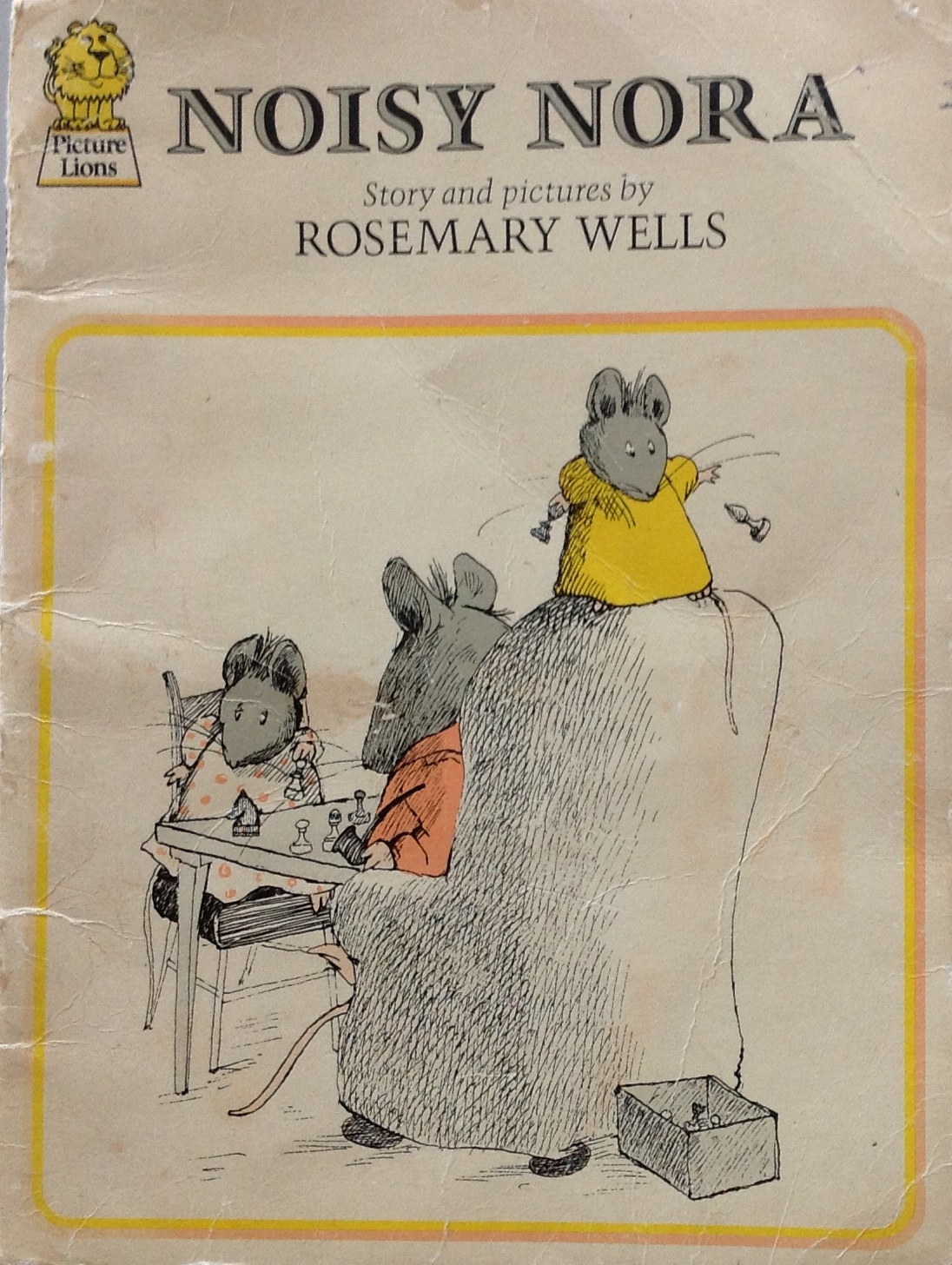
    The picture book Noisy Nora by Rosemary Wells is a delightful book about a middle child who fails to get the attention of her parents who are busy with the older and younger siblings. Finally Nora declares that she is leaving and never coming back. With Nora gone the house becomes unusually quiet and the family go looking for her. At last she declares herself back again as she clatters out of the broom closet.

    (This information from Wikipedia explains why my cover differs from the one in the Amazon store.)

    I took Nora’s declaration as the basis for my response to Charli’s flash challenge to In 99 words (no more, no less) declare an intention in a story. Is it one person, a character speaking up or speaking out? Is it a group or a nation? Create a tension before or after the declaration. It can be private or public, big or small. Does it have power to those who state it or hear? What does it change?

    While I wrote it with Marnie in mind, it could be about any number of others in oppressive situations and seems particularly appropriate to those trapped by the horrors of domestic violence which is at the forefront of our news at the moment. Unlike Nora, who declared she was leaving and never coming back but didn’t really leave, Marnie definitely won’t be coming back.

    from "Noisy Nora" by Rosemary Wells
    from “Noisy Nora” by Rosemary Wells

    Leaving

    It was time. No more would they treat her this way. No more would she accept the cruelty of their world. She was more than this, more than they made her believe. With cash from a secret job stashed in her pockets, a few clothes in a backpack, and hope in her heart, she left. No need to follow a bag through the window. No need to wait for night’s darkness. No. She navigated past their stupor of beer, smoke and flickering screens; paused at the door to declare, “I’m leaving,” then closed off that life as she left.

    Thank you

    Thank you for reading. I appreciate your feedback. Please share your thoughts about any aspect of this post or flash fiction.



  • A celebration of Australian picture books #1

    Recently my friend Sarah Brentyn, who blogs at Lemon Shark: Navigating the Unchartered Waters of Parenting and Life, shared a series of posts about first lines (paragraphs, sentences and pages). She discussed the importance of hooking the reader and shared some of her favourite first lines from a variety of genres. When she shared picture books I was inspired to share some by our many wonderful Australian authors and illustrators.

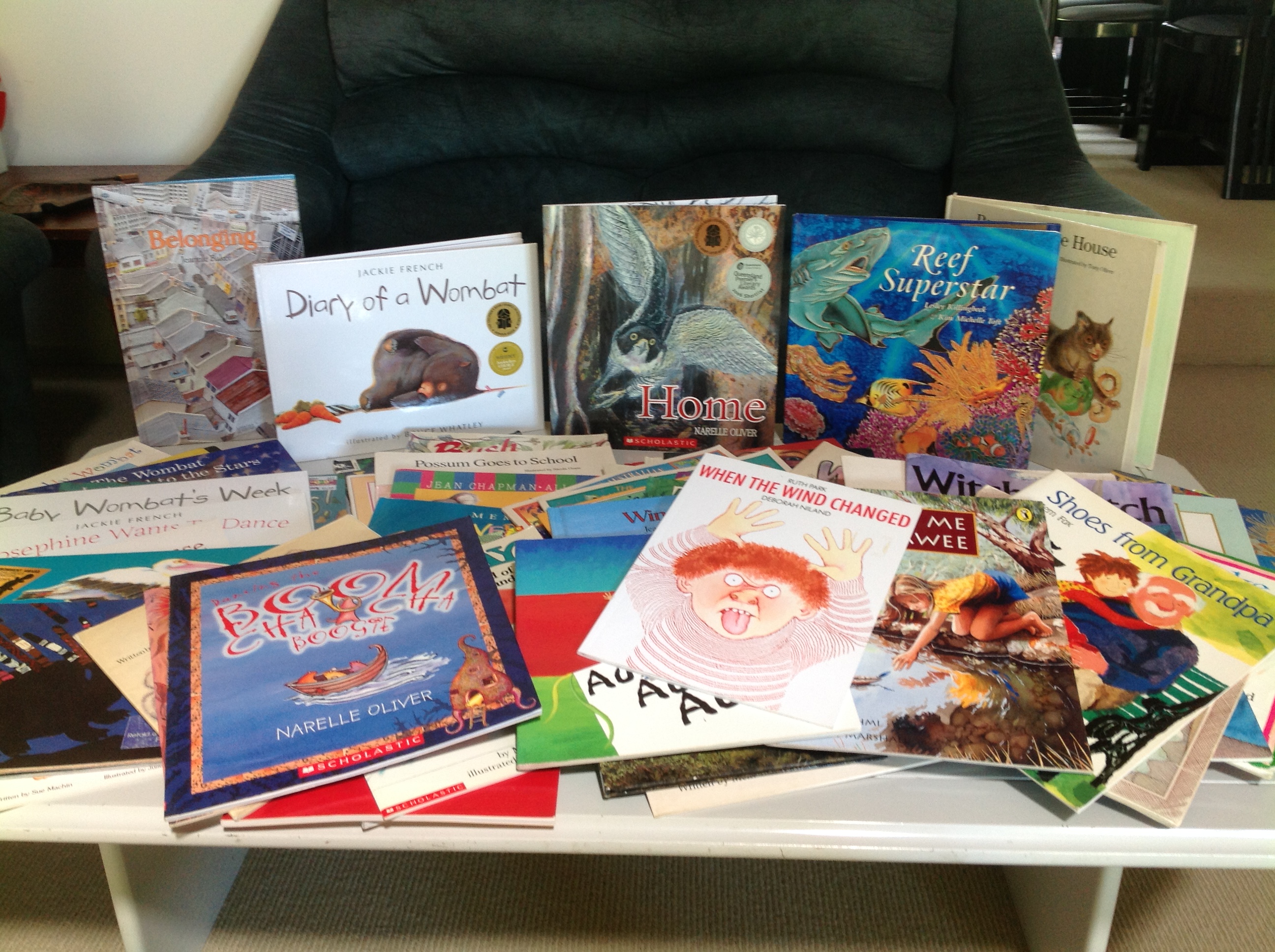
    These are just some of the Australian picture books I quickly located on my shelves:

    Australian picture books

    I own multiple titles of some authors’ work, and of others’ I own but one or two. Sadly, there are many whose work I don’t own. There are too many wonderful books to share in just one post so I have decided to write a series with a post dedicated to each author of whose work I own multiple titles, including Mem Fox, Narelle Oliver, Jeannie Baker and Kim Michelle Toft (and I might sneak in New Zealander Pamela Allen).

    In this post I share some lovely books, their first lines (according to Sarah’s definition) and tell you a little about why they are on my shelves.

    For this series I have commandeered “celebration” as a collective noun for Australian picture books so it is fitting that the first I share is A Compendium of Collective Nouns by Jennifer Skelly.

    A Compendium of Collective Nouns

    This delightful little book was a gift from my grandchildren (chosen by their mother). In the introduction Jennifer asks, “Do you remember laughing when you first learned that a group of crows is called a murder? Or a group of owls is called a parliament?” Like me, Jennifer has always been interested in collective nouns but, unlike me, she has published a collection of them. Her beautiful drawings illustrate collections such as “a crash of rhinoceroses”, “a flamboyance of flamingos” and “a wisdom of wombats”, but who ever heard of “a rabble of butterflies”?

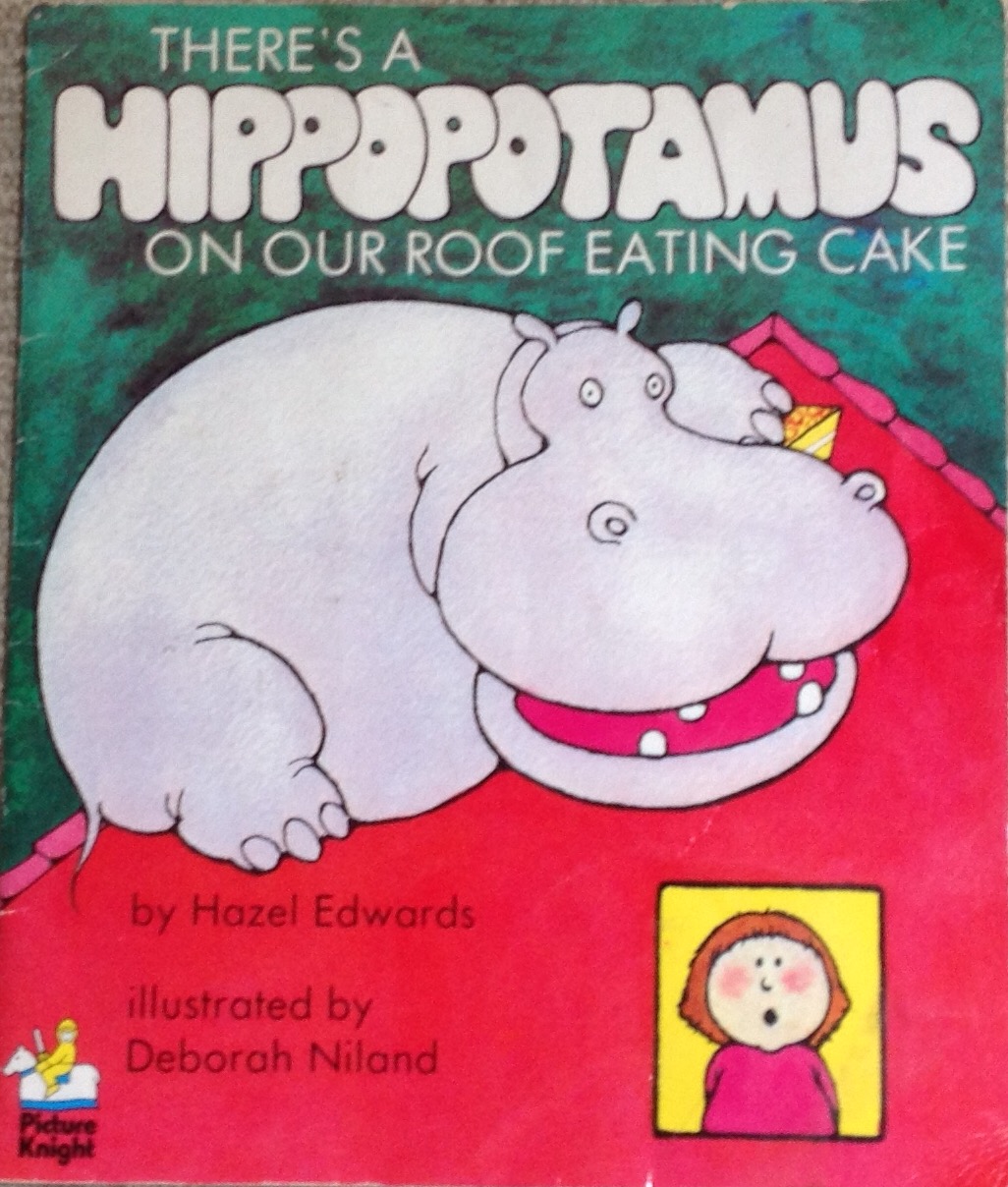
    While there are a number of Hippopotamus on the Roof books I have only the original, There’s a Hippopotamus on our Roof Eating Cake by Hazel Edwards (illustrated by Deborah Niland).

    There's a Hippopotamus on the Roof Eating Cake

    It begins,

    “Our roof leaks.

    Drip!

    Drip!

    Drip!

    My Daddy says there’s a hole in our roof.

    I know why there’s a hole.

    There’s a hippopotamus on our roof eating cake.”

    The copy on my shelf actually belongs to Bec. Her dad bought it for her on a trip back home to Belfast in 1990. He went all the way to Belfast and brought her back an Australian picture book! A good one though.

    In this video Hazel Edward talks about the original idea for the book, other contributing ideas and changes as well as the the important relationship between author and reader. She also reads the book.

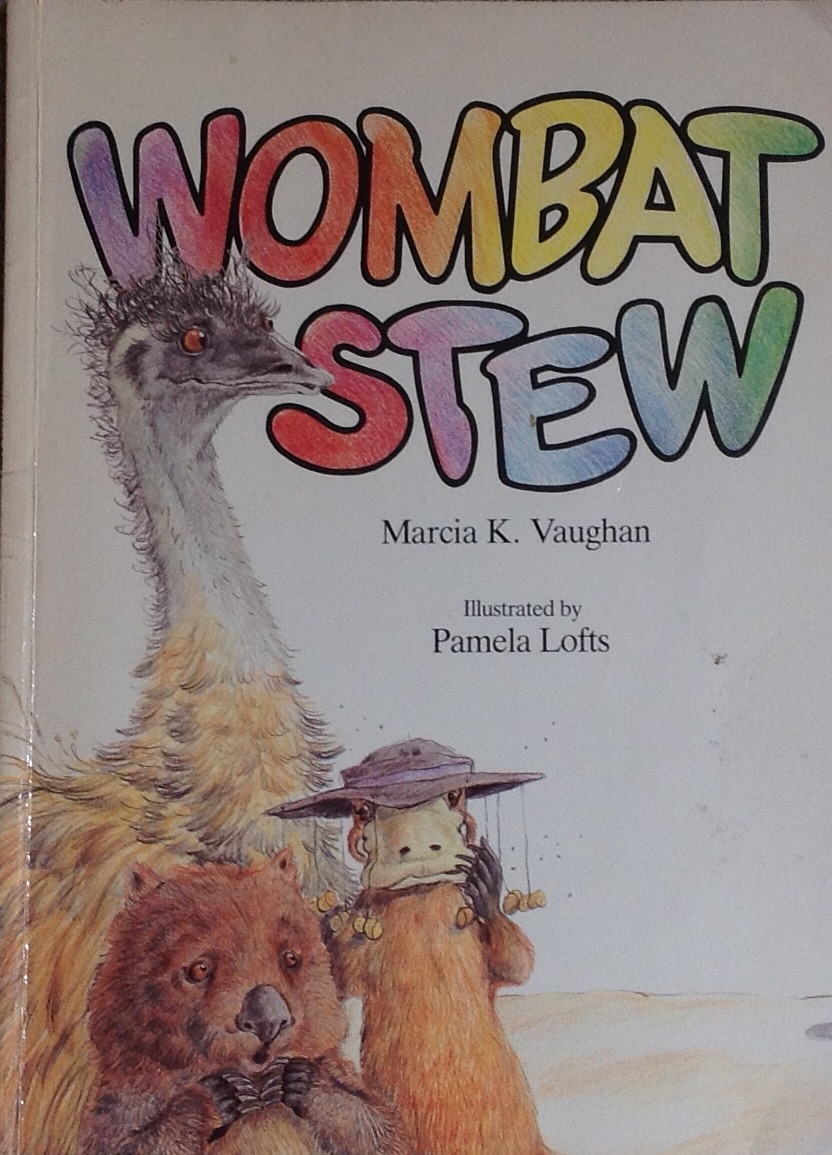
    Wombat Stew by Marcia K. Vaughan (illustrated by Pamela Lofts) is a favourite.

    Wombat Stew

    It begins,

    “One day, on the banks of a billabong, a very clever dingo caught a wombat …

    and decided to make  …

    Wombat stew,

    Wombat stew,

    Gooey, brewy,

    Yummy, chewy,

    Wombat stew!”

    The amusing story tells how the animals trick the dingo and save wombat from his fate. It is a great book to read aloud with its rhythmic language and repetition of the song “Wombat stew” with slight word changes each time. Children enthusiastically join in with the reading and love acting it out. One year I wrote a play with my year one class and they performed it for the school and their parents. It was a lot of fun.

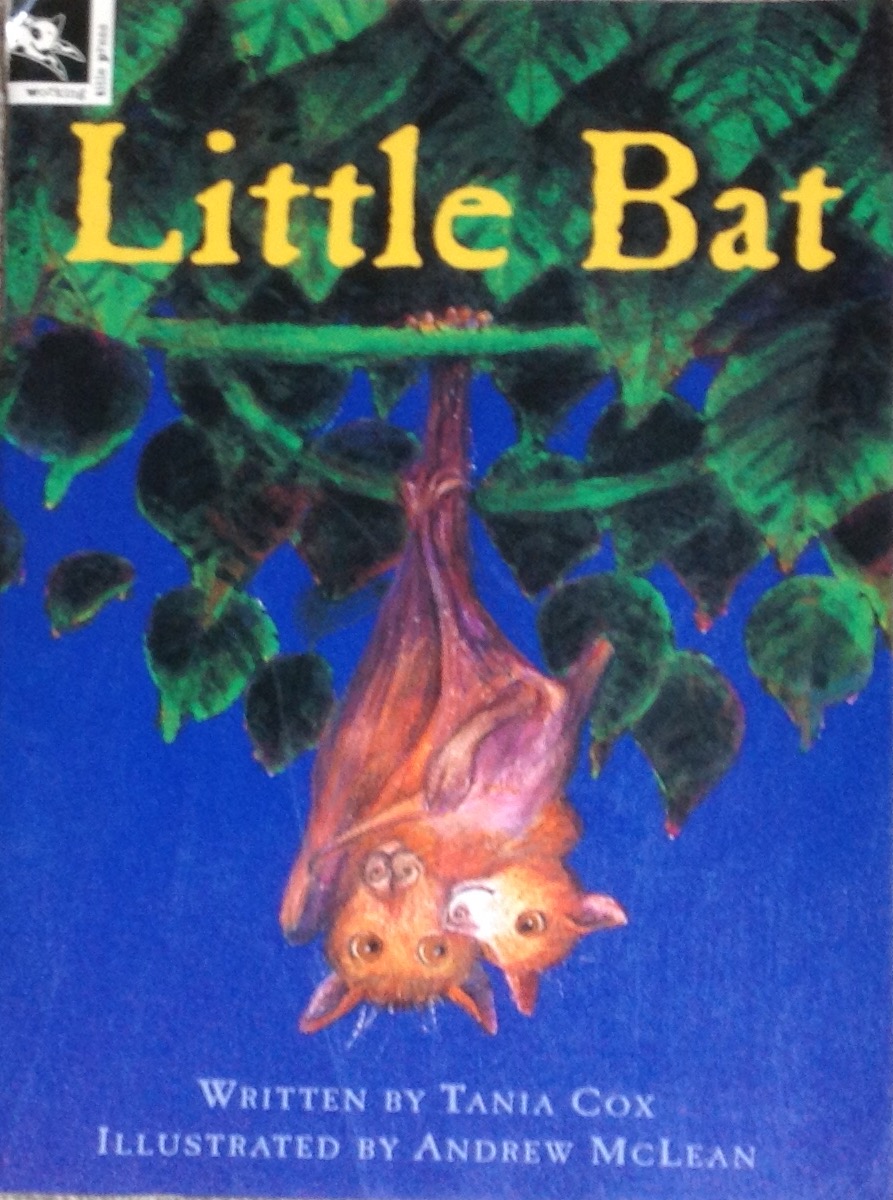
    Little Bat

    Little Bat by Tania Cox (illustrated by Andrew McLean) begins

    “Little Bat was nervous.

    She’d never done this before.”

    With the encouragement of her mother and other animal friends, Little Bat discovers that she can fly. I like the story’s positive message that if you try you can succeed. Books with this theme were always popular and inspired lots of discussion in my classroom.

    When I saw When the Wind Changed by Ruth Park (illustrated by Deborah Niland) in a bookstore, I had to have it for my bookshelf! When I was a child I, like Josh, must have been good at making faces, because my mother was always telling me that if the wind changed I’d stay like that. Well, I don’t think that happened to me, but it did to Josh! The book begins

    “There was this boy named Josh.

    He could do lots of things.

    There was one thing he could do best of all.

    He could make faces.”

    Of course one day the inevitable happens! Fortunately the story has a happy ending, for Josh anyway – I’m not so sure about Dad!

    Are you familiar with any of these books? Have you seen them in bookstores near you? What books by Australian authors have you read?

    Thank you

    Thank you for reading. I appreciate your feedback. Please share your thoughts.


  • Between the lines

    Morguefile http://mrg.bz/omEd2M
    Morguefile http://mrg.bz/omEd2M

    For a few months I had been aware of the new colouring books for adults craze that is sweeping the world but had chosen to ignore it. That is, until I read a blog post by Alana Munro stating that “According to Psychologists, Colouring is the Best Alternative to Meditation” and I thought I’d add my two cents worth.

    I had already been urged by some writing, publishing and marketing entrepreneurs to quickly create a colouring book and cash in on this new lucrative market. Apparently it’s easy to create a book using royalty free creative images found online and publish the books on Amazon where they have their own genre.  People are buying them by the dozens. The books are also displayed prominently in bookstores, and promoted on social media.  What is there to lose?

    As a teacher and parent I have never been in favour of colouring books for children. I know some argue that colouring does have a (small) place. Children may develop fine motor skills when colouring between the lines, and colouring is sometimes integrated with other things such as graphing, mapping, and colour-by-number activities.

    © Norah Colvin
    © Norah Colvin

    But I have rarely given a colouring book as a gift. I would rather give a blank art book and a variety of pencils and pens for children to create images from their own imaginings. Their fine motor skills and their creativity will develop perfectly well that way and it may help to avoid the feelings of inadequacy that can develop from spending too much time colouring the works of others.

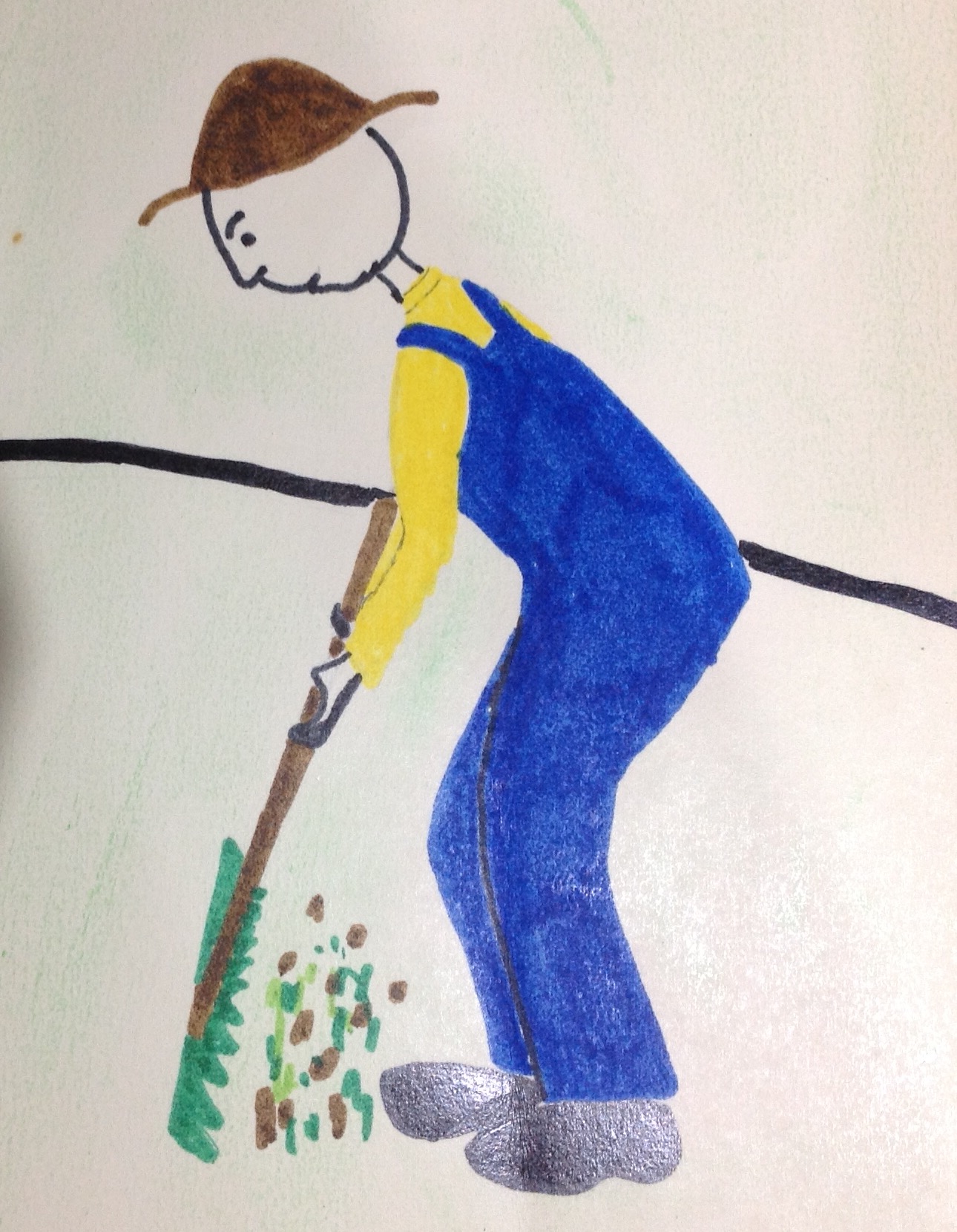
    That’s not to say that learning some of the artist’s techniques is a bad thing. Twenty-five years ago I did a short “Drawing on the Right Side of Your Brain” course, based on the work of Betty Edwards. I didn’t consider myself an artist, and still don’t, preferring to write than to draw. But being interested in learning and anything to do with the brain, I decided to see what I could do. I was amazed at the results. Unfortunately, I don’t have many pre-course drawings to share with you, just this one of a gardener, but please take my word for it that I showed little promise.

    © Norah Colvin
    © Norah Colvin

    In the course I learned the importance of drawing what the eye sees, not what the mind thinks it sees; for example we might think of the roundness of the rim of a cup, but what we actually see is an ellipse. The importance of seeing accurately is true whether drawing an actual or imagined object or scene.

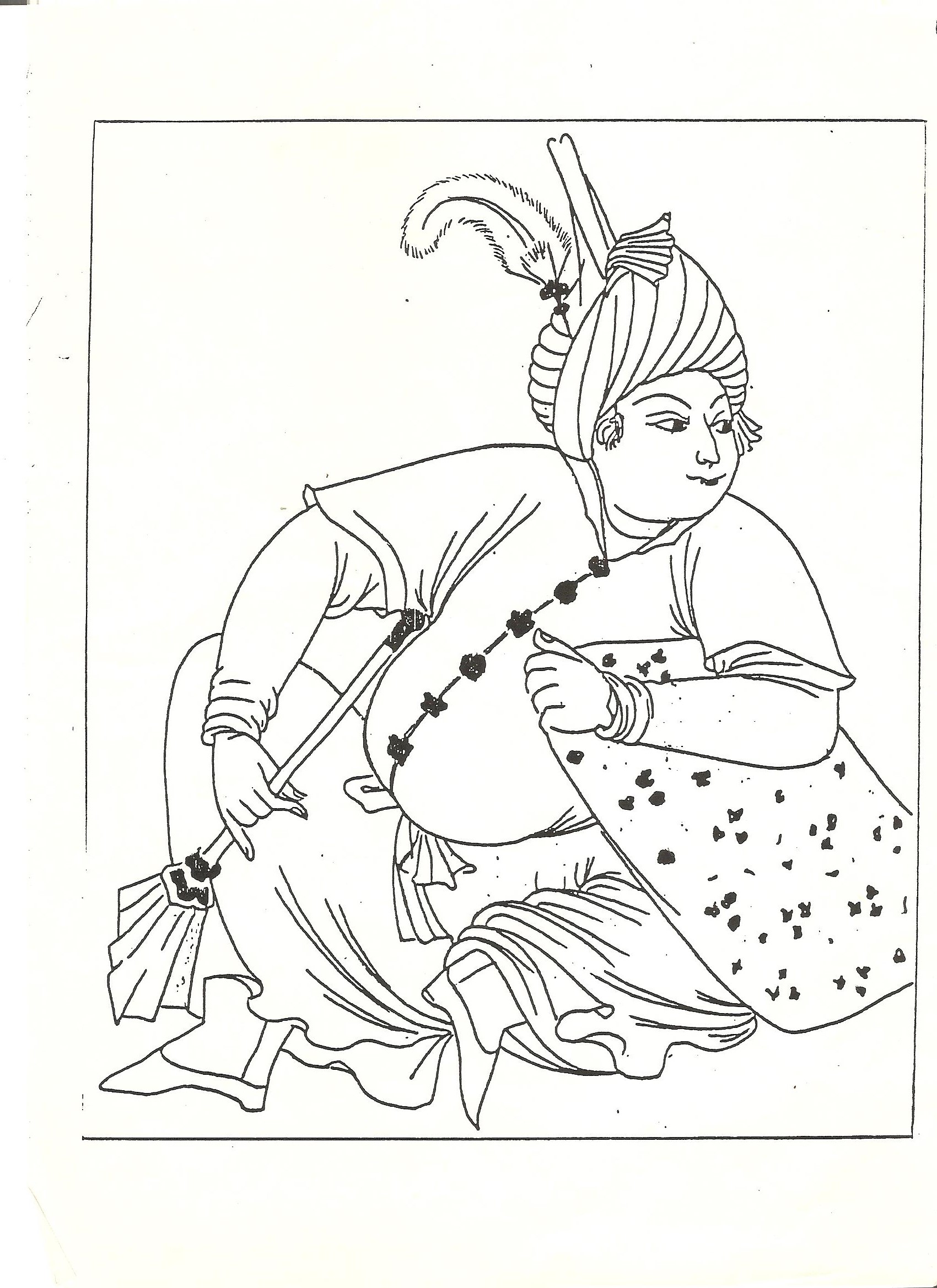
    In the first lesson we were given this picture to copy.

    original

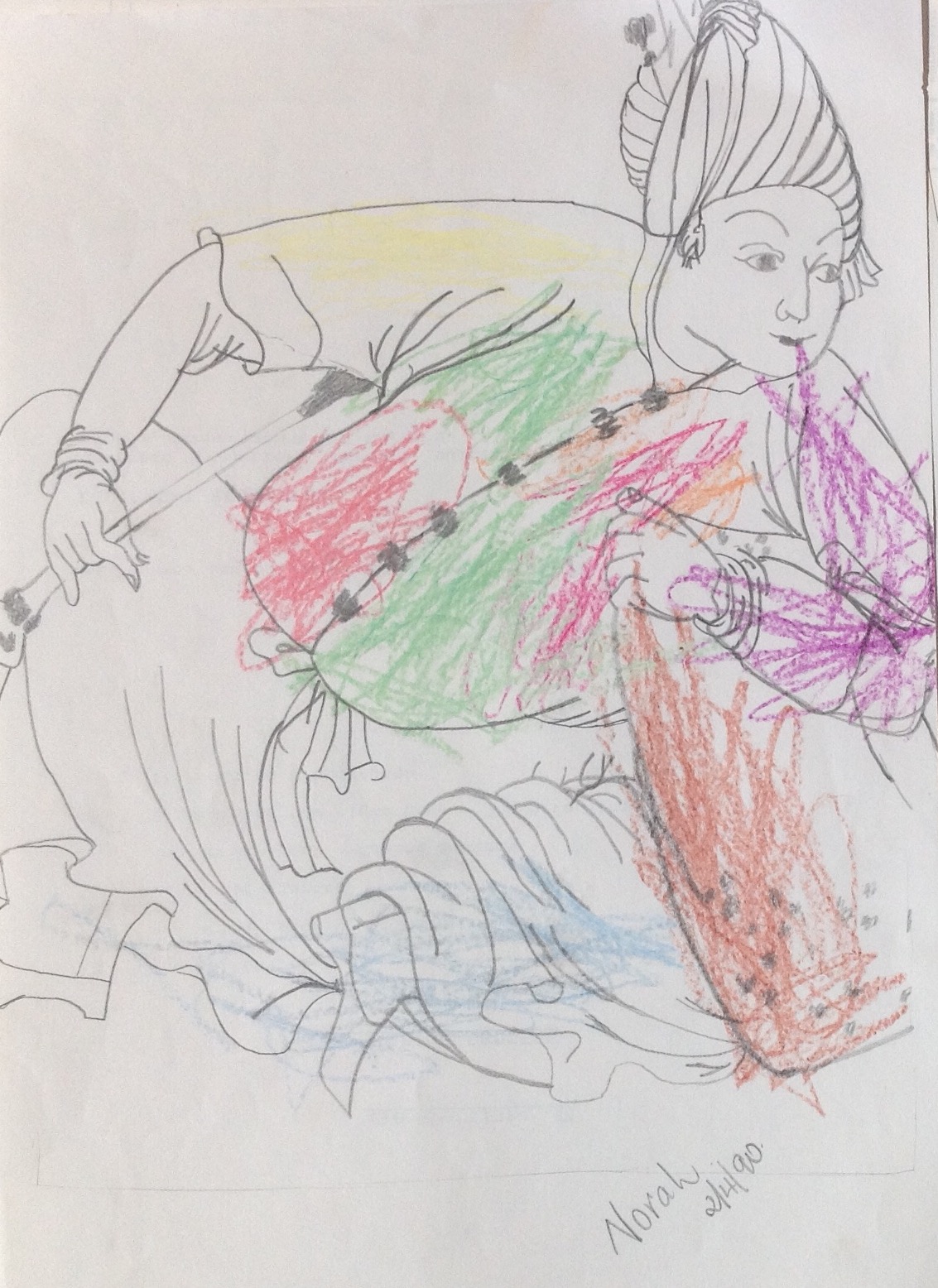
    I admit that I didn’t have high expectations as I began. We were told to turn the picture upside down and to start copying from one corner. In doing this we focussed only on each of the lines, drawing just what we could see. We were not to turn the picture the right way up until we had finished. There was to be no interference from what we thought we were drawing to what we were actually drawing. Everyone in the class was amazed with their results.

    This is mine:

    © Norah Colvin
    © Norah Colvin

    And thank you to Bec, who was three at the time, for deciding it needed some colour!

    For a short while I engaged in a flurry of drawing activities, but soon abandoned them to other more pressing or preferred activities. I had proved to myself it was possible. That was sufficient. Now someone just needs to come with a singing on the right side of the brain course for me!

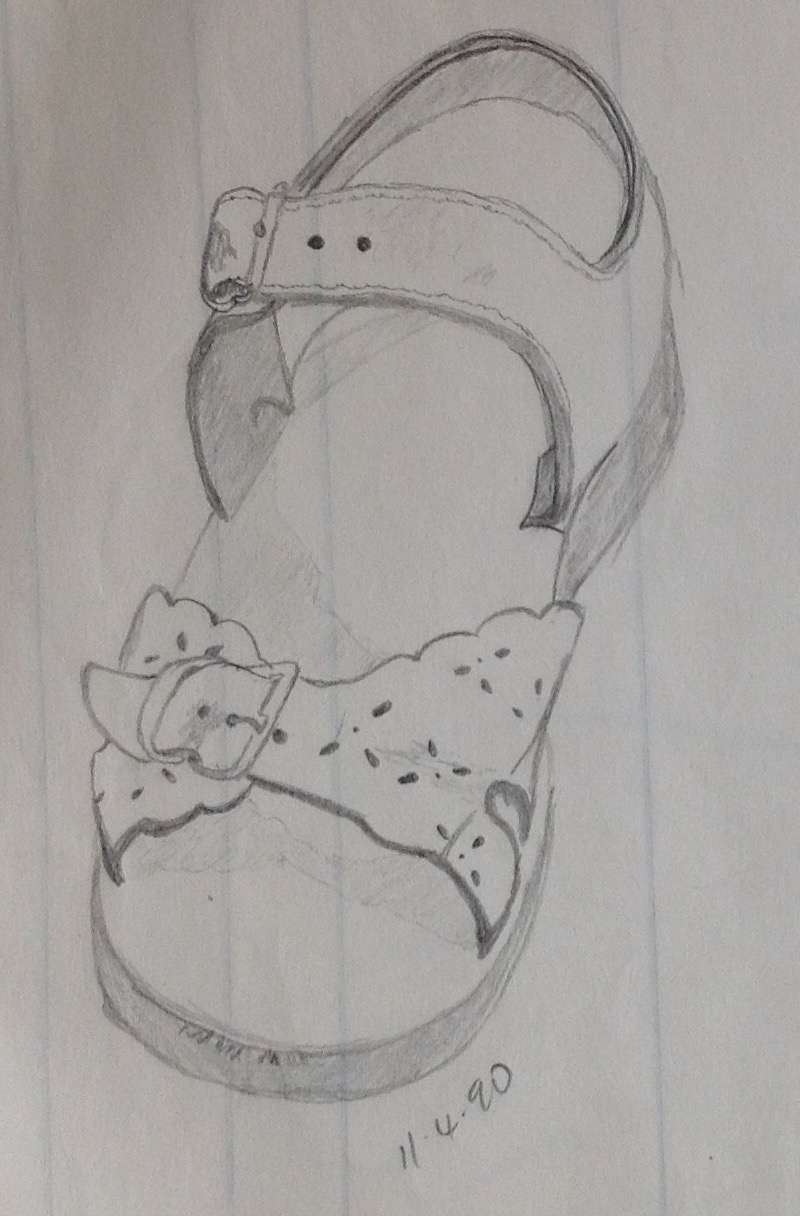
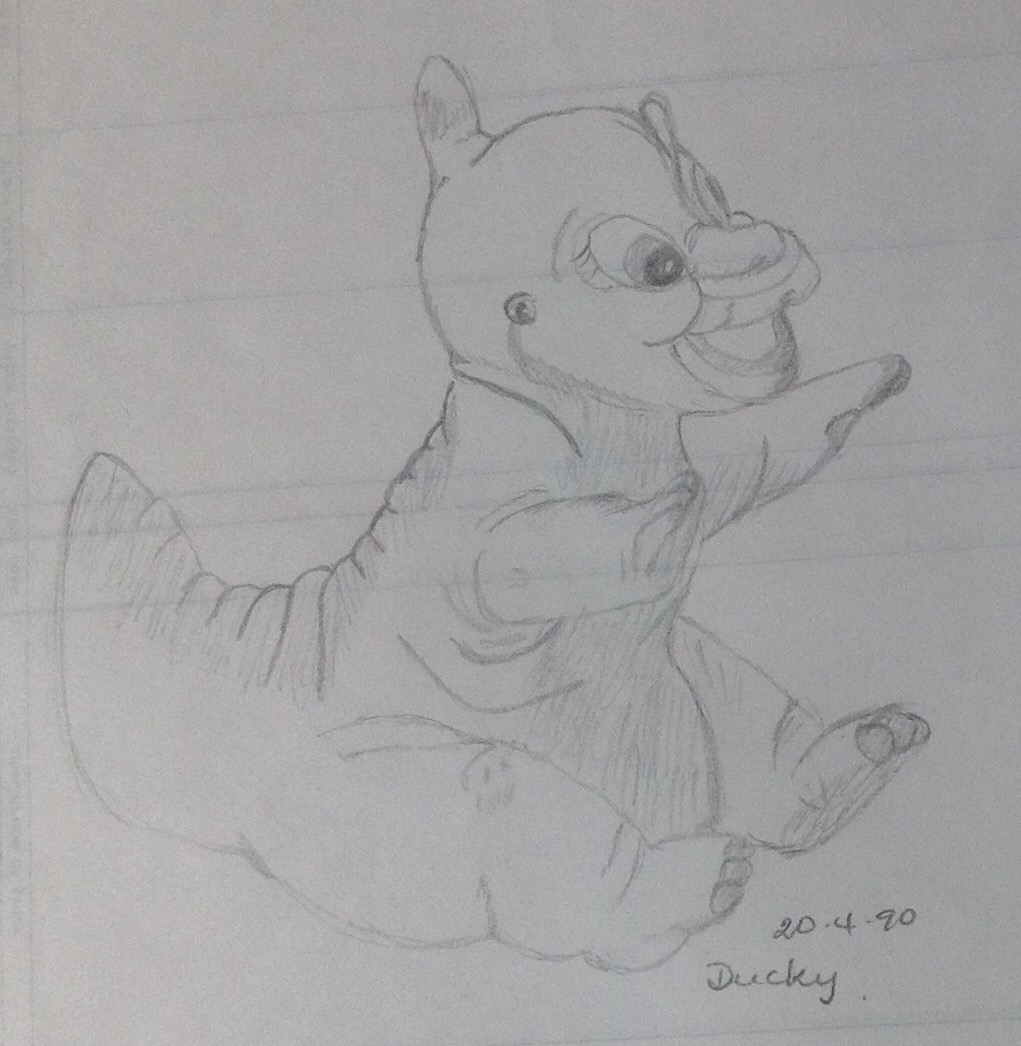
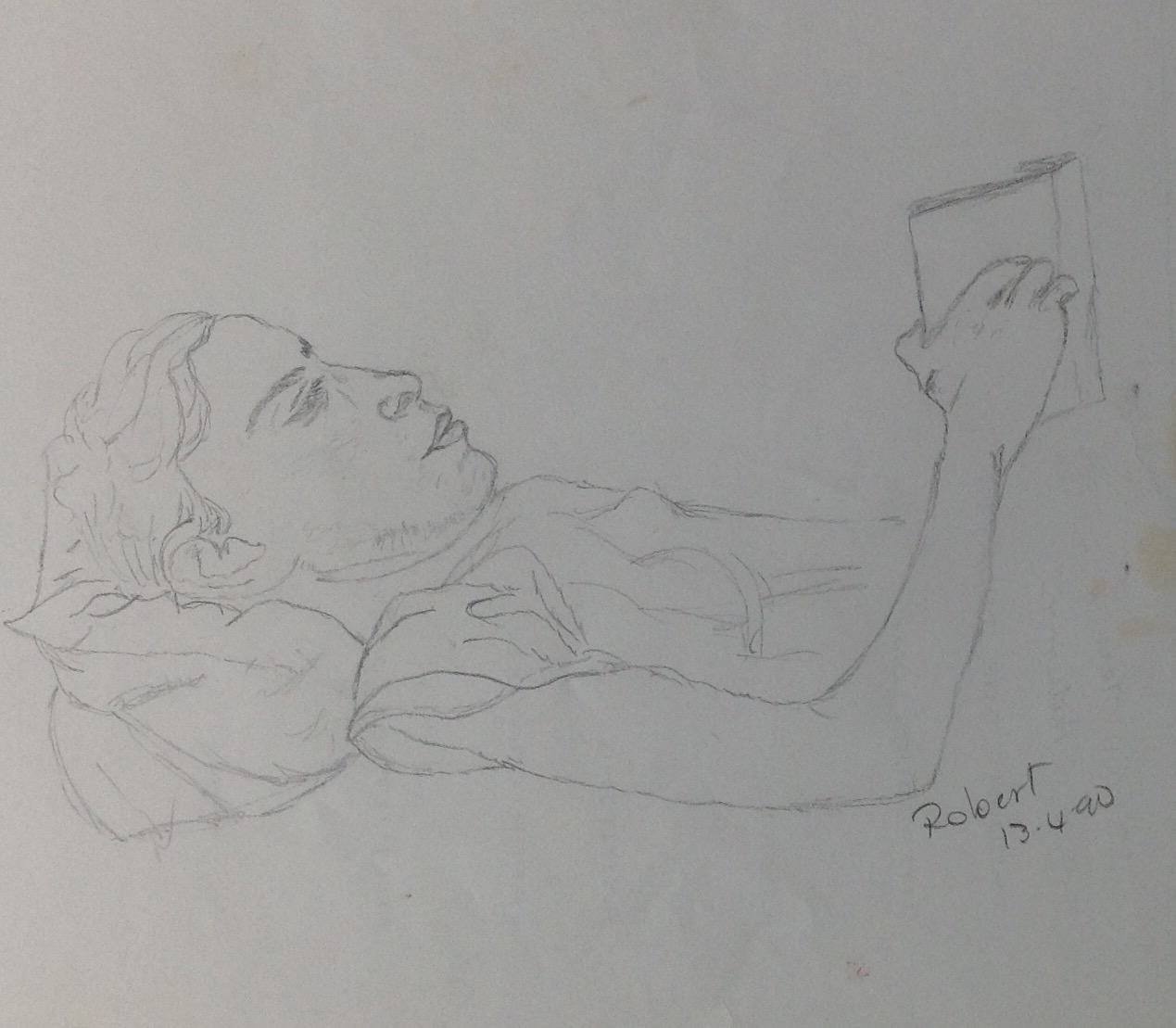
    These are some of the drawings I did at that time, each from observation of a real, not imagined object:

    © Norah Colvin
    © Norah Colvin
    © Norah Colvin
    © Norah Colvin
    © Norah Colvin
    © Norah Colvin
    © Norah Colvin
    © Norah Colvin

    In my pre-service teaching days I was cautioned to not use simple drawings on the board, for example a stick person or a smiley face sun, for the children to copy as it may limit their drawing ability. It was always a concern of mine. I didn’t want to limit anyone’s ability!

    After doing the drawing course I bought a copy of Drawing on the Right Side of the Brain for Children and used its recommendations in art lessons. In his article about How to Teach Drawing to Children Marvin Bartel warns against showing children how to draw and emphasises the need for close observation, and practice, practice, practice. I agree with his advice to not add one’s own changes or lines to a child’s drawing.

    In recent years I came across some fabulous picture books by Mo Willems.

    © Norah Colvin
    © Norah Colvin

    At first I didn’t find the books appealing with their simple black outlined drawings and minimal use of colour. It was only after a colleague’s repeated exhortations that I gave in and reluctantly read one. Halfway into the book The Pigeon Finds a Hot Dog!” I was a fan! With what appears to be a few simple lines, Mo creates a great variety of expressions and moods, telling stories that children can identify with and that have them (and their teachers) holding their sides with laughter.

    In the app Don’t Let the Pigeon Run This App Mo encourages children to add their voices, making the story their own. He also includes videos of how to draw the characters. The app is as much fun as the books. There are many videos by others on youtube sharing how to draw Mo’s characters, but none is better than Mo himself.

    Here is a PDF of his instructions for drawing the pigeon:

    Mo Williams pigeon_draw01

    and a video of Mo talking about how he creates his characters. Sorry, Mo, I underestimated you at first.

    So while I accept that colouring books may have benefits for mental health for adults who choose that activity and understand that colouring can induce a meditative state and be very relaxing, I think a blank piece of paper and a variety of pencils and pens would have the same effect and, who knows, you might unleash the artist within. I certainly don’t consider their use in the best interests of children’s development and creativity.

    What do you think of colouring books for children and adults? Is colouring a recreational pursuit for you? Have you bought your first colouring book for grown-ups yet?

    Thank you

    Thank you for reading. I appreciate your feedback. Please share your thoughts.


  • What is failure?

    rough-writers-web-comp

    Regular readers of my blog know that for the last eighteen months I have been participating in the flash fiction challenges set by Charli Mills at the Carrot Ranch. Each week Charli posts a prompt and invites readers to submit a response in exactly 99 words. I have participated since the first prompt and have missed only a few, maybe one or two.

    I enjoy the way the prompt stretches both my thinking and my writing. I appreciate the opportunity to engage in fiction as a diversion from the mainly expository writing (and reading) I do; and to engage in a supportive and encouraging group of Rough Writers.

    Since education is the focus of my blog I have given myself the added challenge of targeting an aspect of education in my response to Charli’s prompt. Mostly I have succeeded, though sometimes the posts may be a bit convoluted and the links rather tenuous, but nevertheless, I have been mostly pleased with my ability to find a link.

    This time I didn’t think I was going to do it. While I grappled for a suitable link, none was forthcoming and I thought it was going to be an F, a no-show, this time.

    F

    You see, this week Charli is talking about the destruction caused by forest fires and other catastrophic weather events. Though Australia suffers its share of natural disasters, I am fortunate that I have never been more than inconvenienced by them. I haven’t suffered the loss of family, property and livelihood that others have; nor have I worked in a school where loss was experienced on a large scale. You could say I have lived a sheltered life, and I am grateful for it.

    So without a personal experience to share, my next thoughts were to the curriculum. But I am an early childhood teacher, and young children don’t learn about catastrophic events unless they have a personal experience of them. The Australian Curriculum introduces learning about natural disasters in year six.

    Another dead end. The F was looming. Would it engulf me?

    warszawianka, tango face crying https://openclipart.org/detail/30295/tango-face-crying
    warszawianka, tango face crying https://openclipart.org/detail/30295/tango-face-crying

    Then inspiration! I remembered watching a video in which the possibility of an F being the new A was mooted.  I’m sure you’ve all heard about 60 being the new 40, for example; generally put forward by the 60s rather than the 40s I conjecture. But this was a new twist.

    The article on Mind/Shift How we will learn entitled When Educators Make Space For Play and Passion, Students Develop Purpose introduced me to a Harvard education specialist named Tony Wagner who, like Ken Robinson, advocates for a reinvention of the education system.

    In the video Wagner says that “What the world cares about is not what you know, but what you can do with what you know.” Content is now available through a quick internet search. We don’t need to have instant recall of numerous facts.

    Instead of content, Wagner lists a set of core competencies he considers important. He says that to be lifelong learners and active and informed citizens, the following abilities are required:

    1. To ask questions through critical thinking and problem solving
    2. To work collaboratively
    3. To be flexible and adaptable
    4. To show initiative and be entrepreneurial
    5. To communicate effectively in both oral and written modalities
    6. To access and analyse information
    7. To be curious and imaginative

    I agree that each of these attributes is important. I think I have mentioned many of them in previous posts.

    Wagner goes on to say that what is needed is innovation: the ability to generate new and better ideas that can be used to solve the problems facing us today. He questions whether America’s reputation as a leader in innovation is as a result of or despite the education system. He then asks the audience to identify what the following four people have in common.

    Bill Gates (Microsoft)

    Edwin Land (Polaroid camera)

    Mark Zuckerberg (Facebook)

    Bonnie Raitt (folk singer)

    Did you, like the audience, think them to be dropouts? Wagner identified them as not just dropouts; they were Harvard College dropouts! Steve Jobs (Apple) and Michael Dell (Dell computers) were dropouts.

    This fact about innovative dropouts inspired Wagner to investigate conditions that encourage the development of innovators. He interviewed many young innovators, asking if there had been an influential teacher or mentor in their lives. While not many could name one, those identified were outliers, engaging students in teamwork and interdisciplinary work involving problem solving and risk taking.

    Wagner also interviewed people from innovative organisations such as IDEO, whose motto he quoted: “Fail early and fail often.” (“That’s because there is no innovation without trial and error.”) It was from a think tank at Stanford that the idea that an “F is the new A” came.

    F is the new A

    There are iterations, not failure, Wagner says, and he questions the way parents and teachers try to protect children from making mistakes saying that real self-confidence was only to be gained from learning that you could recover and learn from mistakes.

    Tony Wagner - iterations

    So perhaps in thinking about failure, I haven’t really failed. I’m learning. It is only to be hoped that the failures in fire management that Charli talks about in her post lead to improved management practices in the future.

    For my response to Charli’s prompt, to  in 99 words (no more, no less) write a story about the need for help in an extreme weather event, I have chosen a weaker BOTS (based on a true story) from my childhood. The link may be tenuous but hopefully not entirely non-existent. I hope you enjoy it.

    Storm

    A big storm was coming. Two older ones were put in charge of two younger ones. They sat at the fence, watching. Soon other neighbourhood kids gathered, sharing storm stories, waiting.

    Green clouds swirled as dark clouds played leapfrog races above. The children watched the storm rush closer; mesmerised by its beauty, mindful of its power.

    Soon the winds whipped up, chasing the other kids home. The older two called to the younger, but they were nowhere to be seen. Mortified they hurried inside to alert their parents.

    What relief. They were already in, telling of the storm’s approach.

    Thank you

    Thank you for reading. I appreciate your feedback. Please share your thoughts about any aspect of this post or flash fiction.

  • Phrasing praise

    image courtesy of www.openclipart.org
    image courtesy of http://www.openclipart.org

    In response to a previous post the suggestion was made that I compile a list of “yet” phrases that teachers and parents could use to encourage children to develop a growth, as opposed to fixed, mindset.

    Only since I have been blogging have I come across the work of Carol Dweck, a psychologist, who promotes a “yet” mindset. I am very much in favour of the “yet” way of thinking and have shared some thoughts here and here. However I am not yet ready to embrace the whole package.

    I have just listened to Dweck’s book “Mindset: The New Psychology of Success” and it would be fair to say that I am struggling to accept all that she proposes with equal enthusiasm. In fact I find some of her suggestions rather challenging.

    yish, challenge https://openclipart.org/detail/19441/challenge
    yish, challenge https://openclipart.org/detail/19441/challenge

    Previous posts, including the one mentioned above and others linked within it, have led to some very interesting and thought-provoking discussions about praise.  Some involved in the discussion were ready to embrace the idea of praising a child for effort rather than talent. Others could see no harm in bestowing any form of praise on their children and had not felt themselves limited by being praised for their cleverness.

    Dweck suggests ways of encouraging a growth mindset by thinking about what was learned or what could be learned. She says that children should not think they are special just by being, and suggests that if a child scores 100% on a paper the response should be something like, “That was too easy. Sorry for wasting your time. Let’s find something more challenging so you can learn.”

    In the book Dweck shares the experience of replacing her own fixed mindset with a growth mindset. She concedes it is difficult and that regressions can occur. She shares her personal disappointment when, after they had both struggled with a problem for some time, her husband arrived at a solution and she praised him with “Excellent!” or “Brilliant!”. She was crestfallen at her lapse; until her husband explained that he knew she meant that he had worked hard, put in the effort, tried alternatives and finally solved the problem.

    (Note: I am explaining these scenarios in my words not hers. Usually when I have listened to an audiobook and wish to discuss it, I buy the paper or ebook version so that I can quote accurately. I haven’t done that this time as I’m not sure which version is the same, if any, as the audiobook. Throughout this post you are receiving my interpretation or impression. You will need to go to the source for greater detail and accuracy.)

    While I agree that it is important for continual learning to be the goal, I’m not sure that I am opposed to some form of congratulations being given for achievement, as well as effort. Also I think children need to be accepted for who they are, loved and nurtured, without the need to be anything else. I’ve written about that here and here and discussed the use of affirmation songs such as Special as I can Be by Anne Infante. I know it is important to not overdo the “special” bit, but it is also important for them to feel comfortable with who they are.

    Image courtesy of Anne
    Image courtesy of Anne

    Yes, they (we) do need to be encouraged to improve. But surely there is danger in feeling that results are always wanting, that they are never good enough. In fact, in the book, Dweck describes a girl who developed ulcers while striving to fulfill the high expectations she perceived her parents to hold. I think getting the balance right is the tricky bit. Encourage. Inspire. Motivate. But don’t demand, require, stress or, perhaps, judge.

    Somewhere in my recent reading I came across the following “motivational” video, a clip from a movie of which I wasn’t aware. While I don’t wish to misrepresent Carol Dweck and suggest that she would “praise” this method, I think it could be taken as an interpretation (I hope extreme and incorrect) of her philosophy. Have a look and let me know what you think.

    I felt extremely uncomfortable watching this video. I am not a sportsperson so I may not understand the culture of sports training but:

    I felt sorry for the player, Brock, who was pushed to and beyond his “limits”. Sometimes that may be necessary but surely not just to “please” a coach; and this seems to be more about the needs of the coach than the player, “revenge” perhaps for thinking the other team was better prepared (I know it’s just a movie). I was worried that the player was going to have a heart attack and die on the field. I was disappointed that none of his team members intervened to protect him from the bullying coach or to help him with his load. I would definitely find it difficult to work with a manager or coach like that.

    Lazur URH, Lion Tamer https://openclipart.org/detail/218974/lion-tamer
    Lazur URH, Lion Tamer https://openclipart.org/detail/218974/lion-tamer

    While I do not wish to take away from Dweck’s philosophy, many of the examples in her book discuss the mindsets of winners, of champions. Surely not everyone can be a champion. And if you have to push yourself, as Brock did in the video, to do your best, then I’m not sure I want to do my best.

    Some people have described me as a perfectionist. I have never accepted that label. I work hard to do the best job I can, but I also recognise when good enough is good enough. Working within the constraints of resources, including time, imposes limits. Is that a limiting fixed attitude? Maybe I need to work a little more on my growth mindset.

    As for the suggestion of compiling a list of “yet” phrases, I don’t think I am quite ready to tackle that one yet. Besides, I think Dweck has done it herself!

    Mindset explores Dweck’s philosophy more fully. There you can test your own mindset, read some suggestions for Parents, Teachers and Coaches (and other applications) and find out about Brainology, a program written by Dweck and Blackwell to “Motivate students to grow their minds”.

    There is much to explore. I have given but a few snippets here. There is much more learning for me to do.

    Thank you

    Thank you for reading I appreciate your feedback. Please share your thoughts.

  • The expectation of labels


    1 (5)

    In some circles labels can be used as an attempt to define who you are, either to yourself or to others; for example the car you drive, the clothes you wear, the foods you eat, the technology you use, even the books you read. The use of labels can lead to stereotyping and expectations based upon particular characteristics while other, and equally salient, qualities specific to the individual are ignored.

    Applying labels to children can serve similar purposes: to define and explain particular behaviours or characteristics. Labels can range from an informal “naughty” through to medical diagnoses such as ADHD (Attention Deficit Hyperactivity Disorder) or ODD (Oppositional Defiant Disorder).

    Whether the result of an informal observation or a professional assessment, labels can have a profound effect upon a child and family members. The label sets up expectations that may limit the way the child is viewed; so that only those characteristics specific to the label are noticed and responded to. The child is viewed as being “the label” rather than an individual who displays those particular behaviours or characteristics, at this moment.

    People tend to see what they want to see and ignore evidence that doesn’t support their thinking. So if a child is labelled disruptive, it is the disruptive behaviour which is noticed and acted upon. Similar behaviour in a child not bearing the label may be overlooked or excused. While the focus is on one, usually negative or limiting, behaviour other positive characteristics and strengths may be ignored.

    pygmalion effect

    Unfortunately, once a label is applied it is often difficult to remove and it may be used as an excuse for a child’s failure to learn or progress; after all the “fault” is considered to be with the child, not with any methods used or not used. Sadly too, labels can be misapplied or not fully understood. This may accentuate differences that are non-existent or less serious than the label implies.

    However not all effects are negative. There are many positive effects of labelling a child’s condition or behaviour; including:

    • increased opportunities for the child, family and teachers to receive support through funding of programs, assistance of trained personnel and professional development
    • enhanced understanding through discussions using a common language with specific meanings and applications
    • increased awareness in the community with further opportunities for advocacy as well as greater acceptance and tolerance
    • the development of programs aimed specifically to support individuals with the condition.
    rg 1024, gift https://openclipart.org/detail/31159/gift
    rg 1024, gift https://openclipart.org/detail/31159/gift

    But are all labels negative? What about giftedness?

    Previously on this blog there has been some discussion about praise and the effects of different types of praise. The discussions were initiated in response to The Examined Life by Stephen Grosz and can be found here and here. Grosz suggested that praising a child could cause a loss of competence. Why would you continue to try if you were already “the best”?

    Claudia M. Mueller and Carol S. Dweck support the notion that Praise for Intelligence Can Undermine Children’s Motivation and Performance. They suggest that labels such as “smart”, “clever” and “intelligent” can be just as damaging as those with deficit connotations.

    Dweck explains her ideas more fully in Mindset: The New Psychology of Success, my current audiobook “read”. I have previously mentioned Dweck’s theory of ‘yethere and here.

    In the book Dweck talks about how praise creates mindset. If one is praised for being smart or clever, then one develops a fixed mindset: “I am smart. I can achieve because I am smart.” If effort is required then one is not smart. Those with a fixed mindset avoid challenges that might jeopardise the view of themselves as smart.

    On the other hand, praise for effort encourages a ‘yet’ or growth mindset: if I try it again, try harder, try it a different way, then I will do better. “I can learn”. There is no risk of becoming ‘not clever’. A growth mindset recognises the importance of effort, persistence and motivation.

    fixed - growth mindset

    Dweck says “don’t praise the genius – praise the process”.

    Giftedness” is a label that was once applied after achieving a high result on an intelligence test, and was just as sticky as any other: there for life.  Giftedness was considered stable and unchangeable. It is obvious that many “gifted” students could fall into the fixed mindset trap. Thanks to Dweck’s work on mindset, attitudes to IQ scores and the concept of “giftedness” are now changing.

    Teachers with a growth mindset appreciate the incremental

    Students can be encouraged to develop a growth mindset by learning about how the brain works. When they understand that labels aren’t fixed and that learning can be improved, they will become more confident and may find more enjoyment in some of the challenges that school offers. Encouraging students to recognise how they view themselves as learners and to substitute “growth” for “fixed” thinking will have a remarkable effect upon their confidence and success.

    Encouraging this growth mindset may be one way we can look out for each other, one way of “getting your back”.

    To write a story (in 99 words, no more no less) about a character who is called to have the back of another was the challenge set by Charli Mills at the Carrot Ranch this week. In her post Charli is talking about labels of another kind, labels that can be just as damaging or just as useful. She talks about having another’s back, being there to offer support when needed.  A parent, a teacher, a friend can be there at any time to offer support for a learner on their path to discovery. My response captures one such moment.

    Growth: a mindset

    Marnie propped her head on one hand while the pencil in the other faintly scratched the paper. She hoped it wasn’t too obvious that she didn’t get it. But she didn’t get it. She didn’t get last year, or the year before. Why should she get it now? What was the point? Her brain just didn’t work that way. She was dumb. They had always said she was dumb. No point in trying.

    Then the teacher was there, encouraging, supporting, accepting. “Let me help you,” she said. “You can do this. Let’s break it down into steps. First …”

    Thank you

    Thank you for reading. I appreciate your feedback. Please share your thoughts about any aspect of this post or flash fiction.
  • How to add a badge to your WordPress blog

    SMAG ccbyncnd

    A couple of months ago I invited readers of my blog to join S.M.A.G. Society of Mutual Appreciation and Gratitude and to paste the badge onto their blogs should they wish to do so. Well, invitation isn’t quite the correct word because membership of the group was not conferred in response to an invitation, but automatic through offering other bloggers support and encouragement through positive comments. I’m pleased to say there are a good number of S.M.A.G. members in the blogosphere regardless of whether or not the badge adorns their blog.

    A week or two ago Jules Paige, who blogs at Jules in Flashy Fiction (and elsewhere), commented that she wasn’t sure how to go about adding the badge to her blog. I offered to send her instructions, and thought that maybe the information would be useful for others as well.

    The following instructions are specific to the S.M.A.G. badge and WordPress blogs. A similar process would be used to add any image to a WordPress blog. However I am unsure how similar the process is for others. Please let me know if you find these instructions useful, or lacking in any way.

    © Norah Colvin
    © Norah Colvin
    © Norah Colvin
    © Norah Colvin
    © Norah Colvin
    © Norah Colvin
    © Norah Colvin
    © Norah Colvin
    © Norah Colvin
    © Norah Colvin
    © Norah Colvin
    © Norah Colvin
    © Norah Colvin
    © Norah Colvin
    © Norah Colvin
    © Norah Colvin

    Thank you

    Thank you for reading. I appreciate your feedback. Please share your thoughts.


  • Don’t gloss over glossophobia


    http://www.morguefile.com/
    http://www.morguefile.com/

    Many crepuscular animals freeze when caught in the headlights of an oncoming vehicle. With vision more suited to dark than light, they are temporarily blinded by the brightness. They become confused and, not knowing which way to turn, freeze. Others, like the Australian kangaroo, may panic and move erratically with unpredictable changes in direction. Any large animal on the road puts itself and any unwary motorist in danger.

    http://www.morguefile.com/
    http://www.morguefile.com/

    Freezing in fear is a reaction not exclusive to animals. Humans are just as likely to freeze in fear, or perhaps panic and behave erratically unsure of how to respond. Some people find being “put in the spotlight” quite unnerving and exhibit similar responses to animals caught in the headlights.

    While Charli Mills of the Carrot Ranch was talking about a real deer caught in the headlights this week and challenged writers to in 99 words (no more, no less) write the common premise: “I ran over a deer (or other animal) and have decided to nurse it back to health, I decided to apply the challenge to a human situation.

    Glossophobia, or the fear of public speaking, is quite common. Many people suffer mild symptoms of reluctance, “butterflies” or sweaty palms. Others suffer more severe symptoms including total avoidance, panic attacks and other forms of physical distress.

    Being called upon in class can be distressing for some students, particularly if they have been singled out or ridiculed for not knowing the correct answer in the past. Helping a student to overcome this fear requires patience and understanding. It may require an approach from many different angles and the support of a variety of personnel, as well as a desire by the student.

    The student will require support to develop self- esteem and self-confidence as well as knowledge of the subject. A sensitive “not yet” approach by a teacher who offers support, and encourages other students to be supportive, will contribute greatly. It may take time for improvements to be noticeable as changing an established mindset, from “I’m a failure” to “I’m learning”, takes effort.

    In her post Charli included a quote from the Tahoma Literary Review which included the suggestion that rescuing a deer and nursing it back to health may be used as a “metaphor for the protagonist’s desire to rescue his/her life by rescuing another’s.” It is not too big a stretch to think that, for some teachers, “rescuing” their students could enable them to “rescue” themselves; improving the lives of others improves their own through the ripple effect.

    I have chosen this “rescue” as the theme of my response to Charli’s challenge: a breakthrough for Marnie in the development of her confidence and willingness to have a go in a class where students are developing a growth mindset under the guidance of a sensitive teacher.

    Like a deer in the headlights

    Like a deer in the headlights she was immobile. She’d dreaded this moment. Although she’d tried to fade into the background, she knew she couldn’t hide forever. The room suddenly fell silent, all eyes on her. Would she fail?

    “Marnie?” prompted the teacher.

    Her chair scraped as she stood. She grasped the table with trembling hands attempting to still her wobbly legs. They waited.

    Marnie squeaked.  Some looked down, or away. Some sniggered. Jasmine smiled encouragingly. Marnie cleared her throat, then blurted the answer.

    “That’s right!” congratulated the teacher.

    The class erupted. Marnie smiled. Their efforts had paid off.

    Thank you

    Thank you for reading. I appreciate your feedback. Please share your thoughts about any aspect of this post or flash fiction.


  • Sugar and Snails: On friendship, fact and fiction

    sugar-and-snails cover

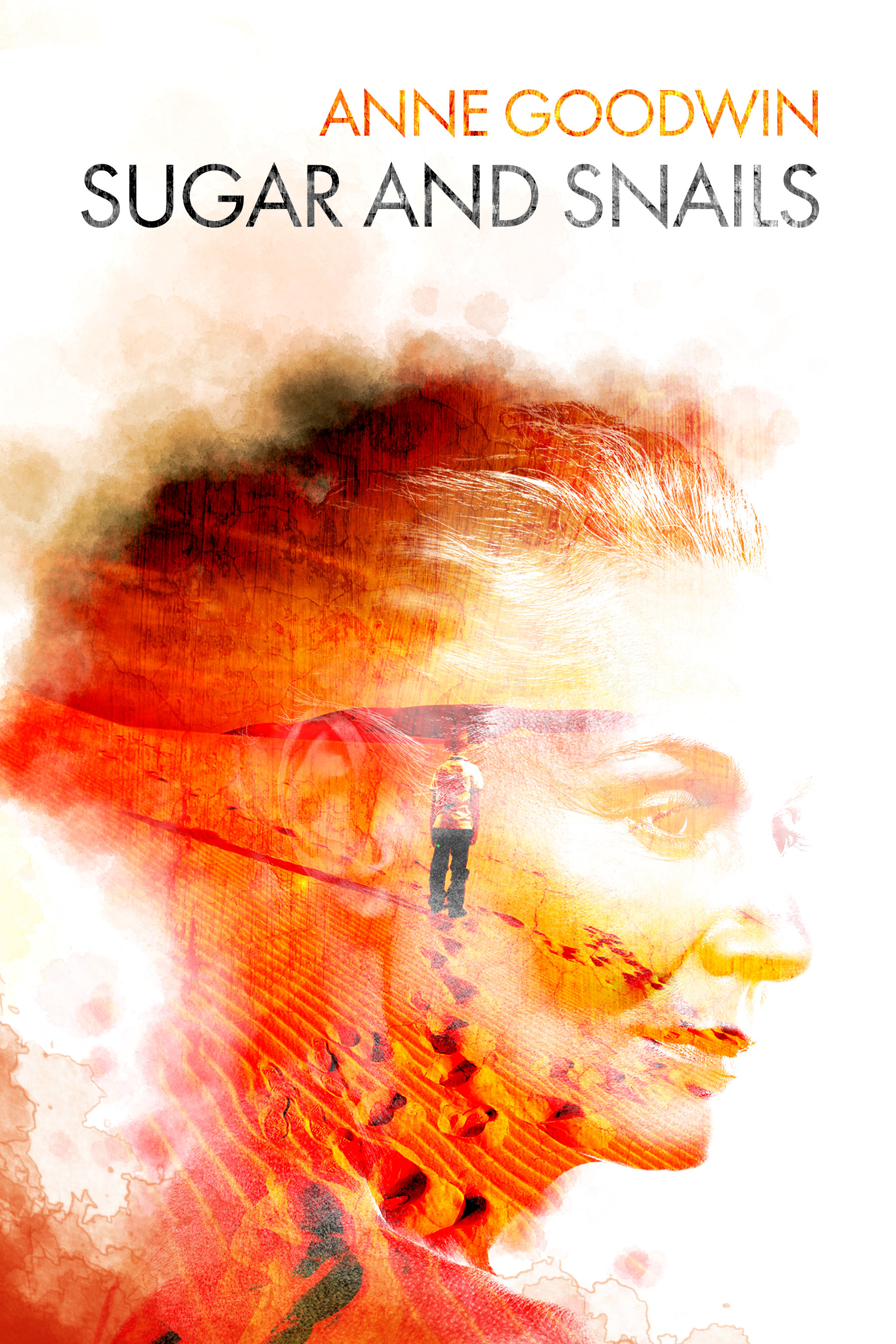
    In this post I am very excited to introduce Anne Goodwin sharing tidbits from her debut novel Sugar and Snails, published just last week by Inspired Quill. It is already receiving rave reviews and I am happy to add my voice to those in praise of it.

    Anne and I have been friends for the best part of two years. I can’t quite remember just how we met but I do remember it was on Twitter and that we hit it off almost immediately. I followed up one of our Twitter conversations with a post and we haven’t looked back. We have enjoyed many wonderful discussions on each of our blogs, and the blogs of others. With Anne’s background in psychology and mine in education there is considerable opportunity for a meeting, as well as divergence, of minds.  I learn from her, I think, as much as she learns from me. Or should that be the other way round?

    On her blog Annecdotal Anne shares reviews of novels she has read and her thoughts about and understanding of the writing process. I have read some of Anne’s recommendations, including “The Examined Life” by Stephen Grosz, which stimulated a great discussion on my blog, including a first guest post by Anne.

    Anne is also a fabulous teller of short stories with over sixty published either online or in print. I must confess I have not yet read all of Anne’s stories but have thoroughly enjoyed each I have read. I think she has a gift for a surprise ending, though she does not employ the technique in every story.  Her style is easy to read with a natural flow of language. Her portrayal of characters shows a depth of understanding that may be attributed to her background in psychology, but the variety of settings and topics displays a much broader understanding of the human condition in different environments and from different cultural backgrounds.

    It is my great pleasure to hand this post over to Anne.

    Anne

    Anne Goodwin: On friendship, fact and fiction

    The year I turned fifty, I wanted to do something special, but a party really wasn’t my thing. Instead, I celebrated with a long distance walk: 190 miles across northern England from the west coast to the east. As the route begins only a few miles from where I grew up, I took the opportunity to meet up with a bunch of old school friends the evening before I set off.

    About a dozen of us got together for a meal in the pub we used to frequent after school. I’d kept in sporadic touch with a few of the women over the years, but some I hadn’t seen since I was fifteen. Although there was some lively conversation, I spent a lot of the time sitting staring, overwhelmed by how I could detect within these middle-aged faces the teenagers they’d once been, and the pleasure of being back among them.

    After hiking across three national parks, meeting up with various friends and family along the way, I reached my destination at Robin Hood’s Bay, exhausted and exuberant. Back home, with a couple of days free before returning to work, I began writing the novel that was to become Sugar and Snails.

    Like many writers, I’m an introvert. I relish my time alone. I need to be able to withdraw into the privacy of my own mind to reboot. But friendship is important to me as well. Those two and a bit weeks of reconnecting with old friends served as a reminder of that, and also that, in the right form, sociability can revitalise me too. It felt so important I dedicated my novel to the coast-to-coasters and old school friends.

    Yet it wasn’t until very recently that I realised that my novel was itself a celebration of friendship. Of course I’d given my main character friends but, in my head, I didn’t distinguish them from other people who drive the plot forward: a troubled student; her difficult boss; the social worker who found her a place at boarding school at fifteen. Maybe, because Diana herself doesn’t fully trust her friends, I wasn’t able to appreciate them either.

    Two of her friends are crucial to the story and, although they never meet, they are brought together strongly in Diana’s mind early on. Attending a dinner party to mark the forty-fifth birthday of her best friend, Venus Najibullah, Diana is asked to pop upstairs to tell Venus’s daughter a bedtime story. In response to the seven-year-old’s insistence on a story about “when you were a little girl going on adventures”, Diana finds herself lost in the memories of Geraldine Finch “the girl who ruled my childhood”.

    As with many childhood friendships, Diana recalls an intense connection with Geraldine as the pair absorbed themselves in dressing up for role-play games. But as they approached their teens, Geraldine proved fickle, neglecting her playmate in favour of other friends, unless there was something she wanted. The friendship ends abruptly in what appears to be a betrayal, followed by Diana’s departure for boarding school a few months later. But it would be premature to regard this strand of the novel as about the dark side of female friendship. From the vantage point of adulthood, Diana might come to view this childhood friendship differently, just as the reader might gain a different perspective on learning more about the character of Diana.

    Meeting for the first time aged eighteen, Diana is somewhat intimidated by Venus until she discovers they have something in common:

    On my first Sunday night at university, I was en route from the bathroom to my study-bedroom in the student halls, clutching a damp towel and my quilted wash-bag to my chest like a shield. My gaze levelled at my fluffy primrose slippers peeping out from under the hem of my stripy galabeyah as I shuffled along the corridor. I didn’t notice the other girl until I’d almost bashed into her: tall, with a cascade of ebony hair and skin the colour of butterscotch.

    I made to move on, but the girl blocked my path, looking down her long nose at me from beneath heavy eyebrows: “You do realise that’s a man’s galabeyah you’re wearing?” Her voice was as haughty as the girls’ at Dorothea Beale, with an exotic lilt that brought to mind the rhythms of Cairo.

    No doubt I blushed. At boarding school I’d kept it hidden in my trunk. But university promised another chance and, besides, who was going to be able to tell the difference between a traditional Arab shift and an ordinary nightgown? Who, apart from this arrogant girl who was scrutinising me like I was an exhibit in the Egyptian Museum?

    I glanced down at the loose cotton gown I’d picked out with my dad at the Khan el Khalili three years before. “That’s what I like about it,” I told the girl. “A dress that’s meant for a man.”

    A wide smile softened her features. “Fair enough, although I prefer a dash of frill myself.” It was only then that I recognised her floor-length lilac robe as another galabeyah, trimmed with lace around the neckline, with pearl buttons where mine fastened with bobbles of cord. “I’m Venus Najibullah, by the way. Come back to my room and I’ll make you a coffee and you can tell me how an English girl came by such a thing already.”

    Yet, although they become close friends, and remain so for years, Diana can’t tell Venus the full story of her trip to Cairo, fearing rejection if she does. She’s become so accustomed to presenting a false self to the world, she genuinely wouldn’t know how to share the secret of her past. Over the course of the novel, she has to take a risk to discover whether she can trust Venus with a more authentic version of who she is.

    When Norah first offered me a guest slot on her blog, I thought I’d write something more closely tied in to the theme of learning. Yet when she showed me the draft of her lovely introduction, I knew this was the right way to go. To both give and receive friendship is something best learnt through experience but, to do so, we have to be prepared to take the risk of being rebuffed.

    Norah is a prime example of the wonderful new friends I’ve found through writing, and I’ve been especially touched by the support I’ve received from friends, old and new, online and off-line, as I publish my debut novel. Tonight I’ll be at the second of my book launch parties along with a few blog/Twitter friends I’ll be meeting in person for the first time. Norah can’t be there, but I’ll be conscious of her presence in spirit, as well as that of other dear friends from across the continents. A few of those “old school friends” to whom I have dedicated my novel will be there, however, closing the circle of friendship that is a central theme both of my novel and my journey to write it.

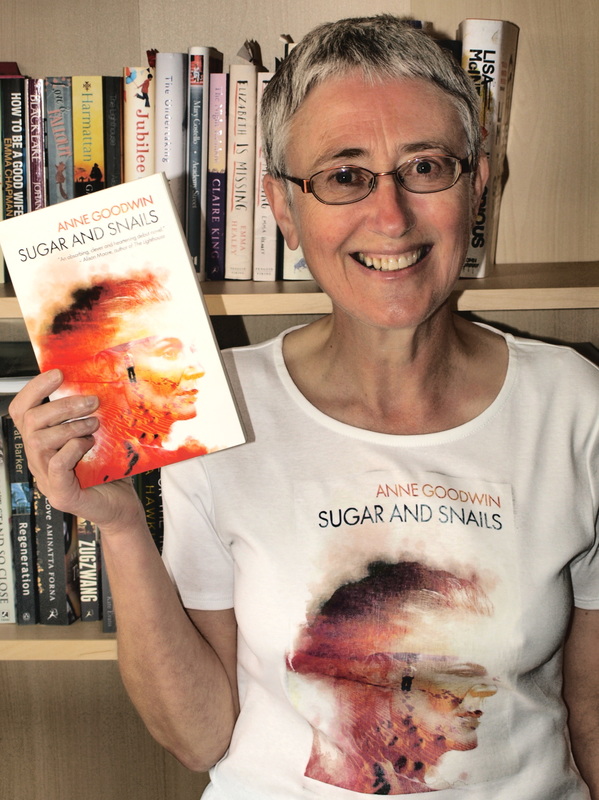
    Anne Goodwin author photo

    Anne Goodwin writes fiction, short and long, and blogs about reading and writing, with a peppering of psychology. Her debut novel, Sugar and Snails, was published last week by Inspired Quill. Catch up on her website: annethology or on Twitter @Annecdotist.

    blog tour week2


    Thank you, Anne, for sharing your thoughts. I am delighted  to join in the excitement of your publication celebrations. I have thoroughly enjoyed reading Sugar and Snails and am happy to recommend it to others.

    Thank you

    Thank you for reading. I appreciate your feedback. Please share your thoughts.


  • Ignorance is bliss … Learning to be explicit

    My Dad used to say that what I didn’t know wouldn’t do me any harm. He was not impressed when a brother wrote in my autograph book when I was in my early teens that what I didn’t know wouldn’t do me much good either!

    © Norah Colvin
    © Norah Colvin

    I’m torn between the two. I have come to realise that the more I know, the more there is to learn.

    the more I know the more there is to learn

    This learning journey never ceases. Each step is just one further into the unknown. I seem to know less now, or need to know more now, than I ever have before. How can that be?

    There are those around me who are content with who they are, with where they are, with what they are doing, and wake up to each day wanting no more than it brings. I strive to achieve that contentment, and practice the joy of being in the present moment, believing strongly in its rewards. But at the same time I strive to do more, to learn more, to achieve more. The doing and learning is joy in the present moment, for me. It is both exhilarating and disheartening to realise that the learning journey stretches so far ahead.

    Learning about learning

    I have spent almost my entire life thinking and learning about learning and education, particularly literacy education and the education of young children. Though the journey has been long, my knowledge is narrow and small, and of absolutely no use in a trivia quiz, unless the question happens to be about a nursery rhyme, and then don’t ask me too much about its “real” or original meaning.

    GDJ, Humpty Dumpty https://openclipart.org/detail/223086/humpty-dumpty
    GDJ, Humpty Dumpty https://openclipart.org/detail/223086/humpty-dumpty

    When I set upon my journey to create a website of teaching resources that I had made, I thought it was an easy thing. I had many resources already made. I just needed to get some illustrations done and put them on a website. What could be simpler than that?

    Simple?

    Every step I take drives me deeper into complexity, into the unknown. Unravelling the complexity demands that I be explicit, that I see and describe each minute step.

    Being explicit

    I always considered the ability to be explicit, to see and understand each step, essential to effective teaching in an early childhood classroom. If one was unable to see the exact spot where a child was going wrong, where a misunderstanding had been formed, or a misconception learned, or the potential for its occurrence, it was difficult to either prevent or repair it. I considered that ability to be one of my strengths as a teacher.

    nicubunu, broken chain https://openclipart.org/detail/22063/broken-chain
    nicubunu, broken chain https://openclipart.org/detail/22063/broken-chain

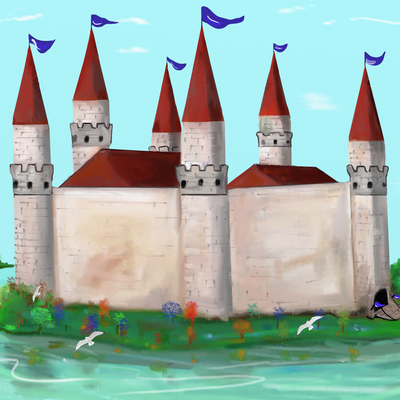
    Over the past few years when I have been giving art briefs to illustrators, my need to be explicit was stretched anew. I had to describe in precise detail exactly what I wanted. It was no use saying I wanted a castle on a hill and expect that the artist would be able to fill in all the details I could see in my mind. I had to explicitly describe it in detail:  did it need a moat or a drawbridge, was the drawbridge to be up or down, were there turrets or flags, and if there were flags, what colour and design they would have, how many windows, how many people, and what were they doing and how were they dressed …

    © Norah Colvin Artwork by Kari Rocher Jones
    © Norah Colvin Artwork by Kari Rocher Jones

    Then it was time to start thinking more specifically about what I required of the website … More complexity to unravel!

    frankes, ship – colored  https://openclipart.org/detail/214500/ship-coloured
    frankes, ship – colored https://openclipart.org/detail/214500/ship-coloured

    Oh for a journey across the seas rather than deeper into complexity!

    It is said that it is darkest before the dawn. How much darker will it get?

    A recent comment by Sarah Brentyn of Lemon Shark alerted me to the fact that although I have mentioned my website in previous posts, I had not made it clear that the purpose of the website is to make my resources available through subscription i.e. to sell my resources. While some will be available without subscription, many will be available only by paid subscription. I have received a quote for establishing the website, which I am considering. I have previously referred to it being my jetski. I think I was fairly explicit about my requirements in discussions with the designer.

    However, I want some of my resources to be interactive, not downloadable, used only on the website by paid subscribers. It appears that creating the types of interactivity I have in mind will be more problematic, but they are what I consider will be my point of difference. I have had to learn to explain, very explicitly, the types of interactions I require. I even made videos demonstrating the interactions in the hope of achieving greater clarity.

    However, it was while being explicit about these steps that I realised I had omitted something from my website brief that will be necessary for the interactions to be used effectively, if they can be made at all.

    © Norah Colvin
    © Norah Colvin

    And so I go in my merry dance – up the ladders and down the snakes, hoping to fall into a pool of clarity rather than a puddle of complexity.

    Thank you for allowing me to express my muddle through writing in an attempt to make sense of it all.

    Thank you

    Thank you for reading. I appreciate your feedback and suggestions. Please share your thoughts.