Live Love Laugh Learn … Create the possibilities

Category: Blogging

  • Why school this way?


    reading

    Any material being read, or listened to, will connect with individuals differently, depending on their prior knowledge and interests. An idea might spark curiosity in one, that another would dismiss as inconsequential. Sometimes a reader will pick at a thread that hadn’t been intentionally placed for further investigation. Oftentimes, authors don’t get to benefit from readers’ feedback, and may not be inspired to conduct further research for themselves.

    But bloggers do!

    Or bloggers with wonderful readers who participate in discussions and share their ideas! I am always grateful to you my readers for your encouragement to keep on learning. You are constantly challenging my assumptions, offering alternate views, and inspiring me to seek more information. I love it.

    The-best-questions-are

    While I emphasize the importance of maintaining a sense of wonder, and of encouraging children to ask questions, I’m not always good at asking those questions myself. I learned that lesson well;  so am appreciative when others stimulate questions.

    During this past week there have been a couple of robust conversations here: one about audiobooks and cheating; and another about common curricula. The conversations branched into fields as different as science fiction and history. Thank you to those who joined in.

    In This too will pass I mentioned that each state in Australia had its own set of curricula. This places an extra burden on children changing schools, particularly interstate. The mention of our new National Curriculum made Charli Mills curious about how US education evolved. She assumed it was fairly uniform across the states, with the school year developed around farming so that children could help out in the fields.

    old school room

    I thought that our Western systems of schooling had originated with industrialisation. However, Charli responded saying that industrialisation had had little influence on education in the West (of the States). So of course I was compelled to check my assumptions!

    A Google search brought me to this document Industrialization and Public Education: Social Cohesion and Social Stratification which does seem to verify a relationship between industrialisation and schooling. (But one of the most interesting things to me is the cost of a chapter, and of the entire book this first page comes from. Have a look!)

    money bag

    I also found an abstract of Chapter 2 Long-Term Trends in Schooling: The Rise and Decline (?) of Public Education in the United States, from another book, that seems to support Charli’s understanding of the homogeneity of education in the United States. I haven’t read it yet, but it could be informative.

    I couldn’t let the topic of schooling and industrialisation go without sharing a talk by one of my favourite educators Sir Ken Robinson. This is a shorter animated version of a longer talk, which I’ve also included if you are interested in listening to the original.

    This is the animated abridged version:

    This is the original:

    Now, I have to wonder, in light of the discussion about cheating mentioned earlier, would watching the shortened version qualify as having watched the talk, or would it be considered cheating?

    Thank you

    Thank you for reading. I appreciate your feedback. Please share your thoughts.

  • Welcome to the toy box

    © Norah Colvin
    © Norah Colvin

    A little while ago I wrote about my (small) collection of international toys and the fact that I wished to add to it when I visited Los Angeles and New York with my grandchildren. I received a few suggestions:

    Sarah suggested anything I wouldn’t want to stare in the eye

    Irene thought maybe a rattle snake, coyote or woodpecker

    Charli wondered if a bison or grizzly bear would do, and

    Geoff suggested a snake.

    Many requested I share my choice.

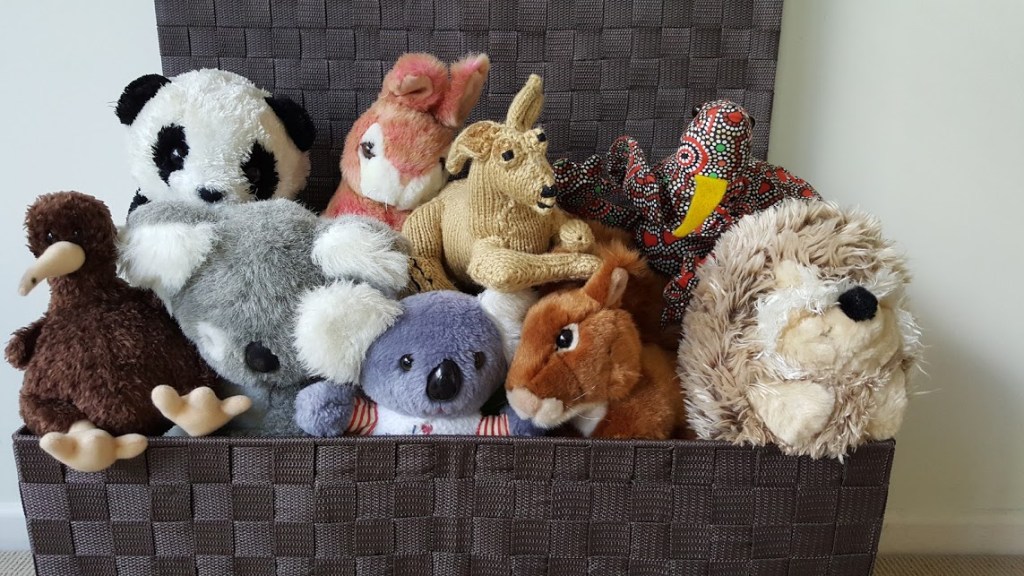
    I have now returned from that quick visit to the US, and did indeed bring back a small collection of toys to add to my toy box. (Four-year-old granddaughter informs me that 2 can be a collection, 3 is even better, and 100 is definitely a collection!) I have three to add to the toy box. A fourth got confiscated along the way.

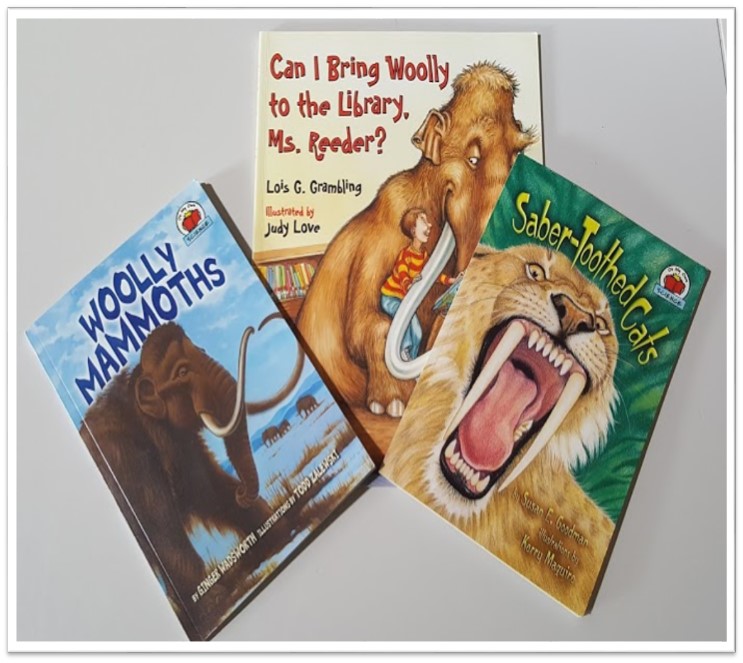
    When we visited Los Angeles, we went to the La Brea Tar Pits, a fossil site with an active excavation and museum. For a family fascinated with prehistoric creatures, the museum was a must visit. We were not disappointed.

    © Norah Colvin
    © Norah Colvin

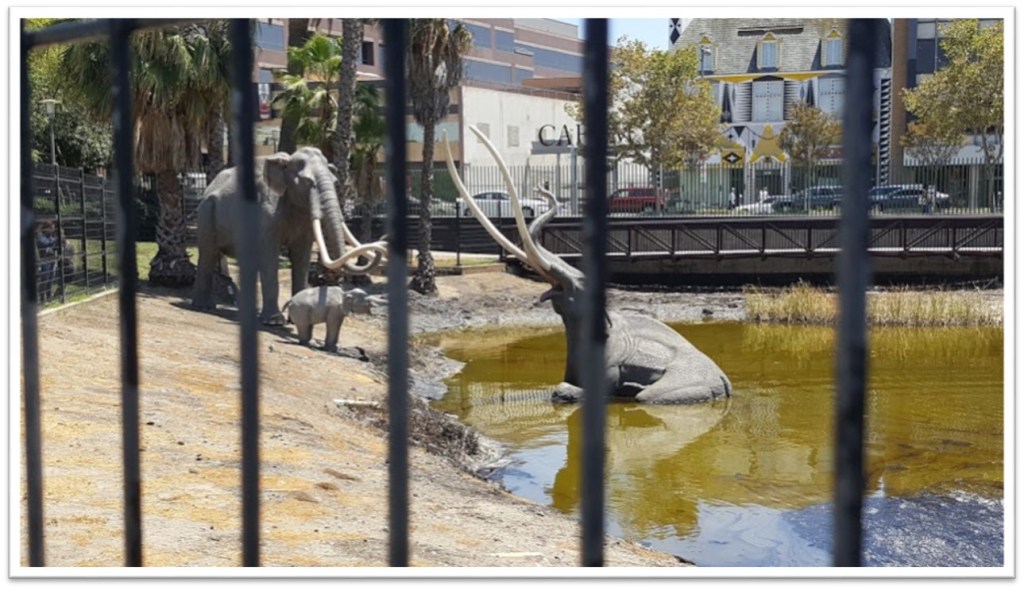
    Outside the museum we saw life-size sculptures of a mammoth family succumbing to the sticky entrapment of the tar pit. You may wonder why the sculptures are fenced. The mammoths may not be real, but the tar pit is! We saw much tar oozing up through cracks around the site as well as in the pond.

    © Norah Colvin
    © Norah Colvin

    Inside the museum we saw skeletons and depictions of many of the animals trapped in the tar pits. These are skeletons of a mother and baby mastodon who fell victim of the tar:

    © Norah Colvin
    © Norah Colvin

    We also viewed a 3D movie that provided information about the Titans of the Ice Age, including stories to explain the fate of animals whose fossils were found in the tar.

    In this short of the movie, you may sight Smilodon, a sabre tooth cat.

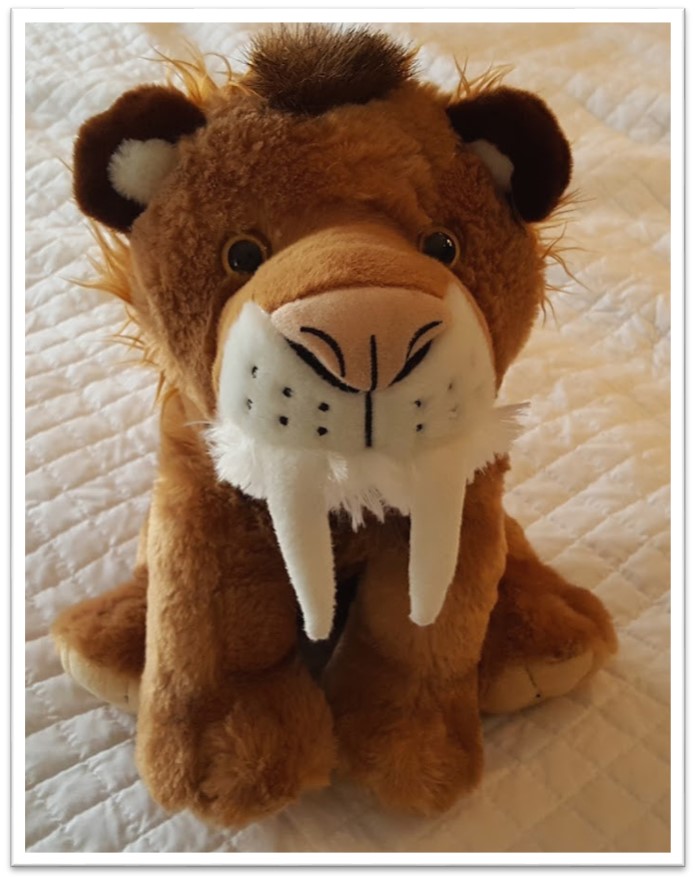
    I discovered that Smilodon is California’s State Fossil, so it was the first toy to add to my collection.

    © Norah Colvin
    © Norah Colvin

    Unfortunately, Smilodon was confiscated by my grandchildren and didn’t make it home with me. I am assured it is very happy at their place with its competitor Dire Wolf, also seen in the movie trailer.

    Of course, I couldn’t leave the store without some books as well.

    © Norah Colvin
    © Norah Colvin

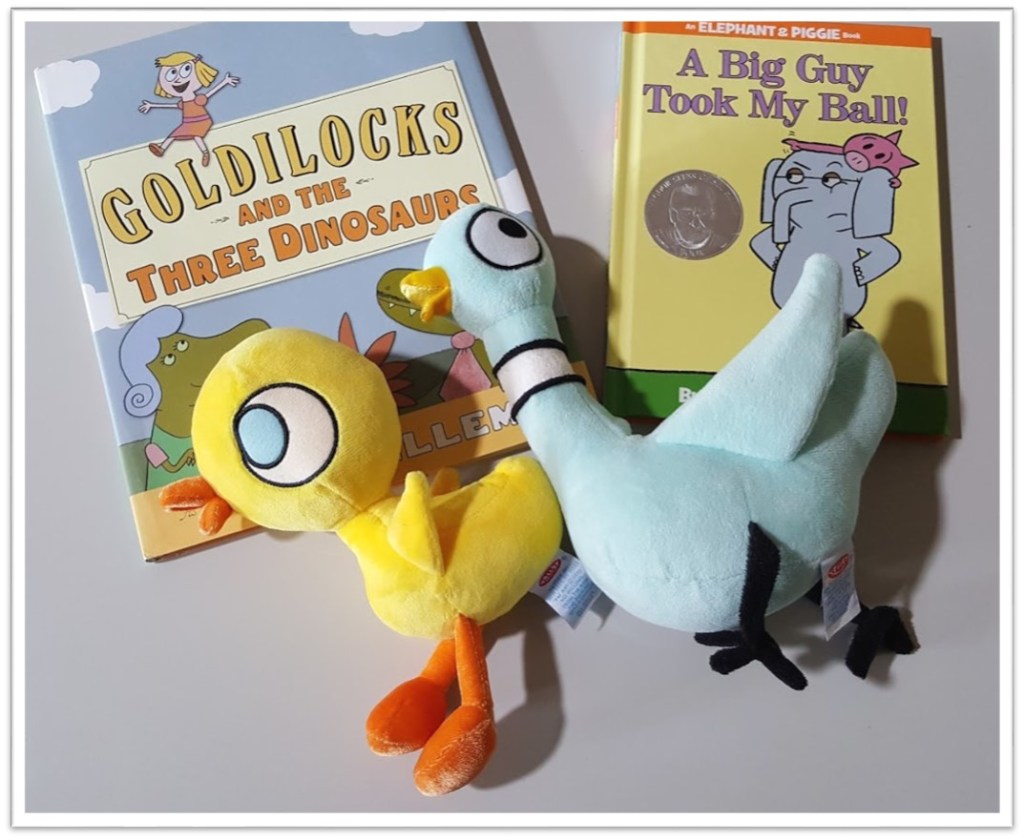
    In New York my choices turned to fiction. I discovered that an exhibition of works by Mo Willems was being held at New York’s oldest museum, the New York Historical Society Museum and Library, not far from where we were staying.  I have previously shared my delight in Willems’ books. His books are humorous, and his illustrations, with their seemingly simple line drawings, are very expressive. Of course, I had to go, and had to buy.

    I came away with Pigeon and Duckling, and two of Willems’ books.

    © Norah Colvin
    © Norah Colvin

    I thought I was done adding to my toy collection, but when we visited the American Museum of Natural History, granddaughter insisted that I purchase this T-Rex because it was my favourite colour. How could I resist?

    © Norah Colvin
    © Norah Colvin

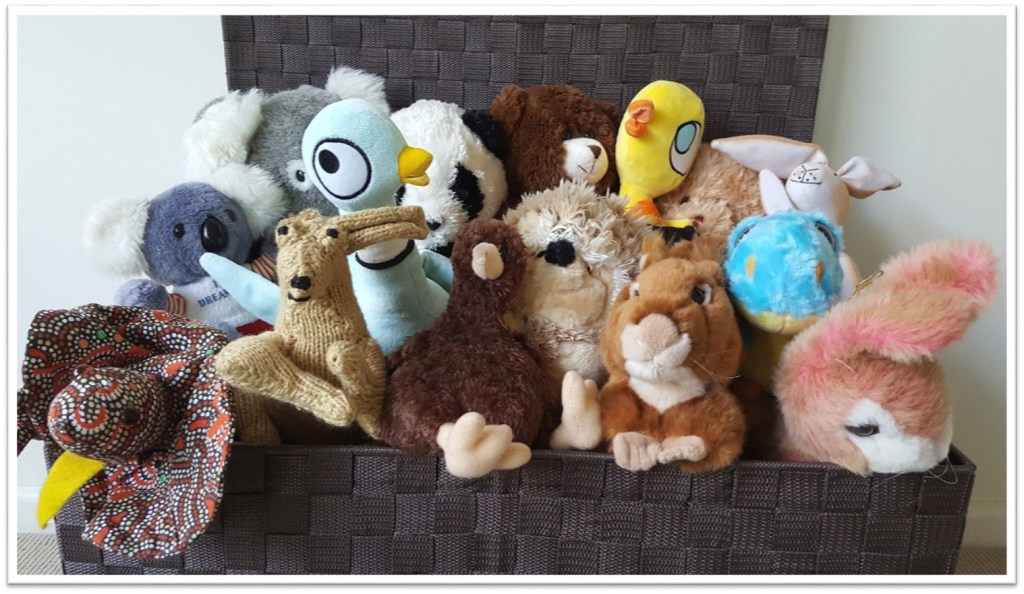
    Now that I am home, I have introduced Pigeon, Duckling and T-Rex to the other toys in my toy box.

    welcome to the toy box
    © Norah Colvin

    They are settling in quite well, though everyone is complaining that it is becoming a bit squishy. However, I think they are rather pleased that Smilodon got waylaid along the way!

    So I didn’t end up with any of the suggested choices. I hope you don’t mind.

    Thank you

    Thank you for reading. I appreciate your feedback. Please share your thoughts. 
     

  • The importance of feedback


    39

    Feedback, whether inherent in the task itself or supplied by another, is essential to learning. This is true whether figuring out what happens when an item is dropped from a high chair (will it always land on the floor; will a carer always retrieve it?), how hard and at what angle to kick a ball to send it over the goalpost; how much a sibling can be antagonised before retaliation ensues; or whether your performance meets expectations.

    In almost all of these cases, the tasks are self-selected and the feedback is integral and immediate, enabling the learner to adjust what happens next accordingly. While those conditions may also be true when considering the success of performance; such as our own assessment of our output, it is not always so.

    F

    Students and employees may be engaged in tasks that are not of their choosing, which provide little inherent feedback, and are reliant upon feedback from others that may be neither timely nor specific to the learners’ needs. Sometimes the feedback can be unhelpful and hinder, rather than encourage, learning, without any real explanation of how improvement could be made.

    As a teacher, I found it necessary for an exchange of feedback between me and my students. This was sometimes supplemented with feedback from carers and other school personnel. How well the students engaged in the classroom, participated in class activities and performed tasks provided me with feedback on my performance as a teacher and provided important information about what to do next, which in turn involved feedback to students.

    While feedback is an essential ingredient in any classroom task, one of the most enjoyable for me was the daily journal. Each morning the children would write to me and every afternoon after they had gone home I would read and respond to their messages. The children loved writing these diaries as much as I loved reading and responding to them. Responding was time consuming but I believe it was worth it:

    • The children had a purpose for writing
    • Their writing had an audience
    • They saw writing as a tool for communication

    When responding to their writing, I would make neither corrections nor changes. However, I would model correct grammar, spelling and punctuation as I responded to the content of their messages. The children were then able to refer to my comment when writing their next message.

    Sometimes the children would tell me about something different each day. Sometimes we would have conversations that could extend over weeks. I always felt it a privilege to have this window into the children’s lives. At the same time, it provided a record of their development as writers.

    At the end of the year I would bundle up all of the journals that had been filled during the year and present them to the children to take home. Recently when I was talking to the mother of a child I taught in the eighties, she told me how they had been looking at those journals with his young children who are now at a similar age to his when he wrote them. How gratifying it is to know that they were treasured by at least one family.

    thank you - rose

    When I started blogging, unbelievably, almost three years ago, I had no idea of what to expect. I am a little more knowledgeable now, with thanks to those who provide feedback by reading and commenting. I am very grateful to all who have joined me along the way. The conversations here or on your own blogs are what have made the journey enjoyable and worthwhile.

    yves_guillou_question

    Now I have a decision to make and I would appreciate your feedback in helping reach it.

    At the same time as I have been blogging, I have been preparing early childhood teaching resources for my website readilearn. I always expected readilearn to include a blog and a newsletter. I knew I couldn’t write that additional content alongside posting twice weekly here and preparing new readilearn resources as well. I thought to:

    • post once a week on this original blog by continuing to participate in the flash fiction challenges set by Charli Mills at the Carrot Ranch, as I have done for more than two years; and
    • post once a week on the readilearn blog with content written specifically for early childhood teachers rather than general readership.

    However, it has recently come to my attention that it may not be possible for readers to leave comments on the readilearn blog, which leads to my quandary.

    I enjoy the discussions in response to posts almost as much as writing them; and

    I am disappointed when I am unable to “like”, leave a comment on, or share another’s blog post I have enjoyed.

    megaphone

    It seems some bloggers are more interested in broadcasting than engaging with a community, but that is not my way.

    Newsletters differ from blogs, though, and the readilearn newsletter, which will provide information about new resources, teaching suggestions and other educational content, will “broadcast” and not invite feedback.

    How important, then, is it to have a blog that doesn’t invite feedback. I’m thinking that, without feedback, I’ll quickly lose motivation.

    What do you think?

    When you read blogs, do you look for an opportunity to add your voice through a “like” button, leaving a comment, or sharing content on social media? Is the ability to engage with the writer important to you, or do you simply read?

    As a blogger, do you welcome comments and discussion, or is it more important just to get your ideas out there?

    Thank you

    Thank you for reading. I am very interested to know what you think and appreciate your feedback. Please share your thoughts.


  • Desert surprise

    When you hear the word “desert”, what image does your mind conjure up?

    Is it of endless sand dunes such as those of  Rub’ al Khali (“Empty quarter”) of Saudi Arabia?

    https://commons.wikimedia.org/wiki/File:Rub_al_Khali_002.JPG
    https://commons.wikimedia.org/wiki/File:Rub_al_Khali_002.JPG

    Or is if of something a little less desolate?

    This week at Carrot Ranch Communications, Charli Mills writes about a desert close to where she is staying in her temporary, though seemingly endless, state of imposed homelessness.

    The desert Charli describes, in eastern Washington, is “flat and prickly” with “trees (that) are better described as shrubs and any ground cover growing out of the black sand has thorns.” She describes the “sagebrush with soft leaves of silvery blue and twisting trunks of brittle gray bark.” The images created by these descriptions is vastly different from those of endless sand dunes.

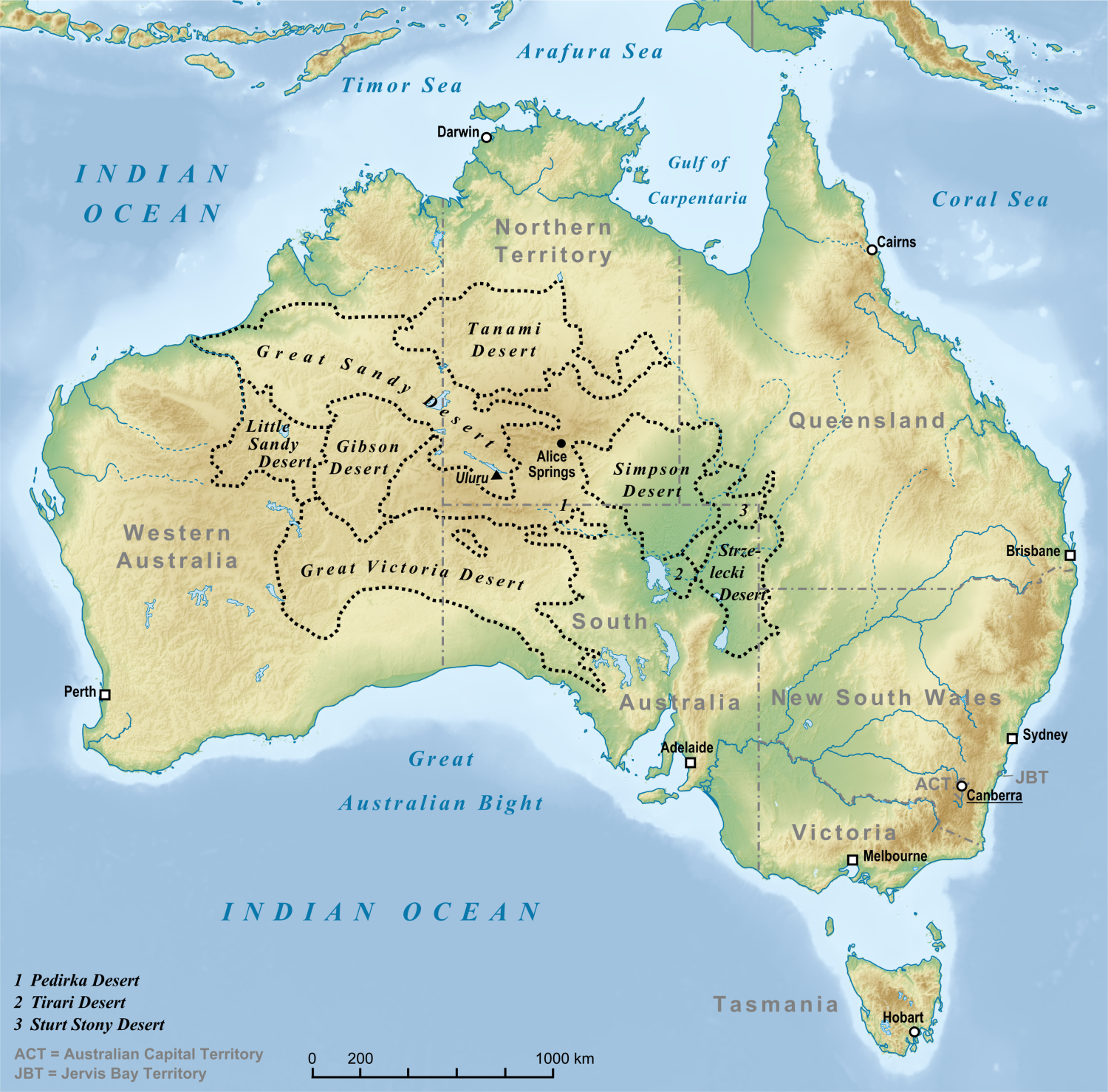
    A desert is usually described as an arid area where there is little rainfall and conditions do not favour  plant and animal life. As much as one third of the earth’s land surface is arid or semi-arid. This is also true of mainland Australia with its ten named deserts which mostly lie in the centre.

    Deserts of Australia
    https://upload.wikimedia.org/wikipedia/commons/0/08/Deserts_in_Australia_en.png

    Last year I was fortunate to visit Uluru and Kata Tjuta which are in semi-arid areas surrounded by desert in Central Australia. I have put together some images of the area to show the variation that occurs in the semi-arid landscape.

    Thinking of the word “desert” (noun – arid area) also brings to mind its heteronym “desert” (verb – leave), which has its own homonym meaning deserved e.g.” just deserts” and homophone “dessert”. These words are often confused by both readers and writers with pronunciation and spelling indistinguishable out of context.

    I have combined these different meanings to respond to Charli’s flash fiction challenge to in 99 words (no more, no less) write about a surprise from a desert. While not specifically about education, I also acknowledge the power of a teacher’s influence.

    Deserts

    They reminded her constantly what an inconvenience she was; that she’d never be anything; that she was simply trash like the one who birthed, and dumped her. Somehow she’d never believed them: their truth was not hers. She’d shielded her inner core with a shell over which their words flowed but could not penetrate. Not caring whether they ever knew, she’d prove them wrong. A favourite teacher inspired an interest in food science. As soon as possible she escaped to apprentice with master chef Jules. After years of determination and hard work, she opened her own patisserie “Just Desserts”.

    Thank you

    Thank you for reading. I appreciate your feedback. Please share your thoughts.
     

  • #Sugar and Snails BirthdayBlog Tour – The legacy of a Catholic childhood

    www.openclipart.org
    http://www.openclipart.org

    I have been friends with Anne Goodwin who blogs at Annecdotal for almost as long as I have been blogging. While there are many differences in our experiences, there is the right balance of agreement and divergence for friendly and robust discussion to occur. Anne regularly contributes to the conversations on my blog through her thoughtful comments.

    Anne has also visited as a guest blogger twice before. The first was a discussion of The Examined Life by Stephen Grosz. In the second she wrote about the treatment of friendship in her debut novel Sugar and Snails. This post celebrates that novel’s first birthday! Congratulations, Anne. I wish you much success with this and future writing.

    sugar-and-snails cover

    In this post, Anne discusses the legacy of a Catholic childhood. I hope you will join me in welcoming Anne to my blog.

    The legacy of a Catholic childhood

    It was our last evening in Rome, and we’d grown weary of churches, even when they hosted a Caravaggio painting or a Bellini sculpture. But it seemed a shame to leave without a peek inside the church we’d passed almost every day that week on the way to some museum or other attraction. So while my husband walked back to our rented apartment for a pre-dinner cocktail, I pushed through the heavy door.

    Just inside, I hesitated. I hadn’t expected there’d be a service in progress. I was mesmerised: the golden light; the scent of incense, the mournful melody of human voices accompanied by an organ. I registered this, not so much with my eyes and nose and ears, but in my gut. In another country, in a less magnificent church, this had been my childhood.

    Ignoring the disapproving gaze of the usher, I passed through the rope barrier holding back the tourists, to take my place among the congregation. I no longer shared their faith, but I felt entitled to share the ritual.

    My childhood, at Catholic schools, was passed within a bubble. It was something of a culture-shock to discover, at university, that the majority of people I encountered belonged to other religions, or none. Later still, more at ease in the secular world, it was always interesting when friends and colleagues outed themselves as former Catholics. Then there’d be that nod of recognition, a shared heritage marking our psyche more indelibly than the ashen cross the priest would thumb on our foreheads at the beginning of Lent.

    I believe that we are strongly shaped by the past, so what is the legacy of a Catholic childhood? Some have found solace in the beauty of the liturgy and the sense of community while others have had their personalities destroyed through unimpeded clerical abuse. Many, like me, would place themselves somewhere in the middle, regarding Catholicism not as something to celebrate but to recover from.

    The threat of eternal damnation incites fear, or disbelief, and neither is conducive to developing a person’s moral compass. Telling a child what she must believe, rather than letting her discover it, doesn’t facilitate an enquiring mind. While it might seem comforting to be able to believe there’s a God who will always take care of you, you’ve a more secure base if you’ve been brought up by parents who are responsive to your earthly needs. There seems to be a very fine line between putting your faith in magical solutions and the “delusions” of the psychotic mind. And the veneration of suffering and a tortuous death through crucifixion is decidedly odd. As for sex, the risky business of discovering a new kind of intimacy in adolescence is further distorted by the taint of shame.

    sugar-and-snails cover

    When it came to writing my debut novel, Sugar and Snails, it made sense to give my main character a Catholic childhood. Uncomfortable in her skin from childhood, Diana finds no salvation in the church. She recalls morbid childhood games and, aged about eleven, being taken on pilgrimage to Lourdes for a miracle cure for a problem no-one will name. As an adolescent in the 1970s, her knowledge of menstruation comes from the bizarre instruction manual, My Dear Daughter, an exercise in obfuscation of North-Korean proportions, which her mother surreptitiously places on her bed along with a packet of bulky sanitary towels. Although it would be unfair to blame it entirely on Catholicism, she doesn’t have sex until the age of twenty-five and then it’s so dreadful she is celibate for the next twenty years.

    Yet I didn’t want to stuff my novel with my own issues. Firstly, because I don’t think that makes for a good read; secondly, I didn’t want to alienate potential readers, especially not the old school friends to whom my novel is partly dedicated, most of whom have stayed loyal to their childhood beliefs. Fortunately, my novel’s first year of feedback suggests I’ve managed on both counts.

    In preparing this post, I realised that less than half the Catholic scenes from earlier drafts survived to the final version. While there are solid structural reasons for these deletions, it also strikes me that, in the almost seven years I’ve been writing this novel, I’ve become less angry about the past. Perhaps it’s because I’ve worked through it or maybe simply because, as in that church in Rome, I’ve been able to reclaim the good bits. No, I don’t go to church, but I do sing with a marvellous mixed-voice choir. While we have an eclectic repertoire, it’s the sacred works – Verdi’s Requiem, Handel’s Messiah and the like – that really make me tingle inside. For more on the music that shaped my novel, see my forthcoming post on the undercover soundtrack.

    birthday blog tour final

    Please check out some other stops and posts on the Birthday Blog Tour.

    Anne Goodwin’s debut novel, Sugar and Snails, about a woman who has kept her past identity a secret for thirty years, was published in July 2015 by Inspired Quill and longlisted for the 2016 Polari First Book Prize. Her second novel, Underneath, about a man who keeps a woman captive in his cellar, is scheduled for publication in May 2017. Anne is also a book blogger and author of over 60 published short stories. Catch up with Anne on her website: annethology or on Twitter @Annecdotist.

    In honour of its first birthday, Sugar and Snails is available in Kindle format at only £0.99 / $0.99 until 31 July 2016.

    Amazon UK 

    Amazon.com

    Thank you

    Thank you for reading. I appreciate your feedback. Please share your thoughts.

  • Carrot Ranch in Crisis

    For more than two years now I have been participating in the weekly flash fiction challenge set by Charli Mills at the Carrot Ranch. As well as the challenge, I enjoy the camaraderie and support from other writers, especially Charli who ropes us in with her prompts and encouragement.
    For the last little while I have been posting my flash fiction responses on Tuesday evenings, just scraping in before Charli’s deadline. But not tonight. Tonight I am sharing Charli’s post, the post that would normally include a flash fiction prompt, but instead this time included a plea for help. Charli is in crisis mode, kicked out of home and in transit.
    Often when friends are in need we can lend a hand by cooking a meal, offering a bed for the night, assisting with chores, and listening. But when that friend is over 12,000 kilometres away, helping out is not such an easy thing. For that reason, this evening I am sharing Charli’s post. Maybe one of you is able to help her out in her time of need.
    Thank you for reading. As always, I appreciate your feedback.

  • Bug me, please!

    Monarch butterfly

    That I have an appreciation of and fascination with insects is no secret as I have written about it many times previously.

    The Very Hungry Caterpillar

    Some of my earliest posts formed a series in which I suggested using Eric Carle‘s Very Hungry Caterpillar story for developing critical literary, encouraging children to question the authenticity of what they read and the qualifications and intentions of the author.

    Carle’s purpose with the story was to entertain, not to teach, and he was therefore unconcerned about inaccuracies in the butterfly life cycle.

    The book, popular for its bright colourful illustrations and inspiring story of an ordinary caterpillar who becomes a beautiful butterfly achieves the author’s goal to entertain.

    In a more recent post Revisiting The Very Hungry Caterpillar I provided a summary of, and links to, each of the four original posts which explained my recommendation that this very popular book was more relevant to teaching critical literacy than science.

    © Bec Colvin
    © Bec Colvin

    Acknowledging the importance of maintaining Wondering in the everyday and an attachment with nature in wild spaces, I described my excitement at being able to observe every stage of the ladybird’s life cycle up close in my own backyard; an excitement that had perhaps exceeded observing the butterfly life cycle in the classroom with our live butterfly kits which had allowed us to Breathe – a sense of wonder!  I even shared a section of a television interview in this post about Talking Interviews.

    I talked about some insect themed classroom and teaching resources in The comfort zone. Others are listed on my page Early Childhood Teaching Resources and are available in my Teachers Pay Teachers and Teach in a Box stores. These, and many more, will be available on my readilearn website when it launches later in the year. Here is a sneak peek at some that will be included:

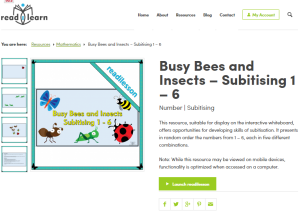
    9 square insect puzzle Busy Bees 100 chart Busy Bees and Insects subitising Busy Bees birthday chart Busy Bees Celebrate 100 days of school One Lonely Ladybird

    But the truth is I don’t really love all insects. I’m not too keen on cockroaches, though the native Australian giant burrowing cockroaches are pretty cool. And although I am aware of vital roles of insects in the environment

    • as a food source for many animals
    • as pollinators for flowering plants
    • as decomposers

    and I know that without them we’d basically not have an environment, in fact, we wouldn’t be; I often wonder whether we would be all that worse off without disease-spreading mosquitoes and flies. However, it seems that they too are vital to the health of our planet, whether we like them or not. It’s a bit of a “can’t live with them and can’t live without them” situation.

    This brings me to the flash fiction prompt set by Charli Mills of The Carrot Ranch this week. She has challenged writers to In 99 words (no more, no less) include insects in a story. How could I resist? In fact, the real challenge was choosing what to put in and what to leave out of the post, and how to not be predictable in my response.

    Surprise!

    It took just one, then the word was out. The streets were abuzz with the news – a triumph of social media.

    “Kyle’s having a barbecue. Tell everyone. Don’t bring anything. There’s always plenty.”

    The excitement was palpable as guests swarmed towards Kyle’s. Some, initially unsure, flapped about nervously. Others, more experienced, felt they were dancing on the ceiling. Eventually all were on their way.  The waft of seared flesh left no doubt about the location.

    Kyle was ready when they arrived. “Who invited you?” he grinned and waved, as he knocked them out with the can of spray.

    Well, what would you do?

    #9 on this list of Ten thing about flies you may not know says,

    “The use of pesticides on crops to try to kill flies and insects is actually causing more damage to the ecosystem than the flies themselves.”

    It’s something to think about next time you reach for that fly swat or can of insect spray.

    I’ll leave you with a bit of nostalgia with a television advertisement, starring Louie,  from my childhood days.

    Thank you

    Thank you for reading. I appreciate your feedback. Please share your thoughts.
  • Sharing circles

    http://www.morguefile.com/
    http://www.morguefile.com/

    On Tuesdays I have regularly published a post and response to the flash fiction challenge set by Charli Mills at the Carrot Ranch. Today I am breaking with tradition as I wrote the prompt this week and included my flash with it.

    In that post I mentioned classroom sharing circles where everyone comes together to share their work, thoughts and ideas, not unlike the sharing of stories and ideas at the Carrot Ranch. In the classroom everyone in the circle is equal, with equal opportunity to see and hear, and to be seen and heard. The focus is lifted from the teacher and shared equally among class members, creating a democracy.

    In this post I describe some of the sharing circles I used in my classroom and show how these processes are not all that dissimilar from our own blogging circles.

    reading

    D.E.A.R. (Drop Everything and Read) is a daily quiet reading session lasting about 15 minutes. In these sessions everyone, including the teacher, chooses a book and finds a comfortable space for reading. Some children sit at desks, some on cushions in the reading corner, others prop themselves up against the wall, and others lie on the floor.

    The one rule is:

    • Everybody reads without interruption.

    This means:

    • Nobody talks
    • Everybody chooses enough reading material for the session
    • No outside interruptions are permitted (unless it’s an emergency)

    It is essential for the teacher to engage in personal reading, along with the children, to show that reading is valued and to provide a model of “expert reader” behaviour. Inviting other school personnel to join the session is also valuable. It is particularly important for children, who may not see adults engaged in regular sustained recreational reading at home, to see adults enjoying reading.

    I always concluded my D.E.A.R. sessions with a Reader’s circle. Children would bring their books to the circle and share what they had read. While there wasn’t time for every child to share every day, I ensured each child had an opportunity of doing so at least once a week. Children would:

    • Tell the book’s title and author
    • What it was about
    • What they liked about it, and
    • Read a small section to the class

    I loved the way children would look to each other’s book responses to guide their own selection, often asking others to help them find a book that had previously been talked about. We do the same in sharing and reading book reviews on our blogs.

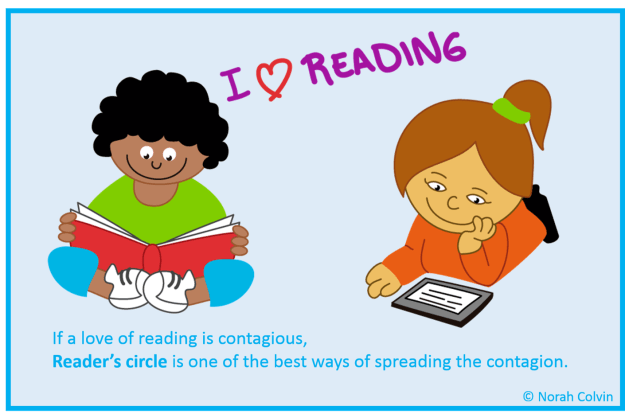
    If a love of reading is contagious, Reader’s circle is one of the best ways of spreading the contagion.

    love of reading

    A love of writing can be equally contagious. One of the things children enjoyed most about writing, other than the actual writing, was sharing it with others. Children would have opportunities to discuss and read their writing to each other in pairs and small groups as well as in the Writer’s circle.

    Sometimes we would have a pre-writing circle to share ideas and inspiration. It was rare that anyone would leave the circle without an idea. Surprisingly perhaps, it was even rarer that two would write about the same thing. Bouncing ideas off each other seemed to encourage a diversity, rather than similarity, of ideas. I guess the responses to Charli’s flash fiction prompt demonstrate the same principle.

    Post-writing circles provided opportunities to discuss what had been written and to read sections to others. Writers might share what they liked about their writing, or what they were having trouble with. Others might ask questions for clarification, to understand character motivations, or to find out what will happen next. Sometimes, with the writer’s permission, I would use a piece of writing to discuss an aspect of the writing process that would have application for many. If any children were reluctant to read their own writing, I would be more than happy to read it with them.

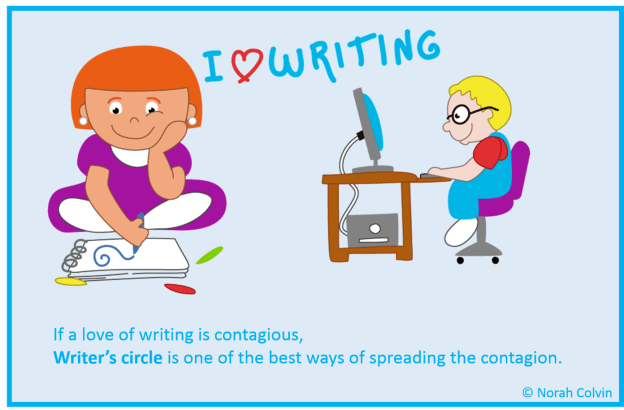
    If a love of writing is contagious, Writer’s circle is one of the best ways of spreading the contagion.

    love of writing

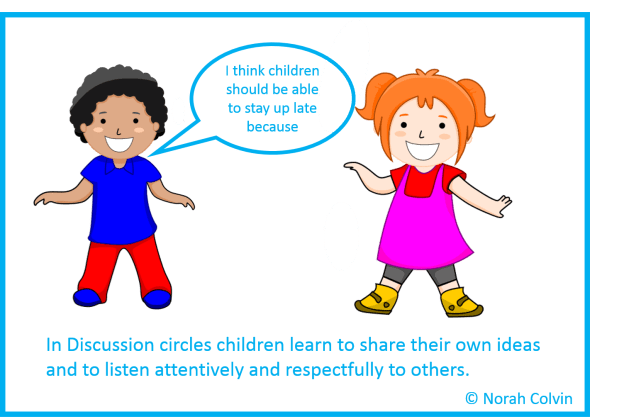
    Discussion circles could occur at any time, in any subject on any topic where a sharing of ideas was required. I had a lovely smiley face ball that children would sometimes pass around, or across the circle, to each other, to indicate whose turn it was to talk. This ensured that everyone had an opportunity to share their ideas and thoughts, as well as to hear the ideas and thoughts of others. Topics could be as diverse as:

    • “I feel happy when …”
    • “When I lose a tooth …”
    • “On the holidays, I …”
    • “I think children should be able to … because …”

    discussion circles

    Each of these sharing circles gives children a voice, demonstrating that they, their thoughts, their ideas and their opinions are accepted and valued. Each encourages children to listen attentively and respectfully to others by providing a supportive environment in which they can test out ideas, then reflect and reassess in response to the reactions of others.

    These discussions are not unlike those we engage in on our blogs; sharing books and articles read, and videos watched, along with our ideas and opinions and, most of all, our writing.

    Thank you

    Thank you for the opportunity of sharing mine. I appreciate your feedback. Please share your thoughts.
  • April 20: Flash Fiction Challenge

    This week I had the honour of writing a guest post and flash fiction prompt at the Carrot Ranch. I was writing around in circles.
    If you haven’t already popped over to see, I’d be thrilled if you did!
    Here is a taster and link.
  • Lending a helping hand

    johnny_automatic_playing_dress_up

    If I was to ask a group of six year olds what a friend is, I would receive responses such as:

    • A friend is someone who plays with you
    • A friend is someone who likes you
    • A friend is someone who helps you
    • A friend is someone who looks after you when you’re hurt

    For just over two years now a group of writers have formed a bond of friendship by playing together each week, responding to a flash fiction prompt set by Charli Mills at the Carrot Ranch. You couldn’t get a more supportive group of writers. In fact, a while ago I coined the term S.M.A.G. (Society of Mutual Admiration and Gratitude) to express the relationship many of us feel.

    SMAG ccbyncnd

    This week Lisa Reiter, who blogs at Sharing the Story, showed that the ability to lend a hand is not restricted to friends who live close by. Although they live at opposite sides of the Atlantic and half the world away from each other; and despite the fact that no request for help had been made, like the true friend that she is, Lisa saw a need and immediately assisted Charli by writing this week’s flash fiction prompt and post. You won’t be surprised to know that the theme is helping out.

    https://openclipart.org/detail/117199/Friendship
    https://openclipart.org/detail/117199/Friendship

    This ties in beautifully with a TED talk I listened to this week. The talk by Australian humanitarian Hugh Evans is titled What does it mean to be a citizen of the world?  Hugh talks about the organisation he co-founded: Global Citizen; which is described on the website in this way:

    Global Citizen is a community of people like you. People who want to learn about and take action on the world’s biggest challenges—and use their power to get other people involved too.

    We bring you stories and actions that make a difference. That help fight extreme poverty and inequality around the world, and support approaches that will make life more sustainable for people and the planet.”

    EarthsOtherSide

    These are some of the points I have brought away from Hugh’s talk:

    • A global citizen is “someone who self-identifies first and foremost not as a member of a state, a tribe or a nation, but as a member of the human race, and someone who is prepared to act on that belief, to tackle our world’s greatest challenges.”
    • Hugh describes himself as “one of those seriously irritating little kids that never, ever stopped asking, “Why?” He went from asking questions like, “Why can’t I dress up and play with puppets all day?” to why couldn’t he change the world?
    • He had already been raising large amounts of money for communities in the developing world when, at age fourteen, he spent a night in a slum in Manila and thought, “Why should anyone have to live like this when I have so much?
    • “that of the total population who even care about global issues, only 18 percent have done anything about it. It’s not that people don’t want to act. It’s often that they don’t know how to take action, or that they believe that their actions will have no effect.”
    • Hugh initiated the Global Citizen Festival in New York’s Central Park. Tickets for the festival couldn’t be bought, They had to be earned by taking action for a global cause. He said, “Activism is the currency”.
    • By becoming a global citizen one person can achieve a lot because they are not alone – there are now hundreds of thousands of global citizens in more than 150 countries

    “We, as global citizens, now have a unique opportunity to accelerate large-scale positive change around the world. “

    “Global citizens who stand together, who ask the question “Why?,” who reject the naysayers, and embrace the amazing possibilities of the world we share.”

    He finishes his talk with the challenge:

    “I’m a global citizen. Are you?”

    Hugh’s contribution to the world is a great recommendation for encouraging children to ask questions, isn’t it?


    Here is his talk if you would like to be inspired by his own words. You may find other points that speak more clearly to you.

    This brings me back to Lisa’s helping hand which, while not on the same scale, clearly demonstrates the opportunities that exist to help if we take the focus from ourselves and place it on others in an attempt to understand their situations and how we might be able to assist.

    Lisa’s prompt is to In 99 words (no more, no less) write about offering to help someone. What’s their situation? What’s yours? Do they think they need help? How is it received? Could you be misinterpreted?

    child helping

    For my flash, I’m bringing you back even closer to home, to a situation with young children that will be familiar to many. Little ones love to help and hate to be helped in almost equal measure. “Let me do it!” and “I can do it myself!” are two frequently heard phrases in households with little ones. Opportunities for both are essential for their developing sense of self, independence and confidence. Both require a great deal of patience on the part of parents and a larger allocation of time than one would normally feel necessary. I think I must have been in a rush and didn’t have time to wait in the queue when patience was being dished out. Fortunately, my children shared some of theirs with me. Sadly, not always soon enough for their benefit. (Sorry, Kids.)

    A playdate at Bella’s

    Mummy checked the calendar. Oops! Her turn for cake. Dulcie was engrossed playing. Great! Just enough time, if ….

    Scarcely was everything out when up popped Dulcie. “Let me do it!”

    Too pressed for winnerless battles, Mum kept one eye watching Dulcie, the other on the clock.

    With the cake finally baking, Mummy suggested clothes to wear.

    “No! I want this one,” pouted Dulcie.

     “Let me help with the buttons.”

    “No! I can!” objected Dulcie.

    Only thirty minutes late, with warm cake and buttons all askew, they arrived.

    “Come in,” greeted Bella’s mum, “Looks like you need a hand.”

    Thank you

    Thank you for reading. I appreciate your feedback. Please share your thoughts.