
I’m over at Sally Cronin’s wonderful blog this week, sharing a post from my archives about family history. Sally and I would love for you to pop over and have a read and share your thoughts.
Category: Blogging
-

School Days, Reminiscences of Anne Goodwin
Welcome to the School Days, Reminiscences series in which my champion bloggers and authors share reminiscences of their school days. It’s my small way of thanking them for their support and of letting you know about their services and publications.
This week, I am pleased to introduce Anne Goodwin, short story writer, novelist, reviewer and blogger … to list just a few of her many accomplishments. Anne and I have been friends almost since the beginning of my blogging days and she has featured in my posts several times in the past, including here, here and here.
Anne was not the first person I met when I began blogging, but she is the earliest to still be with me on my journey. Interestingly, we met on Twitter where a discussion about singing (or not) led to a blog post and then countless conversations on her blog and mine for more than five years. She also supported me as co-judge for two years running in the Carrot Ranch Rodeo Flash Fiction Contests.
I had the pleasure of meeting Anne in London in 2014 when I was visiting family. We met at the British Library and, during the course of the day, Anne revealed a secret – she had secured a contract for her first novel Sugar and Snails. She was already a published and award-winning writer of short stories, but now she could add novelist to her achievements. I was thrilled to be one of the first to know and I told her that I was pleased to have known her before she became famous.
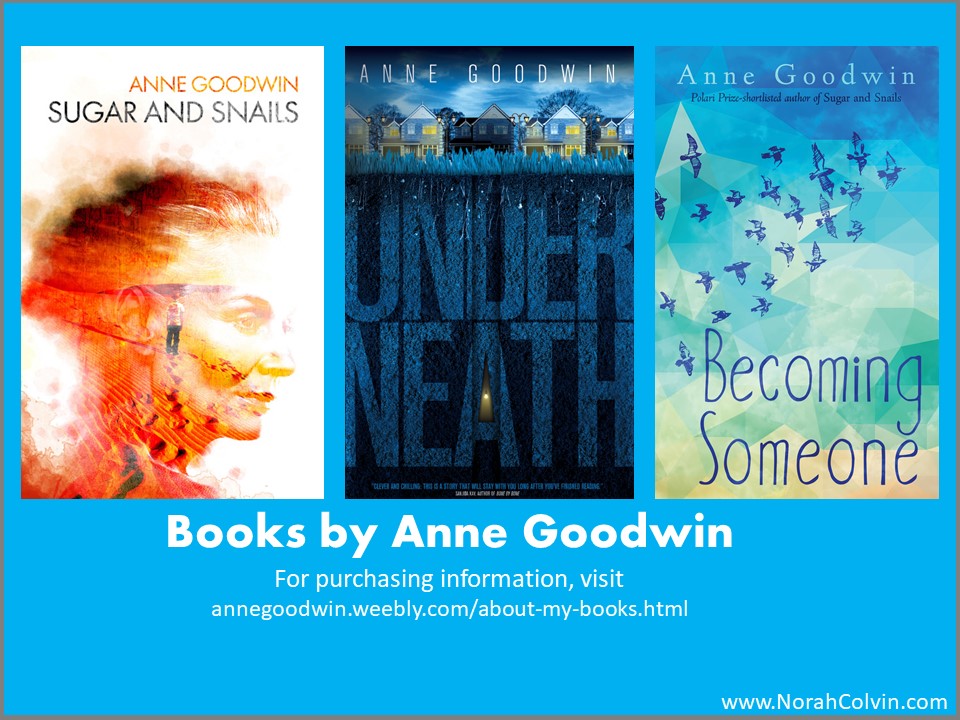
Since then Anne has published a second novel Underneath and is working towards publication of a third. Her most recent book Becoming Someone is a collection of her short stories. Some of the stories I had previously read, and just as many or more I hadn’t. I had been a fan of Anne’s stories since first encountering them and was thrilled to have a collection in one volume, perfect for savouring morsel by morsel. I was even more delighted with the acknowledgement in the front of the collection ‘For Norah Colvin and Charli Mills’. What’s to not like?
I could continue to ‘sing’ Anne’s praises, but perhaps we should move onto her interview. Before we do, I’ll let Anne tell you a little of herself:
Anne Goodwin’s debut novel, Sugar and Snails, about a woman who has kept her past identity a secret for thirty years, was shortlisted for the 2016 Polari First Book Prize. Her second novel, Underneath, about a man who keeps a woman captive in his cellar, was published in May 2017. Her short story collection, Becoming Someone, on the theme of identity, was published in November 2018. A former clinical psychologist, Anne is also a book blogger with a special interest in fictional therapists.
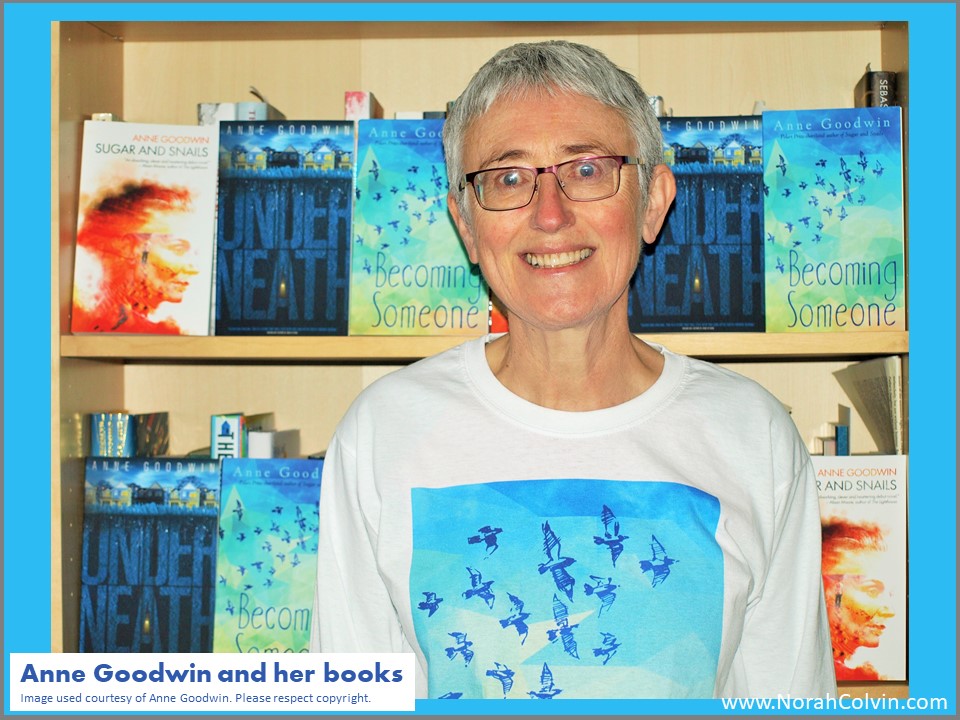
Welcome, Anne.
Now let’s talk school. First of all, where did you go to school, and what was the highest level of education you received?
I attended Catholic (state) schools in a small town in the north of England from the age of 5 to almost 18. I then went to university where I gained a BSc in Mathematics and Psychology and a PhD in Psychology, then an MSc in Clinical Psychology which was also a license to practice.
What work or profession did you choose after school and was there anything in school that influenced this choice?
I suspect my career in Clinical Psychology was despite my schooling – or perhaps unconsciously I wanted to understand why it was so bizarre! (One of my short stories, “Kinky Norm”, which you can read for free, is based on a true story of the impact of repression on adolescent girls.)
What is your earliest memory of school?
It might not be my earliest memory, but I do recall a boy being caught by the teacher picking his nose. ‘Where do you put it?’ she asked, vis-à-vis the snot. ‘Nowhere,’ said the boy, which I thought an excellent answer. I couldn’t understand why she ridiculed him but, in those days, ridicule was the norm.
I also remember being so anxious that, if the teacher said an as in an apple, I heard it as Anne, and assumed some punishment was on its way. I suppose that was a product of the strictness of both school and home cultures, where it was deemed perfectly acceptable for an adult to hit a child. I think (memory being so fickle) I managed to avoid the worst of it by hypervigilance and obedience, which served me in good stead in a system that was less about genuine learning than doing as you were told.
What memories do you have of learning to read?
I couldn’t read on starting school, but quickly learnt, despite the classroom tension. I remember the primers (Janet and John) being ever so dull, but I didn’t mind too much as I soon moved on to better things.
What memories do you have of learning to write?
Learning to write was more frustrating, as described in a post on my blog. The teacher stood at the blackboard etching row upon row of noughts and crosses in coloured chalk. We sat at desks, copying the figures into our books with fat wax crayons. At home, colour meant drawing wherever the inspiration took me. When we progressed to proper letters, I couldn’t see why it was wrong to shape my ‘g’ and ‘a’ as they appeared in a printed book.
What do you remember about maths classes?
We didn’t embark on what I call mathematics (as opposed to arithmetic) until secondary school, with yummy simultaneous equations and those soon-to-be obsolete slide rules, of which I had two (and probably still have somewhere in the loft). Before that came the dreaded times tables, catechism with numbers, yet after hours of chanting (and a 1st class degree) I still can’t tell you what 7×8 makes, without stopping to work it out.
What did you like best about school?
School was a life sentence; I didn’t expect to enjoy it. But I always liked reading and writing, as long as we were free to choose the topic for ourselves. And Music and Movement, which was a radio programme that did what it says on the tin, and features in my debut novel, Sugar and Snails.
What else would you like to tell us about your school days?
I almost left school at sixteen, and stayed on for A’ levels (university entrance) only because the career officer’s recommendation that I work in a bank (being good at maths, albeit not at numbers) seemed even less inspiring. I’m so glad I did! Out of uniform and in classes of no more than a dozen (education post 16 being a new venture for my school), I blossomed, especially in English. (Why didn’t I study that at university? Maybe because I associated reading with leisure, although the texts we picked apart in class were anything but.)
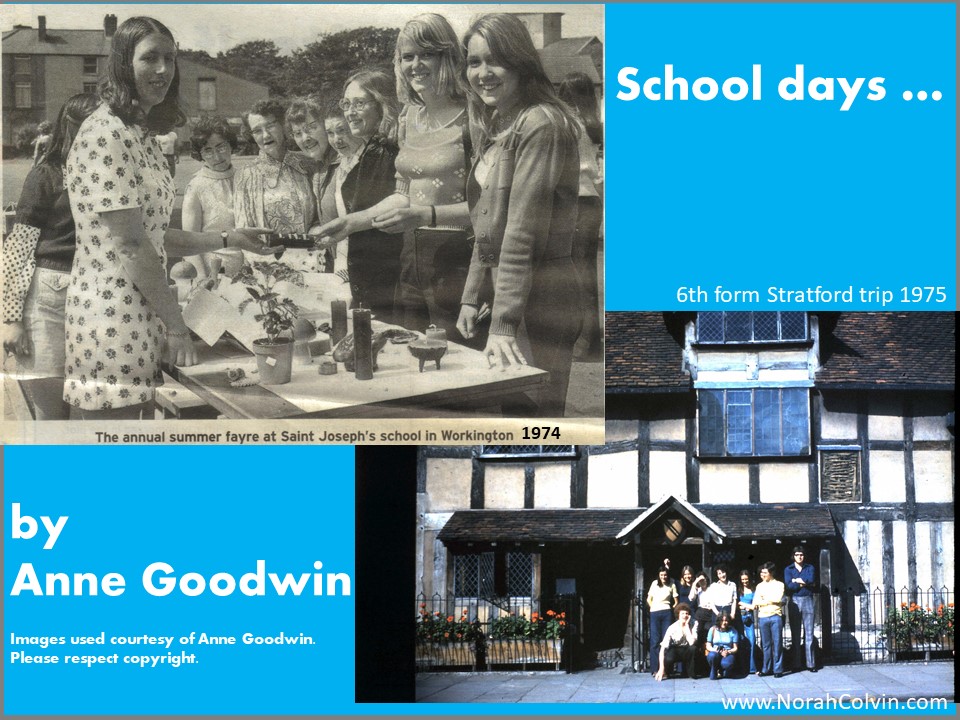
Given my capacity for compliance, I’m lucky I made the transition to critical analysis. Suddenly (although we’d probably been sliding dangerously towards it since the age of eleven), I was expected to have an opinion, to examine texts from different points of view. (Although not in maths, which provided a counterbalance, a safe space where the right answer remained stable over time.)
All credit to Pauline Blair, the teacher who joined the school at the start of our A’ level years. I think she found it a culture shock, and we were equally bewildered by her. She was posh! She claimed to be a feminist which, in my ignorance, I thought meant feminine, given that she ticked me off for slouching and sitting with my legs wide apart. She took us to see the Royal Shakespeare Company in Stratford, and sang (properly, the way I do now) on the long drive home. She’s the only teacher I’d like to meet again, to see what she made of us in that insular part of the world.
What are your thoughts about schools, then and now?
I think it’s great that so many kids these days enjoy school: despite repeated ministerial interference, teachers must be doing something right. It’s great that there’s no physical punishment but, with limited resources, more kids are excluded than in my day. It’s still impossible to tailor teaching to individual learning styles (I’d probably have struggled in a noisy aka lively classroom) and much more pressure (or maybe my school was atypical in being insufficiently clued up for the antediluvian equivalent of league tables) on exams.
How do you think school could be improved?
- Reinvest in SureStart (it was a UK New Labour thing for at-risk preschoolers) so that all kids have the skills they need for school.
- Scrap private schools’ charitable status and put the taxes raised into state education.
- Abolish all religious schools, and schools established to follow a particular fad.
- Provide every child with a light breakfast and a three-course vegan lunch (to avoid the expense of catering for different diets) for free. Kids can’t learn if they’re hungry, and we desperately need to give the adults of tomorrow the skills to pursue a healthy diet. (So cooking and gardening lessons too.)
- Halve class sizes, and give teachers more support, including optional counselling / short-term therapy for anyone working with kids.
- Foreign language and music classes from the early(ish) years and (although I hated it) compulsory exercise through a diversity of sports. (Why should these life-long benefits be restricted to those whose parents can cough up the dosh?)
- Prevent (religious) parents from withdrawing their children from certain lessons, such as sex and relationships, including same-sex couples.
Idealistic? Too expensive? Not if we care about the future society we build.
Thank you for sharing your reminiscences of school and thoughts about education in general, Anne. It’s been wonderful to have you here again. I enjoyed learning about your school days and agree with so many of your recommendations for improving education. Now, if only we could get some of those with the ‘power’ to listen to us.
Find out more about Anne Goodwin:
Website: annegoodwin.weebly.com
Blog: annegoodwin.weebly.com/annecdotal
Amazon author page: https://www.amazon.co.uk/Anne-Goodwin/e/B0156O8PMO/
and her books:
Anne’s books: annegoodwin.weebly.com/about-my-books.html
YouTube: www.youtube.com/channel/UCLxWxjJlY4hxuP9bzah5F_g
Connect with her on social media:
Twitter: @Annecdotist
If you missed previous reminiscences, check them out here:
Look for future interviews in this series to be posted on Sunday evenings AEST.
Coming soon:
with more to follow.
Thank you for reading. I appreciate your comments. Please share your thoughts.
Share this:
-

Smorgasbord Posts from Your Archives – #Family – Understanding family relationships by Norah Colvin
Sally Cronin has featured my post about understanding family relationship in her Smorgasbord Posts from your Archives #family series. If you missed it the first time, you might like to pop over to Sally’s to read and check out other posts on Sally’s wonderful blog.
Thank you so much for sharing, Sally. It’s a pleasure to feature on your blog.Share this:
-

Blog Hop: Jacqui Murray — Survival of the Fittest
This week I am delighted to introduce you to Jacqui Murray. I’d been following Jacqui’s blog Ask a Tech Teacher for some time before I realised she had other writing achievements in her portfolio. I had always enjoyed keeping up with what was new in technology for the classroom and reading Jacqui’s advice for teachers and parents as well as the general technology user. Now, I’ve discovered she has much more to explore.
Jacqui and I have found that we share a lot in common. She recently hosted me at her blog here, and soon her guest post Why Kindergartners Must Learn Technology will be shared on the readilearn blog.
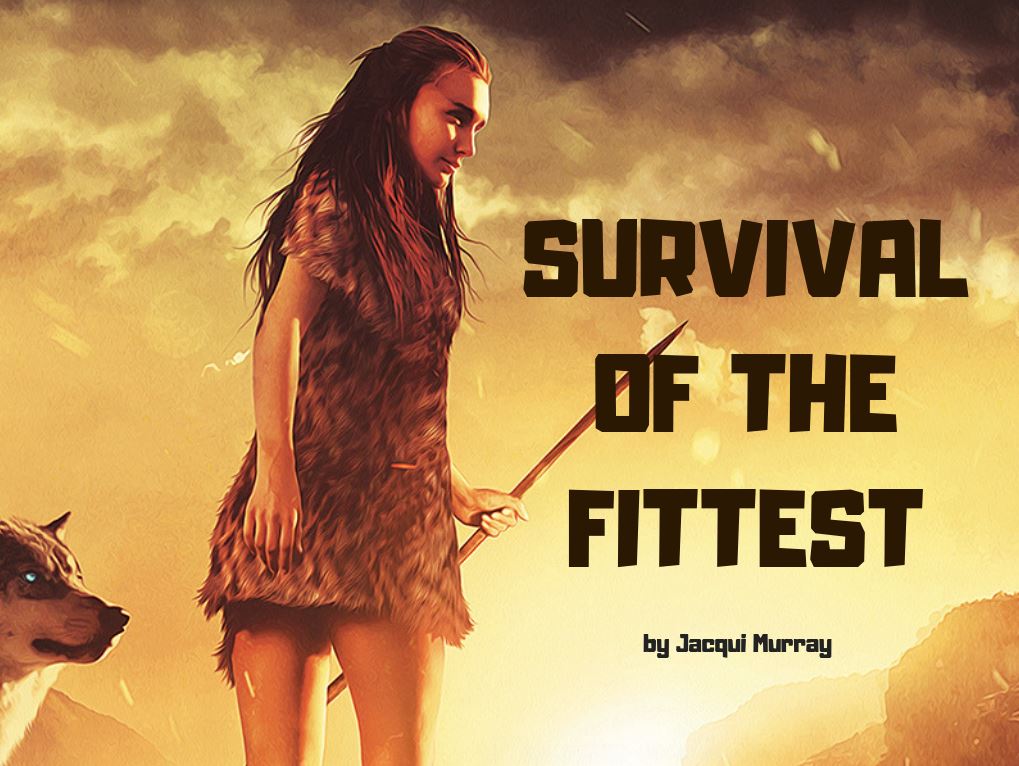
This post is part of a blog hop celebrating the launch of Jacqui’s latest prehistory novel Survival of the Fittest.

The Book
Title and author: Survival of the Fittest
Series: Book 1 in the Crossroads series, part of the Man vs. Nature saga
Genre: Prehistoric fiction
Cover by: Damonza
Available in print and digital at: Kindle US Kindle UK Kindle CA Kindle AU
Short Blurb
Five tribes. One leader. A treacherous journey across three continents in search of a new home.
Summary
Chased by a ruthless and powerful enemy, Xhosa flees with her People, leaving behind a certain life in her African homeland to search for an unknown future. She leads her People on a grueling journey through unknown and dangerous lands but an escape path laid out years before by her father as a final desperate means to survival. She is joined by other homeless tribes–from Indonesia, China, South Africa, East Africa, and the Levant—all similarly forced by timeless events to find new lives. As they struggle to overcome treachery, lies, danger, tragedy, hidden secrets, and Nature herself, Xhosa must face the reality that this enemy doesn’t want her People’s land. He wants to destroy her.
Questions for Jacqui
Setting a book in the days of prehistory must present a number of challenges for writers. I asked Jacqui to explain how she approached some of those challenges.
How did Xhosa tell time?
Xhosa’s People had no need for the exacting time that we today have. It was enough to know that events happened around certain other repetitive events (like a full moon or a sunrise). They could peg daily events to when the Sun reached a certain point in the sky (with a good guess if it was overcast).A popular way of telling time which I borrowed from societies that predated clocks, sundials, and any regimented ways of telling time is measuring time by sun’s movement. A finger of time would be about fifteen minutes and a hand of time would be bout an hour.
How did Xhosa count?
Xhosa and her People also had no need for counting. This is true even today with primitive people. Many count only to two (which is the method I’ve adopted for Xhosa). Beyond that, numbers may be described as handfuls or how much room they occupy in relation to something else. Counting people was unnecessary because all Xhosa had to do was sniff, find everyone’s scent, or notice whose she couldn’t find.
Did Xhosa have any type of culture—art, music, that sort?
This time in man’s prehistory predated art, music, and most culture. There is very little if anything known about earliest man’s (850,000 years ago) interest in art and music. In Xhosa’s case, I extrapolated from what we do know about these early iterations of man. They appreciated colors but didn’t think of applying it to themselves. Their brains could imagine things unseen but that didn’t extend to painting themselves, wearing jewelry, or tattoos. Since clothing was only for warmth (or in Seeker’s case, to protect his sensitive parts), no thought was given to designing or decorating these.
Music—They did appreciate bird songs but considered it an animal voice, not something that they could replicate for their own pleasure. They could replicate it but it was to imitate the bird, not express creativity. They also appreciated rhythm but that was to set a running pace or sooth people.
Most scientists believe Homo erectus couldn’t talk. How did Xhosa and her People communicate?
These early humans were highly intelligent for their day and possessed rich communication skills but rarely verbal. Most paleoanthropologists believe that the ‘speaking’ part of their brain wasn’t evolved enough for speech but there’s another reason: Talking is noisy as well as unnatural in nature which attracts attention. For these early humans, who were far from the alpha in the food chain, being noticed wasn’t good.
Instead, they communicated with gestures, facial expressions, movements, and all the body language we-all still use but rarely recognize. They talked to each other about everything necessary, just nonverbally.
Thank you, Jacqui. You’ve obviously worked hard to make your novel ring with authenticity. I wish you success with it.
About Jacqui
Jacqui Murray is the author of the popular Building a Midshipman, the story of her daughter’s journey from high school to United States Naval Academy, the Rowe-Delamagente thrillers, and the Man vs. Nature saga. She is also the author/editor of over a hundred books on integrating tech into education, adjunct professor of technology in education, blog webmaster, an Amazon Vine Voice, a columnist for TeachHUB and NEA Today, and a freelance journalist on tech ed topics. Look for her next prehistoric fiction, Quest for Home, Summer 2019. You can find her tech ed books at her publisher’s website, Structured Learning.
Connect with Jacqui on social media
http://pinterest.com/askatechteacher
http://linkedin.com/in/jacquimurray
https://worddreams.wordpress.com
Jacqui has generously provided us with Chapter one as a preview of her novel Survival of the Fittest.
Chapter 1
Her foot throbbed. Blood dripped from a deep gash in her leg. At some point, Xhosa had scraped her palms raw while sliding across gravel but didn’t remember when, nor did it matter. Arms pumping, heart thundering, she flew forward. When her breath went from pants to wheezing gasps, she lunged to a stop, hands pressed against her damp legs, waiting for her chest to stop heaving. She should rest but that was nothing but a passing thought, discarded as quickly as it arrived. Her mission was greater than exhaustion or pain or personal comfort.
She started again, sprinting as though chased, aching fingers wrapped around her spear. The bellows of the imaginary enemy—Big Heads this time—filled the air like an acrid stench. She flung her spear over her shoulder, aiming from memory. A thunk and it hit the tree, a stand-in for the enemy. With a growl, she pivoted to defend her People.
Which would never happen. Females weren’t warriors.
Feet spread, mouth set in a tight line, she launched her last spear, skewering an imaginary assailant, and was off again, feet light, her abundance of ebony hair streaming behind her like smoke. A scorpion crunched beneath her hardened foot. Something moved in the corner of her vision and she hurled a throwing stone, smiling as a hare toppled over. Nightshade called her reactions those of Leopard.
But that didn’t matter. Females didn’t become hunters either.
With a lurch, she gulped in the parched air. The lush green grass had long since given way to brittle stalks and desiccated scrub. Sun’s heat drove everything alive underground, underwater, or over the horizon. The males caught her attention across the field, each with a spear and warclub. Today’s hunt would be the last until the rain—and the herds—returned.
“Why haven’t they left?”
She kicked a rock and winced as pain shot through her foot. Head down, eyes shut against the memories. Even after all this time, the chilling screams still rang in her ears…
The People’s warriors had been away hunting when the assault occurred. Xhosa’s mother pushed her young daughter into a reed bed and stormed toward the invaders but too late to save the life of her young son. The killer, an Other, laughed at the enraged female armed only with a cutter. When she sliced his cheek open, the gash so deep his black teeth showed, his laughter became fury. He swung his club with such force her mother crumpled instantly, her head a shattered melon.
From the safety of the pond, Xhosa memorized the killer—nose hooked awkwardly from some earlier injury, eyes dark pools of cruelty. It was then, at least in spirit, she became a warrior. Nothing like this must ever happen again.
When her father, the People’s Leader, arrived that night with his warriors, he was greeted by the devastating scene of blood-soaked ground covered by mangled bodies, already chewed by scavengers. A dry-eyed Xhosa told him how marauders had massacred every subadult, female, and child they could find, including her father’s pairmate. Xhosa communicated this with the usual grunts, guttural sounds, hand signals, facial expressions, hisses, and chirps. The only vocalizations were call signs to identify the group members.
“If I knew how to fight, Father, Mother would be alive.” Her voice held no anger, just determination.
The tribe she described had arrived a Moon ago, drawn by the area’s rich fruit trees, large ponds, lush grazing, and bluffs with a view as far as could be traveled in a day. No other area offered such a wealth of resources. The People’s scouts had seen these Others but allowed them to forage, not knowing their goal was to destroy the People.
Her father’s body raged but his hands, when they moved, were calm. “We will avenge our losses, daughter.”
The next morning, Xhosa’s father ordered the hunters to stay behind, protect the People. He and the warriors snuck into the enemy camp before Sun awoke and slaughtered the females and children before anyone could launch a defense. The males were pinned to the ground with stakes driven through their thighs and hands. The People cut deep wounds into their bodies and left, the blood scent calling all scavengers.
When Xhosa asked if the one with the slashed cheek had died, her father motioned, “He escaped, alone. He will not survive.”
Word spread of the savagery and no one ever again attacked the People, not their camp, their warriors, or their hunters.
While peace prevailed, Xhosa grew into a powerful but odd-looking female. Her hair was too shiny, hips too round, waist too narrow beneath breasts bigger than necessary to feed babies. Her legs were slender rather than sturdy and so long, they made her taller than every male. The fact that she could outrun even the hunters while heaving her spear and hitting whatever she aimed for didn’t matter. Females weren’t required to run that fast. Nightshade, though, didn’t care about any of that. He claimed they would pairmate, as her father wished, when he became the People’s Leader.
Until then, all of her time was spent practicing the warrior skills no one would allow her to use.
One day, she confronted her father. “I can wield a warclub one-handed and throw a spear hard enough to kill. If I were male, you would make me a warrior.”
He smiled. “You are like a son to me, Daughter. I see your confidence and boldness. If I don’t teach you, I fear I will lose you.”
He looked away, the smile long gone from his lips. “Either you or Nightshade must lead when I can’t.”
Under her father’s tutelage, she and Nightshade learned the nuances of sparring, battling, chasing, defending, and assaulting with the shared goal that never would the People succumb to an enemy. Every one of Xhosa’s spear throws destroyed the one who killed her mother. Every swing of her warclub smashed his head as he had her mother’s. Never again would she stand by, impotent, while her world collapsed. She perfected the skills of knapping cutters and sharpening spears, and became expert at finding animal trace in bent twigs, crushed grass, and by listening to their subtle calls. She could walk without leaving tracks and match nature’s sounds well enough to be invisible.
A Moon ago, as Xhosa practiced her scouting, she came upon a lone warrior kneeling by a waterhole. His back was to her, skeletal and gaunt, his warclub chipped, but menace oozed from him like stench from dung. She melted into the redolent sedge grasses, feet sinking into the squishy mud, and observed.
His head hair was sprinkled with grey. A hooked nose canted precariously, poorly healed from a fracas he won but his nose lost. His curled lips revealed cracked and missing teeth. A cut on his upper arm festered with pus and maggots. Fever dimpled his forehead with sweat. He crouched to drink but no amount of water would appease that thirst.
What gave him away was the wide ragged scar left from the slash of her mother’s cutter.
Xhosa trembled with rage, fearing he would see the reeds shake, biting her lip until it bled to stop from howling. It hardly seemed fair to slay a dying male but fairness was not part of her plan today.
Only revenge.
A check of her surroundings indicated he traveled alone. Not that it mattered. If she must trade her life for his, so be it.
But she didn’t intend to die.
The exhausted warrior splashed muddy water on his grimy head, hands slow, shoulders round with fatigue, oblivious to his impending death. After a quiet breath, she stepped from the sedge, spear in one hand and a large rock in the other. Exposed, arms ready but hanging, she approached. If he turned, he would see her. She tested for dry twigs and brittle grass before committing each foot. It surprised her he ignored the silence of the insects. His wounds must distract him. By the time hair raised on his neck, it was too late. He pivoted as she swung, powered by fury over her mother’s death, her father’s agony, and her own loss. Her warclub smashed into his temple with a soggy thud. Recognition flared moments before life left.
“You die too quickly!” she screamed and hit him over and over, collapsing his skull and spewing gore over her body. “I wanted you to suffer as I did!”
Her body was numb as she kicked him into the pond, feeling not joy for his death, relief that her mother was avenged, or upset at the execution of an unarmed Other. She cleaned the gore from her warclub and left. No one would know she had been blooded but the truth filled her with power.
She was now a warrior.
When she returned to homebase, Nightshade waited. Something flashed through his eyes as though for the first time, he saw her as a warrior. His chiseled face, outlined by dense blue-black hair, lit up. The corners of his full lips twitched under the broad flat nose. The finger-thick white scar emblazoned against his smooth forehead, a symbol of his courage surviving Sabertooth’s claws, pulsed. Female eyes watched him, wishing he would look at them as he did Xhosa but he barely noticed.
The next day, odd Others with long legs, skinny chests, and oversized heads arrived. The People’s scouts confronted them but they simply watched the scouts, spears down, and then trotted away, backs to the scouts. That night, for the first time, Xhosa’s father taught her and Nightshade the lessons of leading.
“Managing the lives of the People is more than winning battles. You must match individual skills to the People’s requirements be it as a warrior, hunter, scout, forager, child minder, Primary Female, or another. All can do all jobs but one best suits each. The Leader must decide,” her father motioned.
As they finished, she asked the question she’d been thinking about all night. “Father, where do they come from?”
“They are called Big Heads,” which didn’t answer Xhosa’s question.
Nightshade motioned, “Do they want to trade females? Or children?”
Her father stared into the distance as though lost in some memory. His teeth ground together and his hands shook until he clamped them together.
He finally took a breath and motioned, “No, they don’t want mates. They want conflict.” He tilted his head forward. “Soon, we will be forced to stop them.”
Nightshade clenched his spear and his eyes glittered at the prospect of battle. It had been a long time since the People fought.
But the Big Heads vanished. Many of the People were relieved but Xhosa couldn’t shake the feeling that danger lurked only a long spear throw away. She found herself staring at the same spot her father had, thoughts blank, senses burning. At times, there was a movement or the glint of Sun off eyes, but mostly there was only the unnerving feeling of being watched. Each day felt one day closer to when the People’s time would end.
“When it does, I will confess to killing the Other. Anyone blooded must be allowed to be a warrior.”

Thank you for reading. I appreciate your comments. Please share your thoughts.
Share this:
-
It’s a point of view
Have you ever been faced with a task, at work or at home, that seemed so big you didn’t know where to start?
Have you ever been hustled by a supervisor, external or internal, to make a start whether ready or not?
Have you ever jumped in, hoping it would all work out in the end?
Have you ever chipped away without any real sense of direction and eventually found what you were looking for?
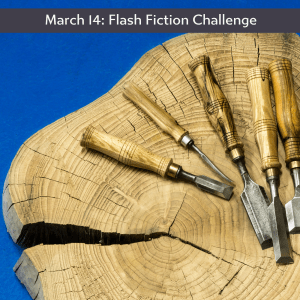
It was of these situations I was thinking as I responded to this week’s flash fiction prompt set by Charli Mills at the Carrot Ranch to In 99 words (no more, no less) write a story that includes a chisel. Use chisel as a noun or a verb. Think about what might be chiseled, who is chiseling. Be the chisel. Go where the prompt leads!
Perspective
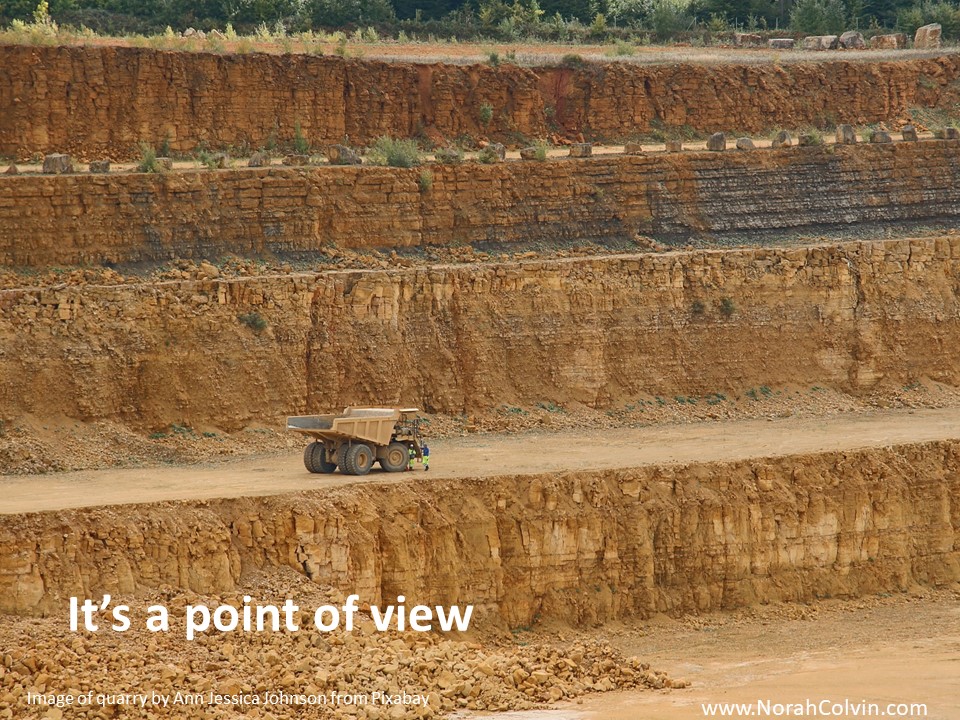
The monumental task cast a shadow deep and long, miniaturising the toolkit at his feet.
He shook his head, muttering complaints and impossibilities.
The supervisor appeared. “Better get started. No time to waste.”
He rummaged through the toolkit, lifting, inspecting and replacing each implement in turn.
“What’s the holdup?” bellowed the supervisor.
He grabbed the mallet and whacked the stone. “Take that!” Chunks smashed around him. He wiped his brow and whacked again.
“Great. You’ve started at last,” encouraged the supervisor.
Later, as the light turned, the shadow faded and diminished. He lifted his chisel and refined his work.
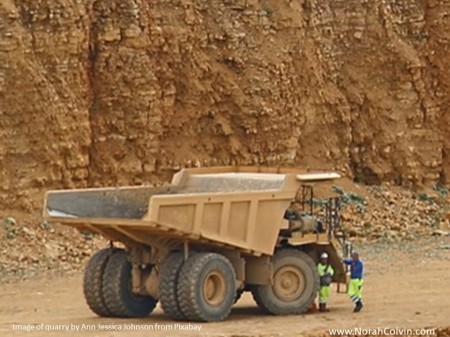
Of course, I’ve had the opposite happen too. I’ve begun a task that I thought was miniscule but turned out to be mammoth. What about you?
Thank you for reading. I appreciate your feedback. Please share your thoughts.
Image of quarry by Ann Jessica Johnson from Pixabay.
Share this:
-
School Days, Reminiscences of Sally Cronin
Welcome to the School Days, Reminiscences series in which my champion bloggers and authors share reminiscences of their school days. It’s my small way of thanking them for their support and of letting you know about their services and publications.
This week, I am pleased to introduce Sally Cronin, author, blogger and supreme supporter of authors and bloggers. Sally is a prolific writer on numerous topics on her blog and in her publications. She seems to have an infinite capacity for supporting other writers with guest posts, reviews, blog visits and comments, and shares on social media. I am constantly in awe of her output and the esteem in which she is held and I am very grateful for the support she provides me in the online world.
I am especially pleased with the timing of Sally’s interview as today 17 March is St Patrick’s Day and Sally is Irish! She even has a lovely book of Tales from the Irish Garden, published late last year.

Before we begin the interview, I’ll allow Sally to tell you a little of herself:
I have lived a fairly nomadic existence living in eight countries including Sri Lanka, South Africa and the USA before settling back here in Ireland. My work, and a desire to see some of the most beautiful parts of the world in the last forty years, has taken me to many more incredible destinations around Europe and Canada, and across the oceans to New Zealand and Hawaii. All those experiences and the people that I have met, provide a rich source of inspiration for my stories.
After a long and very happy career, I took the step to retrain as a nutritional therapist, a subject that I was very interested in, and to make the time to write my first book. Size Matters was a health and weight loss book based on my own experiences of losing 70kilo. I have written another eleven books since then on health and also fiction including three collections of short stories. I am an indie author and proud to be one. My greatest pleasure comes from those readers who enjoy my take on health, characters and twisted endings… and of course come back for more.
Welcome, Sally.
Now let’s talk school. First of all, could you tell us where you attended school?
Portsmouth UK (3), Malta, Cape Town South Africa, Preston UK,
Did you attend a government, private or independent school?
All the schools were government.
What is the highest level of education you achieved?
Diplomas in Secretarial Studies and a Diploma in Nutritional Therapy.
What work or profession did you choose after school and was there anything in school that influenced this choice?
I started as a secretary in a dental practice but within a few months started training as a dental nurse which I found more interesting.
What is you earliest memory of school?
Age four arriving at the first class at primary and noticing all the names scratched out on my extremely old desk and my teacher Mrs. Miller.
What memories do you have of learning to read?
My sisters read to me and taught me the basics so I could read before I went to school. I already had a collection of books by the age of four.
What memories do you have of learning to write?
I remember the blackboard with lines drawn and beautiful letters that we had to copy and a poster with all the letters and an object that began with that letter. We all had lined copy books and we would practice a letter until we got it right.
What do you remember about math classes?
Not much I am afraid as it was not my favourite subject. I was always good at mental arithmetic and knew my times tables before I was five, but triangles and other angular objects never fascinated me. I passed it at o’level just!
What was your favourite subject?

I loved history and being in schools outside of my home country I got to learn far more than I would have done if locked into the curriculum in the UK. In South Africa for instance, I learnt about the Boer War from a completely different perspective and it did not paint the British in a good light. It was 1964 and I also heard about the war first hand from the grandmother of one of my friends. Living history is the best.
What did you like best about school?
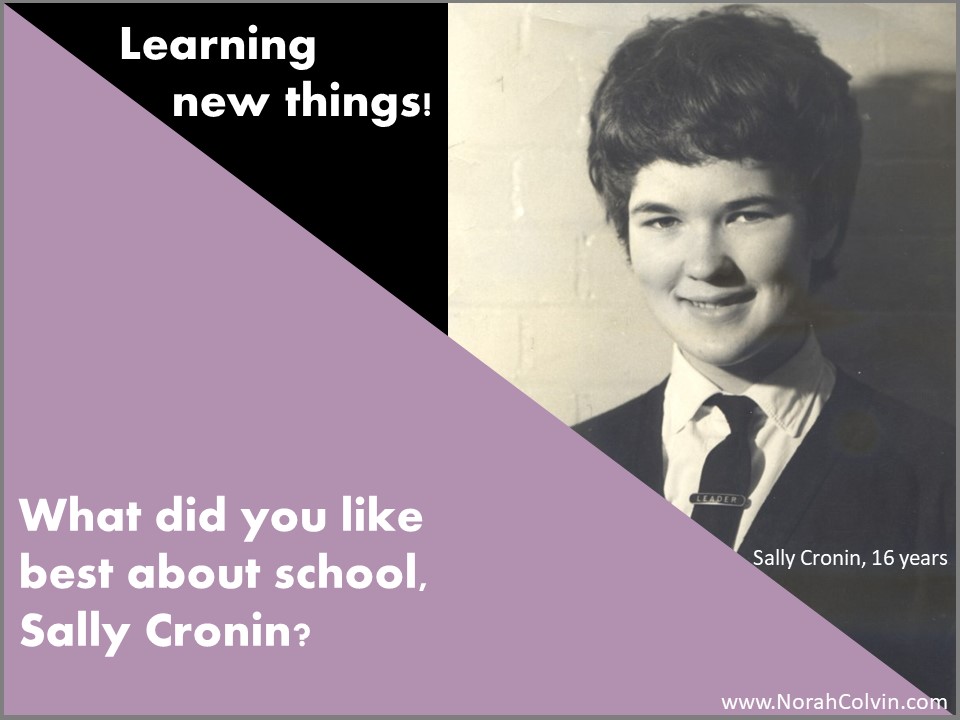
Learning new things, once the basics of reading and writing were done it was like opening a door to the world. I loved all lessons (apart from maths) and also the access to sport which I enjoyed including hockey, swimming and tennis.
What did you like least about school?
Probably leaving them as I would make friends and then two years later we would be on the move again. Then I would start again out of phase often for my age, with a different curriculum which included new subjects I was unfamiliar with that had not been taught at the previous school. It always felt that I was playing catch up and spent most of my evenings with extra homework to do that.
How do you think schools have changed since your school days?
I can only judge this by friends who still have children in school and it would seem that there is less freedom, less physical activity, less homework, and more crowded.
What do you think schools (in general) do well?
I think that schools do well with the basics and for children who are academic they provide a solid platform to secondary education.
How do you think schools could be improved?
I feel that there is a one size fits all approach to education which does not take into account the individual child’s needs or abilities. In the UK in particular there has been a push in the last decade to get children into university, and the loss of technical colleges (now rebranded as universities) that I went to for those who want a more practical approach to their careers. Also I believe that there should be a push for more apprenticeships and that some children who want to follow that route should be allowed to leave school at 14 as long as they are going into an approved apprenticeship. I understand that is happening in Australia and I think it should also be introduced in the UK and Ireland and other countries.
Thank you for sharing your reminiscences of school and thoughts about education in general, Sally. I appreciate your perspective. It’s been wonderful to have you here. I learned so much I didn’t already know about you.
Find out more about Sally Cronin
On her blog: Smorgasbord Blog Magazine
Amazon Author Page: http://www.amazon.com/Sally-Cronin/e/B0096REZM2
Goodreads Author Page: https://www.goodreads.com/author/show/7979187.Sally_Cronin
Connect with her on social media
Facebook: https://www.facebook.com/sally.cronin
Twitter: https://twitter.com/sgc58
LinkedIn: http://uk.linkedin.com/in/sallycronin1
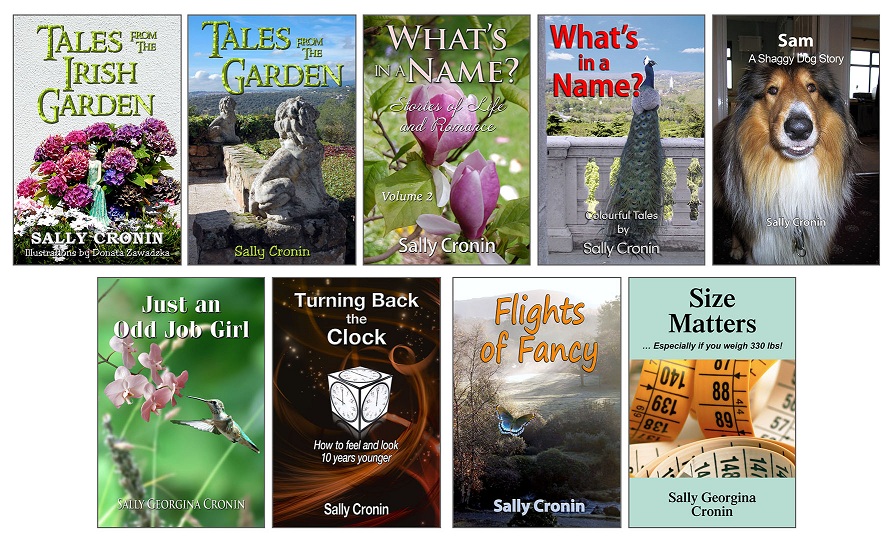
All Sally’s books are available from
Amazon UK: https://www.amazon.co.uk/Sally-Georgina-Cronin/e/B003B7O0T6
And Amazon US: https://www.amazon.com/Sally-Cronin/e/B0096REZM2
If you missed previous reminiscences, check them out here:
Look for future interviews in this series to be posted on Sunday evenings AEST.
Coming soon:
with more to follow.
Thank you for reading. I appreciate your comments. Please share your thoughts.
Share this:
-
Technology Pushes Back
There’s been a glitch or three at the Carrot Ranch this week, and the usual Flash Fiction schedule has been interrupted. I haven’t yet written a response to Charli’s challenge, but pop over to read about Charli’s challenges and pen a response yourself.
Share this:
-
You know who you are: Becoming Someone
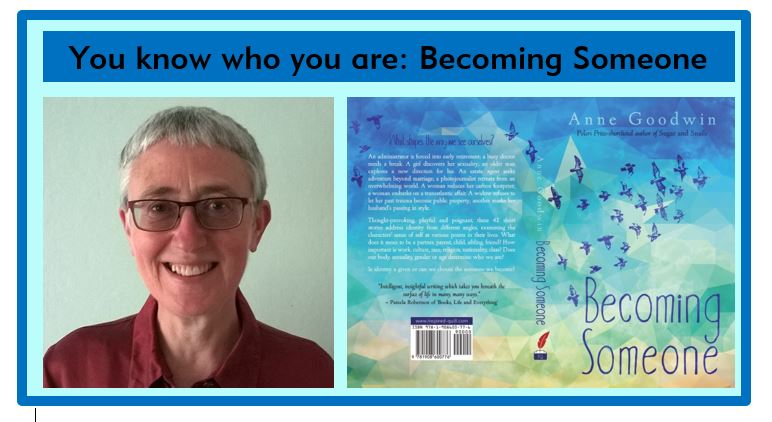
I am delighted to jump aboard Anne Goodwin’s blog tour promoting her newest book of short stories Becoming Someone. While I don’t usually participate in blog tours, I couldn’t pass up this opportunity as Anne and I have been friends almost since the beginning of my blogging days.
Anne was not the first person I met when I began blogging, but she is the earliest to still be with me on my journey. Interestingly, we met on Twitter where a discussion about singing (or not) led to a blog post and then countless conversations on her blog and mine over the past (almost) five years. I am extremely grateful for her encouragement and support as I discovered who I might become in the blogging world. Even when I’m not so sure*, Anne is always there to give me something to think about.
Back in those early days, just over four years ago, I had the pleasure of meeting Anne in London when I was visiting family. Although it was quite a lengthy journey for her (not quite as far as from Australia but it wasn’t a day trip for me), Anne didn’t hesitate to meet up. We met at the British Library and, during the course of the day, Anne revealed a secret – she had secured a contract for her first novel Sugar and Snails. She was already an award-winning and published writer of short stories, but now she could add novelist to her achievements. I was so thrilled to be one of the first to be let into the secret and I told her that I was pleased to have known her before she became famous.
Now Anne’s second novel Underneath is also published and a third (and maybe fourth) is in progress. I had been a fan of Anne’s short stories before either of her novels were published, so am now delighted that she has collected some of her stories together into an anthology Becoming Someone to be launched with a huge Launch Party on Facebook tomorrow 23 November 2018. Everyone is welcome so make sure you drop in to say “Hi” and pick up your copy of her book. (I believe she is offering virtually anything you wish to eat or drink.)
But perhaps I shouldn’t ramble on too long with my memories and instead let Anne introduce herself to you through her official bio.
Anne Goodwin author

Anne Goodwin’s debut novel, Sugar and Snails was shortlisted for the 2016 Polari First Book Prize. Her second novel, Underneath, was published in 2017. Her short story collection, Becoming Someone, on the theme of identity launches on Facebook on November 23rd, 2018, where the more people participate the more she’ll donate to Book Aid International. A former clinical psychologist, Anne is also a book blogger with a particular interest in fictional therapists.
Alongside her identity as a writer, she’ll admit to being a sociable introvert; recovering psychologist; voracious reader; slug slayer; struggling soprano; and tramper of moors.

Becoming Someone blurb
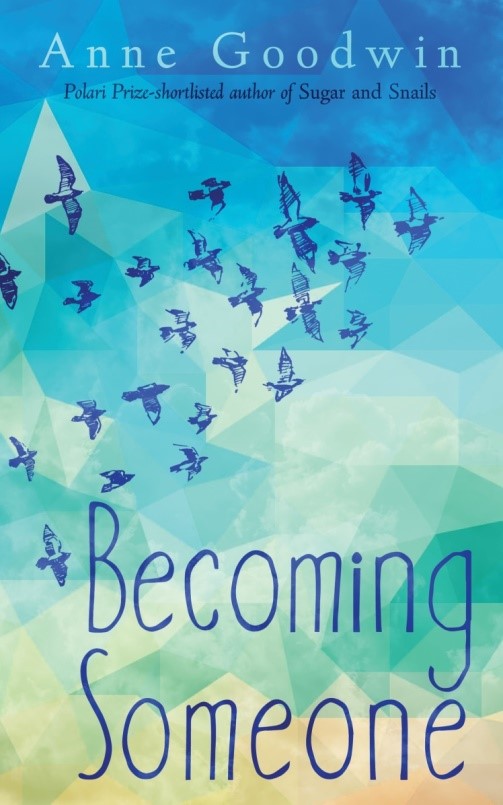
What shapes the way we see ourselves?
An administrator is forced into early retirement; a busy doctor needs a break. A girl discovers her sexuality; an older man explores a new direction for his. An estate agent seeks adventure beyond marriage; a photojournalist retreats from an overwhelming world. A woman reduces her carbon footprint; a woman embarks on a transatlantic affair. A widow refuses to let her past trauma become public property; another marks her husband’s passing in style.
Thought-provoking, playful and poignant, these 42 short stories address identity from different angles, examining the characters’ sense of self at various points in their lives. What does it mean to be a partner, parent, child, sibling, friend? How important is work, culture, race, religion, nationality, class? Does our body, sexuality, gender or age determine who we are?
Is identity a given or can we choose the someone we become?
Becoming Someone published 23rd November, 2018 by Inspired Quill
Paperback ISBN: 978-1-908600-77-6 / 9781908600776
eBook ISBN: 978-1-908600-78-3 / 9781908600783
Amazon author page viewauthor.at/AnneGoodwin
Author page at Inspired Quill publishers http://www.inspired-quill.com/authors/anne-goodwin/
Note: Important Addendum from Anne
If anyone was considering buying a digital version of Becoming Someone, I wanted to alert you to the fact that there’s been a technical hitch with the link to the e-book on Amazon. We hope this will be fixed soon but, in the meantime, it’s available it at the same price through the publishers here:
http://www.inspired-quill.com/product/becoming-someone-kindle-ebook/Facebook launch in support of Book Aid International https://www.facebook.com/events/285314412085573/

Becoming Someone Facebook launch https://www.facebook.com/events/285314412085573/
An online party to celebrate the publication of my first short story anthology, Becoming Someone.
Drop in at your own convenience wherever you are in the world, I’ll be here to entertain you from morning coffee to pre-dinner drinks.
The more actively people participate, the more I’ll donate to Book Aid International.
To find out more about Anne and her books
visit her website: annegoodwin.weebly.com
connect with her on Twitter @Annecdotist
or check out these other posts on her blog tour:
Special Offer
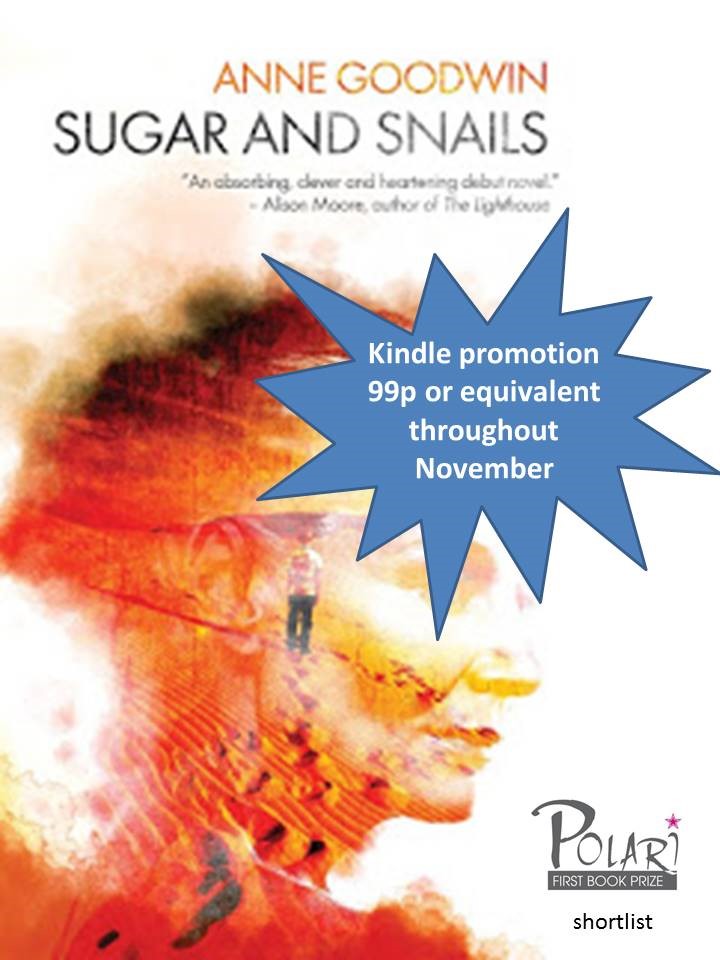
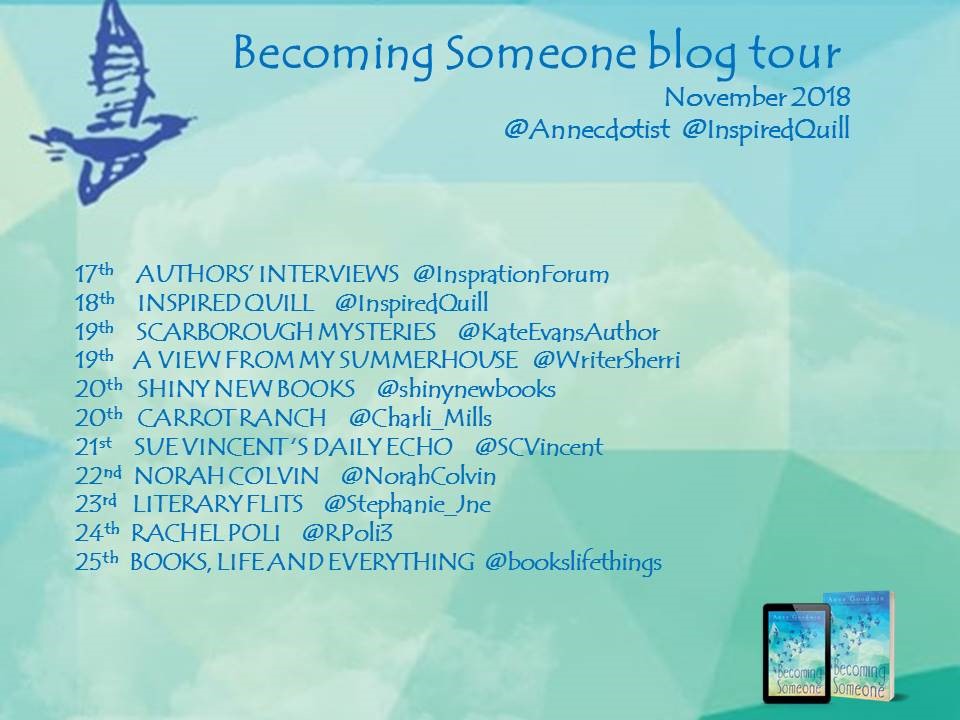
Through November, in celebration of the publication of Becoming Someone, Anne has a special promotion of her debut novel Sugar and Snails. It is discounted to 99p or equivalent (Kindle version) until the end of the month. viewbook.at/SugarandSnails
Becoming Someone: Teaser
As well as on our own blogs, Anne and I have kept in touch at the Carrot Ranch where we participate in the weekly flash fiction challenges set by Charli Mills. Anne was also kind enough to support me in judging the recent fractured fairy tale contest held as part of the Carrot Ranch Flash Fiction Rodeo. (Note: The results of that contest will be published at the Carrot Ranch on 7 December.)
Knowing how much I enjoy fractured fairy tales, Anne has kindly allowed me to share an extract from her fractured fairy tale Reflecting Queenie which features in her anthology Becoming Someone. I wonder if you’ll be able to recognise which fairy tale Anne has fractured. If not, then you might just have to read the whole story in her book.😊
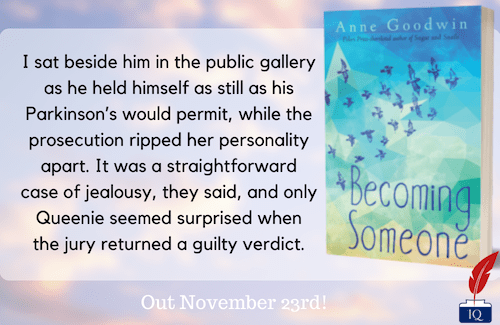
Reflecting Queenie
Queenie would not have wanted me there, but she could hardly expect Dad to attend her trial alone. So I sat beside him in the public gallery as he held himself as still as his Parkinson’s would permit, while the prosecution ripped her personality apart. It was a straightforward case of jealousy, they said, and only Queenie seemed surprised when the jury returned a guilty verdict.
Up until that point, she’d kept herself aloof, not quite focused on anyone, or anything. Now she raised her head towards the gallery and found me. Her fear and confusion beat against my skin, fighting to penetrate my mind. I stayed firm and let it all bounce back to her, as if I were a bat, and she the ball.
I was not quite three when my mother decided I had special powers. As she told me later, it was the only explanation for the way I seemed to anticipate her every move. She’d be thinking about making an apple pie and before she’d opened her mouth I’d be wrestling the baking bowl out of the cupboard. She’d be wondering how her Gran was getting on and, before she knew it, I’d be pushing a pad of Basildon Bond into her hand.
“How did you know?” she’d ask again and again and, since I hadn’t the words to tell her, she concluded I was telepathic.
I was four when my baby brother fractured our blissful duet. It didn’t matter then if she was thinking about baking or writing a letter, his slightest whimper drew her to him. “What is it?” she crooned. “Are you hungry? Do you want your nappy changing?”
Her sing-song voice embarrassed me. She sounded wrong in the head. As if she were unable to distinguish between a scream of hunger and a summons to clean him up.
Weeks passed before I realised she genuinely couldn’t tell the difference. That her ears received each cry in my brother’s repertoire in an identical way. I realised that if I didn’t call out “He’s hungry” or “He’s lonely” the moment the baby started to grizzle, we’d never have baked any pies or written any letters again.
My mother would look at me in wonder as the baby latched on to her nipple or gurgled in her arms. “How did you know?”
Without a spell at nursery to acclimatise me to other children, school entered my life with a bang. If I’d thought my baby brother was noisy, it was nothing compared to the playground racket. At first I kept to the edge, intimidated by the terrible uniformity of the other children. I leant against the fence and watched, while I worked out how to survive the confusion, how to remember which blonde-haired blue-eyed little girl was Judith and which was Mandy. Which of my classmates liked Smarties and which preferred Fruit Pastilles. Who walked to school and who travelled by bus.
When the first of the children jabbed me on the chest, I was prepared. “What’s my name?” she demanded.
I told her.
She giggled. “How did you know?”
Another sauntered up. “When’s my birthday?”
Again, I told her.
“How did you know?”
After that, I was never alone in the playground. The other children could always find a use for my attentiveness. I’d skip along with a gaggle of girls hanging onto my arms. In the early years I suppose it made them feel secure that someone could tell them who they were. Later, their requirements became more sophisticated. Will I get to star in the Nativity play? Does Pamela really like me or is she pretending so she can play on my bike? I answered as best I could. I took their questions inside me and reported what I felt. You’re not right for Mary but you’ll make a great shepherd. Yes, Pamela likes you but she likes your new bike even more.
Although in demand, I never took my position for granted. There was always the chance that one day I’d say something inconvenient and be pushed back against the fence. When the teacher wrote on my report, Myra is a popular girl, I knew it was provisional. I knew deep down I was no different from the kids who were left to themselves because, when people looked at them, they didn’t like what they saw. So I made sure that when my classmates looked at me all they could see was themselves.
When my report described me as good at art, I knew I’d convinced even the grownups there was no more to me than their own reflection. True, my sketches of my friends were well observed. But when I drew myself I could only manage a black outline, an empty space within.

*I was one of ten. When my mother wanted me to do something for her, she would often rattle off half a dozen names before she could think of mine. In fact, she couldn’t always bring my name to mind and would sometimes say, “Well, you know who you are.” It has been a long-standing family joke. But, I’m not sure if she was right. I’m not sure if I know who I am, or whether I just know who I am becoming; hopefully becoming someone who is better each day than the one before. I just know I am going to love Anne’s stories, won’t you?
Thank you for reading. I appreciate your feedback. Please share your thoughts.
Share this:
-

The TUFFest Ride Second Challenge
Are you riding along with the TUFFest writing challenge at home? Charli has posted the second challenge. We’re not only staying muddy for another week, we’re calling others in too! Check it out over at the Ranch.
Share this:
-

49 Days In 1988: Week 38 – Mixed Emotions
I am honoured to be featured as a guest on Hugh Roberts’ blog this week as part of his ’49 Days in 1988′ series. If you haven’t yet popped over to meet Hugh on his blog Hugh’s Views and News, please do so soon. As well as writing entertaining and often surprising stories, he is generous with his support of bloggers. Thank you for inviting me over to your place, Hugh.
Share this:


 Norah Colvin