Live Love Laugh Learn … Create the possibilities

Category: Alternative / non-traditional education

  • SOLE Man

    I love listening to TED talks.

    TED stands for Technology, Entertainment and Design.

    The mission of this organisation is Spreading ideas, a goal dear to my heart.

    I always find the talks fascinating, challenging and inspiring. I feel quite humbled by the fact that there are so many clever, creative and innovative people in the world. However, at the same time, I feel reassured, knowing that our collective future and the future of our planet is in such capable hands.

    Recently I listened to some talks by an educational researcher, Sugata Mitra,  winner of the 2013 TED Prize.

    The TED Prize is awarded to an extraordinary individual with a creative and bold vision to spark global change. . . . the TED Prize supports one wish to inspire the world.

    Mitra’s wish is to build a School in the Cloud, a school where children learn from each other. He introduces the idea of the Self Organized Learning Environment and invites people around the word to help him achieve his wish by downloading a SOLE toolkit to bring these Self Organised Learning Environments to their own communities.

    The toolkit is a step-by-step guide which is designed to “prepare you to ignite the fire of curiosity in kids at home, in school or at after-school programs.”

    A SOLE is basically a small group of children learning together, using the internet to answer questions of interest to them, with minimal teacher intervention.

    There was much in Mitra’s talks that I agreed with, such as

    schools as we know them now, they’re obsolete. I’m not saying they’re broken. It’s quite fashionable to say that the education system’s broken. It’s not broken. It’s wonderfully constructed. It’s just that we don’t need it anymore. It’s outdated.

    “Encouragement seems to be the key.”

    “There is evidence from neuroscience. The reptilian part of our brain, which sits in the center of our brain, when it’s threatened, it shuts down everything else, it shuts down the prefrontal cortex, the parts which learn, it shuts all of that down. Punishment and examinations are seen as threats. We take our children, we make them shut their brains down, and then we say, “Perform.”

    much that intrigued me, such as the grandmother method

    “Stand behind them. Whenever they do anything, you just say, ‘Well, wow, I mean, how did you do that? What’s the next page? Gosh, when I was your age, I could have never done that.’ You know what grannies do.”

    much that inspired me, such as

    “I think what we need to look at is we need to look at learning as the product of educational self-organization. If you allow the educational process to self-organize, then learning emerges. It’s not about making learning happen. It’s about letting it happen. The teacher sets the process in motion and then she stands back in awe and watches as learning happens.”

    and much that I wasn’t sure about, that led me to question, such as, 

    “Could it be that we don’t need to go to school at all? Could it be that, at the point in time when you need to know something, you can find out in two minutes? Could it be — a devastating question, a question that was framed for me by Nicholas Negroponte — could it be that we are heading towards or maybe in a future where knowing is obsolete? But that’s terrible. We are homo sapiens. Knowing, that’s what distinguishes us from the apes. But look at it this way. It took nature 100 million years to make the ape stand up and become Homo sapiens. It took us only 10,000 to make knowing obsolete. What an achievement that is. But we have to integrate that into our own future.”

    As well as listening to TED talks, I also love reading about philosophy, especially the inclusion of the study of philosophy in the school curriculum.

    While following up this philosophical interest, I came across this great blog post by Michelle Sowey, “Can you kill a goat by staring at it? A critical look at minimally invasive education“.

    I couldn’t resist the title, of course, but imagine my delight when I realised that Sowey was critically appraising Mitra’s SOLEs from a philosophical standpoint.

    Sowey saw much to agree with in Mitra’s talks, but for her also, the talks raised many questions.

    These are points of convergence that Sowey saw between  Mitra’s approach and that of philosophical enquiry in the classroom:

    • both are curiosity-driven
    • both involve collaboration of students
    • both seek to engage children’s interest in big questions
    • both support children in exploring ideas and sharing discoveries
    • both offer the prospect of intellectual adventures that spring from children’s sense of wonder and their ability to work together.

    Sowey went on to say:

    “What’s more, Dr Mitra’s proposed curriculum of big questions includes many deeply philosophical ones, such as ‘Can anything be less than zero?’, ‘Will robots be conscious one day?’ and ‘What is altruism?’”

    Then came the BUT:

    Sowey went on to say

    “There are two major points of difference, though, and it’s here that I see cracks in the veneer of minimally invasive education. It differs from collaborative enquiry in that (1) it features the internet as a principal learning medium and (2) it renounces the guidance of qualified teachers or practitioners.”

    Sowey raised concerns including the need to develop in students the ability

    • to assess the credibility of internet sources
    • to challenge faulty arguments
    • to question claims that are dogmatic, propagandistic, biased, pseudoscientific or downright erroneous

    She went on to say:

    “We need to make sure that kids develop thinking and reasoning skills alongside skills in research and information awareness. For this, the support of a competent guide is indispensable, equipping children not only to assess the reliability of different sources but also to evaluate the many arguments they will encounter.”

    I agree wholeheartedly with this.

    She then goes on to say:

    “To dismiss the infrastructure of schooling altogether because of traditional standardisation is to throw the baby out with the bathwater. Surely it makes more sense to repurpose that infrastructure in ways that better nourish children’s curiosity, critical thinking and creative exploration.”

    which makes perfect sense to me also.

    Although I am not a fan of traditional schooling and have made that stance very clear in previous posts, I have expended a lot of energy in trying to establish what I consider to be a better approach. The goal of nourishing “children’s curiosity, critical thinking and creative exploration” was always high on the agenda.

    I encourage you to listen to Mitra’s inspirational talks, and to read Sowey’s compelling article in its entirety.

    Sugata Mitra “Build a school in the cloud

    Sugata Mitra “The child-driven education

    Michelle Sowey “Can you kill a goat by staring at it? A critical look at minimally invasive education

    I will leave you with Sowey’s concluding statement:

    “We need the incisiveness and probing of critical and creative thinking to get deep into the viscera of the facts and anti-facts, the experts and anti-experts. And we need the incisiveness and probing of good teachers to go deep into children’s thought-space: to discover what they’re understanding and what they’re not, yet.”

    What do you think?

    Please share your thoughts.

  • What’s the difference?

    Fifteen differences between traditional and alternative approaches to schooling

    www.openclipart.org
    http://www.openclipart.org

    This list itemises some of the differences between traditional and alternative schools. The list is meant to contrast the stereotypes rather than reflect the culture of any particular school.

    It is unlikely that a school would have all the characteristics of one approach and none of the other. Most schools will have some characteristics of both approaches to a greater or lesser degree.

    As you read the list, consider each characteristic with regard to the schools you attended, or those attended by your children.

    • teacherbellTraditional schools are authoritarian organisations in which children are expected to conform. Alternative schools are run more democratically with children involved in planning and decision making.
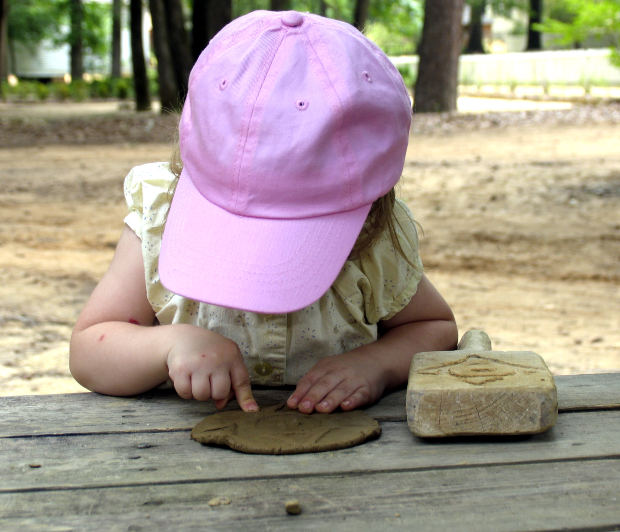
    • Teachers in traditional schools direct activitiesclay from a pre-established curriculum; while activities in alternative school are more spontaneous and child-centred, with children involved in planning and choosing their educational experiences.
    • In traditional schools, students are passive recipients of information; while in alternative schools, students are actively involved in learning, both mentally and physically.
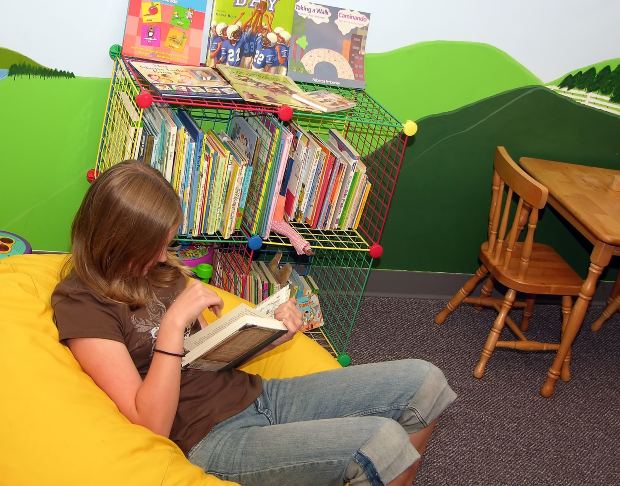
    • readingInformation taught in a traditional school has an academic orientation and is often disconnected; while students in alternative schools learn about a wide range of topics by making connections with prior knowledge, and through interaction with the environment.
    • In traditional schools, information is transmitted by someone or something else; while in alternative schools, students discover their own answers, solutions, concepts and create their own interpretations.
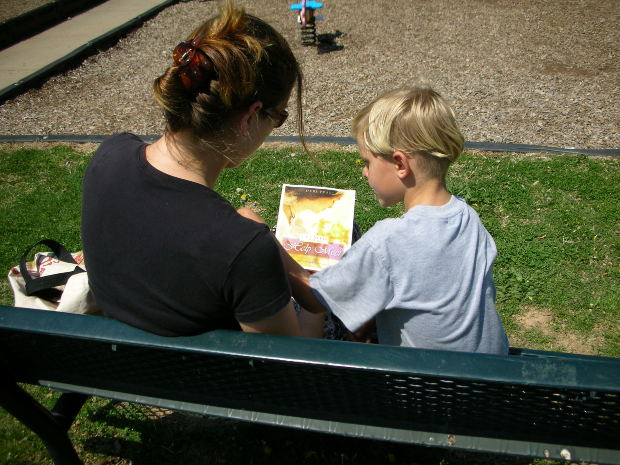
    • talkingMost communication in traditional schools is one way: the teacher talks and students listen. Communication between students and teachers, and among children in alternative schools is reciprocal.
    • Most questions asked by traditional teachers are closed and deal with facts; while students in alternative schools are involved in reflective thinking, problem solving, and learning how to learn.
    • gardeningStudents in traditional schools do a lot of written work while emphasis is given to hands-on-activity in alternative schools.
    • Traditional teachers provide little corrective feedback or guidance to students; while teachers in alternative schools usually provide guidance, evaluation and direction to students.
    • People_16_Teacher_BlackboardIn traditional schools, instruction is usually given to the class as a whole. A greater emphasis is placed upon individual instruction in alternative schools.
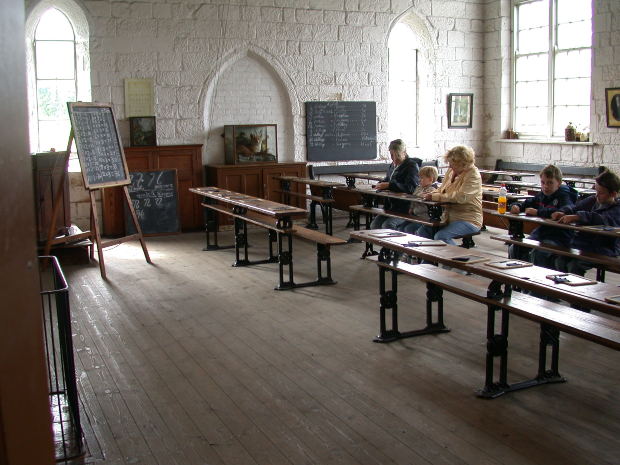
    • old school roomDesks are usually arranged to face the chalkboard or whiteboard in traditional schools; while space is used more flexibly in alternative schools.
    • The main focus in a traditional school is on imparting the existing values and roles of the society and culture. In an alternative school emphasis is placed upon the importance of the child in society and on educating the child for a responsible, thinking role.

    school cropped

    • In traditional schools students are generally grouped for work by ages, but in alternative schools children work at their own pace.
    • clockThe traditional school day is divided into sessions according to subject matter, while the organisation in an alternative school is flexible and loosely structured.
    • In traditional schools students remain dependent; while students in alternative schools are encouraged to develop independence.

    How closely do the characteristics describe the schools attended by yourself or your children?

    What do you see as the main similarities and differences?

    Where would they sit along the continuum?

    The school that I attended as a child was firmly embedded in traditional practices without any characteristics of an alternative approach.

    However some changes in pedagogical theories have occurred over the years, and the schools attended by my own children, and those in which I have recently taught, while still traditional, have moved a little along the continuum towards a less rigid and more flexible approach in some areas.

    In an earlier post “To school or not to school” I shared some thoughts I considered when making choices for the education of my children.

    I invite you to leave a comment and share your views.

    Which of the characteristics are most important to you when choosing a school for your child?

    Which characteristics would encourage you to choose against a particular school?

    All photos courtesy of http://www.morguefile.com/

    Clipart from www.openclipart.org

  • John Dewey’s dream

    http://openclipart.org/image/800px/svg_to_png/101707/happy_pencil.png
    http://openclipart.org/image/800px/svg_to_png/101707/happy_pencil.png

    John Dewey’s dream

    “John Dewey dreamed of the teacher as a guide helping children formulate questions and devise solutions. Dewey saw the pupil’s own experience, not information imparted by the teacher, as the critical path to understanding. Dewey also contended that democracy must be the main value in each school just as it is in any free society. The education system in Finland is . . . shaped by these ideas of Dewey and flavored with the Finnish principles of practicality, creativity, and common sense. What the world can learn from educational change in Finland is that accomplishing the dream of a good and equitable education system for all children is possible. But it takes the right mix of ingenuity, time, patience and determination.

    The Finnish Way of educational change should be encouraging to those who have found the path of competition, choice, test-based accountability, and performance-based pay to be a dead end. . . . the Finnish way reveals that creative curricula, autonomous teachers, courageous leadership and high performance go together.”  (Sahlberg, Pasi 2011 Finnish Lessons, What can the world learn from educational change in Finland?)

    John Dewey (1859 – 1952) was an American philosopher and educator. Dissatisfied with traditional practices for what he saw as their inability to keep pace with changing needs of learners and society, opened his Laboratory School in Chicago, proposing a more child-centred approach focusing upon individual needs of the children who would be engaged in a variety of activities of interest and meaning to them. The term “progressive education” refers to the movement against formal traditional practices which, following Dewey’s lead, began in America in the late 19th Century.

    Pasi Sahlberg’s book “Finnish Lessons” is “about Finland and how the Finns transformed their educational system from mediocre in the 1980s to one of the models of excellence today. International indicators show that Finland has one of the most educated citizenries in the world”.

    In the introduction Ann Lieberman writes, “In the Finnish context, teaching is a high-status profession, akin to being a doctor. Those who enter not only stay in teaching, but many continue their studies, not to leave, but to learn more and contribute more to their profession. This heightened sense of professionalism makes teaching a sought-after position and one obtained only by those who are fortunate enough to be chosen for candidacy.”

    The debate about the value of a traditional versus a child-centred approach to education has waged for centuries. It seems that Finland has incorporated many of Dewey’s progressive ideals into their educational philosophy and pedagogical practice. I can’t help but get excited when I read of what happens in schools in Finland.

    Which other countries will follow Finland’s lead to transform their educational system into one of excellence? For me, it can’t happen soon enough!

    What do you think?

  • The accidental home educator

    In a previous post “To school or not to school” I discussed thoughts I had pondered and issues I had considered when deciding the future education of my daughter.

    Although the main focus of that article was whether to school or not, home education was not only not my first choice, but not even a consideration.

    The merest hint of an idea of starting my own school had niggled away in the back of my thoughts for a long time. More than ten years before that article was written, I was in college studying the teaching of literacy when the idea popped into conscious thought. In response to an assigned task, which required that I explain how I would implement a literacy program in a school, I surprised my lecturer (and myself) by explaining how I would do so in a school that I established. Although I was never afraid of placing my own spin upon a set task, I never really expected the idea of establishing a school of my own to be anything more than just that.

    In the ensuing years prior to the birth of my daughter, my son completed his primary schooling and I taught in a variety of roles, some of which were the most rewarding of my career. During those years I met many other teachers with a similar dream of starting their own school. They were mostly creative and innovative teachers, passionate about their own learning as well as the learning of their students. They inspired their students with an energy that at times seemed infinite. But they felt stymied by the formality and top-down approach of traditional schooling which they, like me, believed to be detrimental to children’s learning and personal growth.

    Many of these teachers left the profession, unable to conquer the battle between philosophy and practice waging within. Others continue teaching, constantly trying to balance their beliefs about learning and the needs of their students within the confines of the expected formal and didactic approach to teaching. Others have become burnt out, feeling isolated and unsupported, succumbing to the pressure to conform.

    Few teachers take action to make their dream a reality. Whatever one’s beliefs, it takes a great deal of courage to step outside the norm of accepted practices. To establish an alternative school, in addition to this courage, requirements include a bottomless well of financial resources, an infinite ability to persist under the onslaught of unremitting obstacles, and a firm commitment to ideals and philosophies.

    When Bec was born the nagging of this idea was so insistent that I was compelled to bring it out from where it was hiding and give it some serious consideration. Without any real understanding of the magnitude of the task ahead, without a well of financial resources, but with a firmly-held belief in what I was undertaking, I set upon the road to turn the dream to reality.

    Me with a group of my young learners.
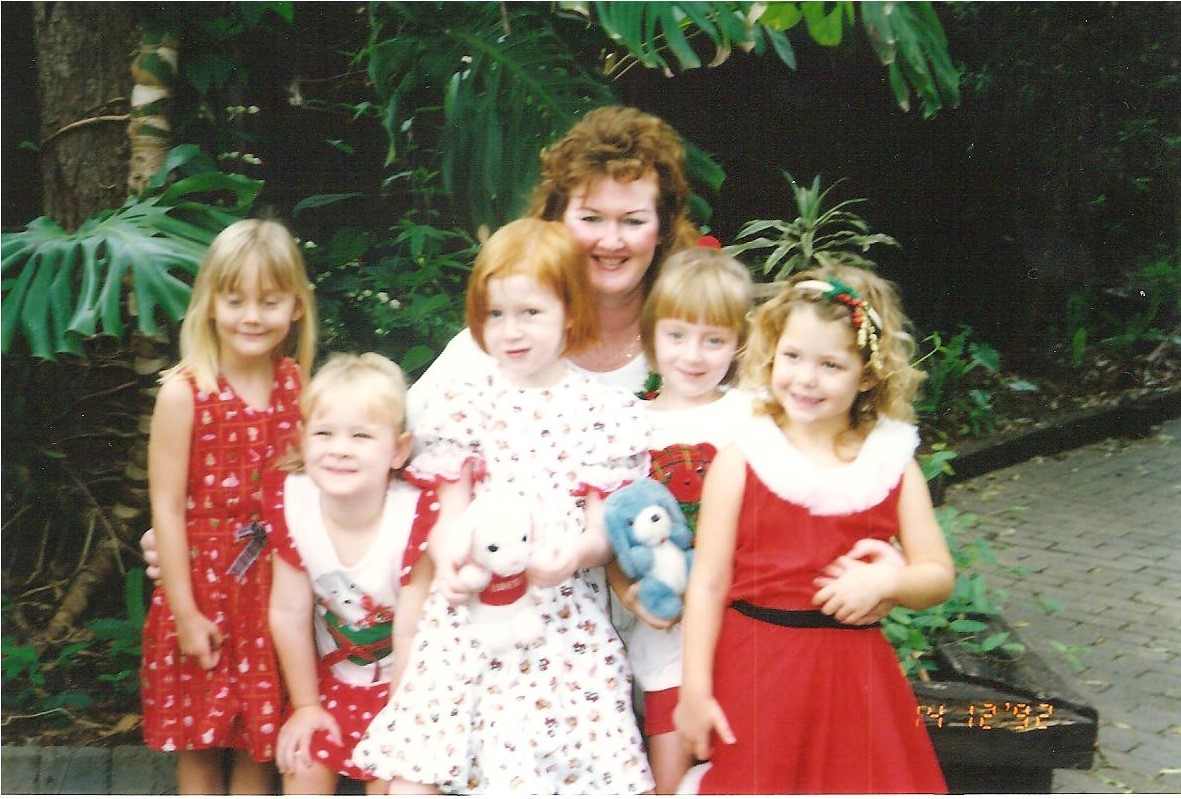
    Me with a group of “my” children, including Bec in the middle.

    When Bec was about 2, I established a small home-based (but not profitable) business providing educational care for other 2-3 year olds and educational play sessions for parents and children.

    For the children in care, I provided a stimulating learning environment with lots of talk, books and hands-on exploratory activities. I provided support as they learned to have a go and developed confidence in their abilities.

    Guiding parents in play sessions for parents and children.

    In the play sessions I guided parents’ engagement with their children in play, explained how they could develop vocabulary and concepts, and provided suggestions for them to continue at home. Even after 20 years, parents still tell me how valuable those session were to their children’s education.

    At the same time I investigated and explored alternatives to traditionally schooling available in my area but was disappointed that none exactly met my criteria. Some were too laissez faire, others followed pedagogical approaches I believed to be unsupportive of children’s learning, and others were based on philosophies I didn’t agree with.

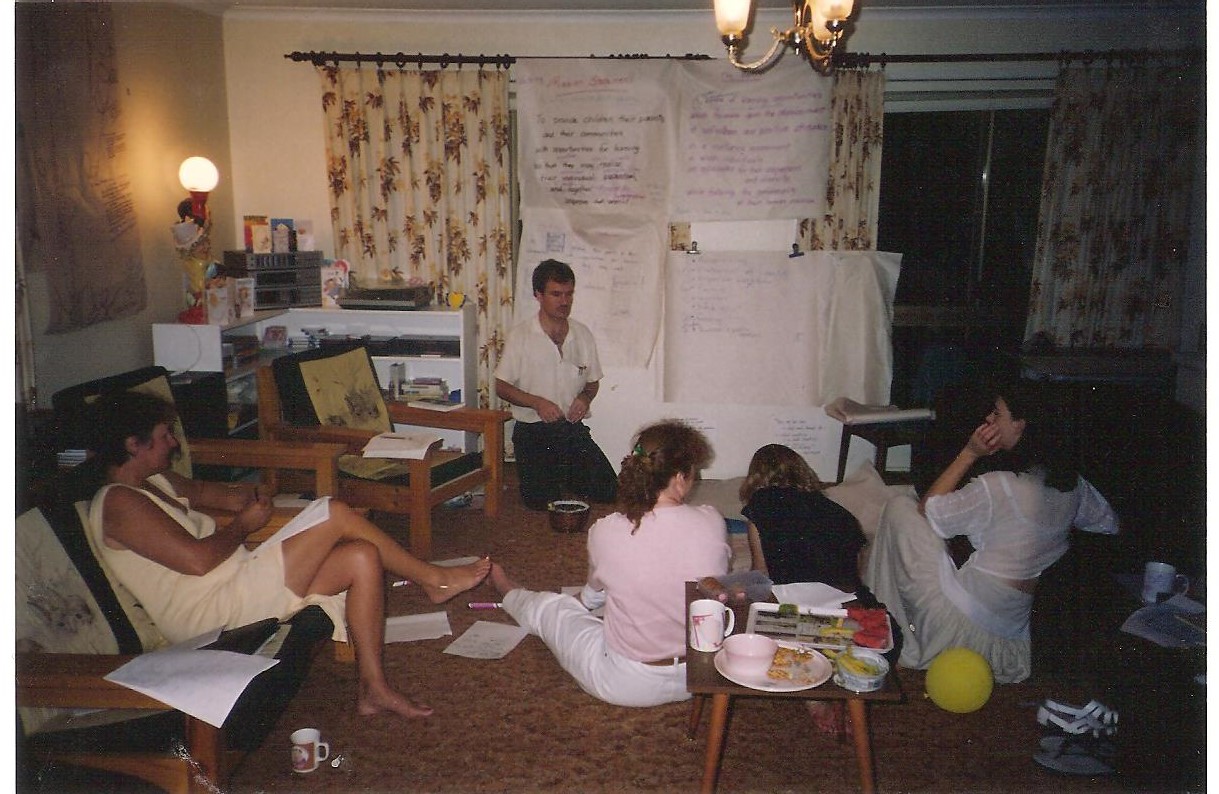
    I began constructing a vision of what my ideal school would be. I invited other like-minded teachers to join me and we got to work on building a team, enlisting families, and seeking out a facility.

    Composing the vision statement.
    Composing the vision statement.

    Approval by the education department was easily achieved and interest of parents was forthcoming. In the end, the greatest stumbling block and final inhibitor of the project was town planning.

    Throughout those establishment years Bec was not enrolled in a school. She was educated at home while we waited for my alternative school to open. We participated in some home schooling group activities, and I continued to conduct home-based educational sessions for Bec and other children. After about 5 years and two aborted starts, the project was terminated and Bec’s home education came to an end. Well, it really didn’t come to an end. She continued to do a lot of learning at home, but as she was enrolled in the local government school, it was her official education provider.

    I often wonder what our lives would be like now if my dream of opening an alternative school had been achieved.

    It was difficult making the decision to let it go. I was torn between two equally compelling but conflicting pieces of advice which vied for my attention:

    snagit persist and listen

    I do believe I gave the dream my best shot, but after a long time and many false starts, I decided that perhaps I should listen to the messages. With most families, like ourselves, more interested in an alternative school than in home schooling, it was time to let it go. Other families, like me, were not enamoured with the local offerings, but then, also like me, had to decide the future of their children’s education.

    I no longer felt comfortable asking families to stay committed to the goal with no tangible start date in sight, and after a final search for a suitable property hit another dead end, the idea was abandoned. I was not committed to home education as a long-term alternative for Bec’s education, and so finally, in year 4, she started school.

  • Reflections on learning

    In a previous post To school or not to school I explored some issues I was grappling with as my daughter reached school age. I stated then that in future posts I would explore the effects of decisions I made upon my children’s (and my) education.

    My daughter, Bec, now 26 and working towards a PhD in Environmental Management at UQ, has beaten me to the post by writing the following reflections on her schooling experiences. Who better to explore the effects upon her education than she herself?

    Bec’s reflections on learning

    When I was a wee girl I felt I had a very prolonged ‘childhood’. Not that I became a (painful) teenager later than others, or even an adult later; but more that the early years went for longer for me than they did for others. While other children I knew were in school, wearing uniforms and filling in worksheets, I was on my way into the Brisbane library with my mother, excited about the new books I would get to read. (I always anticipated the craft activities which were on offer, and specifically recall excellent activities related to owls.)

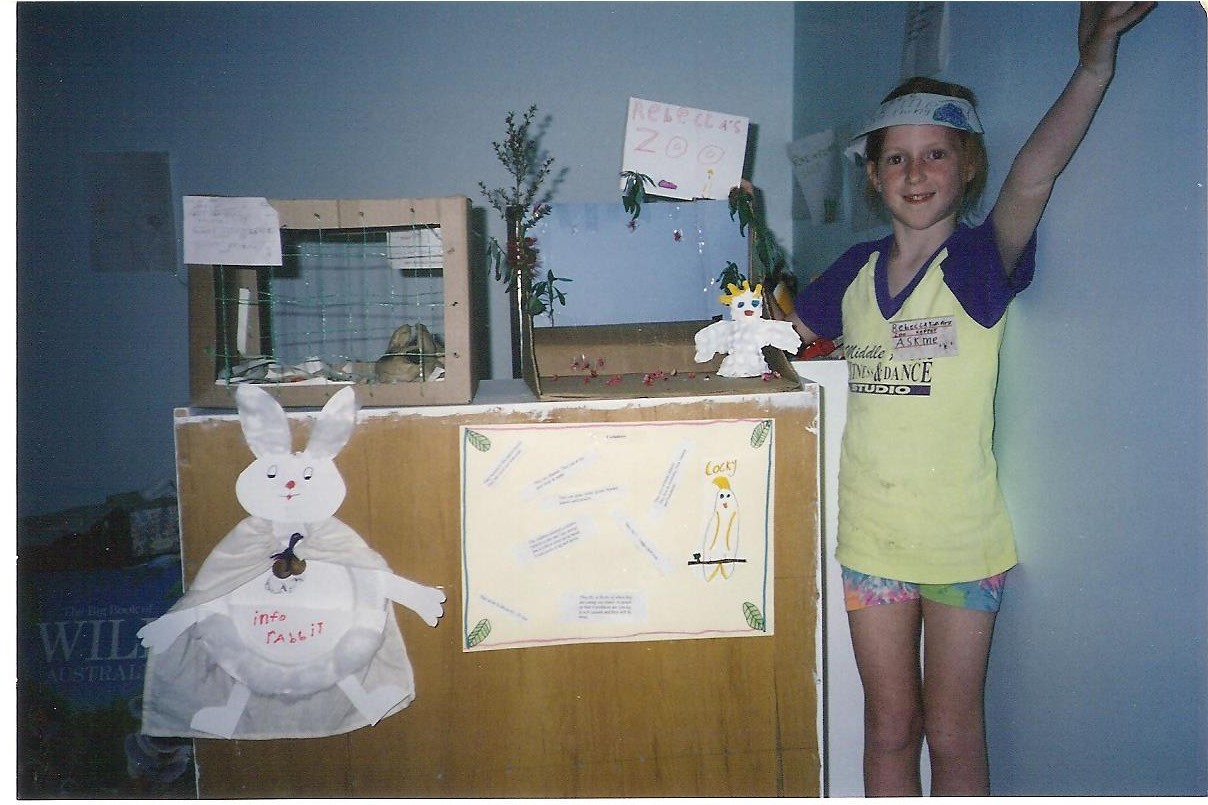
    I also remember that when most other children were in school, I got to play with clay at home, and used the clay to create ‘exhibits’ for a zoo about my favourite animal. It was a great motivation to find out as much as I could about the animal, and I immersed myself in it. I started with rabbits (which I still love though have a real ethical struggle with given they’re such a disastrous environmental pest here in Australia) and then moved onto the Sulphur Crested Cockatoo.
    rabbit and cockatoo projects

    koala cuddleAnother memory, from my very long childhood, was that when most other children were in school, I set up at home ‘The Rainforest Club’, where I made a desk, a rainforest-related library, and a membership program. What was the point of the club? Who knows – but the evidence is still present in a number of Norah’s books which include markings on the inner cover to the effect of ‘This belongs to the library of the Rainforest Club’.

    I remember frequent trips to the Sciencentre when it was in its old digs on the other side of the river, and a day starting with picking strawberries at a local farm, then bringing them home to mix into home-made strawberry ice cream. I also remember being very proud of myself when I got to cartwheel in a parade at the ‘Out of the Box’ celebration at Southbank.

    Out of the box

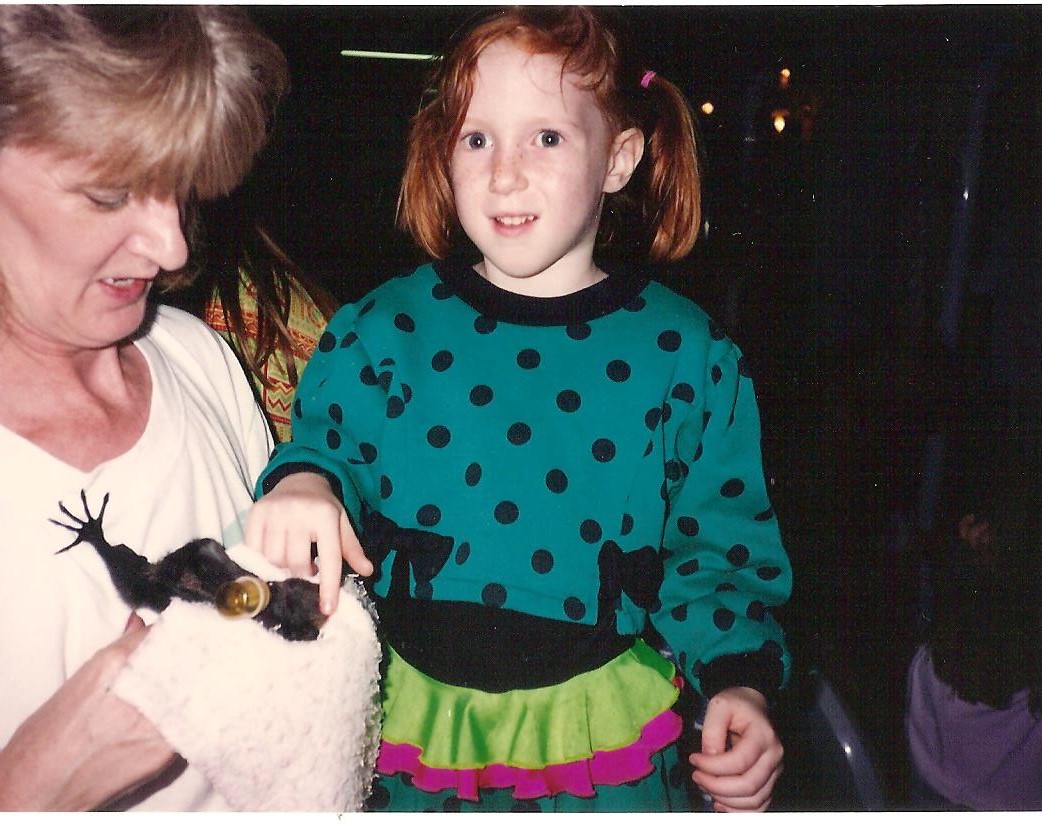
    Then there was the day when an intimidatingly large cane toad launched toward me when I was sitting at the front of a group of children watching an engaging talk about animals (unlike the bunny rabbit, I am not quite so much torn between heart and mind about this invasive species, although increasingly it seems that the story of the cane toad in Australia reflects the story of post-1788 colonisation in Australia). A less traumatic animal experience was going on the ‘Batty Cruise’ down the Brisbane River as the macro bat colonies were stirring shortly after sunset. It was absolutely incredible – there were thousands of bats flying overhead – and an expert on board had a baby bat AND a baby echidna.

    batty cruise

    I also know Norah still has the story I wrote which explained all of the mysteries of neuroscience; “How the Brain Works”. Obviously, it’s a little man who lives in my brain, working efficiently with a series of filing cabinets.

    What this little man didn’t work out at the time though – and only really worked through the files to figure out years later – was that despite not being at the time in School with a capital S, I was in school during every moment of the day and night during those early years. I LOVED visiting the library and the museum and the Sciencentre. I LOVED reading books, researching about animals, writing stories and experiencing my world.

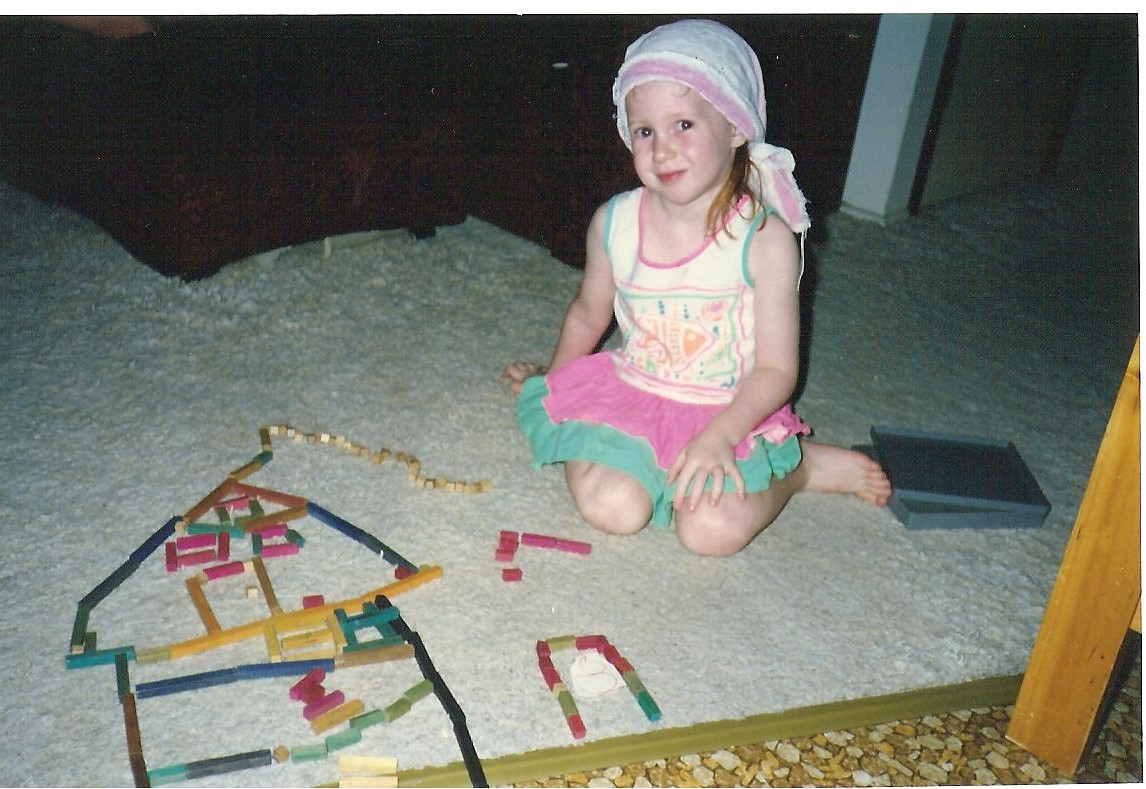
    Bec's cuisinaire house may 91        writing

    There’s no evidence in my memories that I was ever actively Being Schooled – I remember playing, spending time with my mother, going on fun day trips, and being creative. All of this, as far as I knew, without a formal lesson plan presented to me in the morning, without worksheets to complete (though I did spend a lot of time writing for fun – can you imagine such a thing?), without testing which would give me a reductive and quantitative measure of my intellect, abilities, and ranking against other children.

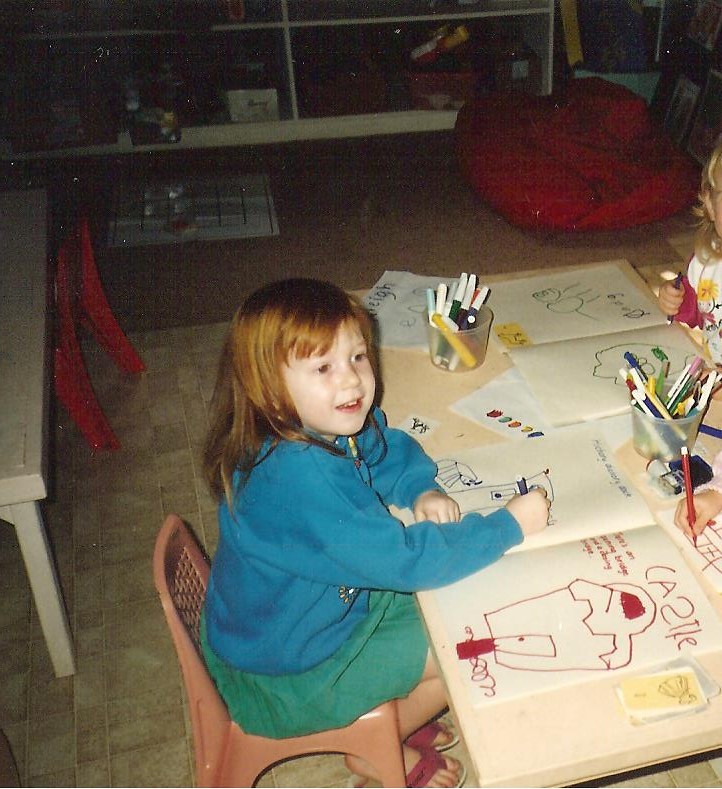
    I started School with a capital S in grade 4, which was very hard to begin with. ist day of schoolThe decisions which led to my enrolment in a School are absent from my memories of the time, but I think I remember that I wanted to be with other children. It makes me sad to think back on this, because I worry that as a child knowing nothing but my own life as the basis for all of my understandings about the world, that perhaps I didn’t appreciate Norah enough, and maybe I hurt her feelings when I wanted to be with other children. When I started School, I have a vivid and poignant memory on the first or second day being given a worksheet with no idea about how to complete it, as it was such a foreign concept. I felt out of my depth and incapable of fitting in, and I was upset. It took a little while to make friends (which resulted in a number of lonely lunch breaks), but once I did I was happy. I enjoyed most of the school work, and as far as I am aware my schooling experience from that point on was no more extraordinary than that of any other child at a state School. I missed being with Norah during the day but I was lucky that she was involved as a parent helper in my class, and then had a teaching position at my School.

    So there is no dramatic end to the story – I was home educated and then I went to a School. I find this difficult to explain, but as a child, there is no other life that I knew. So it didn’t feel like my home education years were cut short by going to School, nor did it feel like I was starting School late (though I was aware that I was a bit different in terms of my schooling). Now as an adult and with hindsight, I am very thankful for the gift of home education that Norah gave me. (I am also proud to know that I was a bit different in terms of my schooling.)

    I would like to offer some evidence of the impact that being home educated has had on my life, but I am not sure how to do this, after all, I’m the experiment and there’s no control for comparison. I can, however, say that I loved my childhood and I still have a very strong and driving love of learning.

    Click on the link below to see some photos from Bec’s scrapbook.Photos from the scrapbook

    These early photos portray activities that continue to interest Bec to this day: a love of animals and nature, an enjoyment in cooking and sewing, creative crafts, mathematics and writing.

  • To school or not to school

    For most people this is not a question.
    Schools exist. You send your children to school. They go to the local government school. Decision made.
    For some, the question of choosing between a government and a private school arises.
    If the decision favours private schooling, then further decisions must be made, including which school and when to enrol. The choice may be influenced by a variety of factors such as location, cost, religion, family tradition, uniform or discipline, amongst others.
    A smaller number of families opt for non-traditional independent schools offering alternative or individual programs.
    Fewer still choose the path of home education.
    The reasons for choosing any one of these options may be as varied and individual as are the families. The level of satisfaction with each, and the success to be achieved within each is also individual. While no one situation is best for everyone; one situation may be better for some than others, and each has its advocates and detractors.
    My personal journey with education has led me along each of these paths at various times: sometimes teacher, sometimes student, always learner. I was educated in a Catholic school, have taught in both government and Catholic schools, attempted to establish an alternative school, and home educated my daughter for a short while.
    Attached to this blog is an article that was first published 20 years ago when my daughter was 6 years old and my son 18. As you will read, I had long held misgivings about the effect of formal schooling on the development of the individual and on the ability of a large institution to cater for the needs of each developing learner. I felt I had suffered somewhat from the imposed restrictions of my schooling and, although my son had been taught by one or two wonderful teachers, there were many more who were less inspiring. When my daughter came along, I knew I wanted something different for her education.
    Many of the thoughts, attitudes and emotions expressed in this article are just as fresh now as they were then; and I am no less concerned for the education of my grandchildren in the current educational environment, than I was for my own children so long ago.
    Future posts will explore decisions I made and the effects upon my children’s (and my) education.
    I would love you to share your own thoughts about learning, education and schooling.
    I have found that if there is one thing that everyone has an opinion about it is school: been there done that!
    Love it or hate it, tell me what your think!

    To school or not to school

    Click on the link to read the article.