At this school in Tokyo, five-year-olds cause traffic jams and windows are for Santa to climb into. Meet: the world’s cutest kindergarten, designed by architect Takaharu Tezuka. In this charming talk, he walks us through a design process that really lets kids be kids.
Some things that appeal to me about this kindergarten include:
the lack of boundaries between inside and outside, and between classrooms
the freedom of a child to choose to be in, or to leave, a space
the space and freedom for children to run
the sounds of happy children
the opportunity for children to help each other
and the attempt to use architecture to change the lives of children without controlling every waking moment
There are a few things that concern me, that make me feel uncomfortable, but maybe that’s just my urge to control being challenged.
What do you think?
Thank you for reading. I appreciate your feedback. Please share your thoughts about any aspect of this post.
Over the past few months in response to flash fiction challenges set by Charli Mills at the Carrot Ranch, I have been writing snippets from the life a character, Marnie, whose story is beginning to emerge as I respond to the prompts.
A couple of recent prompts had me writing about a particular situation which involved mixing paints in an art class. While all flash fiction stories relevant to Marnie’s story can be found on her own page, the two specific to this post can be read here and here (scroll to the bottom of each post for the flash fiction).
I was appreciative of the comments on both posts, with those specific to Marnie’s story encouraging me to reflect and think more deeply about the art class situation in relation to both Marnie and the teacher. While I am still mulling over the appropriate response the teacher may make, I thought I would write a longer piece to explore one possibility from Marnie’s point of view. This episode also relates to other flash fiction pieces, but hopefully the longer episode will be strong enough to stand on its own.
Art class
Marnie looked at the paints. The bright colours reminded her of a rainbow, and her unicorn. Her gaze dropped. She needed her unicorn now, but it was up in the office, drying out on Mrs Tomkin’s desk.
“It will be here waiting for you at home time,” Mrs Tomkin had said, smiling. “Okay?”
Marnie nodded, reluctantly, knowing there was no other choice. At least there was only the afternoon session left, and that was art with lovely Miss R.
Miss R. always wore beautiful dresses with colourful patterns. She had long wavy red hair, the colour of Marnie’s and her nails were always painted brightly, sometimes decorated with stars, sometimes with hearts, and sometimes with other patterns. She smelled of paint, and chalk and crayon and other scents Marnie found delightful. She noticed everything about Miss R.; because Miss R. noticed her. Miss R. always had a kind word to say:
“I like the way you used this shade of blue for the sky. I can see a storm is brewing.”
“Tell me about this picture. What’s it all about?”
“I can see you worked hard to get that looking just right.”
Marnie liked it best when she said, as she often did, “I like your choice of colour, Marnie. Your pictures are always bright. They make me happy when I look at them.”
But not today.
Miss R. stopped and looked at Marnie’s work. Her paper was covered in paint the colour of brown mud. Marnie felt Miss R.’s eyes on her work, then on her. She didn’t look up. She didn’t want Miss R. to see the tears that were threatening to fall, that would fall whatever was said. Her lip quivered.
Miss R. moved on.
“I am not crying. I am not, not, not . . .” but it took all her strength when her insides felt as muddy as the paint on her paper. She felt like mud. Maybe she should look like mud too. She smeared her paint-covered hands on her shirt, and wiped the strand of hair away from her eyes. She wanted to tell Miss R. She wanted to tell her about Bruce and what he had done. But she dare not. Bruce had threatened her and she knew he meant it.
Bruce had tripped her at lunch time and she’d fallen into the puddle. The mud had covered her from head to toe. She’d tried to hold her unicorn high; tried to keep it out of the mud. But it had fallen as she hit the ground. It was all muddy too. Everyone had laughed. Everyone except Jasmine, that is. Jasmine had taken her to Mrs. Tomkin, who had helped her clean herself up and gave her some clean clothes to wear. Mrs Tomkin had said she’d call her Mum, so that was another problem looming. At least things would be okay in art with Miss R.
But not today.
Bruce had pulled faces at her and made threatening arm movements as they lined up. He made fun of the oversized shirt Mrs Tomkins had found for her. Everyone was sniggering at it; at her.
Marnie looked straight ahead, trying to ignore the stares. “I am not crying!”
Then Miss R. was there and she suddenly felt protected, like everything was going to be alright; for a little while at least.
But not today. Today was a bad day, a very bad day. It had been bad in the beginning, and it was going to be bad at the end too. Nothing she could do.
Miss R. handed out the papers and paints. Everyone had their own brush but a small pot of water was shared by four.
Marnie couldn’t wait to get started. She knew what she was going to paint: a rainbow and a unicorn! Maybe a tree and some green grass, with some flowers. She couldn’t have her own unicorn but she could paint it. Miss R. would like her bright happy colours, and her pleasure would make her feel better, for a little while at least.
But not today.
While Marnie was contemplating which colours to mix for her unicorn’s mane, Brucie reached over and snatched Marnie’s brush. With one flourish he had dragged the brush through the middle of each of her colours leaving a dirty brown trail. Marnie had opened her mouth to speak, but Bruce silenced her with a threatening motion of a finger across his neck, as it to slit it open. He stashed her brush on the shelf out of reach, and turned back to his paper, innocent-like. Marnie’s eyes searched for Miss R.’s hoping she had seen and would come to her rescue. But Miss R. was talking to Jasmine and some others at the front, and didn’t see.
Marnie looked at her palette. “I am not crying,” she thought as she tried to still her quivering lip and stop the tears that would give Brucie so much pleasure.
She looked at him and poked her tongue. He held up a fist.
Marnie rubbed first one hand, and then the other into the coolness of the paint, blending all the colours. It felt soothing somehow, the way her hands slid easily through the paints. She watched each colour disappear into the muddy brown she was creating, wishing she too could slide away and disappear where no one would notice her anymore; where no one would taunt or bully or harm. If they couldn’t see her, if she was invisible, maybe she’d be safe.
She looked at her palms – covered in brown, just like the mud that had covered them earlier. She smeared the paint on her paper, covering it from edge to edge so nothing of it remained. She wiped what was left on her shirt. What did it matter? She couldn’t be in more trouble than she already was. They were already going to kill her. Sometimes she wished they would. Sometimes she wished she’d never been born. Sometimes . . .
Miss R. stood beside her desk. Marnie could hear her breathing; could still smell her marvellous scents above that of the muddy brown paint that was now her camouflage. She longed for Miss R. to paint her life away, to ask her about her work and what it meant. But she willed her not; and it must have worked because she walked away. How could she tell her? Her life was as muddy as the paint and she could see no way out.
Thank you for reading. I appreciate your feedback. I’d love to know what you think of this as a possibility of Marnie’s thinking.
This week at the Carrot RanchCharli Mills described a century old schoolhouse which adjoins her property. She is hoping that someone will buy it and make it a meeting place for the community, recognising the role it had to play in the education of generations past as well as its contribution to the history of the area. Her thoughts about the schoolhouse led her to thinking of community engagement and neighbourly relationships which, in turn, inspired her flash fiction challenge for this week, to In 99 words (no more, no less) write a story about nurturing a neighborly relationship.
I would have loved the little schoolhouse at Elmira Pond as the base for the alternative school I hoped to establish at the end of last century. The schoolhouse has a nice community feel to it, unlike many of the large brick, concrete jungle-type schools into which one can almost dissolve in a sea of sameness. Charli’s schoolhouse/community centre would also be a great meeting place for parents with their young children; a friendly early learning centre for both.
Based on my beliefs that:
parents are a child’s first and most important teachers;
the most important years of a child’s development are the years before school;
children who enter school with rich vocabularies, an interest in the world around them, and a love of books are primed to succeed;
children without those experiences are disadvantaged in their learning right from the start and face an enormous challenge in catching up;
waiting until children enter school is too late;
the best way to minimise or eliminate the disadvantage is by educating parents through programs that model effective parenting behaviours and support them in their interactions with their children;
parenting programs offering those types of support would be most effective if begun before birth of the children and continued at least until the child enters school, maybe beyond;
most parents want to do the best for their children, many just don’t know how to go about it.
There are any number of birthing classes, but not many that aim to support parents in nurturing their child’s development. In my opinion, investing time and money into developing programs such as these would have enormous benefit, not only to individual children and their parents, but to society as a whole.
I am not talking about programs that place children of increasingly (or should that be decreasingly) younger years into structured and formal “teaching and learning” situations. I am not talking about one-off talks or series of lectures to parents.
Many of the parents of children who begin school with the types of disadvantage I have mentioned are themselves products of similar disadvantage. In a previous post I discussed the roles of “nature” and “nurture” in a child’s development. In these cases especially, it can be difficult to tease out the differences. Many of these parents would not have positive feelings towards schools or any other public institution and may feel threatened, or reluctant for other reasons, to attend sessions in public halls or government offices.
What I am talking about is a program that:
goes to the parents and children in their neighbourhoods, meeting in a local park or community greenspace, on regular weekly occasions;
invites parents to talk with, read to and play with their children using provided books, games and toys;
models positive parenting behaviour, explaining to parents the benefits to their children of engaging with them in activities and discussions;
provides suggestions for inexpensive and easy activities to do at home;
encourages borrowing from a book and toy library.
Guiding parents in play sessions for parents and children.
I envision the program being delivered by an early children trained educator who is sympathetic to the situations and demands of people from diverse backgrounds, who is warm and supportive with good interpersonal skills with both adults and children, who drives a mobile early learning centre fully-equipped with books, toys, games, paper, pens and craft materials, including items for borrowing and distribution for activities to be done at home.
I see the centre as a brightly painted caravan with doors that open wide to display a colourful and engaging assortment of resources to delight the interests and eyes of young children and their parents. As the caravan travels into each neighbourhood it would play music to signal its arrival (think of the old icecream vans!) inviting parents and children to come, investigate, and join in.
Thinking about the excitement that such a program may stimulate in a neighbourhood, and the sense of community and belonging it may encourage, led me to write about it for my response to Charli’s prompt.
This week at the Carrot RanchCharli Mills is talking about semicolons; but not the little squiggles on a page, the semicolons that are sprinkled liberally through life as new beginnings. Sometimes we see them and grasp the opportunity for renewal, other times we ignore them and miss the chance to revitalize. Sometimes we get pushed down and it takes all our strength to pull back up, grasping onto the semicolon as if it was a dragon’s tail.
Charli was inspired by Project Semicolon that provides this explanation:
“A semicolon is used when an author could’ve chosen to end their sentence, but chose not to. The author is you and the sentence if your life. Project Semicolon exists to encourage, love and inspire.”
Every day can be a new beginning in some way. With our thoughts, words and actions we can change our own lives, or the lives of others. The impact may be deliberate or unintentional. We may be aware of the effects, or we may never know the consequences.
Without wishing to diminish the importance of helping those “who are struggling with depression, suicide, addiction and self-injury”, which is the focus of Project Semicolon, my focus as always is on education and the importance of maintaining curiosity and an interest in and love of learning.
What better analogy of a semicolon of life than the transformation from a caterpillar in a pupa to the beauty and flight of a butterfly. An inspiring teacher can mean the difference between full stops and semicolons in learning.
In the article Berger discusses his obsession with “collecting student work of remarkable quality and value . . . the work of regular students in typical schools around the country . . . (whose) teachers have helped them develop the skills and mindsets necessary to produce work of exceptional quality, and have built classroom and school cultures in which exceptional work is the norm”.
Berger discusses ways of engaging students in authentic work, work that can have an impact on their communities and on the way they see themselves as learners. I remember Charli Millstelling me about similar work that her children were engaged in when they attended The School of Environmental Studies in Minnesota; and I shared some of Chris Lehmann’s work at the Science Leadership Academy in Philadelphia here.
Berger says,
“Once a student creates work of value for an authentic audience beyond the classroom — work that is sophisticated, accurate, important and beautiful — that student is never the same. When you have done quality work, deeper work, you know you are always capable of doing more.”
Semicolons in teaching and learning, all.
As with the three cited above, the situations referred to are often of teenagers in high schools. I am an early childhood teacher and, while I find the work exciting, I sometimes struggle to see the relevance to my situation. However, in this article Berger shares the work of Austin, a year one student from Boise, Idaho doing a project about a tiger swallowtail butterfly.
Austin was to illustrate his project with a detailed scientific drawing of the butterfly. His initial drawing was what I would consider to be fairly typical of a year one child. However he received feedback that was specific and not mean from follow students; and through a series of six drafts finished with a drawing that was much more sophisticated and demonstrated more careful ‘scientific’ observation.
Berger also shared work by year two students at another school, demonstrating what can be achieved “when students are allowed, compelled and supported to do great things”.
Last week Charli’s flash fiction challenge “the day the earth turned brown” prompted me to write about a student mixing all the colours together to make one muddy brown. The teacher paused before responding. There are many such pauses, (semicolons) in a teacher’s day. The teacher knows the power of every remark and must consider the impact that a response may have.
If you had provided each child with a palette of primary colours and black and white expecting them to mix a variety of colours and shades and tones to create an interesting picture; then found that one child had mixed them all together to make one muddy brown, how would you respond?
There were a number of comments on the flash including one from Geoff Le Pard who said that there were “So many questions as to why the little girl is making muddy browns and lathering them everywhere.”
So true. The teacher’s response would be influenced by knowledge of the child’s background, interest in art, and behaviour that day, among other things.
Charli Mills said that “It could mean many things and nothing!” She recalled, “mixing paints as a child hoping to create a vivid new color and (being) disappointed to end up with mud.” Anne Goodwin agreed, saying that “mixing paints to make a muddy brown, (was) a distinctive childhood memory”.
In my experience there was usually one child who ended up mixing all the colours together, often for no other reason than to see what happened. Sometimes the process of discovery gave as much pleasure as would a colourful painting of a house a tree and a sun.
However, there might be more to it than that. Charli Mills sympathesised with the teacher, saying that “So much is put on the teacher to figure it out.” She thought that the child “might be disturbed, highly imaginative or confident enough to experiment”. Sherri Matthews suggested that perhaps the child was “troubled . . . living in a dark, mixed up world, but . . . trying to find their way”.
So much to consider. So powerful the response. Will it be a full stop, or a semicolon?
She paused. The muddy brown extended beyond the paper virtually cementing it to the desktop. The palette too was brown with little trace of the beautiful primary colours she had prepared. Looking from desk to child she observed two large smears adorning the shirt. A bruise-like smudge on the cheek showed where an intruding hair had been brushed away. “Oh!”
She breathed; she counted to ten; and back again; “Breathe,” she told herself. “Why?”
She moved on, observing the assortment of smiling suns, houses and garden paths, but her mind was on the mud; the child . . .
What would be the appropriate response?
Thank you for reading. I appreciate your feedback. Please share your thoughts about any aspect of this post or flash fiction.
Most teachers try to incorporate a variety of experiences into their programs in order to maximise learning opportunities in the hope that, if students don’t “get” it one way, they will “get” it in another. The imposition of national standardised assessment makes doing this a challenge for teachers. The increased requirement for the implementation of particular approaches to teaching makes it even more so.
To say that I hold fairly strong views about learning, and the differences I consider there to be between education and schooling is perhaps an understatement, but it wasn’t always so.
My memory tells me that, while I probably didn’t “love” school, I probably didn’t “hate” it either. It was simply something that I had to do. I didn’t question it. I did my best to be a “good” girl, do what was expected of me, and conform. All of which I think I did pretty well.
The questioning came later and had more impact upon my teaching and parenting than it did on my own schooling. I came to view schooling as something that is “done” to us, and education as something that we do for ourselves. That is not to say that no worthwhile learning takes place in school, for it does, but education is a whole-of-life experience and schooling is but one small part of that.
However, if the importance of schooling, and here I mean learning of particular content by particular ages, is inflated and rated more highly than children’s natural curiosity, interests and abilities, then the consequences to individuals and the community in general can be more negative than positive. One consequence may be that children don’t enjoy school; another may be the view that only school knowledge is important; and yet another may be that children are turned off learning all together.
My first conscious discomfort with what, for convenience, I’ll call a factory model of schooling (children go in one end, have things “done” to them, and come out the other end all the same) was as a young teacher when all five year two teachers were expected to be doing the same thing at the same time. That imposition, along with other inadequacies that were beginning to become apparent, set me on a quest to learn more about learning and education. My quest has never ceased and I am still searching for answers.
Recently I read a book by Daniel T. Willingham entitled “Why Don’t Students Like School?” The title had instant appeal, of course, and I thought I’d recognise a few of the reasons at least. My initial expectation was of reading views similar to those of authors like John Holt, Ivan Illich, A.S. Neill and John Dewey whose books I had read in the 70s and 80s; but a closer look at the subtitle told me I was in for more: “A Cognitive Scientist Answers Questions About How The Mind Works and What It Means For The Classroom”.
The book is a wonderful read and I’m certain to share many of Willingham’s ideas with you in future posts. I enjoyed it because, in almost equal measure it reinforced, challenged and extended my thinking about many aspects of learning and how best to provide for and stimulate it in a classroom setting.
Sometimes Willingham would make a statement with which I agreed, and then go on to explain the faulty thinking behind it. Sometimes his statement would seem to completely contradict what I think but his explanation would show that we simply had different ways (mine perhaps inadequate) in explaining it.
What I really appreciate about the book is that Willingham carefully translates what has been learned from research into practices that can be implemented in the classroom to enhance student learning. Often research seems only to tell teachers what they already know from experience and observations, or provides information in such an abstract way that nothing of practical use can be gleaned.
The section of Willingham’s book that I refer to today is “Chapter 7 – How Should I Adjust My Teaching for Different Types of Learners?” Willingham opens the chapter with the words “All children are different.” He says that some learn visually, some auditorily; that some are linear thinkers and some holistic, for example, and that
“It seems that tailoring instruction to each student’s cognitive style is potentially of enormous significance”.
The important word in that sentence is “seems”. He talks about the differences in the way that hypothetical Sam and Donna might learn and says that “An enormous amount of research exploring this idea has been conducted in the last fifty years, and finding the differences between Sam and Donna that would fit this pattern has been the holy grail of educational research, but no one has found consistent evidence supporting a theory describing such a difference.”
He states that the “cognitive principle guiding this chapter is:
“Children are more alike than different in terms of how they think and learn.”
That statement really made me sit up and take notice: “Children are more alike than different”. But it turns out, those words are not the most important ones in the sentence. The most important ones are: “in terms of how they think and learn.”
He goes on to say that, “the claim is not that all children are alike, nor that teachers should treat children as interchangeable. Naturally some kids like math whereas other are better at English. Some children are shy and some are outgoing. Teachers interact with each student differently, just as they interact with friends differently; but teachers should be aware that, as far as scientists have been able to determine, there are not categorically different types of learners.”
He also talks about it in this video:
Willingham acknowledges that students differ in their cognitive abilities and styles. What he does in the chapter is “try to reconcile the differences among students with the conclusion that these differences don’t mean much for teachers.” In reading these words one might expect that Willingham is proposing that differentiation is not an important part of classroom practice. But such is not the case, as stated in this video:
In the book he writes, “I am not saying that teachers should not differentiate instruction. I hope and expect that they will. But when they do so, they should know that scientists cannot offer any help.” According to Willingham, scientists have not identified any types of learners or styles of learning. He says, “I would advise teachers to treat students differently on the basis of the teacher’s experience with each student and to remain alert for what works. When differentiating among students, craft knowledge trumps science.”
What Willingham says is of most importance for a learner to learn is background knowledge. If a student does not have sufficient background knowledge to understand the content or concepts which are presented, learning will not take place. This supports the advice that I repeatedly give to parents: read to your children, talk with them, and provide them with a wide range of experiences and activities.The same is true for teachers: ensure the students have sufficient knowledge on which to build the new work you are expecting them to grasp.
This week at the Carrot RanchCharli Mills has thrown a prompt with which I have struggled: In 99 words (no more, no less) write about the day the earth turned brown. I always like to tie my responses to the educational focus of my blog and this one had me stumped for a while. A mind journey following various twists and turns, retracing well-worn paths, and hitting many dead ends, finally led me to an oasis in the parched brown earth: the uniqueness of each of us; the amazing potential of each new child to create possibilities beyond our imagining; and the contrasting effect of a narrow test-driven school system that attempts to reduce each to the sameness of minimum standards and age (in-)appropriate benchmarks. A paint palette seemed a suitable medium for the story.
For those of you who have been following Marnie’s story, I apologise. She makes no appearance this time, though I have not ruled out the possibility with student M. I’d be pleased to know what you think.
Palette potential
She walked between the desks admiring their work. From the same small palette of primary colours, and a little black and white for shades and tones, what they produced was as individual as they: J’s fierce green dinosaur and exploding volcanoes; T’s bright blue sea with sailing boat and smiling yellow sun; B’s football match . . . At least in this they had some small opportunity for self-expression. She paused at M’s. M had mixed all the colours into one muddy brown and was using hands to smear palette, paper, desk and self . . .
Thank you for reading. I appreciate your feedback. Please share your thoughts about any aspect of this post or flash fiction.
Earlier this week the television was on as I was getting ready for work. I wasn’t taking much notice as the voices droned on. I was lost in my thoughts of what needed to be done, what I’d be doing at work, which illustrator I’d choose to win my design contest, what I’d write about next, what I needed to get at the shops on the way home from work . . . the usual clutter.
Suddenly the words “they don’t even know they are learning” drew my attention to the television. I paused to see what they were talking about. The image showed children of about three years of age in a child care centre. The children were counting as they walked along stepping stones laid out in a path!
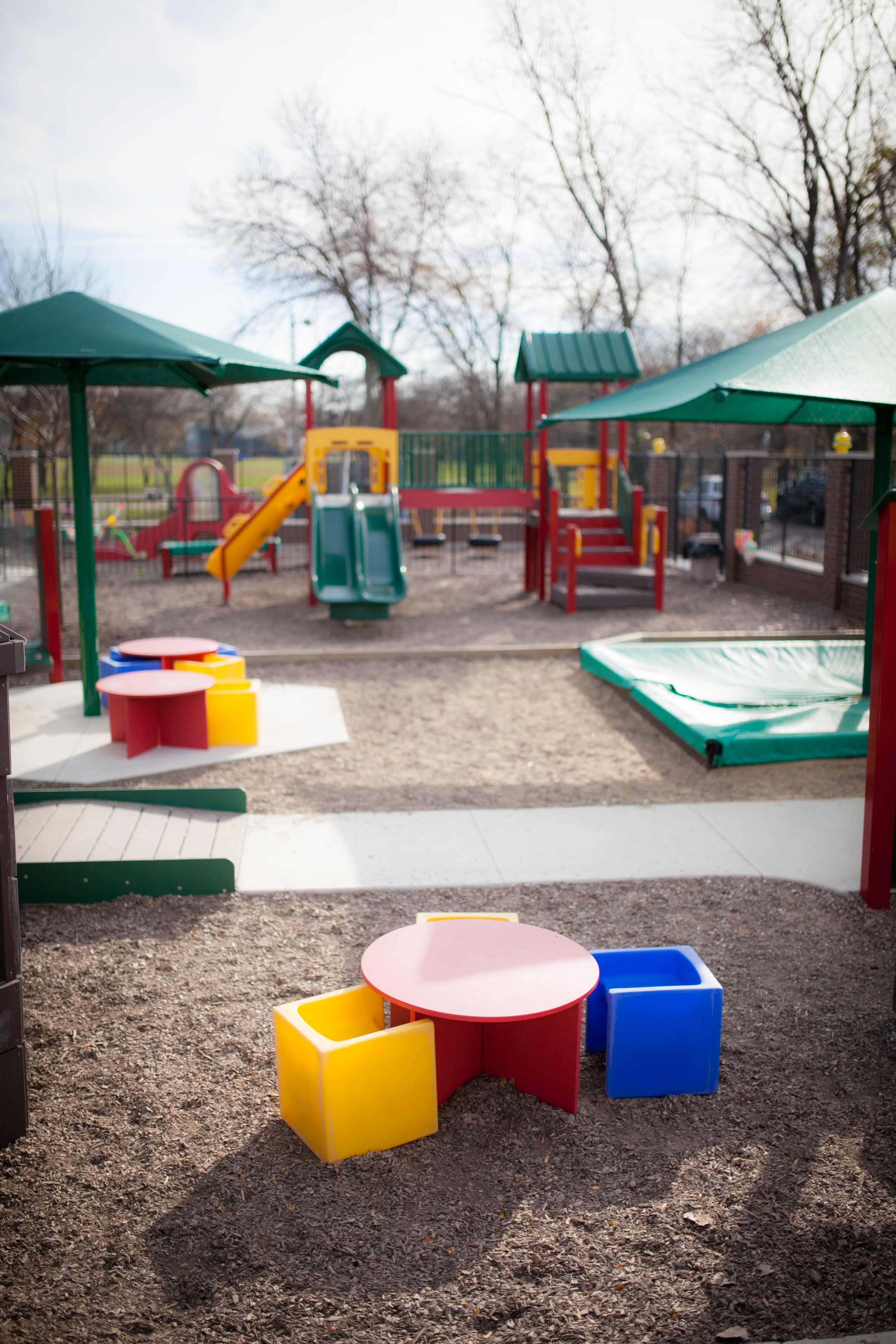
Kids’ Work Chicago Day Care
Remarkable? I didn’t think so. Children were happily engaged doing what comes naturally to them: playing, having fun, making sense of the world around them. Pre-school children will naturally join in the fun of counting and learn to do so without structured lessons, with just an attentive adult who encourages it incidentally in daily activities. I have made a few suggestions here and here.
Easter Egg Patrol
What I think is far more remarkable (worthy of discussion) about those words is the insidiousness of the thinking that underlies them and what that thinking implies.
“They don’t even know they are learning!”
This to me implies that learning is something that:
children don’t want to do but “we” expect of them,
children won’t do unless it is “hidden” in sugar-coating,
must be planned for in a structured program and done to children by adults,
fits into a narrow band of skills and abilities with easily identifiable criteria that can be measured, and
is definitely NOT fun!
Perhaps more insidious is the implication that it occurs only in those situations.
Children are born to learn. Their every waking moment is spent figuring out how the world works and what they can do to have their needs met. They are born scientists. They have an innate desire to know. Why one should think it remarkable that children are learning, but they don’t even know they are doing so, boggles my mind.
Anyone who has spent any time with young children know that learning is what they do. They can spend hours absorbed in a particular activity figuring out how something works, how things fit together, what happens when and if …
As soon as an adult intervenes in an attempt to “teach” something that seems appropriate and important to the adult, the child switches off, disengages and chooses another activity.
That’s not to say that the adult shouldn’t intervene to support a child’s learning, but the adult needs to be sensitive to the child’s needs and responses and to not force the situation to one in which the learning may be more important to the adult than the child at that moment, when the child is doing very well on its own, thank you very much.
The article I refer to was broadcast on April 1st. An April Fool’s Day joke? Sadly, not. But if we fail to honour children’s natural curiosity and desire to learn and continue to value only that which can scored on a test, I fear we will develop a multitude of fools.
Thank you for reading. I appreciate your feedback. Please share your thoughts about any aspect of this post.
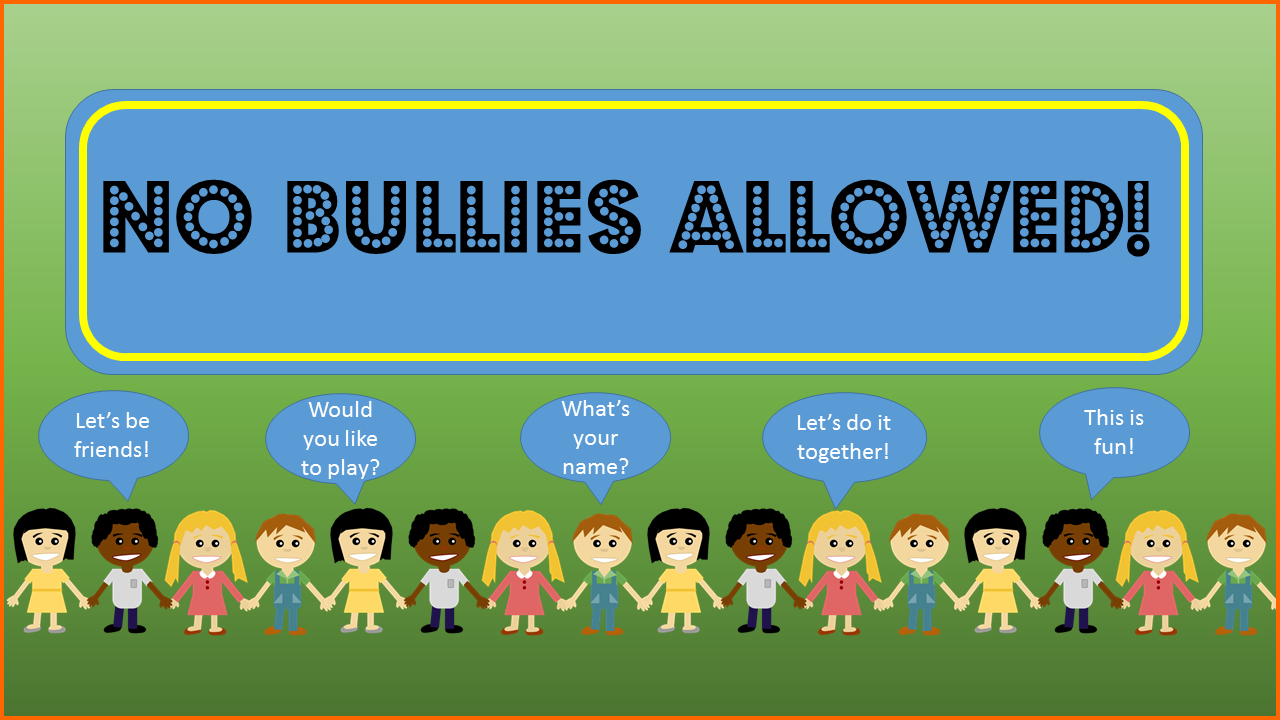
Everybody knows what a bully is. If you have never experienced bullying of some kind on a personal level, then you are probably pretty lucky. But you have possibly witnessed, or were at least aware of, bullying at school, in the community, or in the workplace, maybe even at home.
Bullies feature strongly in traditional fairy tales such as the stepmother and stepsisters in Cinderella and the mean Rumpelstiltskin in the story of the same name. Roald Dahl also introduced us to bullies through Veruca Salt in Charlie and the Chocolate Factory and Mr and Mrs Twit in The Twits.
The first picture books I think of when the topic of bullying is raised are Anthony Browne’s Willy the Wimp and Willy and Hugh. They are great to read and use to stimulate discussion of bullying with young children. In this video author Anthony Browne explains that most children recognize a little of themselves in Willy. The transformation from timidity to self-confidence appears achievable and encouraging to all.
The opposite of being a bully is being kind. This article by Kari Kubiszyn Kampakis, Raising a Kind Daughter tells a heart-warming story of selfless kindness shown by a daughter and her mother. As was commented on in many posts about compassion, including this one, modelling is the best way of teaching children attitudes and behaviours we wish them to learn.
Over the past year while I have been engaging with Charli’s flash fiction challenges, I have been developing a character, Marnie, who is definitely no stranger to bullying. Each of Charli’s prompts encourages me to think a little more about Marnie, what may have occurred in her life, and what her responses would be. While I sometimes write about other things, I could not ignore Marnie with this prompt.
This is what we already know about Marnie,
as a child:
she has a dysfunctional family
she suffers physical and emotional abuse, including neglect, from both parents
she has a toy unicorn as a comforter
she finds the expectations of school challenging
she feels alone and excluded at school with few friends
she gains the support of one teacher who helps her to develop more self-confidence
as a teenager:
the teacher continues to support her
she leaves home and breaks contact with her family
as an adult:
when both her parents have passed she is contacted and returns to the family home, which she sells, relieved that there is no longer any chance of abuse such as occurred in her childhood
There are still many gaps and unknowns which I am hoping to explore in more detail in the future. In a recent discussion with Charli, I commented that each time I write about Marnie she reveals a little more, in much the same way as she would reveal herself to a new friend or a therapist. I’m thinking she may need to talk to a therapist at some stage. I might need to see who, and what, Anne Goodwin would recommend!
I hope that somewhere in her life, Marnie has a friend like Annie, described in the article by Kari Kubiszyn Kampakis. Maybe it is Jasmine who we have already met in a previous episode, which also touched on a situation which may have involved bullying. Please let me know what you think.
Jasmine and Georgie rushed towards the cluster of children who were laughing hysterically at something unseen. They expected to see an entertainer performing magic tricks. Instead they saw Marnie, face down in a puddle, reaching for her unicorn; sobbing.
“Good one, Brucie!” Two boys high-5ed. Another called, “Way to go!”
The children stood transfixed by the spectacle. Jasmine pushed through. She picked up the muddied unicorn, stretched out a hand to help Marnie up, then put an arm around her waist,
As she led Marnie away Jasmine glared at the group of disbelieving faces.
“Shame on you,” she mouthed.
Thank you for reading. I appreciate your feedback. Please share your thoughts about any aspect of this post or flash fiction.
Rosoff introduced her article by questioning what we consider to be success in life. She discussed a study of 268 men over seventy-five years conducted by George Vaillant who concluded that “warmth of relationships throughout life have the greatest positive impact on ‘life satisfaction‘”.
Rosoff said that,
“If you live a happy and fulfilled life, then you die successful. “
but wondered why, then, “do we persist in measuring success in terms of salaries, job titles and assets?” if they have little real impact on one’s happiness.
Rosoff suggested that a good place to start thinking about attitudes to success is in school.
The next part of her article was devoted to attitudes towards success in schools. Rather than provide just an outline of her thoughts, I am quoting them in entirety, as I don’t want to misrepresent her ideas and she says it all so well. While she discusses specifically the situation in the UK, I think many readers will recognise similarities to their own locale. I have highlighted parts that I find particularly noteworthy. I do recommend, however, that you follow the link and read her article in full.
“In the twenty-first century, educational success is largely determined by the government. The government puts in place a series of goals that evaluate children as young as three against measures of socialisation, reading proficiency, an understanding of numbers, the ability to answer questions in an acceptable, established manner, and later – during GCSEs and A levels – the ability to pass exams in up to twelve subjects and write essays in a strictly approved fashion.
Success in school requires hard work and a competitive approach to study on the part of students – but more to the point, a successful student is one capable of achieving goals as defined by the exam graders, as defined by the government.
A successful student is one capable of matching learning to this very specific series of goals.
In other words, a child who reads all day is not a successful student. A child who writes brilliantly and with a distinctive voice but can’t spell, is a failure. A child who loves history but can’t write an essay in the approved manner, is doomed. A child who loves stories, who loves to dream, who makes unusual connections, whose brain works in unconventional, peculiar ways – but who can’t multiply 11 x12 – is not a successful student.
Successful students must sit still and concentrate for long periods of time, temporarily memorise large amounts of information, understand and achieve received goals, think inside the box. A desire to please and a willingness to conform are key.
The least successful children in this sausage factory will be branded from the age of five. Children with parents or carers who don’t talk or read to them enough are most likely to fall into this category of early failures. As are dyslexic children. Or eccentric thinkers. An irregular schedule, disorderly home life and financial instability all interfere with the attainment of ‘success’ as determined by the government.
Less support at home, fewer books, a less regular schedule, a less orderly home life, less healthy meals, less consistent love – all these economic or emotional disadvantages further condemn the five year old to failure. Food banks, immigration problems, substance abuse problems, unemployment, parental absence or mental illness – all of these elements interfere with the attainment of ‘success’ as determined by the government.
I see them when I visit secondary schools – the children branded failures because they can’t get on in school. Because they’re bored, or not very verbal, or not very good at sitting still and taking information in as required in a classroom situation – or the ones who just don’t see why thirteen years of their lives should be spent taking exams they’re not good at, absorbing information in a manner that hasn’t changed much in two hundred years. ‘Not a student’ is a label that has condemned decades of children to a diminished sense of what they’re capable of in life. When in fact all it means is, ‘does not thrive within government parameters’.
Do I buy into the idea that these students are without value? Of course not. Put them in a different sort of learning environment or teach them something that stimulates their imaginations and they’ll be fine. But sit them in a classroom for thirteen years with a series of targets chosen by a government that knows nothing at all about education and they’re doomed.
In contrast, the most successful children in this whole process of learning and taking exams will get all A*s and go to Oxford or Cambridge, after which they will go on to have what most people consider to be the most successful lives – the best jobs, the highest salaries, large and comfortable and expensive houses and cars.
And yet.
In a 2014 book, Excellent Sheep: The Miseducation of the American Elite and the Way to a Meaningful Life, award winning American essayist and educator William Deresiewicz concerned himself with what’s going at the top level of American education.
‘Our system of elite education manufactures young people who are smart and talented and driven, yes, but also anxious, timid, and lost, with little intellectual curiosity and a stunted sense of purpose … great at what they’re doing but with no idea why they’re doing it.’
This was written about Harvard and Yale but applies just as well to elite British universities. Like the highest rated state primary and secondary schools, these institutions take few risks – they admit top performing, highly driven teenagers and turn out graduates with no motive to question the status quo, no motive to question the structure of society or the weight that society puts on a certain kind of success.
If you win a beauty contest, you don’t dedicate your life to challenging society’s perceptions of beauty.
William Deresiewicz continues:
‘So extreme are the admission standards now that kids who manage to get into elite colleges have, by definition, never experienced anything but success. The prospect of not being successful terrifies them, disorients them. The cost of falling short, even temporarily, becomes not merely practical, but existential. The result is a violent aversion to risk.’
All of this is happening at exactly the moment at which the world most needs risk takers: individuals willing and able to retell the story of society in a more positive way. People willing to take risks with meaningful social and political change. Hardly anyone would disagree that our political system needs changing – free market capitalism has led to terrifying extremes of wealth and poverty. The pharmaceutical industry needs meaningful change along with the system of drug patents that price simple, inexpensive drugs out of the reach of entire populations whose lives they might save. The legal system favours those with money, as does education, as does housing. In the meantime, there is little financial motive to stem – or even acknowledge – the devastating effects of global warming. It is difficult to think of a single aspect of life on earth today that couldn’t do with rigorous deconstruction and rethinking.
If schools are going to train a better class of political leaders, entrepreneurs, scientists, parents, and social policy-makers, they’re going to have to ask themselves which qualities to promote. If we require a more compassionate, more radical, less class-riven and self-centered definition of success, where does it begin?
I would like success to be redefined. I would like a successful man or woman to be defined as one who thinks creatively and laterally, who questions authority and accepted wisdom, who lives thoughtfully, generously and not entirely for personal gain. To be successful, I believe, it is important to leave the world a little bit better than you found it.
How do we do this? By listening to the wise and enduring voices of our civilization – by encouraging each new generation to read history and philosophy and to think big thoughts – about religion, politics, ethics, love, passion, life and death and the origins of the universe. The extraordinary imagination of our species – as expressed in poetry and fiction, music, art, dance – might someday spill over into cures for cancer and war and inequality. This will happen not by thinking about what we are, but what we might be.
A further striving after knowledge and meaning is the proper goal for education. Everyone doesn’t need to achieve A*s. But everyone needs to learn how to live a good, creative, questioning life.
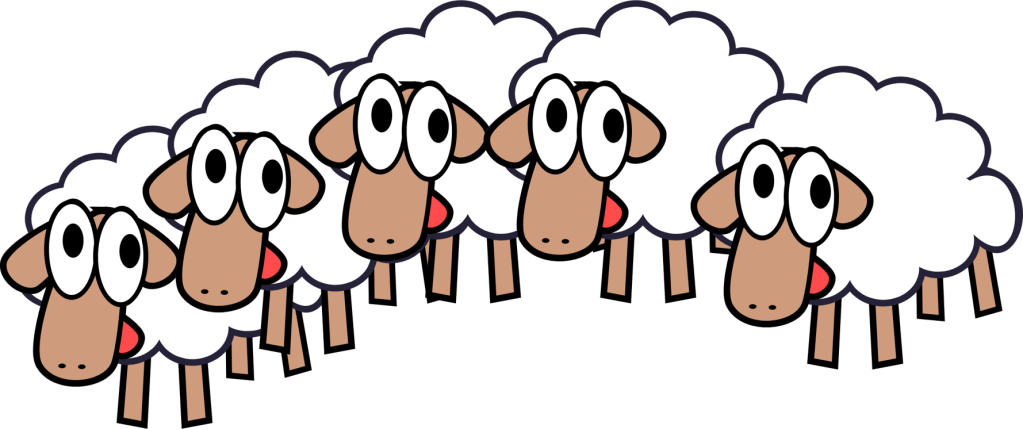
What we don’t need are more five-year-old failures and more excellent sheep. “
Thank you for reading. I always appreciate your thoughts and feedback but, if you have some to share about this article, I’m sure The Writers’ Centre would love to hear them too. If you have time, please copy and paste them over there as well to keep their conversation going.
Recently I met up with some teacher friends and, as always happens with teachers, the discussion turned to school, teaching and children. There was talk about the crowdedness and inappropriateness of many aspects of the curriculum, of resources that were ambiguous and poorly written, of time spent practising and preparing for tests, of (other) teachers who were ill-equipped to teach and not interested in professional learning.
It made me sad. It has always made me sad. Sad and frustrated with the inappropriateness of so much that happens in schools and the effect it has on diminishing our most precious resource: the ability to think, learn, innovate and create.
The fact that I am unable to do anything about this situation at times overwhelms me and I just want to curl up in a ball in the corner and cry. That I have spent almost my entire adult life swimming against the tide trying, through a variety of means, to make a positive difference through education with an effect as insignificant as a grain of salt in the ocean, makes my efforts seem futile and worthless. A waste of time and energy. I should just give up.
But, foolishly maybe, I haven’t and don’t. Here I am writing a blog about education. One more way to try; with a website on the way as well. What effect will they have? Probably very little, but at least I am doing something that is important to me; something that gives my life meaning; even if it has no real value beyond that.
I have been out of the classroom now for three years. I escaped before the introduction of new programs which I would have found philosophically and pedagogically impossible to implement. It had always been a balancing act, doing what my employer expected of me and what I believed to be best for the children and their learning. (Of course there is no saying that what I thought was better. The value of my thinking may well have been just in my head!)
Five times before I had left the classroom, only twice for reasons unrelated to dissatisfaction (the birth of children). But I could never shake off my belief that education delivery could be improved. I read widely, seeking alternative ways of making a positive difference but, although I had vowed at each departure to never return, something always drew me back.
Rather than allowing the situation to overwhelm me by accepting that there was nothing I could do; rather than throwing my hands in the air, walking away and admitting that it’s all too hard, I didn’t let go. Perhaps it was foolhardy. Maybe I should. Maybe one day I will. But not yet.
Instead I choose to focus on the good things I see happening; the parents, teachers, nannies and child care workers who strive to make a positive difference. We know we can’t change the whole world. We can’t rid it of all the injustices, inequalities, violence and other wrongdoings against humanity and the Earth. But we can make a difference in our own little corner; and my own little corner has always been my focus. If I can make a difference with something as simple as a smile or sharing a positive thought then I will do it. If I can do more than that then I will, but I will focus on what I can rather than what I can’t.
So for my little bit of positivity today, I am sharing some of what I think are great things that are happening, making a positive contribution to education and children’s lives; some things that make my heart sing and confirm my belief that if we want to, we can make a difference.
On All Our Words I recently read a report of an address made by Mischel to the team at All Our Kin.
In that address, Mischel is quoted as saying,
“When a child grows up in a high-poverty, extremely unpredictable environment – in which anything can happen, in which danger is constantly present, in which chaos is always possible – it affects him at a biological level. Those experiences turn into chronic stress, or toxic stress, and they actually change his brain. They limit the potential of the cool system to make long-term plans and be patient and work for a distant goal.”
The author of the article, Christina Nelson writes
“Fighting against the biology of disadvantage requires a sustained effort that begins at birth, or even earlier, which is why creating high quality early care and education is so important for vulnerable children.”
Mischel’s address further supports that view and congratulates the team at All our Kin for their work, saying
“By providing a sense of trust, a sense that the rewards are attainable, that promises will be kept, that life doesn’t have to be chaotic and unpredictable, you folks are providing exactly the basis for the development of the cool system, and for the regulation of the hot system. The kids who have that when they are two years old are the same kids who are successful at the marshmallow test at five.”
The praise from Mischel would not have been given lightly. I’m impressed with what I have read about All Our Kin, including this from their mission statement:
“. . . children, regardless of where they live, their racial or ethnic background, or how much money their parents earn, will begin their lives with all the advantages, tools, and experiences that we, as a society, are capable of giving them.”
The Talking is Teaching program, which was launched by Hillary Clinton as part of the Too Small to Fail initiative, in Oakland aims to reduce educational (and life) disadvantages by teaching parents the importance of talking to their children from birth.
Thanks to my friend Anne Goodwin and daughter Bec I was also alerted to an article in the New Yorker The Talking Cure which described a program in Providence that also encourages low-income parents to talk more with their children.
The author of the article, Margaret Talbot says that “The way you converse with your child is one of the most intimate aspects of parenting, shaped both by your personality and by cultural habits so deep that they can feel automatic. Changing how low-income parents interact with their children is a delicate matter”. The aim of the program is to support parents in non-threatening ways to support their children.
I have previously mentioned a recent publication by Michael Rosen entitled Good Ideas: How to Be Your Child’s (and Your Own) Best Teacher. This book provides wonderful support for parents of children of any age. In very readable, accessible language, Rosen’s book is packed full of simple, inexpensive, fun and powerful ways for parents to support their children’s learning, effectively but unobtrusively, in their everyday lives. I think this book should be supplied to all parents on the birth of their children.
These are but a few of the good things that are happening. I have focussed on community programs rather than individuals (except for Michael Rosen’s book) in this post. I know there are many more great programs, and individual teachers doing amazing work. I’d love to hear about some that you admire.
Thank you for reading. I value your feedback. Please share your thoughts about any aspect of this post.
The end of a year is often used as a time for reflection, reassessment, and redefining goals. This week at the Carrot RanchCharli Mills is talking just that: reflecting on the year that was, assessing her achievements and failures and redefining her goals for the next part of her journey. Charli admits that she didn’t achieve all she had hoped but acknowledges that those shortcomings were more opportunities for learning than failure as such. While she learned more about herself and her abilities she was able to recalculate her goals and redefine her vision.
In education, failure is recognised as integral to learning.
Willingness to
have a go
try something new
seek alternate solutions and ways of finding solutions
persist and not give up
recognise that success does not always come with a first attempt;
these are effective characteristics of learners, innovators and creative people.
Thomas Edison, after many unsuccessful attempts said,
“I have not failed. I’ve just found 10,000 ways that won’t work.”
There is no failure in a failed attempt; there is only failure in giving up.
Again, to quote from Edison,
“Many of life’s failures are people who did not realize how close they were to success when they gave up.”
C.S. Lewis is also quoted as saying,
“Failures, repeated failures, are finger posts on the road to achievement.”
He says,
“One fails forward toward success.”
What helps that ability to rise again is a sense of where we are going, of what we are aiming for and what we want to achieve. This is often referred to as a vision, and it is a vision that Charli Mills has challenged writers to include in a flash fiction piece this week: In 99 words (no more, no less) write a story that includes a vision.
Having a vision of the future and working towards that future is essential to effective teaching.
Through learning from a mentor teacher Jackie Catcher was able to refine her vision for effective teaching, which she shared on Three Teachers Talk :
“I learned that to lead students into our subject, we must make them feel valued within our community. We must work to acknowledge their strengths and show them that we are all equals when it comes to developing as readers and writers. We must praise their hard work and determination far more than their failures, and we must make ourselves available both in and outside of class to have meaningful conversations and connections. In the end, we are never too old to change our outlook and education. After all, one teacher can make the difference.”
I constantly share my own, and others’, views about and vision for education on this blog.
I have also referred to an alternative to traditional schooling that I “failed” to establish in the 1990s. The vision for that alternative was:
“A dynamic centre of learning opportunities
for children, families and communities
which focuses upon the development
of self-esteem and positive attitudes
in a nurturing environment
in which individuals are appreciated
for their uniqueness and diversity
while fostering the commonality of their human essence.”
Which brings me to my flash fiction piece for this week. In it I attempt to draw together many threads from views expressed over the year and finish with an optimism for the future.
The power of “No”
It was grey.
For as long as anyone could remember.
They moved about, comfortable in the familiar, avoiding the unknown.
Shadowy shapes beyond incited fear: a threat to all they knew?
Lives lacked definition, blending to sameness, conforming to rules.
“But why?” The tiny voice shattered the stillness.
All eyes turned. Bodies stiffened.
Whose was this unruly child?
“Shhh!” the hapless parents failed to hide their offensive produce.
“Why?”
Again! No one moved.
“Because!” was the parents’ definitive reply.
They breathed. “Because!” they confirmed in unison.
Defiantly the child pressed the dust-covered switch and flooded the world with light.
Thank you for reading. I appreciate your feedback. Please share your thoughts about any aspect of this post or flash fiction.
I wish you success as your vision takes shape in 2015.





















 Norah Colvin