As announced last week, I am delighted to introduce Gerard Alford and the first of his series of guest posts for readilearn.
Gerard is a very experienced and respected education consultant, author and education resource developer. He is passionate in promoting high-order thinking and cooperative learning through engaging and effective evidence-based teaching methods. His teaching resources inspire and support busy teachers in creating engaging pedagogy and time-saving strategies to encourage successful student outcomes.
The worth of using thinking tools is well documented; they provide a clear pathway for students to complete a given task, provide students the means to organise their research and thoughts in a systematic way, and provide teachers with a clear insight into their student’s thinking.
That said, can thinking tools also be used to facilitate deeper discussion in the Early Years? I believe so, and here’s an example in action.
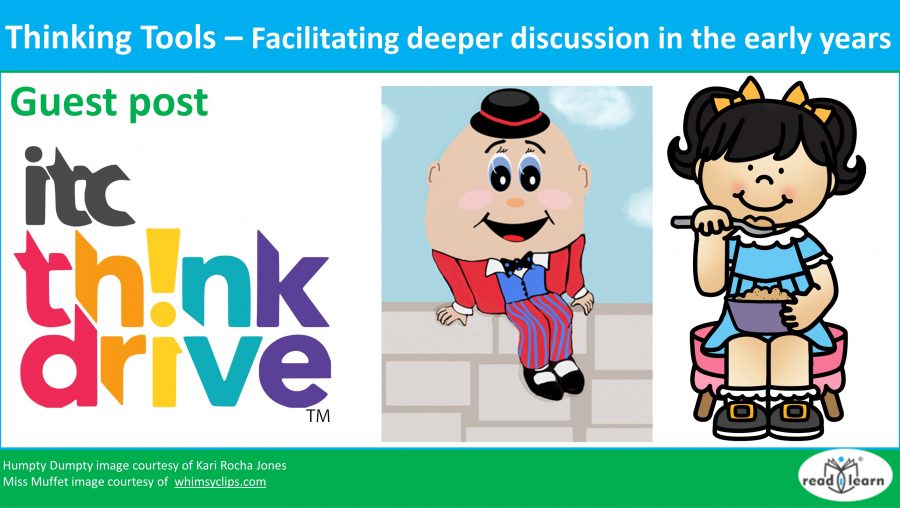
Your students have just read two texts: Humpty Dumpty and Little Miss Muffet, and you now have asked them to compare these texts.
Exactly what they compare (similarities and differences) will depend on the Year level; however, at a minimum, students will be comparing the events and the characters in the texts while also sharing their feelings and thoughts (as per ACELT1783).
As a child, I enjoyed playing with my tea sets. It was fun lining up my toys and having tea parties. I remember two tea sets from my childhood. One was a pretty little floral set made of china. The other was red and white plastic.
I remember sitting on the back steps one day when I was about three, washing my china cups and saucers. Perhaps I was getting ready for a tea party or cleaning up after one. I’m not sure. But while I was sitting there, busily at my work, Dad came out and didn’t see my pretty little cups and stood right on them, smashing them into little pieces. He was very apologetic and, surprisingly, I was very forgiving. He would tell the story many times later about how I’d looked up at him and said, “It’s okay, Dad. You didn’t mean to.” I think the adult me could learn a lot about forgiveness from the little me.
As an adult, I consider a very special treat to be a high tea with its cucumber and smoked salmon finger sandwiches, fresh baked scones with jam and cream, and a selection of petit fours. I have enjoyed a number of these over the years, usually in very special locations for very special occasions.
I remember having one with my mum and other family members to celebrate her 90th birthday at a restaurant she had enjoyed going to with her mother when she was growing up. It was definitely a special treat and an occasion to remember.
I’ve allowed some of these ‘special’ thoughts to influence my response to Charli’s prompt as I add another event to Amy and Lucy’s imaginative play. I hope you enjoy it.
The Tea Party
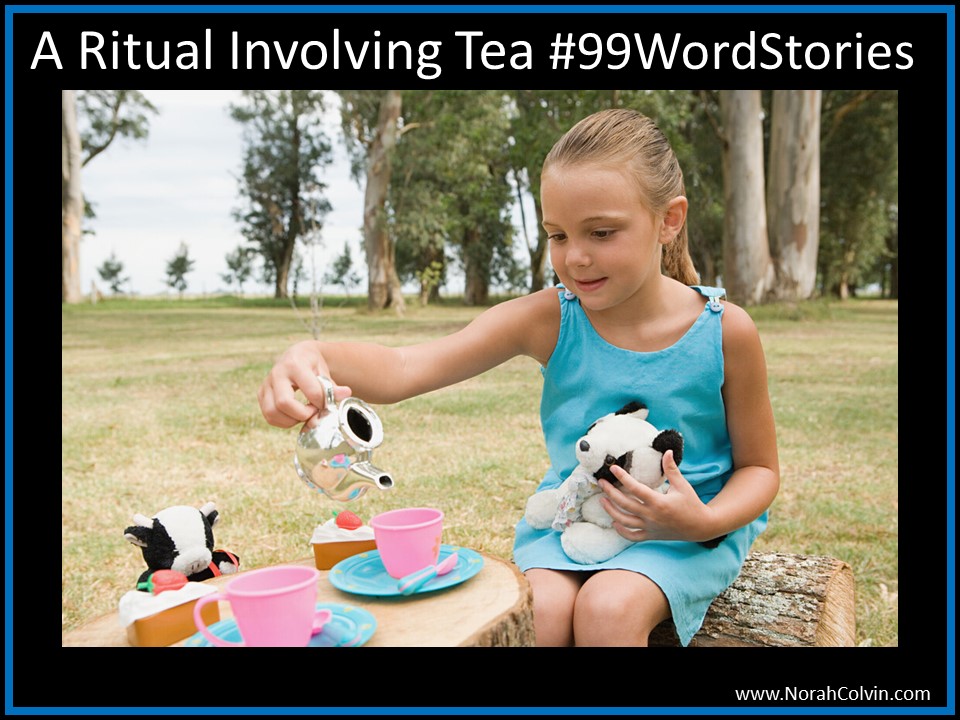
Ollie said the table looked divine. Teddy agreed, adding the fairy cakes were the prettiest and sweetest he’d ever tasted, and the tea was the perfect temperature. Amy and Lucy beamed. The tea party to welcome the happy couple home from their honeymoon was a success. Everyone was there. It was all going swimmingly, until a balloon popped. Ellie started, upsetting the teapot with her flailing trunk and whipping the cakes from their stand. Monkey screeched. Bunny watched tea puddle under the table.
“I’ve ruined the party,” wailed Ellie.
“It’s okay, Ellie,” said Lucy. “No one’s hurt. Nothing’s broken.”
Thank you for reading. I appreciate your feedback. Please share your thoughts.
Note: The collection of stories made in response to the previous prompt Broken Arm, including mine, can be read at the Carrot Ranch.
Today I am pleased to announce a new collaboration with itc thinkdrive. While we have been working in partnership since 2019, starting from next week, Gerard Alford, Director of itc thinkdrive, will contribute an occasional guest post to the readilearn blog.
While we are all aware of the importance of teaching critical and creative thinking and of providing opportunities for cooperative learning in the classroom, that teaching can sometimes be overpowered by the demands of content to be taught, tests to be administered, timetables to be followed, and ever-increasing standards to be achieved. However, help is close at hand with the wonderful resources on thinkdrive, and Gerard will be able to show you just how easy it is in his guest posts.
About Gerard Alford
Gerard is a very experienced and respected education consultant, author and education resource developer. He is passionate in promoting high-order thinking and cooperative learning through engaging and effective evidence-based teaching methods. His teaching resources inspire and support busy teachers in creating engaging pedagogy and time-saving strategies to encourage successful student outcomes. (For a more complete bio, click here.)
Needless to say, I am enormously excited that we will have the additional benefit of his expertise right here.
thinkdrive is an online resource for teachers with a focus on critical and creative thinking and cooperative learning. It is a collection of thousands of downloadable worksheets and templates that are designed to support your teaching of these important skills and save you hours of preparation time.
With its focus on cognitive verbs and ways of thinking about things, thinkdrive differs from many other resources available for teachers. The strategies and thinking tools are clearly explained with examples and video demonstrations that make it easy for you to implement or adjust to suit your own lessons. The tools can be applied to any content you are teaching and embedded in your lesson planning.
Each of the 60 cognitive verbs; for example, compare, contrast, calculate, explain, describe, is matched to appropriate thinking tools. The use of each thinking tool is explained with examples, templates or sentence starters. With more than thirty thinking tools in the kit, there are plenty to choose from; including, KWHL Charts. T-Charts, Y-Charts, Concept Maps, Flow Charts, and Bubble Maps. Most of the thinking tools are used effectively by students in small groups or pairs, though some can involve whole class thinking and discussion.
Other resources from itc publications
In addition to the online resource thinkdrive, itc publications have a range of other resources to support your teaching. You can find the full list of products here.
I’m pleased to say that I’ve never had a broken bone. I hope that continues to be true for the rest of my days. Breaks can become more frequent as we age. So far as I know, neither parent had a broken arm, though my brother did when he was five (a big boy fell on him) and my daughter did when she was eleven (an accident at gymnastics caused by a younger child). So, with no personal experience, I’ve stayed with Amy and Lucy and their imaginative play. It’s wet outside, so they’re playing indoors – no red convertible this time.
Teddy’s Broken Arm
The waiting room was crowded. As usual, Doctor Amy was running late.
Nurse Lucy looked at the list. “Teddy!” she called.
Teddy was hugging his arm, trying to stifle tears.
“What appears to be the problem?” asked Doctor Amy, looking over her glasses.
“I think my arm’s broken.”
“Nurse Lucy, we need an x-ray,” said Doctor Amy.
The x-ray agreed with Teddy. Doctor and nurse plastered his arm with plasticene and tied it in a handkerchief sling.
“Lunch time,” said Mum. “Oh, what’s wrong with Teddy?”
“He’s got a broken arm,” said Amy.
“Just a fake one,” said Lucy.
Thank you for reading. I appreciate your feedback. Please share your thoughts.
Note: The collection of stories made in response to the previous prompt Mud on the Tires, including mine, can be read at the Carrot Ranch.
Today it is my pleasure to review a beautiful new picture book The Rabbit’s Magician, written by Shae Millwood, illustrated by Andy Fackrell and published by Ford Street Publishing. This post is part of a Books on Tour promotion.
About the author Shae Millward
Shae Millward is an enthusiastic advocate for literacy. She aims to inspire through a love of books, the joy of reading and writing, and the art of storytelling. Shae enjoys writing picture books, poetry, song lyrics, inspirational quotes, short stories and more. Shae’s other books include A Boy and a Dog and Koalas Like To…
About illustrator Andy Fackrell
Andy Fackrell is one of the most awarded and recognised multi-dimensional creatives in the world. A career in advertising earned him the highest honours, including the Cannes Grand Prix in film for his work for Nike. A true creative nomad, living and working in all continents — Antarctica excepted — he is now a film maker exploring documentaries on social and environmental issues. Andy lives by the beach in Sydney. This is his second book.
About The Rabbit’s Magician
The Rabbit’s Magician is a gentle story of love, loss and comfort for 3 to 8 years olds.
The blurb
Ziggy’s beloved magician has performed an amazing disappearing trick. But just where is The Amazing Albertino? Ziggy waits. And waits some more. Has something gone wrong with the trick?
What I like about The Rabbit’s Magician
I was quite intrigued by the title of this book. We’ve all heard of the magician’s rabbit, right? But a rabbit’s magician — that was a different take. I wondered if it was to be the usual magic tale with the characters in reverse. It was not.
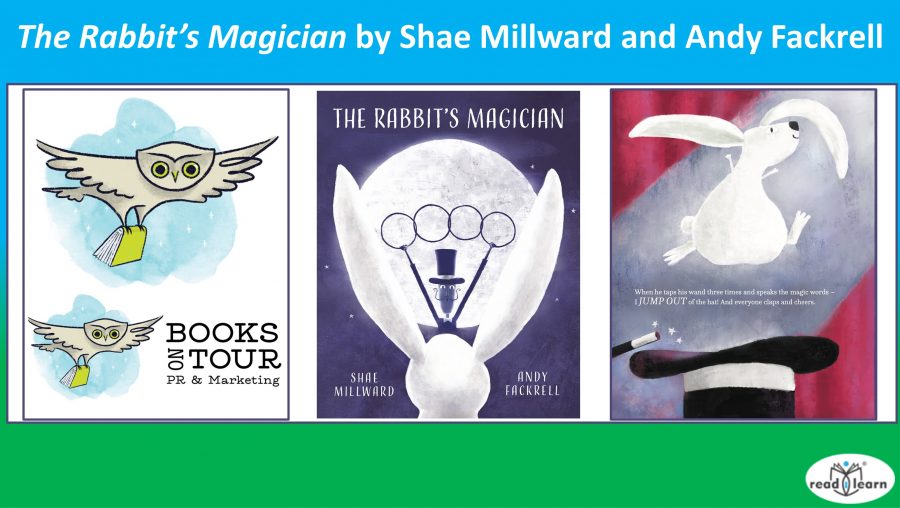
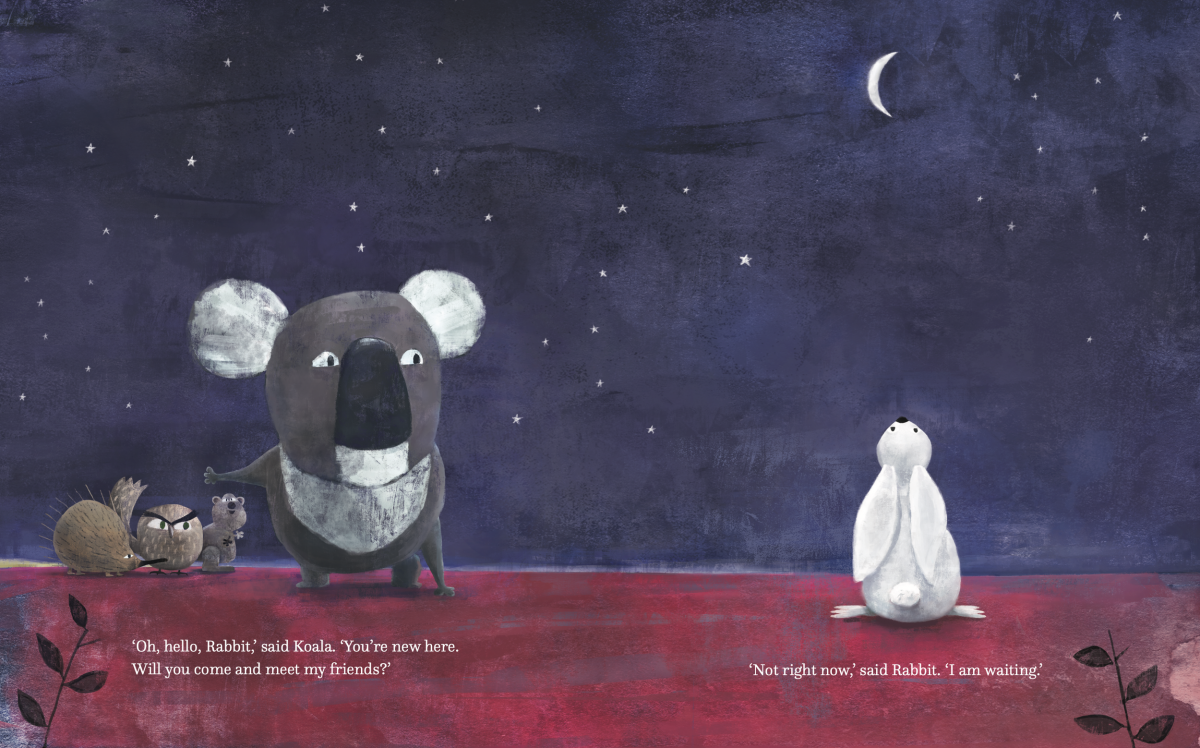
The cover shows a beautiful full moon, that looks as if it is being held up by the rabbit’s ears, and a magician holding up four rings. When we turn to the first story page, the rabbit is gazing at a crescent moon in a deep blue sky. He refuses an invitation to meet new friends because he is waiting. But waiting for what? For the full moon to appear again?
It takes another few invitations and another few phases of the moon before we find out; and that’s only because, when the moon is full in the sky, the owl asks Rabbit why he is waiting and offers to help. Rabbit accepts Owl’s offer.
I think there is a wonderful lesson in that already — if you see someone in need, ask, listen and offer to help.
Ziggy introduces himself and explains that he is the companion of an amazing magician Albertino, Alby, who can change things and make things disappear and reappear.
But now his magician has done a truly astonishing trick, something he has never done before. He has made himself disappear. Ziggy is worried that he may never reappear again.
This is where the real magic of the book begins because wise Owl knows what Ziggy and we don’t. Owl knows that the magician’s last trick was
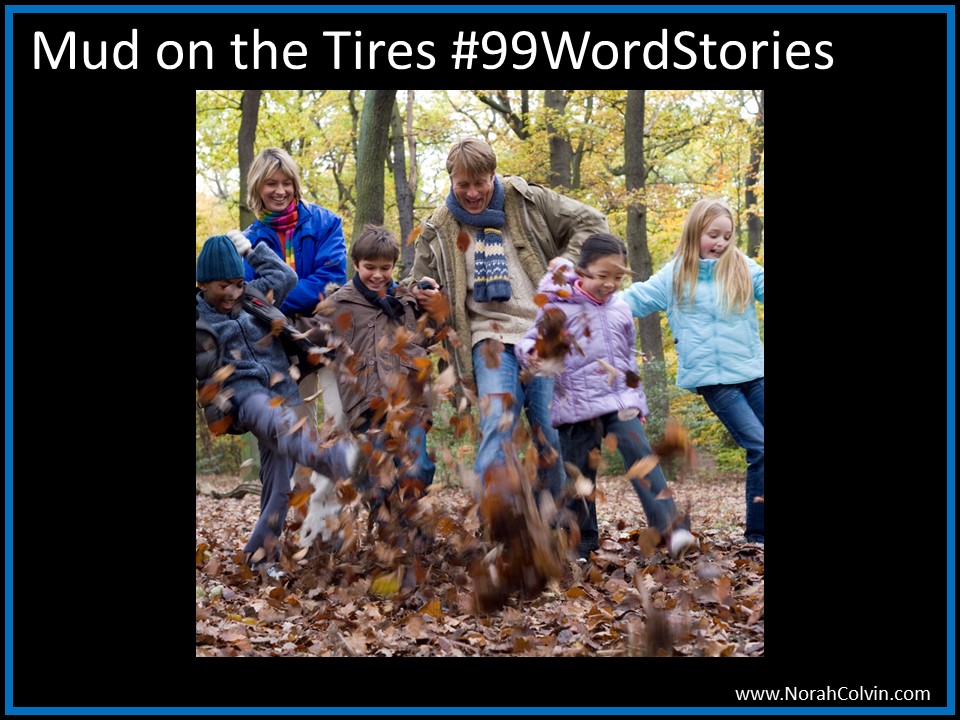
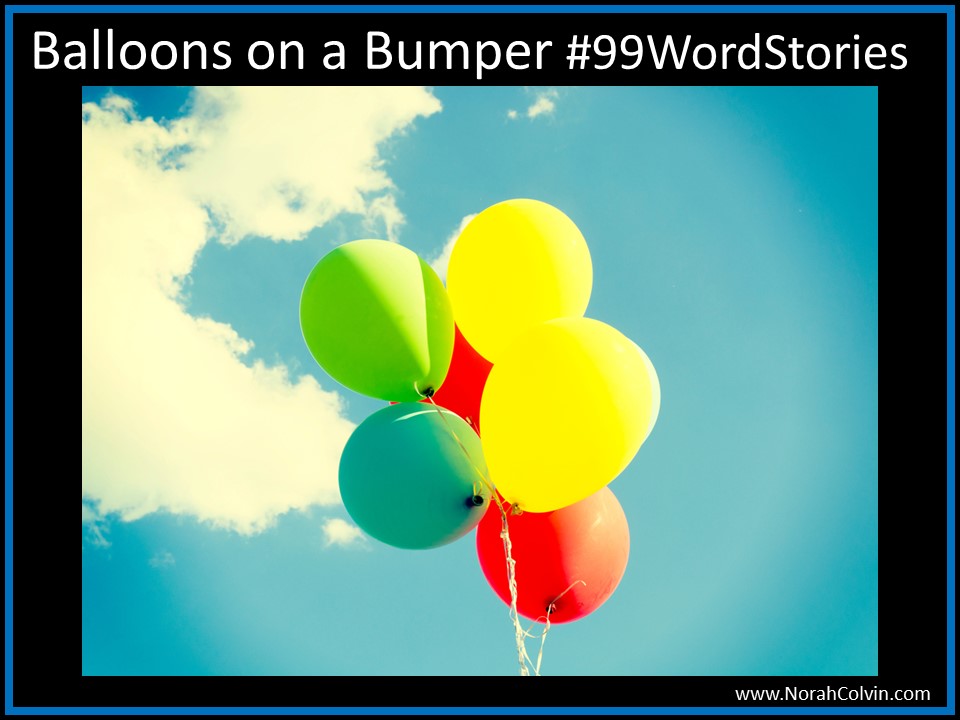
In her post, Charli says ‘I guess this seems similar to balloons on a bumper. It differs, though. Mud is real. Balloons are temporary hopes and dreams susceptible to popping. Mud can stain. Mud can wash away. Mud says, “You’ve been places, Kiddo.”’
For my response, I have continued with my red convertible story with the girls Amy and Lucy playing imaginatively in their back yard with their toys and whatever else is available. (I have included the previous two stories at the end, in case you’d like to read them together.)
In the last episode, the girls had balloons on their bumper as they travelled to celebrate the wedding of their toys Teddy and Ollie. The balloons, as Charli says, were temporary. In this third episode, they have been replaced by empty cans. But the girls and their toys, including the tyres of their red convertible, have been covered with mud. The mud does say that they have been places. It also says they have had fun, used their imaginations and been creative — three things I consider to be very important in life. I hope this mud sticks, not only for them, but for everyone.
A note about tires. In Australia tires means to grow sleepy and tyres refers to the black rubber things on the wheels of a car. Hence the change in spelling.
I hope you enjoy my story.
Mud on the Tyres
After the wedding, Teddy and Ollie scrunched into the back of the little red convertible.
As Amy and Lucy drove them away from the faraway forest, the guests cheered and threw confetti. The empty cans, now replacing balloons on the bumper, clattered across the wooden bridge and scattered gravel along the mountain trail.
At the honeymoon resort, Teddy and Ollie splashed in the pool first, but they were overexcited, and the grounds were soon a mucky muddy mess.
When Mother called, ‘Dinnertime!’, the girls were mud-spattered, from the hair on their heads to their convertible’s tyres.
‘Coming!’ they replied.
Thank you for reading. I appreciate your feedback. Please share your thoughts.
Here are the two previous episodes of this story.
The Little Red Convertible (Episode 1)
“Where to today?” asked Amy.
“Over the mountains, across the river, and through the far-away forest,” said Lucy.
“Be home in time for dinner,” said Mother.
“We will!”
The little red convertible chugged to the peak of the highest mountain where the children danced in clouds. It rolled through misty valleys and onto the plain where the children played hide-and-seek in patchwork fields. It trundled across the wooden bridge over the river that led to the forest where they fluttered with fairies and pranced with unicorns.
Rumbling bellies told them to head for home.
“Just in time,” said Mother.
Balloons on the Bumper (Episode 2)
“Where to today?” asked Amy.
“A party,” said Lucy, tying balloons to the bumper of their little red convertible.
“Whose party?”
“Teddy’s. He’s getting married.”
“I didn’t know he had a girlfriend.”
“He doesn’t. He has a unicorn-friend. Mother said I can marry anyone I want. So, Teddy can too.”
“Right. Which way?”
“Over the mountains, across the river, and through the far-away forest.”
“Be home for dinner,” said Mother.
“We will!”
The balloons sailed above the little red car. At the party, the children fluttered with fairies and pranced with unicorns as Teddy and Ollie shared their vows.
Note: The collection of stories made in response to the previous prompt Balloons on a Bumper, including mine, can be read at the Carrot Ranch.
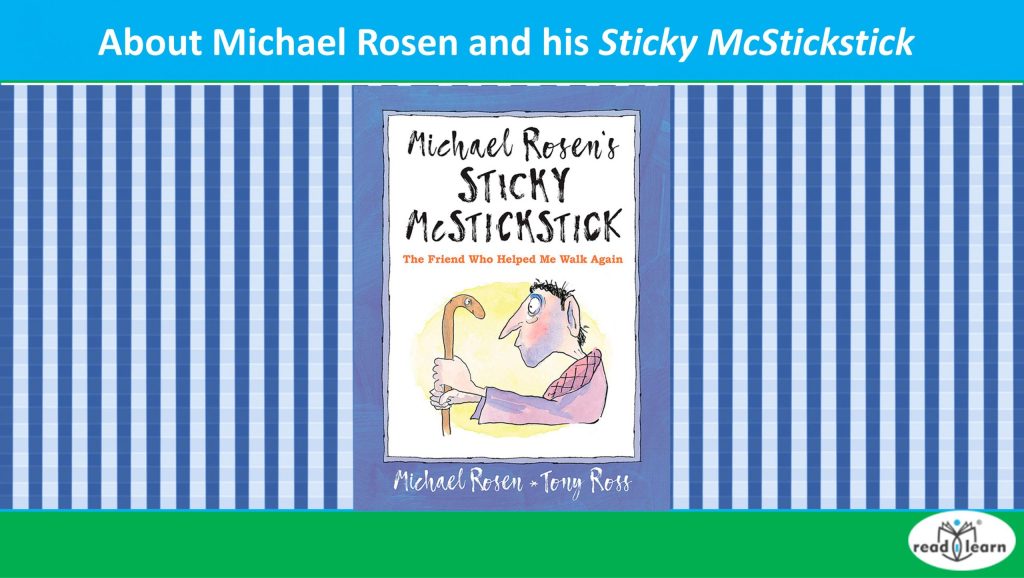
In this post, I share some information about Michael Rosen. I hope you are already aware of Michael Rosen because he is an amazing poet, author, educator and so much more.
If you know nothing else about him, you probably know his award-winning picture book Going on a Bear Hunt with its wonderful illustrations by Helen Oxenbury. This article in the Guardian that tells how he came to write it and Helen to illustrate it is quite fascinating.
Here’s a video of Michael telling Going on a Bear Hunt and some others of his stories.
The story is great fun, perfect for storytelling and a wonderful stimulus for writing. In that post, I suggest some lessons you can build around the story.
The prompt reminded me of an occasion just over twenty years ago, when my sister, niece and I attended a ‘hen’s party’ (terrible term) for my future sister in-law. My niece collected a bunch of helium-filled balloons to take home. She couldn’t squeeze them all into the car, and I drove home with one balloon sailing above us and my sister and niece both in hysterics all the way. Needless to say, they’d both had a few drinks to help the merriment. When we got home, my daughter and nephew, both early teens, decided to inhale the helium, and the hilarity began all over again.
“A party,” said Lucy, tying balloons to the bumper of their little red convertible.
“Whose party?”
“Teddy’s. He’s getting married.”
“I didn’t know he had a girlfriend.”
“He doesn’t. He has a unicorn-friend. Mother said I can marry anyone I want. So, Teddy can too.”
“Right. Which way?”
“Over the mountains, across the river, and through the far-away forest.”
“Be home for dinner,” said Mother.
“We will!”
The balloons sailed above the little red car. At the party, the children fluttered with fairies and pranced with unicorns as Teddy and Ollie shared their vows.
Thank you for reading. I appreciate your feedback. Please share your thoughts.
Note: The collection of stories made in response to the previous prompt Swimmingly, including mine, can be read at the Carrot Ranch.
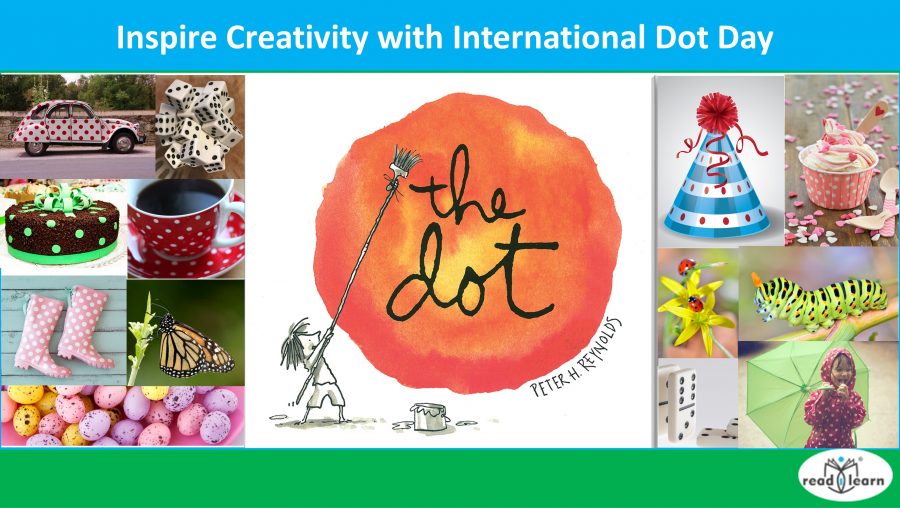
The goal of International Dot Day is to inspire people of all ages to embrace the power of personal creativity, to make their mark on the world, making it a better place.
Creativity is important to me. I love being creative. I love inspiring creativity in children, and I acknowledge that it is only through creativity that we can innovate, advance and improve our world. For this reason, I am posting a day early to ensure you all know about International Dot Day in time to celebrate. However, any day is a good day to celebrate and promote creativity.
The Dot — the book
The Dot, written and illustrated by Peter H. Reynolds and published by Walker Books in 2003, tells of an art teacher who encouraged a young artist, who didn’t believe she could, to make her mark on a piece of paper. Although the story features an art teacher, Reynolds dedicated the book to his 7th grade math teacher who, he said, ‘dared me to “make my mark”.’
Like Reynolds, I believe there is a spark of creativity in everyone and that a dot is as good a place as any to start. What I really love about this book, is the way the teacher encourages the student Vashti, who then goes on to encourage others in a similar way. The ripples of a ‘you can do it’ philosophy spread. Who know where they will reach? Hopefully everywhere.
How International Dot Day began
(from the website)
International Dot Day began when Iowa teacher Terry Shay introduced his classroom to Reynolds’ book, and noticed the original publishing date of The Dot was Sept. 15, 2003. Shay and his students decided to celebrate the book’s birthday – and, little did they know, launched what would become a worldwide celebration of creativity and courage to “make your mark.”
“The Dot, is an invitation to students to be creative, and experience a breakthrough in confidence and courage, igniting a journey of self-discovery and sharing, said Shay, a public school teacher for over two decades “Every great teacher works for those transformational moments.”
Exploring the themes of creativity, bravery and self-expression, The Dot is a story of a perceptive and caring teacher who reaches a reluctant student who thinks she can’t draw by encouraging her to be brave enough to “just make a mark and see where it takes you.” The Dot has been translated into many languages (including Portuguese, Chinese, Korean, Hebrew, Spanish and even Braille) and the animated film of The Dot (produced by Reynolds’ multimedia design and development firm FableVision Studios and co-producer Scholastic) earned the Carnegie Medal of Excellence.
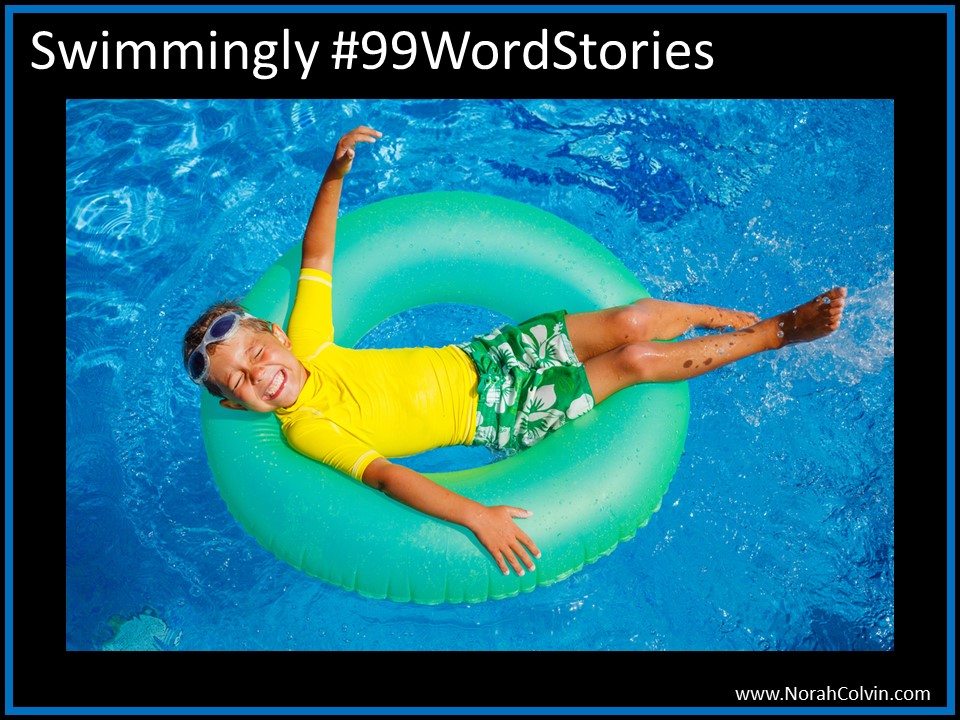
A perfect summer’s day: azure sky with not a hint of cloud, a whispering breeze to kiss away humidity, children’s laughter sparkling like glitter; it was all going swimmingly, until …
Kevin kicked furiously, and …
the tube crashed. Tina tipped heels over head, chipping Chelsea’s chin, as she smacked into the water.
Chelsea fell against Liam, who yelled, “Get off me!” as they splashed down.
The three resurfaced together, and grabbed the tube, catapulting Kevin overhead, arms and legs flailing, into the water.
“Wow!” “That’s fun!” “Do it to me!” “I’m first!”
It was all going swimmingly …
Thank you for reading. I appreciate your feedback. Please share your thoughts.
Note: The collection of stories made in response to the previous prompt the red convertible, including mine, can be read at the Carrot Ranch.





















 Norah Colvin