The latest post from readilearn explains resources for a new board game to play at Halloween.
The game is great for literacy and maths groups, to play with buddies or in family groups. It links literacy, maths and physical activity. Players collect treats and perform actions as they move
I am not a dog person. In fact, I am not a pet person at all. The only pets I ever owned were short-lived: goldfish, fighting fish, hermit crabs, and billabong bugs. I was successful at keeping caterpillars in the classroom and observing them grow, pupate, and emerge as butterflies. But they couldn’t really be classed as pets. I’ve written about this before here.
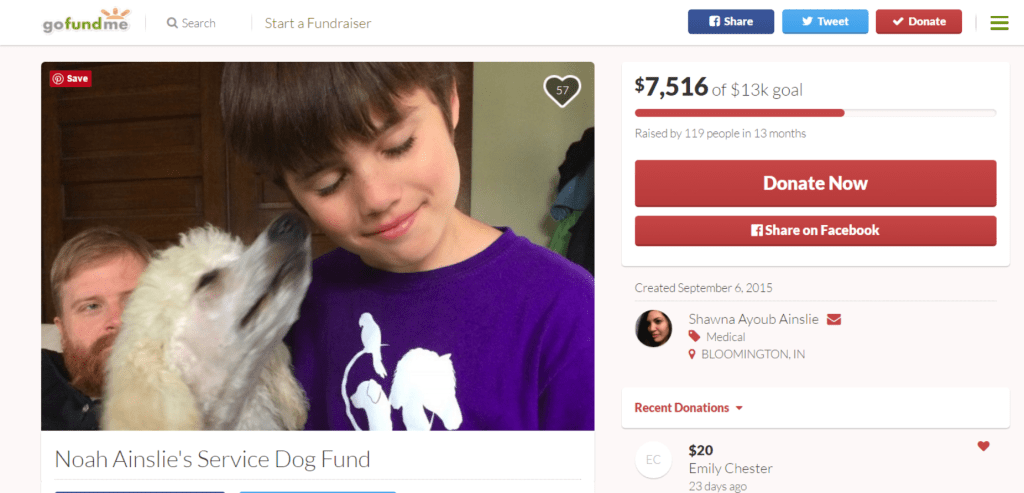
I know all the theories about pet ownership; especially for helping children develop a sense of responsibility and care for others. I know about the contribution of pets to the physical and psychological health of their owners of all ages through the companionship and unconditional love they offer. I am touched by the heart warming story of Noah Ainslie, a little boy suffering from autism, and the difference his service dog Appa has made to his life, and the lives of his family. Please help if you can.
It would not be unrealistic, with my focus on nurturing young children, to expect that I would be a pet owner. However, I’ve never been inclined to make the commitment required
My parents were both country people who moved to suburbia to raise their large family. There were never any pets. They said that dogs didn’t belong in towns. The dogs they were used to were working dogs, never pets. I guess there were enough mouths to feed without adding pets to the mix as well.
Unlike for some, lack of a pet as a child did not induce me to want one on reaching adulthood. Consequently, my children also missed out. Daughter had some mice, rats, and a guinea pig at various times; but nothing to compare to a “real” pet, like a cat or a dog. As soon as she moved into a house that allowed pets, she and partner went out and got themselves a dog.
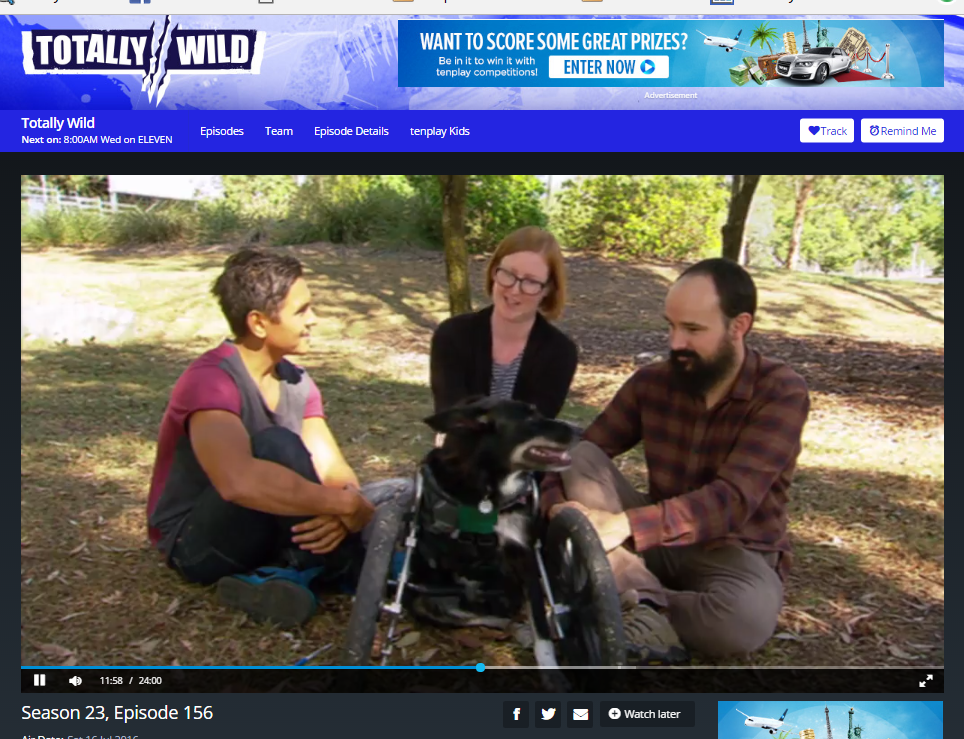
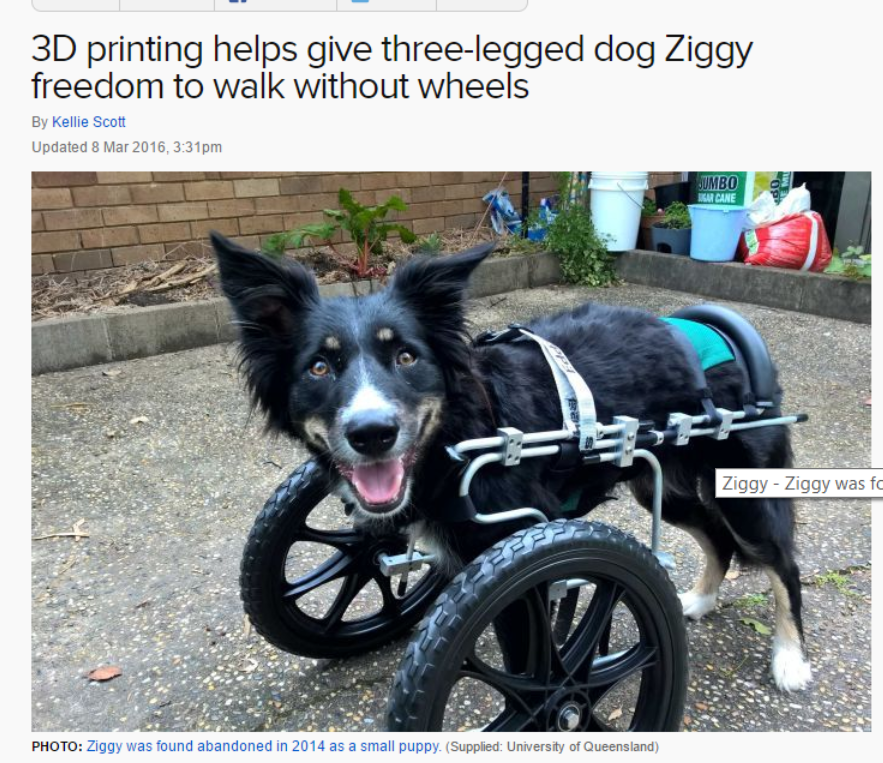
I must say, Ziggy is a gorgeous dog with a happy, friendly, easy-going nature. If I was going to have a dog, he’d be it. I’m beginning to get an inkling of the relationship between humans and their animal friends. There is definitely something very special about it. However, I’m still not interested in forming an attachment of my own.
Ziggy is a very special dog with very special owners. You can get to know the three of them in this video. (Watch from 11:.24 – 15:20.)
Unfortunately the video may not play for those residing outside Australia. Thanks to Anne Goodwin for alerting me to the fact.
Ziggy’s innovative surgery put him in the spotlight for a little while. His story was also featured on the Tripawds blog
The importance and depth of the human-pet relationship was reinforced for me this week when Charli Mills of the Carrot Ranch reported that her big brown canine friend Grenny was gone.
Charli was devastated by his unexpected passing and shared stories of his special abilities and the ways in which he added to their lives. Her post is a wonderful tribute to Grenny’s life and his contribution to theirs. Charli asked writers to share stories about big brown dogs this week.
Well, Charli knows that dogs aren’t my cup of tea. She also understands that, with no personal experience on which to draw, I feel inadequate to respond appropriately to her situation, other than offer my heartfelt sympathies. As for writing, I could come up with nothing other than nonsense which I don’t consider at all appropriate. Other writers have written beautiful brown dog stories for Charli.
Please follow the link to read Charli’s post, the lovely comments, and the beautiful stories.
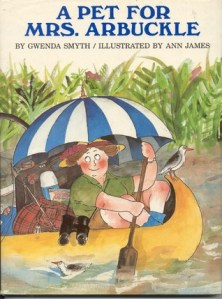
Instead of a flash, I’ll leave you with a few picture books about pets you might like to read:
Lifetimes by Bryan Mellonie is a beautiful book for explaining death to children. It’s great to read at any time to help children understand that every living thing has its own lifetime. It is also great to read when the death of a pet is imminent or occurs. Understanding that death is a part of life, helps with the grieving process.
Thank you for reading. I appreciate your feedback. Please share your thoughts.
Next Tuesday 11 October is International Day of the Girl Child. It is a day for recognising the need to empower all girls, for it “is good not only for girls, but also for families, communities and society at large”.
This post honours International Day of the Girl Child on 11 October. The day was established to “to recognize girls’ rights and the unique challenges girls face around the world.” The empowerment of girls is seen as “fundamental to breaking the intergenerational transmission of poverty, violence, exclusion and discrimination and to achieving equitable and sustainable development outcomes.”
This year theme is Girls’ Progress = Goals’ Progress: A Global Girl Data Movement.“While …recognize how girls’ progress is good not only for girls, but also for families, communities and society at large, we must also take this opportunity to consider how existing gaps in data on girls and young women, lack of systematic analysis, and limited use of existing data significantly constrain our ability to monitor and communicate the wellbeing and progress of nearly half of humanity.”
While recognising the gravity of situations faced by girls around the world, the focus of this post pales, but is significant nonetheless. Sometimes the changes we need to make start at home. Empowering our girls will enable them to empower others.
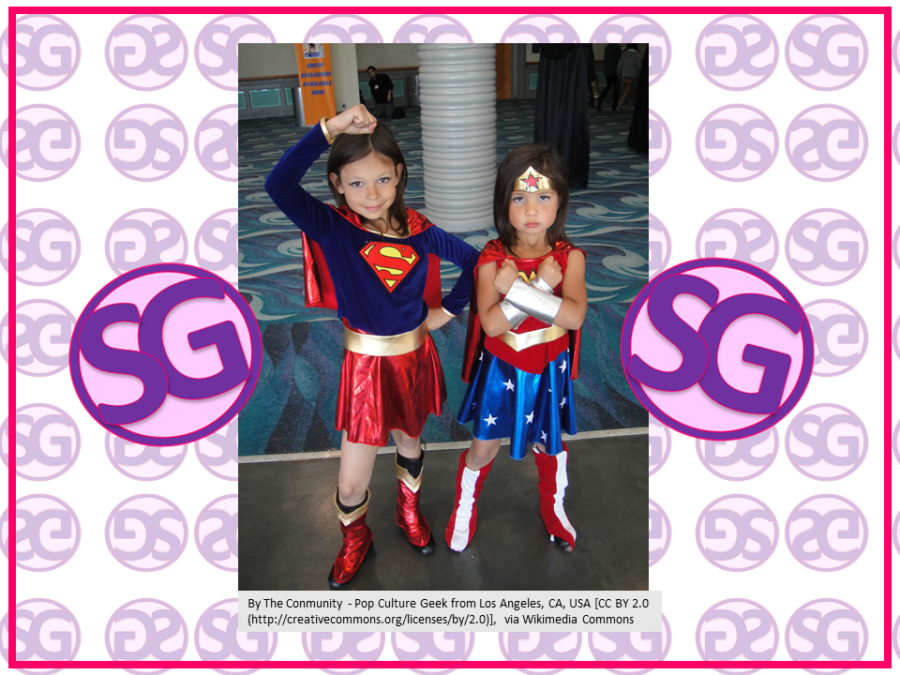
I recently listened to a TED talk Bring on the female superheroes by Christopher Bell, a media studies scholar and father to a 9-year-old daughter obsessed with Star Wars. If you have any concerns about gender stereotyping and gender equality, particularly with regards to toys and merchandising, have a listen. In less than the 16 minutes to view the video, Bell packs a powerful punch and takes a swipe at media corporations and merchandising for girls.
I am re-sharing this post in honour of Narelle Oliver who sadly passed away today.
Her legacy will live on in the hearts and minds of readers everyone. She was an awesome lady, talented writer and illustrator, and an inspiration to children, teachers, and writers everywhere.
Thank you, Narelle, for your wonderful contribution to our lives through your stories and illustrations. xx
This post is the fourth in a series celebrating picture books by Australian authors. If you missed earlier posts, please follow these links to the introduction, Mem Fox and Kim Michelle Toft.
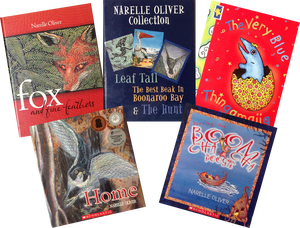
In this post I introduce you to Narelle Oliver, a Brisbane-based author and illustrator. There is much to explore on Narelle’s site, including: information about her writing process and tips for would-be picture book authors; the research involved in creating her books, many of which are about nature; and illustration techniques that involve the use of linocut printing and rubbing, and other assorted media.
Narelle conducts workshops for children and adults. She visits schools to share with children the wonder of her books and talks to them about her writing and illustrating processes. When she visited “my” school she brought along first thoughts and illustrations for, and a dummy book of, The Very Blue…
Australia is home to a great diversity of, and many unique animals. Most native Australians are not found anywhere beyond its territories. I guess that’s not surprising since it is the world largest island or smallest continent country with vast expanses of ocean between it and other continents.
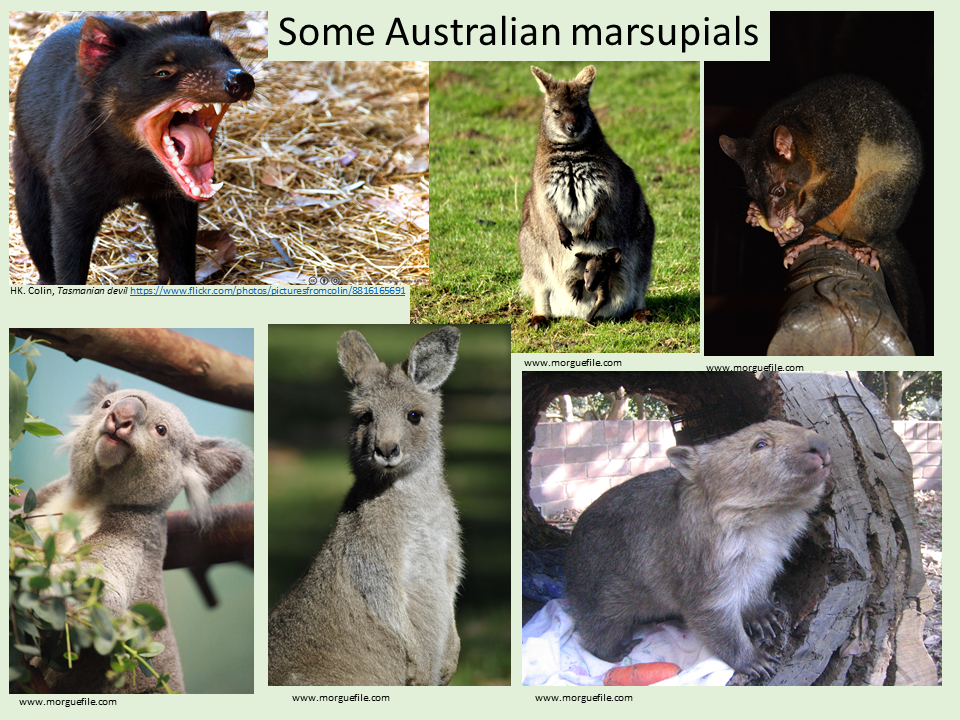
Australia is home to almost 70% of the world’s marsupials. Other marsupials are found in the Americas, mostly South America. Kangaroos, wallabies, koalas, possums, wombats, Tasmanian devils, numbats, bilbies, and quolls are among the species of marsupials found in Australia.
Marsupials are mammals that give birth to live young before they are fully developed. The young, usually referred to as joeys, continue to develop in the mother’s pouch for a number of months, suckling on their mother’s milk.
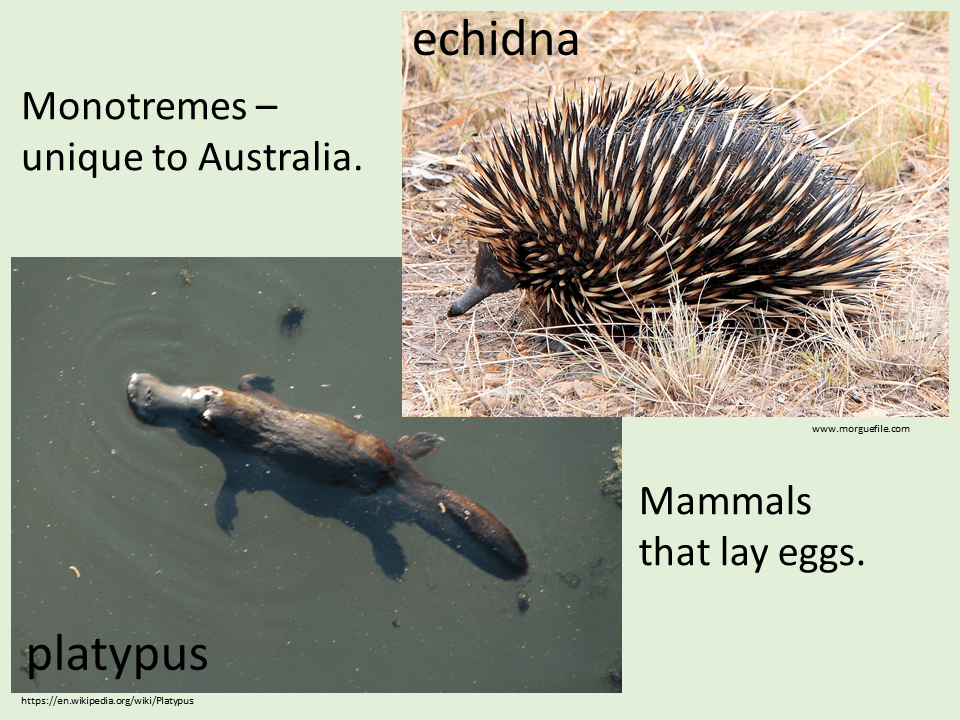
There is another group of even more unusual mammals: the monotremes. Monotremes are egg-laying mammals. The platypus and the echidna, the only existing species of monotremes, are unique to Australia.
The platypus
When Europeans first saw a platypus, they thought it was a hoax with its bill like a duck’s, tail like a beaver’s, and feet like an otter’s. It has fur like other mammals but, unlike other mammals, it lays eggs.
The platypus lives in burrows on the banks of freshwater streams and small rivers in eastern Australia, including Tasmania. It spends much of its time foraging in the muddy river beds for crayfish, worms and insect larvae.
Female platypus usually lay two eggs. When the young hatch, the mother releases milk from pores in her skin. The milk pools on her abdomen and is lapped up by the young for about three to four months. There is no special baby name for baby platypus. They are simply called ‘baby platypus’.
The male platypus, with a poisonous spur on its hind foot, is one of only a few venomous mammals.
Platypus predators include crocodiles, eagles, dingoes, and introduced animals such as foxes and feral cats.
The echidna
Echidnas, the oldest surviving mammals, live all over Australia in many different habitats. They usually live alone and are not territorial. Although it is rare to see an echidna in the wild, they are considered common. They generally hide away under vegetation, in logs, or in the burrows of other animals.
Echidnas eat termites and ants, and sometimes the larvae of other insects. They use their long snouts to forage in leaf litter, rotting logs, or ant mounds in search of food. Their long tongues are covered in sticky saliva for catching prey.
Echidnas are covered with spines along the head, back and tail. The spines are sharp and used for defence against predators.
Female echidnas usually lay one egg at a time. When the young, called a “puggle”, hatches, it makes its way to the mother’s pouch area to suckle milk. When the puggle starts to develop spines, at about 50 days, it is removed from the pouch. The mother continues to suckle it until it is about six to seven months old, at which time she deposits it at the entrance to the burrow, then walks away and abandons it.
Predators include goannas, Tasmanian devils, dingoes, eagles, and introduced animals such as foxes and feral cats. When threatened an echidna may run away or curl up in a ball.
Although all have spines, echidnas are not related to either hedgehogs or porcupines.
Here is a great article about these amazing echidnas.
If you are looking for books about Australian animals, check out the Steve Parish Storybook Collection by Rebecca Johnson, featured in last month’s Author Spotlight, which includes stories about both monotremes, many marsupials, and other fabulous creatures.
I was prompted to think about the diversity and uniqueness of these Australian animals, especially the echidna, by this week’s flash fiction challenge set by Charli Mills at Carrot Ranch Communications. She challenged writers to In 99 words (no more, no less) write a prickly story. I thought there was no better opportunity to share with you some of our amazing creatures, particularly since just last week I was lucky enough to see an echidna in the wild for the very first time.
The uniqueness and diversity of Australian animals reflects our own individual uniqueness and the diversity among us. We have much to learn about accepting difference, appreciating diversity, and acknowledging the unique characteristics each individual contributes to the enrichment of our collective humanity. Together we stand. Divided we fall.
Here is my response. I hope you enjoy it.
Stronger together
She bristled, warning platypus to stop. He didn’t.
“Feeling a little prickly, are we?”
Kookaburra, oblivious, laughed at the “joke”.
She smarted. Couldn’t he see the hurt in his words? Like a spur in her side, that last barb, really stung. Mocking difference pushed them apart.
The bush quietened. Not a breath of wind. Not a leaf’s rustle. Not a bird’s chirrup. Were all waiting for the victor to be decided?
Suddenly, out of the undergrowth, rushed a devil, hungry for blood.
Platypus turned to echidna. She contemplated leaving him. But stayed. Spur and spines together: a powerful defence.
Author’s note: Tasmanian devils have been known to eat echidnas, spines and all!
Thank you for reading. I appreciate your feedback. Please share your thoughts.
On the readilearn blog this week there are 20 quick suggestions for teaching and learning about space in an early childhood classroom, as well as a bookmark that can be printed and given as a gift to a special teacher.
Since its inauguration in 1999, World Space Week has been celebrated each year from 4 to 10 October. Its purpose is to celebrate the “contributions of space science and technology to the betterment of the human condition”. The dates were chosen to commemorate the launch of Sputnik 1 on 4 October 1957 and the Outer Space Treaty signed on 10 October 1967.
This year’s theme is “Remote Sensing: Enabling Our Future” which focuses on the contribution of observations from space to our knowledge of the world, including our ability to
monitor changes in the environment, and
understand and predict weather patterns,
which in turn assists planning for agriculture and helps to prepare for weather events.
World Space Week has a free downloadable Teacher Activity Guide for classes from K – 12. While many of the activities are more suited to older students, there are some that can be adapted for the early grades.
There are no particular requirements for participation. You choose how to involve yourself and your students. Or, better still, introduce the topic to the children and see where their questions and suggestions lead. Contemplating the skies and what lies beyond has excited imaginations since the beginning of human time. Why not give your children the opportunity to wonder, imagine, and create?
If you have neither the flexibility nor the time to explore “space’ in depth, here are a few suggestions for incorporating learning about space in your busy program:
Cover a large display board or wall with dark blue paper. (Each child could paint a piece of A3 paper to contribute to the background.) Add the children’s wonderings, questions, ideas, suggestions, pictures, and writing to the display.
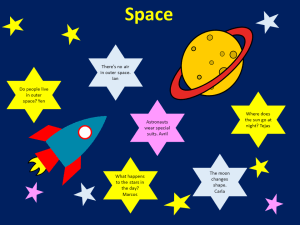
Ask children what they wonder about space, and record their wonderings. Many of their wonderings will match those of philosophers and scientists throughout history; for example, “Yen wonders if people live in outer space. Jan wonders what Earth looks like from space. Margot wonders how long it would take to get to the sun.” This is not a time for answers. It is a time for questions. If children are writers, you could supply them with (star-shaped) sticky notes on which to write their wonderings, one per note. Display the wonderings.
Record what children want to know about space. This is also a time for questions, and not for answers. There will be time for answers later. It is important for children to know that their questions are both valid and valued; for example, “Marcos wants to know what happens to the stars during the day. Tejas wants to know where the sun goes at night.”
Record what children already know, or think they know, about space, space exploration,
This week at the Carrot Ranch, Charli Mills is talking about the effect of changing a lens on how things are viewed. She says,
“No matter what lens we apply, there is something to be seen in each of us that is worthy.
Perhaps if we focus differently, we might actually achieve peace.”
This is true too of children. Sadly, I think too often children are seen for what they are not yet, rather than appreciated for what they are. Childhood is all too fleeting, and with the current focus on assessment and teaching-to-the-test in many educational systems, it is becoming almost non-existent. Recess and free-play times are being eroded to cram in more cramming time.
I recently read an article in the Washington Post that told of children in a US school having to walk laps during a 20-minute recess. The supposed intention was to get the children active. However, most children would be naturally active if allowed the freedom to run and play. The benefits of free-play activities for health, well-being, and social development would be far greater than that of walking laps.
This practice contrasts with one described in an article in the Sydney Morning Herald. Children in Finland have fifteen minutes of mandatory outdoor play every hour, whatever the weather. “Fresh air, nature and regular physical activity breaks are considered engines of learning.”
Each of these practices recognises the importance of activity, but each has a different way of providing for it, and only one is effective. I wonder why those with the power to make positive changes in education, fail to see the damage being done by didactic and test-driven practices that rob children of any love for or joy in learning. It seems to matter little what lens is used, they are unable to focus clearly on what matters most.
Towards the end of the talk, beginning at 12:45, Nancy says,
“The difference between understanding concepts and reciting facts is very important for us to understand right now, because it captures the essence of what is happening in education today. There is a gross misunderstanding of what education is that has swept across the country, and the unfortunate belief is that you can direct teach, and you can measure and you can quantify learning; but the truth is, it is only the most superficial and the most mechanical aspects of learning that can be reduced to numbers. Unfortunately, this mistaken idea about the nature of education has pushed down to our youngest children. “
She says that when we “drill and grill” kids, we not only lose the power of the learning experience, we lose all the amazing capacities that children bring to us in education:
initiative
creativity
the ability to define and solve their own problems
originality of thought
invention of new ideas
perseverance
cooperation.
She says that when we take those capacities out, we take away the love of and joy in learning, not only from the children but from teachers too.
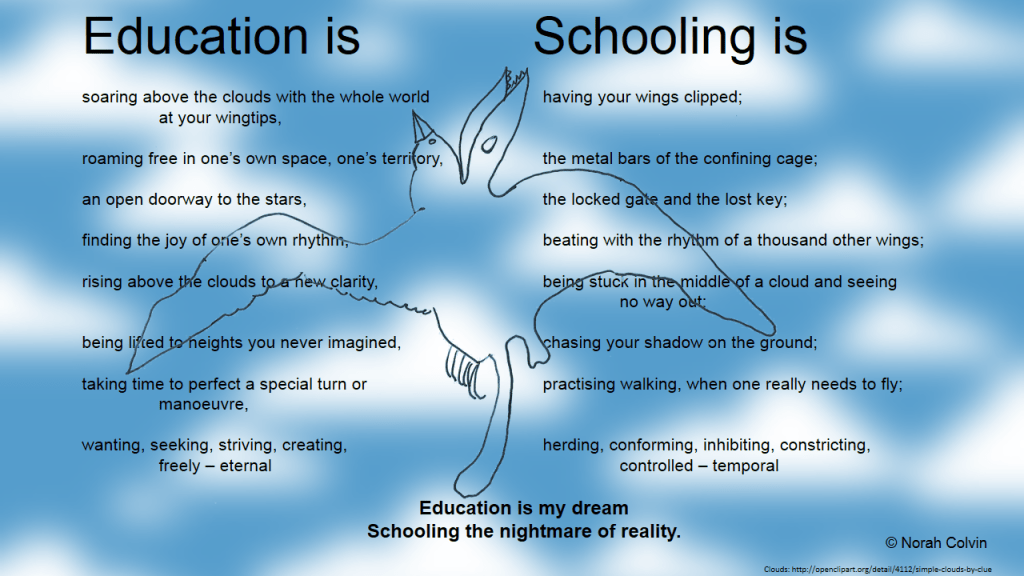
These are themes that are familiar to regular readers of my blog, and the most influential when I decided to leave the classroom. More than thirty years ago I wrote a poem to describe the differences between what often is, and what could be.
Unfortunately, I couldn’t find my rose-coloured glasses.
What you see
They saw him for what he wasn’t and what he lacked, not for what he was and what he could be. Their ill-fitting garments failed to clothe, and their unpalatable diet failed to nourish. If only they’d zoomed in upon his potential. Instead the wide-angled lens showed a panorama of disadvantage: an excuse for failure to fulfil his needs or enable his possibilities. A lens in proper focus may have seen a burning curiosity, a rich imagination, a wisdom older than time, and a heart in harmony with the universe. Instead they considered the negatives not worthy of development.
Thank you for reading. I appreciate your feedback. Please share your thoughts.
Reading and following procedures is a part of everyday life. We need to follow a procedure to make a cake, take medicine, repair a bicycle, treat head lice, assemble a DIY bookcase, or install an app on a digital device. The list in inexhaustible.
Sometimes procedures are presented as text, sometimes as illustrations or diagrams, and sometimes as a combination of both. They work best when each step of the sequence is accurately described and illustrated.
However, not all procedural texts are created equal. Sometimes the language may be inappropriate and unclear. Sometimes steps are omitted or sequenced incorrectly. Sometimes diagrams have little resemblance to what is required and confuse, rather than clarify, the process.
Trying to figure out what to do can cause a great deal of frustration in such circumstances. The more practised we are with following procedures, the more adept we are at interpreting inadequate instructions to achieve a good outcome.
It is never too soon for children to learn to read and follow procedures. The inclusion of procedural texts in a classroom literacy program has many benefits.
Following a procedure provides a context and purpose for reading. It requires children to interpret instructions through a combination of text and visual representation. It generally implies that children are doing or making something, which engages their interest and encourages participation. It develops an essential real-life skill that is transferrable to a range of situations. The sense of achievement in successfully completing a project is both affirming and empowering and often requires no other feedback.
Procedural texts can be easily incorporated into a class reading program as an independent or group reading activity. An assistant to support, encourage and oversee can be invaluable.
Features of procedural texts
The reading of a procedural texts differs from reading fiction or non-fiction texts.
The title, and sometimes a short description, tells what will be done or made.
There is generally a list of requirements.
The body of the procedure is written as a sequential series of commands.
The verb, telling the action to be performed, occurs at the beginning of the sentence.
The sentence is directed to the reader, and means, “You do this.”
Each sentence is generally short with one action to be performed in each step.
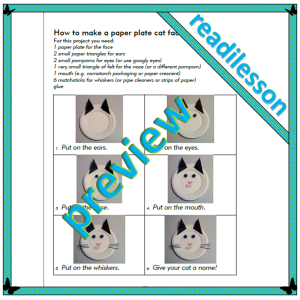
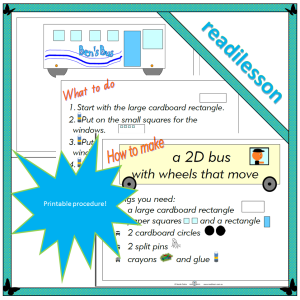
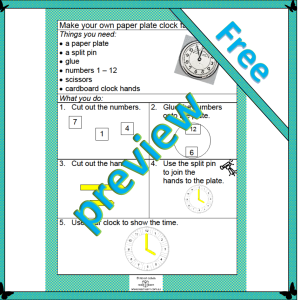
There is a range of readilearn resources to involve children in reading and following procedural texts. Many of the procedures are provided in different formats for use with the whole class or with small groups or by individuals. Some are supported by additional resources, and How to make a paper plate cat face is presented with two levels of text.
I hope you and your children enjoy using these resources. They were always enjoyed in my own classroom, and have been the most popular resources in my Teachers Pay Teachers store.
Please contact me if you have any questions. I welcome your feedback, especially suggestions for improvements to existing resources and ideas for new ones.
Remember, if you haven’t yet subscribed, an introductory discount of 20% is available to all who subscribe this year. Just use the coupon code welcome2 at the checkout to receive your discount.
I’ll see you next week. In the meantime, enjoy the weekend.
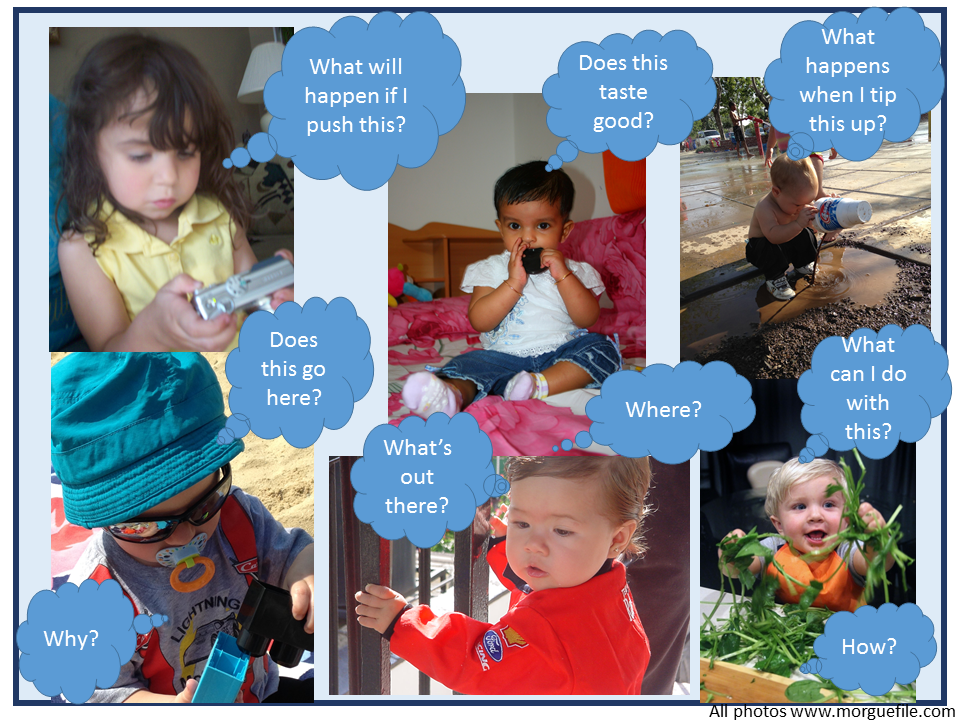
It is no secret that I love having time with young children. Their development constantly amazes me. They are curious learners on a quest to find out as much as they can about the world and how it works. They are scientific researchers making observations, forming hypotheses, and drawing conclusions; always with a plan for the next step if the results aren’t what was expected.
How many times do they need to release a spoon to be confident that it will always be pulled towards the floor? How early do they laugh when something doesn’t perform as expected; for example, when a balloon floats up instead of falling down?
Many of a young child’s explorations seek answers to questions they ask of themselves; questions that may never be verbalised.
After they have investigated their immediate environment, and their language begins to develop, they start to look at the wider world, and begin to ask questions about how things work and why things happen.
Here are a couple my granddaughter asked me recently:
“Norah, you know about gravity? Why do clouds stay up in the air? Why don’t they fall down?”
“If babies grow into adults, and adults give birth to babies. Which came first the baby or the mother?”
The determination and persistence of young children is also almost limitless. Watch them learning to roll, or to sit, or to stand. It is never achieved on the first attempt, but that doesn’t stop them. They don’t give up. They try and try again until they do it. The look of satisfaction on their faces is priceless. No stickers are required. Sometimes, when the result differs from expectation, the look is of surprise. But even then they are quickly deciding what to do next.
Without formal instruction of any kind, in their first few years, children perform amazing feats. Without the imposition of test requirements or standardised assessment, children are driven to learn. Intrinsic rewards, accompanied by the encouragement of significant others, for example, parents, are sufficient. Children are driven by a “yet” mindset and a belief that there is no such thing as “can’t”. This ensures they continue to practice until they succeed. Immediately they succeed, they set themselves another challenge. That is, unless they are taught otherwise.
When they are nurtured in an environment that is encouraging and supportive, with a balance of comfort and challenge, and well-timed feedback, children will thrive physically, emotionally, and mentally. They will learn through their observations and interactions with people and objects. Each question answered will stimulate the next.
These are just a few of the remarkable achievements made by children before setting foot inside any formal education establishment. They learn to
interact
roll over
sit up
crawl
clap hands
stand
walk
place things inside, and take things out of, other objects
feed oneself
talk
run
undo and do up buttons
push buttons (of all sorts)
open doors
play games
…
Given an encouraging, supportive environment with caring adults who respond to their needs, surround them with language, love them, and model behaviour, children learn amazing things.
Everything she had ever done was preparation for this moment. All eyes were on her. The audience’s expectation was palpable, bolstering her determination. She pulled herself up to full height and looked around, smiling. The audience waited. She checked the positioning of her feet, and her balance. She held up one hand, signifying that an attempt was imminent. She put one foot forward; then raised the other hand as she brought her back foot alongside the first. She paused, poised, momentarily. Immediately cameras clicked and cheers erupted. After two more steps, she launched, triumphant, into her father’s waiting arms.
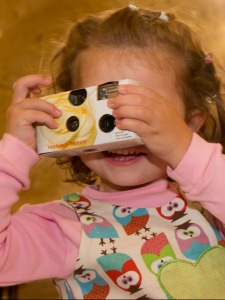
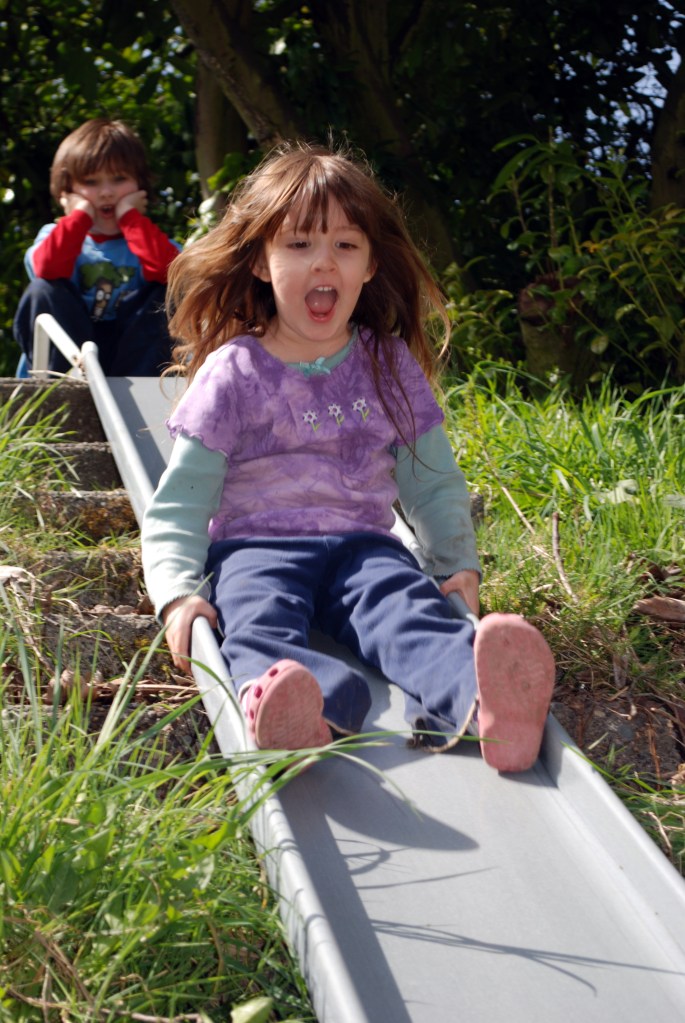
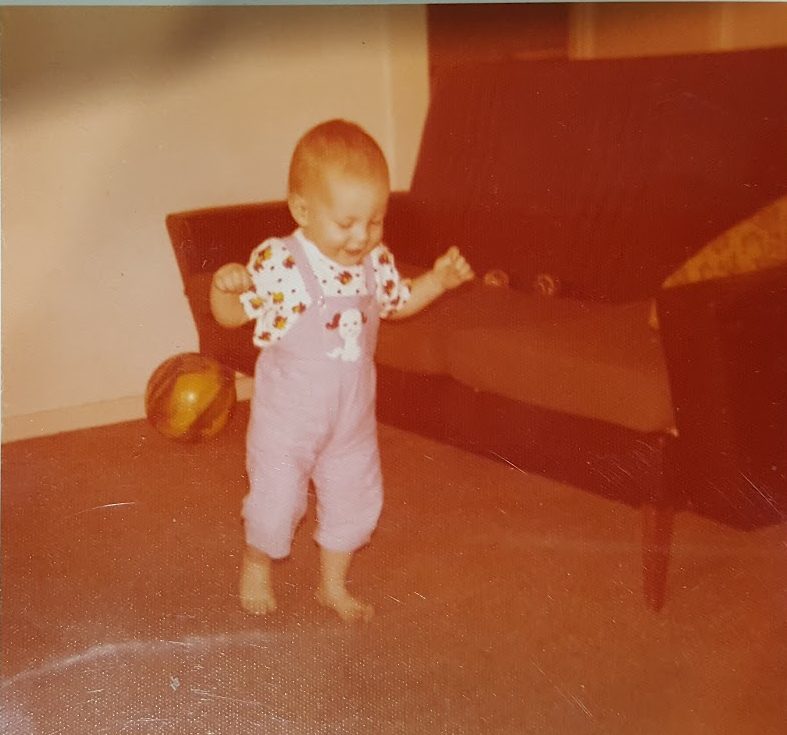
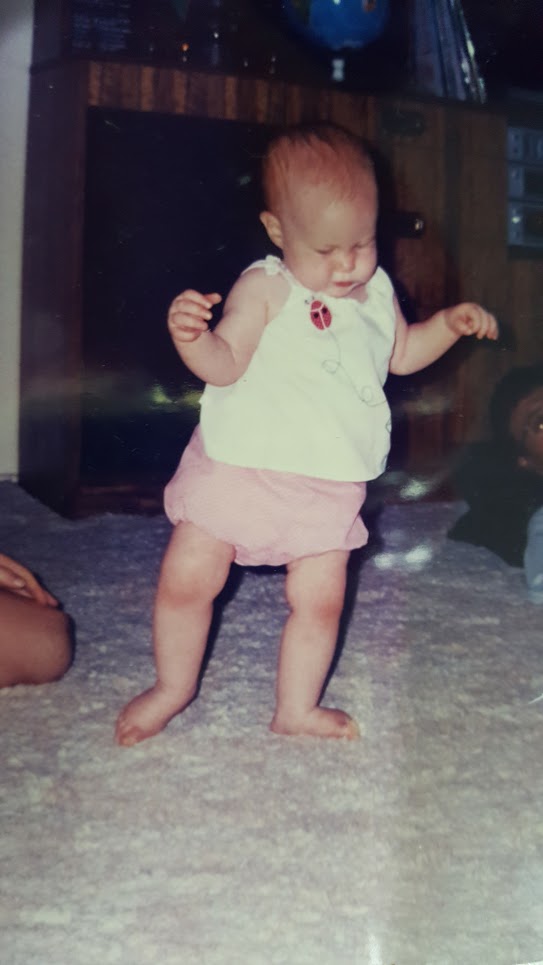
Here are photos of my two little (now big) ones. While not of their first steps, these photos were taken within the first month each of them walked.
Hi, welcome to the readilearn blog and the first in our Author Spotlight series.
Spring is here and summer is on its way in Australia. The excitement of new life is everywhere as flowers bloom, birds sing, and insects abound. The excitement flows into the classroom as children observe and record the life stages of the amazing minibeasts that inhabit our world.
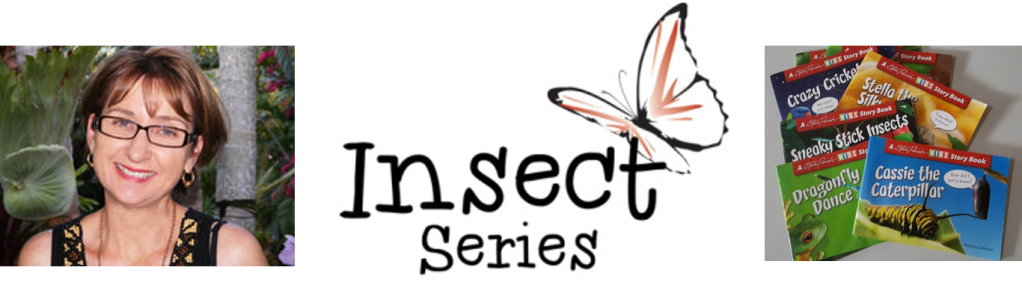
There is no better time than spring to introduce you to Brisbane author Rebecca Johnson and her Insect Series which was awarded the 2014 Whitley Certificate of Commendation for Best Educational Series.
Rebecca Johnson: award-winning author and primary school science teacher
Rebecca’s Insect Series of ten books focuses on metamorphosis, survival, adaptations, properties of natural materials and the usefulness of insects through fiction stories. The stories are accompanied by stunning close-up photos of insects of all kinds.
The books, which won the 2014 Whitley Award for Best Educational Series, have strong listed links to the Australian Curriculum for many year levels. They are a great resource for teaching and learning about insects. The fiction stories that accompany the facts make the learning even more fun. Two free blackline masters support the use of each book. The blackline masters can be accessed on the Blake Education Website.
While the books feature Australian insects and have links to the Australian curriculum, they are loved by children all over the world. I am happy to introduce you to Rebecca and her lovely series of books.
Welcome to readilearn, Rebecca. We are looking forward to getting to know you a little better.
Thanks for inviting me!
When did you know you wanted to be a writer?
When I was reading a lot of picture books to my very young children and could see how much they loved them.
Where do you write? Do you like to be by yourself in the quiet, or do you like to write in a noisy space?
I do most of my ‘writing’ in my head. I think about my stories for ages and pitch them verbally to victims until I am sure I have it all sorted in my head, then I sit to write in my lovely, quiet study overlooking my garden. I encourage children to tell their stories out loud before they write too, because, in my opinion, it is almost impossible to write a good story if you can’t tell one.
What do you use to write – pencil and paper or computer?
Head first. VERY few drafts, then I type it into the computer. I can type a 7000 word novel in a week that is publisher-ready, but I have thought about it and pitched it and sounded it out in my head for weeks beforehand. I hate sitting down all day, and I hate re-doing things over and over even more, so I do heaps of my drafting mentally whilst I do other (fun) stuff like gardening, then by the time I sit down to write, it’s like typing out a movie I know really well. People give you more honest feedback too, when you tell them a story. They feel less nervous about letting you know how they really feel about it. Try it some time.
When is the best time for you to write?
I do my best work from 5am when the house is really quiet. I’m always too tired at night (I still teach three days a week) for anything too creative.
When and where do you get your ideas?
From my life’s experiences as a mother, teacher, child and my own children. I think you have to write about what you know and love.
What gave you the idea for this series about insects?
I am a science teacher and I love insects, and I just couldn’t find the books I needed to succinctly and factually tell kids about the life-cycles and characteristics of insects in a fun way, so I wrote some.
What do you like best about the series?
Kids love them because they are funny and a bit silly, but they are still full of facts and information. I think they remember things better if it is presented in more appealing and humorous way.
What can you tell us about the photographs that illustrate the books?
My sister (Narinda Sandry) took most of them and it was hilarious. We didn’t want to harm any of the insects, so we had to put some, like the mealworms, in the fridge for a while to slow them down to get the shots. I will always smile as I recall the day we sat around a cow pat in a paddock trying to photograph dung beetles before they re-dug themselves in! The old farmer that had let us into the paddock stood to the side scratching his head in disbelief.
How did your feel when you wrote these stories?
I was really pleased when they came out because the photos are just gorgeous, and they were very well received by schools and parents. Winning the Whitley awards was really lovely recognition too.
How do you hope readers will feel?
Hopefully empowered with more information and knowledge, and perhaps inspired to look more closely at the wonderful world of insects and an appreciation of the benefits they bring.
How would you like teachers to present your books to children?
I’d love them to make them part of their science lesson, and even team them with some real insects (like mealworms) to make it all so much more engaging. There are two free blackline masters for each one too, that are designed to be able to be used independently by children in reading groups etc. There are heaps of facts inside the covers, and a glossary of terms, so plenty to learn in each one.
Are there any messages you would like them to discuss?
The main thing is that insects are so important and not just a good excuse to whack something!
Do you have any advice for teachers in their role as writing guides?
As I said earlier….talk before writing as much as you can. It is amazing how hard kids find it to describe something verbally and yet we ask them to do it in the written form all the time with disappointing results.
Do you have any advice for children as writers?
Tell, tell, tell, and don’t be too hard on yourself if it takes a long time to get it right. It took me five years to get my first book published.
What is your favourite picture book? What do you like about it?
I have so many favourites, but Bob Graham’s Greetings from Sandy Beach always makes me laugh out loud, and humour is really important to me in a book.
Who is your favourite children’s author? What do you like about his or her work?
The Lion the Witch and the Wardrobe (CS Lewis). He made me see a movie in my head. I could picture every scene, decades before there was a movie. I remember thinking that one day, I wanted to make a reader feel like that.
Thank you Rebecca Johnson for sharing these insights about your Insect Series and your writing process. We wish you success.
Thank you, and thanks for having me!
To find out more about Rebecca and her award winning books visit her website at rebeccajohnson.com.au. You can find out about and purchase her Insect Series and other books on her website.
This interview and information about Rebecca is available as a printable resource in a new subcategory in readilearnliteracy resources: Author Spotlight. The information may be displayed in your classroom or included in a class book about authors and illustrators.






















 Norah Colvin