This week on the readilearn blog I am talking to June Perkins about her wonderful collection of poems for children Magic Fish Dreaming. With the beautiful illustrations by Helene Magisson, this collection is a delight for the ears, the eyes, and the spirit. Read about June’s inspiration for the poems, and use them as inspiration for poems of your own, or use them to inspire poetry writing in your students.
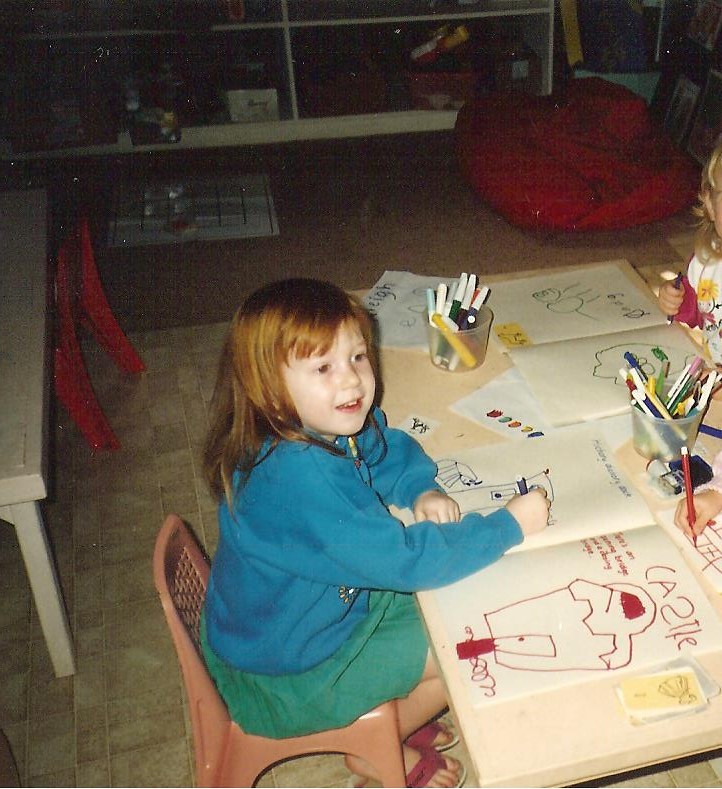
I have always loved working with beginning writers, rejoicing with them, and sharing their excitement, as they make meaningful marks on paper for the first time.
Their stories may be just a few writing-like squiggles, one word, one sentence, or one event in length; but the stories in their heads are much more, with elaborate settings, characters and events. Their ability to create stories, for a long time outstrips their ability to express them in written words.
It is the role of the teacher to acknowledge the effort and, armed with an understanding of the writing process, knowledge of how writing develops, and awareness of each writer’s learning journey and needs, support the learning.
As soon as they can, many of these beginning writers add the words “The end” to their stories. It gives them a sense of accomplishment, of completion, of a job finished with nothing more to be done.
But don’t all writers enjoy that sense of accomplishment, of completion, of a job finished?
However, the reality is that there is usually much more to be done: revisions and rewrites, edits and proofreads, and feedback from readers to consider. The end of the story is only the beginning of the publishing process.
It is the process of writing that children must also learn. They need to know that not every piece must carry the perfection required of publication. Unrealistic expectations can quickly demolish a child’s willingness to have a go. Appropriate and timely feedback and encouragement is important to the development of beginning writers.
Providing them with real audiences for their writing provides a purpose and incentive to engage in the process of revision, rewriting, editing and proofreading. Of course, the publication expectations of beginning writers are not as rigorous as for older or professional writers.
There are many ways of providing young children with readers; including:
class books of stories and poems (not unlike the flash fiction compilations of our stories)
books made for siblings or children in earlier grades
letters written to parents, grandparents, children at other schools
blogging, now widely accepted and implemented
journal writing
If all drafts of writing are kept in a folder or portfolio, a favourite can be chosen for improvement and publication. I wrote about this in a previous post: Writing to order. Conferences between the teacher and individual writers are important when choosing a piece and deciding on preparations required for publication.
The initial conference would be about the content; specifically what the writer wanted to convey, the intended audience, and how the writer wanted the audience to feel.
When the writer was happy with the message, usually after revisions, edits, and possible rewrites, discussions would focus on choice of words and sentence structures.
The final conference would target surface features such as spelling and punctuation.
No red pen is ever used by the teacher to mark a child’s work. All changes are made by the child in pencil. The purpose of conferencing is to help children develop independence in their own writing process. The number of conferences and revisions required would be tailored to an individual writer’s development.
In order to respond to what has been achieved, it is necessary to understand the individual’s development, and to ascertain whether this piece of writing is reflective of that. Consideration must be given to all aspects of development displayed in the work; for example:
is the message clear?
is the piece complete?
what words are spelled correctly?
what language structures are incorporated?
does it sounds bookish?
does it have elements of figurative or poetic language?
There is always something new to celebrate in each piece of writing.
In the end, what is important is to encourage children to write, to wonder, and imagine. The process for young writers is not much different from that of all writers, and their egos are just as tender. We want their engagement with writing to have happy endings.
The end of my story, I hope, implies a new beginning; and a better one than that of the original I penned. (I’ll let you know at the conclusion.)
Pretty Princess
Once upon a time there was a princess, pretty in pink and smothered in cottonwool. In constant preparation for the life arranged for her, there were few opportunities to think outside her royal expectations and obligations: Stand straight. Point your toes. Smile sweetly; and on, and on.
But think she did: Why does the moon shine? What makes the rain fall? How does the grass grow? Why can’t I: play outside? straighten my hair? eat with my fingers? go to school with other kids?
One day she said, “That’s it. I’m going.”
And she did. The end.
…
In the original the parents said she’d only leave over their dead bodies. She said that could be arranged!
“And she did. The end.”
Thank you for reading. I appreciate your feedback. Please share your thoughts.
In this post I suggest ways of helping children develop friendship skills, and describe some readilearn resources for celebrating friendship.
Developing a welcoming, happy, supportive classroom environment, a place where children want to be, is essential for learners of all ages, but especially so in early childhood. These classrooms are the first that children experience and influence lifelong attitudes to school and learning. It is important to establish strong foundations with positive attitudes, respect, and friendship.
Making friends doesn’t come easily to everyone. Simply being put with a whole bunch of other children of similar ages doesn’t ensure friendships will be established, or that children will be accepting of, and respectful to, others.
Strategies for helping children develop effective social skills need to be interwoven throughout the curriculum. Respect, kindness, and empathy need to be modelled and taught. It is especially important for children who have had limited experience mixing with others, or for those who respond to others in inappropriate or unkind ways.
Some useful strategies include:
Develop a vocabulary of words used to describe feelings. Words
Did you ever get up to mischief when you were a child? I believe I did. Or so I was told.
Mischief includes exploring, checking things out to see how they work, and generally doing stuff that inconveniences parents. Being a kid, in other words; and isn’t it a child’s main purpose in life: to inconvenience parents? Just kidding, but sometimes it can seem like that. Especially when parents are in a hurry or have other things to do and a child has other ideas in mind.
Although it may seem naughty, wilful, or defiant; young children really just want to find out about the world.
Sometimes they investigate things: what will happen if I turn this knob, open this door, push this button; how does this taste or smell; how does this feel?
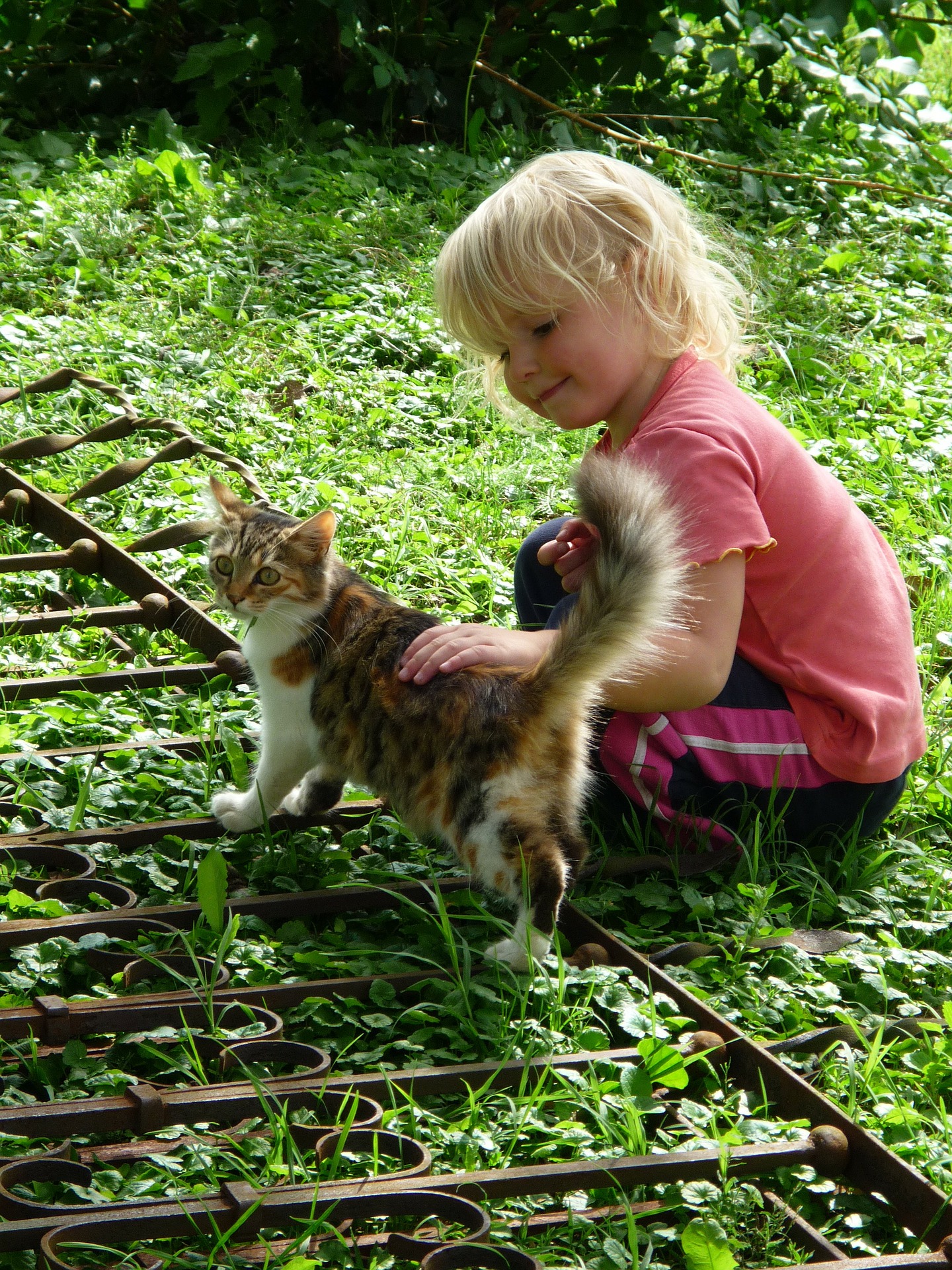
Other times they are finding out about reactions: what will the cat do if I pull its tail; what will the fish do if I tip it out?
Human reactions and relationships are also an area of intense study: how will Mum react if I take her keys; what will Dad do if I push this button; what will sister do if I take her toy?
Allowing children to explore, investigate, and experiment, while ensuring they, and no others, are in no serious physical danger, encourages their curiosity, their understanding of the world, and their innate drive to learn.
While it can be annoying to have a child repeatedly adjust the volume of the sound system, for example, it may be better to ignore it and allow the child to discover the effect of the action. Usually once a phenomenon has been explored and understood, it will no longer fascinate, and the child will move on to something else.
Unless there is a reaction from the parent. Any reaction may encourage repetition, not so much for additional learning from the action itself, but for the interaction with the parent.
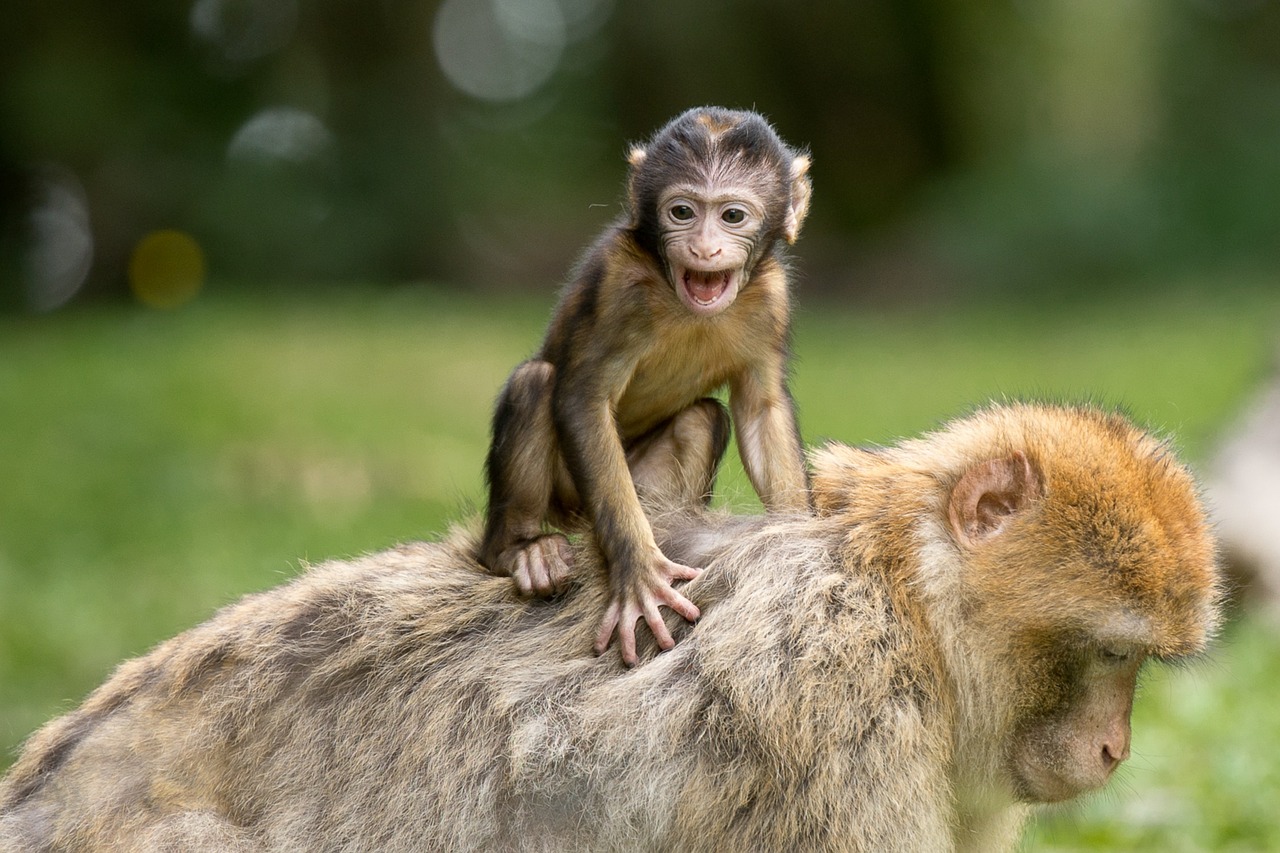
The phrase “You little monkey” is sometimes uttered when a child is engaged in some of this mischievous behaviour. It generally recognizes the harmlessness of the situation and acknowledges that the child is exploring or playing, often with the purpose of gaining attention or engaging a parent in a game.
The classic picture book Caps for Sale by Esphyr Slobodkina is a story about mischievous monkeys. A peddler carries the caps he has for sale, one on top of the other, on top of his own cap on his head. When he takes a nap under a tree, a troop of monkeys take all the caps, except his own, and refuse to give them back. Instead of following his instructions, they copy him. When, in frustration, the peddler throws his cap on the ground, the monkeys do the same and he is able to retrieve his caps and continue on his way.
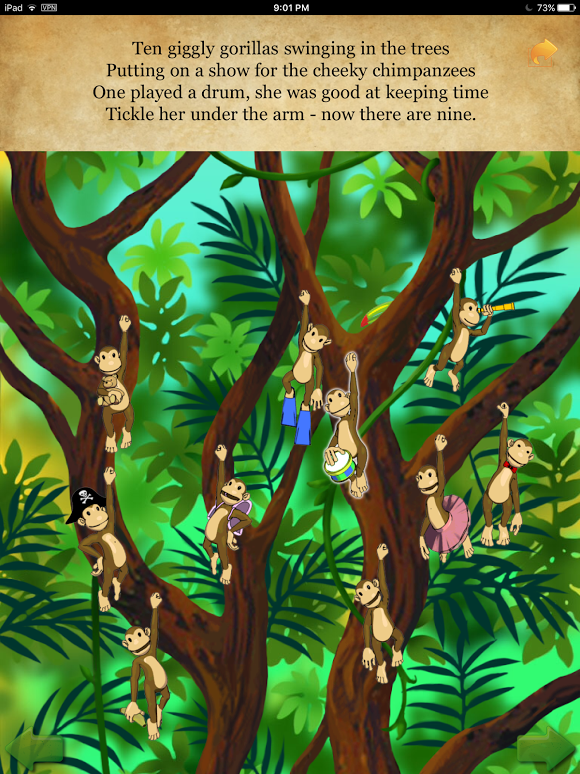
One of the first picture book apps I bought for my grandchildren was Ten Giggly Gorillasby Graham Nunn. It’s a cute counting back story that ends happily when the last little gorilla falls and is reunited with all her friends. It’s a wonderful first app for little ones with an easy swipe action to select each gorilla, and a great story to read for beginner readers. (Apologies – gorillas aren’t monkeys, but I like the app!)
This is my response. I haven’t quite got the flying monkey as a device or phrase, but I hope you like it anyway.
Monkey mischief
A no-show nanny, insistent emails, and bills to pay: the verandah seems the best solution. He can ride his trike or play with toys; with the iPad backup if necessary.
It’ll be fine, won’t take long.
Then
Incident #1: Laptop flat
Easy: Power cord
#2: Cord short, stretched high
Solution: Be watchful – won’t take long
#3: Trike stuck, wails
Extricate it
#4: Again!
Ignore attention-seeking, almost done
#5: Demands iPad monkeys
“Soon!”
#6: Snatches credit card, laughs, runs, daring
“You little monkey!”
#7 Monkey trips. Card flies, disappears between boards.
Wails.
“It’s okay, Mummy.”
Grimaces: It’ll be fine
Thank you for reading. I appreciate your feedback. Please share your thoughts.
Giving young children a simple structure or a repetitive pattern to start from gets them thinking about words, how they sound, what they mean, the number of syllables and letters. All the while they are having fun, playing with words and sounds, and learning about language.
Five easy poems to write with children are:
Acrostic poems
Sound poems
Haiku
“I love” poems, and
Shape poems
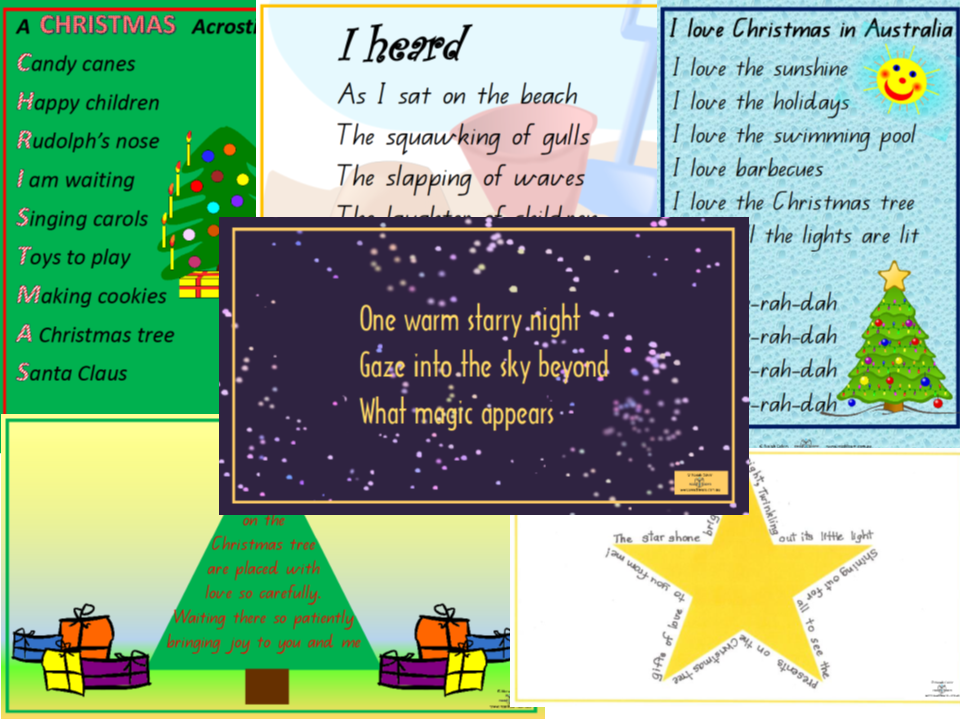
Acrostic poems are one of the easiest. They don’t need to rhyme or follow a set rhythmic pattern.
A Halloweensie is a not-very-long (100 words or less) story for children.
I’ve been getting plenty of practice writing short stories in response to the flash fiction challenges set by Charli Mills at the Carrot Ranch; and, as my stories often feature children, I thought I’d give Susanna’s challenge a go.
Rules of the contest are:
Write a 100 word Halloween story appropriate for children (title not included in the 100 words, children here defined as 12 and under), using the words spider, ghost, and moon. Your story can be scary, funny or anything in between, poetry or prose, but it will only count for the contest if it includes those 3 words and is 100 words (you can go under, but not over!)
Stories must be submitted before Monday October 31st by 11:59 PM EDT.
There are some very generous prizes for contest winners.
I am submitting mine a little earlier in case some of you don’t know about the contest and would like to join in. There’s still time. There’s also plenty of great Halloweensies to read on Susanna’s post if you have time for some fun reading!
Sorting is a very important skill. We sort things every day without even thinking about it. We sort items in cutlery drawers, sort and arrange dishes in the dishwasher, even our socks and undies. While we might not physically sort them, while we are walking down the street we might sort familiar from the unfamiliar, friends from strangers, and safe from unsafe.
From a very young age, children learn to sort. They can spend a lot of time organising things that go together. By the time they arrive at school most children are able to sort objects according to their properties; such as shape, colour, texture, smell, and size. This prepares them for use of a dichotomous key in identifying natural and manufactured objects.
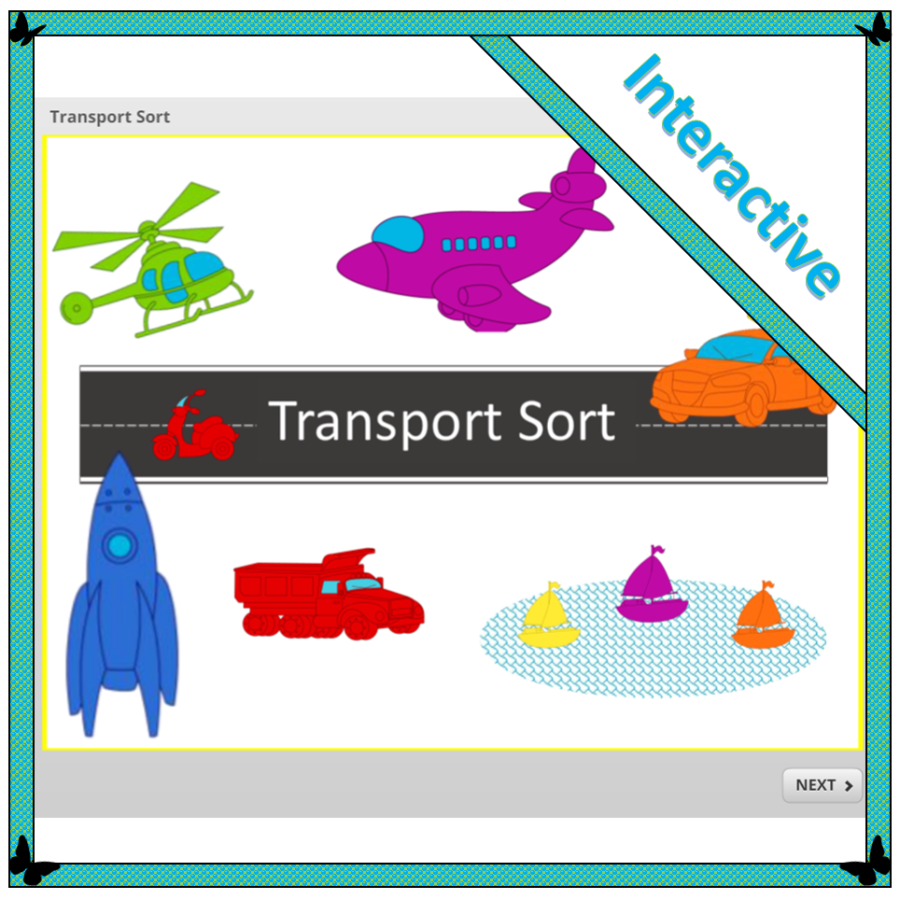
The interactive resource Transport Sort helps children develop sort
This week at the Carrot RanchCharli Mills expresses her admiration for the raptors that “wheel on currents of air high above the La Verkin Overlook” near her new home in Utah. She marvels in their flight and challenges writers to let their imaginations take wing and soar.
Narelle Oliver’s beautiful picture book Home, which I wrote about in this post, celebrates one of these Australian raptors, the peregrine falcon. The book is based on a true story of a pair of peregrine falcons that nested at the top of a 27-storey building in Brisbane city. The birds, named Frodo and Frieda, fascinated a city and, for a while, had their own reality show “Frodocam”.
As often occurs, my thoughts head off in a different direction when thinking of Charli’s prompt. Rather than the beauty and magnificence of these amazing birds, it was the word “prey” that grabbed me and wouldn’t let go. It pummelled me into submission, like a bully that seeks out the vulnerable when targeting prey.
It is probably a good thing that these dates don’t align, as there is no time that is not a good time to eradicate bullying.
I have previously written about bullying in posts and flash fiction stories, especially those concerning Marnie, about whom I wrote several stories, collected here. Stories about bullying specifically include these:
In this post, I shared information about a rap version of “True Colours” with additional original anti-bullying content written by 12-year-oldMattyB to support his younger sister who is excluded and bullied because of her “symptoms”. Here is the song. Check back to the post for more information.
In this post, I suggested that children who tease, torment and bully are often themselves victims of similar behaviour. They may feel powerless and lack control in their own lives. They are possibly lowest in the pecking order at home, and targeting someone more vulnerable provides an opportunity to find a sense of power; for a while at least.
One of the most effective ways of reducing the incidence of bullying is through the development of social-emotional skills; including helping children develop
self-esteem
confidence
resilience
friendship skills and
empathy;
in an environment in which they feel welcome, valued, and supported.
We need to model the behaviour we want children to develop, provide them with alternatives to inappropriate behaviour, and teach them how to respond when the behaviour of others upsets them.
It is also important to teach children to recognise bullying and to seek help if they see it occurring. Observing and doing nothing is a way of condoning the behaviour, and the bullying may escalate if an audience gathers. Ignoring bullying in a way also condones it. It is important to take action to prevent or stop it.
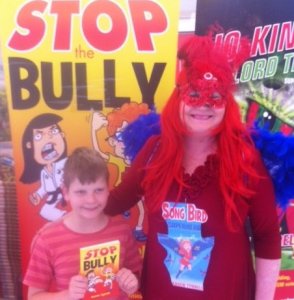
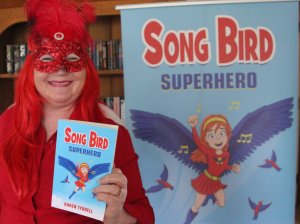
Karen Tyrrell, “an award winning Brisbane resilience author who empowers you and your children to live strong”, has written books for both adults and children about bullying. Having been on the receiving end of bullying herself, Karen understands what it is like to be targeted.
Karen’s books STOP the Bully, for 9 to 12-year-olds and Song Bird for children of 7+ years, both explore issues related to bullying.
Karen told me that “The little boy in the photo read STOP the Bully 6 months earlier after my first book shop visit. Then found me again 6 months later to say thank you when Song Bird came out.”
If you are looking for resources to initiate the discussion about bullying, Karen’s are a good place to start. You may also like to access the free teacher resources and free kids activities Karen has available on her website.
With apologies to the magnificent birds, I offer my response about a child in need of understanding, and of learning friendship skills such as getting along, caring for others, and empathy.
Prey time
Children chattered like birdsong – not a ruffled feather in sight. If only all playtimes were as peaceful. Sudden realisation. She scanned the children. Anxiety stirred.
“Has anyone seen Zane?”
Thomas pointed to a distant figure flitting and swooping, arms outstretched.
“Zane!”
She couldn’t leave him there. Could she?
“I’ll get him, Miss.”
As Thomas approached, Zane screeched and rushed towards him. Thomas fled, missed his footing, and fell. Zane, still screeching, pounced, pinning him down.
“Zane! Let him go!”
“I’m a raptor. He’s my prey.”
Thomas cried. “I’m not playing.”
If he was, it would be more fun.
Thank you for reading. I appreciate your feedback. Please share your thoughts.
The author in the spotlight this month is the wonderful Lauri Fortino, author of The Peddler’s Bed, illustrated by Bong Redila, published by Ripple Grove Press.
Please pop over to the readilearn blog to read all about Lauri’s writing process and her delightful picture book.
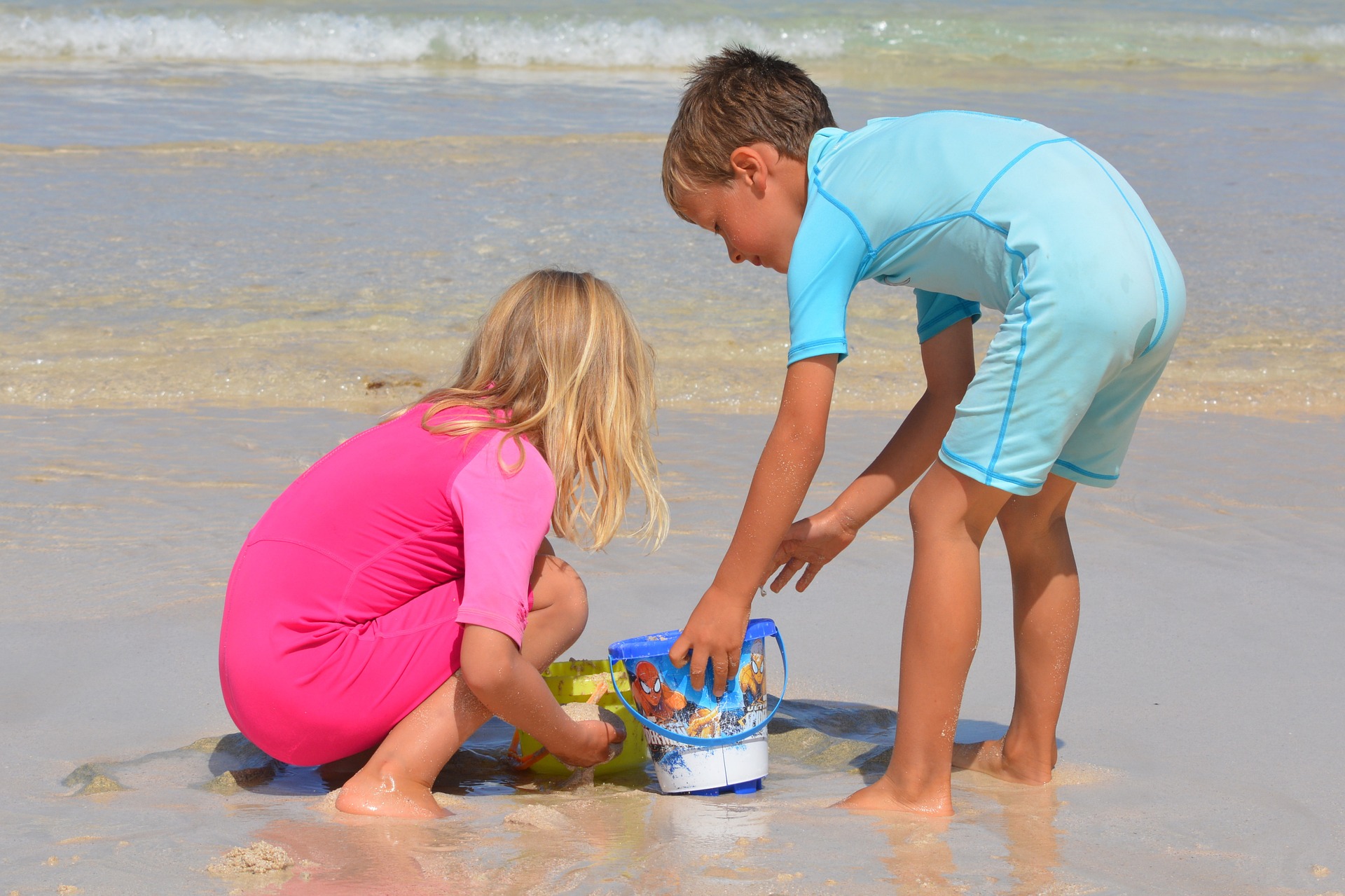
I grew up near the beach (but sadly not the one pictured) and my siblings and I would spend many long hours playing on the cliffs, climbing the trees, and splashing in the water. Sometimes we’d even lie on the sand and sunbake. Most of us are paying for it now as our fair skin, even with sunscreen, or without as it was then, was not designed for the hot Queensland sun.
One of the nicest things to do was to stand at the water’s edge as the waves receded, and feel the sand withdraw from beneath my feet, leaving me standing in hollows. If I stood there through successive comings and goings of waves, I could end up standing in quite large holes. The meditative effect was calming and reassuring, placing me firmly in nature.
Of course, the beach is not the only place that sand can be found. There are the hot red sands of Central Australia; and of Utah, where Charli Mills has recently relocated.
There are the cruel sands of time that flow too fast and can’t be upturned for a do-over.
But these sands are not the focus of my post. I am thinking of the sandpits, or sandboxes, common to playgrounds for young children in early learning centres, schools, and parks. I would probably not be taking much of a risk if I were to suggest that most of you played in a sandpit when you were young. Maybe you were involved in an accident of some sort: getting sand in your eye or hit by a spade, possibly fighting over a toy.
There are many friendship lessons to be learned when playing in the sandpit, even if playing alongside, rather than with, others:
Play nicely
Share
Take turns
Cooperate
Sand stays in the sandpit: it’s for digging, filling, building, and sifting; but not throwing.
Sandpits are generally popular during lunch breaks at school, particularly if suitable toys and implements are available. I have seen groups of children spend successive lunch times building roads, cities, and rivers; working together constructively in ways we only dream of in our artificially designed group-work activities. The fluidity of the group ensures that fresh ideas are always available; and sees some suggestions implemented, and others discarded.
But the sandpit is not just for playtime and recess. Utilising it during class time provides a welcome break from the indoors. There is nothing like a bit of physical activity in the fresh air to awaken the brain cells and stimulate thinking. While opportunities for free play may offer the best of learning experiences for children, I’m providing a few suggestions in case justification of something more academic is ever required.
Introduce each sandpit session with some tactile experiences. It cannot be taken for granted that all children have experienced sand play and may be unfamiliar with how it feels underfoot, to walk on, or hold in their hands. Also, having a bit of play in the beginning will help the children concentrate as the lesson progresses.
It is also a good idea to set some rules for sand play. Ask the children, they probably know best.
Experiencing sand
Have everyone remove their shoes and socks and stand in the sand, then ask them to (for example):
twist on the spot, feeling their feet dig into the sand
wriggle their toes, feeling the sand squish between them
stamp their feet, noticing the difference from concrete, or grass
sit at the edge, stretch out their legs, and push their feet under the sand, then slowly lift them up, letting the sand slowly fall off
pick up handfuls of sand and then let it slowly fall through their fingers
pick up handfuls of sand, bring their hands together, then rub them together as they watch the sand slowly fall
Counting
Have children sit around the edge and count the number of children (in ones), feet and hands (in twos), fingers and toes (in fives, and the tens)
Pouring andmeasuring volume
Ask children to estimate and measure; for example:
How many of these containers does it take to fill that one?
How many of these containers can I fill from that one?
Which container holds more?
Digging for buried treasure
Hide items in the sandpit for children to find. They may need to find a certain number, follow clues, or understand a grid. It could even be set up like a battleship game with children hiding and guessing the placement of toys in the sand.
Measuring length
Have children use arbitrary units to measure the width or length of the sandpit; for example: using feet, hands, blocks, containers.
Recognising shapes
Have children look for shapes in the construction of the sandpit and other playground equipment. Have them draw shapes in the sand.
Creating artworks
Have children draw a picture or pattern with glue on a heavy piece of card then sprinkle with sand. Mix in some powder paint to add colour.
Of course, there is nothing better than giving them time to play and conduct their own learning: talking, negotiating, planning, and problem solving. Although I wouldn’t go so far as to say that everything one needs to learn could be learned in a sandpit, it’s probably not too far from the truth.
According to Lessons from the Sandbox written by Patricia Leigh Brown and published in the New York Times in 1989, the book was almost an accident. I could carry the link a little further and suggest perhaps, an accident occurring in the sandpit. The story of its publication and success should give a writer heart. We can never predict how a story will develop, let alone end.
The sun shone. A gentle breeze kissed the children’s cheeks, cooling them, as they shared the bucket and spade to build castles and dig moats. She gathered shells and seaweed for decoration. He filled the moat. Parents smiled, satisfied.
Suddenly, he jumped onto the castle, gleefully twisting from side to side. She protested; she’d not finished. He laughed. She cast aside the last of her ornaments and stomped away. He shrugged.
Remorseful, he went after her, “Wait. I’m sorry. Let’s build it again.”
“Really?”
“But make it bigger this time.”
Hand in hand they raced back to start again.
Thank you for reading. I appreciate your feedback. Please share your thoughts.




















 Norah Colvin