Live Love Laugh Learn … Create the possibilities

Author: Norah

  • How to worm a cat, Flash Fiction and other ways to tackle Perfectionism.

    How to worm a cat, Flash Fiction and other ways to tackle Perfectionism.

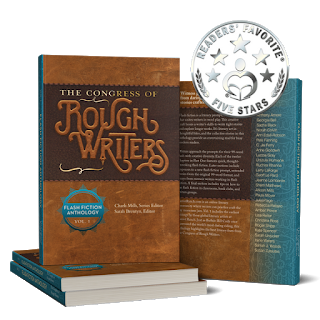
    This week, in the Rough Writers Tour Around the World celebrating the inaugural Carrot Ranch Anthology, we are back in England with the wonderful memoirist Lisa Reiter.
    Lisa explains what value worming a cat and writing flash fiction have in attaining perfection. If you need help with perfectionism, Lisa is sure to help.

    Lisa Reiter's avatarLisa Reiter – Sharing the Story

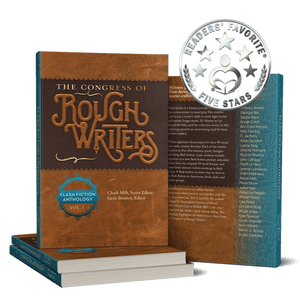
    book-cover-with-5-stars2Welcome to my stop on the Rough Writers Tour Around the World as we launch the first flash fiction anthology from the Carrot Ranch on-line literary community. If you’re new here, you might be wondering why a memoir writer is peddling flash fiction? And we’ll get onto that,

    View original post 1,870 more words

  • Introducing Andrew King author of the Engibear series – Readilearn

    Introducing Andrew King author of the Engibear series – Readilearn

    Today, I have great pleasure in introducing you to Dr Andrew King from Brisbane Australia. Andrew is an engineer, teacher, and writer of the popular Engibears series of picture books, designed to introduce children to engineering through friendly characters and story. Each book focusses on a particular aspect of engineering and, through examples and accompanying activities, is designed to encourage children to try engineering — to “Dream, Design and Develop”.

    Dream, Design and Develop

    Engibears have been part of Andrew’s family for many years. They were created while Andrew played and shared stories with his children.

    Andrew thinks he is very lucky to be working with Benjamin Johnston, a Sydney-based architect and illustrator. Ben’s fantastic illustrations have brought Engibears and Munnagong, the city in which they live, to life.

    Andrew is passionate about the role that Science, Technology, Engineering and Maths (the STEM subjects) will play in our sustainable future and equally passionate about the importance of STEM education. He regularly talks to students about engineering, and facilitates student-centred engineering activities and programs.

    His kids think he enjoys building shelves in his spare time. However, Andrew really enjoys spending time with his family, playing bass guitar, walking his dogs and trying to play golf.

    The Engibear series includes three books; Engibear’s Dream, Engibear’s Bridge and Engilina’s Trains. In the most recent, Engilina’s Trains, Engilina, Engibear and Bearbot are back to build transport for the future – a new maglev train that will run from Munnagong to Billaburra as fast as a plane. During the project, they discover an old steam engine which leads them on an interesting journey and creates an unexpected link to the past. It’s an interesting story of trains, teamwork, technology and time.

    Now let’s meet Andrew. Welcome to readilearn, Andrew. We are looking forward to getting to know a little more about you and your books.

    Thanks for inviting me.

    Andrew, when did you know you wanted to be a writer?

    Continue reading: readilearn: Introducing Andrew King author of the Engibear series – Readilearn

  • Going batty over flying-foxes

    Going batty over flying-foxes

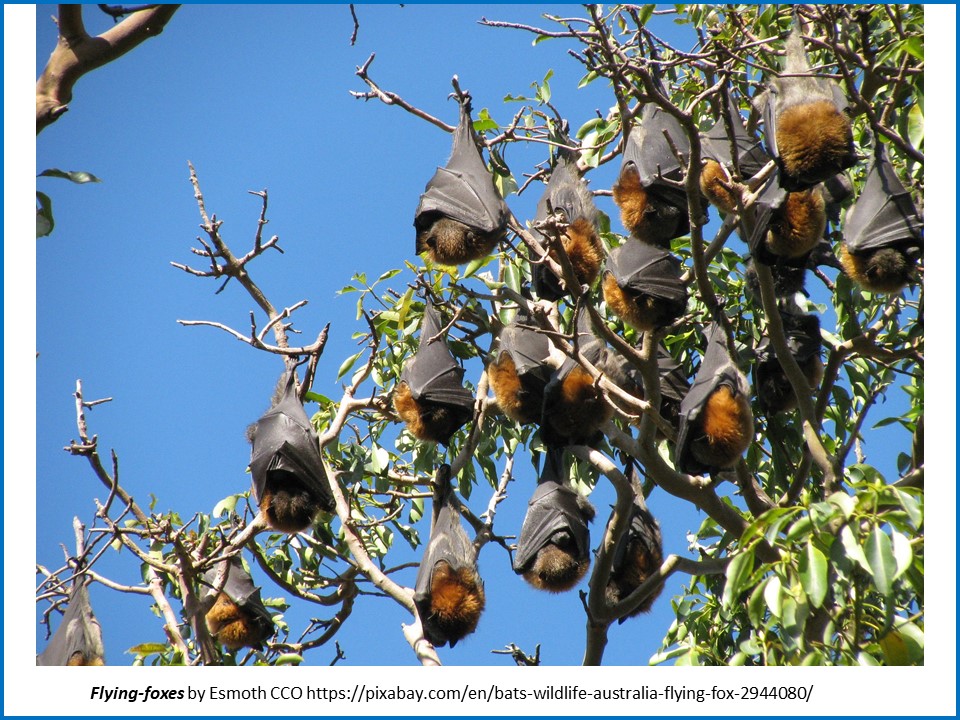
    According to the Australian Museum, Australia is home to over 90 species of bat with almost a third found in Queensland. The species with which I am most familiar are the black flying-foxes, grey-headed flying-foxes and little red flying-foxes which have taken up residence in trees about a kilometre from my home. The diet of many of the species earned them the name “fruit bat”.

    black flying foxes, grey-headed flying foxes, little red flying foxes

    While the bats rarely pose a health risk to humans, they can send neighbours a little batty with their noisy, smelly and messy behaviour. And it’s not only their neighbours who are affected. The bats can fly up to 50 kilometres a night in search of food. They frequent our fig tree, interrupting our evenings with their incessant screeching and squawking and leaving their sticky calling cards for Hub to remove in the morning.

    However, as all flying foxes enjoy the full protection of the law, it can be near impossible to move them away from peopled areas. It may even be that bats are attracted to these areas because of the planting we do. If we offer them a backyard filled with their favourite food, why wouldn’t they wish to visit?

    The reason I’m going a little batty this week is in response to the Carrot Ranch flash fiction prompt in which Charli Mills challenged writers to In 99 words (no more, no less) write a story that includes a bat. You can use an association to the winged, cave-dwelling critter, or you can explore the word for other meanings. Bonus points for including a bat cave. Go where the prompt leads.

    Though I love our nocturnal visitors and am constantly in awe of the numbers roosting in full sun through the heat of our summers and am entranced by their almost-silent departure flight overhead as each day changes to night, others I know consider them more of a bother.

    My response is more a BOTS (based on a true situation) description than fiction, so there’s not a bat cave in sight. I hope you like it.

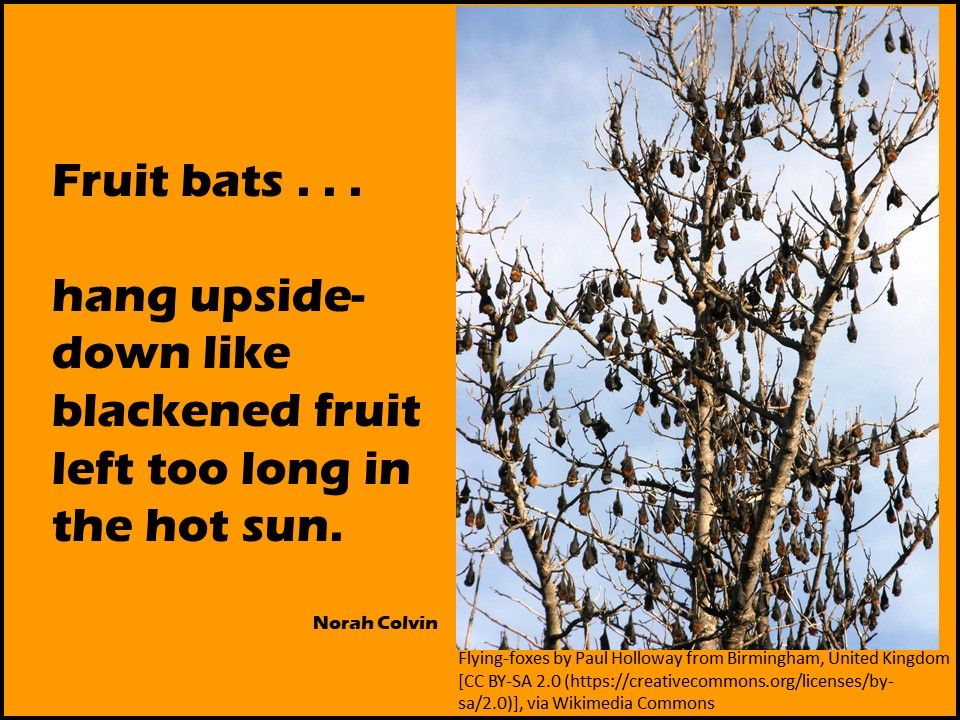
    flying foxes hanging in trees

    Flight of the Fruit Bats

    All day they hang upside-down like blackened fruit left too long in the hot sun. Only an occasional stretch shows them capable of independent movement. Passers-by sometimes stop to wonder and photograph. Other keen observers travel greater distances to marvel at the spectacle.

    Locals grow to abide their noisy, smelly presence and accommodate their daily activities.

    Every evening at dusk, the colony flaps and stretches, then rises in unison like a cloud of dust shaken into the darkening sky. High above, their silent wings carry them away for night-time foraging. Others screech and squawk their joy in closer feasts.

    Thank you blog post

    Thank you for reading. I appreciate your feedback. Please share your thoughts.

  • readilearn: What parents can do to prepare their children for school

    readilearn: What parents can do to prepare their children for school

    Parents often approach teachers wanting to know what they should teach their children or how to prepare their children for school—should they teach them the letter names or sounds or how far should they teach them to count?

    However, for most teachers, these are not of highest priority.

    What teachers value most is an ability to:

    • engage in conversation about experiences and ideas
    • get along with others and make friends
    • identify and organise personal belongings

    and to have:

    • an interest in books
    • a curiosity about the world, and
    • a willingness to have a go and try new things.

    The best way parents can prepare their children for school is by spending time with them, talking with them, playing games with them, reading stories to them and encouraging their curiosity by providing them with opportunities to question, learn and explore.

    It is important for parents to see themselves as their children’s first and most important teachers. When their children start school, it is not time for them to relinquish their responsibility. Instead, it is important for them to work in partnership with teachers to ensure the best chance of success for their children.

    Last week I shared an article, originally published in The Conversation, in which Kym Simoncini provided parents with suggestions for developing young children’s interest in STEM (science, technology, engineering and mathematics.)

    This week, I share a letter to parents of children beginning school, congratulating them on their contribution and requesting their ongoing support.

    Dear Parents,

    Congratulations on teaching your child to speak!

    Continue reading: What parents can do to prepare their children for school? – Readilearn

  • Carrot Ranch Round the World Tour, Pennsylvania, USA | Jules in Flashy Fiction

    Carrot Ranch Round the World Tour, Pennsylvania, USA | Jules in Flashy Fiction

    And now for the next stop on the Congress of Rough Writers Tour Around the World. We are with Jules Paige from Pennsylvania, USA.

    Jules has a unique ability to respond to a number of prompts and challenges in one. She even did six in one blow! What a feat. Read on to learn more about Jules and her writing process.

    Meanwhile Back at the Ranch….brought to you from JulesPaige – because “words are like Jewels on a Page” Jules from Pennsylvania, USA Writes for “The Congress of Rough Writers Flash Fiction Anthology Vol 1 World Tour.

    I was going to write about my first piece for Carrot Ranch until one of my unnamed characters did some forest bathing. I was struck by a comment from our Lead Buckaroo on my piece entitled ‘The Rescue’ that I wrote in February 2018. Charli says: “A lovely escape and a fine mashup, Jules. I’m impressed at the depths you go to mine language, prompts and even comments. That’s literary art!”.

    I’m drawn to what I call ‘mashing prompts’. One, two, five… sometimes I get carried away. But I managed to stuff The Rescue? a whole whopping 99 words with two prompts from one writing site, a photo prompt from another, the Unicorn prompt from Carrot Ranch as well as a quote from another piece I wrote that someone else liked as well as a comment I posted on another friends site.

    That’s six inspirations woven into one very short piece of fiction.

    Continue reader: Carrot Ranch Round the World Tour, Pennsylvania, USA | Jules in Flashy Fiction

    Pop over to the Carrot Ranch, too, to see what the Lead Buckaroo has to say about one of the “bright jewels of the Buckaroo Nation.”

  • How sun smart are you?

    How sun smart are you?

    My home state of Queensland is the melanoma capital of the world. Melanoma is a form of skin cancer primarily caused by exposure to the sun’s UV rays. If not detected and treated early, it can quickly spread and often cause fatalities. In Australia, it is the fourth most commonly diagnosed form of cancer, and over one thousand deaths result from melanoma each year.

    When I was a child, we didn’t know of the dangers of the sun and spent hours in the sun playing to our heart’s content. Although it was painful, we thought nothing of going home after a day at the beach with our backs as red as a beetroot, knowing that in a couple of days our siblings would be peeling huge chunks of skin from our backs.

    Nowadays, there is plenty of information about sun safety and an abundance of products for protection from the sun. We are educated about the dangers of too much sun in the media. In the 80s there was a “Slip! Slop! Slap!” promotion – to slip on a shirt, slop on sunscreen and slap on a hat.

    The slogan was later updated to include Seek (shade) and Slide (on sunglasses).

    We teach children in school about sun safety as part of our Health and Physical Education programs and insist they wear a hat in the playground through our “No hat No play” policies.

    no hat no play is a rule employed by many school in Australia to ensure children are sun safe when playing at lunchtime

    While the Cancer Council believes the campaign to have been very effective in changing behaviour and reducing the incidence of sun cancer, many are still not heeding the advice.

    In fact, as soon as the days become warm (as if they ever aren’t in this Sunshine State), people are told, that it’s a great day for the beach or the pool. No one warns about staying in the shade in the hottest part of the day or covering up for sun protection.

    When Bec was little, a friend watched me apply a generous amount of sunscreen to her exposed skin. The friend asked if I was concerned about Vitamin D and if sunscreen would prevent her getting her daily dose. I had not previously given it a thought and, being in the pre-internet days (would you believe there were days before the internet?) I asked who I thought to be the most reliable source of information — the pharmacist. He scoffed at me for entertaining such a ridiculous thought. How could anyone in Australia not get enough Vitamin D?

    Many years later, Bec did suffer a deficiency of Vitamin D and was “prescribed” a short walk in the sun each day.

    Having done more than sufficient damage to my skin in younger days, I now tend to be an indoors girl and avoid being outdoors in the heat, for which I have little tolerance and less interest. I apply sunscreen as part of my morning routine and wear a hat whenever I’m out and about for more than a few minutes. I seek the shade whenever possible and closely follow the recommendation to

    Slip, Slop, Slap, Seek, Slide.

    I’ve been thinking of the importance of sun safety and being sun smart in response to the flash fiction prompt at the Carrot Ranch this week in which Charli Mills challenged writers to In 99 words (no more, no less) write a silly sun story. Up north, “sun silly” is the energetic and playful response to returning sunlight. It could also be an April Fool’s jest, a silly story, or a reaction to spring fever. Be silly and write playfully! Go where the prompt leads.

    a photograph of a glorious spring day in Queensland with clear blue skies and wattle in bloom

    In Queensland, we tend to have sun all year round. Our mid-winter June days are often glorious with the most amazing blue skies. It may be cool indoors but always warm in the sun.

    In my last teaching position, my classroom opened onto a grassy area and, particularly on the cooler days, we could pop out for a few minutes to warm up in the sun between lessons. Sometimes the children had fun trying to catch their shadows.

    I turned to fun with shadow play for my story. I hope you like it.

    Running in the Sunshine, Dancing in Shadows

    Dad was working and didn’t look up.

    “Can we play outside?” the children asked.

    “It’s very hot,” said Dad. “Wait until it cools down.”

    “We’ll stay in the shade.”

    “We’ve got sunscreen on.”

    “I’ve got my hat.”

    “And sunglasses.”

    “There won’t be much shade,” said Dad.

    “There is a little bit.”

    “Can we?”

    The deadline loomed.

    “Well, stay in the shade,” he conceded.

    When finished, Dad sought the children.

    “What are you doing?” he asked.

    “Dancing in each other’s shadows,” they laughed.

    “But you’re in the sun.”

    “We have to be. We don’t have shadows without the sun, silly.”

    Thank you blog post

    Thank you for reading. I appreciate your feedback. Please share your thoughts.


  • Everything Susan: Rough Writer Tour Around the World

    Everything Susan: Rough Writer Tour Around the World

    From autumn in Australia, we fly to spring in Orillia, Ontario to visit with Rough Writer Susan Zutautas on the next leg of the World Tour. Susan tells us about her beautiful location and the place of flash fiction in her writing process.


    Continue reading: Everything Susan: Rough Writer Tour Around the World

    Also – just in – The anthology won a silver in the Literary Titan Book Awards April 2018. How exciting is that!
  • Five things parents can do every day to help develop STEM skills from a young age – Readilearn

    Five things parents can do every day to help develop STEM skills from a young age – Readilearn

    The development of STEM (Science, Technology, Engineering and Mathematics) skills can be encouraged in children, even before they start school, by parents who are attuned to opportunities for learning.

    I’ve previously introduced you to Rebecca Johnson, Narinda Sandry, Brenda Miles and Susan Sweet with their books and suggestions for including STEM in early childhood classroom learning, and soon I will be interviewing Andrew King about his beautiful Engibear series of picture books that focus on the engineering component in STEM. These supplement my own posts about incorporating STEM in the classroom here and here.

    In this post, I share with you Five things parents can do every day to help develop stem skills from a young age by Kym Simoncini Assistant Professor in Early Childhood and Primary Education, University of Canberra. This article was first published in The Conversation. Throughout Kym’s article, you will notice links to other articles. Be sure to follow the links for even more great ideas and resources.

    Now over to Kym Simoncini, University of Canberra

    Five things parents can do every day to help develop STEM

    skills from a young age

    Educators and researchers agree early literacy experiences are important for children’s cognitive and language development. For the past 30 years there has been a strong movement to foster children’s literacy skills. This has resulted in an abundance of information on how parents can do this by reading books, singing songs and nursery rhymes, playing word games and noticing print.

    This is a good thing and should continue, given the importance of early literacy skills in learning to read, and how this leads to later success in school and life.

    Continue reading: Five things parents can do every day to help develop STEM skills from a young age – Readilearn

  • Counting on fingers

    Counting on fingers

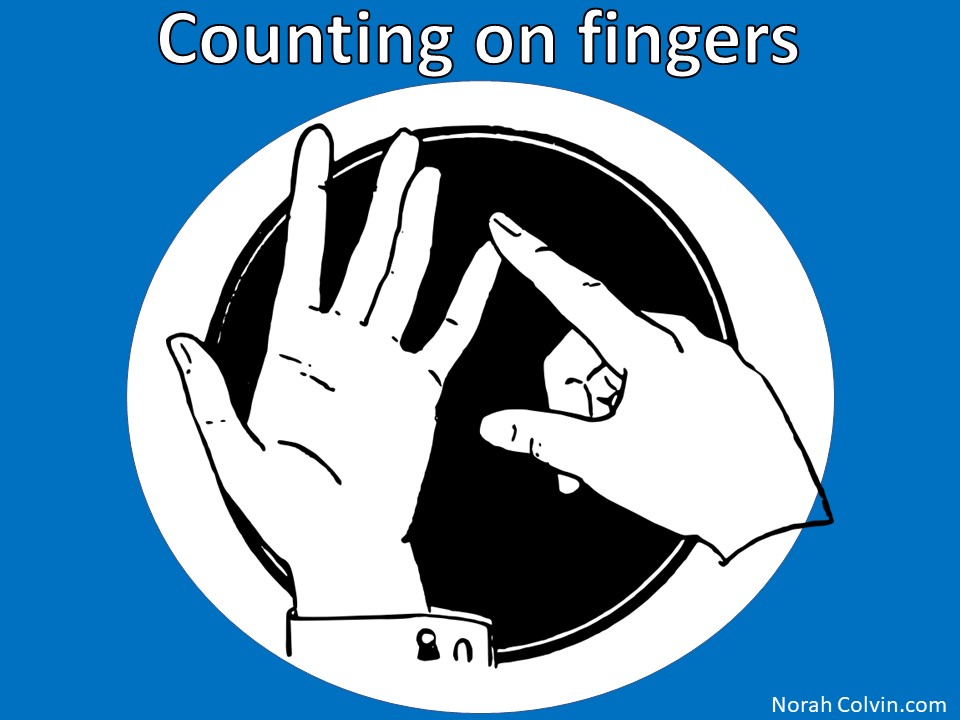
    This week at the Carrot Ranch, Charli Mills challenged writers to In 99 words (no more, no less) write a story about fingers that fly. Think about the different ways we use our fingers and what happens when we add speed. Go where the prompt leads.

    I thought about the use young children make of their fingers when counting. It may increase their speed and ease of calculation in the beginning, but continued use tends to slow them down.

    I also thought about magicians, and how the speed of their fingers amazes us with tricks and sleight of hand.

    Combining both thoughts brought me to the mathemagician Arthur Benjamin who never ceases to astound with his calculations.

    A performance of mathematic by Arthur Benjamin TED talk

    Are you a math whiz, solving complicated problems and making calculations with large numbers effortlessly, or do you still need to count on your fingers at times?

    I don’t think I was ever what would be considered a maths whiz, but I did have my confidence in maths taught out of me. Sadly, I think this happens to far too many.

    Many children who have been provided experiences with number and engaged in discussions about number from a young age develop strong understandings and are able to calculate with little effort, arriving at answers almost intuitively. While it can be good to help them develop metacognition by asking them to explain how they knew, or how they worked it out, sometimes they don’t know how—they just know.

    While some children need to be taught methods of working out answers, requiring maths intuitive thinkers to use the same working can cause them to second-guess themselves and to lose confidence by breaking what they know down into steps that only cause confusion.

    I was interested to hear Arthur Benjamin’s plan for improving maths education when he is made “Czar of Mathematics”.

    Arthur Benjamin Czar of Mathematics

    His suggestions relate more to high school than primary, but probability and statistics still have their place in the early years, as I’ve shown with many readilearn resources.

    For my response to Charli’s prompt, I’ve considered what may occur if a child’s intuition with maths is neither appreciated nor encouraged.

    Counting on fingers
    Everyone said she had a way with numbers. Even when still in nappies she was counting effortlessly to large numbers in multiples of twos, fives and tens as well as ones. The parents didn’t dare think they’d bred a genius, an outlier. They wished for an ordinary child who fitted in, unnoticed, like them.  They strove to inhibit her talent and discourage her enthusiasm. She tried to hide her ability by delaying responses with finger actions resembling calculation aids. But they slowed her none and flew too fast, earning her the nickname “Flying fingers” and ridicule instead of appreciation. 

    Thank you blog post

    Thank you for reading. I appreciate your feedback. Please share your thoughts.

  • Stop 7: Noosaville Australia: Congress of Rough Writers Round the World Tour: A Book Review with a Difference

    Stop 7: Noosaville Australia: Congress of Rough Writers Round the World Tour: A Book Review with a Difference

    The next stop on the Rough Writers Tour around the World is with fellow Aussie Irene Waters. Pop over to see how writing flash fiction contributes to Irene’s memoir writing.

    Irene Waters 19 Writer Memoirist's avatarReflections and Nightmares- Irene A Waters (writer and memoirist)

    tour-around-the-world

    May 21st 2014 I wrote my first flash in Charli’s 99 word flash fiction prompt. Little did I know that Charli’s vision of a site that would make literary arts available to all would see me join the ranks of the Congress of Rough Writers, participating in a writing rodeo both as contestant and leader of one of the competitions and writing a monthly post on memoir. The biggest achievement has been the publishing of  Anthology 1, but more about that in a minute.

    I had found Charli’s site via a Bite Size Memoir prompt  and found that as a memoir writer, writing fiction didn’t come easily, at first. Indeed, this very first flash was a BOTS, that is it was based on a true story that occurred when my father had gone to Sydney to teach for 3 months and my mother, brother and I were left in our…

    View original post 1,091 more words