
I’m absolutely delighted to be invited to Sally Cronin’s place for afternoon tea with an amazing line up of writerly guests, a delicious array of food, and music to please the ears. Thank you, Sally. 🙂
Author: Norah
-
readilearn: teaching resources for celebrating birthdays in the early childhood classroom
How do you celebrate birthdays in your early childhood classroom? Suggestions from readilearn help you make a birthday a special event in your classroom.
I’m excited! Today, 24 August 2018, marks readilearn’s second birthday. How quickly those years have passed and how the collection has grown in that time.

When I started out with the goal of reducing teachers’ workloads by preparing lessons ready for them to teach, I made a commitment to upload new resources regularly, write a weekly blog post focusing on topics of interest to early childhood teachers, including suggestions for teaching, and publish a newsletter on the last day of each month.
I am proud to say that I have fulfilled that commitment. With more than two hundred resources added to the collection since the launch, that’s an addition of an average of two new resources each week. More than forty resources in the collection are interactive lessons for teachers to teach on the interactive whiteboard, exceeding the ten percent minimum I set as a target.
Continue reading: readilearn: teaching resources for celebrating birthdays in the early childhood classroom
Share this:
-

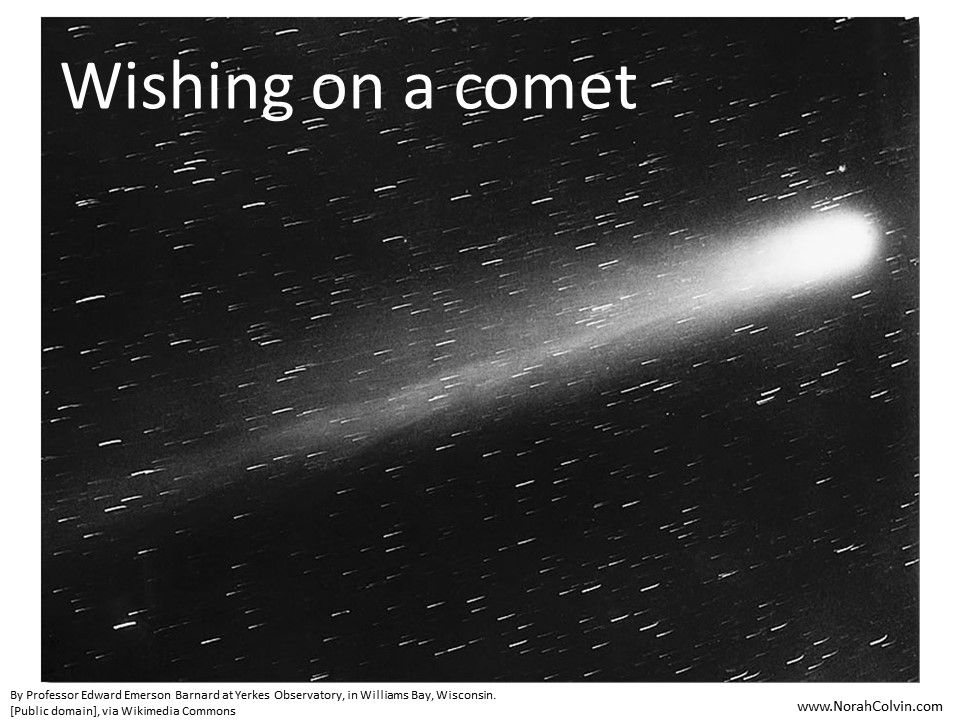
Wishing on a comet

This week at the Carrot Ranch, Charli Mills challenged writers to In 99 words (no more, no less) write a story about a comet. You can consider how it features into a story, influences a character, or creates a mood. Go where the prompt leads.
When I think of comets, I think of Halley’s Comet which passed by in 1986. At the time my son was twelve, my daughter was not yet born, and I was teaching a class of seven to nine-year-olds. My son and the children I taught may be lucky enough to see the comet for a second time when it returns in 2061. I wonder how many will still have the time capsule we made that year, and if they have it, think to open it. They will all be in their eighties.
It wasn’t an elaborate time capsule; really just a large envelope with stories and information about us, and I’m not sure what else. I was recently in contact with one of the girls from that class and she remembers the night we had a sleepover at school to look at the comet, and she still has the time capsule she made. I think that’s pretty cool. How special to create these shared memories that last.
My response to Charli’s prompt is about creating shared memories.
You may recall my previous two flash stories, the first of which was my first attempt at writing romance. He invited her to go camping. She was reluctant but gave in when she ran out of excuses. When she arrived at the campgrounds she saw the words “Marry me” spelled out with solar fairy lights. But he was nowhere to be seen.
It got such a good response that I continued the story the following week, leaving the conclusion open-ended. This too received a great response, thank you, and encouragement for me to continue the story along with lots of suggestions and ideas of how to do so. You were undecided about his intentions – were they honourable or not? At the end of the episode, she pushes back the tent flap and screams. But at what? It’s at this moment that I pick up the story, guided by Charli’s prompt. I hope you enjoy it.
An Imperfect Proposal
“What the…?”
He scrambled through bushes, slipping and sliding on twigs and gravel in haste to his love. When he reached her, she was doubled over holding her belly.
“What happened?”
She shook her head.
“What’s wrong?”
“I thought…” Her body shook.
“What?” he soothed, wiping away tears.
“Snake… I thought…” She pointed.
On the bed lay the strap of his telescope bag coiled neatly.
“You’re laughing?”
She nodded.
——
Camping became their family tradition, but their children’s favourite story was of the “snake” that frightened Mum, not of the comet that graced the sky the night that he proposed.

Thank you for reading. I appreciate your feedback. Please share your thoughts.
Share this:
-
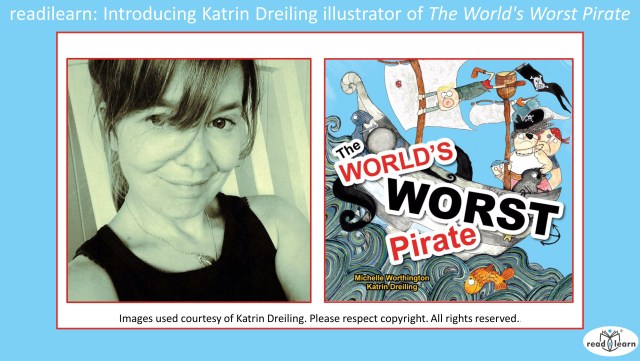
readilearn: Introducing Katrin Dreiling illustrator of The World’s Worst Pirate
This week I have enormous pleasure in introducing you to Katrin Dreiling illustrator of The World’s Worst Pirate, written by Michelle Worthington.
The World’s Worst Pirate is a captivating book about being true to yourself and unleashing your inner strengths.
Story Synopsis
One might wonder why Will, the world’s worst pirate, would want to be a pirate anyway. The truth is, he didn’t. There wasn’t much at all he liked about being at sea. He was happiest in the galley cooking cupcakes. The ship’s captain, his mother, on the other hand, couldn’t understand why he didn’t love being a pirate as much as she did. When the ship is attacked by a terrifying sea monster, no one could have predicted the outcome. Katrin Dreiling’s illustrations are a perfect fit or Michelle Worthington’s story. They add humour, delight, and a sub-plot of their own.
The Illustrator
The World’s Worst Pirate, published by Little Pink Dog Books in 2017, is Katrin’s first picture book. In 2018 the book received the CBCA Notable Book award, a wonderful achievement, especially for a first book. Prior to becoming an illustrator in Australia, Katrin studied languages in Germany to become a teacher. She loves to come up with quirky creations that inspire children to get creative themselves. Katrin’s second book, also written by Michelle and published by Little Pink Dog Books, will launch in September this year. Katrin also enjoys writing for children and regularly teaches art classes in Newfarm, Brisbane.
The Interview
Welcome to readilearn, Katrin.
Thank you for inviting me.
Katrin, The World’s Worst Pirate was listed as a Notable Picture Book in the CBCA 2018 Book of the Year awards. Congratulations. Since it is your very first published picture book, that must have been very special. How did it make you feel?
Continue reading: readilearn: Introducing Katrin Dreiling illustrator of The World’s Worst Pirate
Share this:
-

Peering from the bushes
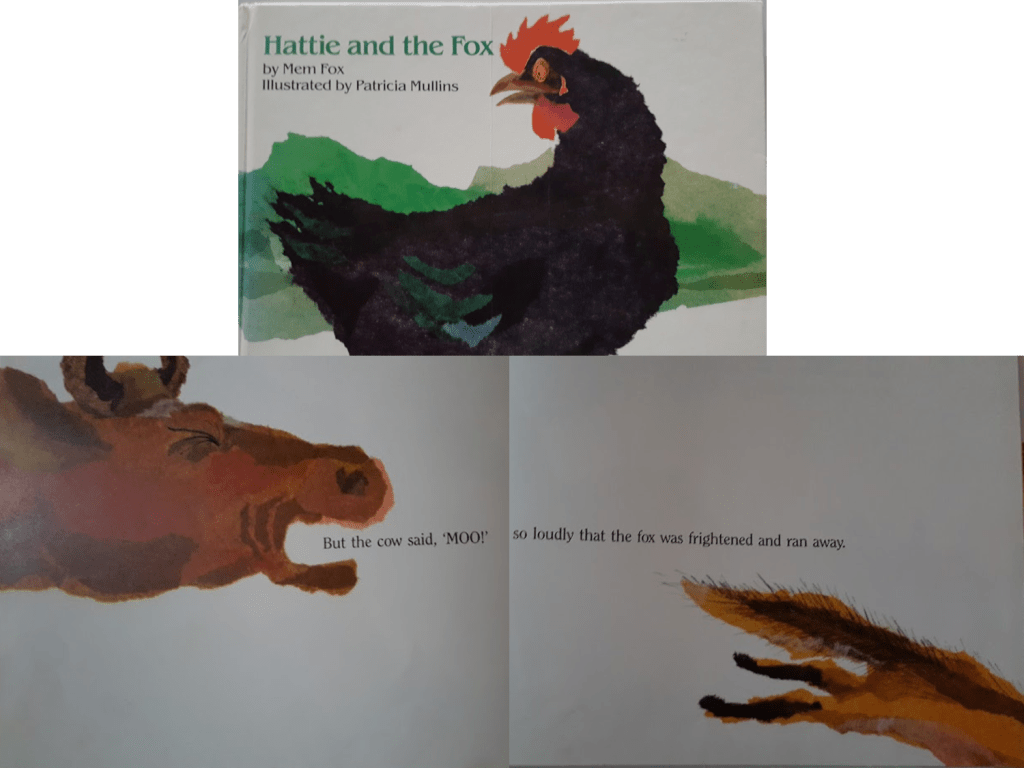
One of the multitude of my favourite picture books is Hattie and the Fox, written by Mem Fox and illustrated by Patricia Mullins.
I am allowed a multitude of favourites, aren’t I?
Like children, it’s too hard to choose just one. I don’t mean just biological children, I mean the children I teach. They all become ‘my’ children the moment they enter my classroom and remain that way forevermore. How could I choose a favourite?
Hattie and the Fox is a fun story for reading aloud. The children love to join in, especially with the dialogue, and even enjoy acting it out. The cumulative and repetitive features of the story, along with the rhythmic text, support beginning readers who beg to read the story again and again.
While my daughter never liked it when I ‘put on voices’ to read, the children in my class did. Somehow they didn’t think it was me putting on voices. They became involved in the story and thought it was the characters speaking. I used to smile to myself when they’d say things like, “That cow, she’s so funny.” And mimic my reading. Although I am no Mem Fox (you can listen to her read the story here), they enjoyed it anyway.
In the story, Hattie the hen announces that she can see a nose in the bushes. The other animals show little interest. Even when Hattie announces that she can see two eyes, two legs, a body, four legs and a tail, they are not concerned. Only when she realises and announces that it’s a fox peering from the bushes, do the others respond.

I couldn’t help but think of Hattie and the eyes peering at her from the bushes when Charli Mills challenged writers to In 99 words (no more, no less) write a story that includes an act of “peering from the woods.” Go where the prompt leads.
We don’t have “the woods” in Australia. We have “the bush”. There could be any number of things peering at us from the bushes such as possums, koalas, kangaroos, drop bears, bunyips, or a great variety of birds. Most are fairly harmless. It was deer peering from the woods in Charli’s story.
While deer are not native to Australia, some were imported for hunting and farming purposes. Many of those escaped to freedom. Some roam the suburbs destroying vegetation and creating hazards for unsuspecting motorists. We’ve occasionally come across a group of them in the middle of the road when we come home late at night. At Christmas time the road signs warning of deer are decorated with tinsel and red pompom noses to add to the festive mood.

Last week, in response to Charli’s ‘yellow tent’ prompt, I attempted a romantic story which was rather well received. I decided to continue the story. You may remember that a reluctant camper, unable to find any further excuses, finally agreed to join her boyfriend. When she arrived, the campsite was deserted except for one yellow tent lit by solar fairy lights spelling the words, “Marry me,” and her fears melted. But should she have dropped her guard?
Surprise!
She parked her car beside his and grabbed her bag. As she locked the car, she looked around. Where was he? He said he’d be watching for her. Cicadas buzzed louder than her footsteps crunched the gravel. A bird startled as it squawked and flapped overhead. Where was he? He must know she’d arrived. Even with the fairy lights, it was darker than she liked. Peering from the bushes, he willed her to be brave, to open the tent, to find what he’d made for her. Finally, tentatively, she pushed aside the flap. Her screams silenced the night chorus.
Is that what he expected? What do you think was in the tent? Why was he peering from the bushes? What happens now?
Thank you for reading. I appreciate your feedback. Please share your thoughts.
Share this:
-

readilearn: Interactive whiteboard resources for kindergarten
“I’ve got an interactive whiteboard in my room but I don’t know how to use it.”
“What readilearn resources can I use with my kindergarten children?’
“Schools have said they want our children to come to school able to listen and follow instructions. What resources can we use?”
These are some of the statements and questions that teachers of children in their kindergarten year, the year before they start formal schooling, have put to me.
The main focus of my preparation of readilearn teaching resources is on the first three years of school. I hadn’t considered their application with children aged four to five. However, teachers have assured me that some of the readilearn interactive whiteboard lessons are very suitable for children in kindergarten as one part of a rich play-based learning-focused environment.
Using readilearn lessons on the interactive whiteboard in kindergarten
- provides variety,
- introduces children to the use of technology and some of the skills involved such as drag and drop, and click to select items,
- provides opportunities for children to take turns, work cooperatively, listen actively to the teacher and other children,
- encourages vocabulary development – the lessons are intended to be teacher-led and involve discussion with the children.
readilearn lessons support kindergarten teachers with
- lessons ready to teach – login in the morning, keep one tab open – stay logged in for the day,
- opportunities for children to make the connection between print and spoken language,
- providing children who are ready to read opportunities of doing so.
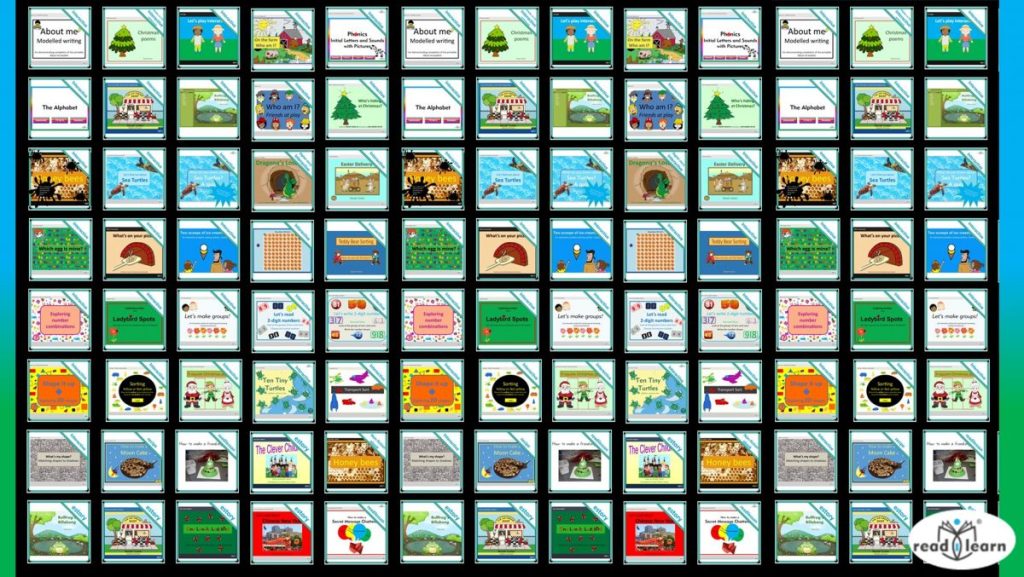
readilearn interactive resources and lessons suitable for use in kindergarten:

 Continue reading: readilearn: Interactive whiteboard resources for kindergarten
Share this:
-

Intent on yellow tents

This week at the Carrot Ranch, Charli Mills has challenged writers to In 99 words (no more, no less) write a story that includes a yellow tent. Where is it and who does it belong to? Think of how the color adds to the story. Go where the prompt leads.
I am not a camper. I had no experience of camping as a child and only two as an adult. The first, I finally succumbed to pressure from friends who assured me I’d love it. How could I not? They did. I didn’t.
The second I only vaguely recall though I am assured it did really happen. I think I’ve obliterated it from my memory. Sadly for my children, they also missed out on the camping experience though they did attend school camps (not in tents) and occasionally go camping now that they make their own choices.
My best experience of camping was at school with my year ones. One of the families was keen on camping and the father was a wonderful volunteer in the classroom. His shift work as a firefighter meant that he was often available to help us out. When we were reading books about camping, we had a ‘camping day’. This wonderful dad came in and set up a tent in the playground, made a little campfire, and cooked us all a camp lunch. We spent the day in the playground getting the full camping experience. It was great fun, especially for the children who didn’t get those experiences with their families, and a good way to build background knowledge and vocabulary. I enjoyed it because I got to go home to my nice comfy bed to sleep in. 😊
Of course, children love to play camping too, building tents over furniture in bedrooms and living rooms and with whatever they can find in the back yard. It is a wonderful activity for imagination. The construction itself can take a bit of working out and involves spatial thinking, collaboration, persistence, resilience and the ability to try new methods. I believe setting up a real tent may require some of those skills as well.
For my response to Charli’s prompt, I couldn’t resist writing about children and their imaginative play, but I also thought I’d try my hand at a romantic piece, which is almost as rare for me as camping, so I have done two. I’d love to know which you prefer.
With Intent I
They dragged the upended chairs into position, stacked boxes in the middle and positioned the quoits hob on top.
“Now a cover,” said one.
“I know,” said the other. They raced inside.
“What are you doing?” asked Mum.
“Nothin’,” said one.
“Just playin’,” said the other.
“Don’t make a mess,” said Mum.
“We won’t.”
The yellow sheet refused to hide as they returned outdoors. Mum smiled.
After some realignment of chairs and adjustments to boxes and sheet, they stood back to admire their work.
“Lunchtime,” said Mum.
“Can we eat in the tent?”
“Only if I can join you.”
With Intent II
“I have to work.” She feigned disappointment.
“That’s okay. Come after work.”
“But I’m working late. It’ll be dark.”
“It’s well-lit all the way.”
“But I don’t know the way.”
“That’s okay.” He punched the address into her navigation device. “Just follow the directions.”
“How will I find you when I get there?”
“I’ll be watching for you.”
Conjuring no more excuses, she wasn’t yet ready to explain her attraction to him didn’t include camping.
Later, when entering the campgrounds, deserted but for one yellow tent lit by solar fairy lights spelling the words, “Marry me,” her fears melted.
Thank you for reading. I appreciate your feedback. Please share your thoughts.
Share this:
-
readilearn: What place do worksheets have in your early childhood classroom?
How do you feel about worksheets? Love them? Hate them? Use them sparingly?
I would say I’ve never been greatly in favour of worksheets. I’m not saying I never used them, but I used them sparingly. If I could do something as well or better without using a worksheet I would. There were a few reasons for this:
- I valued children’s own work and didn’t feel the need to “pretty” up their books with the work of others.
- I always looked for ways to progress children’s learning as opposed to keeping them busy.
- I liked to reduce our paper usage.
Available on the internet and in bookstores are oodles of collections of worksheets; worksheets for anything you can imagine. You can spend hours trawling through websites looking for a sheet to support learning or practice a specific concept. Some of that time could be better spent considering other opportunities you could provide children for learning or practice, or even doing something pleasant for yourself for a change. Now there’s a thought.
When you think you may want a worksheet, or come across a worksheet that you may want to use, stop and evaluate its potential benefit:
Continue reading: readilearn: What place do worksheets have in your early childhood classroom?
Share this:
-
A case of the unexpected
Do they still do Greek myths in school? I know I read some in my primary school days, but I never read any to my students when teaching.
The two stories I remember most from school were of King Midas and Pandora’s Box. Both carry strong cautionary messages which had a big impact on me.
King Midas was greedy and when offered a wish, wished that all he touched turned to gold. He was saddened and regretted his wish when even his beloved daughter turned to gold. Lesson: Don’t be greedy. However, I was more horrified at the thought of that young girl trapped in a body of gold. Surely that would be worse than a straitjacket, the thought of which is terrifying enough.
Pandora was presented with a box which she was instructed to not open. What more effective an invitation could there be to a curious soul? Of course, Pandora opened the box. Who wouldn’t? Unfortunately, in doing so, she released all the ills of the world. It is her, so the story goes, we have to thank for illness, plagues, wars, famines and so the list goes on. Lesson: Do what you’re told and don’t be curious. I’m not sure that I learned the lesson from the tale. I’d already had the message firmly installed prior to encountering it.
As I matured I realised that the lessons from stories such as these didn’t always apply and I am now an advocate for curiosity if not for greed. Where would we humans be without curiosity, wonder, and imagination?

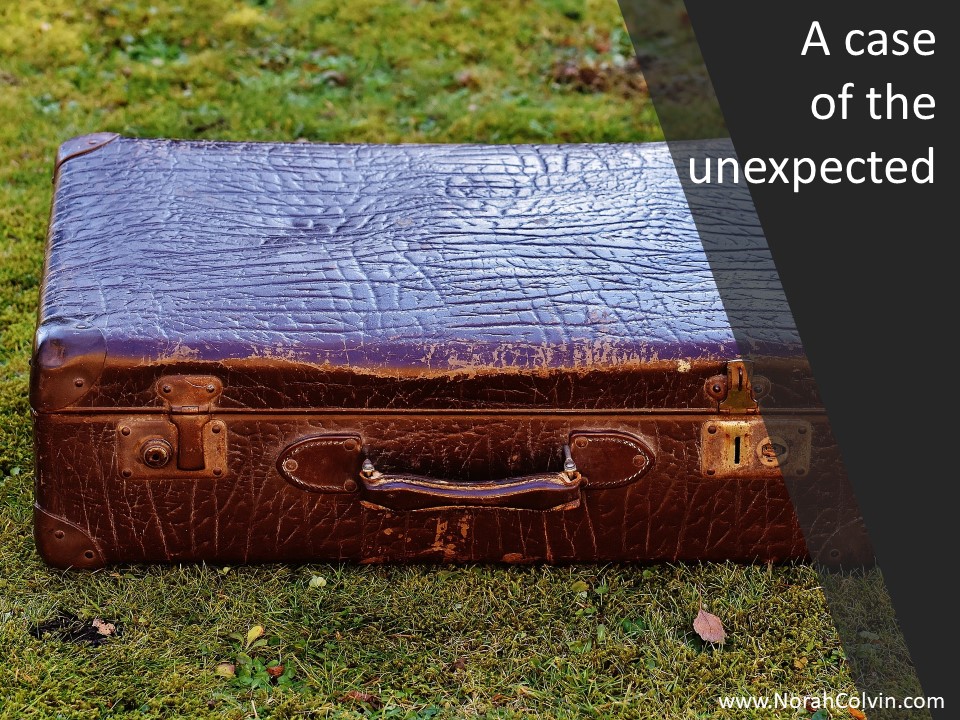
This week at the Carrot Ranch, Charli Mills challenged writers to In 99 words (no more, no less) write a story about what happens next to a stranded suitcase. Go where the prompt leads you, but consider the different perspectives you can take to tell the tale.
The five W questions that we often teach children to use when interrogating a text or preparing to write spring to mind: Who, What, Where, When and Why.
- Who abandoned the suitcase?
- What is in the suitcase?
- Where was the suitcase abandoned?
- When was it abandoned?
- Why was it abandoned?
- Who found the suitcase?
- What did they do?
- Why?
In bygone days, had I come across an abandoned suitcase, I may have investigated it to discover:
- Did it have any value?
- Was it discarded or lost?
- Was there anything of value in it?
- Could I find the owner and return it?
I remember as a child going along with my older brother’s suggestion to create a fake package, tie some fishing line to it, place it in the middle of the road and wait for a curious and unsuspecting pedestrian to come along. (Traffic was infrequent back in those days.) When the pedestrian bent to investigate the package, my brother would pull on the line and the package would move out of reach. We found the response of the pedestrians hilarious and our laughter soon gave away the plot from the bush or fence behind which we lay in wait. Fortunately, they all laughed too when they realised what we were up to.
Nowadays, with warnings about the possibilities of abandoned bags and packages containing terrorist bombs, people may be less inclined to investigate, concerned that the result may be more similar to what Pandora discovered.
For my response to Charli’s prompt, I’ve decided to go with a more innocent age when two children playing in the bush find an abandoned suitcase.
A Case of the Unexpected
“I wonder what’s inside,” said Jamie.
“D’ya think we should open it?” Nicky asked.
They looked around. No one anywhere.
Jamie shrugged. “I guess.”
“Looks old,” said Nicky.
“Probably been here for years.”
“So dirty.”
The rusty catches were unyielding.
“Might be locked,” said Nicky, hopefully.
“Let’s see,” said Jamie.
They pried with sticks, battered with stones and willed with all their might. When the catches finally snapped open, they hesitated.
“Go on,” said Nicky.
“No, you.”
“Both.”
“Okay. One, two, three … open!”
The children’s eyes widened.
“What is it?” asked Nicky.
“Dunno,” said Jamie. “Looks like …”
—
What do you think was inside?
Thank you for reading. I appreciate your feedback. Please share your thoughts.
Share this:


 Norah Colvin