Live Love Laugh Learn … Create the possibilities

Author: Norah

  • It’s a point of view

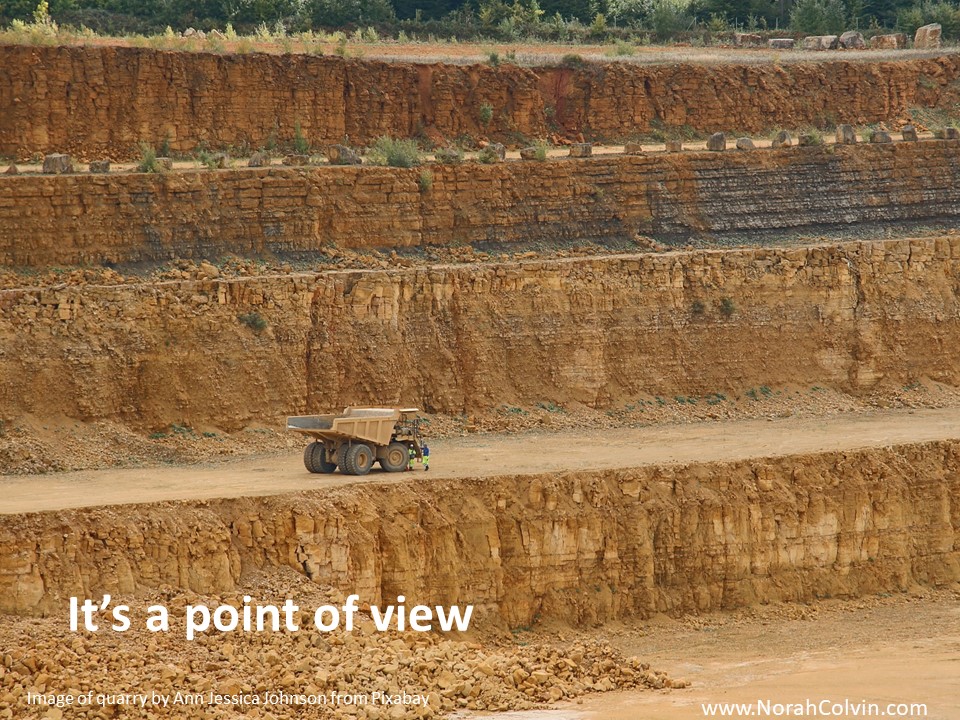
    It’s a point of view

    Have you ever been faced with a task, at work or at home, that seemed so big you didn’t know where to start?

    Have you ever been hustled by a supervisor, external or internal, to make a start whether ready or not?

    Have you ever jumped in, hoping it would all work out in the end?

    Have you ever chipped away without any real sense of direction and eventually found what you were looking for?

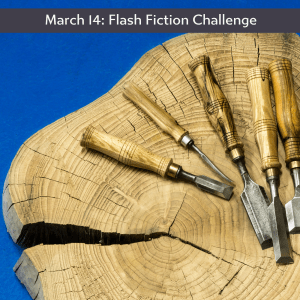
    Charli Mills flash fiction challenge chisel

    It was of these situations I was thinking as I responded to this week’s flash fiction prompt set by Charli Mills at the Carrot Ranch to In 99 words (no more, no less) write a story that includes a chisel. Use chisel as a noun or a verb. Think about what might be chiseled, who is chiseling. Be the chisel. Go where the prompt leads!

    Perspective

    The monumental task cast a shadow deep and long, miniaturising the toolkit at his feet.

    He shook his head, muttering complaints and impossibilities.

    The supervisor appeared. “Better get started. No time to waste.”

    He rummaged through the toolkit, lifting, inspecting and replacing each implement in turn.

    “What’s the holdup?” bellowed the supervisor.

    He grabbed the mallet and whacked the stone. “Take that!” Chunks smashed around him. He wiped his brow and whacked again.

    “Great. You’ve started at last,” encouraged the supervisor.

    Later, as the light turned, the shadow faded and diminished. He lifted his chisel and refined his work.

    size is a point of view

    Of course, I’ve had the opposite happen too. I’ve begun a task that I thought was miniscule but turned out to be mammoth. What about you?

    Thank you blog post

    Thank you for reading. I appreciate your feedback. Please share your thoughts.

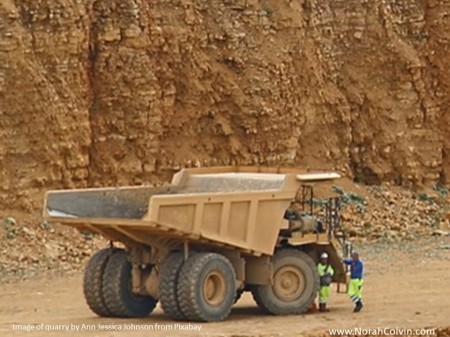
    Image of quarry by Ann Jessica Johnson from Pixabay.


  • School Days, Reminiscences of Sally Cronin

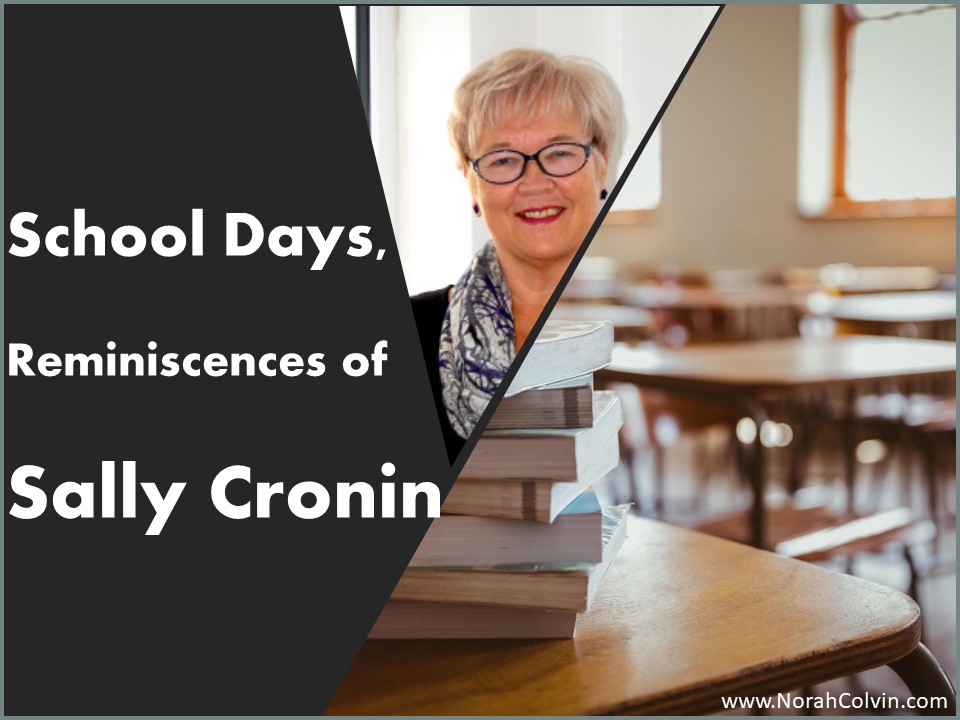
    School Days, Reminiscences of Sally Cronin

    Welcome to the School Days, Reminiscences series in which my champion bloggers and authors share reminiscences of their school days. It’s my small way of thanking them for their support and of letting you know about their services and publications.

    This week, I am pleased to introduce Sally Cronin, author, blogger and supreme supporter of authors and bloggers. Sally is a prolific writer on numerous topics on her blog and in her publications. She seems to have an infinite capacity for supporting other writers with guest posts, reviews, blog visits and comments, and shares on social media. I am constantly in awe of her output and the esteem in which she is held and I am very grateful for the support she provides me in the online world.

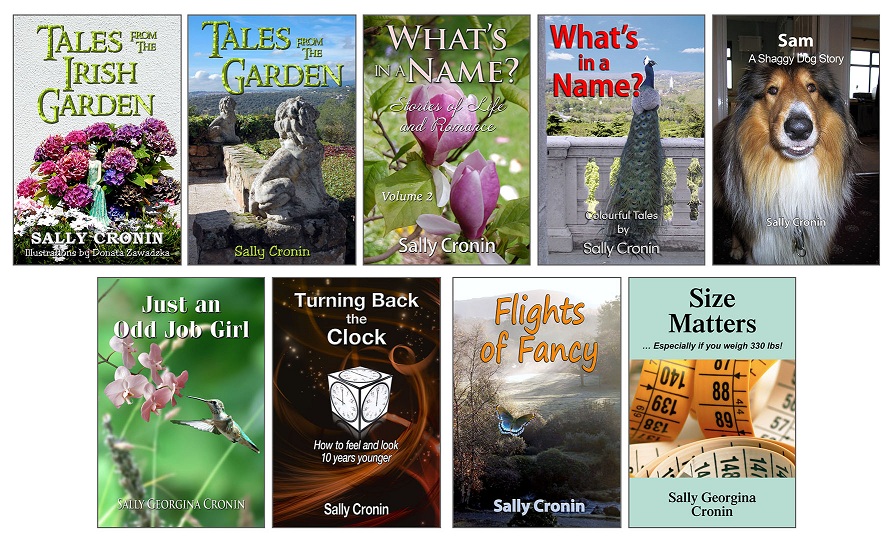
    I am especially pleased with the timing of Sally’s interview as today 17 March is St Patrick’s Day and Sally is Irish! She even has a lovely book of Tales from the Irish Garden, published late last year.

    Tales from the Irish Garden by Sally Cronin

    Before we begin the interview, I’ll allow Sally to tell you a little of herself:

    I have lived a fairly nomadic existence living in eight countries including Sri Lanka, South Africa and the USA before settling back here in Ireland. My work, and a desire to see some of the most beautiful parts of the world in the last forty years, has taken me to many more incredible destinations around Europe and Canada, and across the oceans to New Zealand and Hawaii. All those experiences and the people that I have met, provide a rich source of inspiration for my stories.

    After a long and very happy career, I took the step to retrain as a nutritional therapist, a subject that I was very interested in, and to make the time to write my first book. Size Matters was a health and weight loss book based on my own experiences of losing 70kilo. I have written another eleven books since then on health and also fiction including three collections of short stories. I am an indie author and proud to be one. My greatest pleasure comes from those readers who enjoy my take on health, characters and twisted endings… and of course come back for more.

    Welcome, Sally.

    Now let’s talk school. First of all, could you tell us where you attended school?

    Portsmouth UK (3), Malta, Cape Town South Africa, Preston UK,

    Did you attend a government, private or independent school?

    All the schools were government.

    What is the highest level of education you achieved?

    Diplomas in Secretarial Studies and a Diploma in Nutritional Therapy.

    What work or profession did you choose after school and was there anything in school that influenced this choice?

    I started as a secretary in a dental practice but within a few months started training as a dental nurse which I found more interesting.

    What is you earliest memory of school?

    Age four arriving at the first class at primary and noticing all the names scratched out on my extremely old desk and my teacher Mrs. Miller.

    What memories do you have of learning to read?

    My sisters read to me and taught me the basics so I could read before I went to school. I already had a collection of books by the age of four.

    What memories do you have of learning to write?

    I remember the blackboard with lines drawn and beautiful letters that we had to copy and a poster with all the letters and an object that began with that letter. We all had lined copy books and we would practice a letter until we got it right.

    What do you remember about math classes?

    Not much I am afraid as it was not my favourite subject. I was always good at mental arithmetic and knew my times tables before I was five, but triangles and other angular objects never fascinated me. I passed it at o’level just!

    What was your favourite subject?

    Sally Cronin liked history best about school

    I loved history and being in schools outside of my home country I got to learn far more than I would have done if locked into the curriculum in the UK. In South Africa for instance, I learnt about the Boer War from a completely different perspective and it did not paint the British in a good light. It was 1964 and I also heard about the war first hand from the grandmother of one of my friends. Living history is the best.

    What did you like best about school?

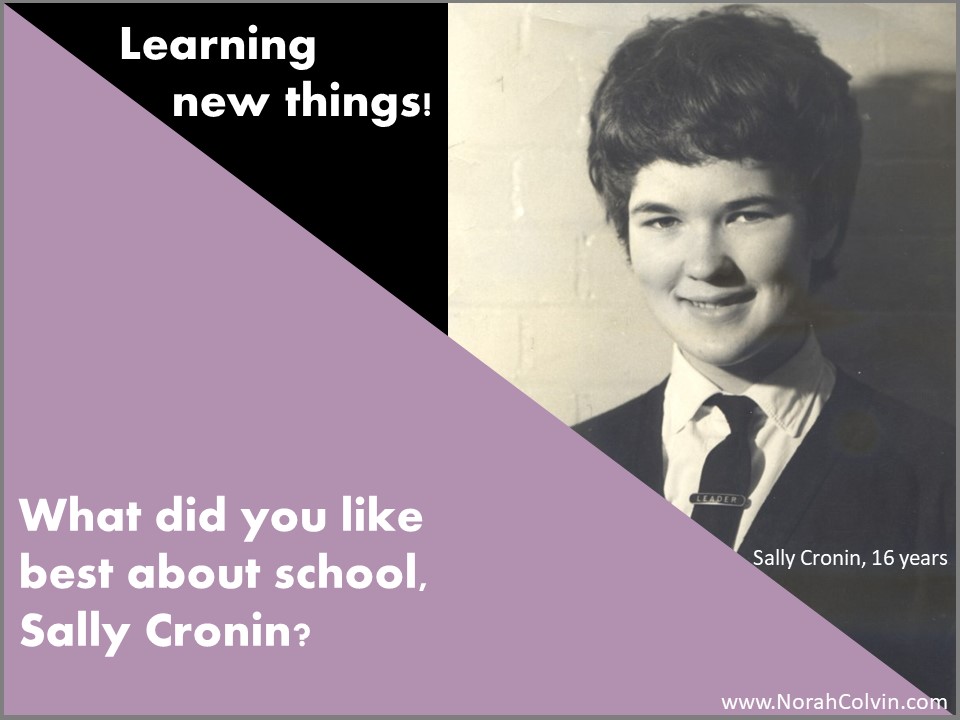
    Sally Cronin liked learning new things best about school

    Learning new things, once the basics of reading and writing were done it was like opening a door to the world. I loved all lessons (apart from maths) and also the access to sport which I enjoyed including hockey, swimming and tennis.

    What did you like least about school?

    Probably leaving them as I would make friends and then two years later we would be on the move again. Then I would start again out of phase often for my age, with a different curriculum which included new subjects I was unfamiliar with that had not been taught at the previous school. It always felt that I was playing catch up and spent most of my evenings with extra homework to do that.

    How do you think schools have changed since your school days?

    I can only judge this by friends who still have children in school and it would seem that there is less freedom, less physical activity, less homework, and more crowded.

    What do you think schools (in general) do well?

    I think that schools do well with the basics and for children who are academic they provide a solid platform to secondary education.

    How do you think schools could be improved?

    I feel that there is a one size fits all approach to education which does not take into account the individual child’s needs or abilities. In the UK in particular there has been a push in the last decade to get children into university, and the loss of technical colleges (now rebranded as universities) that I went to for those who want a more practical approach to their careers. Also I believe that there should be a push for more apprenticeships and that some children who want to follow that route should be allowed to leave school at 14 as long as they are going into an approved apprenticeship. I understand that is happening in Australia and I think it should also be introduced in the UK and Ireland and other countries.

    thank you for your participation

    Thank you for sharing your reminiscences of school and thoughts about education in general, Sally. I appreciate your perspective. It’s been wonderful to have you here. I learned so much I didn’t already know about you.

    Find out more about Sally Cronin

    On her blog: Smorgasbord Blog Magazine

    Amazon Author Page: http://www.amazon.com/Sally-Cronin/e/B0096REZM2

    Goodreads Author Page: https://www.goodreads.com/author/show/7979187.Sally_Cronin


    Connect with her on social media

    Facebook: https://www.facebook.com/sally.cronin

    Twitter: https://twitter.com/sgc58

    LinkedIn: http://uk.linkedin.com/in/sallycronin1

    Books by Sally Cronin

    All Sally’s books are available from

    Amazon UK: https://www.amazon.co.uk/Sally-Georgina-Cronin/e/B003B7O0T6

    And Amazon UShttps://www.amazon.com/Sally-Cronin/e/B0096REZM2

    If you missed previous reminiscences, check them out here:

    Charli Mills

    Look for future interviews in this series to be posted on Sunday evenings AEST.

    Coming soon:

    Anne Goodwin

    Geoff Le Pard

    Debby Gies

    Hugh Roberts

    D. Avery

    with more to follow.

    Thank you blog post

    Thank you for reading. I appreciate your comments. Please share your thoughts.


  • What’s a mouse got to do with it?

    What’s a mouse got to do with it?

    A furry mouse or a magic mouse? Which do you prefer?

    This week, Charli Mills at the Carrot Ranch got herself a new computer with a new mouse. She thinks it’s a magic mouse. I hope it is.

    Carrot Ranch flash fiction challenge - mouse

    In her excitement, she put out the challenge to writers to In 99 words (no more, no less) write a story about a mouse. It can be real, imagined, electronic or whiskered. Go where the prompt leads!

    Mice feature prominently in stories, poems and songs for children.

    Very young children learn the nursery rhymes Hickory Dickory Dock and Three Blind Mice.

    Rose Fyleman’s poem about Mice is always popular for children to learn and recite in school.

    There is the fable about The Lion and the Mouse, the story of The Town Mouse and the Country Mouse and the more recent The Little Mouse, the Red Ripe Strawberry, and the Big Hungry Bear.

    As a child, I enjoyed the song Windmill in Old Amsterdam. Perhaps you remember it too?

    But I think my favourite mouse story is that of Possum Magic, the classic picture book by Mem Fox. I’m not referring to the picture book itself, but the story of how it came to be.

    Possum Magic by Mem Fox

    Mem shares some of the goss on her site. You see, Hush started life as an invisible mouse in an assignment Mem produced as part of a course in children’s literature. She was awarded a high distinction for the story and, over the next five years, sent it off to nine different publishers. Each time the story came back.

    While Mem found the rejections disheartening, she was encouraged by family and friends who believed in her story. So, she sent it off again, and the tenth publisher asked her to “cut the story by two thirds, re-write it more lyrically, make it even more Australian and change the mice to a cuddly Australian animal. “

    Mem did as requested, changed the mice to possums, and so Possum Magic was born. The book was published in 1983 and remains one of the most popular and best-selling picture books in Australia. (While not mentioned on the site, I seem to remember reading that the book had almost 30 rewrites!)

    When I first heard this story of Possum Magic, I was younger than Mem was when the book was published. The story inspired me and encouraged me to hope. I loved Mem’s yet attitude (though I didn’t yet know it as that), her belief in her story, persistence in pursuing its publication and willingness to learn from others. Without those marvellous qualities, Possum Magic may never have seen the light of day. It may have languished in the bottom of a drawer somewhere with other forgotten manuscripts.

    How many manuscripts do you need to take out, dust off, and send on their way?

    Here’s my little story in response to Charli’s challenge this week. I hope you like it.

    A Mouse Backfires

    “Eek!“ shrieked Granny, toppling back on the chair, arms and legs flailing.

    “Thwunk!” Her head struck the wall, silencing the children’s sniggers.

    Granny slumped motionless, eyes closed, tongue lolling from her slack jaw.

    Barney gaped. “D’ya, d’ya think she’s dead?”

    “Don’t be silly,” admonished Eliza, older and wiser. “She couldn’t be. Could she?”

    The children tiptoed closer.

    “What if she wakes up?”

    “What if she doesn’t?”

    “I’ll check her pulse,” mouthed Eliza.

    Suddenly, Granny jolted upright, eyes staring blankly.

    The children gasped.

    “Gotcha!” laughed Granny. “But that is a clever mouse.”

    “How did you —?”

    Granny winked. “Granny knows.”

    Thank you blog post

    Thank you for reading. I appreciate your feedback. Please share your thoughts.


  • School Days, Reminiscences of Charli Mills

    School Days, Reminiscences of Charli Mills

    Welcome to the School Days, Reminiscences series in which my champion bloggers and authors share reminiscences of their school days. It’s my small way of thanking them for their support and of letting you know about their services and publications.

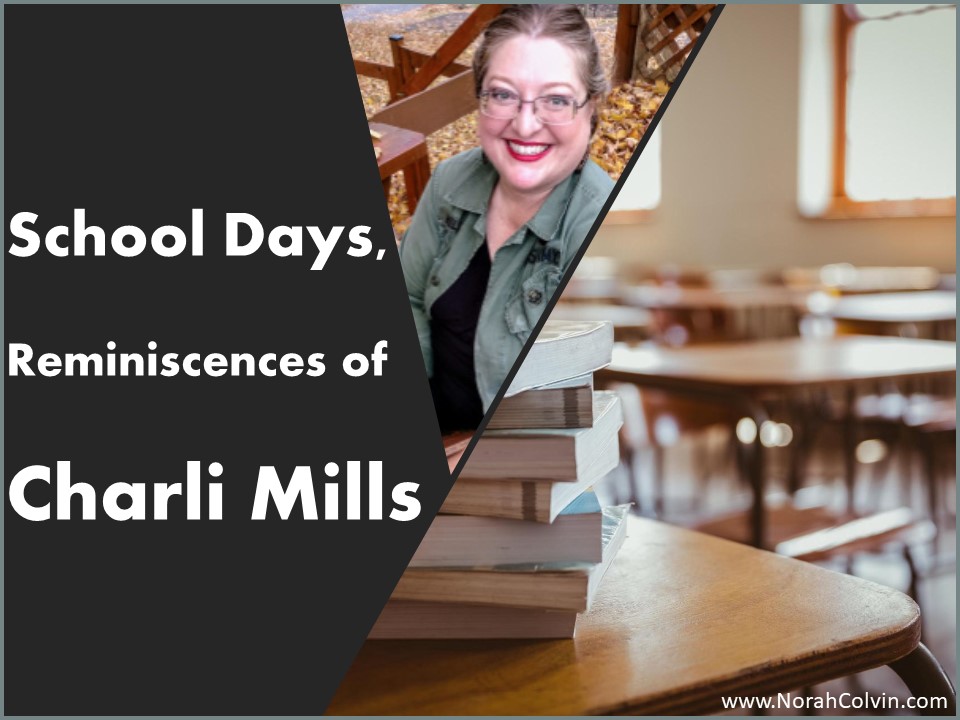
    First to share her reminiscences is Charli Mills, lead buckaroo at the Carrot Ranch where she challenges writers with a weekly flash fiction prompt and an annual flash fiction rodeo. She believes in the power of literary art to change lives and that it should be accessible to everyone. She encourages writers to find their voice in a supportive environment where everyone is welcome.

    I have known Charli for almost as long as I have been blogging and was among the first to participate in her flash fiction challenges when they began five years ago this month. I have rarely missed a week since. Charli’s support and encouragement of my writing and my work has been unfaltering, even when she was experiencing her own tough times, and I am extremely grateful for it. I don’t know how well I may have maintained my yet mindset without her.

    Before we begin the interview, I’ll allow Charli to tell you a little of herself:

    Charli Mills, a born buckaroo, is the award-winning goat-tying champion of a forgotten 1970s rodeo. Now she wrangles words. Married to a former US Army Ranger, Charli is “true grit” although shorter than John Wayne. She writes about the veteran spouse experience and gives voice to women and others marginalized in history, especially on frontiers. In 2014 she founded an imaginary place called Carrot Ranch where real literary artists could gather where she hosts a weekly 99-word challenge. She’s pursuing her MFA with SNHU, writing novels, and leading workshops to help writers with professional development.

    Welcome, Charli.

    Now let’s talk school. First of all, could you tell us where you attended school?

    Sacred Heart Catholic School (Hollister, California), Sunnyside Elementary (Hollister, California), Diamond Valley School (Woodfords, California), Douglas High School (Minden, Nevada), and Carroll College (Helena, MT).

    Did you attend a government, private or independent school?

    Sacred Heart was a private Catholic school, and so was Carroll College. I achieved kindergarten at one and a BA at the other. The other three were public schools. Diamond Valley was located next to the Woodfords Community of the Washoe Tribe. Our county was too small in population to warrant its own high school and the mountains cut us off from the nearest California option at Lake Tahoe so we were bussed into Nevada to Douglas High School, which was a horrible experience as we faced much prejudice as the “Alpine kids” even though not all of us were Native American.

    What is the highest level of education you achieved?

    To date, I’ve earned a Bachelor of Arts degree in English –Writing. However, I’m in the application process to pursue a Masters of Fine Art in Creative Writing.

    What work or profession did you choose after school and was there anything in school that influenced this choice?

    At Diamond Valley, in 7th-grade, Mr. Price made us write a spelling story once a week using the “prompt” of words from our spelling list. My stories were long and he encouraged me to write them longer. Then he asked me to read my stories aloud to the class every week, and I have loved reading my writing ever since. In high school, I struggled unless writing was involved. Ms. Bateman hit me hard with editing, but also taught me how to improve. She invited me to be on the newspaper team and I was the youngest member. By my senior year, I was co-editor. After high school I waited tables, worked road construction, and wrote for a daily newspaper, dreaming of going to college to be an archeologist and an author. Ten years later, I enrolled in a writing degree when my three young children started school. I often joked that I went back to kindergarten with them. My freelance writing took off while I was still in college. I never did become an archeologist and I worked 20 years in marketing before pursuing my author dreams, but my first novel will feature a character who is an archeologist. It’s all connected to my days at Diamond Valley School, and the skills I honed at Carroll College.

    What is your earliest memory of school?

    My earliest memory of school is being in trouble. I was highly imaginative and evidently, the nuns did not appreciate my drawings in textbooks. We lived on a ranch outside of Hollister California and my mother worked in town. She’d drop me off at a sitter’s and I’d walk to school every morning with the daughter who was in kindergarten, too. She never got in trouble. I recall wondering why I was so different and why the nuns didn’t like my freedom of expression. At Carroll College, I took an art appreciation class and wrote a paper on my theory of Greek influences on modern pornography. I worried I was going to get in trouble again for expressing my ideas, but the Jesuits loved it. I thought about sending that paper to Sister Margaret at Sacred Heart, explaining that I turned out fine, using my imagination.  Not sure she would agree!

    What memories do you have of learning to read?

    Books captivated me! I wanted to crack the code and would sit and pretend read. The nuns said I couldn’t read so the next grade placed me in remedial reading until the teacher caught me “pretend” reading a chapter book. She realized I wasn’t pretending. How I learned to read mystifies me. I couldn’t grasp the components, but I could read. Math was similar. I had the answers but struggled to show the work. Spelling escapes me but writing flows. Learning was always a frustration in school, yet I was always curious and even now I love to learn.

    What memories do you have of learning to write?

    Again, learning the actual mechanics of writing was frustrating, but any time teachers let me be creative or pursue curiosity, I could write volumes. Like reading, I just wrote. It wasn’t until high school when Ms. Bateman got a hold of me and drilled grammar into my head, and explained editing as a process. But I also felt it shut down my creativity. I didn’t learn until later how creativity serves as a bridge between my right and left brain. Once I understood that, I’ve made it a point to allow creativity to thrive in my work and writing.

    What do you remember about math classes?

    Pain and suffering! I never found a saving grace in math because I never found a way to be creative with numbers. In fact, creativity with numbers is frowned upon.

    What was your favourite subject?

    I loved history because it was full of stories. I’ve been a natural born story-catcher and history seemed to be a part of that. Where I lived was part of the old Comstock Lode and emigrant trails, and I attended school with Washoe students, learning their lore and history. My aunt used to take me relic hunting, and I had a huge collection of arrowheads, trade beads and square nails. I could spot a relic from on top of my horse. I learned to read the human imprint on the land, and when I was 17, I met a state archeologist who legitimized my ability and he coached me to record 11 archeological sites in my hometown area. So, in school, I loved history most.

    What did you like best about school?

    Charli Mills like skiing best at school

    Skiing. In the winter, we skied once a week at the ski resort near our school for winter PE. It was the best! I don’t know of any other school that ever had such a perk. I remember waking up so excited on ski days. The resort was huge and when we were young, six and seven years old, we were sent to the bunny hills and taught to alpine ski. By the time we were pre-teens we were skiing black diamond routes. I remember #4 best. I loved #4! We’d take the #1 chairlift up, and ski over to the #2 chairlift. At the top of #2, we’d ski down a long, steep and remote mountainside where chairlifts #3 and #4 sat perpendicular to each other. After we skied down #3, we’d take the longest lift at the resort, #4 all the way to the top of a mountain so isolated and remote, it boggles my mind today that we got to do this as school kids. Here’s a link to Kirkwood today: https://www.kirkwood.com/the-mountain/about-the-mountain/trail-map.aspx. When we skied, there were only six chairlifts, but you can see how far away #4 was from the lodge. Funny story – by the time I was in 7th-grade and was writing spelling stories, my good friend Gerald shared his dad’s Ian Fleming novels with me. I went from Little House on the Prairie to James Bond! Gerald was my skiing buddy and we used to make the #4 loop together. We’d pretend we were British spies! Ah, it was good to have someone to share an imagination with. I doubt anyone else who answers this question will ever say skiing.

    What did you like least about school?

    Mean people. Kids and adults can be cruel and I don’t fully understand why – is it cultural? Is it human nature? The level of cruelty could be stunning at times. I think this is what taught me empathy. Bullies taught me to care about others. If I wasn’t the one being bullied, I found I couldn’t tolerate others being bullied either.

    How do you think schools have changed since your school days?

    For one thing, I don’t think students are turned loose on ski hills anymore! I think there’s more respect for cultural diversity than when I went to school. Obviously, technology has changed. Diamond Valley is still a small remote school, but it now has an alternative high school, which is a good change. I think bullying is better dealt with now and parents are more involved, perhaps too involved. In the US, the crisis of school shootings is unfathomable to me. Even with all my bad experiences of being bullied and witnessing it, no one was armed. But that mean spirit was always there and now it has access to guns and that is terrifying. Hopefully, education continues to be important as technology changes our societal landscapes, and through education, we can resolve this shameful American blight on our school system. Maybe we need to focus less on gun control and getting more to the heart of abuses of power in our nation. We need to heal from institutions of slavery and Native American genocide. We need less division and more dignity.

    What do you think schools (in general) do well?

    I think schools provide inroads to learning that are valuable to becoming productive and happy human beings. Schools are amazing, really. They have been a part of what is America at its worst and what is America at its best. Schools do well to create environments where real learning takes place.

    How do you think schools could be improved?

    Most importantly, schools need to be safe. Early on, we need to give children the gifts of education and not the burdens. I think citizens should be involved in their public schools even if they don’t have children. How can we be part of the improvement? I don’t have the answers, but I’m willing to be a part of solutions. I support EveryTown for Gun Safety, and until we deal with the hardest cultural issues in our nation, it doesn’t matter if our schools achieve awards or graduate students who score well on tests.

    thank you for your participation

    Thank you for sharing your reminiscences of school and thoughts about education in general, Charli. It’s been wonderful to have you here. I learned so much I didn’t already know about you.

    Find out more about Charli Mills

    at the Carrot Ranch: https://carrotranch.com/

    and on her Amazon Author Page: https://www.amazon.com/Charli-Mills/e/B078FV6JGB

    Connect with her on social media

    Facebook Page: https://www.facebook.com/CarrotRanch/

    Twitter: https://twitter.com/charli_mills

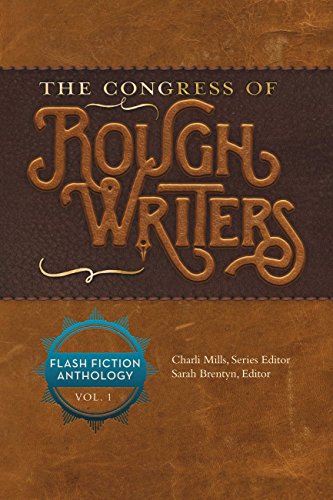
    The Congress of Rough Writers Flash Fiction Anthology Vol 1

    Purchase your own copy of

    The Congress of the Rough Writers Flash Fiction Anthology Vol 1

    via the Carrot Ranch bookstore: https://store.bookbaby.com/book/The-Congress-of-Rough-Writers

    Participate in a

    Carrot Ranch Writing Refuge (Keep updated at the Ranch)

    Look for future interviews in this series to be posted on Sunday evenings AEST.

    Coming soon:

    Sally Cronin

    Anne Goodwin

    Geoff LePard

    Debby Gies

    Hugh Roberts

    D. Avery

    with more to follow.

    Thank you blog post

    Thank you for reading. I appreciate your comments. Please share your thoughts.
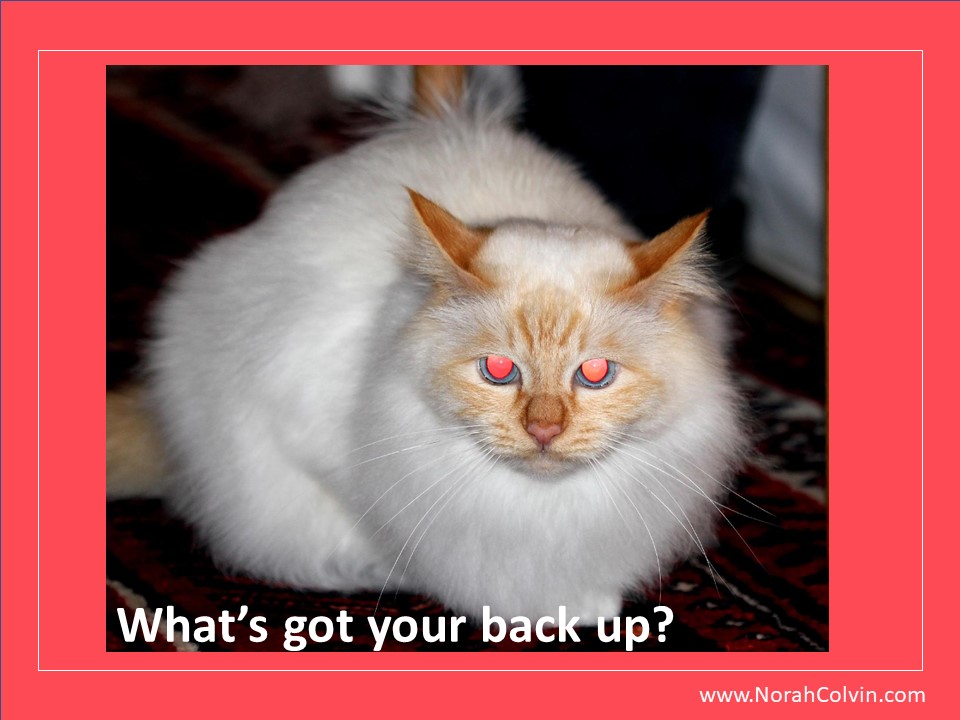
  • What’s got your back up?

    What’s got your back up?

    This week at the Carrot Ranch, Charli Mills has urged writers to have a backup plan in place for their work. She suggested a variety of ways including storage on USBs or external hard drives, in the cloud or as hard copies. She also warned that no method is fail-safe.

    flash fiction challenge to back up

    The cautionary post preceded, as her posts often do, a flash fiction challenge to In 99 words (no more, no less) write a story using the term backup. You can back up or have a backup, just go where the prompt leads! However, there is no suggestion of caution in her final phrase ‘go where the prompt leads’.

    When I began to consider how I might use the term ‘backup’, I was soon faced with the complexity of our language and wondering how we ever learn to make any sense of it at all.

    Back up may be used as a two-word-phrase or as a compound word. The words, with their regular short vowel sounds and consonants, are easy to read and pronounce, even for the youngest beginning readers. Individually, their meanings are clear. Back refers to a part of the body or a location behind. Up is the opposite of down. But put them together and the complexity of meaning emerges with possible use as nouns, verbs or adjectives.

    Below are some examples of meanings that can be applied to the phrase:

    Feeling annoyed

    Perhaps the most literal translation is in reference to a feeling of annoyance; for example, He got his back up when they insinuated he was always late for work. This use comes from a cat arching its back when annoyed.

    Move backwards

    The truck driver was told to back up to avoid blocking the driveway.

    He had to reconsider and back up when the others told him he was wrong.

    Teachers may need to back up on what they had planned when they realise the children are not understanding their lessons.

    Blocked

    The backup of traffic was caused by an earlier accident on the narrow bridge.

    The water would back up in the gutters and overflow every time it rained due to the leaves from the overhanging trees.

    Support

    It is important to back up any science report with evidence from research.

    The situation was escalating, and the police were relieved when backup arrived.

    The backup singer was required to take the lead when the performer got laryngitis.

    Alternative strategy

    You need a backup plan in case this one doesn’t work.

    You need to backup your digital work in case your computer crashes.

    Posture support

    One birthday, thoughtful Hub gifted me a wearable device for supporting my posture during long hours at my desk. Sadly, it was complicated, and he was the only one to don it, semi-successfully. Those of us less brave to even attempt were in stitches as he manoeuvred himself into it. Having failed to convince me or anyone else to try, it has been relegated to the back of an (unknown) cupboard ever since. Mere mention of the BackUp causes fits of laughter and it remained #1 inappropriate gift for many years – until he presented man perfume on another birthday.

    This is a true story. No names have been changed to protect the innocent. I tried to find an image of the device online, but it seems the design has probably improved over the years. The one Hub gave me had straps to go around the knees as well as the back.

    You’d think with all the different meanings of ‘back up’ that I’d have no trouble finding a story to write. However, since the description of my birthday surprise is 99 words, no more no less, and for the fact that I have no backup plan, that true story will be my contribution this week. I hope you like it. Perhaps truth is stranger than fiction.

    Thank you blog post

    Thank you for reading. I appreciate your comments. Please share your thoughts.
  • Technology Pushes Back

    Technology Pushes Back

    There’s been a glitch or three at the Carrot Ranch this week, and the usual Flash Fiction schedule has been interrupted. I haven’t yet written a response to Charli’s challenge, but pop over to read about Charli’s challenges and pen a response yourself.

  • #WATWB Helping neighbours in need

    #WATWB Helping neighbours in need

    On the last Friday of each month, We Are the World Blogfest invites bloggers to join together in promoting positive news.

    “There are many an oasis of love and light out there, stories that show compassion and the resilience of the human spirit. Sharing these stories increases our awareness of hope in our increasingly dark world.”

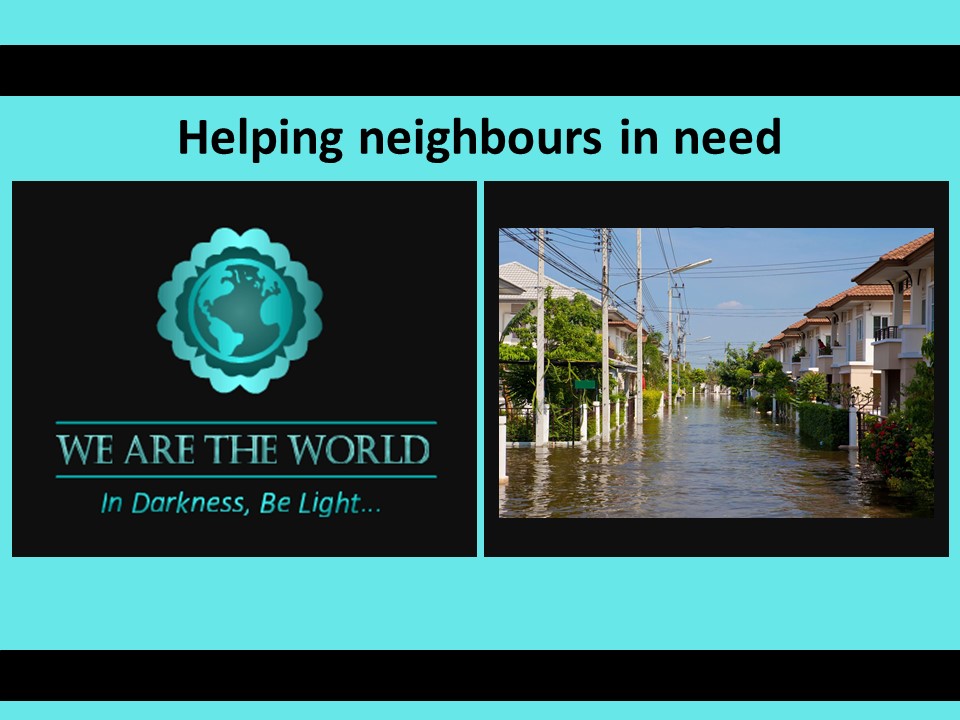
    During the first weeks of this year, Australia has been hit by unprecedented and devastating weather events all over the country, including bushfires, droughts, drenching rain and floods. While these events cause heartbreak for many and will take countless years for full recovery, they also provide an opportunity for bringing out the best in people.

    When the drought-stricken North Queensland city of Townsville was hit with a deluge, people quickly reached out to others in need, even as they waited for help themselves.

    This month I am sharing an inspiring story of a Townsville family who opened their home to “more than 60 flood-stricken people and their pets … as they waited to be rescued from rising floodwaters”.

    Click here to read the whole article.

    If you would like to join in, please check out the rules and links below.

    Guidelines

    1. Keep your post to Below 500 words, as much as possible.

    2. Link to a human news story on your blog, one that shows love, humanity, and brotherhood. Paste in an excerpt and tell us why it touched you. The Link is important, because it actually makes us look through news to find the positive ones to post.

    3. No story is too big or small, as long as it Goes Beyond religion and politics, into the core of humanity.

    4. Place the WE ARE THE WORLD badge or banner on your Post and your Sidebar. Some of you have already done so, this is just a gentle reminder for the others.

    5. Help us spread the word on social media. Feel free to tweet, share using the #WATWB hashtag to help us trend!

    Tweets, Facebook shares, Pins, Instagram, G+ shares using the #WATWB hashtag through the month most welcome. We’ll try and follow and share all those who post on the #WATWB hashtag, and we encourage you to do the same.

    The co-hosts for this month are:

    Sylvia McGrath
    Peter Nena
    Shilpa Garg
    Inderpreet Uppal
    and Belinda Witzenhausen.

    Please pop over to their blogs to read their stories, comment and share.

    Click here to join in and enter the link to your post. The bigger the #WATWB group each month, the greater the joy!

    Thank you blog post

    Thank you for reading. I appreciate your comments. Please share your thoughts.
     

  • What do you love?

    What do you love?

    We use the word ‘love’ to mean care deeply about, as in people, or like a lot, as in food, objects and activities. Questions such as “Who do you love?” and “What do you love?” will elicit very different responses and we generally have little difficulty in distinguishing between the intensity of the feelings. Mostly the whos are more important to us than the whats, and it is easy to distinguish between the likes and the loves, though they can sit along a continuum.

    love of vegetables on a continuum

    For me, housework sits at the opposite end of the continuum from reading and writing. You won’t find me writing any posts about housework. But you will find lots of posts about reading and writing, especially encouraging a love of reading and writing in children. I find sharing a love of reading and writing to be almost equal in enjoyment as reading and writing for myself. To see children light up with enthusiasm for reading and writing is sheer joy.

    the love of reading is one of the greatest gifts a parent can give a child

    I have often said that one of the greatest gifts a parent can give a child is a love of reading. A love of reading and writing, and indeed for all learning, is the best gift a teacher can give.

    the love of reading and writing is contagious

    It is often said that a love of reading is caught, not taught. The same goes for writing. It is important for teachers to ensure that there is time every day to read aloud to children, to inspire them and excite their imaginations with wonderful literature and to provide them with time for expressing their own thoughts and imaginative ideas through writing and any other of the expressive arts.

    I have written many blog posts, both here and for readilearn, with suggestions for making time for literature and literacy, but it was the prompt set by Charli Mills at the Carrot Ranch that kept me thinking that way this week.

    Carrot Ranch flash fiction challenge Valentines

    You see, Charli challenged writers to In 99 words (no more, no less) write a story about valentines. It can be Valentine’s Day, the exchange, love for another, romance, or friendship. Have a heart and go where the prompt leads!

    But, as well as being Valentine’s Day, 14 February is also Library Lovers’ Day and International Book Giving Day.

    Why wouldn’t I write about one of my loves — reading and writing? I hope you enjoy it.

    Just for the love of it

    The teacher closed the book, but the children were abuzz.

    “Keep going,” they urged.

    “Will they be alright?”

    “What will happen?”

    The teacher looked at the clock. The minutes had passed like seconds. Was there time?

    “Pleeeease!”

    The teacher opened the book.

    “Yay!” cheered the children, then hushed as the words flowed.

    As the story unfolded, their eyes lit up and imaginations sparked. They discussed the story’s intricacies and contemplated outcomes as they journeyed with the author through good and fearsome times. Finally, just as the dragon was about to swoop, the teacher stopped. “Now write! What happens next?”


    reading is a super power

    Here are links to just five of the posts I’ve written about reading and writing:

    A sprinkle of this, a pinch of that, and Poof! It’s reading — magic!

    Wrapping up a year of books — the gift of reading

    I love poems

    Reading is all it’s cracked up to be: 10 tips for an early childhood classroom!

    Writing poetry with children

    And two more about libraries:

    Libraries: A wondrous universe to explore — a guest post by Dimity Powell

    Libraries, books and reading = infinite worlds to explore

    Thank you blog post

    Thank you for reading. I appreciate your feedback. Please share your thoughts.

  • Announcing: It’s Time for Change – readilearn

    Announcing: It’s Time for Change – readilearn

    Over the coming weeks, we are making improvements to the readilearn site.

    During the changeover period, until mid-to-late March, we will not be adding new resources to the collection or publishing blog posts.

    Access as usual

    If you are already a readilearn subscriber or have registered to access the free teaching resources, you will still be able to log in and access resources during and after the changeover, as usual.

    Changes

    1. Individual prices

    Once the changes take effect, readilearn resources will be available as individually priced items.

    Note: If you are already a readilearn subscriber, your access to all readilearn resources will be uninterrupted while ever your subscription is current. The individual pricing will not affect your ability to access resources.

    1. Cost of subscription

    Continue reading: Announcing: It’s Time for Change – readilearn

  • Interview with author Wenda Shurety – Readilearn

    Interview with author Wenda Shurety – Readilearn

    This week, it is my pleasure to introduce you to author Wenda Shurety as she discusses her new picture book Eva’s Imagination. I especially enjoy Wenda’s book for its focus on imagination, something I consider very important to encourage in young children. Without imagination, we are unable to see beyond what is and have little chance of progress being made.

    About Wenda

    Wenda grew up in the beautiful county of Norfolk in England and now resides in Brisbane with her supportive husband, cheeky daughter and two rescue dogs. Wenda loves to write children’s stories with heart; whether it involves diversity, science or the magical world of the imagination.

    About Eva’s Imagination

    Eva doesn’t know what an imagination is. With the help of her dog Chops, Eva goes on a hunt to find it. Eva’s Imagination is a delightful story about the power of the imagination that aims to inspire young children to find adventure in their surroundings rather than from screens.

    Now let’s meet Wenda.

    The interview

    Continue reading: Interview with author Wenda Shurety – Readilearn