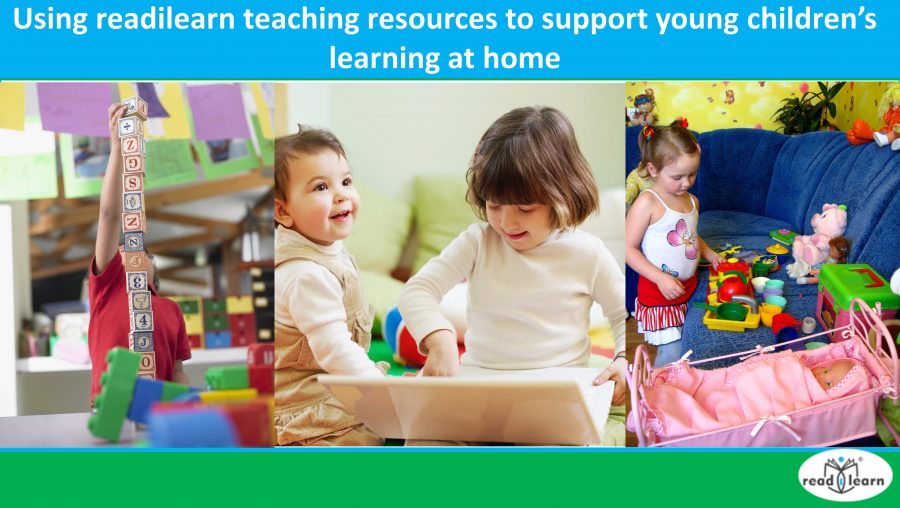
readilearn teaching resources are primarily designed for use with children in their first three years of school whether that be in a traditional (or alternative) classroom situation or a homeschool classroom. This makes the lessons and activities just as valuable now to teachers delivering lessons online and to parents working with their children at home.
While the lessons target learning in K-2, some could be used with younger children if appropriate support and follow-up activities are provided.
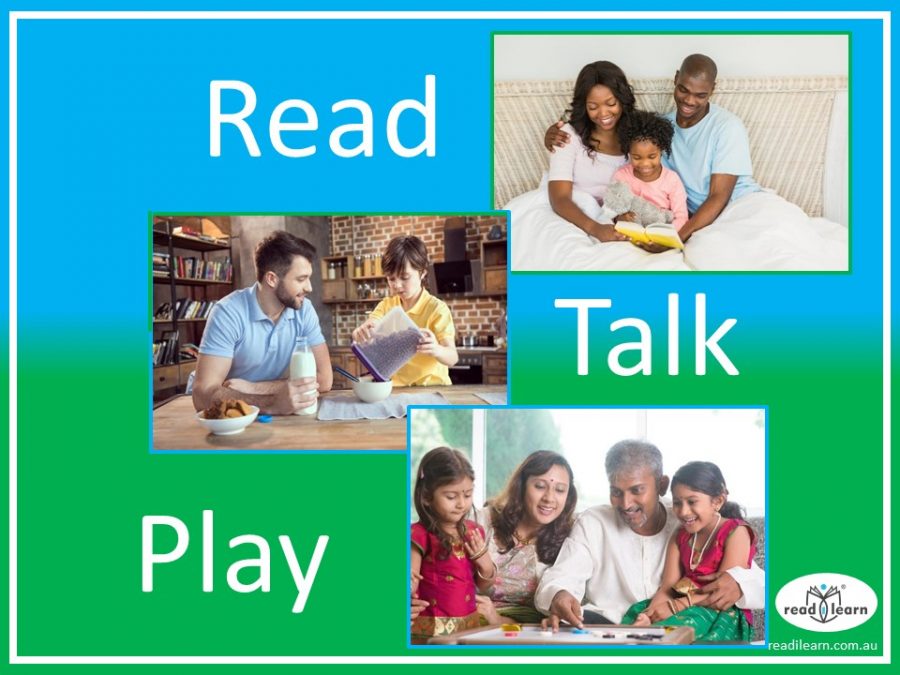
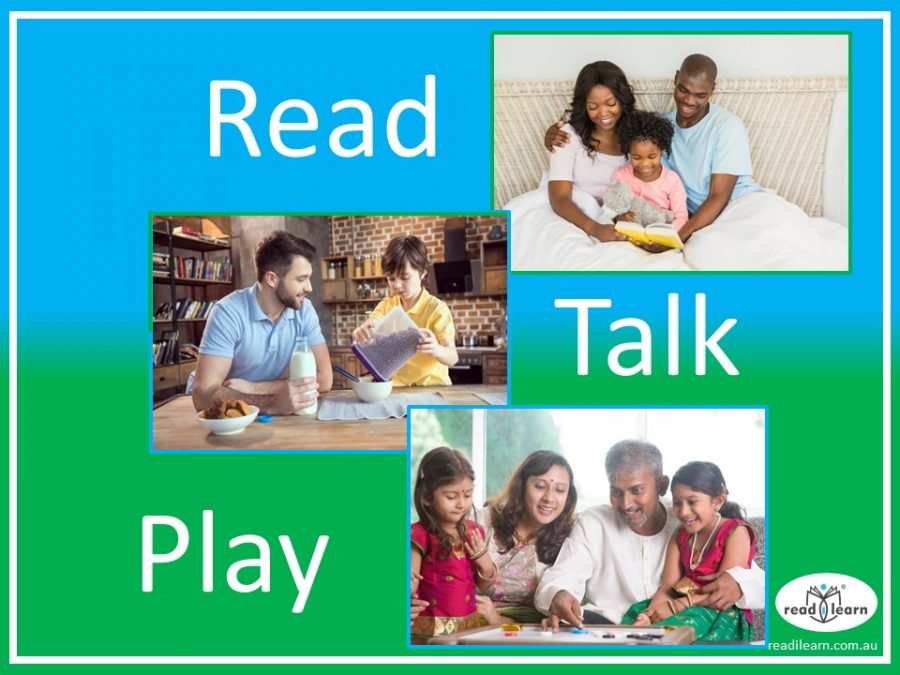
We all know that the best ways to encourage young children’s learning is to talk with them, read to them, play games with them and give them plenty of time and space to play on their own and with each other. It is the play with each other that is difficult to provide when we are in lock down and, while young children still require time to make their own observations and discoveries, some adult guidance and support for their learning is also extremely beneficial.
Children learn best when they have an opportunity to discuss their ideas with others. readilearn lessons are designed with that in mind. They are not intended for children to use independently. Teachers, at home or at school, are encouraged to scaffold children’s learning with supportive discussion.
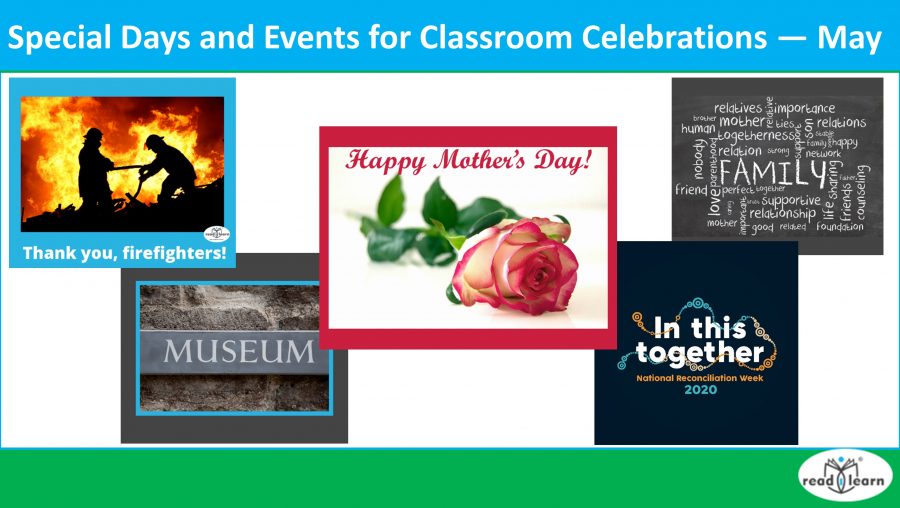
May is almost upon us so I’ve put together a list of days and events that you may like to celebrate whether you are teaching in the classroom, online or at home.
Before I present the list though, I’d like to let you know that readilearn interactive lessons, of which there are over 70, are ready for you to teach in any of those circumstances in which you find yourself. While they were designed to use on the interactive whiteboard in the classroom, you can use them if you are teaching online using screen sharing software such as Zoom. I’ve made a video to explain.
Now let’s check out these days to celebrate in May. You may read them below or download the free list here.
World Laughter Day is celebrated on the first Sunday in May, which is the 3rd this year. There is no denying that we could all do with a little more laughter in our lives. While we may not be able to gather together to laugh in large groups this year, there are still many ways we can find to add laughter to our day. We could have a laughter get-together online, watch a funny movie or videos of comedians. What will make you laugh on World Laughter Day?
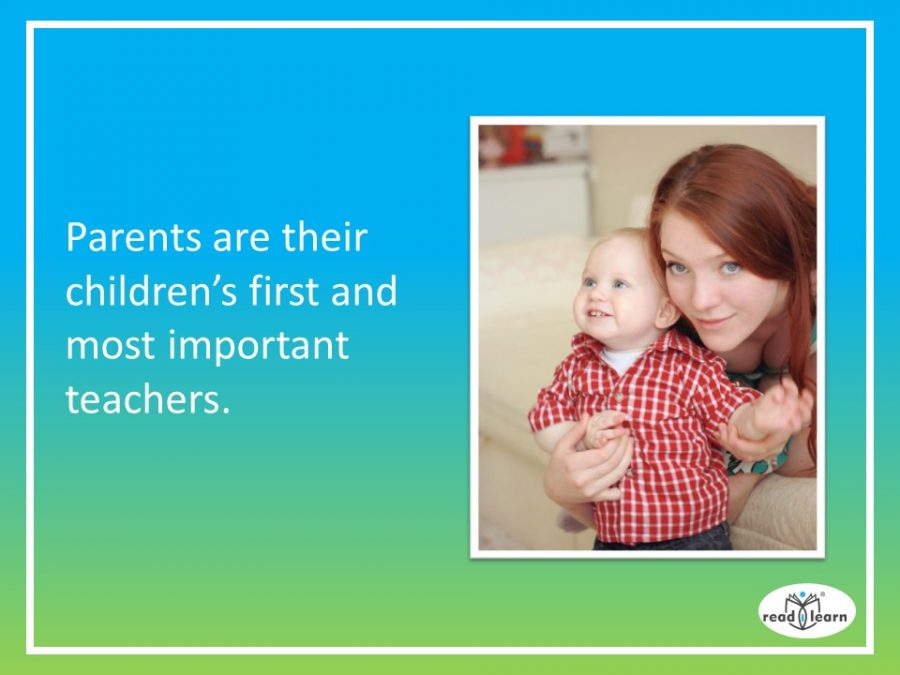
Not all learning happens in school. It has always been that way. While teachers are responsible for children’s learning of curricula, and held responsible for more than they really should be, parents have always been their children’s first and most important teachers.
It is in those years before school that children learn many of their attitudes to life and learning, develop language and, hopefully, a love of reading. It is parents who are the primary influencers in the early years. And that doesn’t change once they start school. Ask any teacher.
Now that many schools are closed and parents are required to support their children’s learning at home, many parents are feeling anxious and lacking in confidence about their ability to do so. It is understandable when, for so long, it has been the expectations that, at age five or six, parents will pass over the responsibility for their children’s academic progress to teachers.
Parents, you’ve got this.
Parents, I say to you, for these, hopefully, few short months out of school, you’ve got this.
The situation for us at Easter this year is very different from any we’ve experienced before and, hopefully, are unlikely to experience again. Wherever you are, I hope you are able to find some joy in the traditional Easter message of hope.
I have uploaded three new resources this week to add to the readilearn Easter collection. As my Easter gift to you, I have made these three new resources available free until the end of April. Many other free resources are also available in the collection. Please enjoy!
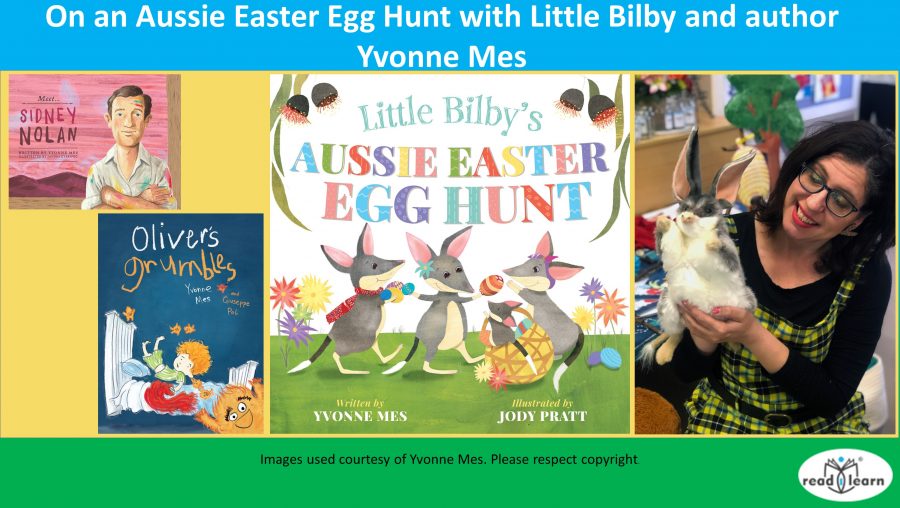
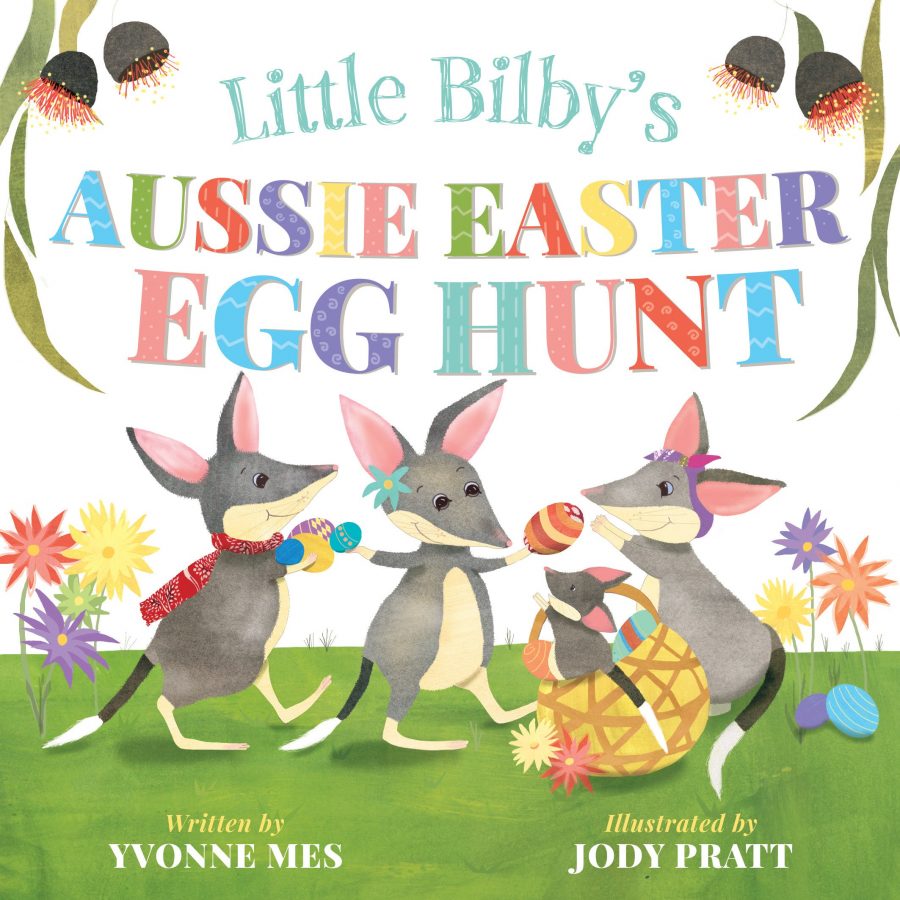
Today, it is with great pleasure that I introduce you to Yvonne Mes and her delightful new picture book Little Bilby’s Aussie Easter Egg Hunt.
About Yvonne Mes
Yvonne Mes is a children’s author and illustrator from Brisbane. Her latest picture book is Little Bilby’s Aussie Easter Egg Hunt. Other picture books by Yvonne are Oliver’s Grumbles (Yellow Brick Books) and Meet Sidney Nolan (Penguin Random House).
Yvonne coordinates Brisbane based writers’ group, Write Links, reviews children’s book for KBR (Kids’ Book Review) and runs No Nonsense Critiques. She buys more books than she can read, comes up with more ideas than she can write or illustrate and has more children than she can manage. But she does try very hard, and best of all, she is NEVER bored.
About Little Bilby’s Aussie Easter Egg Hunt
Near bush and scrub and oceanfront, they tiptoe on their Easter hunt . . .
A group of baby bilbies are on an Easter egg hunt. They find all kinds of eggs – a kookaburra’s egg, a turtle’s egg, a cassowary’s egg – before the little bilbies finally find what they’ve been looking for: Easter eggs to share with all their friends.
This colourfully illustrated picture book showcases the diversity of Australia’s egg-laying animals. Each spread reveals an egg in its natural environment and asks the question ‘Whose egg could this be?’. After turning the page, the egg is matched with the animal it belongs to.
Why I like this book
Little Bilby’s Aussie Easter Egg Hunt, gorgeously illustrated by Jody Pratt, is a fun story that is sure to delight young children as they go on an Easter egg hunt with Little Bilby, finding eggs that belong to others before they find the eggs that they can share.
If they are not already drawn in by the sparkles on the front cover, children will love the rhythm and rhyme and join in with the repetitive text as they seek and find eggs belonging to Aussie egg-laying animals, kookaburra, turtle and cassowary.
While not really about a character taking charge, as Charli suggested, my thoughts went to the stampede that occurred in supermarkets across the globe earlier this month, and I wondered who had initiated it and how they had achieved such a dramatic result. It seemed to me that it was more suited to an April Fools’ Day joke (that’s tomorrow, folks) than a serious event organised by the March Hare. Not that I would approve of such a joke.
I remember being warned in the early seventies (way back last century) about the use of subliminal messaging in cinema advertising. I never liked the idea that someone could be trying to control my thoughts and actions with subliminal messages. Now, of course, we have social media. There’s nothing subliminal about that and the effect is more immediate and more widespread.
The toilet paper stampede occurred because of a fictional shortage which then became a reality because people were buying in bulk and hoarding it, meaning there was none for anyone else. People seemed to be doing it because everyone else was doing it, regardless of the reassurances we were being given that there was, and never would be, a toilet paper shortage.
This, in turn, reminded me of the story of The Emperor’s New Clothes by Hans Christian Andersen. It has been one of my favourite stories since childhood. I could never understand why people would join in admiring the emperor’s clothes when they must have been able to see that he wasn’t wearing any. However, the very clever trickster weavers pulled the perfect April Fools’ Day joke by telling everyone that only the clever could see the clothes. Who would dare to admit their lack of cleverness? I was always pleased that it was the children who were brave and honest and spoke up to denounce the scoundrels.
So, with April Fools’ Day on 1 April and Hans Christian Andersen’s birthday on 2 April, it seems the perfect time to think about who might be in charge. This is my story. I hope you like it.
Charge!
As if a starting gun had been fired, the children scattered, looking in grass, under rocks, in branches of trees.
“What’re you doing?” asked the playground supervisor.
“There’s eggs, Miss. Easter eggs — millions of ‘em. Enough for everyone.”
“How many’ve you found?”
“None yet. Gotta keep lookin’.”
After a while, the searching slowed. “How many’ve you got?”
They showed empty pockets and empty hands.
The supervisor said, “Who said there were eggs?”
They shrugged.
When the punishment was handed down, the instigators explained, “It was just an experiment to see how many’d be sucked in. We meant no harm.”
I want you to know that this is not a joke: I may join in these challenges only intermittently for the next few months due to work commitments. I may also not get to visit your blogs as often as I would like but know that I will get there as often as I can. Stay well and happy and keep your distance from that awful virus.
Thank you for reading. I appreciate your feedback. Please share your thoughts.
We are only a quarter into the year but it seems so much longer with so much happening and situations changing constantly. While the situation will be far from business as usual for most of you, I will try to keep this post as close to usual as possible.
Whether children are at home or at school, their learning must continue. readilearn supports you with lessons and activities that focus on progressing children’s learning rather than simply keeping them busy. With resources easily affordable, and many of them free, readilearn is good value for teachers or parents working with children aged 5 – 7. If you feel yours is a special situation which places this low-cost resource out of your reach, please contact us.
April Fools’ Day
Be careful on 1 April as it is April Fools’ Day and tricksters and pranksters are about. Be on the lookout for fake news stories and all sorts of jokers trying to trip you up. Who will you trick?
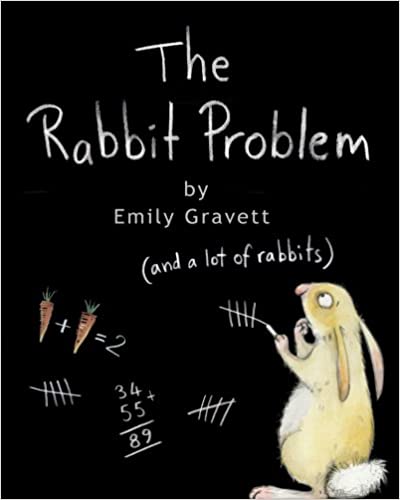
As I mentioned in my comment on Charli’s post, all I could think about was the Fibonacci Rabbit Problem.
I wrote about the Fibonacci number sequence previously in a post called Counting on Daisies.
In the Fibonacci sequence, each number is the sum of the two preceding numbers: 1, 1, 2, 3, 5, 8, 13, 21, 34, 55, 89, and so on.
As the sequence progresses, the numbers get exponentially larger, not unlike the numbers succumbing to the dreaded virus that engulfing our world at the moment.
The number sequence occurs naturally in many situations; for example, in bee populations, in spirals of snail shells, in leaves on plants and petals on flowers.
But who was Fibonacci, why does he have a number sequence named after him, and what is the problem with rabbits?
Fibonacci was the Italian mathematician who introduced the Arabic-Hindu system of numbers and arithmetic (the numbers we use) to the Western World in the 12th Century.
Fibonacci wasn’t his real name. He was really Leonardo Bonacci. His famous book Liber Abaci was handwritten, long before the era of the printing press (let alone computers and indie publishing). A couple of centuries later, some students reading his tome, misread what he had written (‘filius Bonacci’ meaning ‘son of Bonacci’) as Fibonacci and that’s how he’s still known today.
Fibonacci (Leonardo Bonacci) wrote about the number sequence that now bears his name in his book Liber Abaci. He explained the sequence using an example often referred to as The Rabbit Problem. The problem involves rabbits breeding profusely. While the situation described isn’t necessarily accurate, it is entertaining and helps us get the picture.
A beautiful picture book by Emily Gravett, also named The Rabbit Problem, is a fun way of introducing the concept to children. Set on Mr Fibonacci’s farm, the rabbits multiply each month for a year according to the number sequence. However, each month, new problems for the rabbits arise.
If you’re interested in finding out more about Fibonacci’s numbers, I highly recommend this video by mathemagician Arthur Benjamin.
But now for my story in response to Charli’s challenge. Perhaps it has an underlying message suited to these troubling times. Maybe you’ll see it too. If not, I hope it’s just a fun story that you enjoy.
What Rabbits?
“Wassup?” He knew something was when she stopped rocking.
“Nothin’.” She continued rocking.
“Musta bin somethin’.”
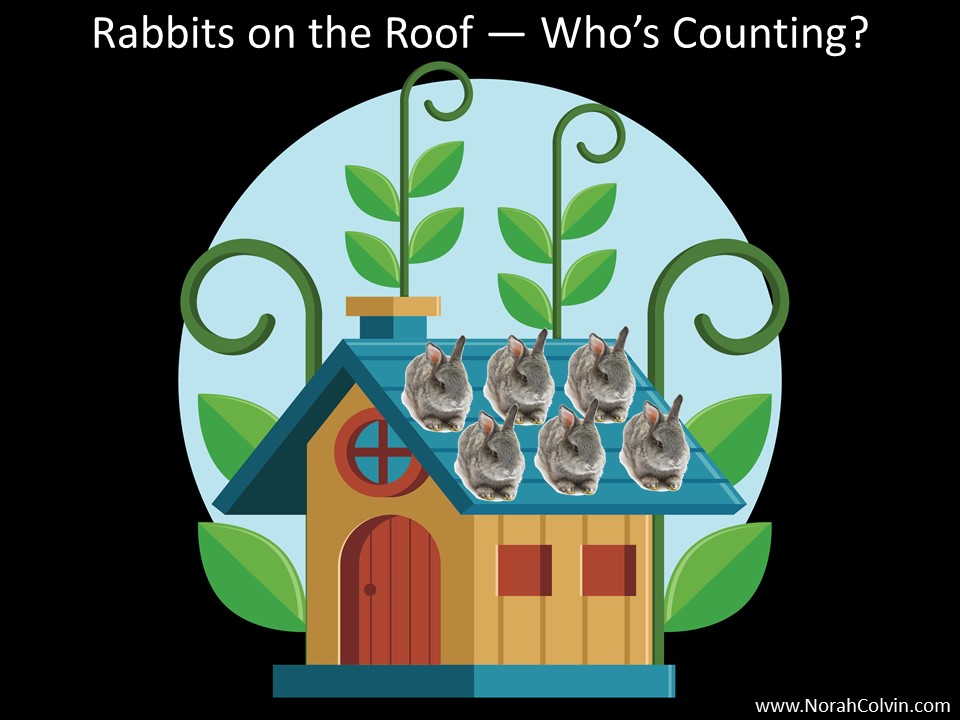
“Nah. Thought I saw a rabbit on that roof, is all.”
“I ain’t never seen no rabbit on a roof.”
“You ain’t never seen nothin’.”
“What?”
“Thought there was two rabbits on that there roof.”
“That’s crazy.”
The rabbits multiplied, but she never stopped rockin’ and she never said nothin’.
One day, he stopped.
“Shhh. I hear somethun.”
“What?”
“Sounds like …”
A multitude of rabbits exploded from the roof, landing all around, even in their laps.
“What?”
“Nothin.”
They kept on rockin’.
Thank you for reading. I appreciate your feedback. Please share your thoughts.
Easter is coming in 2020 along with school holidays, school closures and lockdowns. While readilearn lessons and activities are designed with teachers of the first three years of school in mind, perhaps, in these challenging times, parents may also find them useful in supporting their children’s learning while they are out of school.
The collection now numbers over 400 resources and more than 70 of these are interactive lessons and stories. All resources can be accessed with a small annual subscription or purchased individually. Many of the resources are free.
While teachers would normally use the interactive lessons on the interactive whiteboard with the whole class or small group, parents access them on their home computers. Just as teachers would discuss the resources when using them with a class, so too, parents discuss them with their children as they work through them together. The most benefit for children comes from the discussion. They are not designed for children to use independently.
Lessons and activities with an Easter focus
Lessons and activities in the readilearn collection cover a range of topics and curriculum areas. However, the focus of this post is on those with an Easter theme and how they can be used to keep the children thinking and learning while having fun. (Note: All readilearn Easter-themed resources can be found here.)
As it usually does, the prompt led me to children and education, especially the empowerment that comes from being able to read. Reading is the key that unlocks the wonders of the world.
While not a continuation of previous stories, it does include some of the characters. I hope you like it.
The Key
Tap-tap-tap, tap-tap-tap.
Peter removed his headphones.
Silence.
He returned to his game. ZING! KAPOW! BOOM!
Tap-tap-tap, tap-tap-tap.
There it was again. Incessant.
What was It? Where was it?
He placed his tablet and headphones on the couch and crept towards the sound — the bookcase!
Tap-tap-tap, tap-tap-tap.
With every step, the tapping intensified. The dusty glass obscured the interior, but the key was in the lock. Should he, or shouldn’t he?
He did!
Into his lap tumbled a rainbow cat, a girl in a hood, a herd of dinosaurs, an Egyptian Pharaoh and all the wonders of the world. Magic!
Thank you for reading. I appreciate your feedback. Please share your thoughts.