Live Love Laugh Learn … Create the possibilities

Tag: Writing

  • Paying it forward – a Liebster Award!

    Paying it forward – a Liebster Award!

    Last week I was intrigued, surprised and delighted to find that I had been nominated for a Liebster Award.

    I was intrigued because I had never heard of a Liebster Award; had no idea of what it was for or why I should have been nominated for it;

    I was surprised because I’d had no inkling that such an honour was about to befall me;

    and I was delighted to receive the nomination from fellow blogger, Harriet the Bloom whose blog is “A place for educators to reflect, recharge, and revive.” Thank you, Harriet, I am indeed honoured.

    In reality, before feeling delighted and honoured, I felt a little confused. Confusion, if acted upon, leads to learning. So I headed over to Google and Harriet’s blog to see what I could find out.

    It appears that the purpose of the Liebster Award is to:

    • provide encouragement for new bloggers with a following of fewer than 200
    • promote communication between bloggers,
    • recommend blogs to others.

    Nominating others for the award is like paying a compliment forward.

    According to Harriet, the
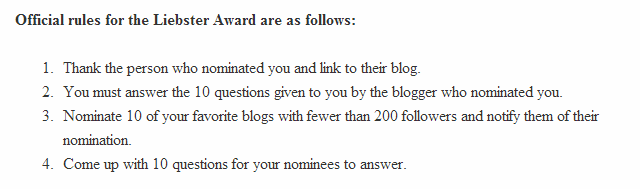
    Liebster rules

    Answers to the 10 questions posed by Harriet:

    1. Congratulations! You just won the Liebster Award! What are you going to do next?

    The immediate answer is contained in this post. The longer term answer is: keep on blogging!

    2. Describe yourself in three words.

    Happy. Thoughtful. Loyal.

    3. Describe your thoughts on your very first job.

    In my early teens I swept out a carpenter’s workshop on a Sunday morning. It was hard, dirty, tiring work. The head of the heavy wooden broom was about 60 cm long and difficult to manoeuvre. It would take about 2 hours to sweep up all the sawdust and I would go home and sleep for about the same length of time to recover. For hours I would be blowing black dust out of my nose, but the crisp $1 note I received in payment was sufficient encouragement for me to return and do it all again the following week.

    4.If you could go anywhere in the world, where would you go and why?

    I would love to visit Monet’s garden. I would love to sit on a seat near the bridge overlooking the waterlilies and ponder the big questions of life. I would like to share my contemplations with the artist, his contemporaries and philosophers from all eras. I love the works of Impressionist painters, especially Monet’s Waterlilies and Van Gogh’s Starry Night. The mood evoked by these beautiful paintings is especially conducive to philosophical musings.

    5. I like food. What is your favorite recipe?

    Whenever we have a family get-together it is expected that I will make a pavlova. It is enjoyed by all generations, and although I make a double (using 8 egg yolks) there is rarely any left over.

    However, for birthdays and Christmas with my immediate family (husband and children) I usually make a strawberry torte. It is a special treat that I have been making on these occasions for almost 40 years. While the in-laws find it a little rich for their taste buds, the grandchildren are taking to it in true Colvin fashion.

    OLYMPUS DIGITAL CAMERA

    strawberry torte

    6. Give a short summary of the book you are currently reading.

    As usual I have a few books “on the go” at the moment, but the one of which I have read most at this stage is “Why ‘a’ Students Work for ‘c’ Students and Why ‘b’ Students Work for the Government: Rich Dad’s Guide to Financial Education for Parents” by Robert Kiyosaki. Of course it appealed to me because of its relevance to education and because I had read others of his books years ago: “If You Want to be Rich & Happy: Don’t Go to School” and “Rich Dad Poor Dad”. In this book Kiyosaki contends that schools don’t educate students for financial success and urges parents to teach children about finances at home. He suggests that playing “Monopoly” is a great way to start. He is greatly concerned about the “entitlement mentality” which he considers to be so pervasive in our society. Some of his ideas are challenging and confronting; others make perfect sense. I recommend the book to anyone wanting to achieve financial independence. I would love the opportunity of discussing his ideas with others.

    7. What inspired you to start blogging?

    Blogging wasn’t a goal, or even an idea, initially. My intention is to create my own website to market teaching resources that I produce. I have a lot of learning to do before I am ready, and part of that learning involves attending seminars. Some of these seminars recommended having an online presence and building a “brand”. Blogging was suggested as one avenue for achieving this. I decided to give it a go, and have found it rewarding in itself – an unexpected pleasure, delightful detour and amazing adventure.

    8. How did you come up with the name for your blog?

    My blog is simply my name; that wasn’t difficult.

    9. What do you do when you experience writer’s block?

    Eat. Procrastinate. Go on with something else. Push through it. Write around it.

    10. Which post are you most proud of and why? Provide a link.

    This is tricky. I don’t think I’ve written it yet! However I very much enjoyed the comments and discussion that ensued from my series of posts about “The Examined Life” by Stephen Grosz.  The series includes:

    A book worth reading: Stephen Grosz “The Examined Life”

    Seeking praise – Stephen Grosz revisited

    and a guest post by Anne Goodwin in response:

    Examining praise: Stephen Grosz – the third instalment!

    The discussion stretched my thinking and learning and I am grateful to all participants in the conversation. Learning is what life is all about!

    Nominate 10 bloggers for the Award:

    As the rules appear to be blurred rather than definite e.g. Harriet’s rules differ slightly from those on Wording Well , which differ again from those on Sea Play Photography, I decided to nominate 13 bloggers.

    Belinda Pollard of Small Blue Dog Publishing (Australia)

    I’m starting with Belinda Pollard of Small Blue Dog Publishing because it was Belinda’s recommendation that prompted me to enter the world of blogging and tweeting. At a seminar hosted by Queensland Writers Centre last year Belinda urged all writers to have an online presence. She said that Twitter was like the water cooler for writers. I’m beginning to see that she was right. Belinda’s posts about all aspects of writing and self-publishing, including blogging, have been a great source of information for me and I appreciate what I have learned from her.

    Belinda, I know you have thousands of followers on Twitter but Word Press tells me that you have fewer than 200 followers on your blog so I hope you are happy to accept this award.

    NANNY SHECANDO (Australia)

    Next I’d like to introduce you to Hope who blogs at NANNY SHECANDO. Hope blogs about her experiences as a nanny, cooking and craft. She says, “We’re staying young, Peter Pan style, by embracing the creativity and sunshine in life.”

    Anne Goodwin (UK)

    Anne Goodwin’s website is rich with things to read: short stories, interviews with authors, book reviews, blog posts and more. Anne is one of the writers I met at ‘the water cooler’ and we have had many interesting and thought provoking conversations since then. I love the way Anne has called her website Annethology and her blog Annecdotal. She tweets @Annecdotist. Very clever!

    Caroline Lodge (UK)

    Caroline Lodge blogs at book word . . . about books, words and writing. She joined with Anne and me and we stood around the water cooler sharing ideas and exchanging thoughts. I’m certain you will find much of interest on her blog including suggestions for blogging, great books to read and writing tips.

    PS Cottier (Australia)

    For a little bit of poetry I recommend PS Cottier who posts a poem every Tuesday, and occasionally writes prose.

    Teachling (Australia)

    Teachling is a blog dedicated to improving education with ideas about teaching, learning and parenting. Teachling believes that “Improving a child’s life-chances is everyone’s responsibility” Along with me and millions of others, Teachling is a big fan of Ken Robinson.

    I have always enjoyed reading philosophy and engaging in philosophical discussions. I support the teaching of philosophy as an active thinking subject in schools and am excited about the benefits of a thinking population to the future of our world. I have two great blogs to recommend in this category:

    Peter Worley’s philosophy foundation (UK)

    Michelle Sowey at The Philosophy Club (Australia)

    Note: Last year I reblogged one of Michelle’s posts:

    Can you kill a goat by staring at it? A critical look at minimally invasive education

    There’s No Food ( Australia)

    A bit closer to home (actually much closer to home, it’s my daughter’s blog) I’d like to recommend There’s No Food. Bec blogs about “wholefoods, vegetarianism, slow living and their existential friends.” She has interesting thoughts about the impact of our food choices on the environment and practical suggestions for changes we can make to our everyday routines.

    Obscure Pieces (Australia)

    Glenn at Obscure Pieces expresses himself through black and white photography. His special interest is urban and landscape photography. He frequently offers support and comments on my posts and has generously allowed my use of some of his photographs. Thanks Glenn.

    Cultivating Questioners (USA)

    On her Cultivating Questioners blog, Nicole posts about her experiences as a teacher, especially encouraging her young students to use higher-order thinking skills . I love to see a young teacher so passionate about education.

    Nillu Nasser Stelter (UK)

    Nillu Nasser Stelter is a fiction and freelance writer and her blog features short stories, flash fiction and tips for writing. I love the ways she uses words effectively in her writing to create a picture or emotion.

    Carrot Ranch Communications (USA)

    Charli Mills at Carrot Ranch Communications also blogs about writing. As of Wednesday 5 March she launched a flash fiction challenge. Each week writers have the opportunity to accept the challenge to write a 99 word “story”. This is something I haven’t done before so I’m hoping to join in the fun. What about you? I’m sure it’s not as easy as it sounds!

    Now my nominees, it is your turn.

    These are the things I would like to know about you:

    Note: Although I have listed 13 questions, you need answer only 10. You may substitute one of your own if you wish.

    1. What do you value most in life?
    2. What activities do you enjoy and why?
    3. What is something you wish you had more time for?
    4. What is one change you would like to make in the world?
    5. What is something you would like to change about yourself?
    6. What surprises you most about your life – something good in your life that you hadn’t expected, dreamed of or thought possible?
    7. What ‘big” question do you often ponder?
    8. What sorts of things amuse you?
    9. What do you like to collect?
    10. If you could talk with anyone and ask them to explain their ideas and/or actions, who would it be, and why?
    11. What is something you can’t do without?
    12. What is something important you learned about life, and how did you learn it?
    13. What is your earliest memory?

    I look forward to reading your responses and continuing our discussions at my place or yours!

    Happy blogging!

    Footnote:
    How to find out the number of followers on a blog:
    For Word Press blogs:
    View the blogs in the Reader
    Click on the blog name at the top of the blog
    Lo and behold, you will be provided with the number of followers. Easy for Word Press.
    For other blogs
    I wasn’t sure how to find out for others not using Word Press so I sent them a message on Twitter asking their numbers. Simple.

  • Would you believe?

    When I was growing up “Get Smart” was a popular show with my family and friends.  The question “Would you believe . . .?” was often asked humorously, in Max-style, starting off with an exaggerated and unbelievable suggestion, then moving through a series of diminishing magnitude to the, often insignificant, reality.

    I am not going to start with an exaggeration for I am rather pleased with what I have achieved. I wish to make no comparison with anyone else who may have achieved a whole lot more, or even those who may have done less. I just know that I have learned a lot, and in fact, have learned so much that I now know what future learning I need to do.

    If you know nothing, you don’t know what you need to know. It is only when you know something that you get an inkling of what there is to learn.

    If, this time last year, you had said to me:

    “One year from now you will be writing a blog and publishing your fiftieth blog post; you will have over 800 followers on Twitter and you will engage in conversations with people from all over the world.”

    I would have laughed and said you were crazy. I had no thought of writing a blog and thought Twitter was just for twits.

    travel-map
    http://www.openclipart.org
    van
    http://www.openclipart.org

    I had followed only one or two blogs posted by family and friends on holidays so knew nothing of the pleasure or potential of writing or following blogs.

    Eating-Breakfast-like-Pig-1
    http://www.openclipart.org

    What I “knew” of Twitter was minimal and misinformed. I thought it was people sending messages about eating breakfast, going to the bathroom and other mundane events. I couldn’t see the point in that.

    How wrong were my misconceptions how they have changed!

    How I have changed.

    What I would have considered a Max-style exaggeration a year ago is now a reality. And it didn’t take a year. It has all happened in just six months.

    tweet_birs-2
    http://www.openclipart.org

    Six months ago I published my first blog post and tweeted for the first time.

    I was both nervous and excited and had no expectations other than to see what would happen.

    I am delighted with the result: the learning I have done, the people I have met and the way my writing has grown. One of the greatest pleasures is having control over what I write; another is meeting so many interesting people, some like-minded and others with differing views, but all supportive and willing to share their knowledge, ideas and thoughts.

    I wouldn’t have started upon this journey without the Queensland Writers’ Centre (QWC).

    cropped forest
    http://www.morguefile.com

    In late 2012 I did a couple of sessions about digital publishing with Simon Groth (Manager of if:book Australia), and another at the beginning of 2013. While the talks were fascinating and I learned a lot, I was such a N00b that it was all still a forest to me and I couldn’t see the path to take me in and didn’t have the tools to clear a path. I needed more time to absorb the information I had heard and work out what to do with it. I still wasn’t convinced that blogging and social media were for me.

    Belinda Pollard of Small Blue Dog Publishing changed all that at another QWC session in June. I am very grateful to her for convincing me that this was the way to go and that I just needed to get started. She described Twitter as the “water cooler for writers” and a great way to meet other writers.

    Less than two months after hearing Belinda speak I was on my way, hacking a path through the undergrowth, searching for the warmth of sunlight through the canopy.  My quest for information started with her website  and crawled its way out and around other websites and blogs, some of which I return to often for reassurance, reminders and more information.

    Now in answer to the question, “Are you experienced?” I can reply with a very definitive: ”Yes, I am experienced!”

    I have lost my nervousness, but not my excitement. I have grown in confidence and knowledge but know that there is so much more to learn. In my Twitter profile I say that I was born too soon, but maybe I just started late. Considering that there were no computers and no internet for more than half my life and the only “mobile” phone I knew in my younger days was Maxwell Smart’s shoe, I think I’m doing okay in the catch-up.

    In addition to all the generous bloggers and twitter users who have helped me along the way, many without knowing it, I am also very grateful to you, my readers and followers, who have visited, commented, liked, favourited and otherwise shared my posts and tweets, but more especially your knowledge, support and ideas.  While I had no expectation that any of you would drop by to read or engage me in conversation, I’m so glad you did. Thank you. Please stay with me as my journey continues.

    Thank_you_pinned_note
    http://www.openclipart.org
  • Whose idea is it anyway?

    Whose idea is it anyway?

    First of all, let me say, there is nothing scientific in this article.

    The notions, unless otherwise attributed, are just my thoughts and ideas.

    Or are they?

    Have you ever had an idea just ‘pop’ into your head?

    What about an entire poem or song? Maybe even a story?

    Have you ever had an idea; only to find out that another has had almost the exact idea at roughly the same time as you with no chance of collaboration or leak?

    Where have these ideas come from?

    Do you really think you have thought them up when they have come fully-formed and unbidden?

    Sometimes I am not so sure.

    ryanlerch_thinkingboy_outline
    http://www.openclipart.org

    Sometimes an idea pops into my head; an idea with no connection to any current thought. It may take me by surprise and make me think: Why didn’t I think of that before? Or rather, why did I think of that at all?

    I can’t explain the force that at times propels my hand across the page, fervently trying to keep pace with and capture the words as they spill forth, lest they escape to a region from which they would never be retrieved.

    Sometimes I’ve written stories, which I may, or may not, have submitted to a publisher, only to find another very similar in print not long after. How can this be? There was definitely no collusion. My story had been written before the other was in print; and the other would have been underway by another publisher before mine had been submitted.

    Have you ever noticed that often two movies on a similar topic or theme are released almost simultaneously? Is this coincidence or planned?

    I know that sometimes songs are very similar, and in fact, there have been court cases over certain bars and riffs. I am surprised this doesn’t happen more often. How can new combinations of notes still be arranged? How difficult it can be to get a melody out of one’s head. How much more difficult it must be to be certain whether that melody is one of your own creation or one that your ears have captured.

    image courtesy of openclipart.org
    image courtesy of openclipart.org

    I remember hearing someone suggest, many years ago, that there are many ideas out there (floating around somewhere in the universe?) ready to be picked. Sometimes they are picked simultaneously by different people in different places around the world.

    I wasn’t too sure about that, but it did provide an explanation, of sorts, for the duplication of ideas.

    A few months ago, I listened to a fascinating TED talk by Elizabeth Gilbert: Your elusive creative genius.

    The focus of Elizabeth’s talk is a little different from my own, but she did offer some thoughts on this topic also.

    I was particularly interested to hear that in ancient Greece and Rome

    people did not happen to believe that creativity came from human beings . . . People believed that creativity was this divine attendant spirit that came to human beings from some distant and unknowable source, for distant and unknowable reasons.

    The Romans called this entity a “genius”. A genius was not a clever individual. It was the spirit that would help shape the artist’s work. The artist did not need to take full credit or responsibility for the work, as the work was that of the “genius’ working through the artist.

    Now that seems to support the notion of ideas arriving fully-formed, as does this next one:

    Elizabeth went on to talk about the American poet, Ruth Stone, who described how “she would feel and hear a poem coming at her from over the landscape” and she would have to run back to house in order to “collect it and grab it on the page” before it thundered on to another poet. I won’t quote the whole story here. Please follow the link to read the rest. It may surprise you as much as it surprised me!

    Looking for a little more content for this article, I came across this blog post by Amanda CraigSynchronicity, or when writers have the same idea

    Amanda writes,

    “Synchronicity is when two or more people have the idea at the same time. Science is littered with examples of this. Darwin only published his Origin of the Species because a fellow biologist had also deduced the concept of natural selection, and sent him his own book in manuscript; several people can claim to have invented the computer, and so on. So, too, in literature. I still remember a Spectator Diary Susan Hill wrote when she found out that Beryl Bainbridge was working on a novel about Scott’s doomed expedition to the Antarctic. She had to abandon it. Rival biographies of the same person are commissioned simultaneously, and sometimes even films (like the two versions of Les Liasons Dangereuses).”

    Now, is that just what I’ve been talking about?

    Follow the link to her entire article to find out what she thinks about synchronicity.

    Still eager for more, this article about Multiple discovery explains that scientists, also, are similarly burdened and, according to Robert K. Merton

    Sometimes the discoveries are simultaneous or almost so; sometimes a scientist will make a new discovery which, unknown to him, somebody else has made years before.

    So where is all this leading me?

    It is simply to introduce the poem,  “A leaf floated down” which came to me as I was preparing for my day. The thoughts were not connected to any others of the moment; the first verses simply wrote themselves, and the parts that I am least happy with, are the parts I laboured to bring forth. I hope it is my own!

    I’d love to know what you think about this synchronicity that we, as creatives, often experience. Please share your thoughts!

  • “I love the mountains”

    More than 30 years ago I had the extreme good fortune of being at Brown bear brown beara literacy teachers’ conference at which Bill Martin Jr. (author of “Brown Bear, Brown Bear”) was speaking. What a memorable occasion it was.

    At the moment I can recall no other speakers, but I have never forgotten the captivatingly melodic and sonorous voice of Bill and the power of his message.

    Bill inspired his audience as he spoke about coming to reading later than most, at about the age of twenty, by teaching himself to read through his love of poetry. He attributed this love to being read to daily as a child. His delight in and playfulness with language was obvious as his voice danced through his stories, poems and songs to the accompaniment of his rich lilting laughter.

    He demonstrated, through audience participation, the joy of learning through song and the importance of the sounds and rhythms of language. Having fun and playing with language provides much joy for adults and children alike.

    In the days of overhead projectors, long before the now familiar electronic slideshows, Bill displayed a simple song “I love the mountains” on the screen. In an instant he had the audience rollicking in their seats, singing along with the words on the screen, and following the rhythmic lead of his voice without any other accompaniment. The energy created by this spontaneous engagement of the audience was electrifying. How could anyone not wish to participate? I quickly noted the words and tried desperately to commit the tune to memory. (I have since found out that this is a traditional camping song but, since I am not a camper, it was unfamiliar to me at the time though it may have been known by other members of the audience.)

    image courtesy of openclipart.org
    image courtesy of openclipart.org

    Every year since then, I have shared that song with my children.

    At the beginning of year one, in their 2nd or 3rd week of school, long before many of them could read or write very much at all, I would write the words on a chart and have them singing along, sharing through me, Bill Martin’s joy of song and language.

    One title in the "Sounds of Language" series
    One title in the “Sounds of Language” series

    Then, as soon as they were masters of the tune, we would engage in another of Bill’s suggested activities, “transforming sentences”. As Bill recommended, they were “taking an author’s structure and hanging their own thoughts on it.” (Sounds of Language, 1972)

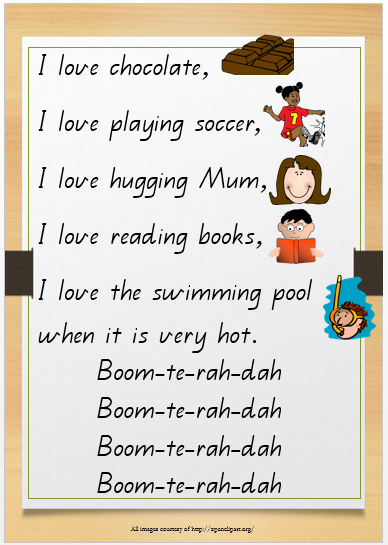
    We changed Bill’s choice of “loves” for our own, and wrote our own collective song, which we sang repeatedly and with great gusto. Although the original did include a rhyme, we didn’t concern ourselves with that at this stage. We just concentrated on sharing our loves in a song such as this one:

    I love chocolate

    While they were having fun with language, the children were also learning a subtle and unstated lesson about how powerful a tool for communication self-expression through language, both oral and written, could be.

    The children’s suggestions for things they loved were many more than the lines of one collective song would allow, so there was nothing else to do but write one of their own. Which they did. They had already seen how easy it was. They knew the rhythm.  They had the basic sentence structure. All they had to do was substitute their own thoughts and make the song their own.

    How wonderful it was to hear the children singing their own lyrics as they wrote them, ensuring that the words telling of their loves fitted the rhythm of the song. The children delighted in sharing their songs with each other and with anyone else who would listen. At the end of the day they took them home to share with their parents as a special gift of themselves for Valentine’s Day.

    While my children did not have the benefit of Bill’s magical voice, or even a tuneful model from me, they delighted in his song. You can share a version (without Bill’s voice, or mine) by clicking here.

    Why not create your own songs, and support your children to create theirs, using this song model. You’ve seen how easy and joyful it can be. A song to sing about things you love is a little “happiness pill” that can be taken daily with no known side effects.

    I invite you to share your own versions here for us all to enjoy.

    Bill Martin Jr. wrote in Sounds of Language (1972):

    “As children gain skill in using their ears to guide their eyes in reading, they have a qualitatively different reading experience. Consider the young child who has frequently heard his teacher read “Ten Little Indians.” Once a child has these sounds clearly and solidly in his ear, he has little difficulty reading this old rhyme in its printed form. Once his ears begin telling him what his eyes are seeing, he approaches the reading with confidence and expectation. And when he comes to his teacher and exultingly declares,

    I know that word, Miss Barber! That word is “little!”

    she has evidence that he is relating sight and sound in reading.”

    What a joy and honour it is, as an early childhood teacher (including parent) to share a child’s journey into independent and joyful reading and writing.

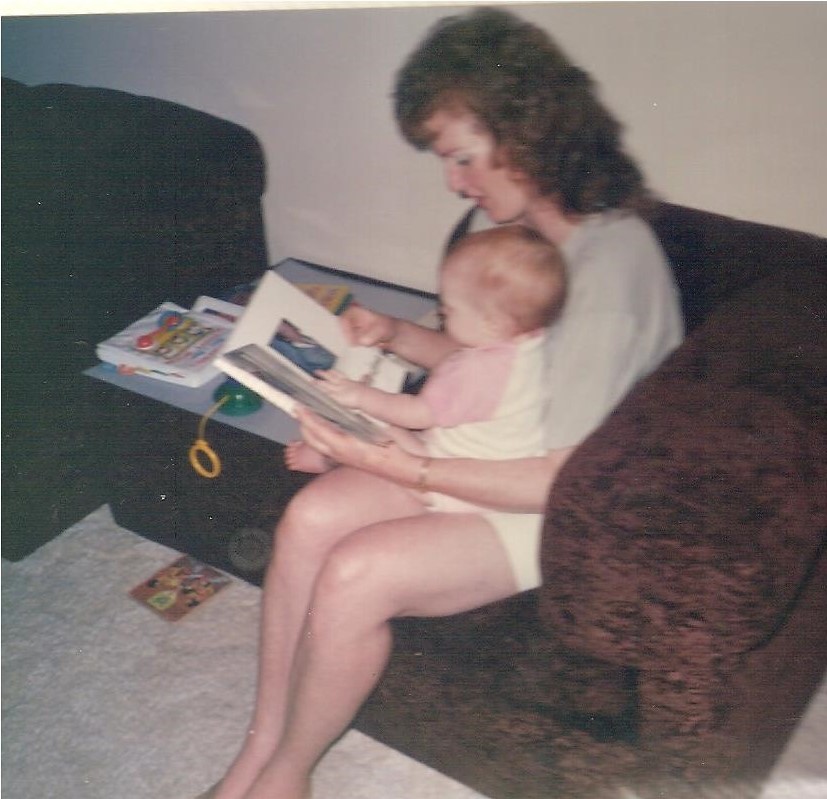
    Nor and Bec readingwriting

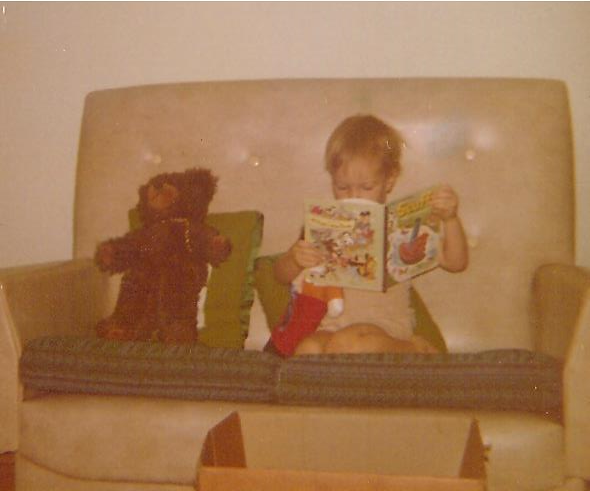
    Robert 2

    It was a sad day when Bill Martin Jr. passed away on August 11, 2004, but his legacy lives on in the hearts of many readers, both young and old, whose lives have been touched by his love of language, and who may have indeed stepped across the threshold into reading through one of his many wonderful books.

    Click on the title to listen to Bill singing another fabulous song “I am Freedom’s Child” and his message for democracy: what another great song to start each day!

    I will have more about Bill Martin Jr. and his legacy in future posts.

    If you liked this post, please subscribe to follow.