Live Love Laugh Learn … Create the possibilities

Tag: teaching

  • Eroding thoughts

    Uluru © Norah Colvin 2015
    Uluru © Norah Colvin 2015

    This week at the Carrot Ranch Charli Mills is talking about erosion, but not just the literal kind. She says “It can be natural, cultural or something different.” Of course I must answer my usual call to tackle the “something different”.

    Generally, erosion refers to the wearing away of the earth. Sometimes it signifies the disintegration of our resolve, our self-image, or of our spirit. Just as various strategies can be employed to prevent erosion or to repair damage incurred by the land, there are strategies that can be used to shore up one’s resolve, build self-esteem, and mend a sagging spirit.

    rejection slip

    Perhaps nobody knows this better than writers with their stashes of rejection slips rated from encouraging to just plain rude, or non-existent. Few have achieved success without first receiving a downpour of those slips, who haven’t had to work at their skills and accept the edits without eroding their intended message. Sometimes it seems that, with every move, one lands on the “Go back to start” square; and that, while it feels like things are in motion, the end doesn’t appear any closer.

    go back to start

    Or maybe nobody understands the fragility of the spirit and self-esteem more than does a teacher; and of the importance of building on prior learning to take children from where they are to places they haven’t thought possible; to ensure their esteem stays strong and is not eroded by unrealistic expectations and the tedium of a repetitive diet of something meaningful only to others.

    Welcome pack
    Welcome pack

    I have written many times previously about the importance of establishing a supportive classroom environment, and of using affirmations in growing children’s confidence and self-image.

    This doesn’t mean a diet of empty praise, but it does mean that all individuals are recognised for what they can do, and are valued for the contribution they make to the classroom community. Included in these writings was a series, inspired by a Twitter discussion with Anne Goodwin, on praise culminating in Seeking praise – Stephen Grosz revisited and including a guest post by Anne.

    The Clever Children Resource

    I have also developed resources to support children’s growing confidence and self-image for inclusion on my in-progress website readilearn. One of these resources is a story called The Clever Children which teachers can personalise for use with their own class.

    The Clever Children printable

    Children write about and illustrate something they can do. The pages are then added to the story which is printed and collated into a book which can be placed in the reading corner or taken home to read to parents and siblings.  My children always loved being a part of this story. I am looking forward to other children being a part of it too. The story aims to build, rather than erode, self-esteem and a love of books and reading.

    Which brings me back to Charli’s challenge to In 99 words (no more, no less) write a story, using the power of erosion.

    The Nature Principle

    For my flash I combine two ideas:

    • Richard Louv’s suggestion in The Nature Principle that, for physical and mental health, we need to be more attuned with nature
    • the need for resolve and inner strength when faced with issues that would erode it.

    It’s not really a story, perhaps, but a moment in time. I hope you enjoy it.

    1 (7)

    The rock

    The rock, promising permanence, beckoned: perfect for contemplating expanses beyond while pondering life and one’s significance. She sighed, and succumbed. The waves, licking repetitively at the base, soothed somehow; as if each grain of sand stolen from beneath her feet loosened her tension. Becoming one with the rhythm, her heart sang the melody as her mind slowed, releasing all thought. Feeling whole again, as solid as the rock, and with renewed strength, she prepared to face those who sought to erode her. Though tides would rearrange and redecorate, and often do their best to annihilate, they could not obliterate.

    Thank you

    Thank you for reading. I appreciate your feedback. Please share your thoughts.

  • Teacher appreciation

    Readilearn bookmark

    In the US, for the entire month of May, people are encouraged to acknowledge and show appreciation for teachers who have influenced their lives. Although the first week is the main focus, I think it is wonderful to have a month dedicated to appreciating teachers. While I always felt the appreciation of my students and their parents, there seemed to be little shown in the community beyond that and it was often a struggle even to get World Teachers’ Day acknowledged in some places I worked.

    In previous posts here, here, and here, for example, I acknowledged teachers who had a positive impact upon my learning and my teaching. In this post I even shared a letter of appreciation written by a parent about me. It was lovely to read Emily Case’s Reflections on Teacher Appreciation Week and the acknowledgements she received from students and parents.

    From time to time I have shared the work of other inspiring teachers, and discussed with many, teachers who had influenced them. I was pleased to read this email in which President Obama honoured his fifth grade teacher, Ms Hefty. He said that she made everyone in the class feel special, and reinforced the value of empathy, a message which he carries with him every day.

    Thank you to my wonderful students, and their lovely Mum who made this for me!
    Thank you to my wonderful students, and their lovely Mum who made this for me!

    He wrote of librarians and their important role in bringing people and books together, and of programs to provide books for those who might otherwise not have access. He acknowledged that reading for just 20 minutes a day can have a powerful effect upon one’s life. I’m delighted to say that on those issues the President and I agree. They are familiar topics on my blog.

    For me there is nothing like passionate educators sharing their love of learning and the joy they receive from working with children.  I have to admit that it gives me goosebumps; but I am a softie at heart.

    In this post I am delighted to share with you a TEDX talk by teacher Lisa Lee who shares her passion for education and admits, as I also have, that she has learned more from her students than they ever learned from her.

    In the video she shares her belief that

    “Every single person has the capacity to make a difference”

    She also discusses the Common Core, but perhaps not in the form those words may conjure up for you. She speaks of the common core in the heart, and says it must come first. I can do nothing other than agree with her words:

    The common core – everyone one of us needs to be “valued, respected and accepted and seen as who we are”

    I hope you enjoy the video.

    Please share your thoughts and, if you care to, your appreciation for a teacher who inspired you. As President Obama said it can be a teacher who inspired you, a book that changed you, or a college that shaped you.”

    Thank you

    Thank you for reading. I appreciate your feedback.

  • Who teaches whom?

    GDJ, Playful stick figures https://openclipart.org/detail/230070/playful-stick-figure-kids
    GDJ, Playful stick figures https://openclipart.org/detail/230070/playful-stick-figure-kids

    The importance of play to a young child’s development and learning is a recurrent theme on my blog. Equally so is the recognition of parents as their child’s first and most important teachers. Alongside this is my acknowledgement of the contribution made by my children to my own learning, especially to my understanding of how children learn.

    Although I was often reminded that I had declared, “I’ll teach him,” when a younger brother was born, I had never given a great deal of thought to the teacher-role of siblings. How much that had to do with the reminders of my promise only coming when “naughty” things were occurring, I’m not sure.

    Whatever the reason for my lack of consideration, I was quite delighted when I came across the post Siblings are a young child’s most influential teacher by Deborah Stewart on Teach Preschool. In this lovely post Deborah provides a wonderful list of lessons learned from siblings, and supports it with beautiful photographic evidence of her three gorgeous grandchildren.

    Included in her list are things like learning to:

    • be imaginative
    • trust
    • be brave
    • try new things
    • be kind
    • laugh, and
    • love.

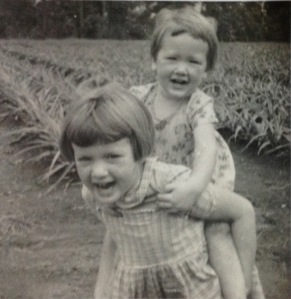
    I have a large number of siblings from whom I’m sure I learned many things. As my younger brother could testify, probably not all of them were good. Deborah’s post challenged me to think about what those lessons might have been.

    My big sister and me © Norah Colvin
    My big sister and me © Norah Colvin


    Here are some of the (better) ones I thought of, that weren’t on Deborah’s list:

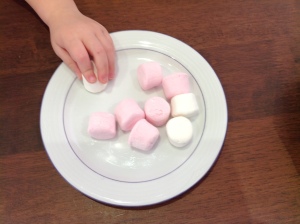
    • to share, to take turns, and to wait (unless there’s only a few more cookies or lollies on the plate, then you’d better get in quickly before someone else does!)

    marshmallow 5

    • that you can’t always be first or win, and
    • that the world doesn’t revolve around you
    • to make our own fun by creating our own games
    • to get along with children of all ages
    • to play without the constant participation or supervision of adults
    • to look out for and look after each other
    • to plan together
    • to forgive and get on with it
    • that a combined effort was more likely to get us an ice cream from the ice cream van than a succession of individual appeals.
    www.morguefile.com
    http://www.morguefile.com

    Some of these lessons weren’t easy, and some are still in progress, but important life lessons nevertheless.

    What about you? Do you have siblings, or are you an only child? If you have siblings, what have you learned from them?

    Thank you

    Thank you for reading. I appreciate your feedback. Please share your thoughts.


  • Don’t fence me in

    This week at the Carrot Ranch Charli Mills is talking about anxiety, panic attacks and agoraphobia.

    The following statements taken from the Mayo Clinic website explain agoraphobia as:

    “a type of anxiety disorder in which you fear and often avoid places or situations that might cause you to panic and make you feel trapped, helpless or embarrassed.”

    “The anxiety is caused by fear that there’s no easy way to escape or seek help if intense anxiety develops.”

    “Most people who have agoraphobia develop it after having one or more panic attacks, causing them to fear another attack and avoid the place where it occurred.”

    “Agoraphobia treatment can be challenging because it usually means confronting your fears.

    Sometimes, as Charli says, we can face our fears head on and defeat them with the choices we make. Other times we may need support to help us overcome them. Sometimes therapy and medication may be needed to help those suffering the debilitating effects of anxiety. I will not be discussing those paths in this post. Nor am I going to talk about the anxieties of children with Asperger’s or Autism. There are others who do a much better job of it and are much more knowledgeable than I, such as Sherri Matthews and Shawna Ainslie.

    school cropped

    However, it is not uncommon for a child to occasionally feel anxious and stressed by situations that occur at school. The incidence increases when children are placed in situations that are inappropriate to their development and don’t respect their needs. Sometimes the anxiety and stress is manageable and alleviated by more appropriate circumstances outside of the school environment. But sometimes the distress to the child and family can increase to a level at which more help and support is required.

    A school environment more suited to children’s needs would reduce the number of anxious and stressed students, parents, and teachers. Creating a nurturing and supportive school environment requires a firm understanding of child development and a belief in their ability to learn. It also requires that children are respected and appreciated for who they are, and that they receive timely and appropriate feedback, encouragement, and support.

    last child in the woods


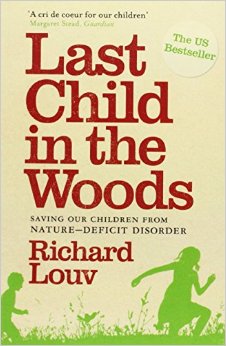
    In recent posts I have mentioned the importance of play, and of time spent in, and learning outdoors, in nature. In his book Last Child in the Woods, Richard Louv espouses the importance of nature to the development of healthy children, as well as to the physical health and well-being of adults. Perhaps more time in nature would provide the calm that is needed to combat the hustle and bustle of modern life and pressures of formal, test-driven classrooms.

    In fact, it is not just “perhaps”. In his article The School of Nature Louv provides evidence of benefits to learning that nature-based and place-based education can bring. He says, “greening schools may be one of the most cost-effective ways to raise student test scores.

    earth in mind

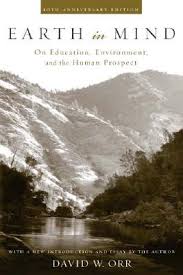
    David Orr agrees. In his book Earth in Mind: On Education, Environment and the Human Prospect, he also stresses the importance of learning about, from, and in nature.  He says, that, “all education is environmental education. By what is included or excluded we teach students that they are part of or apart from the natural world.”

    It is easy to talk about the failings of the school system and suggest ways it could be improved. It is more difficult to make the desired changes happen. While the majority of teachers work hard to create warm, supportive, nurturing environments for children, there are many situations over which they have no control. It is important then to have strategies for dealing with anxiety and stress if they occur.

    stress can really get on your nerves

    I recently came across a book that may be useful if your child tends towards anxiety.  Stress Can Really Get on Your Nerves aims to provide children with strategies for coping with stress. Written by Trevor Romain and Elizabeth Verdick, it is published by free spirit Publishing as one of a series aimed at helping 8 – 13 year-olds “get through life rough spots”. With Trevor’s fun, cartoon-like illustrations on every page, the book promises to turn stressed out kids into “panic mechanics” with a toolkit of suggestions for reducing their own stress levels. I’d have to say, they’re not bad strategies for anyone’s toolkit.

    https://openclipart.org/detail/2921/toolkit
    https://openclipart.org/detail/2921/toolkit

    I first heard about the book on the free spirit publishing blog in a post by Trevor in which he explains how drawing helped him cope with his learning difference. Trevor may be an outlier, but his story certainly provides inspiration for those who struggle in the traditional classroom.

    cropped forest

    I think time outdoors, breathing the fresh air, and enjoying the natural world is a great antidote to stress. I may no longer gambol in the grass, but I can sit in stillness and quiet, appreciating the beauty around me as I unplug from technology and reconnect by grounding myself in nature. I’m not sure how that works for agoraphobics with a fear of open places though. Perhaps having more time in nature as a child and learning techniques for coping with anxiety and stress could work as a preventative. But it’s only a thought. I am no expert.

    This brings me back to Charli Mills and her flash fiction prompt to In 99 words (no more, no less) write a response to an agoraphobic moment.  I have used the Mayo Clinic’s broader interpretation rather than the “narrow” definition of “fear of open spaces”. (I’d rather not be fenced in!) I hope my story portrays a recognisable response that could occur in a variety of circumstances. Please let me know what situation you think of as you read, and whether you consider my attempt successful.

    Confrontation

    She could hardly manage to chew, let alone swallow, the morsel of cereal occupying her mouth.

    Her vacant stare and stifled moans alerted him.

    “Are you okay?”

    “I’m trying,” she mumbled, and squeezed her hands between her quivering knees.

    “You’ll be fine. You haven’t had an attack for months. And, you’re prepared.”

    “I know.” She pressed her arms against her gurgling belly. “But …”

    He waited.

    Finally, she looked at him. “But …”

    He sponged her clammy forehead.

    She looked away. “What if they don’t like me?”

    “They won’t like you. They’ll love you. Come on. I’ll take you.”

    What did you think of as you read? I wrote the piece about young teacher about to meet her first class. Did you pick it?

    While anxiety about school is more commonly thought of as presenting in children, it is not uncommon for teachers to suffer from school anxiety as well. We accept that teaching is a stressful role, but for some it can also cause anxiety.

    I think there are few who are immune from anxiety. We need to be more open in talking about mental health in general. Recognition, acknowledgment and supportive discussion are important factors in helping to overcome the effects of anxiety.

    Thank you

    Thank you for reading. I appreciate your feedback. Please share your thoughts.

  • Let’s Talk About Purposeful Play

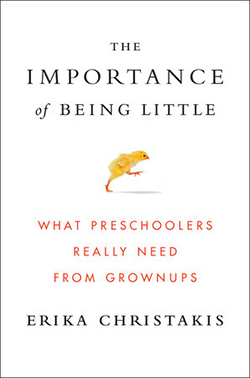
    Earlier this week I shared a post and a new book, The Importance of Being Little by Erika Christakis, about the importance of play for young children.

    the importance of being little
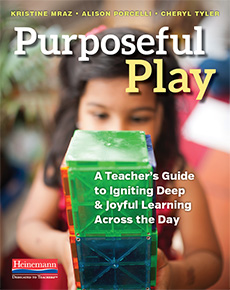
    Today I wish to share another post and another new book about the importance of play. This book by Kristi Mraz, Alison Porcelli, and Cheryl Tyler is called Purposeful Play with the tagline Igniting Deep and Joyful Learning Across the Day. (Hint: Click on Kristi’s post here for a chance to win a copy of the book. Read more about the book here to download the first chapter free!)

    Purposeful play
    These three teachers begin by stating that all play is purposeful and explain ways of honouring children and their play throughout the day in early childhood classrooms. This book is full of practical ideas for teachers who want to incorporate more play to foster children’s learning and maintain their enthusiasm for and enjoyment of it.
    If you wish to make your teaching day more playful, either of these books will provide ideas to get you started.

    Thank you

    Thank you for reading. I appreciate your feedback. Please share your thoughts.

    kristimraz's avatarkinderconfidential

    I am so excited to share that in a week or so my new book (with Alison Porcelli and Cheryl Tyler- play gurus and authors of this handy book on choice time) about PLAY will descend upon this fine earth!!!! Now, listen, there is nothing I like to do more in advance of a new book coming out then have imaginary conversations of excitement and anxiety in my head. As a matter of fact, if you wake up at 3 AM to go to the bathroom, please rest assured that I am staring at my ceiling trying to execute everything I learned while writing A Mindset for Learning.

    So, in the hopes of getting the word out about the book, and also maybe stop communing with my ceiling in the wee hours of the morning, I thought it might be nice to put out a post that conquers some of the…

    View original post 1,278 more words

  • Let them play!

    GDJ, Playful stick figures https://openclipart.org/detail/230070/playful-stick-figure-kids
    GDJ, Playful stick figures https://openclipart.org/detail/230070/playful-stick-figure-kids

    Play is essential to learning, and creating an environment which allows for play while nurturing children’s learning and development is as important as creating an environment that nourishes and encourages the growth of plants in a garden. The link between the two was first recognised by Froebel in the early 19th century when he coined the term “kindergarten” which translates to “garden for children” (kinder meaning child and garten meaning garden), and created the first educational toys.

    Froebel “devoted his life to educating children and developing methods to maximize human potential”. He was the first to recognise the importance of a child’s early years (birth to three) and considered creativity to be something in all of us.

    Froebel’s kindergartens were the first “formal” education for young children and his work greatly influenced that of other educators such as Maria Montessori and Rudolf Steiner. His beliefs, for example that children have both unique needs and capabilities are still influential today. He believed in the importance of play and some of his toys were favourites of people such as Buckminster Fuller and Albert Einstein.

    I have touched on the topics of playcreativity and children’s uniqueness in previous posts. A respectful, encouraging, nurturing and stimulating environment underpins all that I value in education; as does a belief in the power of play to develop understandings of self, of others and relationships, of the world and how things work, and to inspire thoughts of what could be, to imagine possibilities never before imagined.

    johnny_automatic_playing_dress_up

    While Froebel’s beliefs, and those of his followers, are still valid, sadly they are often disregarded by those who wield the power in education, who dictate otherwise.

    In a previous post I shared an article by Paul Thomas who attributed his readiness to learn at school to the richness of his home environment. He also decried the formal tedium of school lessons which contribute much to curbing a child’s enthusiasm for learning. Paul is not alone in his views. There are many teachers who agree with him, myself included, as I have shared many times before, including here and here.

    I am not the only early childhood teacher to be saddened and appalled by the formal approach that has been enforced upon teachers, replacing play-based approaches in classrooms for children as young as four. With the administration of standardised tests and the publication of graded results, children are labelled successes or failures before they have had a chance to develop. Those children from privileged backgrounds, as described by Thomas in Formal Schooling and the Death of Literacy will be immediately successful. Those from less advantaged backgrounds will be labelled failures. Unfortunately, the labels are often reinforced with little chance of replacement.

    A+   F

    I am always gladdened when I hear another expounding the benefits of play and the importance of child-centred approaches to learning and teaching. I hope that when enough voices unite in this important message, the tide will start to turn, and those with the power to make changes will do so in favour of children.

    the importance of being little

    This week I read another article stressing the importance of play for young children. The article, written by Susan Gonzalez for Yale News, introduces a recently published book by Erika Christakis The Importance of Being Little. I have not yet read the book, but I know that I will agree wholeheartedly with its content. The title itself tells me the value of its message.

    © Norah Colvin
    © Norah Colvin

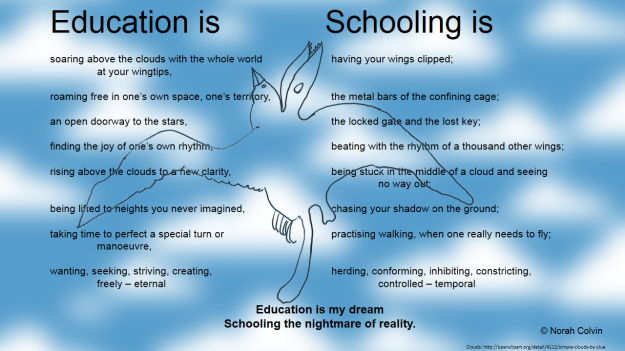
    In words reminiscent of my poem “Education is” Christakis says that “schooling and learning are often two different things.” Here is just a sprinkling of her thoughts reported in the article.

    • children are capable and powerful but our expectations are often mismatched
    • we ask too much of children pragmatically but not enough cognitively
    • there is too much teacher-direction and not enough time for play in many preschool classrooms
    • teachers need to take the time to listen to children’s stories, to laugh with them, to get down on the floor, at their eye level, and figure out what makes them tick … (through) … respectful observation
    • childhood pedagogy should be based on ideas, not on the repetition of simple skills
    • respect for early childhood as a life stage worthy in its own right and not merely as a training ground for an adult future

    These are ideas I have oft repeated here on my blog. Please read the article in full and, if you are as inspired as I am, read the recently published book The Importance of Being Little. I’d love to know what you think.

    Thank you

    Thank you for reading. I appreciate your feedback. Please share your thoughts.

  • Thankful and inspired: schools and education

    I have just watched the movie “He named me Malala”. The message has not lost its importance or impact. Sadly the need for her message to be heard and responded to has only grown over time. I share this post again as a reminder of Malala’s courage, strength, and determination. She says, “The terrorists thought they would change my aims and stop my ambitions, but nothing changed in my life except this: weakness, fear and hopelessness died. Strength, power and courage were born.”

    Norah's avatarNorah Colvin

    In recent posts there was some discussion about the importance of education, the value of schools and the role of teachers. I thought it timely to re-share this post, first published in July 2015.

    Earlier this week I read a post by Kimmie of Stuck In Scared about Ten Things of Thankful. I have also read many other posts about things to be thankful for. These posts prompted me to share something for which I am thankful: schools and education.

    I know that I often write about what I consider the shortcomings of traditional schooling and make suggestions of how schools could be improved. However I live in a country that values education and in which every child has a right to a free education. For that I am thankful. Those of us who have access to schools and education are the lucky ones.

    This week I have been…

    View original post 238 more words

  • Starting with one

    © Charli Mills
    © Charli Mills

    There’s an event worth celebrating at the Carrot Ranch this week. Two years after posting her first prompt encouraging writers to hone their writing skills by joining the 99-word flash fiction posse, Charli Mills has posted her 99th.

    I’m proud to say that I’ve been there since the first, riding the range of story prompts with others who have gathered around the campfire to share stories, wise words and writing tips in response to the nurturing offered by Charli’s warm, honest and generous spirit. It is she who is the hub around which has formed a community that is welcoming, supportive and encouraging. She is the one who keeps the wheels turning, the imaginations stirring and the words flowing.

    rough-writers-web-comp
    © Charli Mills

    It is fitting, therefore, that her 99th challenge is to in 99 words (no more, no less) write about the idea of “just one.” If all it takes is just one, what is the story? Explore what comes to mind and go where the prompt takes you. Bonus challenge: eat cake while you write, or include cake in your flash. She is the “just one” who, week after week, writes an inspiring post, sets a thought-provoking challenge, ropes in the writers and compiles the stories into a collection as diverse as the readers. It would be interesting to know how many writers have answered every prompt. I don’t think the number would be large as even I didn’t manage to ride every muster.

    I take this opportunity to congratulate Charli on her initiative. In this recent post she restates that “the original intent of Carrot Ranch as of March 5, 2014 was to create a bully-free zone where writers could learn to access creativity through problem solving (the constraint); write from a unique perspective (diversity); read and discuss the process or prompt (engagement).”  There is no question that she has achieved that and more. I have met many wonderful writers, bloggers and friends through my visits to the Carrot Ranch. If you are not yet a visitor, I suggest you pop on over. You’ll be warmly welcomed.

    one

    Recently I received as a gift a book called “One: How many people does it take to make a difference?” The book is filled with many wonderful quotes, stories and suggestions; too many to share, in one post anyway. I decided to open the book to a random page and share what I found. This is it:

    “If someone listens, or stretches out a hand, or whispers a kind word of encouragement, or attempts to understand, extraordinary things begin to happen.” Loretta Gizartis

    Loretta Gizartis

    That’s a pretty powerful quote. The effects of Charli’s “just one” contributions are easy to see. The quote is equally applicable to teachers and the effects that they may have upon the lives of others.

    Readilearn bookmark

    It is lovely when teachers are publicly (or privately) acknowledged for the positive influence they have had upon a life. Charli did this recently when she acknowledged a high school teacher who had encouraged her to achieve more than she thought she could.

    stephen hawking - teacher

    Last month when announcing the Top Ten Finalists for the Global Teacher Prize Stephen Hawking acknowledged one who had had a powerful effect upon his life. He said,

    “Thanks to Mr Tahta, I became a professor of Mathematics at Cambridge, in a position once held by Issac Newton. I have spent my life attempting to unlock the mysteries of the universe. When each of us thinks about what we can do in life, chances are we can do it because of a teacher.”

    Even teachers need mentors and many can name one who has made a difference to their lives.  As if in response to Charli’s challenge, this week Vicki Davis, the Cool Cat Teacher, nominated “just one” personal mentor who had taught her the most about teaching. Of Maryfriend Carter, Vicki says,

    “I’m grateful for her mentorship and encouragement in my life. She changed my thinking about teaching as she taught me about teaching. She single-handedly convinced me that testing doesn’t work and what does.”

    But not all who teach the most important lessons in life are “professional” teachers. There is a great saying that goes something like, “When the student is ready the teacher appears.” I often say that my own children have been my best teachers. But I have also been inspired by other wonderful teachers too. I have mentioned many of them in previous posts including here, here and here.

    However, my response to Charli’s flash fiction challenge aims to demonstrate that even the smallest, seemingly inconsequential, action can have a powerful effect upon the life of another. Sometimes we learn of the effects, sometimes we don’t; but when we do, the effect can be magnified. I hope it works.

    The Power of One

    Only much later, through a chance meeting with mutual friends, did she discover her power of one.

    “I know you,” said the other, pointing her cake fork. “You’re the one.”

    The old fear gripped, twisting tight. Her cake lost its appeal.

    Which one?” another asked.

    “In the foyer. On the first day. You spoke to me.”

    “Oh,” she reddened, shrinking to nothingness inside.

    “I was so nervous. You made me feel welcome, at ease. I’ve been wanting to thank you.”

    “Oh,” she lifted her fork, smiling. “You’re welcome.”

    “If only you knew,” she thought. “I did it for me.”

    Thank you

    Thank you for reading. I appreciate your feedback. Please share your thoughts.


  • It’s classic!

    By UnknownMarie-Lan Nguyen (Own work) [CC BY 3.0 (http://creativecommons.org/licenses/by/3.0)], via Wikimedia Commons
    By UnknownMarie-Lan Nguyen (Own work) [CC BY 3.0 (http://creativecommons.org/licenses/by/3.0)%5D, via Wikimedia Commons
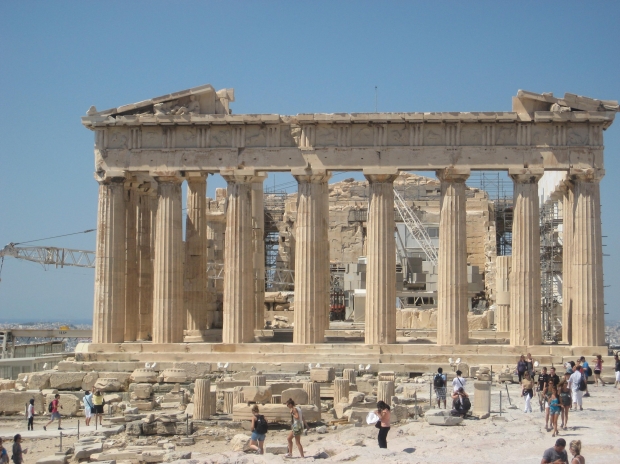
    This week at the Carrot Ranch Charli Mills is talking about the classics and libraries. I was a bit intrigued by the coincidence, for my current audiobook is A Classical Education The stuff you wish you were taught in school, written by Caroline Taggart and narrated by Bill Wallis. Maybe the words would reflect my situation better if they read “The stuff you wish you retained from what you learned in school”. I did study ancient history and even retained enough of it to get a passing grade in my final year of school, but most of what I learned dissipated once the exam was done.

    http://www.morguefile.com/
    http://www.morguefile.com/

    Although I am enjoying the audiobook, I think I will be none the wiser at its conclusion and retain little more than in earlier days. It is a reflection on my retention rather than the worthiness of the book.  At the top of Taggart’s webpage is a statement from the Yorkshire Post that I think is probably no idle boast:

    Caroline Taggart…has carved out a niche for herself in user-friendly, wittily written factual books which capture the imagination and quickly find their way to the top of the bestseller lists. 

    Prior to reading this statement I had thought that it was perhaps the narration that had brought the book alive in a most entertaining way. I was surprised that the narrator was not the author for the wonderful meanings and interest he evokes. If not the author then, I thought, he must be a wonderful character actor. Indeed, I was not surprised to find, he was.

    According to the Yorkshire Post, the writing itself is worthy too, though it seems to me, in many ways to be little more than a list of names, dates and snippets of events brought to life by an expert narrator. I’m not sure that I would read it cover to cover as I have listened to it, but it would definitely make a useful resource for checking out who and when, which is more or less impossible to do with an audiobook.

    ausines headphones

    One thing I have not liked about the book is the repeated opinion that maths and science in school are boring, and that most of us would only groan when thinking of what mathematicians like Archimedes and Pythagoras have burdened us with. If you’ve read many of my posts you would probably accuse me of being inconsistent, for haven’t I often agreed with that opinion of maths at school?

    algebra

    However, learning in mathematics should not be that way. I wish that everything we learned in school would be alive with interest, purpose and meaning. Then there’d be no need to groan. We’d be amazed and inspired by these great thinkers who have enlightened our lives.

    Arthur Benjamin, Mathemagician, would agree.

    He summarises his talk with these words:

    “Mathematics is not just solving for x, it’s also figuring out why.”

    But I digress a little. Charli’s main point was about the joy to be found in libraries. In my younger years I spent many hours in libraries. And if I wasn’t in a library, I was reading a book I’d borrowed from a library. Our home was filled with books but there were never enough to read and my parents and many of my siblings were frequent library book borrowers. On many Saturday afternoons throughout my teenage years I would walk the 5½ kilometre journey to the local library and back. I can’t remember how many books I was allowed to borrow, but I borrowed as many as I could.

    So many things about libraries have changed from those days of enforced silence, carded catalogues, and microfiche readers. But I don’t feel nostalgic for it. The systems are much more efficient now, and libraries have much more to offer the changing needs of a changing society.

    library
    http://www.morguefile.com/

    What does sadden me is that many local councils and schools are doing away with their libraries, and many schools are choosing administrators over teacher librarians when organising their staffing. A teacher librarian should be first enlisted. Nobody knows books and readers better than a teacher librarian.

    While I have not frequented my local library in recent years, I would be very distressed if it were to close. Not everyone has the luxury of being able to choose ownership over borrowing as I do. Libraries are important to communities and should be accessible to everyone; and not only for their books. Libraries play a significant role in developing a sense of community by providing meeting spaces for books clubs and groups of all sorts, activities for children including storytelling and reading, craft activities, films, games and puzzles, visits by authors and illustrators …

    They are also a great place to brush up on the classics that you may have missed out on in school, or find a book about mathematics that may inspire you to ask a big question and figure out why.

    The idea for my flash in response to Charli’s challenge, to In 99 words (no more, no less) write a story that includes a library, comes from the idea of taking books to the people, in their own neighbourhoods, and connects with my thoughts for an early childhood caravan.

    © Norah Colvin
    © Norah Colvin

    Another life, another dream, another possibility …

     The Book Lady

    She pulled the trailer from the shed, cleaned off the grime, gave it a lick of paint and hitched it to its once permanent position behind her bicycle. A trial ride around the yard confirmed all, including her knees, were still in working order. She propped the bike against the stairs and trundled back to her library where books lay scattered, spewed from shelves no longer able to hold them. She bundled them lovingly, tied them with memories, and wished them new hands to hold and hearts to love. It was time to share, and she knew just where.

    Thank you

    Thank you for reading. I appreciate your feedback. Please share your thoughts.
  • Be a scientist in real life!


    Scout, Science Girl https://openclipart.org/detail/192588/science-girl
    Scout, Science Girl https://openclipart.org/detail/192588/science-girl

    I have often talked about the scientific explorations of young children and referred to children as born scientists. Their curiosity, ability to engage in their own explorations and investigations, and make their own discoveries can be encouraged by adults who welcome their questions and become co-investigators.

    I recently read a post on The School Bell, An Official Blog of Harris County Department of Education that excited me about ways of maintaining that engagement. The post, contributed by Lisa Felske, is entitled Kids Count: Let them Be Citizen Scientists. Lisa says that there of hundreds of projects children can get involved with, some for the long-term as a classroom project, and others that can be conducted independently. They are all real projects that help researchers collect and analyse data.

    Lisa says,

    “For students, participation can make them feel connected to a community or a place far from home and can give them the satisfaction of knowing they have made a small but important contribution to real science.”

    How exciting to be part of a real project, collecting data that will make a difference to our world.

    www.morguefile.com
    http://www.morguefile.com

    Lisa says that one of her favourites is “Penguin Watch, which allows students to monitor penguins in remote regions by looking at still images and counting the number of adults, chicks and eggs seen in the photos.”

    I imagine many children would be interested in that too. But when you follow the link to Penguin Watch you find it is only a small part of the Zooniverse, “a collection of web-based citizen science projects that use the efforts of volunteers to help researchers deal with the flood of data that confronts them”. With projects ranging from astronomy to zoology, you could say there is something for everyone.

    gardening

    Lisa also mentions other favourites including Project BudBurst and BudBurst Buddies (for younger students) in which junior scientists observe and record changes in plants throughout the changing seasons. While these are US based projects, the websites are rich with suggestions for adaptation in other places.

    Finding out about, appreciating and caring for everything, plant, animal or mineral, large or small, near or far is a major part of the real purpose of education. I think involvement in programs such as those described in Lisa’s article will do much to maintain a learner’s curiosity and sense of wonder. What an amazing use of the Internet. I was definitely born too soon.

    Thank you

    Thank you for reading. I appreciate your feedback. Please share your thoughts.