Live Love Laugh Learn … Create the possibilities

Tag: teaching

  • readilearn: Engaging mathematics learning with Halloween themed resources

    readilearn: Engaging mathematics learning with Halloween themed resources

    In just a couple of weeks, people in many parts of the world will be celebrating Halloween. Even in Australia, where the festival has only recently begun to take hold, merchandise now fills our (mainly discount) stores, and children look forward to a night of fun, knocking on doors and collecting treats from family and friends.

    The festival dates back two thousand years to its origins in what is now Ireland, England and France. Irish immigrants took the festival to America in the 1800s. Halloween arrived in Australia with immigrants and through its portrayal in movies and on television. Always looking for an excuse to party, Australians are ready to join in.

    Originally, the festival celebrated the end of summer harvests and marked the beginning of the long dark northern winters. The festivities have evolved over the centuries with changes to focus and traditions.

    I have always thought that adding a bit of fun to the school day helps the learning go down. If the children are going to be distracted by thoughts of their Halloween costumes and what booty they might score in an evening of trick or treating, why not harness those distractions and channel them into learning?

    To combine fun with learning, this week I have uploaded three new interactive Halloween themed maths resources for use on the interactive whiteboard. The resources help to develop number concepts up to ten and are available to subscribers. As do other readilearn resources, they acknowledge that it is the richness of discussion occurring between teacher and children that helps to consolidate children’s learning.

    Continue reading: readilearn: Engaging mathematics learning with Halloween themed resources

  • readilearn: freemium lower primary teaching resources with lessons ready to teach

    readilearn: freemium lower primary teaching resources with lessons ready to teach

    In this post, I explain what readilearn is and how it works. There is more to readilearn than just this blog. In fact, this blog is just one small part of it.

    readilearn is a collection of digital teaching resources designed for use with children from about five to seven years of age in their first three years of school. They are equally suited to the homeschool situation and for use with ESL students.

    A freemium website, readilearn provides free support and resources for teachers in a variety of ways. However, some resources are exclusive to subscribers. The small annual subscription of just AU$25 reduces teachers’ workloads with lessons ready to teach and recognises and adds little to the expenditure many already occur in purchasing resources for their classrooms.

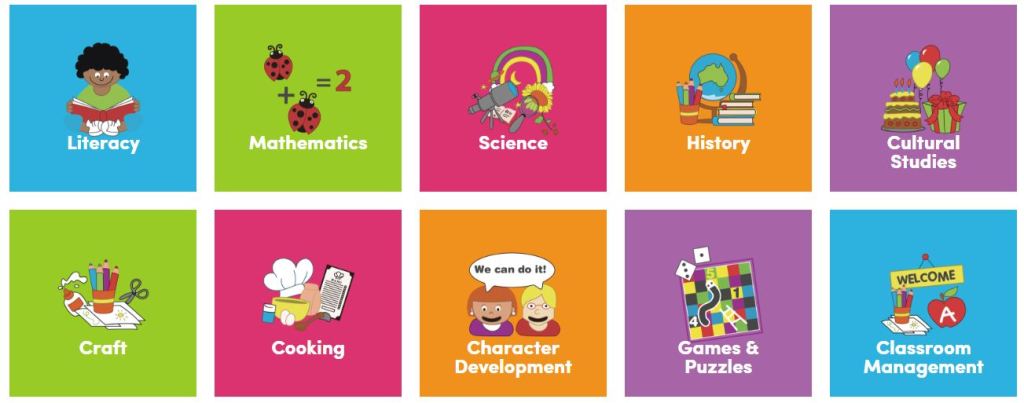
    Resources are available across curriculum areas. Many provide contexts for integrating learning in fun and meaningful ways.

    readilearn categories and subject or curriculum areas

    readilearn resources support teachers teaching and children learning by providing opportunities for discussions that promote thinking, collaboration and learning across the curriculum. Open-ended discussions encourage children to learn from each other as well as the teacher and to participate at their own level.

    Resources include
    • original digital stories (estories)
    • interactive teaching episodes
    • open-ended problem-solving activities
    • readilessons (lessons ready to teach)
    • printable activities
    • teaching suggestions
    • notes for parents
    • and more.
    Free from readilearn

    Continue reading: readilearn: freemium lower primary teaching resources with lessons ready to teach

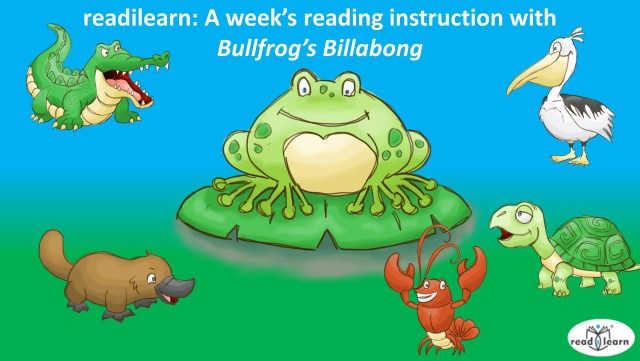
  • readilearn: A week’s reading instruction with Bullfrog’s Billabong

    readilearn: A week’s reading instruction with Bullfrog’s Billabong

    The readilearn Bullfrog’s Billabong suite of cross-curricular resources can be used as the foundation for planning a week’s reading instruction including lessons with the whole class and small groups and independent work. The activities cater for different ability levels in your early childhood classroom and can culminate in a performance to be presented to other members of the class, other classes in the school, or parents.

    Bullfrog's Billabong, teaching effective reading strategies with covered cloze on the interactive whiteboard

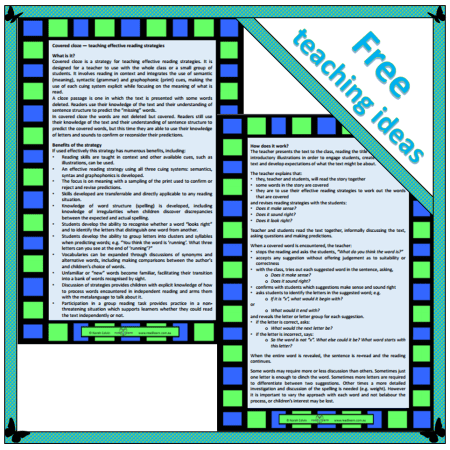
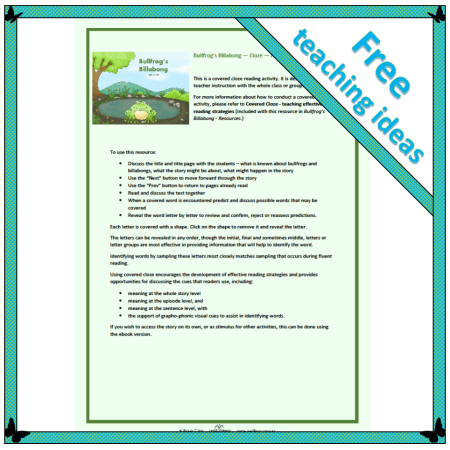
    Begin by introducing the story as a covered cloze activity (a lesson ready for you to teach) presented to the whole class on the interactive whiteboard. Although all children are engaged in reading the same story, the activity allows them to participate at their own level. The teacher-led discussion can be tailored to student needs, allowing each to contribute according to what they already know and extending their understanding by discussing cues for reading and irregular as well as regular spelling patterns. Children learn from each other as they actively participate in the cooperative reading activity. Refer to Covered cloze — teaching effective reading strategies and Bullfrog’s Billabong — Cloze — How to use this resource for suggestions.

    As with introducing all new reading material, it is important to engage children’s interest by making connections with what they already know about the topic and explaining what may be unfamiliar; for example, a billabong, and encouraging them to make predictions about what might happen in the story. As the story unfolds, children may adjust their predictions and thoughts about the story.

    Continue reading: readilearn: A week’s reading instruction with Bullfrog’s Billabong – Readilearn

  • readilearn: Teaching children with ASD — ideas for the classroom- with guest author Kathy Hoopmann

    readilearn: Teaching children with ASD — ideas for the classroom- with guest author Kathy Hoopmann

    Do you have children with Asperger Syndrome in your classroom and wonder how best to cater to their needs? Do you have friends with Asperger Syndrome, or maybe have it yourself? This week’s guest Kathy Hoopmann has a wealth of suggestions to help you understand, appreciate and enjoy the complex syndrome that is known as ASD.

    Combining her knowledge of Asperger Syndrome with her teaching background, Kathy has written over twenty books for children and adults.  She is best known for her photo-illustrated books that deal with Asperger Syndrome, ADHD and anxiety.  The simplicity, charm and insight of these books has made them must-haves for children and adults around the world.

    Kathy has won and been shortlisted for many literary awards including the Children’s Book Council of Australia Award, and she has four times been awarded a silver Nautilus Award (US).  Her books have been translated into thirteen languages and sell widely in Australia, the UK, the US and the Middle East.

    The books help children and adults with ASD recognise that they are not alone and provide support to carers, teachers and other professionals working with people with ASD.  In any home, school or classroom library Kathy’s books would help everyone learn to understand and support each other.

    Welcome to readilearn, Kathy. Over to you.

    The boy crawled under a table, his cap pulled low.  All eyes were on me to watch what I would do.  I was the relief teacher, or ‘light relief’ and the class was eager for a good show.  But I had been a relief teacher for too long to take the bait.  Besides, I recognised the behavior.  The boy displayed many characteristics of Autism Spectrum Disorder and frankly under the table was the very best place he could be, for his sake and mine. 

    ‘Miss?’ a child ventured, ‘Billy’s under the table and he’s wearing a hat indoors.’

    Continue reading: readilearn: Teaching children with ASD — ideas for the classroom- with guest author Kathy Hoopmann – Readilearn

    and be sure to check out the generous discount offered to readers during the month of July.

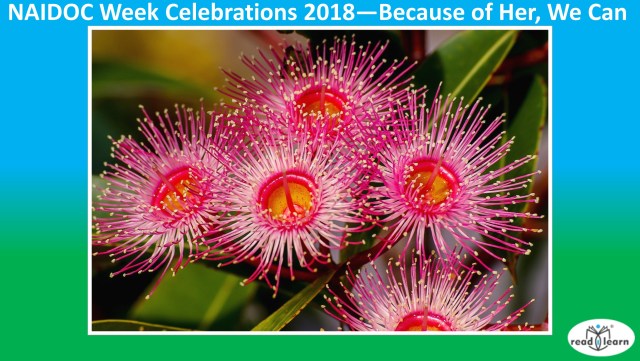
  • readilearn: NAIDOC Week Celebrations 2018—Because of Her, We Can

    readilearn: NAIDOC Week Celebrations 2018—Because of Her, We Can

    In Australia, NAIDOC Week is celebrated around the country each July. The acronym NAIDOC stands for National Aborigines and Islanders Day Observance Committee. The theme of this year’s celebration, which runs from 8 to 15 July, is Because of Her, We Can!

    The purpose of the week is to celebrate the history, culture and achievements of Aboriginal and Islander Peoples and acknowledge their contributions to our country. This year’s theme recognises that “Aboriginal and Torres Strait Islander women have played – and continue to play – active and significant roles at the community, local, state and national levels”, roles that have often gone unrecognised.

    The 2018 poster, a painting by Bigambul woman, Cheryl Moggs, from Goondiwindi, portrays the courage and resilience of Aboriginal and Torres Strait Islander women. You can read, in Cheryl’s own words, the inspiration behind her artwork here.

    While most Australian school children are enjoying their mid-year break during NAIDOC Week, many teachers will be looking for ways to share the celebrations with their students when school resumes.

    Any time is a good time to incorporate learning about Indigenous cultures and histories. In fact, embedding Aboriginal and Torres Strait Islander Histories and Cultures is one of the cross-curriculum priorities in the Australian Curriculum.  Although I provide links to resources and suggestions that Australian teachers can use with their classes when celebrating NAIDOC Week, I’m certain many of the resources will be of interest to others around the world when teaching about diverse cultures and histories.

    The NAIDOC website has suggestions to get you started, and you can download a free copy of the 2018 NAIDOC Week poster from the website too. You can also check out their calendar for events near you. Refer to News for stories of women to celebrate.

    In the following video, Uncle Barry Watson, the Elder in Residence with Communities for Children in Logan City in south-east Queensland, explains the

    Continue reading: readilearn: NAIDOC Week Celebrations 2018—Because of Her, We Can – Readilearn

  • readilearn: Libraries: A wondrous universe to explore — A guest post by Dimity Powell

    readilearn: Libraries: A wondrous universe to explore — A guest post by Dimity Powell

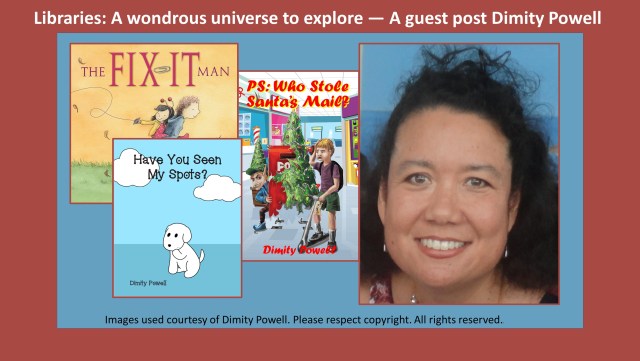
    This week I am delighted to introduce you to award-winning children’s author Dimity Powell.

    Dimity likes to fill every spare moment with words. She writes and reviews stories exclusively for kids and is the Managing Editor for Kids’ Book Review. Her word webs appear in anthologies, school magazines, junior novels, as creative digital content, and picture books including The Fix-It Man (2017) and At The End of Holyrood Lane (2018).

    She is a seasoned presenter both in Australia and overseas, an accredited Write Like An Author facilitator and a Books in Homes Role Model Volunteer in Australia.

    Dimity believes picture books are soul food, to be consumed at least 10 times a week. If these aren’t available, she’ll settle for ice-cream. She lives just around the corner from Bat Man on the Gold Coast although she still prefers hanging out in libraries than with superheroes.

    In this post, Dimity shares her love of libraries and explains why it is important to ensure every child has access to a library at school and every reader a local library.

    Welcome to readilearn, Dimity. Over to you.

    Continue reading: readilearn: Libraries: A wondrous universe to explore — A guest post by Dimity Powell

  • readilearn: Help your child read – some strategies

    readilearn: Help your child read – some strategies

    The importance of reading

    The ability to read is one of the most valuable skills we can acquire.  It is a tool for thinking, learning and entertainment. Reading opens doors and minds; it gives us the ability to unlock the secrets of the universe and release our imaginations. It is a skill that many of us take for granted, but without it the world would seem a more unfriendly place.

    No wonder learning to read is a vital part of each and every school day!

    Like everything else —the more you read, the better you get!

    Reading is more than just saying all the words on the page in order. Reading is a process of getting meaning from print. Effective readers use their knowledge of the world and of language in their quest to make meaning from the words on the page. Reading takes place when the reader understands the message of the writer.

    Strategies used by effective readers

    Effective readers use a combination of three cuing systems to predict and check what the author has written. The use of these systems is obvious in the miscues (rather than “mistakes”) that readers make.

    1. The most important cuing system is knowledge of the topic. If you know lots about dinosaurs, you can read those big difficult-looking words and understand what they mean. If you know nothing of legal jargon then even sounding out those big difficult-looking words won’t help you understand.
    2. The second system is knowledge of language and grammar. We expect the words to flow with meaning and not be a jumble of nonsense.
    3. The first two systems combine to predict the words on the page. We then check with the print to ensure our expectations were correct.

    For example, if the story is about a cowboy you may expect that he would jump on his pony, but when you look at the print, you find he actually jumped on his horse.

    Effective readers may say ‘pony’ instead of horse, but they definitely wouldn’t say ‘house’ (which looks similar) as it just wouldn’t make sense!

    Continue reading: readilearn: Help your child read – some strategies

  • readilearn: What do we do when we read?

    readilearn: What do we do when we read?

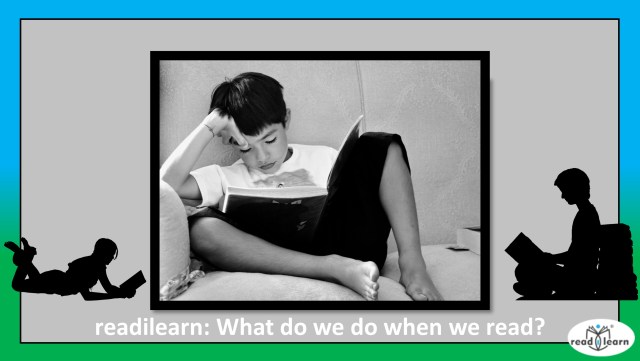
    Have you ever considered what we do when we read?

    For many of us, reading has become such a natural and intuitive process that we rarely stop to marvel at the way we are able to make meaning from print or to question how one learns to read.

    Although we know that we once weren’t readers, few can remember how we actually made the transition from being a non-reader to being able to read and have been doing it for so long now that it seems we always could.

    Some adult readers have recollections of various instructional methods that were used in school and attempt to engage their own learner readers in similar tasks.

    The recognition that some of the instructional methods did, and still do, equip readers with some tools for reading, does not imply that the use of these methods was the catalyst for learning to read. While they may have contributed to the development of reading, there are other influencing factors.

    Many children learn to read despite the instructional methods, and many others don’t read using them and, in fact, remain non-readers because of them.

    What is reading?

    Reading is more than simply translating letters and words to sound. Reading involves thinking. It is a process of getting meaning from print.

    Continue reading: readilearn: What do we do when we read?

  • Everything you always wanted to know about unicorns

    Everything you always wanted to know about unicorns

    What do you know about unicorns?

    • mythical creatures
    • look similar to horses
    • usually white
    • have a single horn protruding from the forehead.

    What else is there to know?

    It appears there could be much more to learn by engaging in philosophical discussions, especially with young children, about the existence of unicorns and their features.

    For many years I have been a fan of Philosophy for Children (P4C), a pedagogical approach for teaching children to think critically, to wonder, question and reason. The approach is “taught” through student-led discussion in which the teacher is present to offer support, rather than leadership. Students are presented with a stimulus, about which they initially ask questions. When there are no more questions to ask, children discuss their thoughts and responses.

    I knew unicorns would be a great starting point for philosophical discussions with children, so wasn’t surprised to find suggestions for conducting an enquiry into Unicorn Horns – Thinking about Things that Don’t Exist by The Philosophy Foundation.

    The suggested discussion centres around fictional characters, including the more controversial ones such as Santa Claus and the Tooth Fairy which I’ve previously discussed here and here.

    What intrigued me most in the article was

    “The problem (is) characterized in this statement ‘The Tooth Fairy does not exist’, which seems to say ‘there is something that does not exist’, but then if it does not exist then how can it be anything?”

    Or another way of putting it,

    “‘If there is anything that can’t exist, then it exists, so there can’t be anything that can’t exist.’”

    Totally confused?

    Me too! Please pop over to the article for greater clarity. Then maybe you can explain it to me.

    The article continued with suggestions of other questions about unicorns that could be discussed; for example:

    • Are unicorns real?
    • If something doesn’t exist, can it have any special features?
    • How many horns does a unicorn have?
    • What if a unicorn is born without a horn, is it still a unicorn?
    • What if a horse is born with a horn, would it be a unicorn?
    • Since ‘uni’ means one, is any animal with one horn a unicorn?
    • What about a narwhal? Is it a unicorn?

    My thoughts of unicorns this week were instigated by the flash fiction prompt by Charli Mills at the Carrot Ranch to In 99 words (no more, no less) write a story about a unicorn. It can be realistic or fantastical. Go where the prompt leads.

    Now, I have written about unicorns before, here, here and here.

    In a post about security comforters, I explained that a toy unicorn was of comfort to Marnie when she was feeling particularly vulnerable. Her need for it continued into her early school years and its appearance was an indicator to teachers that things were going badly for her again. When, as a confident adult, she returned to her childhood home, she found she had long outgrown the unicorn that had given her comfort as a child.

    In some of Marnie’s stories, she was teased and bullied, mainly by a boy named Brucie. Fortunately, she had a good friend in Jasmine who was often there to offer her support.

    In my response to Charli’s unicorn prompt, I revisit Marnie and Brucie and attempt to add a little philosophy to their discussion. I hope you like it.

    Unicorns aren’t real

    “What’s that supposed to be?” sneered Brucie.

    Marnie bit her lip.

    “Doesn’t look like anything to me,” he scoffed, inviting an audience.

    “A unicorn,” she whispered.

    “Miss said, ‘Draw your favourite animal.’ A unicorn can’t be your favourite animal–it’s not even real.”

    Marnie continued drawing.

    “Anyway, doesn’t look like a unicorn with those four horns.”

    “They’re not horns.”

    “Marnie’s unicorn’s got four horns,” laughed Brucie, a little too loudly.

    Miss investigated.

    “He said my unicorn’s got four horns. He said unicorns aren’t real.”

    “How can unicorns have four horns if they’re not real?” asked Miss.

    Brucie was silent.

    Thank you blog post

    Thank you for reading. I appreciate your feedback. Please share your thoughts.

  • Shine a light

    The flash fiction prompt set by Charli Mills at the Carrot Ranch this week challenges writers to In 99 words (no more, no less) write about a beacon. It can be from a lighthouse or other source. Use the word literally or figuratively and go where the prompt leads you.

    Charli writes about our fear of change, fear of the unknown, and of the need for guides “to bring us in to a new harbor, a light to show us the rocky shoals.” She suggests that “Perhaps blogging, writing, are mediums of light that shine a path to bridge cultural differences.” but also acknowledges that, “Instead of looking for a way, some people have backed out of the water and barricaded themselves on the beach.

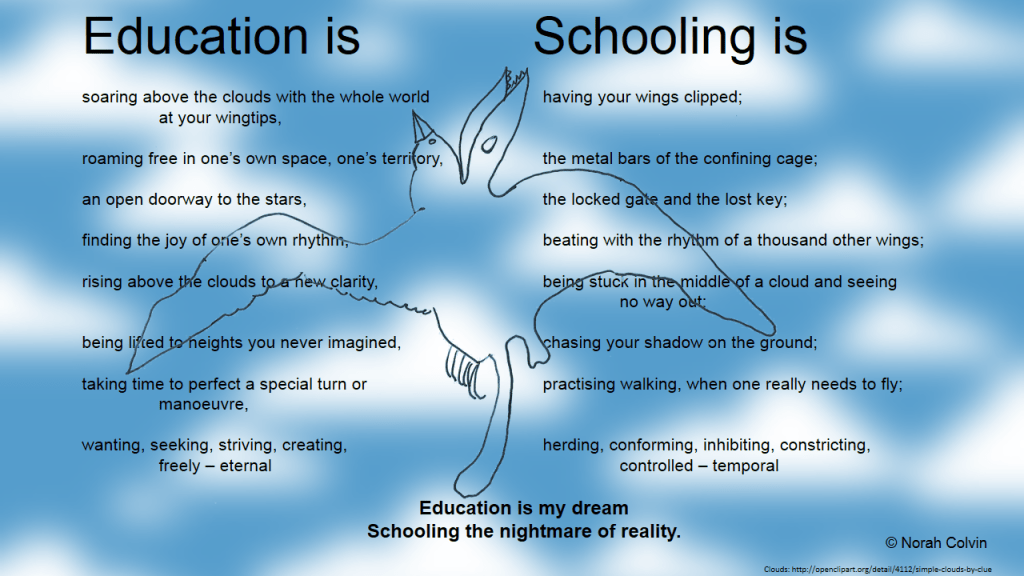
    I see education as the way that will bring us to a “new harbour”, the light that will “shine a path to bridge cultural differences”. Sadly, as I say in my poem about education, there is far too much emphasis on schooling and not enough on education, too much desire to keep the masses down by the insistence on conformity and ignorance rather than the encouragement of creativity.

    © Norah Colvin

    I was well-schooled as a child, but have spent my adulthood exploring what it means to be educated and promoting the benefits of a learner-centred education as opposed to other-directed schooling. I read of a book about “teaching backward”, beginning with what the student needs to know and working backwards. (Needs as determined by others, not the student.) I’d rather teach forwards, beginning with what the student wants to know and going from there.

    When my earliest teaching experiences fell short of my expectations, I searched for the beacons to guide my way out of the murkiness in which I found myself. I devoured books by John Holt, A. S. Neill, Ivan Illich, Paolo Freire, and others, with ideas about education and schooling that were as challenging as they were exciting. I read of innovative educators such as John Dewey, Maria Montessori, and Rudolf Steiner.

    The ideas challenged what I’d been taught but blended comfortably what I had learned through observation of children, including my own young child, and relating it to my own experiences. The pieces began to fit.

    At about the same time, I undertook further studies in literacy learning and was fortunate to work with a team of inspired educators led by Brian Cambourne, whose work and guidance placed the piece that helped the puzzle take shape, and guided my learning journey.

    Beacons, or shining lights, that guide and inspire us, are as essential to our growth as sunlight is for plants. Educators such as those mentioned, and more recently, Ken Robinson, Rita Pierson, and many others, are such beacons. We are constantly told of the success of the Finnish school system and I wonder why it is that those holding the power in other school systems fail to see their light. We need at least one to rise above the fog of number crunching and data collecting to see the bright lights shining on the hill.

    Is it fear, as Charli suggests, that keeps them out of the water? I watched the movie Monsters Inc on the weekend. It seems to deal with the issue of controlling the masses with falsehoods and fear quite well. It is also a great laugh – one of the most entertaining movies I’ve seen for a while. If you haven’t seen it yet, I recommend it.

    I’ve attempted a similar situation with my response to Charli’s challenge. I hope it works.

    Let there be light

    Eyes squinted in the dim light under low ceilings. Immobilised by never-ending paperwork, the menials dared not look up. Flickering numbers on data scoreboards mesmerised supervisors. Inconsistencies meant remonstrations, even punishment, from above. Heads down, keep working, don’t ask questions. The system worked fine, until … Maxwell nodded off. His pencil fell, tapped first, then rolled away. Startled, Maxwell went after it. The room stilled. Sliding too fast, he slammed into the wall, activating a button that illuminated a set of stairs leading up. Everyone gasped. Maxwell hesitated, took one step, then another. Nothing happened. He continued. Everyone followed.

    Thank you for reading. I appreciate your feedback. Please share your thoughts.