Children love learning about animals and, by adulthood, must of us have a basic knowledge of many. Unless there is a specific reason for us knowing or finding out more, the knowledge can remain just that – basic, sometimes even with misconceptions. For example:
Remaining curious and continuing to seek information is a characteristic of a life-long learner. One of the purposes of school is to encourage life-long learning.
In the early childhood science curriculum, children begin to learn formally about living things, their needs, and their life stages. This knowledge helps to develop an understanding of, and appreciation for, all living things. As well as providing children with the science concepts included in the curriculum, it is important to stimulate their curiosity by encouraging them to ask questions and explore additional information; for example,
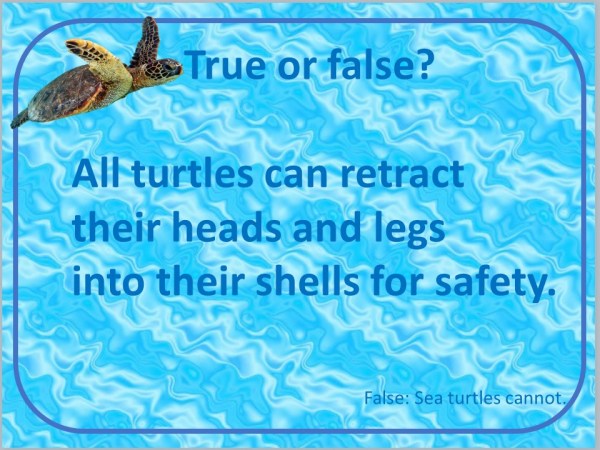
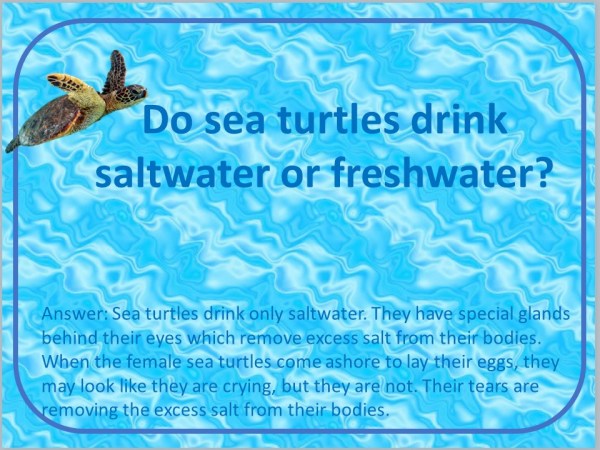
This week I have uploaded a new free interactive digital resource to assist children in their first three years of school learn about living things by learning about sea turtles. With interactive features and fun facts, the resource is also suited to multi-age classrooms. It would be of interest to any curious child with a thirst for knowledge.
Imagine my delight when The Penguin Lady read and responded to my post!
In a recent post I shared this Ted talk The Great Penguin Rescue in which “the penguin lady” Dyan deNapoli talks about an oil spill that occurred when a ship sank off the coast of South Africa in the year 2000, oiling nearly 20,000 (almost half) of the total population of African penguins, and the efforts made to rescue them.
The rescue was successful with 90 percent of the oiled penguins returned to the wild.
I found Dyan’s story inspiring, not only for the penguin rescue, but for the learning she credits to the rescue, especially that one person can make a difference, and that “when we come together and work as one, we can achieve extraordinary things.”
I was delighted when Dyan read the post and supplied additional information. Since so many of you were interested in her story, I wanted to share with you what Dyan had to say.
Hello Norah! I just came across your great post about oil and oil spills. Thank you so much for sharing my TED talk about the Treasure oil spill rescue, and for informing your audience about these important issues. I really enjoyed your flash fiction, and listening to Cesar Harada’s TED talk as well.
Thank you for providing information about how folks can adopt a penguin. I wanted to share the websites of a few more penguin rescue centers that are in need of support, and through which folks can adopt a penguin or fund the hand-rearing of an abandoned penguin chick. There are many organizations rescuing penguins throughout the Southern Hemisphere (there’s actually a complete list of these groups in the appendix of my book, The Great Penguin Rescue), but the following three are organizations doing great work that I regularly support and like to highlight. These are all groups that are doing direct, hands-on work to save oiled or injured penguins. (I also regularly support The Penguin Foundation in Australia, which you’ve already listed above.)
SANCCOB (the center we worked with during the oil spill rescue in 2000): https://sanccob.co.za/
I hadn’t realised that Dyan had written a book about The Great Penguin Rescue, but I immediately downloaded and started listening to the audiobook. It is a great read and I highly recommend it. I am not alone in doing so. The book has won three awards.
In the book, Dyan tells the story of how she came to be The Penguin Lady, provides information about penguins, and explains how the great penguin rescue was carried out. (Probably other stuff too, but I haven’t finished listening yet.) I have also ordered a hardback copy as it includes colour photographs. I’m looking forward to receiving it in a week or two.
In a subsequent comment, Dyan shares some of her story:
And to answer your question about when and how I became interested in penguins, it was quite accidental. I had returned to college at the age of 31 to pursue my lifelong dream of working with dolphins (which I briefly did in Hawaii), and during my senior year I landed a full-time, 4-month internship in the Penguin Department at the New England Aquarium in Boston, MA. From the moment I stepped into the penguin exhibit and found myself surrounded by 65 honking, braying, cavorting penguins, I was pretty-much hooked. Their behaviors captivated me, and I was totally surprised to discover that each individual had their own unique personality and temperament – not really what I had expected in a colonial bird. And I wanted to learn more about them.
I stayed on as a volunteer at the aquarium after graduating, and when a position finally opened up a year later, I applied for and got the position of Penguin Aquarist. I was at the aquarium for 9 years in total, and after leaving there at the end of 2004, I founded my company, The Penguin Lady, to teach kids and adults of all ages about penguin biology, behavior, and conservation. I speak in a variety of settings both locally and internationally, and donate 20% of my proceeds to penguin rescue, research, and conservation groups. One of my favorite gigs is being a guest speaker/penguin expert on nature cruises, and next February I’ll be returning to Antarctica as a guest lecturer for Lindblad Expeditions/National Geographic, which I’m VERY excited about!! My mission is to raise awareness and funding to protect penguins – 13 of the 18 penguin species are currently listed as Vulnerable, Near-Threatened, or Endangered, and that is what drives me to do the work that I do.
Thank you, Dyan, for sharing so generously.
There is much more to discover about The Penguin Lady and The Great Penguin Rescue. She is as passionate about education as she about penguins. Through educating us about caring for penguins, she is helping us care for the environment and make a better world. You may be surprised by some of the information in this wonderful educational video. I was.
And I’ll leave you with Dyan’s reminder:
You can connect with Dyan on both Facebook and Twitter.
Thank you for reading. I appreciate your feedback. Please share your thoughts.
It would be difficult to imagine our daily lives without access to oil and oil products. Transportation is one of the most obvious uses of oil, but did you know that many items we use every day are made from oil or its by-products?
Some of these products include:
Plastics such as food containers, toys, computers and printers, white goods, CD cases
Synthetics used in items such as clothing, curtains, furniture upholstery, carpets
Cosmetics such lipsticks, moisturisers, deodorants and antiperspirants
Nylons used in stockings, ropes, tents, parachutes
Polystyrene used in cups, coolers, packaging
Toothpaste, chewing gum, dentures, contact lenses
The list, unlike oil, is almost inexhaustible.
But there is a downside to oil too. Oil spills in the ocean are an enormous issue for marine life. In this Ted talk The Great Penguin Rescue, “the penguin lady” Dyan deNapolitalks about an oil spill that occurred when a ship sank off the coast of South Africa in the year 2000, oiling nearly 20,000 (almost half) of the total population of African penguins, and the efforts made to rescue them.
deNapoli explains that a degreaser used to remove the oil from the pelicans was invented by a 17-year-old boy. How cool is that. She says that more than 1,000 volunteers turned up each day to help with the rescue, and continues
“After half a million hours of grueling volunteer labor, more than 90 percent of those oiled penguins were successfully returned to the wild. And we know from follow-up studies that they have lived just as long as never-oiled penguins, and bred nearly as successfully.”
It is an inspiring story, not only for the penguin rescue, but for the learning deNapoli credits to the rescue. She says,
“Personally, I learned that I am capable of handling so much more than I ever dreamed possible. And I learned that one person can make a huge difference. Just look at that 17-year-old. And when we come together and work as one, we can achieve extraordinary things. And truly, to be a part of something so much larger than yourself is the most rewarding experience you can possibly have.”
deNapoli finishes her talk with the words,
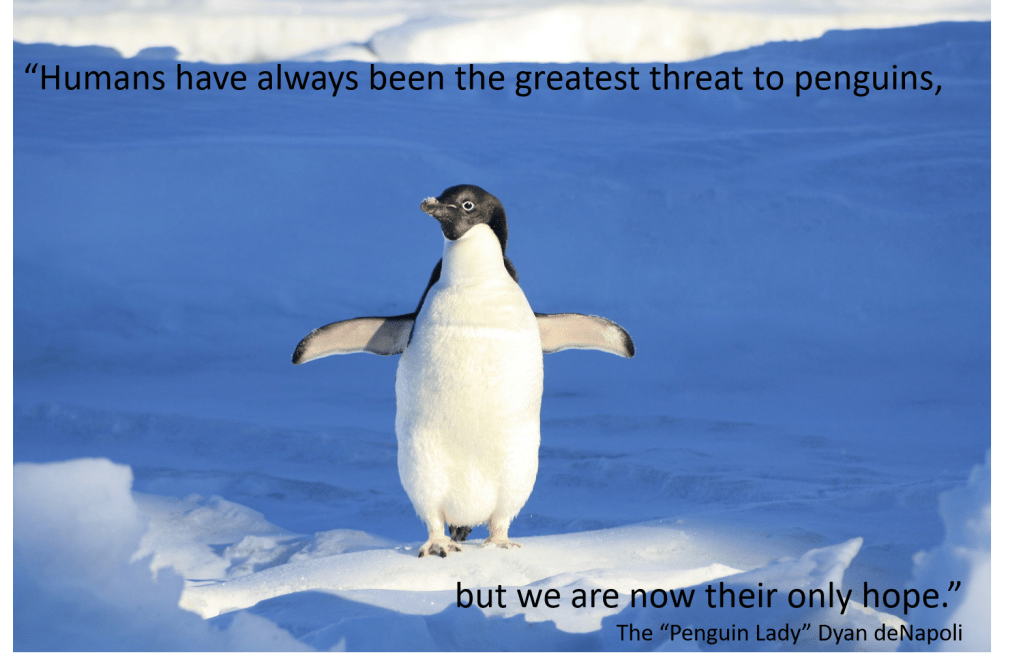
“Humans have always been the greatest threat to penguins, but we are now their only hope.”
Familiar sounds heralded his arrival: feet scraped stairs, bag thudded deck, screen door crashed.
Shouts of “Mum! Mum!” preceded him as he charged down the hallway, arms flailing, holding something aloft.
His words exploded in a jumble. She deciphered few. Baby stopped suckling, curious.
“Slow down,” she said, patting the sofa with her free hand.
He thrust the brochure at her.
“I wanna adopt a penguin. Please, Mum. Can I?”
“Penguins can’t live here. It’s too hot,” Mum teased.
“Mu-um!” The words tumbled again. “Scientist… school… oil… penguins dying… ‘dangered… We have to save them from going extinct! Please!”
The title Child citizen to scientist refers to the now welcome involvement of citizens in the collection of scientific data, as described, for example, in this article on Fast Company about the collection of pollution data around the BP oil spill in the Gulf of Mexico in 2010.
About 18 months ago, I published a post about a project led by science teacher Cesar Harada who encouraged his students to innovate and problem solve through science. He explained his project in this Ted Talk.
I particularly appreciated Harada’s conclusion about children and their involvement:
Who knows, if my young penguin adopter is encouraged, he may grow up to be scientist too.
For a picture book that introduces children to the concept of caring for our oceans, One Less Fishby Kim Michelle Toft and Allan Sheather is a great starting point. With its beautiful silk paintings, the book helps to educate children about the oceans, the way we pollute them, and what we need to do to protect them and their inhabitants.
If you are interested, there are a number of organisations through which you can adopt a penguin. These are just a few. I’ll leave it to you to investigate your best option. Just remember: you can’t take it home. 😊
On the readilearn blog this week there are 20 quick suggestions for teaching and learning about space in an early childhood classroom, as well as a bookmark that can be printed and given as a gift to a special teacher.
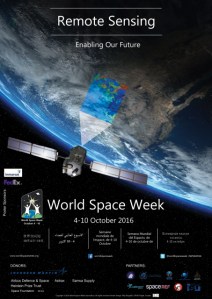
Since its inauguration in 1999, World Space Week has been celebrated each year from 4 to 10 October. Its purpose is to celebrate the “contributions of space science and technology to the betterment of the human condition”. The dates were chosen to commemorate the launch of Sputnik 1 on 4 October 1957 and the Outer Space Treaty signed on 10 October 1967.
This year’s theme is “Remote Sensing: Enabling Our Future” which focuses on the contribution of observations from space to our knowledge of the world, including our ability to
monitor changes in the environment, and
understand and predict weather patterns,
which in turn assists planning for agriculture and helps to prepare for weather events.
World Space Week has a free downloadable Teacher Activity Guide for classes from K – 12. While many of the activities are more suited to older students, there are some that can be adapted for the early grades.
There are no particular requirements for participation. You choose how to involve yourself and your students. Or, better still, introduce the topic to the children and see where their questions and suggestions lead. Contemplating the skies and what lies beyond has excited imaginations since the beginning of human time. Why not give your children the opportunity to wonder, imagine, and create?
If you have neither the flexibility nor the time to explore “space’ in depth, here are a few suggestions for incorporating learning about space in your busy program:
Cover a large display board or wall with dark blue paper. (Each child could paint a piece of A3 paper to contribute to the background.) Add the children’s wonderings, questions, ideas, suggestions, pictures, and writing to the display.
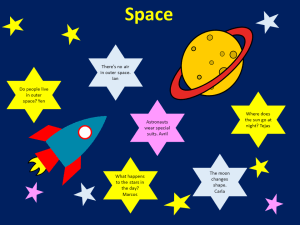
Ask children what they wonder about space, and record their wonderings. Many of their wonderings will match those of philosophers and scientists throughout history; for example, “Yen wonders if people live in outer space. Jan wonders what Earth looks like from space. Margot wonders how long it would take to get to the sun.” This is not a time for answers. It is a time for questions. If children are writers, you could supply them with (star-shaped) sticky notes on which to write their wonderings, one per note. Display the wonderings.
Record what children want to know about space. This is also a time for questions, and not for answers. There will be time for answers later. It is important for children to know that their questions are both valid and valued; for example, “Marcos wants to know what happens to the stars during the day. Tejas wants to know where the sun goes at night.”
Record what children already know, or think they know, about space, space exploration,
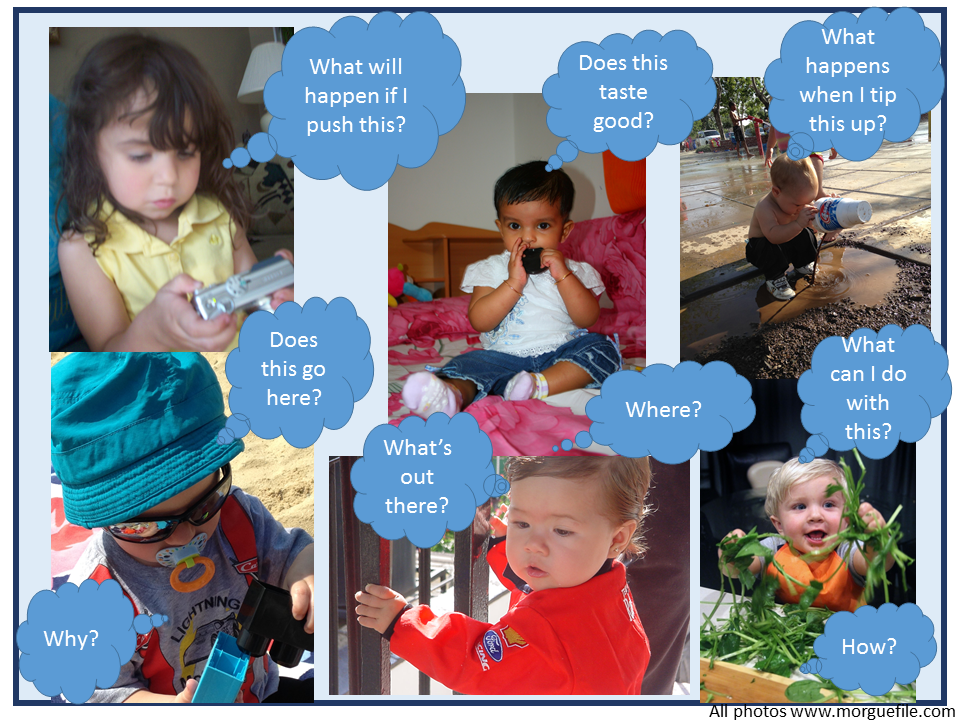
It is no secret that I love having time with young children. Their development constantly amazes me. They are curious learners on a quest to find out as much as they can about the world and how it works. They are scientific researchers making observations, forming hypotheses, and drawing conclusions; always with a plan for the next step if the results aren’t what was expected.
How many times do they need to release a spoon to be confident that it will always be pulled towards the floor? How early do they laugh when something doesn’t perform as expected; for example, when a balloon floats up instead of falling down?
Many of a young child’s explorations seek answers to questions they ask of themselves; questions that may never be verbalised.
After they have investigated their immediate environment, and their language begins to develop, they start to look at the wider world, and begin to ask questions about how things work and why things happen.
Here are a couple my granddaughter asked me recently:
“Norah, you know about gravity? Why do clouds stay up in the air? Why don’t they fall down?”
“If babies grow into adults, and adults give birth to babies. Which came first the baby or the mother?”
The determination and persistence of young children is also almost limitless. Watch them learning to roll, or to sit, or to stand. It is never achieved on the first attempt, but that doesn’t stop them. They don’t give up. They try and try again until they do it. The look of satisfaction on their faces is priceless. No stickers are required. Sometimes, when the result differs from expectation, the look is of surprise. But even then they are quickly deciding what to do next.
Without formal instruction of any kind, in their first few years, children perform amazing feats. Without the imposition of test requirements or standardised assessment, children are driven to learn. Intrinsic rewards, accompanied by the encouragement of significant others, for example, parents, are sufficient. Children are driven by a “yet” mindset and a belief that there is no such thing as “can’t”. This ensures they continue to practice until they succeed. Immediately they succeed, they set themselves another challenge. That is, unless they are taught otherwise.
When they are nurtured in an environment that is encouraging and supportive, with a balance of comfort and challenge, and well-timed feedback, children will thrive physically, emotionally, and mentally. They will learn through their observations and interactions with people and objects. Each question answered will stimulate the next.
These are just a few of the remarkable achievements made by children before setting foot inside any formal education establishment. They learn to
interact
roll over
sit up
crawl
clap hands
stand
walk
place things inside, and take things out of, other objects
feed oneself
talk
run
undo and do up buttons
push buttons (of all sorts)
open doors
play games
…
Given an encouraging, supportive environment with caring adults who respond to their needs, surround them with language, love them, and model behaviour, children learn amazing things.
Everything she had ever done was preparation for this moment. All eyes were on her. The audience’s expectation was palpable, bolstering her determination. She pulled herself up to full height and looked around, smiling. The audience waited. She checked the positioning of her feet, and her balance. She held up one hand, signifying that an attempt was imminent. She put one foot forward; then raised the other hand as she brought her back foot alongside the first. She paused, poised, momentarily. Immediately cameras clicked and cheers erupted. After two more steps, she launched, triumphant, into her father’s waiting arms.
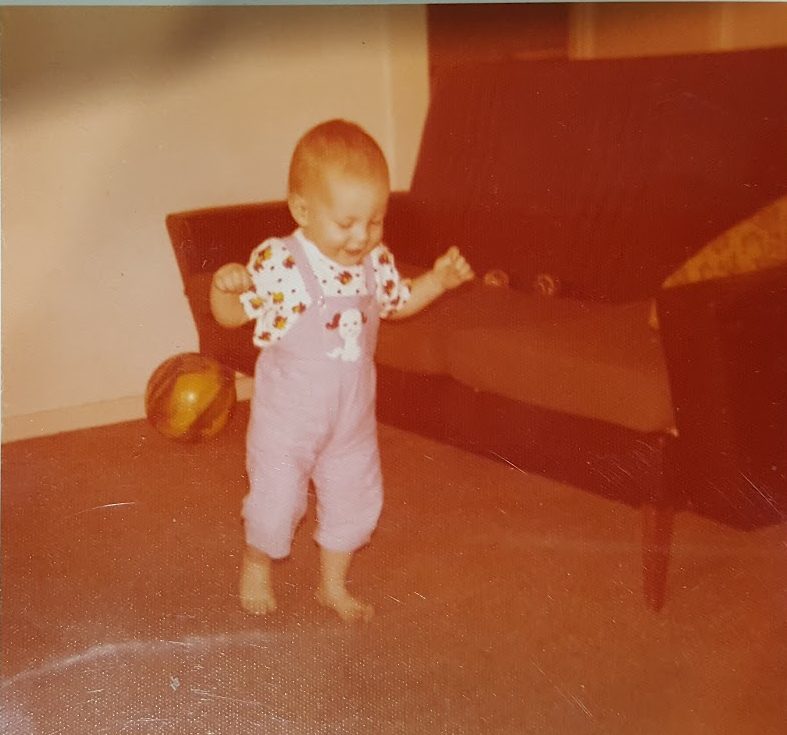
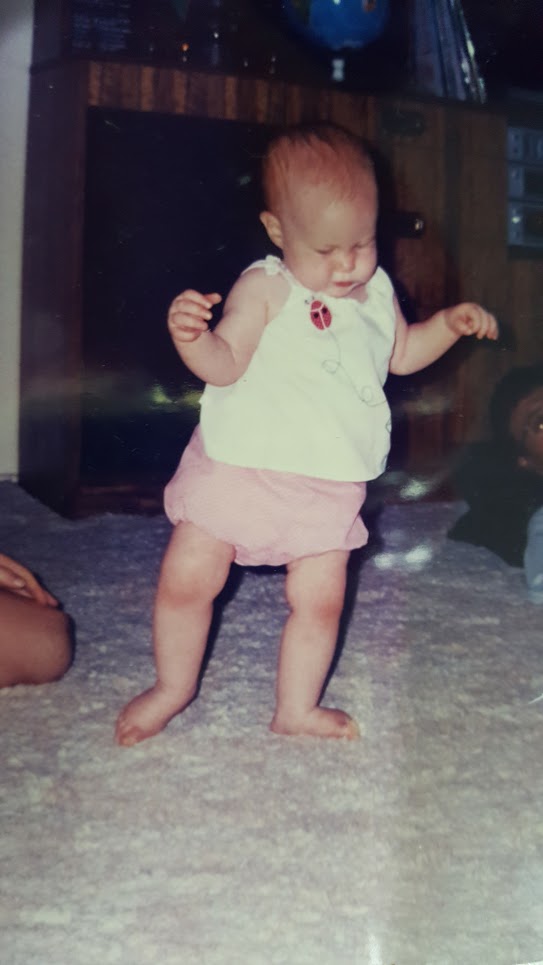
Here are photos of my two little (now big) ones. While not of their first steps, these photos were taken within the first month each of them walked.
Hi, welcome to the readilearn blog and the first in our Author Spotlight series.
Spring is here and summer is on its way in Australia. The excitement of new life is everywhere as flowers bloom, birds sing, and insects abound. The excitement flows into the classroom as children observe and record the life stages of the amazing minibeasts that inhabit our world.
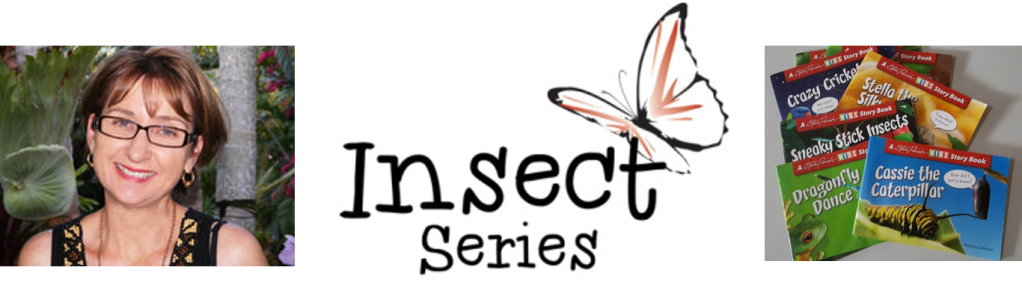
There is no better time than spring to introduce you to Brisbane author Rebecca Johnson and her Insect Series which was awarded the 2014 Whitley Certificate of Commendation for Best Educational Series.
Rebecca Johnson: award-winning author and primary school science teacher
Rebecca’s Insect Series of ten books focuses on metamorphosis, survival, adaptations, properties of natural materials and the usefulness of insects through fiction stories. The stories are accompanied by stunning close-up photos of insects of all kinds.
The books, which won the 2014 Whitley Award for Best Educational Series, have strong listed links to the Australian Curriculum for many year levels. They are a great resource for teaching and learning about insects. The fiction stories that accompany the facts make the learning even more fun. Two free blackline masters support the use of each book. The blackline masters can be accessed on the Blake Education Website.
While the books feature Australian insects and have links to the Australian curriculum, they are loved by children all over the world. I am happy to introduce you to Rebecca and her lovely series of books.
Welcome to readilearn, Rebecca. We are looking forward to getting to know you a little better.
Thanks for inviting me!
When did you know you wanted to be a writer?
When I was reading a lot of picture books to my very young children and could see how much they loved them.
Where do you write? Do you like to be by yourself in the quiet, or do you like to write in a noisy space?
I do most of my ‘writing’ in my head. I think about my stories for ages and pitch them verbally to victims until I am sure I have it all sorted in my head, then I sit to write in my lovely, quiet study overlooking my garden. I encourage children to tell their stories out loud before they write too, because, in my opinion, it is almost impossible to write a good story if you can’t tell one.
What do you use to write – pencil and paper or computer?
Head first. VERY few drafts, then I type it into the computer. I can type a 7000 word novel in a week that is publisher-ready, but I have thought about it and pitched it and sounded it out in my head for weeks beforehand. I hate sitting down all day, and I hate re-doing things over and over even more, so I do heaps of my drafting mentally whilst I do other (fun) stuff like gardening, then by the time I sit down to write, it’s like typing out a movie I know really well. People give you more honest feedback too, when you tell them a story. They feel less nervous about letting you know how they really feel about it. Try it some time.
When is the best time for you to write?
I do my best work from 5am when the house is really quiet. I’m always too tired at night (I still teach three days a week) for anything too creative.
When and where do you get your ideas?
From my life’s experiences as a mother, teacher, child and my own children. I think you have to write about what you know and love.
What gave you the idea for this series about insects?
I am a science teacher and I love insects, and I just couldn’t find the books I needed to succinctly and factually tell kids about the life-cycles and characteristics of insects in a fun way, so I wrote some.
What do you like best about the series?
Kids love them because they are funny and a bit silly, but they are still full of facts and information. I think they remember things better if it is presented in more appealing and humorous way.
What can you tell us about the photographs that illustrate the books?
My sister (Narinda Sandry) took most of them and it was hilarious. We didn’t want to harm any of the insects, so we had to put some, like the mealworms, in the fridge for a while to slow them down to get the shots. I will always smile as I recall the day we sat around a cow pat in a paddock trying to photograph dung beetles before they re-dug themselves in! The old farmer that had let us into the paddock stood to the side scratching his head in disbelief.
How did your feel when you wrote these stories?
I was really pleased when they came out because the photos are just gorgeous, and they were very well received by schools and parents. Winning the Whitley awards was really lovely recognition too.
How do you hope readers will feel?
Hopefully empowered with more information and knowledge, and perhaps inspired to look more closely at the wonderful world of insects and an appreciation of the benefits they bring.
How would you like teachers to present your books to children?
I’d love them to make them part of their science lesson, and even team them with some real insects (like mealworms) to make it all so much more engaging. There are two free blackline masters for each one too, that are designed to be able to be used independently by children in reading groups etc. There are heaps of facts inside the covers, and a glossary of terms, so plenty to learn in each one.
Are there any messages you would like them to discuss?
The main thing is that insects are so important and not just a good excuse to whack something!
Do you have any advice for teachers in their role as writing guides?
As I said earlier….talk before writing as much as you can. It is amazing how hard kids find it to describe something verbally and yet we ask them to do it in the written form all the time with disappointing results.
Do you have any advice for children as writers?
Tell, tell, tell, and don’t be too hard on yourself if it takes a long time to get it right. It took me five years to get my first book published.
What is your favourite picture book? What do you like about it?
I have so many favourites, but Bob Graham’s Greetings from Sandy Beach always makes me laugh out loud, and humour is really important to me in a book.
Who is your favourite children’s author? What do you like about his or her work?
The Lion the Witch and the Wardrobe (CS Lewis). He made me see a movie in my head. I could picture every scene, decades before there was a movie. I remember thinking that one day, I wanted to make a reader feel like that.
Thank you Rebecca Johnson for sharing these insights about your Insect Series and your writing process. We wish you success.
Thank you, and thanks for having me!
To find out more about Rebecca and her award winning books visit her website at rebeccajohnson.com.au. You can find out about and purchase her Insect Series and other books on her website.
This interview and information about Rebecca is available as a printable resource in a new subcategory in readilearnliteracy resources: Author Spotlight. The information may be displayed in your classroom or included in a class book about authors and illustrators.
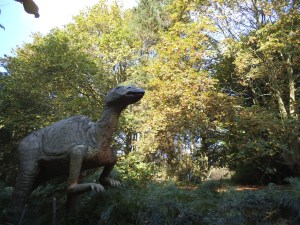
My family has had a love affair, some might say obsession, certainly a fascination, with dinosaurs for almost forty years. My son initiated the affair when he was about three after being undecided whether to watch or not when dinosaurs burst onto the drive-in screen in One Million Years BC. I’m not sure when I first discovered dinosaurs, but It may have been at the same time.
By the time Rob was four, like many children, he knew the names of a great number of dinosaurs and could rattle off screeds of information about them. It had been a steep learning curve for all of us, though he remembered far more than I. A travelling encyclopedia salesman was so impressed by his knowledge that he gave him a book about dinosaurs. (I’d already purchased; it wasn’t an incentive.) Later, his little sister Bec shared his interest.
Now the affair continues with Rob’s own children. Six-year-old G1 can name and identify far more dinosaurs than I realised existed. His younger sister G2 is not far behind. Such is the power of these mighty, and not so mighty, beasts to excite the imagination. The entire family become dinosaur experts in support of the children’s quest for knowledge.
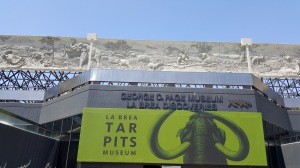
La Brea Tar Pits is a museum located at a fossil site where there are ongoing excavations. In the grounds, we saw realistic sculptures of prehistoric woolly mammoths trapped in the tar. Inside, we saw fossilised skeletons removed from the tar pits; including skeletons of animals such as mammoths, sabre-toothed cats, dire wolves, and camels. Yes, camels originated in North America.
Walking the grounds, we had to sidestep the smelly tar that still oozes in puddles around the site. It’s an amazing experience, walking on the same land where these prehistoric creatures walked, their presence almost tangible. In an enclosed area, a group of paleontologists were working with fossils recovered from the site. Scientists use these fossils to help construct our understanding of life before human history began.
What I find interesting about the understandings derived from these fossils, is that much of it is guesswork; educated guesswork, yes, but fossils tell only part of the story. The rest must be filled in using knowledge of contemporary and recorded life. Sometimes assumptions are made, especially when only partial skeletons are found, that must be altered when, or if, complete skeletons are found.
I was very impressed with the way this aspect of science was dealt with in the American Museum of Natural History. Many signs informed us that scientists don’t know for sure, but that they have substantial evidence for making their assumptions. Other signs told of claims that had been revised as new information was discovered. I appreciated being told, in essence: “This is what we know, this is what we think, and this is the evidence to support our claims.”
This talk by palaeontologist Jack Horner, which I discovered via a link from Charli Mills’ post, demonstrates the process with some fascinating dinosaur discoveries and assumptions.
A study of dinosaurs provides many opportunities for learning across the curriculum and what a great way to incorporate children’s natural interests and curiosity when looking at topics such as scientific method, evolution and climate change.
Since “discovering dinosaurs”, so to speak, I’ve always thought how wonderful it must be to unearth a great find. I haven’t made it an ambition, but I appreciate the potential for excitement. Here’s my response to Charli’s challenge. I hope you enjoy it.
Old Bones
She scratched at the surface tentatively at first, all senses keened, certain of imminent success. She’d uncovered bones here before. Usually one meant there’d be more. All it required was patience and persistence. Suddenly she contacted something more solid than the surrounding earth. She froze. Then exhaled. Could this be the object of her search? Frantically she scraped away the surrounding soil, exposing her find. She stepped back momentarily, assessing it, assuring herself it was real. Then with one final swoop, she removed the bone as carefully and proudly as any paleontologist would a dinosaur bone. “Woof!”
Thank you for reading. I appreciate your feedback. Please share your thoughts.
That I have an appreciation of and fascination with insects is no secret as I have written about it many times previously.
Some of my earliest posts formed a series in which I suggested using Eric Carle‘s Very Hungry Caterpillar story for developing critical literary, encouraging children to question the authenticity of what they read and the qualifications and intentions of the author.
Carle’s purpose with the story was to entertain, not to teach, and he was therefore unconcerned about inaccuracies in the butterfly life cycle.
The book, popular for its bright colourful illustrations and inspiring story of an ordinary caterpillar who becomes a beautiful butterfly achieves the author’s goal to entertain.
In a more recent post Revisiting The Very Hungry Caterpillar I provided a summary of, and links to, each of the four original posts which explained my recommendation that this very popular book was more relevant to teaching critical literacy than science.
Acknowledging the importance of maintaining Wondering in the everyday and an attachment with nature in wild spaces, I described my excitement at being able to observe every stage of the ladybird’s life cycle up close in my own backyard; an excitement that had perhaps exceeded observing the butterfly life cycle in the classroom with our live butterfly kits which had allowed us to Breathe – a sense of wonder! I even shared a section of a television interview in this post about Talking Interviews.
I talked about some insect themed classroom and teaching resources in The comfort zone. Others are listed on my page Early Childhood Teaching Resources and are available in my Teachers Pay Teachers and Teach in a Box stores. These, and many more, will be available on my readilearn website when it launches later in the year. Here is a sneak peek at some that will be included:
But the truth is I don’t really love allinsects. I’m not too keen on cockroaches, though the native Australian giant burrowing cockroaches are pretty cool. And although I am aware of vital roles of insects in the environment
as a food source for many animals
as pollinators for flowering plants
as decomposers
and I know that without them we’d basically not have an environment, in fact, we wouldn’t be; I often wonder whether we would be all that worse off without disease-spreading mosquitoes and flies. However, it seems that they too are vital to the health of our planet, whether we like them or not. It’s a bit of a “can’t live with them and can’t live without them” situation.
It took just one, then the word was out. The streets were abuzz with the news – a triumph of social media.
“Kyle’s having a barbecue. Tell everyone. Don’t bring anything. There’s always plenty.”
The excitement was palpable as guests swarmed towards Kyle’s. Some, initially unsure, flapped about nervously. Others, more experienced, felt they were dancing on the ceiling. Eventually all were on their way. The waft of seared flesh left no doubt about the location.
Kyle was ready when they arrived. “Who invited you?” he grinned and waved, as he knocked them out with the can of spray.
By nature, young children are explorers and discovers. Their purpose is to investigate the world around them and figure out what’s in it, how it works, and how they can get it to work for themselves. It takes little effort on the part of parents and early childhood teachers to nurture this innate curiosity and stimulate an interest in the natural world.
Sharing in the excitement of children’s discoveries is a marvellous experience and something I loved about having my own young children and working in early childhood classrooms, I now have the additional privilege of sharing in the wonder with my grandchildren. I feel very proud watching my two children, their dad and aunt, as together they explore the flora and fauna in our backyard. I know I have done something right.
These are just a few of the wonders we found this year:
The ladybird life cycle on our beautiful wattle tree.
This week at the Carrot RanchCharli Mills was talking about having a “looky-loo”, I’d probably call it a “sticky-beak”, at the effects of a river in flood, and described the way that neighbours help each other out, even if they’ve never met before. But Charli dives deep into the analogy of a flooded river, feeling washed out and overwhelmed by the rising tide of fear fuelled by a lack of understanding and appreciation of difference. She pleads for all of us to find our common ground, to realise that, while we are complex and contradictory, we share the same needs and wants. She says that if we don’t understand we should, “Ask, don’t judge. Learn, don’t isolate.”
Charli got me thinking about these issues, as she always does. I wondered, if we value, appreciate and marvel at diversity in the natural world, why don’t we appreciate it in other humans? After all, we are merely part of the natural world. That we have done more than any other species in manipulating it doesn’t alter that fact. Why can’t we all just agree to live and let live? Why do some think otherwise?
This particular TED talk is fascinating, funny, disgusting and very informative, with a little of something for everyone. He throws in terms like “mind control”, “eaten alive”, and “bursts out of body”. Science fiction has nothing on science fact.
He begins the talk by questioning whether animals choose their behaviour such as gathering in large flocks or herds for safety. He then talks about the popular children’s science “pet” brine shrimp, or sea monkey, and the ways in which a parasitic tapeworm influences the shrimp’s behaviour to enable its own reproductive cycle. He says, “The tapeworm hijacks their brains and their bodies, turning them into vehicles for getting itself into a flamingo.”
But that is just the first of his stories of animals behaving in ways as a result of the mind-control of parasites. He describes others and says that “Manipulation is not an oddity. It is a critical and common part of the world around us, and scientists have now found hundreds of examples of such manipulators, and more excitingly, they’re starting to understand exactly how these creatures control their hosts.”
He describes a wasp that attacks a cockroach and “un-checks the escape-from-danger box in the roach’s operating system”. I wondered if this same box could be un-checked in humans. Not surprisingly, Ed went on to discuss humans but said that our methods of mind control were fairly primitive compared to the techniques of parasites. He said that this is what makes the study of parasites so compelling. We value our free will and fear having our minds controlled by others, but this situation occurs all the time in nature.
Yong then asks what he considers an obvious and disquieting question:
“Are there dark, sinister parasites that are influencing our behaviour without us knowing about it …?”
He talks about a parasite that manipulates cats, a parasite that many people have in their brains. While there is no conclusive evidence of parasitic manipulation of human behaviour, Yong suggests that “it would be completely implausible for humans to be the only species that weren’t similarly affected.” I urge you to have a looky-loo at the now not-so-secret behaviour of these parasites. I’m certain you will be as entertained as you are informed and challenged.
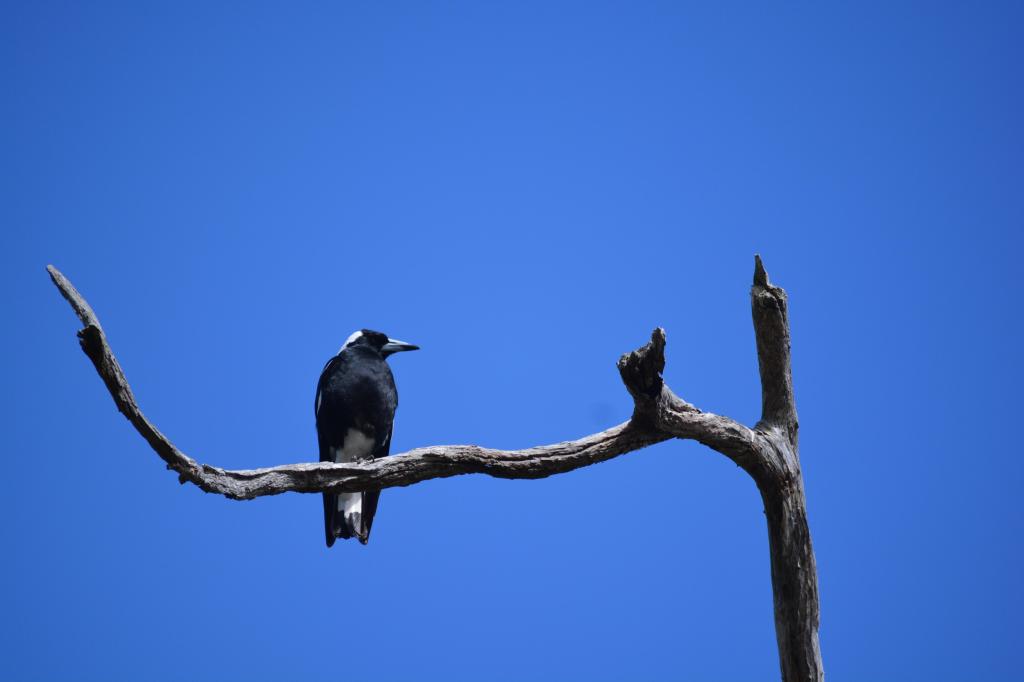
High in the branches Maggie practised her repertoire. She watched people scurrying: erecting tents and marking long white lines. She absorbed the rhythm of new songs: thump-thump, clink-clink.
She breakfasted on scarab beetles and was ready when the children arrived. But they didn’t notice her playful mimicry. Instead they flooded the field with colourful shirts and excited chatter.
Maggie watched silently. Soon she heard an unfamiliar song: “Go team, go team, go!” She flew to the top of the biggest tent and joined in. The children listened, then cheered. Maggie felt she’d almost burst. Instead she sang, and sang.
Perhaps we could learn from the magpie, one who looks, listens and learns and shows appreciation for others in the most sincere form of flattery: singing their song.
I love awakening to the beautiful songs of the magpie every morning. I chose to share this particular video, as yesterday we were also visited by a beautiful king parrot such as the one featured in this video. Awesome.
Thank you for reading. I appreciate your feedback. Please share your thoughts about any aspect of this post or flash fiction.
I found this TEDtalk by Cesar Harada totally engaging. Cesar, who describes himself as half Japanese half French, teaches science and invention to students from aged 6 to 15 at the Harbour School in Hong Kong.
Cesar opens his talk by explaining that, when a child, he was allowed to make a mess, but only if he cleaned up after himself. As he grew up he realised that he had been lied to: adults make messes too but they are not very good at cleaning up after themselves.
He closes his talk by suggesting that children should not be lied to. He says,
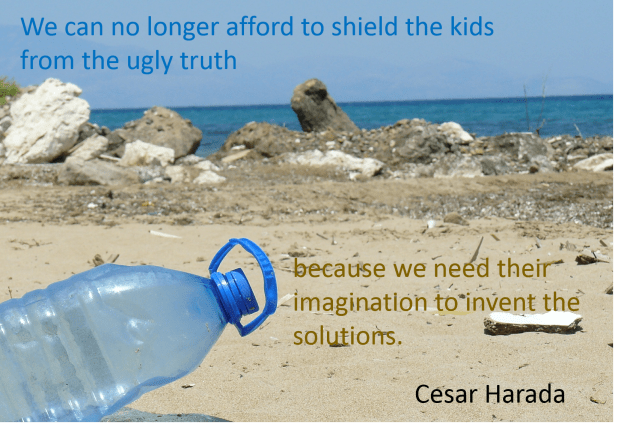
“We can no longer afford to shield the kids from the ugly truth because we need their imagination to invent the solutions.”
He then adds,
” we must prepare the next generation that cares about the environment and people, and that can actually do something about it.”
In between he describes some scientific thinking and inventions made by his students to solve local problems initially, then problems that affected other kids remotely, and finally problems that have a global impact.
I’m sure that you too can only be impressed by the learning and the positive actions that are being undertaken by these innovative students and their inspirational teacher. When I hear (true) stories like this, it certainly gives me hope for a better future.























 Norah Colvin