In my first year of school we wrote on slates (no, not on stone tablets as my children may tease).
In subsequent years, we wrote in exercise books and special handwriting books with lead pencils (which contain graphite rather than lead).
As we moved up through the grades, we still used pencils for most work, but were also introduced to pens with nibs which we dipped into inkwells recessed in our desks for handwriting or “copybook” lessons. It was important to get just the right amount of ink on the nib–too little and the nib would scratch but not sufficiently to make a readable mark–too much and the ink would run, blot and smudge.
In upper primary, we graduated to fountain pens for our copybook work. It was just as difficult to get the right amount of ink, even with the cartridge variety. Should we err and make a blot on our copybook, it was treated as a most serious offence. Luckily, our trusty blotting paper was at the ready to soak up any excess. We always had to begin writing at the top and continue down the page. There was no going back and inserting or altering something at the top, unless we were absolutely certain the ink was dry, lest we smudge the writing with our hand.
Although ball point pens, commonly called biros in my circles, had been invented–as early as 1888 according to this history, would you believe–we were not allowed to use them in school for fear our handwriting skills would deteriorate. They had their own set of ink issues too–some would fail to write, other would supply too much thick ink. Others would leave ink all over hands, or leak in pockets or bags.
Over the years, ballpoint pens improved in quality and have now replaced dip nib pens except for specialist writing, and fountain pens are considered more a luxury item. Now the concern is that the use of digital devices; such as, computers, tablets and phones will have a harmful effect upon children’s handwriting skills. I wonder were there similar concerns when papyrus replaced stone tablets; and what those concerns will be in the future, should handwriting have a future.
I didn’t wish to “blot my copybook” by responding to Charli’s prompt with a story unrelated to education or children. I hope you enjoy it.
A blot on whose copybook?
Ever so carefully, she dipped the nib in and out of the inkwell. Her tongue protruded, guiding the pen as she copied the black squiggly lines dancing across the page.
“Start at the top. Go across; then down. Lift, dip…,“ the teacher droned.
“Start at the top!” The cane stung her knuckles, sending the nib skidding across the page.
“Now look what you’ve done!” The teacher grasped the book and held it aloft, sending ink in rivulets down the page. Her thumb intercepted one, smearing another opportunity for humiliation across the page.
“Girls, this is what not to do!”
Thank you for reading. I appreciate your feedback. Please share your thoughts.
I’m so delighted to share this post on Sally Cronin’s lovely Smorgasbord – Variety is the spice of life blog. It allowed me to see my thoughts from a completely different angle. Please pop over to read and let me know what you think.
On the last Friday of each month in the We Are The World Blogfest, bloggers post positive news items that demonstrate that “love, humanity, and brotherhood” still exist in a world where negative news items seem to proliferate. They encourage as many bloggers as possible to join in and share good news stories.
I’m a bit late joining in this week, but I wanted to ensure you heard this wonderful news about teachers and children helping out those affected by the recent devastating hurricanes – education of the heart.
Books, children, reading, children helping children, teachers, compassion, empathy. Great ingredients for a better world.
If you would like to join in, click Here to enter their link . As they say, “Bigger the #WATWB group each month, more the joy!”
This is the story I share with you as part of the Blogfest this month:
When Hurricane Harvey struck this week, second grade teacher Kathryn Butler Mills of Katy, Texas quickly learned how many of her students were affected. In photos on social media, she saw “several of my students, past and present, sitting under staircases, in bathrooms, and in pantries, waiting out tornado watches and warnings.” She wanted to find a way to “bring a little normal to them in very not normal circumstances.” After seeing a number of kids pictured with books in hand, she hit on the idea of creating an online boo
The purposes of education are many; but perhaps one important purpose of “free” public schooling is to ensure that everyone is provided with the opportunity of being educated. While this goal is achieved to a certain extent, inequalities of opportunity still exist, many of which are related to socioeconomic status (SES).
While there is no doubt that a teacher can have a powerful effect upon the lives of students and any teacher would love to receive a letter such as that written by Albert Camus, socioeconomic status is often considered to be the most reliable predictor of success in school and, therefore, in life. There are many reasons for this, few of which have anything to do with intelligence.
According to Macquarie University the majority of students in tertiary education are of mid to high socioeconomic status. The parents of these students may have professional backgrounds and may have attended tertiary institutions themselves. Most have an appreciation of the benefits of higher education and are able to continue supporting their students, to some extent, while they study.
While students of lower SES are attending tertiary institutions in greater numbers they are disadvantaged in doing so by a number of factors, primarily financial in origin. Although Australia is supposedly free of class distinctions, attitudes towards those from lower SES areas are often demeaning and unsympathetic. Students from these areas may battle to develop the self-esteem that seems to be a birthright for others from more privileged backgrounds. The negativism with which they are viewed, and some come to view themselves, can become a self-fulfilling prophecy.
Ready for school – year 2
I was a fortunate one for, while I grew up in a family with low SES background, my parents saw the value in education and sacrificed much for their children to have the opportunities it provided. The high costs of tertiary education that are now incurred could not have been afforded, but I achieved well enough in school to obtain a scholarship to teachers’ college and a three-year bond (guaranteed employment) when that was finished.
Nowadays there is no such thing as guaranteed employment and few scholarships. Many families cannot afford to have post-secondary/adult students continue to live at home and not contribute to expenses while they undertake further study. This means that students have the additional burden of working while they are studying. Many opt out of study altogether to seek long term employment, often in low paying jobs with little opportunity for advancement. And so the cycle continues. The lack of permanent employment even for graduates makes deferring earnings less desirable again.
Of course the disadvantage doesn’t just begin when approaching final years of school. The impacts can be observed from the earliest age. (My suggestion for an early learning caravan addresses this in part.) Although education is provided “free” to students, there are many other associated costs that families may struggle to meet, such as books, equipment, and extra-curricular activities such as excursions and incursions.
In most Australian schools, the wearing of uniforms helps to minimize differences that may otherwise be obvious by choices of clothing and footwear. It also helps to reduce costs. Sometimes additional activities can be a drain on family expenses, and while many schools will fund expenses for those in need, not all families are willing to ask for that help.
Studies have shown that many children arrive at school without having eaten breakfast. While this phenomenon can occur in any family, it is more prevalent in low SES areas. Some schools are now providing a healthy breakfast for students when they arrive at school. I think this great as hungry children tend to have difficulty concentrating and learning, are often lethargic and may suffer from mood swings and negative attitudes. I know how irritated I become when I am hungry. My family “joke” about not getting in the way of me and my food! How much worse for children who come to school with empty bellies.
Of course these issues are compounded for children who live in dysfunctional families. As much as we may try to be inclusive and equitable in the way we treat them, these students are often the ones who notice their differences and inadequacies and become most self-critical. It can be a very difficult task to change the attitudes and habits of generations.
This week at the Carrot RanchCharli Mills talked about attending a garden party. The hosts and guests at this party had obviously enjoyed some of the finer things that life reserves for a few.
Well the photo is beautiful, but I couldn’t get away, I was stuck at the garden party. I thought it was a wonderful analogy for the rewards that can be had from an education; rewards that may be obvious and perhaps available to many, but rewards that may be out of reach to others because of circumstances over which they have no real control. I thought of Marnie who suffers the double disadvantage of a dysfunctional family in a low SES area; but who knows there is something better out there and wants it for herself.
Thanks to Charli for her prompt, here is another episode from Marnie’s life. I hope you enjoy it.
The garden party
Marnie’s face pressed into the bars of the tall white gate with amazement: white-covered tables laden with food; chairs with white bows; white streamers and balloons; and a band!
But the ladies had her spellbound with elegant dresses and high, high heels; flowers in their hair and bright painted lips.
A man in uniform opened the gate to guests arriving in limousines. Marnie followed.
“Not you, Miss,” said the uniformed man.
Marnie held out her invitation, “Jasmine . . .”
But he’d closed the gate and turned away.
Marnie looked down at her stained dress. What was she thinking?
Thank you for reading. I appreciate your feedback. Please share your thoughts about any aspect of this post or flash fiction.
When thinking about schooling and education there is always a lot of discussion about readiness and the things that must be done to have a child ready for school, ready for the next class, ready go to college or university . . .
While I agree that a learner must be ready to take the next step, to broaden understanding of a concept or to grasp the complexity of deeper issues; just what that readiness requires is often up for conjecture.
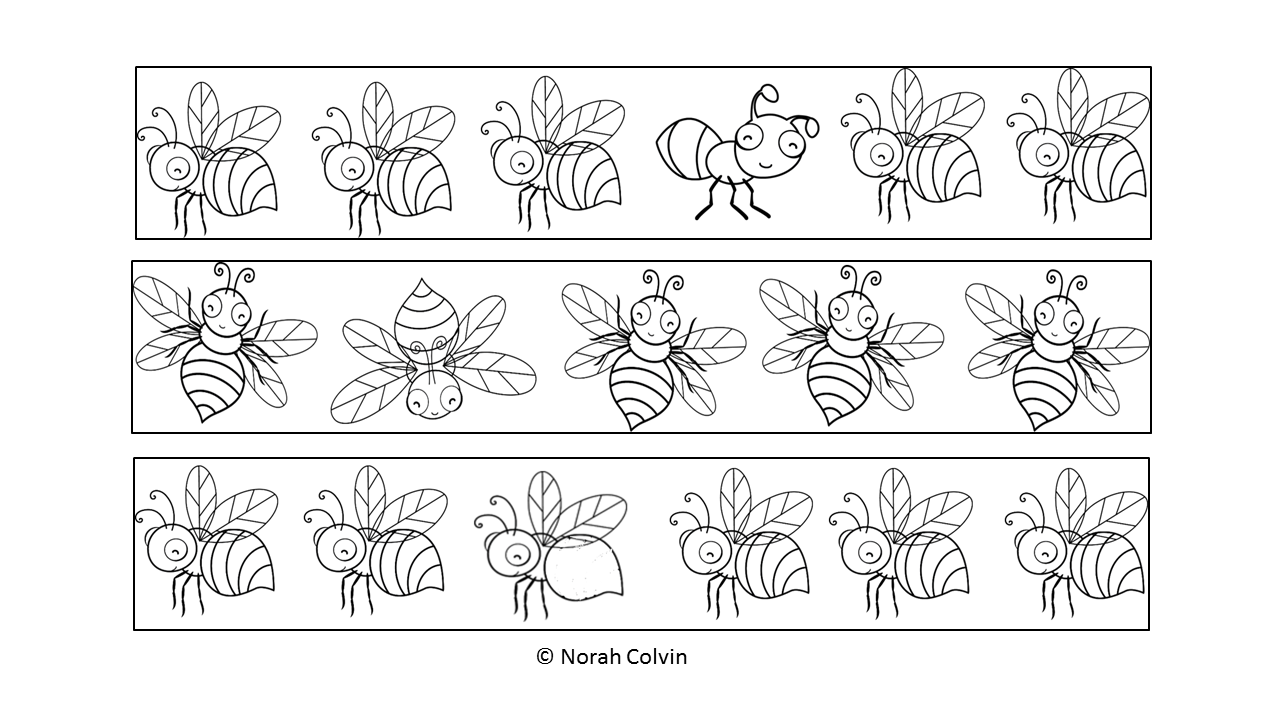
Back in the early days of my teaching experience workbooks of ‘reading readiness’ exercises were frequently used with students in their first year of school. These activities generally required children to identify the one that was different in a group of objects. The exercises, such as those shown below, progressed through various levels of difficulty with the aim of preparing children for reading.
Fortunately our understanding of how reading is learned has progressed since then and it is now recognised that exercises such as those did little to prepare children for learning to read. We now know that the best preparation for reading is to be immersed in language through conversations, with adults especially; to be read to frequently; and to develop a love of books and interest in print by sharing with others. The role of parents in preparing children for reading cannot be underestimated.
This week I watched a video of a presentation by Yong Zhao about a type of readiness he referred to as “Out of basement readiness”. I admit I hadn’t heard the term before but the concept is definitely familiar.
I do recommend you listen to Zhao’s talk. It is interesting, thought-provoking and humorous. I think I enjoyed listening to this talk as much as to Ken Robinson’s on How schools kill creativity which I have mentioned in previous posts here and here, amongst others. However at 55 minutes some of you may not be willing to commit the time. For me, it is 55 minutes of my life I’m very happy to not get back!
I will not attempt to share all the content of the talk; there is too much of value, but here are just a few snippets that resonated with me:
Zhao explains out of basement readiness this way:
Zhao says that students are being mis-educated, that they are being educated for something that doesn’t exist, and suggests that we should remove several phrases from the language we use to talk about education, especially
Under-performance
Evidence based
Data driven
His description of the traditional education paradigm will be familiar to any frequent readers of my blog. He says that it is “about forcing people to do what some other people prescribe them to do” and that we reduce it to just a few subjects that can be tested.
He talks about the “homogenisation” of schooling, and explained that homogenisation was the best way of getting rid of creative people and innovative thinkers.
He mentioned kindergarten readiness tests, and suggests that the only test should be whether the kindergarten was ready for the children and parents.
He recognises the uniqueness of every student, with different backgrounds, motivations and talents; and stresses the importance of effort. He says, “You cannot be born to be great. If you do not put effort into it you can never be good at it.” He explains it this way:
“If you put ten thousand hours into something you are good at, something you are interested in you get great talent. But if I force you to spend time on something you have no interest in, you hate and something you are not good at, you at best become mediocre.”
He says that countries that produce high test scores, score low on confidence and interest.
He says,
“Everyone is born to be creative, that’s a human being, that’s our gift: to be able to adapt, to learn and relearn and do new things. But school has typically tried to suppress it (with) . . . short term learning. . . Direct instruction may give the short-term gain but cause long term damages Studies show that if you teach children how to play with the toy, they lose creativity, lose curiosity and if you allow children to explore more they may not test very well but they maintain creativity and curiosity.”
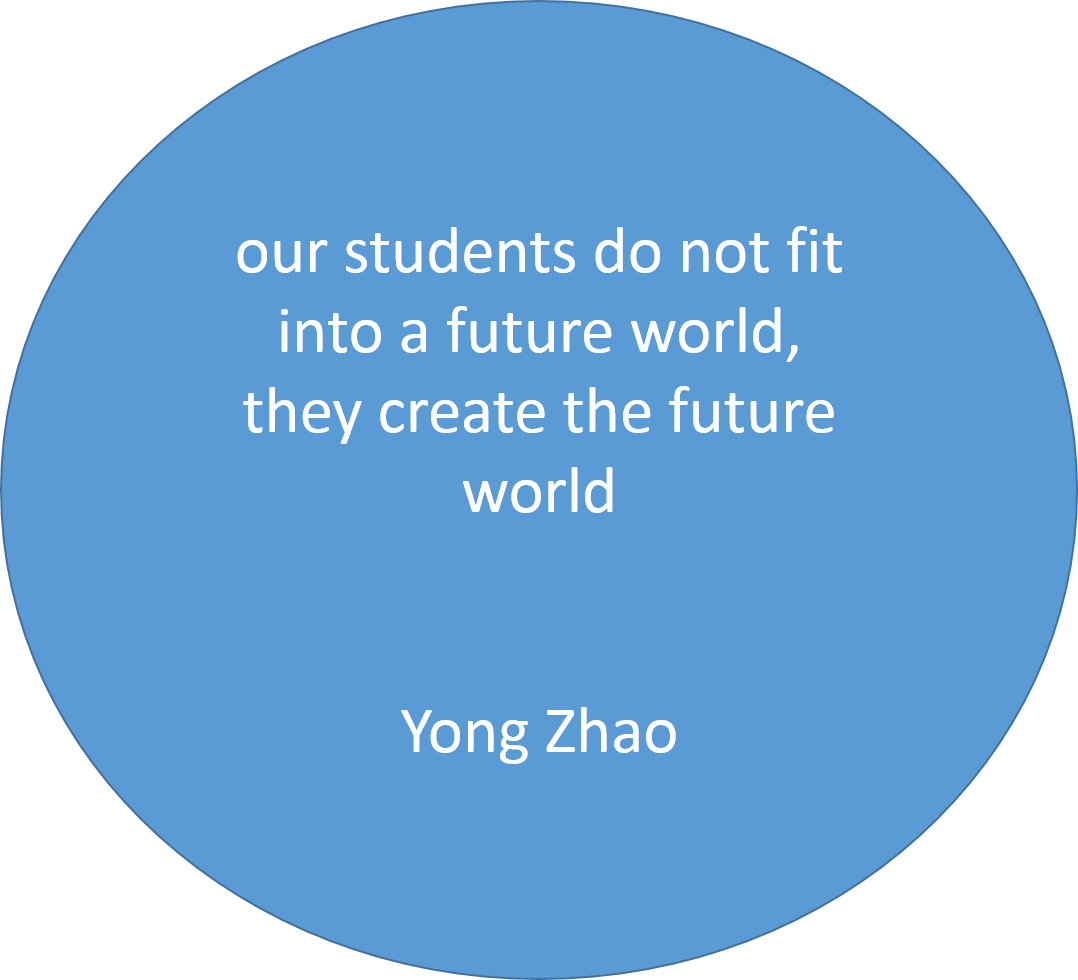
Zhao says that “our students do not fit into a future world, they create the future world. This is why we need a different type of education.” He says that “education is to create opportunities for every individual student, they are not an average, they are not a probability, they need to be improved as individual human beings.”
I couldn’t agree more. What do you think?
I was led to Zhao’s talk via Diane Ravitch’s blog which is about the education system and situation in the US. Much of what she writes has applications further afield and I recommend it to anyone wishing to stay informed of current issues in education.
Thank you for reading. I appreciate your feedback. Please share your thoughts on any aspect of this post.
At this school in Tokyo, five-year-olds cause traffic jams and windows are for Santa to climb into. Meet: the world’s cutest kindergarten, designed by architect Takaharu Tezuka. In this charming talk, he walks us through a design process that really lets kids be kids.
Some things that appeal to me about this kindergarten include:
the lack of boundaries between inside and outside, and between classrooms
the freedom of a child to choose to be in, or to leave, a space
the space and freedom for children to run
the sounds of happy children
the opportunity for children to help each other
and the attempt to use architecture to change the lives of children without controlling every waking moment
There are a few things that concern me, that make me feel uncomfortable, but maybe that’s just my urge to control being challenged.
What do you think?
Thank you for reading. I appreciate your feedback. Please share your thoughts about any aspect of this post.
This week at the Carrot RanchCharli Mills is talking about semicolons; but not the little squiggles on a page, the semicolons that are sprinkled liberally through life as new beginnings. Sometimes we see them and grasp the opportunity for renewal, other times we ignore them and miss the chance to revitalize. Sometimes we get pushed down and it takes all our strength to pull back up, grasping onto the semicolon as if it was a dragon’s tail.
Charli was inspired by Project Semicolon that provides this explanation:
“A semicolon is used when an author could’ve chosen to end their sentence, but chose not to. The author is you and the sentence if your life. Project Semicolon exists to encourage, love and inspire.”
Every day can be a new beginning in some way. With our thoughts, words and actions we can change our own lives, or the lives of others. The impact may be deliberate or unintentional. We may be aware of the effects, or we may never know the consequences.
Without wishing to diminish the importance of helping those “who are struggling with depression, suicide, addiction and self-injury”, which is the focus of Project Semicolon, my focus as always is on education and the importance of maintaining curiosity and an interest in and love of learning.
What better analogy of a semicolon of life than the transformation from a caterpillar in a pupa to the beauty and flight of a butterfly. An inspiring teacher can mean the difference between full stops and semicolons in learning.
In the article Berger discusses his obsession with “collecting student work of remarkable quality and value . . . the work of regular students in typical schools around the country . . . (whose) teachers have helped them develop the skills and mindsets necessary to produce work of exceptional quality, and have built classroom and school cultures in which exceptional work is the norm”.
Berger discusses ways of engaging students in authentic work, work that can have an impact on their communities and on the way they see themselves as learners. I remember Charli Millstelling me about similar work that her children were engaged in when they attended The School of Environmental Studies in Minnesota; and I shared some of Chris Lehmann’s work at the Science Leadership Academy in Philadelphia here.
Berger says,
“Once a student creates work of value for an authentic audience beyond the classroom — work that is sophisticated, accurate, important and beautiful — that student is never the same. When you have done quality work, deeper work, you know you are always capable of doing more.”
Semicolons in teaching and learning, all.
As with the three cited above, the situations referred to are often of teenagers in high schools. I am an early childhood teacher and, while I find the work exciting, I sometimes struggle to see the relevance to my situation. However, in this article Berger shares the work of Austin, a year one student from Boise, Idaho doing a project about a tiger swallowtail butterfly.
Austin was to illustrate his project with a detailed scientific drawing of the butterfly. His initial drawing was what I would consider to be fairly typical of a year one child. However he received feedback that was specific and not mean from follow students; and through a series of six drafts finished with a drawing that was much more sophisticated and demonstrated more careful ‘scientific’ observation.
Berger also shared work by year two students at another school, demonstrating what can be achieved “when students are allowed, compelled and supported to do great things”.
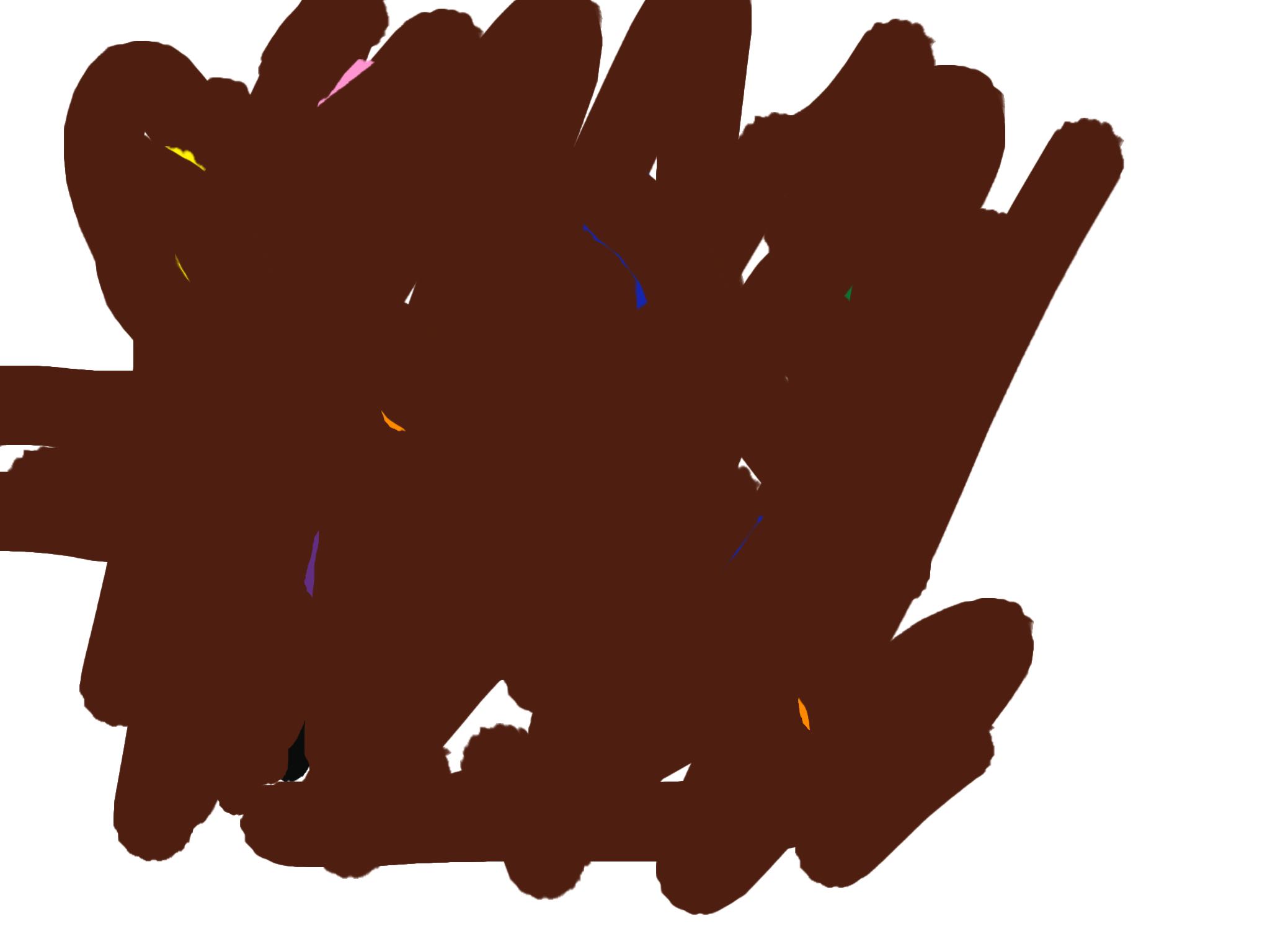
Last week Charli’s flash fiction challenge “the day the earth turned brown” prompted me to write about a student mixing all the colours together to make one muddy brown. The teacher paused before responding. There are many such pauses, (semicolons) in a teacher’s day. The teacher knows the power of every remark and must consider the impact that a response may have.
If you had provided each child with a palette of primary colours and black and white expecting them to mix a variety of colours and shades and tones to create an interesting picture; then found that one child had mixed them all together to make one muddy brown, how would you respond?
There were a number of comments on the flash including one from Geoff Le Pard who said that there were “So many questions as to why the little girl is making muddy browns and lathering them everywhere.”
So true. The teacher’s response would be influenced by knowledge of the child’s background, interest in art, and behaviour that day, among other things.
Charli Mills said that “It could mean many things and nothing!” She recalled, “mixing paints as a child hoping to create a vivid new color and (being) disappointed to end up with mud.” Anne Goodwin agreed, saying that “mixing paints to make a muddy brown, (was) a distinctive childhood memory”.
In my experience there was usually one child who ended up mixing all the colours together, often for no other reason than to see what happened. Sometimes the process of discovery gave as much pleasure as would a colourful painting of a house a tree and a sun.
However, there might be more to it than that. Charli Mills sympathesised with the teacher, saying that “So much is put on the teacher to figure it out.” She thought that the child “might be disturbed, highly imaginative or confident enough to experiment”. Sherri Matthews suggested that perhaps the child was “troubled . . . living in a dark, mixed up world, but . . . trying to find their way”.
So much to consider. So powerful the response. Will it be a full stop, or a semicolon?
She paused. The muddy brown extended beyond the paper virtually cementing it to the desktop. The palette too was brown with little trace of the beautiful primary colours she had prepared. Looking from desk to child she observed two large smears adorning the shirt. A bruise-like smudge on the cheek showed where an intruding hair had been brushed away. “Oh!”
She breathed; she counted to ten; and back again; “Breathe,” she told herself. “Why?”
She moved on, observing the assortment of smiling suns, houses and garden paths, but her mind was on the mud; the child . . .
What would be the appropriate response?
Thank you for reading. I appreciate your feedback. Please share your thoughts about any aspect of this post or flash fiction.
Familiar to most will be the weekly spelling test held on a Friday morning after a week’s practice at learning a list of words. Some will have dreaded the test fearing they may forget the “i before e”, “silent” letter or double letter rules, for example, their inadequacies made all too obvious by the large red crosses. Others would have relished the experience, requiring little effort to learn words they already knew, seemingly by osmosis, with the expectation of large red ticks and 10/10.
I dare say that most of you reading this blog are of the 10/10 variety. Just to be sure this is so, I have set you a little spelling test to do before you read any further. Please get your pen and paper, finger and notebook, or keyboard ready, then press PLAY to take the test.
So how did you go?
I hope you could see from that exercise that knowing how to spell has a lot to do with meaning. In fact the spelling of many of our words in English has more to do with morphology than with sound, and although sound can be helpful there are often many different letters or letter combinations that can be used to represent the same sound, for example:
“For 6092 two-syllable words among the 9000 words in the ‘comprehension vocabularies’ of a group of 6-9 year olds, 211 different spellings of the phonemes were needed – and these spellings required 166 rules to govern their use! Even at that, 10% of the words had to be left aside as ‘exceptions’; whichmeans that ‘even if a young child memorised these rules while learning to read he would still encounter hundreds of words not governed by them.’”
Lists of words, such as spelling lists, provide little support for learners, rarely providing context or meaning which might help them remember the words, or choose the correct meaning and therefore spelling, as shown by the spelling test exercise given above.
Rosen describes the alphabet as “a stunningly brilliant invention. We could call it a ‘cunning code’ or a ‘system of signs’ whereby we use some symbols (letters) to indicate some of the sounds of a language. … Though it is wonderful, there are some snags for users …” including:
letters and letter combinations do not represent the same sound each time they are used (e.g. ‘c’ in ‘cat’ and ‘city’)
letters represents different sounds according to regional accents
a particular sound is not always represented by the same letters (see the ‘eye’ example above)
He says that “Becoming or being a reader of English involves absorbing all these variations and then forgetting that they exist.”
He explains that the alphabet is more than a system of sounds and syllables and that “Our forebears devised alphabets so that they could store and retrieve meaning … over time and/or space”.
“Teachers should not take the importance of knowledge to mean they should create lists of facts . . . some benefit may might accrue, but it would be small. Knowledge pays off when it is conceptual and when the facts are related to one another, and that is not true of list learning. Also … such drilling would do far more harm by making students miserable and by encouragingthe belief that school is a place of boredom and drudgery, not excitement and discovery.”
When a child scores poorly in a spelling tests and their errors are marked in red they see themselves as bad spellers, lose confidence in their ability and have a defeatist attitude before they even try.
Why is spelling important?
Standard spelling is essential to ensure the meaning of the message is transmitted correctly from writer to reader. While readers may very quickly notice spelling errors in text they are reading, these few errors, when embedded in meaningful text, rarely inhibit the transmission of meaning. However if the bulk of the text is in nonstandard spelling, the message would be virtually indecipherable.
How do we learn to spell?
The most effective way most of us use to learn to spell is reading. While reading we are exposed to a large number of correctly spelled works in context. If we read often enough, we see words frequently and learn to recognise them. We notice when they are misspelled and so recognise how they are spelled.
The importance of spelling correctly is relevant to and a tool for our writing. The learning of particular words is best done in the context of writing.
These are some strategies that can be used with beginning writers:
Model writing for them, let them see you write for real purposes, think out loud so they can see what you are doing, for example: “I going to write a . . . I’m going to start … I need to write … ”
Encourage them to write for self-expression, to share ideas, to tell a story . . . sustained and uninterrupted writing without the fear of a red pen anywhere.
Encourage them to listen to the sounds in the words and write any of the letters they know (Beginners usually start with the initial consonant, then perhaps the initial and final consonant. Vowel sounds are the most difficult to hear and differentiate and are irregular in how they are represented.)
Respond to their writing with written comments to their messages, modelling the correct form, for example: If the child writes “I wet to the bich on the weced” you could reply with “Did you have fun when you went to the beach on the weekend?” This enables the child to see the importance of writing for communication, demonstrates the correct spelling without being “corrected” and provides a model which can be used in future writing.
Encourage children to proofread their own writing by circling words they weren’t sure how to spell. Don’t always expect them to discover the correct spelling. Being able to recognise when a word is or is not spelled correctly is a first step in developing competence.
Notice and comment on any development that can be seen in the child’s spelling ability, for example: “You have written the word ‘kitten’. You have written the ‘k’, you know that it begins with ‘k’; you have written the ‘t’ you can hear in themiddle and the ‘n’ at the end. You have listened very well to the sounds in the word.”
If you want to give a child a list of words to learn, use words that have been misspelled in independent writing. Independent writing provides you with information about what the child wants to write about.
As they begin using technology for writing, show them how to use the tools available for checking their spelling.
As a final note, in the Conversation this week was an article by Nathaniel Swain, entitled Spelling bees don’t teach kids literacy, or much else. The article discusses a soon-to-be aired television show that pits nine to thirteen year old children against each other in a spelling competition.
Swain says,
“How would you go spelling feuilleton, stichomythia, cymotrichous, or appoggiatura? More importantly, do you know the meaning of these words, and could you use them in a sentence?
Challenging and insightful, or obscure and essentially pointless? Spelling bees encourage endless memorisation of complex but low-frequency words – and are a distraction from the core of literacy education.”
Thank you for reading. I appreciate your feedback. Please share your thoughts about any aspect of this post.
Earlier this week the television was on as I was getting ready for work. I wasn’t taking much notice as the voices droned on. I was lost in my thoughts of what needed to be done, what I’d be doing at work, which illustrator I’d choose to win my design contest, what I’d write about next, what I needed to get at the shops on the way home from work . . . the usual clutter.
Suddenly the words “they don’t even know they are learning” drew my attention to the television. I paused to see what they were talking about. The image showed children of about three years of age in a child care centre. The children were counting as they walked along stepping stones laid out in a path!
Kids’ Work Chicago Day Care
Remarkable? I didn’t think so. Children were happily engaged doing what comes naturally to them: playing, having fun, making sense of the world around them. Pre-school children will naturally join in the fun of counting and learn to do so without structured lessons, with just an attentive adult who encourages it incidentally in daily activities. I have made a few suggestions here and here.
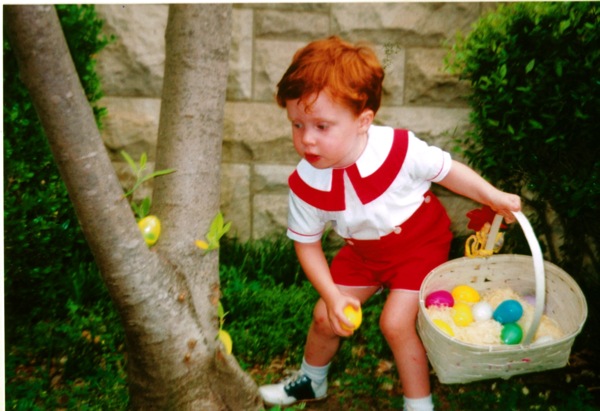
Easter Egg Patrol
What I think is far more remarkable (worthy of discussion) about those words is the insidiousness of the thinking that underlies them and what that thinking implies.
“They don’t even know they are learning!”
This to me implies that learning is something that:
children don’t want to do but “we” expect of them,
children won’t do unless it is “hidden” in sugar-coating,
must be planned for in a structured program and done to children by adults,
fits into a narrow band of skills and abilities with easily identifiable criteria that can be measured, and
is definitely NOT fun!
Perhaps more insidious is the implication that it occurs only in those situations.
Children are born to learn. Their every waking moment is spent figuring out how the world works and what they can do to have their needs met. They are born scientists. They have an innate desire to know. Why one should think it remarkable that children are learning, but they don’t even know they are doing so, boggles my mind.
Anyone who has spent any time with young children know that learning is what they do. They can spend hours absorbed in a particular activity figuring out how something works, how things fit together, what happens when and if …
As soon as an adult intervenes in an attempt to “teach” something that seems appropriate and important to the adult, the child switches off, disengages and chooses another activity.
That’s not to say that the adult shouldn’t intervene to support a child’s learning, but the adult needs to be sensitive to the child’s needs and responses and to not force the situation to one in which the learning may be more important to the adult than the child at that moment, when the child is doing very well on its own, thank you very much.
The article I refer to was broadcast on April 1st. An April Fool’s Day joke? Sadly, not. But if we fail to honour children’s natural curiosity and desire to learn and continue to value only that which can scored on a test, I fear we will develop a multitude of fools.
Thank you for reading. I appreciate your feedback. Please share your thoughts about any aspect of this post.
For just over a year now I have been participating in the weekly flash fiction challenge set by Charli Mills of the Carrot Ranch. I enjoy participating for a variety of reasons, including:
Challenge: I enjoy the challenge of
thinking of something to write
telling in story or scene in the 99 word total
applying it in some way to my blog’s focus on education
Variety: I enjoy writing in various forms and genres and the fiction is a pleasant change from the informational writing that I am primarily engaged with at the moment
Practice: The requirement to tell a story in just 99 words means that I need to:
choose my words carefully to make my meaning explicit
decide what can be told, what can be implied, and what can be omitted
think of alternate ways of expressing an idea or describing a situation or character
Community: The Congress of Rough Writers: I have made connections and online friendships with a wonderfully supportive and encouraging group of bloggers, whose numbers are constantly growing.
Feedback: The feedback that I receive in response to my flash fiction pieces and the posts in which I embed them gives meaning and purpose to the writing. I enjoy the in-depth discussions which quite often occur in response to the blog’s content and the additional thinking that I often need to do as a result. While it does distract me somewhat from my longer-term writing goals, the immediacy of the feedback is encouragement to continue and I am always appreciative of it.
There are many other reasons and benefits of participating in the challenges. The above are just a few. If you have not yet considered joining in the fun, now might be the time to do so.
Many of my responses to Charli’s challenges have been written to find out more about Marnie, who reveals snippets of her life, as if in flashbacks or dreams, at various ages. You can read what we already know about Marnie here.
“Symptoms” seemed perfect for revealing a little more about Marnie. A child such as she would display a great variety, an important one of which would be her attempt to hide those symptoms from others.
Here then is the next part of Marnie’s story, which follows on from the bullying episode shared last week.
Symptoms
The children suddenly appeared: one bedraggled and muddied, the other exuding authority.
“Brucie tripped her. On purpose!” declared Jasmine.
“Come on, Marnie. Let’s get you cleaned up,” said Mrs Tomkins. ”Then we’ll see about Brucie. Is your mum home today?”
Marnie looked down and shook her head.
“Will I help you with that jumper?”
“A jumper? It’s too warm . . .” Her thoughts raced.
Marnie turned away. As she pulled up her jumper, her shirt lifted revealing large discolorations on her back.
Over the years Mrs Tomkins had seen too many Marnies; too many Brucies; never enough Jasmines.
Sadly, children like Marnie and Brucie are very real and very familiar to many teachers.
A few weeks ago I shared a post by Julieanne Harmatz on her blog To Read To Write To Be. I always enjoy reading Julieanne’s blog because it helps me walk right back into the classroom, in my mind. The Student Z she described in that post has many “symptoms” in common with other students I have worked with over the years.
This week Julieanne shares ways she provides authentic opportunities for using digital technologies in her classroom. One of the ways is student blogging, and Julieanne linked to a post written by one of her students, Zoe. I was very impressed. I’m sure you will be too.
In the post Zoe shares information about, and links to, her favourite song and singer. She says it is her “favorite song because it teaches you why not to bully.”
The song is a rap version of “True Colours” with additional original anti-bullying content written by 12 year old MattyB to support his younger sister who is excluded and bullied because of her “symptoms”. I have not linked to the song here because I would like you to read Zoe’s blog and listen to the song there.
I was so impressed by Zoe and MattyB, both showing traits of strength and of being an “upstander”, as described by Mrs Varsalona in the comments on Zoe’s post, that I decided to find out a bit more about MattyB.
Here is the story of how MattyB and his family wrote the song to support MattyB’s sister Sarah.
I love to hear positive stories like this, don’t you?
Thank you for reading. I appreciate your feedback. Please share your thoughts about any aspect of this post or flash fiction.



 On the last Friday of each month in the

















 Norah Colvin