Live Love Laugh Learn … Create the possibilities

Tag: Questions

  • Are you ready to embrace the future?

    http://openclipart.org http://goo.gl/XApwuV
    http://openclipart.org http://goo.gl/XApwuV


    The flash fiction challenge posed by Charli Mills at the Carrot Ranch this week deals with the future. What a perfect prompt for a teacher, for is not education firmly focused on the future?

    We educate ourselves so that we will know more, be more skilled, or be able to do more in the future than in the past; we may learn new skills that keep us up-to-date with the changing demands of society or technology; or we may seek to improve our employability or income possibilities.

    We educate our children so that they will be independent and contributing members of society, able to participate in the world of the future, and having the knowledge and skills to enable them to achieve their goals.

    We educate for the future, but we are unable to predict the future, so the challenge to making decisions about education is difficult and highly-charged, attracting many different opinions and suggestions for solutions.

    Forbes Magazine featured an article in 2012 which queried the purpose of education.

    A 2013 TED conversation about the purpose of education, related to a talk by Ken Robinson, Changing education paradigms, attracted many and varied comments.

    In 2014 Tony Ryan hosted an online seminar about Future-proofing Kids. Tony says,

    “Many of the children alive today in Western societies will still be around in the 22nd Century. How can we possibly predict what they will experience between now and then? And if we can’t do that, then how do we best prepare them for whatever is up ahead?”

    I think of greatest importance in preparation for life, all of which will be in the future, except for the present moment, is the development of attitudes and character traits including:

    •  Confidence
    • Persistence
    • Resourcefulness
    • Resilience
    • Able to seek solutions to problems
    • Openness to new ideas and possibilities
    • Creativity
    • Divergent thinking
    • Questioning
    • Optimism

    In addition to the character traits, a certain level of skill is required in both literacy and numeracy, and especially an ability to locate and critically evaluate information.

    The title of Tony Ryan’s seminar, Future-proofing Kids, to me belies the value of the content Tony shares. To me ‘future-proofing’ indicates that the future is something to be protected from, like water proofing protects us from water; something perhaps of which to be scared. But Tony’s seminar is far more optimistic and future-oriented than that.

    We don’t know what the future will bring, but we never have. We can plan for it, we can hope and dream and set goals; but we can make no guarantees. Prophesies have never accurately foretold the future. I’m thinking of George Orwell’s Nineteen Eighty-Four or the more recent Y2K Bug.  I’m thinking of all the teachers who told their students they would never amount to anything, like Thomas Edison’s teachers who said he was “too stupid to learn anything”.

    peole_laptop

    In the early 1980s I was told at a conference that by the year 2000 computers would do so many of our menial tasks that we would have an enormous amount of free time and wouldn’t know what to do with ourselves! How inaccurate was that prediction! The menial tasks have only increased in number and instead of computers being a tool to simplify our lives, in teaching anyway, they are now an unrelenting, ever-increasing and demanding master requiring the completion of data bases and spreadsheets, the creation of graphs and statistics, reducing life to a series of expected numbers and standards

    The potential employment opportunities of today’s young women could not even be imagined when I was growing up and making my work choices. My apparent choices were teacher, nurse or office worker, and ultimately mum. Because I had chosen an academic path after year 8 and hadn’t learned shorthand and typing, office worker was eliminated. If I had chosen the commercial, shorthand and typing, path my choices would have been even further restricted.

    My generation was the one that began shuffling the female role in society. Had I been born just a few years earlier, I would have worked until I married; after which I would have stayed home and looked after the children. Many female teachers were required to resign when they married. Pregnancies were hidden under loose and voluminous clothing, and the whole process was considered an illness. Unmarried mothers were considered an embarrassment and ‘sinful’ and most had their babies removed and that part of their history hidden.

    Women of my era were able to return to the workforce, but it was not encouraged before the youngest child had started school. At that time child care was not readily available and often grandmothers, who had not returned to the workforce after marriage, looked after the children for mothers who worked, often part-time and for low wages.

    The current generation of women have far more career opportunities but are also expected to stay in the workforce, often required to return to work when their babies are only a few weeks old in order to maintain security of employment. Many now work through pregnancy, almost until the birth of their baby.

    Pregnant women no longer try to hide under voluminous layers of clothing but, partly with thanks to Demi Moore and Annie Leibovitz in 1991, take pride in showing off their changing shape. The term ‘unmarried mother’ is almost an anachronism in today’s Western world. There is no shame in having a child, whether married or living with someone or not; and babies are not forcibly removed from their mothers.

    I am no more able to predict the future than I am to make sense of the injustices and horrors of the past.  However I think part of the purpose of education must be to help individuals grow so that they are able to stride towards the future with arms outstretched saying, “Give me what you’ve got!” while at the same time with a listening ear and an open heart asking, “What can I do to help?”

    What do you think?

    I welcome your feedback. Please share your thoughts about any aspect of the article or my flash fiction piece:

    Ready

    I’m off now,” she said.

    “Have you got everything?” asked Mum.

    Yes Mum.”

    “Are you sure you haven’t forgotten anything?”

    I’m sure.”

    Mum looked around. There must be something she’d missed.

    “What about . . .?”

    No, Mum. I’ve got everything.”

    “Okay. If you’re sure.”

    “Bye Mum!”

    ”Bye.”

    She walked through the door and down the stairs.

    Mum watched, anxious. What could she have forgotten?

    “Wait!”

    She turned, puzzled.

    Mum leapt down the stairs.

    “What?”

    Mum hugged her tightly, whispering softly, “I love you very, very much. Always have and always will.”

    “I know. Love you too Mum.”


  • Child’s play – the science of asking questions

    Unknown source. Apologies. Happy to attribute if informed.
    Unknown source. Apologies. Happy to attribute if informed.

    I often say that children are born scientists. From the moment they are born they are actively finding ways of figuring out how the world works, and how they can get it to work for them.1

    Some people say children are sponges. But I say they are more than that. They are creators. They don’t just copy what they see. They don’t just repeat what they hear. They find new ways of working things out, new ways of expressing ideas, and new ways of thinking about things. Parents often remark, when children exhibit new behaviours or cute new phrases or ways of expressing themselves, “Where did they get that from? Where did they learn that?” Often the source cannot be identified, for the source is within the child.

    An important way to keep children creating their own understandings and ideas is to not only allow them to ask questions, but to actively encourage them to do so, and to help them seek answers to their questions. Adults can be quick to quiet children’s questions for a number of reasons including not knowing the answer, being too busy at the time to investigate an answer, or even considering the question unimportant or “dumb”.

    Unknown source. Apologies. Happy to attribute if informed.
    Unknown source. Apologies. Happy to attribute if informed.

    Remember, many things that adults may take for granted or that they may no longer question but simply accept (possibly as a result of not receiving appropriate answers or responses to their childhood questions) are new and unfamiliar to the child.

    Sometimes it is easier to accept than to question for questioning means that something is unknown; and not knowing can lead to feelings of insecurity, doubt and instability. But it is these self-same feelings which drive innovation and progress. If everything was known, there would be no room for improvement, no need for anything new, no need for greater understanding.

    This inspiring TED talk by Beau Lotto and Amy O’Toole, Science is for everyone, kids included emphasizes the need for children to be given the opportunity of asking, and exploring answers to, questions.

    Beau explains that what we see is based upon our experience, upon our expectations. But he asks,

    “if perception is grounded in our history, . . . (and) we’re only ever responding according to what we’ve done before . . . how can we ever see differently?”

    He goes on to explain that seeing things differently begins with a question and that questions lead to uncertainty. He says that

    The-best-questions-are

    and explains that the answer to uncertainty is play. He says that play “is a way of being” and is important for five reasons:

    • Uncertainty is celebrated in play and makes play fun
    • Play is adaptable to change
    • Play is open to possibility
    • Play is cooperative
    • Play is intrinsically motivated

    “Play is its own reward.”

    Beau says that science, also, is a way of being; and that science experiments are like play.

    He describes working with a group of 8-10 year old children, encouraging them to ask questions and involving them in an investigation of a question they posed.

    Amy O’Toole, one of the children involved, joins Beau and describes the experiment which investigated the ability of bees to “adapt themselves to new situations using previously learned rules and conditions.”

    The really exciting thing about the project, Amy says, was that they “had no idea whether it would work. It was completely new, and no one had done it before, including adults.”

    The process of taking the findings of the project to publication, as Beau explains, was rather complex with a variety of complications, taking two years to achieve. The experiment itself took only four months! Publication of the paper made Amy and her friends the youngest ever published scientists.

    The response to the paper, The Blackawton Bees is amazing:

    30 000 downloads on the first day

    Editor’s Choice in Science (a top science magazine)

    the only paper forever freely accessible on Biology Letters and

    the second-most downloaded paper from Biology Letters in 2011

    Amy wraps up the talk by stating that

    “This project was really exciting for me, because it brought the process of discovery to life, and it showed me that anyone, and I mean anyone, has the potential to discover something new, and that a small question can lead into a big discovery.”

    She finishes by saying that

    “science isn’t just a boring subject … anyone can discover something new.”

    We might not all make those big scientific discoveries, but it is the questions we ask each day which lead to our own discoveries, no matter how small; it is our curiosity which keeps us learning.

    What have you learnt today?

     Changing-the-way-a

    1 This is just my opinion formed from observations, discussions and reading. I am not supporting it with research references.

  • Liebster Award acceptance responses

    liebster2

    Recently I nominated a number of bloggers for a Liebster Award. Out of the thirteen I nominated, six chose to share their thoughts by answering the questions I asked. Considering the percentage of responses that are often received to a survey, I think this is a great result.

    Below I have presented the questions that I asked and collated a summary of each response. If you wish to read each respondent’s answers in full, please visit their blogs. I’m sure you will find much more of interest.

    You may notice that not all respondents have answered every question, and that one respondent has chosen another question of her own. That’s okay. I gave them permission to do so!

    Remember, these were open-ended questions with no wrong answers and everyone did a marvelous job in answering them. I am very grateful to each for sharing the depth and openness of their thoughts. I think we have much to learn from them, and from each other. This is a list of respondents with links to their blogs.

    Anne Goodwin  annethology  annecdotal Anne Goodwin’s Writing Blog

    Nillu Nasser Stelter, Fiction and Freelance Writer

    Nicole Hewes Cultivating Questioners

    Charli Mills Carrot Ranch Communications Words for People!

    Caroline Lodge book word

    Nanny Shecando


    1. What do you value most in life?

    Anne Goodwin

    Authenticity; ambivalence; fairness; mutual respect.

    Nillu Nasser Stelter

    the ability to choose how I live my life. Freedom is everything.

    Nicole Hewes

    moments of possibility and opportunity, where the world seems open and the choices seem infinite

    Charli Mills

    living in such a way that I look for beauty all around me and find good even when life’s path gets rocky

    Caroline Lodge

    my daughter

    Nanny Shecando

    the chance I get everyday to make the most of it. That I can do whichever I chose to do.


    2. What activities do you enjoy and why?

    Anne Goodwin

    Reading and writing; walking in the countryside; choral singing and growing (some of) my own food.

    Nillu Nasser Stelter

    lazy afternoons in the park with my family; sinking into a bubble bath with a good book; singing when nobody is listening and dancing when nobody is watching

    Nicole Hewes

    reading

    Charli Mills

    Activities that connect me to living in the moment: gardening, cooking and writing about the birds outside my window

    Caroline Lodge

    Reading and writing, and talking about both with other enthusiasts.

    Nanny Shecando

    any activity that allows me to be creative


    3.What is something you wish you had more time for?

    Anne Goodwin

    I don’t think we can do everything (that’s what fiction is for – the chance to live other lives) and I’m reasonably happy with how I portion out my time.

    Nillu Nasser Stelter

    reading and writing; other creative pursuits

    Nicole Hewes

    travel, try new recipes, read more books, and to spend with my friends and family

    Charli Mills

    I’ve found that by taking time to stare at a sunset or falling snowflakes, I have all the time in the world. It’s what I do with it that matters.

    Caroline Lodge

    it’s not so much time as ability to fit all the things I love in my life

    Nanny Shecando

    read more books


    4.What is one change you would like to make in the world?

    Anne Goodwin

    a shift in emphasis from a culture of greed to one of equality and compassion

    Nillu Nasser Stelter

    more understanding for each other, first within our own countries and then across country boundaries; clean water for all!

    Nicole Hewes

    change our society so that equal educational opportunity could actually exist, so that everyone could have access to basic resources, and so that money and special interests wouldn’t dictate the media

    Charli Mills

    contribute to world change through one beautiful book at a time; honor the hero’s journey within us all and to actualize everyday beauty

    Caroline Lodge

    World peace; access to books for everyone

    Nanny Shecando

    people holding themselves accountable for their actions


    5.What is something you would like to change about yourself?

    Anne Goodwin

    I’d like to be more laid-back; a published novelist

    Nillu Nasser Stelter

    I’d like to care less about what other people think about me.

    Nicole Hewes

    I would like to be a tad more outgoing and a little less independent

    Charli Mills

    To stop worrying whether or not people approve of what I do.

    Nanny Shecando

    to practice a, “you’re full of greatness so long as you tap into it and utilise it” mentality


    6.What surprises you most about your life – something good in your life that you hadn’t expected, dreamed of or thought possible?

    Anne Goodwin

    taking part in choral concerts of major classical works along with some pretty decent singers and a full orchestra. It’s a real emotional hit

    Nillu Nasser Stelter

    The ease of transition from single person to family life; how tiring and rewarding it would be.

    I have evolved from a child with a mass of insecurities to someone who is comfortable with herself.

    Nicole Hewes

    Being in a relationship with a partner with a worldview quite different from mine who challenges my views and assumptions and is incredibly kind, supportive, and loving.

    Charli Mills

    an upheaval in my life would open the door for me to step into that writer’s life. It isn’t easy, but it is what I’ve dreamed of doing and I’m doing it.

    Caroline Lodge

    That it goes on getting better, that I go on learning, that there are so many amazing people in the world and I know some of them.

    Nanny Shecando

    that I am able to be so happy, comfortable, confident and secure in leading the life that I do.


    7.What ‘big” question do you often ponder?

    Anne Goodwin

    The fact that our species has invested so much energy and creativity in the technology of warfare and so little in strategies for living in peace with our neighbours.

    Nicole Hewes

    Why our differences continue to lead to such polarization and why empathy can be so selective.

    Charli Mills

    How do I listen to God’s calling and live in the light?

    Caroline Lodge

    How can articulate and intelligent people inflict direct and indirect suffering upon others?

    Nanny Shecando

    life vs the state of dreaming. How can we really distinguish which is which? How do we know if what we perceive to be real is actually so?

    8.What sorts of things amuse you?

    Anne Goodwin

    my husband’s dreadful punning jokes. And I quite like dark humour exemplified by the ditty Always Look on the Bright Side of Life from The Life of Brian

    Nillu Nasser Stelter

    Slapstick comedy and Ally McBeal; innuendo; the children

    Nicole Hewes

    comments that my second graders make in our classroom; when the ridiculousness of an idea is exposed by positing the same thinking in another situation.

    Charli Mills

    Silly little things

    Caroline Lodge

    Unintentional meanings in things like the sign “uncontrolled pedestrian crossing” in London.

    Nanny Shecando

    the daily conversations that I get to share with the kids.


    9.What do you like to collect?

    Anne Goodwin

    Slugs from the garden

    Nicole Hewes

    copies of student work that blows me away with its insight or hilarity (I have a “smile file” where I keep these items). I also like to collect quotes and articles and stories that suggest that gender roles are actually shifting and gender stereotyping is altering. And pasta recipes

    Charli Mills

    Stuff from the ground that’s old–rocks, fossils, arrowheads, purple glass.

    Nanny Shecando

    books and old sheet music


    10.If you could talk with anyone and ask them to explain their ideas and/or actions, who would it be, and why?

    Anne Goodwin

    I’d ask the women who doled out white feathers to men out of uniform in the First World War why they thought they had the right. If I couldn’t time travel, I’d ask our Prime Minister, David Cameron, why he isn’t ashamed that a rich country like ours has spawned so many food banks.

    Nillu Nasser Stelter

    both my grandfathers, who have both sadly died

    Charli Mills

    I’d love to talk to my 5th-great grandfather and ask him why he left North Carolina. He was a poet and wrote such sad verse about leaving those mountains as an old man.


    11.What is something you can’t do without?

    Anne Goodwin

    My glasses, voice-activated software

    Nillu Nasser Stelter

    feeling connected

    Nicole Hewes

    a good book on my person at all times

    Charli Mills

    Internet!

    Caroline Lodge

    my daughter

    Nanny Shecando

    a notebook and pen


    12.What is something important you learned about life, and how did you learn it?

    Anne Goodwin

    That, unlike a work of fiction, we can’t scrub out the bits that don’t work and start again.

    Charli Mills

    A life of truth is not an easy one.

    Nanny Shecando

    you don’t get anything unless you ask for it


    13.What is your earliest memory?

    Anne Goodwin

    I distinctly remember standing on the steps leading up to the front door of our house, replying “two in August” to a passerby who’d asked my age. However, this being one of the stories my mother liked to tell about me, and knowing what I do about the fallibility of autobiographical memories, especially those from early childhood, I doubt its authenticity, and regard it as my mother’s memory, not mine.

    Nillu Nasser Stelter

    Probably my gran singing ‘Nanu maru nak’ (my nose is small), a Gujarati nursery rhyme, to me, but I often question whether my memories are real or reconstructed, so I can’t be sure.

    Charli Mills

    One of my earliest memories is of a black cat that I coaxed into being a pet on a ranch where I lived the first seven years of my life. That cat made me feel safe

    Caroline Lodge

    Someone threatened to steal my little sister. It was an early experience of a quandary: if I went to get adult help she might get taken, but could I make sure she was safe on my own. I was scarcely 3 and she was newborn.

    14.What sorts of things irritate you? (Caroline Lodge)

    Caroline Lodge

    There are lots of things, and one of them is the pervasive idea of favourite books and writers in tweets and blogs. It’s such a simplistic, reductionist concept that I try to avoid it. I added this question, just so I could indulge in a favourite whinge.


    The responses reflect the richness of our humanity, both the commonality and its diversity. Which responses strike an accord with you? With which do you differ?

    Please share your thoughts and keep the conversation going.


  • Empowerment – the importance of having a voice

    In a previous series of posts I wrote about science inaccuracies in a picture book and questioned with whom lay the responsibility for providing young children with correct information.

    While this post builds upon those posts, it also takes a divergent path: the need for children to have a voice; to be empowered to ask questions, to state their needs and report wrongdoings.

    On a highly respected educational website Scholastic, with the by-line “Read Every Day. Lead a Better Life.”, in an article about Eric Carle author of The Very Hungry Caterpillar, children are told that

    “Eric already knows that a caterpillar emerges from a chrysalis, not a cocoon! So don’t bother writing to tell him.”

    This seemingly innocuous statement may be easily overlooked but packs a powerful message.

    What does it tell children?

    The author has been told many times, already knows and isn’t going to do anything about it.

    The author is tired of being told he is wrong and doesn’t want to hear it any more.

    The author is “right” and not to be questioned. (The book, with its misinformation, is highly acclaimed by millions around the world. However if, in answering a question on a test, children were to write that a butterfly comes out of a cocoon, they would be marked wrong. Explain that to them.)

    For me the most insidious part of this message is

    He already knows, “so don’t bother writing to tell him”!!!!!!!!

    You can’t change it.

    You know it’s wrong, but you can’t change it, so don’t bother trying.

    Although many societies are now moving to eradicate it, child abuse is still far too common worldwide. Not only must the attitudes of societies change, but children must be empowered, they must be encouraged to speak up and they must be listened to: their voices must be heard.

    In a recent child abuse case that occurred at a Queensland primary school, the student protection officer reportedly said that she couldn’t understand why the children who had been sexually abused did not come forward.

    couldn't believe 1

    The accused had continued in his role as child protection contact for a year after the first complaint was made. The student protection officer found it hard to believe that her colleague was a paedophile;

    couldn't believe 2

    and still she says she doesn’t understand why the children didn’t come forward!

    Click here to read the complete article.

    It seems to me the children did come forward if the first (indicates there were more) complaint was made more than a year before anything was done about it.

    The children tried to say, but were not believed. The predator was believed and protected while the plight of the innocent victims was ignored. The report states that parents who complained about the abuse of their children were ostracised by the school community and made out to be the “bad guys”.

    Is it any wonder that, if not listened to and not believed, and if more is done to protect the offenders than the abused, the children become increasingly reluctant to tell?

    After the first children had come forward and not been listened to or believed, may not they have said to others, “There’s no point in saying. They already know. They won’t do anything about it?”

    Or what about the parents who were ostracised and made out to be the bad ones?

    Doesn’t it make the message very clear – you are powerless. Your voice won’t be heard. Your opinion doesn’t matter.

    Carry this message over into countless other situations and you have a population who is afraid to speak up, fearing the disdain of reproach, the embarrassment of being unvalued and the helplessness of one’s message being unheard.

    How many times have you felt you must remain silent for fear of ridicule, rejection, or worse?

    How many opportunities for creating a positive change have been missed because the task seemed insurmountable or the personal repercussions too unpleasant?

    When have you stepped up and made that change happen because you were not afraid to speak up or speak out when faced with an issue you felt strongly about?

    What changes can we make to empower children (and adults) everywhere?

    By the way, in that article on the Scholastic website, it is reported that Eric Carle believes that “the most important part of developing a book . . .is working with editors to revise it.”
    Would it make any difference to the magic of The Very Hungry Caterpillar if, after all these years, Eric Carle rewrote a corrected version with a butterfly emerging triumphantly from a chrysalis?

    What would that act tell all the countless children who have written to tell Eric about his mistake, and the many others who wanted to but were told there was no point?

    The Very Hungry Caterpillar

    Please share your thoughts.

    Related posts:

    Searching for meaning in a picture book — Part A

    Searching for purpose in a picture book – Part B

    Searching for truth in a picture book – Part C

    Finding power in a picture book – the main event

  • Finding power in a picture book – the main event

    Finding power in a picture book – the main event

    Teaching critical literacy through picture books

    This is the fourth is a series of posts about the role of picture books, especially The Very Hungry Caterpillar by Eric Carle.

    The purpose of this post is to discuss the importance of critical literacy and the necessity to teach children to

    • think critically
    • not accept everything that is presented in text (oral, visual or print)
    • evaluate the source of the information and the intent of the author
    • match incoming information with prior knowledge,  and
    • question, question, question.

    In these previous posts

    Searching for meaning in a picture book – Part A

    Searching for purpose in a picture book – Part B

    Searching for truth in a picture book – Part C

    I suggested ways of including The Very Hungry Caterpillar in an early childhood classroom and discussed the responsibility that authors have in differentiating between fact and fiction in story books.

    In Searching for truth in a picture book – Part C I pointed out the inaccuracies in The Very Hungry Caterpillar and the pervasiveness of the misconceptions, if not totally attributable to the book, then at least in part. This is verified by Jacqui who, in 2011, wrote on the Monarch Butterfly New Zealand Trust website

    “When speaking to teachers I often find raised eyebrows when I explain that butterflies’ larvae do not make cocoons. The teachers refer to Eric Carle’s book, The Very Hungry Caterpillar, where he refers to a ‘cocoon’.”

    Note that Jacqui refers specifically to this book, rather than to sources in general.

    As shown by Jacqui, though, it can be difficult, even for teachers without specialist entomological knowledge, to sort out fact from the fiction.

    These are two pieces of misinformation contained in the story:

    Misinformation 1:

    Caterpillars eat a lot of different food

    Fact

    Most caterpillars are fussy about their diet, some eating only one specific plant, others eating a variety of plant foods.

    Misinformation 2:

    Butterflies come out of a cocoon.

    Fact

    Butterflies emerge from a chrysalis.

    Moths come out of a cocoon.

    Watch these two videos:

    This one by Strang Entertainment shows the caterpillar becoming a chrysalis.

    This one shows a silkworm caterpillar spinning a cocoon (about 2 mins in).

    They are two very different processes.

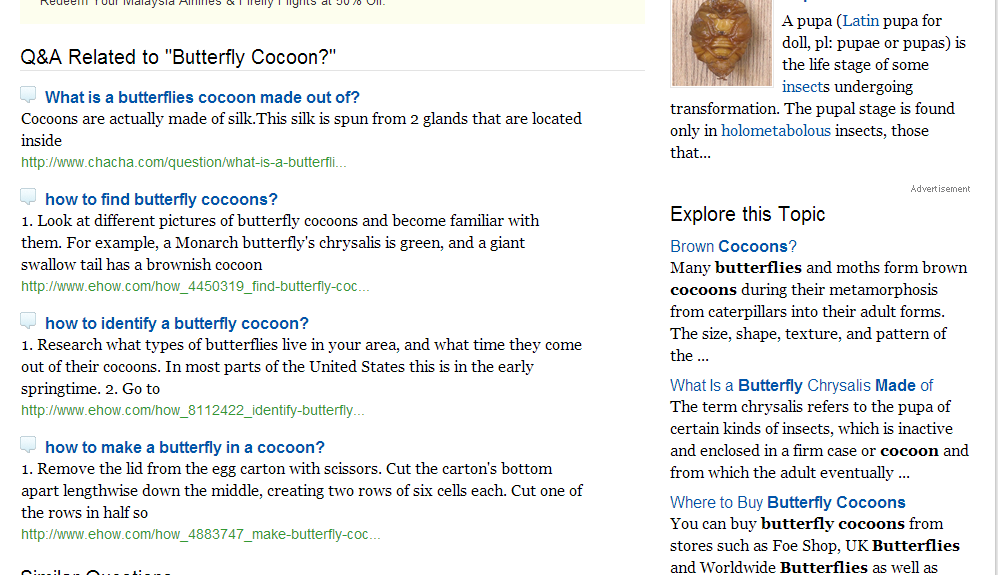
    However a quick glance at these Google search results shows just how pervasive the misconceptions are:

    Cocoon to butterfly

    butterfly cocoons

    Even seemingly authoritative educational websites misinform. Look at the way these two websites promote themselves, and consider the misinformation they are peddling.

    The website Math & Reading Help

    Maths and Reading Help

    states that The Very Hungry Caterpillar is “factually accurate . . . teaches your child to understand this biological process … a butterfly. . .(is) a caterpillar that has emerged from its cocoon”

    Primary upd8 which promotes itself as “UKs most exciting science resource”

    primary upd8

    also suggests using The Very Hungry Caterpillar for teaching about the life cycle of a butterfly.

    primary upd8 knowledge

    If self-professed “authorities” can’t get it right, how are we laypeople meant to make sense of it. Suggestions like these reinforce the need for the skills of critical analysis to be developed.

    Unlike those above, I contend that this book has no place in the science curriculum. Its greatest value is as a tool for teaching critical literacy.

    When children have learned about the life stages of a butterfly and then listen to The Very Hungry Caterpillar, they are very quick to pounce on the inaccuracies and immediately want to write to the author and tell him of his mistake.

    When told that he already knows and that he isn’t going to change it, as confirmed in an interview reported on the Scholastic website, they are incredulous.

    “Why would he do that?” they ask.

    Why indeed.

    When told that he doesn’t care that it isn’t right, they are indignant.

    But herein lies its value:

    I am able to affirm their learning: they know more than Eric Carle; and, more importantly, I am able to reinforce with them that just because something is in print, doesn’t make it true.

    In addition, it is important for them to realise that misinformation does not occur only in picture books, nor only in this picture book. It is just as common in news media, as shown by this article from Brisbane’s Courier-Mail on December 7 2013

    Butterfly emergingtext for photographs

    Nor is misinformation restricted to caterpillars and butterflies.

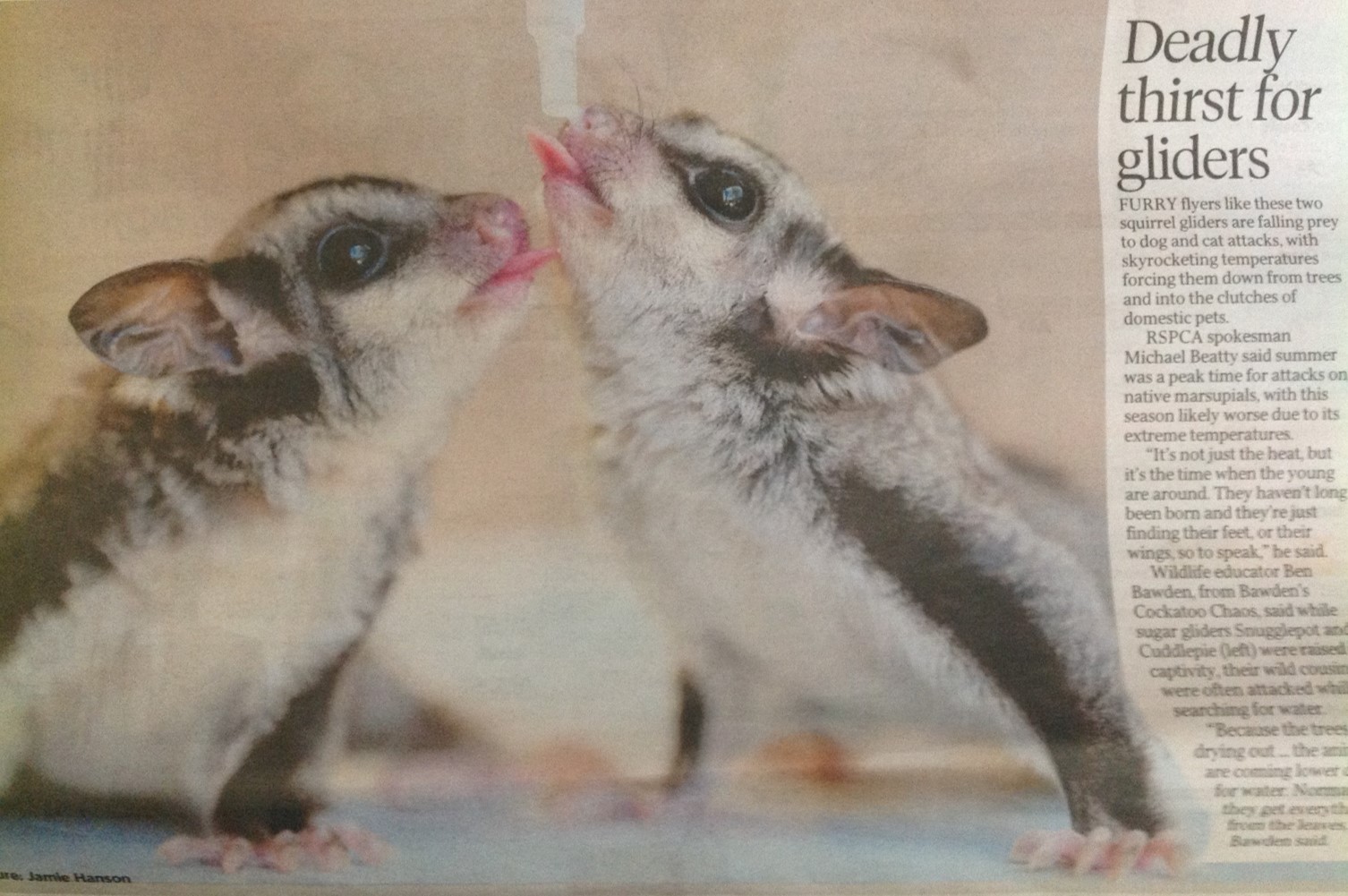
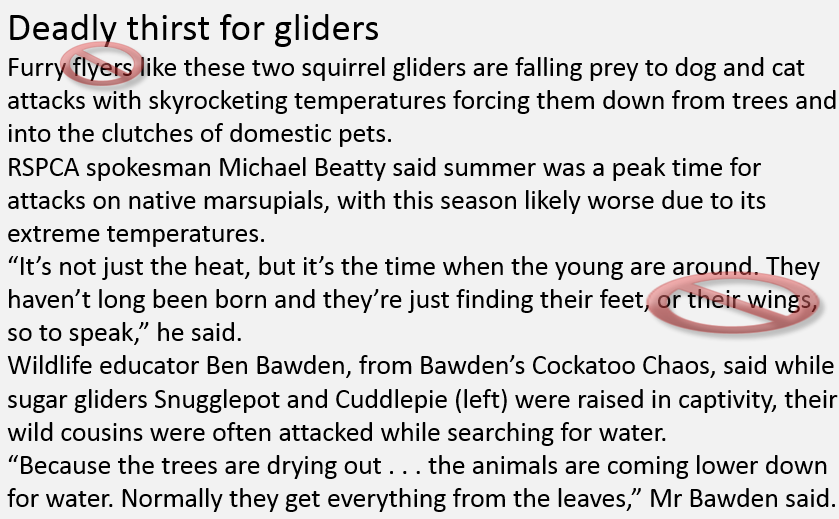
    This article, again from the Courier-Mail, on January 26 2014 also contains inaccuracies:

    Deadly thirst for glidersFurry flyers text

    Squirrel gliders don’t fly, and they don’t have wings.

    Suggestions for teachers and parents:

    • point out inaccuracies and inconsistencies
    • encourage children to think about what they are reading and hearing and to evaluate it against what they know
    • support children to verify the source of the information and to check it against other more authoritative/reliable sources
    • help them to recognise that every author has a purpose and to identify that purpose
    • invite children to ask questions about what they are reading and to interrogate the content
    • encourage them to question, question, question.

    As demonstrated by the Google results shown above, there is a good deal of misinformation available, often cleverly disguised as fact. Being able to navigate one’s way through it is a very important skill.

    Eric Carle says “If we can accept giants tied down by dwarfs, genies in bottles, and knights who attack windmills, why can’t a caterpillar (sic) come out of a cocoon?”

    What do you think?

    Do picture book authors have a responsibility for informing their audience? Is a butterfly coming out of a cocoon in the same realm as giants tied down by dwarfs? Would we accept a child hatching out of an egg? What parts of a story should be based in reality and which parts can be imagined?

    “Why can’t a butterfly come out of a cocoon?” asks Eric.

    Well, Eric, they just don’t.

    Please share your thoughts.

  • Searching for purpose in a picture book – Part B

    Searching for purpose in a picture book – Part B

    What is the purpose of picture books? Is their purpose simply to entertain with an interesting story and rhythmical language that is fun to read and recite? Is it simply, as I said in my previous post Searching for meaning in a picture book – Part A, “. . . a special time of togetherness, of bonding; of sharing stories and ideas . . . “ Could the purposes of picture books extend beyond entertainment alone? I think most people would acknowledge that reading picture books to young children has a profound effect upon children’s learning and development. In addition to entertainment, picture books can be used for a multitude of purposes, including:

    • to encourage a love of reading and books
    • to develop vocabulary and knowledge of language (through immersion and engagement rather than direct instruction)
    • to provide a link between the language of home and the language used in the wider community and in education
    • to support children embarking on their own journeys into reading
    • to inspire imaginations
    • to provide opportunities for discussing feelings, emotions, ideas, responses
    • to develop feelings of empathy, identification, recognition, hope
    • to instill an appreciation of art by presentation of a wide variety of styles, mediums and techniques

    I’m sure you can think of many more than I have listed here. But what of knowledge, information and facts?

    yves_guillou_question
    http://www.openclipart.org

    How, and when, do children learn to distinguish fiction from fact, or fact from fiction? At the moment that question is too big for me to even think about answering, but it is a question that I ponder frequently and may return to in future posts.

    ryanlerch_thinkingboy_outline
    http://www.openclipart.org

    Children seem to realise early on that animals don’t really behave like humans and wear clothing.

    mouse dressed up
    http://www.openclipart.org

    They don’t expect their toys to come to life and start talking.

    teddy_bear_and_doll
    http://www.openclipart.org

    They quickly understand, when it is explained to them, that unicorns and dragons are mythical creatures and, to our knowledge, don’t exist.

    toy unicorn
    http://www.openclipart.org
    dragon_on_a_leash
    http://www.openclipart.org

    But what happens when the lines between fact and fiction blur and content, though presented in fiction, has the appearance of being based in fact? For example: The lion is often referred to as “King of the jungle” and appears in that setting in many stories. However, lions don’t live in jungles. According to Buzzle, they live in a variety of habitats and jungle isn’t one of them. You knew that didn’t you? But what about the children? When will children learn that lions are not really kings of the jungle? Do you think it matters if children grow up thinking that lions live in jungles?

    Lion_Cartoon
    http://www.openclipart.org

    What about when animals that don’t co-exist appear in stories together? For example: Penguins often share a storyline alongside polar bears. Does this encourage children to think that penguins and polar bears co-exist? When do adults explain to children that penguins and polar bears live at opposite ends of the planet? At what age do you think children will happen upon that information? Does it matter?

    tauch_pinguin_ocal
    http://www.openclipart.org
    lemmling_Cartoon_polarbear
    http://www.openclipart.org

    What about the way animals are visually portrayed in stories? Must the illustrations be anatomically correct? For example: We all know that spiders have eight legs. Right? If I was to ask you to draw a picture of a spider, how would you do it? Have a go. It will only take a second or two. I can wait.

    whistle
    http://www.openclipart.org

    Now compare your drawing with these:

    spiderswirl2
    http://www.clipart.org
    Little_Miss_Muffet_Spider
    http://www.openclipart.org
    spider
    http://www.openclipart.org

    How did you go?

    While children easily realise that this picture is fictional:

    pet_spider_girl
    http://www.openclipart.org

    They have less success is understanding what is wrong with the previous images. Spiders have eight legs. Those drawings show eight legged furry creatures. The story says they are spiders. That must be what spiders look like. Right? Unfortunately, real spiders look more like this one:

    johnny_automatic_spider
    http://www.openclipart.org

    All eight legs are attached to the cephalothorax, not the abdomen (or even one body part) as shown in most picture books. While I am sure you drew a spider correctly (didn’t you?), most children and many adults draw them more as they are depicted in children’s stories. Is this a problem?

    LOVE_2
    http://www.openclipart.org

    I am not for one moment suggesting that we get rid of fictional picture books and stories. I love them! And as I have said, and will continue to say, many times: they are essential to a child’s learning and development. There is no such thing as too many or too often with picture books. Instead, I would like you to consider the misconceptions that may be developed when the content of picture (and other) books may be misleading, and how we adults should handle that when sharing books with children. One of the books that gets me thinking most about this topic is “The Very Hungry Caterpillar” by Eric Carle.

    The Very Hungry Caterpillar

    As I said in a previous post, it has been published in over 50 languages and more than 33 million copies have been sold worldwide. I am almost certain that you will be familiar with it, and upon that assumption, I have one final task for you in this post. Please share your response to the question in this poll:

    To be continued . . .

    I would love to receive any other comments you would like to share regarding the content in this post.

    I do apologize that I have been unable to get the text and pictures in the layout I desire. I obviously have more investigations to carry out and learning to do.  🙂

    Maybe next time I’ll have it mastered, says she, hopefully!

  • How was your day?

    How was your day?

    Have you ever been asked that question and simply answered, “Same ol’ same ol’” without making any attempt to elaborate or delve deeper into the day’s activities.

    If so, did this mean that you didn’t enjoy your day and that there wasn’t anything interesting in it?

    Sometimes much of what we do on a daily basis can become routine with activities seeming to flow from one to another without a great deal of change or significance worthy of a remark.

    peole_laptoppeole_computer

    There are many reasons people don’t immediately share what has happened in their day, and the lack of a truly amazing outstanding event may be just one of them.

    johnny_automatic_magician_and_floating_lady

    Similarly, in response to the question “What did you do today?” school children, often simply answer “Nothing” (as described by SHECANDO) without making any attempt to elaborate or delve deeper into the day’s activities.

    Parents and others often jump to the conclusion that the child’s day has been uneventful and boring and, unless the child later volunteers some information, or the parent has a specific question to ask, that may be the end of the subject.

    However, just as with adults, there may be a number of reasons the “Nothing,” response is given, including the generalised nature of the question.

    Some reasons for this failure to elaborate, although unspoken and often unidentified, may be:

    15073-Briana-web
    Courtesy of eLearningbrothers

    ‘I’ve just finished a hard day, I don’t want to talk about it right now.”

    “So much happened today, I don’t know where to start.”

    “I don’t think you’d be interested in anything that happened to me.”

    “I can’t really think. What do you want to know: something bad, something funny or something amazing? I didn’t get into trouble.”

    Additionally, if children are not already practiced in the art of sustaining conversation with an adult, then these discussions will rarely come easily or spontaneously.

    Sometimes specific questioning, requiring more than a yes/no answer, may elicit a more detailed response that in turns leads to a more in-depth discussion of the day’s events, e.g.

    liftarn_Adult_and_child

    “Who did you sit with at lunch today?”

    “What games did you play at recess?”

    “What story did your teacher read to you? What was it about?”

    Knowing something of what occurred during the day helps parents formulate appropriate questions to elicit conversation.

    In my role as a year one classroom teacher I believe in the importance of these conversations between children and parents for a number of reasons, including:

    • to keep parents informed of what is happening the classroom, which in turn encourages a positive attitude and participation;
    • to develop children’s language skills by engaging them in conversations which require them to describe, explain, respond and exchange ideas;
    • to develop children’s thinking skills and memory, “What did I do today?” “What did I learn?” “What happened before/after lunch?”
    • to provide a time for reflection and review e.g. “What can I do now that I couldn’t do before?” “When we were doing x, we had to y. Oh, now I get it. That means . . . “
    • to provide opportunities to sort out feelings and emotions  experienced during the day, but not yet dealt with e.g. “I don’t know why that happened at lunch time. Tomorrow I will . . .”
    • to strengthen the child-parent relationship by sharing ideas, attitudes and events in their daily lives.

    In addition to giving children reminders before they left for home in the afternoons, I developed a strategy that specifically targeted the need to provide parents with a window into the child’s day in order to arm them with sufficient information to instigate robust discussion.

    I called this strategy

    Class news

    1269850054

    Each day I published class news which the children pasted into a book to take home and read with parents. These days many teachers, like Miss Hewes, use a blog to keep parents informed. However there were no blogs around when I began doing this in the 1980s!

    The class news consisted of three main sections:

    • News of individual students
    • Class things we did today
    • Class reminders

    News of individual students

    15026-Mac-web
    Courtesy of eLearningbrothers

    Each day 2 – 3 children told the class about an item of interest to them e.g. an activity, a recent purchase, a family event, or a wish.

    After each child shared their news, the class and I cooperatively composed a brief summary (one or two sentences at first). I scribed and the children read. Later in the day I printed this out for the children to take home and read to their parents.

    As well as being a very effective literacy learning strategy (which I will write about in a future post), it helped parents get to know the names of classmates and a little about each one; it provided a discussion starter about which their child could elaborate. It also affirmed the children by providing each a turn of “starring” about once a fortnight.

    Things we did today

    In this section I would tell parents briefly about a few things we did that day, e.g.

    “Mrs Colvin read “Possum Magic”. We talked about what it would be like to be invisible and discussed what we thought would be good and not-so-good about being invisible. Then we wrote our very own stories about being invisible. We had some very interesting ideas!”

    “We learned about odd and even numbers by finding out which number of different objects we could put into two even lines.  Where can you find some odd or even numbers of objects at home?”

    “In art we learned about lines: straight lines and wriggly lines; long lines and short lines; jagged lines and curved lines; thick lines and thin lines. What sort of lines can you see in your pictures?”

    When parents are informed about things that have happened during the day, they have a firm basis for opening a meaningful discussion with their child. This in turn validates the child by giving importance to the child’s activities.

    I often included a question to help parents realise that they could easily extend the child’s learning at home.

    Class reminders

    A reminder or two would be included if particular events were coming up, or payments needed e.g.

    “Sports day tomorrow. Remember to wear your sport uniform and running shoes.”

    “Friday is the final day that excursion payments will be accepted.”

    These reminders helped to reduce the possibility of a child being upset by forgetting or missing out on a class activity. They also provided parents with another opportunity for discussion and the ability to enthuse their child with the anticipation of future events.

    Publishing the class news like this every day did eat into my lunch time, but the advent of computers in the classroom helped as I was able to set up a template and print copies on the classroom printer. In the “olden” days of the spirit copiers, every day meant starting out again and having to go to another room to churn the copies out by hand.

    I continued using this strategy throughout three decades of teaching because I believe in its power to develop readers and talkers, and to involve parents by keeping them informed of classroom learning and activities. Having already received a child’s answer of ‘nothing’ to the question “What did you do today?” I was determined that no child from my class would have a reason to answer in the same way.

    What questions encourage you to open up and talk about your day?

    What questions encourage you to keep your mouth shut?

    What do you think of my daily class news?

    What other strategies do you suggest to encourage communication between parents and children?

    All images courtesy of www.openclipart.org unless stated otherwise.

  • Aren’t they amazing!

    Children, I mean.

    birthday cake 2

    My gorgeous little granddaughter is two years old today, and what a wonderful opportunity that provides me to reflect on the marvels of children’s ability to wonder and learn. I am forever in awe of their ability to learn language and all its nuances.

    Some people say they are “sponges”, spongebut I say they are far more than that. They are creators of their own understandings, learning far more than anyone could ever possibly teach them. From the moment they are born, children are actively seeking to make sense of the world: through their interactions with it and relationships they form in it.

    Anna is already using language for a multitude of purposes.

    She has an extensive vocabulary which includes:

    Names, for example, of

    • family members and friends
    • fruits and other foods
    • colours
    • animals
    • animal sounds
    • toys
    • dinosaurs (learnt from her big brother)
    • objects in the home and environment

    Action words (verbs) including eat, drink, play, read, watch, swim, jump, dance, clean

    Adjectives e.g. big and small

    Adverbs e.g. fast and slow

    Social graces for example greetings like hello and bye-bye, and manners like please and thank you

    She sometimes uses one word effectively to convey a complex meaning or thought, but more often now she is stringing together a number of words to form phrases and sentences. She is able to participate in conversations which require an exchange of information or an interchange of questions and answers.

    She uses:

    Questions with appropriate words and inflection to:

    • be informed e.g. Where’s Mummy?
    • request e.g. strawberry please Daddy? play trampoline Mummy?
    • interrogate e.g. why you eat pineapple Bob?

    Commands

    • more Beckii!
    • stop Bob!

    Statements e.g. I go sleep my home

    She understands the importance of facial expressions and body language that accompany these exchanges. She has learned the sway of accompanying a “please” with a smile and the power of an emphatic “No!”

    Although many of her sentences do not contain articles (a, the), prepositions or connectives, her meaning is easily understood in the context of the conversation.

    She knows the placement of adjectives before the noun e.g. “big ball”, not “ball big”.

    She pretends play, e.g. setting up a group of balls then instructing the adults to “shh”, because the eggs need quiet for hatching.

    She has learnt how to follow instructions and take turns in a game e.g. a game of memory turning over the cards to find the matching pairs.

    johnny_automatic_father_and_daughter_playingAnna understands far more than she is able to produce. She responds appropriately to the questions, commands and statements of her family, asking for more information and clarification if she needs it. She knows when the sounds are produced in play rather than for meaning e.g. “Billy-bobby-silly-Sally”, and responds with giggles rather than questions.

    She is familiar with the language of books and expects books to be a source of pleasure and language.

    party_pinguin__card_ocal

    She knows that songs and rhymes are not conversation and joins in rhythmically and tunefully. At her birthday party, she led the family in singing “Happy birthday” to herself, and did a marvellous job of conducting.

    All of these observations reveal but a sample of her actual language learning, glimpsed through the grandmother’s window, you could say, during weekend visits. The parents would be more able to describe in greater detail just how extensive the language development is.

    But is Anna’s ability with language remarkable?

    Yes, indeed it is. Just as the language learning of every other child is remarkable.

    In just two short years Anna, like most other children around the world, has learned the basis of her language. What conditions supported this enormous growth in language learning?

    johnny_automatic_playing_dress_up

    According to research, children are born with an innate ability to learn language. At first they have the potential to learn the sounds, words, grammar and use of any language, but as time goes on their ear is tuned to the language spoken around them, and by the age of one children have learned all the sounds of their native language. However, though this ability to learn language is innate, it doesn’t occur in a vacuum. It occurs in an environment rich in language, and the richer the environment, the stronger, the better the language growth.

    Anna is surrounded by a loving family who speak with her discussing the day’s events, explaining information, telling stories and playing imaginatively. They read to her many times a day, and play games that require thinking and talking. This exposure to language, both oral and written, is an important part of her life, every day.

    Conditions for language learning

    Anna’s environment clearly exhibits the conditions, described by Brian Cambourne, which encourage language learning:

    Immersion: Anna is surrounded by language. Her significant adults (parents and other carers e.g. aunt and uncle, grandparents) speak to her: interacting and playing with language. They read stories and sing songs to her. They hold conversations with each other about a wide range of topics. While not included in these conversations, Anna is quietly learning the nuances of adult discourse.

    Demonstration: Anna observes adults using language in many different situations and comes to understand the language of different contexts and purposes e.g. greeting friends, shopping, asking for help, giving information.

    Feedback: As soon as Anna started to make sounds of her own, her parents provided feedback by repeating the sounds she had made and by adding new ones for her to copy. When she started to say her first words, her parents responded with enthusiasm and encouragement.

    Approximation: Anna’s parents accept and respond to the message of her communication, without hint of it being incomplete or incorrect. Instead they support and elaborate, seeing it as part of the development towards language proficiency.

    Now that Anna is joining words into phrases and sentences, the adults respond, often with an agreement or explanation, by restating the sentence, and expanding on it, supplying the words not yet part of her vocabulary; demonstrating intuitively the target structures towards which Anna’s language is developing.

    The guidance offered by these responses is gentle and intuitive, giving both congratulations on the ability to communicate and reinforcing standard language usage. For example, when Anna says “Apple juice,” the parent may respond, “Would Anna like some apple juice? I will get some apple juice for Anna.”

    Expectation: Anna’s parents always expected that she would learn to talk and that her talk would develop through easily recognisable stages. They do not expect her to speak like a university professor at the age of two!

    They are also aware that not all children develop language at the same rate, and understand that if Anna wasn’t speaking in sentences at the age when another was, they would just continue to provide demonstration, feedback and support expecting that she would in her own time. While they know that seeking help early if concerned about a child’s language development in these early years is very important, they have no reason to be concerned about Anna’s language development.

    Responsibility: Anna’s parents recognise that the responsibility for her language learning rests with Anna. They provide the environment, they model language in use and provide her with feedback and support. They don’t attempt to formally teach her language structures which are not yet part of her developing language.

    Use: Anna uses language in real situations for real purposes: to get things done, to ask for help, to think and share.

    Don’t you agree it’s a pretty remarkable process?

    Children all over the world become proficient language users when they are immersed in rich language environments, often provided intuitively by parents who talk with and read to their children.

    Sadly, not all children have the benefit of an environment rich in language.

    If we could convince all parents of the importance of talking and reading with their children in these early learning years, we would have far fewer children with delayed learning abilities at school.

    Nor and Bec reading

    How do you think we can help parents of young children understand the difference it could make to the lives of their children, and themselves?

    Please share your ideas.

  • Is it any wonder?

    ©Glenn Althor www.http://obscurepieces.com/ Used with permission.
    ©Glenn Althor www.http://obscurepieces.com/ Used with permission.

    One of the things I appreciate most about spending time with young children is learning to see the world again through their eyes, with the sense of wonder they shine on all they view.

    “What’s this?”

    “Did you see that?”

    “Why is like that?”

    “What would happen if …?”

    For many adults, that sense of wonder has been buried deep inside, hidden by the worries and concerns in the hustle and bustle of modern life; the busyness with which we seem to cloak our daily activities.

    ©Glenn Althor www.http://obscurepieces.com/ Used with permission.
    ©Glenn Althor www.http://obscurepieces.com/ Used with permission.

    But how joyous it can be to fling off that cloak of busyness and once more allow a childlike sense of wonder to emerge. The company of a young child is not essential for this to occur, although it may help to reawaken the sense initially.

    Take a moment each day to step off the treadmill of relentless must dos and appreciate the wonder all around.

    It can be easier than you think:

    Smile at a fellow commuter or passer-by.

    Appreciate the friendliness of a smile, a gesture, a kind word.

    Look around for changes in the landscape, notice details you may have missed before – “How long has that been there?”

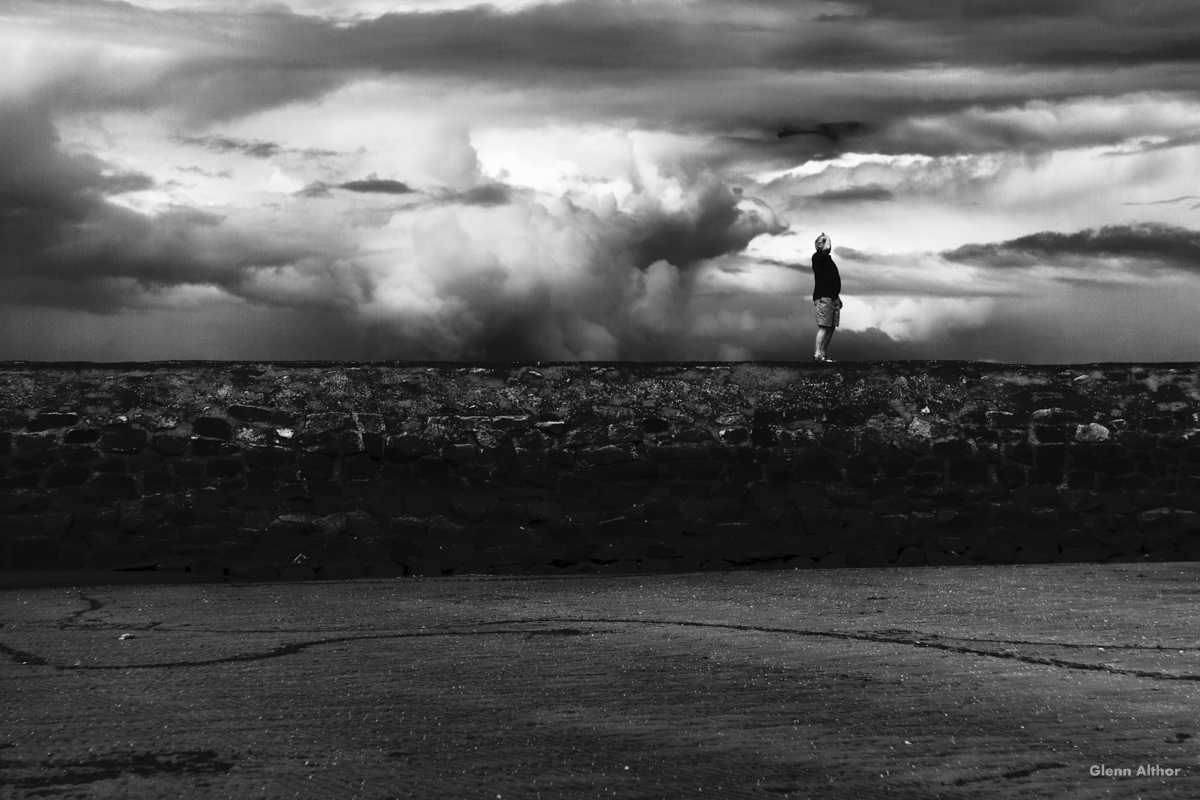
    Cloud gaze.

    ©Glenn Althor www.http://obscurepieces.com/ Used with permission.
    ©Glenn Althor www.http://obscurepieces.com/ Used with permission.

    Search through the daily cacophony to identify the song of each individual instrument: man, machine, nature.

    Listen to music; old favourites or new tunes. Louis Armstrong’s “What a wonderful world”  and Van Morrison’s “A sense of wonder”  help to get me in the mood.

    Pause to ponder the whys, the hows, the possibilities and the big questions, like “Who am I? Why am I here?” and “What is the meaning of life?”

    Stop telling people how busy you are, instead think of something you are enjoying, have achieved or are working on right now. Share the joy of being alive and capable.

    Breathe deeply; and as you focus on the breath as it moves in an out of your body, appreciate the life-giving air that surrounds you.

    ©Glenn Althor www.http://obscurepieces.com/ Used with permission.
    ©Glenn Althor www.http://obscurepieces.com/ Used with permission.

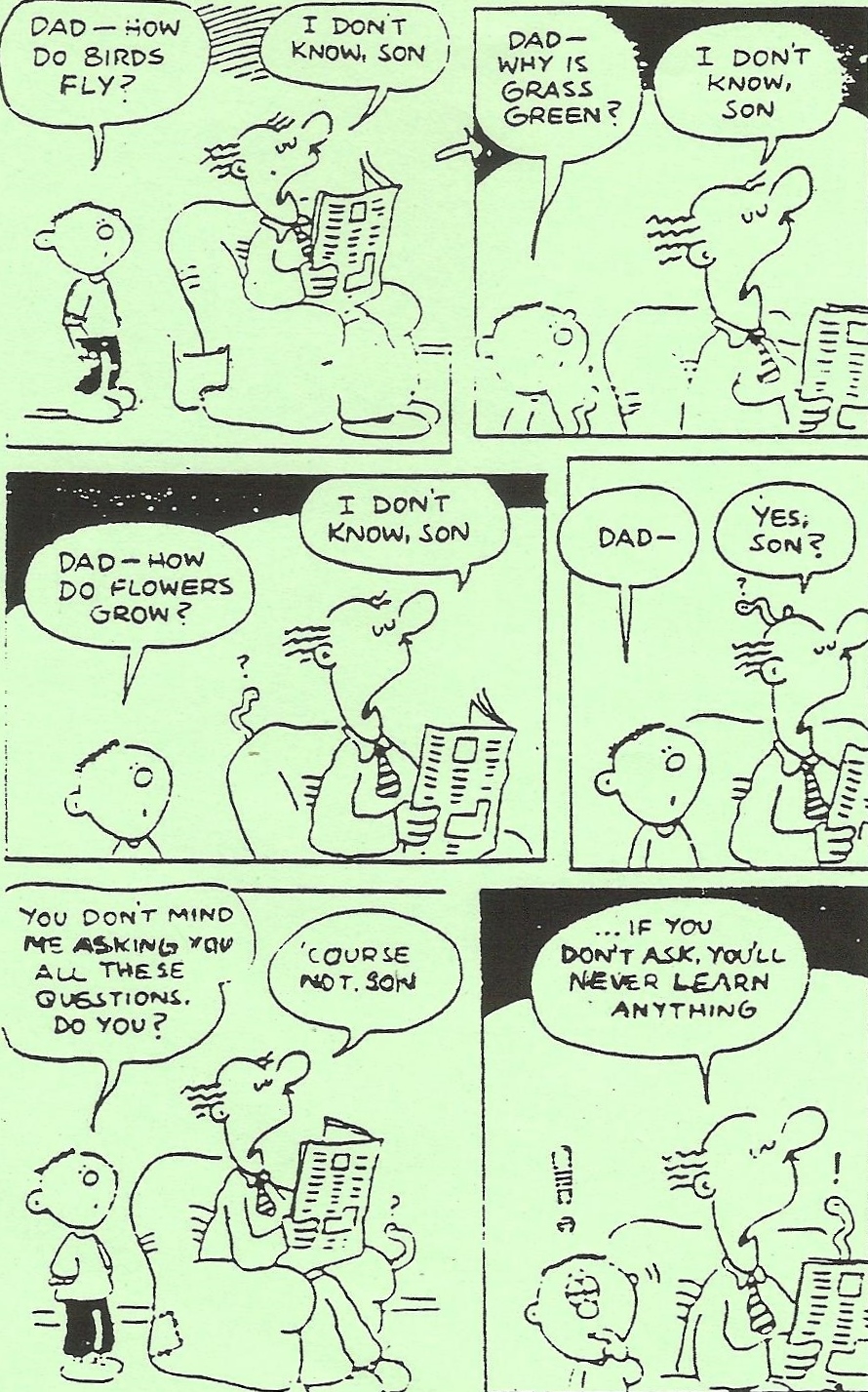
    If a child should ask a question, avoid the impulse to rush in with a wonder-stop: “That’s the way it is. I don’t know. I haven’t got time. I’m not worried about that now. We have to go. Not now.”

    I apologise that I am unable to attribute this cartoon correctly. I clipped it from a newspaper many years ago and no longer have the source. If you are able to help me with identifying the source so I can acknowledge it appropriately, I'd be very appreciative.
    I apologise that I am unable to attribute this cartoon correctly. I clipped it from a newspaper many years ago and no longer have the source. If you are able to help me with identifying the source so I can acknowledge it appropriately, I’d be very appreciative.

    Instead, pause for a moment and ask yourself the question as if you were the child, seeing and wondering for the first time, with a burning curiosity and longing to know. Look where the child is looking, see what the child is seeing. You’ll be amazed at what wonders will be revealed.

    ©Glenn Althor www.http://obscurepieces.com/ Used with permission.
    ©Glenn Althor www.http://obscurepieces.com/ Used with permission.

    Reclaim your right to wonder. After all, “Wonder is the beginning of wisdom.” (Socrates) and “The important thing is not to stop questioning. Curiosity has its own reason for existing.” (Einstein)

    These ideas are but a few. I invite you to share your favourites.

  • What you don’t know . . .

    One of my favourite quotes is that of Manuel in the BBC television series Fawlty Towers: “I know nothing.” I love quoting this but, just like Manuel, I too am learning. And what a wonderful gift it is to be able to learn.

    Recently I read a post This time it’s personal by Tony Burkinshaw on his blog.

    He explained unconscious incompetence in the following way: “A total ignorance of just how much you don’t yet know for the simple reason that you don’t yet know enough to recognise that you don’t yet know what you don’t yet know.”

    This got me thinking about knowledge and learning and about some of the subtle ways in which our attitude to knowledge and learning is manipulated.

    When I was a teenager, my brother wrote for me in my autograph book: “What you don’t know won’t do you any good either.”

    My father was not impressed and stated quite emphatically, “What you don’t know won’t do you any harm.

    I think he subscribed to the same philosophy as many of my teachers: “Ignorance is bliss.”

    I mentioned in my article To school or not to school, a belief that the natural curiosity and eagerness to learn I’d had as a young child had been somewhat diminished during childhood by the attitudes of others around me. That’s not to say that they didn’t want me to do well in school, for they did, and always encouraged me and supported me to do my best; but it was my best at what the teachers told me to do and what the teachers told me to learn.

    Ready for school - year 2
    Ready for school – year 2

    Knowledge is power; and one of the easiest ways to suppress and maintain power over others is to keep them ignorant.

    While I am certain that my own willingness to be manipulated and need for acceptance also contributed, an encouragement of curiosity and active inquiry would have had the opposite and more positive effect. I am sure there are others who may not have bent so willingly under pressure and whose natural love of learning flourished despite it or even in response to it. But I know there are many more who bent and failed to rebound and are now trapped by their “unconscious incompetence” in an unassailable comfort zone; not knowing what they don’t know, for “Ignorance is bliss”.

    I am one of the lucky ones for, while I know a lot about some things, I know that there are things that I don’t know, and lots of them! Rather than make me a conscious incompetent, it makes me a willing learner, and passionate about ensuring the flames of curiosity and love of learning are maintained in others.

    Throughout their childhoods, I encouraged my children to question everything, including me, for I wanted them to arrive at their own understandings and did not want their thinking to be restricted the way mine had been.

    For many of you, a love of learning and an ability to acquire knowledge may have been a constant throughout your life. I ask then, that you do not dismiss those who don’t have the advantage of your information and your education. Many do not know what they do not know and they can’t even begin to imagine the questions they could start asking to ignite their learning. If they have had their natural curiosity suppressed and their wills broken, been convinced that submission and conformity were the way to being “good”, and willingly entered the cage and threw away the key; instead of judgment, derision and laughter, what they need is to be shown the open doorway … shown what they don’t know so they too, can start asking questions and filling in the gaps in their knowledge to regain power over their own lives.

    The saying “A little knowledge is a dangerous thing” is very true.

    How many times have you heard someone bemoan, “I wish I knew then what I know now”?

    What can you do to encourage a love of learning or pique someone’s interest today?

    How has your attitude to learning been influenced by the attitudes of others?