
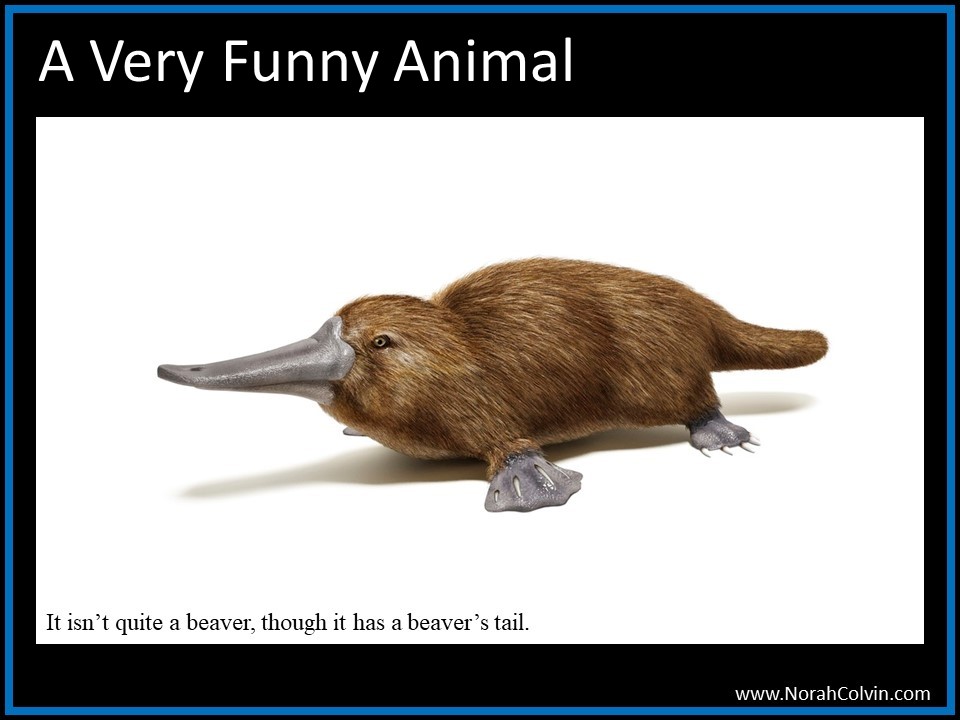
I’ve very excited to see that my poem ‘A very Funny Animal is poem of the day on the Australian Children’s Poetry website today! Yay!
Tag: poetry
-
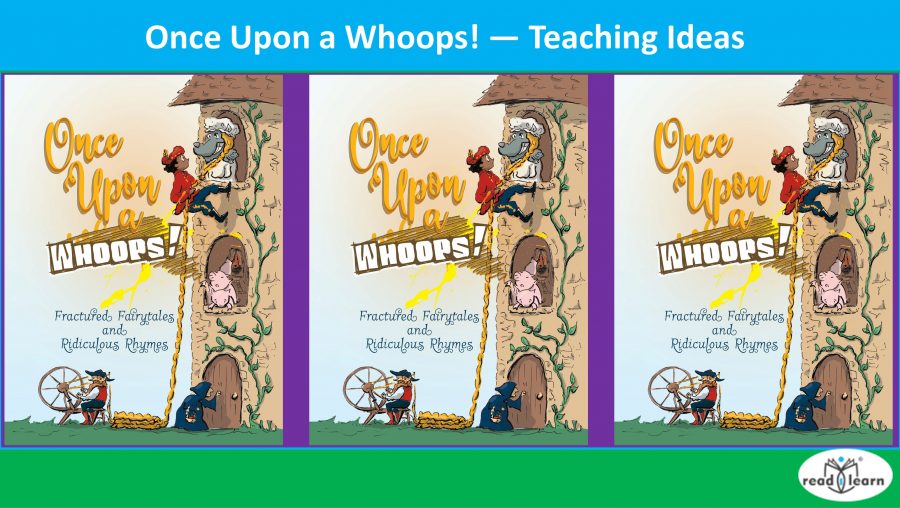
Once Upon a Whoops! — Teaching Ideas – #readilearn
In this post I share some ideas for using Once Upon a Whoops! in the classroom.
Once Upon a Whoops! is a collection of over 40 fractured fairy tales and ridiculous rhymes written and illustrated by Australian authors and illustrators and published by Share Your Story in 2021.
The activities suggested in this post support teaching of the literature strand of the Australian Curriculum F-2. The list not comprehensive as there are too many stories to go into detail for each one. Instead, I provide some general ideas and reference just a few stories for each suggestion.
Of course, in addition to these, the stories can be used as a stimulus in art and technology units if children make props and other objects to support retellings, puppet plays and performances. Many of the stories also provide opportunities for mathematical discussions.
Once Upon a Whoops! is available from Amazon and other online bookstores.
Please note: this book is now also available in Dyslexia font.
Many of the stories have been recorded by the authors. The videos are available on YouTube by following this link.
My stories Silverlocks and the Three Bears and The Three Alpha Pigs are also available on the readilearn YouTube channel. Click on the titles to follow the links.
Once Upon a Whoops! — what’s in the book
Continue reading: Once Upon a Whoops! — Teaching Ideas – readilearn
Share this:
-
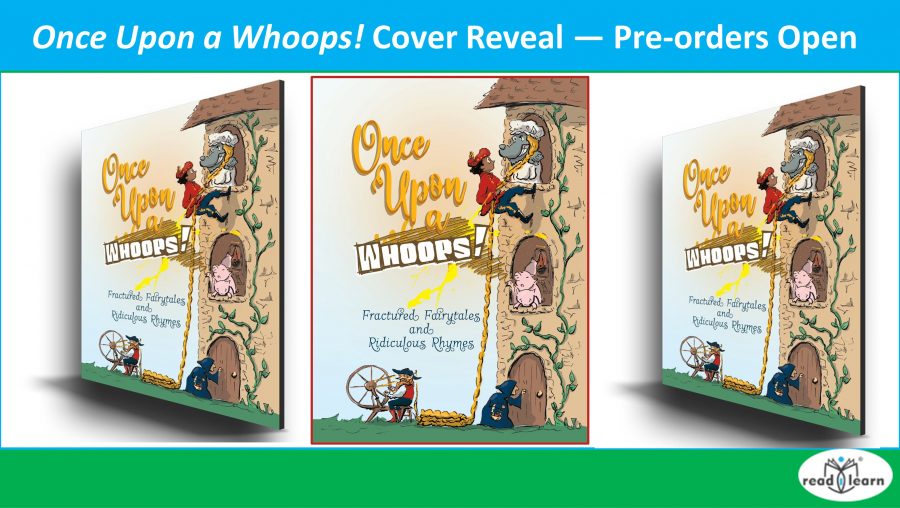
Once Upon a Whoops! Cover Reveal — Pre-orders Open – #readilearn
Today I am excited to announce that this year’s Share Your Story Anthology, Once Upon a Whoops! is available for pre-order now and will be available for sale on 1 September.
Once Upon a Whoops! is a collection of twisted fairy tales and ridiculous rhymes with peculiar pictures, all by Australian authors and illustrators.
I am delighted to tell you that I have two fractured fairy tales included in the collection: Three Alpha Pigs and Silverlocks and the Three Bears.
Three Alpha Pigs twists the original Three Little Pigs with three pig brothers who are definitely of this century. In case you didn’t know, as I didn’t until I researched it for my story, Generation Alpha are those born since 2010. Like many of their generation, the brothers play video games and avoid chores whenever possible. They think that having built successfully in Minecraft, they’ll be able to build successfully in the ‘real’ world when they leave home and need somewhere to live. Mr Gruff, who lives next door, doesn’t think they’ll stay away from the comforts of home too long. His kids never do.
Silverlocks is an older Goldilocks. She’s done her time and wishes everyone would stop reminding her of her past. She uses an online booking service to secure holiday accommodation, but things don’t turn out as she hoped and flashbacks of the past intrude on her stay.
In addition to my two stories, there are more than forty stories and poems collected in the anthology, including some by authors I’ve previously interviewed: June Perkins, Karen Hendricks, M J Gibbs and anthology organiser Michelle Worthington. Many other stories and poems are also by already published authors with many books to their names, so I’m in good company.
Proceeds of Sales
As with each of the previous Share Your Story anthologies, sales of the book will raise funds for charity. This year’s charity is Life’s Little Treasures Foundation, an organisation that provides support for families of premature or sick babies. This includes items such as Precious Prem Packs and guide books for families in hospital.
Copies of the anthology will be sent to every children’s hospital in Australia as part of the Little Readers Readathon.
Continue reading: Once Upon a Whoops! Cover Reveal — Pre-orders Open – readilearn
Share this:
-

The Results ARe IN For the Winner of the Carrot Ranch Double Ennead Poetry Challenge
And the results for the second Carrot Ranch 2020 Flash Fiction Rodeo – The Double Ennead Poetry Challenge lead by poet Colleen Chesebro – are in!
Did you enter? I did, but I didn’t win. Did you? Pop over to Colleen’s to find out.Share this:
-
Bush Ballads, Billabongs and Bullfrogs – #readilearn
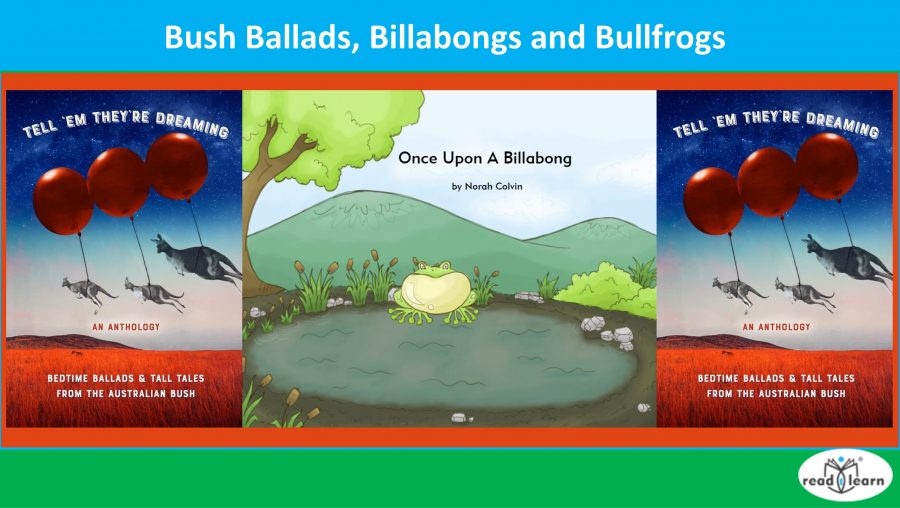
A couple of weeks ago, I announced the publication of a new anthology of Bedtime Ballads and Tall Tales from the Australian Bush, Tell ‘Em They’re Dreaming, in which I am delighted to have a ballad of my own included.
The anthology was launched online on Facebook last Sunday 1 November with many of the authors reading their stories in the Share Your Story Facebook Group, which you are welcome to join. You may scroll through the posts and listen to many of the stories there.
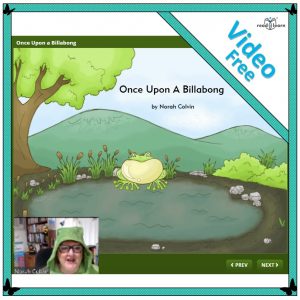
My story Once Upon a Billabong tells of a big bully bullfrog who enjoys being mean and doesn’t allow anyone else to live in his billabong. But things don’t always work out the way we plan, and certainly not for the bully bullfrog who is soon looking for a home himself. To find out what happens, listen to me read the story in this video, or perhaps you’d like to read along with me. I hope you enjoy it.
(In case you’re wondering, I bought a frog onesie especially for the launch and still decided to wear it when we had to go online. It doesn’t work as well in the video as I’d hoped. I’m not really trying to hide. 😊)
Continue reading: Bush Ballads, Billabongs and Bullfrogs – readilearn
Share this:
-
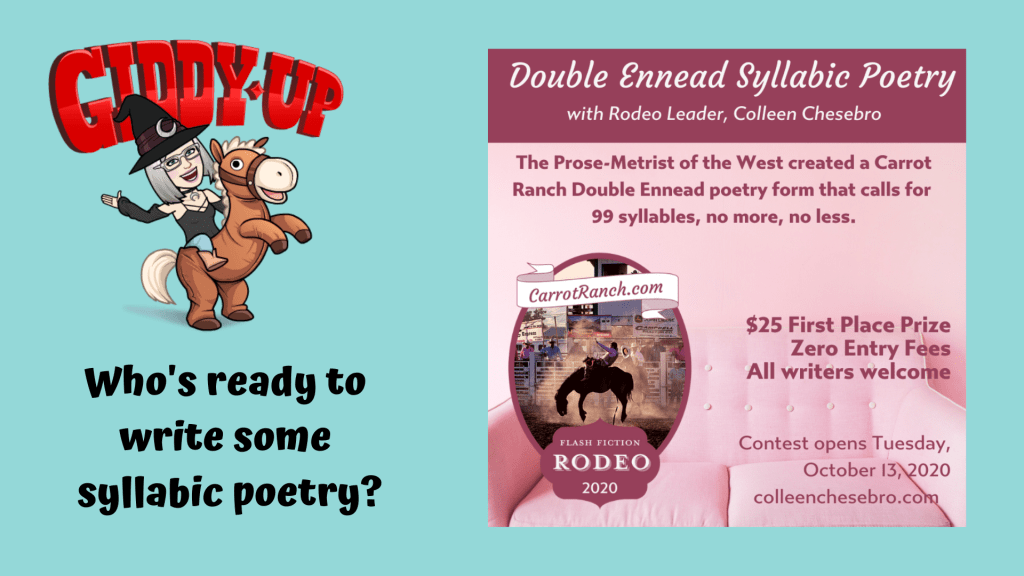
Carrot RODEO #2: DOUBLE ENNEAD SYLLABIC POETRY
And here’s the second contest in the 2020 Carrot Ranch Rodeo. If you like a challenge – particulalry of the poetic form – then this one’s for you! Rustle on over to Colleen’s blog for all the details.
Share this:
-
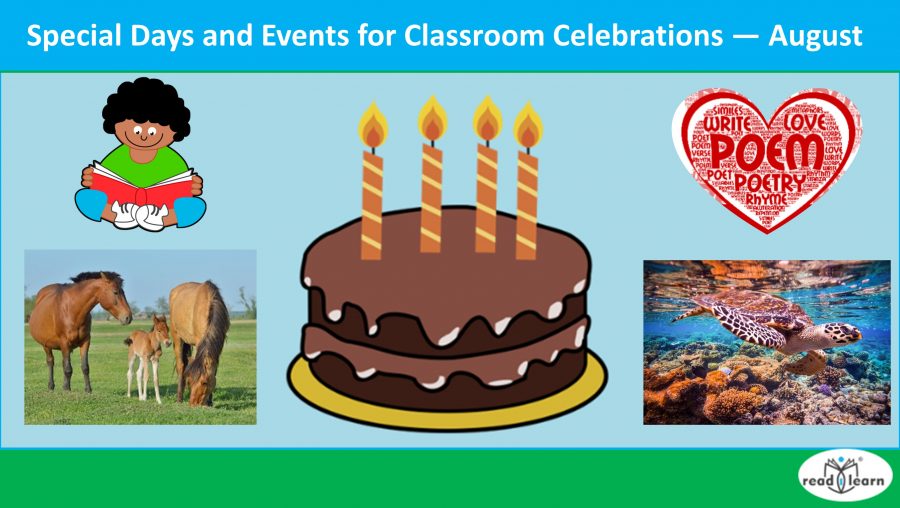
Special Days and Events for Classroom Celebrations — August – #readilearn
It’s August already and we are starting to see a change in the seasons. Here in the Southern Hemisphere we are getting ready for Spring, while in the Northern Hemisphere, you are maybe hoping things will start to cool soon. Wherever we are, it seems the uncertainty caused by the pandemic still has us in its grip. I think I’d probably be right in saying that we’d all like that to change, and soon.
The help lighten your workload and inject something a little different into the routine, I’ve listed some special days and events you might like to celebrate in the classroom this month.
The MS Readathon runs throughout the month of August. The purpose of the MS Readathon is to encourage children to read and, at the same time, raise money to help kids who have a parent with multiple sclerosis. Teachers can register their class or children can register individually. Find out more and download some great resources from their website.
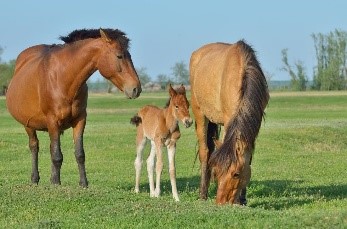
The Horses’ Birthday is celebrated on 1 August in the Southern Hemisphere. Horses born after 1 August in will be considered one year old on 1 August the following year.
In the Northern Hemisphere, 1 January is recognised as the horses’ birthday. The dates are chosen as most foals are born in late winter.
Why not celebrate with a carrot cake, or give your favourite horse a carrot treat?
Children may enjoy discussing the question, “What if we had a people’s birthday, and celebrated everyone’s birthday on the same day, regardless of when they were born?”
Some horse-related resources from readilearn:
Continue reading: Special Days and Events for Classroom Celebrations — August – readilearn
Share this:
-
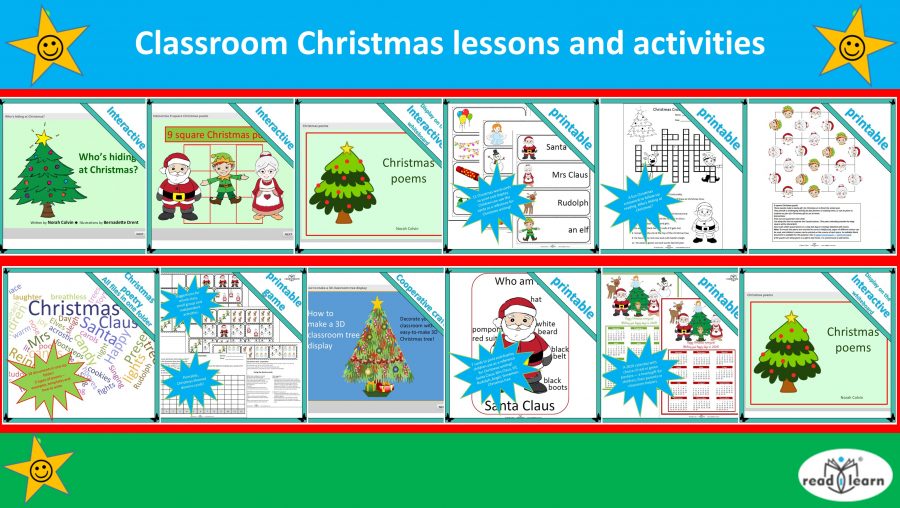
Classroom Christmas lessons and activities – reblogged from readilearn
It’s almost Christmas again and here in Australia we’re on the countdown to the end of the school year and our long summer holidays. Whether you’ll be enjoying a long break or a shorter break over the festive season, here at readilearn we’ve got many ready-to-teach lessons and activities to support your teaching in the lead-up to Christmas.
Get an early start with these lessons and activities
You will get most benefit from some activities if you begin them a few weeks before the finish of term.

Friendship Trees, one of readilearn’s most popular Christmas activities is best begun three to four weeks before school closes for Christmas. Children make their own friendship trees which are then placed on display in the classroom.
Each day children write anonymous messages of affirmation or friendship to each other and place them in the trees. At the end of term, children take their trees home and read the positive messages contained within.
The trees help to develop self-esteem, confidence and friendship skills and are perfect for those last few weeks when temperatures soar and children can become edgy with excitement for the holidays.

A 3D Christmas tree makes a beautiful focal point of the classroom Christmas display. Children cooperatively construct the tree by contributing leaves made by tracing or printing their hands. It is a visible recognition of the value of teamwork and will be admired (and envied) by many. It makes a beautiful background for photographs of individual children to be given as gifts to parents or other loved ones.
Continue reading: Classroom Christmas lessons and activities – readilearn
Share this:
-

Appreciating and exploring poetry in lower primary classrooms – reblogged from readilearn
Poetry is a wonderful tool for learning language. When children listen to or recite poetry, they are learning the rhythms and sounds of language, exploring ideas and how to express them, expanding vocabularies, deepening understanding in nuances of meaning, and having fun with thoughts and their expression.
Children are exposed to rhythm and rhyme from their earliest days through nursery rhymes, chants and songs as well as the text of picture books. It is important for children to have opportunities for appreciating and exploring poetry into and throughout their school years. The Australian Curriculum places poetry firmly into the literature strand of English teaching each year. But it is not necessary to relegate poetry just to a poetry unit of work when stipulated by the curriculum. Poetry, rhymes, chants and songs can be easily incorporated into the daily class program.
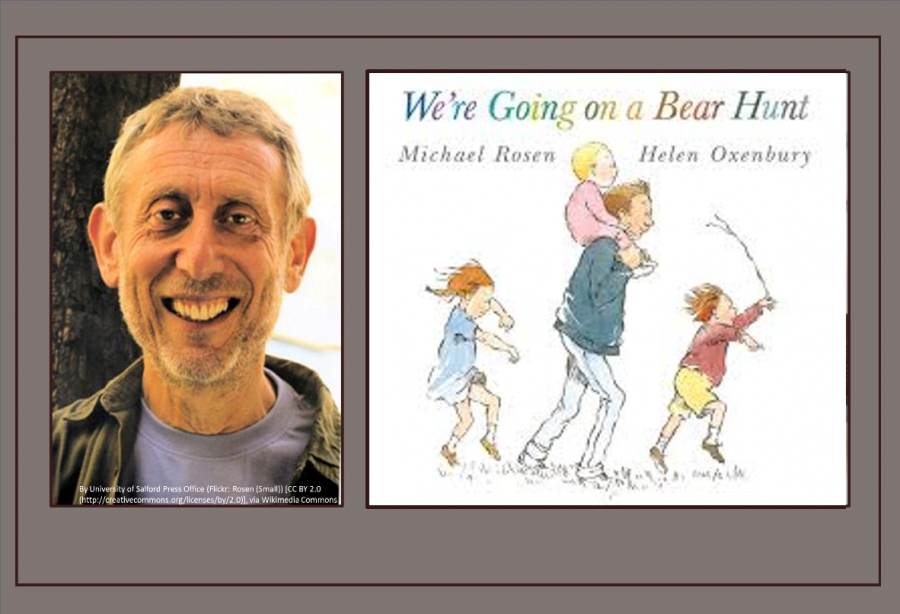
Michael Rosen, who you may know as the author of Going on a Bear Hunt and who I previously introduced to you in this post, shares some recommendations for teaching poetry on his blog. Although the suggestions were written for a year one teacher, I think the suggestions could be extended out to other years. Following his recommendations would more than cover the expectations of the Australian Curriculum, and what a wonderful way to turn children (and yourself) onto poetry.
I’m only sharing a few of his recommendations here. Please visit his website to read the others.
Michael Rosen’s suggestions for teaching poetry
- Get as many poetry books into your classroom as possible. Encourage the children in pairs to browse, choose and read.
- Read poems to them every day, use vids of poets (check out Michael Rosen’s YouTube channel) , use national poetry archive. Writing poems with no poems in your head is too big an ask. Fill their heads with ‘What poetry can do’ ie loads of poems.
Continue reading: Appreciating and exploring poetry in lower primary classrooms – readilearn
Share this:
-

School Days, Reminiscences of Joy Lennick
Welcome to the School Days, Reminiscences series in which my champion bloggers and authors share reminiscences of their school days. It’s my small way of thanking them for their support and of letting you know about their services and publications.
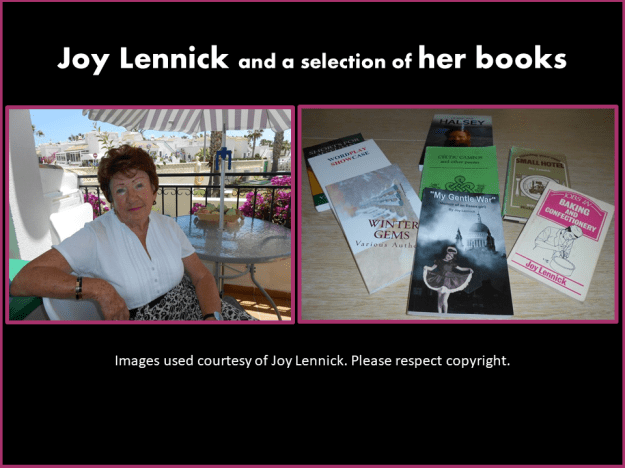
This week, I am pleased to introduce Joy Lennick, author and poet. Joy joined in the conversations from the outset, sharing snippets from her war-time schooldays. Intrigued to learn more, I invited Joy to join in with a post dedicated to her own reminiscences and she accepted. I’m certain you’ll find them as interesting as I do.
Before we begin the interview, I’ve invited Joy to tell you a little of herself:
From a young age, I was never happier than when reading or writing (and perhaps dancing!). I was evacuated with my two brothers to live on a mountain (Hare) in Wales, being half Welsh on my mother’s side, and grew to love Wales. My education was completed in Pitman’s College, London, from the last year of the war. At fifteen, I became a shorthand-typist, and worked for an agency in the East and West ends of London, which I really enjoyed.
After marriage just before the age of 21, and living in London for a few years, the Suez Crisis debacle flared up and petrol was so short and the atmosphere so “war-like,” we set sail for Canada, where we lived and worked for eighteen, unforgettable, months.
Returning to the UK due to home-sickness…in 1960 I had my first son, followed by No.2 in 1962 and No.3 in 1968. I contracted but beat cancer, so was very lucky. We then ran a green-grocery/grocery store for several years. After its sale, and the children went to school, I returned to work in the city as secretary to the two editors of Kaye & Ward, an old established publishing company in the city. (My dream job!)
The next chapter saw us buying a small hotel in Bournemouth as we both enjoyed cooking and people. We turned a dark, mean place into a thriving business, I lost a stone (yippee) and gained a few muscles, and we thoroughly enjoyed the whole business, even though it was hard work. Tastes were changing and the hotel was old. We needed more cash than we had to make it more comfortable, so – with regret, sold it and returned to Essex to live. And that is when I learned about “Serendipity,” and became a writer, quite by chance.
A letter from Kogan Page Ltd of London “commissioned” me (?!) to write a book for them, subject to approval of the first two chapters. I couldn’t wait! “Running Your Own Small Hotel” was approved. I had been recommended by one of the editors I’d worked for who had read some of my poetry and an article I’d had published. The book did well and went to reprint. There was even an exciting “Authors’ party,” and I updated two of their books and wrote a second called “Jobs in Baking and Confectionery,” which also sold well.
In between working for my local junior school, part-time, I then ran a modest, while successful poetry club, and wrote a few poems and articles, which were published. I also received a few rejection letters…par for the course!
Fast forward too many years, and we retired to Spain, I joined The Torrevieja Writing group and won the first Torrevieja International Short Story competition with a Time Traveller tale called “Worth its Salt,” then was a writing judge for two years.
Next came a memoir: “My Gentle War” which went to No.1 in Kindle’s Social History and Memoir category. A true sea adventure story: “Hurricane Halsey” followed, then my only novel “The Catalyst,” covering one of the terrorist bombings of a train in London in 2005, but with fictitious characters. I also wrote several stories which were included in WordPlay’s anthologies – later called Writers’ Ink (our off-shoot Ezine is called INK SPOT). Then came “Where Angels and Devils Tread,” a collection of short stories written with author friend Jean Wilson; and a modest collection of jokes and humorous poems written with my husband, Eric: “The Moon is Wearing a Tutu.” I also edited husband’s book “A Life Worth Living,” and updated “From the Prairies to Paschendeale,” for a friend. I am at present working on a book about the “Dombrowski family.”
I took a Creative Writing class for the U3A for several years and am in the “Chair” for Writers’ Ink here in Spain.
Welcome, Joy.
Let’s talk school. First, could you tell us where you attended school?
Where did you go to school?
1937: Dagenham Infants school
1939: Twynrodyn Junior School
1941: Hunters Hall school
1943: Eastbrook senior school, Long Eaton senior school, Derbyshire
1944: Neath senior school
1944: Pitman’s College, London.
Did you attend a government, private or independent school?
All Government schools, except Pitman’s College, London, which was private.
What is the highest level of education you achieved?
Highest level: Pitman’s where I received various certificates for hand-writing/typing/shorthand and commerce.
What work or profession did you choose after school and was there anything in school that influenced this choice?
I started as a shorthand-typist, became assistant secretary and then secretary. Also assisted husband in running a greengrocery/grocery shop and became a hotelier. I was then a Dinner Lady/School assistant and did voluntary work with the elderly before writing professionally.
What is your earliest memory of school?
My earliest memory at Infants school was writing my name in sand on a shallow tray and playing the triangle and the tambourine in the school band.
What memories do you have of learning to read?
I was immediately fascinated by the letters and words on a page and took to reading straight away. I read anything and everything: ingredients on cereal boxes, comics, etc., and was always lucky enough to be given books for my birthdays. I joined the library in MerthyrTydfil and devoured books from age seven — Hans Christian Anderson and the frightening Bros. Grimm, et al.
What memories do you have of learning to write?
As for writing, my father was a keen letter-writer (positive views on many subjects to the local newspaper) and wrote beautiful Calligraphy which I greatly admired and wanted to emulate. He kept stamps and made a few admirable displays with delicate work around each stamp. I was proud to be told I had a “good hand!” and of my hand-writing certificate. Shorthand later made it a bit scruffier…
What do you remember about math classes?
I had a problem with maths. Adding, subtracting, decimals and fractions was coped with OK but if I was thrown a maths ‘puzzler’ I’d freeze…I coped fine when we had our shop, and did the accounts when we ran the hotel as it was comparatively straight-forward, but I much preferred English.
What was your favourite subject?
Most definitely English, and because of the very nature of war — between the years 1939,when it began and 1945 when it ended, there were, periodically, huge disruptions in my schooling, especially when the siren sounded. At such times, we were read to and had to ‘Read quietly!’ by ourselves, which I found a joy. I also loved composing stories and enjoyed spelling. I even wrote a silly play which was acted on the stage. Poetry also pleased my young ears. I was particularly fond of Hiawatha because of the delightful rhythm. I couldn’t take to Shakespeare when young but loved it later when, at the ripe age of 66 I finally took and passed the English Literature exam – much to the amusement of my younger peers…

What did you like best about school?
I made friends quite easily, despite being shy and was a chatter-box, in spite of the annoying habit of blushing if a boy spoke to me. In fact, I blushed a lot as I was often unsure of myself, but always enjoyed having friends at school. There was so much to learn, and I have always been a curious person. I was lucky in that I was never bullied and got on with most children, and was also fortunate with the teachers, except for my maths teacher at Pitman’s who had no patience with my many questions…Miss Jones, my English and Games teacher at Pitman’s was my favourite.
What did you like least about school?
To be fair, the mores of the times were dictated by the state of the whole world, as very little was as ‘normal’ as in peace time. Some children were killed or injured and lost loved ones and air raids disrupted many classes, especially in London, Coventry, Norwich and many other towns. We children went back-wards and forwards to home and Wales several times in between the bombing for long weekends and holidays. And when I attended Eastbrook senior school in Dagenham, the bombing increased and the whole school was evacuated to Long Eaton in Derbyshire. It must have been a nightmare for the teachers to keep to a curriculum!
How do you think schools have changed since your school days?
There is no comparison between my schooldays and those of my three sons. Only one was bullied because he was more studious and wouldn’t join an unruly gang. Fortunately, the headmaster sorted it out. All three received a fair and satisfactory education. I have no grand- children to comment on present conditions but do have friends who were teachers. They both complained about the increased paper-work, which – apparently – is an ongoing problem for teachers today.
What do you think schools (in general) do well?
From my ten years working as a Dinner Lady and reading/poetry assistant in a junior school, I’d say that, over-all, today’s children are in pretty safe hands, education-wise. The technological strides forward are amazing, and I’m personally pleased to see more musical appreciation and tuition being introduced in some schools
How do you think schools could be improved?
It’s no secret there are a lot of problems in the world, generally – of course there always have been – but because of technology and the immediacy of news reaching eyes and ears, it is often exaggerated in our minds. Too much paper-work still seems to overload some teachers, and I wish there was more emphasis put on caring for each other. Not all parents are equipped for the job they undertook…(as my husband says: ‘You have to pass a test to drive a car, but any idiot can have a child…’ Religion should be discussed broadly, but taught and practiced in specific schools, not mainstream, although children should be helped to accept and live and let live, when taught about caring.

Thank you for sharing your reminiscences of school and thoughts about education in general, Joy. How disruptive your schooling was as a result of the war. You seem to have overcome any obstacles that it may have created. It’s been a pleasure to have you here and get to know you and learn about your school days and your achievements.
Find out more about Joy Lennick
Website: https://joylennick.wordpress.com/
Contact her at joylennick@gmail.com
Or connect with her on social media
Twitter, Facebook, Linked In, Writers’ Ink
also a member of Authors/Bloggers Rainbow Support Club on Facebook
If you missed previous reminiscences, check them out here:
Look for future interviews in this series to be posted on Sunday evenings AEST.
Coming soon:
Darlene Foster
Pete Springer
with more to follow.

Thank you for reading. I appreciate your comments. Please share your thoughts.
Share this:


 Norah Colvin