It is during the final weeks of January and the first weeks of February that most teachers and children in the Southern Hemisphere begin their school year. Parents breathe a sigh of relief as the long holidays come to an end and teachers and children look forward to the year ahead with mixed feelings ranging from the excitement of a new adventure to anxiety or even dread. Perhaps it is no coincidence that Children’s Mental Health Week falls in the first week of February.
Children’s Mental Health Week
Children’s Mental Health Week runs from 3 – 9 February this year. The purpose of the week is to encourage children to look after their bodies and their minds. A positive classroom environment that is both welcoming and supportive helps to ensure children stay happy with healthy mental attitudes. It supports the development of self-esteem, self-confidence and the development of social skills, including getting along with others.
Here at readilearn, we can help you establish a supportive classroom environment and provide you with teaching resources that focus on developing social-emotional skills. While these are appropriate for any time of the year, a special focus during mental health week provides opportunities for reading books and engaging children in activities that are conducive to positive attitudes.
Of special note this year is that many children in Australia may begin the school year distressed by what they have personally experienced or may have seen or heard about the bushfires that have caused so much damage to our country.
While I am unable to give specialised support for dealing with trauma, this article in the Conversation has suggestions to help teachers support students, and includes links to other information. It is pleasing to see that extra funds have been made available to assist teachers and students who have been affected by the fires. If you have been affected and I can support you with a free subscription to readilearn, just let me know.
Resources for a supportive classroom environment
You can find suggestions for establishing a supportive classroom in these previous posts:
Throughout the year there are many special days and events that are worthy of celebration in the classroom. They may draw attention to issues affecting our world and its inhabitants or celebrate achievements and contributions to the arts or our collective knowledge.
On the last Friday of each month, I will provide you with a list of days and events worthy of celebration in the following month. This is the list for January. The list is not exhaustive and is simply some ideas to spark your imagination.
International Year of Plant Health
As 2020 is the International Year of Plant Health, January is the ideal time to start thinking about how you can use the theme Protecting Plants, Protecting Life to foster learning throughout the year. It fits perfectly into Science Biology units that focus on living things, habitats and the environment; or perhaps you might consider using it as an overarching theme in your classroom for the year.
According to the Food and Agriculture Organisation of the United Nations, the year “is a once in a lifetime opportunity to raise global awareness on how protecting plant health can help end hunger, reduce poverty, protect the environment, and boost economic development.”
Some ideas:
Establish a vegetable or native garden
Adopt an area of bushland
Decorate your classroom with a plant theme
Have potted plants in your classroom
Schedule time in your program for exploring outdoors
Conduct experiments about the needs and features of living things — plants
Have you ever wished you could fly? Or perhaps wished for a chance to explore but were held back by rules and restrictions?
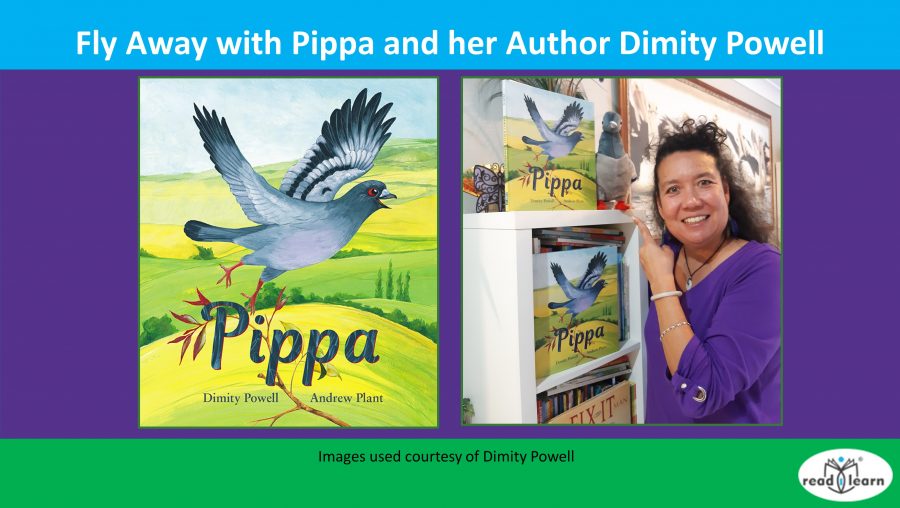
I always thought it would be marvellous to be a bird, soaring above the earth, looking down upon its beauty. Oh, the freedom it would bring. Looking out at the world from a plane’s window is, for me, the nearest thing. But for Dimity Powell’s latest endearing character Pippa, flight is a reality.
About Pippa
You see, Pippa is a pigeon, and, like all pigeons, Pippa was born to fly. She wants nothing more than to spread her wings and go exploring. However, her parents aren’t sure she’s ready and fill her head with fears and days with restrictions to keep her close at home. It works for a while. But, one day when her parents are otherwise occupied, Pippa discovers she can fly, and that’s where her adventures, explorations and discoveries begin.
Pippa is a delightful new picture book that is bound to win hearts and spread joy. Award-winning author Dimity Powell describes her book thus:
“Pippa is a light-hearted adventure tale about striking out alone, following your dreams and desires and experiencing what it’s like when you get there. It is a tale that acknowledges the sometimes-suffocating affection parents have for their offspring, which can temper and frustrate a child’s sense of freedom and adventure, and suggests that it’s okay to take risks from time to time. Although the adventure may be perilous, it is still worth experiencing for you never know what glorious discoveries lie ahead.
Pippa is small, determined, stubborn, and wilful, just like many other six-year-olds. And, like many youngsters who’ve wanted more than they can handle, when she finally does return to her flock, she realises that when it comes to true security and contentment, it’s family that matter most.”
About Dimity Powell
I previously introduced Dimity to you in her popular guest post Libraries: A wonderous universe to exploreand in an interview about her picture book At the End of Holyrood Lane for which she was recently awarded the Society of Children’s Book Writers and Illustrators’ Crystal Kite Members’ Choice 2019 Award, Australia and New Zealand region.
Dimity likes to fill every spare moment with words. She writes and reviews stories exclusively for kids and is the Managing Editor for Kids’ Book Review. Her word webs appear in anthologies, school magazines, junior novels, as creative digital content, and picture books including The Fix-It Man (2017), At The End of Holyrood Lane (2018) and Pippa (2019) with more to follow in 2020 and beyond.
She is a seasoned presenter both in Australia and overseas, an accredited Write Like An Author facilitator and a Books in Homes Role Model Volunteer in Australia.
Dimity believes picture books are soul food, to be consumed at least 10 times a week. If these aren’t available, she’ll settle for ice-cream. She lives just around the corner from Bat Man on the Gold Coast although she still prefers hanging out in libraries than with superheroes.
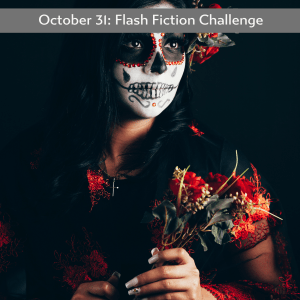
I would have to say that, here in Australia, we have been rather insulated from the Halloween phenomena until recent years and it was only very recently that I became aware of the Mexican holiday Dia De Los Muertos, which celebrates the dead, remembering them and celebrating with them as if they were alive. What a wonderful way of keeping the memory of loved ones who have passed, alive.
We are not very good about discussing death in our culture, especially with children. Rather than accepted as a normal stage of life, it is kept secret as if to be feared. Yes, none of us want to go before we’re ready, but there isn’t one of us, as far as I know, who has found the secret of living (in this Earthly lifetime) forever.
The Tiny Star
Last week I had the absolute joy of attending the launch of a lovely new picture book The Tiny Star, written by Mem Fox and beautifully illustrated by Freya Blackwood. The book is a joyous celebration of life’s journey from the beginning when ‘a tiny star fell to earth and turned into a baby’ until its return to the night sky where it would be ‘loving them from afar and watching over them … forever.’ The book provides a beautiful opportunity for discussing, even with very young children, the passage of time and the passing of loved ones in a way that is sensitive, respectful and meaningful. It is a book, just like each ‘star’, to be treasured. You can hear Mem read the book by following the link in the book’s title above and listen to her discussing the book with illustrator Freya Blackwood in this video.
The Fix-It Man
Another lovely picture book that deals well with the topic of death for young children is The Fix-It Man, written by Dimity Powell and illustrated by Nicky Johnston. The book deals, sensitively and honestly, with a child’s grief at the loss of a parent. The child discovers that her father, who is usually able to fix any broken thing, is unable to fix her sick mother. Together the child and father find a way to support and strengthen each other through their grief and come to terms with their loss.
The Forever Kid
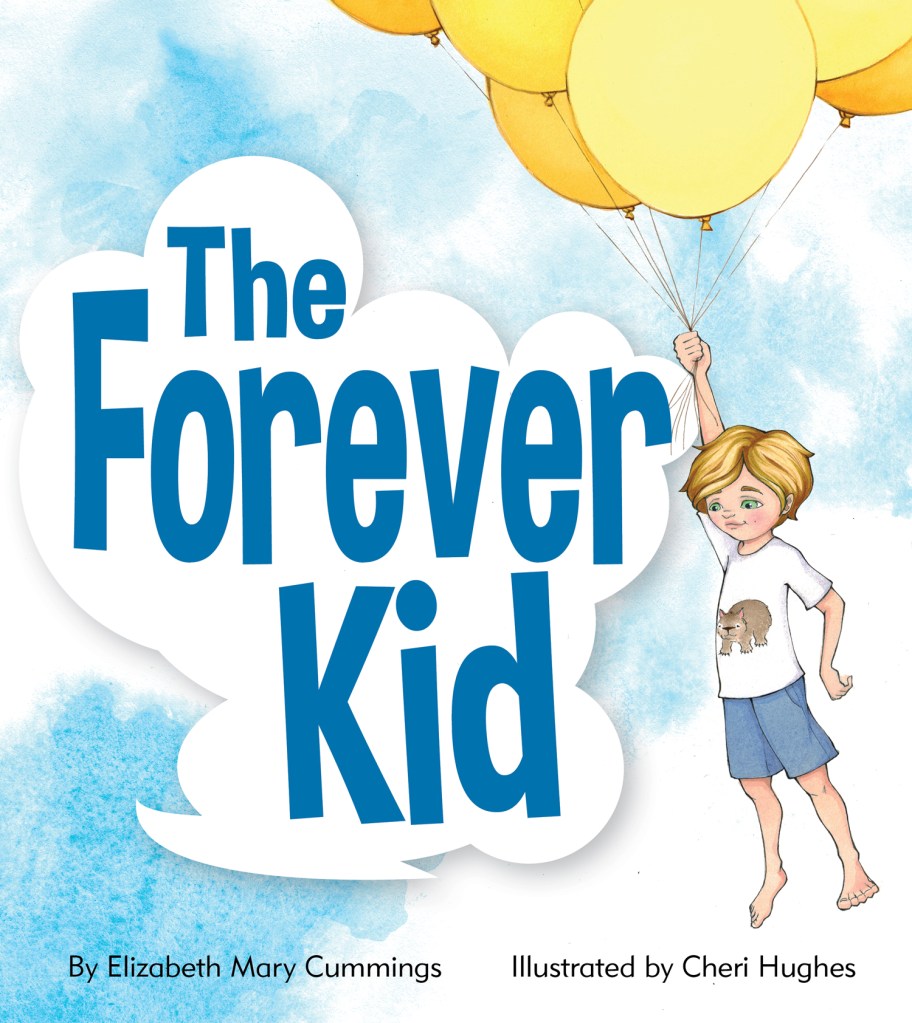
The Forever Kid, written by Elizabeth Cummings and illustrated by Cheri Hughes, is another lovely picture book that sensitively tackles the topic of death, this time with the loss of a sibling. Each day, on the ‘forever’ child’s birthday, the family keeps his memory alive by celebrating with his favourite activity—lying on their backs on the grass telling cloud stories. Families who have experienced the loss of a child may be moved to find their own ways of remembering and celebrating the life that was. (I interviewed Elizabeth about The Forever Kid for readilearnhere.)
Flash fiction challenge
So, back to Charli’s challenge to write about the Day of the Dead. While Halloween and the Day of the Dead have similarities (perhaps more to the uninitiated than to those in the know), they are not the same thing. However, my story is probably more like Halloween than the Day of the Dead. Oh well, that’s where the prompt took me, maybe because of the discussion about Halloween not being an Australian tradition that arises at this time every year, and perhaps because, in the 80s (anyone else remember that far back?) we teachers were instructed to not do anything involving Halloween or witches in our classrooms. That has now been revoked and many teachers work a little fun into their program with Halloween-themed activities. (As I suggested on readilearn recently.)
Anyway, here goes.
Full Bags, Dying Heart
From his room, Johnny watched the parade of monsters and ghouls wending from door to door. They laughed and giggled, whooped and cheered, clutching bags bulging with candy.
“Get inside,” she’d admonished.
“Why?”
“It’s the devil’s work. Dressing up like dead people. It’s not our way.”
She’d dragged him inside, shut the door and turned off the lights.
“We don’t want those nasty children knocking on our door.”
“But, Mum. It’s Graham and Gerard and even sweet Sue …”
“Enough! Get to your room!”
He watched, puzzled—How could it be devil’s work? They were his friends having fun.
Thank you for reading.
Note: I would have liked to write a sequel to this where Johnny sneaks out and joins his friends, but I ran out of time. Maybe another time.
I appreciate your comments. Please share your thoughts.
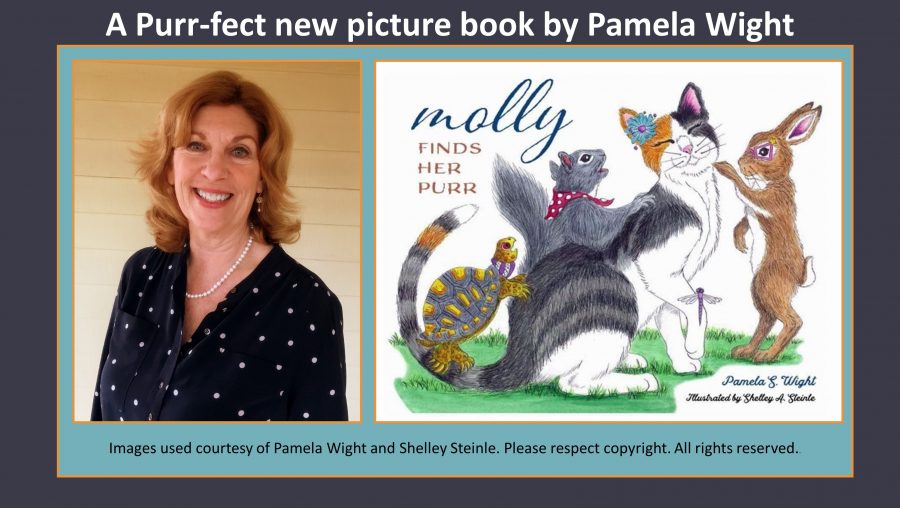
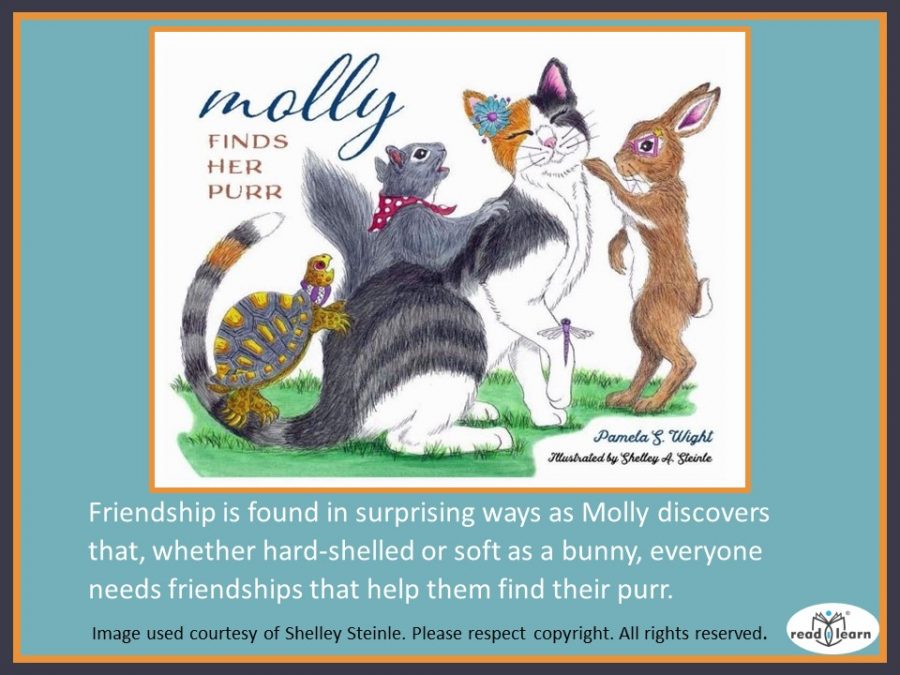
Today, I am talking with author Pamela Wight about her new picture book Molly Finds Her Purr. I previously introduced you to Pamela when her first picture book Birds of Paradise was released in 2017. You can read that interview here.
The importance of being true to yourself and the acknowledgment of the strength of friendship, even when differences exist, are strong themes in Pamela’s books.
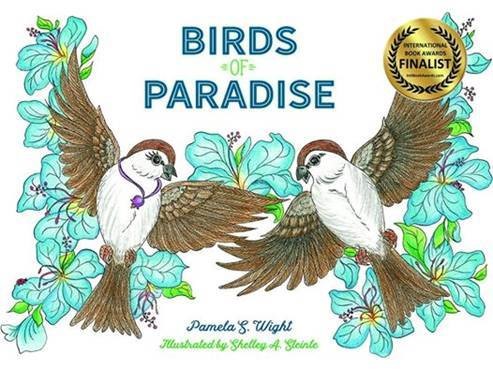
Birds of Paradise is a delightful story of two sparrows Bert and Bessie who discover that friendship can unite even for two with very different attitudes to life.
In Molly Finds Her Purr, Molly the cat discovers that a purr comes from finding a circle of friends, and that friendship can be strong despite their outward differences.
Both books are beautifully illustrated by Shelley Steinle who has added a secret character for children to find on every page.
I am delighted that some of my words of praise for Birds of Paradise were used on the back cover of Molly Finds Her Purr. I wrote, “Shelly Steinle’s illustrations are gorgeous and perfectly complement Pamela Wight’s lovely story.” I could say exactly the same in praise of Molly Finds Her Purr.
A little about Pamela Wight
Pamela S. Wight writes fiction for children and adults. She is the published author of The Right Wrong Man and Twin Desires, and pens a popular weekly blog called Roughwighting (roughwighting.net). She teaches creative writing classes in the Boston and San Francisco areas. Her first picture book, Birds of Paradise, published in 2017, was a finalist in the 2018 International Book Awards.
Kim Michelle Toft is the author and illustrator of a collection of beautiful environmentally-themed picture books focussing on the conservation of marine environments. I have previously introduced you to Michelle when we spoke about her books The Underwater Twelve Days of Christmasand Coral Sea Dreaming.
Kim illustrates all her books with unique and beautiful silk paintings. You can view Kim’s painting process in videos that show 40 hours of work in two minutes on her website here.
In this post, to coincide with a special giveaway, we discuss her beautiful book I Can Swim a Rainbow.
About I Can Swim a Rainbow
I Can Swim a Rainbow adapts the lyrics of Arthur Hamilton’s song I Can Sing a Rainbow, with which most young children are familiar, to the colours of the ocean and its inhabitants. As are all Kim’s books, it is illustrated with her magnificent and unique silk paintings which highlight the beauty of the ocean’s colours. As always, the environmental message of this book is as strong as its pages are beautiful as it calls us to protect the world’s fragile reef environments.
This week I’m visiting with illustrator Helene Magisson to chat about her latest book Sarah’s Two Nativities written by Janine M Fraser and published by Black Dog Books. The book is due for release this month with a launch scheduled for the 21st.
About Helene
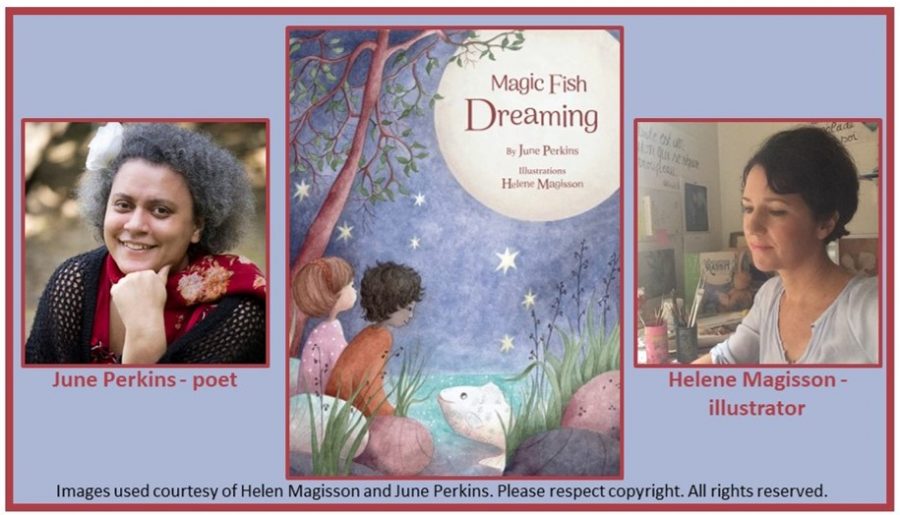
I first introduced you to Helene in 2017 when she chatted about her process of illustrating, especially as it related to the beautiful book of poetry Magic Fish Dreaming written by June Perkins. You can read that interview here.
Since the publication of Magic Fish Dreaming, Helene has illustrated a number of other books and now has eleven published books in her portfolio, with more on the way. I am not surprised that Helene is sought after as an illustrator. I think you’d have to agree that her, mainly watercolour, illustrations are exquisite and possess an almost magical quality.
Although Helene now calls Australia home, she has lived in countries all over the world, including Africa, France, and India. That her travels both inspire and enrich her work is obvious in her delightful illustrations that perfectly complement Janine Fraser’s story Sarah’s Two Nativities.
About Sarah’s Two Nativities
From the publisher:
‘Sarah loves her two grandmas – Grandmother Azar and Grandmother Maria. Grandmother Azar tells Sarah stories from the Holy Koran, while Grandmother Maria tells her stories from the Bible. At Christmas time, Sarah snuggles in each of her grandmothers’ laps and listens to two nativities stories about the birth of baby Jesus. They are the same in some ways, and different in others … but both can be Sarah’s favourite.’
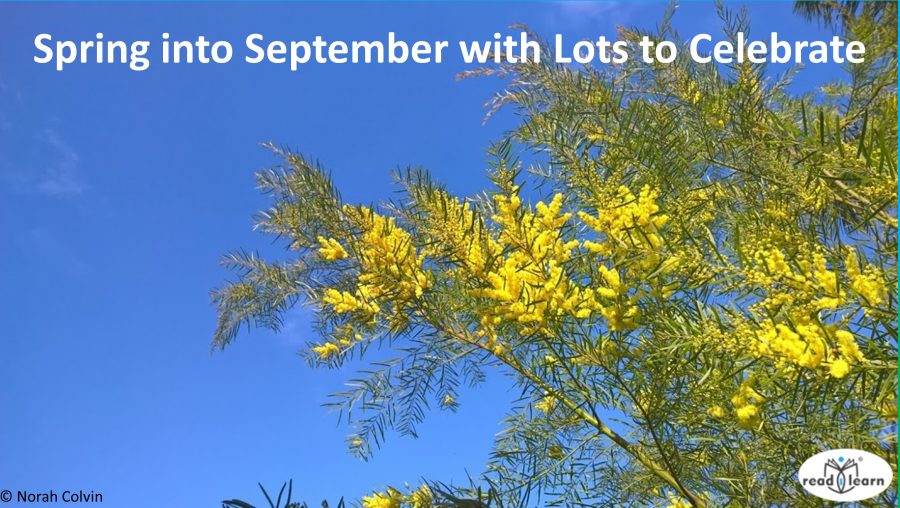
The beginning of September marks the beginning of spring in the southern hemisphere and brings, along with it, many days to celebrate.
Wattle day
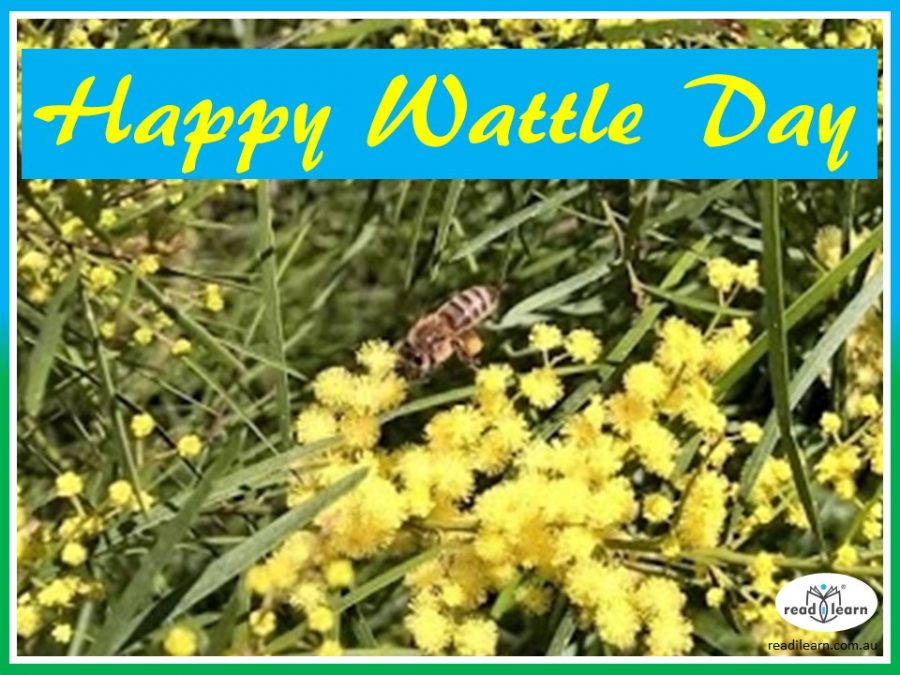
Here in Australia, we welcome Spring on 1 September with Wattle Day. The golden wattle is Australia’s national floral emblem.
You could celebrate Wattle Day by:
wearing a spray of wattle on your hat
writing a poem about wattle flowers and springtime
using yellow pom poms to make Happy Wattle Day cards to give to friends and loved ones
going for a walk around the school grounds or local neighbourhood to check out the wattle trees in bloom. With nearly one thousand species of wattle in Australia, you are sure to see a variety. Comparing tree bark, leaves and blossoms helps to develop the ability to identify the similarities and differences that support scientific classification.
investigating how Aboriginal and Torres Strait Islander peoples use parts of the wattle tree; for example, for food, medicine, fuel, to make rope, fishing lines, string and tools such as boomerangs. Seasonal changes in the wattle trees indicate other changes that occur in the environment.
Father’s Day
This year, Father’s Day coincides with Wattle Day on 1 September. Father’s Day is a day to recognise the important role of fathers and other father figures. You can find suggestions for easy and inexpensive gifts in the Father’s Day resources, including a free list of Father’s Day Activities.
The CBCA (Children’s Book Council of Australia) Book Week kicks off tomorrow 17 August for a week of activities celebrating Australian Literature. Book Week is heralded by the announcement of the book awards on the third Friday in August at 12 noon.
The awards are presented to books in the following categories:
Older Readers
Younger Readers
Early Childhood
Picture Book
Eve Pownall (for information books)
(Click this link to see the Notables, a fine collection of books) from which the Short List was compiled and from which Winners were selected in each category.)
2019 Book Week Theme and Resources
The theme for this year’s Book Week is Reading is My Secret Power.
To celebrate, poet Mike Lucas has written a great poem. You can download a copy of Mike’s poem Reading is my SecretPowerhere.
The CBCA website provides these useful links to resources to help you celebrate Book Week.
Children’s Rights to Read
Reading may be a secret power, but it is also a superpower and a right of every child. Book Week is an appropriate time during which to reflect upon our classroom practices and consider how well they meet the International Literacy Association’s Children’s Rights to Read. (You can download and support the rights through this link.)
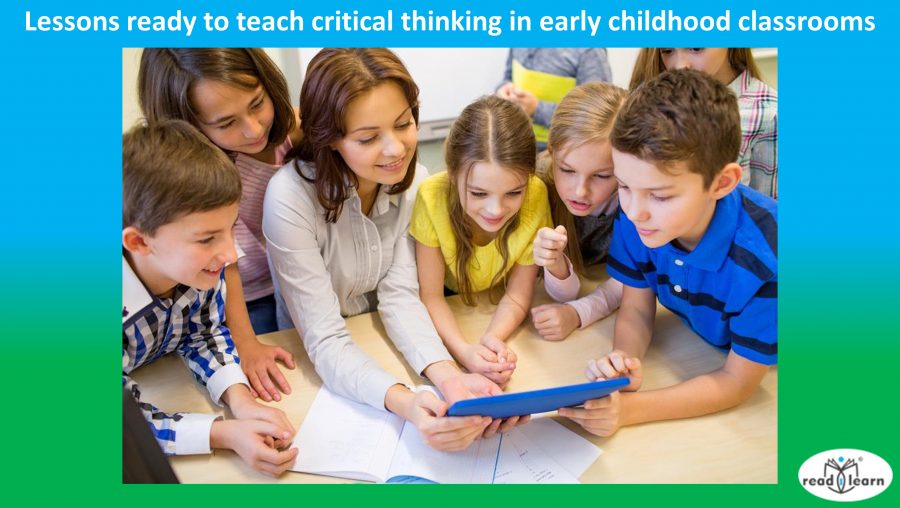
Even young children in early childhood classrooms can be taught to think critically about material that is presented to them. Being able to discern the accuracy of what they read is increasingly important in this era of fake news.
In this post, I provide some suggestions with lessons ready to teach using children’s picture books. The types of questions and ideas can be applied to other books for checking the accuracy of information.
To assist in verification of information, children can be encouraged to ask and answer questions such as:
What do we already know?
Does this match what we already know?
What do we want to find out?
How can we find out?
How can we be sure the information is true?
Is it fact or is it fiction?
Children, and adults, need to be aware that misinformation, often cleverly disguised as fact, is available everywhere, including on the internet. Being able to navigate one’s way through it all is a very important skill, regardless of age. This article by Tech Teacher Jacqui Murray has some useful advice about Fake News or Fact? How do you tell?
We don’t need to present young children with fake news stories to teach them the skills of critical thinking. We can begin with discussions of stories and information we present to them each day.















 Norah Colvin