Mathematics is all around us. We use it every day for a wide range of purposes; from deciding on the sequence in which we dress ourselves, to calculating how much time we have available for an activity.
Number is just one component of mathematics but the ability to use it confidently and competently is essential to life in the 21st century; from managing one’s finances, to calculating time and distance, to knowing how many followers one has on social media.
The views that people hold of themselves as mathematicians, and their attitudes to mathematics in general, are formed early in life. It is important that we early childhood teachers provide children with mathematical experiences that are meaningful, engaging, and in context.
readilearn mathematics activities are designed to support you in doing so by providing a range of digital and printable resources that encourage mathematical thinking and discussion alongside hands-on experiences. It is important to provide children with a variety of learning contexts to encourage the development of “I can do it” attitude to number and maths.
Number combinations
A child’s ability to count is sometimes seen as an early indicator of ability with numbers. However, an understanding of number requires far more than
With the commencement of the Australian school year still two weeks away, it might seem a bit early to be thinking about the 100th day. Let me assure you it’s not. It’s great to be ready to start counting from day one. However, if you miss the start, you can always go back and count the days on a calendar. For those of you in the US and UK, the one hundredth day will be coming up soon in February.
In Australia there are 200 school days in a year. So, once you have counted up to 100 days, you are half way through and can then count down the number of days remaining. The US and UK have fewer school days: 180 in the US and 190 in the UK; so they are more than half-way through by the time they reach their 100th days.
Whatever their year level, children are always excited to count the days to this milestone, and it provides wonderful opportunities for learning about number.
Several readilearn resources support you and your students as you count up to and celebrate one hundred days, including:
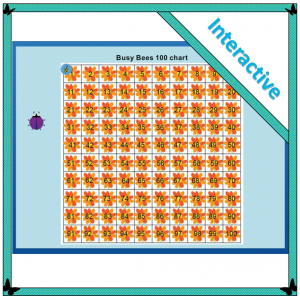
The interactive digital resource Busy Bees 100 chart is great for all your usual number board activities, and can be used to keep a count of how many days you’ve been at school. Simply display the resource at the beginning of each day and move the bee to the next number.
Just this week, I have uploaded a short video explaining how to use the resource. I am also including it here. I’d love to know what you think.
Sorting is a very important skill. We sort things every day without even thinking about it. We sort items in cutlery drawers, sort and arrange dishes in the dishwasher, even our socks and undies. While we might not physically sort them, while we are walking down the street we might sort familiar from the unfamiliar, friends from strangers, and safe from unsafe.
From a very young age, children learn to sort. They can spend a lot of time organising things that go together. By the time they arrive at school most children are able to sort objects according to their properties; such as shape, colour, texture, smell, and size. This prepares them for use of a dichotomous key in identifying natural and manufactured objects.
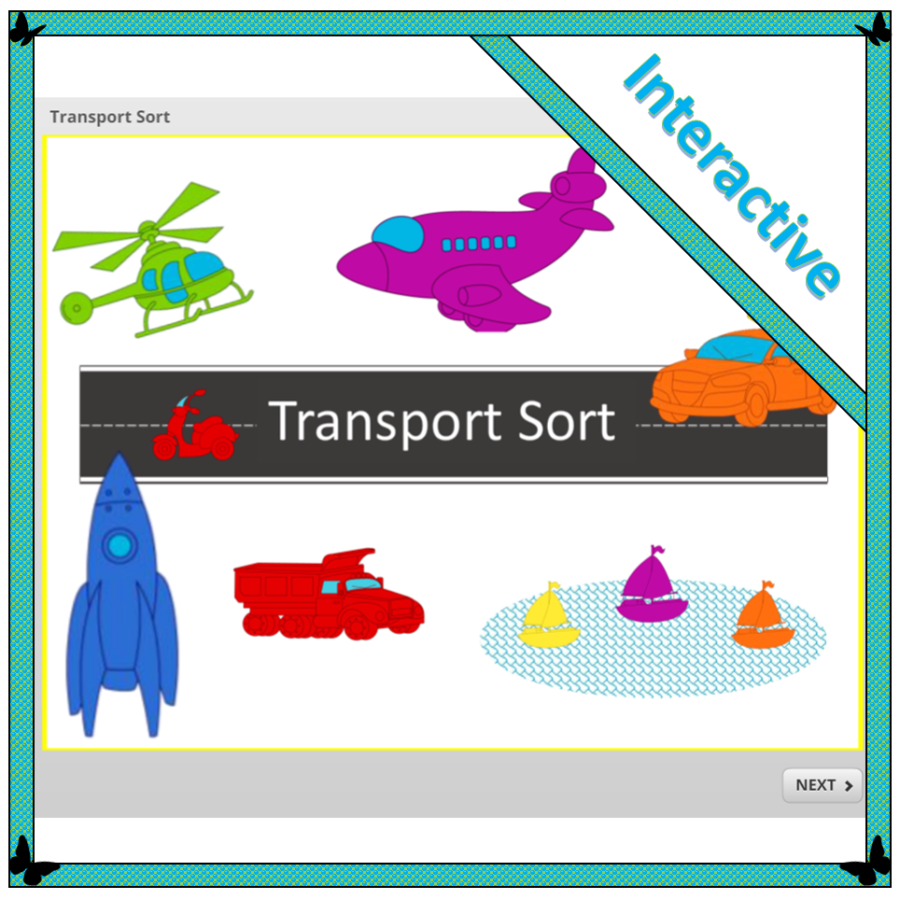
The interactive resource Transport Sort helps children develop sort
I grew up near the beach (but sadly not the one pictured) and my siblings and I would spend many long hours playing on the cliffs, climbing the trees, and splashing in the water. Sometimes we’d even lie on the sand and sunbake. Most of us are paying for it now as our fair skin, even with sunscreen, or without as it was then, was not designed for the hot Queensland sun.
One of the nicest things to do was to stand at the water’s edge as the waves receded, and feel the sand withdraw from beneath my feet, leaving me standing in hollows. If I stood there through successive comings and goings of waves, I could end up standing in quite large holes. The meditative effect was calming and reassuring, placing me firmly in nature.
Of course, the beach is not the only place that sand can be found. There are the hot red sands of Central Australia; and of Utah, where Charli Mills has recently relocated.
There are the cruel sands of time that flow too fast and can’t be upturned for a do-over.
But these sands are not the focus of my post. I am thinking of the sandpits, or sandboxes, common to playgrounds for young children in early learning centres, schools, and parks. I would probably not be taking much of a risk if I were to suggest that most of you played in a sandpit when you were young. Maybe you were involved in an accident of some sort: getting sand in your eye or hit by a spade, possibly fighting over a toy.
There are many friendship lessons to be learned when playing in the sandpit, even if playing alongside, rather than with, others:
Play nicely
Share
Take turns
Cooperate
Sand stays in the sandpit: it’s for digging, filling, building, and sifting; but not throwing.
Sandpits are generally popular during lunch breaks at school, particularly if suitable toys and implements are available. I have seen groups of children spend successive lunch times building roads, cities, and rivers; working together constructively in ways we only dream of in our artificially designed group-work activities. The fluidity of the group ensures that fresh ideas are always available; and sees some suggestions implemented, and others discarded.
But the sandpit is not just for playtime and recess. Utilising it during class time provides a welcome break from the indoors. There is nothing like a bit of physical activity in the fresh air to awaken the brain cells and stimulate thinking. While opportunities for free play may offer the best of learning experiences for children, I’m providing a few suggestions in case justification of something more academic is ever required.
Introduce each sandpit session with some tactile experiences. It cannot be taken for granted that all children have experienced sand play and may be unfamiliar with how it feels underfoot, to walk on, or hold in their hands. Also, having a bit of play in the beginning will help the children concentrate as the lesson progresses.
It is also a good idea to set some rules for sand play. Ask the children, they probably know best.
Experiencing sand
Have everyone remove their shoes and socks and stand in the sand, then ask them to (for example):
twist on the spot, feeling their feet dig into the sand
wriggle their toes, feeling the sand squish between them
stamp their feet, noticing the difference from concrete, or grass
sit at the edge, stretch out their legs, and push their feet under the sand, then slowly lift them up, letting the sand slowly fall off
pick up handfuls of sand and then let it slowly fall through their fingers
pick up handfuls of sand, bring their hands together, then rub them together as they watch the sand slowly fall
Counting
Have children sit around the edge and count the number of children (in ones), feet and hands (in twos), fingers and toes (in fives, and the tens)
Pouring andmeasuring volume
Ask children to estimate and measure; for example:
How many of these containers does it take to fill that one?
How many of these containers can I fill from that one?
Which container holds more?
Digging for buried treasure
Hide items in the sandpit for children to find. They may need to find a certain number, follow clues, or understand a grid. It could even be set up like a battleship game with children hiding and guessing the placement of toys in the sand.
Measuring length
Have children use arbitrary units to measure the width or length of the sandpit; for example: using feet, hands, blocks, containers.
Recognising shapes
Have children look for shapes in the construction of the sandpit and other playground equipment. Have them draw shapes in the sand.
Creating artworks
Have children draw a picture or pattern with glue on a heavy piece of card then sprinkle with sand. Mix in some powder paint to add colour.
Of course, there is nothing better than giving them time to play and conduct their own learning: talking, negotiating, planning, and problem solving. Although I wouldn’t go so far as to say that everything one needs to learn could be learned in a sandpit, it’s probably not too far from the truth.
According to Lessons from the Sandbox written by Patricia Leigh Brown and published in the New York Times in 1989, the book was almost an accident. I could carry the link a little further and suggest perhaps, an accident occurring in the sandpit. The story of its publication and success should give a writer heart. We can never predict how a story will develop, let alone end.
The sun shone. A gentle breeze kissed the children’s cheeks, cooling them, as they shared the bucket and spade to build castles and dig moats. She gathered shells and seaweed for decoration. He filled the moat. Parents smiled, satisfied.
Suddenly, he jumped onto the castle, gleefully twisting from side to side. She protested; she’d not finished. He laughed. She cast aside the last of her ornaments and stomped away. He shrugged.
Remorseful, he went after her, “Wait. I’m sorry. Let’s build it again.”
“Really?”
“But make it bigger this time.”
Hand in hand they raced back to start again.
Thank you for reading. I appreciate your feedback. Please share your thoughts.
Hi, and welcome again to the readilearn blog. I hope you’ve had a good week.
Rarely, when the costs of education are being calculated, is the contribution made by teachers from their own pockets acknowledged. It is not very well publicised that many teachers spend a lot of their own money resourcing their classrooms, which would be far less interesting places if teachers refused to contribute in this way.
Today I demonstrate that not all resources need be expensive. A versatile, free, and readily available resource is the humble bottle cap or lid, which is often discarded, but can fulfill a number of functions in the classroom.
It doesn’t take long to gather an extensive collection of lids even on your own. But ask your children to bring in lids from home and the collection builds even quicker.
Lids have many uses.
Children can, for example:
Sort by colour or size
Order according to size – diameter or height
Make patterns – repeating or growing
Count – by ones, twos or fives
Learn to subitise, and discover conservation of number
Compare, add, substract and share
Measure length and mass
Use for collage or craft, or as tokens when playing games
These are just a few ideas. What other uses have you found for lids? Please share in the comments below.
What’s new – Uploaded this week!
These ideas and others are now available in a free maths resource Caps off for maths.
Getting to know readilearn resources
Snakes and Ladders is a popular game and great for maths groups. With some guidance from an adult, the game can be used to stimulate mathematical thinking alongside practice of computations. Thereadilearn resource Snakes and Ladders – An activity for maths groups provides suggestions that can be given to an assistant to maximise learning opportunities while playing the game.
Please contact me if you have any questions. I welcome your feedback, especially suggestions for improvements to existing resources and ideas for new ones.
Remember, if you haven’t yet subscribed, an introductory discount of 20% is available to all who subscribe during 2016. Just use the coupon code welcome1 at the checkout to receive your discount.
I’ll see you next week. In the meantime, enjoy the weekend.
That we live in a print-rich environment is undisputed. Even in country areas one cannot travel far without being bombarded by print. In addition to road signs there is a plethora of billboards advertising the best places to sleep, eat, or play that can be found just ahead.
Environmental print is the genre with which many children first engage successfully with reading. Ask any parent who’s detoured around fast food outlets, hidden shopping catalogues, or camouflaged cheaper brand names of identical products.
That we are immersed in mathematics in our daily lives is just as evident but doesn’t always receive the same recognition. I think this may in part be because people often think of mathematics as abstract algorithms and theorems that we (they try to get us to) learn in school; and that have no apparent application to our lives beyond the walls of the classroom.
However, even the examples mentioned above are just as rich in mathematics are they are in print. They include distances, and perhaps time, to the destination, cost of items, opening hours, and number of attractions. Anyone travelling a distance with young children will have answered questions such as “Are we there yet?”, “How much further?”, and “What time is it?”
As I say in my statement about mathematics on my readilearn site,
“Mathematics is all around us. We use it every day for a huge range of purposes from deciding on the sequence in which we dress ourselves, to calculating how much time we have available for an activity.”
One of the resources suggests 25 ways for parents to keep their children thinking mathematically over the school holidays. I have shared these ideas previously in Counting on the holidays.
Recently I was at the gardens with my two grandchildren (G1 and G2, aged 6 and 4), their mother, and my Hub. The children consulted a map and signposted paths to follow the Children’s Trail which had various sculptures along the way. I am undecided about the value of distracting children from the trees and plants, as if the vegetation itself would not be interesting enough. However, the children enjoyed locating the sculptures in the sequence numbered on the map, and reading the accompanying information. They were engaged in purposeful reading and mathematical thinking in context: real life learning!
As we headed back, G2 made a comment that showed she was engaged in mathematical thinking of her own. She observed that there were two children and three adults, which made five of us all together.
“That’s right,” I confirmed. “There are five’. I thought for a little while, then added, “And do you know what? As well as two children and three adults, there are two boys and three girls.” The children looked at the group and confirmed that I was right. They laughed – a different interpretation.
This gave me an idea for a thinking game: how many other arrangements of three and two could there be? I wondered if the children would like to play along. I had never attempted this before and had no idea if there’d be more, or if we had already exhausted all options.
I looked at the group. I noticed our shoes: three had closed shoes and two had open shoes. I thought about our names: three shared one surname, two another. Then we were on. Everyone was thinking of ways we could be arranged into groups of two and three.
Sometimes we sorted according to different characteristics, as in the previous examples. Others times we used a simple yes or no sorting, such as two have hats with brims and three don’t have hats with brims. This is the easiest sorting to do, and the first that children learn.
G2 made many suggestions of this type of sorting for one and four. One has the characteristic, the others don’t. This was age appropriate for her, and it was great to see her joining in confidently and contributing to the discussion. G1 was able to engage in the more complex thinking required for the groupings of three and two.
I was amazed at the number of different combinations we came up with, and that each of us was combined with others in many different ways.
These are some of the ways we arranged ourselves into groups of two and three (not physically, just in our discussion).
This seemingly mundane activity has potential for developing thinking and learning by encouraging:
thinking about things in new and different ways
looking for similarities and differences
observing detail
sorting according to different characteristics – which is important to both maths and science (think animal and plant classification)
having fun with maths
having fun with family
But wait, there’s more: When we left for home, two went in one car and three in the other!
I think this would be a great activity to do with young children learning about number. It may be a challenge for teachers in Australia where children wear uniforms to school but I’m already thinking of how it could be done with toys or illustrations. It’s not quite the same as doing it with the children themselves, but it could be fun. What do you think?
You won’t be surprised to discover that I have prepared a readilearn resource for sorting as well!
Thank you for reading. I appreciate your feedback. Please share your thoughts.
Although I am enjoying the audiobook, I think I will be none the wiser at its conclusion and retain little more than in earlier days. It is a reflection on my retention rather than the worthiness of the book. At the top of Taggart’s webpage is a statement from the Yorkshire Post that I think is probably no idle boast:
Caroline Taggart…has carved out a niche for herself in user-friendly, wittily written factual books which capture the imagination and quickly find their way to the top of the bestseller lists.
Prior to reading this statement I had thought that it was perhaps the narration that had brought the book alive in a most entertaining way. I was surprised that the narrator was not the author for the wonderful meanings and interest he evokes. If not the author then, I thought, he must be a wonderful character actor. Indeed, I was not surprised to find, he was.
According to the Yorkshire Post, the writing itself is worthy too, though it seems to me, in many ways to be little more than a list of names, dates and snippets of events brought to life by an expert narrator. I’m not sure that I would read it cover to cover as I have listened to it, but it would definitely make a useful resource for checking out who and when, which is more or less impossible to do with an audiobook.
One thing I have not liked about the book is the repeated opinion that maths and science in school are boring, and that most of us would only groan when thinking of what mathematicians like Archimedes and Pythagoras have burdened us with. If you’ve read many of my posts you would probably accuse me of being inconsistent, for haven’t I often agreed with that opinion of maths at school?
However, learning in mathematics should not be that way. I wish that everything we learned in school would be alive with interest, purpose and meaning. Then there’d be no need to groan. We’d be amazed and inspired by these great thinkers who have enlightened our lives.
“Mathematics is not just solving for x, it’s also figuring out why.”
But I digress a little. Charli’s main point was about the joy to be found in libraries. In my younger years I spent many hours in libraries. And if I wasn’t in a library, I was reading a book I’d borrowed from a library. Our home was filled with books but there were never enough to read and my parents and many of my siblings were frequent library book borrowers. On many Saturday afternoons throughout my teenage years I would walk the 5½ kilometre journey to the local library and back. I can’t remember how many books I was allowed to borrow, but I borrowed as many as I could.
So many things about libraries have changed from those days of enforced silence, carded catalogues, and microfiche readers. But I don’t feel nostalgic for it. The systems are much more efficient now, and libraries have much more to offer the changing needs of a changing society.
What does sadden me is that many local councils and schools are doing away with their libraries, and many schools are choosing administrators over teacher librarians when organising their staffing. A teacher librarian should be first enlisted. Nobody knows books and readers better than a teacher librarian.
While I have not frequented my local library in recent years, I would be very distressed if it were to close. Not everyone has the luxury of being able to choose ownership over borrowing as I do. Libraries are important to communities and should be accessible to everyone; and not only for their books. Libraries play a significant role in developing a sense of community by providing meeting spaces for books clubs and groups of all sorts, activities for children including storytelling and reading, craft activities, films, games and puzzles, visits by authors and illustrators …
They are also a great place to brush up on the classics that you may have missed out on in school, or find a book about mathematics that may inspire you to ask a big question and figure out why.
Another life, another dream, another possibility …
The Book Lady
She pulled the trailer from the shed, cleaned off the grime, gave it a lick of paint and hitched it to its once permanent position behind her bicycle. A trial ride around the yard confirmed all, including her knees, were still in working order. She propped the bike against the stairs and trundled back to her library where books lay scattered, spewed from shelves no longer able to hold them. She bundled them lovingly, tied them with memories, and wished them new hands to hold and hearts to love. It was time to share, and she knew just where.
Thank you for reading. I appreciate your feedback. Please share your thoughts.
When the topic “Maths” is mentioned in conversation among adults, including teachers, many of them moan, “I hate maths. It’s too abstract. I could never understand it. I can’t see the point in it.”
I think it is a sad situation that many such adults were turned off maths in school by teachers who didn’t introduce them to the beauty of maths, who didn’t teach maths in the context of real-life purposes and whose pedagogical kit bag was entirely filled with worksheets of meaningless and endless algorithms to complete.
I am one of those adults too. In my final years of high school I had a “teacher” who could do the math but couldn’t teach the math; couldn’t explain the why or the how, or any of the steps required to achieve understanding. Maths became an impenetrable forest of meaningless algorithms, formulae and theorems.
As both a parent and teacher of young children, I was determined to not be an instrument of math torture. Granted this may be easier with young children than it is with older students, but I’m sure there are still ways of making maths fun and meaningful in high school classrooms.
The suggestions in this article provide parents of young children with ways of finding maths in everyday contexts and incorporating mathematical learning effortlessly into holiday activities. Of course, the activities are of benefit at any time, not just during the holidays!
If you don’t have young children to inspire, or inspire you, please move on to the end of the article for some suggestions to excite your own interest in maths!
Although the word “counting” appears in the title, it is important to remember that maths is not just counting.
My list includes just a few suggestions for each of those strands to get you started. Need I say there is an infinite number of possibilities?
25 ways to keep children thinking mathematically during the holidays:
Number and place value
Count items e.g. birds in the sky, shells collected from the beach, people for lunch, steps in a staircase, windows on a house, seats in a bus . . .
Count out the cutlery required for each person at dinner
Include your child in shopping activities by helping them to:
Recognise the coins and notes
Count the value of coins and notes
Predict whether they have enough money to purchase an item, and whether there will be change
Tender the money in payment for an item
When your child is sharing e.g. the biscuits, balloons or slices of fruit, ask them to:
Predict if there will be enough for everyone to have one, or more than one each
Share out the items, allocating the same number to each
Determine if there are any left over and what to do with them
Use terms like half and quarter correctly, e.g. when cutting apples, oranges, sandwiches, pizza, to indicate pieces of equal size
Play games that involve counting, e.g. counting the number of skips, balls in hoops, pins knocked down or dice games like snakes and ladders that require adding as well as number recognition and counting
Make up number stories e.g. “We had five apples in the bowl. I ate one, and you ate one, how many are left?” “
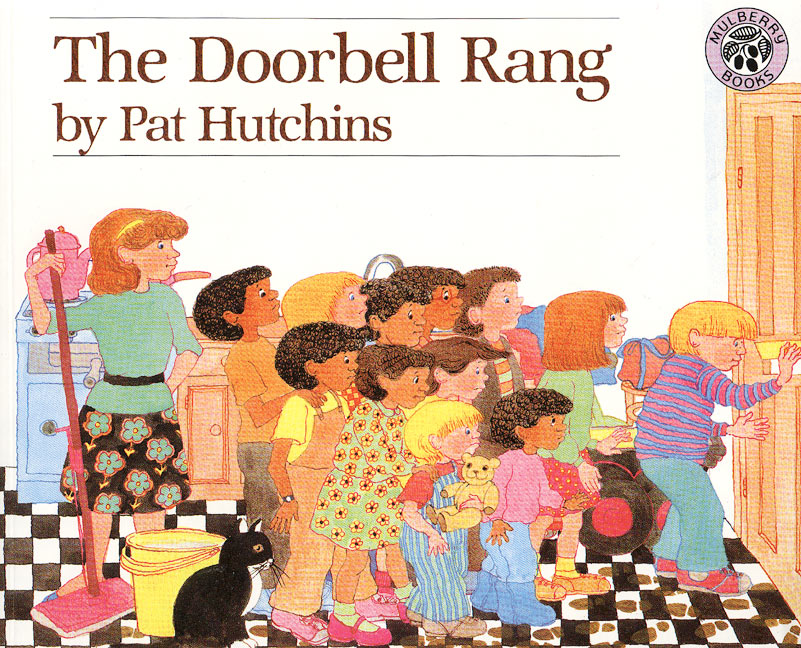
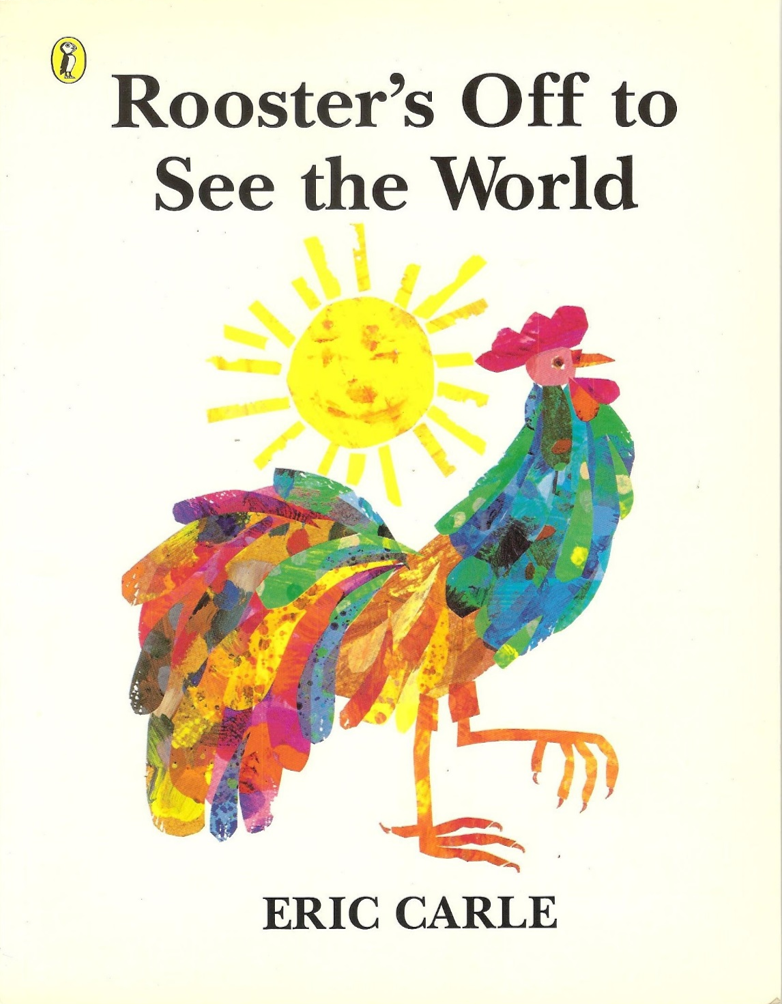
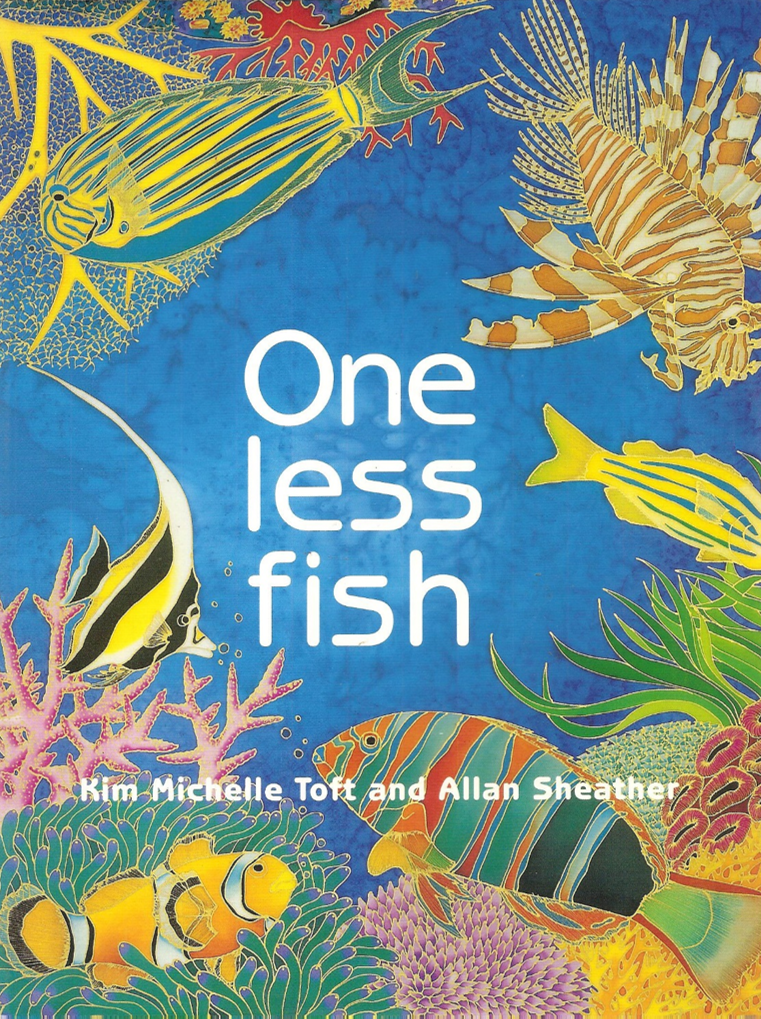
Read books with number concepts e.g. Pat Hutchins The Doorbell Rang, Eric Carle Rooster’s off to see the world or Kim Michelle Toft One Less Fish
Patterns and algebra
Use items to make patterns e.g. sort and create a pattern from shells collected at the beach, building blocks or toy cars
Look for patterns in the environment e.g. fences, tiles, walls and window, zebra crossings
Decorate cards and drawings with a patterned frame
Make gift wrapping paper by decorating with potato prints or stamp patterns
Measurement and geometry
Include your child in cooking activities and allow or support them to:
measure the ingredients
set the temperature on the oven
work out the cooking finish time
2. A child’s understanding of volume and capacity can be developed when they:
pour glasses of water from the jug and discuss terms such as enough, full, empty, half or part full, more, less
pour from one container into another of a different shape to compare which holds more and which holds less
3. Scales can be used to compare the mass of different items or quantities e.g. compare an apple and an orange, measure the mass of butter required for a recipe
4. Measuring length can be included by:
measuring and comparing height
cutting a length of string to tie a package
measuring who is closest to the jack in a backyard game of lawn bowls
5. Use the calendar to
Learn the names and sequence of days in the week or months in the year
count the passing days or the number of days until an event
6. Identify shapes in the home and environment e.g.
2D shapes: tiles on floor and walls, shapes of windows, sections of footpath
3D shapes: cereal boxes (rectangular prism), balls (sphere), bottles or cans (cylinder), dice (cube)
7. Play games that involve shapes e.g. jigsaw puzzles, tangrams
8. Talk about directions e.g. left, right, forwards, backwards and follow directions on a grid
9. Play games that involve directions and movement in space e.g. battleship, Hokey Pokey, Simon Says, snakes and ladders, ludo
10. Read and discuss books that include measurement concepts e.g. Pamela Allen: Who Sank the Boat? (volume); Eric Carle: The Very Hungry Caterpillar (days of the week) and The Bad Tempered Ladybird (time); Penny Matthews and Andrew McLean A Year on our Farm (months and seasons); and for looking at places on a map Mem Fox Sail Away The ballad of Skip and Nell or Annette Langen & Constanza Droop Letters from Felix
Probability and statistics
When discussing the weather or desired activities include the language of probability e.g. possible, certain, likely, unlikely, impossible
Encourage children to collect data about family or friends by asking yes/no questions e.g. do you like swimming, or making a graph of the family’s favourite colour or meal.
Play games with spinners and dice and talk about the likelihood of spinning or throwing a particular number
This list is really just a beginning. I’m sure you will add many more suggestions of your own.
For your convenience, the list is available to download FREE in my TEACHERSpayTEACHERS store.
As promised I will leave you with a few suggestions to spark your own interest in and love of maths. Be sure to check them out:
These are must listen TED talks by Arthur Benjamin:









![By UnknownMarie-Lan Nguyen (Own work) [CC BY 3.0 (http://creativecommons.org/licenses/by/3.0)], via Wikimedia Commons](https://norahcolvin.com/wp-content/uploads/2016/03/330px-homeros_caetani_louvre_ma440_n2-must-be-attributed.jpg?w=330&h=480)






 Norah Colvin