Live Love Laugh Learn … Create the possibilities

Tag: Mathematics

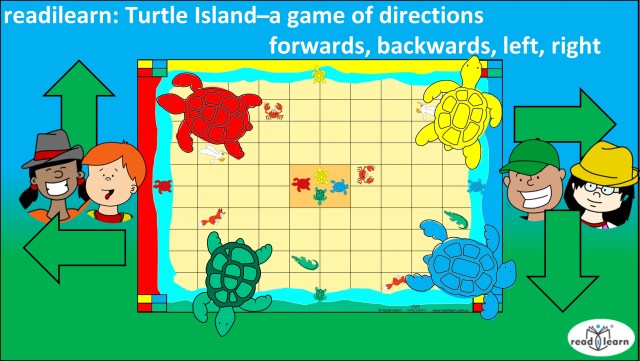
  • readilearn: Turtle Island – a game of directions: forwards, backwards, left, right

    readilearn: Turtle Island – a game of directions: forwards, backwards, left, right

    The ability to give and follow directions according to one’s location is an important skill and one that we frequently use in everyday life. Some of the first directions we use are forwards, backwards, left and right. Often when we teach children these directions, everyone is facing the same way and move in unison.

    Understanding that the directions are relative to the way you are facing, and may be different for someone facing another way, can be tricky to develop. Many of us early childhood teachers experience difficulty identifying our own left and right after years of facing children as we teach them their left and right.

    I have always considered games to be a great tool for learning. They not only provide a fun way of learning concepts, but they also provide opportunities for children to interact with each other and learn the social skills of getting along at the same time. Games help build positive attitudes toward school, learning and each other. They often incorporate learning across the curriculum and can be used in groups, with buddies or with an adult support person.
    This week, I have uploaded a new printable board game which involves children in following directions. For the next few weeks, the game will be available free to everyone, whether a registered readilearn user or not. Why? Because I need your help, please.

    Continue reading: readilearn: Turtle Island – a game of directions: forwards, backwards, left, right

  • readilearn: Engaging mathematics learning with Halloween themed resources

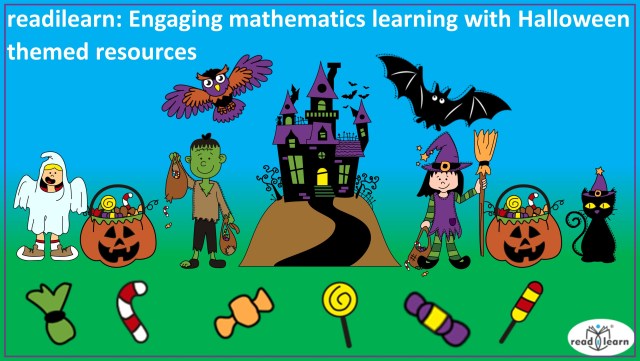
    readilearn: Engaging mathematics learning with Halloween themed resources

    In just a couple of weeks, people in many parts of the world will be celebrating Halloween. Even in Australia, where the festival has only recently begun to take hold, merchandise now fills our (mainly discount) stores, and children look forward to a night of fun, knocking on doors and collecting treats from family and friends.

    The festival dates back two thousand years to its origins in what is now Ireland, England and France. Irish immigrants took the festival to America in the 1800s. Halloween arrived in Australia with immigrants and through its portrayal in movies and on television. Always looking for an excuse to party, Australians are ready to join in.

    Originally, the festival celebrated the end of summer harvests and marked the beginning of the long dark northern winters. The festivities have evolved over the centuries with changes to focus and traditions.

    I have always thought that adding a bit of fun to the school day helps the learning go down. If the children are going to be distracted by thoughts of their Halloween costumes and what booty they might score in an evening of trick or treating, why not harness those distractions and channel them into learning?

    To combine fun with learning, this week I have uploaded three new interactive Halloween themed maths resources for use on the interactive whiteboard. The resources help to develop number concepts up to ten and are available to subscribers. As do other readilearn resources, they acknowledge that it is the richness of discussion occurring between teacher and children that helps to consolidate children’s learning.

    Continue reading: readilearn: Engaging mathematics learning with Halloween themed resources

  • readilearn: Smiles unite our world

    readilearn: Smiles unite our world

    Today is a day to celebrate. It is both World Teachers’ Day and World Smile Day. What a great combination. In addition, these special days also coincide with World Space Week which is celebrated from 4 – 10 October.

    World Teachers’ Day

    World Teachers’ Day celebrates the contribution that teachers make to education around the world.

    This year’s event marks the 70th anniversary of the Universal Declaration of Human Rights (1948) in which education is recognised as “a key fundamental right and establishes an entitlement to free compulsory education, ensuring inclusive and equitable access for all children”.

    This year’s theme is “The right to education means the right to a qualified teacher.”

    According to UNESCO, “One of the main challenge [sic] to this right worldwide is the continued shortage of teachers. There are an estimated 264 million children and youth still out of school globally, and according to the UNESCO Institute of Statistics, the world needs to recruit almost 69 million new teachers to reach the 2030 education goal of universal primary and secondary education. This ‘teacher gap’ is more pronounced among vulnerable populations – girls, children with disabilities, refugee and migrant children, and poor children living in rural or remote areas.”

    If you wish to support organisations that provide education for people in need, this list on informED might be a good place to find one. I’m sure there are many more and perhaps some closer to home. The focus of The Smith Family, one of the organisations I support, is on helping disadvantaged Australian children get the most out of their education so they can improve their futures.

    Having spent almost all my life in education in a variety of roles; including student, teacher, teacher support and educational writer, I know how hard teachers work and the importance of the contribution they make to each life they touch. I also know that sometimes they work in situations that cause them much stress, in which they don’t feel valued, and are unsupported. Sadly, more and more experienced teachers are leaving the classroom for these and other reasons, which will only make it more difficult to reach the 2030 goal of universal education.

    Happy World Teachers' Day discount subscription

    Continue reading: readilearn: Smiles unite our world

  • readilearn: freemium lower primary teaching resources with lessons ready to teach

    readilearn: freemium lower primary teaching resources with lessons ready to teach

    In this post, I explain what readilearn is and how it works. There is more to readilearn than just this blog. In fact, this blog is just one small part of it.

    readilearn is a collection of digital teaching resources designed for use with children from about five to seven years of age in their first three years of school. They are equally suited to the homeschool situation and for use with ESL students.

    A freemium website, readilearn provides free support and resources for teachers in a variety of ways. However, some resources are exclusive to subscribers. The small annual subscription of just AU$25 reduces teachers’ workloads with lessons ready to teach and recognises and adds little to the expenditure many already occur in purchasing resources for their classrooms.

    Resources are available across curriculum areas. Many provide contexts for integrating learning in fun and meaningful ways.

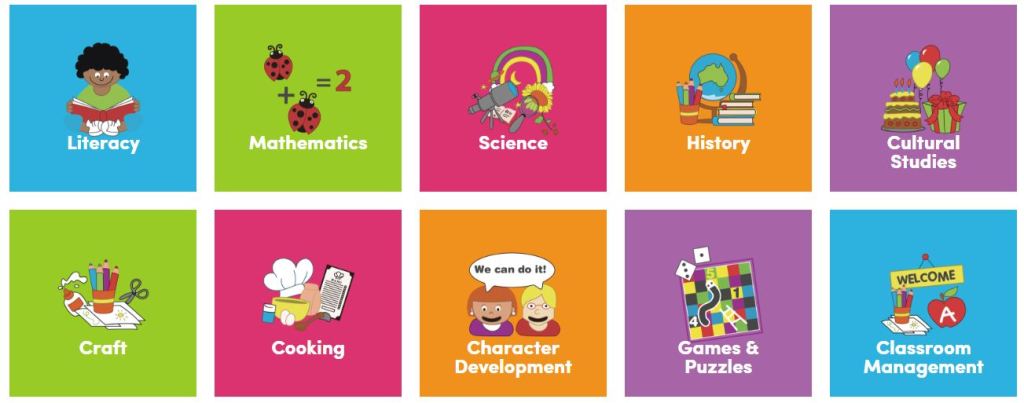
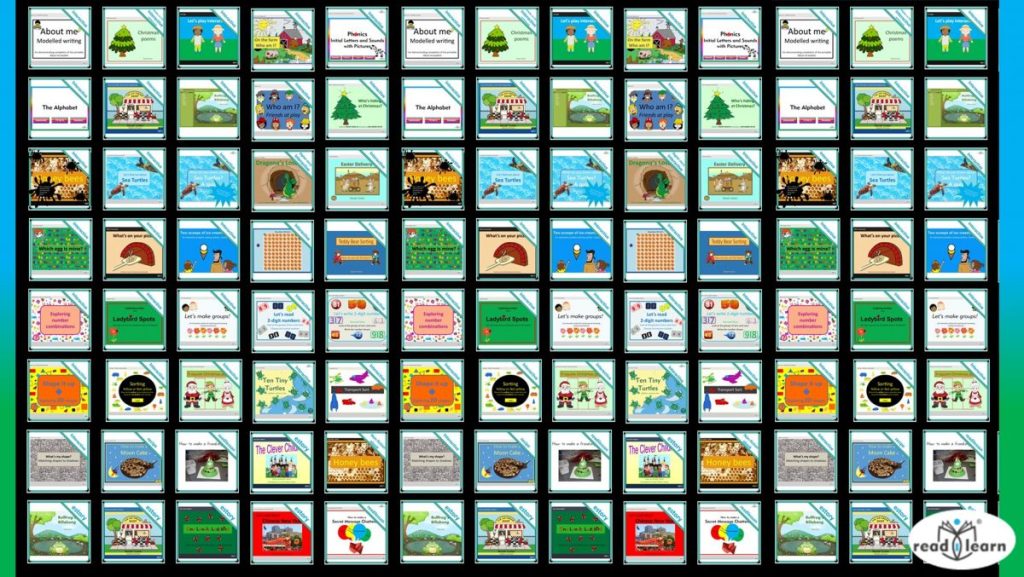
    readilearn categories and subject or curriculum areas

    readilearn resources support teachers teaching and children learning by providing opportunities for discussions that promote thinking, collaboration and learning across the curriculum. Open-ended discussions encourage children to learn from each other as well as the teacher and to participate at their own level.

    Resources include
    • original digital stories (estories)
    • interactive teaching episodes
    • open-ended problem-solving activities
    • readilessons (lessons ready to teach)
    • printable activities
    • teaching suggestions
    • notes for parents
    • and more.
    Free from readilearn

    Continue reading: readilearn: freemium lower primary teaching resources with lessons ready to teach

  • readilearn: teaching resources for celebrating birthdays in the early childhood classroom

    readilearn: teaching resources for celebrating birthdays in the early childhood classroom

    How do you celebrate birthdays in your early childhood classroom? Suggestions from readilearn help you make a birthday a special event in your classroom.

    I’m excited! Today, 24 August 2018, marks readilearn’s second birthday. How quickly those years have passed and how the collection has grown in that time.

    When I started out with the goal of reducing teachers’ workloads by preparing lessons ready for them to teach, I made a commitment to upload new resources regularly, write a weekly blog post focusing on topics of interest to early childhood teachers, including suggestions for teaching, and publish a newsletter on the last day of each month.

    I am proud to say that I have fulfilled that commitment. With more than two hundred resources added to the collection since the launch, that’s an addition of an average of two new resources each week. More than forty resources in the collection are interactive lessons for teachers to teach on the interactive whiteboard, exceeding the ten percent minimum I set as a target.

    Continue reading: readilearn: teaching resources for celebrating birthdays in the early childhood classroom

  • readilearn: What place do worksheets have in your early childhood classroom?

    readilearn: What place do worksheets have in your early childhood classroom?

    How do you feel about worksheets? Love them? Hate them? Use them sparingly?

    I would say I’ve never been greatly in favour of worksheets. I’m not saying I never used them, but I used them sparingly. If I could do something as well or better without using a worksheet I would. There were a few reasons for this:

    • I valued children’s own work and didn’t feel the need to “pretty” up their books with the work of others.
    • I always looked for ways to progress children’s learning as opposed to keeping them busy.
    • I liked to reduce our paper usage.

    Available on the internet and in bookstores are oodles of collections of worksheets; worksheets for anything you can imagine. You can spend hours trawling through websites looking for a sheet to support learning or practice a specific concept. Some of that time could be better spent considering other opportunities you could provide children for learning or practice, or even doing something pleasant for yourself for a change. Now there’s a thought.

    When you think you may want a worksheet, or come across a worksheet that you may want to use, stop and evaluate its potential benefit:

    Continue reading: readilearn: What place do worksheets have in your early childhood classroom?

  • readilearn: A week’s reading instruction with Bullfrog’s Billabong

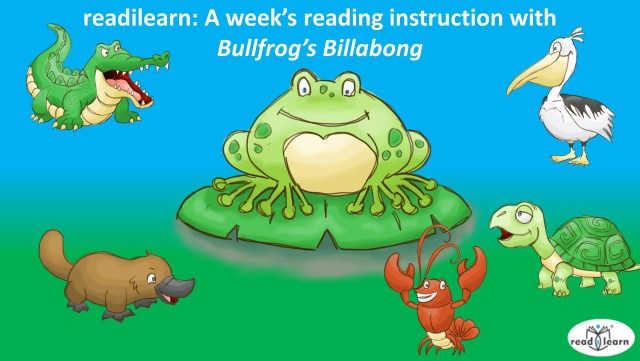
    readilearn: A week’s reading instruction with Bullfrog’s Billabong

    The readilearn Bullfrog’s Billabong suite of cross-curricular resources can be used as the foundation for planning a week’s reading instruction including lessons with the whole class and small groups and independent work. The activities cater for different ability levels in your early childhood classroom and can culminate in a performance to be presented to other members of the class, other classes in the school, or parents.

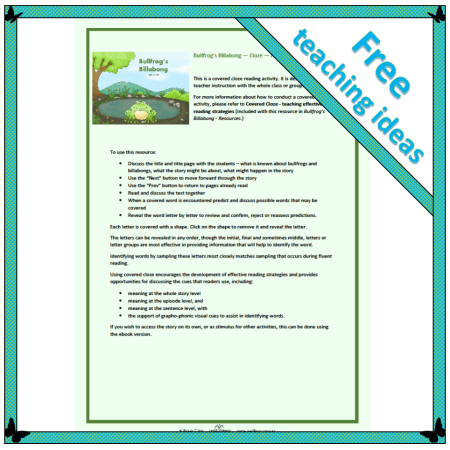
    Bullfrog's Billabong, teaching effective reading strategies with covered cloze on the interactive whiteboard

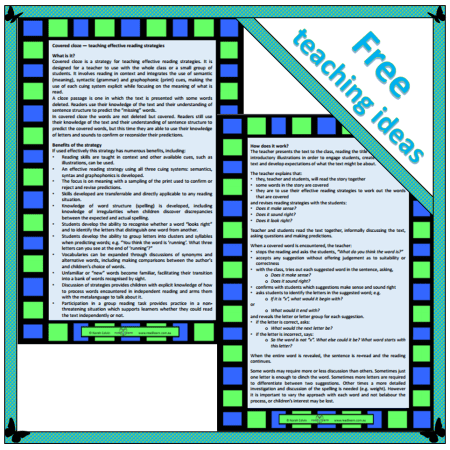
    Begin by introducing the story as a covered cloze activity (a lesson ready for you to teach) presented to the whole class on the interactive whiteboard. Although all children are engaged in reading the same story, the activity allows them to participate at their own level. The teacher-led discussion can be tailored to student needs, allowing each to contribute according to what they already know and extending their understanding by discussing cues for reading and irregular as well as regular spelling patterns. Children learn from each other as they actively participate in the cooperative reading activity. Refer to Covered cloze — teaching effective reading strategies and Bullfrog’s Billabong — Cloze — How to use this resource for suggestions.

    As with introducing all new reading material, it is important to engage children’s interest by making connections with what they already know about the topic and explaining what may be unfamiliar; for example, a billabong, and encouraging them to make predictions about what might happen in the story. As the story unfolds, children may adjust their predictions and thoughts about the story.

    Continue reading: readilearn: A week’s reading instruction with Bullfrog’s Billabong – Readilearn

  • readilearn: Teaching about living things in early childhood classrooms – turtles

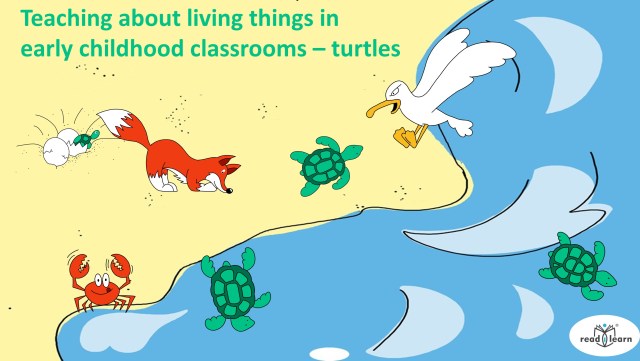
    readilearn: Teaching about living things in early childhood classrooms – turtles

    Teaching about living things has an important place in early childhood classrooms. In the science curriculum in their first few years of school, children learn

    • What is a living thing
    • Needs of living things
    • Features of living things
    • Life stages of living things

    I have previously written about keeping and observing minibeasts in the classroom, learning about life on a farm, learning about living things – sea turtles, and observing animals in the local environment. In addition to the teaching ideas suggested in the blog posts, there are many resources in the science collection to assist you with your work.

    Let's find out abut sea turtles is an interactive digital non-fiction texts about sea turtles, for children in their first three years of school

    This week, in celebration of World Turtle Day on 23 May and World Environment Day coming up on 5 June, I have uploaded new resources to support learning about sea turtles and the existing non-fiction digital text Let’s find out about Sea Turtles.

    Continue reading: readilearn: Teaching about living things in early childhood classrooms – turtles

  • Counting on fingers

    Counting on fingers

    This week at the Carrot Ranch, Charli Mills challenged writers to In 99 words (no more, no less) write a story about fingers that fly. Think about the different ways we use our fingers and what happens when we add speed. Go where the prompt leads.

    I thought about the use young children make of their fingers when counting. It may increase their speed and ease of calculation in the beginning, but continued use tends to slow them down.

    I also thought about magicians, and how the speed of their fingers amazes us with tricks and sleight of hand.

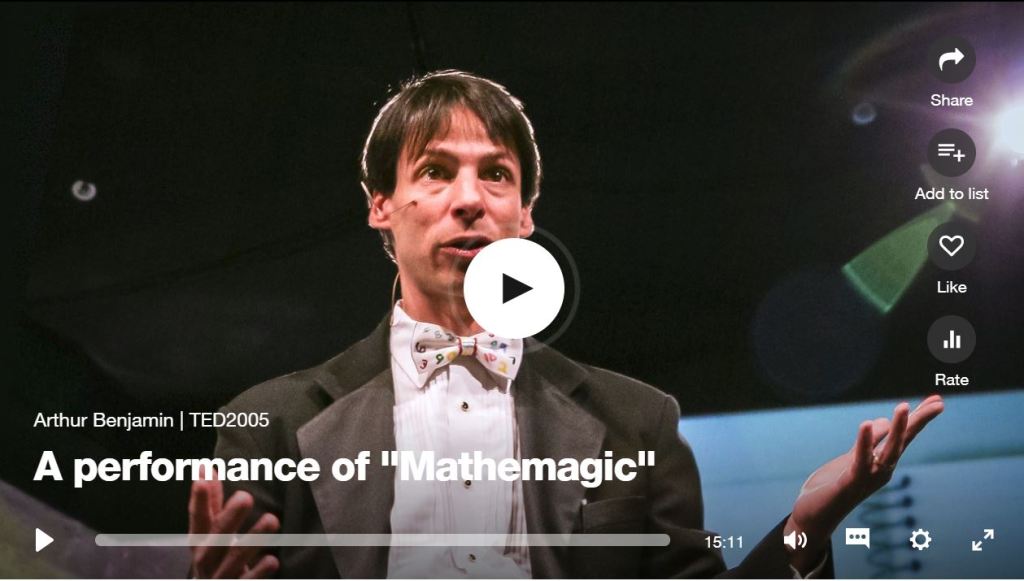
    Combining both thoughts brought me to the mathemagician Arthur Benjamin who never ceases to astound with his calculations.

    A performance of mathematic by Arthur Benjamin TED talk

    Are you a math whiz, solving complicated problems and making calculations with large numbers effortlessly, or do you still need to count on your fingers at times?

    I don’t think I was ever what would be considered a maths whiz, but I did have my confidence in maths taught out of me. Sadly, I think this happens to far too many.

    Many children who have been provided experiences with number and engaged in discussions about number from a young age develop strong understandings and are able to calculate with little effort, arriving at answers almost intuitively. While it can be good to help them develop metacognition by asking them to explain how they knew, or how they worked it out, sometimes they don’t know how—they just know.

    While some children need to be taught methods of working out answers, requiring maths intuitive thinkers to use the same working can cause them to second-guess themselves and to lose confidence by breaking what they know down into steps that only cause confusion.

    I was interested to hear Arthur Benjamin’s plan for improving maths education when he is made “Czar of Mathematics”.

    Arthur Benjamin Czar of Mathematics

    His suggestions relate more to high school than primary, but probability and statistics still have their place in the early years, as I’ve shown with many readilearn resources.

    For my response to Charli’s prompt, I’ve considered what may occur if a child’s intuition with maths is neither appreciated nor encouraged.

    Counting on fingers
    Everyone said she had a way with numbers. Even when still in nappies she was counting effortlessly to large numbers in multiples of twos, fives and tens as well as ones. The parents didn’t dare think they’d bred a genius, an outlier. They wished for an ordinary child who fitted in, unnoticed, like them.  They strove to inhibit her talent and discourage her enthusiasm. She tried to hide her ability by delaying responses with finger actions resembling calculation aids. But they slowed her none and flew too fast, earning her the nickname “Flying fingers” and ridicule instead of appreciation. 

    Thank you blog post

    Thank you for reading. I appreciate your feedback. Please share your thoughts.

  • #readilearn – Learning literacy and mathematics with Easter classroom activities – Readilearn

    #readilearn – Learning literacy and mathematics with Easter classroom activities – Readilearn

    The celebration of special occasions such as Easter may bring interruptions to the usual class program with preparation for special events and performances such as Easter Hat Parades. It may also signal time to inject some fun into the program. But involving children in Easter activities doesn’t mean the learning has to stop.

    In this post, I explain how using readilearn early childhood teaching resources keeps the children thinking and learning while having fun with Easter-themed resources across curriculum areas. (Note: All readilearn Easter-themed resources can be found here.)

    Cultural studies 

    An inclusive classroom acknowledges all traditions celebrated by its children.

    Find out whether Easter is one of the traditions celebrated by the families of children in the class and discuss how it is celebrated.

    If you have already investigated Family traditions and celebrations, you will know which children celebrate Easter and which do not.

    For children who don’t celebrate Easter, be sensitive to the expectations their families may have for their participation.

    My personal view is that it is beneficial for children to learn about the traditions of others but that they can opt out of activities and celebrations if families wish. In my experience, few families have Continue reading: #readilearn – Learning literacy and mathematics with Easter classroom activities