Live Love Laugh Learn … Create the possibilities

Tag: learning differences

  • My time, your time, springtime!

    This week at the Carrot Ranch Charli Mills has challenged writers to In 99 words (no more, no less) write a story that is a snapshot of spring.


    At the moment approximately 90% of the world’s population are experiencing the season of spring. The rest of us, the 10% who live in the Southern Hemisphere are entering the cooler months. How those seasons are experienced varies from place to place. I have never experienced an autumn that would fit the description of ‘fall’; nor have I experienced a winter with snow. Those concepts are foreign to me. That is not to say that some living in the southern states of Australia haven’t experienced them. It all depends where one lives.

    The Australian Government describes Australia as having two main seasonal patterns in six different climatic zones. The Indigenous Peoples of Australia describe the changes as holistic changes in nature and life. In Australia, attitudes to and understanding of the seasons are as diverse as the experiences. While the weather doesn’t always know it, spring is marked on the Australian calendar from September to November. It doesn’t matter to which part of the country you travel, there is always something to see and do in spring.
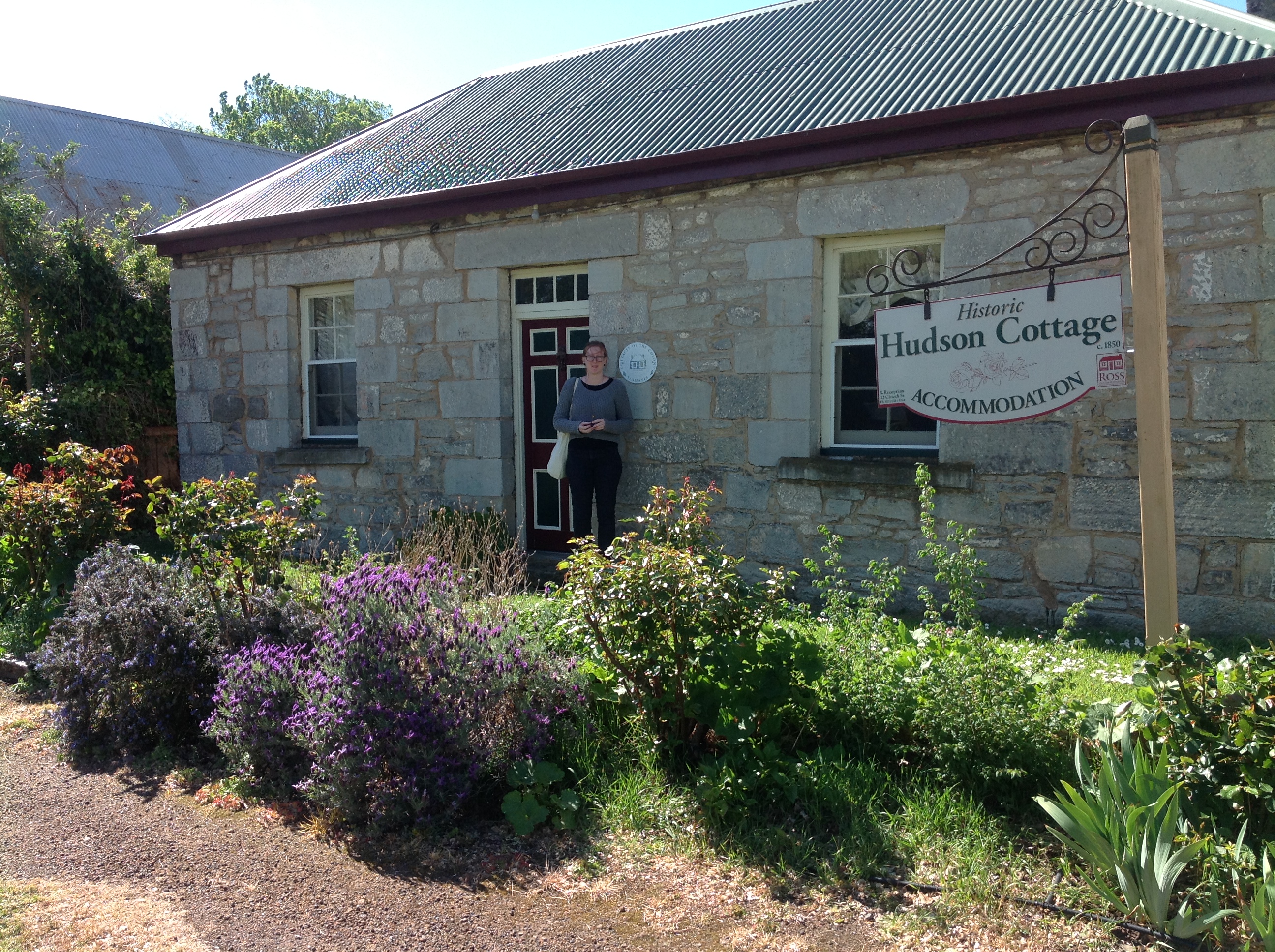
    Springtime in Tasmania 2014
    Springtime in Tasmania 2014

    Part of the daily routine in an early childhood classroom is observing and discussing the daily and seasonal changes in the weather. Each day the children observe the weather and discuss how it may influence their clothing and activities and the impact that changes may have to their local environment and other things including animals.

    Many classrooms have a calendar prominently displayed on which the children’s observations can be recorded and compared. Children are often invited to draw symbols and write words such as those shown here.
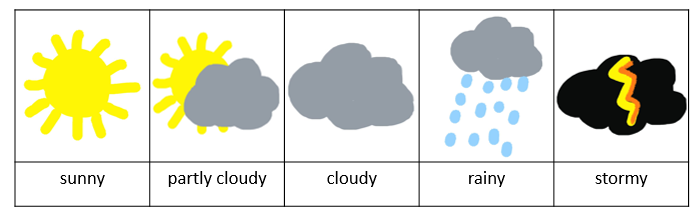
    weather symbols

    Discussions about how warm or how cool it is may also occur, though in some parts there is never really what could be called ‘cold’, just ‘cooler’.

    temperature chart


    Reading stories was always an integral part of my classroom practice and I needed little excuse to read another. When the seasons changed I was always looking for suitable books to read and the first I thought of at springtime was Wake Up Bear by Lynley Dodd, a New Zealander.
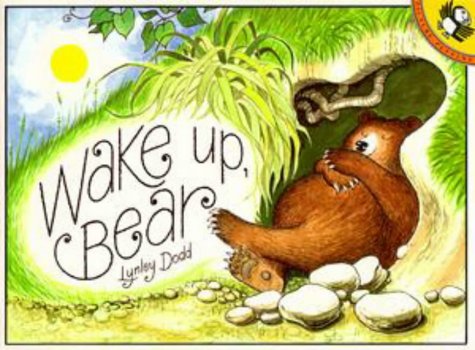
    Wake up bear

    While we don’t have bears in Australia, just these cute koalas often incorrectly called bears;

    or hibernating animals, except for this cute little mountain pygmy-possum;

    Wake Up Bear is a delightful story to herald spring. In the story, bear has slept all through winter, but when spring arrives he is not quite ready to wake up. The animals each try to wake him up and finally they succeed.

    While it was not Dodd’s intention with the story, it made me think about children learning in their own time, “waking up” when they are ready. Sometimes they need to be shown something just once. Sometimes they need a great deal of exposure and support to “get” it. Sometimes it’s better to leave them alone until the time is right. There have been previous discussions about this here my blog, including In their own time and Not Yet.

    I thought Charli’s spring challenge was perhaps another opportunity for talking about individual differences and the need to respect a learner’s journey. I’ve gone back to my early childhood roots. I hope you enjoy it.
     

    Springtime in Tasmania 2014
    Springtime in Tasmania 2014

     Spring

    Bees buzz

    Wildflowers bloom

    Cockatoos squawk

    “Gone is the gloom!”


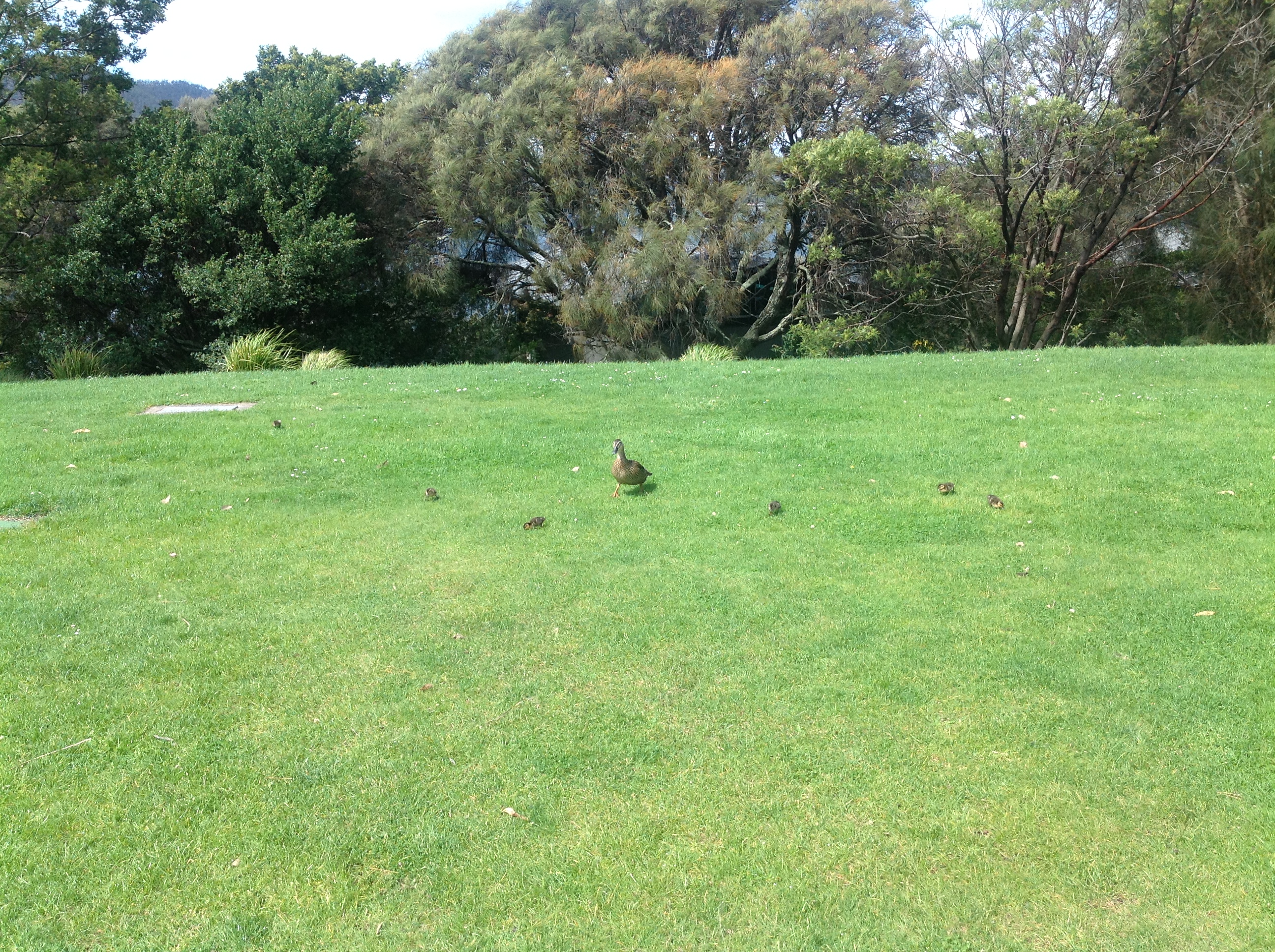
    Mother duck waits

    For her babies to hatch.

    Here they come now

    The first of the batch


    So cute and cuddly

    All covered in fluff

    Eager and ready

    To show off their stuff


    “Patience!“ quacks mother

    “There’s no need to rush.”

    “One more is coming.

    Stand back. Please don’t crush.”


    With one final crack

    Last one’s out of his shell

    “I’m proud of you babies.

    You’ve all done so well.”


    Mother duck smiles

    As they waddle in line

    She knows that each duckling’s

    Own time will be fine.

    Thank you

    Thank you for reading.

    Springtime in Tasmania 2014

    Springtime in Tasmania 2014

    Happy spring to most of you! For the others: enjoy the cooler respite from the relentless heat!


    I appreciate your feedback. Please share your thought about any aspect of this post or flash fiction.

  • Benefits of inclusion

    Recently I listened to a compelling TEDx talk by Dan Habib. You can listen to it here:

    Dan opens his talk by asking the audience some questions about their school days:

    Did kids with and without disabilities study together and learn together?

    Did they have a best friend who had a disability?

    Did they have a boyfriend or girlfriend that had a significant disability?

    Very few of the approximate one hundred in the audience answered in the affirmative.

    Then Habib asked the audience to consider and answer the following question:

    Did you feel some fear or nervousness when you were a kid about talking to a kid with a disability?

    The majority of the audience affirmed they did.

    Had I been in the audience, my responses would have been similar.

    When I was a kid, there were no children with disabilities in my classes. Children with disabilities were hidden away as an embarrassment and were segregated into what where called ‘opportunity schools’.

    Thinking back, my impression is that people with disabilities were not visible in the community and their needs were not catered for. They were not expected to have any participation in society. Often they were targets of taunts and laughter, but mostly ignored and avoided.

    https://openclipart.org/image/800px/svg_to_png/183559/oldmaninwheelchair.png
    https://openclipart.org/image/800px/svg_to_png/183559/oldmaninwheelchair.png

    However, when I was a kid discrimination wasn’t restricted to people with disabilities. It was a time in which racial discrimination and segregation was more prevalent; before the emergence of women’s rights and children’s rights.

    Sometimes when we see how far humanity still has to go towards equality, tolerance and compassion it is hard to see how far we have come. But looking back on the changes that have occurred in just my life time, the progress is obvious, if still insufficient.

    Even into my college years I had little contact with people with disabilities and my teacher training made no mention (that I can remember) of catering for students with disabilities, who were still segregated into what became called ‘special’ schools. I don’t recall catering for individual differences being high on the agenda back then.

    I worked as a remedial teacher for a few years, supporting students who were achieving below the expected level, of reading mainly. These children were generally of average intelligence but experiencing a learning difficulty. Children falling below average on an intelligence test would still be shunted away to special schools.

    I cannot recall the inclusion of any students with intellectual or physical disabilities at any school at which I taught prior to the 1990s when integration and mainstreaming was introduced. Dan Habib says in his talk that, as he was growing up, ‘disability was just a blip on the radar screen’ as well. Maybe this experience was similar to yours?

    When Dan came to accept that his son Samuel had a disability and that he would have that disability for life, he realized that they had to create a vision for Samuel, and let ‘Samuel create a vision for himself“.

    https://openclipart.org/image/800px/svg_to_png/195899/EPA-clubhousekids.png
    https://openclipart.org/image/800px/svg_to_png/195899/EPA-clubhousekids.png

    Part of this was the need for a sense of belonging: to the neighbourhood, the community and the local school. It was this that got Dan thinking about inclusion. Dan goes on to describe the ways in which Samuel was included in the school and the community, and the benefits, for both Samuel and others.

    He urges everyone to advocate for inclusive education as the benefits include better communication skills, higher academic achievements, wider social networks and fewer behaviour problems. He decries the fact that, despite the benefits, most kids with disabilities still spend their day segregated.

    He explains that the benefits are just as valuable for typical kids who achieve higher academically while learning to be patient, caring, compassionate, and loving. In my more recent years of teaching, I got to see these benefits of inclusion first hand. Not only did the children learn, so did I.

    I didn’t just chance upon this TEDx talk. It was included in a great guest post by Gary Dietz on The Cool Cat Teacher’s blog. The post introduced a book, written by Gary, about dads of kids with disabilities and proposed 5 practical lessons for elementary classroom inclusion. The book Dads with Disabilities is described as inspiring and ‘a must read for any teacher working with special needs kids’.

    https://openclipart.org/image/800px/svg_to_png/651/ryanlerch_kids_with_hats.png
    https://openclipart.org/image/800px/svg_to_png/651/ryanlerch_kids_with_hats.png

    The five suggestions (which I think are based on respect and are applicable for all students) are:

    1. ‘Meet the student “where the student lives” (where they need to be, at their level of development)
    2. Presume competence
    3. Be creative in your use of ‘adaptive’ technology (e.g. use of video and Skype or Facetime)
    4. Listen to parents and help them listen to the child
    5. Give “overlooked” children the same chance to shine as the superstars


    Vicki Davis is the Cool Cat Teacher. Her blog is consistently among the top 50 education blogs worldwide. Her byline is “A real teacher helping teachers be really excellent”. I agree that she is and recommend her blog to you.

    Update from Gary Dietz (12/08/2014):

    “The book ‘Dads of Disability’ is now a FREE loan if you subscribe to Amazon Prime or Kindle Unlimited. And if not, it is on sales as an ebook for $4.99. Look it up on Amazon. (Of course the paperback is still available!)”


    How do you view inclusion? What is your experience?

    I appreciate your feedback. Please share your thoughts about any aspect of this post.