I’ve stayed at the family party with Josie, the aunts and the stranger from previous stories for a bit more fun. I hope you enjoy it.
Mealtime chit-chat
“What have we got?” Finally, the stranger, now identified as Paul, asked a question.
“The usual for one of these shindigs,” said Josie. “Aunt Agnes’s lasagne, Clara’s meatballs, Priscilla’s chicken fricassee and Joe’s sliced meats.”
“And for dessert, there’s Marie’s apple pie and Josh’s lumpy custard. Looks like Great-Aunt Rose has added berries to her strawberry jelly,” said Josie, taking a scoop.
“Blaaah!” Josie spat the jelly. “That’s not a berry!”
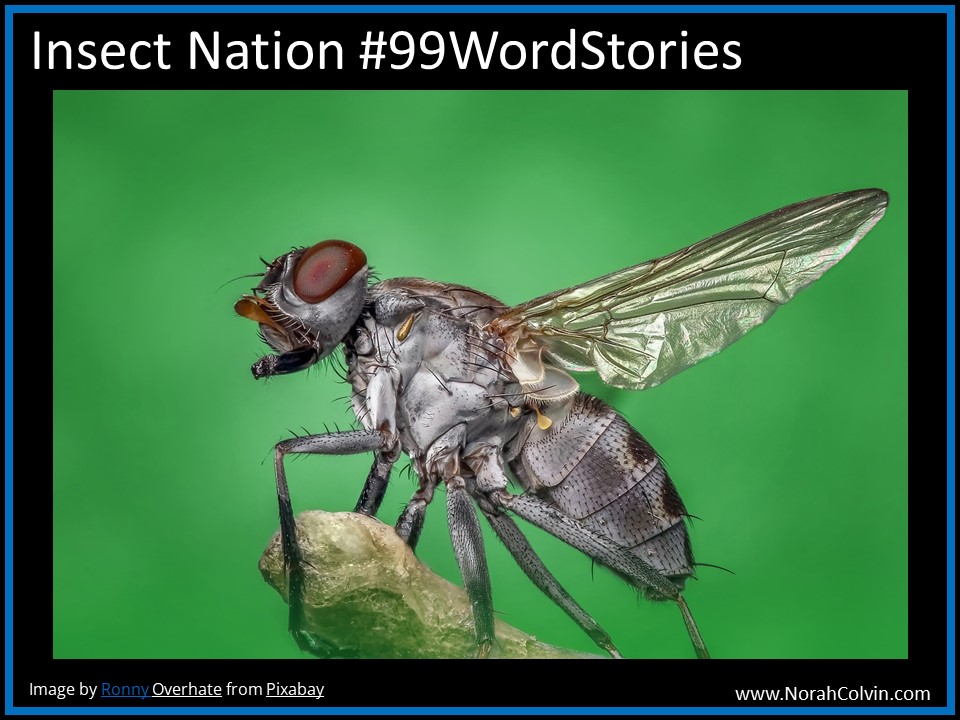
“It’s just a fly.”
“Why didn’t you tell me?”
“Flies don’t hurt. Extra protein.”
“Then you have it,” said Josie, shoving the plate into him and storming off.
Thank you for reading. I appreciate your feedback. Please share your thoughts.
I used two real events for inspiration.
The first occurred at a family party when one of the dishes served up was a lasagne, which I’m sure would have been delicious if I could have ignored the flies (just one or two) baked into the top layer of béchamel sauce.
The second was a crunchy cappuccino I had once, that forever ended my love affair with cappuccino. When I removed the crunchy bit from my mouth to investigate what it was, I discovered it was a fly. The establishment was very good. They apologised and offered to make me another one. I’m not sure if I accepted their offer, but I’ve never ordered another cappuccino.
Flies and the Australian summer go hand in hand. I’m never keen on their company, and abhor them as a food source.
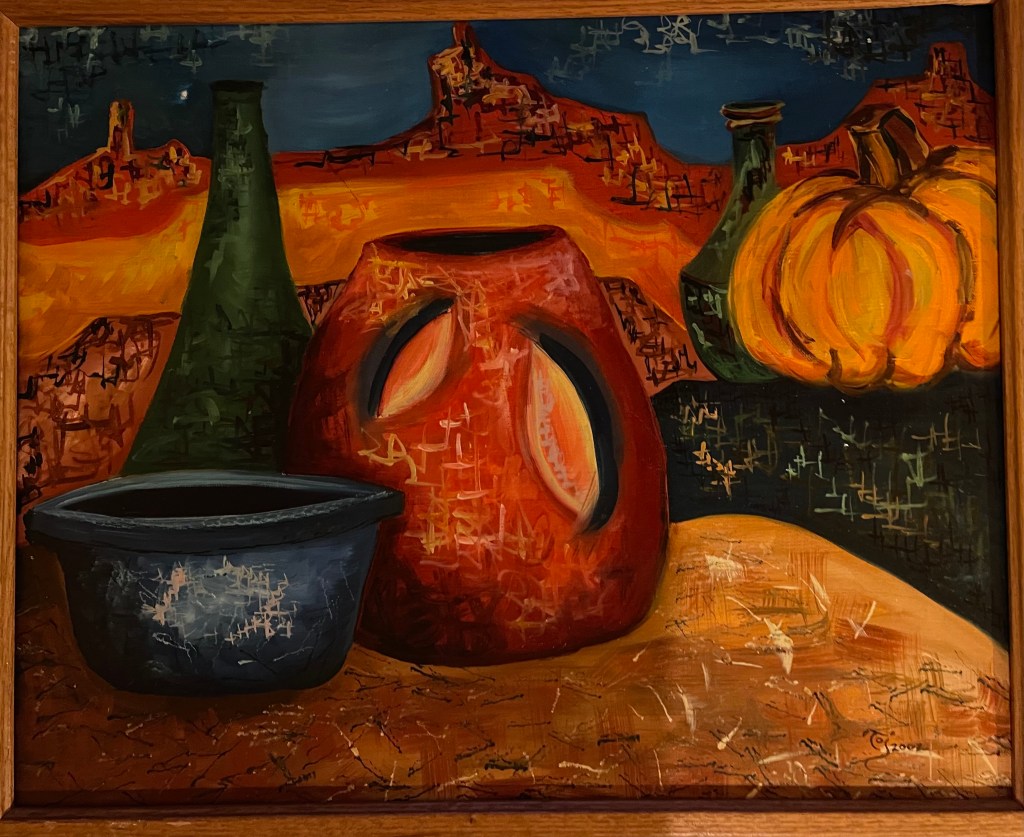
Note: The collection of stories made in response to the previous prompt Southwest Pumpkins, including mine, can be read at the Carrot Ranch.
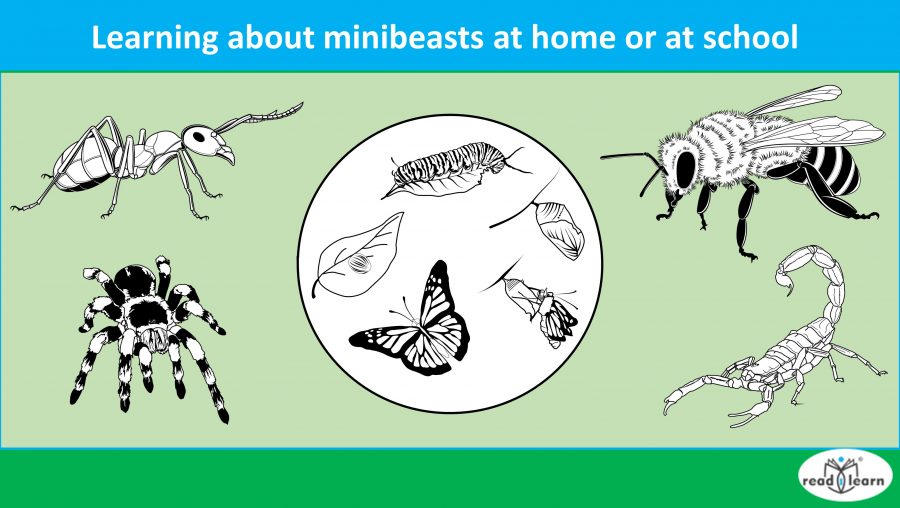
Whether learning at home or at school, there is a world of minibeasts for children to explore, inside and outdoors. Regardless of our feelings towards certain species, all are important to our environment and contribute to our lives in different and often unseen ways including pollinating our plants, decomposing waste and providing food for other species. It is fair to say that we need minibeasts more than they need us.
Learning about living things is an important part of the science curriculum for children in their first few years of school. They learn about the features of living things, their needs and their life stages. Studying minibeasts allows for learning in all these areas in a small space over a short amount of time.
At readilearn, we support your teaching and children’s learning about minibeasts with a constantly growing collection of resources. In fact, three new resources were uploaded this week.
Observe and record
An interesting project is to use a magnifying glass to discover the different species of minibeasts that live in and around our classrooms and homes. Much can be learned through observing their behaviour.
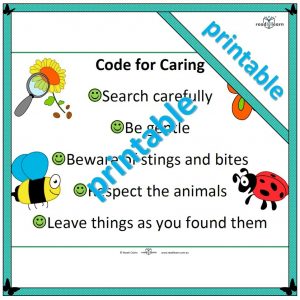
The Code for caring explains how to observe while maintaining safety for self as well as the minibeasts.
My Minibeast Diary provides a format and suggestions for recording children’s observations.
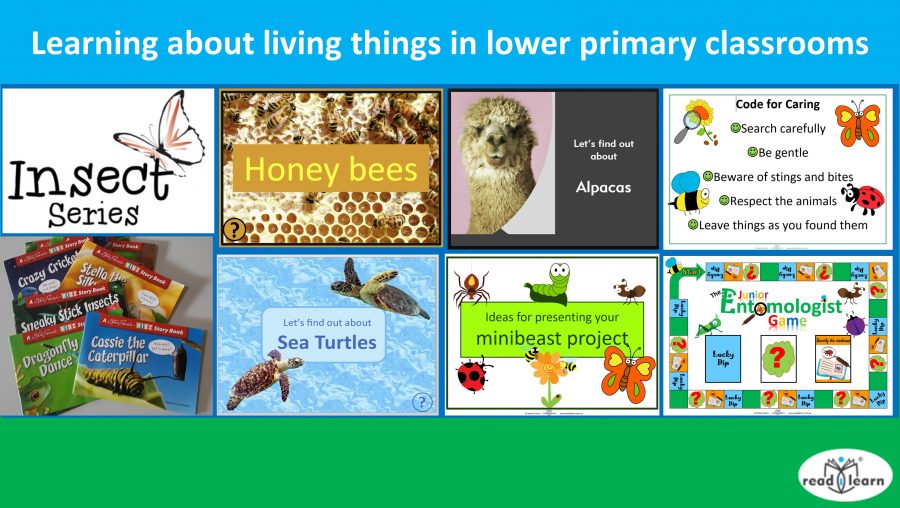
Learning about living things is an important part of education for young children. This post suggests ways of teaching biological science in lower primary classrooms with lessons ready-to-teach and activities that make learning memorable and fun.
Concepts include:
the needs of living things
external features of living things
where living things live
how living things grow
and relate specifically to insects and other minibeasts.
Hi, welcome to the readilearn blog and the first in our Author Spotlight series.
Spring is here and summer is on its way in Australia. The excitement of new life is everywhere as flowers bloom, birds sing, and insects abound. The excitement flows into the classroom as children observe and record the life stages of the amazing minibeasts that inhabit our world.
There is no better time than spring to introduce you to Brisbane author Rebecca Johnson and her Insect Series which was awarded the 2014 Whitley Certificate of Commendation for Best Educational Series.
Rebecca Johnson: award-winning author and primary school science teacher
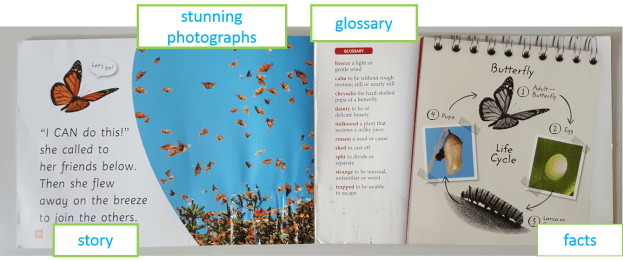
Rebecca’s Insect Series of ten books focuses on metamorphosis, survival, adaptations, properties of natural materials and the usefulness of insects through fiction stories. The stories are accompanied by stunning close-up photos of insects of all kinds.
The books, which won the 2014 Whitley Award for Best Educational Series, have strong listed links to the Australian Curriculum for many year levels. They are a great resource for teaching and learning about insects. The fiction stories that accompany the facts make the learning even more fun. Two free blackline masters support the use of each book. The blackline masters can be accessed on the Blake Education Website.
While the books feature Australian insects and have links to the Australian curriculum, they are loved by children all over the world. I am happy to introduce you to Rebecca and her lovely series of books.
Welcome to readilearn, Rebecca. We are looking forward to getting to know you a little better.
Thanks for inviting me!
When did you know you wanted to be a writer?
When I was reading a lot of picture books to my very young children and could see how much they loved them.
Where do you write? Do you like to be by yourself in the quiet, or do you like to write in a noisy space?
I do most of my ‘writing’ in my head. I think about my stories for ages and pitch them verbally to victims until I am sure I have it all sorted in my head, then I sit to write in my lovely, quiet study overlooking my garden. I encourage children to tell their stories out loud before they write too, because, in my opinion, it is almost impossible to write a good story if you can’t tell one.
What do you use to write – pencil and paper or computer?
Head first. VERY few drafts, then I type it into the computer. I can type a 7000 word novel in a week that is publisher-ready, but I have thought about it and pitched it and sounded it out in my head for weeks beforehand. I hate sitting down all day, and I hate re-doing things over and over even more, so I do heaps of my drafting mentally whilst I do other (fun) stuff like gardening, then by the time I sit down to write, it’s like typing out a movie I know really well. People give you more honest feedback too, when you tell them a story. They feel less nervous about letting you know how they really feel about it. Try it some time.
When is the best time for you to write?
I do my best work from 5am when the house is really quiet. I’m always too tired at night (I still teach three days a week) for anything too creative.
When and where do you get your ideas?
From my life’s experiences as a mother, teacher, child and my own children. I think you have to write about what you know and love.
What gave you the idea for this series about insects?
I am a science teacher and I love insects, and I just couldn’t find the books I needed to succinctly and factually tell kids about the life-cycles and characteristics of insects in a fun way, so I wrote some.
What do you like best about the series?
Kids love them because they are funny and a bit silly, but they are still full of facts and information. I think they remember things better if it is presented in more appealing and humorous way.
What can you tell us about the photographs that illustrate the books?
My sister (Narinda Sandry) took most of them and it was hilarious. We didn’t want to harm any of the insects, so we had to put some, like the mealworms, in the fridge for a while to slow them down to get the shots. I will always smile as I recall the day we sat around a cow pat in a paddock trying to photograph dung beetles before they re-dug themselves in! The old farmer that had let us into the paddock stood to the side scratching his head in disbelief.
How did your feel when you wrote these stories?
I was really pleased when they came out because the photos are just gorgeous, and they were very well received by schools and parents. Winning the Whitley awards was really lovely recognition too.
How do you hope readers will feel?
Hopefully empowered with more information and knowledge, and perhaps inspired to look more closely at the wonderful world of insects and an appreciation of the benefits they bring.
How would you like teachers to present your books to children?
I’d love them to make them part of their science lesson, and even team them with some real insects (like mealworms) to make it all so much more engaging. There are two free blackline masters for each one too, that are designed to be able to be used independently by children in reading groups etc. There are heaps of facts inside the covers, and a glossary of terms, so plenty to learn in each one.
Are there any messages you would like them to discuss?
The main thing is that insects are so important and not just a good excuse to whack something!
Do you have any advice for teachers in their role as writing guides?
As I said earlier….talk before writing as much as you can. It is amazing how hard kids find it to describe something verbally and yet we ask them to do it in the written form all the time with disappointing results.
Do you have any advice for children as writers?
Tell, tell, tell, and don’t be too hard on yourself if it takes a long time to get it right. It took me five years to get my first book published.
What is your favourite picture book? What do you like about it?
I have so many favourites, but Bob Graham’s Greetings from Sandy Beach always makes me laugh out loud, and humour is really important to me in a book.
Who is your favourite children’s author? What do you like about his or her work?
The Lion the Witch and the Wardrobe (CS Lewis). He made me see a movie in my head. I could picture every scene, decades before there was a movie. I remember thinking that one day, I wanted to make a reader feel like that.
Thank you Rebecca Johnson for sharing these insights about your Insect Series and your writing process. We wish you success.
Thank you, and thanks for having me!
To find out more about Rebecca and her award winning books visit her website at rebeccajohnson.com.au. You can find out about and purchase her Insect Series and other books on her website.
This interview and information about Rebecca is available as a printable resource in a new subcategory in readilearnliteracy resources: Author Spotlight. The information may be displayed in your classroom or included in a class book about authors and illustrators.
That I have an appreciation of and fascination with insects is no secret as I have written about it many times previously.
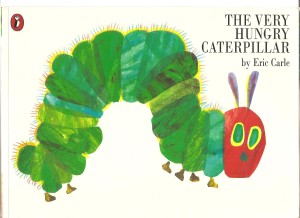
Some of my earliest posts formed a series in which I suggested using Eric Carle‘s Very Hungry Caterpillar story for developing critical literary, encouraging children to question the authenticity of what they read and the qualifications and intentions of the author.
Carle’s purpose with the story was to entertain, not to teach, and he was therefore unconcerned about inaccuracies in the butterfly life cycle.
The book, popular for its bright colourful illustrations and inspiring story of an ordinary caterpillar who becomes a beautiful butterfly achieves the author’s goal to entertain.
In a more recent post Revisiting The Very Hungry Caterpillar I provided a summary of, and links to, each of the four original posts which explained my recommendation that this very popular book was more relevant to teaching critical literacy than science.
Acknowledging the importance of maintaining Wondering in the everyday and an attachment with nature in wild spaces, I described my excitement at being able to observe every stage of the ladybird’s life cycle up close in my own backyard; an excitement that had perhaps exceeded observing the butterfly life cycle in the classroom with our live butterfly kits which had allowed us to Breathe – a sense of wonder! I even shared a section of a television interview in this post about Talking Interviews.
I talked about some insect themed classroom and teaching resources in The comfort zone. Others are listed on my page Early Childhood Teaching Resources and are available in my Teachers Pay Teachers and Teach in a Box stores. These, and many more, will be available on my readilearn website when it launches later in the year. Here is a sneak peek at some that will be included:
But the truth is I don’t really love allinsects. I’m not too keen on cockroaches, though the native Australian giant burrowing cockroaches are pretty cool. And although I am aware of vital roles of insects in the environment
as a food source for many animals
as pollinators for flowering plants
as decomposers
and I know that without them we’d basically not have an environment, in fact, we wouldn’t be; I often wonder whether we would be all that worse off without disease-spreading mosquitoes and flies. However, it seems that they too are vital to the health of our planet, whether we like them or not. It’s a bit of a “can’t live with them and can’t live without them” situation.
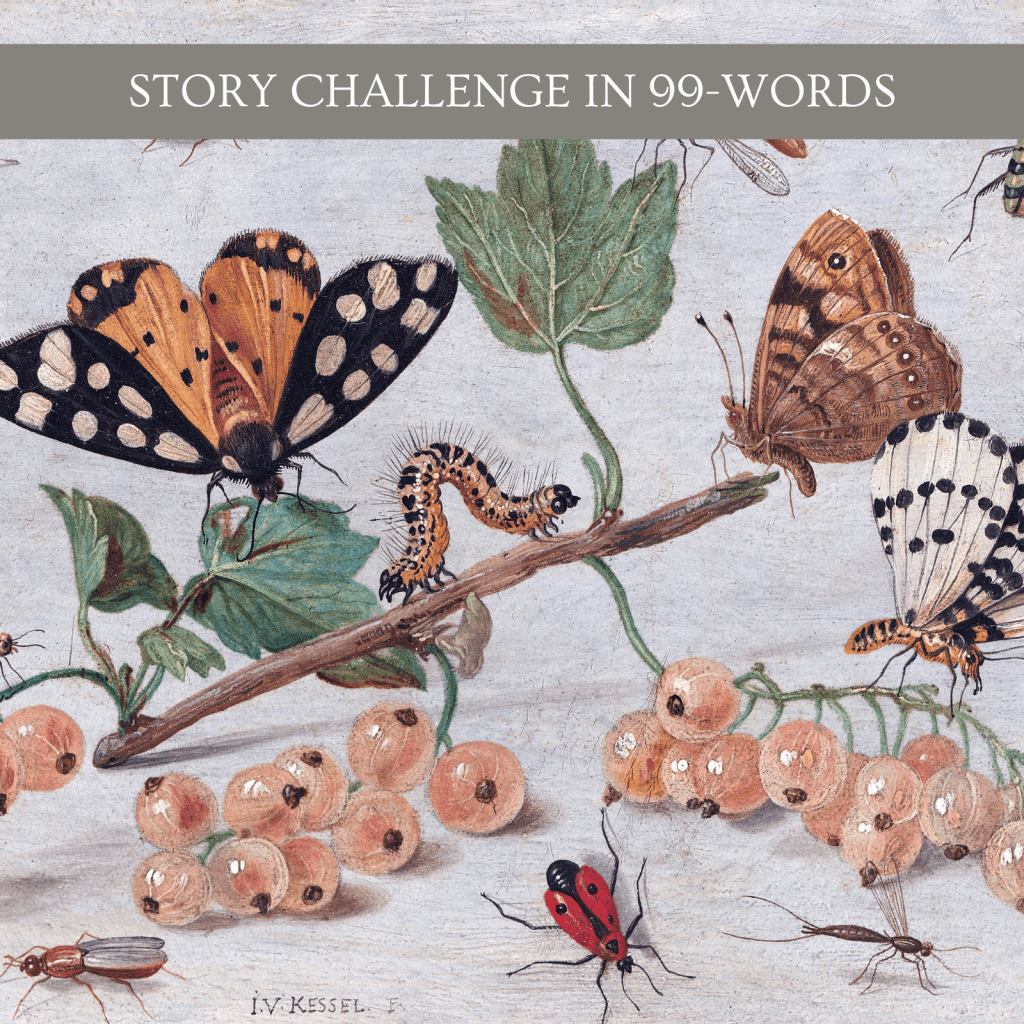
It took just one, then the word was out. The streets were abuzz with the news – a triumph of social media.
“Kyle’s having a barbecue. Tell everyone. Don’t bring anything. There’s always plenty.”
The excitement was palpable as guests swarmed towards Kyle’s. Some, initially unsure, flapped about nervously. Others, more experienced, felt they were dancing on the ceiling. Eventually all were on their way. The waft of seared flesh left no doubt about the location.
Kyle was ready when they arrived. “Who invited you?” he grinned and waved, as he knocked them out with the can of spray.










 Norah Colvin