Live Love Laugh Learn … Create the possibilities

Tag: history

  • Guess what you’re getting for Christmas!

    The love of reading is gift

    I went Christmas shopping yesterday, and guess what I bought!

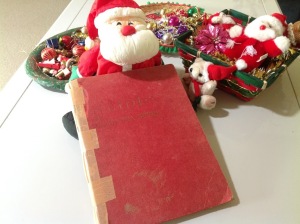
    © Norah Colvin The titles of these books are hidden to maintain the “surprise” for the recipients.
    © Norah Colvin
    The titles of these books are hidden to maintain the “surprise” for the recipients.

    Books! It wasn’t difficult to guess was it? I have written in previous posts about both giving and receiving books as gifts.  I’ll let you in on a little secret though. I did buy a few others things as well. That’s probably a good thing, otherwise the memory game My grandmother went shopping and she bought … would not do anything to develop memory and would be rather boring:

    “My grandmother went shopping and she bought … a book … and a book … and a book … and a book …:

    one

    I have already received one beautiful book for Christmas this year: One: How many people does it take to make a difference?, and the recommendation of many others, some of which I have purchased for myself or as gifts. Books received as gifts often take a very special place in a collection.
    HeidiHeidi inside

    One of my strongest memories is of waking before sunrise one Christmas morning, checking to see if Santa had been, and discovering a book at the end of my bed. While there was not enough light at first to see the illustrations or read the words, I delighted in the smoothness of the cover and the smell of the pages. Slowly as the sun rose the title revealed itself: Heidi by Johanna Spyri, and I started to read. I loved that story and read it many times. After more than fifty years I still have the book in my possession, rather tattered and worn, not unlike its owner, but still loved.

    In a recent post I shared some Australian Christmas picture books.   In a comment on that post Sherri Matthews, who blogs at A View from My Summerhouse,  reminded me of the Janet and Allan Ahlberg book, The Jolly Christmas Postman.   Although it was given to Bec for Christmas exactly thirty years after I received Heidi, I still have it in my possession. Shh! Don’t tell Bec. Of course the reason it was not included in my list of Christmas books is that the authors were British. (Allan is now aged 77. Janet passed away in 1994.)

    cover

    The Jolly Christmas Postman was published in 1991 and followed the success of the original Jolly Postman story. It is a delightful interactive book in which the postman delivers Christmas mail to storybook characters, including:

    • A Christmas card for Baby Bear from Goldilocks and her sister
    • A game about being safe in the woods for Red Riding Hood from Mr Wolf, who declares he is a “changed wolf”
    • A Humpty Dumpty jigsaw puzzle for Humpty Dumpty from all the king’s men
    • A Christmas annual and book in a book for the Gingerbread Man from Pat O’Cake Bakers
    • A Wolf Spotter’s Guide for Mr Wolf from Red Riding Hood , and
    • A special concertina “peep-show” for the postman from Santa and Mrs Santa.

    activities

    After the postman delivers the children’s letters to Santa, has a cup of tea and receives his gift, he hitches a ride back home on Santa’s sleigh. What a delightful conclusion to the story.

    There is much to explore in this little book for both young and old; far too much for just one sitting. With books to read, games to play and puzzles to do it could entertain for hours. A full appreciation of the cleverness and humour in the story requires an understanding of fairy stories such as Goldilocks and the Three Bears, Red Riding Hood, The Gingerbread Man, The Three Little Pigs; and nursery rhymes such as Humpty Dumpty, Doctor Foster, and Pat-a-cake, amongst others. Reading the book is a literary adventure.

    I wonder how soon before it will also be an adventure in history. It was published in 1991 before email became popular and social media was invented. The number of items sent by “snail mail” is decreasing. It may not be long before children also need a history lesson to understand what is mean by “a postman”.

    Books make special memories. What special memories will you create for someone with a book this year? What books have made a special memory for you?

    Thank you

    Thank you for reading. I appreciate your feedback. Please share your thoughts.


  • 20 Lifetime changes

    My big sister and me © Norah Colvin
    My big sister and me © Norah Colvin

    When Bec was little she would often say, “Tell me a story of when you were a little girl.” She would listen in wonder (in my dreams!) as I told her about life on a farm, holidays with relatives and funny things that happened in a large family.

    One day, with perfect comedic timing, she followed her request with the question, “What were the dinosaurs like?” We laughed at the time, and still do, but I think that question may have signalled the end of her interest in my childhood, for a time at least. Some aspects of my childhood would have been as unrecognisable to her as the world of the dinosaurs. It is even more so for the children of today.

     © Norah Colvin
    © Norah Colvin

    Learning about the past from parents and grandparents is one way of piquing young children’s interest in history. When I was in primary school we learned a little of history in what was then called Social Studies. Both ancient and modern history were available as discrete subject choices in high school but seemed to be primarily a list of dates, names and wars with little relevance to my teenage experience. Historical fiction brought otherwise remote and unfamiliar situations to life.

    I have touched a little on the topic of history in previous posts, I’m new here, Understanding family relationships and Whose story is it anyway? including mention of an early childhood unit Getting to know you, which is available in my Teachers Pay Teachers Store.

     © Norah Colvin
    © Norah Colvin

    It amuses me now when visiting museums, particularly small local historical museums as opposed to large national museums, to see artefacts from my childhood on display. Although I don’t necessarily consider myself “old”, definitely not passed my “use by” or even “best by” date, I do realise that to younger ones I am probably a relic from the past, holding as much interest for them as the objects on display. (I am not too old to remember what it was like to be young.)

    This week at the Carrot Ranch Charli Mills declares herself a history buff who digs “hanging out in cemeteries where history reads in the names and dates carved in stone.” I confess that I have rarely visited a cemetery other than to farewell a loved one and haven’t taken to reading gravestones to feed an interest in history.

    The teaching of history in my early childhood classrooms involved helping children to discover and record their own personal histories and the more recent histories of their families and local environment. Celebration or commemoration of historical events such as Australia Day, ANZAC Day or Remembrance Day required some elaboration, without too much detail, of their significance.

    Many of the experiences of children growing up now in the early part of the 21st Century are vastly different from those I experienced growing up in the mid-20th Century. Some of the differences are subtle and others more significant.

    Since I grew up in the 20th Century, as part of my historical record I decided to list 20 (random) changes that have occurred during my lifetime:

    1. I listened to music on vinyl records on turntables with manual arms. The records needed to be turned over after each side was played. There were no CDs, iPods, Youtube or streaming
    2. I spent hours in the sun, getting burnt to a crisp, without the protection of sunscreen.
    3. Polio was still a major threat and I knew children who suffered it. Now, thanks to immunisation, it is almost eradicated worldwide.
    4. We could purchase fireworks and set them off in our backyards and parks. I have no memory of huge firework displays such as are now part of most community celebrations.
    5. Shop opening hours were very different with shops closed half day Saturday and all day Sunday. No shops opened on Public Holidays and planning was required to ensure there was enough food in the cupboard to last the four day Easter Weekend.
    6. There were no huge supermarkets selling everything, mainly smaller grocery stores and some “corner” stores that sold a few “essential” items. Air conditioning was not common and chocolate was not readily available as it melted in the heat.
    7. There were no theme parks or water parks; just a few amusement rides such as merry-go-rounds and dodgem cars at local and state shows and fairs, and council swimming pools. Very few people had pools in their backyards.
    8. There were no computers, tablets or smart phones. When I started school I wrote on a slate, a tablet of a different kind.
    9. Fish and chips was the most popular and one of the few take-a-ways. There were no McDonald’s, pizza stores and few Chinese restaurants. There were no eateries in large shopping malls. In fact, there were no large shopping malls!
    10. We had an outside dunny with a pan that was collected and replaced weekly.
    11. Telephones were not in every home. They were attached to the wall and had a circular dial. Calls were manually connected by operators at telephone exchanges.
    12. Televisions first became available in Australia when I was a young child but my family did not own one until after I left home. I used to visit an aunt, who lived close by, to watch on her set after school some days.
    13. Cars ran on leaded petrol. I remember my Dad using a crank handle to start the car. The seats were hard and uncomfortable and there was no air conditioning (unless you count winding down the window).
    14. We would go to beach or the park to swim or play all day, without adult supervision. The only requirement was to be home before dark.
    15. Photographs were taken with a box camera and a roll of film which needed to be sent away to be developed and took weeks to be returned. It could take months to fill the roll and often the occasions were well in the past before the photos were received. It was expensive and multiple shots of the same image were not encouraged.
    16. There was little traffic and cars were slow so children often played in the street, which were sometimes still dirt and mostly without kerbs. It seemed to take forever to get from one place to another.
    17. To keep food cool we had ice boxes for which an ice man would deliver a large block ice daily.
    18. We used imperial standards of measurement including pounds and ounces, inches and feet; and shopped with pounds, shillings and pence before converting to decimal currency in 1966 and other units soon after.
    19. Smacking by parents and corporal punishment in school was the main form of discipline. If children were in trouble at school (I never was!J) then they were usually in more trouble at home.
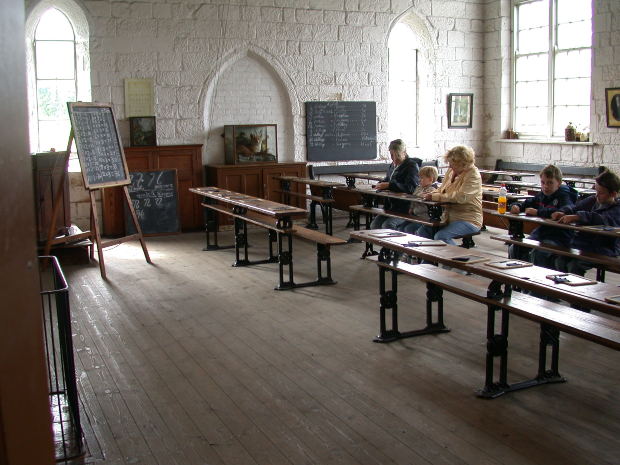
    20. In school we sat in rows of desks nailed to the floor. We listened to the teacher and learned by rote lists of facts which were often chanted repetitively. There was definitely no talking in school and no group work.

    old school room

    I add one wish for another change I’d like to see in my lifetime in the 21st Century:

    For friendship, understanding, tolerance, empathy and peace to rule a sustainable and equitable world!

    I don’t ask for much, do I?

    Now back to the cemetery and Charli’s flash fiction challenge to In 99 words (no more, no less) write a story about a final resting place. I have taken Marnie to the place where her parents rest as she discovers more about them and their history than she had before realised.

    Graveside

    She wasn’t sure why she was here. Miss R., Annette, had suggested she come. So she did. What struck her most, as she read the grave markers, was their ages. She’d never thought of them as young but their life spans were short; both a mere 49 years, going within a year of each other. She worked it out. They were younger than she was now when she’d left home. Who’d have thought? She felt a strange sadness, a familiar hollowness, not for the loss of their lives but for the absence of love, love which had never been.

    Thank you

    Thank you for reading. I appreciate your feedback. Please share your thoughts about any aspect of this post or flash fiction.


  • I’m new here

    Australia is a land of immigrants. The first Australians arrived, it seems, about 65 000 to 40 000 years ago, after the second migration out of Africa. The second group arrived only little more than 200 years ago. Some think of Australia as a young country with a history beginning with arrival of Europeans in 1788. But Australia is not only the oldest continent, it is also home to the oldest living culture and was inhabited long before many other parts of the world. It is a tragedy that little recognition and respect is given to this culture and its peoples.

    Disharmony and conflict, on a scale from the personal to global, often occurs because of perceived differences: “He’s not like me. She doesn’t think like me. They don’t believe what we believe. I am right and you are wrong.” The realisation that what we share in common far outweighs the differences, and the appreciation of those similarities and differences, would go a long way to soothing that discord.

    The National Geographic Genographic Project aims to find out more of our collective human history; where we originated and how we came to populate the world. Projects such as this may help to strengthen the focus on what we share rather than ways in which we differ.

    Young children are generally accepting of differences they may notice in each other and are usually more concerned about having someone to play with than about visible differences.  Fear of and discomfort with differences is often learned.

    https://openclipart.org/image/800px/svg_to_png/192642/Children_holding_hands.png
    https://openclipart.org/image/800px/svg_to_png/192642/Children_holding_hands.png

    Mostly my classrooms were a microcosm reflecting the rich diversity of cultural heritages represented in Australia. Learning about those heritages from the children and their families, as well as through literature and other media, helped us all develop an appreciation for our differences as well as our commonalities.

    The celebrations of International Days when children would wear traditional clothing, bring items from home to display and discuss, contribute cultural food to a shared lunch, teach how to play traditional games or share traditional stories were always appreciated by the children and families; including those who considered themselves to have a cultural background and those who didn’t.


    http://pixabay.com/en/diversity-ethnic-global-literature-154704/
    http://pixabay.com/en/diversity-ethnic-global-literature-154704/

    Units of work, such as my Getting to know you — Early childhood history unit, learning to greet each other in the languages represented in the class, reading traditional tales and discovering each other’s favourites of anything also contribute to developing understanding and empathy.

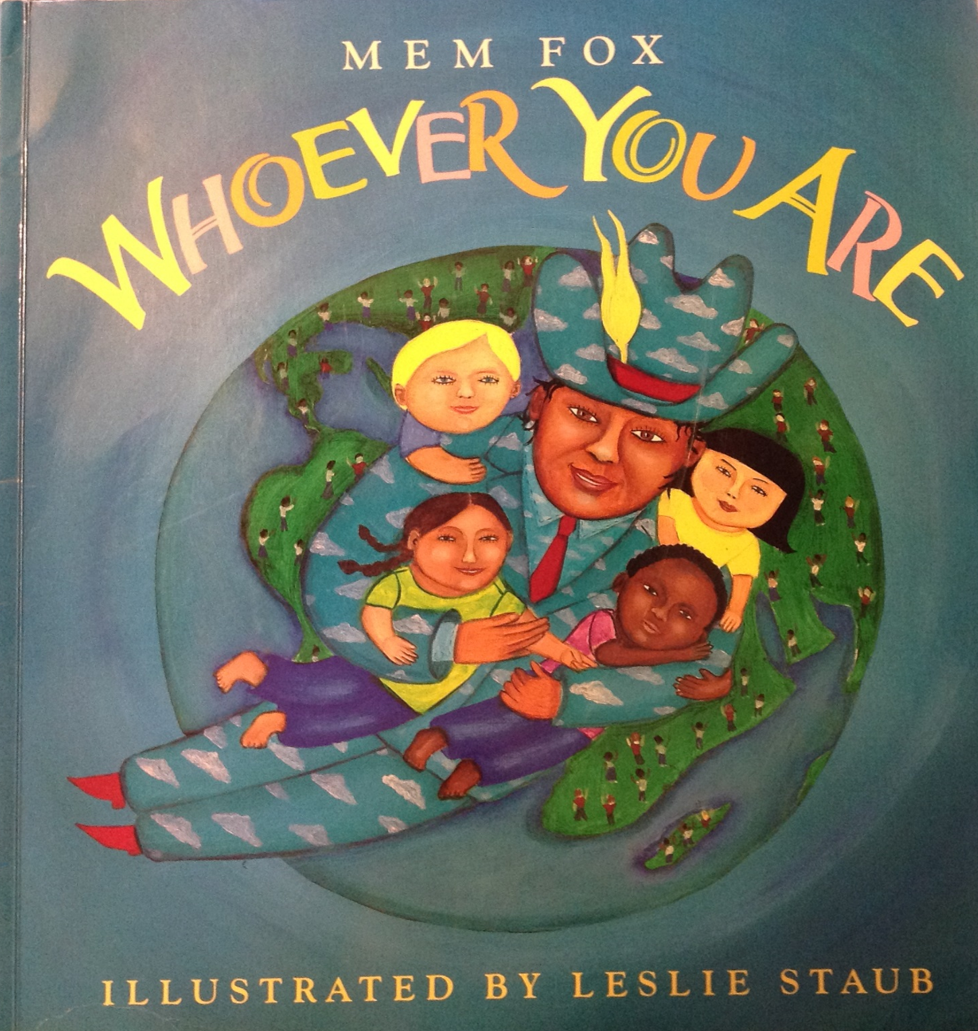
    Whoever you are.

    Whoever You Are by Mem Fox is a wonderful picture book which can be used to discuss similar themes. It explains in a simple and beautiful way that although children around the world may live in different houses, wear different clothes or eat different foods, for example ‘inside, their hearts are just like yours.’ Mem Fox explains the story on her website.

    I have drawn upon the ideas discussed above for my flash fiction response to this week’s challenge by Charli Mills at the Carrot Ranch to In 99 words (no more, no less) write a story that shows the interaction of a migrant culture on the place of migration.

    Playground connections

    The adults dotted the perimeter, holding tight to their own; bound by the security of sameness reflected in their own eyes, excluded by fear felt for differences perceived in others: different dress and hair, unintelligible words and unfamiliar scents.

    In the centre the children romped together, united in the secret language of smiles and laughter, funny looks and gentle patting hands; no words needed.

    The children smiled, waving promises of future plays, as one by one the adults called them home, delighting in their children’s easy ways, wishing for their own nonprejudicial days. A nod. A smile. A beginning.

    Recently I found this quote on Yvonne Spence’s post in 1000 Voices for Compassion. I think it sums up the intentions of this post  beautifully.

    we are together


    Thank you

    Thank you for reading. I appreciate your feedback. Please share your thoughts about any aspect of this post or flash fiction.


  • Understanding family relationships

    At the Carrot Ranch this week Charli Mills is talking about cold cases and challenges writers to, In 99 words (no more, no less) write about an old mystery in the current time. Is it a discovery? Is it solved? Does it no longer matter, or does it impact innocent generations in between?

    My thoughts immediately turned to a mystery that occurred in my family over one hundred years ago when the two-year old brother of my grandfather disappeared and was never seen again.

    http://www.clker.com/clipart-10083.html
    http://www.clker.com/clipart-10083.html

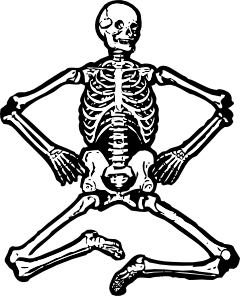
    Most families do have a skeleton or two in the closet. Not all families like it to be known. Many Australian families who can trace the arrival of ancestors back to before the end of convict transportation in 1868 can find a convict in their ancestry. I have two; one on each side of the family. Generally the reasons for transportation were rather minor so I am not too concerned about sharing that information. In fact, many Australians are delighted to find a convict in the past as it adds a little interest and colour to their family tree.

    Children generally love to hear stories of their own lives and families. I have written about that before here. However young children probably have no need for or interest in delving as far back into family history as the three stories I have mentioned above. An interest in ancestors further back than living relatives (grandparents and great-grandparents) usually develops later, if at all.

    A great place to start thinking about history in early childhood classrooms is sharing stories about the families of children in the class. Most classes in Australia are comprised of children from variety of backgrounds so sharing those stories helps to develop an appreciation for each other as well as knowledge of the world. I developed a unit called Getting to know you for use in early childhood classroom which aims to develop discussion about family histories.

    But children can start learning about family relationships even earlier than that by discussions of who’s who in the family and explanations of the words and relationships; for example father/daughter; brother/sister; aunt/niece; grandmother/granddaughter. Here is a picture of some pages of a book I made for Bec when she was just a little tot, just to give you the idea.

    family book

    Photo books of family members are much easier to make these days with digital photos and programs such as PowerPoint, as well as glossy books you can make and order online.

    I am very proud of my two grandchildren, as any grandparent would be, and am pleased to say that they have a good understanding of who is in their family and their relationships to each other. It is a frequent topic of discussion. However I was very tickled when my three year old granddaughter proceeded to tell me, with some excitement, that her Daddy and her Aunty Bec were brother and sister in real life; in REAL life, she emphasized.

    Regular readers of my blog may be familiar with a character I have been developing in response to Charli’s flash fiction challenges: Marnie. Her story is not real life but, sadly, aspects of it could be, for others. There was a period of about twenty years when, after escaping her dysfunctional family, Marnie was untraceable, living without any connection to her family and past, a mystery. It took authorities five years after both parents had passed to track her down with the ‘news’. This episode takes up there.

    Found

    The officers looked friendly enough but still she tried to hide the tremble in her soul and tremor in her voice behind the blankness of her stare.

    She’d opened the door just a crack, as far as the chain would allow.

    “Marnie Dobson?” they asked. She shook her head. She’d not . . . ; not since . . . ; no longer. She shook again.

    They asked her to step outside. With no other option she reluctantly unlocked and emerged into the glare of daylight.

    “Marnie Dobson,” one said, “We are here to inform you . . .”

    Thank you

    Thank you for reading. I appreciate your feedback. Please share your thoughts about any aspect of this post or flash fiction.


  • Whose story is it anyway?

    Nor and Bec reading

    Children love stories.

    They love being read stories and beg for them to be read, over and over again.

    Equally as much, if not more, they love being told stories, especially stories of their own lives. They beg for them to be told over and over, listening attentively and with wonder as their own stories (her story and his story) are being revealed. They commit these tales to memory so that eventually it is difficult to distinguish the genuine experiential memory from the telling. Even as adults they seem to not tire of hearing tales of the cute things they did when they were little, or of shared experiences.

    They also love being told stories of their parents’ lives. These are the stories that help define them and their existence: how they came to be. The stories tell of times gone by, and of how things used to be. They marvel that their parents were once children and try to imagine how that might have been.

    My daughter would often ask for stories about herself, her brother, myself or other family members. One day when she was about six, she asked again, ‘Tell me a story about when you were a little girl.’ Before I could respond she jumped in with, ‘What were the dinosaurs like?’ She was teasing, of course, and her comedic timing was perfect. A story was created, one that has been shared many times.

    History is a story, though at school I never saw it as such. Had it been a story of lives, as its name implies, I may have been interested. But history at school was a list of wars and dates, and kings and queens to be memorised and regurgitated for a test at the end of the term. There was no story, no human emotion, no semblance to any narrative that may have lured me in.

    I hope that today’s students of history are not required to commit sterile lists of facts to memory without the stories that would give them meaning and significance, some human element to help the information stick.

    History, as a subject, had always been relegated to high school. It was not a discrete part of the primary school curriculum, though aspects were explored in other subject areas such as ‘Social Studies’ when I was at school, or more recently ‘Studies of Society and Environment’. With the introduction of the new Australian Curriculum, History is now a stand-alone subject.

    As an early childhood teacher I was a bit terrified that young children would be required to memorise lists of seemingly random facts and dates. I’m pleased to say that, for the early years anyway, this is not so. Children in the early years start by exploring their own history and the history of their family, considering similarities and differences between their lives, the lives of their parents, and of their friends.

    I applaud this as an excellent starting point. I believe, when working with children, connections must always be made with their lives and what they know. What better starting point than investigating the traditions of their own family and culture.

    In Australia, as I am sure it is in many other places, a great diversity of cultures is represented in each classroom. Encouraging children to share similarities and differences of traditions with their classmates helps to develop understanding of each other’s traditions and beliefs, which in turn fosters respect and empathy. For this purpose, I developed some materials to make it easy for children to share their traditions. These are available in my Teachers Pay Teachers store.

    Whoever you areMem Fox has written a beautiful picture book Whoever you are that I love to share with children when discussing their cultures and traditions. It explains in a simple and beautiful way that although children around the world may live in different houses, wear different clothes, eat different foods, for example ‘inside, their hearts are just like yours.’ Mem Fox explains the story on her website.

    I also like to sing I am Freedom’s Child by Bill Martin Jr.; and in Australia we have a great song that tells about our different beginnings, I am, you are, we are Australian by Bruce Woodley.

    Heal the World by Michael Jackson is another great one for appreciating diversity and fostering inclusivity.

    What got me thinking about history in particular for this post is the flash fiction prompt posted by Charli Mills at Carrot Ranch Communications. Charli’s challenge is to In 99 words (no more, no less) write a story that considers history, near or far.


    This is my contribution:

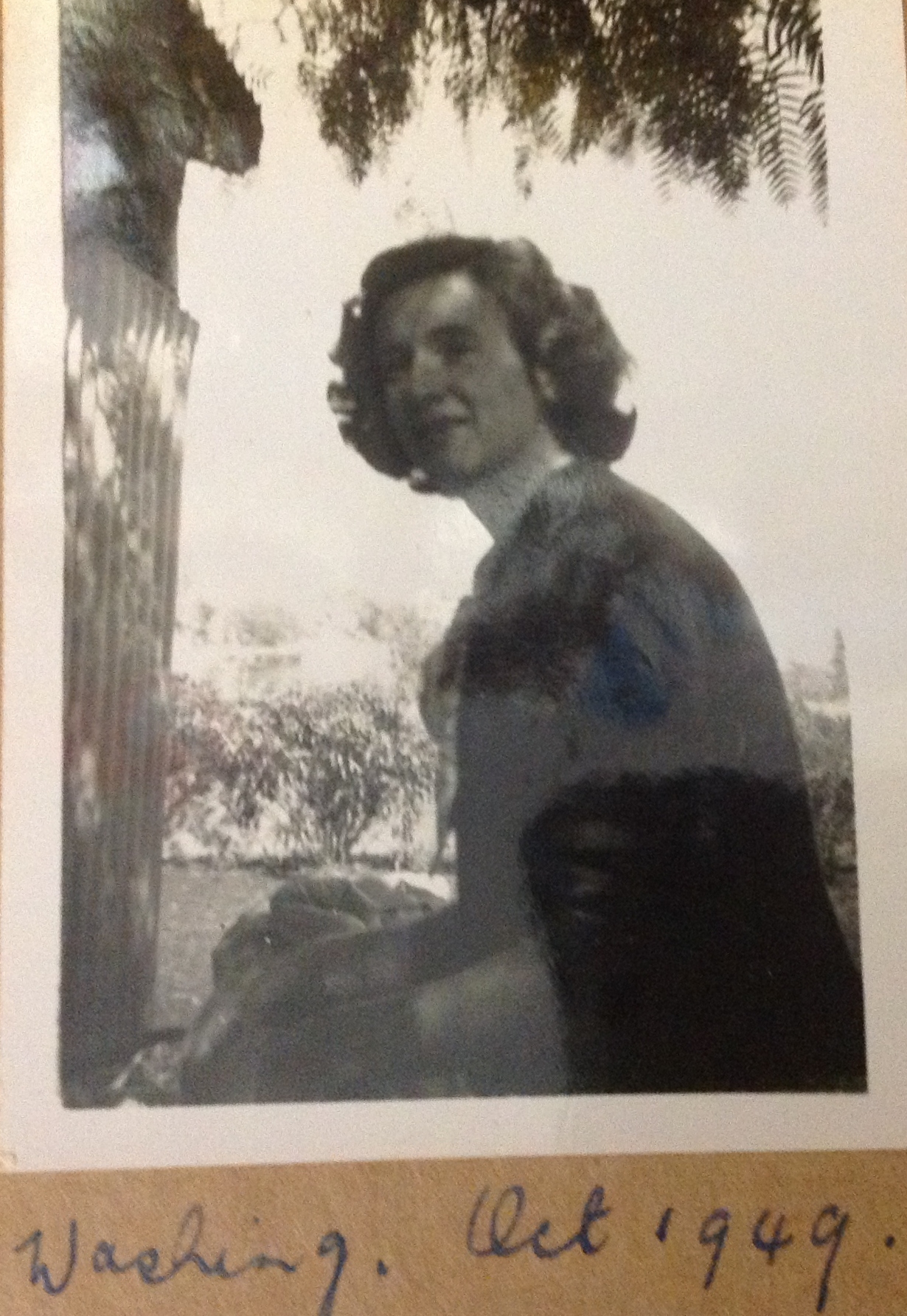
    washing 1949

    Washing day

    Her freckled, calloused hands were red and chaffed as they gripped the wooden stick and stirred Monday’s sheets in the large copper pot heating over burning blocks of wood.

    The children played in the dirt nearby, scratching like chickens, hopeful of an interesting find.

    The dirt embedded under her torn and splitting fingernails began to ease away in the warm sudsy water as she heaved the sodden sheets and plopped them onto the wooden mangles.

    The children fought to turn the handle, smearing dirty handprints on the sheets.

    She sighed, and hung them over the line. One chore done.


    I welcome your feedback. Please share your thoughts about any aspect of the article or my flash fiction piece.