Live Love Laugh Learn … Create the possibilities

Tag: critical thinking

  • Searching for purpose in a picture book – Part B

    Searching for purpose in a picture book – Part B

    What is the purpose of picture books? Is their purpose simply to entertain with an interesting story and rhythmical language that is fun to read and recite? Is it simply, as I said in my previous post Searching for meaning in a picture book – Part A, “. . . a special time of togetherness, of bonding; of sharing stories and ideas . . . “ Could the purposes of picture books extend beyond entertainment alone? I think most people would acknowledge that reading picture books to young children has a profound effect upon children’s learning and development. In addition to entertainment, picture books can be used for a multitude of purposes, including:

    • to encourage a love of reading and books
    • to develop vocabulary and knowledge of language (through immersion and engagement rather than direct instruction)
    • to provide a link between the language of home and the language used in the wider community and in education
    • to support children embarking on their own journeys into reading
    • to inspire imaginations
    • to provide opportunities for discussing feelings, emotions, ideas, responses
    • to develop feelings of empathy, identification, recognition, hope
    • to instill an appreciation of art by presentation of a wide variety of styles, mediums and techniques

    I’m sure you can think of many more than I have listed here. But what of knowledge, information and facts?

    yves_guillou_question
    http://www.openclipart.org

    How, and when, do children learn to distinguish fiction from fact, or fact from fiction? At the moment that question is too big for me to even think about answering, but it is a question that I ponder frequently and may return to in future posts.

    ryanlerch_thinkingboy_outline
    http://www.openclipart.org

    Children seem to realise early on that animals don’t really behave like humans and wear clothing.
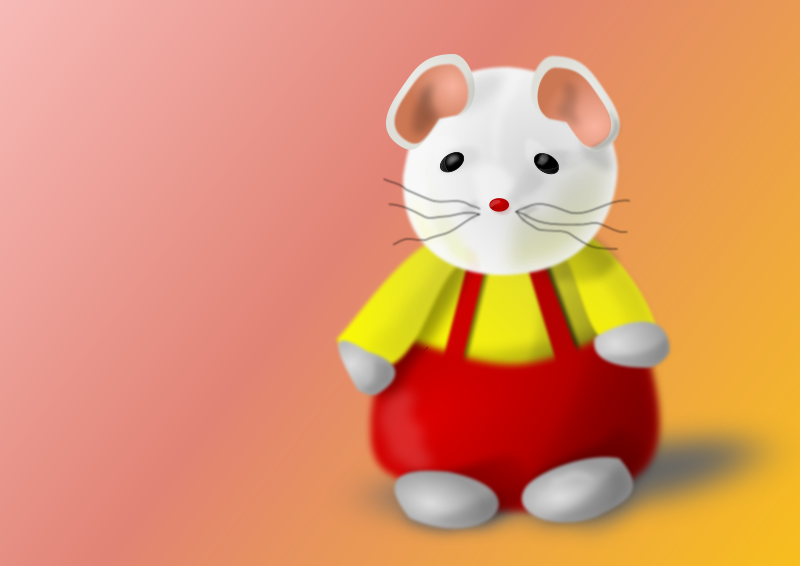
    mouse dressed up
    http://www.openclipart.org

    They don’t expect their toys to come to life and start talking.

    teddy_bear_and_doll
    http://www.openclipart.org

    They quickly understand, when it is explained to them, that unicorns and dragons are mythical creatures and, to our knowledge, don’t exist.

    toy unicorn
    http://www.openclipart.org
    dragon_on_a_leash
    http://www.openclipart.org

    But what happens when the lines between fact and fiction blur and content, though presented in fiction, has the appearance of being based in fact? For example: The lion is often referred to as “King of the jungle” and appears in that setting in many stories. However, lions don’t live in jungles. According to Buzzle, they live in a variety of habitats and jungle isn’t one of them. You knew that didn’t you? But what about the children? When will children learn that lions are not really kings of the jungle? Do you think it matters if children grow up thinking that lions live in jungles?

    Lion_Cartoon
    http://www.openclipart.org

    What about when animals that don’t co-exist appear in stories together? For example: Penguins often share a storyline alongside polar bears. Does this encourage children to think that penguins and polar bears co-exist? When do adults explain to children that penguins and polar bears live at opposite ends of the planet? At what age do you think children will happen upon that information? Does it matter?


    tauch_pinguin_ocal
    http://www.openclipart.org
    lemmling_Cartoon_polarbear
    http://www.openclipart.org

    What about the way animals are visually portrayed in stories? Must the illustrations be anatomically correct? For example: We all know that spiders have eight legs. Right? If I was to ask you to draw a picture of a spider, how would you do it? Have a go. It will only take a second or two. I can wait.

    whistle
    http://www.openclipart.org

    Now compare your drawing with these:

    spiderswirl2
    http://www.clipart.org
    Little_Miss_Muffet_Spider
    http://www.openclipart.org
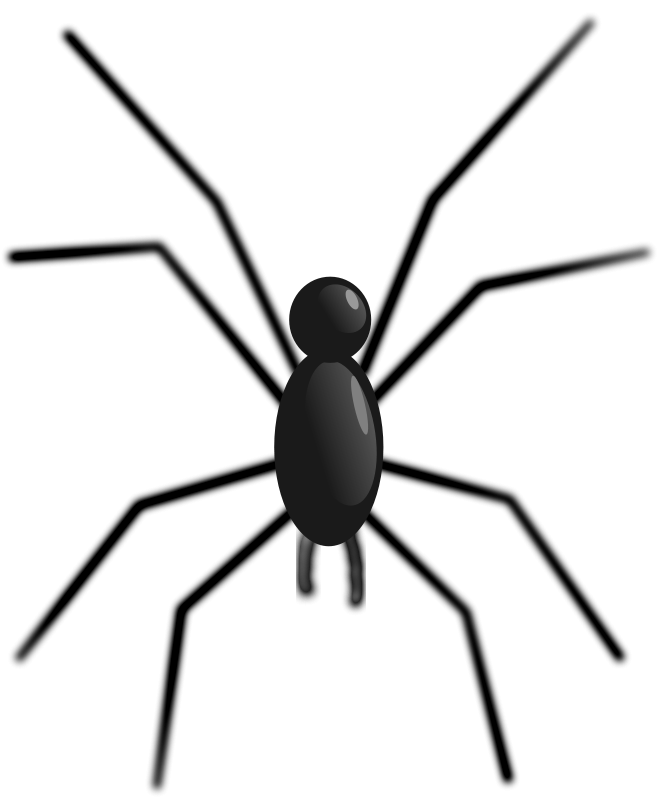
    spider
    http://www.openclipart.org

    How did you go?

    While children easily realise that this picture is fictional:
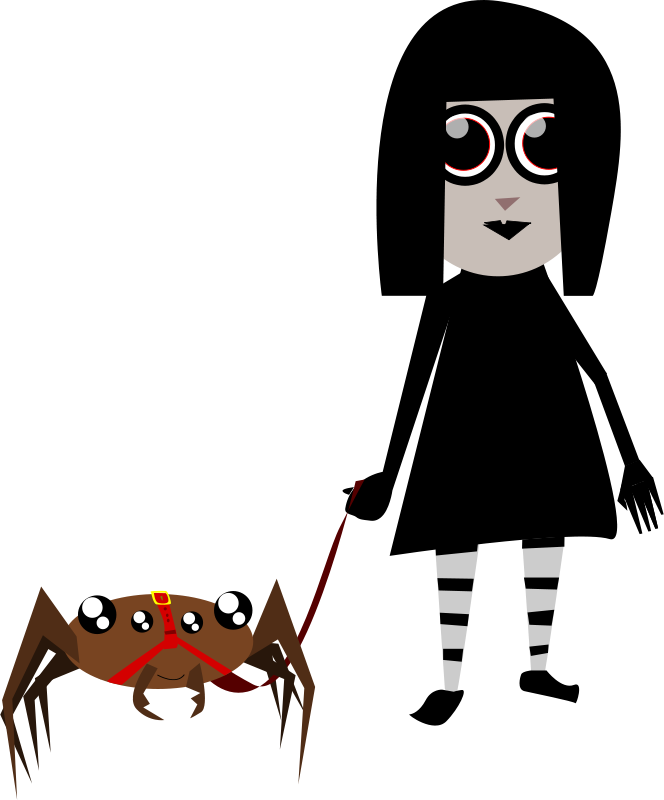
    pet_spider_girl
    http://www.openclipart.org

    They have less success is understanding what is wrong with the previous images. Spiders have eight legs. Those drawings show eight legged furry creatures. The story says they are spiders. That must be what spiders look like. Right? Unfortunately, real spiders look more like this one:

    johnny_automatic_spider
    http://www.openclipart.org

    All eight legs are attached to the cephalothorax, not the abdomen (or even one body part) as shown in most picture books. While I am sure you drew a spider correctly (didn’t you?), most children and many adults draw them more as they are depicted in children’s stories. Is this a problem?

    LOVE_2
    http://www.openclipart.org

    I am not for one moment suggesting that we get rid of fictional picture books and stories. I love them! And as I have said, and will continue to say, many times: they are essential to a child’s learning and development. There is no such thing as too many or too often with picture books. Instead, I would like you to consider the misconceptions that may be developed when the content of picture (and other) books may be misleading, and how we adults should handle that when sharing books with children. One of the books that gets me thinking most about this topic is “The Very Hungry Caterpillar” by Eric Carle.

    The Very Hungry Caterpillar

    As I said in a previous post, it has been published in over 50 languages and more than 33 million copies have been sold worldwide. I am almost certain that you will be familiar with it, and upon that assumption, I have one final task for you in this post. Please share your response to the question in this poll:

    To be continued . . .

    I would love to receive any other comments you would like to share regarding the content in this post.

    I do apologize that I have been unable to get the text and pictures in the layout I desire. I obviously have more investigations to carry out and learning to do.  🙂

    Maybe next time I’ll have it mastered, says she, hopefully!

  • Thinking about Philosophy

    18457-Bubbles-Comic-webThe third Thursday in November has been identified by UNESCO as World Philosophy Day, and the theme for this year is Inclusive Societies, Sustainable Planet”.

    A round table discussion will include topics such as “the growing inequalities between rich and poor within many countries and between countries and sustainable development” including “concepts of social justice, solidarity, exclusion and inclusion in different societies, as well as issues related to the vulnerability of various groups – including women, children, young people, people with disabilities, minorities, indigenous peoples, migrants, refugees, people living in poverty – and the interfaces between these issues and sustainable development.”

    18457-Bubbles-Comic-webThe development of global citizens who are able to reason, think critically and contribute positively to the world by the ability to identify, discuss and suggest ways of resolving such moral and ethical issues can begin with the study of philosophy in schools.

    Peter Worley, co-founder of the charity The Philosophy Foundation, is just one of many philosophers who believe that children are able to engage in philosophical discussions, and are convinced of the importance of placing the study of philosophy at the heart of education.

    In his article “Class Act”, published by The Philosophers Magazine (April 2, 2013) Peter Worley explains why he considers philosophy should be taught in schools. The following is an excerpt from that article. Please follow the link to read his article in full.

    “The “basic” argument: Thinking and reasoning are even more basic than the three Rs (reading, writing and arithmetic) given that reasoning (the fourth “R”?) and the concepts involved in reasoning underpin all three. Philosophy is the subject that specialises in conceptual thinking and reasoning, therefore we may appeal to a very basic educational need for doing philosophy, i.e. conceptual thinking and reasoning.

    The “truth” argument: By honing the concepts that we use in all other truth-seeking subjects (e.g. the sciences), philosophy, which is singularly concerned with concepts and reasoning, is the subject best placed to improve the thinking on which the other truth-seeking subjects are based, thereby improving our efforts to reach truth. (This is to paraphrase an argument owed to Catherine McCall.)

    The incoherence argument: When incoherence occurs between disciplines (or simply in the way the world seems to “hang together” or not) one needs the tools to deal with such incoherence, to be able to attempt to make sense of it. Philosophy is the subject that specialises in making sense of incoherence. Therefore philosophy should be taught. (This is a paraphrase of an argument put forward to me by Stephen Boulter.)

    It is worth noting that incoherence is just as much a feature of school children’s lives as anyone else’s. Just think of the way the children learn objectivity in the sciences but then are taught something like universal relativism in other aspects of their schooling, perhaps in religious education or the classroom mantra “opinions are never wrong” and such like.

    The inescapability argument: Philosophical problems are inescapable. Every time you read something in a newspaper or on the internet you are faced with a philosophical problem: how do you know when something is true? When the teacher teaches you about atoms and shows you the atomic model: how do they know that atoms look like that if they’ve never seen one? If it’s true that philosophical problems are inescapable then surely there is an argument for preparing people/students for how to respond to these problems intelligently and philosophically. (This is a paraphrase of an argument put to me by Michael Hand.)

    Perhaps the last word on teaching philosophy to children should go to Montaigne, who wrote, back in the sixteenth century: “Since philosophy is the art which teaches us how to live, and since children need to learn it as much as we do at other ages, why do we not instruct them in it?”

    I am grateful to Peter for permitting me to reproduce this excerpt as my contribution towards the celebration of World Philosophy Day. For more information about Peter’s publications, please visit

    The Philosophy Foundation.

    Watch this video to listen to Peter and Emma Worley, co-founders of The Philosophy Foundation, explain why it is important for philosophy to be taught in schools:

    Teaching philosophy in schools

    You may also enjoy this entertaining and enlightening video, written by Emma Worley, “What has philosophy ever done for us?” (adapted from Monty Python’s Life of Brian):

    What has philosophy ever done for us?

    What do you think? How important is philosophy to you?