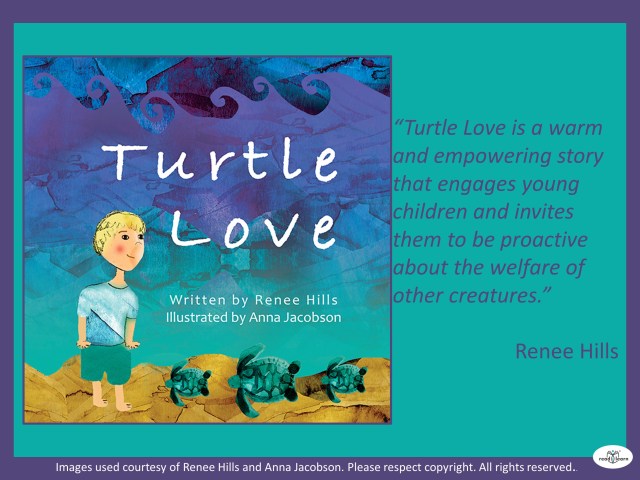
Do you love turtles? I find these magnificent creatures of the sea fascinating. Although I already owned a collection of picture books about turtles, I couldn’t resist supporting local author Renee Hills publish her first picture book Turtle Love, illustrated by Anna Jacobson, through Pozible at the end of last year. I was delighted when I received my very own copy of this beautiful picture book with its “warm and empowering story that engages young children and invites them to be proactive about the welfare of other creatures.”
Synopsis
Turtle Love is about Jacob Gordon Lachlan Brown who lives on perhaps the most interesting and beautiful beach in the world. The flatback turtles agree. They come every summer to lay their eggs. But life is becoming more difficult for the turtles because the big ships that load coal are stirring up sediment and this affects the seagrass that the turtles eat. And this beautiful beach is where they MUST come to nest. Why don’t the flatback turtles go somewhere else? What can Jacob do to help them?
The text explores themes including the impact of man-made coastal developments on the habitat of other species; how to advocate for threatened creatures and the right of all living beings to have a safe place to nest and live. As a bonus, the book contains a story within a story, a mythical explanation for the beautiful coloured rock landform on the beach where the turtles nest.
About the author
Renee Hills has been writing ever since she won a prize for an essay about the future when she was a country North Queensland kid. After graduating and working briefly as a teacher, Renee honed her writing skills as a print journalist, editor, and self- publisher.
This week, it is my pleasure to introduce you to Jacqui Halpin – author, founding member of Write Links (a local group of published and unpublished authors and illustrators of children’s books), a former nurse and tuckshop convenor.
Jacqui grew up in Brisbane where she still lives with her husband, one of her three adult children, and a cat called Loki. While writing and editing, Jacqui likes to sip tea from fine china and eat copious amounts of chocolate. She says she should never be allowed in a bookshop with a credit card in her possession.
Jacqui writes picture books and short stories, some of which appear in anthologies by Stringybark Publishing and Creative Kids’ Tales. She co-wrote and independently published her elderly father’s memoir, A Long Way from Misery.
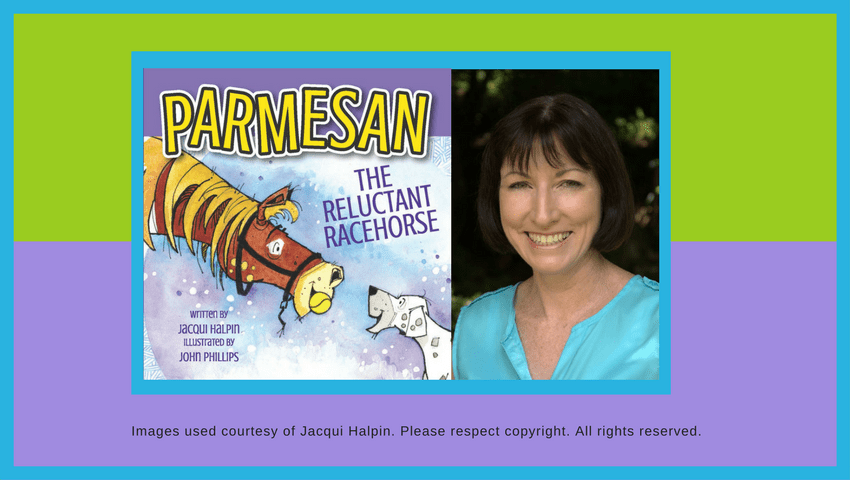
Today Jacqui is talking with us about her first picture book Parmesan The Reluctant Racehorse, humorously illustrated by John Phillips and published by Little Pink Dog Books in October 2017. Jacqui’s second picture book, Where’s Lucky?, based on an orphaned swamp wallaby joey at a wildlife shelter, will be published in mid-2019.
Parmesan is a delightful story of a thoroughbred racehorse who should be winning races and earning lots of money for his owner. However, Parmesan thinks he’s a dog. Instead of training with the other horses, he’s off with his doggy friends doing doggy things like playing fetch. His owner is not happy. If Parmesan isn’t ready to run in the Spring Carnival, he’s getting rid of him. Parmesan’s trainer is worried. He knows Parmesan won’t be ready, but as they arrive at the Spring Carnival, he thinks of a brilliant way to get Parmesan to run around the track. Parmesan’s triumph proves you can be a winner and stay true to who you are.
Welcome to readilearn, Jacqui, we are looking forward to getting to know you better.
Thanks for inviting me.
Jacqui, when did you know you wanted to be a writer?
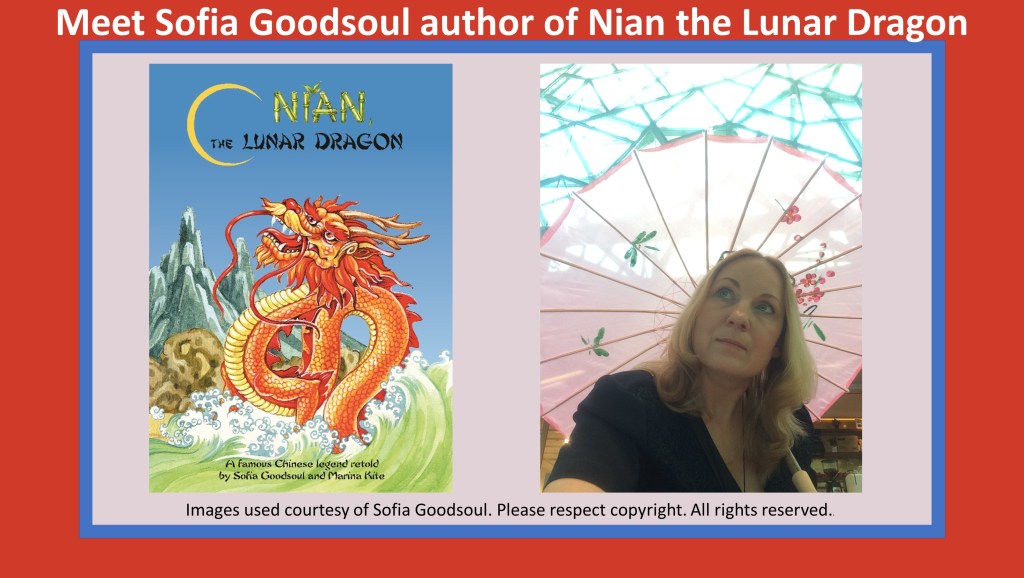
This week I am very excited to be interviewing Australian author Sofia Goodsoul about her picture book Nian the Lunar Dragon, illustrated by Marina Kite. With Multicultural Children’s Book Day coming up on 27 January (see previous post I am Australian) and Chinese New Year on 16 February, the time is just right.
Before we begin the interview, let me provide you with a little information about Sofia.
Sofia Goodsoul is an author, emergency kindergarten teacher and indie-publisher. Her poetry writing has grown from a hobby into a great passion. Now she can’t live a day without writing poems, riddles and stories for young children. The children give themes and inspiration for her books.
Sofia lives in Melbourne with her family and pets. She loves going to Zumba classes and taking long walks with her husband and family dog Mack. Sofia dedicates all her spare time to her writing and publishing career.
Nian the Lunar Dragon, an entertaining and beautifully illustrated rhyming narrative for young readers, is Sofia’s second picture book in collaboration with Marina Kite. The book is about the legend behind the traditions and celebrations of Chinese New Year, sometimes called Lunar New Year. According to the lunar calendar, Chinese New Year commences with the new moon at the beginning of spring.
A long time ago, the dragon named Nian lived in the deep ocean to the east of China. Nian was a strong and ferocious dragon, which no creature could defeat. Once a year, Nian climbed ashore to hunt for cattle and human prey. The people of the nearby villages and towns lived in terror, and each New Year’s Eve they had to leave their homes to save themselves. One day, a monk came to the village. He knew a well-kept secret about how to scare Nian away and free the Chinese people from the danger and their fear.
Welcome to readilearn, Sofia. We are looking forward to getting to know you a little better.
Thanks for inviting me!
Sofia, when did you know you wanted to be a writer?
I don’t remember capturing that specific moment, but my grandmother was a children’s book illustrator and I often stayed with her
Australia is a continent populated mostly by immigrants or their descendants. According to the Australian Bureau of Statistics, in 2016, the number of Aboriginal and Torres Strait Islander peoples living in Australia was less than 3 per cent of the population. This means that over 97 have ancestors who were born elsewhere, though most will feel the influence of no more than two previous generations and consider themselves firmly Australian. In fact, the number of Australians born overseas is still increasing and was over 28 per cent in 2016.
What this means for teachers in Australia, is that the composition of their classes will include children from a great diversity of cultural backgrounds. Possibly it is the same for you.
This proxy Australian anthem I Am Australian, written by Bruce Woodley and Dobe Newton, is a moving song that honours the diversity of cultures in Australia, from the First Australians to more recent immigrants. It is often sung in schools to help develop an understanding of and appreciation for the richness of the Australian peoples.
It is important to teach children acceptance of and appreciation for each other and their traditions. A supportive classroom will value each child’s contribution and heritage. Getting to know each other at the beginning of a school year provides the perfect opportunity for learning about the traditions of others. However, it can be done at any time of the year.
readilearn resources that assist you do this are: Continue reading.
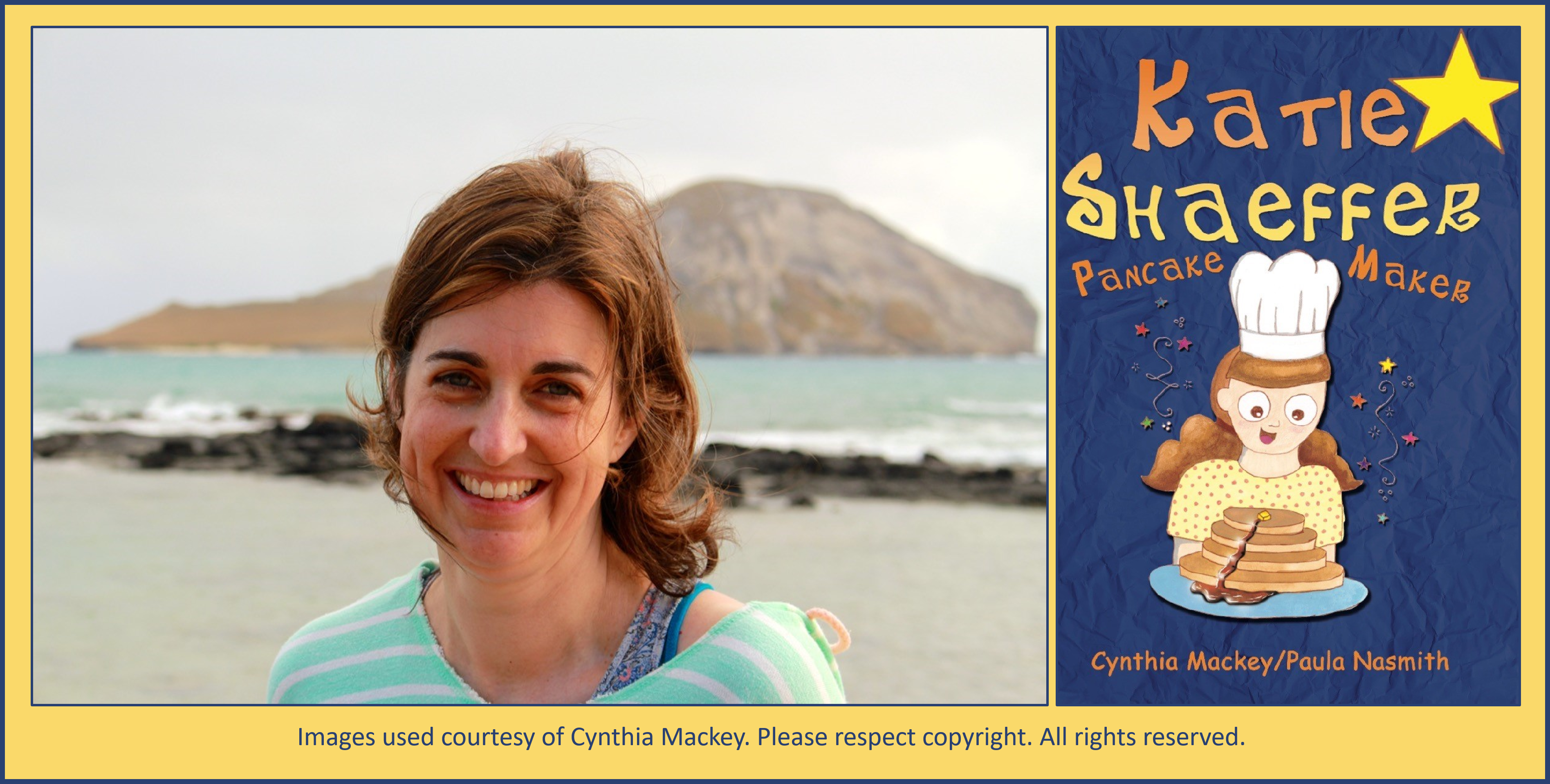
This month I am pleased to welcome first time author Cynthia Mackey to the readilearn blog.
Cynthia has always loved children’s literature. After years of teaching preschool and kindergarten, she is proud to have written her first children’s book, Katie Shaeffer Pancake Maker. Cynthia writes in her spare time and has plans to publish more picture books for children. She lives on the west coast of British Columbia, Canada with her family and her piano where she faithfully continues her weekend pancake tradition.
Synopsis: In Katie Shaeffer Pancake Maker, Katie is too young to use the stove so she dreams of making her very own pancakes. Join Katie and her friend Baxter in this fun story as they use a passion
for collecting and building to find a way to realize Katie’s pancake dream! This upbeat energetic tale with great potential for reading aloud will appeal to adults and young children alike. The book includes a predictable rhyme that will have children chiming in as the story unfolds. Children will celebrate with Katie and Baxter as their pancake dream becomes reality!
Welcome to readilearn, Cynthia. We are looking forward to getting to know you a little better.
Thanks for inviting me!
Cynthia, when did you know you wanted to be a writer?
These words piqued* my interest as they wafted to my ears from the TV set in the other room.
“Who is that?” I called out.
“Jackie French,” he replied.
I jumped up, eager to see and hear more.
Jackie French is a well-known Australian author and advocate for literacy and the environment. She is currently the Australian Children’s Laureate with the task of promoting “the importance and transformational power of reading, creativity and story in the lives of young Australians”.
The media announcement released by the Minister for Social Services explains that Jackie was recognised for her “long and distinguished career as a beloved children’s writer, earning more than 60 literary prizes for her books.”
“Jackie embodies this commitment (to changing lives in our community) and I’d like thank her for the work she continues to do sharing the power of reading and story-telling for young Australians, and her work in conservation.”
Here is Jackie, Senior Australian of the Year 2015, accepting her award.
In this next video Jackie talks about her book “Hitler’s Daughter”. You don’t have to have read the book to glean much of interest from the interview. In the discussion Jackie shares her thoughts about reading and writing. She questions how the ‘world’ in which one is, influences thoughts about good and evil and decisions that are made. She discusses how the need for evil to be resolved in a work of fiction differs between children and adults. She talks about whether it is necessary for a child to apologise for the sins of the previous generation, and how still controversial issues can be dealt with in an historical situation. It is worth listening to if you simply want something to ponder over.
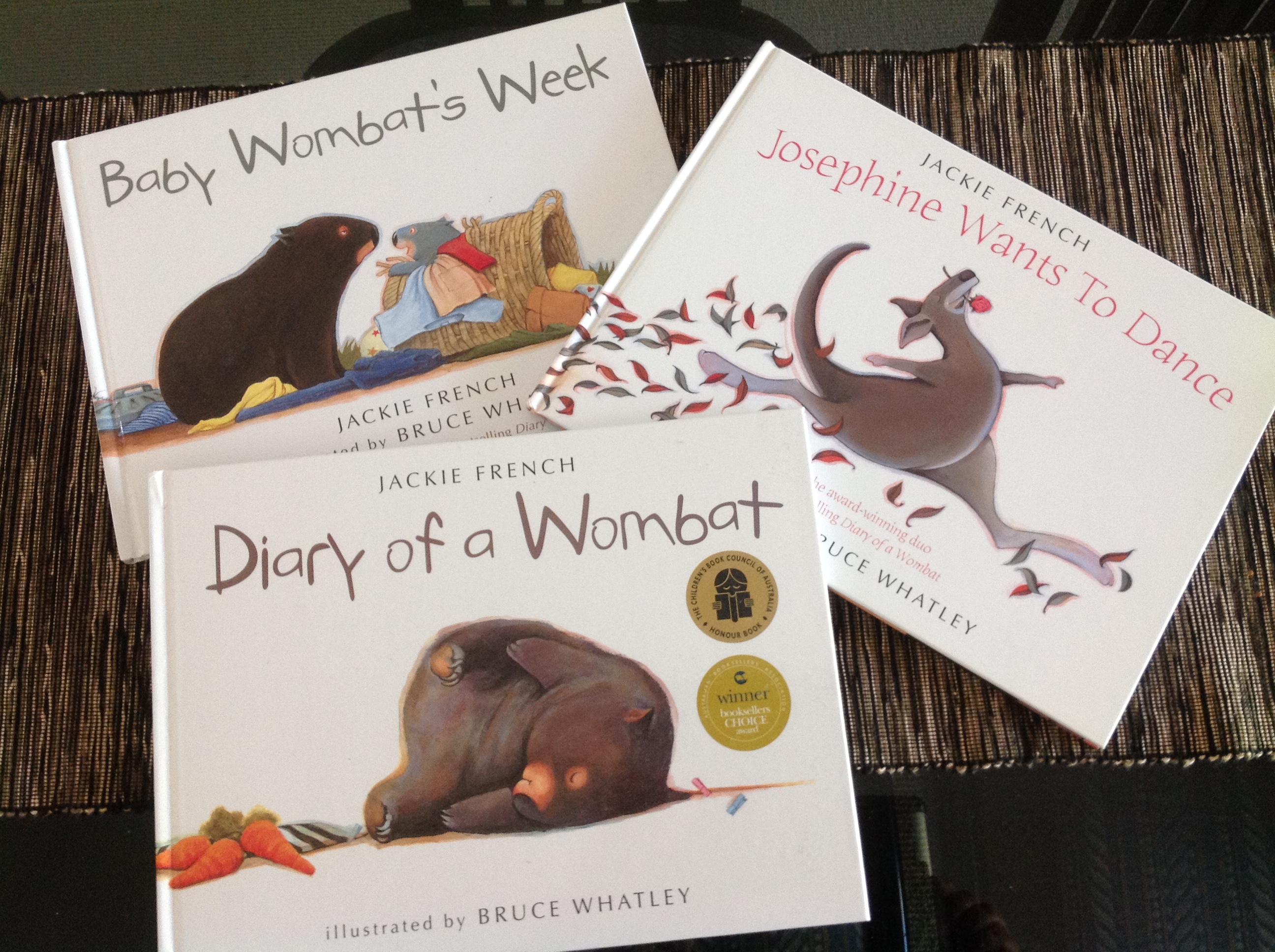
Being an early childhood teacher I am more familiar with Jackie’s picture books such as
I congratulate Jackie on her award and thank her for the contribution she is making to the lives of so many and the future of our planet.
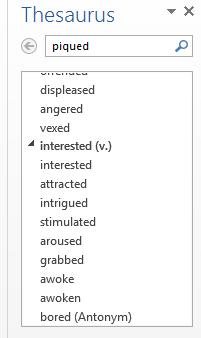
*piqued
In this sentence, I am using the word “piqued” to mean “stimulated or aroused my interest”.
How can one word be used to express opposite meanings? I don’t know how anyone is expected to learn or understand the nuances of this language we call English!
When I checked with my thesaurus to ensure I had chosen the correct word, this is what I found:
How many other words do you know that could almost be listed as its antonym?
Thank you for reading. I appreciate your feedback. Please share your thoughts about any aspect of this post.
But it is summertime in Australia and Christmas is just around the corner.
While we enjoy warm days at the beach and in the pool, picnics in the park and barbecues in the back yard, hoping the big storm doesn’t get us this time (like the one that hit Brisbane on 27 November); those from whom we have inherited our Christmas traditions are cooling down in the Northern Hemisphere, many looking forward to a (not too) white Christmas.
Shops here are playing traditional (northern) carols with snow, sleighbells and mistletoe; decorations are tinged with fake snow and cards show snowy scenes with families huddled around the fireplace.
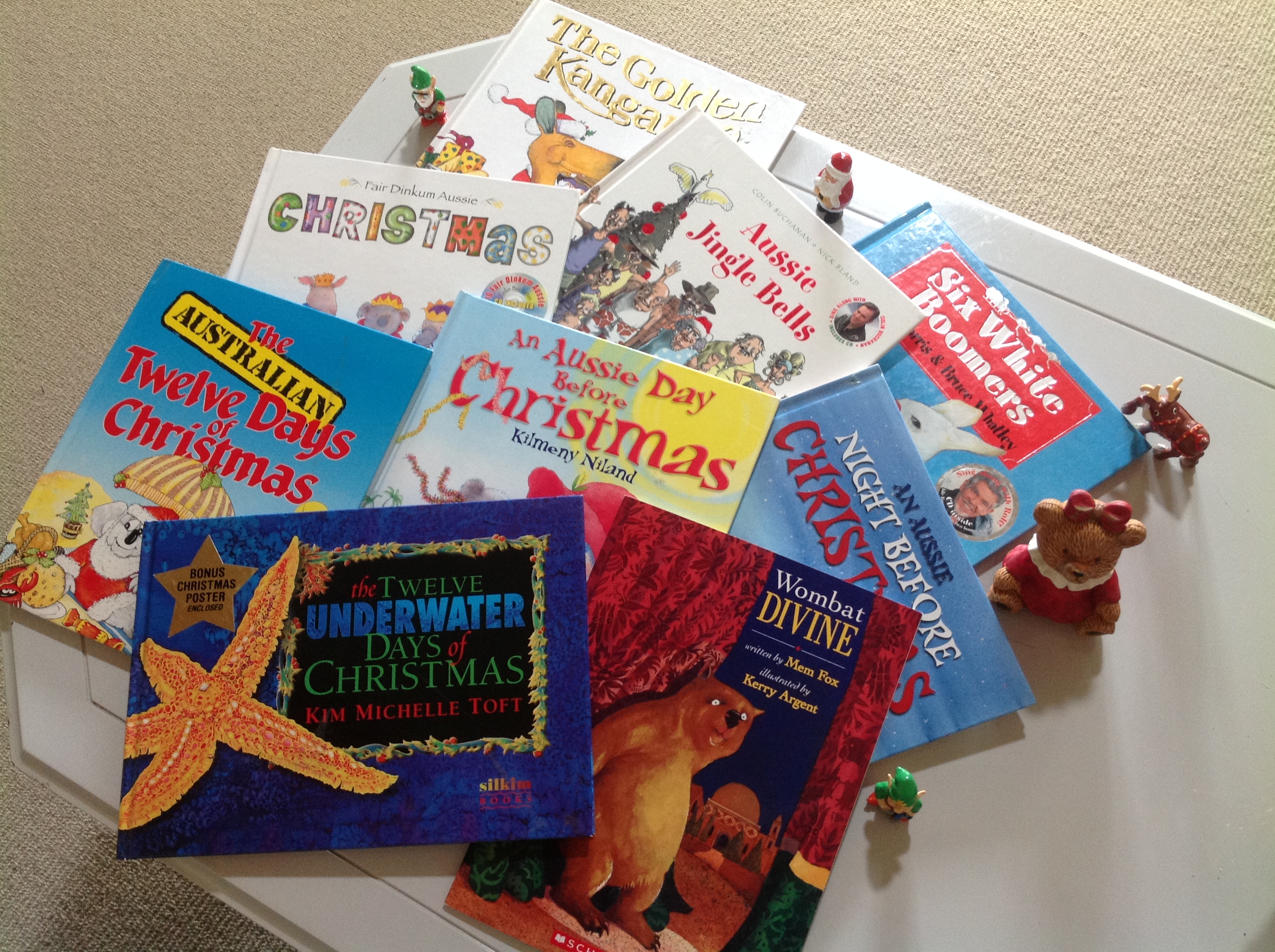
While there is an increasing number of songs and books with an Australian flavour many are merely innovations on the traditional such, as “The Australian Twelve Days of Christmas”, “Aussie Jingle Bells” or “An Aussie Night before Christmas”.
Some Australian Christmas picture books
One innovation that I particularly like is “The Twelve Underwater Days of Christmas” by Kim Michelle Toft. Kim is an Australian who uses her talents as author and illustrator to educate children about the things she feels passionate about: ocean life and coastal habitats. Her illustrations, hand-painted on silk, are absolutely stunning.
In addition to the visual beauty of the book there is great value in the supporting information through which Kim explains the importance of conserving each of the creatures included in the book. While written by an Australian, the application of the book is not limited to our shores. Creatures from all over the world adorn the pages. If you ever wished to own a book simply for the beauty of its illustrations, this is a great choice.
One original song I enjoyed listening to on the radio as a child is “Six White Boomers”. Despite the reasons that make me reluctant to mention it this year, it is a delightful tale of a joey who rides on Santa’s sleigh, pulled by six huge white kangaroos, to be reunited with his mother on Christmas Day.
Peter Combe has written two albums of original, but with a traditional rather than specifically Australian flavour, Christmas songs for children, including this one:
Some Christmas traditions popular with Australian communities are Nativity plays, carols by candlelight and Christmas parades. Many classes and schools perform their own end-of-year “break-up” concerts to which parents and the wider community are invited.
Using the traditional Nativity play as the setting, Mem Fox created an original and fresh story in “Wombat Divine”. It is a delightful tale of Wombat who loved everything Christmas. When finally he was old enough to be in the Nativity Play he rushed along to the auditions. Unfortunately it was difficult to find a part that was just right for Wombat. Can you guess which part he got? You’ll have to read the book to find out! Children all over the world will identify with Wombat and his predicament and enjoy the heart-warming tale.
Books are wonderful gifts to give or receive at any time. The titles I have mentioned here are perfect for giving, reading and sharing at this time of year. When I was growing up there was always a book for Christmas and birthdays, a tradition that I have continued with my extended family and friends. You can almost, but not always, guarantee that if it is a gift from Norah, it is a book.
After my siblings and I had grown up and swelled the family numbers with partners and children of our own, my Mum used to say, “There’ll be no presents this year.” It wasn’t that she wasn’t a giving person, for she was. It was just that there were so many of us! When she passed away this year she had about fifteen grandchildren and eight grandchildren, in addition to her remaining nine children and their partners. (I’m saying ‘about’ for grandchildren and great-grandchildren in case I’ve missed some in the count!) You can imagine how daunting a task it would be to go shopping for all these people ranging in age from six months to sixty! However it was always surprising how frequently she did not follow her own rules and had a small something wrapped up to present to many of us.
This year there will be no presents from Mum, and more sadly, we will be without her presence.
Although I have borrowed my Mum’s words, “No presents” for both flash fiction pieces included in this post, the stories do not cast aspersions on her generosity. I have simply explored how the oddness of no presents or presence at Christmas time may have impacted Marnie, a character I have been developing in my flash fiction pieces, at different times in her life. At this stage of my writing I am still investigating her character, discovering a little more with each flash piece as her once indistinct figure begins to step out of the shadows and take shape.
This first piece is written about a difficult time for teenager Marnie and a situation that may be the catalyst for her leaving home.
No presents
Marnie jerked backwards avoiding the predictable grope. In so doing she collided with her mother, sending her sprawling onto the tattered sofa.
“Aargh!” her mother screamed. “Look what you’ve done!”
Marnie watched the liquid from the upturned glass merge with the patchwork of stains collected in the carpet. If it was her blood it would not have mattered more.
“I … I’m sorry,” she stammered. But her sorry was for all the years it had been like this.
He smirked, raising his hand to strike, “No presents for you this year!”
“That’s right!” She ducked. “No presence!”
So as to not be too dismal at this time of year, I have written a second piece about a younger Marnie for whom there still seems a glimmer of hope.
No presence
With faces as bright as their Christmas wear, the children bubbled into the room, each carrying gifts for the Kindness tree, “for those less fortunate”.
Parents fussed, removing smudges and replacing wayward hair before blowing kisses and hurrying off for the parade.
And there was Marnie: no parent, no Christmas dress, no gift, no smoothed-down hair; no smile.
One last chance.
“Marnie!” I beckoned, and held out my Christmas cape and crown. “Will you be my special helper?”
Our eyes locked communicating more than any words. Her smile was my reward.
“I’m proud of you,” I whispered.
Thank you for reading. I appreciate your feedback. Please share your thoughts about any aspect of this post or flash fiction pieces.
The end of the school year in Australia has approached swiftly and silently this year, for me at least. You see, now that I am not in the classroom I am not absorbed by all the things that the end of the school year brings.
In Australia the school year coincides with the calendar year so November and early December are frantic for teachers completing the final assessment and reporting for the year, preparing their students (and themselves) for separation after spending so much of the year together, and making preparations to welcome a new class in the new year.
The classroom remains busy with learning and curriculum matters until the last day. Both teachers and students begin to tire and the warming (hot, in most parts of Australia) days in classrooms without air-conditioning add to the fraying edges of all as they anticipate the long summer holidays.
One thing I always enjoyed about the end of the year, that made all the extra work and the increasing heat tolerable, was the learning about family traditions and celebrations, including Christmas.
Some Australian Christmas picture books
Last year I wrote about some of the Christmas activities I did with my class, such as making friendship trees
I shared some suggestions for parents to support their children’s reading, writing and maths development in fun ways during the holidays. (These and other items are available in my TeachersPayTeachers store.)
I also provoked a lively discussion about whether Christmas should be included in a school program by suggesting tens reasons for its inclusion. Many readers joined in explaining their position either in support or against.
I always enjoyed this special time of year. I loved hunting through discount stores for items with which children could make cards and gifts for their families and decorations for their home. Often we talked about “free” gifts they could give and made vouchers for things like a free car wash, breakfast in bed or unlimited smiles and hugs.
As well as the gifts they made for each other in class, such as the friendship trees and Christmas crackers, I always gave each child a small gift, usually a book to read, a pencil and notebook for writing in; something to do over the holidays.
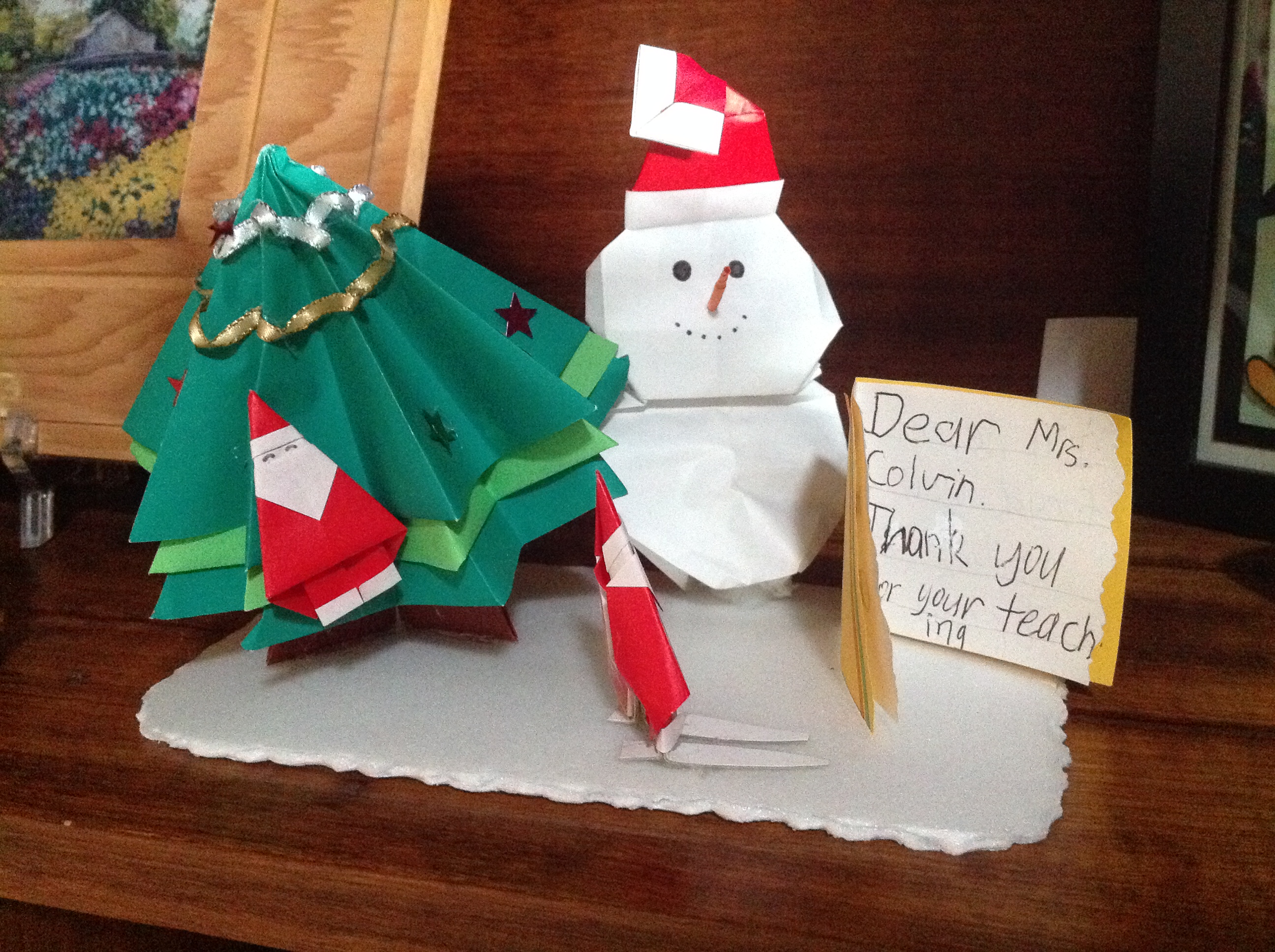
While it was never expected, but always very much appreciated, many of the parents and children presented me with lovely ‘thank you’ cards, letters and gifts, some purchased, many home-made; all treasured. While the consumables were long ago enjoyed, many other items still adorn my shelves!
A selection of gifts from over the years
Sometimes it was difficult to know what to give as a gift to recognise a special teacher. This year Bec has come up with, what I think, is the perfect gift, though she didn’t design it for that purpose. It’s the apple cozy: a special little bag for carrying an apple safely, protecting it from bumps and bruises. They are available in her Made It and Etsy stores. An apple for the teacher in its own special bag: how cute!
Apple Cozy // Joyce
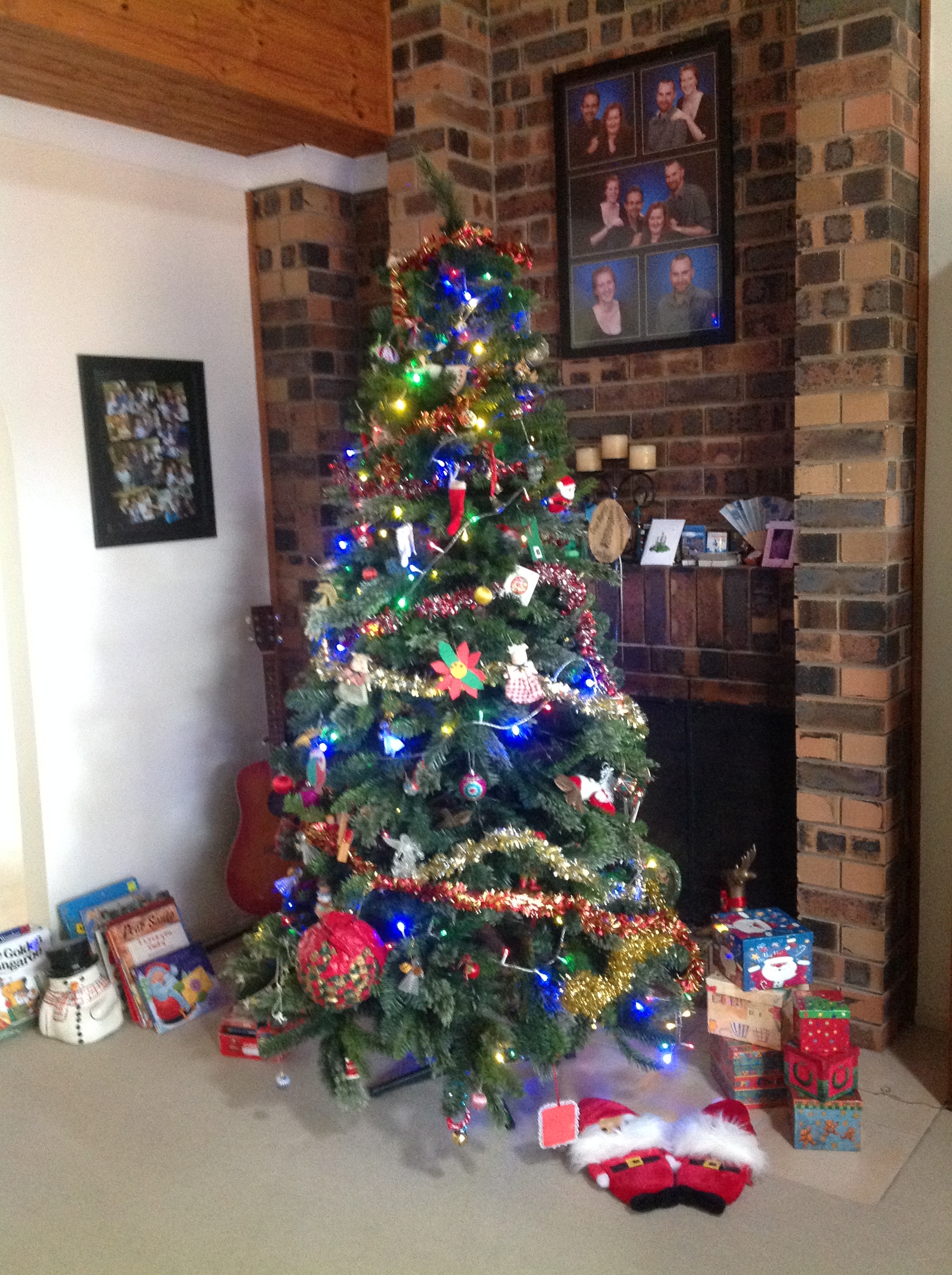
Although there are no preparations for Christmas at work this year (except for Secret Santa) there is still much to do at home. The traditional time for putting up the tree and decorations is December 1, and I usually have mine up by the end of the first week in December. Now that both my children are grown and living in homes of their own, I thought I would have the lonely experience of decorating on my own this year (Hub says he helps by not helping, but actually he gets tree and decorations down from the roof space for me!)
What a delightful surprise it was to have both my children and grandchildren (all two of each) visit on the day I was putting up the tree and help me out. The joy that the excitement of a 3- and a 5-year old bring to such activities cannot be matched. I think we did a pretty good job! When I look at it I relive the fun we had together.
Christmas 2014
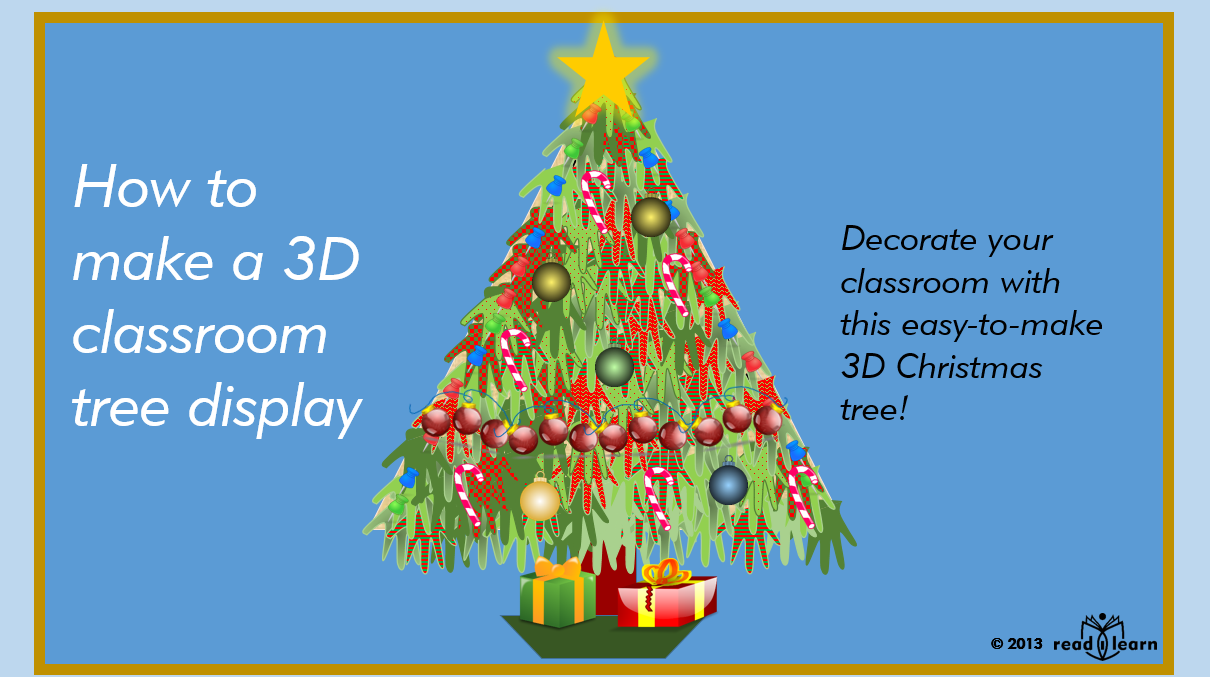
Although to most it would appear simply a Christmas tree, and some may consider many decorations to be ready for the discard pile, most decorations have a story to tell. For me it is a memorytree. It holds decorations made by my own children over the years, and now some by my grandchildren. There are gifts from family and friends, and children I have taught. Each item, as it is placed on the tree, provides a time for reflecting upon the wonderful people whose lives have touched mine over the years. Each has its own story to tell of the joy that others’ kindnesses can bring. But it is more even that just a memory tree. It is a givingtree; a time for remembering and being grateful.
What are you family traditions? What and how do you celebrate?
Thank you for reading. I appreciate your feedback. Please share your thoughts about any aspect of this post.
Recently I was sent a link to an article titled Cheer up, it’s not all doom and gloom published by the Australian Broadcasting Commission’s The Drum.
This article mentioned a book by Steven Pinker called Better Angels of Our Nature which had been recommended to me by Geoff Le Pard in a comment on my post about childhood illness. The premise of this book is that humanity, over the ages, has become less violent. After to listening to Pinker’s history of violence, I’m pleased that I live these relatively peaceful times.
The article also introduced me to a new term ‘meliorism’ which means having a belief that the world can be improved by the actions of humans. While the term may have been unfamiliar to me, the attitude is not and I attest that I am a meliorist.
I have a very strong belief in the power of education to improve the world. Education empowers individuals, and educated individuals empower societies to build improved futures. It becomes very difficult to sustain negative practices in the face of overwhelming evidence and information.
What better place is there for education to begin than in the home?
In a recent post I referred to a new book by Michael Rosen called Good Ideas: How to Be Your Child’s (And Your Own) Best Teacher. At the time I had not read the book but now I can say, with great delight, that I have listened to most of it. With messages such as those contained in Michael’s book, it is easy to be a meliorist.
I think Rosen’s book should be available to, perhaps compulsory reading for, every parent; I consider its message to be that important. In fact, I am off to the shops today to purchase copies to give to parents of young children I know. It will become part of my gift to new parents that also includes Reading Magic by Mem Fox and a selection of picture books. I have previously blogged about that here and here.
The “Good Ideas” contained in Rosen’s book, if implemented, will keep alive the natural curiosity of one’s children and oneself. They will encourage the development of thought, creativity and responsiveness.
In the next few weeks I will post a more detailed review of the book and some of Michael’s ideas for stimulating curiosity, whoever and wherever you are.
What about you? Are you a meliorist?
I welcome your feedback. Please share your thoughts about any aspect of this post.
This post almost didn’t get published. It almost fell through a crack into the never-never. But just in time the safety net sprang into action and saved it from obscurity.
That may matter more to me than it does to you, but as an educator I hear too often about children who ‘fall through the cracks’, who fail to thrive in the school system, who miss out on the inspiration and timely support that would empower them on their journey to life-long learning.
Like those children, this post was an also-ran. It didn’t quite get it, didn’t quite reach the expectations. But then I read something that confirmed for me the importance of sharing my message.
You see, the love of reading is contagious. It can be caught from anyone, anytime.
However, it can just as easily be extinguished; and the danger of that happening seems to be lurking in school systems packed too tight with lists of must do, must learn and must achieve expectations.
I consider it imperative that teachers prioritize time for children to develop a love of literature and reading that will expand their horizons and create a worthwhile companion on the journey of their lifetime.
Here are 10 easy tips for keeping the love of books alive in an early childhood classroom:
Read aloud to children every day, ensuring that a variety of books and genres are being read and shared.
Have a great supply and variety of children’s books available: picture books, fiction and non-fiction, collections of poetry, beginning chapter books, funny books, sad books, books about animals, space, people . . .
Display books with covers facing out and give them pride of place. Make a display of ‘favourite reads’.
“Sell” books to children (you won’t have time to read them all) by showing the cover and some illustrations; by telling what they are about, what happens, and what the children will enjoy about them.
Make a reading corner with carpet, pillows and bean bags that invites children to get comfy while they read.
Provide time for children to choose and read independently.
This can occur during quiet times set aside on a daily basis in which everyone, including the teacher, reads for 10 – 15 minutes. e.g. D.E.A.R. (drop everything and read) or U.S.S.R. (uninterrupted silent sustained reading).
It can also be integrated into reading group or literacy centre activities.
Share the enthusiasm for books by providing time for children to excite each other about the books they are reading in a sharing circle.
Display books written by the children and allow access to them for independent choice. Include them in the sharing and ‘selling’ sessions also.
Make a time to visit the school library for reading and borrowing.
Invite other adults to the class to read to the children e.g. teacher-librarian, administrators, support personnel, parents and grandparents.
Let me know in the comment box a favourite tip of yours.
This week I have read some fabulous posts by teachers who are making sure there is time for joy and independent choice in their literacy classrooms. I will share these with you below.
The article that convinced me to share my thoughts was one that was not so joyful.
Written by Alexander Nazaryan, a first-year teacher, the article appeared in the Opinion Pages of the New York Times on July 6, 2014. He talked about not being able to meet the needs of his students and explained that it was not the fault of the students though, the fault was that they were mostly of poor and immigrant families.
He felt that asking these students to write about their own experiences did not have ‘the pedagogical value of a deep dive into sentence structure or a plain old vocab quiz.’
I was immediately struck by the similarity of a statement made to me by my son’s teacher thirty years ago. At the time I was leading an in-service workshop about teaching writing. I would have been talking about ways of engaging students in the writing process by giving them opportunities to write at length about things of interest to them; by encouraging the writing of a first draft to get the ideas down; by providing opportunities for redrafting, rewriting and editing; and opportunities for feedback by sharing their writing with peers; and by making the most of teachable moments through individual conferences with each student.
This teacher exclaimed that there was no way the children would be able to write anything of length as not one knew what a paragraph was, or indeed what a sentence was. The students were ten years of age and in their fifth year of school. I believe the statement to be more an indictment of the teacher’s inability to appreciate what the children could do, rather than an accurate estimation of their abilities. I knew for a fact that at least one student was more than capable of writing at length with a variety of sentence structures and correct paragraphing. I was certain he wasn’t the only one.
I am inclined to agree with Nazaryan that ‘Expecting children to independently discover the rules of written language is like expecting them to independently discover the rules of differential calculus.’
However trying to teach the skills of literacy through a barrage of meaningless drill and practice exercises in a joyless classroom is doomed to failure, and the children, sadly, will fall through the cracks.
What the children need, in my opinion and unlike that of Nazaryan, is a balanced approach. The skills of literacy need to be taught in a meaningful context.
She willed the earth to open up and swallow her whole. But it didn’t. She just stood there trembling, attempting to hold back the deluge that threatened to engulf her.
She strained to remember, knocking her head with her fist. Quick. Try. Try. What’s the rule: i? e?
She stammered an answer. Wrong again! Too many rules! Stupid rules! Broken – just like her.
She fled, eyes stinging, mouth twitching; and as she passed, with one hand grasped the confiscated unicorn sitting askew the teacher’s desk.
Away they flew, the assault of mocking laughter fading far below.
Thanks for reading. I appreciate your feedback. Please share your thoughts about any aspect of this post, including my flash piece.





















 Norah Colvin