Live Love Laugh Learn … Create the possibilities

Tag: Carrot Ranch flash fiction

  • Let’s pretend — play and imagination

    Let’s pretend — play and imagination

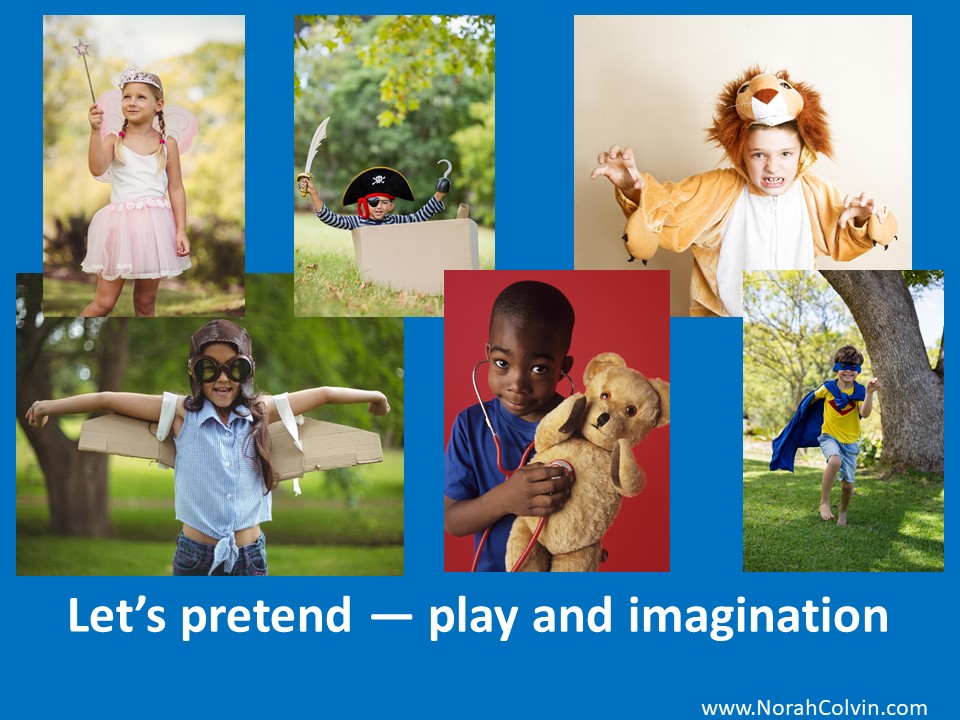
    If the title conjures up images of children playing dress-ups with forts and castles, saving princesses and defeating dragons, that’s good. Such was my intention.

    Pretend play, in which children use their imaginations, allows them to try out different roles, experience different possibilities and enact a variety of solutions to problems they encounter.

    But play and imagination isn’t just for children. It is through playing with ideas that new discoveries are made, inventions are created, and innovations implemented. Without imagination, everything would always stay as it always was. Science wouldn’t progress and stories wouldn’t get written.

    Charli Mills of the Carrot Ranch flash fiction challenge Eminence

    When Charli Mills at the Carrot Ranch challenged writers to In 99 words (no more, no less) write a story that uses the word eminence. It’s a rich word full of different meanings. Explore how it sounds or how you might play with it. Go where the prompt leads!, I knew that imaginations the world over would be employed to respond.

    Every week when Charli sends out a prompt, writers play with ideas to engage readers with unique and imaginative perspectives on the word or phrase. When all have been submitted, Charli searches for threads that bind the diverse stories together and compiles them into a connected whole.

    Charli’s use of the word ‘eminence’ in her flash fiction story was unfamiliar to me, so I opted to stay within my comfort zone. With such a serious and imposing word though, what could I do but play? I hope you enjoy it.

    Your Eminence

    She glided in, regal robes flowing, loyal subjects lining the path.

    “Your eminence,” they bowed as she passed.

    She occasionally extended her gloved hand to receive their kisses of adoration or stopped to bestow a gift of royal chatter. Though her crown and responsibilities weighed heavily, she held her head high as she proceeded towards the throne. Decorum dictated every move. She dared not breathe out of sync. Her subjects depended upon her.

    When seated, she motioned for all to sit. They obeyed, listening respectfully.

    “I decree– “

    “Lunch is served, Your Majesty.”

    “Aw, Mu-um!”

    “You’ll reign again later.”

    Thank you blog post

    Thank you for reading. I appreciate your feedback. Please share your thoughts.

  • What’s water to you?

    What’s water to you?

    Last Friday 22 March was World Water Day.

    Sustainable Development Goal 6 is crystal clear water for everybody by the year 2030.

    Many of us living in developed countries take access to clean healthy water for granted. We turn on a tap and it is there. Even though it is free and plentiful, the sale of water in plastic bottles is increasing and the bottles are contributing greatly to the destruction of the environment.

    If it seems crazy, it must seem especially so to those who live in places without access to regular supplies of clean water.

    The figures quoted on the World Water Day website are astounding:

    • 2.1 billion people live without safe water at home
    • 1 in 4 primary schools have no drinking water service
    • about 159 million people collect their water from ponds and streams.

    And so, the list continues with one horrifying statistic after another.

    Water is essential for life, not only for drinking but also for many of our personal, societal and global everyday activities. According to business reports, it is even more precious than gold. Maybe we could live without gold, but we can’t live without water.

    Learning about water — the water cycle, its uses, conservation and pollution — is an important part of everyone’s education. Sometimes we find teachers in the most unexpected places.

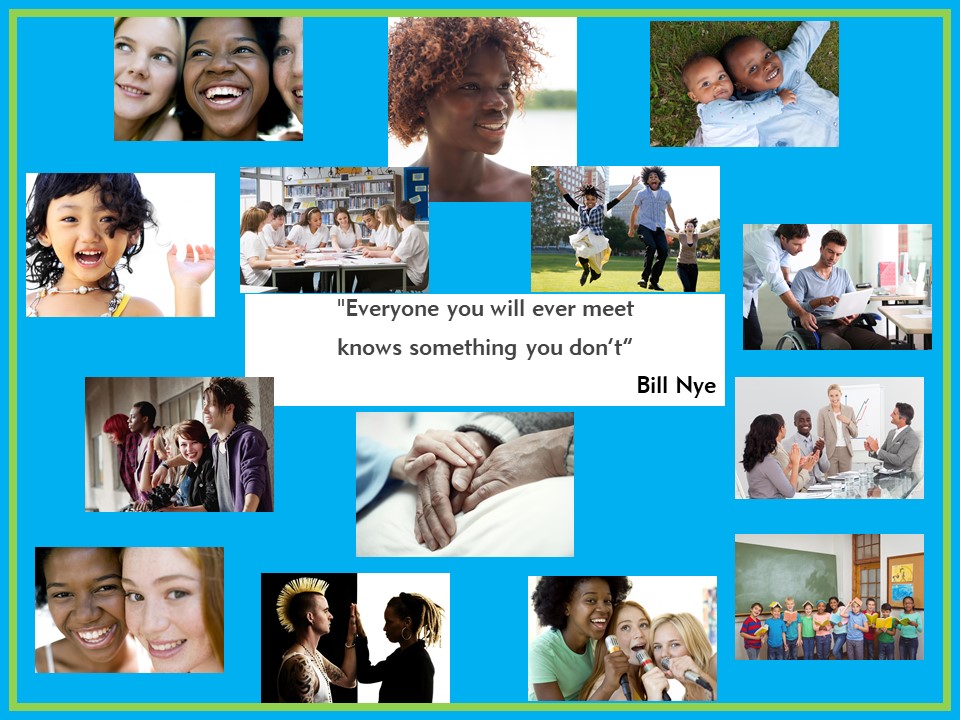
    Bill Nye - everyone you meet can teach you something

    Charli's flash fiction challenge a bucket of water

    Not surprisingly, education is the theme I’ve taken in my response to the flash fiction challenge set by Charli Mills at the Carrot Ranch this week to In 99 words (no more, no less) write a story that features a bucket of water. What is the condition of the water and what is the bucket for? Drop deep into the well and draw from where the prompt leads!

    water more precious than gold

    More Precious than Gold

    The children observed the bucket.

    Teacher explained, “Let’s find out about what’s in the bucket. Ask only ‘yes’ or ‘no’ questions. Do not say what you think it is.”

    Is it wet?” “Yes.”

    Is it a liquid?” “Yes.”

    Is it heavy?” “Try.” “Yes.”

    Do we drink it?” “Does it come from clouds?” “Does it make puddles?”

    “Yes. Yes. Yes.”

    Is it more precious than gold?”

    Don’t be stupid,” spluttered Andy. “It’s water!”

    Teacher glared. Andy’s smirk dissolved.

    Ahmed looked squarely at Andy. “In my country

    Teacher closed the book. Ahmed’s lesson was more effective than any she’d prepare.

    getting the most out of life

    Thank you blog post

    Thank you for reading. I appreciate your feedback. Please share your thoughts.

  • It’s a point of view

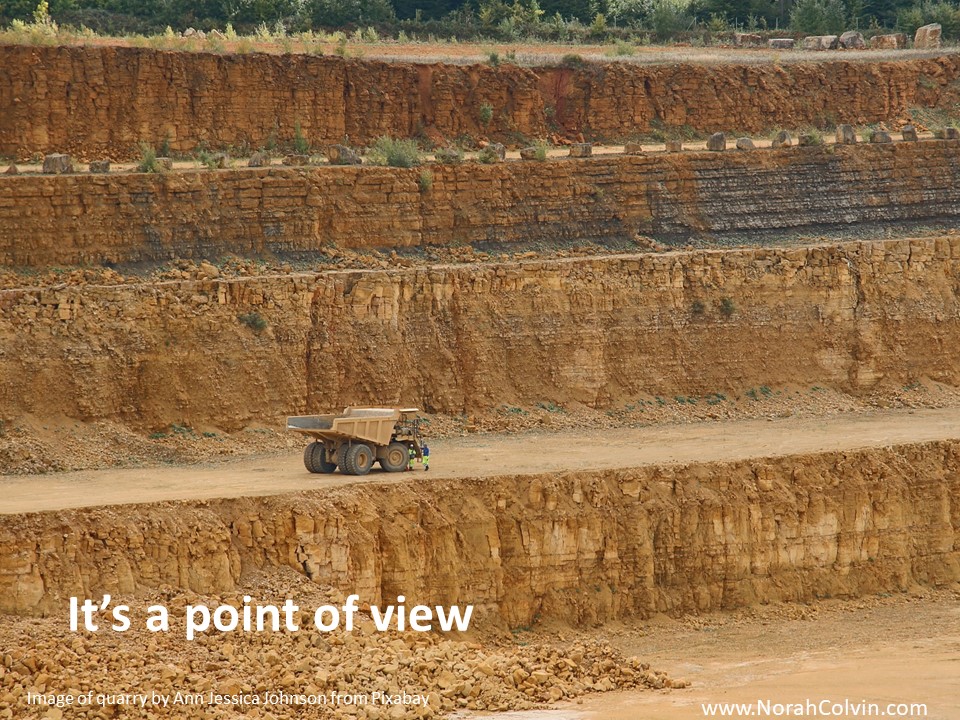
    It’s a point of view

    Have you ever been faced with a task, at work or at home, that seemed so big you didn’t know where to start?

    Have you ever been hustled by a supervisor, external or internal, to make a start whether ready or not?

    Have you ever jumped in, hoping it would all work out in the end?

    Have you ever chipped away without any real sense of direction and eventually found what you were looking for?

    Charli Mills flash fiction challenge chisel

    It was of these situations I was thinking as I responded to this week’s flash fiction prompt set by Charli Mills at the Carrot Ranch to In 99 words (no more, no less) write a story that includes a chisel. Use chisel as a noun or a verb. Think about what might be chiseled, who is chiseling. Be the chisel. Go where the prompt leads!

    Perspective

    The monumental task cast a shadow deep and long, miniaturising the toolkit at his feet.

    He shook his head, muttering complaints and impossibilities.

    The supervisor appeared. “Better get started. No time to waste.”

    He rummaged through the toolkit, lifting, inspecting and replacing each implement in turn.

    “What’s the holdup?” bellowed the supervisor.

    He grabbed the mallet and whacked the stone. “Take that!” Chunks smashed around him. He wiped his brow and whacked again.

    “Great. You’ve started at last,” encouraged the supervisor.

    Later, as the light turned, the shadow faded and diminished. He lifted his chisel and refined his work.

    size is a point of view

    Of course, I’ve had the opposite happen too. I’ve begun a task that I thought was miniscule but turned out to be mammoth. What about you?

    Thank you blog post

    Thank you for reading. I appreciate your feedback. Please share your thoughts.

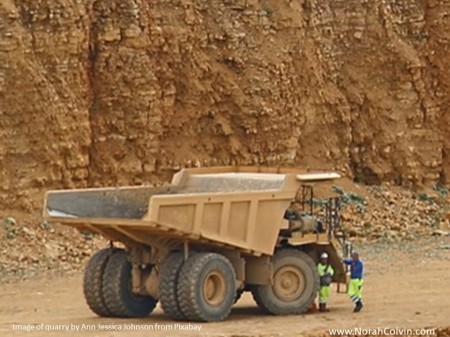
    Image of quarry by Ann Jessica Johnson from Pixabay.


  • What do you love?

    What do you love?

    We use the word ‘love’ to mean care deeply about, as in people, or like a lot, as in food, objects and activities. Questions such as “Who do you love?” and “What do you love?” will elicit very different responses and we generally have little difficulty in distinguishing between the intensity of the feelings. Mostly the whos are more important to us than the whats, and it is easy to distinguish between the likes and the loves, though they can sit along a continuum.

    love of vegetables on a continuum

    For me, housework sits at the opposite end of the continuum from reading and writing. You won’t find me writing any posts about housework. But you will find lots of posts about reading and writing, especially encouraging a love of reading and writing in children. I find sharing a love of reading and writing to be almost equal in enjoyment as reading and writing for myself. To see children light up with enthusiasm for reading and writing is sheer joy.

    the love of reading is one of the greatest gifts a parent can give a child

    I have often said that one of the greatest gifts a parent can give a child is a love of reading. A love of reading and writing, and indeed for all learning, is the best gift a teacher can give.

    the love of reading and writing is contagious

    It is often said that a love of reading is caught, not taught. The same goes for writing. It is important for teachers to ensure that there is time every day to read aloud to children, to inspire them and excite their imaginations with wonderful literature and to provide them with time for expressing their own thoughts and imaginative ideas through writing and any other of the expressive arts.

    I have written many blog posts, both here and for readilearn, with suggestions for making time for literature and literacy, but it was the prompt set by Charli Mills at the Carrot Ranch that kept me thinking that way this week.

    Carrot Ranch flash fiction challenge Valentines

    You see, Charli challenged writers to In 99 words (no more, no less) write a story about valentines. It can be Valentine’s Day, the exchange, love for another, romance, or friendship. Have a heart and go where the prompt leads!

    But, as well as being Valentine’s Day, 14 February is also Library Lovers’ Day and International Book Giving Day.

    Why wouldn’t I write about one of my loves — reading and writing? I hope you enjoy it.

    Just for the love of it

    The teacher closed the book, but the children were abuzz.

    “Keep going,” they urged.

    “Will they be alright?”

    “What will happen?”

    The teacher looked at the clock. The minutes had passed like seconds. Was there time?

    “Pleeeease!”

    The teacher opened the book.

    “Yay!” cheered the children, then hushed as the words flowed.

    As the story unfolded, their eyes lit up and imaginations sparked. They discussed the story’s intricacies and contemplated outcomes as they journeyed with the author through good and fearsome times. Finally, just as the dragon was about to swoop, the teacher stopped. “Now write! What happens next?”


    reading is a super power

    Here are links to just five of the posts I’ve written about reading and writing:

    A sprinkle of this, a pinch of that, and Poof! It’s reading — magic!

    Wrapping up a year of books — the gift of reading

    I love poems

    Reading is all it’s cracked up to be: 10 tips for an early childhood classroom!

    Writing poetry with children

    And two more about libraries:

    Libraries: A wondrous universe to explore — a guest post by Dimity Powell

    Libraries, books and reading = infinite worlds to explore

    Thank you blog post

    Thank you for reading. I appreciate your feedback. Please share your thoughts.

  • Beach adventures and sea mist

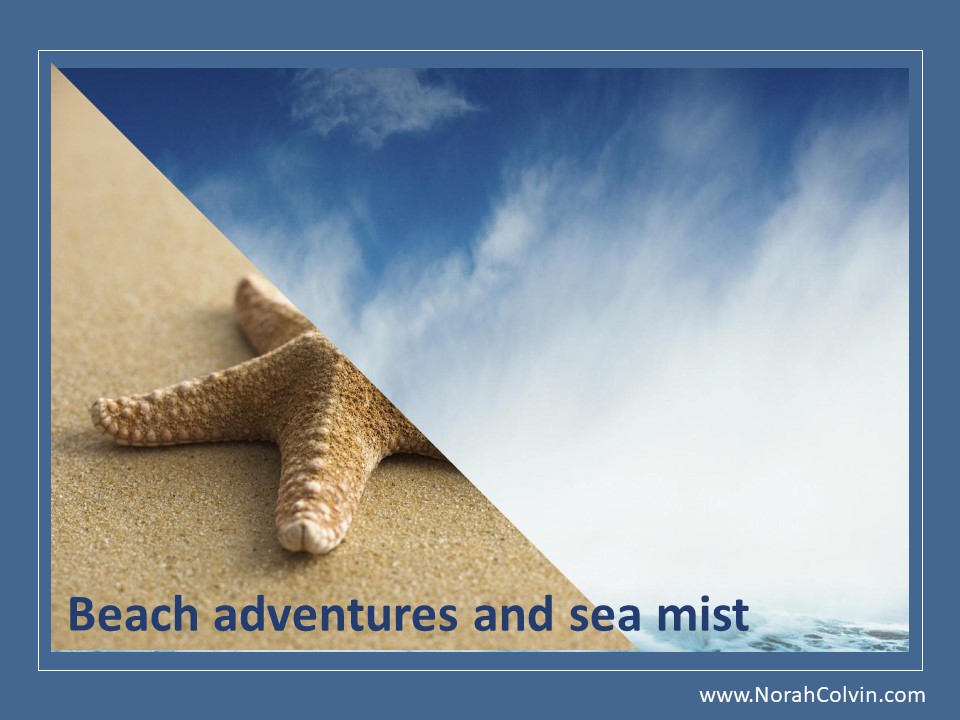
    Beach adventures and sea mist

    Growing up near the beach

    Beach adventures were a big part of my childhood. I spent many long days swimming, sunbaking and exploring with friends and siblings at the beach no more than 500 metres from home. Generally, the instruction was to be home by tea time so, on our long summer holidays, we could spend as much time on the beach as we liked.

    It wasn’t the most beautiful of beaches. The sand was coarse and yellow and the shore rocky in places. The water was often filled with jellyfish and seaweed. The narrow beach was edged by tall red cliffs which prompted Captain James Cook to name the area Redcliffe when he passed by in 1770. But we loved it anyway.

    There were huge cotton trees, as perfect for climbing as the red cliffs were for scaling, and a playground with swings and slides, many of which are no longer considered child-safe. But we survived.

    We’d explore the rocks for sea life, avoiding the jellyfish and seaweed as best we could, both in and out of the water. We’d play in the water and on the sand and lie on our towels talking, laughing and dreaming of whatever we did as children back then.

    Sun safety

    It may sound idyllic and perhaps it was, though to us, it just was. Most of us are now paying for those long days at the beach with sun damaged skin. If anyone was aware of the dangers of being too long in the sun back then, we certainly weren’t. We considered a bad dose of sunburn as nothing more than inconvenient and we took turns to peel layers of skin off each other’s backs when the blisters burst.

    Nowadays, my beach adventures are mostly confined to observations of sparkling white sands and perfect blue water from a shady deck with a cool drink in hand. However, I may venture out for a stroll in the late afternoon when the sun’s light has dimmed, leaving the water and sky to meet and greet in shades of pink and lilac.

    Our Australian culture has a love-hate relationship with the beach and sunshine. At the first hint of warm summer weather, we’ll be told it’s a great day for the beach and we’ll be presented with images of beaches crowded with sunbathers. On another occasion, we’ll be advised to stay out of the sun and avoid the damage to our skin. Queensland is, after all, the skin cancer capital of the world. I’ve never figured out why we don’t get a more sensible approach that combines enjoyment with safety.

    But let’s not dwell too long on the negatives. Hopefully now with better education and the availability of protective products, the younger generation will not be so nonchalant about time spent in the sun.

    A beach excursion

    A beach excursion, whether with school or family, presents as many opportunities for learning as it does for fun. There are phenomena to inspire wonder and stimulate curiosity, and countless questions to ask and answers to discover; for example,

    Ten beach-inspired questions

    • What makes the waves?
    • Why does the tide come in and out?
    • How is sand made?
    • Where do the shells come from?
    • Why does the sand squeak when we walk on it?
    • What lives in the ocean?
    • Why should we take our rubbish home with us or put it in a bin?
    • How do fish breathe?
    • What made these tracks on the sand?
    • My sandcastle was here this morning. What happened to it?

    Some answers can be discovered through investigation and exploration at the beach. Others require research.

    Three fun beach activities that involve learning

    Shells are not only fun to collect, they are great for sorting and counting, measuring and making, creating patterns and trading.

    Fish might be fun to catch (for some); but they can also be identified, measured and weighed. Children can research the different types of fish and regulations for catching them.

    Photographs provide a great record of beach adventures. Children can be encouraged to compile them and write a recount or report about the outing.

    And of course, there are always wonderful books to read about the beach; such as:

    Ten beach or ocean themed picture books

    The Magic Beach by Alison Lester

    Where the Forest Meets the Sea by Jeannie Baker

    Circle by Jeannie Baker

    The Hidden Forest by Jeannie Baker

    The Rainbow Fish by Marcus Pfister

    Mister Seahorse by Eric Carle

    One Less Fish by Kim Michelle Toft

    Coral Sea Dreaming by Kim Michelle Toft

    Neptune’s Nursery by Kim Michelle Toft

    Swimmy by Leo Lionni

    Beach-inspired flash fiction
    Charli Mills's flash fiction challenge at the Carrot Ranch

    I was taken back to the beach this week by the challenge set by Charli Mills at the Carrot Ranch to  In 99 words (no more, no less) write a story about sea mist. How does it create an environment for a story? It can set the stage or take the stage. Go where the prompt leads.

    This is my response. I hope you like it.

    Canned Sea Mist

    No more than a hint of sea spray and she was flown back on wings of joy to carefree childhood days frolicking in the shallows, basking on golden sands, fossicking for hints of life in rockpools and amassing precious collections of shells and other treasures arranged for her pleasure by the tide. Lulled by a gentle breeze and waves whispering a heart’s rhythm, she dozed, uninterrupted by seagulls squawking, murmured conversations, hushed laughter, or the shuffle of approaching and receding footsteps. As the sun glowed bright above, she sighed her last, now and forever one with the sea’s mist.
    Thank you blog post

    Thank you for reading. I appreciate your feedback. Please share your thoughts.

  • Enriching Lives and Communities with Education

    Enriching Lives and Communities with Education

    Education has the power to enrich lives. By education, I mean all of life’s experiences that contribute to learning. Sometimes these experiences occur in school. Mostly they don’t.

    Schooling is but a small part of ones’ education, and its ability to enrich varies depending on:

    • an individual’s circumstances and attitudes to school and learning.
    • the school culture and attitudes to children and learning.
    • and the teacher’s attitude to children and learning.

    Over the years I have been aware of enrichment programs offered in some schools. The programs were available to children considered ‘brighter’, having greater potential and, possibly, even ‘gifted’. The children were those who pleased their teachers with compliant behaviour and diligent work, and whose well-to-do families contributed to school facilities. Often, the program was a reward for children who needed neither incentive nor enrichment (their lives already had both) and an easy way for schools to say they were catering for diversity and individual differences.

    The model of enrichment with which I was most familiar was a selective program offered one afternoon a week. Children were withdrawn from their regular classrooms to participate. Activities included things such as problem-solving, advanced science and maths, chess, reading and writing clubs.

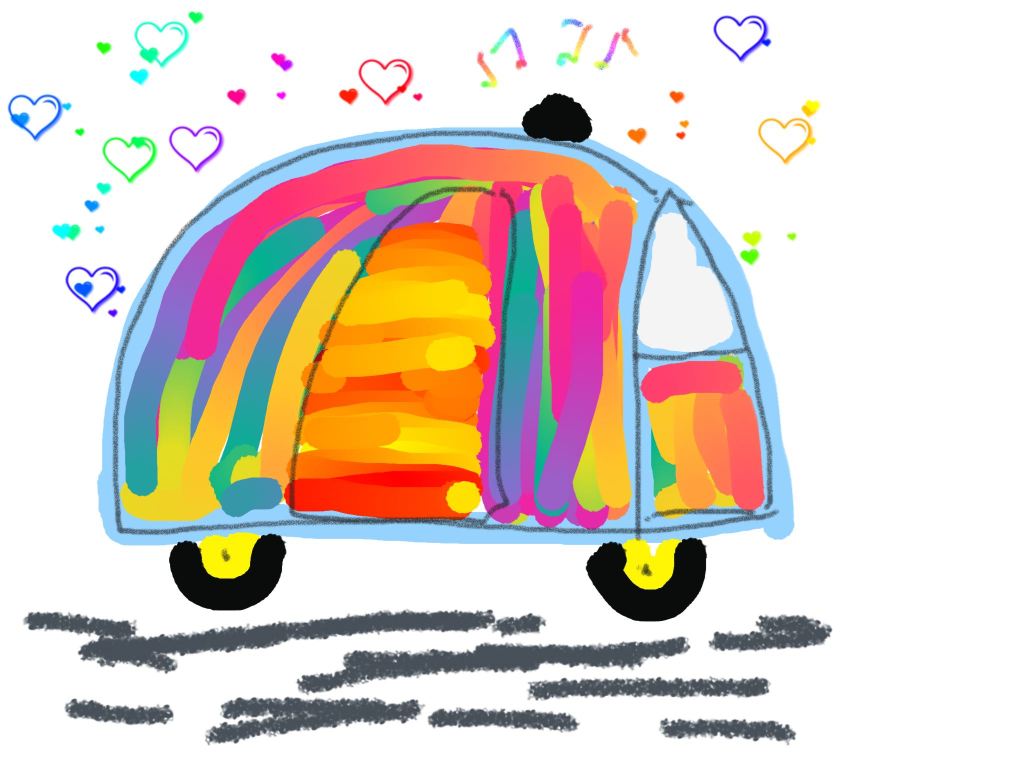
    In my opinion, these are activities which would benefit all children, especially those from impoverished homes who received little encouragement for learning, either in school or out, or opportunity for enrichment. My belief is that ‘enriched’ individuals enrich their communities and society as a whole. My suggestion of an early learning caravan, if implemented, would help remedy the situation for some.

    early learning caravan

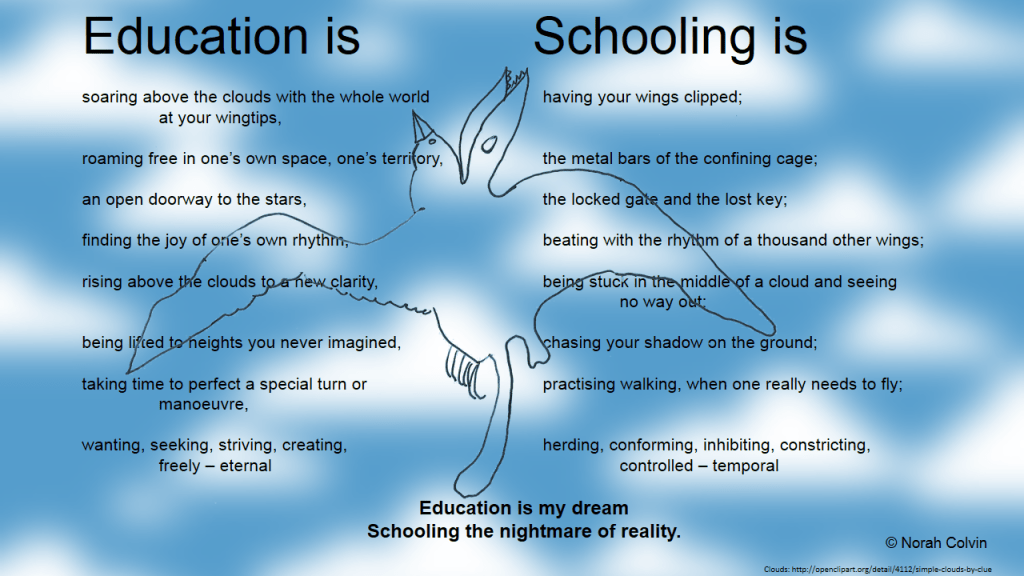
    Surely education should be about enriching all lives, not just a few. It should be about asking, ‘What can I do to enrich your life, to provide opportunities for you to learn, and enhance your potential for a successful life?’ It shouldn’t just be ‘What can I cram into you for the test at the end of the week/month/term/year?’ I summed up some of these differences in my poem Education is.

    poem about the difference between education and schooling
    © Norah Colvin

    Of course, not all schooling is a nightmare. Much of it is enriching. You only have to read the blogs of wonderful teachers like Jennie Fitzkee, Jacqui Murray, Marie Forst, Adam Hill and others, to realise that children’s lives are enriched by inspired teachers, every day.

    readilearn teaching resources for the first three years of school

    My life’s work has been an attempt to enrich the lives of others through education; from my years in the classroom to my current work on readilearn where I support teachers with resources to enhance their teaching and lighten their workload.

    In so doing, my own life has been enriched in many ways. You see, I consider enrichment to be something that fills one up on the inside:

    • with feelings of self-worth, self-respect and self-confidence,
    • with a sense of purpose and empowerment,
    • with trust, understanding and empathy,
    • with compassion and love for others,
    • and an interest in all that is.

    Enrichment has little to do with external riches (though most of us wouldn’t say ‘no’ to sufficient to make our lives comfortable).

    I have always seen my roles as both parent and teacher, so closely entwined, to be not only a giving back but a paying forward to the future of the universe. My children, biological and in the classroom, have enriched my life enormously, and for that I am very grateful.

    Enrichment flash fiction prompt by Charli Mills at the Carrot Ranch

    But why am I writing about enrichment this week? You might have guessed —in response to the prompt set by Charli Mills at the Carrot Ranch: In 99 words (no more, no less) write a story that includes the idea of enrichment. Use many of its different manifestations or explore reasons why it matters to the character. Go where the prompt leads.

    I hope you like my story:

    What Kind of Enrichment?

    The meeting dragged. After analysing data, discussing duty rosters and responsibilities, lockdown and evacuation procedures, enthusiasm flagged. Jocelyn itched.  Last on the agenda; her topic was enrichment.

    As she took the floor, groans and tapping pencils defied her resolve. A phone ban meant some eyes were on her, at least. Her suggestions of enrichment were met with derision.

    “They don’t learn what we teach ‘em. ‘ow are we gonna’ enrich ‘em?’ Everyone laughed.

    Jocelyn’s mouth opened to respond but gaped as Taya burst in bearing an enormous cake with candles ablaze.

    “Now that’s my kind of enrichment.” Everyone cheered.

    Thank you blog post

    Thank you for reading. I appreciate your feedback. Please share your thoughts.
  • Don’t Look Back

    Don’t Look Back

    Looking Back Carrot Ranch flash fiction prompt

    The beginning of a new year is often a time of reflection, of looking back on the previous year and of realigning goals for the year ahead. It is fitting then that, for the first prompt of the year, Charli Mills at the Carrot Ranch challenged writers to In 99 words (no more, no less) write a story about a character who looks back. It can be a metaphorical reflection or a glance in the rear-view mirror. Who is looking back, and why? Go where the prompt leads.

    Of course, there are many reasons for looking back but, perverse as I am, I’ve chosen to write about someone who wouldn’t look back.

    Don’t Look Back

    Don’t look back. Don’t look back.

    She pulled her coat tight, pressed her bag into her side and leaned into the wind, quickening her pace.

    The footsteps pounded behind her, closing in. She knew, even over the wind’s roar, they were coming for her. She breathed in shallow quick gasps.

    Don’t look back. Don’t look back. If she couldn’t see them, perhaps they didn’t exist?

    Her eyes stung. The wind stole her breath. Her side split.

    Lights ahead. Please. Please … almost.

    A hand on her shoulder. A deep gravelly unintelligible voice.  She twisted. “Noooo!”

    “Miss, you forgot your umbrella.”

    Thank you blog post

    Thank you for reading. I appreciate your feedback. Please share your thoughts.

  • Rodeo #4: Fractured Fairy Tales Winners

    Rodeo #4: Fractured Fairy Tales Winners

    The results of the Carrot Ranch Flash Fiction Contest #4 Fractured Fairy Tales are now posted at the Carrot Ranch. Pop on over to find out who the winners are and to read all the qualifying entries.
    Thanks to all who entered for giving us a fun and entertaining read.

  • Rodeo #2: Memoir Winners

    Rodeo #2: Memoir Winners

    Results for the Carrot Ranch Flash Fiction Rodeo Contest #2 Memoir are in. “She did it” was the prompt; and she did it, she won, but do you know who it was and what she did? Check out the results at the Carrot Ranch and join me in congratulating the winners, the runners-up and all contestants. Well done, everyone!
  • How do you like those potatoes?

    How do you like those potatoes?

    Now that the 2018 Carrot Ranch Flash Fiction Rodeo has ended and winners of each contest are being announced weekly, the regular flash fiction challenges have resumed.

    Carrot Ranch flash fiction mashed potato super power prompt

    This week, Charli Mills challenged writers to: In 99 words (no more, no less) write a story that pairs mashed potatoes with a superpower. It can be in any circumstance, funny or poignant. Go where the prompt leads.

    A month or two ago on readilearn, I wrote a post titled Learning to be friends — unleash your friendship superpower.  In that post, I suggested that we need to
    Help children to see that, although they may have some special friends, they can be friendly towards everyone. No one should be excluded. Everyone should be included.

    Explain that being friendly towards others encourages others to be friendly towards them. Being a friend is like a superpower. It helps everyone, including yourself, have a good day.”

    ideas for teaching friendship skills in early childhood classrooms

    I also discussed some new and existing resources to support the teaching of friendship skills in early childhood classrooms.

    How could I not choose friendship as my superpower, but how could I mash it with potatoes as Charli suggested?

    Of course, there is the Wiggles song Hot Potato that includes mashed banana, why not mashed potato?

    And there is the popular party game Hot Potato where everyone sits in a circle and passes an object like a ball, bean bag, or even a potato around the circle while music plays. Whoever is holding the object when the music stops is out, so it is important to pass it quickly, like a hot potato, so as to not be caught with it. Could the game be played with mashed potato? It could get rather messy, I think.

    fist game one potato two potato

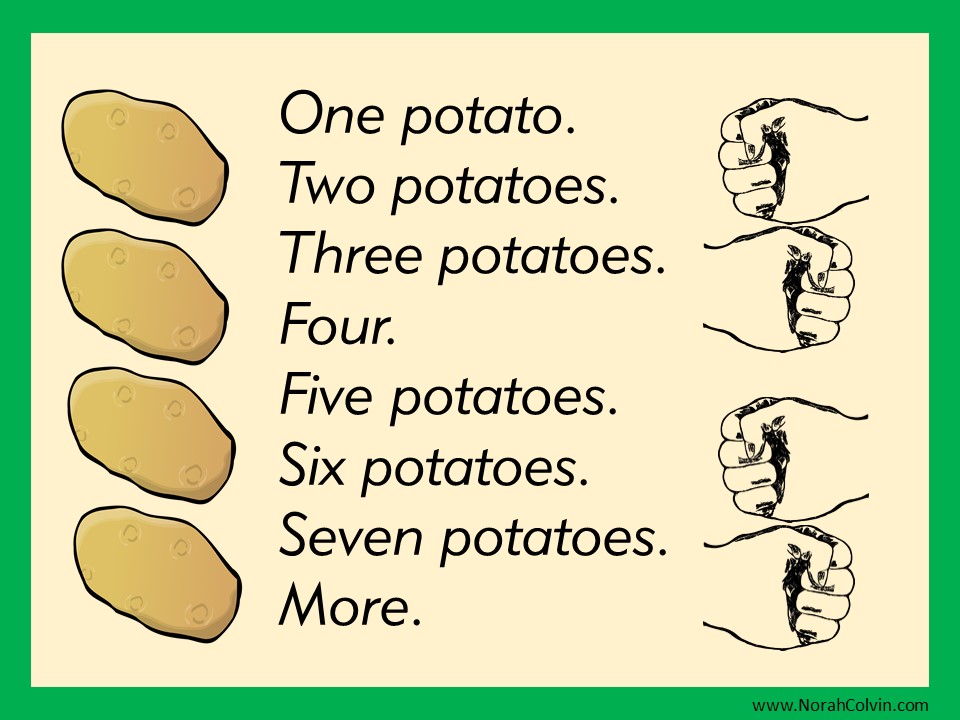
    When I was a child, we used to play an elimination game using the song One potato, Two potatoes. Everyone would stand in a circle and put out both fists. “It” would go around the circle, bumping each fist in turn. Whichever fist was bumped on ‘more’ would be put behind the player’s back. The song and actions would then be repeated until only one fist (one player) remained.

    Then, of course, there is the Mr Potato Head toy which made a comeback in the Toy Story movies.

    Singing songs and playing games, including these, is always a great way to help develop that friendship superpower.

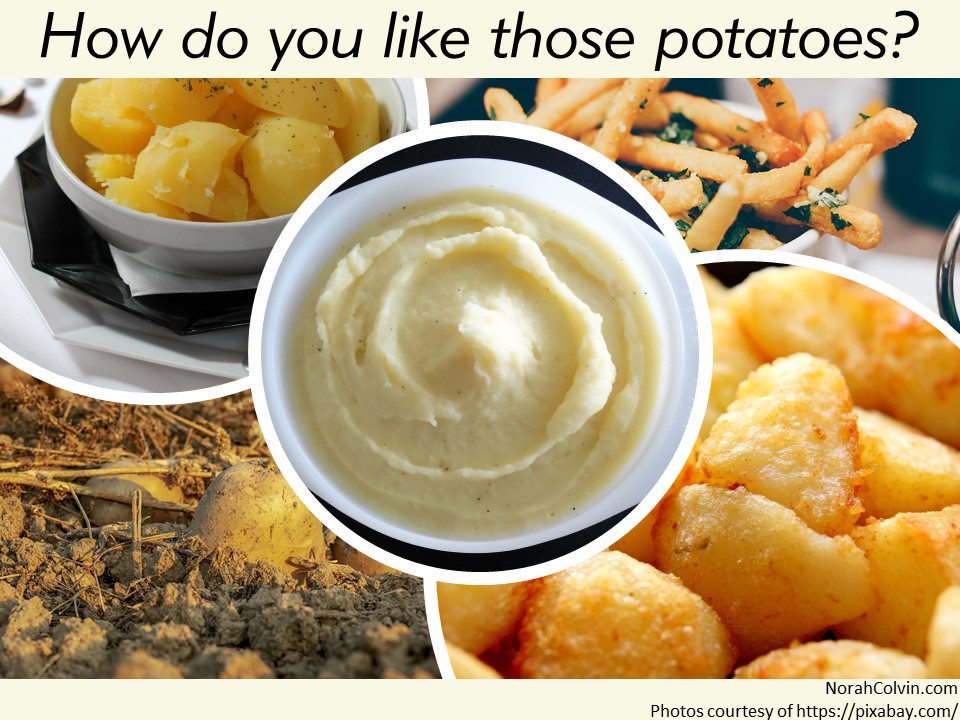
    Although I’ve presented quite a mash of potato ideas, I haven’t even mentioned real potatoes yet.

    If I stayed with childhood stories, I would say that mashed potato was a regular feature of evening meals with a humble serving blobbed unceremoniously on the plate. Roast potatoes were traditional for Sunday lunch and always much preferred. I never saw mashed potato as anything to get excited over, but Hub, who hails from Northern Ireland, has high praise for the champ of his younger days.  Though I’ve tried, my attempts haven’t ever matched his expectations. I am surprised to see that mash is now a popular item on many restaurant menus —not quite so humble anymore, and perhaps a healthier choice than chips, which seem to be served with nearly everything.

    So where to for a mashed potato superhero? Sometimes you need to look no further than the plate in front of you.

    Here’s my response.

    If only

    Jake pushed the plate away.  “Don’t like mash.”

    Mum sighed and turned away.

    As Jake stared at the potato, out popped a tiny, lumpy, and obviously grumpy, old man. He shook his fists.

    Jake leaned forward. “Pardon?”

    “I’m leaving.”

    “Why?”

    “Ya always push me away. Say ya’d rather chips or roasties. Doncha know we’re all the same—inside—only outside’s different.”

    “Didn’t think—”

    “Your kind—unkindness—never do. Gotta learn ta look beyond the differences, kid. Learn ta love us all.”

    “Wait—”

    “What?” said Mum, turning as Jake scooped the last spoonful of mash into his mouth.

    Thank you blog post

    Thank you for reading. I appreciate your feedback. Please share your thoughts.