We don’t have beavers in Australia and I’d neither heard, nor heard of, a beaver slap before. However, we do have:
A Very Funny Animal
It isn’t quite a beaver, though it has a beaver’s tail,
A freshwater-living mammal, much smaller than a whale.
It’s something like an otter with body dressed in fur.
Its bill and feet are duck-like but it has a poisonous spur.
It burrows into riverbanks to lay its eggs therein.
It swims around in waters while having not one fin.
If you come across it, I urge you not to scream.
It wouldn’t ever harm you. It’s just a monotreme.
Its name can be quite tricky, but you’ll learn it without fuss.
So try:
Or –
Or – nith – or
Ornithorhynchus.
(Apologies to C.J. Dennis for this poem poorly modelled on his wonderful Triantiwontigongolope which you can read in full here.)
You might know this creature better as the platypus.
The poem, although it is 99 words, isn’t really my response to the prompt. It began more as an explanation of my response which follows.
When Europeans first arrived in Australia, they had never seen anything like the platypus, which is an egg-laying mammal, or monotreme. The first scientists who studied the platypus, thought it was a fake, made up of the body parts of several animals. I hope I’ve captured its uniqueness in both my poem and my story.
You may enjoy this video about the platypus. My story Impossible Creature follows it.
By the way, we have neither otters nor beavers in Australia.
Impossible Creature
The day was magic with the sunlight and laughter of summer holidays.
They were resting on the riverbank when a splash broke the spell. “What was that?”
“A fish? Must’ve been big.”
“It was a duck! I saw its beak before it dived.”
“That’s ridiculous. It’s an otter. Ducks don’t have fur.”
“Can’t be an otter. Their tails aren’t flat. Gotta be a beaver.”
“Duh! There’s no beavers in Australia.”
The surface broke again.
“Look! Webbed feet. It is a duck. I told you.”
“But not with that spur.”
“A furry duck with spurs. Someone’s playing tricks. But who?”
Thank you for reading. I appreciate your feedback. Please share your thoughts.
Note: The collection of stories made in response to the previous prompt Two Can Keep a Secret, including mine, can be read at the Carrot Ranch.
Like adults, some children can be better than others at keeping a secret. It may depend on how interesting the secret is and what the consequences may be for telling it. Regardless of age, people often have a desire to share a secret, at least once. And that’s okay, as long as the next person swears they won’t tell. I’ve eavesdropped on a couple of children with a secret to share. I can’t tell you what their secret is though, as, you know, it’s a secret.
Do you want to know a secret?
‘Wanna know something?’
‘What?’
‘A secret.’
‘Uh-huh.’
‘Billie said I couldn’t tell anyone, but you’re not just anyone. I’ll tell you, but you mustn’t tell anyone. Okay?’
‘Okay.’
Josie bent close and cupped her hand around Daisy’s ear. ‘Swzh, swzh, swzh.’
Daisy giggled and automatically swiped her ear, accidentally hitting Josie on the nose.
‘What d’you do that for?’
‘It tickled. Tell me again, but don’t tickle this time.’
Billie loomed over them. ‘Hey. What’s going on?’
‘Um. Josie’s just telling me something.’
‘Um. It’s not your secret.’
‘It’s another Billie.’
Josie kicked Daisy, purposefully.
‘Why’d you do that?’
How could I write a post about secrets without sharing this wonderful song?
Thank you for reading. I appreciate your feedback. Please share your thoughts.
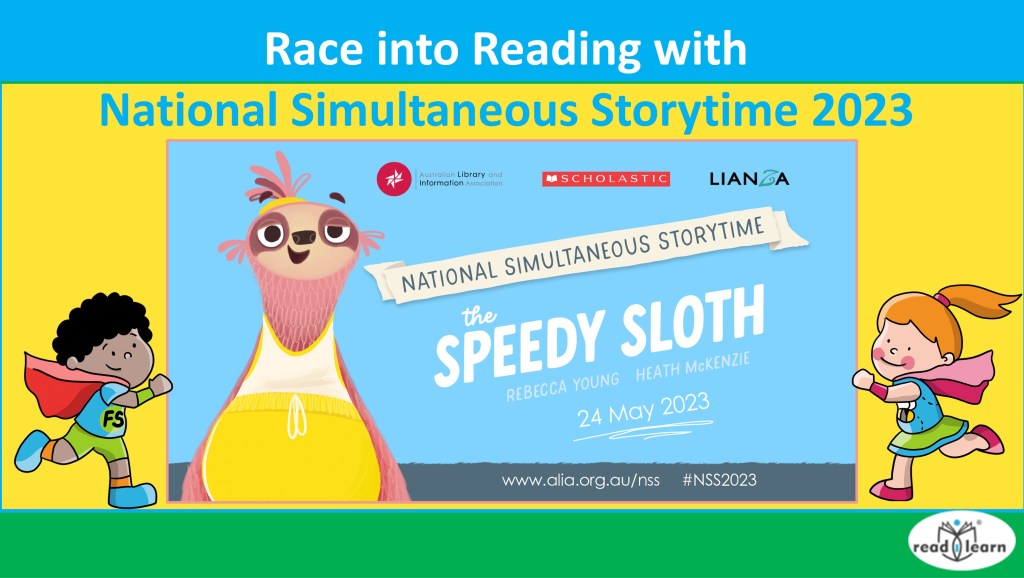
It was finally time for the event of the year, Spike couldn’t believe it— THE GREAT RACE was here! The other sloths said it couldn’t be done, but Spike didn’t care, she was ready to run!
About the author
Rebecca Young is an award-winning author from Sydney. Her first book, Button Boy, illustrated by Sue deGennaro, was a Notable Book for the 2012 CBCA Awards and has been published internationally. In 2016, Teacup, illustrated by Matt Ottley, won the Patricia Wrightson Prize for Children’s Literature in the NSW Premier’s Literacy Awards.
About the illustrator
Heath McKenzie is an award-winning children’s book illustrator who has written and illustrated countless books for children. Heath lives in Melbourne with his wife, two kids, dog, and a fish that he considers more of a lodger than a family member.
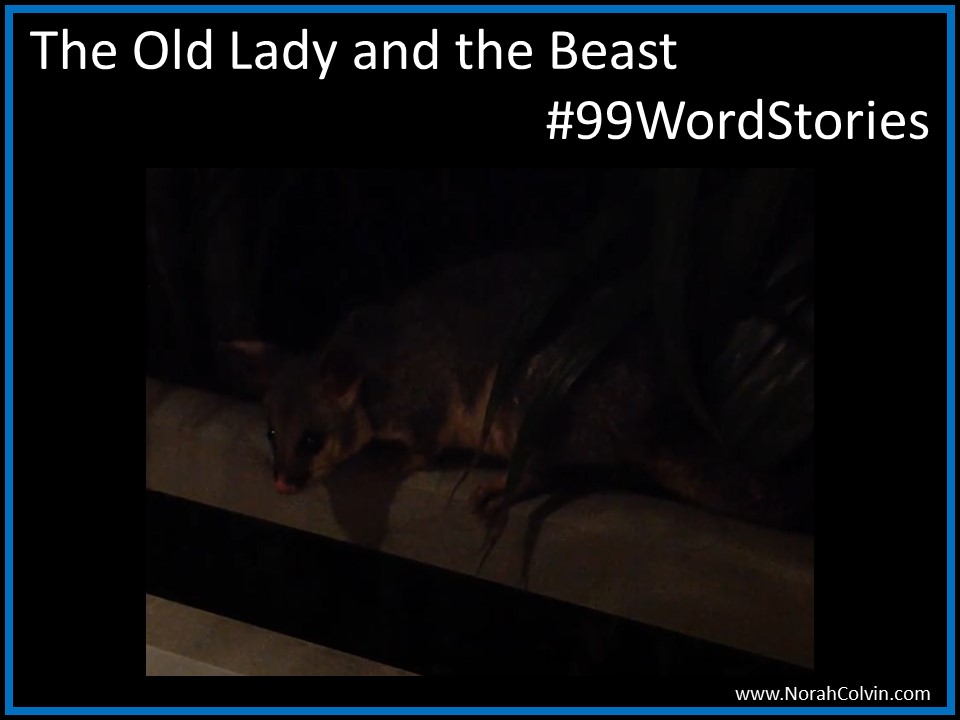
Beyond the village, where trees grow thick and tall, lives an old woman in a tiny cottage. Self-sufficient with her gardens, chickens, and one milking goat, she rarely ventures far.
By day, she whistles as she works. When darkness falls, she locks the doors, bolts the windows and draws the curtains. Then the beast arrives, landing heavy-footed on the roof. Soon the monstrous grunting, growling, screeching and hissing begin. She covers her ears and rocks, humming calming songs without effect. Eventually, the beast retreats. The night grows quiet and still, and she sleeps, awakening at daybreak, another night survived.
…
This story was inspired by a cute Australian marsupial, a brushtail possum who just happened to be outside my window making the hairs on the back of my neck stand up as I read Charli’s prompt. I didn’t have to go far for inspiration.
While you can listen to a little of the brushtail possum’s repertoire in this video, it is only a fraction of what I heard.
Although they are totally harmless to humans, the sound can be terrifying, even when you know what it is. It sounds like the creature from the black lagoon standing at the door wanting blood. The first night I heard one, maybe almost thirty years ago, it totally unnerved me. I went from window to window trying to find out what was making the sound that seemed to envelop our house. I had no idea what it was. The next day, a little sheepishly, I phoned the museum and informed them that I’d heard noises I could not explain. The fellow said, “Did it sound like this?” and mimicked it exactly, though not quite as loudly. When he told me what it was, I was greatly relieved. Although they are not big creatures, they make a hell of a noise on a tin roof.
You can find out a little more about this very cute Australian in this video.
Thank you for reading. I appreciate your feedback. Please share your thoughts.
Note: The collection of stories made in response to the previous prompt Impossibly Blue, including mine, can be read at the Carrot Ranch.
Today, I am delighted to introduce you to children’s author, Norah Colvin. Norah is a retired teacher and runs a marvelous educational site called Readilearn which is packed with wonderful teaching aids and ideas for promoting learning among children. Welcome Norah!
I have read and enjoyed a few of your children’s pictures books. They comprise of delightful age appropriate stories and lovely illustrations. Is there any particular children’s book author whom you admire and consider to be a role model for your writing?
Robbie, thank you so much for inviting me here to talk about my books and favourite authors. There are so many authors whose work I love, it’s hard to know where to start, but I guess if I had to pick just one, I’d have to say Mem Fox.
Mem has written so many wonderful picture books that touch my heart. Each one is a gem. She…
We are told to write what we know, and I am not a dog person. I’ve never owned a dog though both my children and their families now do. I’m currently trying to complete a story for this year’s Story Angels Anthology that has ‘Tales from the Bark Side’ as its theme. It took me ages to get a story started and I hope I can complete it to my own, and the judges’ satisfaction. Fingers crossed.
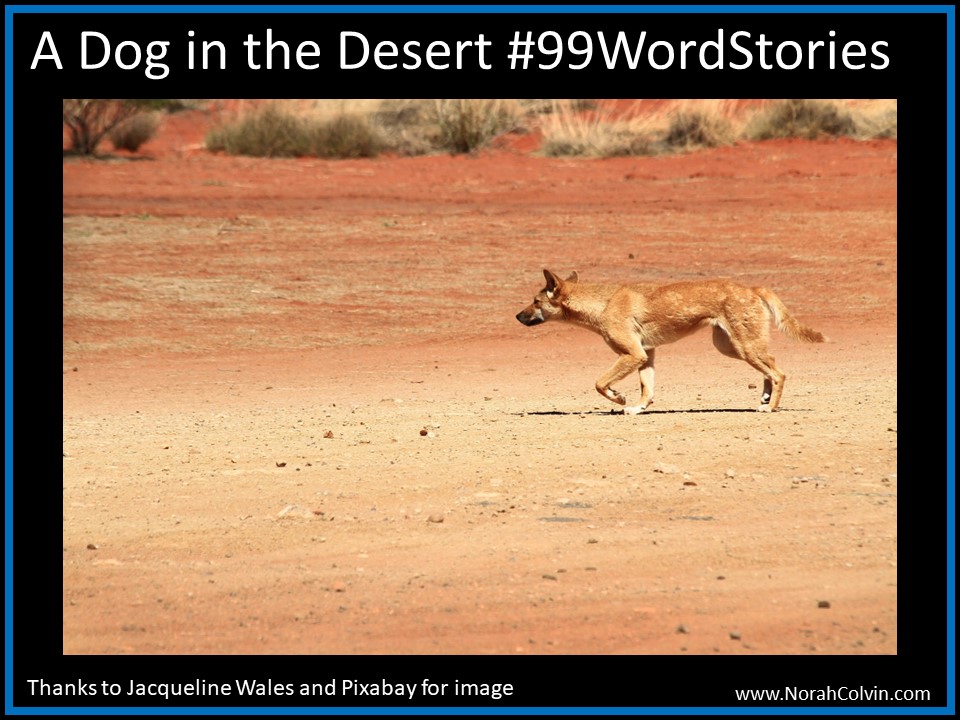
The last time Charli included a dog in the prompt, I didn’t submit. This time I’ve followed the prompt into the desert with Australia’s own native dog. I’ve gone for a type of information-packed free verse, not really a flash fiction, but there I went. I would’ve liked more time to work on it. Perhaps I still will. But this is it for now. I hope you enjoy it.
Desert Dog
Dingo
wild dog of this vast land
of forest, scrub and plain
no stranger to the desert
with golden fur and quiet white feet
a bushy tail and pointed ears
and long sharp teeth
Australia’s largest mammal carnivore
apex predator
been here 4,000 years or more
nocturnal hunter
with howls that rip the night asunder
call the pack in
or warn intruders away
marking territories with body scents
curious but shy
beautiful but dangerous
lean and mean
unpredictable
opportunistic hunter
hungry scavenger
do not coax it in
be ever wary
treat with caution
lest you become the dingo treat.
I think the Azaria Chamberlain story in 1980 made the world aware of the Australian dingo. It was a story that rocked the nation, not to mention its effect on the family. Although dingo attacks on humans are rare, they do occur, particularly if campers welcome them to their campsites and feed them, particularly if they are hungry and particularly if campers do not treat them with sufficient caution and respect. They may look like domestic dogs, but they are not domestic. They are wild. As recently as a week ago, a young girl was attacked by a dingo on K’gari (Fraser Island). However, many more people die by drowning and car accidents than by sharks, and even fewer by dingoes. Be cautious but not afraid.
Thank you for reading. I appreciate your feedback. Please share your thoughts.
Note: The collection of stories made in response to the previous prompt Impossibly Blue, including mine, can be read at the Carrot Ranch.
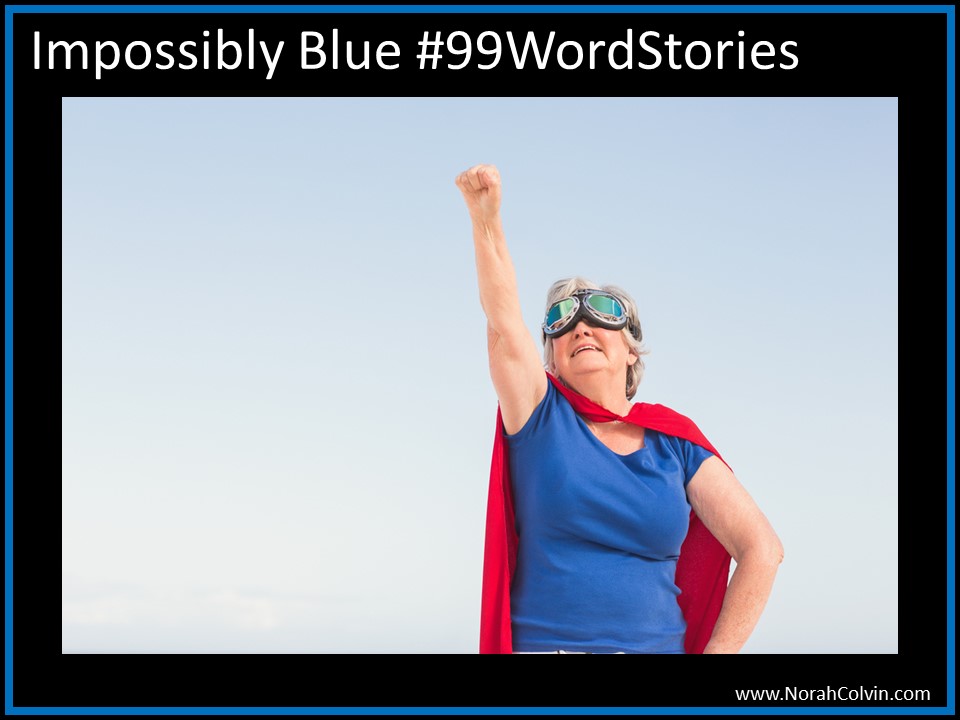
This week at the Carrot Ranch, Charli Mills challenged writers to In 99 words (no more, no less), write a story about something impossibly blue. You can go with sky or any other object. What impact does the color have on the setting or characters? Does it lead to action or create a pause? Go where the prompt leads!
Well I love blue sky days, and what better place to be on a blue sky day than at the zoo. So that’s where I went, with the grandchildren. I hope you enjoy it.
Zoo Wonders
The children studied the map while Granny sipped the compulsory cup of tea.
“Okay,” she said. Finally.
Granny squinted in the sunlight. “Wait.” She rummaged in her bag. “Drat. I’ve forgotten my sunnies. I’ll just pop back to the shop.”
The children groaned.
“To the lions,” they said, when Granny reappeared.
Two steps later, Granny cried, “Stop! Children stop! Look at the sky!”
“Why?”
“It’s soooo blue.”
“It’s always blue.”
“But this blue, it’s – impossible!”
“It’s just your glasses, Granny.” They read the label: With Impossible Sunglasses, every day’s a blue sky day.
“Now can we see the lions.”
Thank you for reading. I appreciate your feedback. Please share your thoughts.
Note: The collection of stories made in response to the previous prompt Shots Fired, including mine, can be read at the Carrot Ranch.
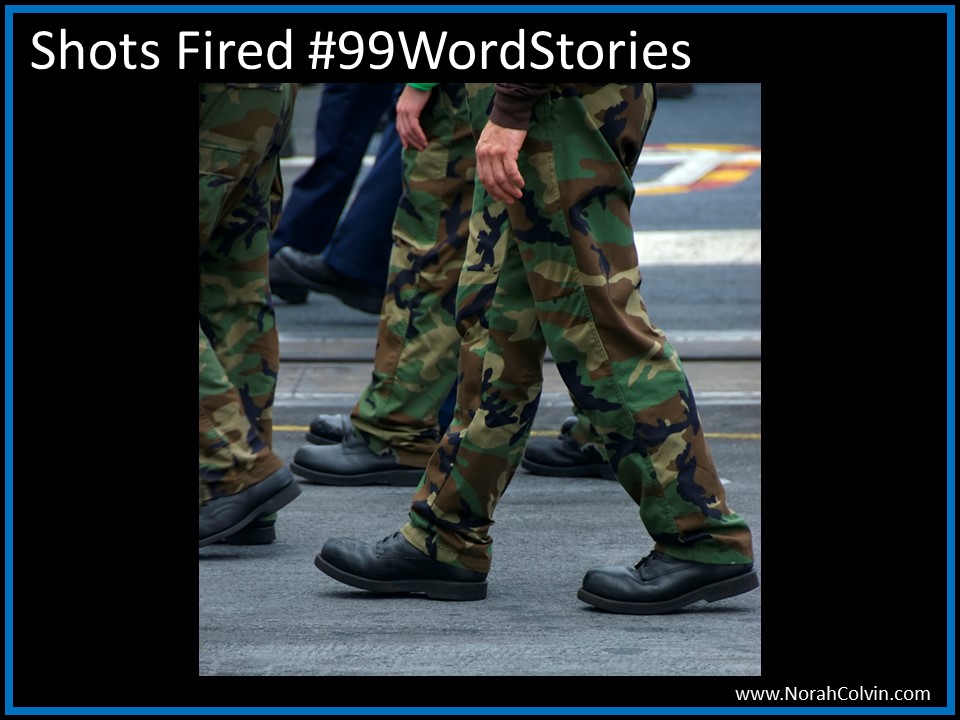
My story is a BOTS (based on a true story). My cousin, who was about my age, was the commanding officer in the passing out parade, and my four-year-old brother was the curious child. My cousin went on to train as an army officer and achieved quite a high rank. I wish I could remember more about that. Sadly, he passed away a few years ago. I’m grateful to Charli for this prompt and an opportunity to honour him. He was a very special person and I adored him as a cousin and a friend.
Who Shot Him?
The cadets were in formation as they marched around the oval, looking every bit the soldier with guns and uniforms, and not the pimply partly-whiskered teenage boys they’d return to after graduation. Proud relatives had travelled far to view this passing out parade. Spectators and graduates sweltered under the unforgiving summer sun. Some women armed with fans and umbrellas were the envy of those less prepared. One small cousin pushed through the crowd for a better view. At that instant, a front row cadet fainted. The distressed spectator scampered back to safety. “Who shot him, Mum? Who shot him?”
Thank you for reading. I appreciate your feedback. Please share your thoughts.
Note: The collection of stories made in response to the previous prompt Where Children Once Played, including mine, can be read at the Carrot Ranch.
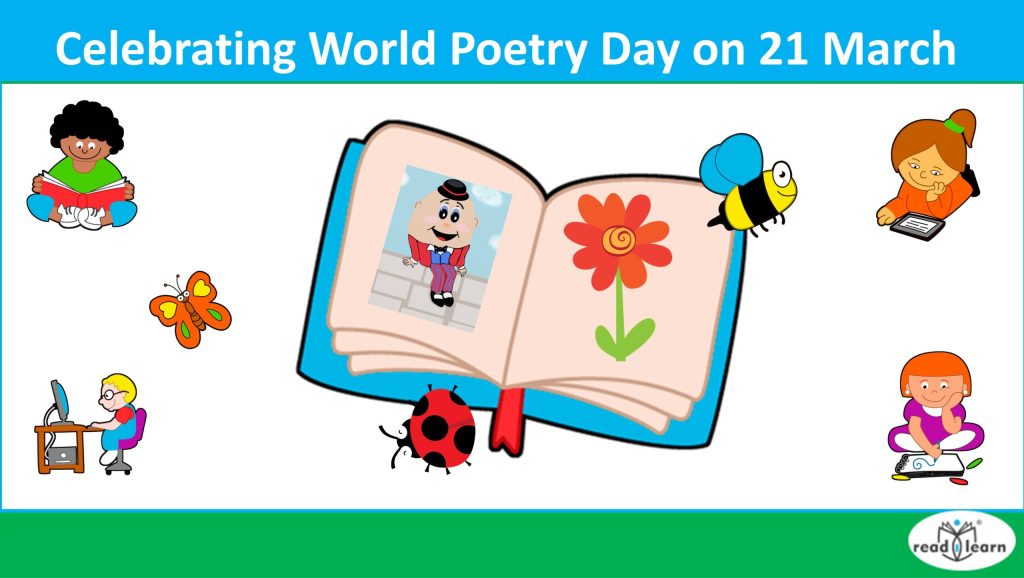
Tomorrow Tuesday 21 March is World Poetry Day – a day for appreciating and supporting poets, and for reading and writing poetry. It’s time to open your favourite book of children’s poetry and read your favourites to your children.
Poetry is a wonderful tool for learning language. When children listen to or recite poetry, they are learning the rhythms and sounds of language, exploring ideas and how to express them, expanding vocabularies, deepening understanding in nuances of meaning, and having fun with thoughts and their expression.
Children are exposed to rhythm and rhyme from their earliest days through nursery rhymes, chants and songs as well as the text of picture books. It is important for children to have opportunities for appreciating and exploring poetry into and throughout their school years. Our Australian Curriculum places poetry firmly into the literature strand of English teaching each year. But it is not necessary to relegate poetry just to a poetry unit of work when stipulated by the curriculum. Poetry, rhymes, chants and songs can be easily incorporated into the daily class program. World Poetry Day should be an unnecessary excuse.
















 Norah Colvin