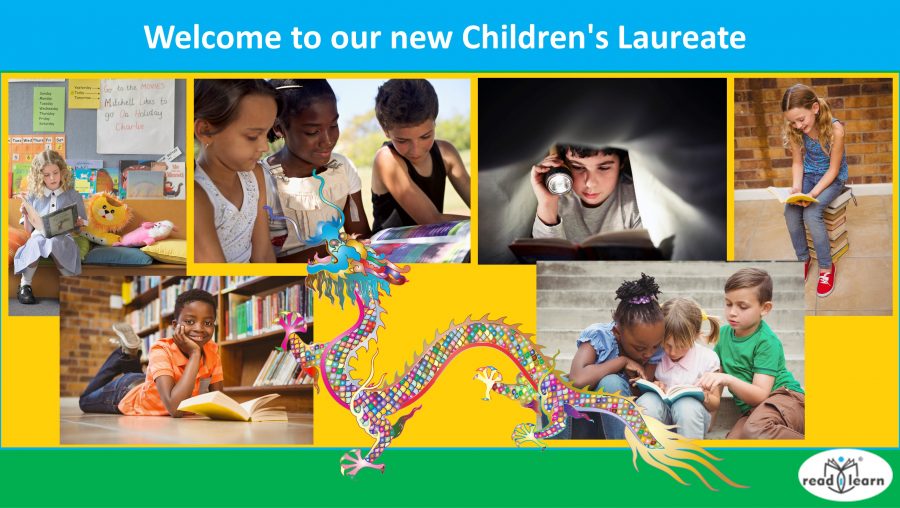
This week the Australian Children’s Laureate Foundation announced our new Children’s Laureate for 2022-2023, Gabrielle Wang.
Gabrielle Wang is an Australian author and illustrator and our seventh Children’s Laureate. She was born in Melbourne of Chinese heritage. Her father is from Shanghai. Her maternal great grandfather came to Victoria during the Gold Rush.
Gabrielle has been an author for 21 years and has had 20 books published. She mainly writes for 8-12 year olds, but has written for older and younger children too. Her stories are a blend of Chinese and Western culture with a touch of fantasy.
Be inspired by Gabrielle’s journey in a video that can be viewed following this link.
The theme for Gabrielle’s term as Children’s Laureate is ‘Imagine a Story’.
She says,
“Your imagination is your most treasured possession and I want to encourage all children to use their imaginations regularly by reading, drawing and writing stories.”
What a wonderful theme.
In her two year ‘Follow the Dragon’ tour of Australia, visiting and conducting workshops in schools, galleries and libraries, Gabrielle has four key messages for children, parents and librarians:
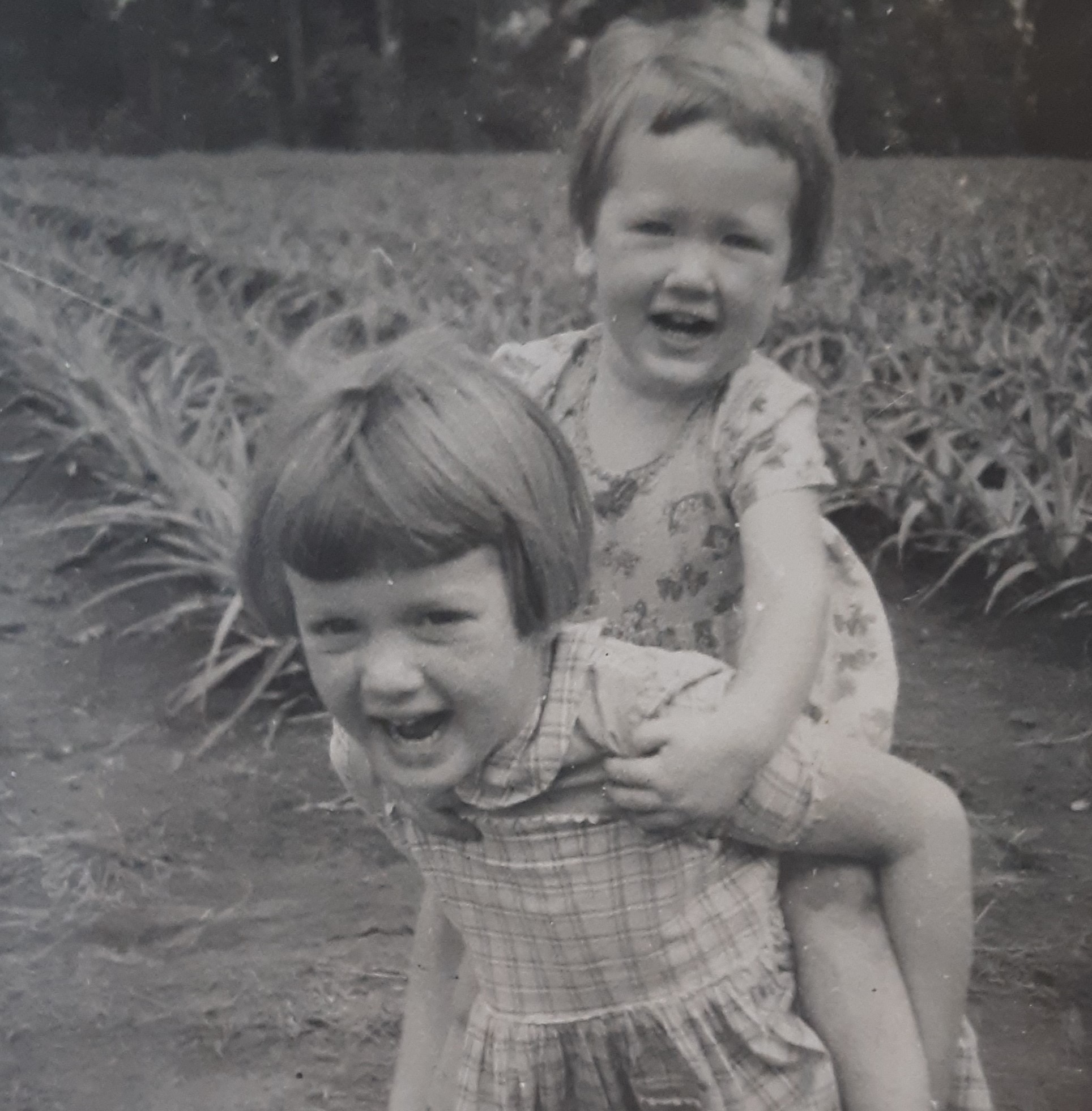
Mum and Dad were both country people and for the first six years of my life, I lived on a farm. It was a small crops farm. Dad grew beans, cabbages, pineapples, and I’m not sure what else. We had chickens. Of that, I am sure. When I went to collect the eggs one day, there was a red-bellied black snake curled up around the eggs. I ran to get Mum who came running back with a rake. By the time she got there, the snake was gone. Thankfully.
Mum and Dad also tried to keep a cow for milking but without success. One cow knocked down the fence; another climbed under; and a third jumped over. They gave up on keeping cows after that. (I’ve written about those cows twice before: here and here.)
Not long after that, Dad sold the farm and we moved to suburban life by the beach. My siblings and I spent long days in the water, on the sand or climbing the red cliffs after which the area got its name. The school holidays dragged with nothing much to do, even if there were plenty of books to read, which was my favourite thing to do. So, an invitation to holiday with cousins on a property (cattle and sheep station) in the country was a joy. Interestingly, my cousins loved their holidays at the beach. My responses to Charli’s prompt are based on those thoughts but are definitely not true to life. Not my life and not back then. Regardless, I hope you enjoy.
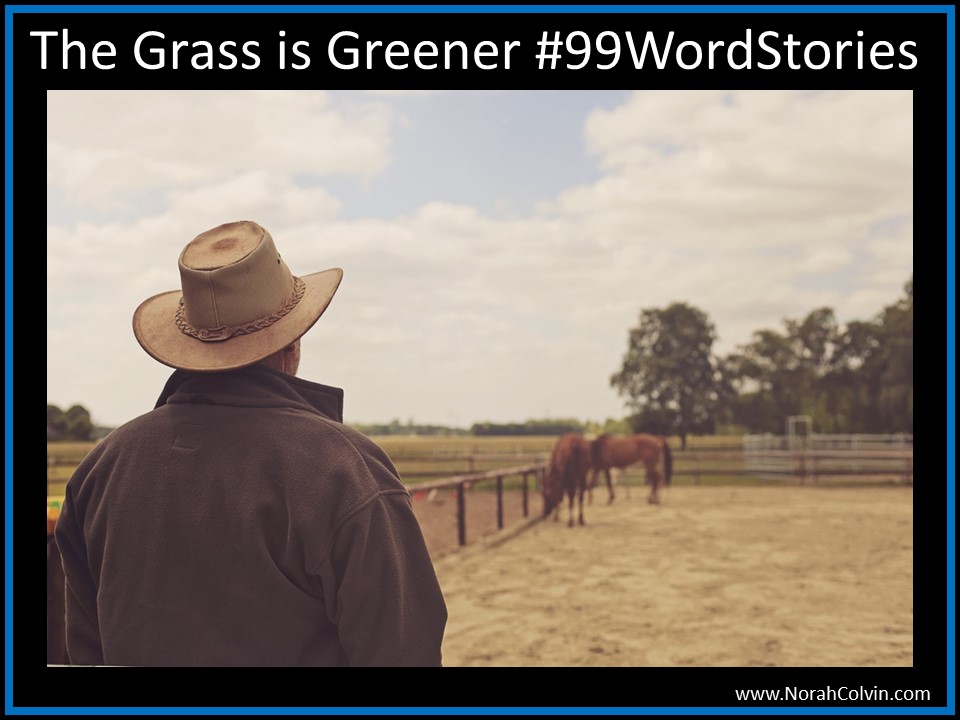
The Grass is Greener I
Holidays with her cousins on the farm were the best. Days stretched from dawn to dusk with unbounded fun the cousins called chores: milking cows, feeding chickens, collecting eggs, riding horses and, sometimes, zooming around paddocks on quad bikes to muster sheep. Her cousins were never told what to do. They’d decide. ‘C’mon, we’ll milk the cows,’ they’d say. Or ‘On your bike. Let’s muster some sheep.’ So many fun things to do. At home, Annabelle’s chores dragged. The more she procrastinated, the longer they took. The days were interminable. ‘I wish there was something to do,’ she’d say.
The Grass is Greener II
Holidays with cousin Annabelle in the city were the best with something different to do every single day: watching movies at the cinema, slurping milkshakes in the mall, bowling balls at ten pins, splashing in the council pool. The stores were stocked with treasures they’d never imagined and deciding how to expand the value of their hard-earned saved-up dollars was challenging. One day a bus trip, the next a ferry ride on the river, zooming along streets on motorised scooters or joining a Segway tour; they couldn’t decide which was more fun. Anything sure beat their day-long country chores.
Thank you for reading. I appreciate your feedback. Please share your thoughts.
The recent audit of readilearn resources for teaching number showed that, while there were many lessons for teaching understanding of number and place value to 100, lessons for teaching numbers above 100 were scant. This is somewhat understandable as confidence with numbers relies upon a firm foundation in understanding the basics of our decimal system. However, it was a situation I needed to remedy.
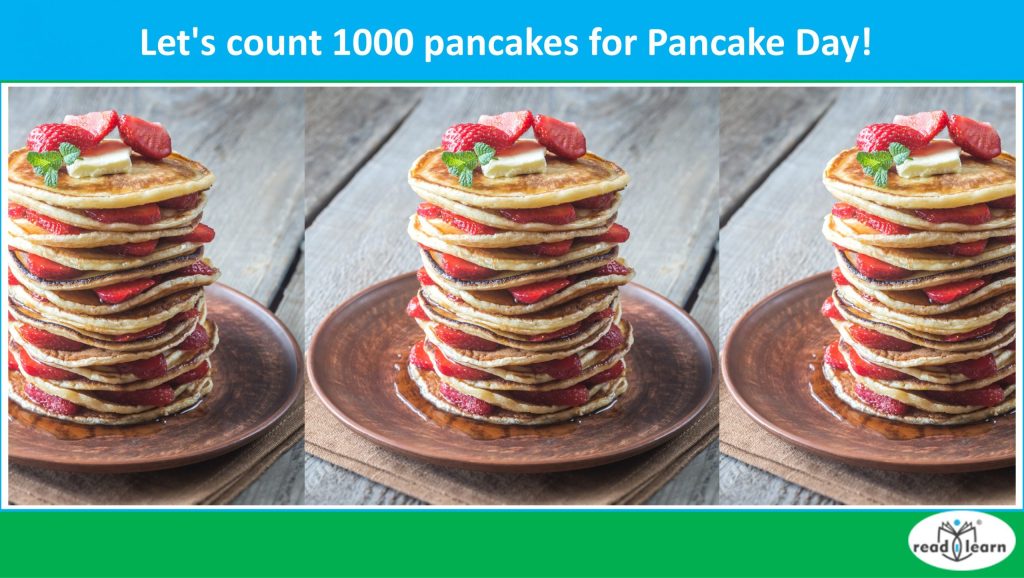
Last week I added 1000 Pancakes to the collection, a lesson to help children visualise 1000 objects by counting in 1s to 10, 10s to 100 and 100s to 1000.
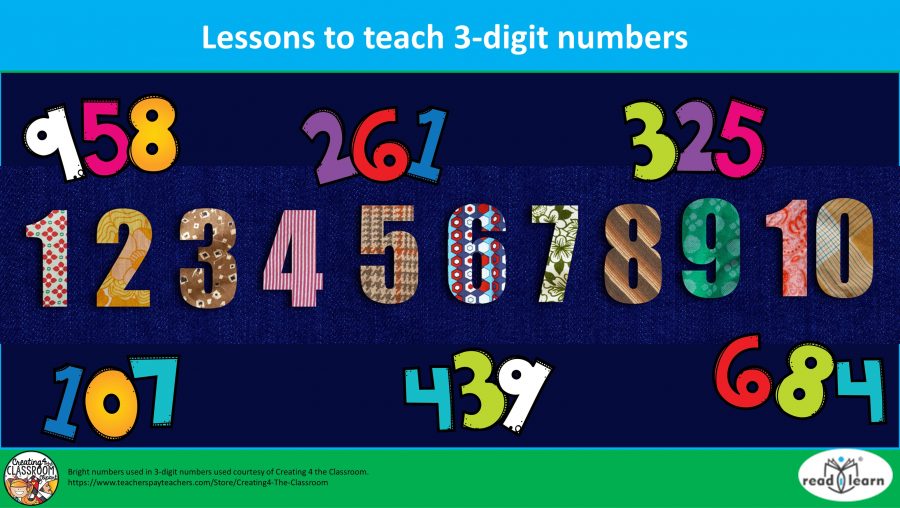
This week, I added Let’s Count Pancakes — 3-digit numbers, a lesson that helps children recognise and represent 3-digit numbers and understand the value of each numeral in its place. The interactive lesson ready to teach on the interactive whiteboard consists of ten different slides ready to discuss with the children.
On each slide, children count the pancakes and write the number of hundreds, tens and ones they count.
Next week sees us here in Australia bid farewell to summer and welcome in the cooler (we — or I — hope) days of Autumn. Next Tuesday is not only 1 March, but also Pancake Day, which means it’s only six weeks until Easter and, for many of us, school holidays.
When I completed the recent audit of readilearn lessons in teaching number by mapping them to the Australian Curriculum, I realised that we were missing lessons in numbers over one hundred. As children in Year Two learn about numbers up to one thousand, I realised there was a gap to fill. I started by making a lesson called 1000 Pancakes.
I chose pancakes for three reasons:
Pancake Day is next week. However, the lesson can be used at any time of the year; it makes no reference to Pancake Day.
Pancakes are popular with children as well as adults.
Pancakes in stacks are easy to visualise.
The lesson 1000 Pancakes gives children the opportunity to visualise 1000 pancakes by comparing the quantity to 10 and 100. It is a lesson ready-to-teach on the interactive whiteboard, a readilearn readilesson.
Jayden was obsessed with zippers almost from birth. The swish of a zipper always turned tears to laughter.
When a toddler, Jayden’s fascination with interlocking teeth equalled the zip-zip-swish. Zippered items were treasured more than any store-bought toys.
When grandparents visited, Jayden targeted Grandma’s handbag. Zip. Zip …
“Is that boy still obsessed with zippers?” said Grandpa. “Has he been tested yet?”
“It’s just a phase,” said Dad.
“Humph,” said Grandpa, opening his Gladstone bag. Swhooosh.
Jayden stopped. What was that?
Grandpa closed the bag. Blonk.
Swhooosh; blonk. Swhoosh; blonk.
Jayden abandoned Grandma’s bag for Grandpa’s.
Zipper phase zipped.
Thank you for reading. I appreciate your feedback. Please share your thoughts.
Note: The collection of stories made in response to the previous prompt Anxiety can be read at the Carrot Ranchhere.
For the past little while, I’ve been doing an audit of the readilearn maths resources that focus on number and matching them to the Australian Curriculum Number and Algebra Content Descriptions. Before making new resources, I wanted to see what concepts and content I’d already included and where the gaps, if any, were. I presented my findings in a table that I have made available as a free resource in the Maths Number collection. The table will make it easier for you to find resources to teach particular concepts.
It didn’t surprise me that the majority of resources target the basic understanding of numbers to ten and then to 100. After all, if children understand these numbers, they have a firm foundation on which to build an understanding of larger numbers.
In this post, I share where some of the readilearn maths resources can be used when teaching the Australian Curriculum. No doubt, maths concepts to be taught are the same worldwide.
These are only a few of the resources that match each of the codes and only a few of the codes. For further information, please refer to the list ACARA and readilearn lessons in number which can be downloaded free. Note that some of the resources support your teaching of more than one content description.
Counting and naming numbers in sequence to and from 20
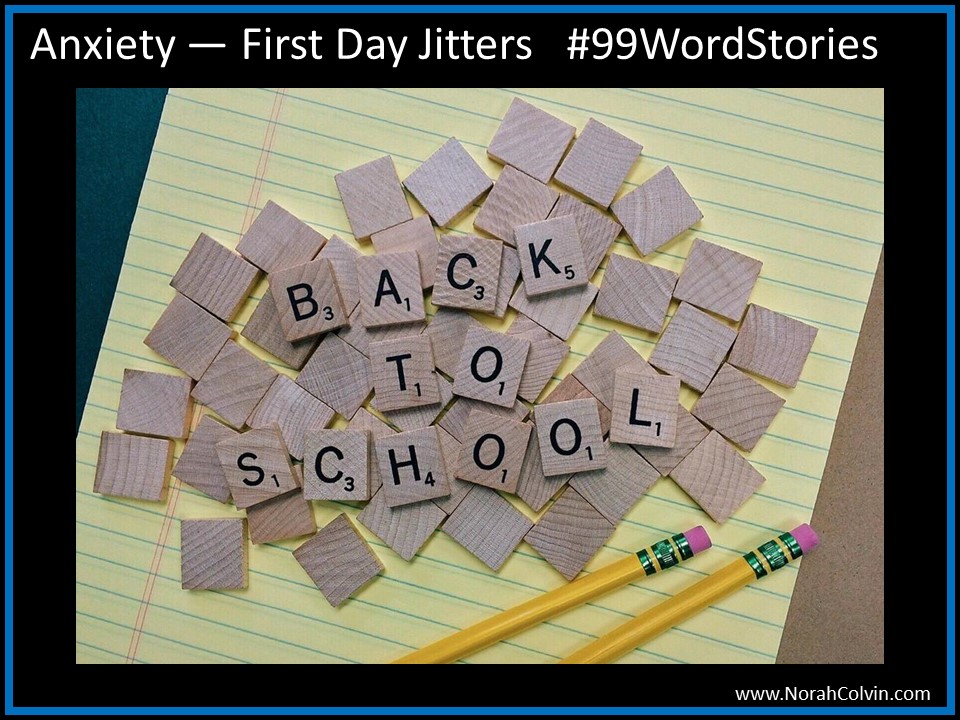
Anxiety is probably familiar to most of us at some stage of our lives — starting a new job, public speaking, waiting for a medical diagnosis. We all feel it in lesser or greater degrees. Even children feel it. It’s not uncommon for children to feel some anxiety when starting a new school. But children aren’t the only ones. Parents may feel some anxiety about how their children will fare. It may or may not surprise you, that teachers feel it too. Having spent most of my life in schools as either student or teacher, where else could I go with this prompt?
First Day Jitters
“I feel sick.”
“My tummy feels all jumbly.”
“My head hurts.”
“I don’t want to go.”
“You’ll be okay once you’re there. Everyone feels the same on their first day at a new school.’
“But what if they don’t like me?”
“They will. Come on. You’ll feel better when you’re up.”
“But what if I mess up?”
“You won’t. Close your eyes. Take some deep breaths. Relax. You can do this.”
Everyone was already seated when he entered the room. They smiled. “Good morning, Mr Clarke.”
He smiled back. “Good morning, children.”
She was right. He could do this.
Thank you for reading. I appreciate your feedback. Please share your thoughts.
Note: The collection of stories made in response to the previous prompt The ’49ers can be read at the Carrot Ranchhere.
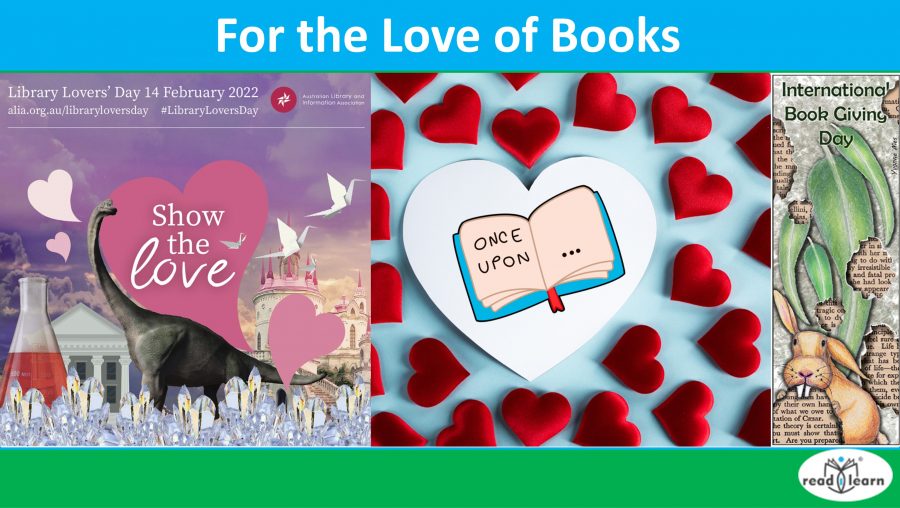
It’s not difficult for me to talk about love and books in the same sentence as I have loved books for as long as I can remember. Although my reading habits have changed over the years, I have always been an avid reader and was a dedicated borrower of books from the library as I was growing up.
As an adult, I tend/ed to purchase rather than borrow for my own reading and could never pass a book shop without purchasing something for me, a family member or friend, and a picture book or three for my classroom collection. Books borrowed from the school library filled out the classroom library.
A birthday, Christmas or other occasion never passed without giving and receiving books. So, being able to combine the celebration of love, books and an appreciation for libraries is a treat. Nothing could be easier. Simply take someone you love to the library and gift them a book.
Valentine’s Day probably needs no introduction. In many parts of the world, it is a day for celebrating love and romance. Gifts of chocolates, flowers and verses in cards are often given.
Of course, in the classroom, our discussions aren’t about romantic love, but that doesn’t mean we can’t think about those important people in our lives whom we do love.
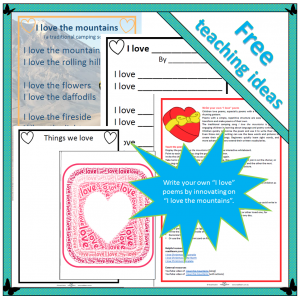
Children can write their own “I love” poem by innovating on the traditional camping song I love the mountains.
Here’s a bit of trivia to introduce my story in case, like me, you weren’t aware of the term forty-niner. Forty-niner refers to miners and others who took part in the 1849 gold rushes in California. Charli does say we can go where the prompt leads, but I hung around looking for a nugget. I hope you enjoy it.
The ’49ers
The history buffs needed a name for the trivia competition — nothing mundane and overused like ‘The No Hopers’ or boringly obvious like ‘Work Mates’ — something meaningful, not overly obvious, but not too obscure.
“How about The ’49ers?” one suggested.
“Perfect!” the others agreed.
No one thought too much about the monikers of others, but was it coincidental that each week The ’49ers scored exactly 49?
Another team scoffed. “Should have been ‘Clueless’.”
“They’re certainly not all 49.”
“Forty-nine and more, I’d say.”
When the night’s theme was the gold rushes, the researchers showed their mettle and panned the gold.
Thank you for reading. I appreciate your feedback. Please share your thoughts.
Note: The collection of stories made in response to the previous prompt The Wish I Made can be read at the Carrot Ranchhere.















 Norah Colvin