Blog
-

Whose idea is it anyway?
First of all, let me say, there is nothing scientific in this article.
The notions, unless otherwise attributed, are just my thoughts and ideas.
Or are they?
Have you ever had an idea just ‘pop’ into your head?
What about an entire poem or song? Maybe even a story?
Have you ever had an idea; only to find out that another has had almost the exact idea at roughly the same time as you with no chance of collaboration or leak?
Where have these ideas come from?
Do you really think you have thought them up when they have come fully-formed and unbidden?
Sometimes I am not so sure.

http://www.openclipart.org Sometimes an idea pops into my head; an idea with no connection to any current thought. It may take me by surprise and make me think: Why didn’t I think of that before? Or rather, why did I think of that at all?
I can’t explain the force that at times propels my hand across the page, fervently trying to keep pace with and capture the words as they spill forth, lest they escape to a region from which they would never be retrieved.
Sometimes I’ve written stories, which I may, or may not, have submitted to a publisher, only to find another very similar in print not long after. How can this be? There was definitely no collusion. My story had been written before the other was in print; and the other would have been underway by another publisher before mine had been submitted.
Have you ever noticed that often two movies on a similar topic or theme are released almost simultaneously? Is this coincidence or planned?
I know that sometimes songs are very similar, and in fact, there have been court cases over certain bars and riffs. I am surprised this doesn’t happen more often. How can new combinations of notes still be arranged? How difficult it can be to get a melody out of one’s head. How much more difficult it must be to be certain whether that melody is one of your own creation or one that your ears have captured.

image courtesy of openclipart.org I remember hearing someone suggest, many years ago, that there are many ideas out there (floating around somewhere in the universe?) ready to be picked. Sometimes they are picked simultaneously by different people in different places around the world.
I wasn’t too sure about that, but it did provide an explanation, of sorts, for the duplication of ideas.
A few months ago, I listened to a fascinating TED talk by Elizabeth Gilbert: Your elusive creative genius.
The focus of Elizabeth’s talk is a little different from my own, but she did offer some thoughts on this topic also.
I was particularly interested to hear that in ancient Greece and Rome
“people did not happen to believe that creativity came from human beings . . . People believed that creativity was this divine attendant spirit that came to human beings from some distant and unknowable source, for distant and unknowable reasons.”
The Romans called this entity a “genius”. A genius was not a clever individual. It was the spirit that would help shape the artist’s work. The artist did not need to take full credit or responsibility for the work, as the work was that of the “genius’ working through the artist.
Now that seems to support the notion of ideas arriving fully-formed, as does this next one:
Elizabeth went on to talk about the American poet, Ruth Stone, who described how “she would feel and hear a poem coming at her from over the landscape” and she would have to run back to house in order to “collect it and grab it on the page” before it thundered on to another poet. I won’t quote the whole story here. Please follow the link to read the rest. It may surprise you as much as it surprised me!
Looking for a little more content for this article, I came across this blog post by Amanda Craig “Synchronicity, or when writers have the same idea”
Amanda writes,
“Synchronicity is when two or more people have the idea at the same time. Science is littered with examples of this. Darwin only published his Origin of the Species because a fellow biologist had also deduced the concept of natural selection, and sent him his own book in manuscript; several people can claim to have invented the computer, and so on. So, too, in literature. I still remember a Spectator Diary Susan Hill wrote when she found out that Beryl Bainbridge was working on a novel about Scott’s doomed expedition to the Antarctic. She had to abandon it. Rival biographies of the same person are commissioned simultaneously, and sometimes even films (like the two versions of Les Liasons Dangereuses).”
Now, is that just what I’ve been talking about?
Follow the link to her entire article to find out what she thinks about synchronicity.
Still eager for more, this article about Multiple discovery explains that scientists, also, are similarly burdened and, according to Robert K. Merton
“Sometimes the discoveries are simultaneous or almost so; sometimes a scientist will make a new discovery which, unknown to him, somebody else has made years before.”
So where is all this leading me?
It is simply to introduce the poem, “A leaf floated down” which came to me as I was preparing for my day. The thoughts were not connected to any others of the moment; the first verses simply wrote themselves, and the parts that I am least happy with, are the parts I laboured to bring forth. I hope it is my own!
I’d love to know what you think about this synchronicity that we, as creatives, often experience. Please share your thoughts!
-

Best wishes for 2014!
Wishing you all the very best for 2014!
I look forward to sharing the journey.
Follow this link to see when the new year begins in each time zone around the world.
Did you know that it takes more than 24 hours for the new year to begin in all the world’s time zones?
-

Season’s Greetings!
A big thank you to all who have walked with me all, or any part, of the way as I took my first tentative steps into the world of blogging (and tweeting) earlier this year.
I appreciate every contribution, from visits and suggestions, to liking, commenting and re-blogging.
I have learned more than I probably even realise, from many different people, and the encouragement from all interactions has helped me find my voice and the strength to maintain the journey.
This post offers a break from my usual educational fare by providing a little Christmas jollity. I hope you enjoy it.
Wishing you and your loved ones much joy during this holiday season.
Norah
-
Counting on the holidays!
When the topic “Maths” is mentioned in conversation among adults, including teachers, many of them moan, “I hate maths. It’s too abstract. I could never understand it. I can’t see the point in it.”
I think it is a sad situation that many such adults were turned off maths in school by teachers who didn’t introduce them to the beauty of maths, who didn’t teach maths in the context of real-life purposes and whose pedagogical kit bag was entirely filled with worksheets of meaningless and endless algorithms to complete.
I am one of those adults too. In my final years of high school I had a “teacher” who could do the math but couldn’t teach the math; couldn’t explain the why or the how, or any of the steps required to achieve understanding. Maths became an impenetrable forest of meaningless algorithms, formulae and theorems.
As both a parent and teacher of young children, I was determined to not be an instrument of math torture. Granted this may be easier with young children than it is with older students, but I’m sure there are still ways of making maths fun and meaningful in high school classrooms.
The suggestions in this article provide parents of young children with ways of finding maths in everyday contexts and incorporating mathematical learning effortlessly into holiday activities. Of course, the activities are of benefit at any time, not just during the holidays!
If you don’t have young children to inspire, or inspire you, please move on to the end of the article for some suggestions to excite your own interest in maths!
Although the word “counting” appears in the title, it is important to remember that maths is not just counting.
The strands of maths as described by The Australian Curriculum include:
- Number and place value
- Patterns and algebra
- Measurement and geometry
- Probability and statistics
My list includes just a few suggestions for each of those strands to get you started. Need I say there is an infinite number of possibilities?
25 ways to keep children thinking mathematically during the holidays:
Number and place value
- Count items e.g. birds in the sky, shells collected from the beach, people for lunch, steps in a staircase, windows on a house, seats in a bus . . .
- Count out the cutlery required for each person at dinner
- Include your child in shopping activities by helping them to:
- Recognise the coins and notes
- Count the value of coins and notes
- Predict whether they have enough money to purchase an item, and whether there will be change
- Tender the money in payment for an item
- When your child is sharing e.g. the biscuits, balloons or slices of fruit, ask them to:
- Predict if there will be enough for everyone to have one, or more than one each
- Share out the items, allocating the same number to each
- Determine if there are any left over and what to do with them
- Use terms like half and quarter correctly, e.g. when cutting apples, oranges, sandwiches, pizza, to indicate pieces of equal size
- Play games that involve counting, e.g. counting the number of skips, balls in hoops, pins knocked down or dice games like snakes and ladders that require adding as well as number recognition and counting
- Make up number stories e.g. “We had five apples in the bowl. I ate one, and you ate one, how many are left?” “
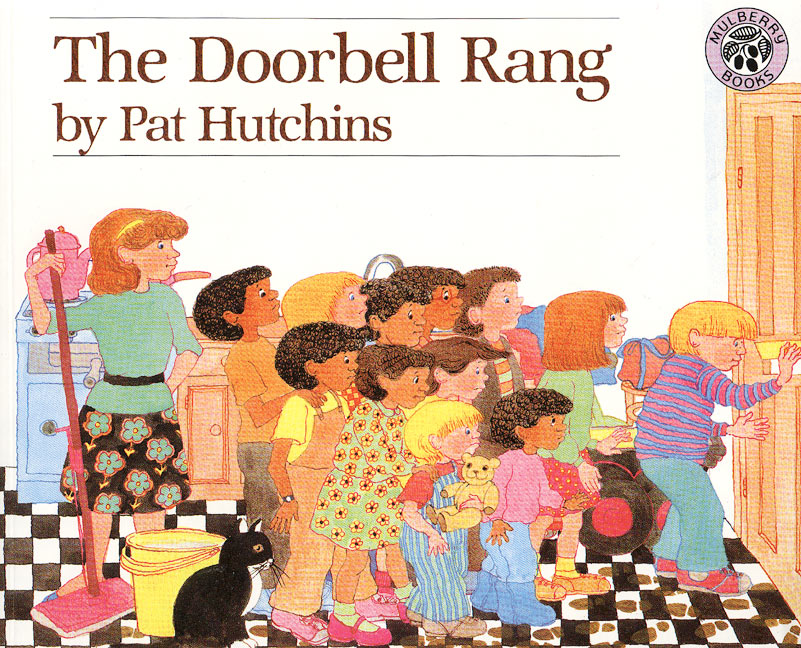
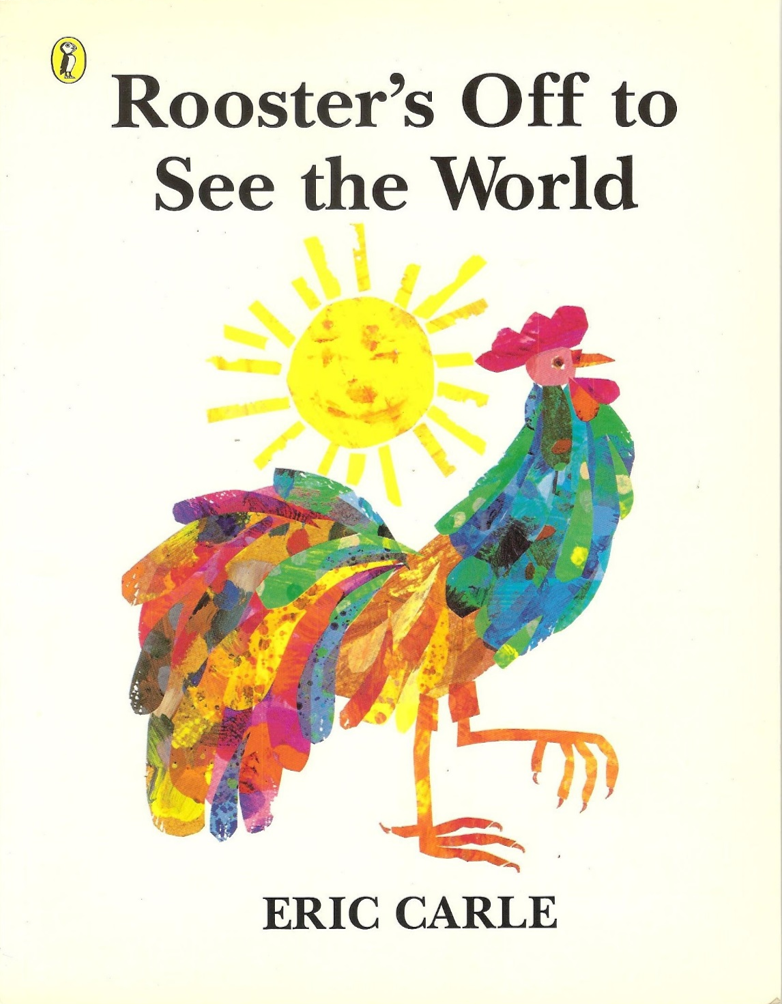
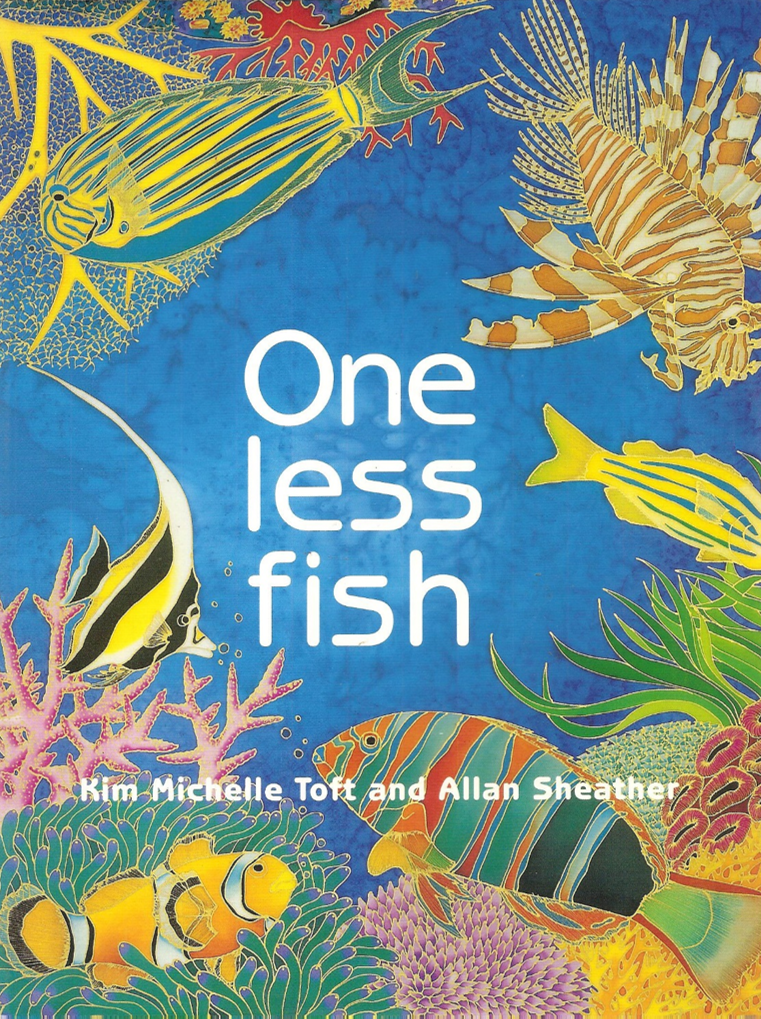
- Read books with number concepts e.g. Pat Hutchins The Doorbell Rang, Eric Carle Rooster’s off to see the world or Kim Michelle Toft One Less Fish
Patterns and algebra
- Use items to make patterns e.g. sort and create a pattern from shells collected at the beach, building blocks or toy cars
- Look for patterns in the environment e.g. fences, tiles, walls and window, zebra crossings
- Decorate cards and drawings with a patterned frame
- Make gift wrapping paper by decorating with potato prints or stamp patterns
Measurement and geometry
- Include your child in cooking activities and allow or support them to:
2. A child’s understanding of volume and capacity can be developed when they:
- pour glasses of water from the jug and discuss terms such as enough, full, empty, half or part full, more, less
- pour from one container into another of a different shape to compare which holds more and which holds less
3. Scales can be used to compare the mass of different items or quantities e.g. compare an apple and an orange, measure the mass of butter required for a recipe
4. Measuring length can be included by:
- measuring and comparing height
- cutting a length of string to tie a package
- measuring who is closest to the jack in a backyard game of lawn bowls
5. Use the calendar to
- Learn the names and sequence of days in the week or months in the year
- count the passing days or the number of days until an event
6. Identify shapes in the home and environment e.g.
- 2D shapes: tiles on floor and walls, shapes of windows, sections of footpath
- 3D shapes: cereal boxes (rectangular prism), balls (sphere), bottles or cans (cylinder), dice (cube)
7. Play games that involve shapes e.g. jigsaw puzzles, tangrams
8. Talk about directions e.g. left, right, forwards, backwards and follow directions on a grid
9. Play games that involve directions and movement in space e.g. battleship, Hokey Pokey, Simon Says, snakes and ladders, ludo
10. Read and discuss books that include measurement concepts e.g. Pamela Allen: Who Sank the Boat? (volume); Eric Carle: The Very Hungry Caterpillar (days of the week) and The Bad Tempered Ladybird (time); Penny Matthews and Andrew McLean A Year on our Farm (months and seasons); and for looking at places on a map Mem Fox Sail Away The ballad of Skip and Nell or Annette Langen & Constanza Droop Letters from Felix
Probability and statistics
- When discussing the weather or desired activities include the language of probability e.g. possible, certain, likely, unlikely, impossible
- Encourage children to collect data about family or friends by asking yes/no questions e.g. do you like swimming, or making a graph of the family’s favourite colour or meal.
- Play games with spinners and dice and talk about the likelihood of spinning or throwing a particular number
This list is really just a beginning. I’m sure you will add many more suggestions of your own.
For your convenience, the list is available to download FREE in my TEACHERSpayTEACHERS store.
As promised I will leave you with a few suggestions to spark your own interest in and love of maths. Be sure to check them out:
These are must listen TED talks by Arthur Benjamin:
The magic of Fibonacci numbers
and A performance of “Mathemagic”
And a fascinating one for the Christmas season “The 12 days of Pascal’s triangular Christmas” by Michael Rose on The Conversation.
If you want to delve a bit deeper, here are some interesting reads to get you started:
Charles Seife Zero: The Biography of a Dangerous Idea
Mario Livio The Golden Ratio: The Story of PHI, The World’s Most Astonishing Number
Rozsa Peter Playing with Infinity: Mathematical Explorations and Excursions
I listened to the biography of zero on audiobooks this year. It was a fascinating listen.
What do you think of maths? Do you love it or hate it?
I hope you enjoy your adventures in maths! A world of possibilities awaits!
-
Let the children write! 20 suggestions to get children writing during the school holidays
The school year in Australia is over and the long summer holidays have begun.
Parents often wonder how they will keep their children entertained during the long days with few structured or timetabled activities.
When returning to school after many weeks without the formal practice of skills taught during the previous year, teachers often lament that children’s writing ability (content, sentence structure, spelling, punctuation and handwriting) has declined. Sometimes this is an illusory effect of comparing end-of-the-previous-year results with those of students who are just beginning the same school year level. However some of it is a result of the natural attrition that occurs when ongoing practice is not maintained.
One solution to this issue is as simple as:
Let the children write!
Let them have paper, e.g.
- loose paper in all sizes and colours, adhesive notepaper, letter writing paper, cards and postcards
- plain paper, lined paper and patterned paper
- bound paper in notebooks, exercise books, diaries and lockable ‘secret’ journals
- envelopes and stamps
- tablets and computer with word processing and drawing software
Let them have implements, e.g.
- lead pencils, coloured pencils, fine pencils, thick pencils
- jumbo crayons, fine crayons, wind-up crayons
- charcoal
- felt-tipped pens (thick and thin tips), black, silver, gold, pastel and bright shades
- paints
- tablets and computer with word processing and drawing software
Any of these make wonderful gifts that keep on giving, for a child of any age.
Here are 20 suggestions for keeping your children entertained while maintaining their writing skills.
The suitability of each suggestion will depend upon the abilities of the individual child and the level of support required. The focus and response should always be upon the content of the message, rather than the spelling, punctuation or handwriting. The idea is to encourage a love a writing; not to discourage it through negative attention to details which will improve with practice – and reading!
Just as writing is a great way of improving reading, reading is a great way to develop writing skills through exposure to correct use of grammar, spelling and punctuation, as well as the richness of language!
The possibilities for writing opportunities are limited only by your imagination!
- Use adhesive notepaper to write messages to your child and encourage your child to write a message back.
- Encourage children to write letters or emails, cards or postcards to grandparents, aunties, uncles and friends. These can be to inform them of the holiday or the year’s activities, or to thank them for a visit or gift.
- Demonstrate that you value writing by making time for your own writing, e.g. keeping a diary, writing letters and cards to family or friends, writing a shopping list.
- Display a message board prominently in the home and list important events, reminders and messages. Encourage your child to add their own messages to the board.
- Provide a calendar or diary and ask your child to note family birthdays, holidays and events for future reference.
- Encourage your child to keep a diary in which important events and feelings are noted.
- Play word games e.g. Scrabble and other crossword games; Boggle or ‘hangman’. (If you don’t like the connotation of ‘hangman’, give each player ten counters to start with. Each time an incorrect guess is made, they give away a counter. If all counters are used then they miss that word.)
- Write poems and songs together.
- Encourage children to write and perform ‘plays’ for the family.
- Take photos of events during the day and use them to make a photo book. This can be done instantly on a computer with photos taken using a phone or tablet and emailed with accompanying text.
- Insert photos from a phone, digital camera or tablet into a slideshow program such as PowerPoint, then add text to create a digital story or record. With one click these can be saved as an automatic show or MP 4 video.
- Involve children in planning the weekly meals by selecting recipes for a menu they write, and for which they create a shopping list of required ingredients.
- Write rebus messages to your children and ask them to write a rebus message back, e.g.

- Invite your child to create lists e.g. activities they would like to do over the holidays, movies they would like to see or friends they would like to invite to a sleep over.
- Encourage your children to write the step-by-step instructions for making a craft item they have just designed, or to write down the rules for a game so that everybody is sure how to play.
- Suggest that your child write down questions they would like answered, and then write the information discovered during research (by interviewing or asking people, reading books or internet search).
- Suggest to children that they make a storybook for a younger sibling or friend.
- When going out for the day, or journeying further away on a holiday, children could be asked to write directions for the journey as discovered by consulting paper or online maps.
- Help children to set up and maintain a blog to create a record of activities and events to be shared with family and friends. The posts could be regular e.g. daily or weekly, or follow particular activities.
- Make the most of every writing opportunity that occurs throughout the day!
What are your favourite ideas?
When I was a child I spent many hours reading, but I also spent many hours writing. I would write songs, poems, stories and plays which would be performed by myself and siblings for an appreciative audience (if one could be found) or just for the fun of it. My love of writing has continued throughout my life and, although most of my writing is now done on the computer, I still love all the different types of paper, pencils and pens that are available and beckon ownership.
The trick is to not make writing an onerous task that must be endured, but one that gives pleasure for its own sake e.g. stories and poems; or for a purpose e.g. writing a shopping list or things to remember.
Setting aside time to write alongside your child and share the enjoyment of each other’s creativity will do much to encourage a real love of writing; for yourself, maybe, as well as for your child.
Click here to download this document FREE from my TEACHERSpayTEACHERS store.