Live Love Laugh Learn … Create the possibilities

Category: Writing

  • Whose story is it anyway?

    Nor and Bec reading

    Children love stories.

    They love being read stories and beg for them to be read, over and over again.

    Equally as much, if not more, they love being told stories, especially stories of their own lives. They beg for them to be told over and over, listening attentively and with wonder as their own stories (her story and his story) are being revealed. They commit these tales to memory so that eventually it is difficult to distinguish the genuine experiential memory from the telling. Even as adults they seem to not tire of hearing tales of the cute things they did when they were little, or of shared experiences.

    They also love being told stories of their parents’ lives. These are the stories that help define them and their existence: how they came to be. The stories tell of times gone by, and of how things used to be. They marvel that their parents were once children and try to imagine how that might have been.

    My daughter would often ask for stories about herself, her brother, myself or other family members. One day when she was about six, she asked again, ‘Tell me a story about when you were a little girl.’ Before I could respond she jumped in with, ‘What were the dinosaurs like?’ She was teasing, of course, and her comedic timing was perfect. A story was created, one that has been shared many times.

    History is a story, though at school I never saw it as such. Had it been a story of lives, as its name implies, I may have been interested. But history at school was a list of wars and dates, and kings and queens to be memorised and regurgitated for a test at the end of the term. There was no story, no human emotion, no semblance to any narrative that may have lured me in.

    I hope that today’s students of history are not required to commit sterile lists of facts to memory without the stories that would give them meaning and significance, some human element to help the information stick.

    History, as a subject, had always been relegated to high school. It was not a discrete part of the primary school curriculum, though aspects were explored in other subject areas such as ‘Social Studies’ when I was at school, or more recently ‘Studies of Society and Environment’. With the introduction of the new Australian Curriculum, History is now a stand-alone subject.

    As an early childhood teacher I was a bit terrified that young children would be required to memorise lists of seemingly random facts and dates. I’m pleased to say that, for the early years anyway, this is not so. Children in the early years start by exploring their own history and the history of their family, considering similarities and differences between their lives, the lives of their parents, and of their friends.

    I applaud this as an excellent starting point. I believe, when working with children, connections must always be made with their lives and what they know. What better starting point than investigating the traditions of their own family and culture.

    In Australia, as I am sure it is in many other places, a great diversity of cultures is represented in each classroom. Encouraging children to share similarities and differences of traditions with their classmates helps to develop understanding of each other’s traditions and beliefs, which in turn fosters respect and empathy. For this purpose, I developed some materials to make it easy for children to share their traditions. These are available in my Teachers Pay Teachers store.

    Whoever you areMem Fox has written a beautiful picture book Whoever you are that I love to share with children when discussing their cultures and traditions. It explains in a simple and beautiful way that although children around the world may live in different houses, wear different clothes, eat different foods, for example ‘inside, their hearts are just like yours.’ Mem Fox explains the story on her website.

    I also like to sing I am Freedom’s Child by Bill Martin Jr.; and in Australia we have a great song that tells about our different beginnings, I am, you are, we are Australian by Bruce Woodley.

    Heal the World by Michael Jackson is another great one for appreciating diversity and fostering inclusivity.

    What got me thinking about history in particular for this post is the flash fiction prompt posted by Charli Mills at Carrot Ranch Communications. Charli’s challenge is to In 99 words (no more, no less) write a story that considers history, near or far.


    This is my contribution:
    washing 1949

    Washing day

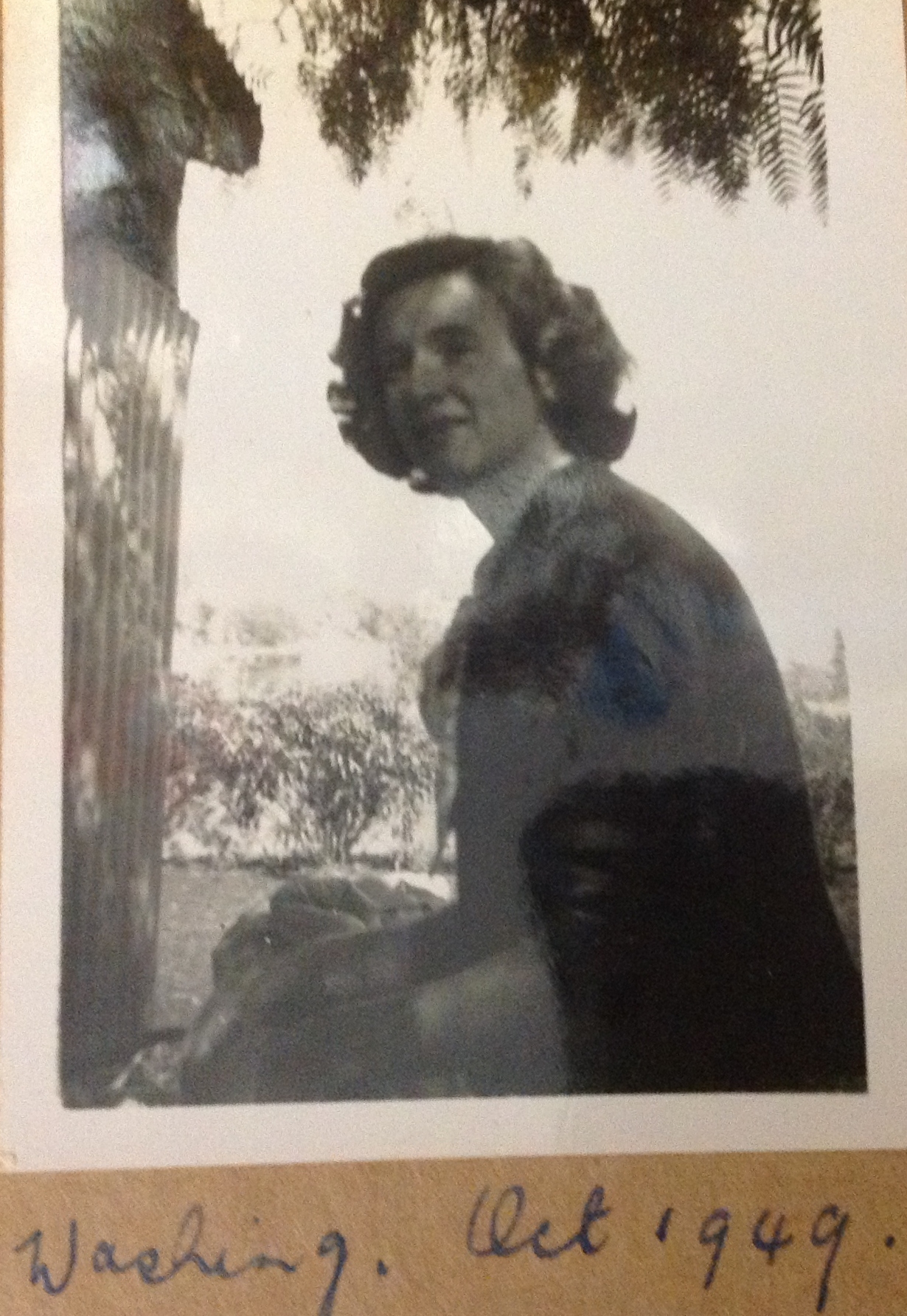
    Her freckled, calloused hands were red and chaffed as they gripped the wooden stick and stirred Monday’s sheets in the large copper pot heating over burning blocks of wood.

    The children played in the dirt nearby, scratching like chickens, hopeful of an interesting find.

    The dirt embedded under her torn and splitting fingernails began to ease away in the warm sudsy water as she heaved the sodden sheets and plopped them onto the wooden mangles.

    The children fought to turn the handle, smearing dirty handprints on the sheets.

    She sighed, and hung them over the line. One chore done.


    I welcome your feedback. Please share your thoughts about any aspect of the article or my flash fiction piece.



  • 3 Inspiring educators

    3 Inspiring educators

    Like every other teacher, I want to make a difference in the world.

    The thought that I could make a positive difference to the life of another is both empowering and inspiring.

    To do so, I seek out others making a positive difference and pay it forward, hoping that the ripple effect will carry it far and wide.

    flag on twitter

    Three inspiring educators who have positively influenced me are:

    Brian Cambourne

    Brian is an amazing literacy educator from whom I had the extreme good fortune of learning many years ago. I have written about him before here and here.

    Brian’s work focused on the conditions necessary for literacy development. His influence has spread beyond the classroom with the application of the conditions to learning in the workforce demonstrated.

    Tony Ryan

    Tony is an amazing educator who does his best to be the change he wants to see in the world. He talks about future-proofing and using innovative thinking to solve problems of both local and global importance.

    Anyone who believes ‘that education is the most important profession on the planet’ and does everything in his power to support teachers to be outstanding, as does Tony; must be pretty good in my books.

    One of Tony’s books The Ripple Effect is particularly apt for mention in this post. Tony says,

    “you must believe in your personal power to create ripples that spread out and change the world. In fact, if it is not you who is going to do it, then who else do you think is likely to make the effort? Remember that every change on this planet begins with a human being somewhere, somehow. It may as well be you.”

    This year Tony has started a new project called The Earth Movers Foundation which ‘helps young teenagers to create solutions to local and global issues. And they get to choose their own project. No adults will be telling them what project to do. They decide for themselves.’ Sounds pretty good to me.

    Ken Robinson

    Ken is another amazing educator. I fell in love with his ideas when I listened to his TED talk Do schools kill creativity? which I have also shared before here.

    The statement on his website declares that

    “Imagination is the source of all human achievement”.

    I could not argue with that.

    Ken introduces this short video The writing spirit which presents quotes from artists, thinkers, writers, innovators and snippets of interviews with writers. Just incidentally, and exciting for me, Richard Bach is included. Richard is the author of Jonathan Livingston Seagull, one of my favourite books for its inspirational message.

    It is more than likely that these educators have no idea how they have influenced my life (and others as a result).

    How wonderful might it be to know of the positive influence you have had on someone, and to have the opportunity of letting others know that they have positively impacted your life?

    This is the purpose of The Butterfly Light Award which was bestowed upon me my Lisa Reiter, a lovely lady who is herself inspirational for her courage and her positive attitude which she shares with others through her blog Sharing the story. Thank you, Lisa. I am honoured and accept with pleasure.

    As with any award, it comes with conditions:

    1. You should write an acceptance post, making sure you link back to the blogger who awarded you and thank them. You MAY NOT lump this award in with a batch of other awards.

    Thank you Lisa Reiter!

    1. You must individually name and re-award to a minimum of 1 and a maximum of 9999999 bloggers. You must let them know either personally with a comment on their blog OR a pingback.

    As I have been writing about educators, I am going to stick with that theme. A quick visit to these blogs will explain why I have selected them.

    Ruth Mancini

    The Nerdy Book Club

    Two Writing Teachers

    Raising a literate human

    3.  You should link back to Belinda’s blog either to http://idiotwriting.wordpress.com/about/ or http://idiotwriting.wordpress.com/2014/03/13/i-love-charismatic-geeks/

    Done!

    1. You must write a short paragraph entitled either “How I’m Spreading Light” OR “How I’m A Positive Influence” (what Lisa calls ‘the squirmy bit’).

    Done! See beginning of article.

    5. Display Belinda’s lovely “Butterfly Light Award” badge on your blog.

    Thank you, Belinda. It’s a pleasure! We can never have too many butterflies!

    butterfly-light-award

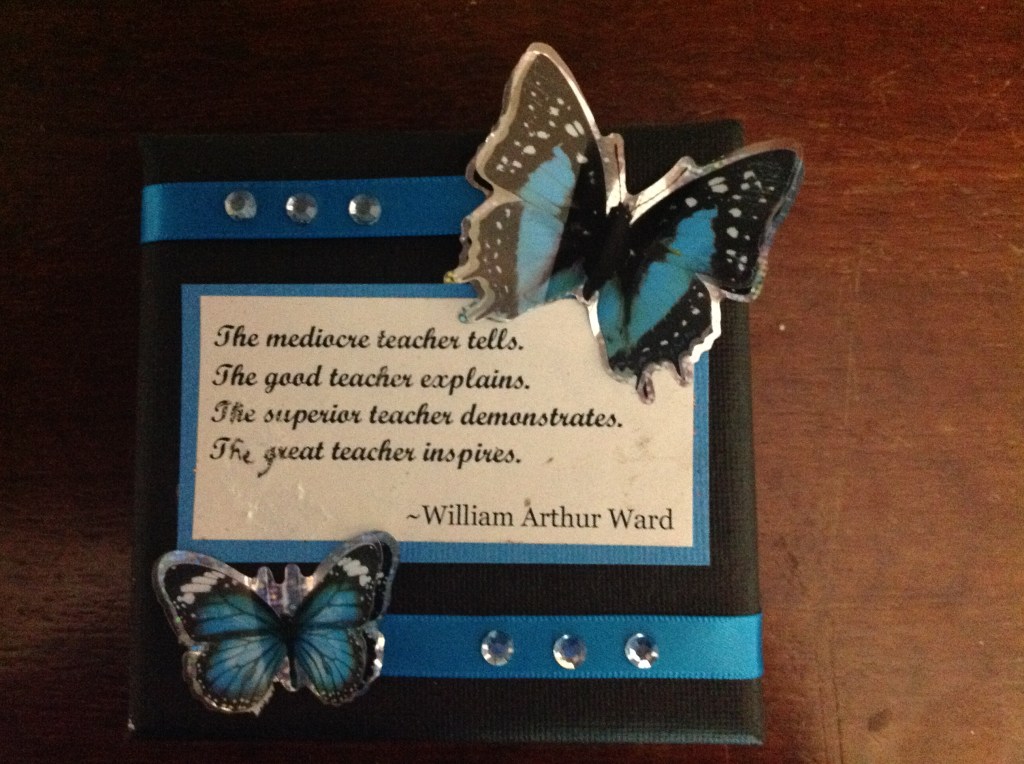
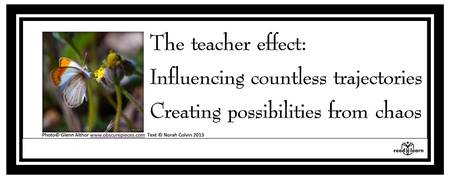
    Note: The beautiful framed quote, pictured at the top of this post, was made for me by a wonderful lady, the mother of two of my students. They all share my love of butterflies! I thank them for sharing their appreciation of my positive influence.

    I welcome your feedback. Please share your thoughts about any aspect of the article.

  • What do you have in mind?

    This week Two Writing Teachers posted a wonderful article by Stacey Shubitz (one of the Two Writing Teachers) about A Picture Book that Pushes the Growth Mindset.

    This post coincided beautifully with the flash fiction prompt posted by Charli Mills at Carrot Ranch Communications. Charli’s challenge is to:

     In 99 words (no more, no less) write a story about getting stronger.

    This is a perfect prompt for a teacher as a major focus of our work is in developing children’s strengths:

    Strengths as in abilities; strength as in self-esteem and self-confidence; strength as in willingness to face setbacks and try, try again; strength as in keeping on going even when the going gets tough.

    The picture book discussed in the article by Stacey Shubitz is The Most Magnificent Thing by Ashley Spires. Stacey suggests that the book is a great opener for discussions with children about the importance of a growth mindset.

    According to Stacey, an understanding of ‘the power of having a growth mindset’ has been enabled by the work of Carol Dweck, a Stanford psychologist. It is grounded in a belief that

    Someone can accomplish a lot more through hard work and dedication, rather than by relying on their smarts alone.

    I agree with Stacey that

    ‘Educators know the benefits of having a growth mindset, rather than having a fixed one. We learn from trial and error. There is value in failure.’

    I will not quote Stacey’s article in its entirety, but suggest you pop over and read it for yourself. (If you do, and leave a comment prior to June 27th, you may win yourself a copy of The Most Magnificent Thing, if you live in the USA or Canada.)

    Stacey says that “The girl in the story tries over ten times to build something and get it right. Through hard work and some help from her trust sidekick, her pug, she eventually succeeds.” As well as a starting point for discussing the growth mindset, Stacey suggests eight features of the book which are useful for teaching writing. The article also includes a brief, but informative, interview with the author/illustrator Ashley Spires.

    In response to Stacey’s question about using The Most Magnificent Thing for discussing a growth mindset, Ashley responds:

    ‘The character is a perfectly capable girl with a great idea and the skill to make it, but she has to try, try and try again in order to succeed. Most kids (I was one of them) think that if it’s not perfect the first time, then they should move on to something that comes to them more easily. Working hard to succeed is what true success is.”

    <p><a href=”http://vimeo.com/89499612″>The Most Magnificent Thing Book Trailer</a> from <a href=”http://vimeo.com/kidscanpress”>Kids Can Press</a> on <a href=”https://vimeo.com”>Vimeo</a&gt;.</p>

    My flash fiction, told through the jottings of a classroom teacher over time, shows a growth mindset emerging from one that was previously crushed.

    Progress

    Day one

    Timid. Needed help getting things out of bag to put in drawer. Sat towards back of group. Drew knees up under chin. Hunched over. Sucked thumb. Twisted long tangled hair under nose. Rocked.

    Day twenty-six

    Responded in roll call! Sat with ‘friend’. Legs crossed. Back straight. Smiled – briefly. Someone looked! Screamed, “Stop looking at me!” Dissolved in tears. Again. Retreated under desk. Again.

    Day fifty-two

    Initiated conversation!! Hair combed!! Nose not running!! Brought toy for show and tell. Responded with one- or two-word answers. Small, dirty, pink unicorn. B laughed. Erupted, but went to desk, not under!


    I welcome your feedback. Please share your thoughts about any aspect of the article or my flash fiction piece.
  • I’m sick! Talking about preventable childhood illnesses

    www.openclipart.org http://goo.gl/dsS3P6
    http://www.openclipart.org http://goo.gl/dsS3P6

    I am grateful that vaccinations against many diseases that were commonplace when I was a child are now readily available in Australia.

    I am grateful that these vaccinations protect children from suffering the diseases which were an expected part of growing up when I was young.

    Thanks to the scientists who studied the diseases and developed the vaccinations, most children in developed countries should not fear contracting diseases such as polio, measles, mumps, rubella, chicken pox, smallpox, tuberculosis, whooping cough and others. I look forward to the day when these diseases are eradicated worldwide.

    Unfortunately many parents, who have neither witnessed nor experienced the effects of these diseases (due to the effectiveness of immunisation programs), do not appreciate the seriousness of contracting them and choose to not vaccinate their children. In doing so, these people not only put the health of their own children at risk, but also the health of others in the community. Sadly these people are usually misinformed by purveyors of unscientific ‘evidence’. The numbers, and science, stand strongly on the side of vaccination.

    This issue is one that I feel strongly about for evidence shows that an entire community can once again become vulnerable to these diseases if enough people reject immunisation. The risk of disability or death occurring as the result of a preventable disease, in my opinion, is one not worth taking.

    At the end of this post I will link to various articles and websites that explain in greater depth and with more scientific and medical support than I am able.

    The impetus for sharing my thoughts on this issue came from Lisa Reiter who, on her blog Sharing the Story, invites others to share Bite-size memoirs. This week’s topic is Childhood Illness.

    I will begin by sharing 10 things I remember:

    I remember rushing to be first into the bath, but instead slipping and falling into the pot of hot water that had been heated on the stovetop in readiness to add warmth to the cold from the tap. I remember being terribly scalded and that I was rushed to the doctor. I remember being dusted with powder while I lay on his high surgery table. I was three at the time, so while I have some images that I am sure are genuine, others may be family lore.

    I remember a girl in my class at school who had suffered from polio. Her name was Christine and she lived not far from me. She had one boot that was built up, about 4 inches high; and she had iron cages around both legs. She walked with difficulty and a sway from side to side. Interestingly enough my husband, who grew up on the other side of the world, also had a friend who suffered from polio and had a built up boot.

    I remember reading about ‘the girl in the iron lung’ and being terrified of contracting the dreadful disease polio.

    I remember feeling very relieved when we were given a tiny pink droplet of vaccine on a white plastic spoon. Thank you Dr Salk. Polio has not been a cause of fear for my children or grandchildren.

    I remember us all having the mumps when I was eight and my Mum was pregnant with my little sister (the seventh of ten children). I remember that our glands were swollen and our throats were sore. We were tired, headachy and miserable. I remember my Mum got Bell’s Palsy too, and the muscles in her face were affected and never fully recovered. I remember her being sick in bed for weeks and a friend kindly came and stayed to look after us and help out.

    I remember having measles and being dabbed all over with calamine lotion to help stop the itch. It was difficult to not scratch.

    I remember when the rubella vaccination became available, but it was too late for me because I’d already had it as a child. I remember thinking how lucky everyone was to be able to have the vaccine and not suffer the illness.

    I remember having chickenpox during the summer holidays when I was about thirteen or fourteen. It was such a scorching hot summer, or it certainly seemed that way; two weeks of the longed for holidays ruined by this horrible illness.

    I remember the chickenpox blisters that started small, then grew bigger and finally scabbed. I remember the pink baths in Condy’s crystals and the strong smell which I would still recognise if not describe. I could never associate it with anything pleasant.

    I remember waking one night and finding three neat little piles of vomit on my bed beside my pillow. I remember waking my Mum and her coming and cleaning it up.

    What overwhelms me now when I think of all these childhood illnesses that inflicted us with so much discomfort  is the thought of my mother tending to a houseful of sick kids, when she was probably sick herself, and if not sick then probably pregnant or at least feeding a baby. What a life it would have been. One child going down after another, moaning and complaining and needing attention or treatment. I found it difficult with just one child at a time! (There are 12 years between my two.) On top of that she had all the usual household chores and a husband to attend to. Makes me wonder that she wasn’t worn out long before her 90 years! How grateful she would have been had we all been inoculated against these now preventable illnesses.

    Thanks, Lisa, for the opportunity of sharing these memories, and thank you, my readers for indulging me.

    I welcome your feedback. Please share your thoughts about any aspect of this post.


    Here are some links to further information about vaccinations if you are interested:

    Australian Government Department of Human Services, Immunising your children

    My DR for a healthy Australia, Immunising your child

    Raising Children Network, The Australian Parenting Website, Vaccinations and autism spectrum disorder

    The Daily Life, Adverse Reactions by Benjamin Law

    Mama Mia, What everyone’s talking about, 9 vaccination myths busted. With science! By Dr Rachael Dunlop

  • I’m too busy to be tired!

    www.openclipart.org http://goo.gl/zkTCJO
    http://www.openclipart.org http://goo.gl/zkTCJO

    This week’s flash fiction prompt posted by Charli Mills posed a challenge for me.

    How do I respond to her prompt to:

    In 99 words (no more, no less) write a story about exhaustion.

    and maintain my focus on education?

    Do I ignore the prompt and post about education?

    Do I respond to the flash fiction prompt in isolation?

    Neither of these alternatives appealed as I have been enjoying the camaraderie and support of the flash fiction tribe as well as the opportunity to experiment in a genre that, while not an immediate writing priority, I may move towards in the future. On the other hand, as my intent with this blog is to share ideas and thoughts primarily about education, I don’t want to become distracted from my focus.

    As do many, the idea for this prompt attached itself to me when I wasn’t thinking about it. Ideas tend to pop into my head when I first awaken in the morning, when I am showering, or during any other moment when my thoughts are free to flit and fly without the constraints of achieving a particular outcome.

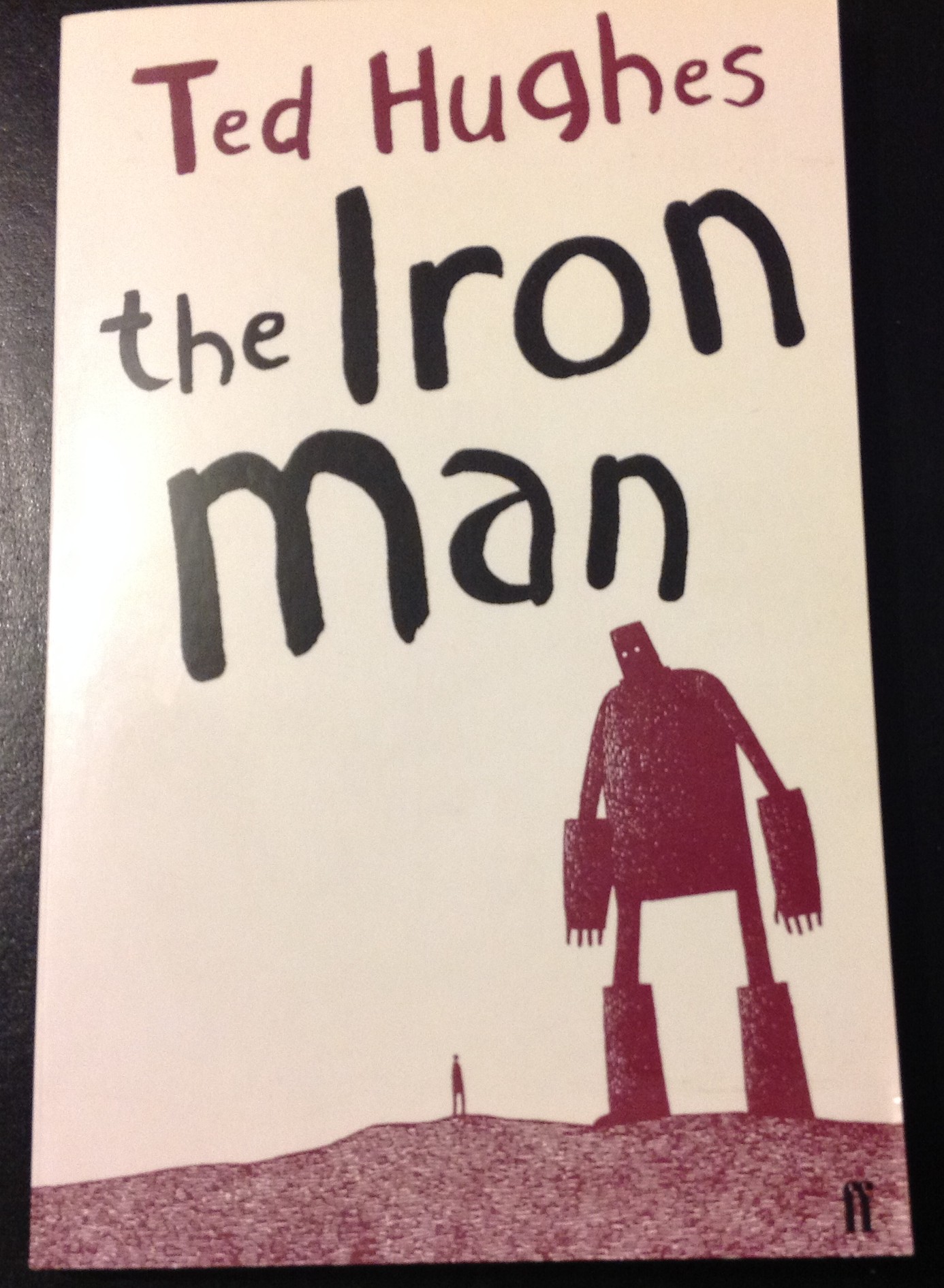
    This one descended when I was out for a drive appreciating the beauty of the pure white clouds, like puffballs, on the bright blue sky of a glorious winter day. It plopped down, ‘Barrrump!’ just as the space-bat-angel-dragon from The Iron Man by Ted Hughes had plopped down on Australia.

    book 2As mentioned in a previous post, The Iron Man is one of my favourite books. It is a great story told in beautiful language. On the back of my copy a quote from the Observer declares that it isReckoned one of the greatest modern fairy tales.’ The rhythm and poetry of the language begs for it to be read aloud. Because it has just five short chapters, ‘a story in five nights’, it is perfect as a first chapter book to share with younger children, and can be read to a class in a week, a chapter a day.

    The chapter I wish to share with you in this post is #4 ‘The Space-Being and the Iron Man’.

    The previous chapter has seen The Iron Man happily ensconced in a huge scrap-metal yard. It could have finished there with a happily ever after ending. But no. It was only chapter 3. There were two more chapters to come! What excitement was in store?

    The chapter begins

    One day there came strange news. Everybody was talking about it. Round eyes, busy mouths, frightened voices – everybody was talking about it.

    One of the stars of the night had begun to change.’

    We are immediately reeled back into the story – What is going to happen? What will the Iron Man do? – and propelled along by the giant star that grew ‘not just bigger. But bigger and Bigger and BIGger as it came

    rushing towards the world.

    Faster than a bullet.

    Faster than any rocket.

    Faster even than a meteorite.’

    Thankfully it stopped before it hit Earth. But wait – it’s not over yet, for ‘a dreadful silhouette, (came) flying out of the centre of that giant star, straight towards the earth.

    After several days it (‘a terrific dragon) landed, with its body ‘covering the whole of Australia’ and it ‘wanted to be fed. And what it wanted to eat was – living things.

    The people of the world decided they would not feed this space-bat-angel-dragon … they would fight it.” But all the forces of the world were no match for the dragon.

    As you may have guessed, this is where the heroic Iron Man devises his plan ‘to go out, as the champion of the earth, against this monster from space’. The dragon was very surprised to be challenged to a test of strength.

    The Iron Man, you may remember, is taller than a house, but the space-bat-angel-dragon is bigger than Australia.  The dragon thought that, when the Iron Man had finished, he’d ‘just lick him up.’ He didn’t figure on the ingenuity of the Iron Man. The Iron Man’s challenge was for the dragon to ‘go and lie on the sun till (he was) red-hot. (The Iron Man was small enough to be made red-hot on Earth.)

    After the second journey to the sun the dragon again ‘landed on Australia. This time the bump was so heavy, it knocked down certain sky-scrapers, sent tidal waves sweeping into harbours, and threw herds of cows on their backs. All over the world, anybody who happened to be riding a bicycle at that moment instantly fell off. The space-bat-angel-dragon landed so ponderously because he was exhausted.

    Have you ever felt that exhausted you just wanted to flop down and never move again? An article in my local newspaper1 recently declared that We belong to the Spent Generation – the most overcommitted, overscheduled, overconnected, and therefore overtired, in modern times.The journalist Frances Whiting listed a number of professions including ‘doctors, scientists, social commentators (who) the statistics tell us (are) working longer, sleeping less, not resting enough and taking on too much.’

    Teachers weren’t on this list, but they could have been at the top. Anyone who lives with, or has a friend who is, a teacher knows the long hours they work. Because it is a caring profession it is impossible to leave work at the gate and pick it up the following day. Content-driven curricula and unrealistic expectations imposed upon both teachers and learners place extra stress upon all stakeholders. Long before a school terms end teachers are tired, stressed and in need of time to recuperate and recharge in preparation for the next one.

    At the moment most teachers in Australia are conducting assessments, evaluating their own work and student learning, preparing report cards and conducting teacher-parent interviews. This is in addition to their ongoing tasks of preparing and teaching lessons and is mostly expected to be completed in out-of-scheduled work hours.

    When I was teaching I worked between 50 and 70 hours most weeks. I used to say that even with our ‘enviable’ holidays we were still owed time. In my current out-of-the-classroom role as writer of curriculum materials, I now feel the difference as I don’t have to think about it away from my desk.

    I still get tired, but not the same heavy exhaustion that comes from giving all; physically, mentally and emotionally, to a class of 25 active learners while trying to stay afloat amidst ever increasing expectations.

    So my flash this week recognises the teachers who, buried under a pile of paperwork and lost in a maze of data collecting spreadsheets, still struggle to be everything to everyone, endeavouring to make every child feel special and valued, while often feeling that their own work fails to achieve any real recognition. Enjoy the break, teachers. You deserve it!


    A Unicorn at School

    ‘Miss. Marnie has a toy in her bag.’

    ‘Uh-uh,’ I responded.

    ‘You’re not allowed to have toys at school,’ he insisted.

    ‘Uh-uh.’

    Trust him! Always dobbing.

    ‘Miss,’ he persisted, tugging my sleeve.

    ‘What is it?’ I sighed, dragging myself out of the confusion of marks and percentages that now seemed more important to telling a child’s story than their own words and actions.

    I looked at the little fellow pleading for my attention. They were all so needy; so demanding; but time . . .

    ‘It’s a unicorn, Miss.’

    ‘Unicorn! Let’s see!’ I was back. A child in need!

    flag on twitter

    I welcome your feedback. Please share your thoughts about any aspect of the article or my flash fiction piece.
     

    1 QWeekend 14-15 June, 2014

  • Of rainbows and unicorns – Part 1 – Fantastic creatures and magical realms

    I am not a reader of adult fantasy novels. I have never read Lord of the Rings, The Hobbit or Watership Down. I just couldn’t buy into it. I’m sorry I have to admit it – it is true.

    However, I don’t mind a bit of fantasy in children’s books and, in fact, really enjoy it. I didn’t mind the rats’ use of language in Robert C. O’Brien’s The Rats of Nimh while I couldn’t handle the talking rabbits in Watership Down by Richard Adams. I cannot explain why my response is different but I’m sure it has something to do with the ability to suspend disbelief. I am obviously more able to do that when encountering fantasy in children’s stories than in adult fiction.

    As both parent and teacher (and now grandparent) I love sharing stories with children. In addition to all the good things I know it is doing for them, it is doing lots of good things for me as well. Reading children’s stories written by masterful authors is one of life’s greatest pleasures and I love having excuses for doing so.

    This week the flash challenge issued by Charli Mills at the Carrot Ranch was to

    In 99 words (no more, no less) write a story that includes a fantastical element or creature. 

    I am taking the opportunity of sharing with you some of my favourite fantastic creatures and magical realms from children’s stories. Each of these stories is wonderful to read aloud and share with children.

    Charli mentioned rainbows, unicorns and the phoenix.

    I thought of The Iron Man by Ted Hughes (a story in five nights, suitable for children from age 5 – 104)

    book 2

    “Taller than a house, the Iron Man stood at the top of the cliff, on the very brink, in the darkness.

    The wind sang through his iron fingers. His great iron head, shaped like a dustbin but as big as a bedroom, slowly turned to the right, slowly turned to the left. His iron ears turned, this way, that way. He was hearing the sea. His eyes, like headlamps, glowed white, then red, then infra-red, searching the sea. Never before had the Iron Man seen the sea.

    He swayed in the strong wind that pressed against his back. He swayed forward, on the brink of the high cliff.

    And his right foot, his enormous iron right foot, lifted – up, out, into space, and the Iron Man stepped forward, off the cliff, into nothingness.”


    and The BFG by Roald Dahl. (a longer tale for school age, and older, children)

    book 4

    “It wasn’t a human. It couldn’t be. It was four times as tall as the tallest human. It was so tall its head was higher than the upstairs windows of the houses. Sophie opened her mouth to scream, but no sound came out. Her throat, like her whole body, was frozen with fright.

    This was the witching hour all right.

    The tall black figure was coming her way. It was keeping very close to the houses across the street, hiding in the shadowy places where there was no moonlight.

    On and on it came, nearer and nearer. But it was moving in spurts. It would stop, then it would move on, then it would stop again.

    But what on earth was it doing?”


    I thought of Joan Aiken’s wonderful collections of fairy tales like A Necklace of Raindrops (for children in early years of schooling)

    book 3

    “And when she had nine raindrops Laura found that she could make the rain stop, by clapping her hands. So there were many, many sunny days by the sea. But Laura did not always clap her hands when it rained, for she loved to see the silver drops come sliding out of the sky.

    Now it was time for Laura to go to school. You can guess how the other children loved her! They would call, “Laura, Laura, make it stop raining, please, so that we can go out to play.”

    And Laura always made the rain stop for them.

    But there was a girl called Meg who said to herself, “It isn’t fair. Why should Laura have that lovely necklace and be able to stop the rain? Why shouldn’t I have it?”

    and The Kingdom Under the Sea (for children approx. 8 -12), each beautifully illustrated by Jan Pienkowski adding another element of wonder to the tales.


    book


    Charli suggested that we “think of how (we) can use the fantastical to enrich realities” and I thought of the mouse who invented The Gruffalo in Julia Donaldson’s story and showed how imagination could be used to solve problems that arise. (The Gruffalo is suitable for children in pre-school and early years of schooling)


    While the above excerpts are short, like flash fiction, each demonstrates the skill of the author in choice of words and sentence structure. In his book On Writing Stephen King refers to these as forming the top level of the tool box. But these excerpts show a depth greater than that also.  They create a connection, forming a relationship with and a need in the reader to know what happens.

    It is the ability of the author that sweeps us away, as if on a magic carpet, to other places and other lives. It is the ability of the reader to suspend disbelief that allows the journey to occur.

    I thought about how we, as either child or adult, use fantasy to escape realities that we may not wish, or not feel strong enough, to face. This brought me back to Charli’s unicorn.

    And now I offer my own bit of flash, which is not suitable for reading to children of any age.


    www.openclipart.org http://goo.gl/Ep1vK6
    http://www.openclipart.org http://goo.gl/Ep1vK6

    Unicorn knights

    She sat on the bed and looked around. Funny how some things don’t change.

    They had left it untouched for all those years since her escape, waiting for her return. But she never did. Never could. Until now.

    “You should,” she was told. “Make peace.” “Let it go.”

    It didn’t look so scary now. They were both gone. She was grown.

    Sunlight glinted on the unicorn. It had faded but waited still, on the night-table, for their nocturnal escapades away from cruel reality.

    She fingered it for a moment, remembering. Then dumped it in the wastebasket.

    “Sell!” she said.


    I welcome your comments on any aspect of this post; the books I have suggested for sharing and my own piece of flash.

    Don’t forget to pop over to the Carrot Ranch where you can read responses to Charli’s prompt by many other writers.


  • Life: a choose your own adventure – how do you choose?

    Made with Quozio https://quozio.com/
    Made with Quozio https://quozio.com/

    Do you grapple with making choices of how to use your time? Do you find that the things you want to do are often squeezed in after the things you have to do and the things you are expected to do? Or worse – squeezed out entirely? Do you ever find yourself doing one thing and wishing you were doing something else? Or worse: procrastinate, and then feel guilty for doing so?

    I do; and I find it very frustrating.

    I have a solution:

    Live in the here and now and enjoy every moment.

    I’m not saying it’s easy, and I’m not saying I’m good at it, but the more I practice the better I get and the more enjoyable my time is.

    While some things do not seem like a choice, usually they are; and if they are not a choice, our attitude is.

    I have been thinking about this a lot lately because the time I had intended for one thing seems to be very easily devoured by other things. I can choose to feel frustrated about the loss of time for my desired activity, wish I was doing something else and generally feel miserable. The time still passes and I am no better off.

    Alternatively I could:

    • view these activities as a choice (e.g. I could leave the house dirty, go without food, let my teeth rot, ostracize myself from family and friends)
    • appreciate that I am able to do them (e.g. I have a house to live in, I am fit and able to clean it and have all the things I need)
    • focus on what I am doing and quieten those wishes to be somewhere else, doing something else (e.g. a lengthy wait for the doctor can provide thinking time that may have been difficult to schedule otherwise)
    • banish feeling guilty about choosing time with people, pleasure (fun), or procrastination, all of which are essential to a happy life.

    Procrastination you say?

    Well procrastination can give you that all important time to reflect, re-energize and create new ideas.

    I am not alone in thinking about the effect of choice upon our use of time. This week the flash fiction prompt posted by Charli Mills was to:

    In 99 words (no more, no less) write a story about a decision between two clashing priorities.

    In her post Charli talks about “muddled priorities” and being “confronted with distractions and decisions”. She suggested that the writers among us need to “prioritize our priorities so we can swath writing time as if we were farmers of words.” She talks about the need for balance, prioritizing and planning; looking after oneself as well as one’s work; which means making choices about how one’s life is lived.

    If we accept that life really is a series of choices and that we have control over the choices we make, then acceptance of the choices and their results must follow.

    Sometimes the choices are easy, and it’s simply a matter of going with the flow. But sometimes going with the flow can be difficult; especially when the waters are a raging torrent and you are wishing you could grab hold of the reeds on the bank and pull yourself out for a little respite, such as in the analogy I have used in this first flash piece:

    Overwhelming expectations

    The waters raged around her, pummeling her against the rocks, tossing her every which way, pushing her under and holding her there until she thought she must drown. She clawed at the rocks and grasped at the reeds, gasping for breath. The bank beckoned invitingly. The torrent sucked her back, playing ‘now you see her, now you don’t’ before swirling her back to bump inelegantly over the rocky shallows, dumping her battered body on the edge. She gulped the air begging respite and revival. Her choice: the safety of the sideline bank or back to navigate a journey through.


    Sometimes the choices are difficult because they appear to promise equally attractive (or unattractive), if different, outcomes. We may think a crystal ball could make the decision easier, but perhaps the only way to find out what the future brings is to live it, as discovered in this next flash offering:


    Future seeker

    “What do you seek?”

    “Knowledge of the future.”

    “That knowledge comes at a price.”

    “I’m willing to pay.”

    The eyes as deep as the ocean and dark as coal lifted from the shiny globe, contemplating the petitioner.

    The globe’s soft glow in the dimness cast eerie shadows across the youthful face accentuating his desperate need.

    One eyebrow raised, questioning. “It involves . . . a sacrifice?”

    “I have more money than I could spend in a thousand lifetimes. Just tell me the price.”

    The dark eyes flashed.

    “Your life.”

    He saw it all in a moment, and was gone.


    Of course, as adults, it is important for us to have developed some self-regulatory skills or nothing would ever be accomplished. But what about children. How can we help children learn to make effective choices?


    In honour of your time and mine, I will leave that for a future post!


    I always enjoy reading your comments. I invite you to share your thoughts.


    If you enjoyed this post, you may enjoy others. Please click the button at the top on the right to receive future posts by email.


  • It’s no surprise! Talking education

    https://openclipart.org/image/800px/svg_to_png/185077/creepyjackinthebox.png
    https://openclipart.org/image/800px/svg_to_png/185077/creepyjackinthebox.png

    We all like a surprise, right?

    Well, you might say, that all depends on whether the surprise is a good surprise or a bad surprise.

    A surprise is simply something unexpected, and everyday life is full of surprises; some so little they go almost unnoticed, others of larger more life-changing proportions. Some are pleasant and others far less so.

    What got me thinking about surprises this week is the flash fiction prompt posted by Charli Mills at Carrot Ranch Communications.

    Charli’s challenge this week is to

    In 99 words (no more, no less) write a story that shows surprise without using the word. 

    I have been thinking of all sorts of surprises I could write about but decided to maintain my focus on education.

    There are many opportunities for surprises to occur throughout one’s education, which is not limited to (but probably, dare I say, by) one’s schooling experiences.

    For example:

    • Discovering you can read a book, all by yourself
    • Discovering an author whose work you just can’t put down
    • Finding a solution to a problem that had seemed insurmountable
    • Achieving a favourable result in a dreaded test
    • Being offered a place in the course you were wanting
    • Having work accepted, valued and receiving payment


    There are many situations in which the surprise could go either way.

    For example:

    • Being called to the principal’s office
    • Having a parent-teacher interview about your own child, or student
    • Receiving exam results or course placement offer
    • Meeting a new teacher
    • Working in a group to solve a problem


    Being a lover of stories, especially picture books, it is rare that a situation doesn’t trigger a thought connection to a story or book I have read.

    Thinking about the good surprises and bad surprises that could happen in some of these situations made me think of a book I had read to my own, and classes of, children years ago. Maybe you will remember it also.

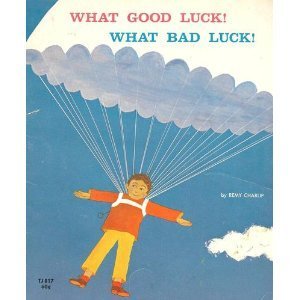
    what good luck what bad luckThe book is What Good Luck! What Bad Luck! by Remy Charlip and relates a sequence of events alternating between good and bad.

    It appears, from what I can find out, that it was first published by Ashton Scholastic in 1964 and sold for 60 cents.

    Today Amazon has used copies on offer for $34.99 or $122 and a collectible as high as $157.70.

    What good luck, I used to have a copy.

    What bad luck, it is no longer in my possession.

    I was at the stage of mentally composing my story with my fingers itching to get to the keyboard to translate it into print when I glanced at the morning paper1 and came across this headline:

    Lesson 1: Bad teachers = bad results

    As a teacher who is passionate about education but also critical of top-down force-fed schooling institutions, headlines/comments like these have me vacillating between defiant self- (and professional-) protection and agreement with the criticisms.

    Teachers come in for a lot of criticism, some of it deservedly so, other of it not so much.

    One quote I love is “Teaching is the one profession that creates all other professions”.

    On the flip-side of this is “Those who can, do. Those who can’t, teach.”

    While I take offense at this one, sometimes I am inclined to think it alludes to an important quality in a teacher. Frequently those who are expert at something, find it difficult to break a process into a series of steps that would enable an explanation to be easily understood by others. If one has struggled to master a task, the process can seem clearer and easier to explain. However there does come a point below which knowledge and experience must not fall or effective teaching cannot exist.

    In her article Bad teachers = bad results, Kylie Lang says that

    “C-grade teachers will not produce A-grade results”.

    She says,

    “Too many mediocre minds are becoming teachers. Universities usher them in, these academic underperformers who fail to qualify for courses with higher entry requirements.”

    She says that

    “A federal education department report shows a rise in the number of school leavers with poor grades being offered places on teaching courses. This year, 55 percent of Year 12 students that were allowed to undertake teaching degrees had an Australian Tertiary Admission Rank below the average . . .”

    It is a bit scary, isn’t it?

    She also says that,

    “If we are a nation that values education . . . we must attract brighter, more creative thinkers to classrooms.”

    I couldn’t agree more. However I wonder where they will get those creative thinkers if higher order thinking skills, creativity and innovation are sacrificed in the relentless quest for scores on academic tests which require students to spit back information forced upon them in hours of didactic instruction and rote learning.

    It’s no surprise that anyone who maintains the ability to think outside the square would rather not return to it!

    And so to my flash piece for this week, which comes with a warning – there’s no rhyme because there is no reason:


    What luck!

    No books, no talk were in the home.

    What luck!

    He was happy to play on his own.


    School began when he was five.

    What luck!

    Learning from flash cards, how hard he tried.


    “My boy can’t do it!” his Mum once wailed.

    What luck!

    With ‘forged’ test scores no child would fail.


    Leaving school, the options were few.

    What luck!

    Teaching was the one he could do.


    Uni years flashed by so fast.

    What luck!

    Number requirements meant he passed.


    Then into the classroom he unprepared went.

    No future joy for any student.

    What bad luck!


    I always enjoy reading your comments. I invite you to share your thoughts.


    1 Courier-Mail, Sunday May 25 2014


    If you enjoyed this post, you may enjoy others. Please click the button at the top on the right to receive future posts by email.

  • Writing to order – done in a flash!

    Writing to order – done in a flash!

    In a recent post Writing woes – Flash fiction I wrote about the difficulty I experienced in responding to a flash fiction prompt posted by Charli Mills at Carrot Ranch Communications.

    While I did eventually produce a piece in response to the prompt and received some very generous comments (thank you readers), the difficulty I was experiencing made me think of all the school children who have ever been set a topic and told to write about it, sometimes without an opportunity for discussion, reflection or planning, and often without any consideration of interests or experiences. I was feeling particularly sympathetic that week as children in Australia were, at that time, sitting the NAPLAN (National Assessment Program – Literacy and Numeracy) writing test.

    This week, while again struggling with the flash fiction prompt but this time unsuccessfully, I happened across a post entitled The dangers of a single story shared on dangerously irrelevant.  This post is an extract from a longer paper entitled Mitigating the Dangers of a Single Story by Nadia Behizadeh.

    While I have not yet read the entire paper, the abstract itself is quite interesting.

    Behizadeh begins by saying

    “The dangers of a single story in current U.S. large-scale writing assessment are that assessment practice does not align with theory and this practice has negative effects on instruction and students.”

    As shown in my previous article, large-scale writing assessment also occurs in Australian schools and, I believe, in the Education systems of many other countries as well.

    It is interesting to see that the practice, while widely implemented, is not, according to Behizadeh, supported by theory. One would have to wonder why. Oftentimes teachers lament that those making decisions about educational practices are bureaucrats with little or no training or experience in education. (Pardon me, we all went to school didn’t we?)

    In our data driven world where information can be collected on spreadsheets, compared in a wide variety of graphs and tables, and stored indefinitely, emphasis moves from qualitative to quantitative assessment. I believe that this trend towards valuing only that which can be scored numerically is having a negative effect upon children’s learning and their enjoyment of learning. It discourages creativity and imagination and forces everyone to squeeze into the same sized and shaped hole. Some manage to fit more easily and more comfortably than others, but I question the cost to all.

    Behizadeh goes on to propose

    “A new vision of large-scale sociocultural writing portfolios in K–12 education . . . that builds on the practices of past large-scale portfolio assessment … (and) also encourages students to write in multiple languages/dialects and modes for multiple purposes.”

    I love the idea of portfolios for assessment, rather than a one-off test. I would think most professional writers have a portfolio consisting of work at various stages: some as ideas jotted on slips of paper, some in planning stages, others in draft form, others completed and waiting for the next step, and others in publication.

    A portfolio allows a writer to work on different pieces at different times and at different rates. Rarely is it imperative for a piece to be completed in an hour or two. (Unless you’re a journalist I suppose.) You can dip in, leave to rest, go back, redraft, edit, start again, and not be required to churn something out for a reader, let alone assessment, more or less on the spot.

    As a teacher, too, I loved my children having portfolios of work. They would write a draft of many different pieces and store them in a folder. They would edit and “publish” those only they wished (which was usually most!).

    I would conference with them about their pieces, firstly about the content be it story, poem, letter or information discussing what they wanted to say, who they were writing it for and how they wanted the reader to think and feel. When they were happy with their message we might talk about choices of words and language structures. Finally, when they were ready to publish, we would look at the surface features of spelling and punctuation. No teacher’s red pen was ever used to mark their work. The children were engaged with the entire process of writing (we called it “process writing” back then) and had ownership of their work.

    We published by sharing our work with classmates, other classes, teachers and parents. We displayed writing on classroom walls, in the hallways and in the school foyer. Each term I would print booklets of the children’s writing for them to take home and share with their families. Many took pride of place on the family bookshelves.

    This type of portfolio clearly demonstrates a student’s ability to write in a variety of genres, to develop an idea, to express oneself grammatically, to use editing skills and to proofread for spelling and punctuation correctness. What better than that could be used to assess a child’s writing development?

    The two main points I am making in this article are:

    • a one-off writing assessment task does not give students an opportunity to show their best work and puts pressure on them to perform
    • a portfolio of work collected over time provides a clear picture of student ability, development, and next steps for learning

    While I began this article by expressing how I was feeling about responding to the flash fiction prompt, I am in no way suggesting that the flash fiction challenge has any similarity to the national writing assessment tasks that are set for children, for it does not.

    With flash fiction:

    • I choose whether to participate or not
    • I choose the genre in which I will respond
    • I hone my writing skills, paring away unimportant words to get to the heart of the story
    • I share my writing with willing readers
    • I receive lots of encouraging and supportive feedback on my writing
    • I have a sense of belonging to a community of other writers.


    This week’s prompt was:

    In 99 words (no more, no less) write a story that begins with a twist. 

    I have spent a lot of time thinking about this one, making various starts and writing some drafts but the twist in this one is, I haven’t been able to come up with something I am happy with sharing. But that’s okay because, unlike the children sitting the one-off national assessment, I can choose not to contribute this time, a low-ranking score won’t be collected and placed against my name for all time, and I can get to participate next time, if I choose.

    Although I am not contributing a piece this time, I have still learned a lot by the process of trying different things, even if I haven’t found a way to make them work, yet

    … and it provided me an opportunity of sharing some of my thoughts about writing with children. There will be more to come!

    I’d love to know what you think!


    PS Make sure you pop over to the Carrot Ranch to see how others have responded to the prompt.


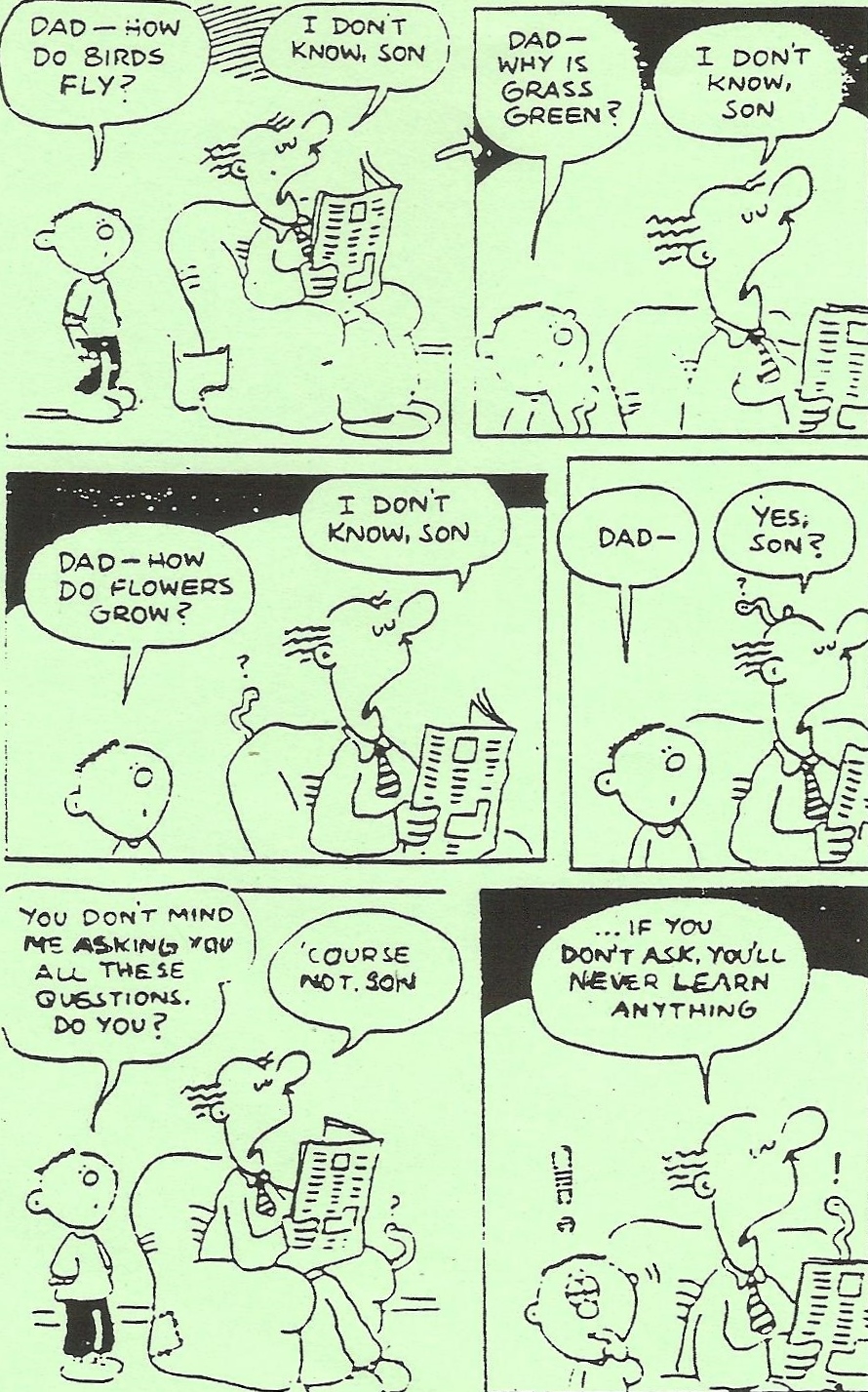
  • Child’s play – the science of asking questions

    Unknown source. Apologies. Happy to attribute if informed.
    Unknown source. Apologies. Happy to attribute if informed.

    I often say that children are born scientists. From the moment they are born they are actively finding ways of figuring out how the world works, and how they can get it to work for them.1

    Some people say children are sponges. But I say they are more than that. They are creators. They don’t just copy what they see. They don’t just repeat what they hear. They find new ways of working things out, new ways of expressing ideas, and new ways of thinking about things. Parents often remark, when children exhibit new behaviours or cute new phrases or ways of expressing themselves, “Where did they get that from? Where did they learn that?” Often the source cannot be identified, for the source is within the child.

    An important way to keep children creating their own understandings and ideas is to not only allow them to ask questions, but to actively encourage them to do so, and to help them seek answers to their questions. Adults can be quick to quiet children’s questions for a number of reasons including not knowing the answer, being too busy at the time to investigate an answer, or even considering the question unimportant or “dumb”.

    Unknown source. Apologies. Happy to attribute if informed.
    Unknown source. Apologies. Happy to attribute if informed.

    Remember, many things that adults may take for granted or that they may no longer question but simply accept (possibly as a result of not receiving appropriate answers or responses to their childhood questions) are new and unfamiliar to the child.

    Sometimes it is easier to accept than to question for questioning means that something is unknown; and not knowing can lead to feelings of insecurity, doubt and instability. But it is these self-same feelings which drive innovation and progress. If everything was known, there would be no room for improvement, no need for anything new, no need for greater understanding.

    This inspiring TED talk by Beau Lotto and Amy O’Toole, Science is for everyone, kids included emphasizes the need for children to be given the opportunity of asking, and exploring answers to, questions.

    Beau explains that what we see is based upon our experience, upon our expectations. But he asks,

    “if perception is grounded in our history, . . . (and) we’re only ever responding according to what we’ve done before . . . how can we ever see differently?”

    He goes on to explain that seeing things differently begins with a question and that questions lead to uncertainty. He says that

    The-best-questions-are

    and explains that the answer to uncertainty is play. He says that play “is a way of being” and is important for five reasons:

    • Uncertainty is celebrated in play and makes play fun
    • Play is adaptable to change
    • Play is open to possibility
    • Play is cooperative
    • Play is intrinsically motivated

    “Play is its own reward.”

    Beau says that science, also, is a way of being; and that science experiments are like play.

    He describes working with a group of 8-10 year old children, encouraging them to ask questions and involving them in an investigation of a question they posed.

    Amy O’Toole, one of the children involved, joins Beau and describes the experiment which investigated the ability of bees to “adapt themselves to new situations using previously learned rules and conditions.”

    The really exciting thing about the project, Amy says, was that they “had no idea whether it would work. It was completely new, and no one had done it before, including adults.”

    The process of taking the findings of the project to publication, as Beau explains, was rather complex with a variety of complications, taking two years to achieve. The experiment itself took only four months! Publication of the paper made Amy and her friends the youngest ever published scientists.

    The response to the paper, The Blackawton Bees is amazing:

    30 000 downloads on the first day

    Editor’s Choice in Science (a top science magazine)

    the only paper forever freely accessible on Biology Letters and

    the second-most downloaded paper from Biology Letters in 2011

    Amy wraps up the talk by stating that

    “This project was really exciting for me, because it brought the process of discovery to life, and it showed me that anyone, and I mean anyone, has the potential to discover something new, and that a small question can lead into a big discovery.”

    She finishes by saying that

    “science isn’t just a boring subject … anyone can discover something new.”

    We might not all make those big scientific discoveries, but it is the questions we ask each day which lead to our own discoveries, no matter how small; it is our curiosity which keeps us learning.

    What have you learnt today?

     Changing-the-way-a

    1 This is just my opinion formed from observations, discussions and reading. I am not supporting it with research references.