Live Love Laugh Learn … Create the possibilities

Category: Writing

  • Why do you read?

    CoD_fsfe_Books_icon

    I read every day.

    I read:

    • Blog posts
    • Emails
    • Tweets
    • Articles
    • News reports
    • Notifications
    • Comments on blogs
    • Road signs
    • Menus
    • Labels on products
    • Receipts
    • Bills
    • Bank statements
    • Letters
    • Instructions

    The list could go on …

    At the moment my reading of full-length books is limited, though recently I read a novel (Dead Flies and Sherry Trifle by Geoff Le Pard) and a memoir (On Hearing of My Mother’s Death Six Years after it Happened by Lori Schafer), both of which I read as ebooks. I also read a non-fiction paper book (Retiring with Attitude by Caroline Lodge and Eileen Carnell) and am part-way through a number of other non-fiction titles.

    Most of the full-length book reading I currently do is in audiobook format. My in-car time on the way to work is usually from about 45-60 minutes and I use this time to listen to audiobooks. During the past year I have listened to quite a variety including both fiction and non-fiction. I particularly enjoy it when the author reads the book, as with my current “read” Alphabetical: How Every Letter Tells a Story by Michael Rosen.

    Blog posts are probably my number one source of reading material at the moment. I read a variety of blogs; some about writing for writers, some about teaching for teachers, some with a variety of information about a range of subjects, lots about books! Picture books, young adult novels, fiction and non-fiction. I am always on the lookout for something new to read or to give as a gift for someone else to read.

    I always enjoy Anne Goodwin’s reviews on her blog Annecdotal. Not all of the books that Anne reviews appeal to me, and few of them will I read. Last year I did read one of her suggestions (The Examined Life by Stephen Grosz) and we had quite a discussion about his chapter on praise. I also read Stephen Pinker’s Better Angels of Our Nature, that was recommended to me by Geoff Le Pard, and Stephen King’s On Writing that was recommended by Lisa Reiter.

    Sometimes when I read reviews or think of all the wonderful books I could be reading, I chastise myself for the little “reading” I do. But then I remind myself that the reading I choose/need to do at the moment is different. One day soon I’ll be back to more fiction rather than informational texts.

    I was reminded of this when I re-read an article written by Charlotte Zolotow and published in The Horn Book: Writing for the Very Young: An Emotional Déjà Vu.

    In the article Zolotow says,

    “I have so much left to read and reread and so little time left in which to do it that I want to select what fills my emotional needs — needs which are often different from, or unknown to, even my closest friends.”

    Zolotow goes on to explain that

    “It was not this way when I was an adolescent or in my middle years, when I had a wide, all encompassing, devouring, greedy desire to read everything. But if I think back, I do remember as a child wanting certain books over and over again and others not at all. Very young children, like older people, want to read or hear read books that help them sort out their own most acute needs, their own inquiries about life.”

    I thought how true it is. Throughout life our reading habits and choices change. I have always been a reader. As a child and teenager I read fiction, and lots of it. Even as a young adult I continued to read fiction and poetry, but my reading of non-fiction, mainly but not exclusively to do with education, began to exceed those choices. At that time there were only paper books, and I loved them, thinking that nothing could come between me and my books.

    How wrong I was and how times change. Now I read online, ebooks and audiobooks. There is a much greater variety of material available for readers and, I think, the demands are greater. In days gone by if you weren’t reading books you weren’t reading. Now the distinction is not so clear. Because I am not reading full-length paper books as frequently as before, I think of myself as a non-reader. But that is unfair and untrue. I spend most of my day reading, and when I am not reading, I am writing. But these days reading is a huge part of my writing. I am constantly researching and reading online to give extra credence or support to what I am writing.

    What about you? How do you view yourself as a reader? Does one need to read books to be considered a reader?

    Thank you

    Thank you for reading. I appreciate your feedback. Please share your thoughts.

  • Clearing confusion – reading and writing for the masses

    This week at the Carrot Ranch, Charli Mills is talking about disorientation and has challenged writers to In 99 words no more, no less) write a story about disorientation. She suggested exploring different ways confusion could be expressed, and the tension that could be created by that confusion.

    I decided to give myself a break from writing about the confusion that students may feel as they attempt to navigate the murky waters of expectations and inappropriate curricula that have little connection with their lives; or about how disoriented they may feel in an environment that bears little resemblance to any other they will experience.

    Instead I decided to share an interesting story I heard this week and a flash fiction which is more memoir than fiction, a reminder to self of how lucky I am to be doing what I am.

    First for the story.

    My current audiobook is Alphabetical: How Every Letter Tells a Story by Michael Rosen. In the book Rosen talks about the English alphabet, dealing with each of the 26 letters in turn. He has organised the book so that

    “Each letter in the book is linked to a topic. Each chapter takes on different aspects of how the alphabet has been used. Each chapter is preceded by the short story of how that particular letter evolved, how its name came to be pronounced that way and something on how the letter itself is spoken and played with.”

    K

    When listening to Rosen read his chapter about the letter ‘K’, “K is for Korean”, I was fascinated to find out that the alphabet of South Korea, Hangul, is “the earliest known successful example of a sudden, conscious, total transformation of a country’s writing.”

    The alphabet, described by Rosen as more of “syllabic monograms” than letters and is easy to learn, was devised in the mid-fifteenth century by the ruler of the time, King Sejong, as a way of enabling everyone to be literate.

    Prior to the introduction of this alphabet, Chinese characters were used. According to an article on Wikipediausing Chinese characters to write was so difficult for the common people that only privileged aristocrats usually male, could read and write fluently. The majority of Koreans were effectively illiterate before the invention of Hangul.

    Rosen says that what is “remarkable . . . is that there was an already existing system of writing which was, to all intents and purposes, overthrown in its entirety – not adapted. (It happened) because one part of the ruling elite decided that a total change was the only way in which everyone could read and write easily.

    Hear! Hear! I say, and express a wish that all our students of English would find learning to read and write far more easy and enjoyable than many do, that more emphasis would be placed upon helping students learn than in “teaching” particular content at particular times.

    Also included in Rosen’s chapter about ‘K’ was mention of the Voynich Manuscript which appears to be scientific in origin, but which contains fictitious plants and is written in a “language” which no one, including codebreaking experts, has been able to decipher and read. Rosen says that “With one beautifully executed volume, (the author) causes instability and doubt at the heart of the production, ownership and use of knowledge. It is a carefully constructed absurdist joke.

    Unfortunately for a small (but too large) number of our students, reading and writing for them is often as confusing as the Voynich Manuscript.

    Man-resigning


    For a little bit of reminiscing, here is a video of Michael Rosen talking about the dreaded Friday spelling test. I wonder how his experience matches yours.

    And so to my flash fiction of disorientation and confusion . . .

    Obfuscation

    The pulsing train wheels pounded in my head.

    Way off in the distance voices called instructions to each other.

    “What day is it?” I said.

    The voices were closer now. “She’s in here.”

    “Can you walk? Come with us,” they said.

    They led me to a vehicle and bade me lie down inside.

    Then came the questions:

    What’s your name? When were you born? What day is it? Why are you here? Who are you with?

    Slowly, as if from the deepest recesses, I drew each recalcitrant answer, recreating identity.

    “You’re okay. You bumped your head,” they said.

    Thank you

    Thank you for reading. I appreciate your feedback. Please share your thoughts about any aspect of this post or flash fiction.

  • “If you want intelligent children, give them a book …”

    If-you-want-intelligent children

    These words piqued* my interest as they wafted to my ears from the TV set in the other room.

    Who is that?” I called out.

    Jackie French,” he replied.

    I jumped up, eager to see and hear more.

    Jackie French is a well-known Australian author and advocate for literacy and the environment. She is currently the Australian Children’s Laureate with the task of promoting “the importance and transformational power of reading, creativity and story in the lives of young Australians”.

    I was delighted to find that Jackie’s speech was in acceptance of an Australian of the Year Award.

    The media announcement released by the Minister for Social Services explains that Jackie was recognised for her “long and distinguished career as a beloved children’s writer, earning more than 60 literary prizes for her books.”

     “Jackie embodies this commitment (to changing lives in our community) and I’d like thank her for the work she continues to do sharing the power of reading and story-telling for young Australians, and her work in conservation.” 

    Here is Jackie, Senior Australian of the Year 2015, accepting her award.

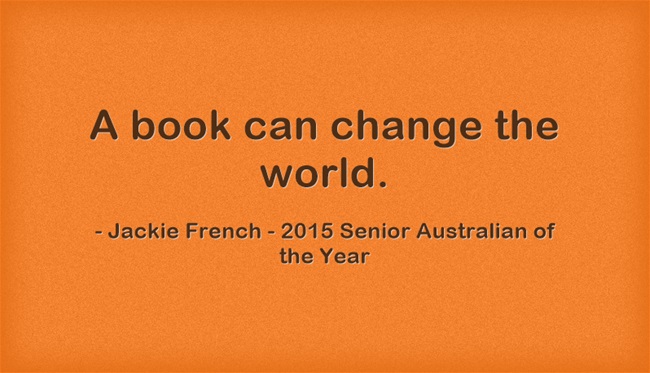
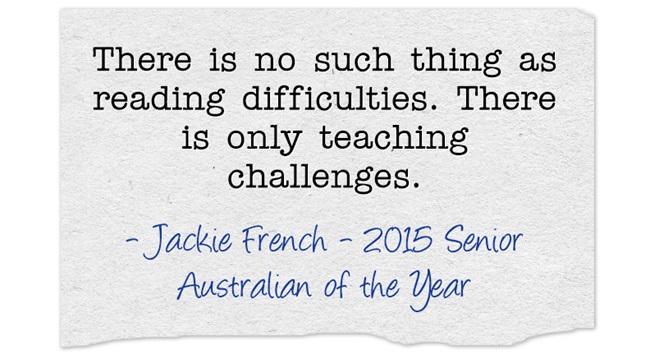
    Failure-is-not-an-optionA-book-can-change-theThere-is-no-such-thing


    In this next video Jackie talks about her book “Hitler’s Daughter”. You don’t have to have read the book to glean much of interest from the interview. In the discussion Jackie shares her thoughts about reading and writing. She questions how the ‘world’ in which one is, influences thoughts about good and evil and decisions that are made. She discusses how the need for evil to be resolved in a work of fiction differs between children and adults. She talks about whether it is necessary for a child to apologise for the sins of the previous generation, and how still controversial issues can be dealt with in an historical situation. It is worth listening to if you simply want something to ponder over.

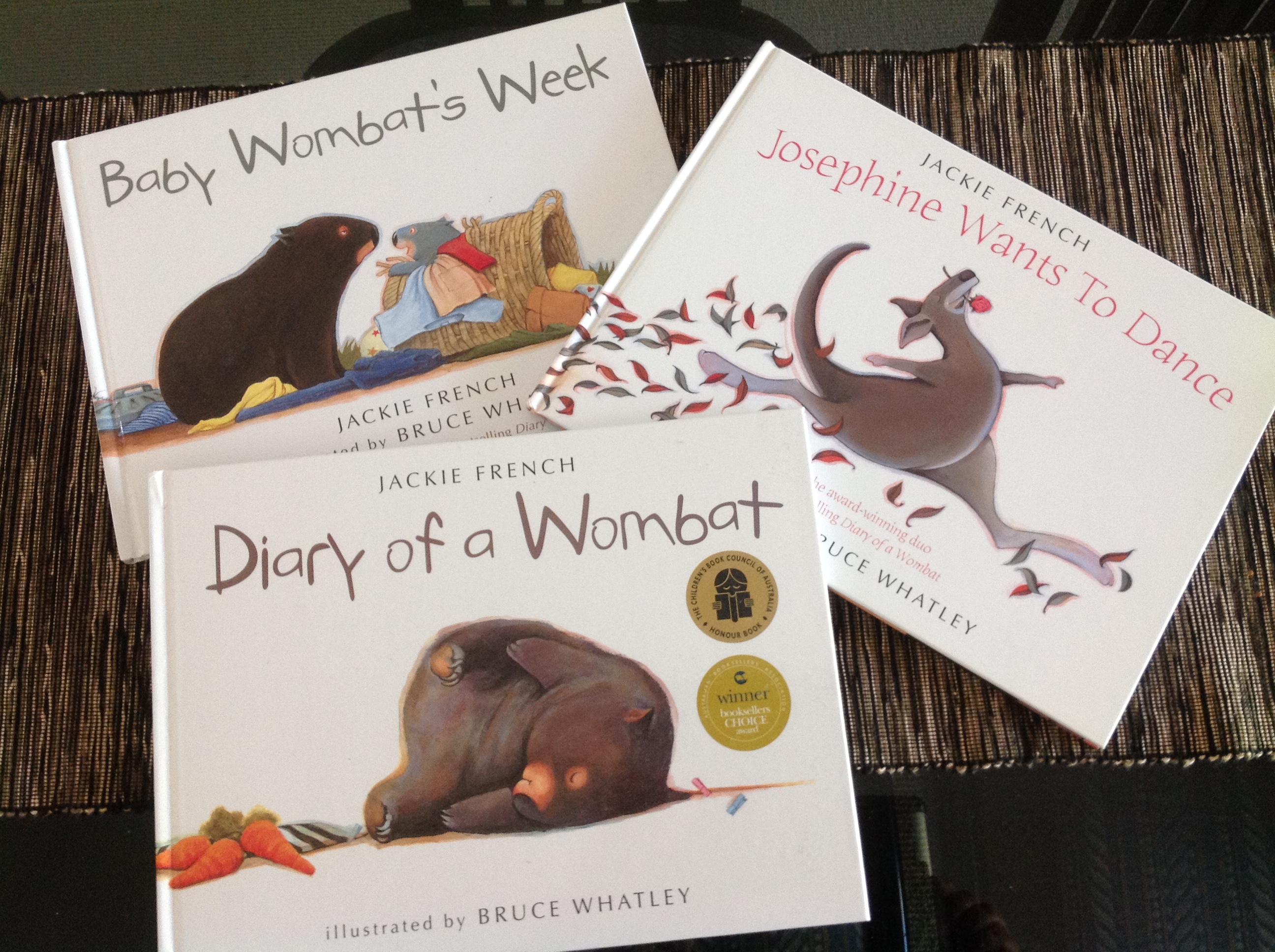
    Being an early childhood teacher I am more familiar with Jackie’s picture books such as

    Diary of a Wombat, Baby Wombat’s Week, and Josephine Wants to Dance, which are delightful.

    IMG_4302

    Here is a video of Jackie reading Diary of a Wombat.

    I have just discovered that Hitler’s Daughter is available as an audiobook, so it is going onto my list!

    https://openclipart.org/image/800px/svg_to_png/148843/1310261210.png
    https://openclipart.org/image/800px/svg_to_png/148843/1310261210.png


    I congratulate Jackie on her award and thank her for the contribution she is making to the lives of so many and the future of our planet.


    *piqued

    In this sentence, I am using the word “piqued” to mean “stimulated or aroused my interest”.

    How can one word be used to express opposite meanings? I don’t know how anyone is expected to learn or understand the nuances of this language we call English!

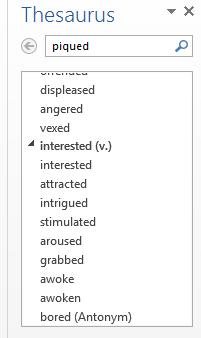
    When I checked with my thesaurus to ensure I had chosen the correct word, this is what I found:

    piqued 1         piqued 2

    How many other words do you know that could almost be listed as its antonym?

    Thank you

    Thank you for reading. I appreciate your feedback. Please share your thoughts about any aspect of this post.

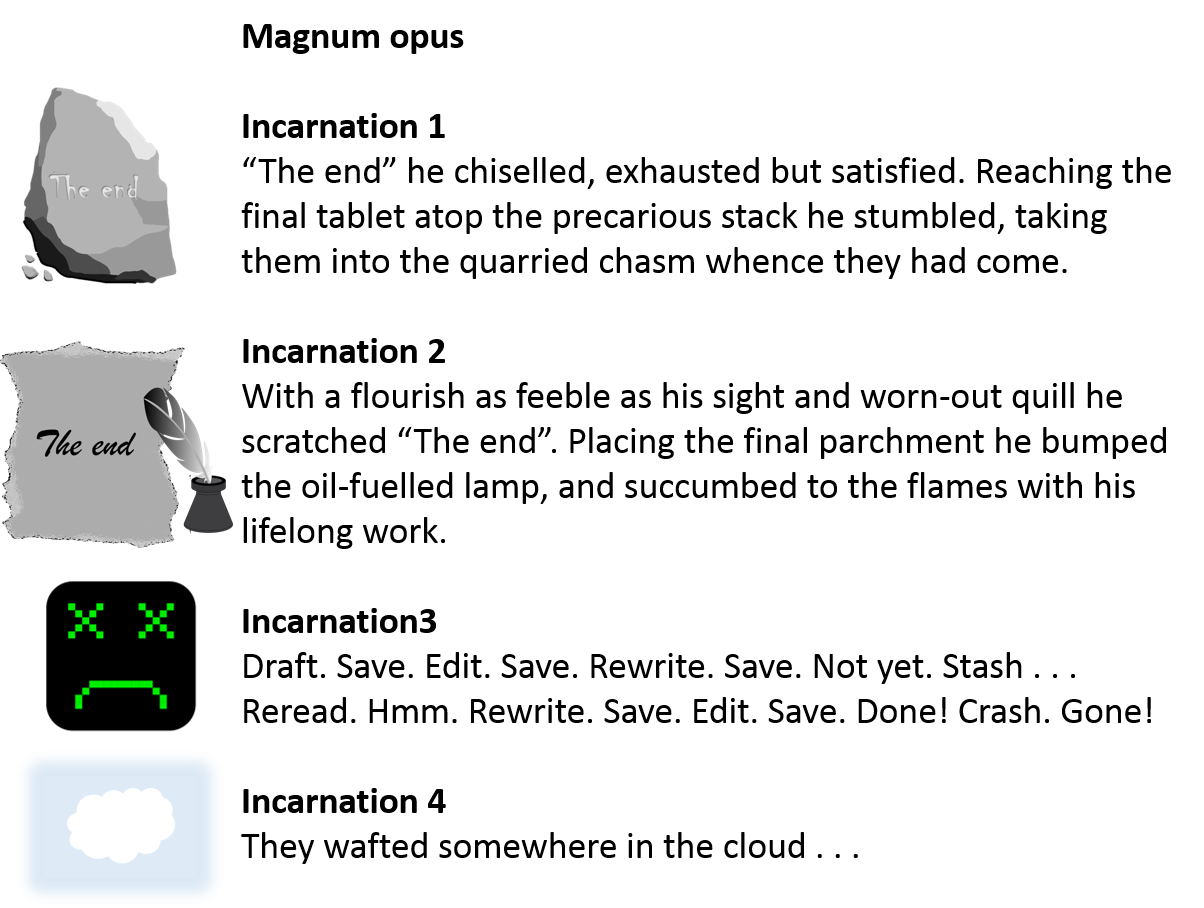
  • Magnum opus – life in a flash


    Discussions in response to my most recent posts have been in-depth and involved a bit of back and forth and exchange of ideas about optimism, pessimism, meliorism and the meaning of life, including achieving goals and the idea of ‘not yet’. I am grateful to everyone who has joined in the conversation, got me thinking and contributed to my learnacy. Please may it long continue!

    This week at the new-look Carrot Ranch, Charli Mills continues to challenge writers with her 99 word flash prompt to In 99 words (no more, no less) write a life span.

    I decided to lighten up a bit this week, and simply respond to the challenge.

    Magnum opus

    Thank you for reading. I appreciate your feedback. Please share your thoughts.
    Thank you


  • Finding meaning

    Always look on the bright side of life’ is a philosophy to which I aspire. Many think I have achieved it but they don’t know how hard I struggle. I do try to find the good in people and situations, but it’s not always my first and instinctive reaction. When I realise I’ve reacted negatively I try to change or hide my negative thoughts and replace them with positive ones. But it’s not always easy to convince myself, regardless of whether I convince anyone else or not.

    It reminds me of a quote on a laundry bag which has stayed with me in eight different homes in three different states and for well more than thirty years. After all this support I have finally thought to seek out the source of the wisdom and found it to be UK poet and playwright Christopher Fry.

    bag

    I feel the quote represents me quite well; doing what I can to hold it all together and keeping those negative instincts in check by ‘nipping them in the bud’, all the while fearful of one day just losing it and letting it all out in one mighty swoosh. I guess the expectation of fewer years remaining in which I will need to keep myself contained makes me a little optimistic. (Always look on the bright side!)

    I like to think I’m more of a hopeful realist than either a Pollyanna or a negative realistic. A discussion about optimism and pessimism followed a previous post in which I asked How much of a meliorist are you?  But meliorism is more a belief that the world can be improved by the actions of humans than an optimistic or pessimistic expectation of the outcome.

    I believe that humans have an amazing potential for improving our world (i.e. every aspect of it). That makes me a meliorist. Recognising what is happening in the world now makes me a realist. A belief that human actions will make improvements in the future makes me an optimist, but not one without some pessimistic fears. While stories of terrorism, climate change and violence fuel the fears, stories like this TED talk by Tasso Azevedo show that improvements can be, and are being, made.

    I am an education meliorist. I believe that education is a powerful agent for change and has an enormous potential for improving lives. My optimism that education will impact positively upon individual lives as well as the collective human situation outweighs my pessimism about the outcomes I see in current systemic trends and leads me to seek out educators, like Ken Robinson, Chris Lehmann , Michael Rosen, Barbara Arrowsmith-Young and Rita Pierson who share my vision of what could be.

    A quest to improve my own life and the lives of others through education has been a long time passion. Ensuring that my own children experienced the benefits of learnacy, though I hadn’t heard of the term at the time, as well as literacy and numeracy was of great importance to me. I encouraged them to question, to create, to think critically, to read, to learn, to wonder . . .  There is so much we teach our children the list goes on. It is very rewarding for me to see that they have a love of learning and are passing that same love on to the next generation.

    Having, sharing and fostering a lifelong love of learning perhaps in some ways contributes to giving meaning to my life. But it also leads me to question life and its purpose in ways that many others don’t.  This questioning can lead to a sense of unease, of lacking fulfilment, of needing to do and achieve more. I know others who better accept the way things are, accept each day as it comes, and are content in their existence. Sometimes I envy their complacency.  Other times I want to shake them and make them realise that there is more to life than this.

    But am I wrong? Is there actually less to life than this? It is sometimes said that there is no point in accumulating wealth and possessions as you can’t take them with you when you go. But is there any point in accumulating a lot of learning and knowledge? After all, you can’t take it with you when you go either; but like wealth and possessions, you can leave it behind for future generations. If we lived only for what we could take with us, would there be a point?

    I guess what matters is what helps each of us reach that level of contentment, of being here and now in the present moment because, after all, it is all we ever have.

    I often think about life, existence, why we are here and the purpose of it all, constantly wavering between seeing a point and not. A recent discussion with a friend about her feelings of emptiness and needing to find more purpose and meaning in life disturbed my approaching, but elusive, equilibrium again. Will I ever reach that blissful and enviable state of contentment: knowing and accepting who I am, where I am, where I am going and how I am going to get there? Who knows? But I can have fun figuring it out. I am determined to enjoy the journey. I don’t think there will be much joy at the end!

    Which is all very timely with the current flash fiction prompt set by Charli Mills at the Carrot Ranch who talks about actions that we take to reach our goals and challenges writers to In 99 words (no more, no less) write a story that describes a moment of being.

    I hope you enjoy my response.

    Being, positive

    “It’s positive,” he said.

    She smiled. She knew. She only needed official confirmation.

    He wanted dates. She supplied.

    But she knew the very moment an unexpected but welcome spark enlivened her being with its playful announcement, “Surprise! I’m here!”

    She’d carried the secret joy within her for weeks, never letting on, keeping it to herself, waiting. No one would have believed her without proof. But with her whole being she knew.

    Finally, after nine inseparable months, she held the child, distinct and individual. She marvelled at the tiny creation whose existence breathed purpose and meaning into hers.

    Thank you

    Thank you for reading. I appreciate your feedback. Please share your thoughts about any aspect of this post and flash fiction.

  • I can do this – one step at a time!

    Confidence, the willingness to have a go and to get up and try again after an unsuccessful attempt, is crucial to learning.

    Attached to real confidence, as opposed to false bravado, are certain types of knowledge:

    • of the desired outcome
    • of possible steps to achieving the outcome
    • of what is needed to achieve the outcome
    • of where and how to find the knowledge or support necessary to achieve the outcome

    and an openness to possibilities.

    Knowing what one doesn’t know is just as important as knowing what one does!

    www.openclipart.com
    http://www.openclipart.com

    Caroline Lodge expressed a similar view on her blog just this week, confessing that she didn’t know how to go about revising her novel, but that she did know what to do about not knowing: she enrolled in an online editing course. She attributed the view of intelligence as “knowing what to do when you don’t know what to do to the educationalist Guy Claxton.

    I wasn’t aware of Claxton but he sounded like my sort of educationalist so I decided to investigate further.

    https://openclipart.org http://goo.gl/ZvsCFc
    https://openclipart.org
    http://goo.gl/ZvsCFc


    A Google search brought up this result:

    Claxton - Google

    Hmm – seems like, according to Claxton, that definition of intelligence is first attributed to Jean Piaget. I’d better read his article: Learning to learn: a key goal in a 21st century curriculum.

    I didn’t have to read far into the article before I knew that Caroline had sent me in the direction of another great educator (thanks Caroline).

    In the introduction Claxton says,

    “The well-rehearsed economic argument says that knowledge is changing so fast that we cannot give young people what they will need to know, because we do not know what it will be. Instead we should be helping them to develop supple and nimble minds, so that they will be able to learn whatever they need to. If we can achieve that, we will have a world-class workforce comprising people who are innovative and resourceful. The personal argument reaches the same conclusion.”

    I have expressed similar views previously on this blog, including here, here and here.

    A little further into the article Claxton introduces a new (to me) term: illearnerate. He described students not thinking of themselves as effective real-life learners. He says,

    “They think that school has not only failed to give them what they need, it has actually compounded the problem.”

    The term is new, but the thinking is not!

    He goes on to say that,

    “More fundamental even than the concern with literacy and numeracy is the need to protect and develop young people’s learnacy.”

    What great terms, illearnerate and learnacy, I have added to my vocabulary today!

    The steps I am taking are definitely enhancing my learning. I think I am learnerate.

    However, I digress. I was looking for the attribution to Piaget and, a little further into the article, there it was:

    Claxton - Piaget

    I looked further online for confirmation of the quote and found this on goodreads:

    Good Reads - Piaget

    I think there is a subtle difference in the interpretation given by Claxton and would say that intelligence is not so much defined by, but incorporatesknowing what to do when you don’t know what to do”.

    A few weeks ago I used images in my post Bring a plate that prompted Geoff Le Pard to ask,

    “How do you do the images? Adding the captions?”

    I said that I used PowerPoint and would post some instructions if he thought it could be useful. He said that it would be, and Anne Goodwin agreed.

    For some time I had been wanting to create an instructional video using a capture of what I was doing onscreen. However it hadn’t reached the top of my to-do list. This seemed the perfect opportunity to put it there and do the learning required.

    In response to Geoff’s request I made this video demonstrating how to insert pictures and text in PowerPoint, then group and save them as one image.

    For my first attempt I was fairly pleased with the result, though I fear the video may be a bit long at 10 minutes. Maybe I should have started with a simpler image – one picture and one text box may have been enough for the demonstration to be effective. I’d be pleased to know what you think.

    After I had finished the video it occurred to me that I may not have addressed Geoff’s question at all, that the combination of image and caption that Geoff was referring to may have been the image of the whole PowerPoint slide, like this one:

    Rice salad 2

    If so, then my first video would be of no use to Geoff.

    There is a saying attributed to George Bernard Shaw:

    “Those who can do, and those who can’t teach.”

    I both agree and disagree with the statement for different reasons. Teaching is an incredibly important profession and not everyone can do it. Looking beyond the profession to simply teaching someone a skill is also something that not everyone can do. Sometimes I think that the one most capable of teaching a skill is the one who struggled to learn it; not the one who was able to do it effortlessly and almost by intuition.

    The ability to teach requires knowledge of each step or each component and how they work together. This knowledge helps the teacher understand where a learner is confused or what the learner needs to know.

    So just as teachers in classrooms provide resources and strategies to cater for a range of needs and abilities, I have produced a second video demonstrating how to make an image of a PowerPoint slide. This shorter (five minute) video explains how to create images using three different methods: Snagit, Snipping Tool, and printscreen function. I hope I have explained the steps for each clearly.

    Important update: Do not do this at home. Do not follow the procedures in this video.

    Since viewing this post and videos my daughter Bec has told me of a much easier way to create an image of a PowerPoint slide, or of every slide in a presentation. Maybe you know of it too.

    Here’s how to do it:

    1. Click on the slide you wish to make an image of, or any slide if you wish to make images of all slides in the presentation
    2. Go to file, save as
    3. Choose Save as type: PNG
    4. Click Save – you will be asked which slides you wish to export: all or just this one
    5. Selecting all saves every slide as a separate image to a new folder with the file name you choose; selecting just this one saves only the slide selected.

    How easy is that? Thanks Bec. 🙂 And I don’t mind that I found out after making the video. I wanted to learn how to do that anyway, and now I have learned something else as well. Great steps in learning. I’m learnerate!

    The discussion of steps to learning tied in very nicely with the flash fiction prompt set by Charli Mills at the Carrot Ranch this week. Charli challenged writers to In 99 words (no more, no less) write a story about steps, stairs or a staircase.

    This is my response:

    If only

    She collapsed, exhausted. Stairs led up and stairs led down; some steep, some wide, some narrow, most dark. Her head spun and vision blurred. Which way now? Which way had she come? Had she been going up and down these stairs forever?  Going around in circles?  They all now looked the same. She didn’t even know if she’d been in this place before.

    “I’m trapped,” she thought. “Stuck here forever.”

    She closed her eyes, surrendering to despair.

    Outside birds heralded the rising sun. She was lost, oblivious of its promise.

    If only she had recognised the door.


    Thank you


    Thank you for reading. I appreciate your feedback. Please share your thoughts about any aspect of this post, including the videos and flash fiction.

  • The Power of Not Yet by @TeacherToolkit

    The Power of Not Yet by @TeacherToolkit

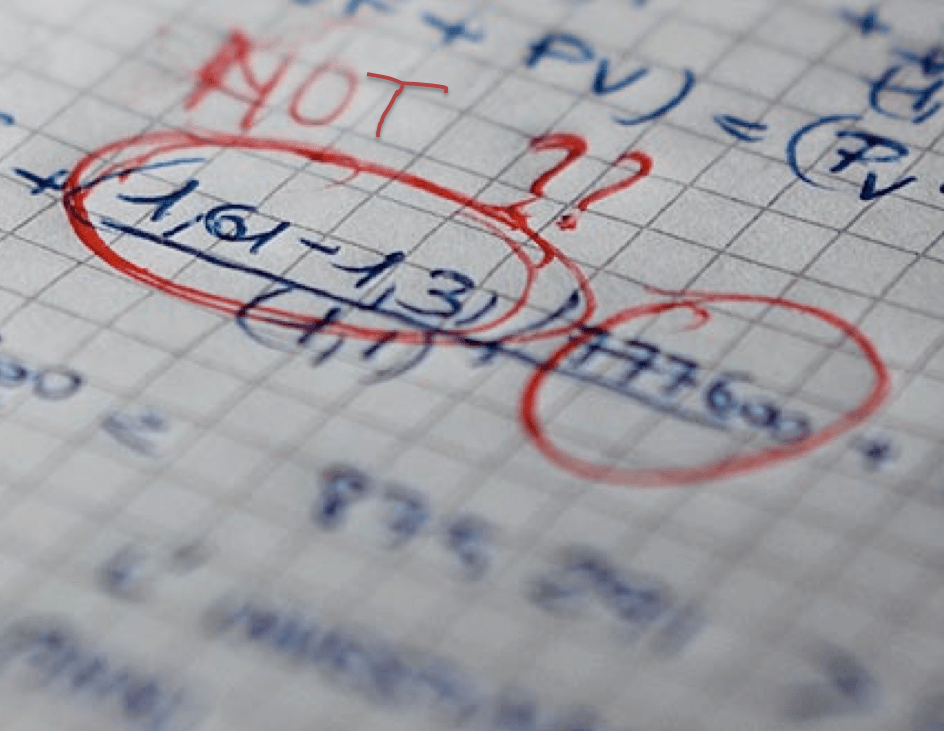
    Some of my most popular posts of 2014 were those that discussed praise, growth mindset, assessment and failure.
    My final post for the year included thoughts about failure and the need to reflect and refine to move forward.
    It is fitting to begin 2015 with a post that revisits and extends those themes. I’m sharing a post about The Power of Not Yet I read on @TeacherToolkit’s blog. The post includes a video of Carol Dweck explaining that

    “if (students) didn’t pass a course, they got the grade “Not Yet.” And I thought that was fantastic, because if you get a failing grade, you think, I’m nothing, I’m nowhere. But if you get the grade “Not Yet” you understand that you’re on a learning curve. It gives you a path into the future.”

    I would much rather consider that I have not yet achieved my writing goals, than think I failed to achieve them in 2014. Not yet means I am making progress, and will continue to do so in 2015 and beyond.
    In the video Dweck shares research showing a difference that having a growth ‘not yet’ mindset can make to student effort and achievement.
    For me, her most powerful statement is that at the end of the talk:

    “Once we know that abilities are capable of such growth it becomes a basic human right for children, all children, to live in places that create that growth, to live in places filled with yet.”

    It’s a bit like learning to ride a bike. There is no failure, just stages of growth in ability.

    I hope you enjoy the article, and especially, Carol Dweck’s video.

    Thank you

    Thank you for reading. I value your feedback. Please share your thoughts about any aspect of this post.

  • The True Story of Rudolph (The Red Nosed Reindeer)

    The True Story of Rudolph (The Red Nosed Reindeer)

    What a heartwarming and inspiring story, just right for this time of year. I found it via Book Chat by Michelle James.
    I hope you enjoy it as much as I do.

    Chris The Story Reading Ape's avatarChris The Story Reading Ape's Blog

    This was emailed to me by a friend:

    A man named Bob May, depressed and brokenhearted, stared out his drafty apartment window into the chilling December night. His 4-year-old daughter Barbara sat on his lap quietly sobbing. Bob’s wife, Evelyn, was dying of cancer.

    Little Barbara couldn’t understand why her mommy could never come home. Barbara looked up into her dad’s eyes and asked, “Why isn’t Mommy just like everybody else’s Mommy?”

    Bob’s jaw tightened and his eyes welled with tears. Her question brought waves of grief, but also of anger. It had been the story of Bob’s life. Life always had to be different for Bob. Small when he was a kid, Bob was often bullied by other boys. He was too little at the time to compete in sports. He was often called names he’d rather not remember.

    From childhood, Bob was different and never seemed to fit…

    View original post 473 more words

  • It’s not fiction

    Most of my current writing is non-fiction with a strong focus on education. The two blog posts I publish each week generally address educational issues or share my thoughts about learning.

    In my ongoing work-for-self I develop educational materials and resources for parents, teachers and children. Some of these are available in my Teachers Pay Teachers store, and are listed on the Teaching and learning resources page of this blog.  My goal is to set up my own website on which all the resources I produce will be available.

    During my work-for-pay hours I am also involved in writing resources for teachers. Most of my published material, listed on the Writing – interest and publications page, is also educational.

    That is not to say that I am not interested in writing fiction. Over the years I have enjoyed writing in a variety of other genres including stories for children, short stories and poetry; and still do. They are just not my main focus at the moment. That may change in the future. Or it may not.

    One opportunity for writing fiction that I am very much enjoying at the moment is the weekly 99 word flash fiction challenge  set by Charli Mills at the Carrot Ranch.

    Initially my responses to Charli’s prompts were unsystematic. However it was not long before I was incorporating them into longer posts which maintained the educational focus of my blog. A recurrent theme is the importance for schooling to target the particular needs of individual children.

    Soon a character emerged: Marnie — a young girl, from a dysfunctional family, for whom school would be a threatening and meaningless experience without the support of a passionate and caring teacher. Sometimes, as with this week’s, the prompt inspires immediately and I write a story in which I hope that the message is strong enough for it to stand alone, without the support of a lengthier post explaining my thinking background.

    Here is this week’s response to Charlie’s prompt: In 99 words (no more, no less) write a story about rare gems. I’d love to know how successful you think I have been.


    glitch, trophy gem http://goo.gl/VEQVxM
    glitch, trophy gem http://goo.gl/VEQVxM

    Uncut gem

    She examined the new arrival, assessing the possible effects of integration into the existing collective. Would the group be enhanced or would this newcomer disrupt the established harmony?

    From every angle the edges were rough and uneven. The years of obvious neglect obscured the potential from any but a trained eye.

    Fortunately her eyes were keen. A bit of encouragement here, a little adjustment there, an opportunity to sparkle and display unique and positive attributes.

    She smiled. Experience had shown what could be achieved with a little polish and care.

    “Welcome to our class, Marnie,” she said.


    Thank you

    Thank you for reading. I value your feedback. Please share your thoughts about this post and flash fiction story.

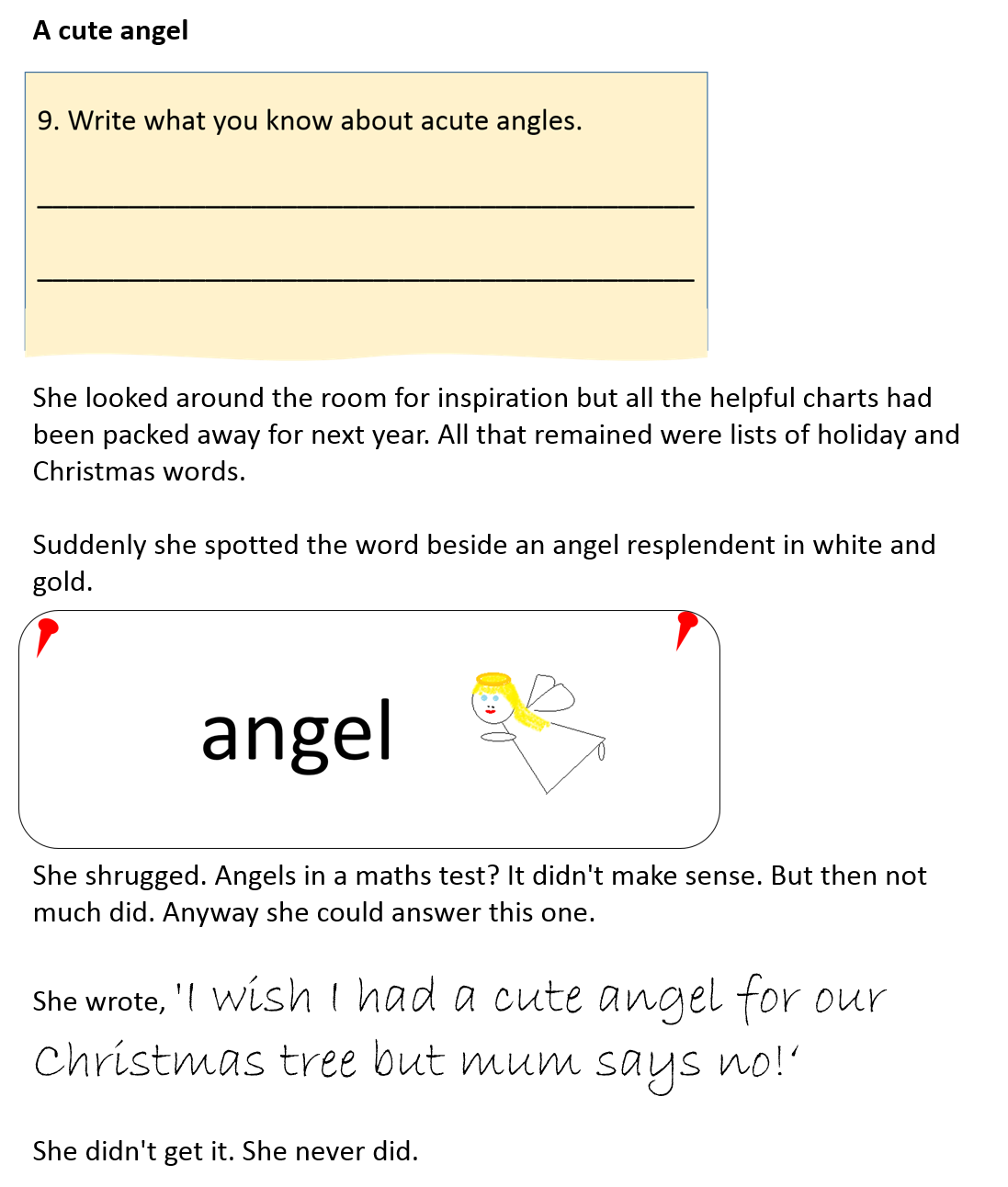
  • A cute angel

    This week at the Carrot Ranch Charli Mills has set an angel prompt: In 99 words (no more, no less) write a story that features an angel.

    Usually I include my responses to Charli’s prompts in longer posts sharing some thoughts about education.

    This week I’m going to leave it as a stand-alone, without the padding I usually provide. I am hopeful that the educational issues I have alluded to will be as obvious to you as they are to me. I’d love to know what you think.

    A cute angel

    Thank you

    Thanks for reading. I appreciate your feedback. Please share your thoughts about this flash and what you consider its message to be.