
For more than two years now I have been participating in the weekly flash fiction challenge set by Charli Mills at the Carrot Ranch. As well as the challenge, I enjoy the camaraderie and support from other writers, especially Charli who ropes us in with her prompts and encouragement.
For the last little while I have been posting my flash fiction responses on Tuesday evenings, just scraping in before Charli’s deadline. But not tonight. Tonight I am sharing Charli’s post, the post that would normally include a flash fiction prompt, but instead this time included a plea for help. Charli is in crisis mode, kicked out of home and in transit.
Often when friends are in need we can lend a hand by cooking a meal, offering a bed for the night, assisting with chores, and listening. But when that friend is over 12,000 kilometres away, helping out is not such an easy thing. For that reason, this evening I am sharing Charli’s post. Maybe one of you is able to help her out in her time of need.
Thank you for reading. As always, I appreciate your feedback.
Category: Writing
-
Carrot Ranch in Crisis
-
Sharing circles

http://www.morguefile.com/ On Tuesdays I have regularly published a post and response to the flash fiction challenge set by Charli Mills at the Carrot Ranch. Today I am breaking with tradition as I wrote the prompt this week and included my flash with it.
In that post I mentioned classroom sharing circles where everyone comes together to share their work, thoughts and ideas, not unlike the sharing of stories and ideas at the Carrot Ranch. In the classroom everyone in the circle is equal, with equal opportunity to see and hear, and to be seen and heard. The focus is lifted from the teacher and shared equally among class members, creating a democracy.
In this post I describe some of the sharing circles I used in my classroom and show how these processes are not all that dissimilar from our own blogging circles.

D.E.A.R. (Drop Everything and Read) is a daily quiet reading session lasting about 15 minutes. In these sessions everyone, including the teacher, chooses a book and finds a comfortable space for reading. Some children sit at desks, some on cushions in the reading corner, others prop themselves up against the wall, and others lie on the floor.
The one rule is:
- Everybody reads without interruption.
This means:
- Nobody talks
- Everybody chooses enough reading material for the session
- No outside interruptions are permitted (unless it’s an emergency)
It is essential for the teacher to engage in personal reading, along with the children, to show that reading is valued and to provide a model of “expert reader” behaviour. Inviting other school personnel to join the session is also valuable. It is particularly important for children, who may not see adults engaged in regular sustained recreational reading at home, to see adults enjoying reading.
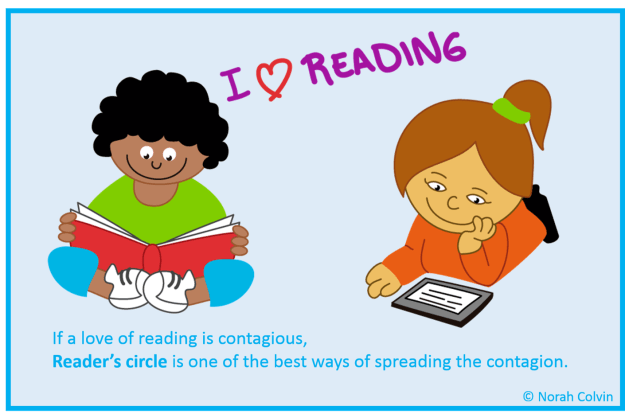
I always concluded my D.E.A.R. sessions with a Reader’s circle. Children would bring their books to the circle and share what they had read. While there wasn’t time for every child to share every day, I ensured each child had an opportunity of doing so at least once a week. Children would:
- Tell the book’s title and author
- What it was about
- What they liked about it, and
- Read a small section to the class
I loved the way children would look to each other’s book responses to guide their own selection, often asking others to help them find a book that had previously been talked about. We do the same in sharing and reading book reviews on our blogs.
If a love of reading is contagious, Reader’s circle is one of the best ways of spreading the contagion.
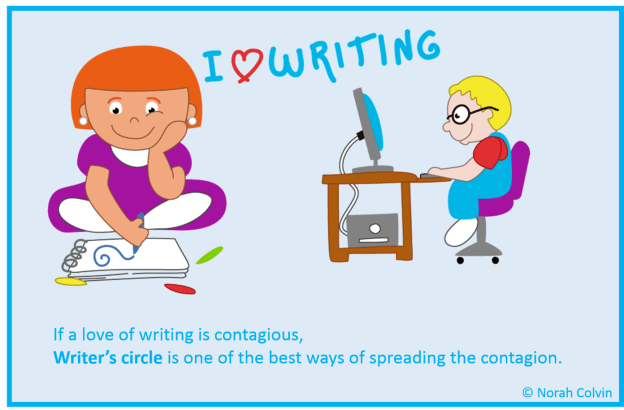
A love of writing can be equally contagious. One of the things children enjoyed most about writing, other than the actual writing, was sharing it with others. Children would have opportunities to discuss and read their writing to each other in pairs and small groups as well as in the Writer’s circle.
Sometimes we would have a pre-writing circle to share ideas and inspiration. It was rare that anyone would leave the circle without an idea. Surprisingly perhaps, it was even rarer that two would write about the same thing. Bouncing ideas off each other seemed to encourage a diversity, rather than similarity, of ideas. I guess the responses to Charli’s flash fiction prompt demonstrate the same principle.
Post-writing circles provided opportunities to discuss what had been written and to read sections to others. Writers might share what they liked about their writing, or what they were having trouble with. Others might ask questions for clarification, to understand character motivations, or to find out what will happen next. Sometimes, with the writer’s permission, I would use a piece of writing to discuss an aspect of the writing process that would have application for many. If any children were reluctant to read their own writing, I would be more than happy to read it with them.
If a love of writing is contagious, Writer’s circle is one of the best ways of spreading the contagion.
Discussion circles could occur at any time, in any subject on any topic where a sharing of ideas was required. I had a lovely smiley face ball that children would sometimes pass around, or across the circle, to each other, to indicate whose turn it was to talk. This ensured that everyone had an opportunity to share their ideas and thoughts, as well as to hear the ideas and thoughts of others. Topics could be as diverse as:
- “I feel happy when …”
- “When I lose a tooth …”
- “On the holidays, I …”
- “I think children should be able to … because …”
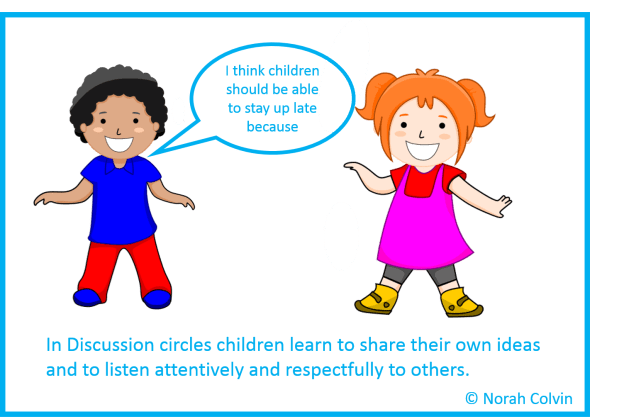
Each of these sharing circles gives children a voice, demonstrating that they, their thoughts, their ideas and their opinions are accepted and valued. Each encourages children to listen attentively and respectfully to others by providing a supportive environment in which they can test out ideas, then reflect and reassess in response to the reactions of others.
These discussions are not unlike those we engage in on our blogs; sharing books and articles read, and videos watched, along with our ideas and opinions and, most of all, our writing.

Thank you for the opportunity of sharing mine. I appreciate your feedback. Please share your thoughts.
Share this:
-
April 20: Flash Fiction Challenge
This week I had the honour of writing a guest post and flash fiction prompt at the Carrot Ranch. I was writing around in circles.
If you haven’t already popped over to see, I’d be thrilled if you did!
Here is a taster and link.Share this:
-
Starting with one

© Charli Mills There’s an event worth celebrating at the Carrot Ranch this week. Two years after posting her first prompt encouraging writers to hone their writing skills by joining the 99-word flash fiction posse, Charli Mills has posted her 99th.
I’m proud to say that I’ve been there since the first, riding the range of story prompts with others who have gathered around the campfire to share stories, wise words and writing tips in response to the nurturing offered by Charli’s warm, honest and generous spirit. It is she who is the hub around which has formed a community that is welcoming, supportive and encouraging. She is the one who keeps the wheels turning, the imaginations stirring and the words flowing.
© Charli Mills It is fitting, therefore, that her 99th challenge is to in 99 words (no more, no less) write about the idea of “just one.” If all it takes is just one, what is the story? Explore what comes to mind and go where the prompt takes you. Bonus challenge: eat cake while you write, or include cake in your flash. She is the “just one” who, week after week, writes an inspiring post, sets a thought-provoking challenge, ropes in the writers and compiles the stories into a collection as diverse as the readers. It would be interesting to know how many writers have answered every prompt. I don’t think the number would be large as even I didn’t manage to ride every muster.
I take this opportunity to congratulate Charli on her initiative. In this recent post she restates that “the original intent of Carrot Ranch as of March 5, 2014 was to create a bully-free zone where writers could learn to access creativity through problem solving (the constraint); write from a unique perspective (diversity); read and discuss the process or prompt (engagement).” There is no question that she has achieved that and more. I have met many wonderful writers, bloggers and friends through my visits to the Carrot Ranch. If you are not yet a visitor, I suggest you pop on over. You’ll be warmly welcomed.

Recently I received as a gift a book called “One: How many people does it take to make a difference?” The book is filled with many wonderful quotes, stories and suggestions; too many to share, in one post anyway. I decided to open the book to a random page and share what I found. This is it:
“If someone listens, or stretches out a hand, or whispers a kind word of encouragement, or attempts to understand, extraordinary things begin to happen.” Loretta Gizartis

That’s a pretty powerful quote. The effects of Charli’s “just one” contributions are easy to see. The quote is equally applicable to teachers and the effects that they may have upon the lives of others.

It is lovely when teachers are publicly (or privately) acknowledged for the positive influence they have had upon a life. Charli did this recently when she acknowledged a high school teacher who had encouraged her to achieve more than she thought she could.

Last month when announcing the Top Ten Finalists for the Global Teacher Prize Stephen Hawking acknowledged one who had had a powerful effect upon his life. He said,
“Thanks to Mr Tahta, I became a professor of Mathematics at Cambridge, in a position once held by Issac Newton. I have spent my life attempting to unlock the mysteries of the universe. When each of us thinks about what we can do in life, chances are we can do it because of a teacher.”
Even teachers need mentors and many can name one who has made a difference to their lives. As if in response to Charli’s challenge, this week Vicki Davis, the Cool Cat Teacher, nominated “just one” personal mentor who had taught her the most about teaching. Of Maryfriend Carter, Vicki says,
“I’m grateful for her mentorship and encouragement in my life. She changed my thinking about teaching as she taught me about teaching. She single-handedly convinced me that testing doesn’t work and what does.”
But not all who teach the most important lessons in life are “professional” teachers. There is a great saying that goes something like, “When the student is ready the teacher appears.” I often say that my own children have been my best teachers. But I have also been inspired by other wonderful teachers too. I have mentioned many of them in previous posts including here, here and here.
However, my response to Charli’s flash fiction challenge aims to demonstrate that even the smallest, seemingly inconsequential, action can have a powerful effect upon the life of another. Sometimes we learn of the effects, sometimes we don’t; but when we do, the effect can be magnified. I hope it works.
The Power of One
Only much later, through a chance meeting with mutual friends, did she discover her power of one.
“I know you,” said the other, pointing her cake fork. “You’re the one.”
The old fear gripped, twisting tight. Her cake lost its appeal.
“Which one?” another asked.
“In the foyer. On the first day. You spoke to me.”
“Oh,” she reddened, shrinking to nothingness inside.
“I was so nervous. You made me feel welcome, at ease. I’ve been wanting to thank you.”
“Oh,” she lifted her fork, smiling. “You’re welcome.”
“If only you knew,” she thought. “I did it for me.”

Thank you for reading. I appreciate your feedback. Please share your thoughts.
Share this:
-
Writing poetry with children

This week at the Carrot Ranch Charli Mills has challenged writers to write about galloping. What keeps replaying in my head is the phrase “The horses go galloping, galloping, galloping” interspersed with the lines from “The Highwayman” by Alfred Noyes, a poem I learned at school.
The Highwayman came riding, riding, riding,
The Highwayman came riding, up to the old inn-door.

Learning poems at school was a joy. I love poetry and, in younger years, used to read a lot of it, less currently. Perhaps I should say I loved poetry, but that would unfair, just as it would be unfair to say that I no longer love an old friend that I haven’t seen for years, for at the moment we meet up again the connection is just as strong as ever, the ties never broken.
Oftentimes when I read Charli’s challenges I know how I will respond immediately. Other times I need to massage the idea until I hit just the right spot. This time the horse has bolted and the paddock is left empty without a horse in sight. All I’m left with are my thoughts of poetry.
Fortunately, as an early childhood teacher with a love of picture books, recent years haven’t been completely devoid of the poetic form. While not necessarily written in what might be considered “poetic language”, many are written in rhythmic rhyming verse. Others contain verses within the story, such as the refrain in The Gingerbread Man or the song in Love You Forever by Robert Munsch.

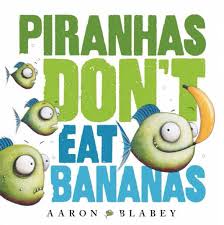
A title recently added to my list of favourites, through repeated readings and recitations by my grandchildren, is Piranhas Don’t Eat Bananas by Australian author Aaron Blabey. Its rhythm, rhyme and sense of fun is an absolute joy. We laughed together at every reading by G1, and every recitation by G2. It begs to be read and re-read, recited and recited again. Sadly, I got to read it aloud only once, and even then not all the way through! “Hey,” I protested in vain. “I like to read picture books too!”
Of course there are also many books of poems and rhymes written for children, including Nursery Rhymes, though many of those weren’t written with children in mind. There are also some that fit into a horsey theme such as
- Ride a cock horse to Banbury Cross
- Horsey Horsey
- This is the way the ladies ride (though the version here is not quite the same as the one I remember)
In addition to reading poems and stories to my class I also enjoyed writing poems with them. At this early childhood stage the poems would be more rhythmical verse, sometimes rhyming and sometimes not, with only the hint of an introduction to poetic language. I have previously written about writing our versions of I Love the Mountains, a traditional camping song.
I have also written some resources for supporting teachers when Writing Christmas poems with early childhood students. These are available in my Teachers Pay Teachers store and soon to be included in readilearn resources. With easy-to-follow structures, writing these poems give children immediate boosts to their writing confidence.
I had been thinking for a while that I should write some new versions suited to other times of the year, but hadn’t prioritised it. However, when I read Rowena Dreamer’s post Mr’s Poem: Through My Window on her blog beyondtheflow, another idea sprang to mind. Rowena discussed the writing of a poem “Through my window” that had been set as homework for her son. I immediately thought of the sound poems that I had taught my students and wondered if the structure could be adapted for sight poems.

This is what I came up with:

You’ll notice that I haven’t exactly maintained the structure. This is what happens, particularly when young children are writing their versions. It is to be expected and accepted. The purpose of the structure is to support, not restrict.
I then wondered if it could be used with the other senses and, at the same time, realised that four verses, four senses, would just about reach the target of Charli’s challenge to In 99 words (no more, no less) write a story about galloping. With no other ideas galloping into view, how could I resist giving it a go?
Disappointingly, I found the structure less accommodating for smell and taste, and had difficulty in conjuring different words to use for each. For example, I wanted to smell and taste the freshness of bread and the sweetness of apples. I had thought touch would be more difficult but have realised that’s not the case. The repetition of the word “felt” for both touch and emotion is perhaps not ideal though.
I would love to say more here about the necessity for teachers to experiment before setting tasks for children, and of the value of learning from the process rather than the product, but I think I’ve probably said enough in this post. I will just share what I’ve written which, though responding to Charli’s challenge, doesn’t actually fit the criteria of flash fiction. However, if you’d be kind enough, I’d still love to know what you think.
Market Day
I heard
as I sat curled with a book
the thundering of hooves
the snorting of nostrils
the jangle of stirrups.
I felt anxious.
I saw
as I looked through the window
the horse at the gate
the rider on the path
the bag in his hand.
I felt excited.
I smelled
As I opened the bag
The freshness of bread
The sweetness of apples
The promise of coffee.
I felt famished.
I felt
As I savoured my lunch
The crunchiness of crusts
The crispness of apple
The warming of coffee.
I felt satisfied.
Yum! Fresh produce.
Thank you for reading. I appreciate your feedback. Please share your thoughts.
Share this:
-
Plant the seeds of literacy
About this time last year, I shared my excitement when Jackie French was recognised for her “long and distinguished career as a beloved children’s author” as Senior Australian of the Year. At the time she was halfway through her two-year role as Australian’s Children’s Laureate with the task of promoting “the importance and transformational power of reading, creativity and story in the lives of young Australians”.

Later in the year, in a series of posts celebrating Australian picture books, I shared more of Jackie’s work.
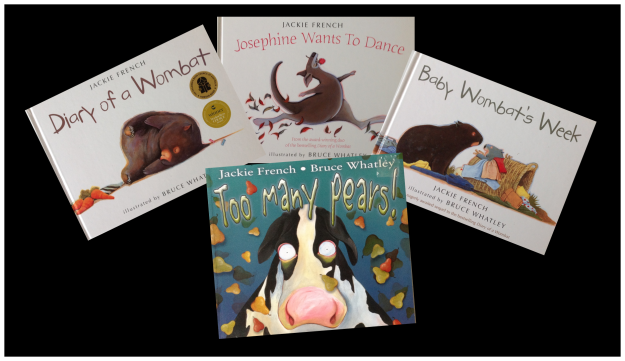
Now the roles of Children’s Laureate and Senior Australian of the Year have been passed to others. Jackie has obviously been asked what she is now going to do with all her “free” time. In her newsletter she says, “if one more person says ‘now you can relax’ if (sic) will bite them like a wombat, the snappish kind” because it means that work is finished, which it isn’t. I feel exactly the same way when people ask me about my retirement, though I fear Jackie and I work at a very different pace and the occupation of my time may seem like retirement in comparison to hers.
While an author may not have received the top recognition as Australian of the Year 2016, three advocates of children’s literature each became a Member of the Order of Australia:
Jackie French for ‘significant service to literature as an author of children’s books, and as an advocate for improved youth literacy’.
Ann James for ‘significant service to children’s literature as an author and illustrator and through advocacy roles with literacy and professional bodies’.
Ann Haddon for ‘significant services to children’s literature, as a fundraiser and supporter of Indigenous literacy, and to professional organisations’.
It is wonderful to see the recognition given to authors, and to the importance of reading.
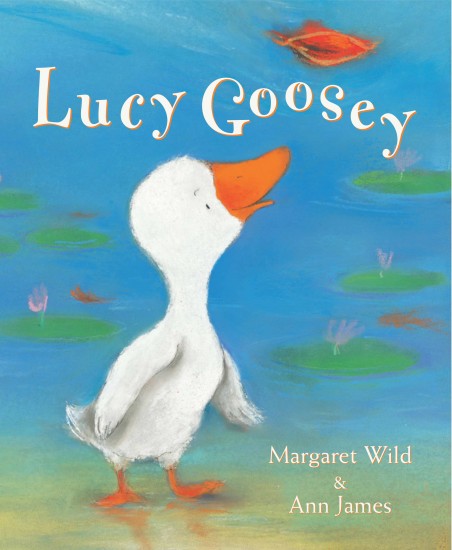
One of my favourite books, illustrated by Ann James is Lucy Goosey. It is a beautiful story, written by Margaret Wild, about the love between mother and child. I can’t read it all the way through without crying. But in a good way. It is very touching.
Ann talks about illustrating the story here:
I’m also pleased to say that I have an original Ann James, done for Bec at a literary festival many years ago, hanging on my wall.

In her Senior Australian of the Year Valedictory Speech, Jackie French says,
“You never know what seeds you plant will grow; if they will keep growing; who will take them and tend them. But there is one thing I have learned in my 62 years: keep planting seeds.

Never think: I am 62 and still have not achieved world peace, universal tolerance and justice, or even an Australia where every single child is given the chance to learn to read.
Change is never fast enough for any person of goodwill.
A rain drop is just a rain drop. But together we are a flood. Together we have changed the world.”

She concludes her speech with these words:
“Let us give our children role models who do not, will not despair, no matter how long it takes to change the world. And let us never surrender, no matter how tired we are, or how long it takes. Because with these weapons we shape the future of our planet.”
I like her words of hope. She is a meliorist. But even more than that, she is an active meliorist. She puts her words into action. She may no longer carry the title of Children’s Laureate or Australian of the Year, but her advocacy doesn’t stop.
Thank you for reading. I appreciate your feedback. Please share your thoughts.
Share this:
-
Reflections on living a contented life, teaching and school
In a previous post I introduced you to Pauline King, The Contented Crafter. In comments on my blog, Pauline revealed that she was a teacher so passionate about education that she had attempted to establish an alternative school. I was excited to discover that we have these things in common and I immediately invited her to share some additional thoughts about children, learning, schools and education.
I am honoured that she has agreed, and delighted to welcome her here. In this post Pauline shares a little of her life journey, and her reflections on teaching and school. In a future post she will share her some of her wisdom about children and parenting.
Pauline, please tell us a little about yourself. What things are most important to you? What do you hope to achieve through blogging?
I was a Steiner School Teacher for some twenty years, here in NZ and in the UK briefly. It was a demanding vocation that taught me more than I ever imparted to the students in my care. I left teaching in 2003, spent a year or so recovering my health and eventually took up life coaching – a kind of a natural segue as I had spent a lot of my time in the school system mentoring young parents and teachers. I retired in 2014 and stepped full time into the art of contentment. It’s what I think I spent my life looking for and in these later years what I taught to the women who came to me for life guidance.

In my personal life I have always been a creator – hand work, interior design and decorating, gardening and various crafting and artistic outlets that changed over the years. I took up blogging almost three years ago simply to keep track of my creative work as I was notorious for making stuff, giving it away and not being able to remember what I made or the processes around it. I soon started using my blog as an on-line diary, documenting the things that amused or dismayed me along with whatever I was playing around with at the time. I don’t think I really expected anyone to read my blog and was quite surprised when I got comments and returned visitors and followers. In a surprisingly short time I discovered a new world that was peopled by like-minded souls and fun people and I kept blogging for the joy found in the community that built up around my little blog.
I live alone in a tiny house with a Maine Coon called Olando and a Shi-Tzu X named Siddhartha [Siddy for short].

I live simply and contentedly, paying close attention to my own personal development and take responsibility for the events in my life. I am not religious but view life and the planet from a spiritual outlook. I study quantum physics, enjoy nature and believe in spreading positivity wherever I can.
I don’t write about education in my blog – even though it is an area I am passionate [and opinionated] about – I simply don’t want it to impinge into the simple creative life I lead nowadays.
Pauline, you were a teacher? What was it that attracted you to teaching in the first place?

I always wanted to be a teacher, from a very young age. School was a safe place for me in a family that was damaged and dysfunctional, so I guess that may have been the genesis. However, I was not allowed to stay in school and was put to work in a factory at the age of 14 [my mother lied about my age]. When I gained my freedom I set about continuing my education and have kept on learning formally and informally ever since. I was 33, a wife and mother, before I finally achieved the goal I had as a child.
What things did you love about teaching?

I loved being in the classroom – working with the students and the Steiner curriculum [which is a wise and clever thing]. Later when I side-stepped into too much administration and other non-teaching roles I simply dried up and eventually became ill. That made me really conscious that it was the art of teaching that I really loved.
You said that you spent many years attempting to establish an alternative school for your eldest daughter. Why was this important to you? What was lacking in schools available to you? How would your school differ?

My feeble attempts to start a school were short lived, I did not go as far as you did as there was little support or enthusiasm for my initiative. Within two years I had discovered Steiner Education and serendipitously fallen head first into that with my two daughters. Both began to bloom and blossom in ways they never had in the state system they were so briefly in and I soon transferred my interest and passion to that form of education. I began an informal study under the auspices of a venerable old retired teacher and soon went on to study full time. I think I was incredibly fortunate for throughout this time I was mentored and supported by several practising teachers, and one wonderful head lecturer who went out of his way to keep pouring his wisdom into my listening ears.
How wonderful to have the support and encouragement of a community so passionate about children and education. Do you have anything else to add?

Only that, from this vantage point I find I have become a person who would like schools scrapped and to see education in the true meaning of the word be given back to parents and the community. My new mantra is ‘It takes a village to raise a child – and educate one too.’
I totally agree with your new mantra, Pauline! Thank you for your openness in responding to my questions. I could hear the passion in your words as you answered them. I appreciate the time you took out of your contented creative schedule to share your thoughts with us. I think there are many of us who could do with some contentment mentoring. I look forward to welcoming you back next week to share in your wisdom about children and parenting. I’d also love to know more about the Steiner curriculum. Another conversation …
Addendum: Since this post was published, in an attempt to add clarity to her statement referring to the scrapping of schools, Pauline has expressed some of her reasons for wishing to see changes to schools and the way children are educated. She has done so in a response to an observation made and query posed by Anne Goodwin which you can read here, and a little more clarification here. I apologise, Pauline, if the inclusion of that statement misrepresented your position and caused you concern. It made perfect sense to me! The differences I see between education and schooling feature regularly in my posts.
Connect with Pauline on Twitter or on her blog The Contented Crafter where you can also check out her delightful Gift Shop.
Thank you for reading. I appreciate your feedback. Please share your thoughts.
Share this:
-
Once upon a time … the power of story
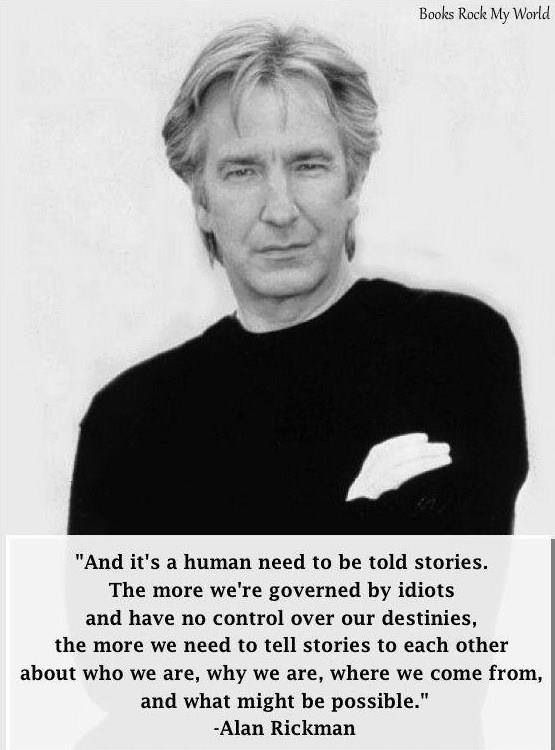
In stories we find our hopes, our dreams, our inspirations, and our fears. In stories our imaginations take flight as we contemplate ideas never before encountered. Stories help us figure out the world and our place in it. We come to understand the stories of others and develop compassion and empathy. We find ways of confronting our fears in safety. We escape the ordinariness of the everyday with dreams as much of the impossible as the possible.

Stories can be shared orally, in print, or through a variety of media. All are valid and valuable sources, but sharing the stories presented in books is especially important to the development of young children, and anything that can put books into the hearts and hands of children is to be encouraged. The ability to read is empowering and the love of books is one of the greatest gifts a parent can give a child. Not only can reading change the life of an individual, it can improve the lives of many through education.
This week I read a post by Paul Thomas on his blog the becoming radical. In this post, entitled “Please—a little less love, and a little more common decency.” Paul said,
“If we cannot change the world (and I suspect we can’t), we can provide all children the sorts of environments all children deserve in their school day—environments of kindness, compassion, safety, and challenges.”
I think Paul meant that we can’t change the whole world, that would be a rather daunting task, but the provisions mentioned are vital and change the lives of individuals in important ways, just as reading does. I like to think of changing the world with one thought, one word, one action at a time, or as Mem Fox says, also quoted in my post The magic effect – why children need books,
“. . . let’s get on and change the world, one page at a time.”

Another post I read this week was by Michelle Eastman Calling all Book Lovers and Authors to make a Difference to a Child in Need on her blog Michelle Eastman’s Books. In that post Michelle explains that, last year, she initiated a project “MARCHing books to Kids”. The purpose of this project is to raise awareness of and provide books for children of incarcerated parents. Michelle goes on to say,
“I believe that every child’s Bill of Rights should be indelibly inked with the right to have picture books read to him/her and to own their very own books. “
I agree with her of course and consider her project to be very worthwhile. It reminds me of another very worthwhile program mentioned by Caroline Lodge, who blogs at Book Word, about providing books to prisoners. Both of these projects have the ability to change lives, to empower people and by so doing, change the world, not only their world.

https://openclipart.org/detail/226141/princess-and-prince-illustration As well as changing lives, stories influence our attitudes. If they encourage feelings of kindness and compassion, as Paul Thomas says, that may be a good thing. But what of the stereotypes that seem so pervasive? How many stories have you read about princesses in dire circumstances waiting to be rescued by handsome princes or knights in shining armour who must slay a dragon in doing so? What effect do these stories have upon the developing self-image of a young girl or boy? It is important to teach children to think critically about the stories they read, and about the portrayal of characters and their attitudes, especially stereotypes.
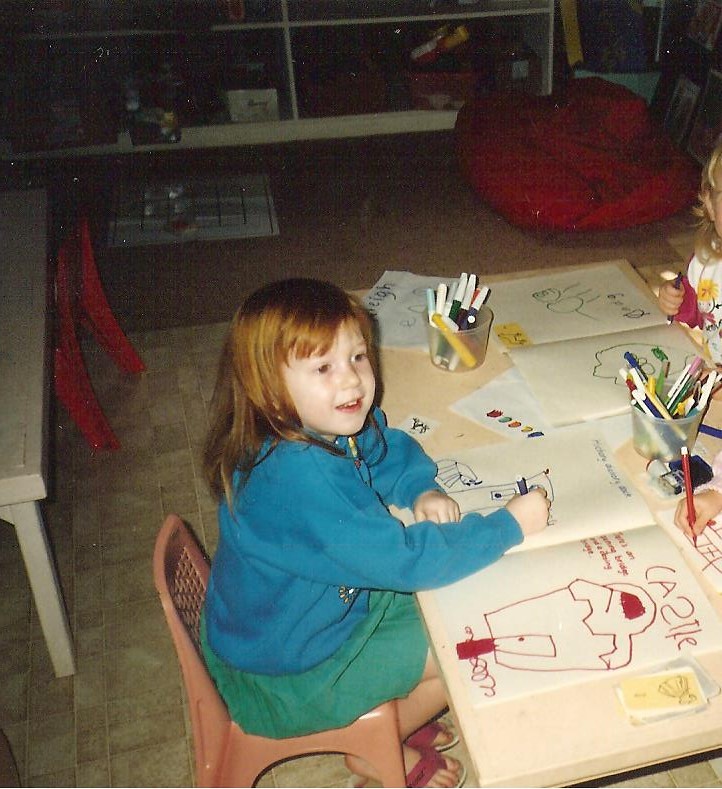
© Norah Colvin But that is in reading stories. What of writing stories? Writing stories, whether factual accounts or imagined events, is also empowering. In writing stories children, and adults, can express and explore their hopes, dreams, inspirations, and fears. In writing stories their imaginations take flight as they contemplate ideas never before encountered. Writing stories helps us figure out the world and our place in it.
In her post Storytelling as Personal Metaphor Anne Goodwin who blogs at Annecdotal raised the question of how much of the self is revealed in fiction.
Paula Reed Nancarrow, whose blog tagline is Essays, Stories, Ephemera, talked about working towards an understanding of contentment: what it is and how it is experienced; in her post Enough Already: Exploring the Art of Contentment,
Contentment is something that I too wonder about, and am especially perplexed by the need to push myself into new territory and new learning when others are content to sit back and watch the clouds pass by. Why are there so many things I feel I must do? Pretty soon I’ll be gone and it won’t matter a hoot. I have sometimes thought that if I were to write a fictionalised account of my life I would begin with the words “She was an unremarkable woman”.
I have connected these thoughts: about the power of story to change lives, the revelation of self in fiction and the quest for contentment; to write my response to the one who initiated my thinking about stories this week, Charli Mills at Carrot Ranch Communications with her flash fiction challenge to in 99 words (no more, no less) begin a story with, “Once upon a time …” I’d love to know what you think.
Contentment
Once upon a time there was an ordinary girl who lived an ordinary life with her ordinary family. She did all the ordinary things that others did and dreamed of nothing else. Each day followed one after the other with little difference. There was no magic. There were no fairies, and there were no dragons to slay. She just did what she had to do and took little notice of others doing the same. Strangely enough she was content for, from somewhere deep within, she knew that this ordinary life was but preparation for the extraordinariness of the next.

Thank you for reading. I appreciate your feedback. Please share your thoughts.
Share this:
-
I found it first!

In my previous post Not lost but found I discussed the notion of adopting the title “Founder” when describing my relationship to readilearn my soon-to-launch website of early childhood teaching resources. The title both bemused and amused me at first but I have now accepted its appropriateness. In fact, I realise that readilearn is not the first thing I have founded.

© Norah Colvin Create-a-Way was perhaps the first that I founded. It was a home-based business offering educational sessions for children of before school-age and their parents. The impetuses for founding Create-a-Way included:
- The decision, made before Bec was born, that I would parent and educate her (The alternative to keep teaching the children of others while entrusting her education to another didn’t make sense to me.)
- A dissatisfaction with playgroups that were simply bitch and coffee mornings for mums and squabble sessions for children left to their own devices
- A realisation that parents didn’t stimulate or foster their children’s intellectual growth because they didn’t know how, not because they didn’t care
I saw a niche that would honour:
- My passion for education and need to be doing something in that area
- My firm belief in the importance of early years learning
- My appreciation of children’s innate curiosity and need to learn coupled with the joy of sharing their sense of wonder and creativity
- My certainty in the power of reading and education to improve the lives of individuals and society
- A conviction that there are better ways of educating than simply accepting the status quo.
And best of all, I could do it with Bec! (Although she is not in this photo.)
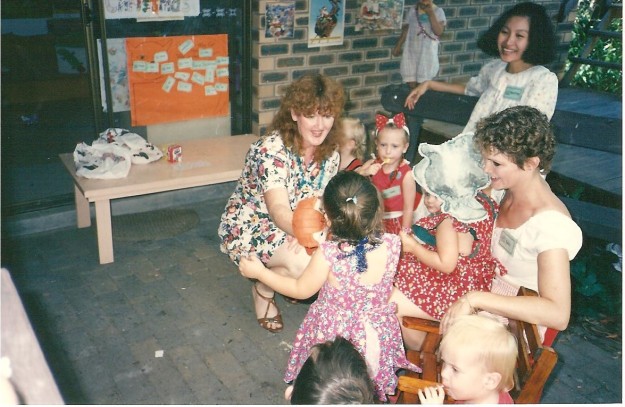
Guiding parents in play sessions for parents and children. I express this passion and these basic beliefs repeatedly. They are what make me. They are my driving force; the threads that weave their way through everything I do, holding them and me together. They were the basis for my attempt at founding an alternative school; they guided my classroom pedagogy and now the preparation of resources for readilearn.

© Norah Colvin 
© Norah Colvin It’s funny looking back now at the documents I wrote, it seems almost a lifetime ago (well almost all of Bec’s lifetime and more than half of mine), on an Apple IIE computer. I’m still proud of what I offered and truly believe in the value of sessions such as these. However, I can see that, while there has been little change to my passion and beliefs over the years, if I were to do the same thing now I may update some statements to more closely match my current understanding of a growth mindset.
The thought of doing the same again now is not far from my imaginings. The format of Create-A-Way sessions forms the model of another project I would love to found The Early Learning Caravan. Maybe Steven’s suggestion of crowdfunding would be appropriate for getting it started, but that’s not a project for the immediate future.

© Norah Colvin I wonder if my inability to simply accept what is could be considered rebellion? What is a rebellion? I’m thinking of these terms as this week at the Carrot Ranch Charli Mills has challenged writers to In 99 words (no more, no less) write a rebellion.
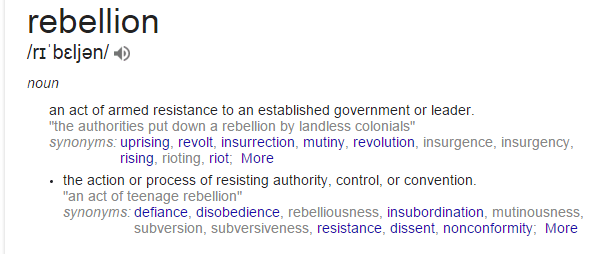
The rebellions of which Charli writes are of a larger scale, more in keeping with the first definition.
In this TED Talk Ken Robinson urges us to Bring on the Learning Revolution making “the case for a radical shift from standardized schools to personalized learning — creating conditions where kids’ natural talents can flourish.” I’m proud to be a rebel fighting in the same revolution as Sir Ken.
In addition to these larger scale rebellions and revolutions there are many that take place on an individual and daily basis in our families and classrooms, and on our streets. Some of the battles, such as teenage rebellion are fought for justice, independence and identity, a natural and necessary part of growing up. But the need to establish one’s individuality, one’s separateness as a person begins years before that, as anyone who has ever had anything to do with a two-year old can testify.
Sometimes the same battles are played out over and over and parents wonder why the children just don’t accept that they need to clean their teeth, wash their hands, put on their shoes or whatever, rather than battle over it each and every time. It is this early childhood rebellion that has inspired my flash fiction response to Charli’s challenge this week. I hope you enjoy it.
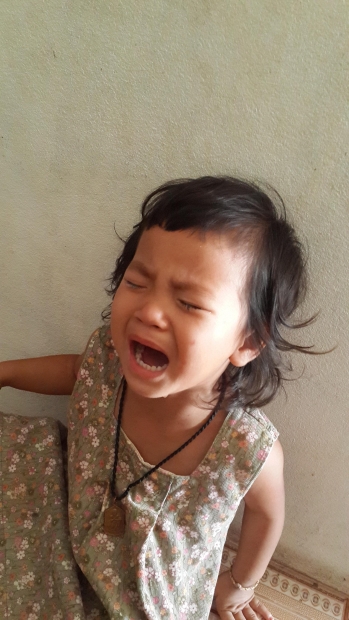
You’re not the boss of me!
Eyes blazed defiance, daring a struggle which could end only in tears and frustration, or a standoff with no real winner. She was ready to flee the moment there was a hint of movement. Our eyes met. I contemplated my options. Did we have to do this now?
Again the challenge: “You’re not the boss of me!”
I pretended to read.
Another volley, quieter: “You’re not the boss of me.”
No response.
Soon she was snuggling beside, pointing to pictures.
I read aloud.
We laughed at the antics.
As I closed the book I said, “Ready? Let’s do this.”
Thank you for reading. I appreciate your feedback. Please share your thoughts.
Share this:
-
Not lost but found

I am struggling with a writing task at the moment. Part of the reason is that is has been at the back, rather than the forefront, of my mind as I worked on other tasks, and part of the reason is that it involves self-promotion in a marketing kind of way. It confuses me a little, because haven’t I been self-promoting all the time I have been writing a blog? Surely putting my ideas out there is at least presentation, if not promotion, of said ideas.
With the goal of sharing original early childhood teaching resources and stories for children on a website of my own, I began writing a blog and engaging in social media about two and a half years ago. This was in responses to advice received from attending writing seminars and reading books about website development. Preparation of resources for my website took a back seat for a while as I engaged with other writers in the blogosphere.
Now it is time to turn the focus back onto the website, the launch of which is fast approaching. With an extra effort over the past couple of weeks, I now have sufficient resources to begin. Additional resources will be uploaded at relatively frequent, if irregular, intervals, not unlike adding to my blog.

I have no issue with ideas for additional resources or blog posts. My stumbling block is the content for my bio and promotional information about the website. It should be easy, I know, but I am struggling to find the answers to these questions:
- What do people want or need to know about me?
- How can I promote my resources in an honest way that entices people to sign up to a paid subscription?
- What is a fair price for subscription?
- How can I persuade potential subscribers that they will get value for money?
- How can I ensure that subscribers do not feel let down by the available resources or ripped off by misleading promotion?
These questions arise even before I begin to tackle the really difficult one:
- How do I connect with my target audience: early childhood teachers?
I know I am not alone with these concerns.
Recently Sarah Brentyn, who blogs at Lemon Shark, questioned the validity of her profile, enflaming my anxiety by stating that “It’s seen by far too many people who judge you by those 10 – 20 words.” The thought to change my blog’s About page, with far more than 10-20 words, hasn’t yet moved beyond that guilt-ridden thought. And while I know it is not suitable as is for my website, perhaps editing or rewriting it is a place to start.

Throughout the year Anne Goodwin, who blogs at Annecdotal, shared the process of stepping out from under the covers of introversion to promote her debut novel Sugar and Snails. In her post One huge leap for Anne, one teeny tiny step for womankind, she questioned how to balance celebrating her achievement with the suspicion that many would be unimpressed. In another post on Book pricing: a cautionary tale Anne questioned pricing and value and shared the hope that people wouldn’t feel ripped off. I am fairly confident that Anne’s concern on each of these issues turned out to be unwarranted. Will mine be the same?
Charli Mills of Carrot Ranch Communications also frequently writes about marketing and the importance of finding one’s niche. In September she declared her position saying,
“My intention … (is) to write and publish novels. My intention is to be a successful author. Success to me is publishing books I want to write for readers who want to read them. My secondary goal is to market well enough to eat more than hand-picked dandelions from my yard. Many will say it’s a fool’s dream.”
Charli has expressed it well. Substitute “early childhood teaching resources and stories for children” for novels and it could be me. I hope that neither Charli nor I are dreaming the impossible. Charli at least has a long list of credentials.
I have spent some time looking at other websites which may be considered competitors and looking at bios on others. If there’s one thing I have discovered it is this:
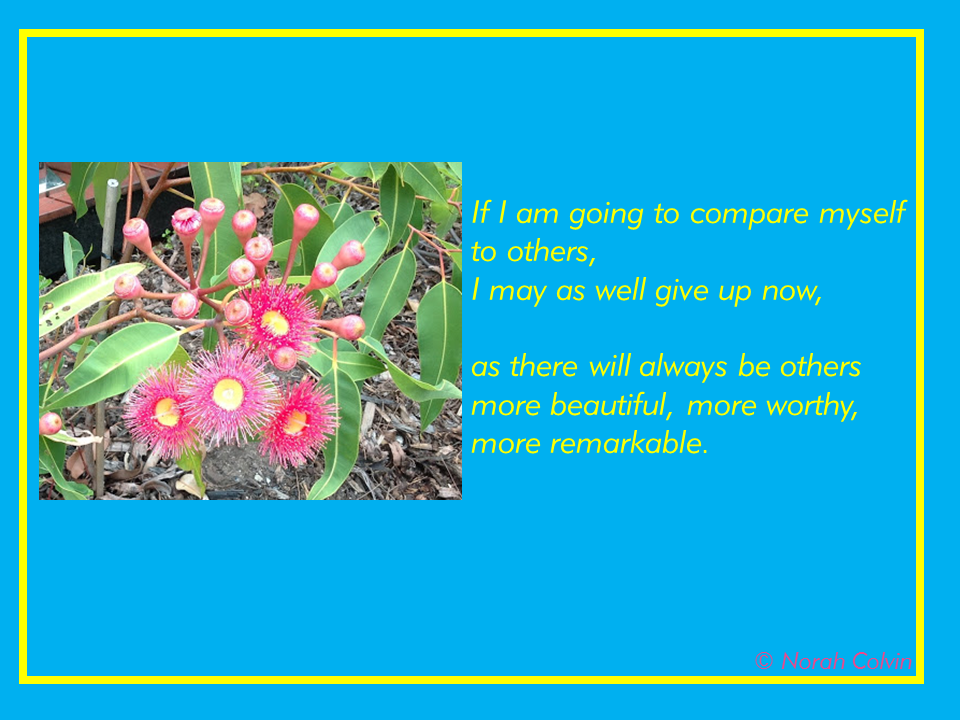
There is a multitude of websites offering early childhood teaching resources. Some websites offer all resources free. Teachers love freebies. There are also many websites with resources available to subscribers. Why would anyone want mine?
However, I’m not going to give up now.

I hope there are many early childhood teachers who will see sufficient value in my website to pay the annual subscription. As far as I explored, I have not found anyone offering interactive resources similar to mine. It is possible that they exist and I just haven’t found them. However, I am hoping that teachers see value enough in these alone, and consider the other resources a bonus. Time will tell. If it returns nothing but the pleasure of achievement, then I will consider it my jetski. If it does more than that I will be well pleased.
So, if I am not going to give up, maybe I just need to get on with the task of writing my bio and promotion paragraph. The other day I read a bio that described the website owner as its founder. Hmm. I thought. Maybe that’s a title I could use.
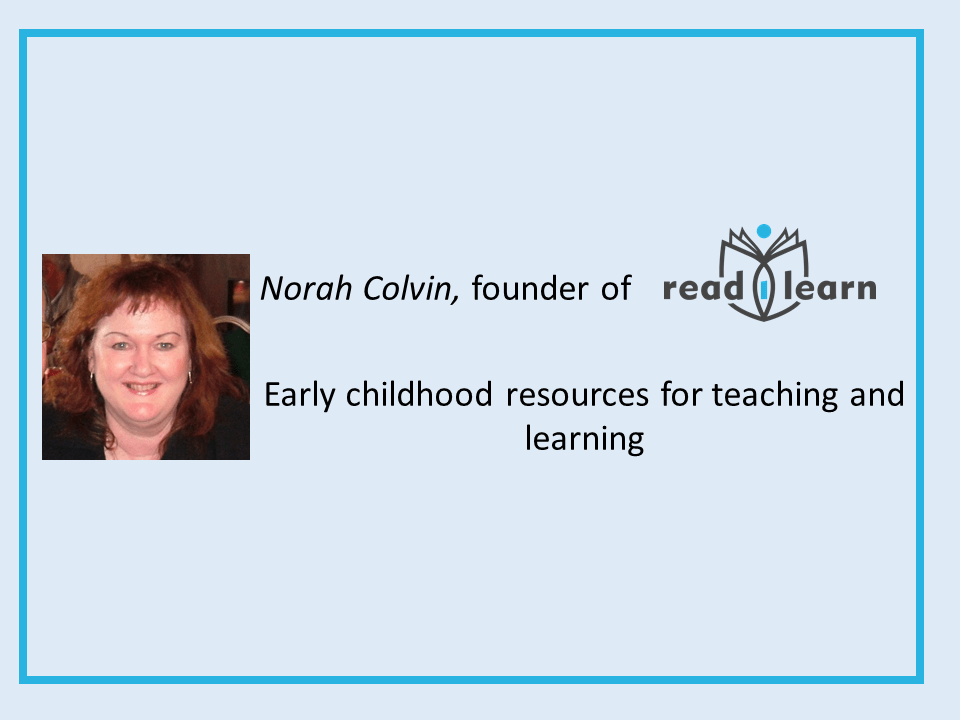
I was amused at the thought that I would found something that hadn’t been lost. It just hadn’t been before. I thought about other things, briefly mentioned in other posts, that I had founded:
Create-A-Way, educational sessions for children of before-school-age and their parents.
Centre of Learning Opportunities, envisioning an alternative way of educating.
Perhaps I can now add another to my list. I just need to get the bio written.
What advice do you have for me? What should I include? What should I leave out? What is the most important thing of which I need to be mindful?
Thank you for reading. I appreciate your feedback. Please share your thoughts.
Share this:


 Norah Colvin