Live Love Laugh Learn … Create the possibilities

Category: Writing

  • In search of history

    In search of history

    When we introduce young children to history, we usually begin with the history of their own families and then extend the circle outward through space and time to other families, other localities and other times.

    It was for this purpose that I wrote the Family Traditions and Celebrations history unit for readilearn.

    As children love to hear stories about themselves and their families, there’s no better way to introduce them to history. Sadly, some of us miss the opportunity of learning our family’s history until it’s too late.

    Carrot Ranch flash fiction challenge Keweenaw microhistory

    This week at the Carrot Ranch, Charli Mills challenged writers to In 99 words (no more, no less) write a story using your choice of microhistory from Keweenaw National Historic Park. Be historical, funny, or flagrantly fictional. Choose a character, time, place, or event. Be as creative as you want in telling the story.

    So, our task was to use one of the histories from the Keweenaw National Historic Park website as the basis for a story to be shared in a public reading at Fort Wilkins on 25 July. I’ve interpreted the task to be one of filling the historical gaps with fiction.

    The history I chose as the beginning of my story is that of Mary Metesh Plutt, an immigrant from Yugoslavia. Mary had eight children before the age of 38, seven of whom lived until adulthood. The second youngest was Agnes who married at age 20, had one child, and died at age 24. Agnes and her husband did not live in the Keweenaw. They lived in Milwaukee, Wisconsin. When Agnes died, her husband returned her to the Keweenaw to be buried. No further details of the husband or the child were supplied.

    My story attempts to fill in a little of that gap, taking up the story of Agnes’s daughter Nette towards the end of her own life. It was assisted by the information and photographs supplied by the Houghton County Historical Society about the Traprock Valley Schoolhouse. Although this isn’t the schoolhouse that Agnes would have attended, it is of the same era in which she would have attended school.

    I hope you like my story.

    In Search of History

    Sorting through her father’s papers, Nette discovered secrets never revealed in life. “Mum” wasn’t mum. Her birth mother died when she was two. Although obviously named Antonette Mary after her maternal grandparents, their stories had never been told. Now, she needed to know. In the old schoolhouse, she traced her mother’s name—Agnes—so long ago carved into the wooden desktop. She’d felt no connection at the cemetery, nor reading the family’s Census record. But when the school bell rang, she shivered as the spirits of children past, her mother, aunts and uncles, joined her for Keweenaw history lessons.

    Thank you blog post

    Thank you for reading. I appreciate your feedback. Please share your thoughts.

  • Art Class 101—Portrait Painting

    Art Class 101—Portrait Painting

    Carrot Ranch flash fiction challenge - painting

    This week at the Carrot Ranch, Charli Mills challenged writers to In 99 words (no more, no less) write a story that involves paint. It can be fresh, peeling or in need of a coat. What is being painted and why? Go where the prompt leads!

    For my response to the challenge, I have written a story that begins with an innovation on a true-life story but finishes with something much more common. Potential is not always recognised, even when visible, in children and students. I hope you enjoy it.

    Art Class 101—Portrait Painting

    The task completed, he took a fresh sheet of paper and sketched the teacher with an enormous warty chin and hair sprouting like an unravelling steel wool pad. He added her name and then, with a flourish, his. He nudged his neighbour whose stifled guffaws drew attention. When the teacher investigated, only the task was visible.

    Behind the papers, the portrait remained forgotten at class end. Until discovered by the teacher.

    Later, having no satisfactory explanation, he was sentenced to weeks of lunchtimes painting bricks.

    Years later, when he was a famous cartoonist, they delighted in telling his story.

    Thank you blog post

    Thank you for reading. I appreciate your feedback. Please share your thoughts.

  • School Days, Reminiscences of Darlene Foster

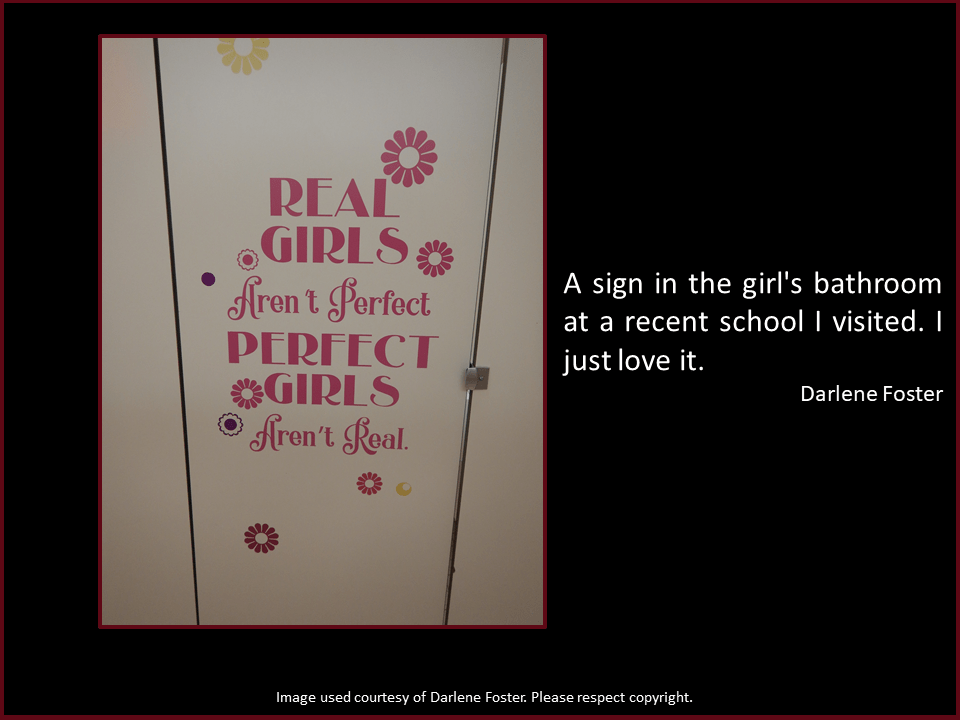
    School Days, Reminiscences of Darlene Foster

    Welcome to the School Days, Reminiscences series in which my champion bloggers and authors share reminiscences of their school days. It’s my small way of thanking them for their support and of letting you know about their services and publications.

    This week, I am pleased to introduce Darlene Foster, world traveller and writer of travel adventure books for children and adventurers of all ages. Darlene joined in the conversations about school days from the beginning and was keen to share her own reminiscences with you.

    Before we begin the interview, I’ll allow Darlene to tell you a little of herself:

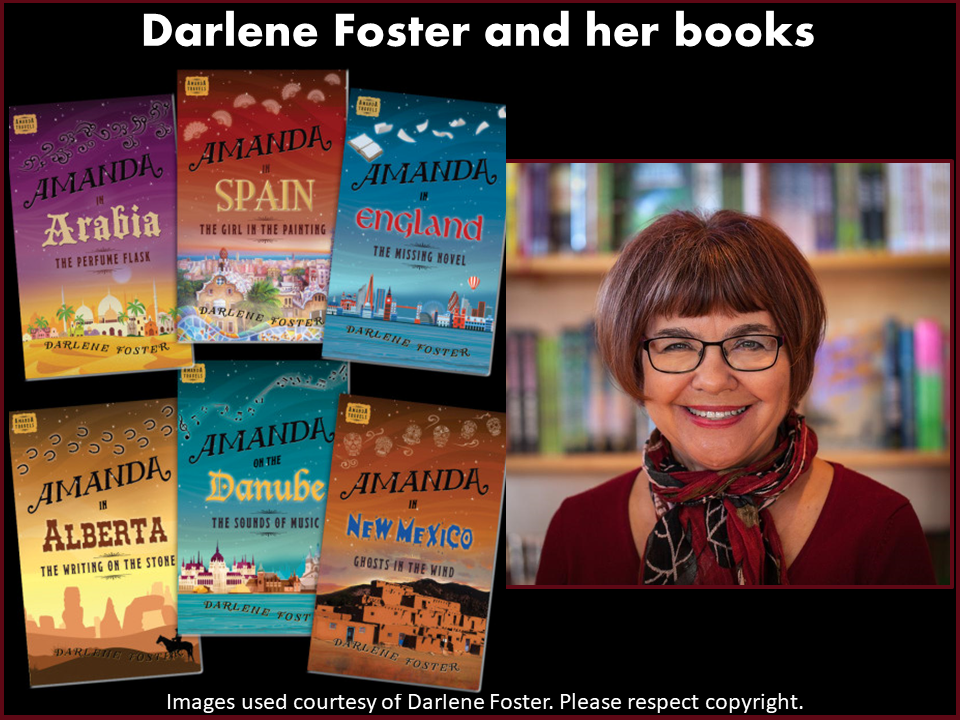
    Growing up on a ranch near Medicine Hat, Alberta, Darlene Foster dreamt of writing, travelling the world, and meeting interesting people. She also believed in making her dreams come true. It’s no surprise she’s now the award-winning author of Amanda Travels, a children’s adventure series featuring a spunky twelve-year-old who loves to travel to unique places.  Readers of all ages enjoy following Amanda as she unravels one mystery after another. When not travelling herself, Darlene divides her time between the west coast of Canada and the Costa Blanca, Spain with her husband and entertaining dog, Dot.

    Darlene Foster and her books

    Welcome, Darlene.

    Let’s talk school. First, could you tell us where you attended school?

    Until grade 4, I attended a small rural school in the Canadian prairies, Hilda, Alberta, in which one teacher taught two grades. Then we moved to another rural community, Irvine, Alberta, where I attended a much larger school with separate grades including high school for the rest of my school days.

    Did you attend a government, private or independent school?

    These were government schools, which we call public schools in Canada.

    What is the highest level of education you achieved?

    I left school in Grade 11 so did not graduate with my classmates. I did however complete high school via correspondence. I took many college courses over the years and when I turned fifty, I graduated from the University of Saskatchewan with a Diploma in Teaching English as a Second Language, via distant learning. I also acquired a number of Certificates in Human Resource Management and Job Search Facilitation. I believe in lifelong learning and will continue taking courses for the rest of my life.

    What work or profession did you choose after school and was there anything in school that influenced this choice?

    I worked in retail management, recruitment, employment counselling and as an ESL Teacher, all as a result of courses I have taken. I have also taken many writing courses over the years, including university-level courses, which have been very beneficial to me now as a writer.

    Darlene Fosters's earliest memory of school

    What is your earliest memory of school? 

    I remember the first day I walked into the classroom. I thought I was in heaven, all those books and so much to learn. I was like a sponge, thirsty for knowledge. I loved school from before I even started and could easily have been a professional student. Even now when I walk into a classroom for an author presentation, I get that same feeling of awe.

    What memories do you have of learning to read?

    I could read a bit before I started school. I recall my dad reading the comics, which we called the funny papers, in the weekly newspaper with me. That may have been how I started to read. I loved the Dick and Jane readers at school and being able to read a story on my own was so exciting.

    What memories do you have of learning to write?

    I recall that being able to print was great but when I learned cursive writing, I was delighted. My writing was very neat and tidy for the first couple of years and I even won prizes for it. Then I started to write stories of my own and my writing couldn’t keep up with my thoughts and ideas. It soon became very messy, but I just had to get it all down on paper. It is totally unreadable now. Thank heaven for computers.

    What do you remember about math classes?

    Math classes were OK but not my favourite. I always had to work harder on math but still got good marks. I do recall enjoying algebra though, while everyone else hated it. Proof that I am a letters person, not a numbers person.

    What was your favourite subject? 

    It was a tie between English Literature, Social Studies and Drama.

    what Darlene Foster liked best about school

    What did you like best about school?

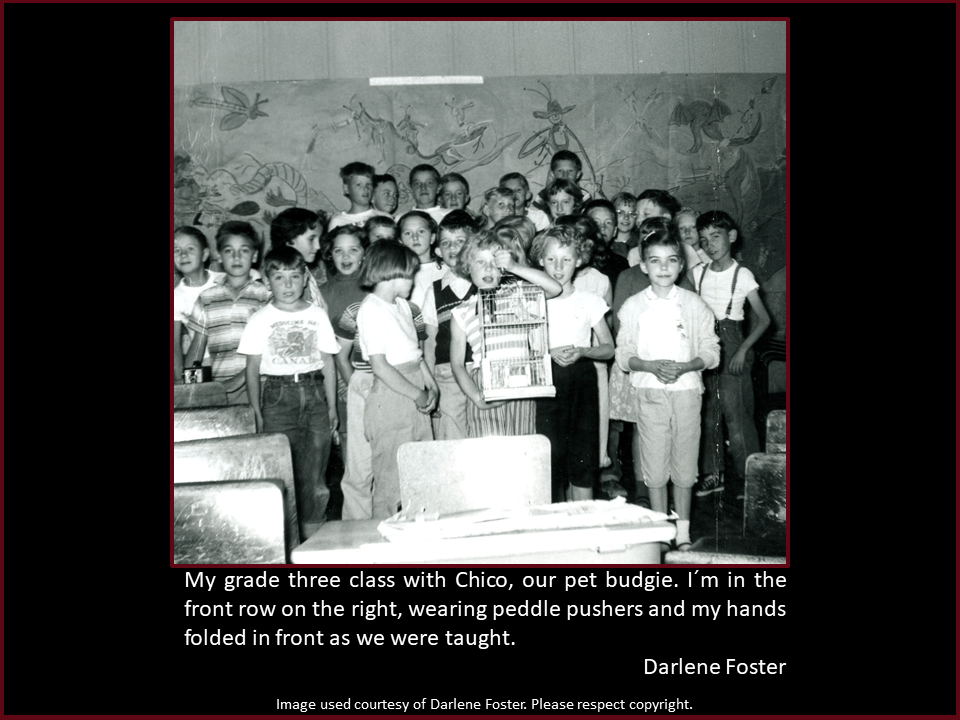
    Learning new things and the teachers. My grade three teacher, in particular, was amazing. She taught us about other countries by getting us involved. When we learned about Mexico she gave us Spanish names, cooked Mexican food for us and brought in colourful serapes and sombreros for us to wear. She instilled in me the desire to travel and see the world. She also encouraged me to write my stories down. I will be forever grateful to her.

    I was an odd child and actually enjoyed taking tests. When we moved, the school season had already started by two months and I had started grade 5 at the old school. I was so excited about going to what I considered a much more modern school. It was a day the class was taking a provincial pre-packaged test and there wasn’t a package for me. I was devastated that I couldn’t take the test and actually cried. The other students thought I was crazy as they would have happily given up doing the test.

    Darlene Foster reminiscences of school days

    What did you like least about school? 

    Physical Training. I was never good at sports and was always the last to be picked for a team. I came up with all kinds of excuses not to participate and was often sick on P.T. day. And those awful bloomers we had to wear! One wise teacher gave me the job of being the scorekeeper, which I enjoyed.

    How do you think schools have changed since your school days?

    Since it has been a long time since I went to school, they have obviously changed, a lot. They have changed since my own kids went to school. The biggest change is the use of technology of course. I love those whiteboards that act as a computer screen. They are like magic. There is much more positive reinforcement and focus on diversity and individuality today. I like the fact that school is less formal and more relaxed. We couldn’t even wear pants (trousers) to school and had to wear skirts even on -40C days. Now they even have pyjama days!

    What do you think schools (in general) do well?

    As a writer, I often visit schools to do readings and I am very impressed with schools today. The students are so eager to learn and proud of their accomplishments. There seems to be an emphasis on reading and creative activities which is so good to see. Children respond to learning if it is fun and there is no reason for it not to be. Personally, I would love to be a student in today’s schools.

    Darlene Foster reminiscences of school days

    How do you think schools could be improved?

    I do think teachers are often overworked. It is a demanding job and one in which you have to be on all the time. Many get burned out which is too bad as it is often the most dedicated that do. Perhaps hiring more assistants or having smaller classes would help. It is such an important job as these kids are our future.

    thank you for your participation

    Thank you for sharing your reminiscences of school and thoughts about education in general, Darlene. It’s a pleasure to have you here. I especially love that you are excited about learning and particularly being a life-long learner. I enjoyed reading your positive views about schools today.

    Find out more about Darlene Foster

    On her website: http://www.darlenefoster.ca/

    On her blog: https://darlenefoster.wordpress.com/

    Or her Amazon author page: https://www.amazon.com/Darlene-Foster/e/B003XGQPHA/

    Goodreads: https://www.goodreads.com/author/show/3156908.Darlene_Foster

    Connect with Darlene on social media

    Facebook: https://www.facebook.com/DarleneFosterWriter/

    Twitter:  https://twitter.com/supermegawoman

    Instagram: https://www.instagram.com/darlene6490/

    Books by Darlene Foster

    Purchase your own copies of Darlene’s books from Amazon.

    If you missed previous reminiscences, check them out here:

    Charli Mills

    Sally Cronin

    Anne Goodwin

    Geoff Le Pard

    Hugh Roberts

    Debby Gies

    Pauline King

    JulesPaige

    D. Avery

    Christy Birmingham

    Miriam Hurdle

    Robbie Cheadle

    Marsha Ingrao

    Ritu Bhathal

    Joy Lennick

    Look for future interviews in this series to be posted on Sunday evenings AEST.

    Coming soon:

    Susan Scott

    Barbara Vitelli

    Sherri Matthews

    Mabel Kwong

    Chelsea Owens

    Pete Springer

    with more to follow.

    Thank you blog post

    Thank you for reading. I appreciate your comments. Please share your thoughts.


  • Waiting for life to begin

    Waiting for life to begin

    Carrot Ranch flash fiction challenge waiting

    This week at the Carrot Ranch, Charli Mills challenged writers to In 99 words (no more, no less) write a story about having to wait. Who is waiting and what for? Think about how the wait impacts the character or the story. Go where the prompt leads!

    There are many things in life for which we wait. Children wait for the holidays, for birthdays, for Christmas and Easter. We often say that much of the joy is in the anticipation. But if we are always focused up what’s up ahead, we may miss the pleasures of the present moment. So, while I’ve gone dark in my response to Charli’s prompt, it is meant simply as a reminder to not let the everyday pleasures of the here and now slip by unnoticed. Enjoy life! We never know what lies ahead.

    The Waiting Game

    Her entire life, she’d waited:

    To be old enough, big enough—

    To have left school, completed her degree—

    To have enough money—

    Until after the wedding—

    For the birth of her children

    For her children to have started school, left school, left home—

    When would be the time, when she could choose what she wanted, for her, no conditions imposed?

    In the waiting room, she contemplated these things and delivered her own answer—never! Death was knocking, refusing to wait. She’d hoped to live before she died but life got in the way.  Ah well, the waiting was over.

    Thank you blog post

    Thank you for reading. I appreciate your feedback. Please share your thoughts.

  • School Days, Reminiscences of Joy Lennick

    School Days, Reminiscences of Joy Lennick

    Welcome to the School Days, Reminiscences series in which my champion bloggers and authors share reminiscences of their school days. It’s my small way of thanking them for their support and of letting you know about their services and publications.

    This week, I am pleased to introduce Joy Lennick, author and poet. Joy joined in the conversations from the outset, sharing snippets from her war-time schooldays. Intrigued to learn more, I invited Joy to join in with a post dedicated to her own reminiscences and she accepted. I’m certain you’ll find them as interesting as I do.

    Before we begin the interview, I’ve invited Joy to tell you a little of herself:

    From a young age, I was never happier than when reading or writing (and perhaps dancing!). I was evacuated with my two brothers to live on a mountain (Hare) in Wales, being half Welsh on my mother’s side, and grew to love Wales. My education was completed in Pitman’s College, London, from the last year of the war. At fifteen, I became a shorthand-typist, and worked for an agency in the East and West ends of London, which I really enjoyed.

    After marriage just before the age of 21, and living in London for a few years, the Suez Crisis debacle flared up and petrol was so short and the atmosphere so “war-like,” we set sail for Canada, where we lived and worked for eighteen, unforgettable, months.

    Returning to the UK due to home-sickness…in 1960 I had my first son, followed by No.2 in 1962 and No.3 in 1968. I contracted but beat cancer, so was very lucky. We then ran a green-grocery/grocery store for several years. After its sale, and the children went to school, I returned to work in the city as secretary to the two editors of Kaye & Ward, an old established publishing company in the city. (My dream job!)

    The next chapter saw us buying a small hotel in Bournemouth as we both enjoyed cooking and people. We turned a dark, mean place into a thriving business, I lost a stone (yippee) and gained a few muscles, and we thoroughly enjoyed the whole business, even though it was hard work.  Tastes were changing and the hotel was old. We needed more cash than we had to make it more comfortable, so – with regret, sold it and returned to Essex to live. And that is when I learned about “Serendipity,” and became a writer, quite by chance.

    A letter from Kogan Page Ltd of London “commissioned” me (?!) to write a book for them, subject to approval of the first two chapters. I couldn’t wait! “Running Your Own Small Hotel” was approved. I had been recommended by one of the editors I’d worked for who had read some of my poetry and an article I’d had published. The book did well and went to reprint. There was even an exciting “Authors’ party,” and I updated two of their books and wrote a second called “Jobs in Baking and Confectionery,” which also sold well.

    In between working for my local junior school, part-time, I then ran a modest, while successful poetry club, and wrote a few poems and articles, which were published. I also received a few rejection letters…par for the course!

    Fast forward too many years, and we retired to Spain, I joined The Torrevieja Writing group and won the first Torrevieja International Short Story competition with a Time Traveller tale called “Worth its Salt,” then was a writing judge for two years.

    Next came a memoir: “My Gentle War” which went to No.1 in Kindle’s Social History and Memoir category. A true sea adventure story: “Hurricane Halsey” followed, then my only novel “The Catalyst,” covering one of the terrorist bombings of a train in London in 2005, but with fictitious characters. I also wrote several stories which were included in WordPlay’s anthologies – later called Writers’ Ink (our off-shoot Ezine is called INK SPOT). Then came “Where Angels and Devils Tread,” a collection of short stories written with author friend Jean Wilson; and a modest collection of jokes and humorous poems written with my husband, Eric: “The Moon is Wearing a Tutu.” I also edited husband’s book “A Life Worth Living,” and updated “From the Prairies to Paschendeale,” for a friend. I am at present working on a book about the “Dombrowski family.”

    I took a Creative Writing class for the U3A for several years and am in the “Chair” for Writers’ Ink here in Spain.
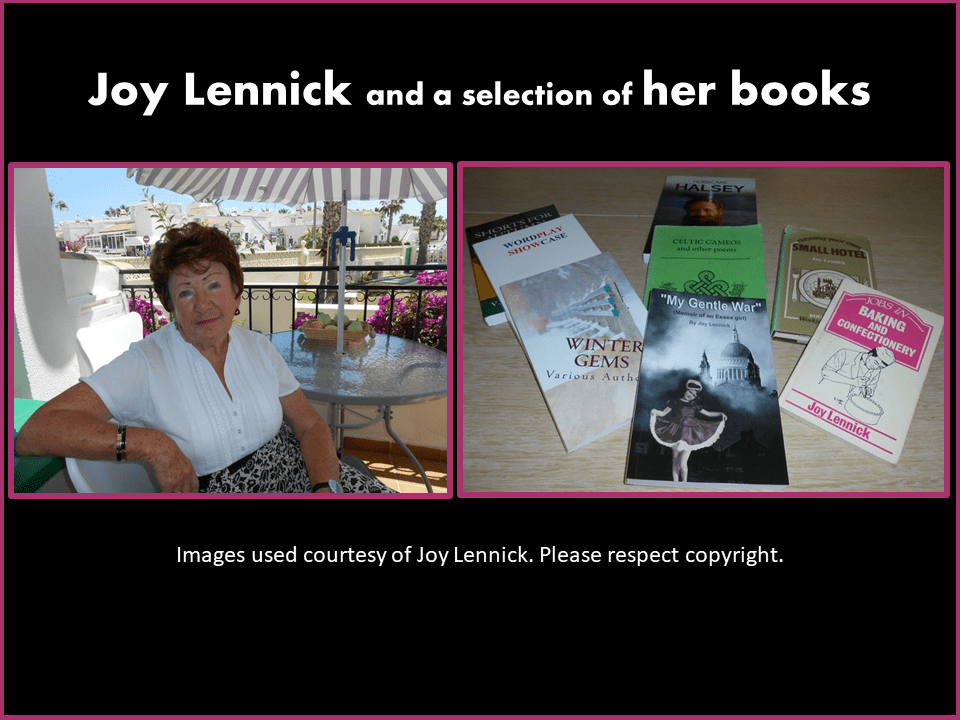
    Joy Lennick and her books

    Welcome, Joy.

    Let’s talk school. First, could you tell us where you attended school?

    Where did you go to school?

    1937: Dagenham Infants school

    1939: Twynrodyn Junior School

    1941: Hunters Hall school

    1943: Eastbrook senior school, Long Eaton senior school, Derbyshire

    1944: Neath senior school

    1944: Pitman’s College, London.

    Did you attend a government, private or independent school?

    All Government schools, except Pitman’s College, London, which was private.

    What is the highest level of education you achieved?

    Highest level: Pitman’s where I received various certificates for hand-writing/typing/shorthand and commerce.

    What work or profession did you choose after school and was there anything in school that influenced this choice?

    I started as a shorthand-typist, became assistant secretary and then secretary. Also assisted husband in running a greengrocery/grocery shop and became a hotelier.  I was then a Dinner Lady/School assistant and did voluntary work with the elderly before writing professionally.

    What is your earliest memory of school?

    My earliest memory at Infants school was writing my name in sand on a shallow tray and playing the triangle and the tambourine in the school band.

    What memories do you have of learning to read?

    I was immediately fascinated by the letters and words on a page and took to reading straight away. I read anything and everything: ingredients on cereal boxes, comics, etc., and was always lucky enough to be given books for my birthdays. I joined the library in MerthyrTydfil and devoured books from age seven — Hans Christian Anderson and the frightening Bros. Grimm, et al.

    What memories do you have of learning to write?

    As for writing, my father was a keen letter-writer (positive views on many subjects to the local newspaper) and wrote beautiful Calligraphy which I greatly admired and wanted to emulate. He kept stamps and made a few admirable displays with delicate work around each stamp. I was proud to be told I had a “good hand!” and of my hand-writing certificate. Shorthand later made it a bit scruffier…

    What do you remember about math classes?

    I had a problem with maths. Adding, subtracting, decimals and fractions was coped with OK but  if I was thrown a maths ‘puzzler’ I’d freeze…I coped fine when we had our shop, and did the accounts when we ran the hotel as it was comparatively straight-forward, but I much preferred English.

    What was your favourite subject?

    Most definitely English, and because of the very nature of war — between the years 1939,when it  began and 1945 when it ended, there were, periodically, huge disruptions in my schooling,  especially when the siren sounded. At such times, we were read to and had to ‘Read quietly!’ by ourselves, which I found a joy. I also loved composing stories and enjoyed spelling. I even wrote a silly play which was acted on the stage. Poetry also pleased my young ears. I was particularly fond of Hiawatha because of the delightful rhythm. I couldn’t take to Shakespeare when young but loved it later when, at the ripe age of 66 I finally took and passed the English Literature exam – much to the amusement of my younger peers…
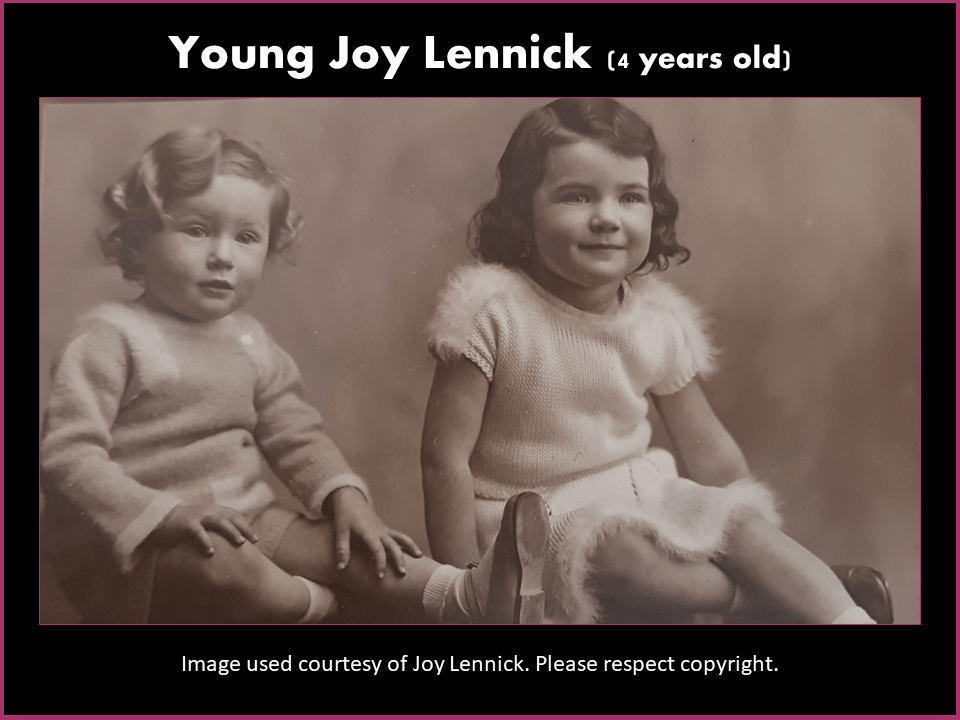
    Joy Lennick at age 4

    What did you like best about school?

    I made friends quite easily, despite being shy and was a chatter-box, in spite of the annoying habit of blushing if a boy spoke to me. In fact, I blushed a lot as I was often unsure of myself, but always enjoyed having friends at school. There was so much to learn, and I have always been a curious person. I was lucky in that I was never bullied and got on with most children, and was also fortunate with  the teachers, except for my maths teacher at Pitman’s who had no patience with my many questions…Miss Jones, my English and Games teacher at Pitman’s was my favourite.

    What did you like least about school?

    To be fair, the mores of the times were dictated by the state of the whole world, as very little was as ‘normal’ as in peace time. Some children were killed or injured and lost loved ones and air raids disrupted many classes, especially in London, Coventry, Norwich and many other towns. We children went back-wards and forwards to home and Wales several times in between the bombing for long weekends and holidays. And when I attended Eastbrook senior school in Dagenham, the bombing increased and the whole school was evacuated to Long Eaton in Derbyshire. It must have been a nightmare for the teachers to keep to a curriculum!

    How do you think schools have changed since your school days?

    There is no comparison between my schooldays and those of my three sons. Only one was bullied because he was more studious and wouldn’t join an unruly gang. Fortunately, the headmaster sorted it out. All three received a fair and satisfactory education. I have no grand- children to comment on present conditions but do have friends who were teachers. They both complained about the increased paper-work, which – apparently – is an ongoing problem for teachers today.

    What do you think schools (in general) do well?

    From my ten years working as a Dinner Lady and reading/poetry assistant in a junior school, I’d say that, over-all, today’s children are in pretty safe hands, education-wise. The technological strides forward are amazing, and I’m personally pleased to see more musical appreciation and tuition being introduced in some schools

    How do you think schools could be improved?

    It’s no secret there are a lot of problems in the world, generally – of course there always have been – but because of technology and the immediacy of news reaching eyes and ears, it is often exaggerated in our minds. Too much paper-work still seems to overload some teachers, and I wish there was more emphasis put on caring for each other. Not all parents are equipped for the job they undertook…(as my husband says: ‘You have to pass a test to drive a car, but any idiot can have a child…’ Religion should be discussed broadly, but taught and practiced in specific schools,  not mainstream, although children should be helped to accept and live and let live, when taught about caring.
    thank you for your participation

    Thank you for sharing your reminiscences of school and thoughts about education in general, Joy. How disruptive your schooling was as a result of the war. You seem to have overcome any obstacles that it may have created. It’s been a pleasure to have you here and get to know you and learn about your school days and your achievements.

    Find out more about Joy Lennick

    Website: https://joylennick.wordpress.com/

    Contact her at joylennick@gmail.com

    Or connect with her on social media

    Twitter, Facebook, Linked In, Writers’ Ink

    also a member of Authors/Bloggers Rainbow Support Club on Facebook

    If you missed previous reminiscences, check them out here:

    Charli Mills

    Sally Cronin

    Anne Goodwin

    Geoff Le Pard

    Hugh Roberts

    Debby Gies

    Pauline King

    JulesPaige

    D. Avery

    Christy Birmingham

    Miriam Hurdle

    Robbie Cheadle

    Marsha Ingrao

    Ritu Bhathal

    Look for future interviews in this series to be posted on Sunday evenings AEST.
    Coming soon:

    Darlene Foster

    Susan Scott

    Barbara Vitelli

    Mabel Kwong

    Sherri Matthews

    Chelsea Owens

    Pete Springer

    with more to follow.
    Thank you blog post

    Thank you for reading. I appreciate your comments. Please share your thoughts.


  • School Days, Reminiscences of Ritu Bhathal

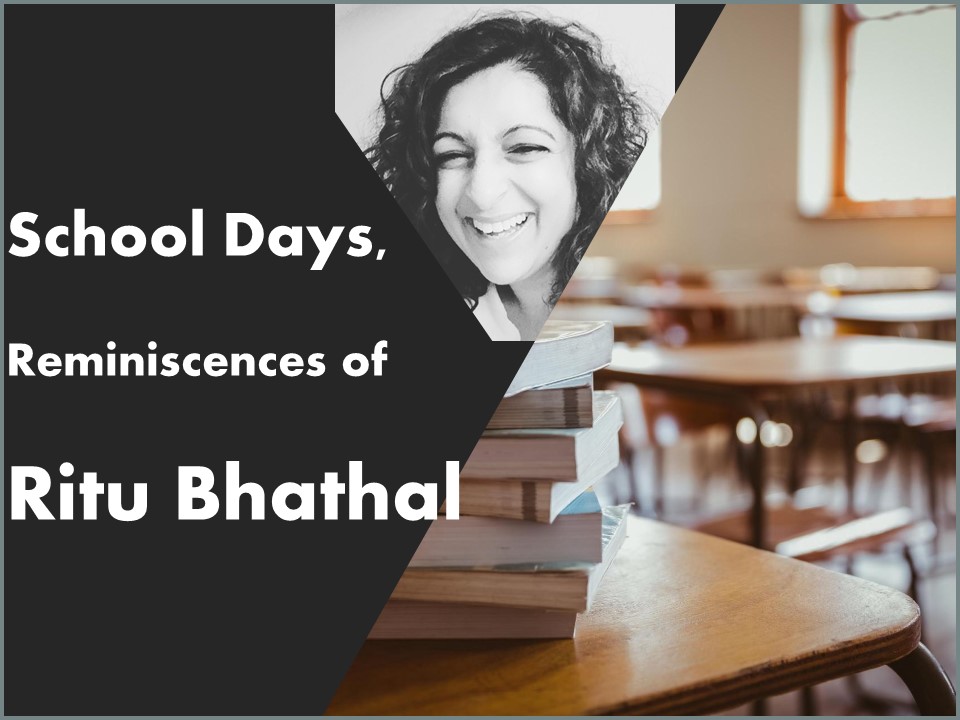
    School Days, Reminiscences of Ritu Bhathal

    Welcome to the School Days, Reminiscences series in which my champion bloggers and authors share reminiscences of their school days. It’s my small way of thanking them for their support and of letting you know about their services and publications.

    This week, I am delighted to introduce Ritu Bhathal, author, poet, blogger, teacher. Ritu and I follow a similar group of bloggers. We seem to pop up alongside each other, commenting on a number of blogs and writing flash fiction at the Carrot Ranch where Ritu’s contribution is often poetic. I think that we are both teachers, have a love of children and learning, and similar views about education draws us together. Ritu decided she wanted to be a teacher at an even younger age than I did. Teaching (and writing) was our destiny. If you haven’t yet met Ritu, I’m sure you’ll be pleased to do so now.

    Ritu Bhathal and her book of poetry

    Before we begin the interview, I’ll allow Ritu to tell you a little of herself:

    Ritu Bhathal was born in Birmingham in the mid-1970’s to migrant parents, hailing from Kenya but with Indian origin. This colourful background has been a constant source of inspiration to her.
    From childhood, she always enjoyed reading. This love of books is mostly credited to her mother.
    The joy of reading spurred her on to become creative in her own writing, from fiction to poetry.
    Winning little writing competitions at school and locally gave her the encouragement to continue writing.
    As a wife, mother, daughter, sister, and teacher, she has drawn on inspiration from many avenues to create the poems that she writes.
    A qualified teacher, having studied at Kingston University, she now deals with classes of children as a sideline to her writing!
    Ritu also writes a blog, a mixture of life and creativity, thoughts and opinions, which was awarded first place in the Best Overall Blog Category at the 2017 Annual Bloggers Bash Awards.
    Ritu is happily married, and living in Kent, with her Hubby Dearest, and two children, not forgetting the furbaby Sonu Singh.
    Having published an anthology of poetry, Poetic RITUals, she is currently working on some short stories, and a novel, to be published in the near future.

    Welcome, Ritu.

    Let’s talk school. First, could you tell us where you attended school?

    I went to school in Solihull, Birmingham, in the UK.

    Ritu Bhathal's first school

    Did you attend a government, private or independent school?

    The school I attended from 3 all the way to 17 was an Independent private girls’ school.

    What is the highest level of education you achieved?

    I completed my B/Ed (Hons) English & Drama (3-7 years) degree at Kingston University in Surrey, UK.

    What work or profession did you choose after school and was there anything in school that influenced this choice?

    Ritu Bhathal decides to be a teacher

    My degree shows what my intention was – to teach. I ended up in retail, a bank and then a marketing company, before finally getting to the job I always felt I was created to do. The reason I decided teaching was my vocation was because of the head girl at our school, Jo Duck, when I was 7. She came to our class to do work experience, and that was when it clicked that teaching was a job, something I could choose to do!

    What is your earliest memory of school?

    Ritu Bhathal discusses starting school

    My earliest memory is the classroom where I first started school, in Miss Wilson’s class, as a 3-year-old. It was a huge room, filled with so many activities, books and toys, and a lot of love. I distinctly remember this beautiful wooden playhouse that was our home corner, and that we all had a bit of a ‘thing’ that something creepy lived behind it. Obviously, all that was behind it was a wall, but at 3, your imagination can play games! And the fact that I spoke no English when I started, apart from Hello! Apparently, I learned quickly, and within a week, my mum says my pidgin English would sail through the air at home, as my Punjabi faded away… And I haven’t stopped speaking it since! But never fear, I haven’t forgotten my mother tongue!

    What memories do you have of learning to read? 

    I can always remember having school reading books to take home, and the series that always stays in my mind involved a griffin and some pirates! Books were always key in my life. My mother is also a keen reader and her passion rubbed off on me. My first set of books were the original Noddy series by Enid Blyton, which I was given at 4, after having my tonsils out. I still have them.

    What memories do you have of learning to write?

    I don’t know when I specifically learned to write, but the whole process involved lots of fine motor activities, and I know I had crayons and paper from a very young age. I was proud of being able to master my full name, Ratinder!

    What do you remember about math classes?

    Maths as a subject, is not my favourite. I used to say I can’t do maths, but that’s not very growth mindset, so to this day in my forties, I say “I cannot do maths, yet!” My biggest memory of maths, aside from the squared paper in the books was a male maths teacher joining our school, and not being able to cope with the chattering that happened in this fully female class!

    What was your favourite subject?

    English and Drama were my favourite subjects, for obvious reasons! Reading and writing was always a pleasure, never a chore, and acting, oh, I loved to create personas that were totally unlike the real me.

    What did you like best about school?

    Ritu Bhathal discusses her well-rounded education

    Honestly, I can’t pinpoint one thing. I feel blessed that I had a really positive experience at my school, and I feel proud to say that I left with friends for life and a wholly rounded education.

    What did you like least about school?

    P.E.! I am not a physically motivated person, and though I didn’t mind games lessons, they were definitely not my favourite!

    How do you think schools have changed since your school days?

    Ritu Bhathal discusses schooling

    There has been a huge change in education and schools since I attended. Being a part of the education system as a professional, I feel I can say that. A lot of standardised testing from a young age has put additional pressure on children, and I really think that this pressure is what ends up creating the angry teens we seem to have more of nowadays. Teachers try so hard to make school fun, but the tick boxes we have to adhere to, really strip the enjoyment for us as well as the children.

    What do you think schools (in general) do well?

    That is a really hard question because I don’t think there is a blanket answer. Some schools are better than others at giving children a rounded experience of life. Some are more concerned with tests and results.

    How do you think schools could be improved?

    I think this answer doesn’t lie with the schools, but with the government. They really need to learn from the Scandinavian Education system, where the emphasis is on learning through play for the first few years, and formal schooling that starts at 7, when a child is more ready to learn in a classroom environment. And scrap the SATS! I speak from experience here as I have seen both my children go through the SATS and the upset it caused them at 7 and 11. In Finland, where my brother is bringing his family up, my nephew is 4 and the age of children I teach. What he can do at that age, in more than one language, astounds me, from his general knowledge, motor skills, numeracy and literacy! UK – please take note!

    thank you for your participation

    Thank you for sharing your reminiscences of school and your professional perspective on education as it is now, Ritu. I’m not surprised to hear that English and Drama were your favourite subjects and I applaud your recommendation to the UK Education Department. We need our Australian Government to take note too.

    Find out more about Ritu Bhathal

    Website: http://www.butismileanyway.com

    Goodreads author page: https://www.goodreads.com/user/show/56854412-ritu-bhathal

    Or connect with her on social media:

    Twitter: https://twitter.com/RituBhathal
    Instagram: https://www.instagram.com/ritubhathalwrites/
    Facebook: https://www.facebook.com/butismileanyway/
    Pinterest: https://uk.pinterest.com/bhathalpadhaal/
    Mix: https://mix.com/butismileanyway
    Tumblr: https://www.tumblr.com/blog/ritusmiles

    LinkedIn: https://www.linkedin.com/in/ritu-bhathal-48941648/
    Bloglovin: https://www.bloglovin.com/@ritubhathalpadhaal


    Poetic Rituals by Ritu Bhathal

    Purchase your own copy of Poetic RITUals via this link

    myBook.to/PoeticRITUals

    If you missed previous reminiscences, check them out here:

    Charli Mills

    Sally Cronin

    Anne Goodwin

    Geoff Le Pard

    Hugh Roberts

    Debby Gies

    Pauline King

    JulesPaige

    D. Avery

    Christy Birmingham

    Miriam Hurdle

    Robbie Cheadle

    Marsha Ingrao

    Look for future interviews in this series to be posted on Sunday evenings AEST.
    Coming soon:

    Joy Lennick

    Darlene Foster

    Susan Scott

    Mabel Kwong

    Sherri Matthews

    Chelsea Owens

    Pete Springer

    Colleen Chesebro

    with more to follow.

    Thank you blog post

    Thank you for reading. I appreciate your comments. Please share your thoughts.


  • Teaching apostrophes with lessons ready to teach – readilearn

    Teaching apostrophes with lessons ready to teach – readilearn

    Do your children have difficulty spelling contractions or using apostrophes for possession correctly? If so, you are not alone. Many, and not only young children, do.

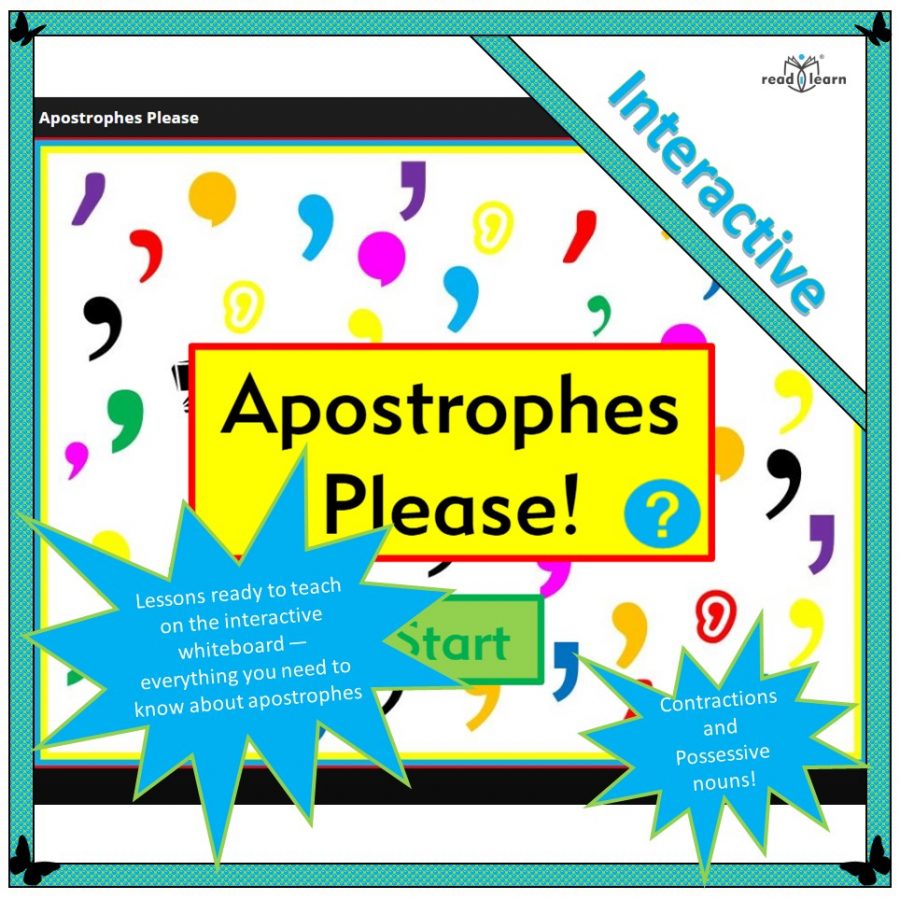
    To support your teaching of this punctuation mark that many find tricky, I have produced an interactive resource that explains, demonstrates and provides practice in its correct use.

    I have called the resource Apostrophes Please! to encourage young writers to get their writing right.

    About Apostrophes Please!

    Apostrophes Please! is an interactive resource, ready for use on the interactive whiteboard. It consists of enough material for a series of lessons teaching the correct use of apostrophes in both contractions and possessive nouns.

    Like other readilearn resources, Apostrophes Please! recognises the value of teacher input and the importance of teacher-student discussion. It is not designed for children to use independently. While the activities have interactive features, there are no bells, whistles and gimmicks. It relies simply on effective teaching.

    The resource provides flexibility for the teacher to choose activities which are relevant to student needs and teaching focus. All lessons and activities encourage explanation, stimulate discussion and provide opportunities for children to practise, explain and demonstrate what they have learned. There are nineteen interactive slides and over thirty slides in all.

    Organisation of Apostrophes Please!

    Contractions and possessive nouns are introduced separately.

    Continue reading: Teaching apostrophes with lessons ready to teach – readilearn

  • School Days, Reminiscences of Marsha Ingrao

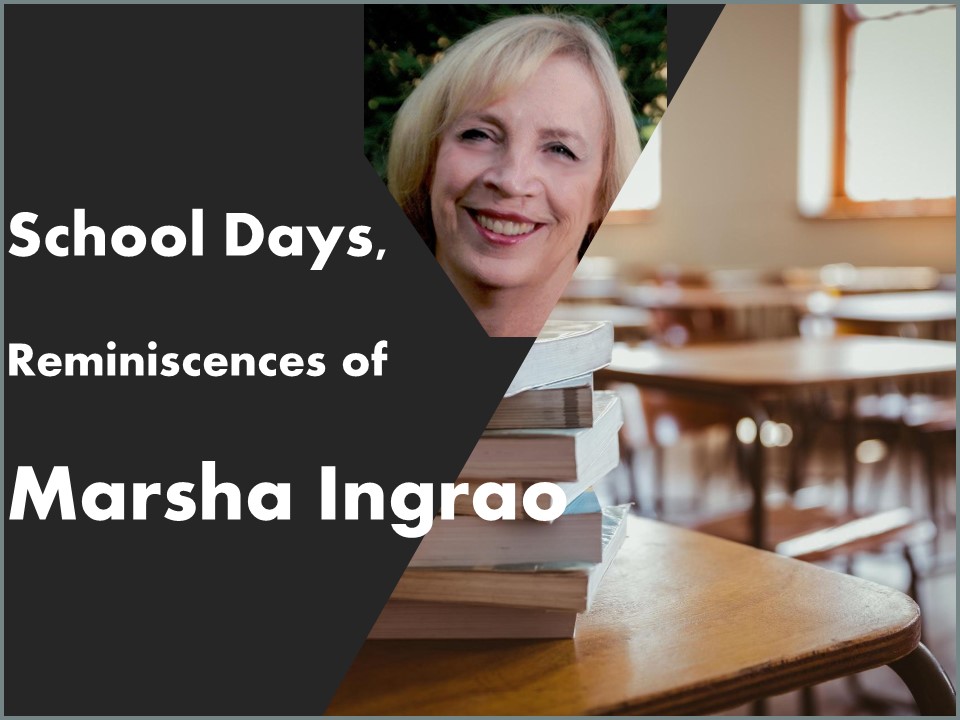
    School Days, Reminiscences of Marsha Ingrao

    Welcome to the School Days, Reminiscences series in which my champion bloggers and authors share reminiscences of their school days. It’s my small way of thanking them for their support and of letting you know about their services and publications.

    This week, I am pleased to introduce Marsha Ingrao, author, blogger, teacher. Marsha and I hit it off as soon as we met, somewhere in the blogosphere. I think our shared backgrounds in and beliefs about education helped cement our friendship. I was delighted when Marsha contributed a guest post on readilearn about Writing in the lower primary classroom, a topic we are both passionate about, last year. I was also honoured when she entrusted me with reading a draft of her WIP Girls on Fire, which I’m looking forward to seeing in print one day.

    Before we begin the interview, I’ve invited Marsha to tell you a little of herself:

    Marsha Ingrao and her books

    My career in education spanned twenty-five years, first as a classroom teacher, then as a math consultant for Migrant Education, and finally the County Office of Education in the area of history-social science.

    Publications include various poems in anthologies, curriculum written as part of my consultant duties, and two published books, Images of America:  Woodlake by Arcadia Publishing and So You Think You Can Blog? by Lulu Press.

    Fiction is still on my bucket list. Two manuscripts I have completed, but not published are:

    • Girls on Fire, a fiction novel about three women in their 50s and 60s who are looking for new love and a change in life.
    • Winning Jenny’s Smile, a middle school fiction about Jenny’s first months in a new school.

    For the past seven years, I have sporadically kept three blogs, TC History Gal Productions about local history, Traveling and Blogging Near and Far, and Always Write about hobby blogging, writing and photography. I manage social media for several non-profits and am an active volunteer in Kiwanis. 

    Welcome, Marsha.

    Now let’s talk school. First, could you tell us where you attended school?

    I attended five schools in Indianapolis, Indiana through my junior year of high school, then moved with my mother and brother to Portland, Oregon to finish high school at Madison High. I attended one year of college at Portland State University and finally finished my education with a master’s degree and administrative credential over twenty years and two states later from Fresno Pacific University.

    Did you attend a government, private or independent school?

    Except for the short stint to finish my master’s degree my schooling was all public.

    What is the highest level of education you achieved?

    Master’s Degree

    What work or profession did you choose after school and was there anything in school that influenced this choice?

    My career choices, except for education, were as scattered as my education primarily based on how long it took me to finish my degree and my financial constraints in finishing. My mother taught school, and that was my eventual goal as well.

    What is your earliest memory of school?

    Kindergarten was my first experience at school. My grandmother and mother had already taught me most of the things they teach now in kindergarten, but we played in school and having such wonderful play setups and being with so many children was new to me.

    What memories do you have of learning to read?

    I remember Dr. Seuss and Dick and Jane. We did not learn phonetically at first that I remember, but somewhere along the line, someone introduced phonetics. By that time, I read voraciously.

    What memories do you have of learning to write?

    Marsha Ingrao on writing

    Learning to write pained me. I couldn’t see well and probably was dyslexic with a graphic disability, so I didn’t learn to write in cursive, which was wildly important in those days, until I reached the fourth grade. I remember my third-grade teacher took my new fountain pen away because I couldn’t write. Grrr

    My fifth-grade teacher praised my poetry and my father called me Hemist Earningway. I entered writing contests in magazines. Sadly, they responded that I was too young to show any promising talent. That squelched my professional writing career.

    What do you remember about math classes?

    I skipped half of second grade, so my mother prepared me over the summer by teaching me multiplication. When I started third grade, we had timed tests in subtraction. I was number one in music memory tests, but a failure at subtraction timed tests. My father was a design engineer and tried to teach me to use a slide rule when I started algebra in ninth grade. I did not do well in either algebra or learning from my father. Geometry was a bust, but I enjoyed and did well in math after the first two years of high school. I also got contact lenses.

    What was your favourite subject?

    Marsha Ingrao enjoyed learning about the States and other countries

    I liked to research, not that I was thorough compared to the kinds of research students can do today. In fifth and sixth grades we did reports on states and countries. Those were my favorite assignments in grade school. I loved the mathematics of grammar and for some strange reason loved diagramming sentences in junior high school. English was my favorite subject. That’s when I joined the journalism club.

    What did you like best about school?

    Marsha Ingrao liked music and art classes best at school

    I loved music and art classes and was thrilled to learn techniques to draw because seeing something and trying to recreate it on paper baffled my brain as much as using a slide rule. I adored reading but hated giving oral book reports.

    What did you like least about school?

    The bus ride to get there took forty-five minutes when we moved to the suburbs. It wasted time and eliminated after school commitments since my mother didn’t drive until I was in junior high or high school.

    How do you think schools have changed since your school days?

    This is a great question, Norah. The biggest changes, I think, have been instigated by the Civil Rights movement and technology. The opportunities afforded by computers and the internet for research and to write without constraints of visual or mechanical handicaps are like carrying water during a hike in the desert. The emphasis on equity and collaboration rather than competition prepares students for a working environment. Students in our community receive Chromebooks and free internet they can use at home. When we attended school, public schools didn’t even furnish paper, pens, and pencils. Buying a fountain pen was a third-grade status symbol.

    What do you think schools (in general) do well?

    In spite of what the public say about schools, the graduating students I interview have so many opportunities to succeed and far exceed my expectations of what a graduate should be able to do. They have so many choices both in and out of school. Boys and girls can participate equally in sports, theatre, mock trials, history, math, reading, writing, and science competitions. There are academies set up for agriculture, science, math, or the arts where students can specialize if they choose. Our schools also add the requirement of community service.

    How do you think schools could be improved?

    Marsha Ingrao says how schools could be improved

    These questions made me think about how much schools have improved. We complain that kids can’t write, and indeed, texting has changed the way kids think. Capitalizing the word I is not important to them but is to educators. Communicating quickly is something kids have taken to a new level. What they don’t know how to do is think beyond the immediate. Just because they can communicate doesn’t mean that they do it well. Schools need to challenge students to step back to imagine the bigger picture and consider the consequences of their actions. This is why teaching social studies and humanities is essential.

    thank you for your participation

    Thank you for sharing your reminiscences of school and thoughts about education in general, Marsha. It’s been wonderful to have you here. I learned so much I didn’t already know about you. I especially love that your father called you Hemist Earningway and hope that writing is an earning way for you. However, I am very disappointed in the response of magazines that had such a negative impact on your ambitions and potential.

    Find out more about Marsha Ingrao on her blogs

    TC History Gal Productions

    Traveling and Blogging Near and Far

     Always Write

    Connect with her on social media

    FB Page

    Twitter: @MarshaIngrao

    Pinterest

    Instagram

    Purchase a copy of Images of America:  Woodlake by Arcadia Publishing

    or receive a free copy of So You Think You Can Blog? by Lulu Press.


    If you missed previous reminiscences, check them out here:

    Charli Mills

    Sally Cronin

    Anne Goodwin

    Geoff Le Pard

    Hugh Roberts

    Debby Gies

    Pauline King

    JulesPaige

    D. Avery

    Christy Birmingham

    Miriam Hurdle

    Robbie Cheadle

    Look for future interviews in this series to be posted on Sunday evenings AEST.
    Coming soon:

    Ritu Bhathal

    Joy Lennick

    Darlene Foster

    Susan Scott

    Mabel Kwong

    Sherri Matthews

    Chelsea Owens

    Pete Springer

    with more to follow.

    Thank you blog post

    Thank you for reading. I appreciate your comments. Please share your thoughts.


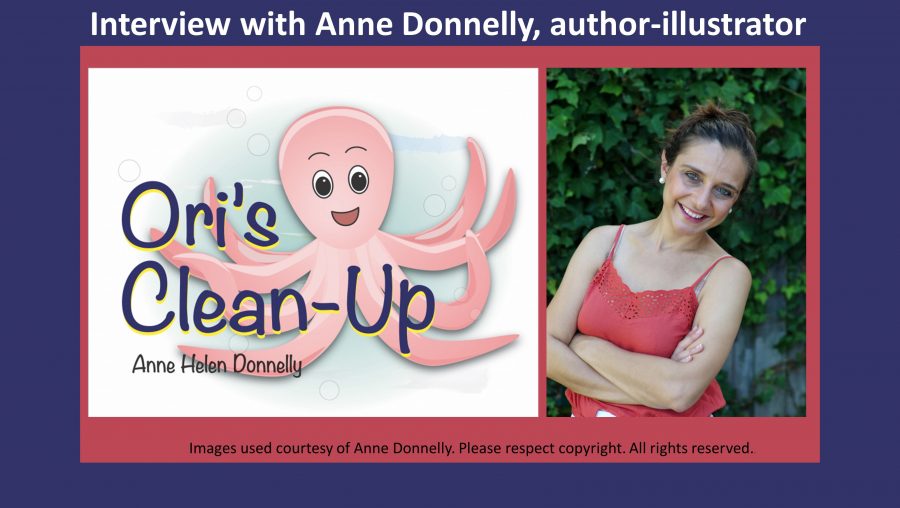
  • Interview with Anne Donnelly, author-illustrator – readilearn

    Interview with Anne Donnelly, author-illustrator – readilearn

    With tomorrow 8 June World Oceans Day and World Environment Day just a few days ago on 5 June, there is no better time than now to introduce you to Anne Donnelly and her delightful picture book Ori’s Clean-up.

    The aim of World Oceans Day is to celebrate, protect and conserve the world’s oceans. The 2019 theme Together we can protect and restore our ocean focuses on preventing plastic pollution.  With its environmental theme incorporating recycling and re-using, Anne’s book is a perfect fit.

    About Anne Donnelly

    Anne lives in Sydney with her husband, her two children and their new puppy that chews everything! She loves to be creative in all sorts of ways. She loves to read, write, craft and is a very animated storyteller. As a little girl, she used to draw on the underside of the kitchen table and all the way up the stairs, on each step, much to her parent’s shock.

    She has released three books in the Ori Octopus series; Ori the Octopus and Ori’s Christmas in 2017. And now she is especially excited about her latest book Ori’s Clean-Up as it combines two of her passions; children’s literacy and care of our environment. This book has been endorsed by Clean Up Australia and is being stocked at various zoos, national parks, museums, visitor centres, aquariums and holiday destinations all over the country.

    About Ori’s Clean-Up

    Ori the Octopus and his friends have left their rubbish everywhere. They tidy up, but it doesn’t work. To keep their home clean and healthy, they need to do something different, something better.

    The Interview

     Hi, Anne. Welcome to readilearn.

     Thanks for inviting me.

    Anne, you tell your stories with words and pictures. When did you know you wanted to be a storyteller and share your stories with others?

    Continue reading: Interview with Anne Donnelly, author-illustrator – readilearn

  • School Days, Reminiscences of Robbie Cheadle

    School Days, Reminiscences of Robbie Cheadle

    Welcome to the School Days, Reminiscences series in which my champion bloggers and authors share reminiscences of their school days. It’s my small way of thanking them for their support and of letting you know about their services and publications.

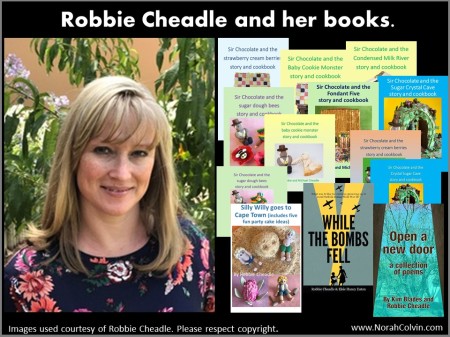
    This week, I am pleased to introduce Robbie Cheadle, author, poet and blogger. I’m not sure when or where I first met Robbie, but I know was captivated by her delightfully unique Sir Chocolate series of picture books which she illustrates with amazing fondant figurines. I was also intrigued to know that these books were jointly written with her and her son Michael, starting from when he was ten years old. There are now six books in the Sir Chocolate series and, since then, Robbie has published a memoir of her mother’s war-time childhood, co-written a book of poems, and had others of her poems and short stories featured in anthologies.

    Robbie Cheadle and her books

    Before we begin the interview, I asked Robbie to tell you a little of herself:

    Robbie, short for Roberta, is an author with six published children’s picture books in the Sir Chocolate books series for children aged 2 to 9 years old (co-authored with her son, Michael Cheadle), one published middle grade book in the Silly Willy series and one published preteen/young adult fictionalised biography about her mother’s life as a young girl growing up in an English town in Suffolk during World War II called While the Bombs Fell (co-authored with her mother, Elsie Hancy Eaton). All of Robbie’s children’s book are written under Robbie Cheadle and are published by TSL Publications. 

    Robbie has recently branched into adult horror and supernatural writing and, in order to clearly differential her children’s books from her adult writing, these will be published under Roberta Eaton Cheadle. Robbie has two short stories in the horror/supernatural genre included in Dark Visions, a collection of 34 short stories by 27 different authors and edited by award winning author, Dan Alatorre. These short stories are published under Robbie Cheadle.

    Robbie has also recently published a poetry collection, Open a new door, together with fellow South African poet, Kim Blades.

    Welcome, Robbie.

    Let’s talk school. First, could you tell us where you attended school?

    I went to fourteen different schools as we moved around a lot. My first school was Craighall Convent in Johannesburg. The school I learned the most at was a bilingual school in George in the Western Cape. I was only there for six weeks but I learned the basics of Afrikaans (second language in South Africa) which I had missed out on before.

    Did you attend a government, private or independent school?

    I attended a mixture of schools. I attended a couple of private schools when I was in primary school including two convents. I went to public schools when we lived in George for the first time and when we lived in Cape Town. I attended a public high school in Johannesburg.

    What is the highest level of education you achieved?

    I have a degree and an honours degree in Accounting as well as my board examinations to become a chartered accountant. I was keen to do an economics degree a few years ago when I wrote my publications on direct foreign investment into Africa but I couldn’t find anything suitable. I reverted to self-study and analysis instead and this research is in my publications.

    What work or profession did you choose after school and was there anything in school that influenced this choice?

    Immediately after school I went to a secretarial college for a year where I learned typing, shorthand and the other skills of a professional secretary. I then worked for a few years and saved money which I used to pay for some of my university education. I attended a correspondence university and worked shifts in a video shop to earn money while I did my first degree. I applied for, and was accepted, for an internship at KPMG in Johannesburg when I finished my degree. KPMG paid for my studies for my honours degree and I studied part time in the evenings and during public holidays and weekends. It was hard but I managed to do it and I passed all my examinations first time around, even my honours degree where I had to pass all nine examinations in one sitting.

    What is your earliest memory of school?

    Robbie Cheadle as a school girl in the news

    I remember having my photograph taken for the national newspaper on the first day of school. My friend’s father was a photographer for the newspaper and he used me as his “First day of school” photograph that year.

    I also remember being left out when the girls (aged 7 years old) when to mass and practiced for their first Holy Communion. I recall being sad that I didn’t have a long white dress and candle. I only took my Holy Communion when I was 12 years old and we were living in George.

    What memories do you have of learning to read?

    I remember being fascinated with books and reading. I can recall sounding out the words by myself and the triumph of reading Little Bear all by myself. Once I got the hang of reading, I just went from strength to strength. I got books for every birthday and Christmas and belonged to the library. When I was 9 years old and we lived in Cape Town, I used to cycle to the library twice a week and take out 7 books at a time to read (4 library cards were mine and 3 were my sister, Cath’s, but she let me use them.)

    What memories do you have of learning to write?

    I remember writing my name in my books and I always inverted by b’s, d’s and p’s. I had a bit of remedial help and this was corrected when I was 8 years old. My old books still have the inscription Roderta Eaton.

    What do you remember about math classes?

    I have very little memory of maths class other than I was able to do reasonably well without much effort which left me lots of time to read. I remember my high school maths teacher writing a remark on my report that said: “Generally speaking, Robbie is generally speaking.” I have always remembered that comment. I had one teacher that told my mom that I had layers like an onion which you needed to peel back to find the real me. My mother was also told by a teacher that I practiced “silent insubordination.”

    Robbie Cheadle discusses what she liked best about school

    What was your favourite subject?

    I enjoyed English firstly and then History. Accounting and Maths were both relatively easy for me and I hated Afrikaans with a passion. My second ever Afrikaans teacher embarrassed me in front of the whole class and I would never bother with learning this language after that.

    What did you like best about school?

    I have two lovely memories of school, one, was creating a play with my friends to perform for the class when I was 8 years old. I loved organizing the cast and teaching them their roles. I have always enjoyed project management and organizing. The other memory I cherish was being chosen to be Mary in the Nativity Play when I was 12-years old. I was simply thrilled.

    What did you like least about school?

    I can’t think of anything I really didn’t like about school; it just was something I did every day for 12 years. I have always been a loner and would always chose books over people. We moved a lot, so I learned not to get too close to other children, it was easier to uproot myself that way. I am still quite good at accepting change and I don’t retain long-term physical friendships. I prefer my virtual friends who are constant and always there.

    How do you think schools have changed since your school days?

    Unfortunately, the quality of the public education in South Africa for underprivileged children has not improved much since 1994. Lots of children start learning English late in their school career (at the age of 10 or 11 years old) and it is difficult for them to cope with being taught in English.

    There is still a huge shortage of school basics in many rural schools and children are still being taught under trees and in classes with few desks and chairs and even fewer learning materials. There are often no proper toilets for the children to use.

    I belong to charities which donate books and stationery to underprivileged schools. A lot is done to help by the private business sector and individuals.

    My sons both attend private schools and the college my older son attends is exemplary in its out-reach programme. It supports a disadvantaged college in a rural area and has a programme to train teachers from disadvantaged backgrounds. It also has a programme to help disadvantaged children with potential to achieve at school. This is run in the afternoons and the teaching staff freely give of the own time and skills. It is a sad that the public education is poor because our world is evolving into one where higher-level skills are becoming vital to get and retain jobs. English and maths skills are essential.

    What do you think schools (in general) do well?

    I can only answer this question from the point of view of my own sons. Both of their schools have outcomes-based education programmes and this works so well. Their curriculums are marvelous and I often find myself thinking how much I would have enjoyed their schooling when I was a girl. My older son’s school has programmes to give accelerated learning opportunities to boys who find learning easier and support programmes for boys that find some areas of learning more difficult. They just do such wonderful things, read fantastic books and have marvelous learning opportunities. Of course, as with all things in life, you have to grasp opportunities or else they pass you by.

    How do you think schools could be improved?

    The most important thing in our government schools is to get good teachers. Teachers that aren’t masters in their subject will struggle to teach others, particularly, children that can’t learn in one specific way but need the information presented in another way. The children also need a safe learning environment, which often isn’t the case, and basic learning materials.

    thank you for your participation

    Thank you for sharing your reminiscences of school and thoughts about education in general, Robbie. It was interesting to hear the comparisons between your own schooling and that of your son’s current schooling. I was interested to hear your response to learning Afrikaans and was surprised at how late English was taught. The photographs of you from the newspaper are very cute and to be treasured.

    Find out more about Robbie Cheadle on her blogs

    Bake and Write

    Robbie’s inspiration

    And her Goodreads author page:


    Connect with her on social media

    Facebook @SirChocolateBooks

    Roberta Writes

    Twitter @bakeandwrite

    @robertaeaton17

    Robbie’s books can be purchased from

    Amazon

    Or

    TSL Publications

    If you missed previous reminiscences, check them out here:

    Charli Mills

    Sally Cronin

    Anne Goodwin

    Geoff Le Pard

    Hugh Roberts

    Debby Gies

    Pauline King

    JulesPaige

    D. Avery

    Christy Birmingham

    Miriam Hurdle

    Look for future interviews in this series to be posted on Sunday evenings AEST.

    Coming soon:

    Marsha Ingrao

    Ritu Bhathal

    Joy Lennick

    Susan Scott

    Mabel Kwong

    Sherri Matthews

    Chelsea Owens

    Pete Springer

    with more to follow.

    Thank you blog post

    Thank you for reading. I appreciate your comments. Please share your thoughts.