Live Love Laugh Learn … Create the possibilities

Category: Stories

  • Berry delightful

    What is your favourite berry?

    Which berries make your taste buds sing?

    This week at the Carrot Ranch Literary Community, Charli Mills has challenged writers to In 99 words (no more, no less) include music and berries. It can be fantastical, such as the music of berries or a story that unfolds about a concert in a berry patch. Go where the prompt leads.
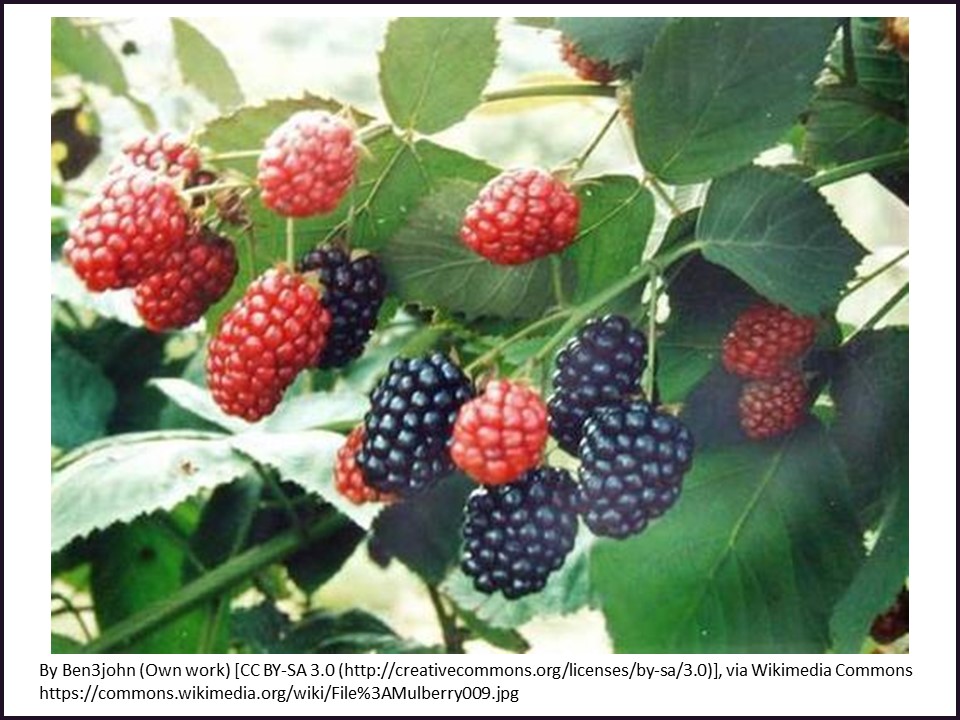
    mulberries

    When I was a child, there was a huge mulberry tree growing in the backyard of one of our neighbours who was kind enough to allow access to the multitude of children in our family. Each summer the tree would be laden with fruit and we would pull at its branches to gather as much as we could into buckets and bowls. We would go home stained with purple on our bodies and our clothes and, mostly, around our mouths. We couldn’t wait to eat and there were plenty to go around. Mum would bake mulberry pies and fill jars with mulberry jam that was delicious on our buttered bread for breakfast or lunch.

    Since then, I have encountered few mulberries trees, only occasionally sourcing their leaves to feed voracious silkworm caterpillars. The berries themselves seem not to be harvested for store sales. However, I was recently reminded of Mum’s mulberry jam when I spotted some on a shelf at the Jamworks gourmet deli. I must admit though, while I resisted the mulberry jam, I couldn’t resist the fig and ginger variety.
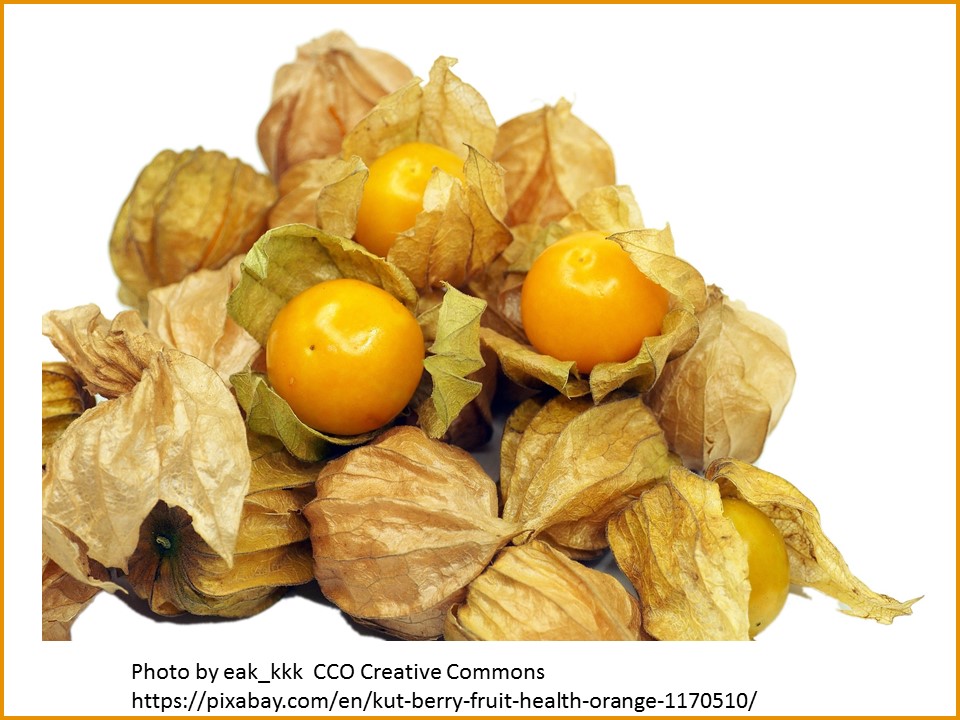
    gooseberries

    The other berry that was most familiar to me as a child, but never since seen, was what we called the gooseberry. There were gooseberry plants growing by our back fence. I remember picking the berries, peeling back the outer leaves and eating the small fruit, which I think had quite a tart flavour. As I recall, Mum would also make jam, but not pies, with these.
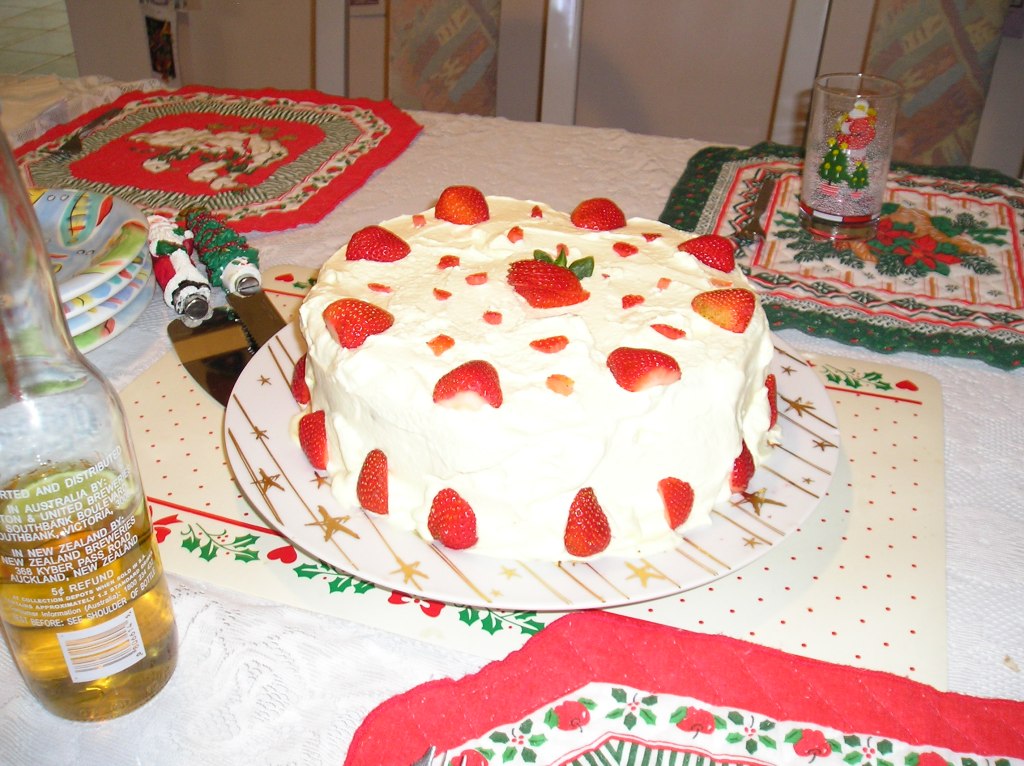
    strawberry torte
    (c) Norah Colvin

    I recall that, even as a young adult, a serving of strawberries and cream had seemed a very luxurious and decadent dessert. Now strawberries are more affordable and readily available all year round. They are a favourite of my granddaughter. So much so that I need to have at least one punnet in the fridge for her when she visits. A strawberry torte is my family’s pick for special occasions such as birthdays and Christmas. I wrote about it and included the recipe here.

    In addition to strawberries, stores now have a variety available all year round; including blueberries, blackberries, raspberries and cranberries. The berries make a wonderful filling for the other family favourite, pavlova.
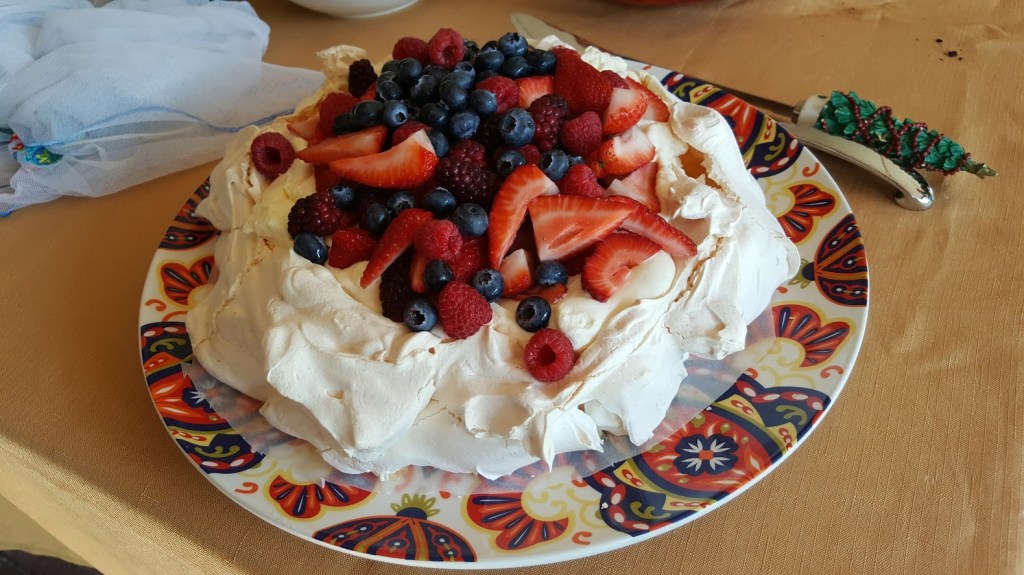
    pavlova
    (c) Norah Colvin

    But do you know what a berry is?

    I checked with Wikipedia for the definition of a berry, and found that it is “a fleshy fruit without a stone produced from a single flower containing one ovary”.

    Botanically, the following fruits (and vegetables) are berries:

    • Grapes
    • Currants
    • Tomatoes
    • Cucumbers
    • Eggplants
    • Bananas
    • Kiwi fruit
    • Blueberries
    • Cranberries
    • Coffee beans
    • Pumpkin
    • Watermelon

    and these, commonly called berries, are not:

    • Strawberries
    • Raspberries
    • Mulberry
    • Blackberry

    Do you need to change you answers to my initial questions:

    What is your favourite berry?

    Which berries make your taste buds sing?

    Or are you happy to go with common usage? If I write about mulberries, will I be fulfilling the requirements of Charli’s prompt? Perhaps I should write about picking watermelons instead.
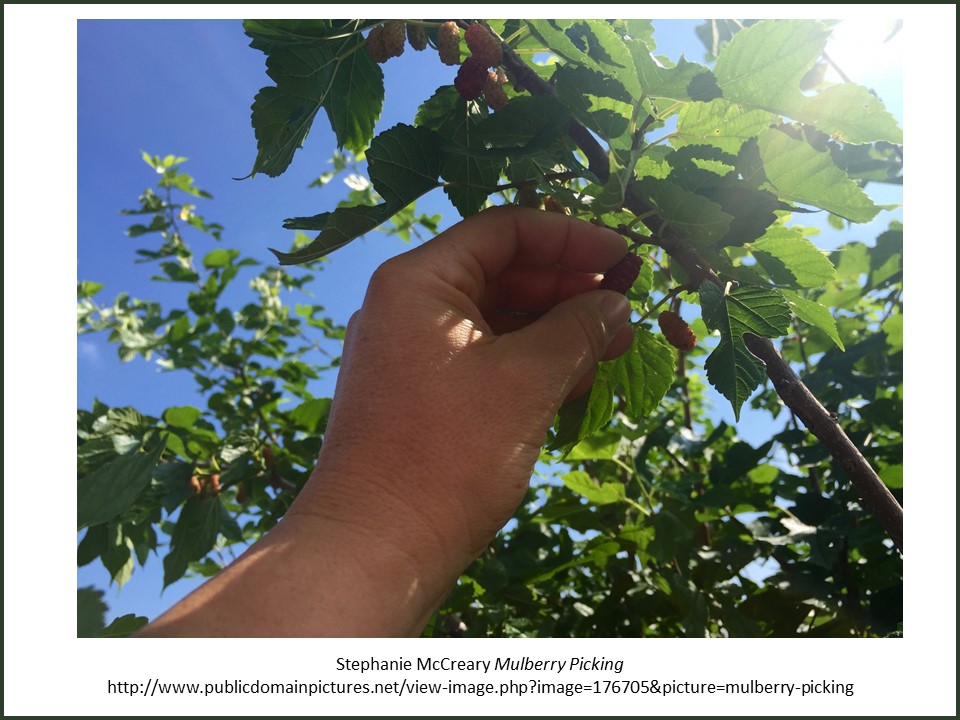
    Mulberry picking

    Mulberry Stew

    Branches hung heavy with berries in reach of even the youngest child. They ate more than they bucketed; but there were plenty, including for birds singing in higher branches. Mum had forbidden them. “Mrs Wilson’s poorly. Don’t disturb her.” But they couldn’t resist. They scampered the instant she called.

    “Where have you been?” She eyed the purple stains.

    “We …” the youngest began to sing.

    “Nowhere,” they shushed with hands concealed.

    “What were you doing?”

    “Nothing.”

    Her lips twitched. “Hand them over.”

    Later they pondered together how she knew.

    When Dad got home, they’d have to face the music.
    Thank you for reading. I appreciate your feedback. Please share your thoughts.


  • A piece of pie

    This week at the Carrot Ranch Charli Mills has challenged writers to In 99 words (no more, no less) write a story that features a pie. You can make it any kind of pie, focus on filling or crust, or tell us about the pie-maker. How does pie set a tone in a story? Does it warm the hearth or bring disappointment?

    But which pie should I choose: meat, vegetable or fruit, with pastry that is short, flaky or puff? Perhaps a piece of pie for a correct answer in Trivial Pursuit?

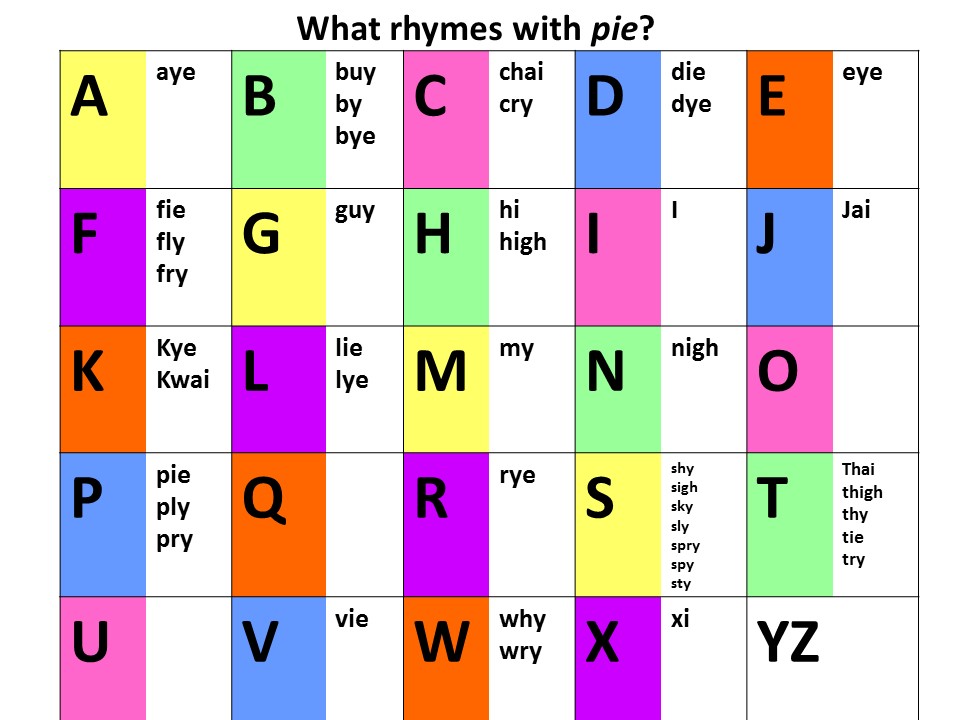
    I considered words that rhyme with pie, and what a list I made:

    what rhymes with pie

    Forty-three words!

    Maybe you can add even more.

    Did you notice the variety of ways we spell the long vowel ī, as in the word pie?

    There are eight:

    aye    uy    y     ye     ai     ie     igh    and     i!

    Isn’t it a wonder that any of us ever learned to read or spell.

    Did you notice there were two ‘pie’s in my title: A piece of pie?

    Did you notice that each time the three letters ‘pie’ were used, they represented different sounds?

    As mature readers and writers we have no difficulty with any of these vagaries of the English language, but for beginners, they can be a challenge.

    The challenge reminds me of “Old Lucy Lindy and the Pies” from Sounds of Laughter in the Sounds of Language Series by Bill Martin Jnr. In the story, Lucy Lindy loves to bake pies. She bakes all kinds of pies, including mince pies. Since all her pies looked the same with their delicious layer of pastry on the top, Lucy Lindy wanted to be sure she knew which pies were which when she took them out of the oven. She came up with a brilliant plan. She put the initials IM on the mince pies, for Is Mince. Then, on the pies that weren’t mince, she put the initials IM, for Isn’t Mince. Children laugh out loud when they realise it wasn’t such a clever plan after all.

    A Necklace of Raindrops

    Another lovely story for young children is “There’s some Sky in this Pie” from the collection A Necklace of Raindrops by Joan Aiken. The story has a cumulative structure similar to that of The Gingerbread Man, but with an additional sprinkle of creativity that could be used to ignite children’s own imaginative stories.

    When the old woman was making a pie for the old man, she looked outside at the snow “coming down so fast out of the white sky.

    “Then she went on rolling the pastry. But what do you think happened? A little corner of the sky that she had been looking at got caught in the pastry.”

    When the pie was cooked and the old woman opened the oven, the pie floated across the room. The woman and man and their cat jumped onto the pie to try to stop it, but they couldn’t, and they floated away on it. From time to time they met others who called out to them,

    “Old woman, old man, little puss, so high,

    Sailing along on your apple pie,

    Why are you floating across the sky?”

    They answered:

    “Because we can’t stop, that’s the reason why.”

    (Notice those different ways of spelling the long ī sound again – three spellings in that short extract.)

    Lucy Lindy and the Sky in the Pie are light-hearted and imaginative stories.

    Recipe for a Perfect Planet Pie

    Another favourite pie story is Recipe for Perfect Planet Pie by Kim Michelle Toft, an Australian author/illustrator and the only illustrator anywhere to illustrate all her stories with silk paintings.

    I have shared some of Kim’s work with you before here and here, and I’m certain to again as I attended the launch of her eleventh picture book Coral Sea Dreaming on the weekend and have scheduled a readilearn interview with her later in the year.

    Kim is passionate about conservation, especially of our marine environment and its inhabitants. In each of her books, she uses her stunning silk paintings to ignite a wonderment in the natural world and inspire a love of and caring for the environment. Recipe for Perfect Planet Pie continues these themes.

    The book reads like a recipe with a list of ingredients, a method, fourteen step-by-step instructions, and “Helpful hints” on each page. The recipe begins:

    1 To prepare the base. Sift the rich chocolate earth and crystallised minerals together. Make a well and pour in one cloud full of rain.”

    and concludes:

    “Serve pie immediately with a side of love and a slice of happiness.”

    At the end of the book, Kim includes information about the pie’s ingredients and the importance of each. She provides suggestions that we can implement to help create a happy, healthy planet and says,

    “Planet Earth is our only home and it is up to us to create change and put our knowledge into action.”

    I’m sure you’ll agree with that.

    For my response to Charli’s challenge I decided to go with a bit of nonsense and see how many of the rhyming words I could use to construct a pie story and still maintain some sort of sense. I wonder how successful you will think I’ve been. I managed to incorporate 28 and at least one from each of the spelling variants.

    A piece of pie

    Kye met Jai at the mall.

    Hi,” said Kye.

    “Nice day,” replied Jai. “Look at that sky. Wish I could fly.”

    “Time for a chai?”

    Aye. And maybe a pie. I’ll buy.”

    “What a great guy!”

    “I try!”

    “I’ll have toasted rye.”

    They sat high by the window and played “I spy.”

    “Oh my,” said Kye, rubbing his eye.

    “What? Why?

    Kye started to cry.

    “Don’t mean to pry.” Sigh.

    “It’s no lie. The end is nigh.”

    “Will we all fry? Will everyone die?”

    “No, just wish I had your piece of pie.”

    Fie! Wish I had Thai!”

    Bye.”

    Thank you for reading. I appreciate your feedback. Please share your thoughts.
  • Introducing illustrator Muza Ulasowski – Readilearn

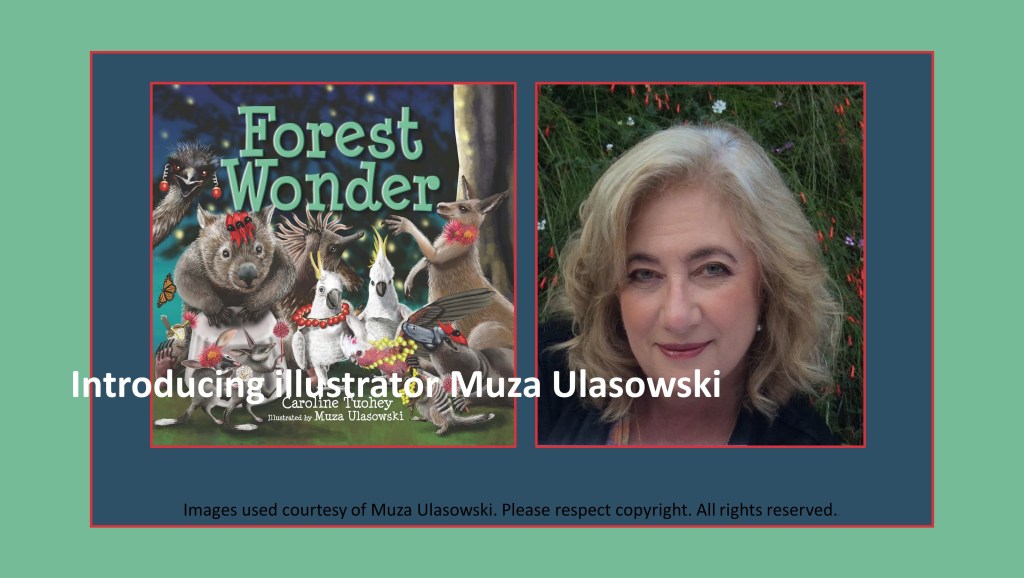
    This month I am delighted to introduce you to the very talented illustrator Muza Ulasowski. I’m certain you will find her illustrations to be quite remarkable.

    Although Muza has illustrated many books, I first came across her work in the beautiful picture book Forest Wonder, written by Caroline Tuohey. It is Forest Wonder, a winner of international awards, that Muza and I are discussing today. Before we get started on the interview, first let me tell you a little about Muza.

     Muza Ulasowski is a graphic designer and children’s book illustrator based in the leafy western suburb of Brookfield in Brisbane, Queensland. Australia. She is inspired and surrounded by a vast array of local birds and animals who tend to make their appearances in her book illustrations. She shares her life with her wonderfully patient husband, their charismatic bulldog called Charlie and a black magic cat named Basil.

    In 2010, she was invited to illustrate her first children’s picture book and enjoyed it so much, that

    Continue reading: Introducing illustrator Muza Ulasowski – Readilearn

  • Celebrating NAIDOC Week – Readilearn

    Celebrating NAIDOC Week – Readilearn

    This week, from 2 – 9 July, is NAIDOC Week in Australia with celebrations occurring all around the country. The purpose of the week is to celebrate the history, culture and achievements of Aboriginal and Islander Peoples and acknowledge their contributions to our country. The acronym NAIDOC stands for National Aborigines and Islanders Day Observance Committee.

    The theme of this year’s celebration is Our Languages Matter. When Europeans first arrived in Australia a little more than 200 years ago, more than 250 Indigenous languages were in use across the land. As the languages were spoken, not written, many of these languages have been erased. Fewer than half that number remain, and many of the young people are no longer familiar with the language of their ancestors.

    According to the NAIDOC website,

    “The 2017 theme – Our Languages Matter – aims to emphasise and celebrate the unique and essential role that Indigenous languages play in cultural identity, linking people to their land and water and in the transmission of Aboriginal and Torres Strait Islander history, spirituality and rites, through story and song.”

    This article in the Conversation provides a little more information about Australian Indigenous languages and the Dreaming.

    By now, NAIDOC Week celebrations are almost over, and most Australian school children are enjoying their mid-year break. However, many teachers will be looking for ways to share the celebrations with their students when school resumes. As any time is a good time to incorporate learning about Indigenous culture and history, in this post, I provide links

    Continue reading: Celebrating NAIDOC Week – Readilearn

  • The Battle of Bug World – Book launch, Blog tour & Prizes!

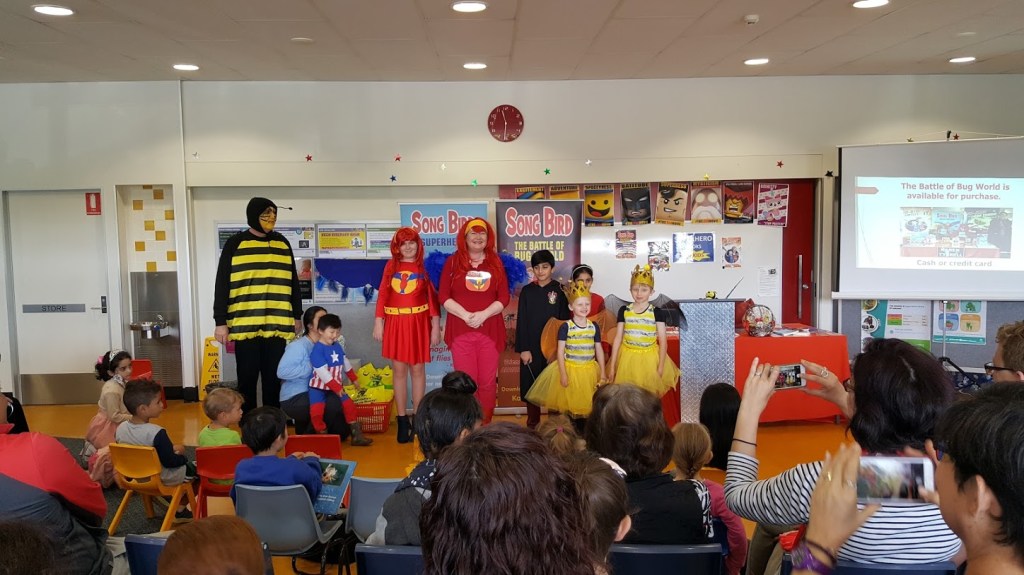
    Karen Tyrrell announces the second in her Song Bird Superhero series, The Battle of Bug World, a children’s fun-filled eco fantasy.

    Can Song Bird STOP the bully, save her sister, the bees and the environment?Karen is an award-winning author who writes books to empower kids (and adults) and help them live strong and be resilient.  After many years of classroom teaching experience, she continues to educate through sharing her own story of resilience as a survivor of bullying, through her words on the page, and through her workshops for adults that deal with writing, marketing, and funding, in addition to empowerment.

    Karen presents workshops for children in schools, libraries, and other creative spaces. With her flair for costuming and performance, she conducts entertaining sessions with a splash of fun staring in her own scripted pantomimes. As I was lucky enough to attend the launch of her latest book The Battle of Bug World on Saturday, I can testify to the enjoyment that was shared by all attendees.

    The Battle of Bug World is a fast-paced and action-packed story that children won’t want to put down until they find out if, and how, Song Bird can save her sister, her friends, and the environment from her evil neighbour Frank Furter.

    I previously had the pleasure of interviewing Karen on readilearn about her first book in the series Song Bird Superhero, and am delighted to be a part of Karen’s blog tour celebrating the launch of this sequel, which even surpasses the first.

    Please pop over to readilearn on Friday to read my post in the blog tour. Read other posts in the tour by following the links below. Leave a comment on any post for a chance to win great prizes including signed books, signed artwork, and a book critique (Comment on more posts for more chances to win!)


    The Battle of Bug World – Song Bird 2 Blog Tour!

    Look what’s happening to celebrate the Amazon release of The Battle of Bug World.

    BLOG TOUR!

    From Mon June 26 AMAZON LAUNCH KarenTyrrell.com

    From Tues June 27 CURLY Q’S Kids Book Review

    From Tues June 27 REVIEW Just Write For Kids

    From Wed June 28 REVIEW Georgina Ballantine

    From Thurs June 29 Writing Junior Novels Megan Higginson’s Blog

    From Fri June 30 REVIEW & interview readilearn blog

    BOOK GIVEWAYS!

    Just leave a comment on any of the posts in the blog tour, to win a copy of The Battle of Bug World (Song Bird 2). Add initials SB2

    FREE Children’s Book Assessment!

    Win a free children’s book assessment (up to 10 pages) by the author Karen Tyrrell. Just comment on any of the posts in the blog tour and add the initials CBA

    FREE Artwork!

    Win signed artwork by illustrator Trevor Salter. Add initials AW

    Remember the more you comment, the more chances you have to win prizes for The Battle of Bug World Blog Tour. Good luck 😊


  • Stone fruit salad

    Soup, especially chicken soup is one of those foods considered good for the soul, mind, and body, and often suggested to speed recovery after an illness. There may be more to the belief than simple folklore. It’s healing properties are what inspired the popular series of Chicken Soup for the Soul books. As Jack Canfield and Mark Victor Hansen saidthey wanted it to soothe and provide comfort, just like their grandmothers’ cooking.

    I was reminded of this when Charli Mills at the Carrot Ranch dished up her flash fiction prompt this week, challenging writers to In 99 words (no more, no less) write a story about comfort food.

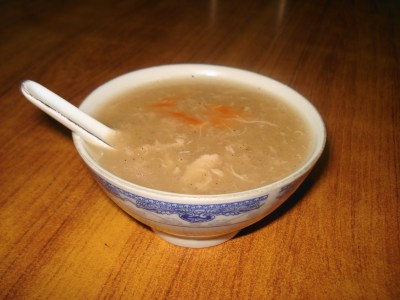
    How could I go past soup? But what soup? Chicken soup? Pumpkin soup? Tomato soup? No, stone soup.

    I’m sure you are familiar with at least one of the versions of the story Stone Soup. Basically, some hungry travellers come to a village. They cannot afford to buy food and, although they ask, the townspeople refuse to share with them. Undaunted, the travellers heat up a pot of hot water with a stone in it. They explain to the curious villagers that their “soup” would taste better with the addition of certain ingredients. Intrigued, the villagers happily provide the ingredients. When the soup is ready, the stone is removed and the travellers share the delicious and nutritious soup with the villagers.

    With its messages about sharing, working together, and improving things by combined participation, it is a great story to read to and discuss with young children. It could be used to introduce a class cooking activity, such as making soup or stew, to which each child contributes an ingredient.

    Although English can be confusing with its multi-meaning words and phrases that have little apparent connection to the individual words used, I think children would understand the story and realise that the stone was not eaten but removed from the soup once it had served its purpose.

    Wouldn’t they?

    I wondered how it might be interpreted if children were asked to contribute a piece of fruit to a class fruit salad.

    Fruit salad

    Billy barely paused to say, “Hi, Mum,” as he tossed her a piece of paper and kept going.

    The back door slammed, startling Baby. ‘In one door and out the other,” Mum said, as Dad appeared. “What’s he up to?”

    Dad watched from the window as Billy took pebbles from the garden, inspected them carefully, then arranged them in neat piles.

    “Strange,” said Dad. “I don’t know. He seems to be looking for something. Said they’re making fruit salad at school tomorrow.”

    Mum read the note he’d tossed at her, then smiled.

    “He’s to take stone fruit,” she said.


    I guess if Billy contributes a stone, and the other children contribute fruit, they’ll have a delicious, nutritious, and refreshing snack to comfort them on a warm summer’s day. What do you think?

    Thank you for reading. I appreciate your feedback. Please share your thoughts.


  • But why?

    Just like scientists, children are curious, constantly asking questions, wanting to know why or how. Parents and teachers don’t always know the answers. In fact, there may not even be an answer – yet. The need to know is strong and “just because” won’t do. Coupled with creativity, thinking up new ideas and possibilities, curiosity has taken us beyond the imagination of myths and legends to knowing and understanding.

    This week at the Carrot Ranch, Charli Mills has challenged writers to “In 99 words (no more, no less) write about a creation myth. You can write your own, use one in a story or create tension (or comparability) between science and culture on the topic of creation.” As usual, she tells us to “Go where the prompt leads.”

    Every culture has its own creation stories, told from the beginning of time when humans first walked the earth. Through stories, people attempted to explain their own existence and that of everything observable.

    With only the skies for night-time entertainment, people found stories in the stars. As Duane W. Hamacher says in Kindred skies: ancient Greeks and Aboriginal Australians saw constellations in common in the Conversation, What we don’t yet know is why different cultures have such similar views about constellations. Does it relate to particular ways we humans perceive the world around us? Is it due to our similar origins? Or is it something else? The quest for answers continues.

    As with stories told of the stars, there are some threads common to many creation myths, including stories of the first man and woman, stories explaining the existence of the animals and why they behave the way they do. I have read quite a few stories of floods, which I guess is understandable as these events occur worldwide.

    What I love about the creation myths is that they testify to the innate curiosity and creativity of humans; the need to know and the sense of wonder combined with imagination and storytelling.

    It is important to keep this sense of wonder and curiosity alive in children, and adults, also. Just a few days ago, as reported by Ray Norris in the Conversation, Exoplanet discovery by an amateur astronomer shows the power of citizen science. He says this discovery will help us understand the formation of our own Earth. It’s also a step towards establishing whether we are alone in the universe, or whether there are other planets populated by other civilisations.”

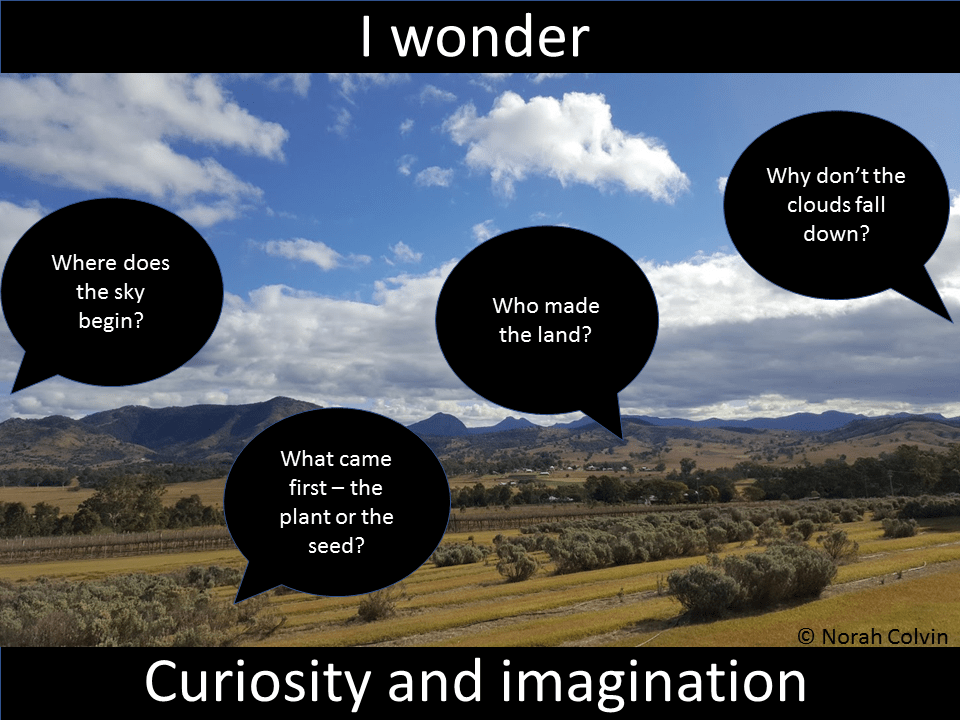
    I think of questions asked by my granddaughter; for example, “Who came first, the mother or the baby?”, “If there’s gravity, why don’t the clouds fall down?”  or “Where does the sky begin?”

    It is interesting now in this age of technology, almost everything we want to know is just a tap of a few keys or buttons away.

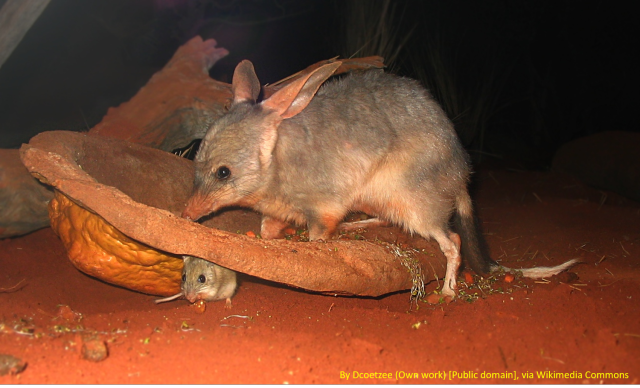
    The other day I visited a nature reserve with my two grandchildren. (We went especially to see three baby bilbies which had recently emerged from their mother’s pouch, but saw other things too.)

    We were looking at some black swans, which are native to Western Australia. GD informed me that white swans are not native to Australia. When I admitted that I’d never thought about that, she said, “Look it up. Look it up now. You’ve got your phone in your hand. Just look it up.” She was insistent and I did as told. She was right, of course.

    How different this experience is from that of the first humans. Young children expect to be given answers based upon science or collective knowledge, not stories. But we still do not have answers to everything.  As Duane W. Hamacher says, “The quest for answers continues.”

    In response to Charli’s challenge, I have not written a creation story. However, I have included the same ingredients that contributed to their creation: wondering, questioning, and imagination.

    Unanswered questions

    “What are you doing?”

    “Pulling out weeds.”

    “Why?”

    “So the carrots have more room.”

    “Why?”

    “So they can grow big and juicy.”

    “Why?”

    “So they are good to eat for our dinner.”

    “Why?”

    “To keep us healthy?”

    “I want to be healthy.”

    “It’s good to be healthy.”

    “I don’t want to die.”

    “You won’t die. Not for a long time.”

    “How do you know?”

    Silence. How does anyone know?

    “Silas died.”

    “Who?”

    “Silas.”

    “Who is Silas?”

    “Was. Silas was my friend.”

    “I don’t remember Silas.”

    “He was my imaginary friend.”

    “Oh. How did he die?”

    “I killed him.”

    “Why?”


    Perhaps there are some things for which we may never know the answers; for example, Can imaginary friends die?

    Thank you for reading. I appreciate your feedback. Please share your thoughts.


  • Delivery – just in time for Easter! – Readilearn


    Many children around the world eagerly await the arrival of the Easter Bunny and his delivery of coloured, candy, or chocolate eggs or toys. The Easter Bunny has been delivering his gifts for more than three hundred years.

    When Europeans arrived in Australia a little over two hundred years ago, they not only brought the Easter Bunny tradition, they brought real rabbits as a food source and for hunting. Cute little rabbits, you may say, but the rabbits were quick to breed. Without any natural predators, they soon became widespread, and created an enormous environmental problem. They contributed to the destruction of habitats and the loss of native animals and plants. They also became a serious problem for farmers.

    One of the animals that suffered as a result of the introduced species is the bilby, a now vulnerable marsupial, native to the deserts of Central Australia. The cute bilby with its long rabbit-like ears and cute face is considered a possible native substitute for the Easter Bunny in Australia.  Chocolate makers and other organisations used the idea of an Easter Bilby to draw attention to its plight and to the Save the Bilby Fund, established to help its survival. (Check out the Save the Bilby Fund’s free education resources.)

    This week I have uploaded some new Easter resources featuring bilbies. I hope you and your children enjoy them.

    Continue reading: Delivery – just in time for Easter! – Readilearn

  • Time for rhyme – Readilearn

    Yesterday, 2 March was Dr Seuss’s birthday. How did you celebrate? Did you read a favourite Dr Seuss story – maybe even more than just one or two? Which is your favourite?

    Children love the rhythmic, rhyming stories written by Theodor Seuss Geisel who was born in 1904. (A question for your children – how old would he be if he was still alive today?)

    Having fun with rhyme is a great way for children to learn about the sounds of language.

    In the beginning, the rhymes can be real or nonsense words, as are many employed by Dr Seuss, training the ear to hear. Children are delighted when they discover pairs of words that rhyme. It is great when parents and teachers share their excitement of discovery too.

    Like those of Dr Seuss, many stories and poems for young children are written in rhyme. The rhyme is pleasant to the ear, and encourages children to join in with the reading or telling, using meaning and sound to predict the next rhyming word.

    When children are ready, familiar rhyming texts are often the first they read independently, using a combination of memory and print. How many children do you know who first started reading with a Dr Seuss book; such as The Cat in the Hat, Fox in Socks, One Fish Two Fish, Ten Apples Up On Top, or any other favourite.

    For my part in the celebration, I joined in with a challenge extended by Vivian Kirkfield to write a story in 50 words. The reason behind the 50 word challenge is that, although the total word count of Green Eggs and Ham is over 700, only 50 unique words were used. (Some of your children may like to check if that is so. How could they do it?)

    I decided to write a rhyming nonsense story in exactly 50 words (title not included). I hope you and your children enjoy it.

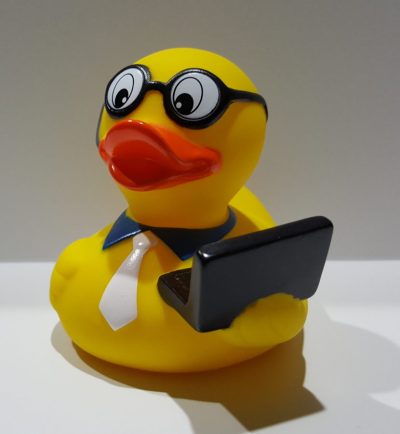
    Lucky Duck

    Duck.

    Old Duck.

    Couldn’t see –

    Lost his glasses by the tree.

    Continue reading at: Time for rhyme – Readilearn

  • Books make the #1 best gifts!

    The love of reading is gift

    I am notorious for gifting books. I’ve written about this before in Guess what you’re getting for Christmas and other posts. It would not surprise me if you are also a notorious gifter of books. Perhaps that could be our super power: The Book Gifters!

    Reading is empowering. A book is a gift that continues to give, long after the occasion has past. It’s effects cannot always be measured.

    books-life-memories

    In this post, I suggest some books you may like to purchase for special people in your life. And why not treat yourself with one or two as well?

    Most, but not all, are fairly recent releases. A few are long-time favourites.

    Most, but not all, are written by people I know personally or through blogging. You might recognise their names from comments on other of my blog posts. A few are long-time favourites written by people who inspire me.

    I have read most. The only two not read (the books of short stories) are very, very recent. However I am happy to recommend them as I am already familiar with some of the stories, and the writers’ work  from their blogs.

    Disclaimer: These are books that appeal to me. They may not appeal to you. The important thing in choosing books for others is in finding something that they will like.

    The list is not exhaustive. It is just a beginning to provide a few ideas that you may not have considered. There are many other wonderful books that could just as easily have been included.

    I have arranged my list in this way:

    For children:

    Picture books (including fiction, non-fiction, and poetry)

    Early chapter books (for readers of about 7 to 12 years)

    For adults:

    Books of short stories

    Novels

    Memoirs

    Books for teachers and parents

    If you follow the links you will be able to discover more about the writers and their other work.

    For children:

    Picture books – Fiction

    picture-books

    Lauri Fortino The Peddler’s Bed This heart-warming story demonstrates that a kindness given can encourage kindness in others. You can read a lovely interview with Lauri on the readilearn blog here.

    Tara Lazar Little Red Gliding Hood In this fun fractured fairy tale, Little Red Riding Hood needs a new pair of skates. The only way she can acquire them is by winning a skating competition. But which fairy tale character will be her partner?

    Galvin Scott Davis Daisy Chain This is a beautifully illustrated, animated and interactive, anti-bullying book app, narrated by Kate Winslet.

    Non-fiction

    non-fiction-picture

    Rebecca Johnson The Insect Series This series of ten little books, each about a different insect, combines both fact and fiction with stunning close-up photographs. You can read a lovely interview with Rebecca on the readilearn blog here.

    Sue Fliess The Bug Book This book about bugs is beautifully illustrated with stunning photographs. Written in rhyme, it introduces children to many tiny creatures.

    Poetry

    book-cover

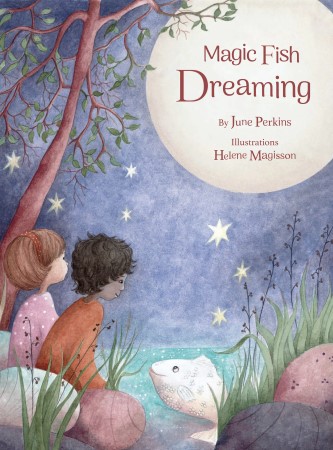
    June Perkins Magic Fish Dreaming This gorgeous book of poems with its focus on nature will uplift and inspire you and your children. You can read a lovely interview with June on the readilearn blog here.

    Early chapter books (about 7 to 12 years)

    early-chapter-books

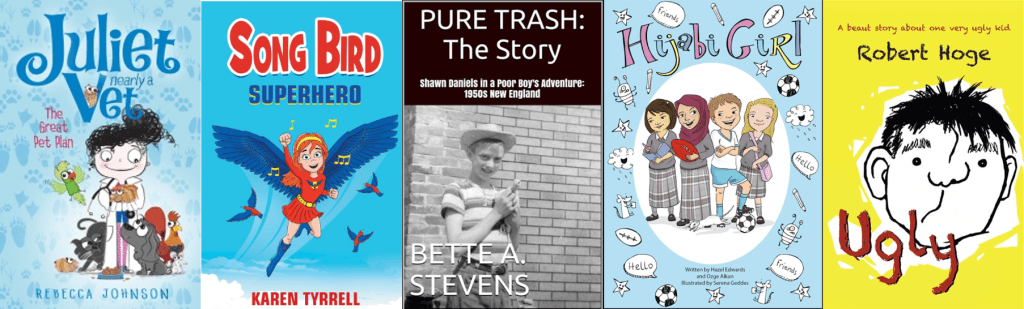
    Rebecca Johnson Juliet nearly a Vet This lovely series of books tells of the adventures of ten-year-old Juliet who aspires to be a vet, just like her mother.

    Karen Tyrrell Song Bird Superhero This story tells of Rosella Bird and her quest to fly. While she battles the bully at school and at home, she is empowered and discovers the joy of flight when she finds her voice.

    Bette A. Stevens Pure Trash: The Story Set in New England in the 1950s, this story tells of a Saturday afternoon adventure of two young boys. The Kindle version is free on Amazon until 29 November (today – be quick!). 

    Hazel Edwards & Ozge Alkan Hijabi Girl In this story, when eight-year-old Melek is deciding what to wear to the book parade, she is unable to find a super-hero who wears a hijab, so she creates her own.

    Robert Hoge Ugly (a memoir) Robert’s story is one of resilience, of survival against the odds, and of making hard decisions. While coping with difference and bullying, Robert shows that strength of character is a trait of survivors. I have introduced you to Robert previously here and here.

    Books of short stories

    short-stories

    Sarah Brentyn Hinting at Shadows This book is a collection of very short stories, each 100 words or less. While each may be a quick read, they will give insight, inspiration, and a greater understanding of what it means to be human.

    Hugh Roberts Glimpses Launching on 2 December, available for pre-order “28 short stories that will take your mind on a rollercoaster of a ride into worlds that conceal unexpected twists and turns.”

    Novels

    novels

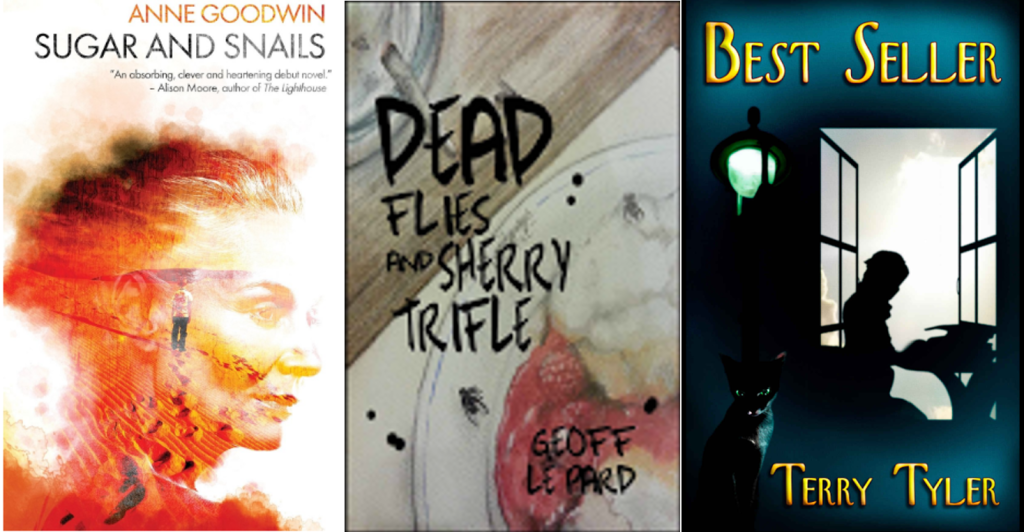
    Anne Goodwin Sugar and Snails In this mid-life coming-of-age story, Diana Dodsworth has some tough decisions to make as she comes to terms with who she really is. Anne has previously talked about her book on my blog here and here.

    Geoff Le Pard Dead Flies and Sherry Trifle This story about nineteen-year-old Harry Spittle, who is home from university for the hottest of hot holidays, will have you laughing out loud at his misadventures.

    Terry Tyler Best Seller This intriguing novella is about three writers, all of whom wish to write a best seller. One does; but which one?

    Memoirs

    memoir

    Robert Hoge Ugly (a biography) Robert’s inspirational story is one of resilience, of survival against the odds, and of making hard decisions. While coping with difference and bullying, Robert shows that strength of character is a trait of survivors. I have introduced you to Robert previously here and here.

    Lesley and Tammy Williams Not Just Black and White Told as a conversation between mother and daughter, this inspirational story tells of the importance of family, of difficulties experienced by many Indigenous Australians in relatively current times, with a drive to ensure that history is neither forgotten nor repeated.

    Malala Yousafzai Malala The Girl Who Stood up for Education and Changed the World The story of Malala, winner of the Nobel Peace Prize, is one of courage and of the difference that one person can make in the world. I have previously written about Malala here.

    Magda Szubanski Reckoning: A Memoir With a Polish father, a Scottish mother and an Australian childhood, Magda’s story is complex, courageous, compassionate, and inspirational.

    Books for teachers and parents

    for-teachers-and-parents

    Mem Fox Reading Magic This book provides lots of practical advice and support for parents in developing a love of reading in their children. I have introduced you to Mem many times previously, including here and here.

    Michael Rosen Good Ideas: How to be Your Child’s (and Your Own) Best Teacher This very readable book is packed full of suggestions for encouraging curiosity and learning in children (and you!) I have previously introduced you to Michael here and here.

    Vivian Kirkfield Show Me How Vivian passion’s for picture books and her understanding of the importance of literacy are obvious in this book that provides great ideas for reading and extending the learning experience associated with many picture books.

    Or, for a special early childhood educator, gift a subscription to readilearn, a collection of teaching resources that can be used throughout the year.

    special-gift-for-special-teacher-ad

    It’s easy. Simply send an email to hello@readilearn.com.au, arrange payment for the currently discounted subscription, and you will be emailed a voucher with a coupon code, unique to your special teacher. Print the voucher and personalise it with your own message before presenting your gift.

    Note: The subscription is for 12 months from date of activation, not purchase: a gift that will go on giving all year long.

    2

    I hope there is something in this list that you can add to your gift list.

    Thank you

    Thank you for reading. I appreciate your feedback. Please share your thoughts.